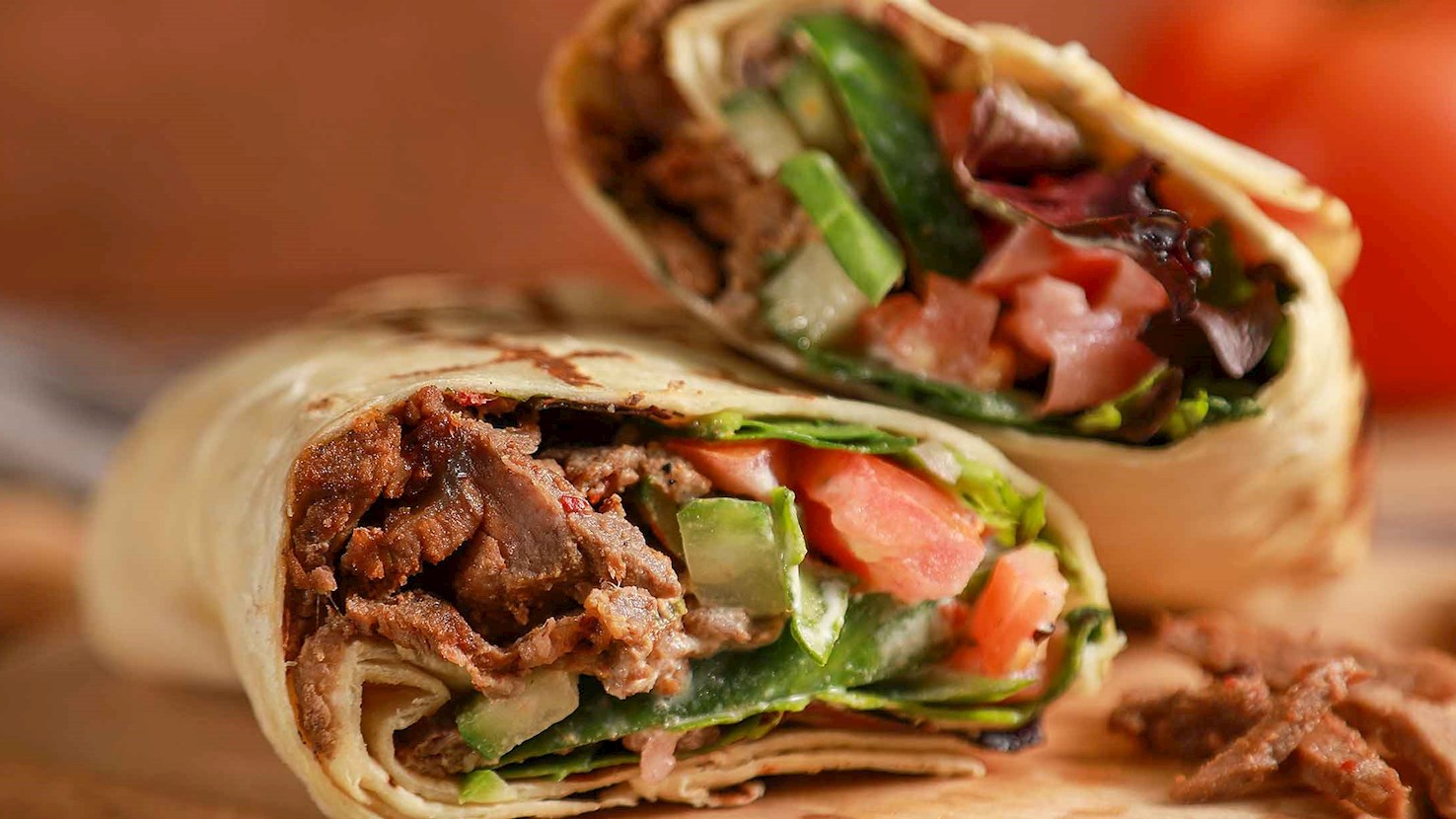
Marinated and spit-roasted, shawarma is a delicious Middle Eastern meat treat whose origins can be traced back to the Ottoman Empire era, while its name stems from the Arabic pronunciation of the Turkish word çevirme (lit. to turn; turning), and refers to the rotating skewer on which the meat is cooked. Shawarmas are made with either lamb, turkey, chicken, beef, or a mix of different meats which are slow-cooked for hours and basted in their own juices and fat, gaining an incomparable succulence, but the real secret to a perfect shawarma is in the marinade. Depending on the variety, the meat must be marinated for at least a day, preferably two, especially when using beef. These marinades are either yogurt or vinegar-based and typically include spices and flavorings such as cinnamon, cloves, cardamom, nutmeg, black pepper, allspice, dried lime, spicy paprika, garlic, ginger, lemon, bay leaf, and sometimes even orange slices. Shawarma is traditionally served either on its own or enjoyed tucked inside a warm flatbread such as pita or lavash. However, what really sets it apart from the Turkish döner kebab, Greek gyros, or other similar foods is the extent of garnishes and condiments offered with it. For example, Israeli shawarmas are typically topped with tahini and come with generous servings of hummus and pickled mango slices, while in other countries, shawarma is often complemented with garlic mayo or a zesty toumaia garlic sauce, both fresh and pickled vegetables, salads like tabbouleh or fattoush, and amba sauce–a tangy chili and mango pickle dip. Once a common staple of the Middle Eastern working man, shawarma has today become the ultimate Arabic street food, found not only in Arabia and Levant but in virtually any nook and corner of the globe.
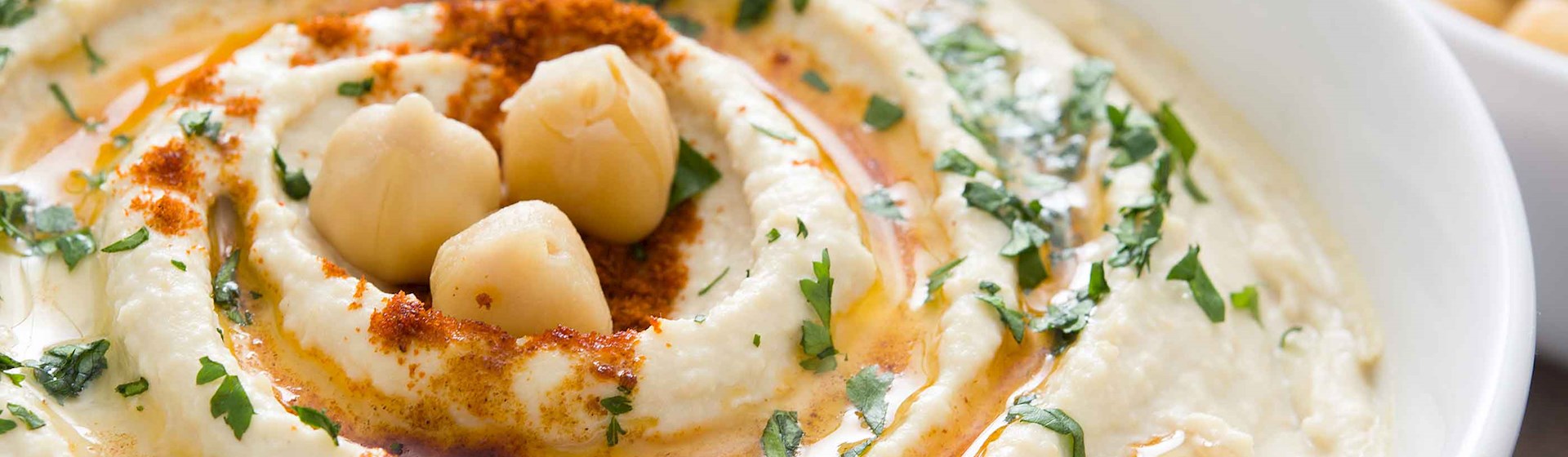
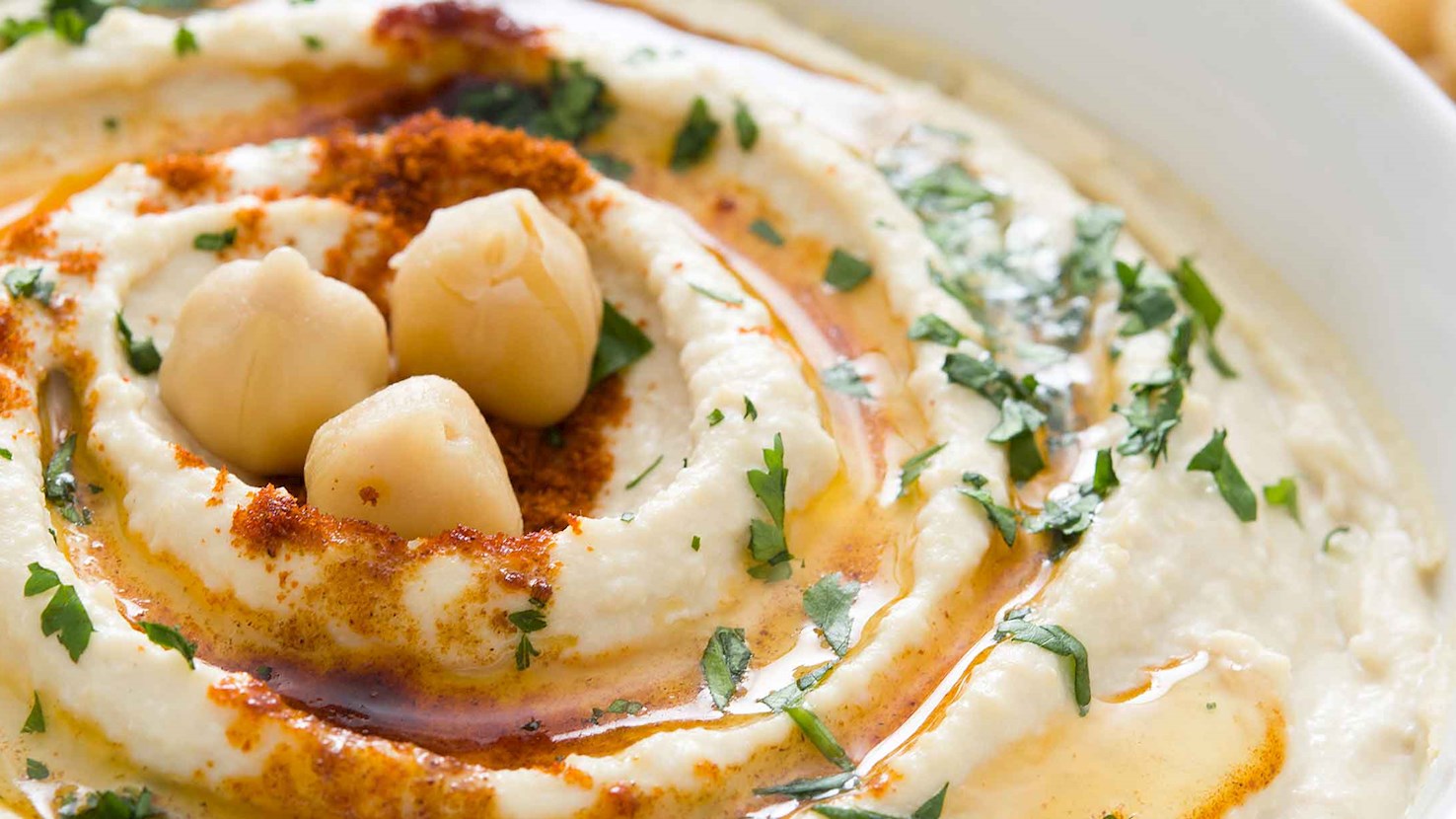
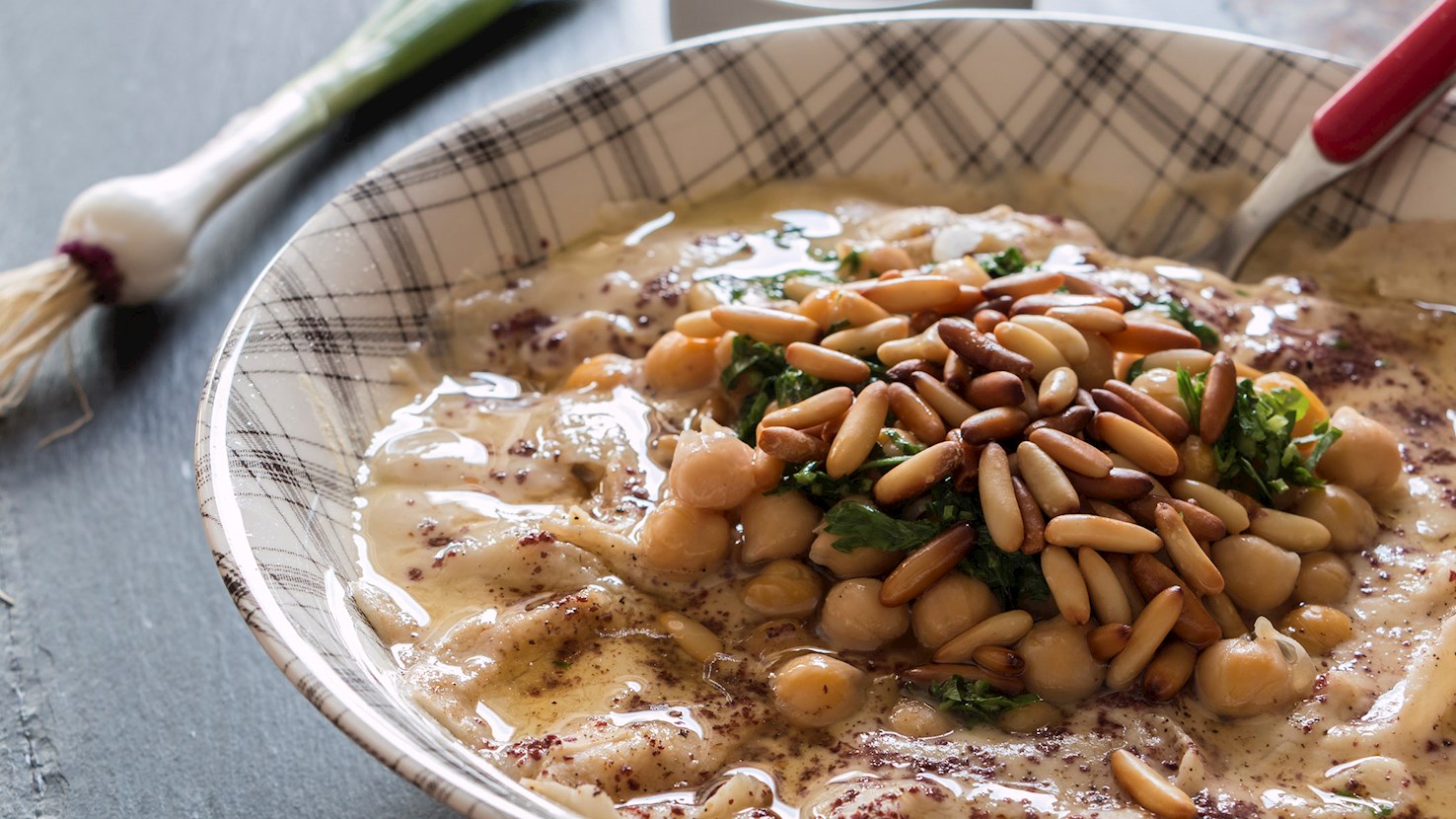
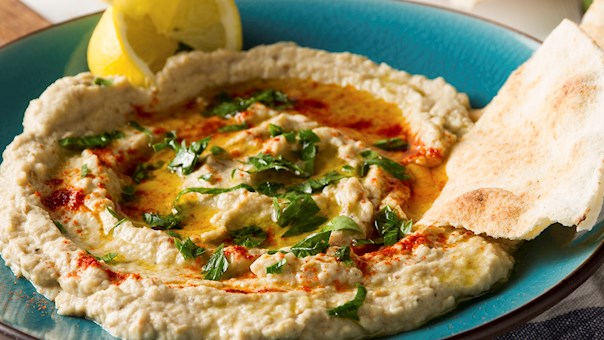
Hummus is a creamy dip made primarily from cooked and mashed chickpeas blended with tahini, olive oil, lemon juice, and garlic. It originates from the Middle East, where it has been a dietary staple for centuries, especially in countries like Lebanon, Palestine, Israel, Syria, and Jordan. Hummus’s roots can be traced back to ancient times (earliest mention of hummus dates back to 13th-century Egypt), when legumes and seeds were common sources of nutrition in the Levant. Over time, the combination of chickpeas and tahini evolved into a dish that balances earthy, nutty, and tangy flavors. While recipes vary slightly across regions, the core ingredients remain consistent, emphasizing freshness and quality. The smooth texture and rich taste make hummus both versatile and widely appealing, able to serve as a simple snack or a complement to more elaborate meals. Preparation involves soaking and cooking dried chickpeas until tender, then blending them with tahini paste, freshly squeezed lemon juice, crushed garlic, and extra virgin olive oil to create a velvety consistency. Salt is added to enhance the flavors, and the mixture is often garnished with a drizzle of olive oil, a sprinkle of paprika or sumac, and sometimes fresh herbs or whole chickpeas. Hummus can be served chilled or at room temperature, paired with pita bread, vegetables, or as part of a larger mezze platter. Hummus enjoys widespread popularity not only in the Middle East but globally, embraced as a healthy and flavorful dish. It is commonly found in homes, restaurants, and markets, representing both everyday nourishment and a dish for social gatherings.
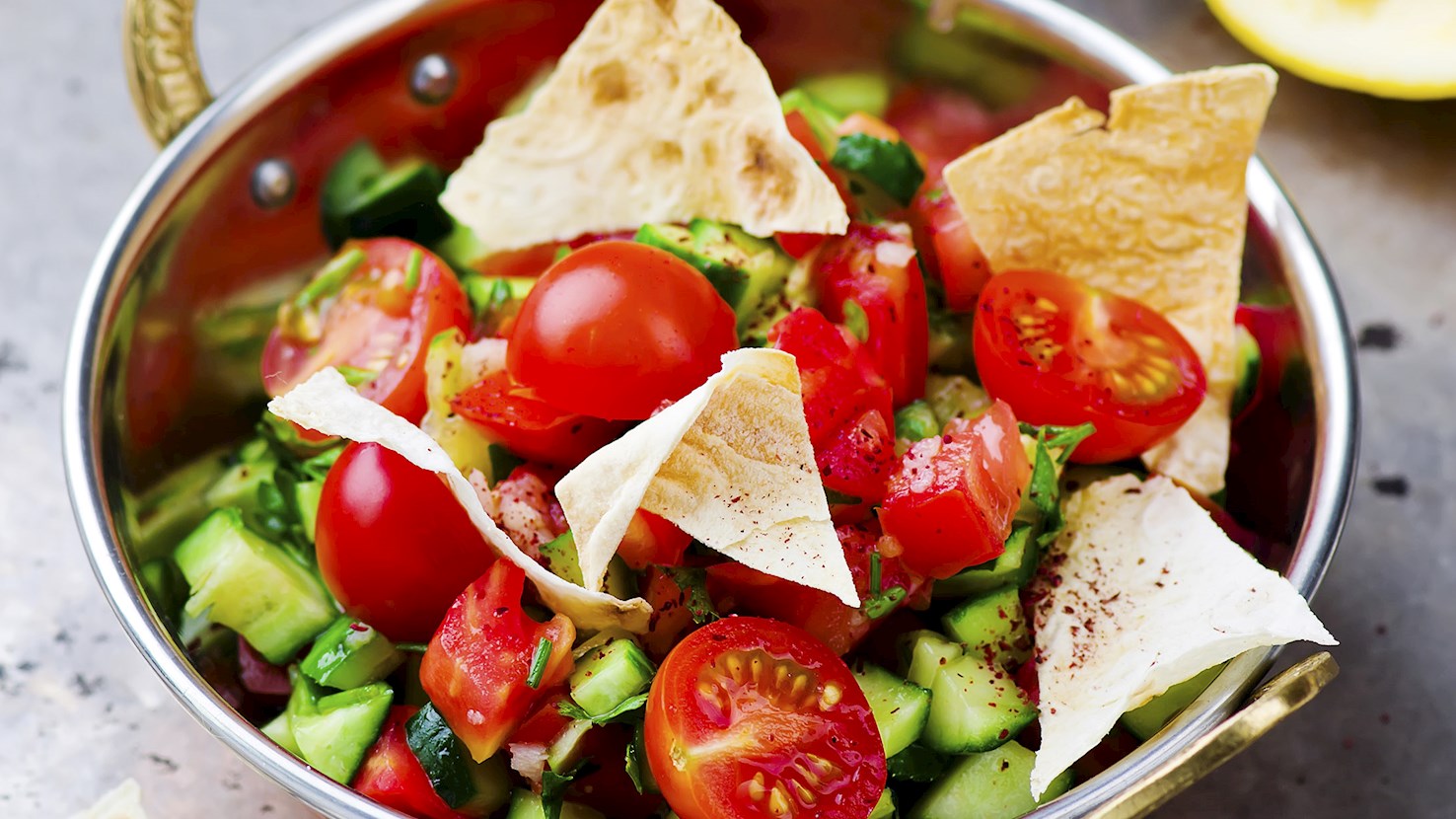
Fattoush is a simple salad made with traditional pita bread as a base on which the rest of the ingredients are built on. Pita bread is torn or cut into small bite-sized pieces, then toasted, grilled, or fried. It is then mixed with a variety of vegetables such as lettuce, radish, crunchy cucumbers, cherry tomatoes or regular tomatoes, peppers, onions, and (occasionally) garlic. All ingredients are chopped and cut into pieces and mixed with a generous amount of herbs, most commonly mint and parsley. The final touch to this authentic salad is the dressing, usually made with olive oil, lemon juice, and pomegranate syrup. The key ingredient, next to the crunchy pita bread, is sumac - a spice commonly used in the Levantine area. Sumac can be added to the dressing, and it is usually sprinkled on top of a prepared salad. It gives the dish a slightly tart taste and zest, which perfectly matches with the gentle flavors and aromas of fresh herbs and vegetables. The original fattoush is highly versatile, and other common additions may include crisp pomegranate seeds, olives, yogurt, and feta cheese. It is one of the most famous salads frequently eaten in Lebanon, Syria, Israel, Palestine, Jordan, and Iraq. This refreshing salad belongs to a group of dishes popularly called fattat, which use the stale pita, or any other flatbread, as the star ingredient.
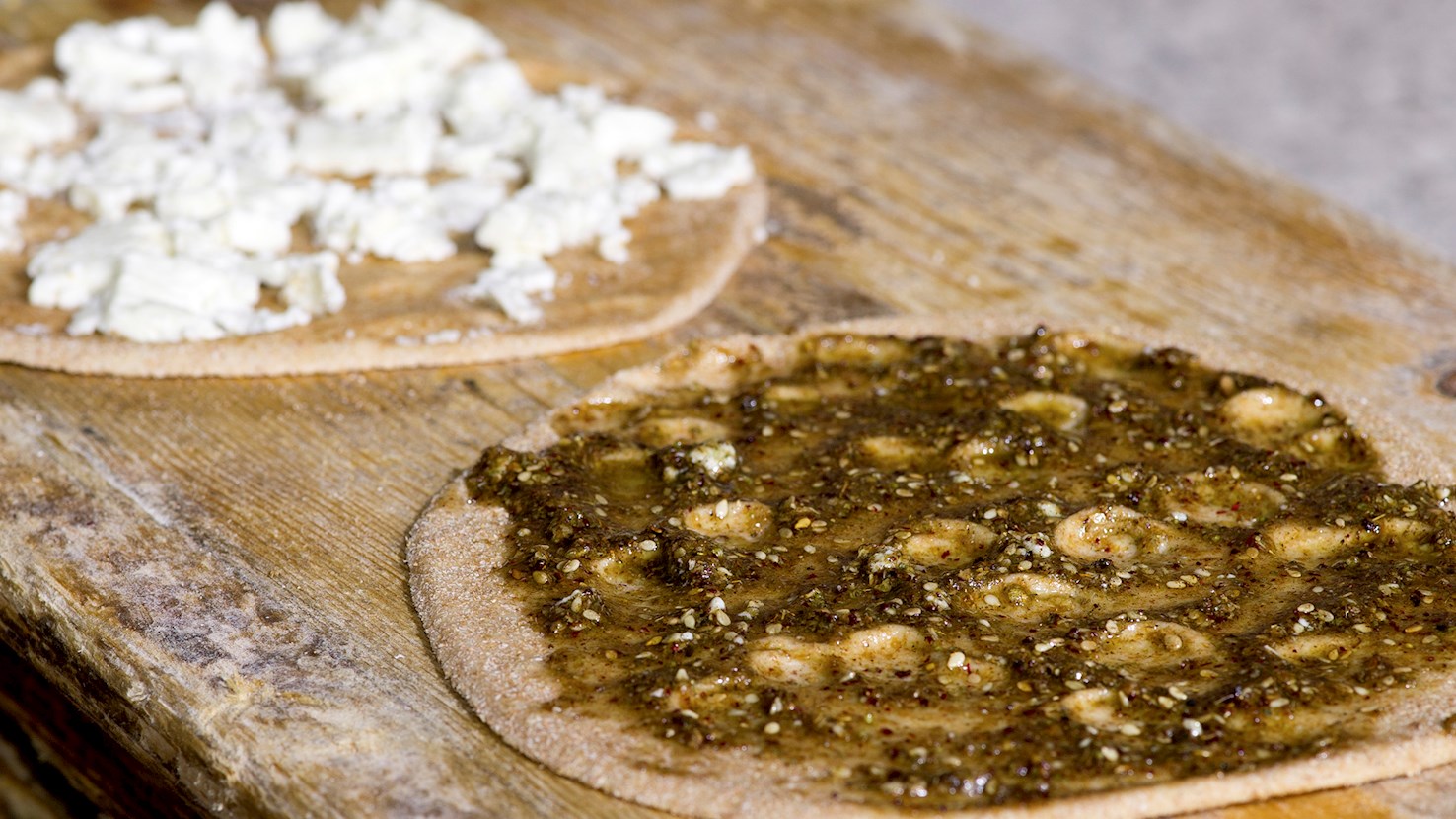
Manakish is a favorite Lebanese breakfast - a round, flat bread that is typically topped with olive oil and zaatar (sesame seeds, thyme, and sumac), then baked in the oven. Other toppings might include cheese, minced lamb, spinach, or fried eggplants. The name of the dish means decorated or stamped, referring to a technique where the dough is pressed using the tips of one's fingers, leaving a decorative pattern in the process. Although it is sometimes affectionately called Lebanese pizza, it is a recent addition to the Lebanese culinary heritage, but it quickly became one of the most popular dishes due to its flavors, low price, and the ease of preparation. Manakish is often associated with being food for the poor, but it is enjoyed by all classes of society. It is recommended to pair it with tomatoes, cucumbers, yogurt cheese, or a cup of hot tea.
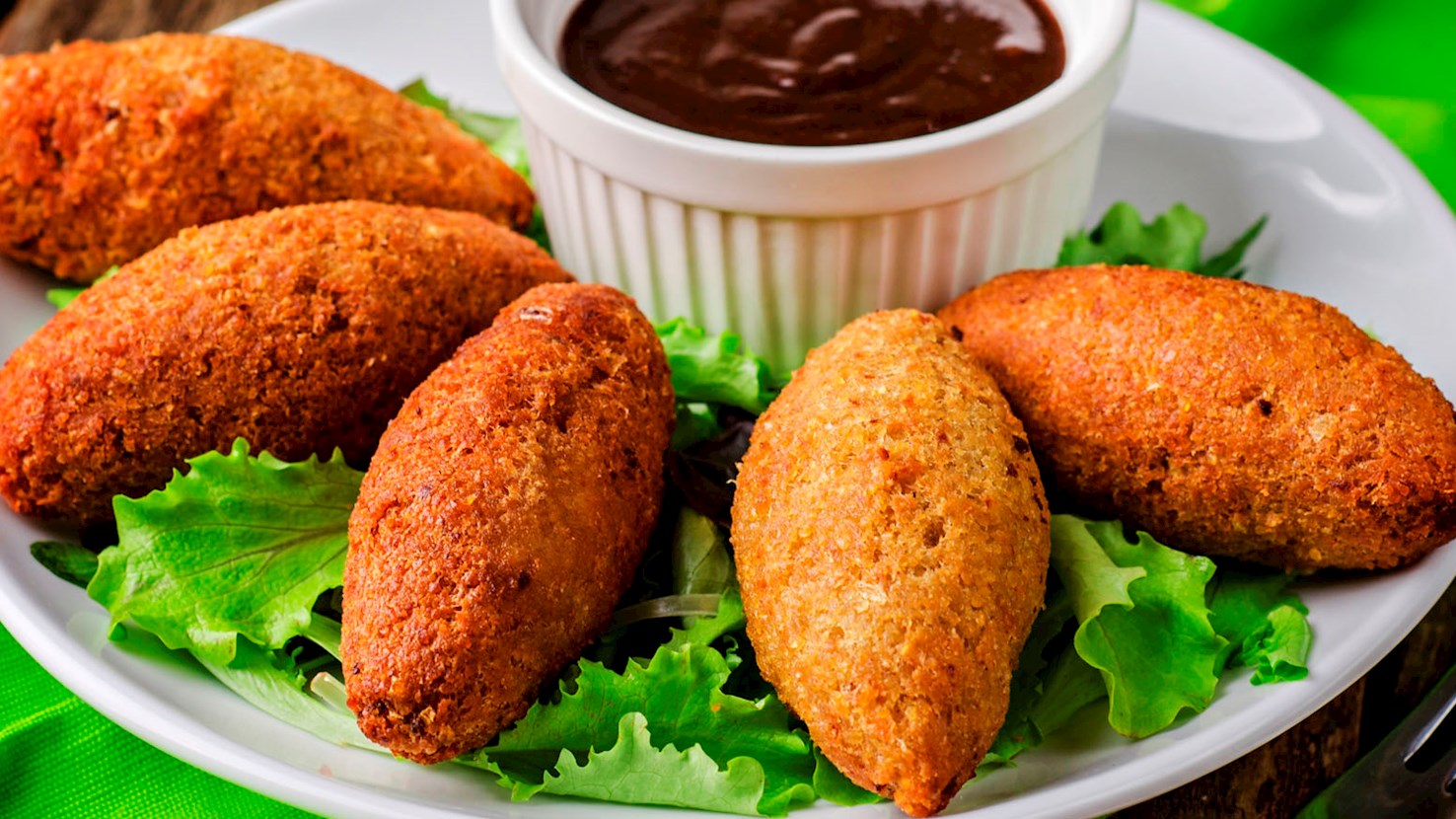
Kibbeh is a unique mixture of soaked bulgur wheat and other ingredients, typically lamb meat, and it is also considered the national dish of Lebanon and Syria. Fragrantly spiced and eaten as a snack for casual or celebratory meals, Kibbeh can be raw, baked, fried, stuffed, or prepared in a vegetarian version, stuffed with potatoes, pumpkins, and tomatoes. It is typically served with mint leaves and drizzled with olive oil. The word kibbeh stems from an Arabic verb meaning to form into a ball or a circular shape. A fried variety of kibbeh, called kibbeh nabilseeyah is shaped into a ball, stuffed, then fried in oil. Raw kibbeh is called kibbeh nayyeh, where bulgur and meat are combined with spices and pureéd onions, kneaded together with some ice water, then placed into traditional flatbreads. Traditionally, locals used to kill animals on Sundays and feast days, so the raw meat was eaten immediately, and that's how kibbeh nayyeh came to be.
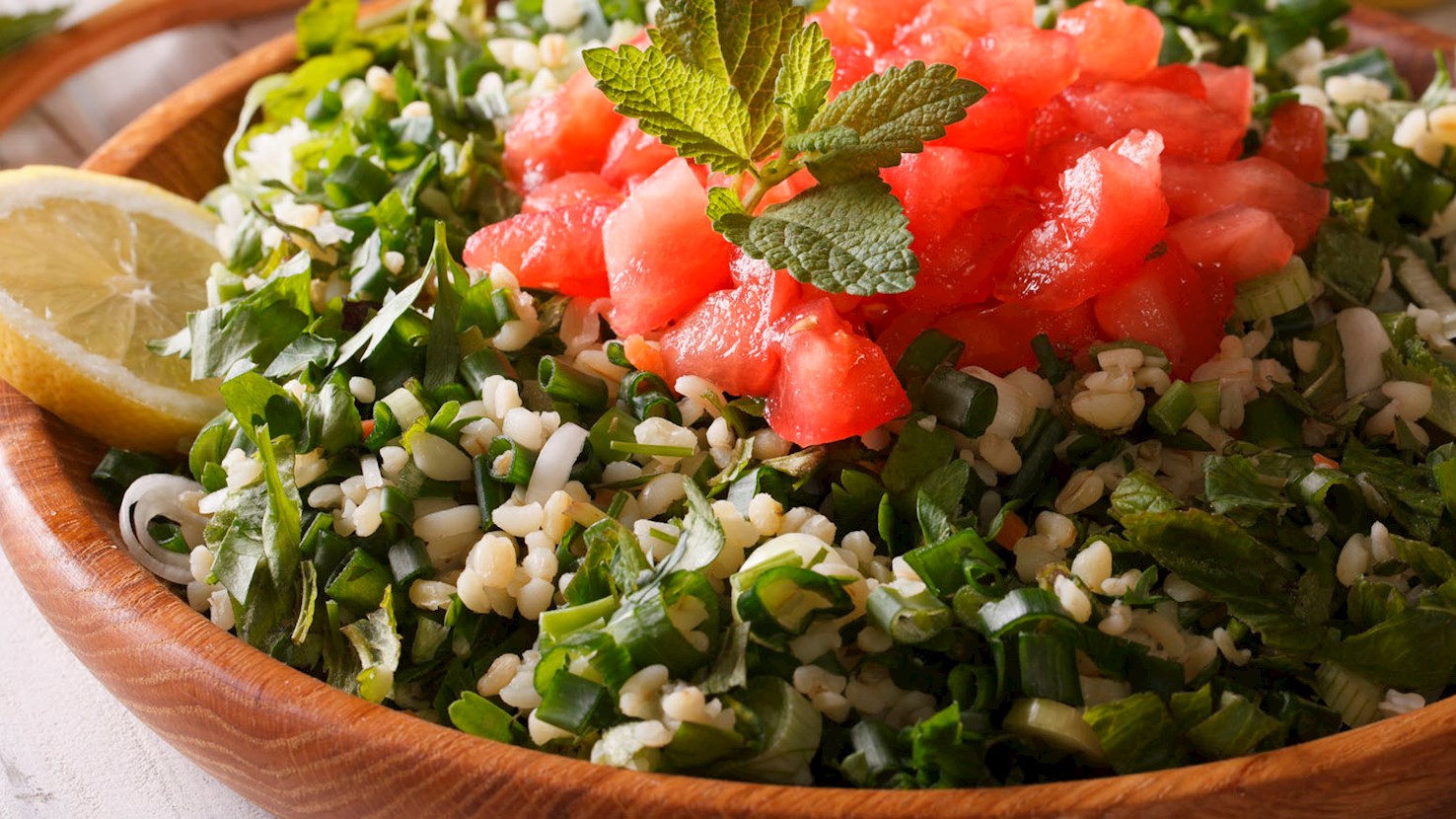
Tabbouleh is a colorful Lebanese and Syrian national dish that is usually considered a salad, with a crunchy and chewy texture, made with fresh, finely chopped parsley leaves, olive oil, bulgur wheat, and chopped mint leaves as a base. It originated in the mountains of Lebanon and Syria, where edible herbs that are used in tabbouleh were consumed by Arabs since Medieval times. Usually served as an appetizer, it is sometimes accompanied by pita bread, baba ghanoush, or hummus. Chopped red tomatoes, diced cucumbers, fresh lemon juice and minced onions can be added to the salad, imparting a tangy flavor. It is best to refrigerate tabbouleh for a few hours before serving to improve its taste. Its refreshing flavors are ideal for a hot summer day, while bulgur provides a rich source of fiber, protein, and minerals, making tabbouleh one of the healthiest food options in the region. Tabbouleh is so popular that it even has its own day, celebrated every year on the first Saturday in July.
Fatteh is a Levantine specialty made by combining pieces of fresh, toasted, or stale flatbread with numerous other ingredients. The name of the dish means to tear into small pieces, referring to the process of tearing the flatbread. Fatteh is usually consumed for breakfast or in the evening as the main dish. There are two main varieties of fatteh - Levantine and Egyptian. The Levantine version is traditionally topped with yogurt, chickpeas, olive oil, and cumin. After the main toppings, Levantine fatteh can additionally be topped with chicken, lamb, or pine nuts. The Egyptian version is usually prepared for feasts and is topped with rice, tomato sauce, garlic, and vinegar. Fatteh does not need to look neat, and is very easy to prepare, so even the most careless cook can turn the dish into a masterpiece, which might be the key to its popularity.
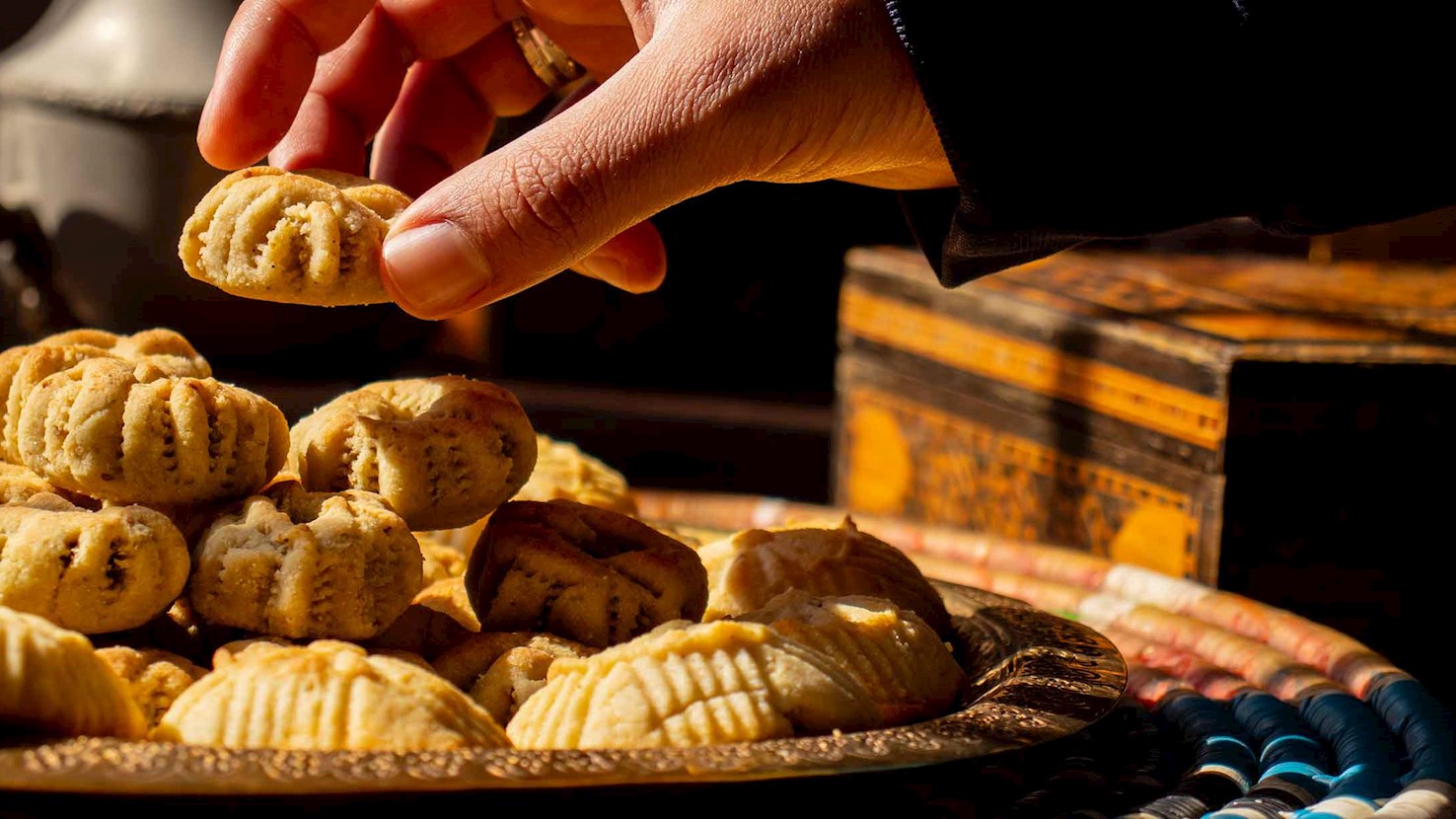
Ma’amoul is a filled baked pastry made from a short dough of semolina or flour and fat, shaped into small rounds or domes and filled with dates, walnuts, or pistachios, widely prepared across the eastern Mediterranean and the Levant, particularly in Lebanon, Syria, Palestine, Jordan, and parts of Iraq, where it is closely associated with religious holidays and communal baking. Its development is tied to the long cultivation of wheat, dates, and nuts in these regions and to festive baking practices that required pastries capable of being prepared in advance, stored briefly, and shared widely, with molded decoration emerging as a way to distinguish fillings and standardize appearance when large quantities were produced at home or in neighborhood bakeries. Preparation begins with a dough made from semolina or a semolina-flour mixture combined with clarified butter or oil, lightly sweetened and often scented with rose water or orange blossom water, rested to allow the grains to absorb fat, then portioned and filled with date paste or finely chopped nuts mixed with sugar and aromatic water, after which each piece is pressed into a carved wooden mold to imprint a pattern before being unmolded and baked until set but not deeply browned. Serving usually involves allowing the pastries to cool fully so the structure firms, with some versions dusted lightly with powdered sugar while others, especially date-filled ones, are left plain, and they are presented in assortments where shape and surface design indicate the filling inside rather than labeling. A defining feature of ma’amoul is the use of molded decoration as an integral part of the pastry rather than a garnish, creating a visual code that is widely understood within the region and allowing different fillings to coexist on the same plate without confusion. It is eaten primarily during major holidays and family gatherings, offered to guests in homes and served in cafés during festive periods, typically consumed by hand alongside plain coffee, Arabic coffee, or unsweetened tea, with the bitterness of the beverage balancing the richness of the dough and the sweetness of the filling.
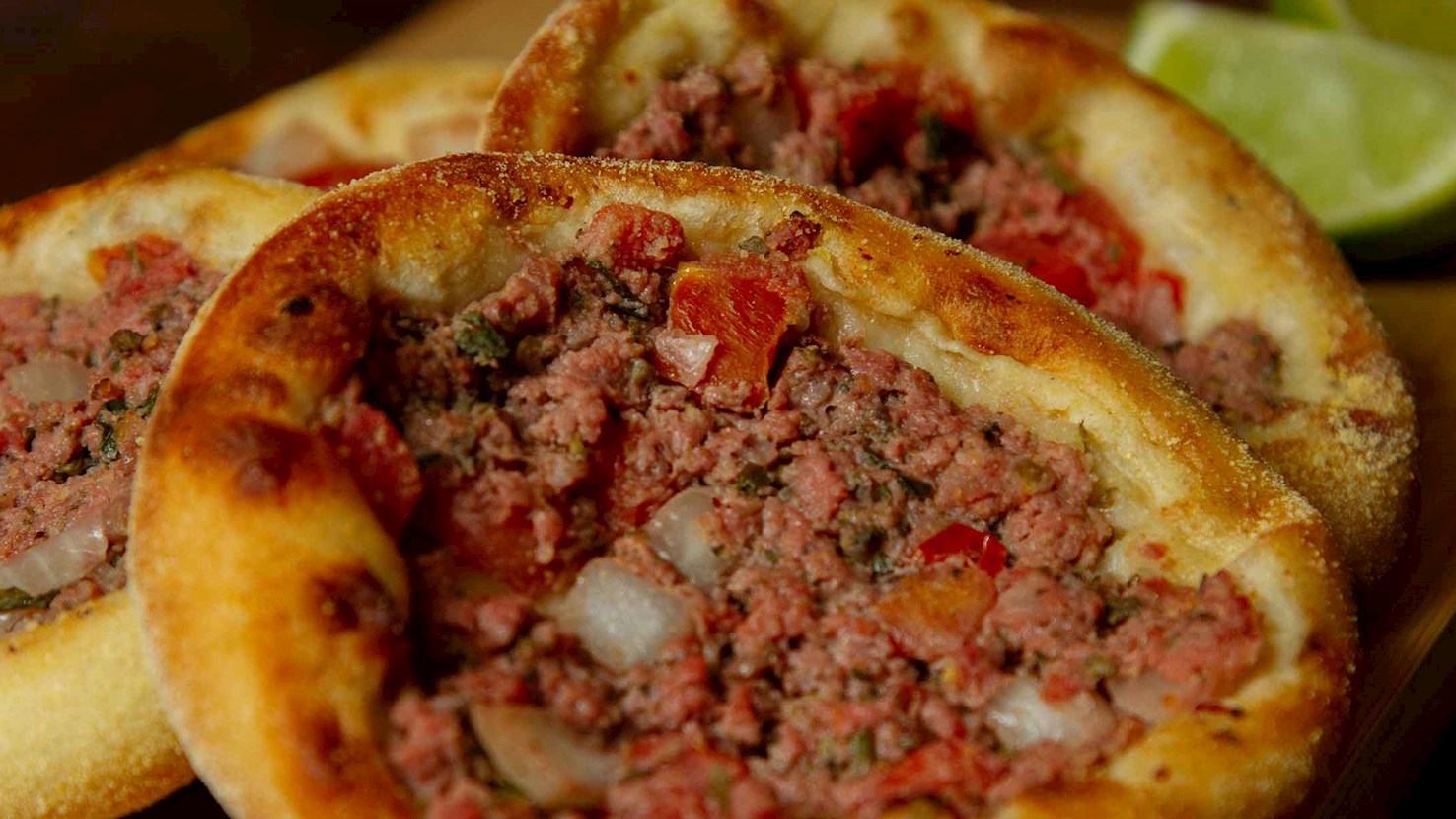
Sfiha, or lahm bil ajĩn (lit. meat on dough) is an Arabic specialty that dates back to the 15th century, when it first appeared in today's Eastern Lebanon. The traditional open-faced meat pie is popular throughout the Arab region, its main ingredients usually including minced lamb (or lamb), chopped onions and tomatoes, spices, olive oil, and yogurt. Originally, the dish was prepared by stuffing ground lamb and spices in brined grape leaves, but it evolved over time. Sfiha is also popular in Brazil and Argentina, where it was brought over by Levantine immigrants. It is usually consumed hot as a snack, accompanied by tahini sauce or a bowl of yogurt, while pomegranate seeds, coriander, or chopped cucumbers are often used as garnishes. In Turkey, sfiha is known as pide.
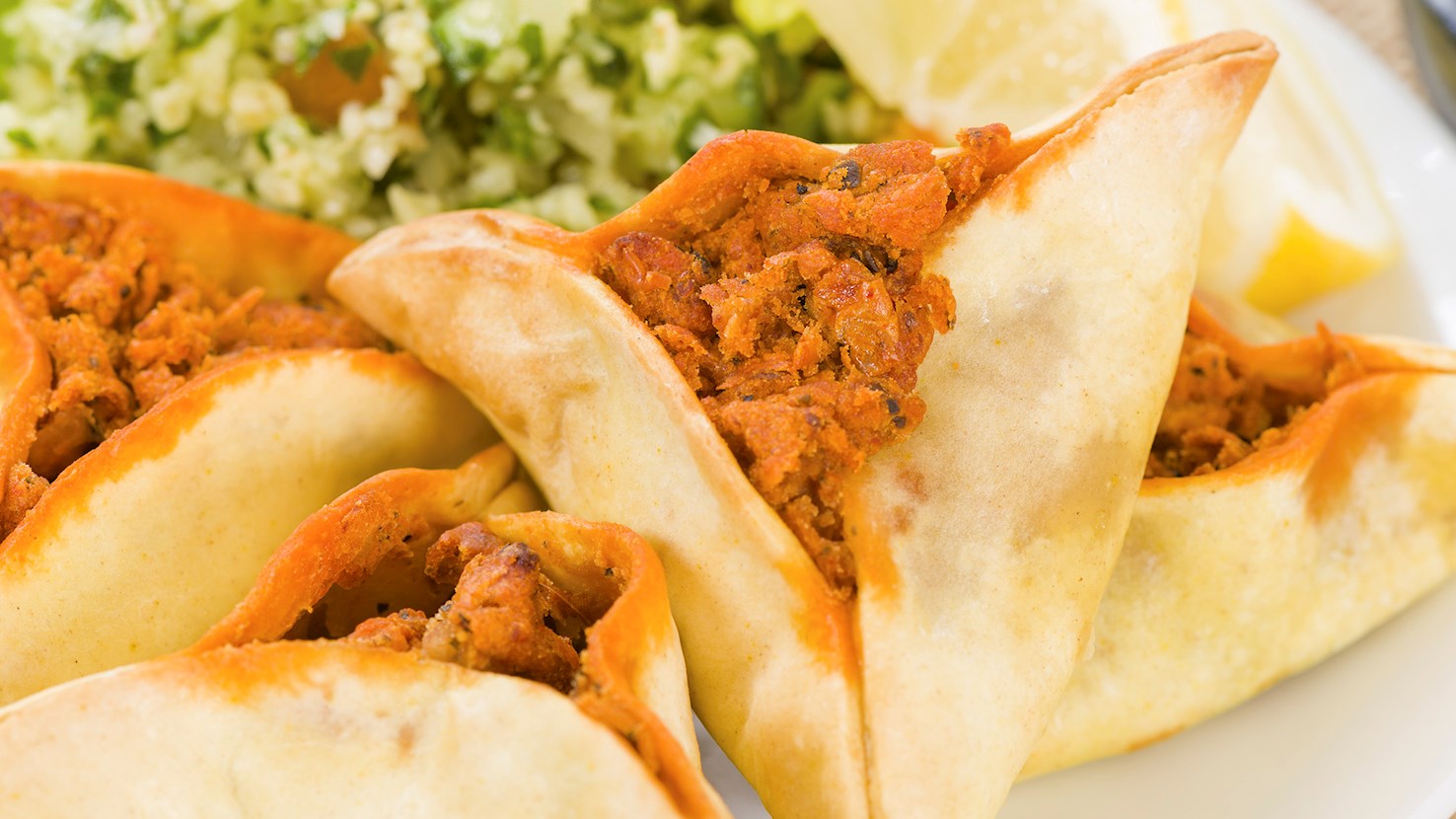
Fatayer is an Arabic specialty consisting of pockets of dough that are filled with a variety of ingredients: spinach, cheeses such as halloumi or feta, meat such as chicken, beef, or lamb, potatoes, or soft Arabic yogurt-based cheeses. The dish can be baked or fried and is commonly consumed as a snack or a light lunch. It is still unknown who invented fatayer, as the Lebanese, Syrians, Egyptians, and Palestinians all claim the dish as their own. Today, these turnovers are popular throughout the Arab region, with numerous regional varieties and different fillings.
TasteAtlas food rankings are based on the ratings of the TasteAtlas audience, with a series of mechanisms that recognize real users and that ignore bot,
nationalist or local patriotic ratings, and give additional value to the ratings of users that the system recognizes as knowledgeable.
TasteAtlas Rankings should not be seen as the final global conclusion about food. Their purpose is to promote excellent local foods,
instill pride in traditional dishes, and arouse curiosity about dishes you haven’t tried.


What People Say