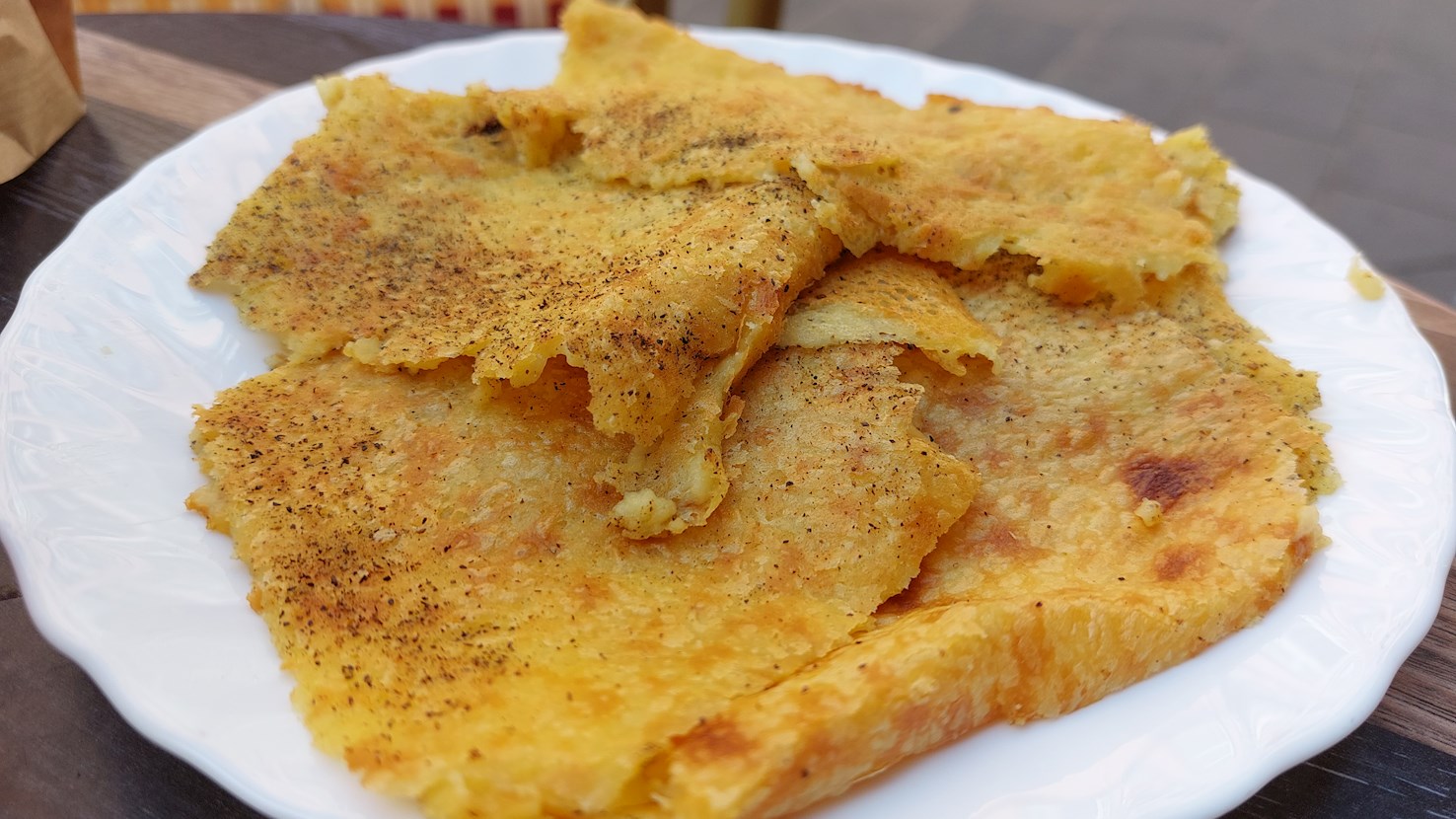
Originally derived from the Genovese farinata, socca eventually became the specialty of Nice, France, where it is a street food staple. This traditional flatbread is made with chickpea flour, olive oil, salt, and pepper. Once the batter is prepared, it is transferred to a wide pan or a skillet, which is placed in the oven at very high temperature. The batter is then baked until the socca hardens and begins to slightly burn on the edges. Once baked, socca is sliced into pieces and seasoned with salt, pepper, and a drizzle of olive oil. It can be served as an appetizer with cheese, olives, and a glass of rosé on the side.
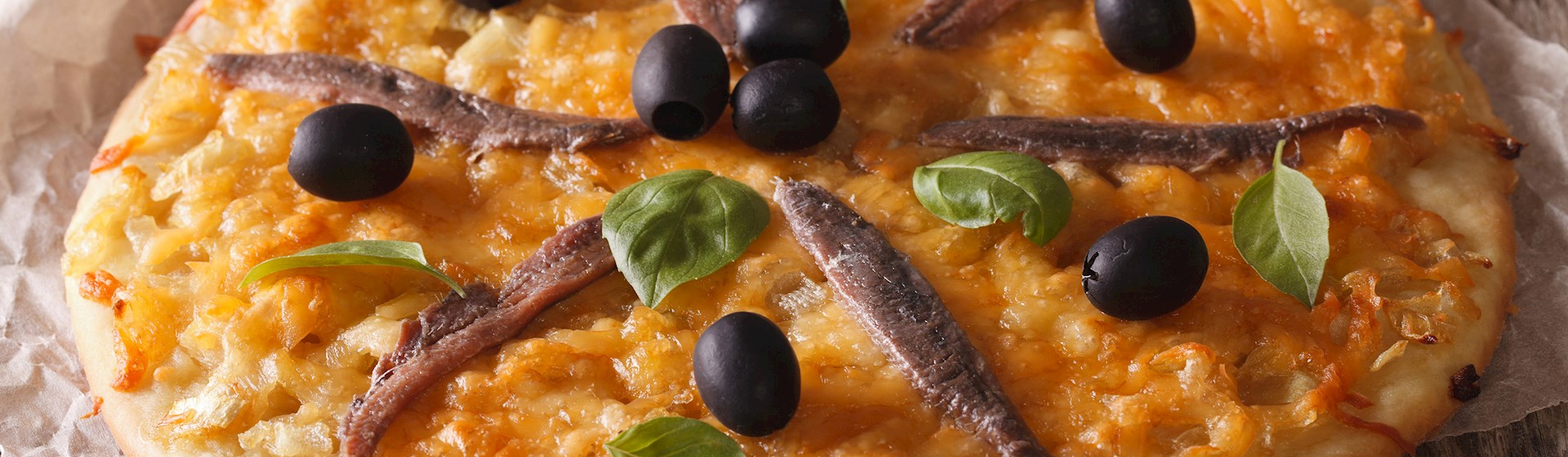
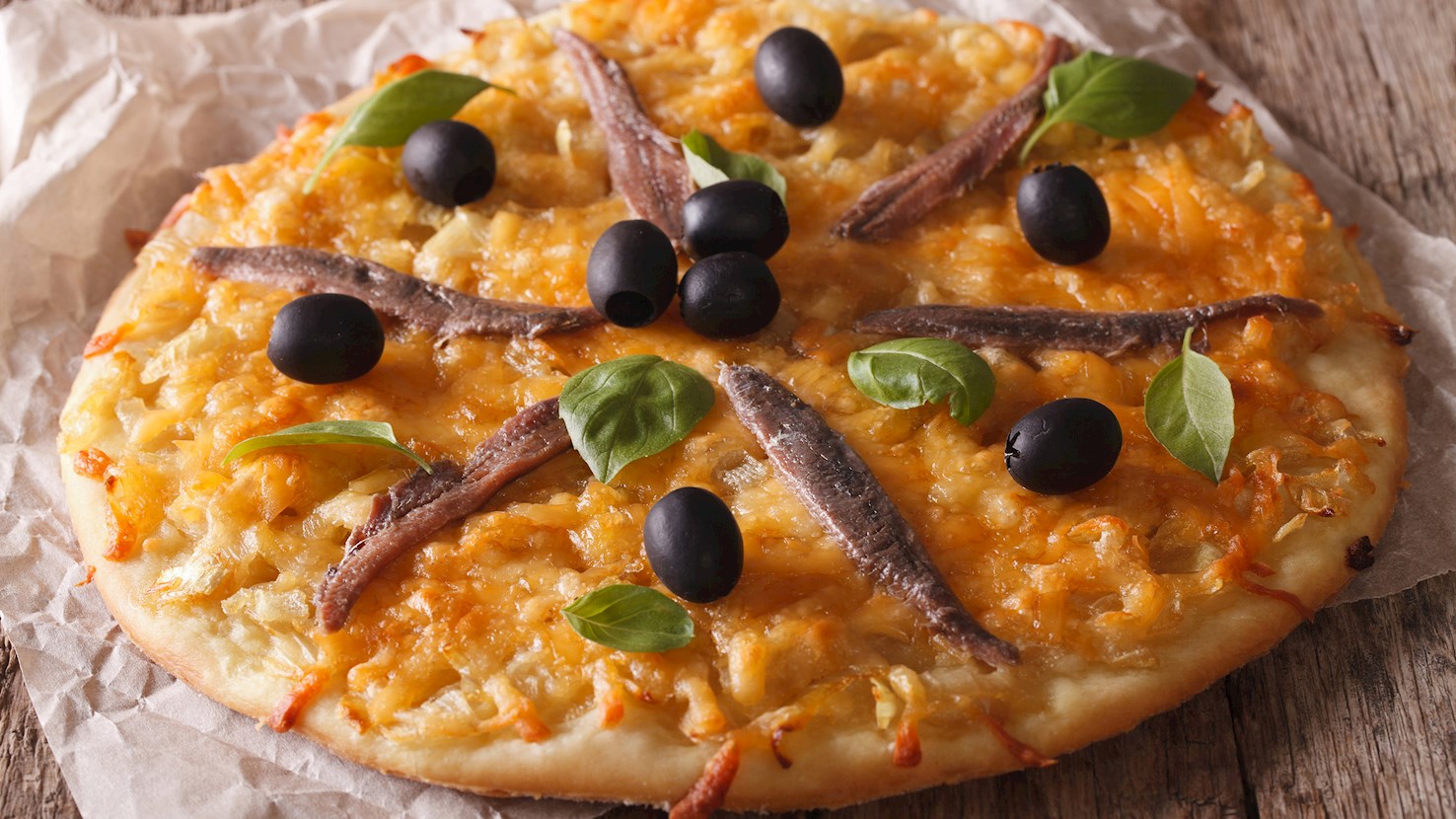
Originating from the French city of Nice, pissaladière is a baked tart that is similar to a pizza, but thicker. In the past, it was usually baked and sold each morning, but today it is traditionally served as an appetizer or a snack, consisting of a doughy base that is topped with anchovies, olives, caramelized onions, and fresh herbs. The name of the dish comes from the French phrase pèi salat, which translates to salted fish, one of the key ingredients used in the preparation of pissaladière. It is believed that the dish was invented between 1305 and 1377, during the Avignon Papacy. Pissaladière is best paired with a glass of chilled white wine.
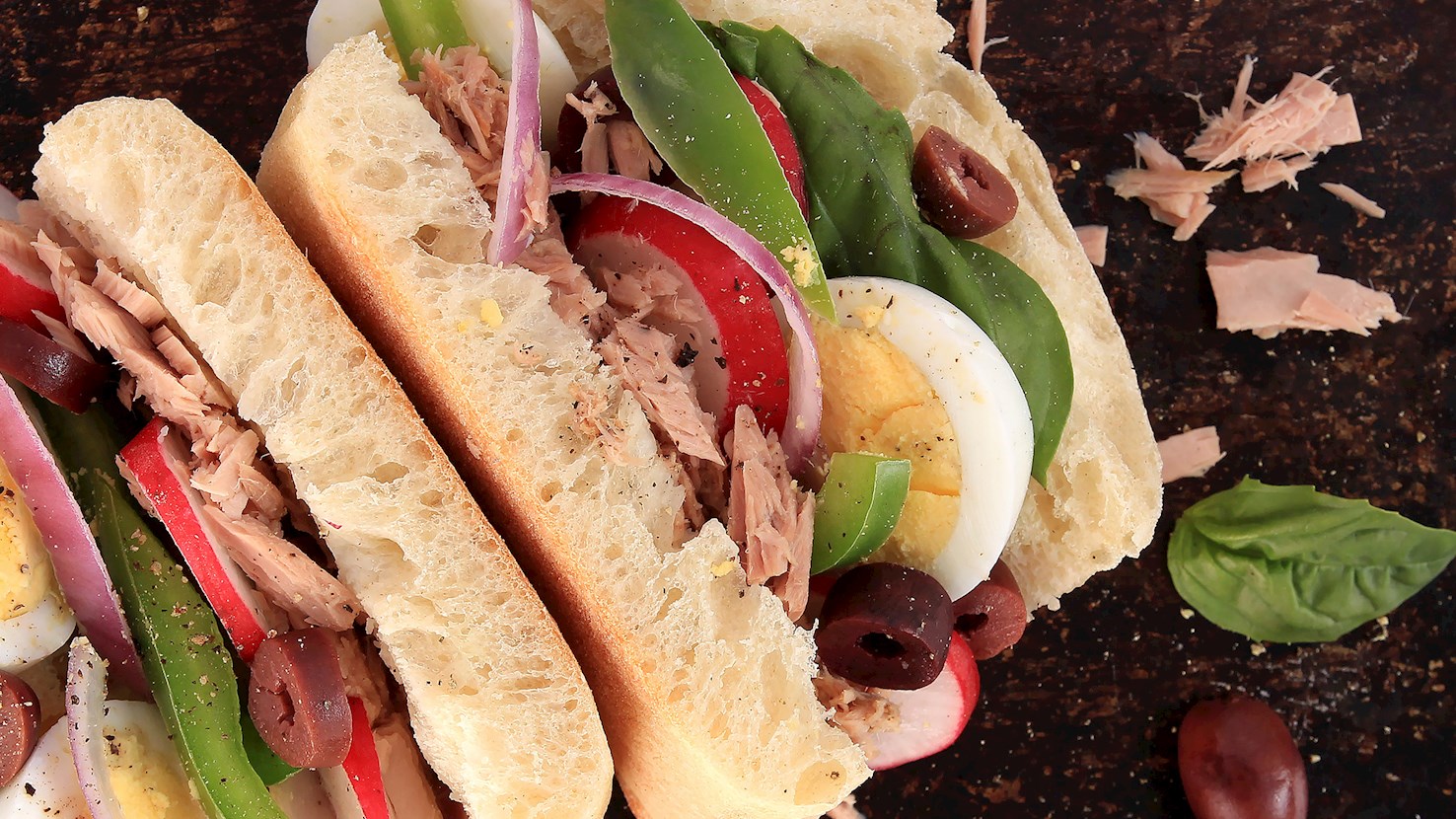
Pan bagnat is a specialty sandwich of Nice, consisting of a round bun with a crispy exterior and a soft interior that is filled with Niçoise salad, another signature dish from Nice. When translated, the name of the sandwich means bathed or wet bread, since the idea is to leave the sandwich rest in the refrigerator after the preparation in order for the flavors to soak into the bread. The root of the name comes from the Italian pane bagnato, due to the influx of Italian immigrants to Nice in the 19th century. Flavorful and easy to prepare, pan-bagnat remains a lunch staple both in Nice and throughout France.
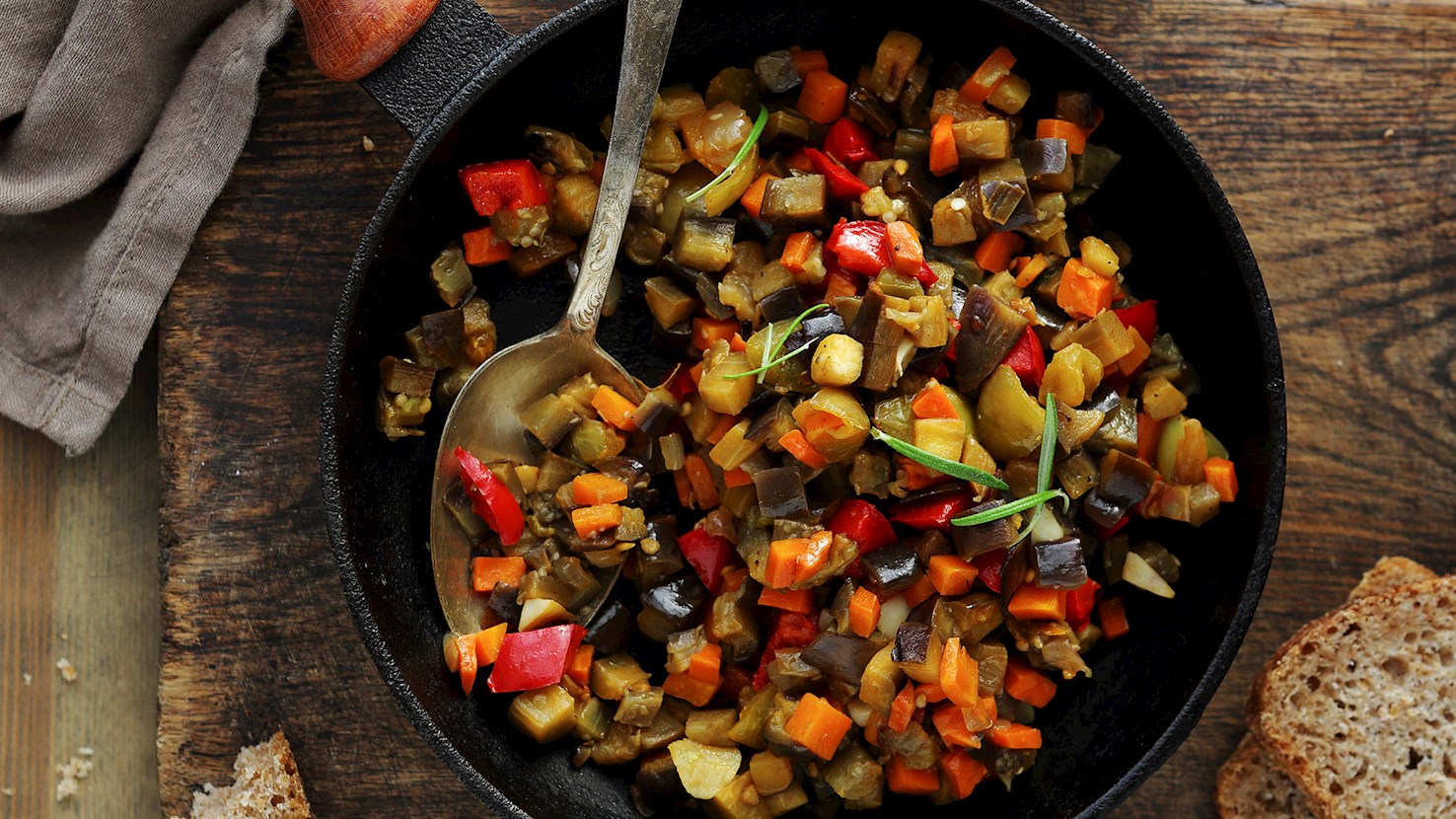
This colorful Provençal vegetable ragout is traditionally made with simple, easily accessible ingredients: courgettes, eggplants, green and red peppers, tomatoes, onions, garlic, and parsley. The name ratatouille stems from the old Occitan word ratatolha, and the French word touiller, both meaning to toss, or to stir up, referring to the cooking process in which the ingredients are first simmered separately—seasoned with salt, pepper, and olive oil—and then tossed together and stirred into a vibrant vegetable medley. Though it wasn't until the 1930s that ratatouille was popularized, by the 1980s, the dish had become the star of any dinner party. Ratatouille can be enjoyed on its own, served either hot or cold, along with toasted garlic bread, or it can be dished out as a side to roasted or grilled meat mains, especially lamb and chicken.
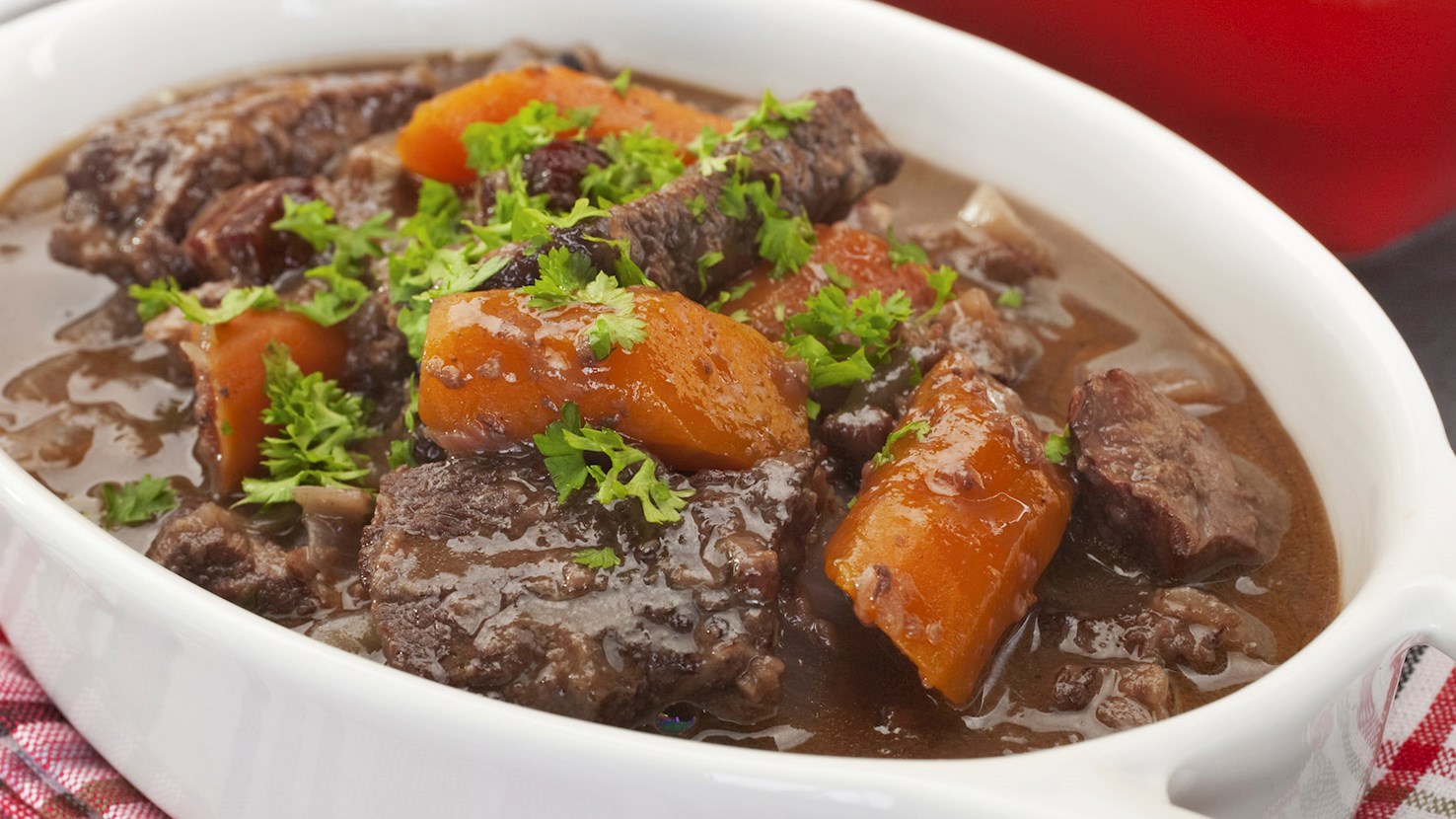
Daube is a hearty Provençal stew consisting of meat (mostly beef, but other meats like lamb can be used) that is simmered low and slow in wine with various vegetables and seasonings such as cinnamon, cloves, thyme, bay leaves, and peppercorns. Preparing daube is a time-consuming process in which the ingredients are added in layers, with the meat on the bottom and the spices and vegetables on top. Traditionally, the stew is prepared in a special earthenware vessel called a daubiére, which is specially shaped to stop the evaporation of the flavorful cooking liquids. Some cooks even seal the lid with a paste made of flour and water. The popularity of daube has led to the creation of numerous regional varieties of the stew, and it is often served with la macaronade, flat macaroni cooked in a sauce made from the braising juices mixed with a bit of white wine and some mushrooms. Some claim that the dish tastes even better when reheated – in which case it is called nougat de boeuf in Provençal.
This aromatic, decadent spread is made with black or green olives. The original recipe includes four essential Mediterranean ingredients – chopped olives, anchovies, capers, and olive oil – combined with additional ingredients and spices to form a thick, fragrant spread. Even though it is often described as a Provençal recipe, it was originally invented in 1880 by a chef Meynier at a Marseilles restaurant called La Maison Dorée, while the first recipe dates back to 1897, when it was published in Jean-Baptiste Reboul's La Cuisinière Provençale. In the past, tapenade was made using a mortar and pestle, but today it can be easily prepared in a food processor. Even though it uses simple ingredients and is a quick dish to prepare at home, ready-made tapenades can be found in supermarkets all over the world. French restaurants usually serve it as an appetizer with a warm, crunchy baguette on the side. Sometimes, it is also used as a dipping sauce for crackers, assorted vegetables, or breadsticks.
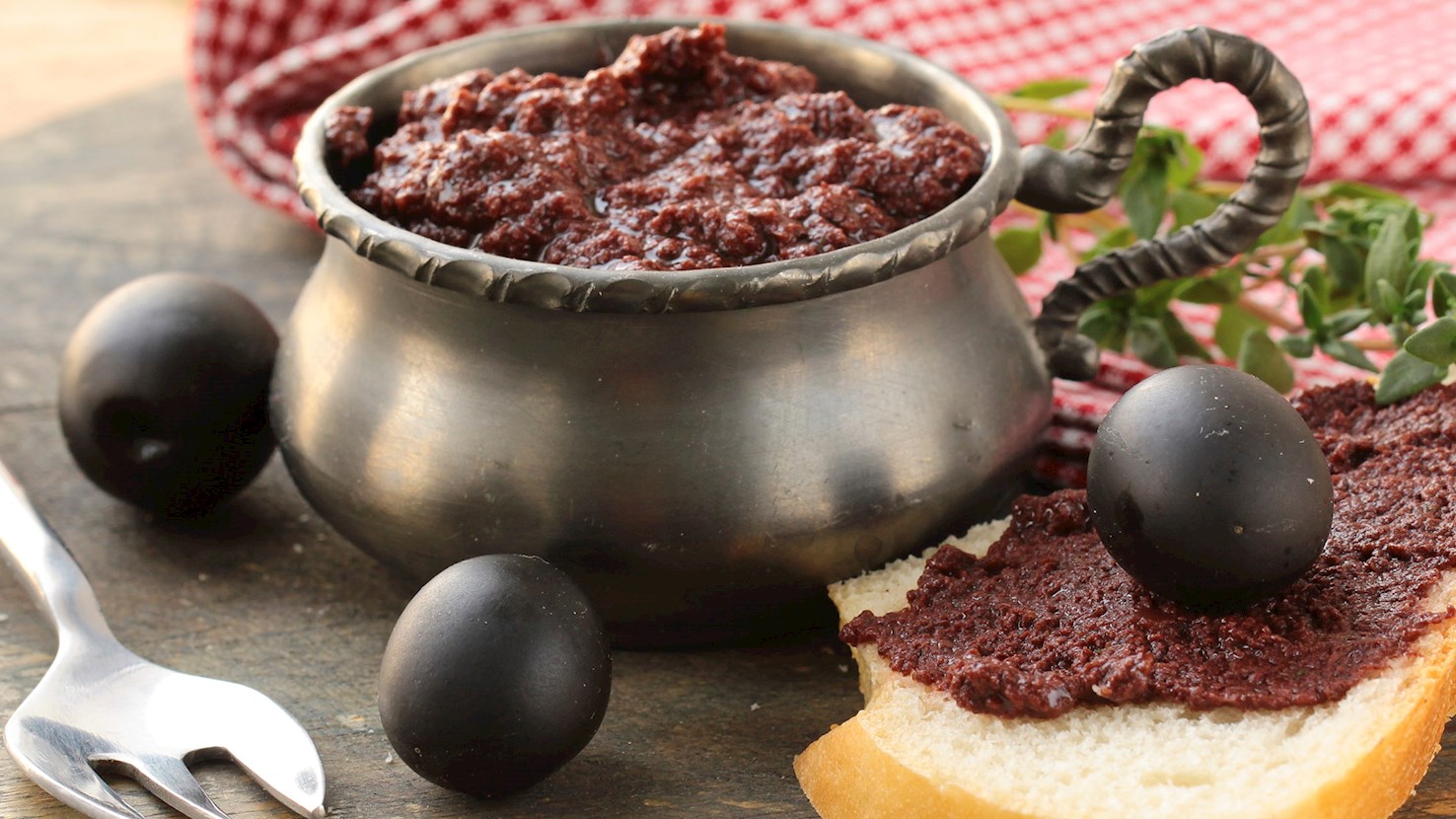
Pâte d’olive is an olive paste from France made by grinding cured olives with olive oil into a smooth or coarse mixture used as a spread, condiment, or cooking ingredient. It is most closely linked to the Provence–Alpes–Côte d’Azur region, where olive cultivation is widespread and local mills and households have long processed olives into various forms to extend their use beyond whole-olive consumption. Its development followed the needs of olive-growing communities that aimed to preserve or repurpose fruit that was fully edible but not ideal for table presentation, leading to the steady use of pastes made from brined or salt-cured olives. As olive production expanded in southern France, pâte d’olive became both a home preparation and a product sold by small producers, cooperatives, and regional food companies, with versions based on local olive cultivars such as Cailletier gaining particular presence in markets. Preparation begins with olives that have already undergone curing, most often through brining, though dry-salted olives are also used for stronger flavor. The pits are removed and the flesh is crushed, ground, or blended while olive oil is added gradually until the paste reaches the desired consistency. Some cooks incorporate lemon juice, garlic, herbs, or capers, but the defining feature is that the paste is centered on olives rather than on added ingredients, distinguishing it from tapenade, which requires capers and usually anchovies. Once prepared, the paste is stored in jars and typically covered with a thin layer of olive oil to reduce oxidation and maintain its flavor. Textural differences depend on the olive variety, its ripeness, and the curing method, giving regional producers products with distinct profiles. Pâte d’olive is eaten throughout southern France and appears in export markets that specialize in Provençal foods. It is spread on bread, toasts, or crackers, used in sandwiches, stirred into sauces or vinaigrettes, applied to fish or poultry before baking, and incorporated into pasta or vegetable dishes. It pairs well with fresh goat cheese, tomatoes, roasted peppers, cured meats, anchovies, and rustic breads. Suitable beverage pairings include dry rosé from Provence, light white wines, sparkling water, and herbal teas when served as part of a simple appetizer plate.
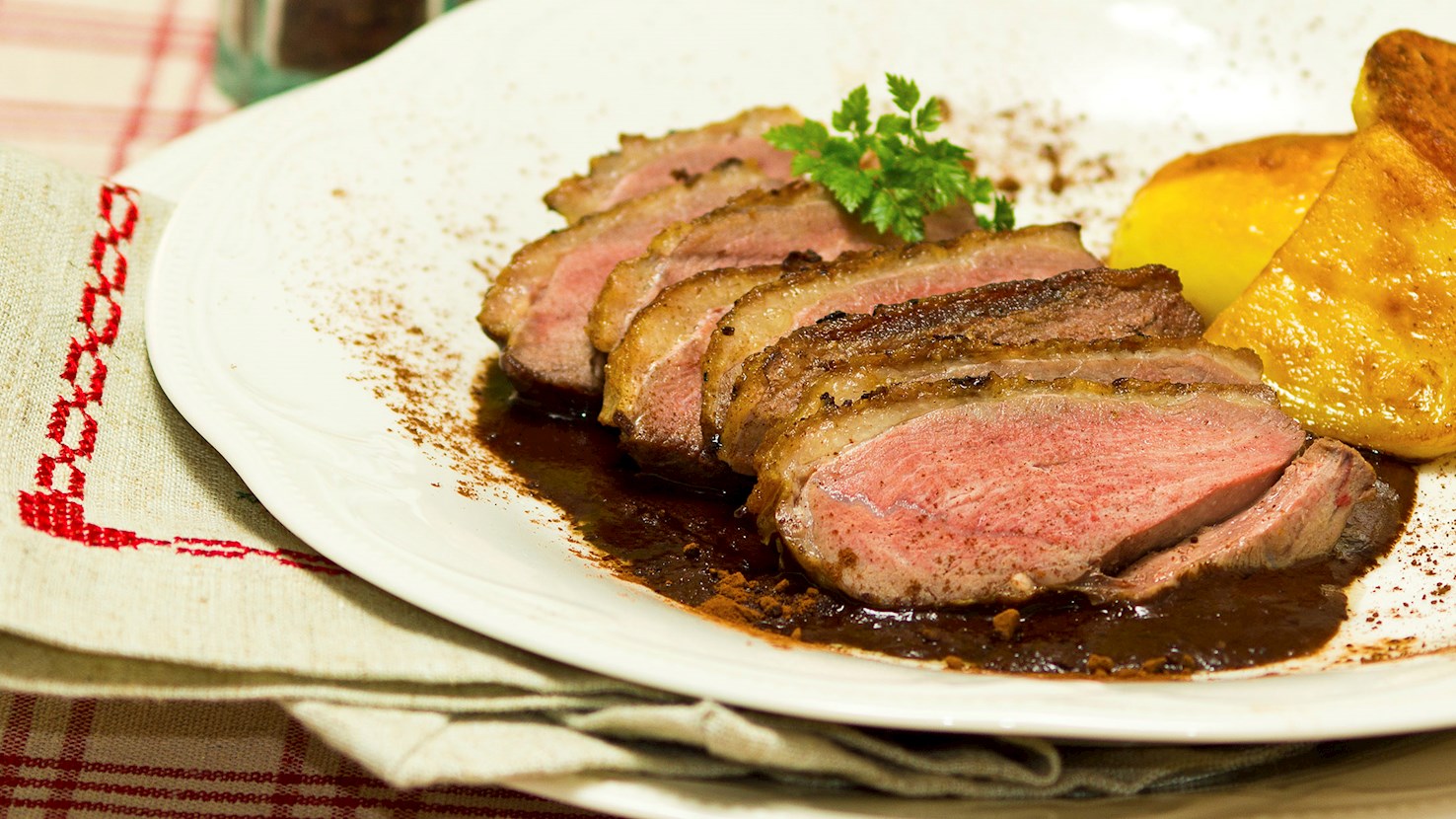
This dish of flash-seared duck breast dates back to the late 1950s, when French chef André Daguin first prepared a magret like a steak and served it medium-rare. The meat is usually served thinly sliced and still slightly pink on the inside. The cut of the breast usually comes from the mulard duck, a cross between the Pekin and the Muscovy duck. This breed is raised for foie gras, so its breast meat is thicker and more flavorful than that of other duck breeds. In the mid-1960s, rare duck breast became extremely popular in the United States thanks to Robert Daley, an American journalist who praised Daguin’s specialty in The New York Times. Today, magret de canard can be found on tables throughout France, both in restaurants and private homes.
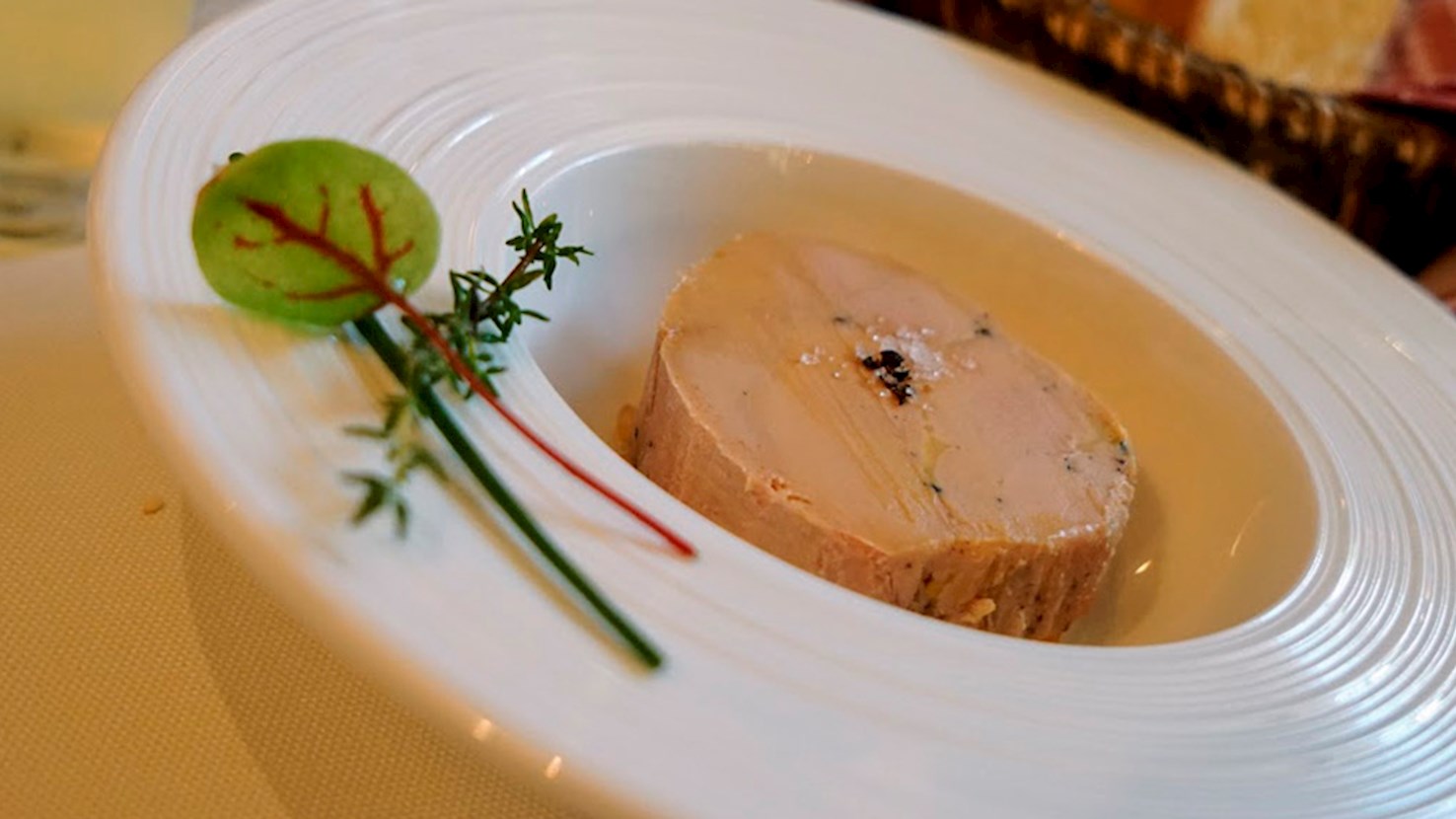
French for fatty liver, this decadent, expensive food product is made by using a controversial force-feeding process known as gavage, in which corn is fed to ducks and geese (primarily to the hybrid male Mulard ducks) through a feeding tube. The livers of birds which are force-fed in this way are enlarged and full of a buttery, slightly sweet fat. Foie gras is prepared by melting the livers in their own juices with a sprinkle of salt, resulting in a supple product. Usually served chilled and in scoops or slices, the texture is similar to that of ice cream. Foie gras is easily spreadable and full of rich flavor. It is creamy pink in color, and the only thing you need to enjoy its flavor to the fullest is a slice of bread or a crusty baguette, or if you’d like to enjoy it in the popular French style, serve it atop a salad. Try it chilled on a piece of toast paired with a few fresh figs. Foie gras is primarily produced in the French regions of Alsace and Périgord, and according to French law, only foie gras made from force-fed ducks or geese can be called foie gras. However, the production or import of foie gras has been banned in many countries, including India, Australia, and a number of EU countries.
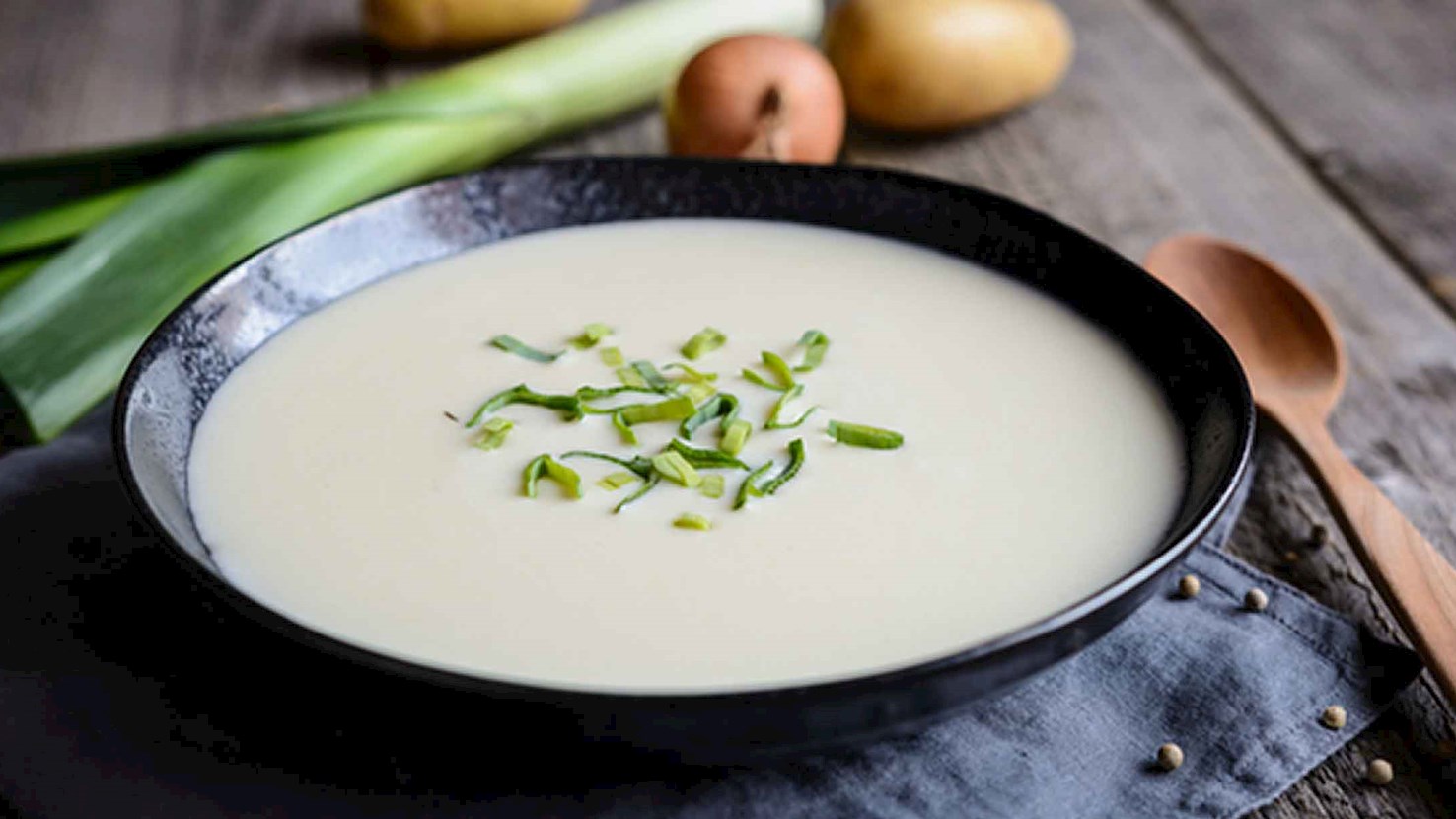
This thick French soup is made with puréed leeks, onions, potatoes, cream, and chicken stock. There is an ongoing debate about its origin – some claim it has French roots, while others insist that the soup is an American invention. One group of food historians say that the soup was invented by French chef Jules Gouffe in 1859, while others believe the original creator to be Louis Diat, a French chef who worked at the New York Ritz-Carlton. Inspired by the potato and leek soup of his childhood, he named the soup crème Vichyssoise glacée after his hometown of Vichy. Today, the soup is traditionally served cold and is often garnished with fresh chopped chives.
TasteAtlas food rankings are based on the ratings of the TasteAtlas audience, with a series of mechanisms that recognize real users and that ignore bot,
nationalist or local patriotic ratings, and give additional value to the ratings of users that the system recognizes as knowledgeable.
TasteAtlas Rankings should not be seen as the final global conclusion about food. Their purpose is to promote excellent local foods,
instill pride in traditional dishes, and arouse curiosity about dishes you haven’t tried.




What People Say