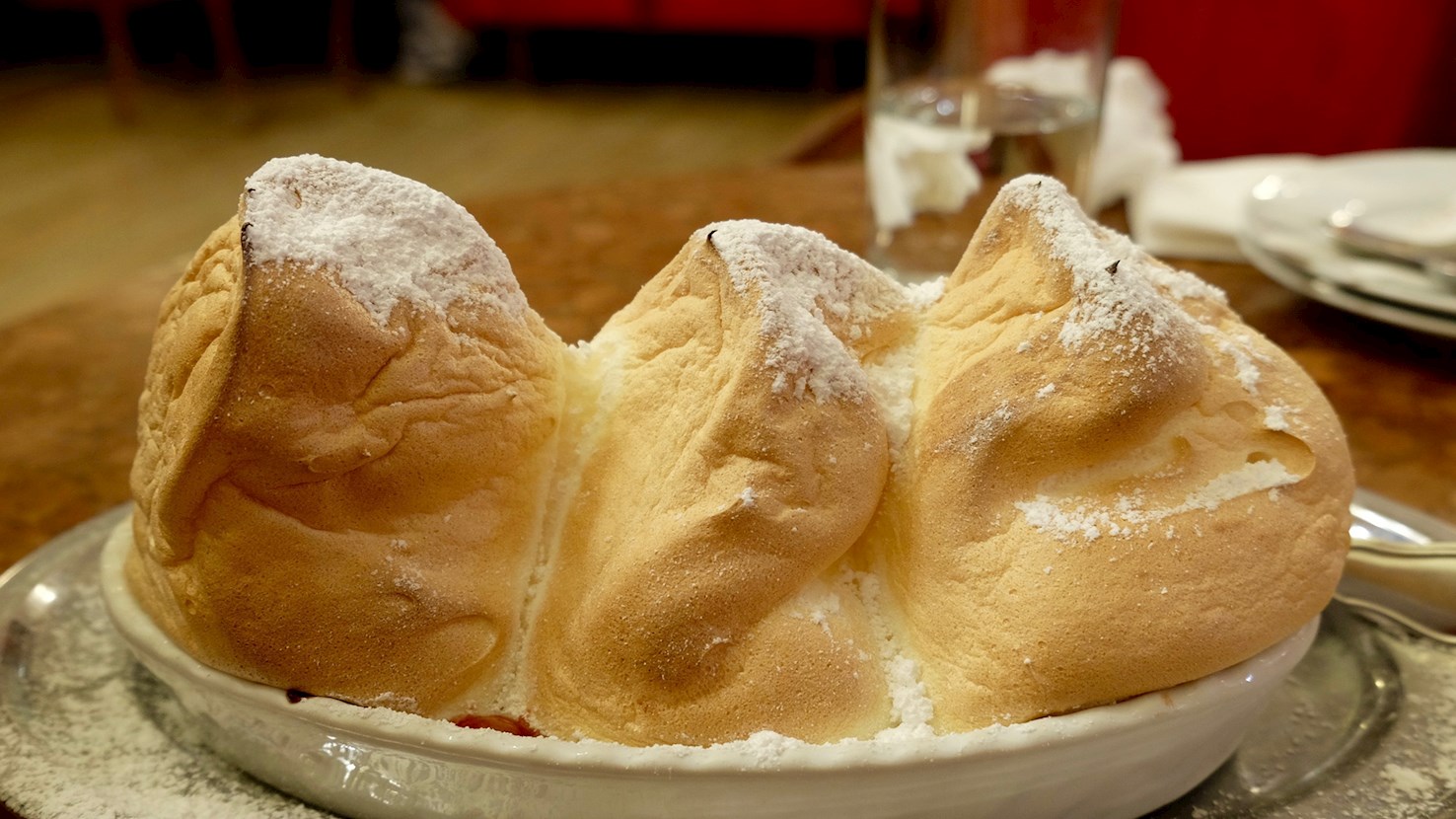
Salzburger nockerl are light and delicate vanilla-flavored dumplings which are, due to the method of preparation, often labeled as a soufflé. As the name implies, the dish was invented in Salzburg in the 17th century, and as an ode to its place of origin, when preparing these sweet treats, the airy mass is arranged on a baking tray in three mounds, representing the three hills that surround the city. The dish is always served warm, either as a dessert or a main dish, and it is traditionally dusted with powdered sugar and paired with various fruit sauces.
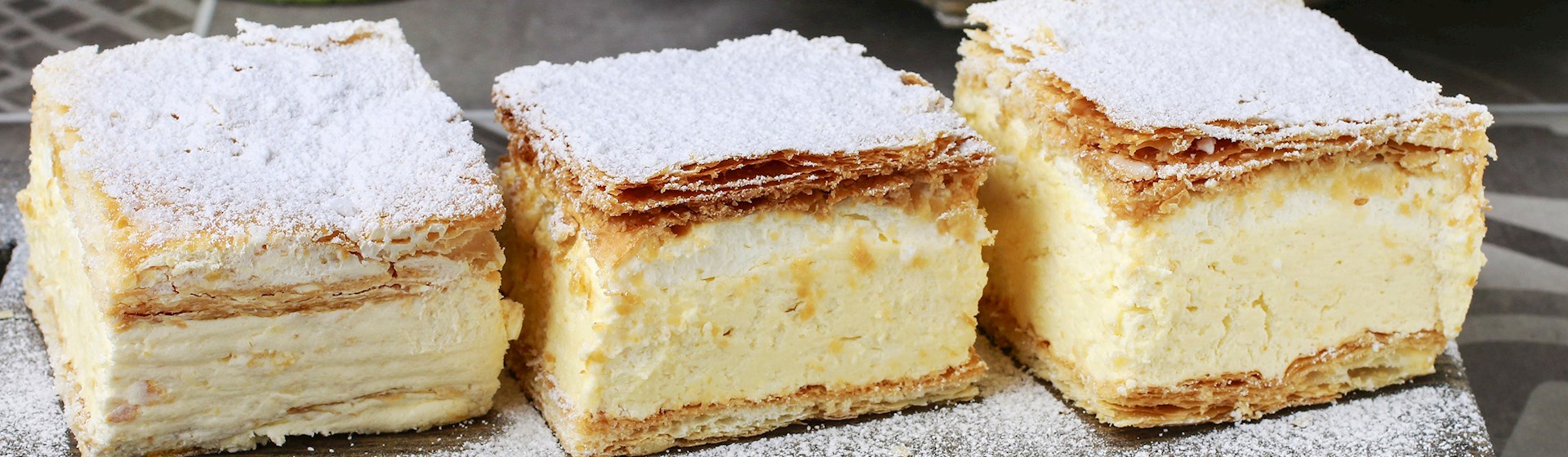
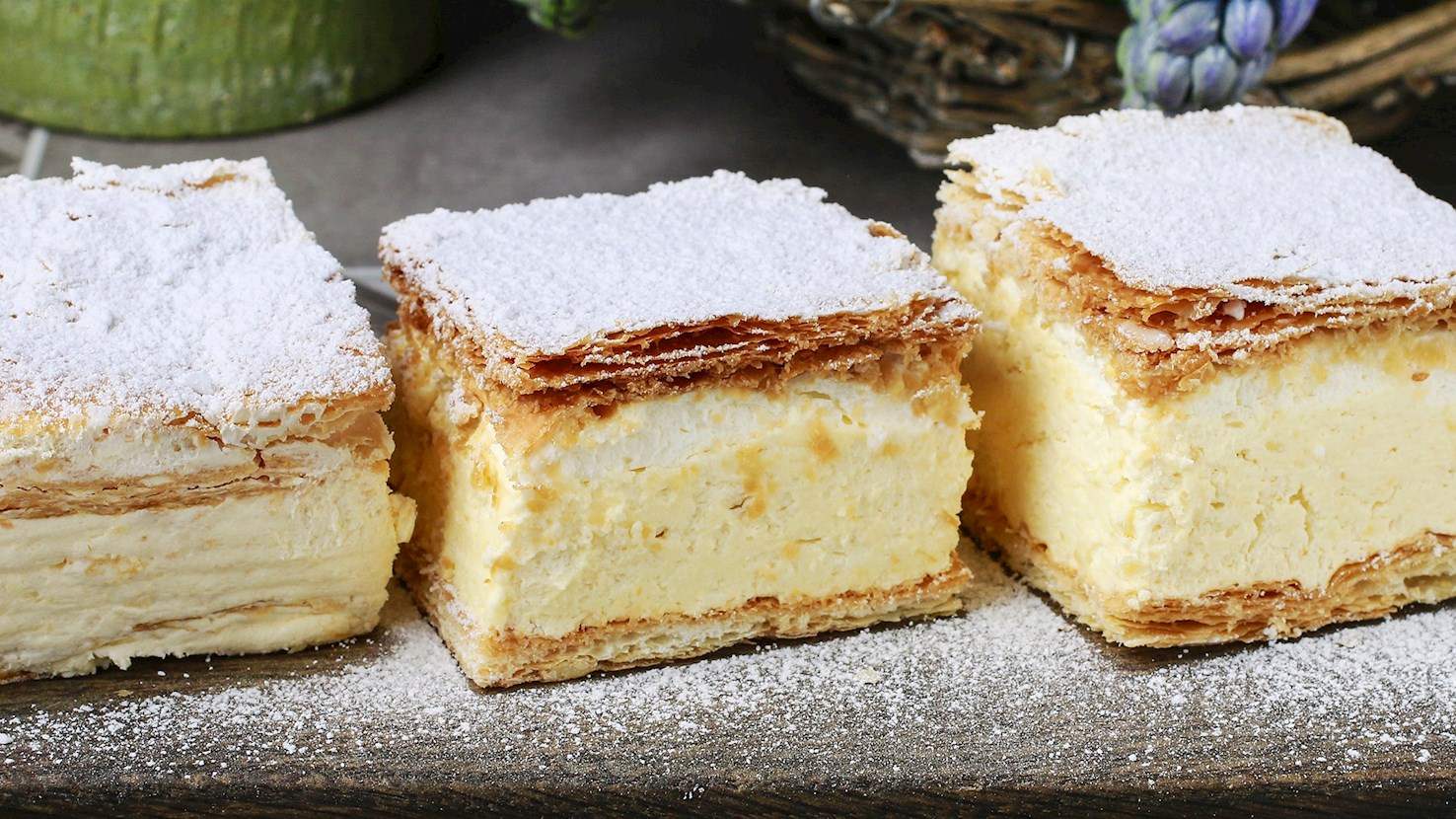
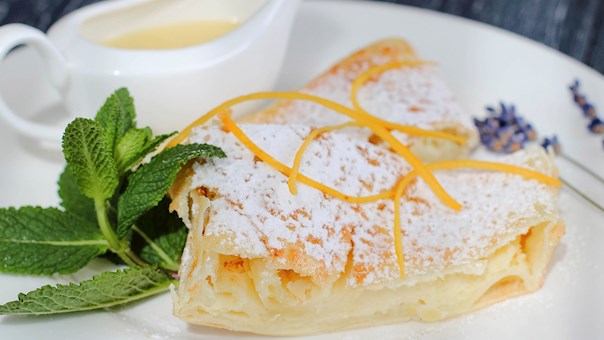
Cremeschnitte is a vanilla-flavored custard cream cake and an absolute classic among central and eastern European desserts. It is known by many names, most of which have stemmed from the German cremeschnitte, and literally translate to either cream slice or, in some cases, cream pie. According to Historical Sociolinguistics, it is believed that the origins of the cremeschnitte date back to the blend of two cuisines in the Austro-Hungarian empire. However, its Polish name Napoleonka indicates that this dessert might have possibly originated from the French mille-feuille, which is also known as the Napoleon - another pastry whose exact origin is unknown, even though its modern form was said to be influenced by improvements of Marie-Antoine Carême, the famous French chef-extraordinaire. Still, while the Napoleon is made up of three layers of puff pastry alternating with two layers of pastry cream, the typical cremeschnitte is made with only two layers of puff pastry held together by a hefty amount of vanilla-flavored pastry cream, which is sometimes topped with a thin layer of whipped cream. Cremeschnitte is most often simply sprinkled with icing sugar, but it can also be topped with a glossy and smooth glacé icing, and nicely decorated with a traditional chevron design. Two of the most popular cremeschnitte varieties include the aforesaid Polish Napoleonka or kremówka, which was known to be the favorite dessert of Pope John Paul II, and Slovenian kremna rezina, the signature dessert of Bled; a popular Alpine resort settled on the shores of the eponymous lake.
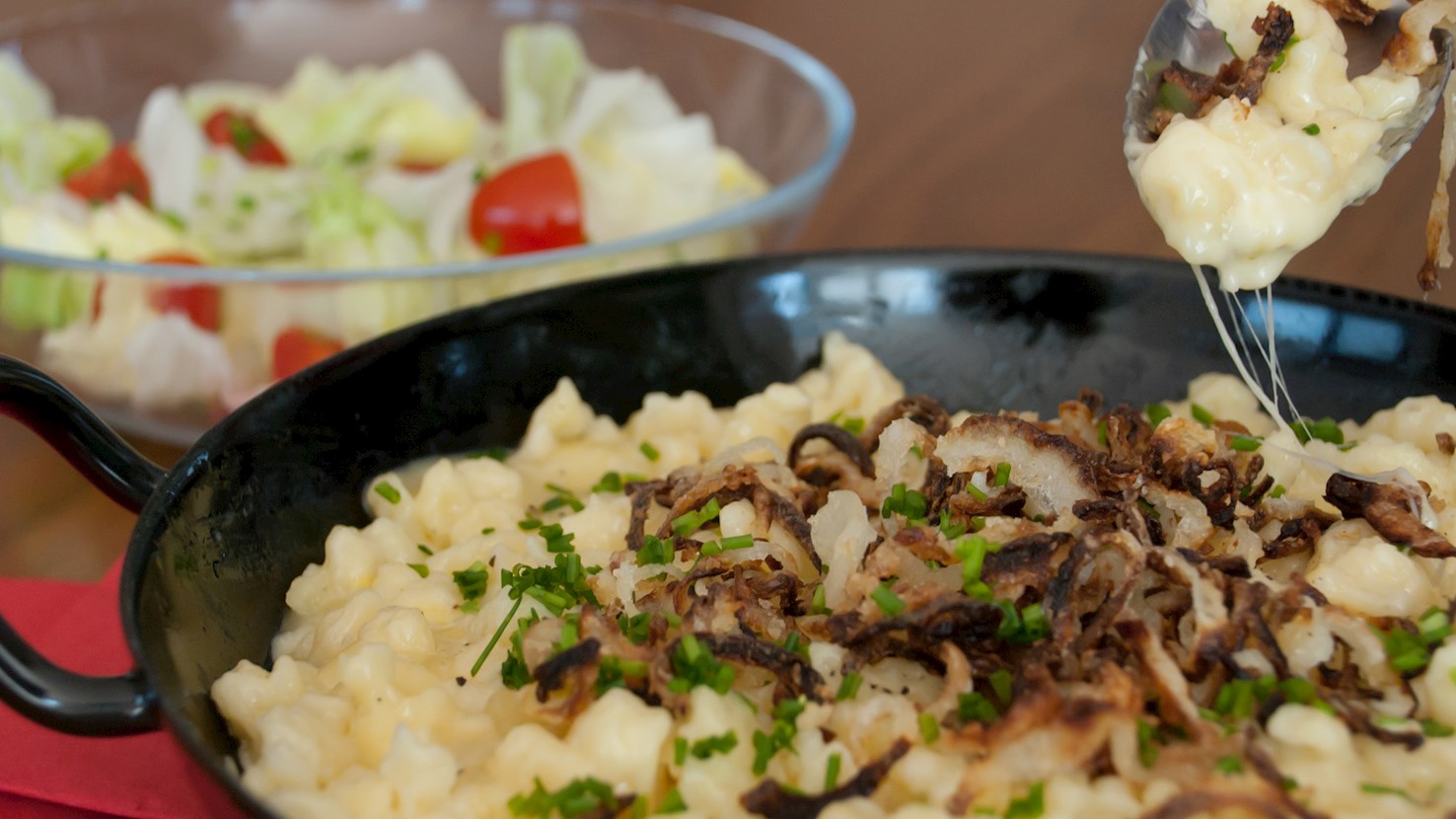
Kasnocken is a savory dish made by coating small dumplings with melted cheese and caramelized onions. The dish is said to originate from Austria’s Pinzgau region (congruent with the Zell am See district), and in line with the place of origin, the cheese used when preparing the dish is the Pinzgauer Bierkäse, characterized by its strong odor and mild flavors. Since this is one hearty meal, a shot of schnapps is traditionally taken afterwards for improving digestion.
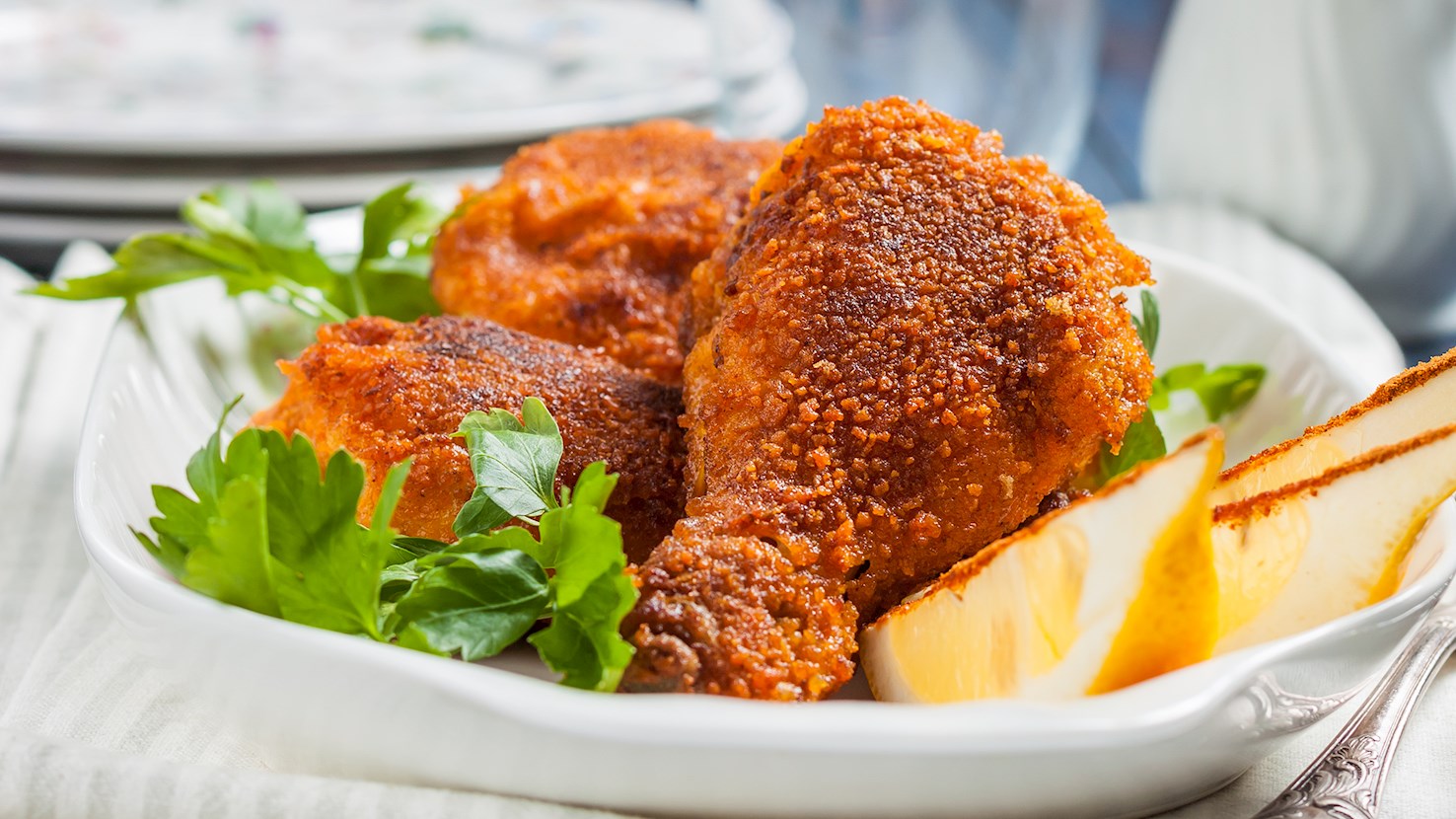
The Viennese version of fried-chicken initially appeared in the 18th century and was especially esteemed during the Biedermeier period. The dish consists of a whole chicken, preferably smaller in size, which is generously rubbed with spices and lemon juice. It is then cut into pieces that are dipped in egg wash, coated in flour, and then in breadcrumbs before they are fried until golden and crispy. Backhendl was originally prepared with a whole, deboned chicken, and the dish was traditionally served alongside fried offal, usually chicken liver and heart. Nowadays, it rarely appears in its original form and is traditionally accompanied by lemon wedges, fried parsley leaves, lettuce, and potato salad.
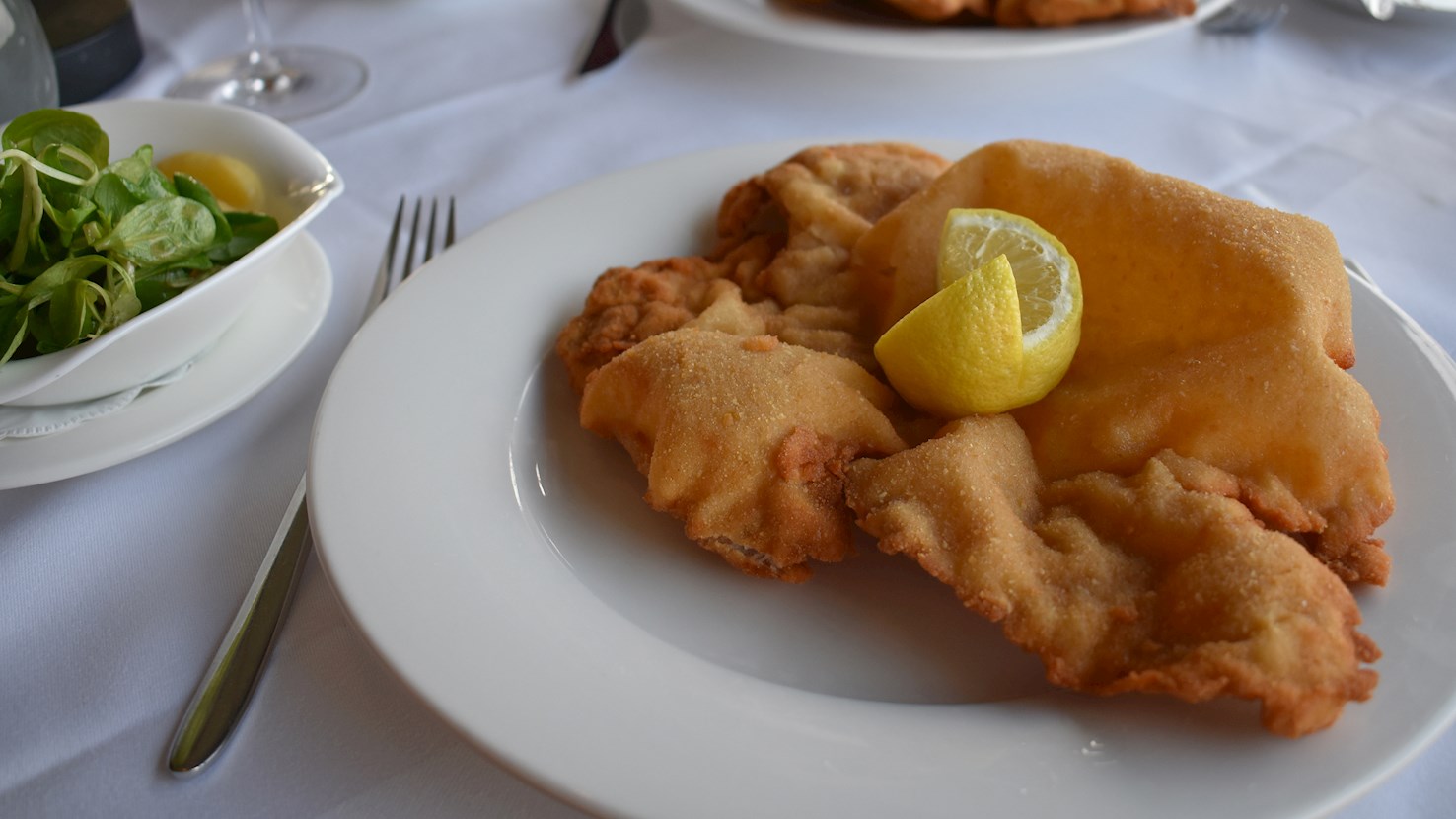
One of the best-known dishes of Austrian cuisine, the Wiener schnitzel is a thinned, breaded, and pan-fried veal cutlet that is traditionally served with a dollop of lingonberry jam, lemon wedges, and either buttered parsley potatoes, a simple potato salad, or french fries. The dish is protected under Austrian law, and—if it is to be called Wiener schnitzel—it must be made with veal. However, pork is often used instead of veal because it's more available and cheaper. Such a schnitzel is not considered a real Wiener schniztel and is referred to as Wiener schnitzel vom schwein (lit. Wiener schnitzel from pork) or schnitzel Wiener art (lit. Viennese style schnitzel). But sadly, these days, the schnitzel made with pork is what most people consider the real-deal Wiener schnitzel. Even Figlmüller, probably the most popular schnitzel spot in Vienna, offers both the Wiener schnitzel made with pork and the one made with veal. Despite this dish being one of Austria's most popular offerings, it has been suggested that this Austrian national dish was actually invented elsewhere. According to one legend, in the 19th century, Austrian field marshal Josef Radetzky supposedly brought the schnitzel to Vienna upon returning home from Italy, where he had enjoyed the Milanese cotoletta, a dish that bears quite a strong resemblance to the Viennese classic. Regardless of its true origins, the crispy yet tender Wiener schnitzel remains a favorite in Austria and beyond.
Tiroler knödel are traditional dumplings from the Tyrol region of Austria that are hearty and rustic, reflecting the mountainous region they come from. The dumplings are typically made from stale bread, milk, eggs, and onions, with the distinguishing inclusions of speck, spinach, cheese, mushrooms, and other local ingredients. Once the dumpling mixture is prepared, it's usually shaped into balls and boiled. There is also a slightly different variety from the Italian regions of South Tyrol and Trentino, locally known as canederli, which are generally much harder and more compact. The finished dumplings might be served in a rich broth and eaten as a soup or served as a side dish with meat and gravy.
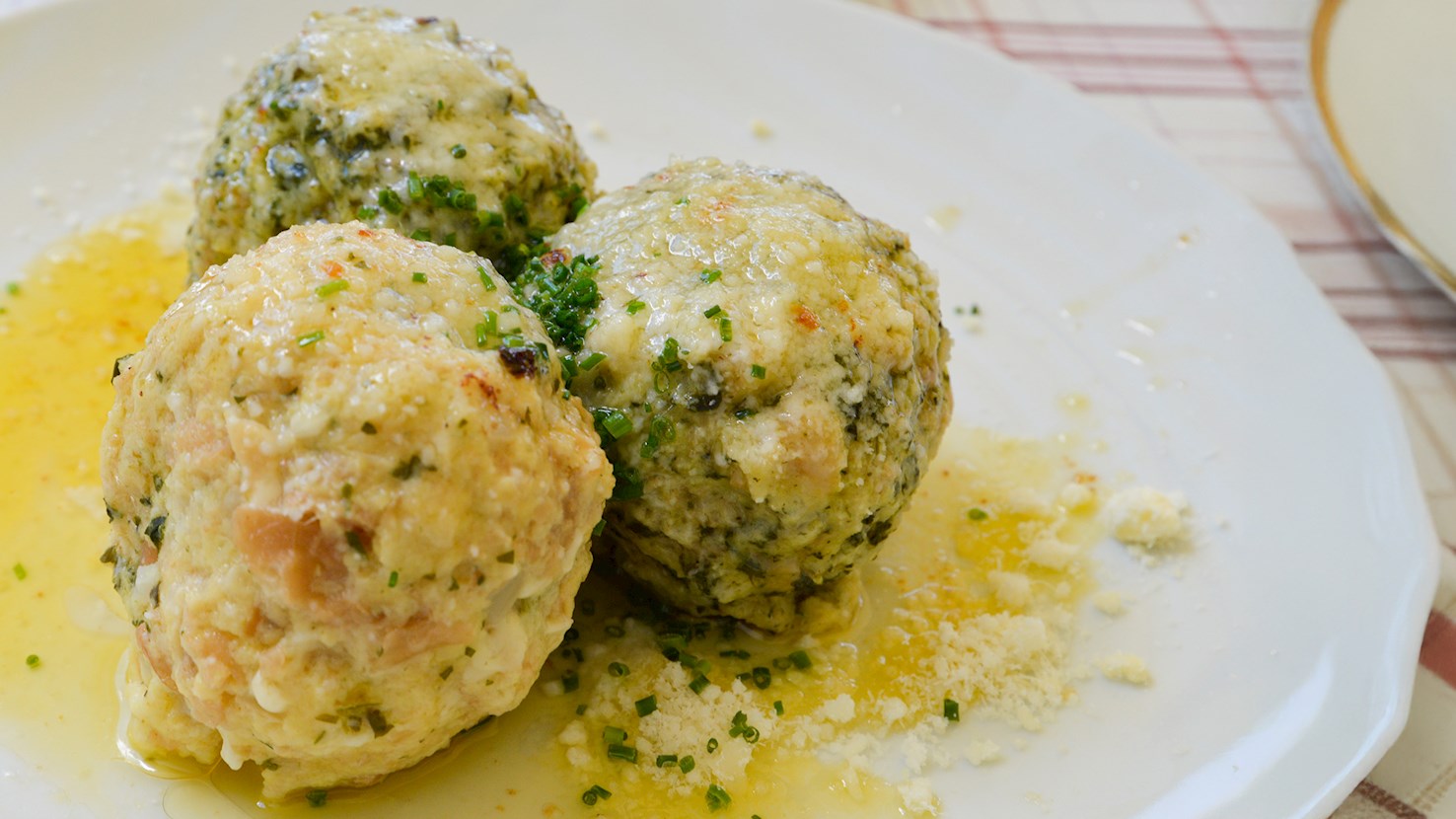
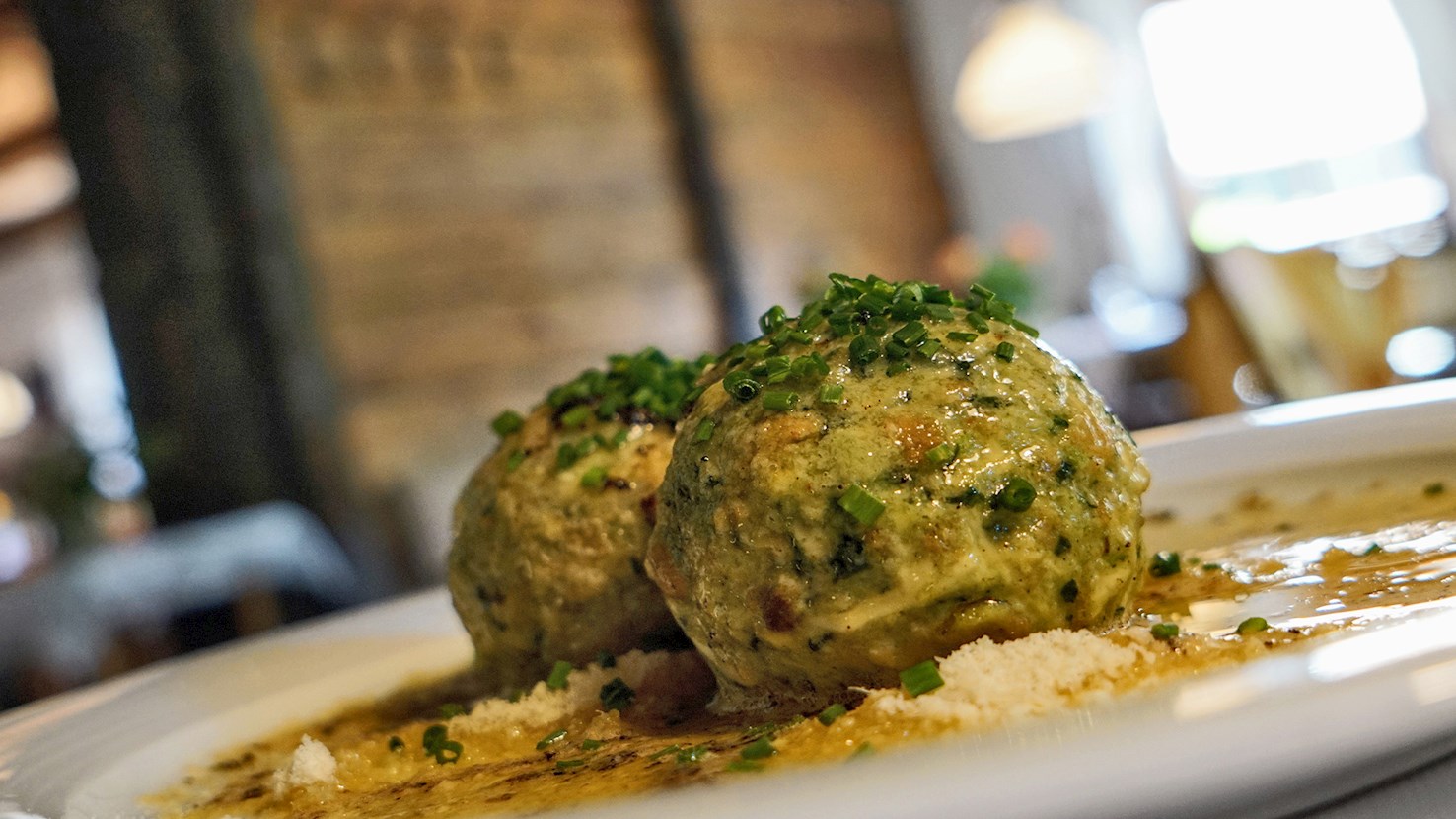
Spinatknödel is a spinach dumpling from Tyrol that is usually served as a side dish. It provides an inventive way of using up leftover stale bread, which is combined with a combination of spinach, eggs, butter, garlic, onions, and cheese, preferably parmesan. After they have been boiled, the dumplings are traditionally drizzled with melted butter and sprinkled with grated cheese.
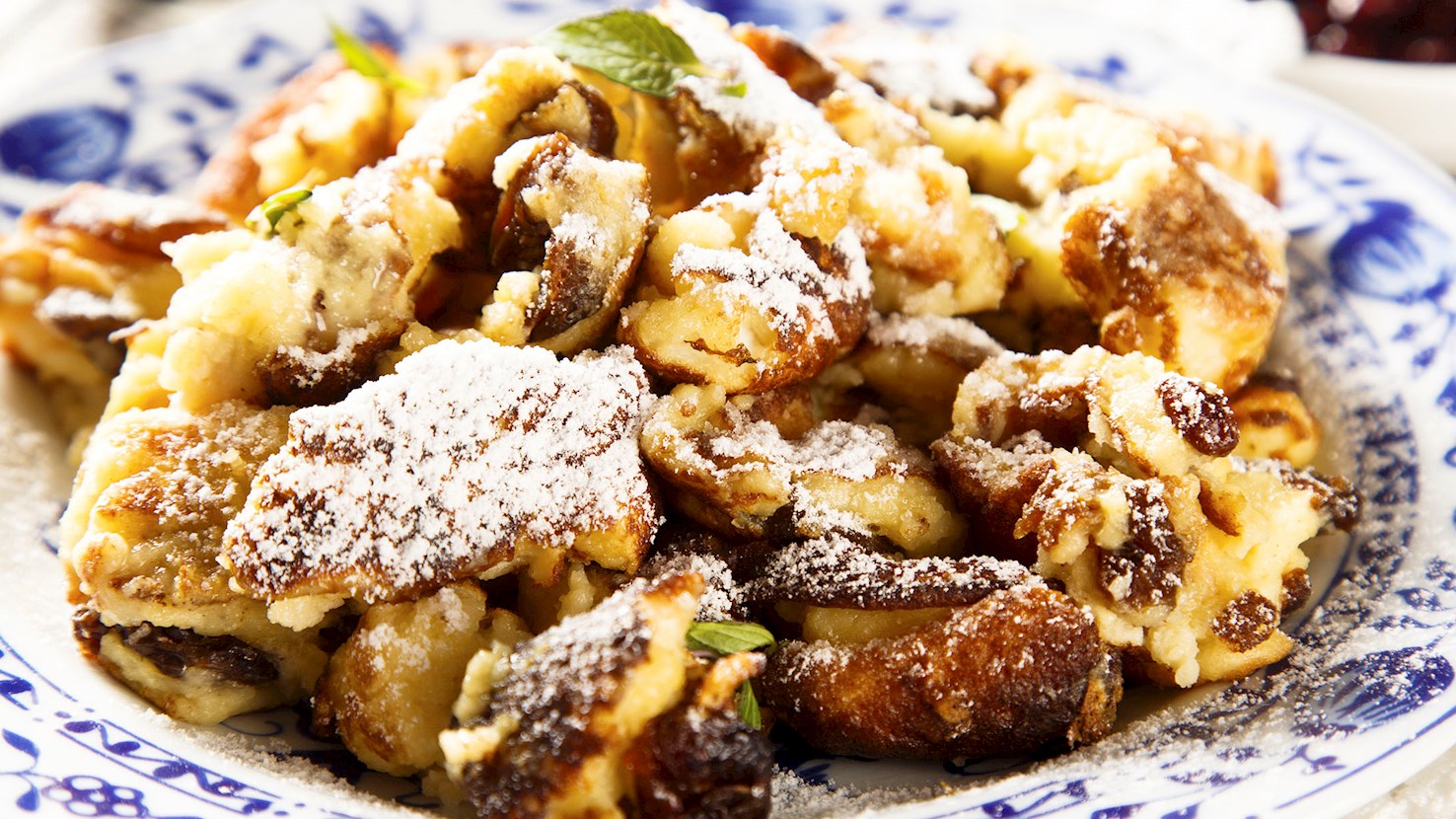
Also known as the Emperor's mess, this Austrian dessert can be described as a fluffy, lightly caramelized, scrambled pancake. Legend has it that kaiserschmarrn was the favorite dessert of Kaiser Franz Joseph I, after whom it was named. The dish is traditionally served either with zwetschkenröster (plum compote) or with a big spoonful of apple, pear, or berry preserve. Lavishly dusted with icing sugar, kaiserschmarrn is the perfect comfort food, indeed fit for an emperor and easily one of the best desserts Austria has to offer. Apart from the beloved, old-fashioned kaiserschmarrn, depending on the filling, some of the modern takes on this Austrian classic include apfelschmarrn (apples), kirschschmarrn (cherries), mirabellenschmarrn (mirabelle plums), nußschmarrn (walnuts, almonds, hazelnuts) and sauerrahmschmarrn (sour cream). Besides Austria, kaiserschmarrn is also a popular and common dessert in the German region of Bavaria. It can also be found in countries that were once part of the Austro-Hungarian Empire.
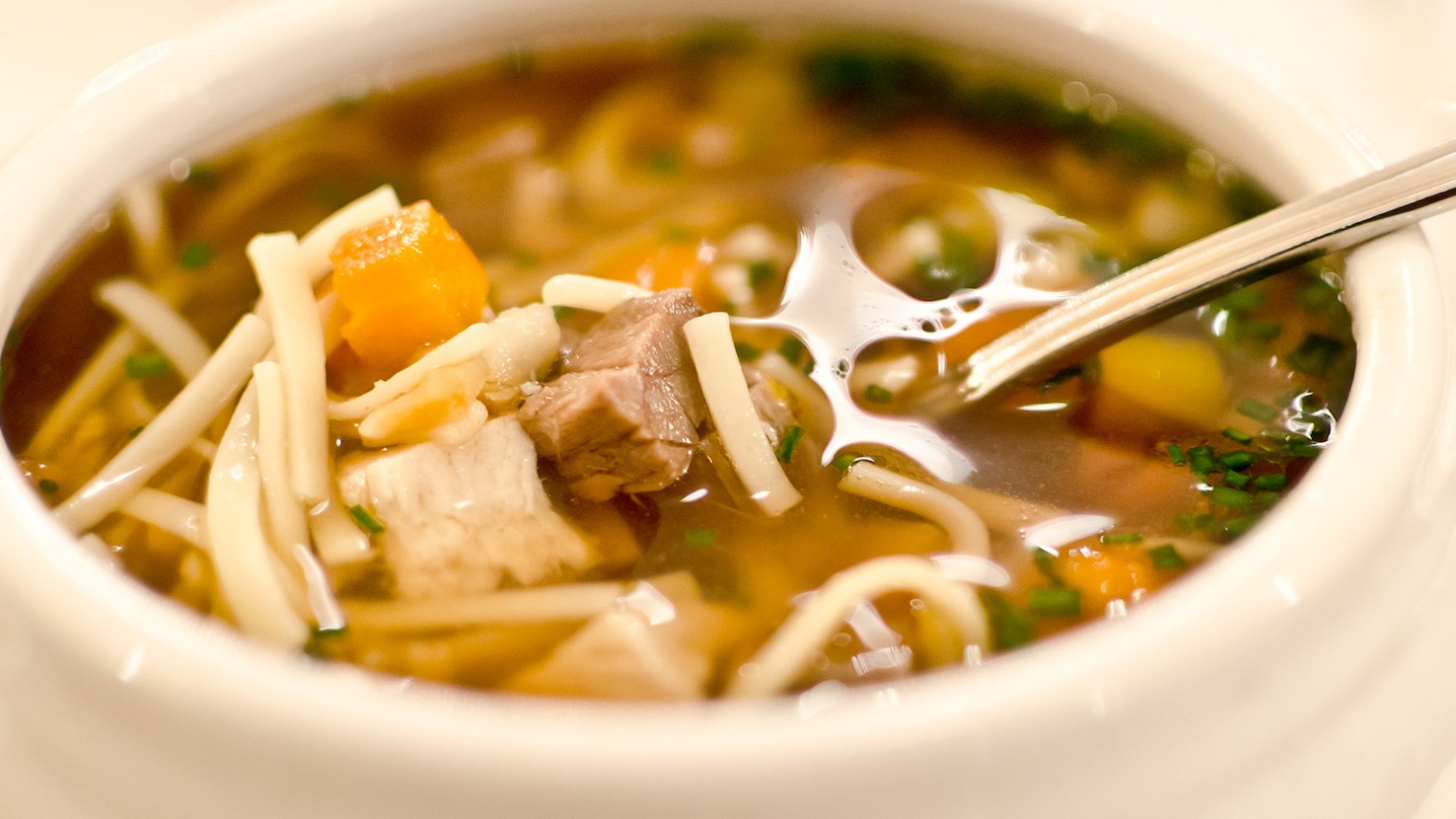
Soups are the essential part of Austrian cuisine, and the most popular clear soup in the country is the simple rindsuppe. This particular variety has played a vital role in the Viennese culinary history, with which it is usually associated. The preparation of the broth is time-consuming and often includes boiling only beef bones for a long time. The meat is cooked separately, usually in large pieces, and is subsequently sliced or cubed, then served. The most common vegetables cooked with the meat include carrots, parsley, celery, and leeks, which are also served together with the diced meat. The onions are typically roasted on an open flame before being added to the soup. While the meat and vegetables are cooking, the foam is left untouched, and only when all of the ingredients are thoroughly cooked, the soup is strained to get its characteristic, clear golden color. The soup is usually served with traditional thin wheat noodles, but other varieties might include semolina and liver dumplings. Rindsuppe is served everywhere in Austria, and it can easily be found in every traditional Gasthäuser restaurant. It is usually served as a part of a large three-course meal, either as an appetizer or as the first course.
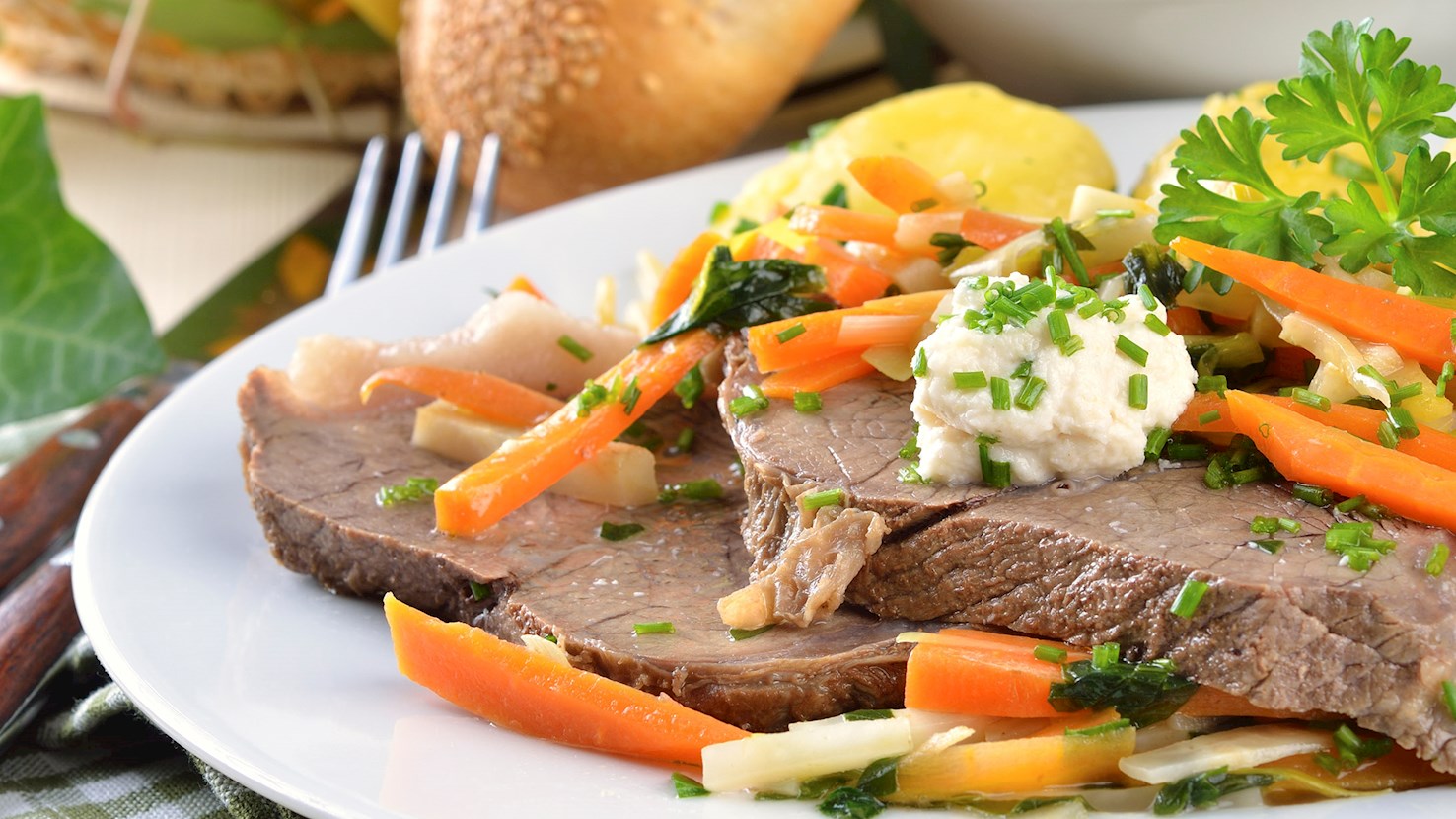
Even though tafelspitz is today one of the most popular Austrian dishes, this succulent boiled veal dish was once reserved only for the ruling class, and it was the favorite dish of Emperor Franz Joseph I. According to the 1912 imperial cookery book, tafelspitz was standard fare at the court, and "his Majesty’s private table was never without a fine piece of boiled beef." The name tafelspitz (lit. a tip [of meat] for the table) refers to a cut from the top hind end of the cow just below the tail, though some cooks prefer to use top round or chuck for this dish, while the richest and juiciest meat comes from a leg cut called beinfleisch. Regardless of the cut, the meat is always simmered slowly with root vegetables. Some chicken pieces and a marrow bone may also be added to the mix, and the pot is constantly skimmed, resulting in a crystal clear broth. Traditionally, tafelspitz is eaten in separate courses: first comes the broth that's served hot in bouillon cups, followed by tender slices of beef which are usually accompanied by potatoes, carrots, and a creamy apple-horseradish and chive sauce.
TasteAtlas food rankings are based on the ratings of the TasteAtlas audience, with a series of mechanisms that recognize real users and that ignore bot,
nationalist or local patriotic ratings, and give additional value to the ratings of users that the system recognizes as knowledgeable.
TasteAtlas Rankings should not be seen as the final global conclusion about food. Their purpose is to promote excellent local foods,
instill pride in traditional dishes, and arouse curiosity about dishes you haven’t tried.



What People Say