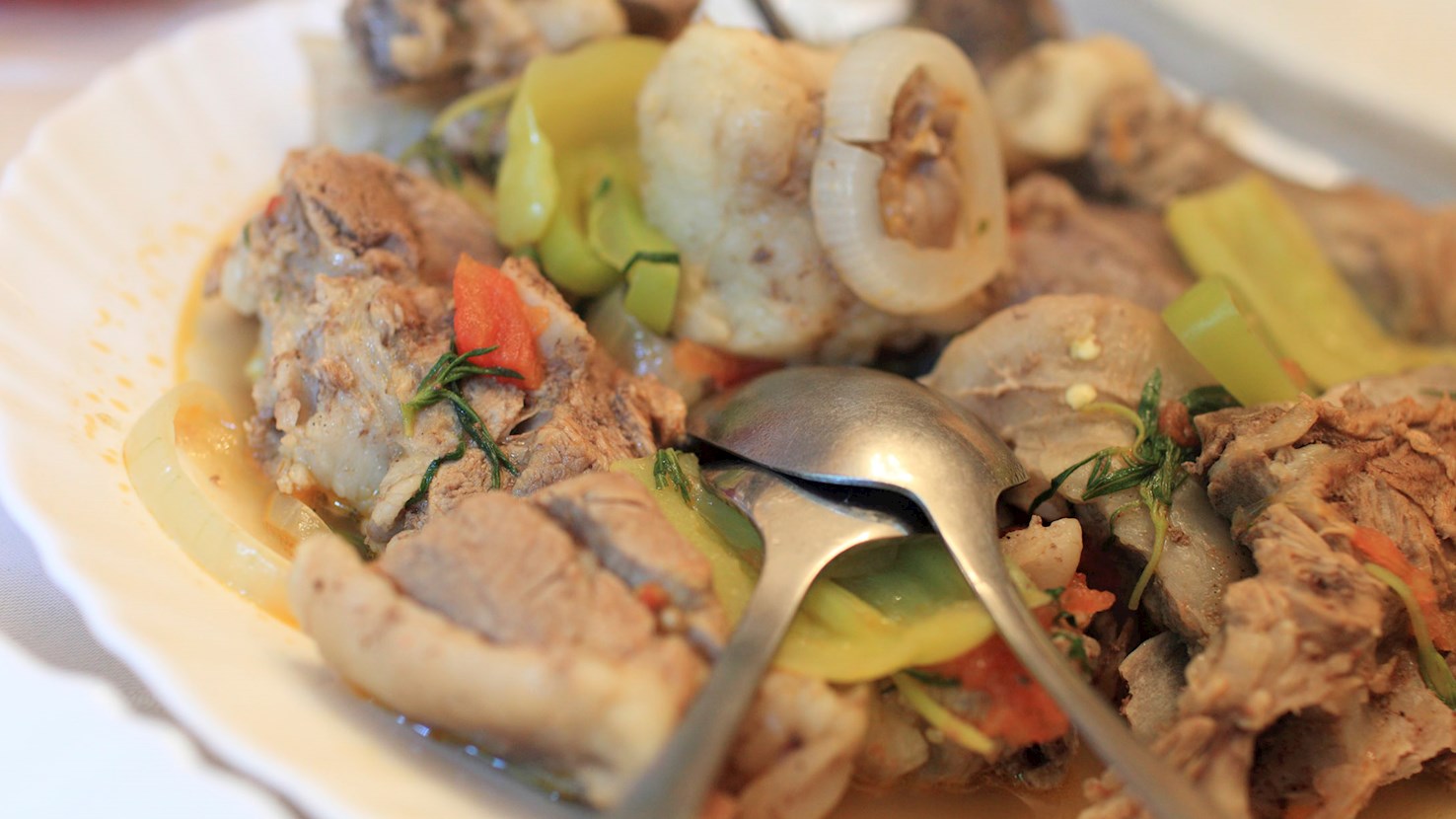
Khashlama is a straightforward and traditional meat dish originating from the Caucasus region. Although time-consuming, the dish is made by simply boiling large chunks of meat, usually beef or lamb, in hot water. The traditional version of this famous dish does not include other ingredients, except a few spices, making the boiled pieces of meat the star of the dish. Because of this, khashlama contains only the finest meat cuts available. The origins of the dish believe to be in the Georgian Kakheti region, where it is regarded as a regional signature dish. However, it is also widely popular in the neighboring Armenia, causing disputes over the true origin of the dish. Traditionally, khashlama is prepared on an open fire, slowly, until the meat is perfectly tender. It is commonly flavored with onions, garlic, bay leaves, and peppercorns. Because it is rather time-consuming, the dish is usually served on special occasions, and it is a common staple of supra, a traditional Georgian feast. Boiled pieces of meat are commonly served hot and garnished with a generous amount of coarse salt and chopped parsley.
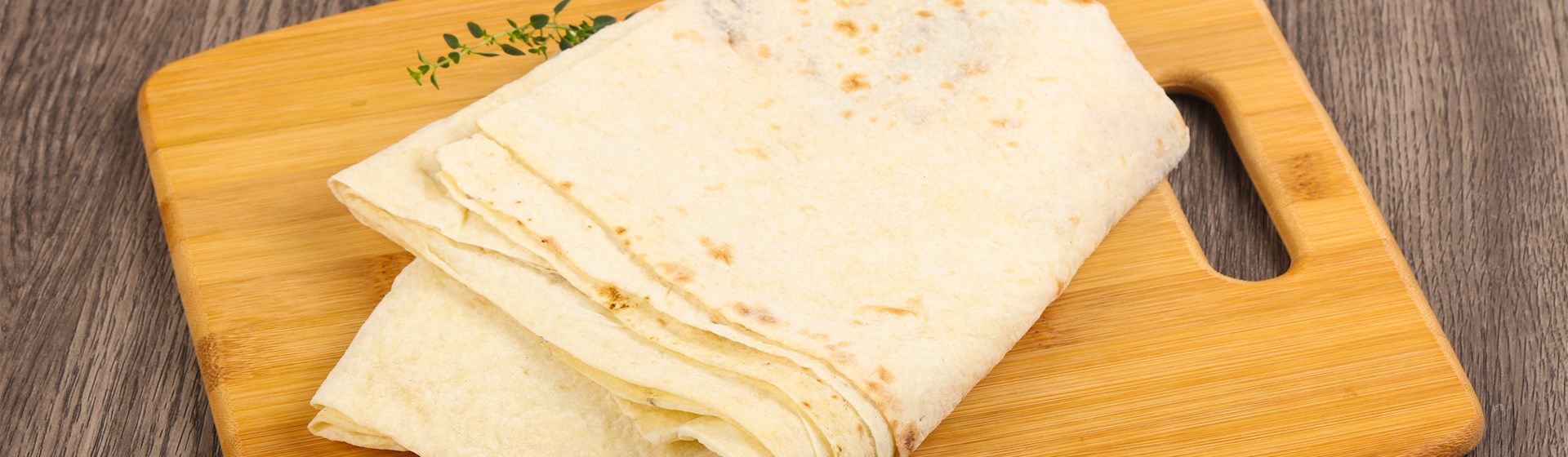
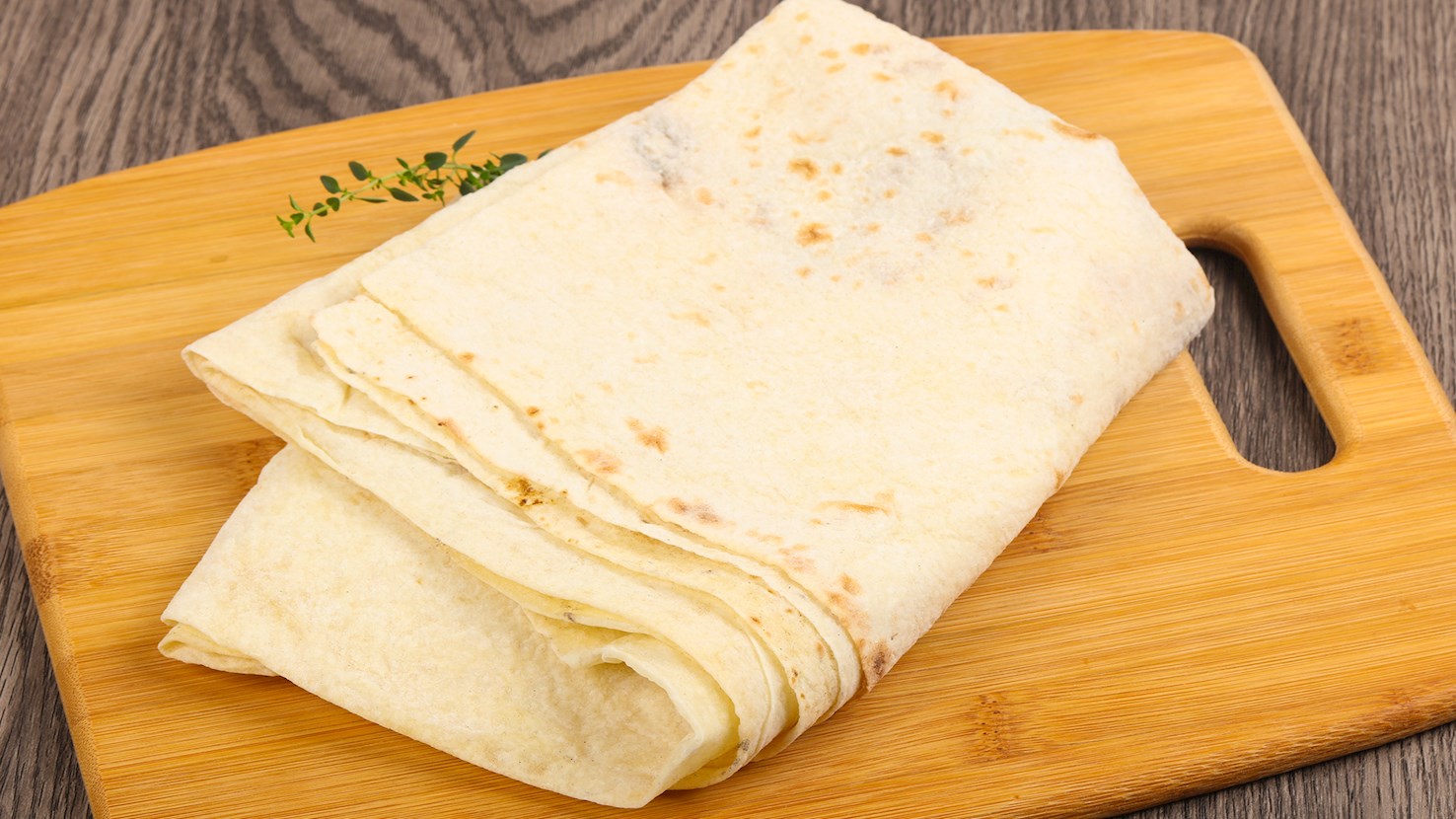
Lavash is a traditional flatbread claimed by many food specialists to be Armenian in origin, but it is well-known and prepared throughout Western Asia (most noteably Iran and Türkiye) and the Caucasus (most noteably Azerbaijan). The dough consists of wheat flour, salt, and water leavened only with a sourdough starter. Once the dough has risen, it is shaped into small lumps that are rolled flat and then slapped against the inside of a clay oven called tonir. Depending on the part or region of Armenia, these flatbreads can vary in thickness, size, shape, and the method of kneading. Because the process of making lavash is so labor-intensive, as well as time-consuming, this flatbread is typically prepared in advance. The baked flatbreads are kept in a dry place and sprinkled with water before use to restore their flexibility. Even to this day, lavash is only torn by hand and can be used either as bread, a wrap, or a spoon. The significance of this flatbread in Armenia is reflected in the ceremonial ritual of its preparation, starting with the choice of women who are fit to make this flatbread, to the sacred and obligatory whispering of blessings or reciting of kind words while making the dough, as it is believed the dough has magical powers to make the whispered wishes come true. As it is considered to be a symbol of fertility and prosperity, lavash has great significance in the Armenian wedding ceremonies, and is also used in traditional medicine since it is believed to have healing properties. In 2016, UNESCO recognized lavash making and sharing culture as an Intangible Cultural Heritage of Humanity.
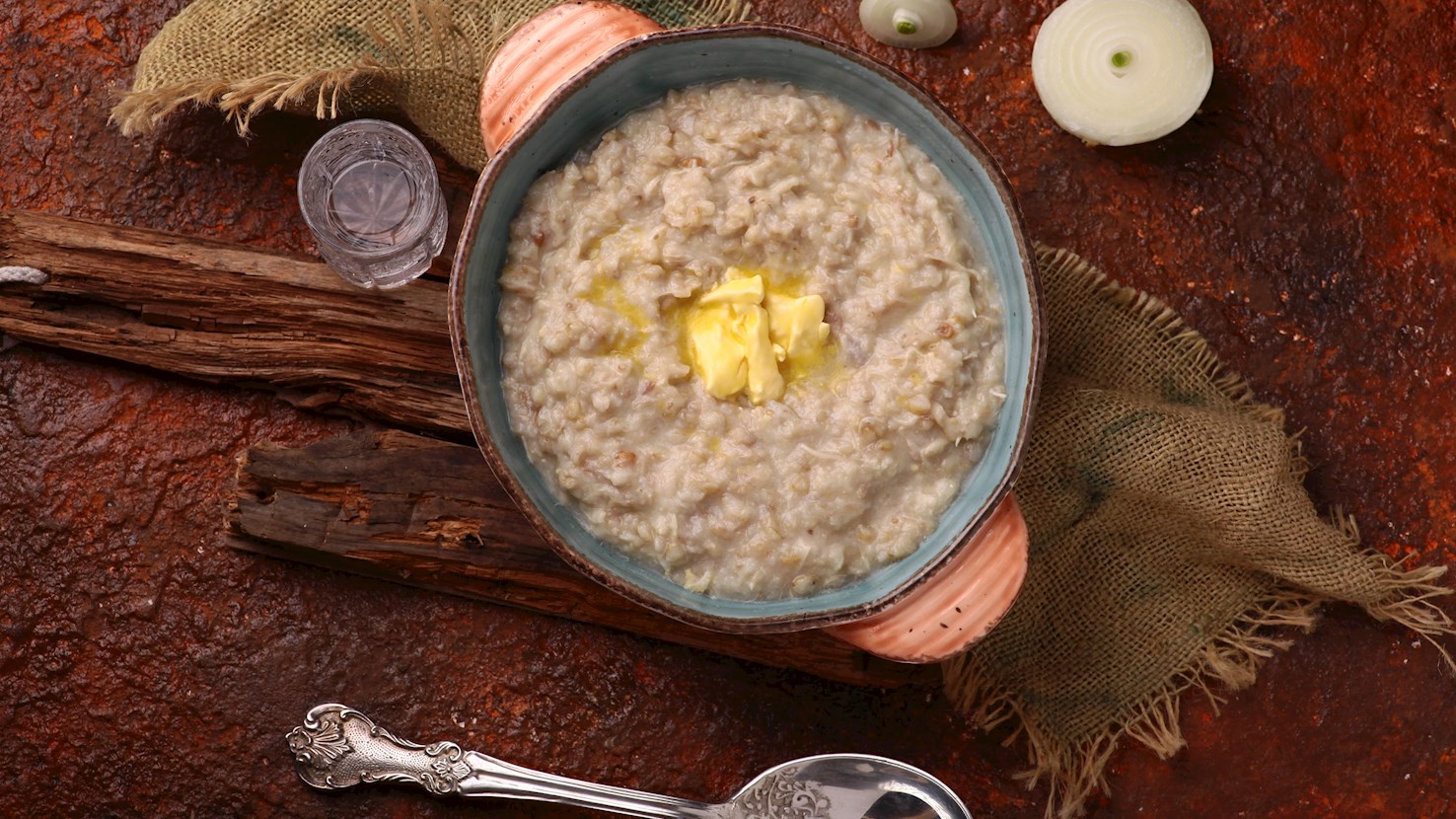
Considered the national dish of Armenia, harissa is a thick porridge made by slowly simmering korkot (dried or roasted cracked wheat) together with fatty pieces of lamb or chicken meat. Said to have been invented in the Ararat plains, the origins of the dish can be traced back to ancient times, as well as to Gregory the Illuminator, the patron saint of Armenia, who would offer it as a charity meal. Even to this day, harissa is considered a charity meal, and is traditionally prepared each year for Easter, as well as to commemorate the Musa Ler resistance during the Armenian genocide of 1915. When it comes to the method of preparing, there are two diverging opinions; one claims it is forbidden to stir harissa until it is cooked all the way, while the other insists it should be stirred as soon as the wheat is half-cooked. The finished meal is served in bowls, topped with butter, and paired with a side of pickled vegetables and lavash flatbread.
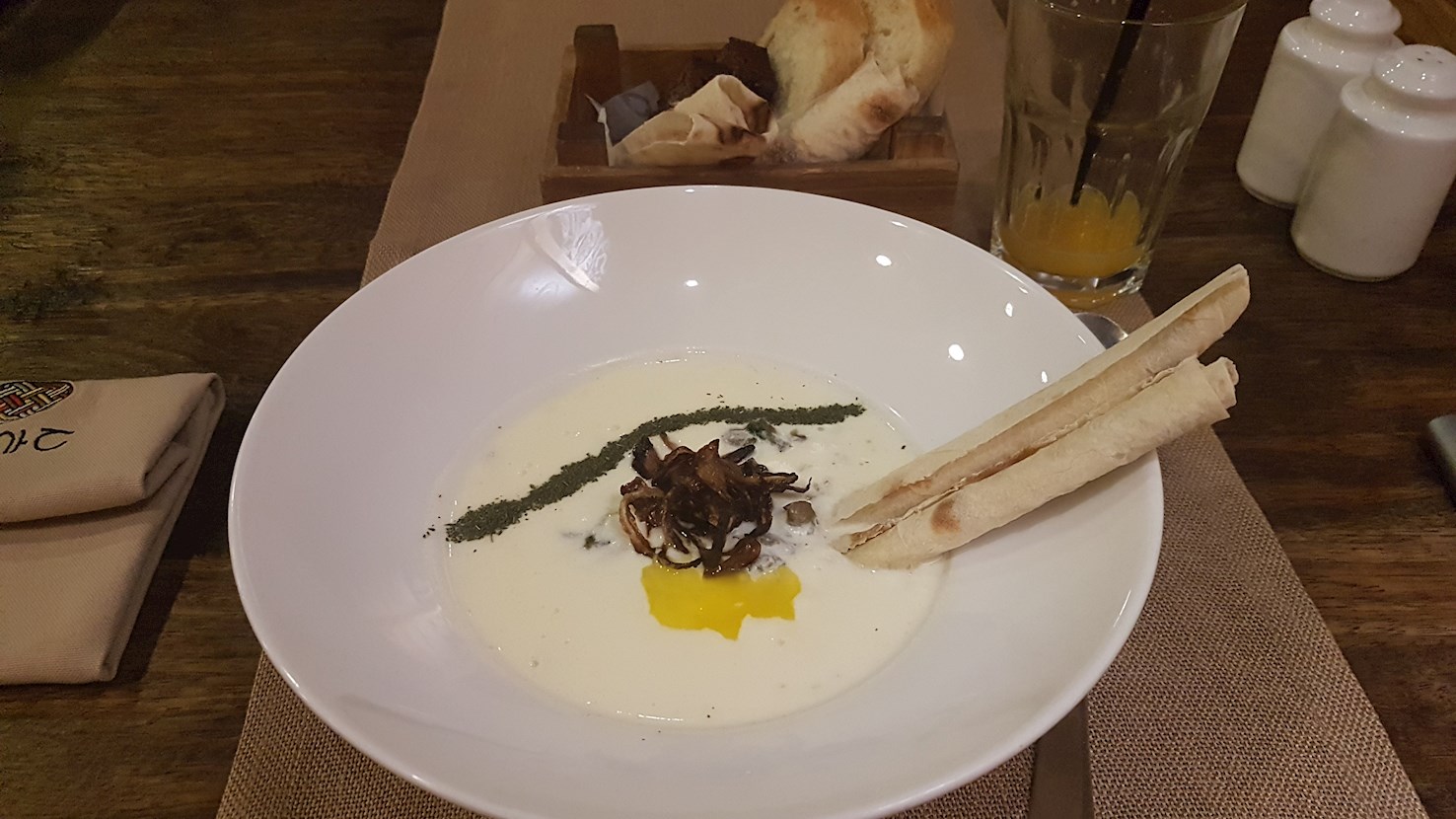
Kyalagyosh is a traditional yogurt soup served over toasted pieces of flatbread. In order to prepare the soup, eggs, flour, strained yogurt, and sour cream are combined until smooth, and then simmered with boiling water and chicken bouillon. The soup is then traditionally flavored with a mixture of dried maralot’i, thyme, mint, or cilantro and onions which have been previously sautéed in some butter and oil. Aromatic and warming, the soup is poured over crispy toasted pieces of flatbread (traditionally lavash) and it can be consumed hot or chilled. Typical accompaniments include fresh bread, onions, vodka, lentils, beef, and spiced garlic. An age-old dish, the soup was a typical morning dish prepared for guests in Armenian villages. Hailing from Nakhijevan, a part of historical Armenia, this creamy soup is nowadays commonly prepared throughout the country.
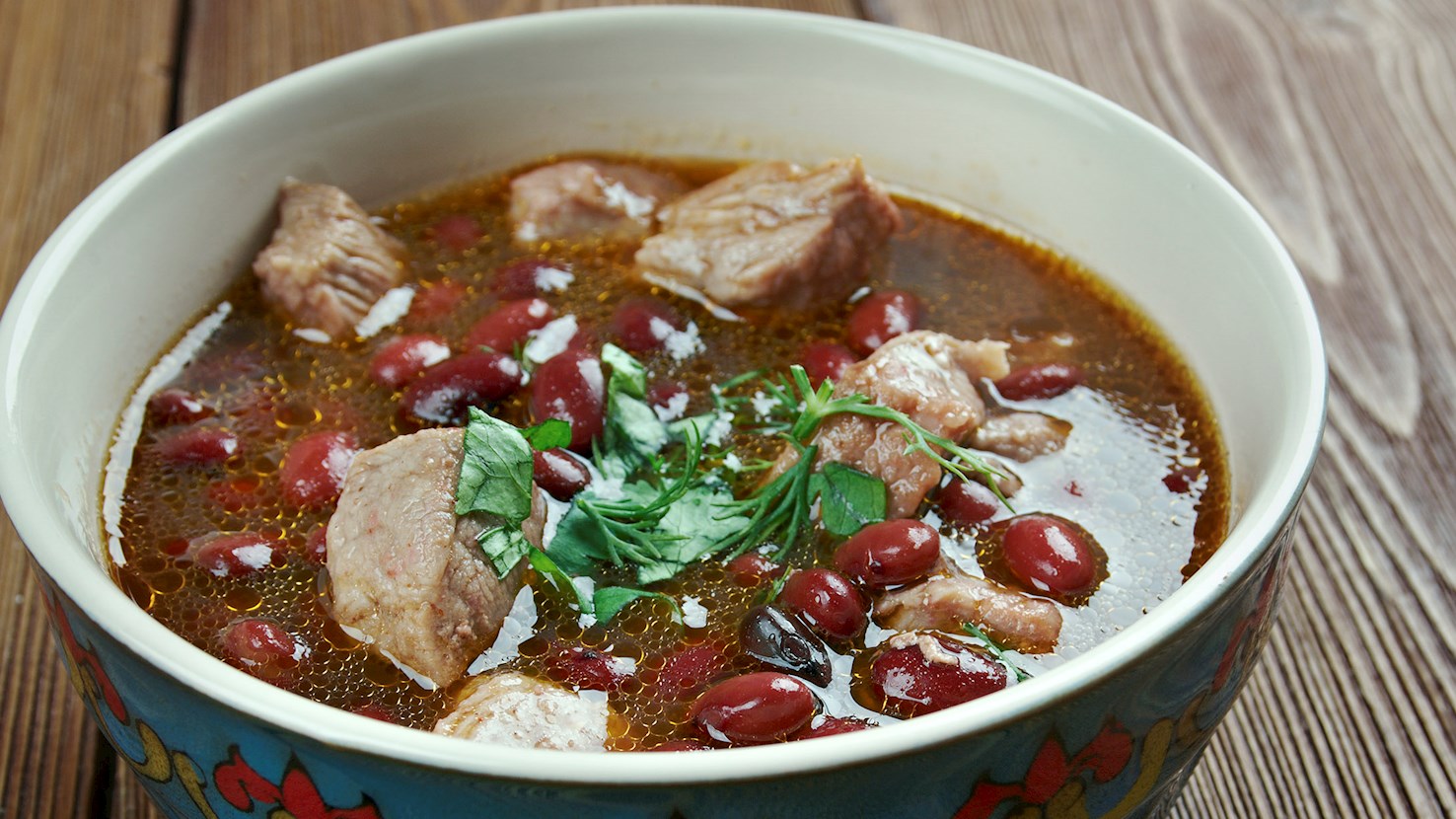
Traditionally cooked in a tonir, a built-in underground clay oven, dzhash is a tomato-based stew that can be made with either meat or legumes, but always includes vegetables. The stew is often generously seasoned with a variety of spices. There are numerous versions of this stew, some of them even popular in the neighboring Turkey, such as the signature dish from Gaziantep, made with meat, summer squash, mint, and lemon juice, or the wedding stew that's prepared in Marash, consisting of meat, pumpkin, and chickpeas as the main ingredients.
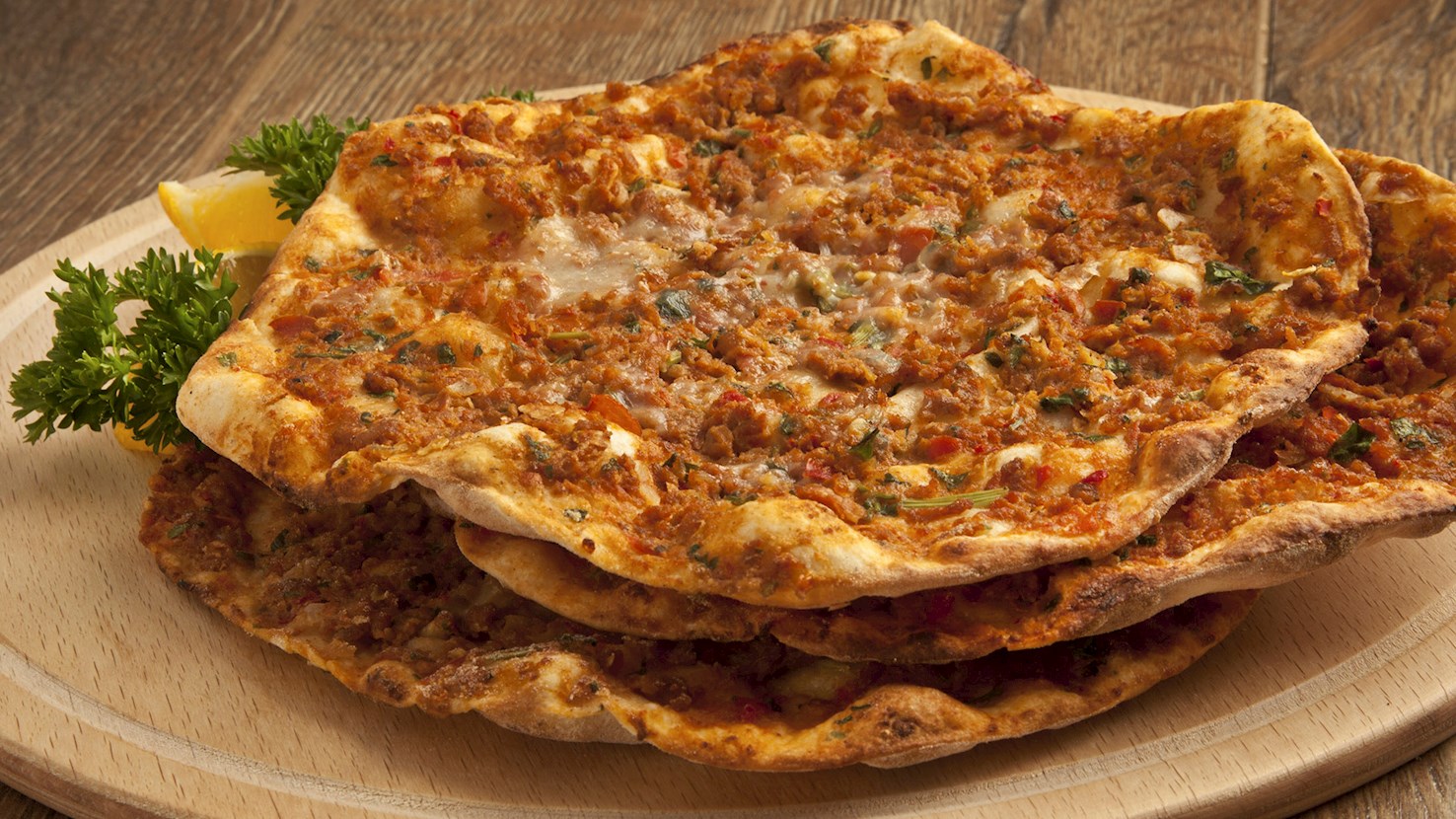
Even though lahmacun is popularly nicknamed Turkish pizza, it's origin is disputed and can be traced to Armenia, Syria, Lebanon, and Turkiye. It can be found at numerous street stalls as well as in virtually any traditional restaurant, but also in kebab eateries where they typically serve mini lahmacuns as appetizers. The perfect lahmacun is made by rolling a ball of sturdy semolina dough into a thin disc which is only lightly spread with meat - either lamb or beef, minced to a paste together with chili, onions, and other seasonings. The dish is then shortly baked in a super-hot (and preferably wood-fired) oven. Lahmacun is best served hot with a drizzle of lemon juice. It is traditionally enjoyed folded around the crispy onions and a parsley salad known as piyaz. It is recommended to pair lahmacun either with the salty, cold yogurt beverage called ayran, or şalgam suyu, the barrel-fermented juice of red carrot pickles, which is salted, spiced, and flavored with the aromatic turnip called çelem.
TasteAtlas food rankings are based on the ratings of the TasteAtlas audience, with a series of mechanisms that recognize real users and that ignore bot,
nationalist or local patriotic ratings, and give additional value to the ratings of users that the system recognizes as knowledgeable.
TasteAtlas Rankings should not be seen as the final global conclusion about food. Their purpose is to promote excellent local foods,
instill pride in traditional dishes, and arouse curiosity about dishes you haven’t tried.





What People Say