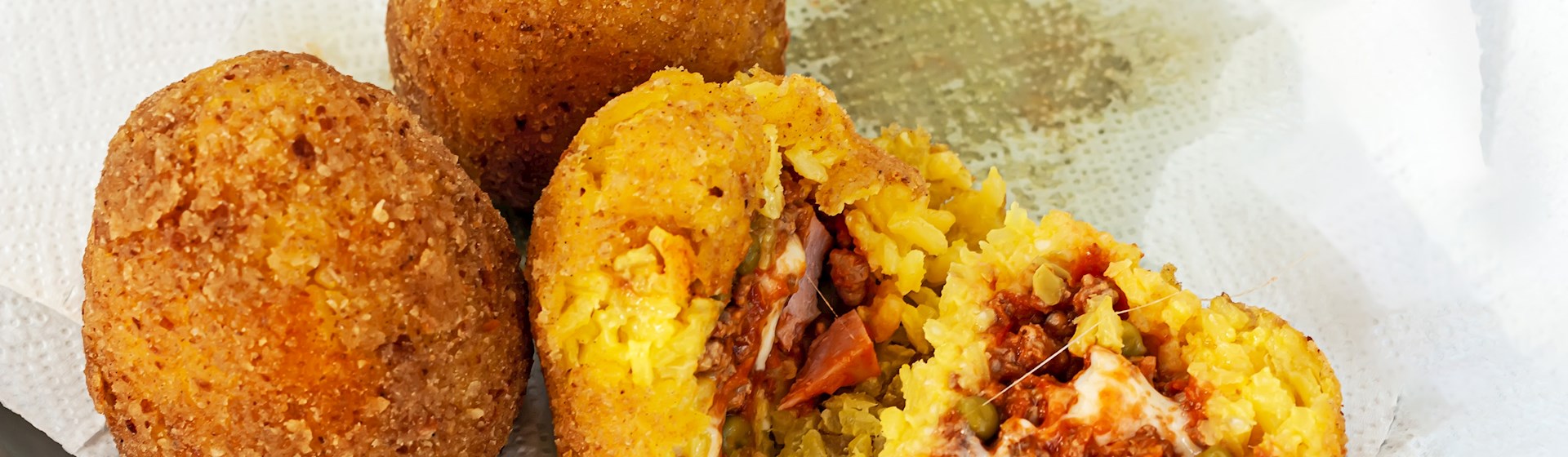
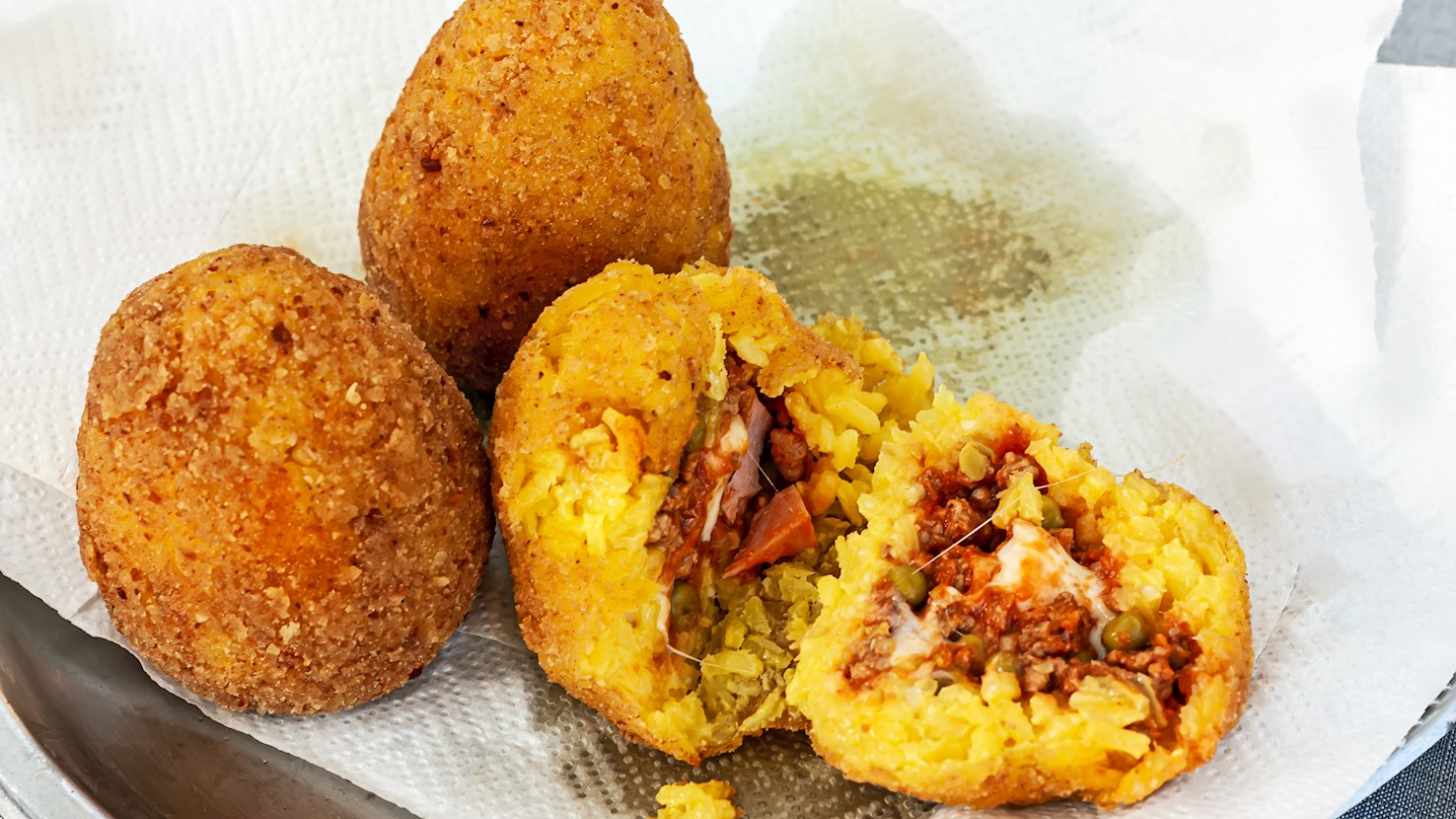
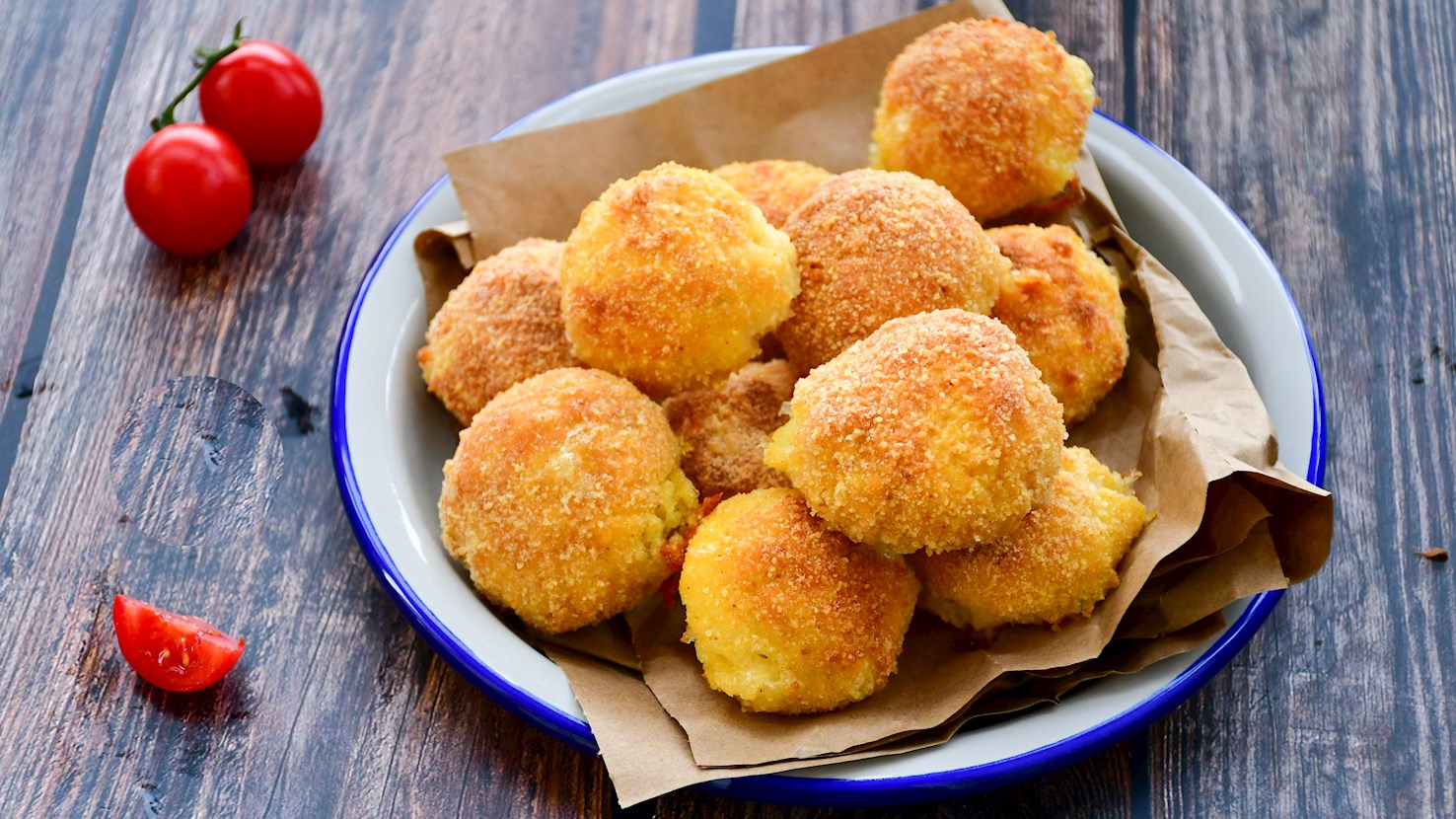
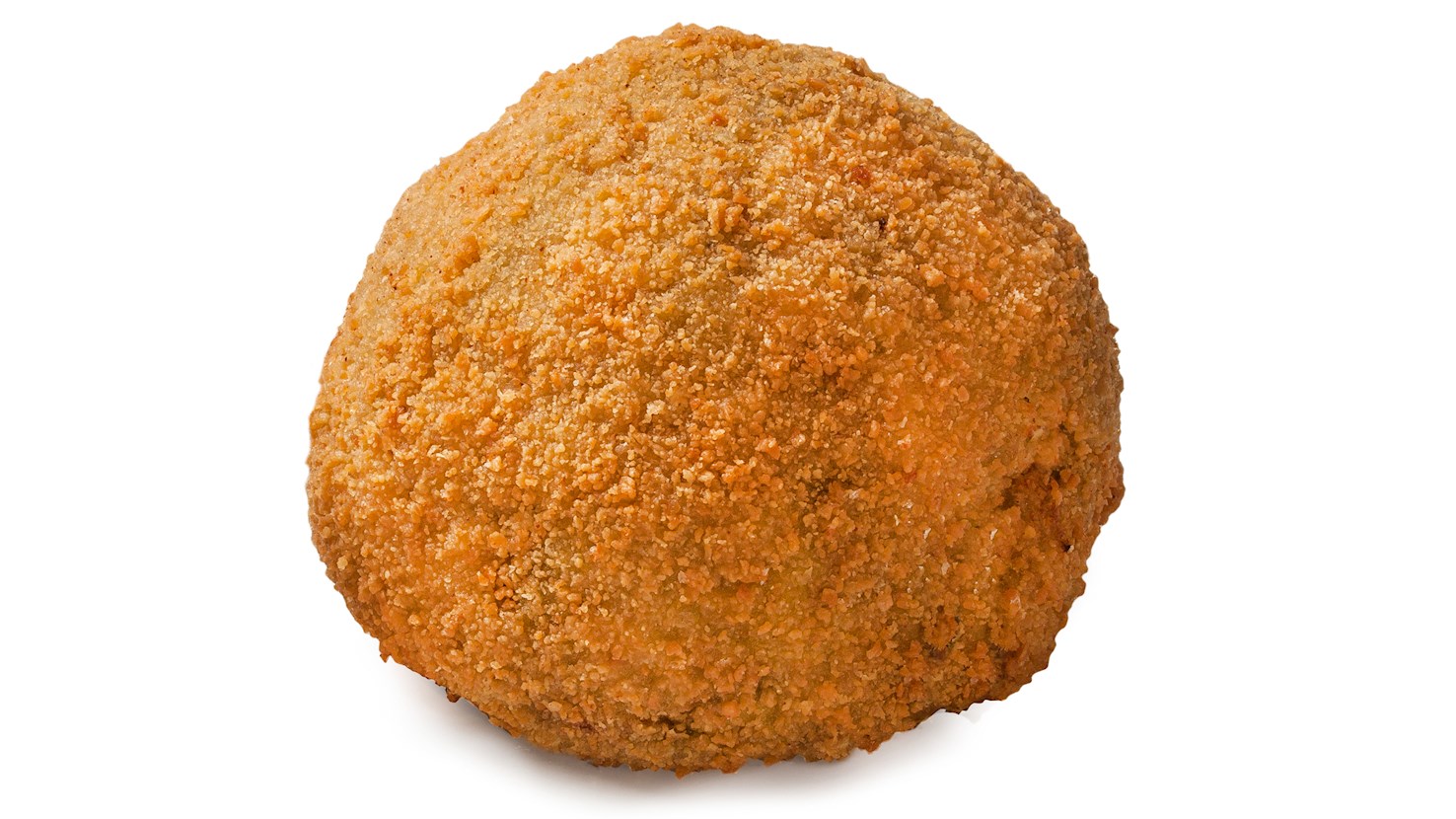
Arancini al ragu or arancini al sugo is a traditional variety of arancini rice balls originating from Sicily. For this version, the arancini are typically stuffed with ragu and cheese, and sometimes peas. The ragu is made with ground beef, onions, carrots, celery, tomatoes, olive oil, salt, and pepper. Once stuffed, the arancini are breaded and deep-fried in oil until golden and crunchy. Parsley and basil are welcome flavorings for arancini al ragu. This snack can be found in most restaurants, bakeries, and street cart stands in Sicily.
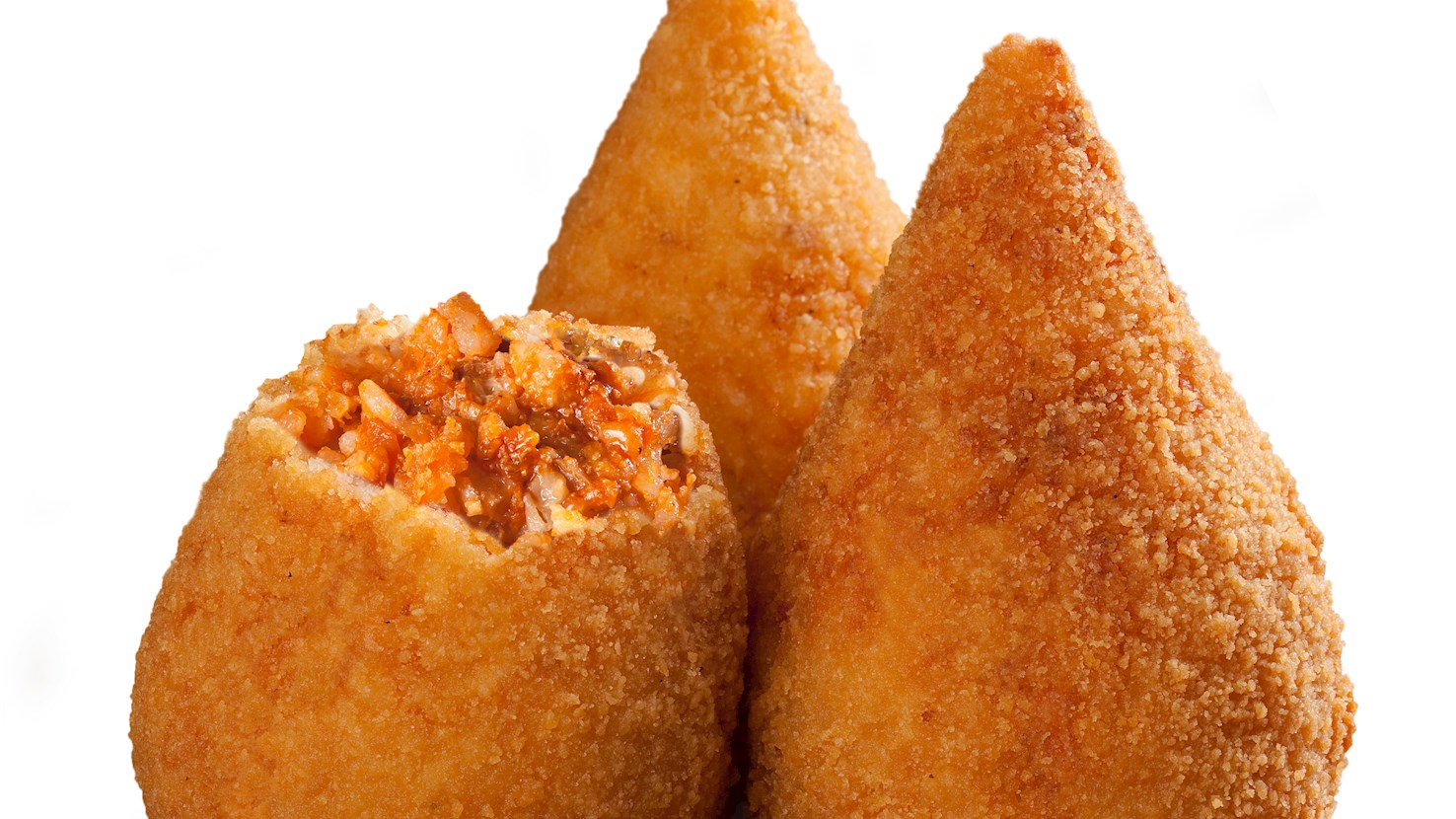
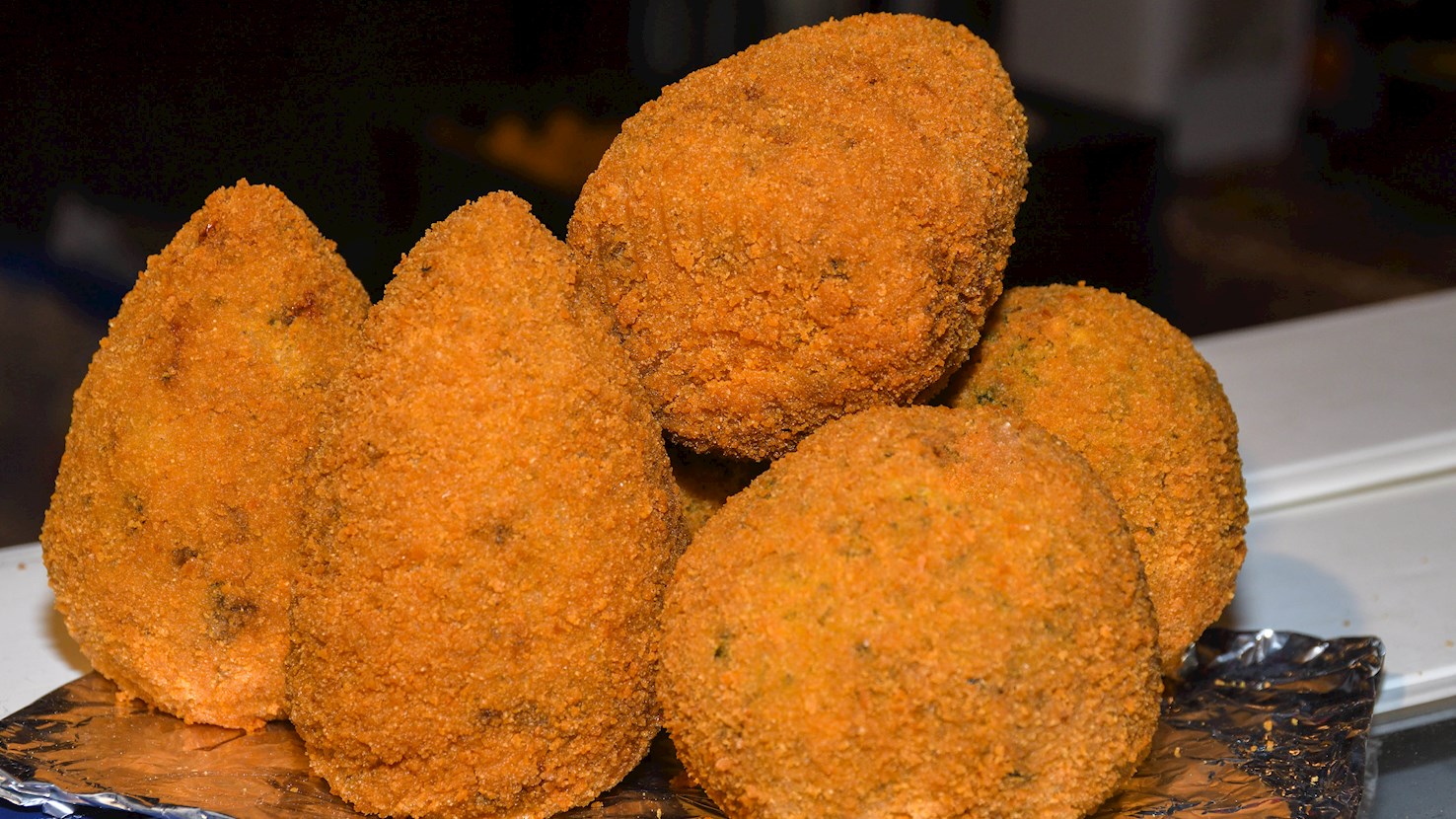
Arancini are big, golden rice balls filled with a savory combination of ingredients in the center. These balls are especially popular in Sicily. The fillings often include meat sauce with peas, dried prosciutto, cheeses such as mozzarella and pecorino, tomatoes, or dried capers. The balls are rolled in breadcrumbs and fried in hot oil, developing the characteristical golden color of the exterior. A popular theory says that the dish was invented in the 10th century during the Kalbid rule of Sicily. The name of the dish is derived from the Italian word for orange, arancia, referring to the similarities in visual appearance and color, so arancini means small oranges. Warm, delicious, and oily, arancini can often be found throughout southern Italy at numerous street carts. Every year on December 13th, there is a festival of Santa Lucia in Palermo, when the city is filled up with kiosks and carts selling these aromatic treats that are prepared specifically for the festival. During the holiday, there is even a sweet version of the dish, dusted with cocoa and sugar. Interestingly enough, western Sicilians call these snacks arancina in singular form, while eastern Sicilians call it arancino.
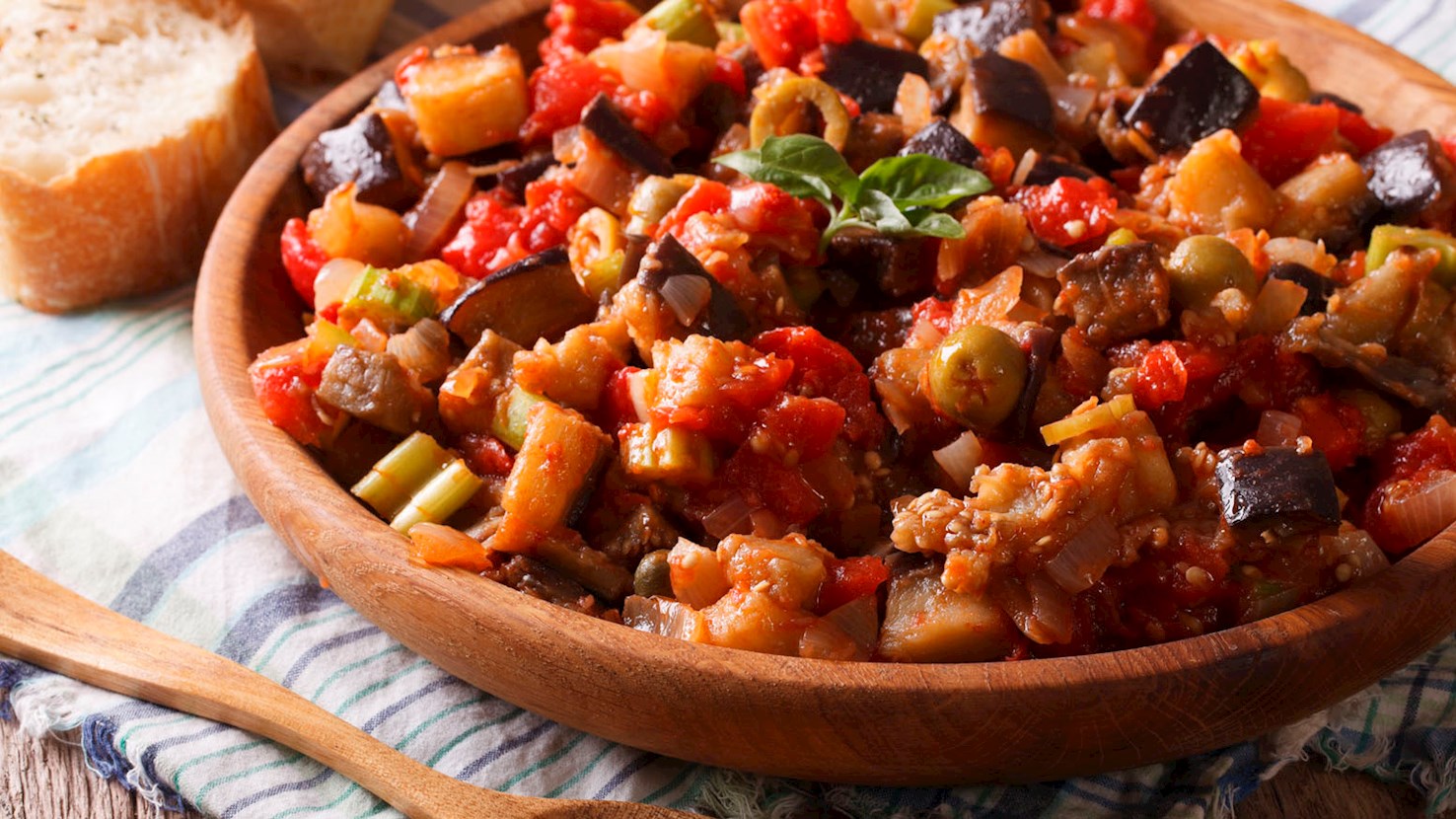
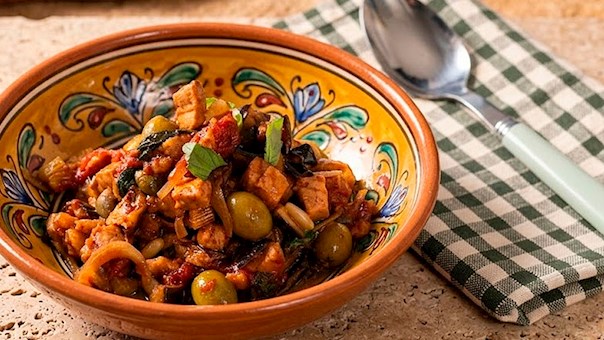
Even though it is prepared throughout southern Italy, the flavorful caponata is a typical Sicilian vegetable dish whose origins date back to the early 18th century. In the original recipe, the most important ingredient was gurnard fish (capone in Italian), but due to its price, gurnard was soon replaced by the widely available and much cheaper eggplant. This version that has remained the most popular to this day. Today, there are over 30 different recipes for caponata, all of which make an amazing use of the rich late summer harvest of eggplants and tomatoes. Capers, olives, onions, and celery lend an invigorating bite to this delicately piquant dish, and with other ingredients such as pine nuts, raisins, almonds, and friggitello peppers, the colorful caponata easily becomes a wonderful embodiment of the true essence of Sicily. After being sautéed one at a time, the vegetables are seasoned with a pinch of sugar and simmered in vinegar, which slowly melts into a tangy medley of sweet and sour flavors. Caponata can be enjoyed while still warm, as a side with various meat, poultry, and seafood dishes, or it can be served atop rigatoni or ziti for a filling pasta meal. In Sicily, caponata is typically kept for a couple of days after cooking, allowing time for the flavors to deepen, after which it is most often served as a cold antipasto on a crispy bruschetta or alongside sfincione Palermitano - Sicilian-style focaccia bread.
Arancini alla Norma is a traditional variety of arancini originating from Catania, Sicily. These rice balls are stuffed with the ingredients that are used in a traditional dish called pasta alla Norma: tomato sauce with basil, eggplants, and ricotta cheese. The sauce for the filling is reduced and concentrated, and it's then stuffed into rice balls that are breaded and deep-fried in oil until golden and crunchy. Salt and pepper are standard seasonings, while garlic and butter are welcome additions to arancini alla Norma.
Arancini al burro is a traditional snack or an appetizer originating from Sicily. These stuffed rice balls are coated with a crispy batter and deep-fried in oil. The al burro version is stuffed with ham or prosciutto, bechamel sauce, and mozzarella or scamorza cheese. The name might be misleading, as burro means butter, and it refers to the old practice of placing a small piece of butter inside the arancini in order to keep the rice soft. In Palermo, the name stayed the same, but the stuffing has been enriched with cheese and ham. In Catania, locals call these snacks arancini con prosciutto. Parsley, salt, and black pepper are often used for seasoning both versions.
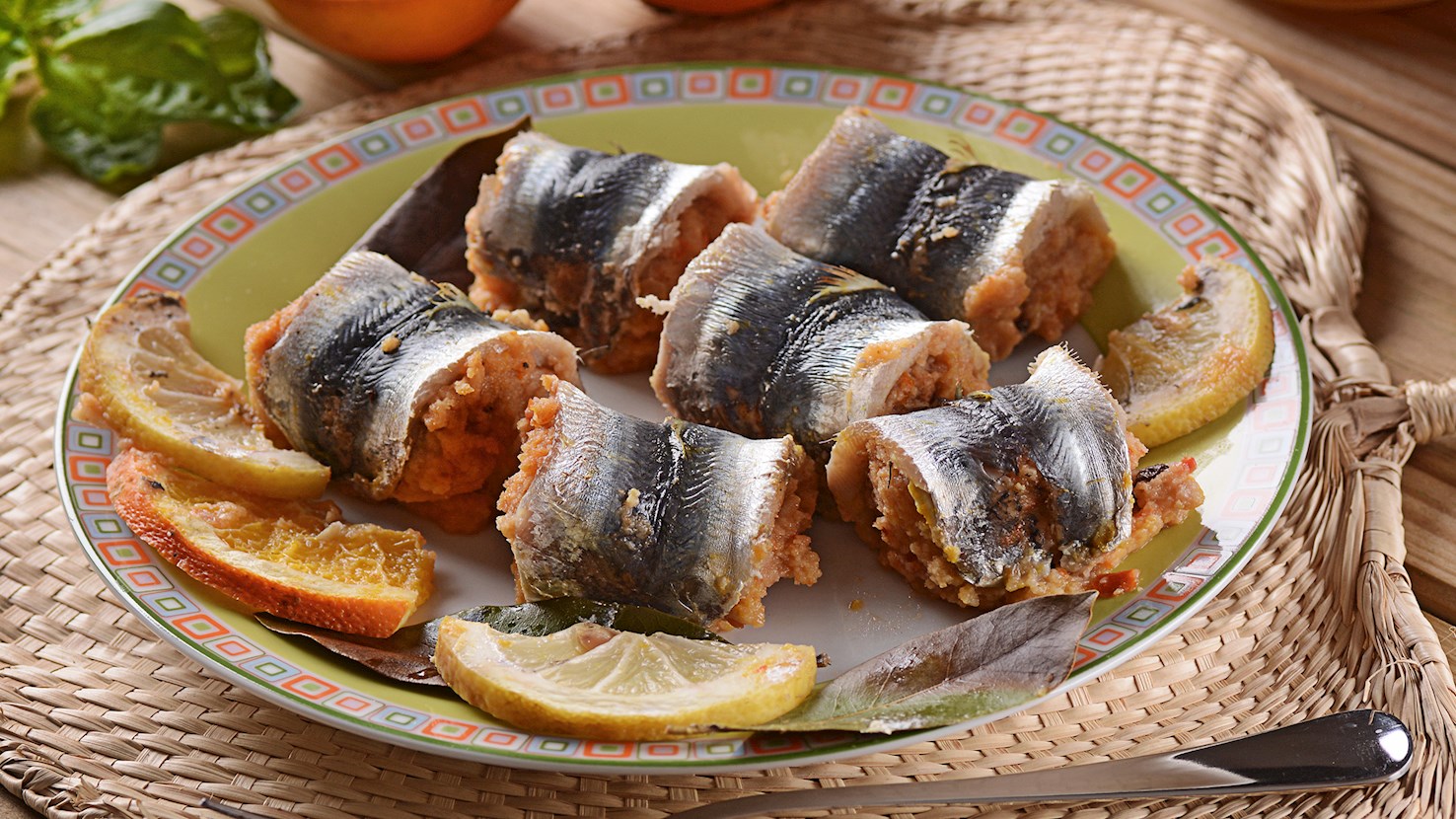
This classic Sicilian dish employs butterflied sardines that are stuffed with a mixture of toasted breadcrumbs, parsley, anchovies, pine nuts, and raisins, with the occasional addition of grated parmesan. Stuffed sardines can be formed into individual rolls that are skewered, occasionally alongside bay leaves, then drizzled with lemon juice and shortly baked or grilled. Another technique employs two fillets that are sandwiched with the filling, and the whole combination is usually deep-fried. These flavorful sardines can be enjoyed as a main meal, but they also make for an excellent and filling appetizer. Sarde a beccafico are found throughout Sicily and are best enjoyed freshly prepared at the colorful Sicilian open markets.
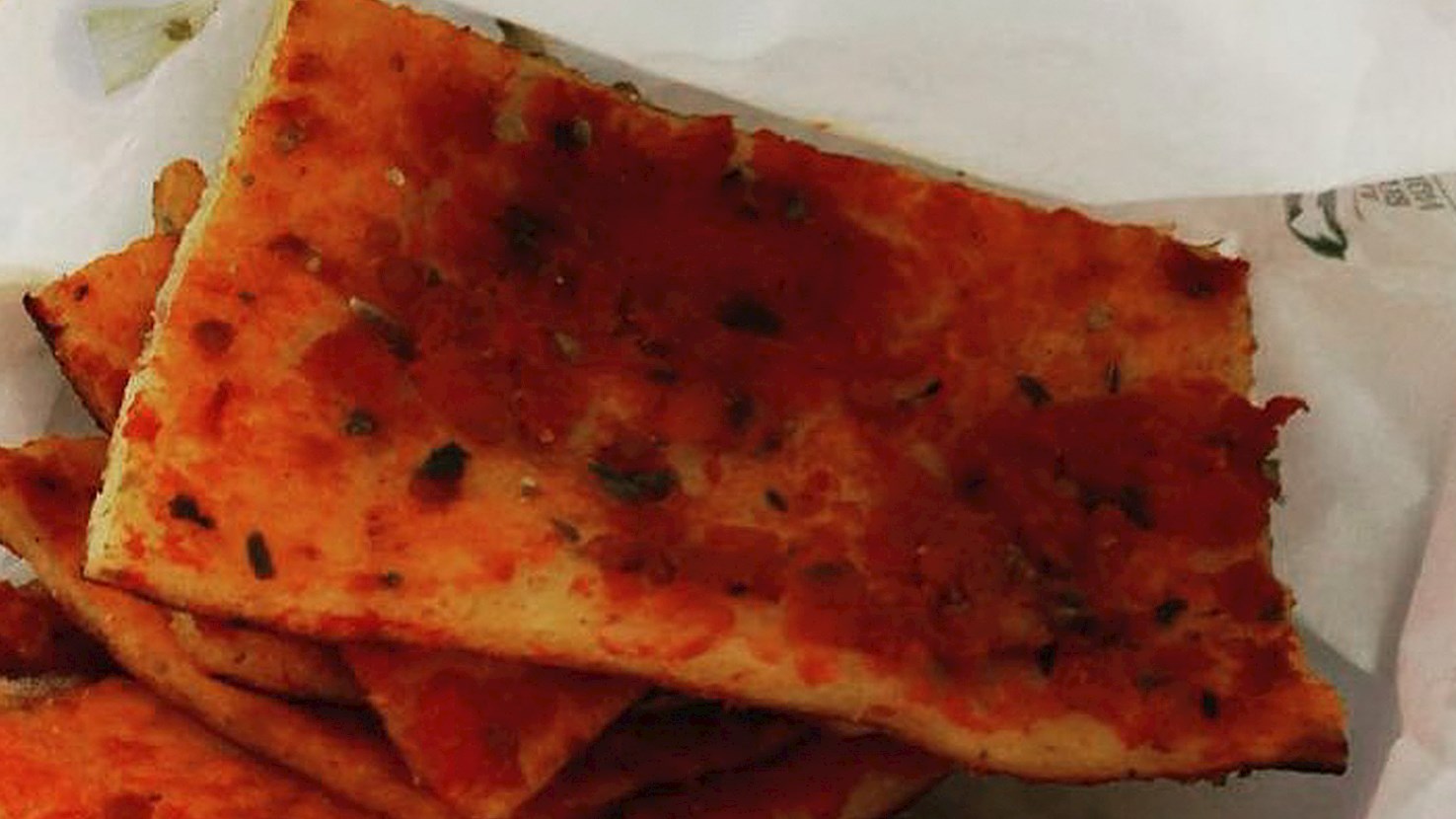
Pizza secca, meaning dry pizza, derives its name from the crunchy, crispy texture it develops once it’s baked. It is not a regular pizza but a type of schiacciatina, a very thin flatbread with a topping that resembles a pizza in visual appearance and flavor. Consisting of flour, water, olive oil, salt, and (sometimes) yeast, the dough is rolled out very thinly before it is cut into rectangular or square-shaped slices and brushed with a combination of tomato sauce, oregano, salt, and olive oil. The topping can also be enriched with other ingredients such as finely sliced onions, olives, eggplants, dry salami, or marinara sauce, while some versions may omit the tomato sauce altogether. Pizza secca is a specialty of the Sicilian town of Catania and the surrounding area, where it is available in almost every local bakery at any time of the day. Slices of this crunchy, pizza-like flatbread make for an excellent snack or an appetizer that can be enjoyed warm or chilled.
Arancini al pistacchio is a traditional variety of arancini originating from Catania and the area around Mount Etna. These rice balls are stuffed with a delicious pistacchio bechamel sauce made with Bronte pistachios that are grown near Etna. The filling is made with bechamel sauce, cream, and chopped pistachios. Once stuffed, the arancini are breaded and deep-fried in oil until golden and crunchy. Salt and pepper are traditional seasonings, while cheese such as parmesan or fontina is a welcome addition to arancini al pistacchio.
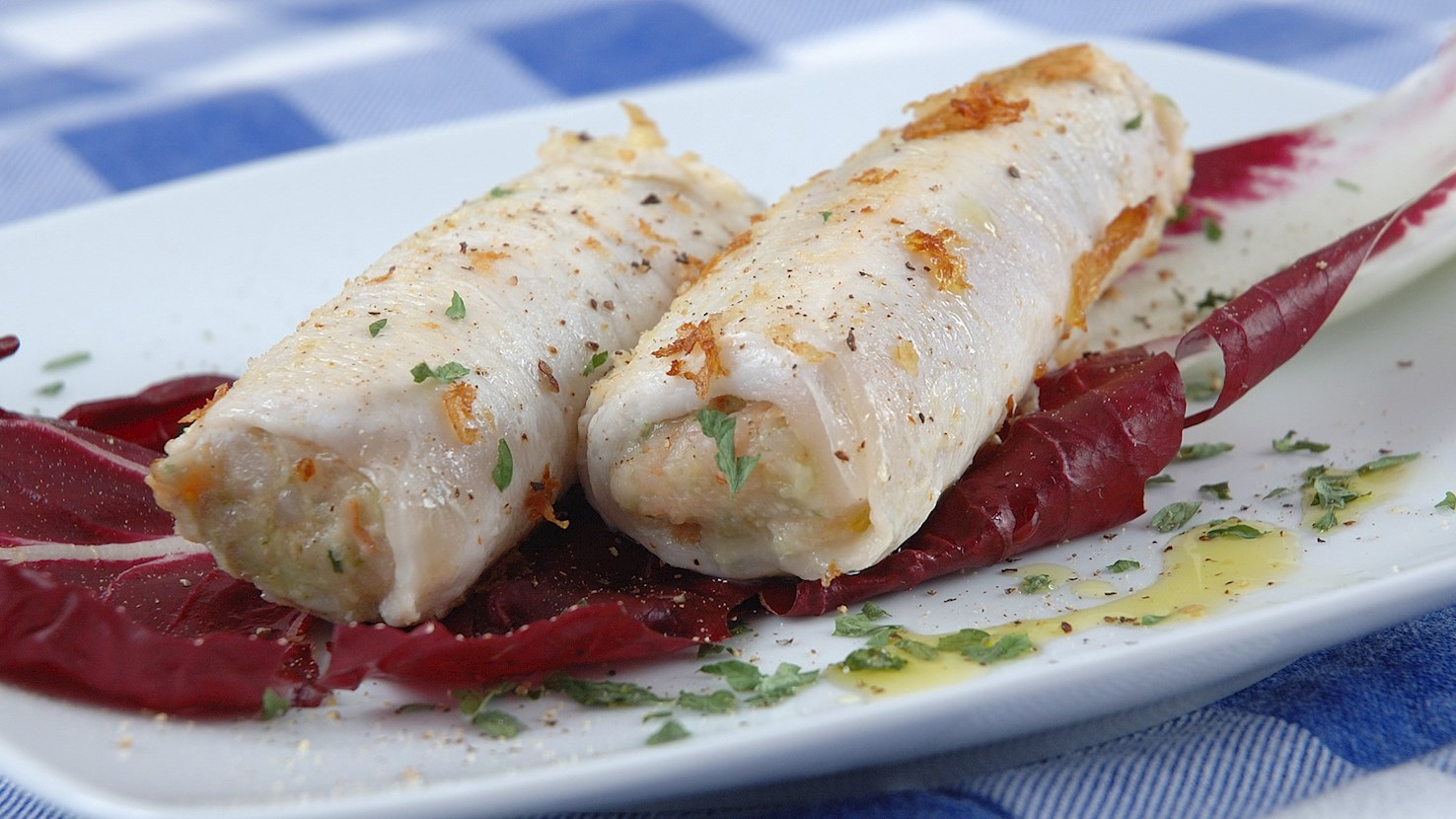
Swordfish rolls are one of the traditional Italian dishes that are mainly associated with Sicily. The dish employs thin swordfish fillets that are stuffed with different combinations of breadcrumbs, lemon zest, capers, garlic, fresh herbs, pine nuts, currants, and occasionally raisins or cheese. The rolls can be grilled or pan-fried and are often paired with a squeeze of lemon juice or the lemon and olive oil-based salmoriglio sauce.
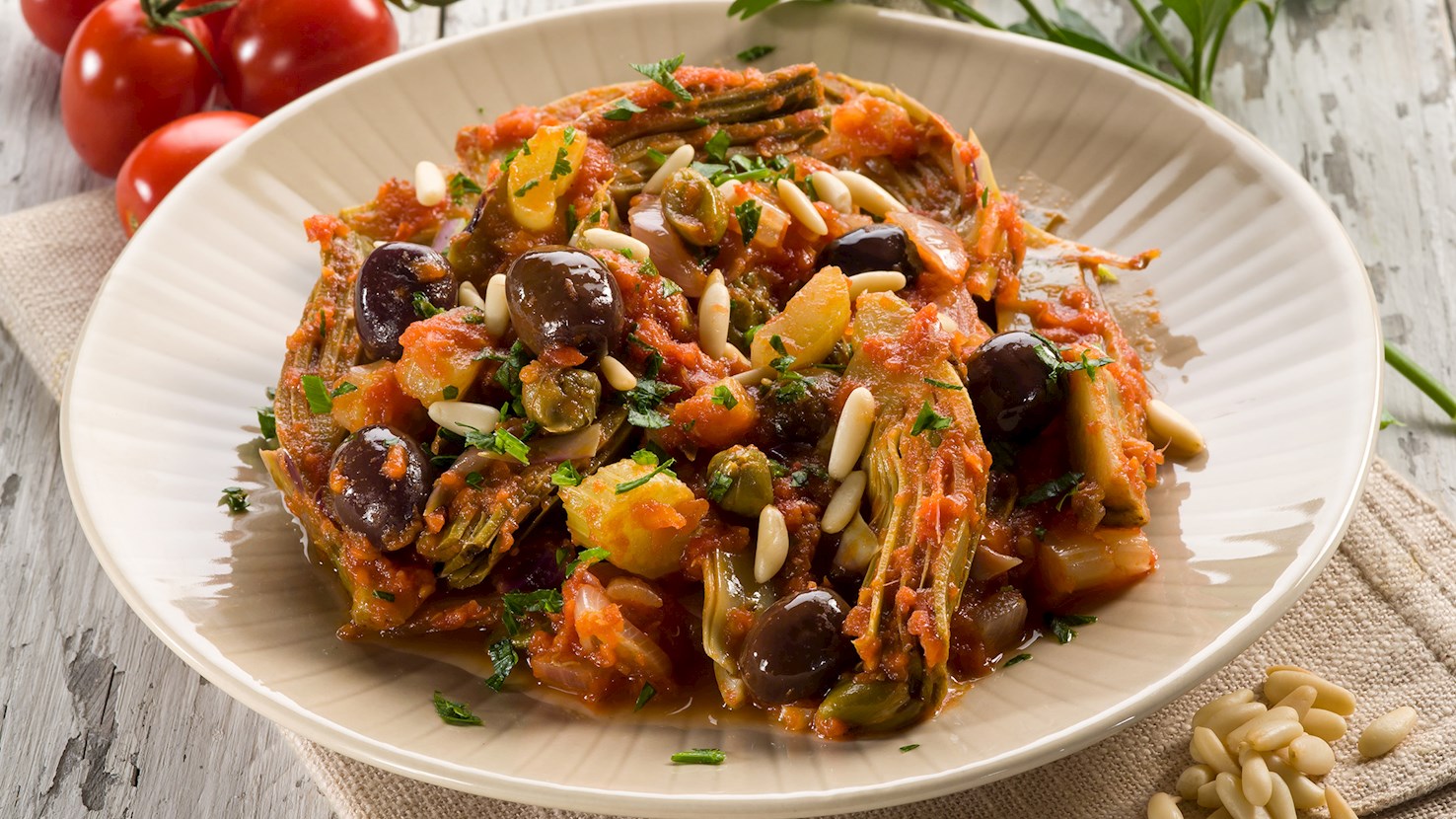
Caponata di carciofi is a traditional vegetable dish originating from Sicily. In this version of caponata, the key ingredients are fresh artichokes, which is the reason why the dish is perfect to make in the spring. Other ingredients include lemon, olive oil, celery, onions, capers, red wine vinegar, and tomato sauce. The artichokes are cooked in the rich sauce, and once done, the caponata should have a flavor that's both sweet and sour. This artichoke caponata can be served at room temperature, but it's recommended to let it rest in the fridge overnight, then serve it the next day, either as an appetizer or a tasty side dish.
TasteAtlas food rankings are based on the ratings of the TasteAtlas audience, with a series of mechanisms that recognize real users and that ignore bot,
nationalist or local patriotic ratings, and give additional value to the ratings of users that the system recognizes as knowledgeable.
For the “Top 15 Sicilian Appetizers” list until September 15, 2026, 916 ratings were recorded, of which 748 were recognized by the system as legitimate.
TasteAtlas Rankings should not be seen as the final global conclusion about food. Their purpose is to promote excellent local foods,
instill pride in traditional dishes, and arouse curiosity about dishes you haven’t tried.





What People Say