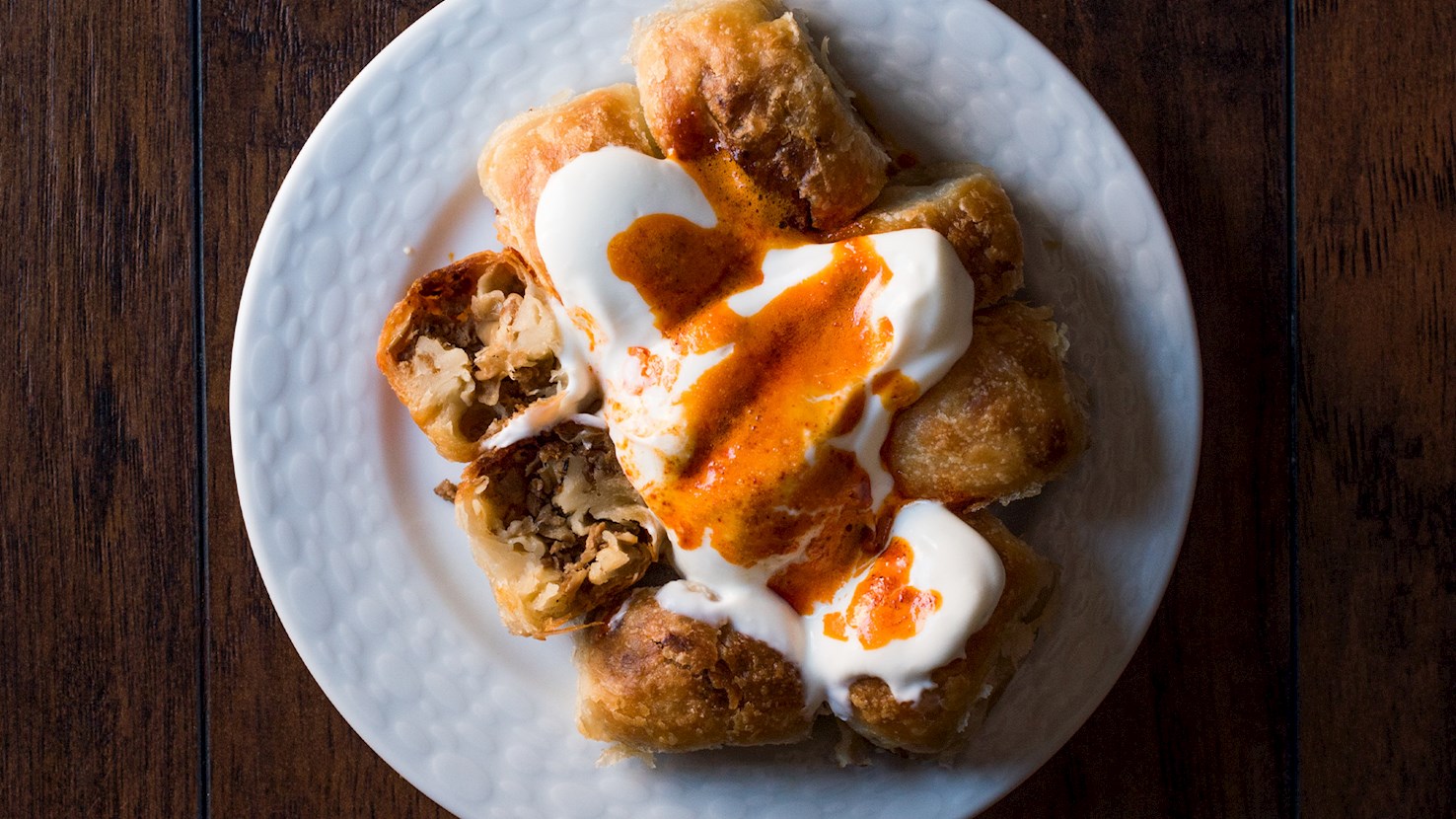
Paçanga böreği is a Turkish börek variety that's especially popular in the region of Anatolia and in Istanbul, where it's regarded as a traditional Sephardic Jewish specialty of the city. It's made by stuffing yufka or phyllo pastry with pastirma (salted, aged, dried beef) and kasar cheese. Apart from the basic ingredients, some people also like to add peppers and tomatoes to the filling. The dough is rolled, cut into rectangles, then fried. This börek can also be baked, but frying is the traditional method. Paçanga böreği is served hot and it's typically eaten as an appetizer.
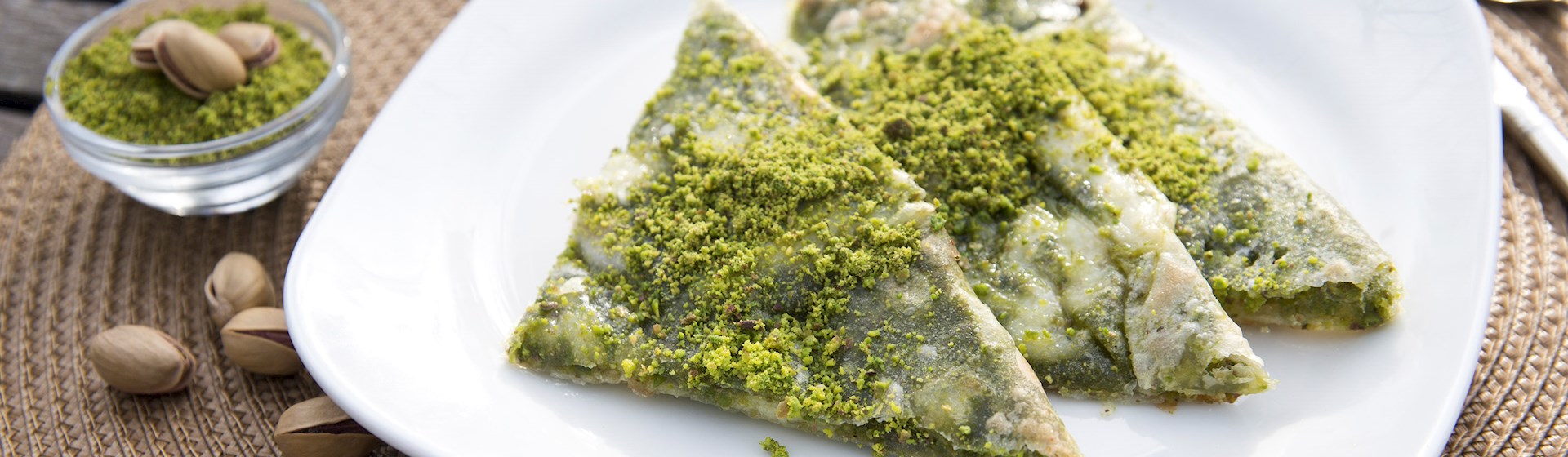
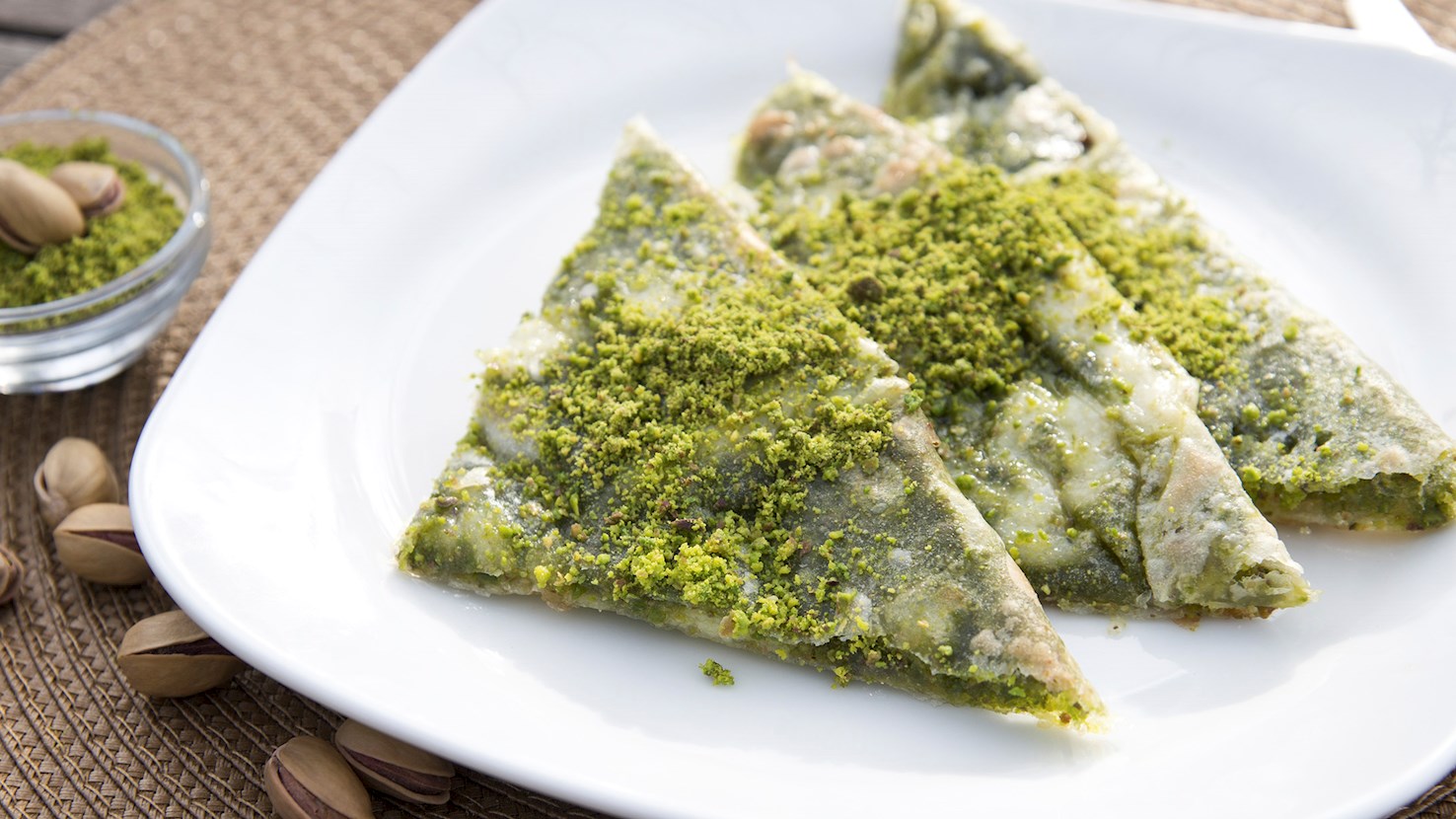
A type of sweet börek, katmer is a specialty of Gaziantep, or simply Antep – Türkiye's gastronomic capital and a rich melting pot of diverse cultures and cuisines nestled in southeastern Anatolia – an ancient city whose claim to fame is being home to world’s finest pistachios and the delicious Antep baklavası. Katmer is what most locals start their day with: in fact, there are bakeries and cafés in Gaziantep open from early morning until noon serving katmer for breakfast. Traditionally, it is also the first meal eaten by newlyweds after their first wedding night, as it represents the sweetness they hope to find in their marriage. Filled with pistachios and kaymak – Turkish clotted cream made with water buffalo milk, which is often referred to as kaymağın kaymağı, meaning crème de la crème – these flaky, crunchy pastries must be served fresh from the oven, while they're still warm. For a perfect Turkish breakfast, have your katmer drizzled with a little honey, sprinkled with crushed pistachios, and paired with a nice cup of tea.
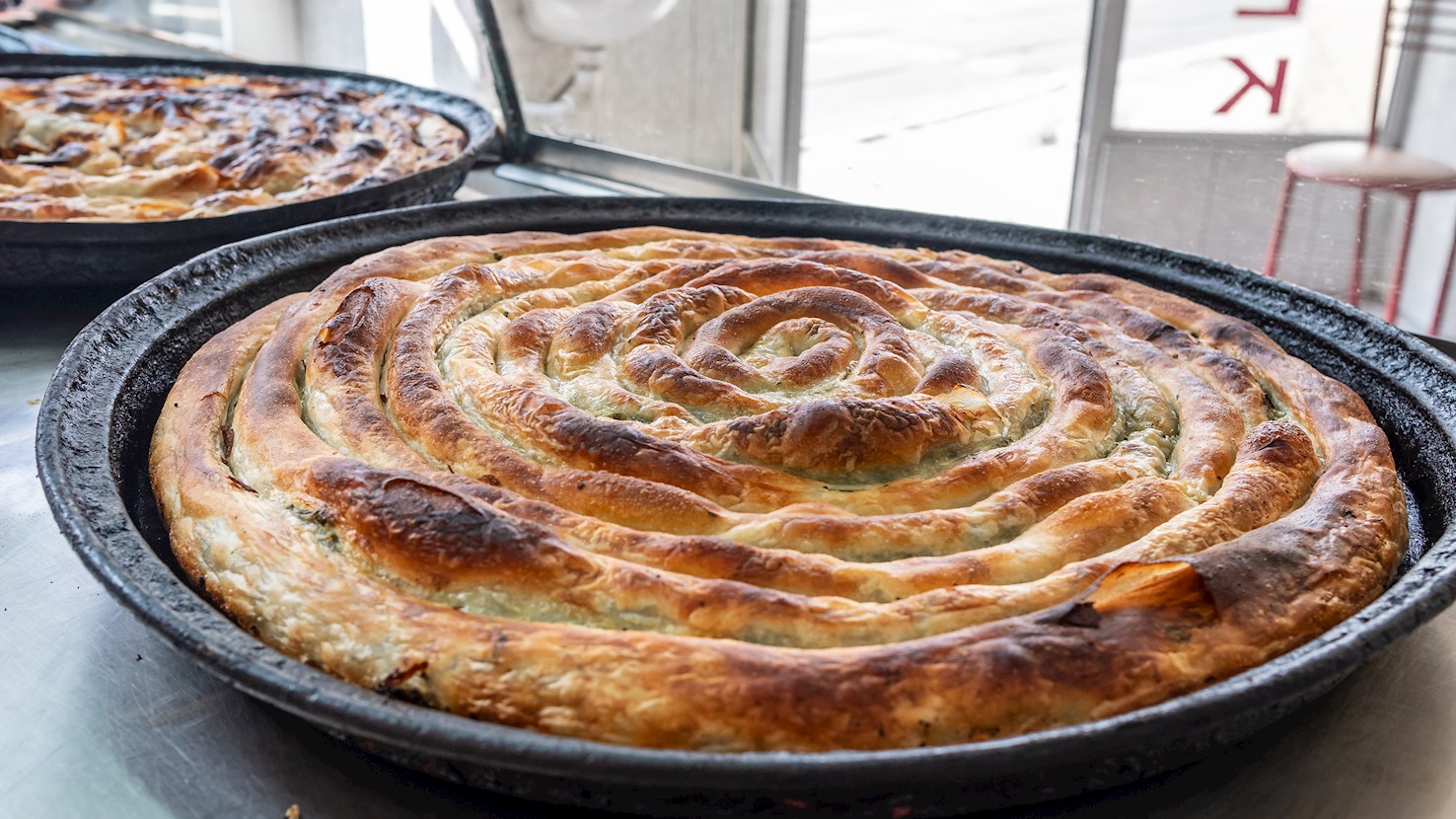
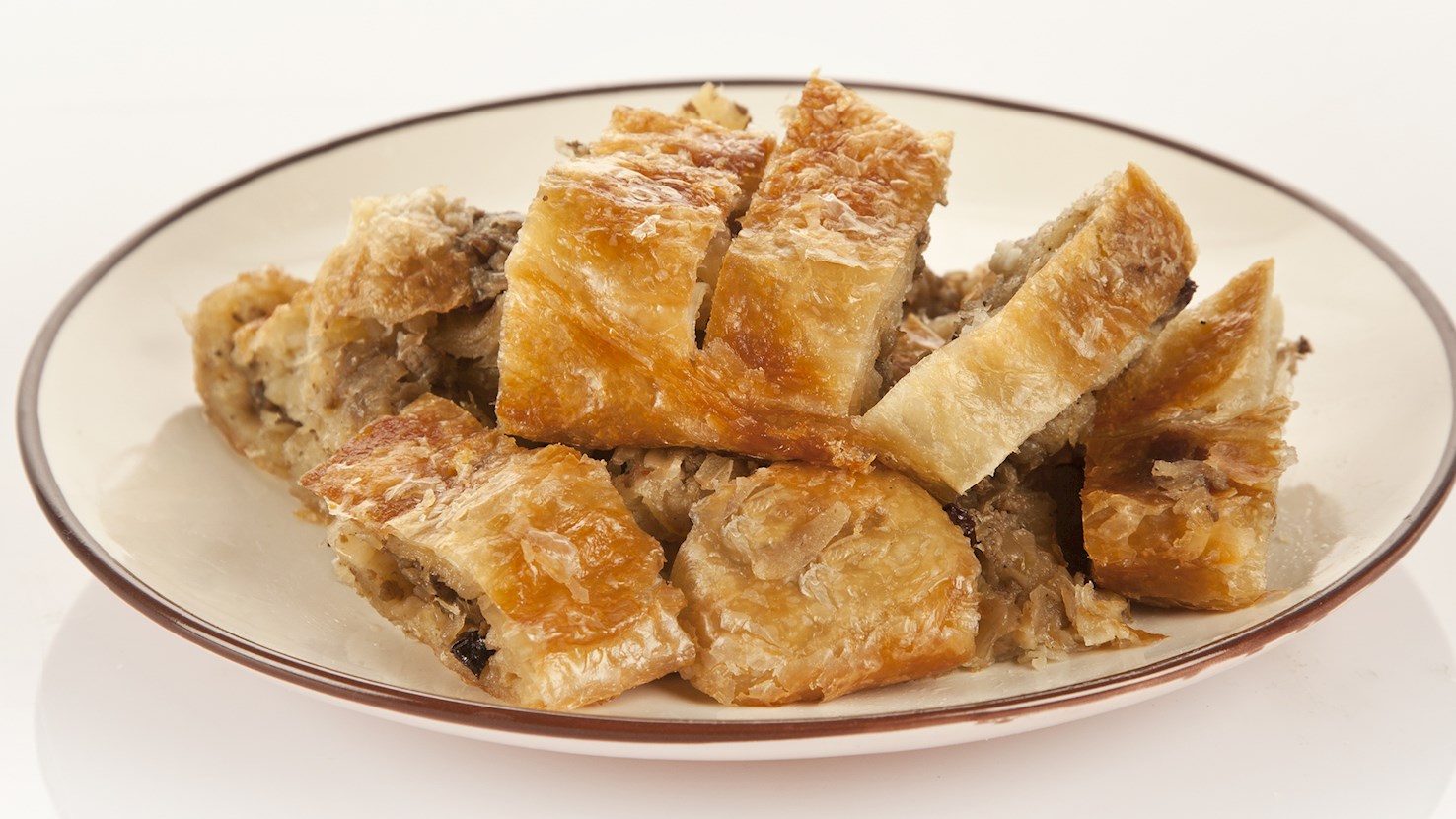
Burek consists of layers of phyllo dough stuffed with various savory fillings. Despite its Turkish origins, this dish has evolved into a proud gem of Bosnian national cuisine. Although most locals claim that only burek with ground beef can be called burek, the same dish also appears with other fillings, and these other varieties are known by different names: sirnica (cottage cheese), zeljanica (spinach), and krompiruša (potatoes). Burek is baked rolled into a snail-like shape and this type is typically found in bakeries, while traditional restaurants often make it in the form of a pie, which is sliced into quarters before serving. The dish is wildly popular all across the Balkans, though in Bosnia and Herzegovina, the cultural significance of this everyday staple is incomparable and best summed up in a number of local proverbs suggesting that if a woman can make a good burek, she's eligible for marriage.
Kol böreği is a Turkish börek variety made with puff pastry that is shaped into a spiral. The pastry is filled with a variety of ingredients such as cheese, spinach, potatoes, or ground meat with pine nuts and currants. The name of the dish means arm börek, referring to the long, arm-like visual appearance of the pastry. After it has been baked at low temperature, kol böreği is typically cut into smaller pieces.
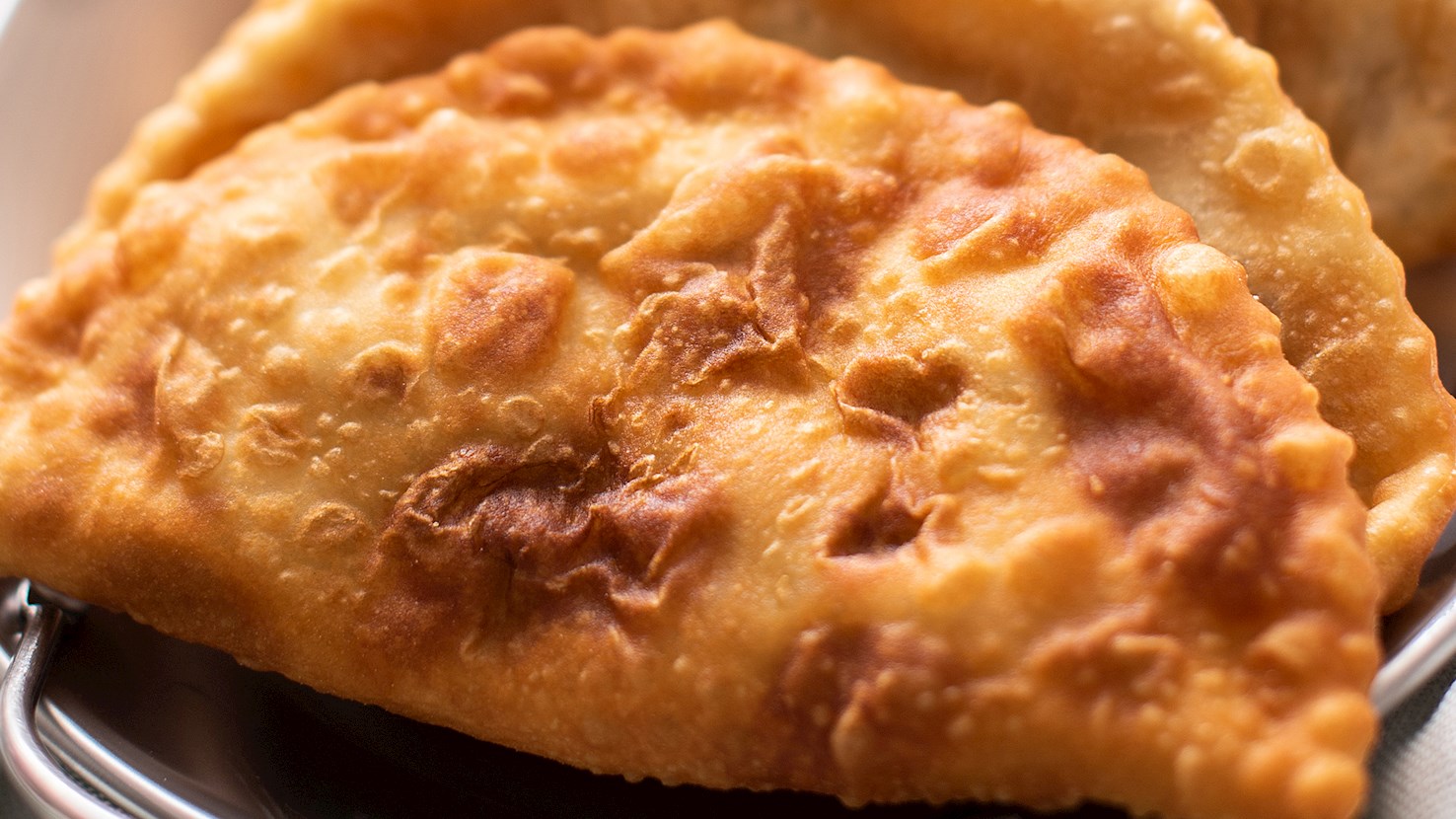
Chebureki, known in Türkiye and among the Crimean Tatar diaspora as çiğ börek, is a deep-fried, unleavened turnover filled with a seasoned mixture of ground meat and onions. It is the national dish of the Crimean Tatars, originating from the Crimean Peninsula along the northern coast of the Black Sea. The name is derived from the Crimean Tatar word "çiberek," which was later adapted into the Russian "chebureki." The development of this food is tied to the nomadic and pastoral history of the Crimean Khanate, where the reliance on sheep and cattle necessitated recipes that could turn flour and meat into calorie-dense, portable meals. As the Crimean Tatar population moved through Central Asia, the Caucasus, and into Anatolia, the dish became a common fixture in the culinary landscapes of the former Soviet Union and Türkiye, specifically becoming a localized specialty in the city of Eskişehir. The preparation begins with a dough consisting only of flour, water, and salt, which is rolled out until it is thin and translucent. The filling is composed of ground beef or lamb, a high volume of finely minced or grated onions, and a purposeful addition of water. This water is critical because it ensures the meat stays moist and creates a pressurized steam pocket during the frying process. The meat mixture is placed raw onto the dough, which is then folded into a half-moon shape and sealed tightly using a fork or a crimping tool. The pastry is submerged in a large volume of hot oil, where the high heat causes the water in the filling to vaporize instantly. This steam forces the dough to puff outward, creating a hollow interior while the exterior develops a signature blistered and bubbly texture. A unique physical property of chebureki is the savory broth that collects inside the pastry as the raw meat and onions cook in their own steam. Because the meat is not pre-cooked, the juices are trapped entirely within the dough, resulting in a distinct liquid center. It is eaten by hand, usually starting at the top corner to allow the steam to escape slowly and to prevent the hot internal juice from spilling. In street food kiosks and specialized restaurants, it is typically served as a standalone item or as part of a light meal. The most common beverage pairing is ayran, a chilled, salted yogurt drink, which helps to neutralize the richness of the fried dough. In some regions, it is also served with a side of spicy tomato sauce or hot black tea to contrast the savory profile of the lamb or beef.
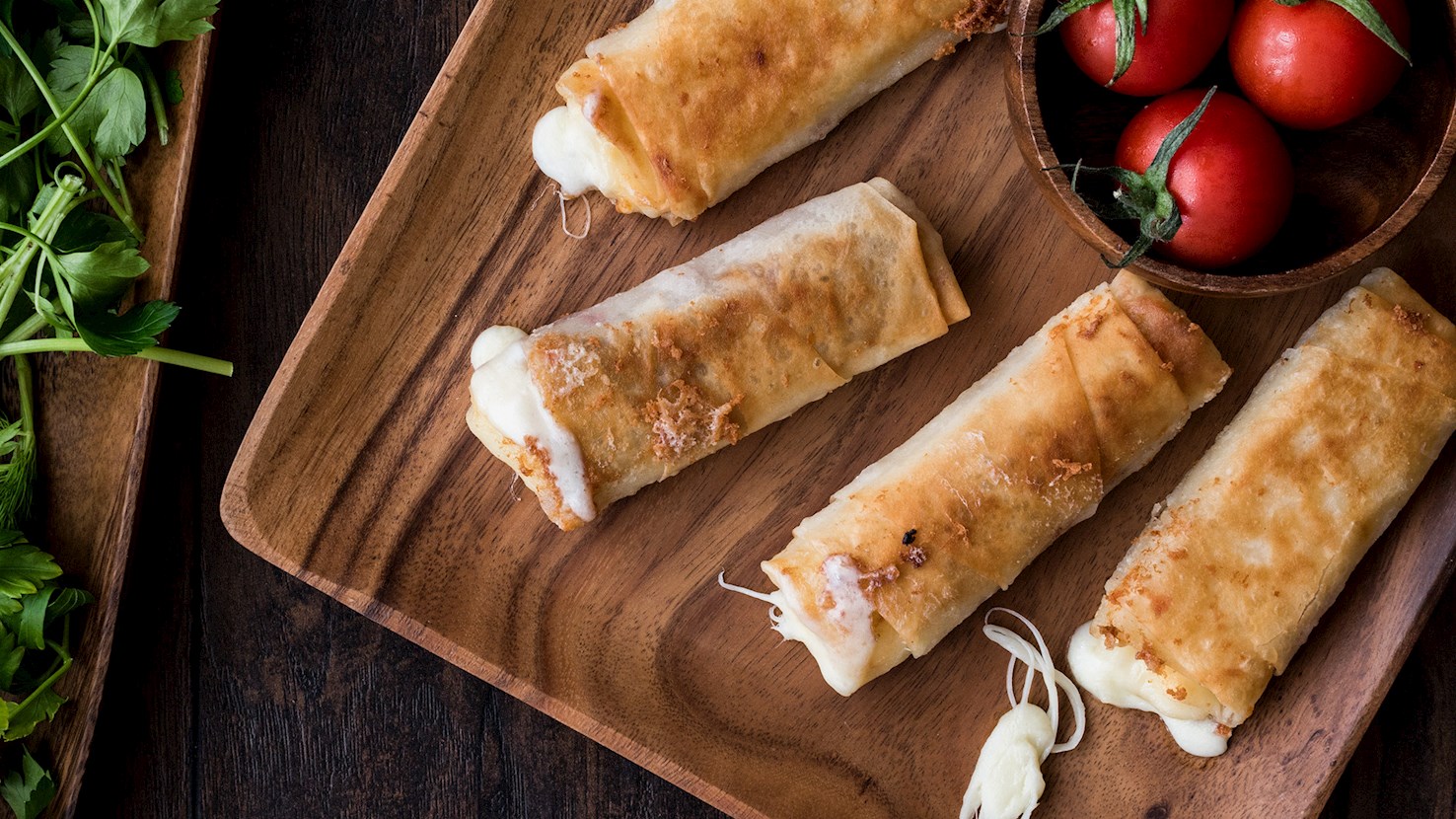
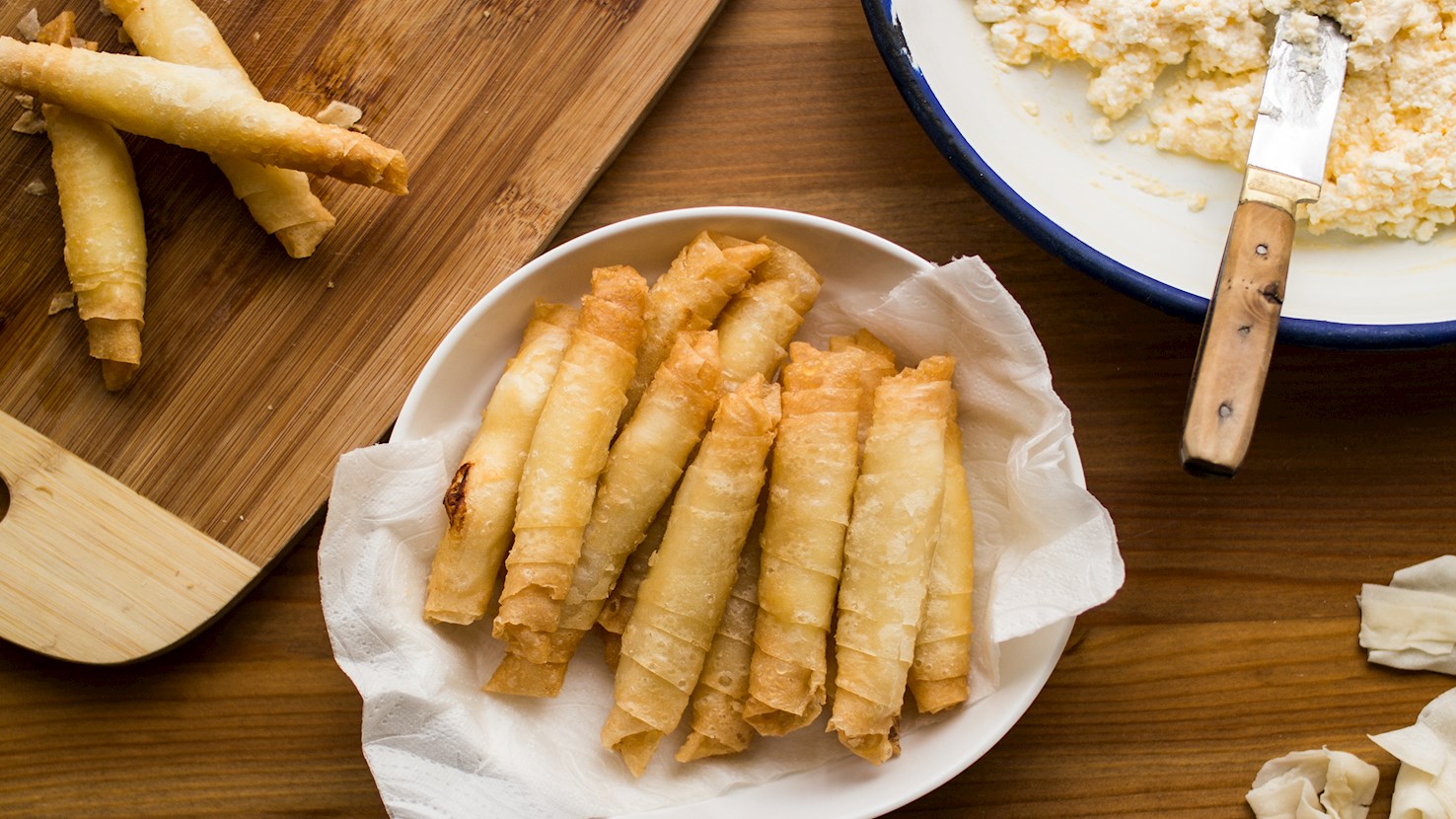
The cylindrical sigara böreği is a famous Turkish deep-fried pastry. These small, crispy rolls of thin dough are stuffed with a creamy mixture of cheese and parsley. They are traditionally made with sheets of thin yufka dough, a common ingredient in many boregi varieties, or with a thicker phyllo dough. Mixed with fresh parsley and (sometimes) eggs, the cheese is spread on the triangle-shaped dough, which is then shaped into a cigar. After it is fried, sigara böreği turns into a satisfying delicacy, with a crispy outer layer and a velvety filling. The combination of cheese and parsley is the most traditional choice for the filling, but there are numerous other varieties available, featuring feta cheese, potatoes, leeks, spinach, and fresh herbs such as mint or dill. Just like other boregi varieties, this small, tube-shaped delicacy is usually enjoyed as street food, and can be found in many specialized boregi shops or restaurants.
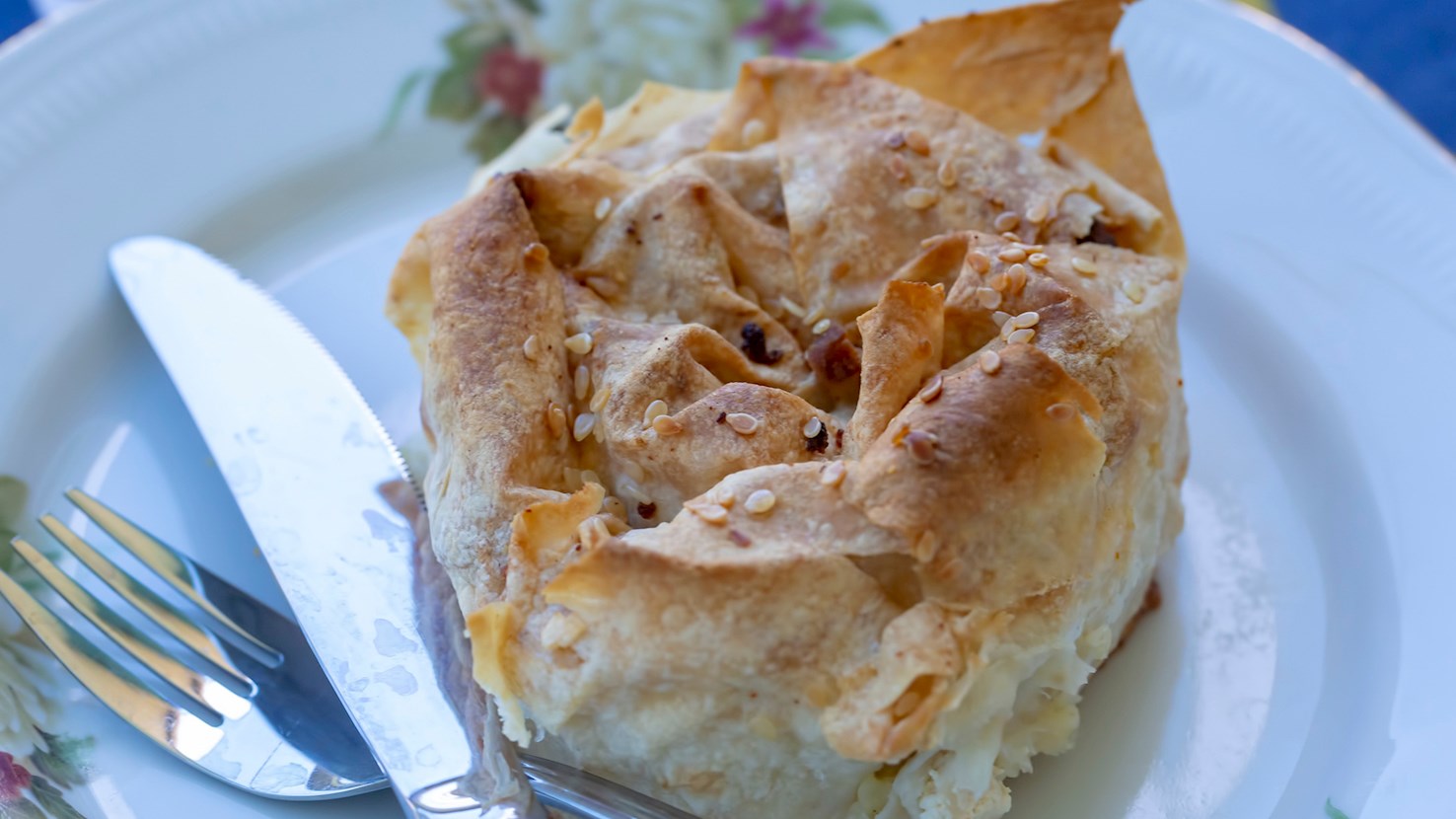
Gül böreği is a single serving type of börek that's shaped into a spiral or a rose. Yufka or phyllo dough is traditionally stuffed with the most popular fillings: spinach, soft white cheese, potatoes, or ground meat. Once assembled, the dough is rolled into a coil-like shape and the börek is then baked until golden brown. If desired, gül böreği can be sprinkled with sesame or nigella seeds before baking. It's recommended to serve the börek warm and pair it with a cup of tea or yogurt.
Boşnak böreği is a type of Turkish börek that's very similar to kol böreği. However, the dough is rolled somewhat thinner and it's traditionally filled with a combination of spinach and cheese. This börek type can also be prepared with potatoes and ground meat. The name means Bosnian börek because börek is extremely common in Bosnia and Herzegovina. Once assembled, the börek is baked until golden brown. When served, it's best to pair it with a cup of yogurt on the side.
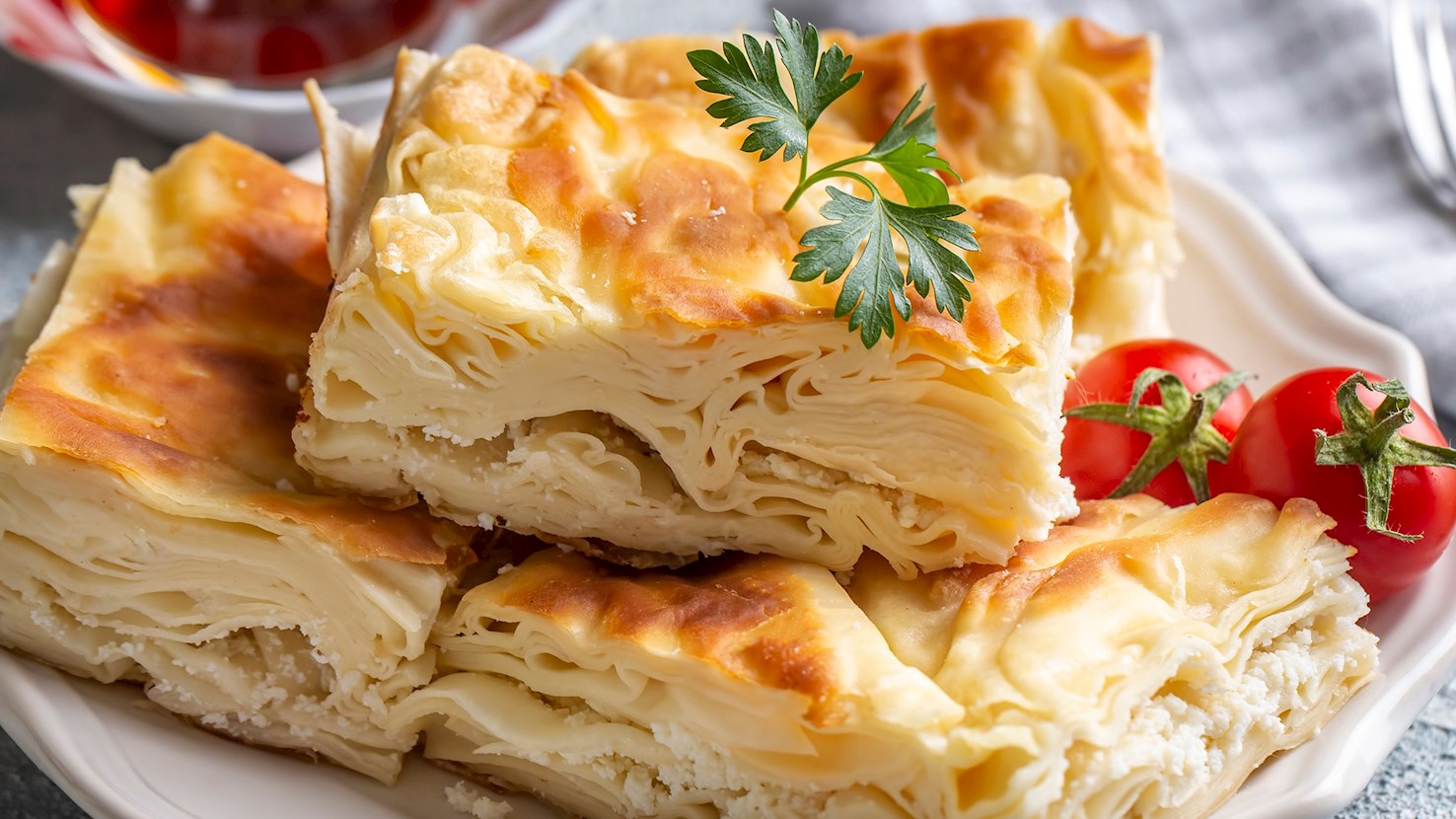
Su böreği, which translates to water börek, is a variety of Turkish borek that has a reputation as being one of the most difficult boreks to prepare. It is traditionally filled with cheese and parsley. The dough sheets need to be soaked in a combination of water, olive oil, milk, and eggs before baking, making the borek tender and juicy, hence the name. Su böreği can be found at most borek shops throughout the country.
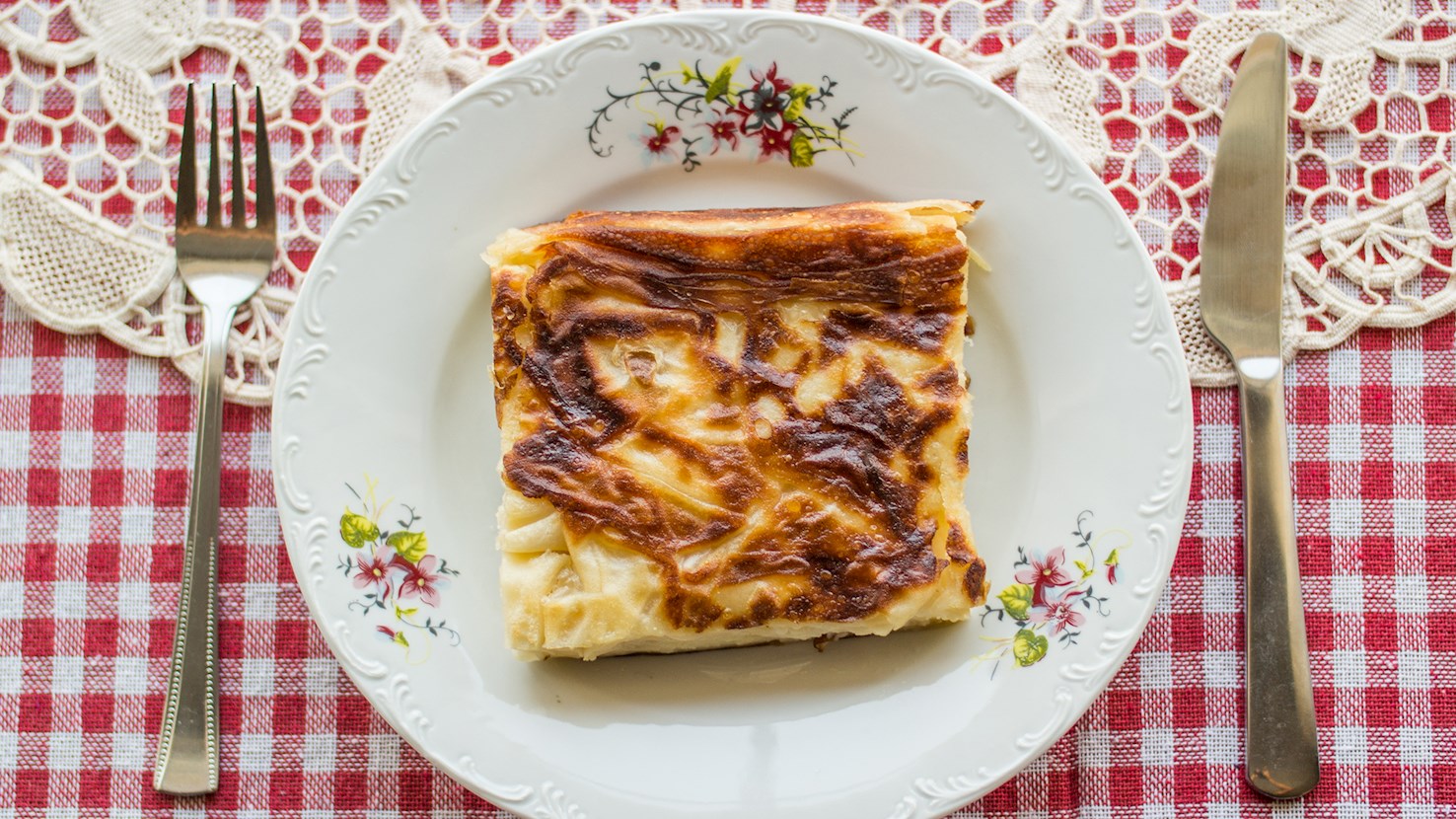
Tepsi böreği is a popular type of Turkish börek, essentially a savory pastry made by layering sheets of phyllo pastry with a filling. The filling can be almost anything, but typically it will be either seasoned ground beef or lamb with onions or potatoes, spinach, or cheese. Each layer of pastry is brushed with melted butter or oil before adding the filling and the next layer. Once the pastry is assembled, it can be brushed with an egg wash or yogurt. Tepsi böreği can be cooked two ways, either in the oven or on the stove, in which case, the pastry should be flipped so it bakes on both sides. It is typically served hot as a main dish or appetizer and is similar to some other kinds of börek, most notably the su böreği.
TasteAtlas food rankings are based on the ratings of the TasteAtlas audience, with a series of mechanisms that recognize real users and that ignore bot,
nationalist or local patriotic ratings, and give additional value to the ratings of users that the system recognizes as knowledgeable.
For the “10 Börek Varieties Ranked From the Best To the Worst” list until October 17, 2026, 811,838 ratings were recorded, of which 532,919 were recognized by the system as legitimate.
TasteAtlas Rankings should not be seen as the final global conclusion about food. Their purpose is to promote excellent local foods,
instill pride in traditional dishes, and arouse curiosity about dishes you haven’t tried.





What People Say