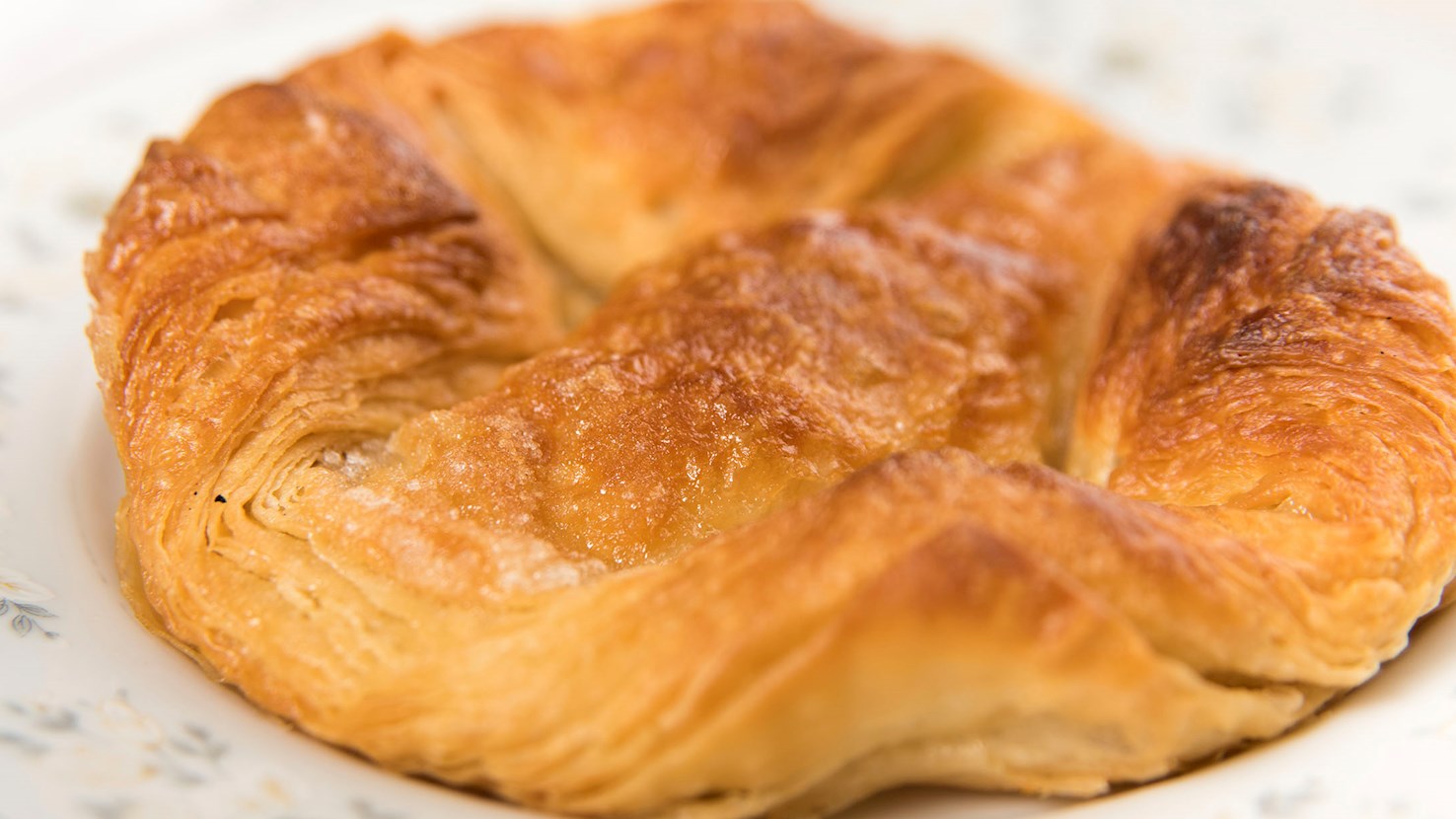
Kouign-amann is a cake that originated in the 1800s in the French region of Bretagne. Its name is derived from the Breton words for cake (kouign) and butter (amann). The cake consists of layers of butter and sugar that are folded into a dough. Bretons claim that the cake is "the fattiest pastry in the world", due to its flaky yellow dough that is mixed with large amounts of sugar and butter. Although there are many theories about the origin of the cake, the most popular one says that it was invented by accident, when a 19th-century baker from Douarnenez wanted to save a failed batch of dough, so he added butter and sugar to the mix, creating the delicacy that we know today.
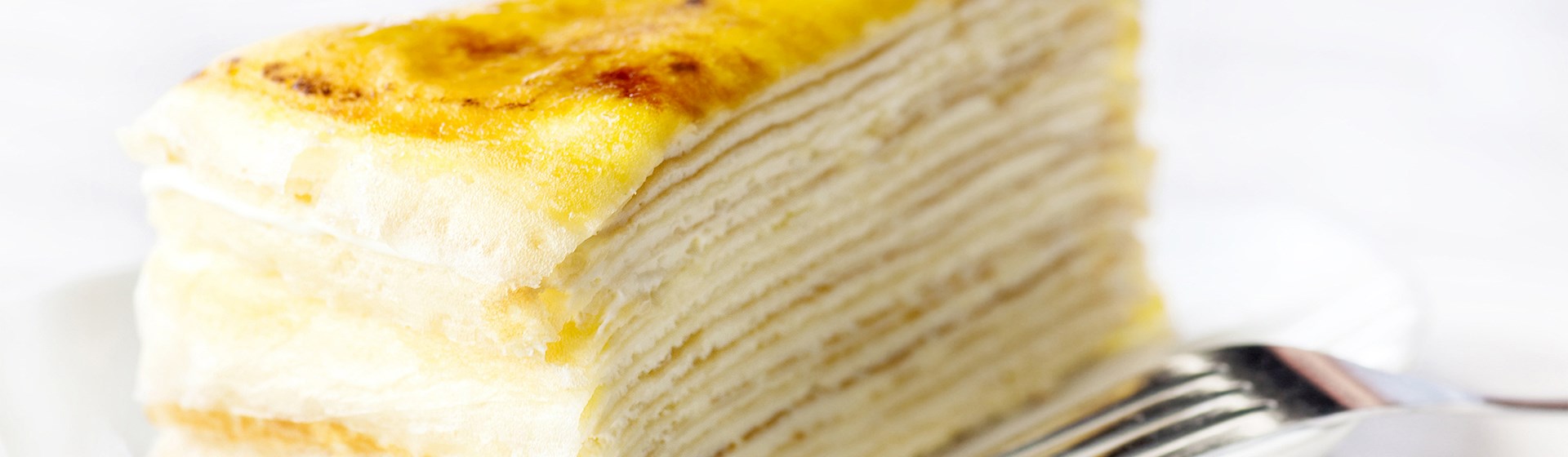
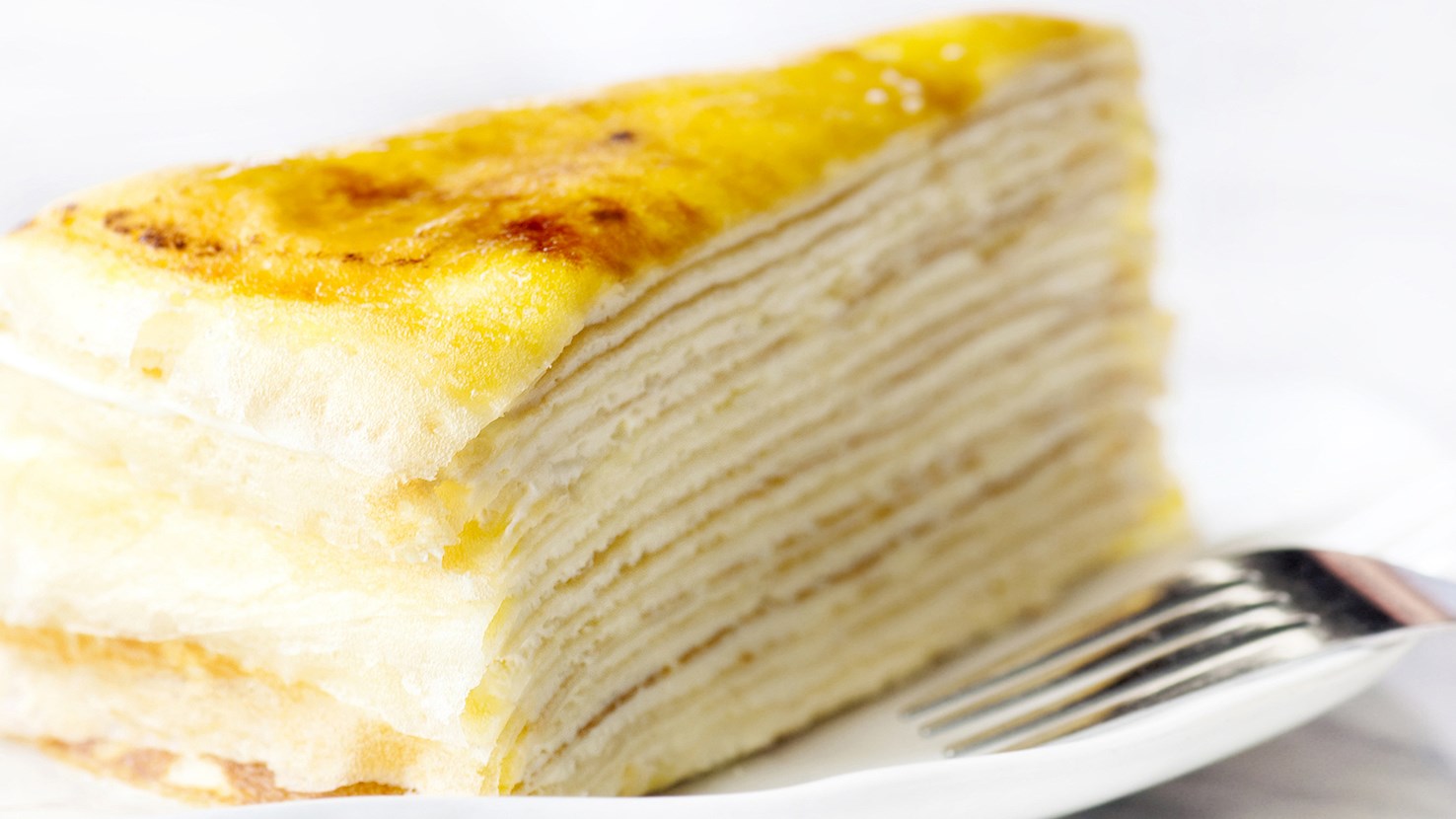
A thousand crêpes cake—as translated in English—is a classic French dessert consisting of crêpes stacked on top of each other and layered with, most typically, a thin coating of either icing sugar or pastry cream, while the top of the cake is covered in a thin layer of caramelized sugar. This dense and creamy cake can be prepared with all kinds of different fillings and enjoyed with various fruits, whipped cream, or even ice cream.
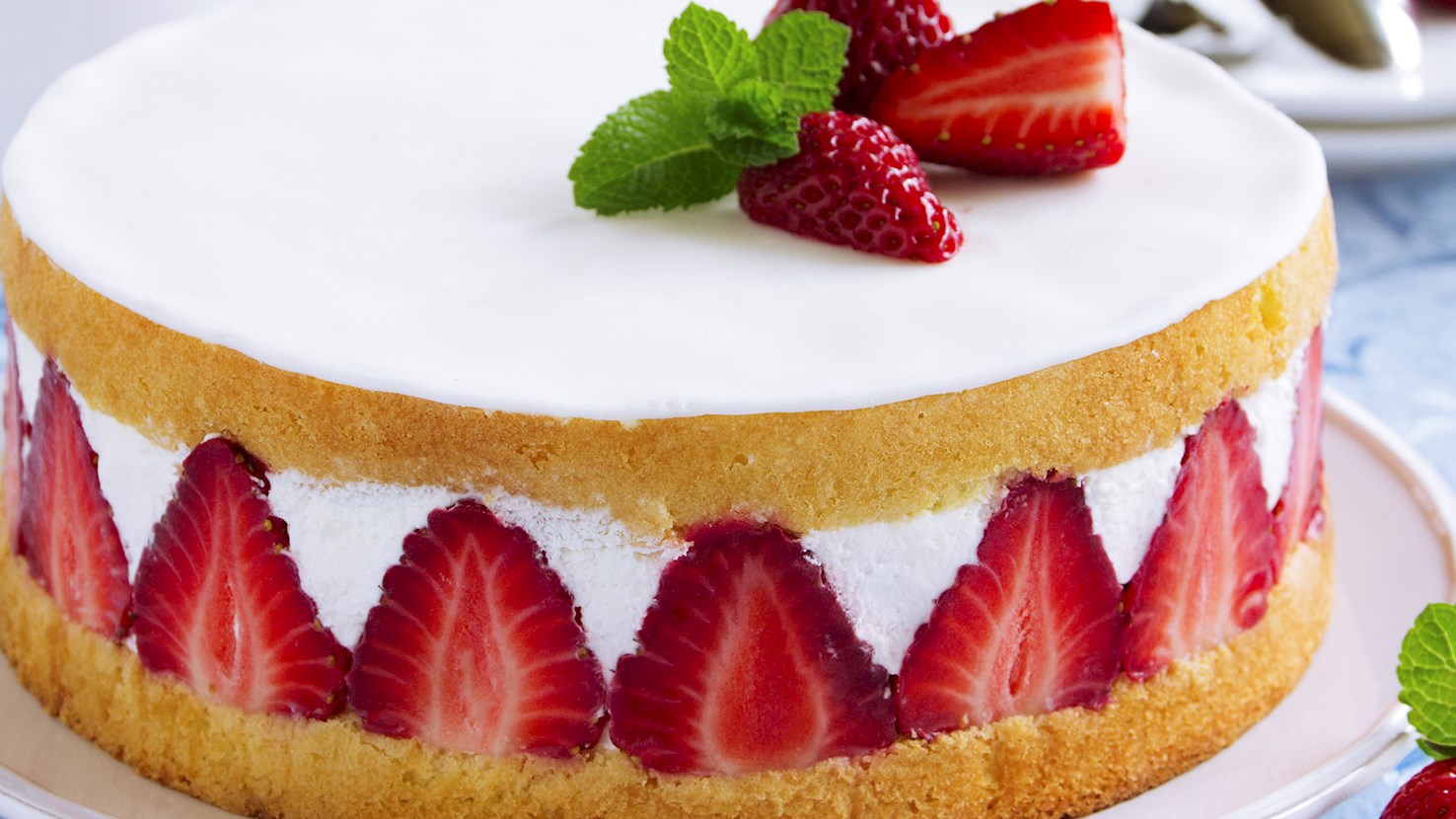
Fraisier is a highly structured, visually striking French dessert composed of two layers of kirsch-soaked génoise sponge, a rich vanilla crème mousseline, and a meticulously arranged border of fresh, halved strawberries, all sealed beneath a smooth layer of tinted almond paste, originating in France. Culinary precursors to the dessert emerged at the end of the 19th century when Auguste Escoffier codified a fresh strawberry cake in his seminal text Le Guide Culinaire. The recipe was subsequently advanced in the early 20th century by Pierre Lacam, who incorporated a sponge base and a distinct touch of kirsch liqueur. The definitive modern architectural construction was formally established in 1966 by the renowned Parisian pastry chef Gaston Lenôtre, who initially named his creation the Bagatelle in homage to the Bagatelle Gardens, explicitly replacing heavy traditional buttercream with a lighter, aerated mousseline to better showcase the delicate fresh fruit. The recipe begins by baking a light, airy vanilla génoise sponge cake, then slicing it horizontally into two even discs. A metal pastry ring is lined with a clear acetate collar to support the delicate internal components and ensure pristine visual edges upon unmolding. The bottom sponge layer is positioned inside the base of the ring and heavily saturated with a sweet, simple syrup infused with clear cherry liqueur. Fresh, uniformly sized strawberries are washed, hulled, cut exactly in half, and arrayed tightly against the interior wall of the collar, with the flat sides facing outward to create a graphic perimeter. A thick crème mousseline, formulated by vigorously whipping traditional vanilla pastry cream with softened butter until completely aerated, is piped meticulously between the standing berries and across the soaked foundation. The central cavity is filled entirely with additional chopped strawberries, which are completely enveloped by the remaining volume of the rich butter-based cream. Pressing the second sponge disc gently over the filling eliminates internal air pockets before the exposed cake surface is brushed generously with the remaining kirsch syrup. The entire assembly is refrigerated for several hours to thoroughly set the butterfat and stabilize the vertical structure. A thin, smooth disc of sweet almond paste, traditionally colored pale green or soft pink, is rolled out and pressed over the top surface to seal the dessert. Peeling away the metal ring and acetate band directly before serving exposes the striking cross-section of embedded red fruit. The chilled cake is sliced cleanly into sharp wedges and consumed in large quantities throughout the spring and summer harvest months. The intricate confection serves as a mandatory centerpiece for Mother's Day celebrations, warm-weather garden parties, and formal afternoon tea services.
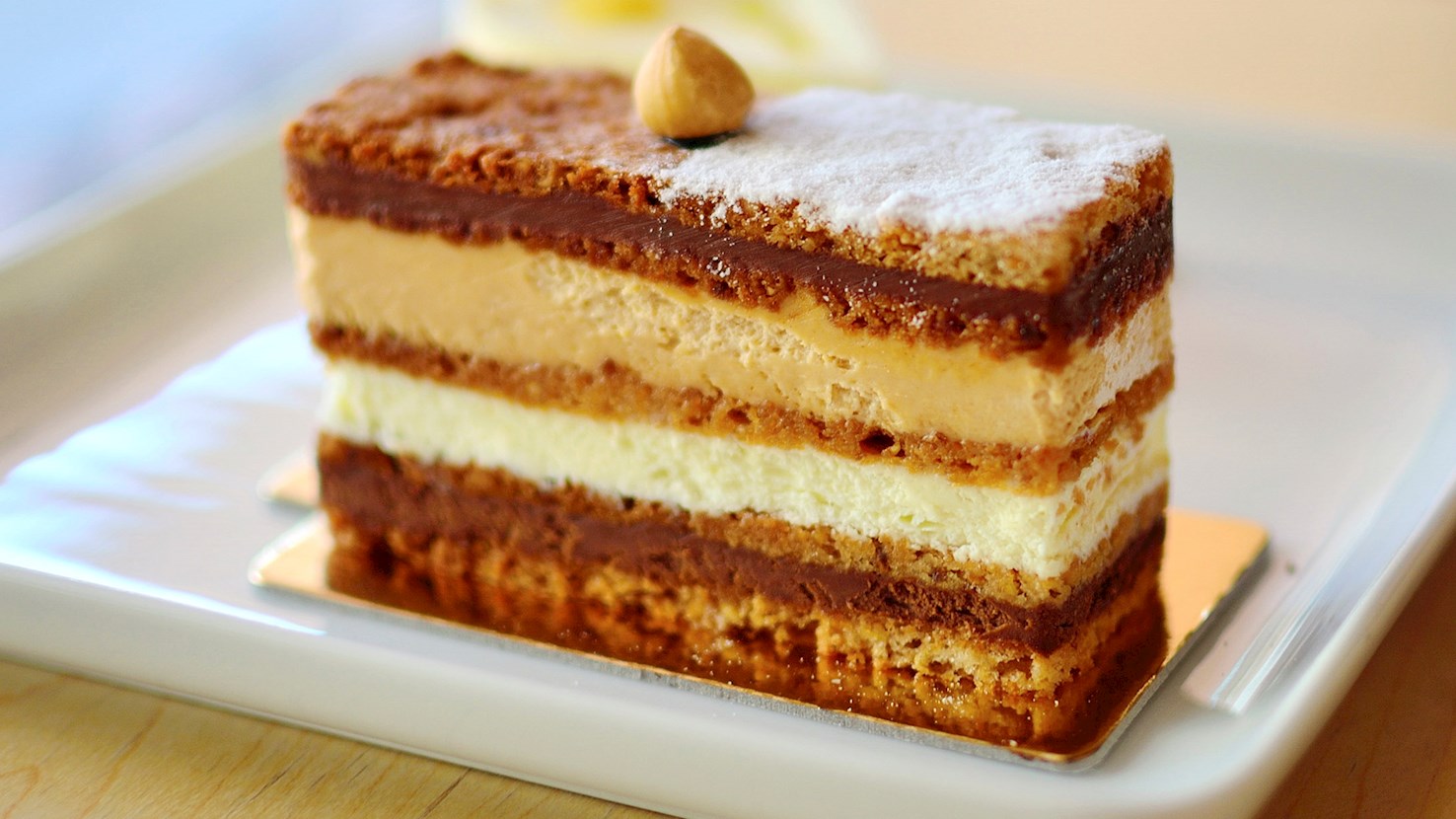
Both crispy and creamy in texture, this French cake is traditionally made with almond or hazelnut meringue sponge cake separated with layers of whipped cream or buttercream. The cake takes its name from the French word dacquois, meaning from Dax, referring to a town located in southwestern France, but the term dacquoise itself has come to signify any dessert with layers of nut meringue sponge cake. The cake is believed to have originated in the 17th century, when it was invented as a luxurious dessert for the people of the French court. The recipe later became very popular in England, after numerous French chefs moved there to cook for the upper class. Its huge popularity generated a wave of different versions of the cake, such as the infamous marjolaine, a rectangular variety of dacquoise known as the mother of all French desserts, which is made with meringue sponge cake and chocolate buttercream.
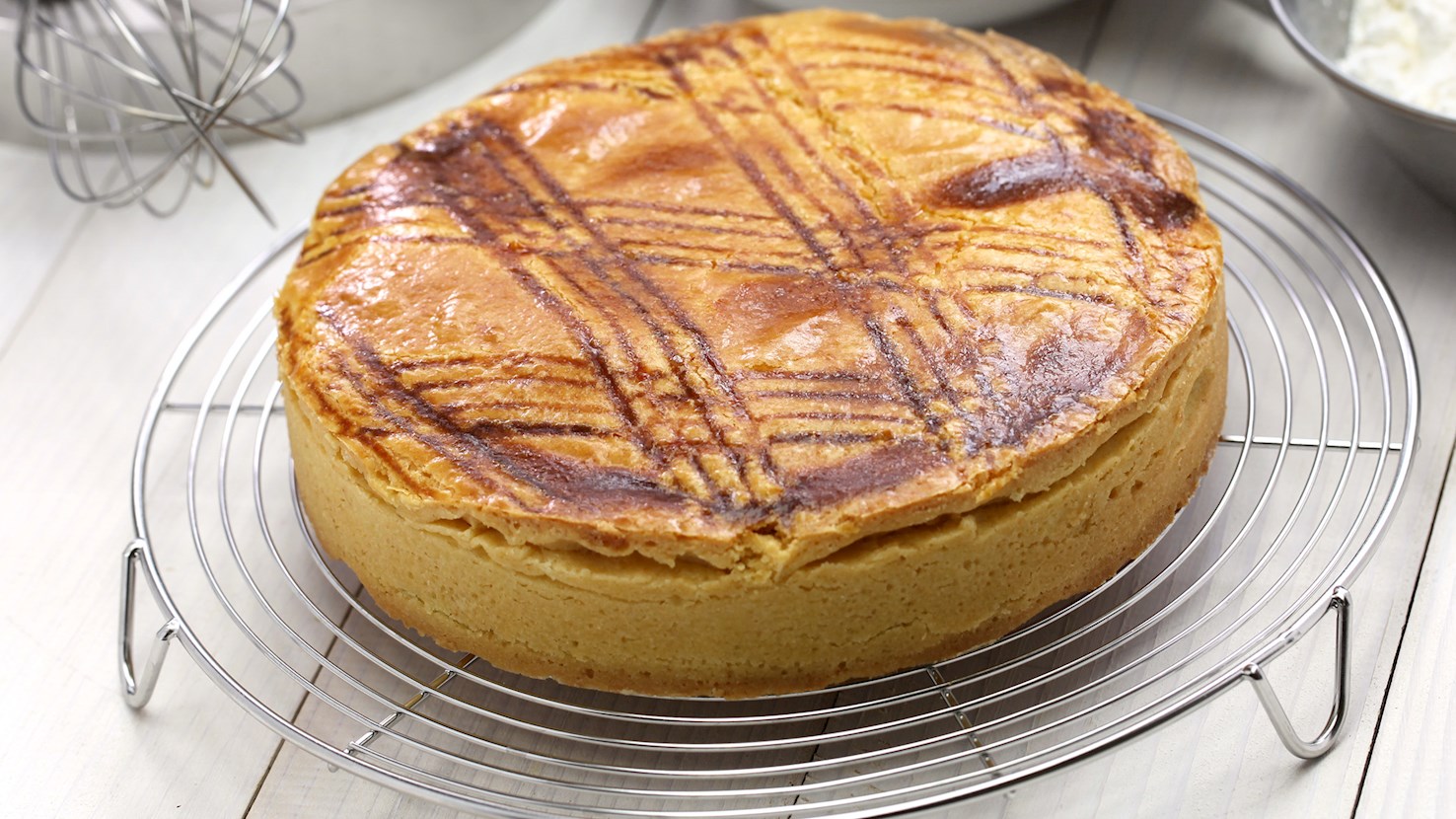
This classic Basque cake consists of two layers of shortcrust pastry and either a filling made with black cherry preserve or, more often, vanilla-flavored pastry cream. If made with black cherries, the top of the cake is usually decorated with the Basque cross (lauburu), while the version with pastry cream typically comes with a crosshatch pattern. Apart from vanilla, common flavorings may also include lemon zest, rum, or almond extract. Although it is traditionally associated with the entire French Basque Country, it is believed that the cake originated in the former French province of Labourd.
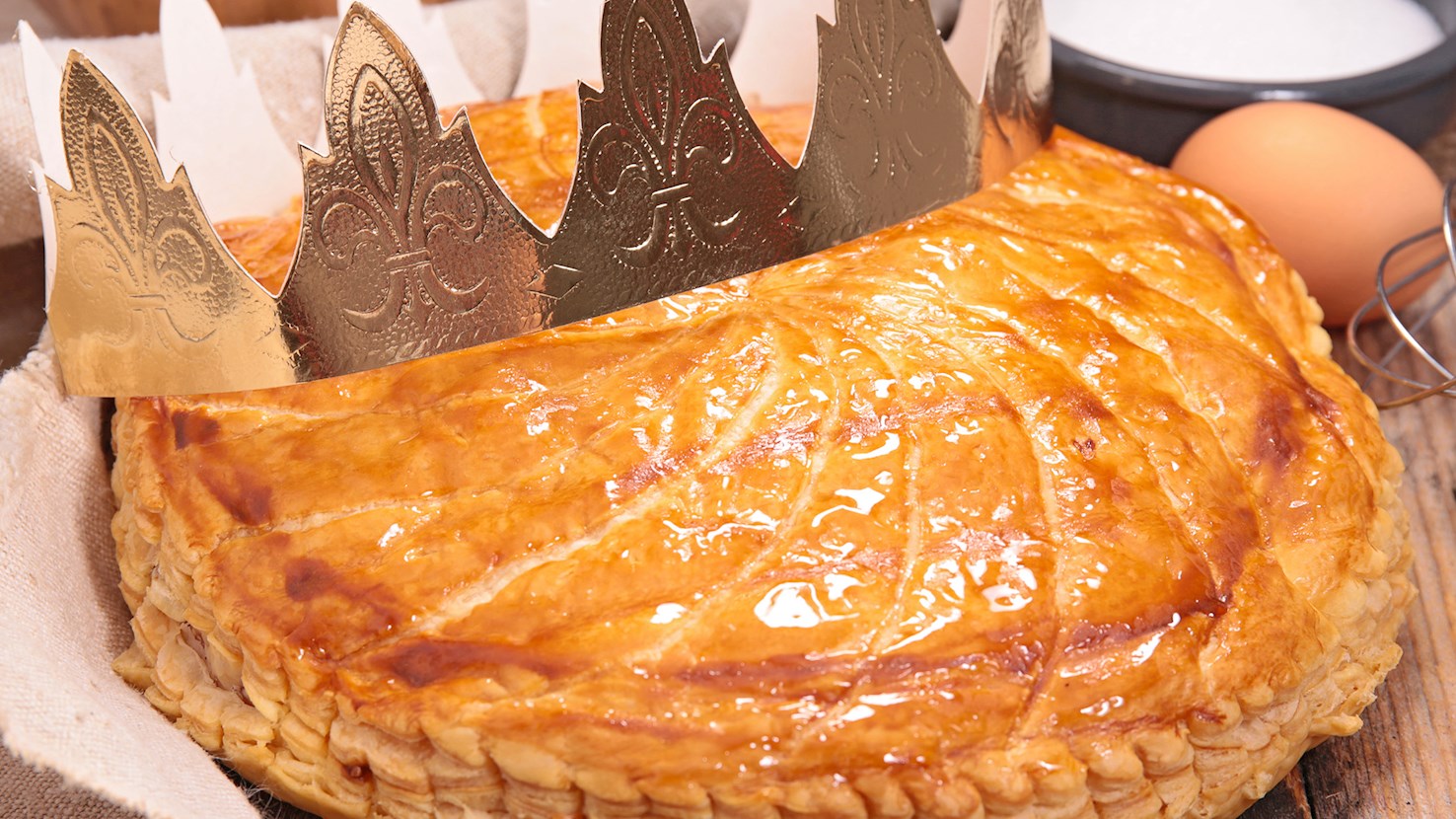
This classic French dessert is usually associated with northern and central France regions and belongs to the wide group of king cakes that are prepared and enjoyed on Epiphany—a Christian holiday celebrated on January 6, commemorating the arrival of Three Wise Men to Bethlehem. The cake is assembled with a thick layer of frangipane—almond-based pastry cream—that is sandwiched between two layers of buttery puff pastry. Tradition suggests to hide fève (a porcelain or plastic lucky charm) inside the frangipane, and whoever is lucky enough to find it will become a queen or a king for the day. Interestingly, during the Revolution, the name of this classic was gâteau de l’égalité, since royalty was not popular at the time. Nowadays, French bakeries usually sell the galettes with a symbolic paper crown on top. A similar dessert is found in Belgium and the Netherlands, where it goes under the name koningentaart.
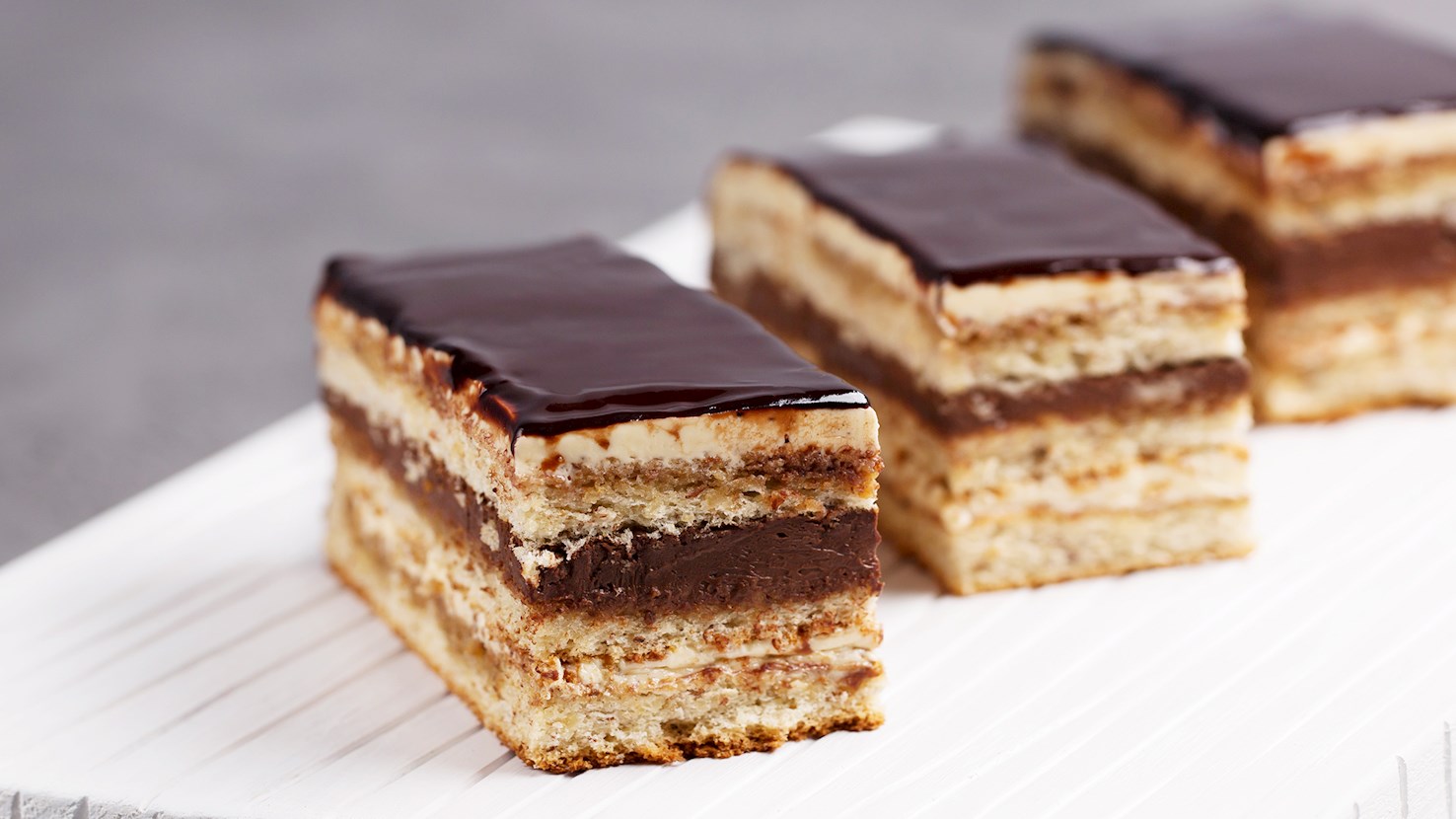
In its original form, gâteau opera combines coffee-flavored buttercream, chocolate ganache, and layers of biscuit Joconde—a light almond sponge that is infused with coffee syrup or Grand Marnier liqueur. Each cake is topped with a thin layer of chocolate ganache and is usually decorated with a symbol of a note, musical instruments, or merely the word opera written in chocolate. Although there are many conflicting stories of its origin, it is believed that the cake was invented at the Parisian patisserie Dalloyau by a pastry chef named Cyrique Gavillon. At the time, this sophisticated dessert was considered a novelty, compared to the lavishly decorated classics that were popular at the time.
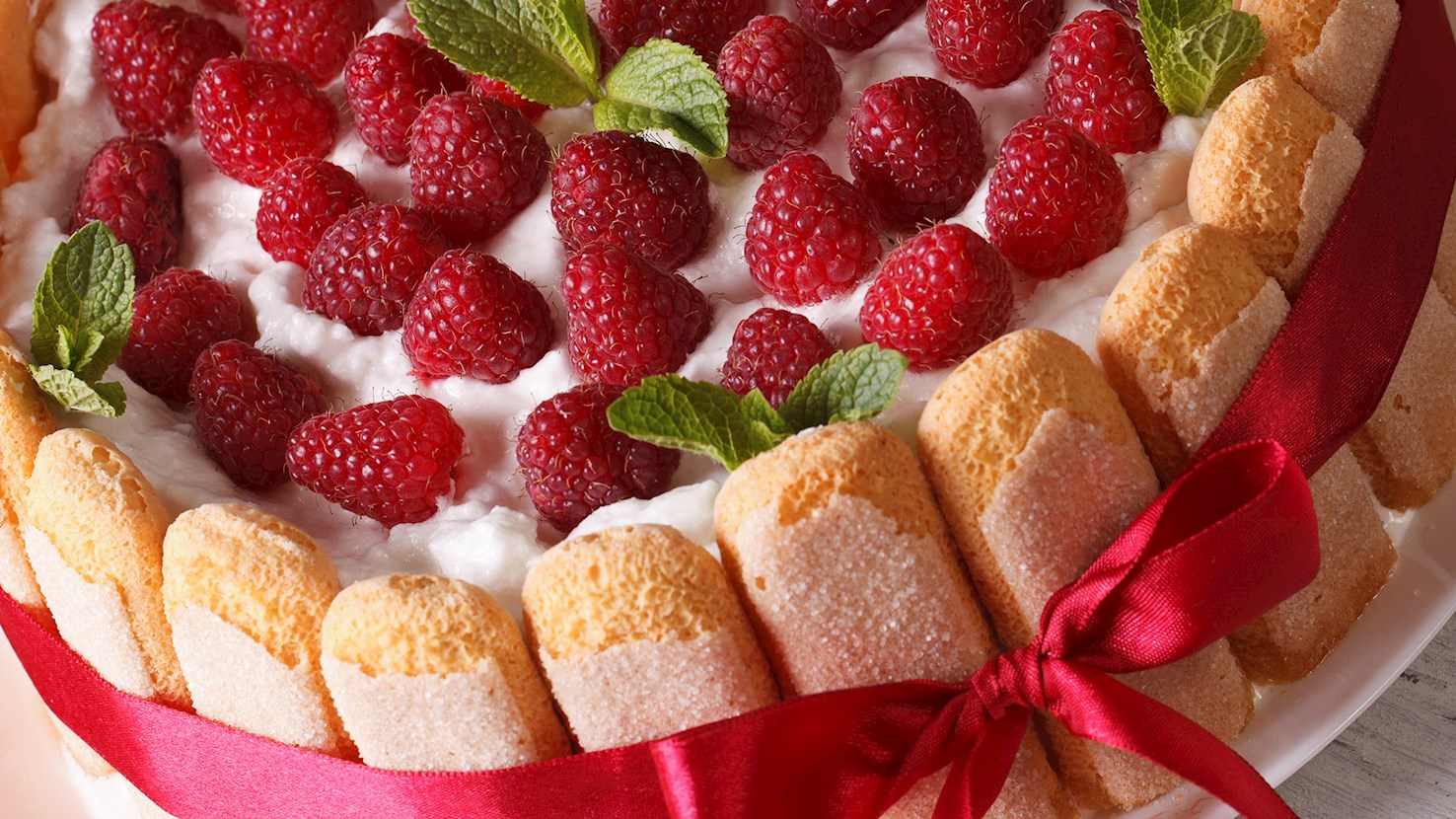
This cake originated in 18th-century France as a sponge cake pressed into an elegant mold, filled with thick custard or crème Bavaroise flavored with cooked fruit, spices, or brandy. The cake is said to have been invented by a famous French chef Marie-Antoine Carême, who many considered the father of French cuisine. While the origin of the name Charlotte is often debated, Carême likely named his cake Russe to honor his Russian employer Czar Alexander I, and he also included a recipe for Charlotte à la Russe (originally Charlotte à la Parisienne) in his 1815 cookbook The Royal Parisian Pastry Cook and Confectioner. A true favorite among European aristocrats, this sweet dish has taken on many different variations over time, like the delicious Charlotte Malakoff, filled with a kirsch-flavored almond cream and decorated with chantilly cream and berries. This version was invented in 1855, when French and British forces won a battle against Russia in the Crimean War. The Charlotte as we know it today is typically more simplified – a cake made with ladyfingers and filled with either custard, mousse, or a mixture of whipped cream and fruit purée. Another popular alternative to the Russe version is the so-called Charlotte Royale – it has the same filling as Charlotte Russe, but replaces the ladyfinger lining with Swiss roll slices. Charlotte russe is often topped with jelly and decorated with various fruit, making it a beautiful and delicious dessert fit for the Czar.
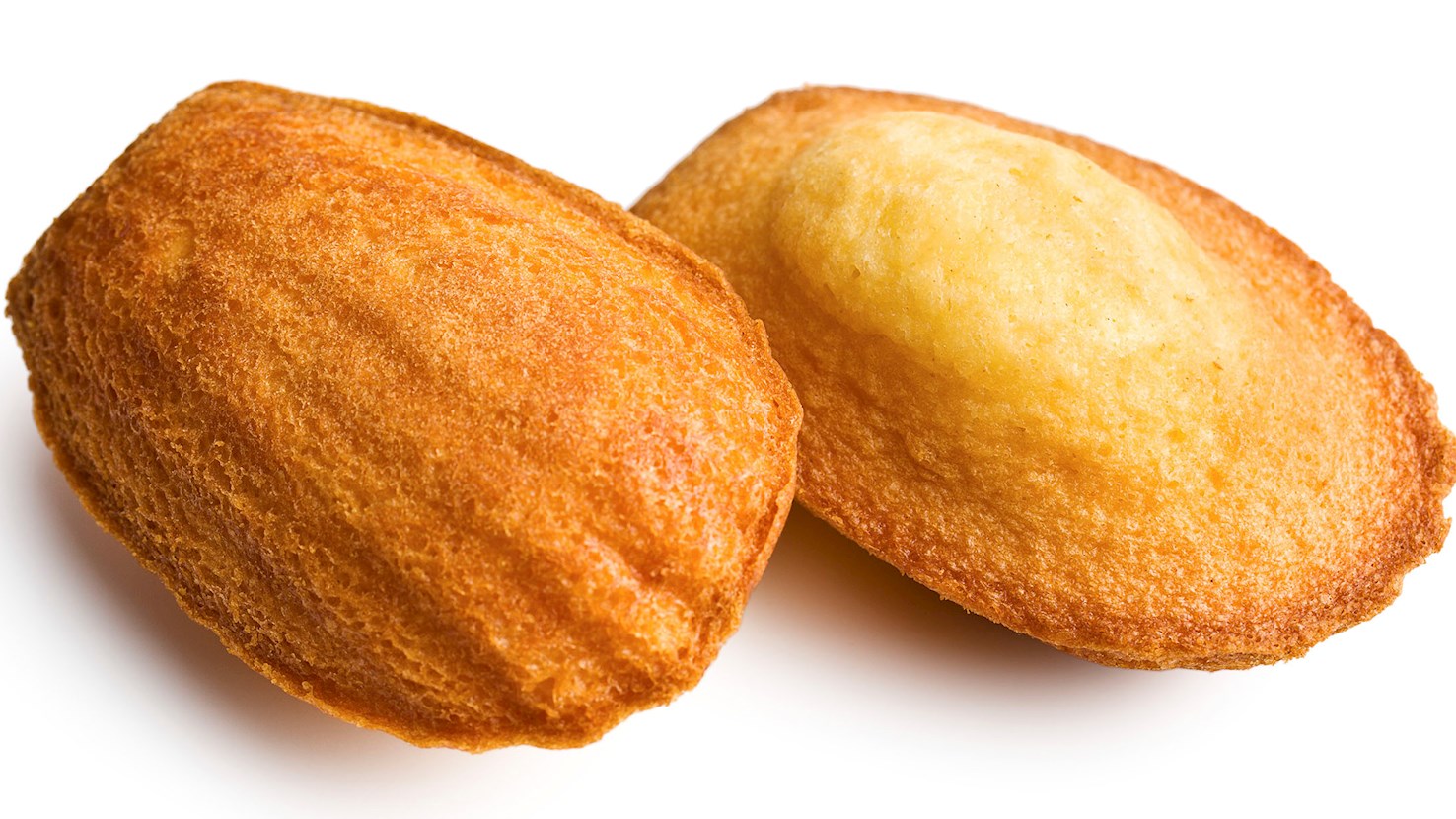
Madeleines are the perfect accompaniment to afternoon tea - these buttery sponge cakes (often mistaken for cookies because of their small size) are slightly browned and crispy on the outside while remaining soft and tender on the inside. A typical dessert of the Lorraine region, madeleines are said to have originated in Commercy. They are supposedly named after Madeleine Paulmier, the 18th-century pastry chef who first made them for Stanisław Leszczyński, the Duke of Lorraine. Later on, his daughter Marie Leszczyńska introduced madeleines to the court in Versailles, and they attained countrywide popularity soon afterward. However, what brought them worldwide fame is a passage from Swann’s Way, the first volume of Marcel Proust’s 20th-century literary masterpiece In Search of Lost Time. In painstaking detail, Proust describes biting into a soft little madeleine dipped in linden blossom tea, the taste of which then takes him on a bittersweet journey of nostalgia, evoking long-forgotten memories of his childhood and youth. Also known as petite madeleines, these delicate little tea cakes are traditionally baked in shallow, scallop-shaped molds that give them their distinctive shell-like appearance. Even though they come in many flavors, such as chocolate, vanilla, rose, honey, lavender, and orange, classic madeleines are typically flavored with almonds or lemon and are served with a dusting of powdered sugar.
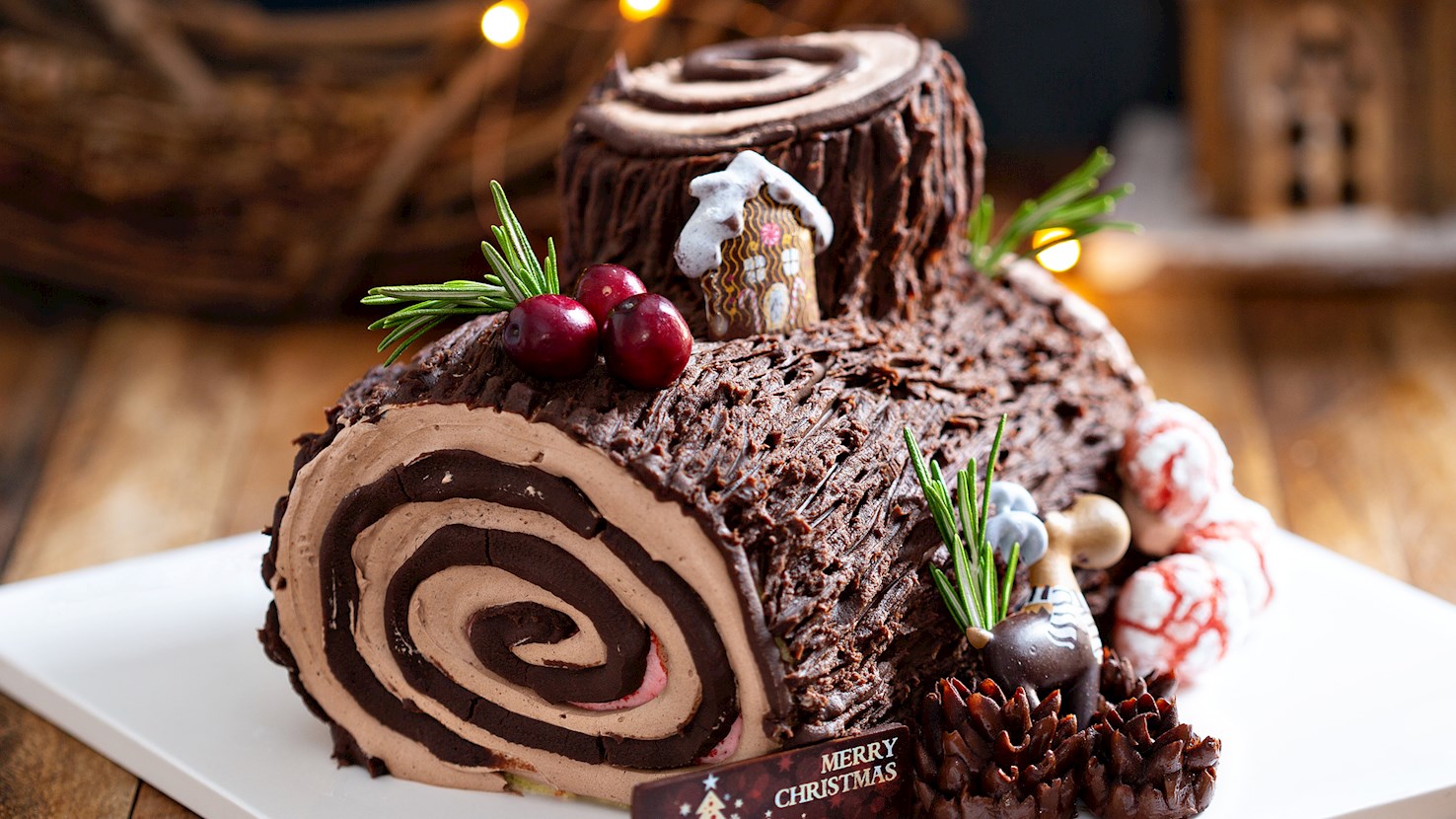
This elaborately decorated, rolled, and filled sponge cake is frosted with chocolate buttercream made to look like a tree bark. Some of the decorations might include marzipan sticks, sugar cobwebs, and meringue mushrooms. The origins of the cake can be traced back to the old Celtic tradition of celebrating the winter solstice, the shortest day of the year. The Celts would burn a log as an offering to the Sun for returning to Earth. As the tradition disappeared with the arrival of home stoves, the huge log was replaced by a small branch that was traditionally set in the middle of the dining table, surrounded by delicacies and sweets that were given to guests as treats. Over time, the branch transformed into the Yule log cake we know today, but whether it was a Parisian or Lyonnaise creation is still the subject of heated debate. What we do know is that Parisian bakers helped popularize it in the 19th century, and that the oldest written reference to the cake can be found in a tome called The English Huswife that dates back to 1615. Since then, it has become the most popular traditional Christmas cake throughout France, and it is made in a wide variety of colors and flavors.
TasteAtlas food rankings are based on the ratings of the TasteAtlas audience, with a series of mechanisms that recognize real users and that ignore bot,
nationalist or local patriotic ratings, and give additional value to the ratings of users that the system recognizes as knowledgeable.
For the “Top 44 French Cakes” list until September 15, 2026, 2,104 ratings were recorded, of which 1,862 were recognized by the system as legitimate.
TasteAtlas Rankings should not be seen as the final global conclusion about food. Their purpose is to promote excellent local foods,
instill pride in traditional dishes, and arouse curiosity about dishes you haven’t tried.



What People Say