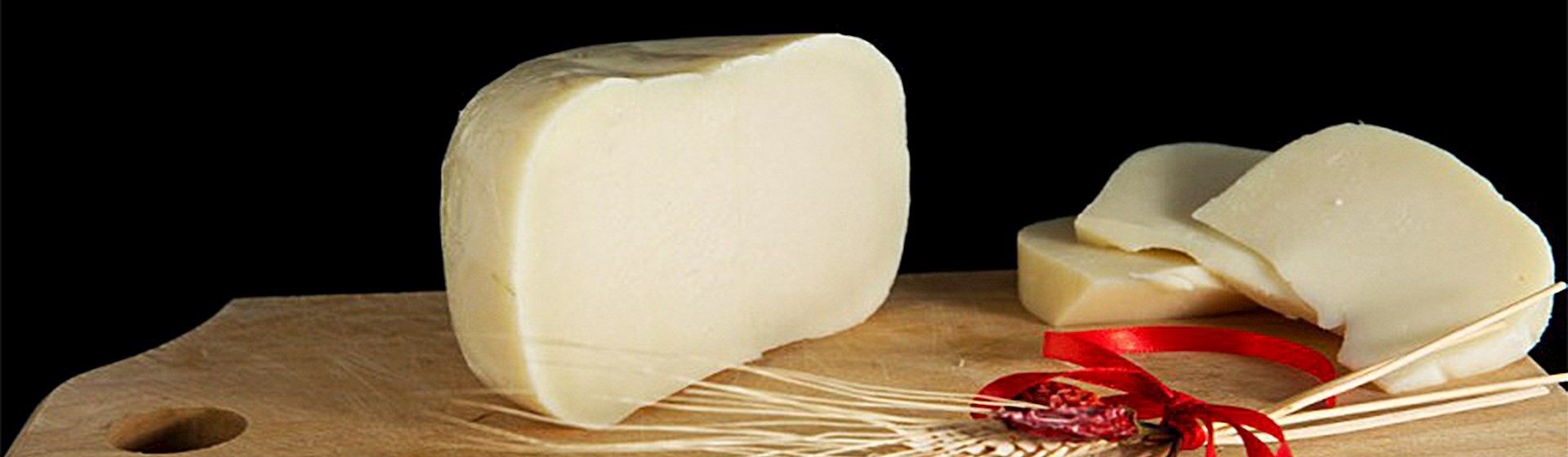
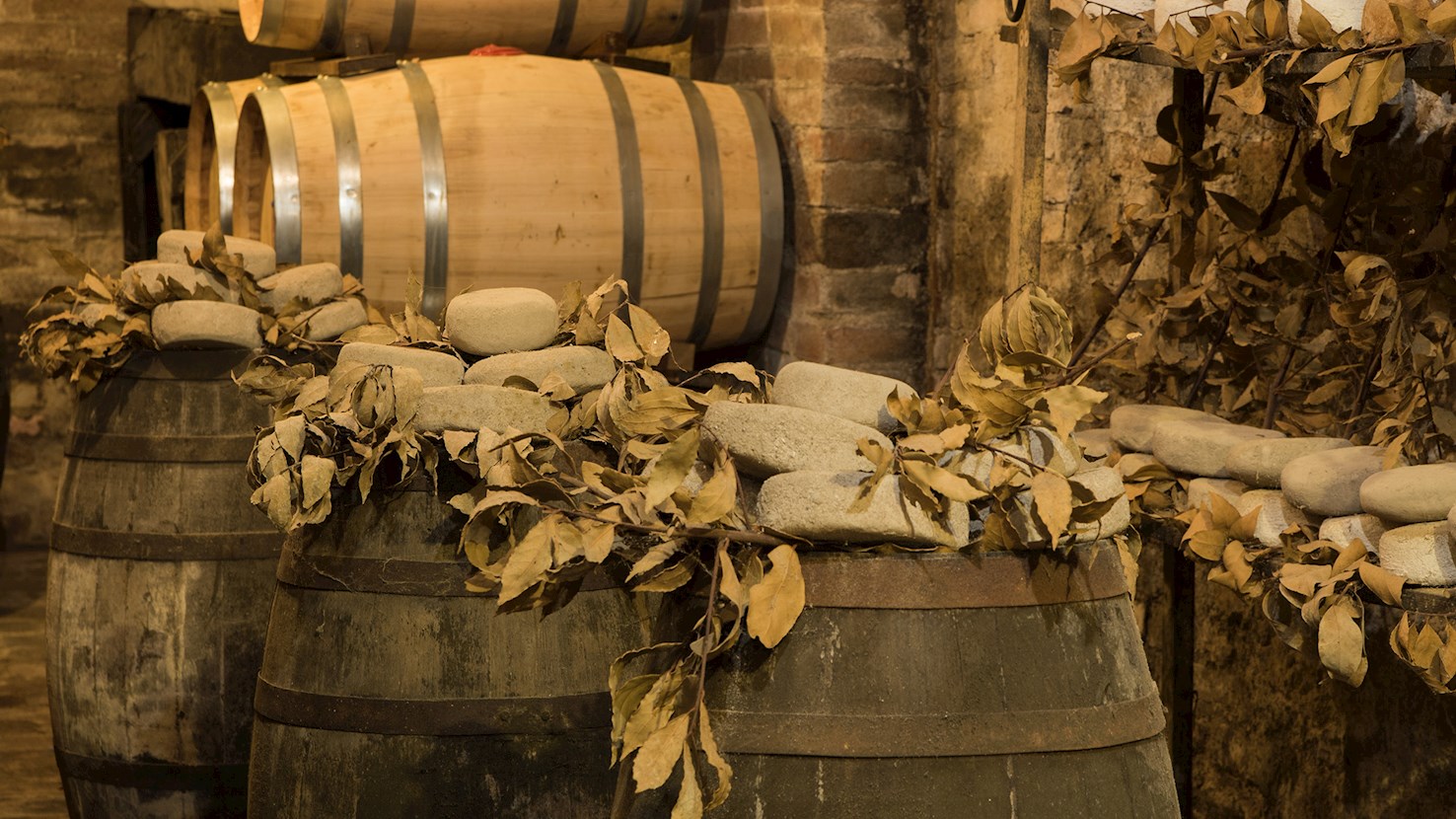
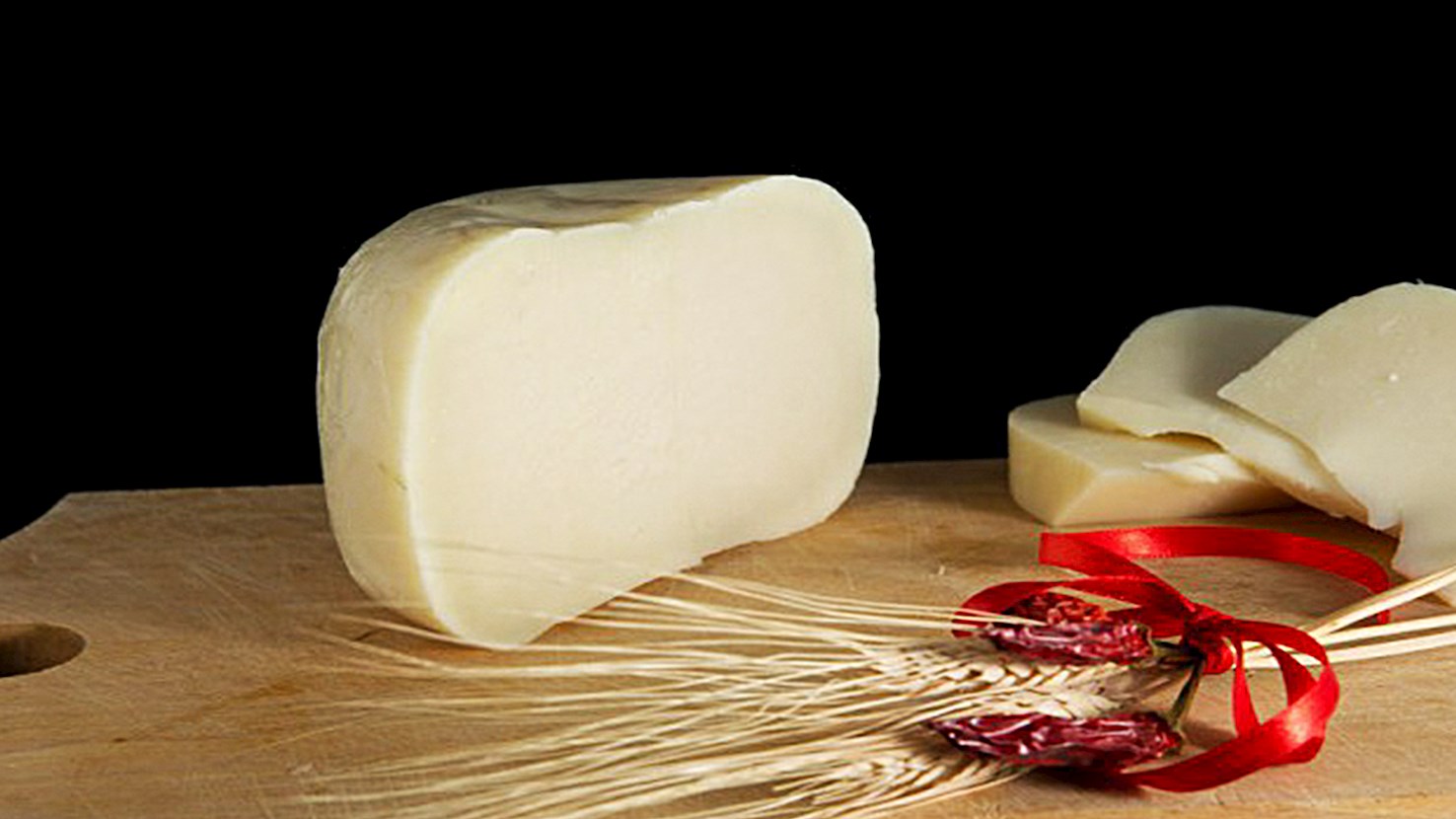
Pecorino di Botte is a traditional sheep milk cheese from the region of Marche. It is made by seasoning the shortly aged pecorino marchigiano cheese with different aromatic herbs and then leaving it to mature in sealed wooden barrels that previously contained wine. According to the tradition, the cheese should be kept in the barrels da San Giovani a San Martino, that is from 24st of June till 11th of November. During that period the cheese develops a very intense flavor, both of the herbs and of the wine. Although it can be used as an ingredient in many recipes, this delicacy is best enjoyed on its own, served with some nuts or on a slice of Pane Casareccio and warm chestnut honey.
The name Pecorino derives from the Italian word pecora, meaning sheep, and the term is used to describe a wide variety of Italian cheeses made from sheep's milk. Pecorino Marchigiano is a cheese with a very long tradition. It is made with raw sheep milk flavored with local herbs and spices such as thyme, basil, marjoram, cloves, and black pepper, and it is then left to mature for at least twenty days - for the aged variety, that period can be up to a year. The shortly aged version is softer and lighter, while the matured version is harder, greasier, and much darker in color. Marchigiano is often used to flavor pasta dishes, but it is also great when served with homemade bread and acacia honey or jam. The region of Marche is also renowned for two special variants: Pecorino di Botte and Cascio Pecorino Lievito. Pecorino di Botte is made by leaving the shortly aged pecorino marchigiano to mature in sealed wooden barrels that previously contained wine, which additionally intensifies the flavor of the cheese, while Cascio Pecorino Lievito is lighter, with a soft texture and subtle flavor.
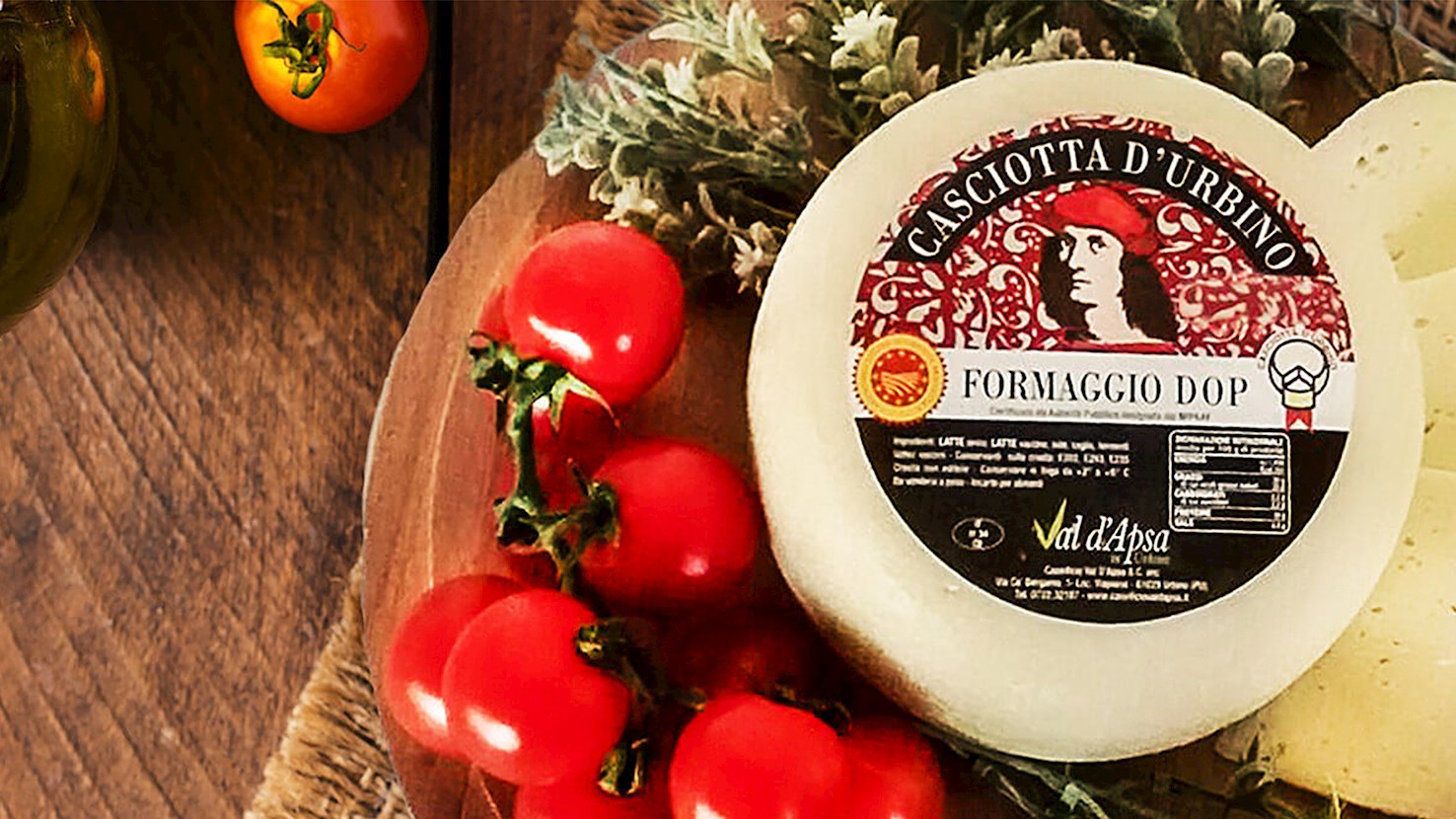
Produced since the 1400s and found only in the Pesaro-Urbino province of the Italian Marche region, Casciottad'Urbino is a semi-soft cheese with a crumbly texture, made from a combination of about 70% sheep’s milk and 30% whole cow’s milk. It has a pronounced aroma of milk while its flavor can be described as sweet and nutty. Casciotta is produced only between April and September and aged for about 20 to 30 days. It is an extremely versatile cheese, paired with light wines and enjoyed in various dishes, from starters such as CresciaSfogliata di Urbino, a type of Marche flatbread typically filled with cold cuts and arugula, to more elaborate pasta and meat dishes.
Slattato is a cow's milk cheese originating from the Marche region of central Italy, specifically produced in the areas surrounding Macerata. It is categorized as a "formaggio a pasta cruda," meaning the curd is not cooked during the production process. The development of this cheese is linked to the historical necessity of utilizing surplus cow's milk from the local Podolica and Marchigiana cattle breeds, providing a milder alternative to the region's more pungent sheep's milk varieties. Preparation begins with the heating of whole cow's milk to a temperature of approximately 35 to 38 degrees Celsius, followed by the addition of liquid calf rennet to initiate coagulation. Once the curd has set to a specific elastic consistency, it is broken into large granules, which helps the cheese retain a high internal moisture content. The curds are then gathered and placed into cylindrical molds to drain naturally. A distinctive phase of the process involves dry-salting the wheels before they are moved to maturation rooms. The aging period is notably short, typically lasting between twenty and thirty days, which preserves the fresh characteristics of the milk. During this time, a thin, elastic, straw-colored rind forms, while the interior remains ivory-white with a soft, slightly springy texture and occasional small eyes. Slattato is defined by a flavor profile that is sweet and predominantly lactic, with a buttery finish and a very low level of acidity. Serving involves slicing the cheese into thick wedges or cubes. It is eaten throughout the Marche region as a table cheese or as a versatile culinary ingredient. Due to its superior melting properties, it is frequently used in hot dishes, such as being melted over grilled polenta or incorporated into savory vegetable gratins. In domestic settings, it is often consumed as a quick lunch component with crusty local bread. Food pairings include light wildflower honey, mild fruit preserves, or fresh seasonal vegetables like radishes and celery. Beverage pairings are usually centered on young, light-bodied white wines from the region, such as Verdicchio dei Castelli di Jesi, which offers a crispness that cleanses the palate after the creamy fat of the cheese, or a light red wine like Lacrima di Morro d'Alba.
Caprino Marchigiano is a traditional goat’s cheese produced in the Italian region of Marche, mainly in the provinces of Pesaro and Urbino. Made with raw milk, this dry-salted cheese is available in short, medium, or long-aged version, with paste ranging from semi-hard to hard. Over time, it can develop a rather spicy flavor, which makes it a great addition to salads, pasta dishes, and even sweets. The region of Marche is also renowned for one very special variety of caprino cheese, called caprino al lattice di fico, made with raw goat’s milk that is simply stirred with a freshly cut fig tree branch. The milky juice that comes from the branch curdles the milk, creating a cheese with a savory, slightly spicy flavor - although this procedure might seem simple, it takes a great deal of experience, because if the branch is left in the milk for a moment too long, the cheese develops a bitter, unpleasant taste.
Caprino al lattice di fico is a very special variety of caprino cheese from the Italian region of Marche, produced mainly in the provinces of Pesaro and Urbino. What makes it special is the rennet used to coagulate the milk – the raw goat's milk is simply stirred with a freshly cut fig tree branch, and the milky juice that comes from it curdles the milk. It might seem like a simple procedure, but it requires a great deal of experience because if the branch remains immersed in milk too long, the cheese develops an unpleasant, bitter flavor. Caprino al lattice di fico can be consumed after a short maturation ( a month or two) or left to age up to a year. It has a savory, slightly spicy flavor, and due to the fact it is made with plant coagulant, it is also suitable for lacto-vegetarians.
This semi-hard, shortly aged variant of pecorino cheese made from raw sheep milk comes from the region of Marche. The crust is soft, straw-colored while the interior is semi-hard, compact and white, with subtle, not too intense flavor. Pecorino fresco pairs nicely with jam or honey and red wines with lower alcohol content.
TasteAtlas food rankings are based on the ratings of the TasteAtlas audience, with a series of mechanisms that recognize real users and that ignore bot,
nationalist or local patriotic ratings, and give additional value to the ratings of users that the system recognizes as knowledgeable.
TasteAtlas Rankings should not be seen as the final global conclusion about food. Their purpose is to promote excellent local foods,
instill pride in traditional dishes, and arouse curiosity about dishes you haven’t tried.






What People Say