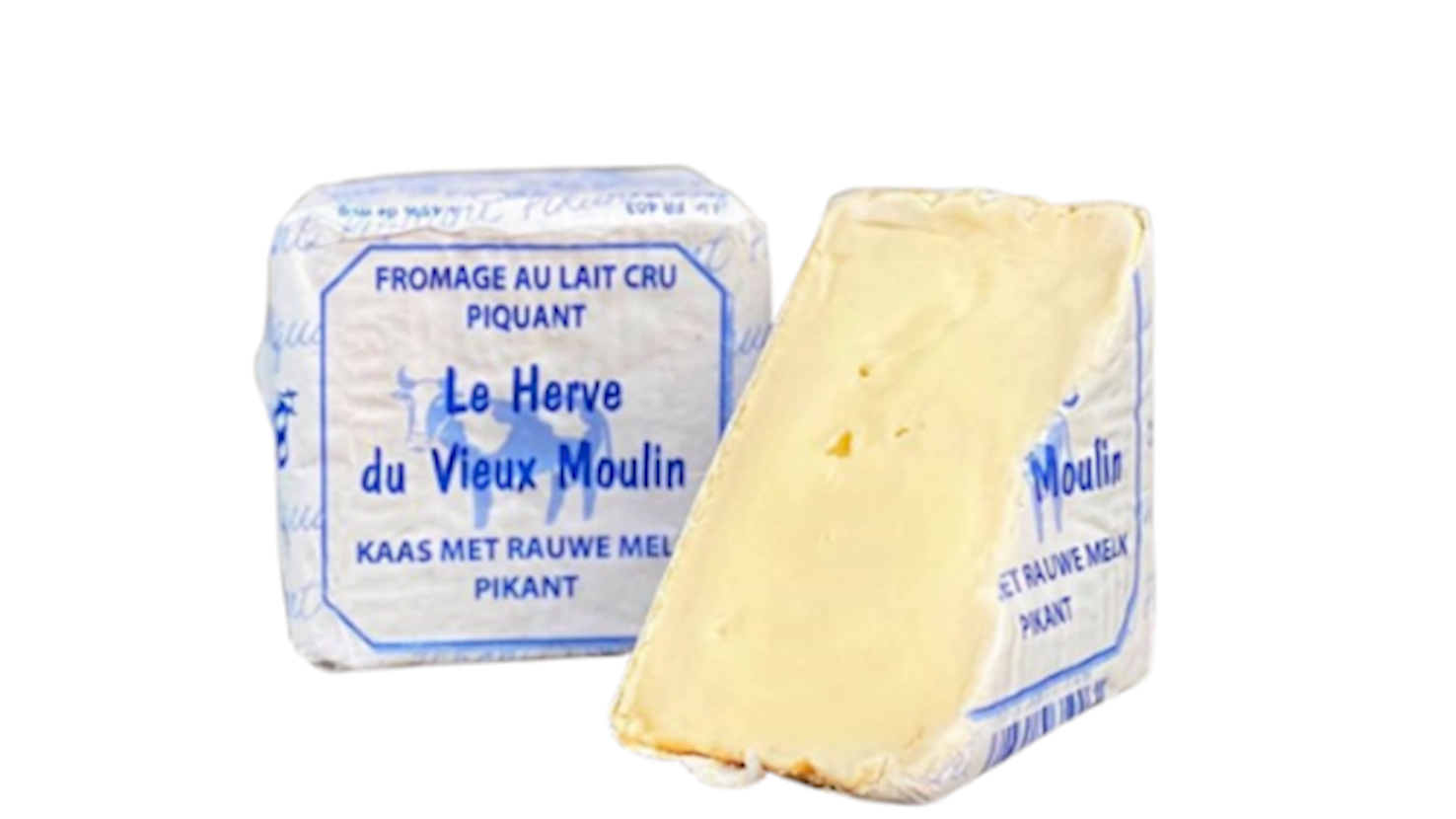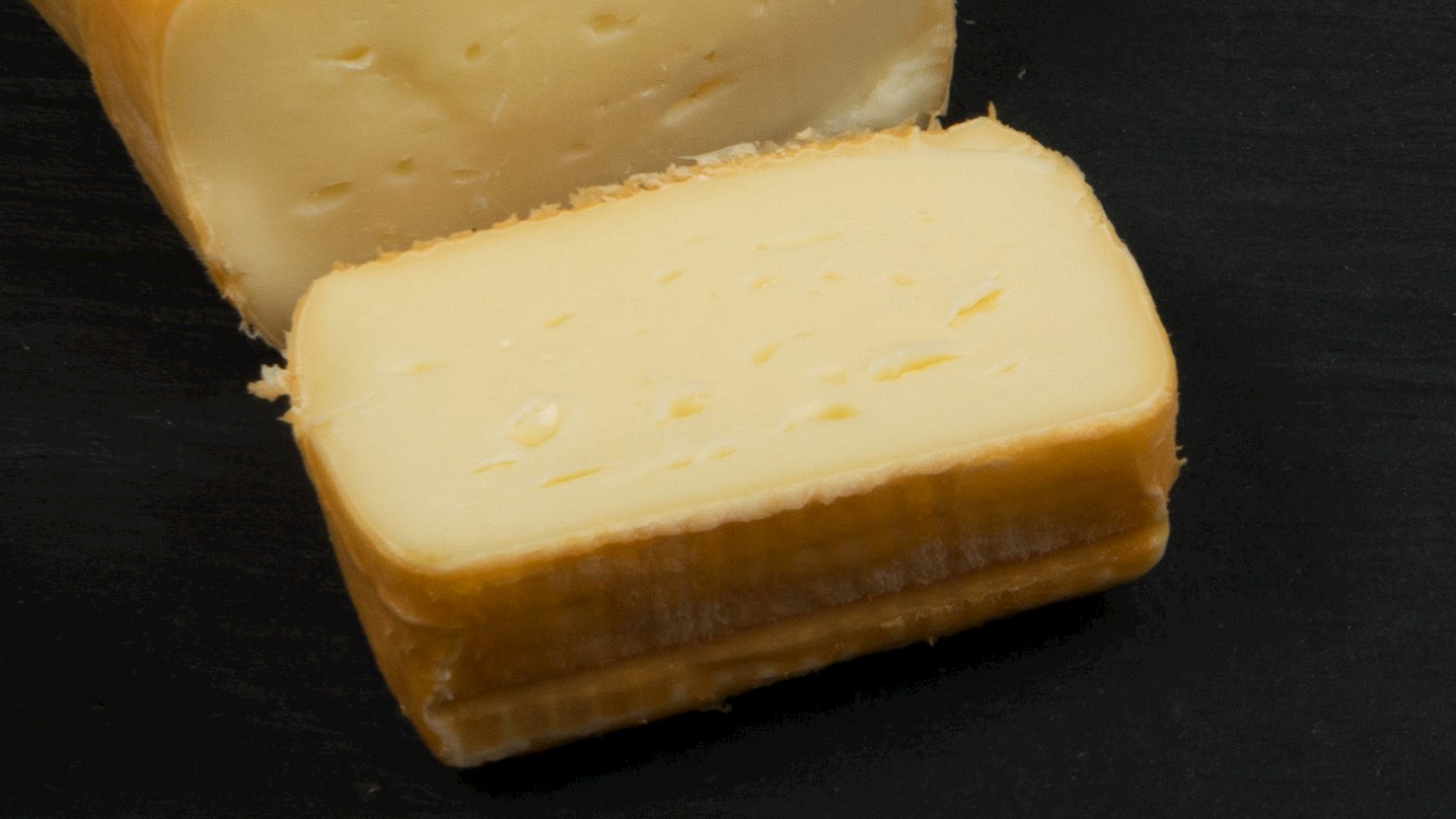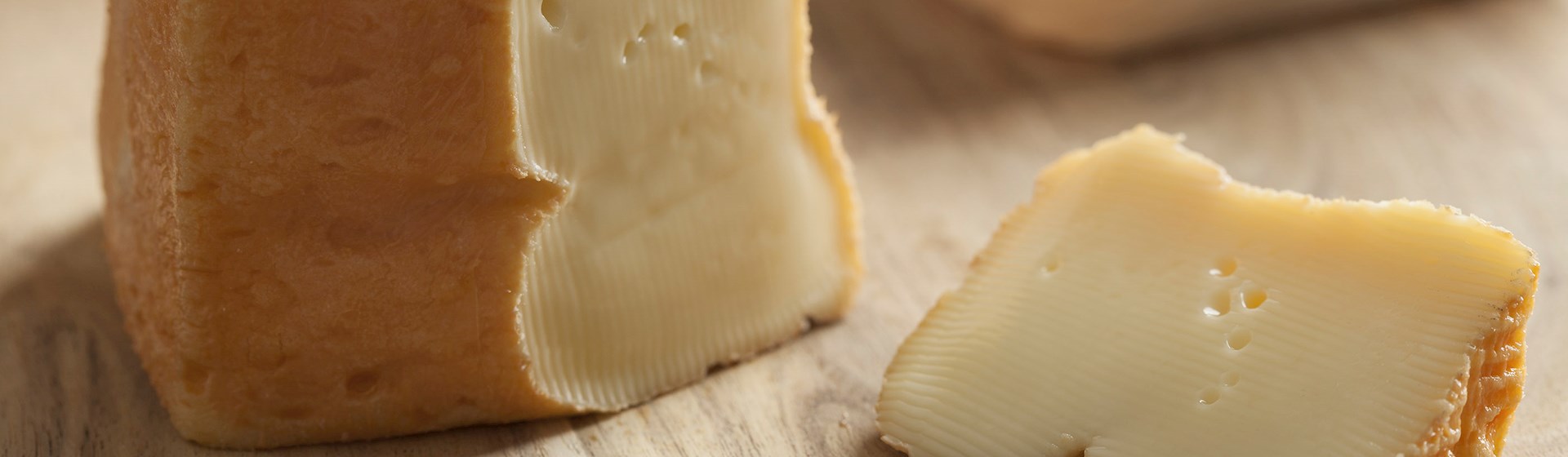
Le Herve du Vieux Moulin is an artisanal cheese producer based in the village of Battice, in Belgium’s Pays de Herve region, specializing in the production of authentic Herve cheese, the only Belgian cheese protected by an AOP designation. The dairy relies on a long local tradition and uses cow’s milk sourced from nearby farms, processed according to traditional methods characteristic of this area. Their Herve is a soft, washed-rind cheese, recognizable by its cube shape, orange-reddish rind, and pronounced aroma that develops throughout maturation. The range includes both milder and more intense versions, from Herve doux to Herve piquant, differing in aromatic strength, pungency, and depth of flavor. The texture is soft and creamy, with a full, milky and slightly salty profile that becomes more expressive as the cheese ages. Production is firmly rooted in respect for the terroir of the Pays de Herve and the preservation of artisanal know-how passed down through generations. Today, Le Herve du Vieux Moulin is considered one of the reference producers of this traditional Belgian cheese, valued for its authenticity, strong identity, and close connection between product, place, and local gastronomic heritage.
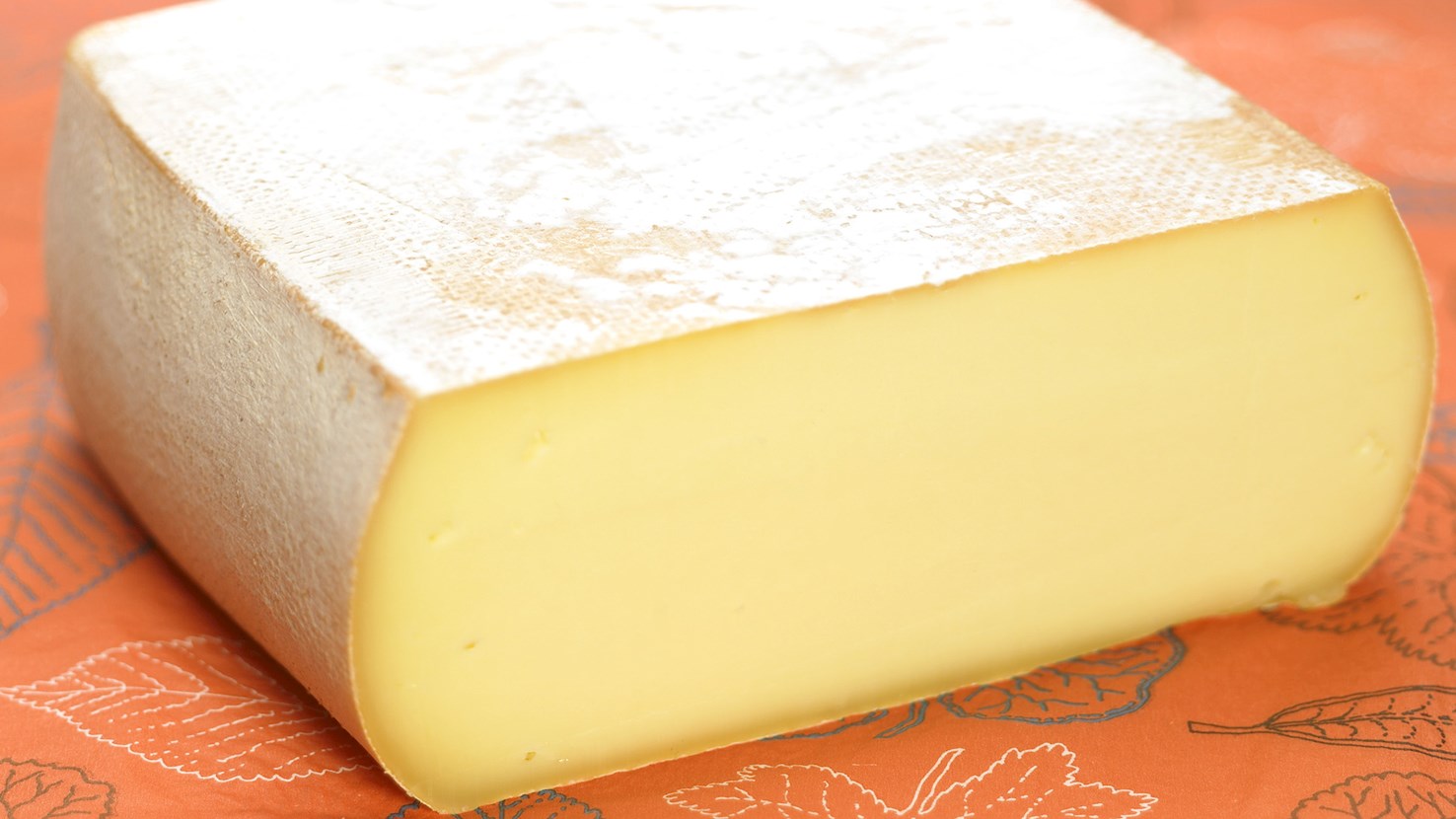
Maredsous is a Belgian soft cheese made from cow’s milk. It is made by monks of the Maredsous Abbey, hence the name of the cheese. It is first lightly pressed, shaped into loaves, then washed in brine so that a firm, orange-colored crust can be developed, as well as its signature pungent aroma. It is recommended to consume Maredsous cheese on its own as a table cheese, or use it for grilling.
One of the most popular cheeses of Belgium, Fromage de Herve has been produced in the Pays de Herve region since the early 1400s. It is a soft, washed rind cheese made from raw or pasteurized cow's milk. Depending on the length of maturation, Herve comes in two varieties. Le Herve Doux is a softer, sweeter cheese, matured for no longer than 4 weeks, while the refined Le Herve Piquant is matured for at least 2 months to develop its pungent aroma and a stronger, saltier flavor. It is best paired with wholemeal breads and rich, dark beers.
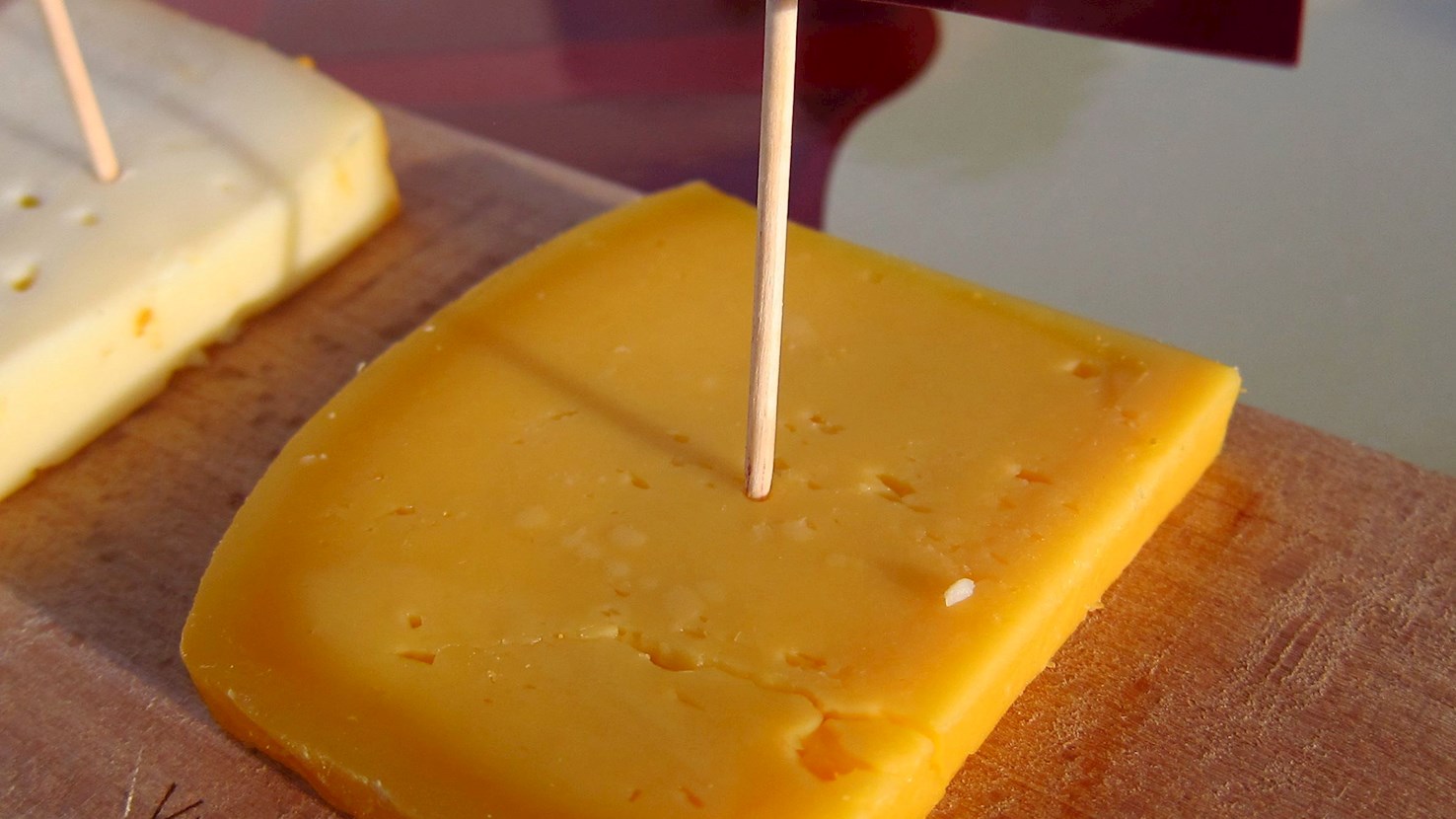
Vieux Chimay is a Belgian cheese made from cow's milk and annatto. It's shaped into a flattened ball, then left to age for 6 months. Underneath its thin golden-brown rind, the texture is semi-soft, chewy, and melts in the mouth. The flavors are buttery and slightly nutty, with a distinct, yet pleasant bitterness on the finish. It's recommended to melt Vieux Chimay into lobster risotto and pair it with a bottle of Chimay Tripel beer.
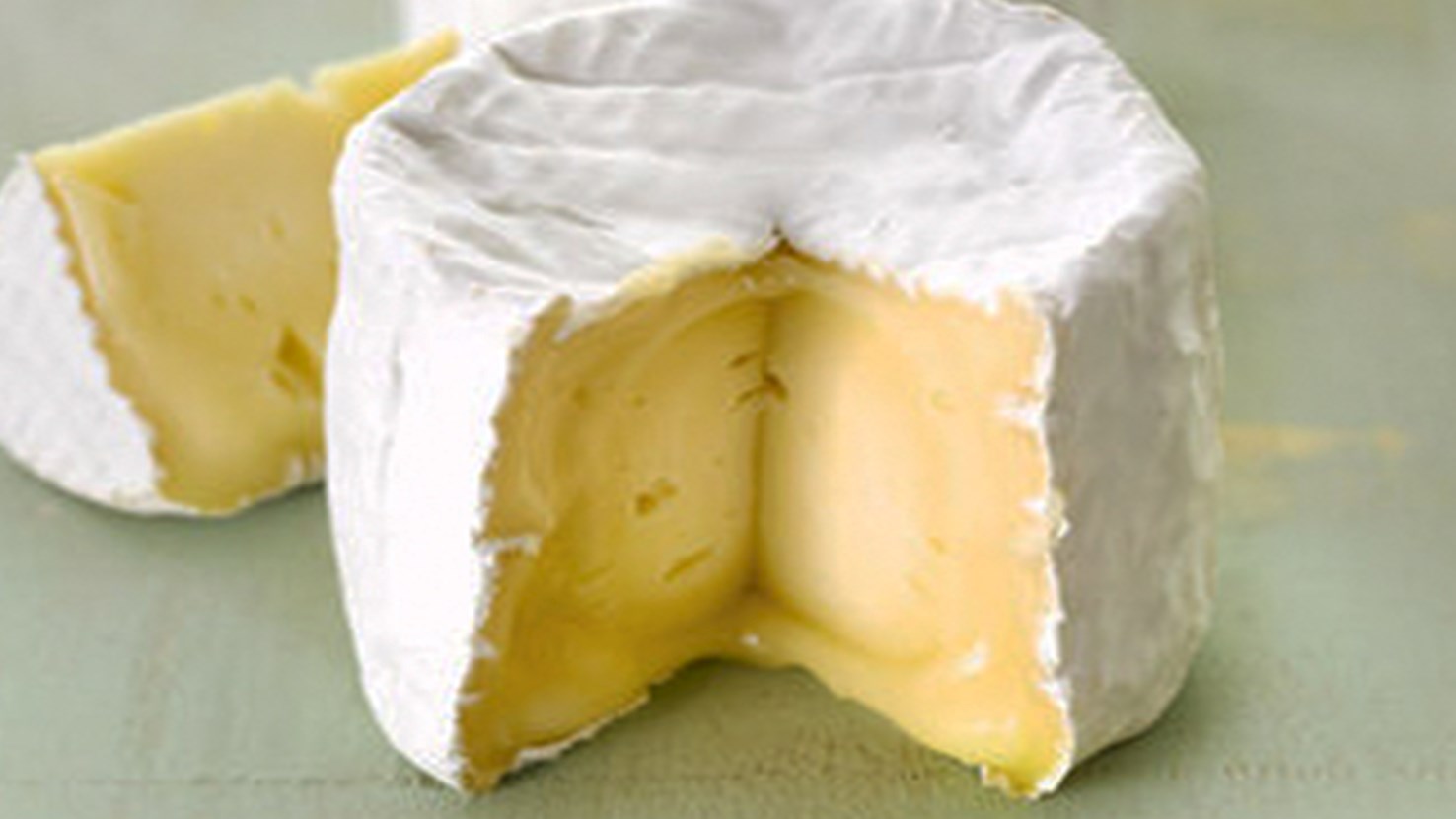
Originating from the Val-Dieu Abbey in Belgium, Bouquet des Moines is a semi-soft cheese made from pasteurized cow’s milk. Underneath its bloomy white rind, it hides a delicately creamy texture. The cheese is characterized by its unusual shape, similar to an upside-down flower pot, and during the maturation period, it gradually ripens towards its center. It can be consumed melted, grilled, or as it is from a cheese platter.
Rodoric is a rare Belgian cheese made from raw goat’s milk. Originating from the region of Liège, the cheese is traditionally left to mature in humid caves, which results in a spicy, strong flavor of the finished product, although the flavor is slightly sweet when rodoric is still young. Due to the sharp, strong flavors of aged rodoric, it is recommended to pair it with dark beer and dark bread.
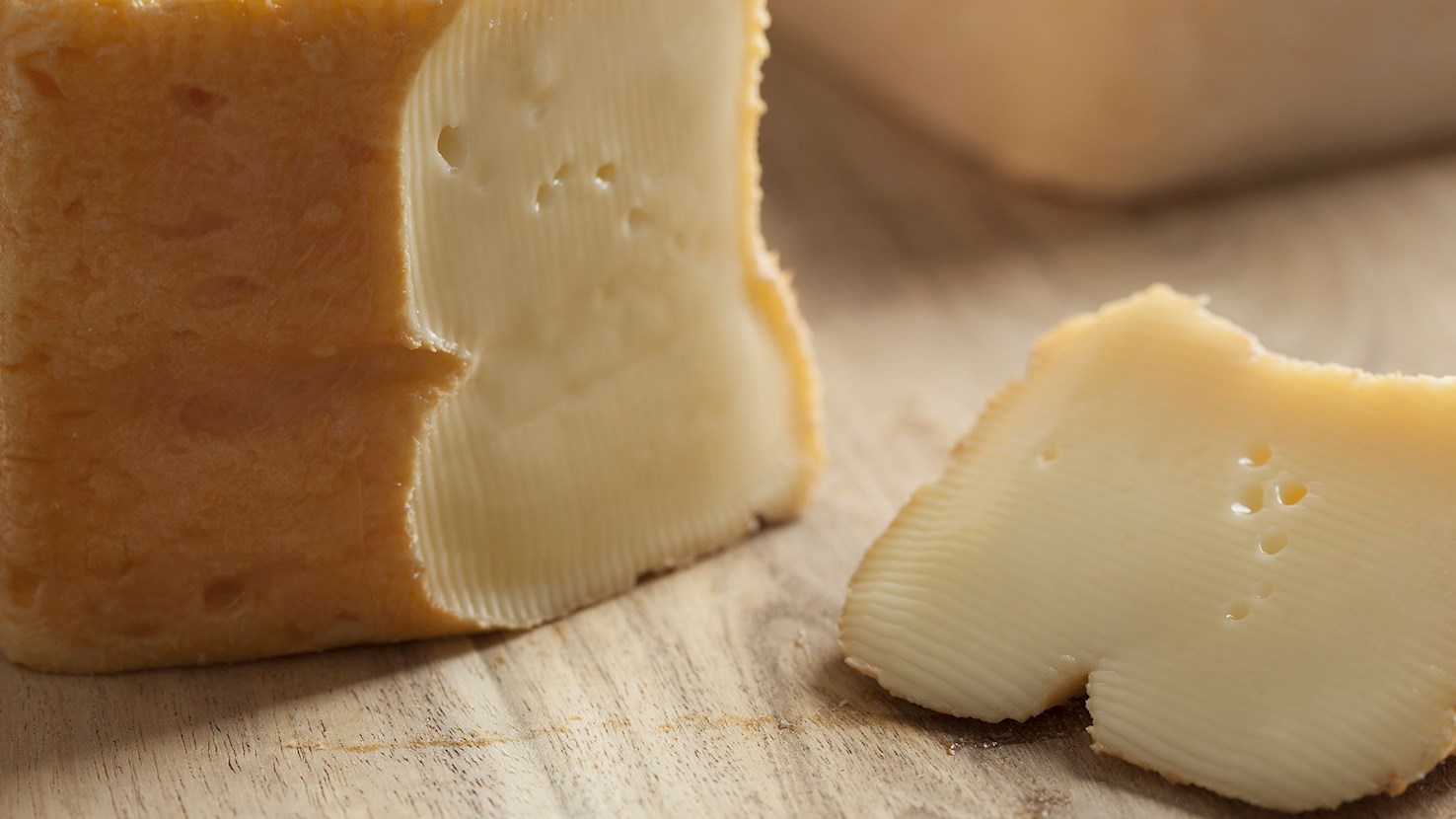
Remedou is a Belgian hard cheese made from cow’s milk. Its name is derived from the word remoud, meaning rich milk, referring to the fact that the cheese is made with milk that was obtained 15 minutes after the usual milking process. The cheese matures for a long time and is characterized by its brownish-orange rind. It has a very strong, intense aroma, which is why it’s sometimes called stinking cheese.
Val-Dieu Bleu des Moines is a blue-veined cow’s milk cheese from Belgium associated with the Abbey of Val-Dieu in Aubel. Its origin is linked to the monastic dairy culture of the Abbey, where monks historically oversaw the production of cheeses for visitors and for sale, and where know-how from the Herve plateau in cow’s milk cheesemaking shaped a range of abbey cheeses. Over time, production and affinage were entrusted to a regional dairy, now Terre de Fromages, which continues to make and mature the cheeses under the Val-Dieu name while keeping the abbey identity and style. Val-Dieu Bleu des Moines is made from pasteurized cow’s milk. The curd is inoculated with blue mold, then molded, lightly salted, and pierced so that the blue veining can develop inside the paste. The cheese is then aged in humid cellars where it forms a fine, often pale rind that is described not as a rough washed rind but as a delicate bloomy surface, unusual for a blue. During affinage the paste becomes creamy and supple, and the interior shows gentle marbling of blue rather than aggressive streaks. The result is a soft cheese classed as a pâte persillée and at the same time described as a soft cheese with a bloomy rind, which is uncommon among Belgian blues that are usually saltier and more powerful. The flavor is described as buttery and mild, more sweet-dairy than sharp, with a smooth mouthfeel rather than a crumbly or chalky texture, and the aroma leans lactic and creamy instead of pungent. Production follows abbey-cheese practice in the Val-Dieu range, which is to work with pasteurized milk from local dairy herds, add starter cultures, rennet, and salt, and mature the cheese under controlled humidity until the paste reaches its melting texture. The finished cheese is generally sold as a small format, around 125 g (4 oz), making it easy to sell whole at retail and stable enough for home use, rather than only as a large wheel cut to order. Variations within the Val-Dieu line include related cheeses such as Bouquet des Moines and Casse-Croûte, which come from the same abbey range but differ in rind type and paste; Bleu des Moines is the only one in that family presented as a blue-veined bloom-rind cheese. Another point of note is that Val-Dieu Bleu des Moines is advertised as containing no lactose, which sets it apart on the Belgian market for consumers sensitive to lactose while still wanting a creamy blue. The texture profile also allows it to be used in cooking without breaking or becoming grainy: it melts smoothly into sauces and quiches and folds easily into warm vegetables. Val-Dieu Bleu des Moines is eaten at room temperature on bread or as part of a cheese board, and its mellow salt and cream profile makes it easy to present even to people who usually avoid stronger blue cheeses. It is also served crumbled into salads, baked onto gratins, and stirred into hot dishes at the finish to enrich them. Pairings suggested for this cheese include a white wine such as Sancerre, whose acidity balances the buttery richness, or a fruity Belgian beer, which echoes the slight sweetness and soft lactic notes. It also sits comfortably with cooked vegetables, quiche, and savory tarts, where the cheese brings depth without overwhelming the dish.
TasteAtlas food rankings are based on the ratings of the TasteAtlas audience, with a series of mechanisms that recognize real users and that ignore bot,
nationalist or local patriotic ratings, and give additional value to the ratings of users that the system recognizes as knowledgeable.
For the “Top 7 Local Cheeses in Wallonia” list until June 10, 2026, 91 ratings were recorded, of which 77 were recognized by the system as legitimate.
TasteAtlas Rankings should not be seen as the final global conclusion about food. Their purpose is to promote excellent local foods,
instill pride in traditional dishes, and arouse curiosity about dishes you haven’t tried.
The initial list of top producers was compiled based on available reviews, awards, local recommendations, media and blog coverage, and consumer reviews.
The list will be updated with ratings from TasteAtlas local ambassadors and TasteAtlas users.