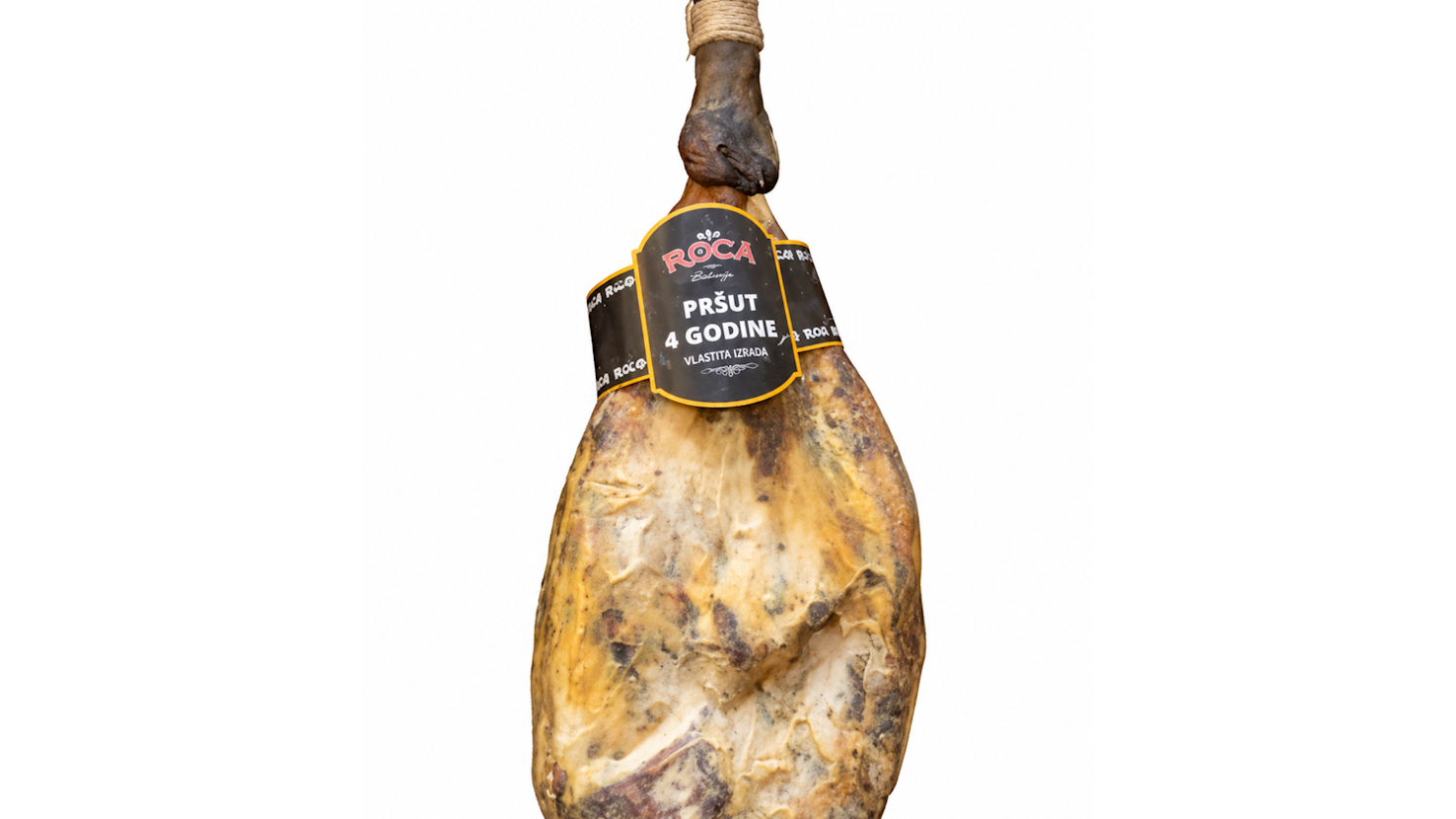
Gospodarstvo Roca is a family-run agricultural and tourist estate located in the village of Velim near Stankovci, in the hinterland of Vodice and Šibenik, Croatia. Ante and Silvana Roca have been developing the estate for around two decades, combining pig farming, the production of Dalmatian cured meats, viticulture, olive growing, and an authentic hospitality experience.
Its operations are centered on an on-site pig farm and prosciutto-curing facility, giving the family control over much of the process, from raising the animals to serving the finished products. The estate raises Black Slavonian pigs, also known as Fajferica, as well as crossbreeds of Duroc, Landrace, and Yorkshire pigs. Approximately 1,200–1,300 prosciutto hams are processed annually. Some of the raw material comes from the estate’s own farm, while carefully selected pork legs are also sourced from trusted partners in Slavonia. The hams are traditionally salted, smoked, and matured over an extended period, with those made from estate-raised pigs aged for up to three years.
In addition to Dalmatian prosciutto, the range includes pancetta, cured pork loin and neck, kulen, sausages, and several varieties of salami. The estate also produces wine from indigenous grape varieties, olive oil, fruit brandy, figs, and other Mediterranean products, primarily for its restaurant and visitors.
Today, Gospodarstvo Roca is recognized as a gastronomic and rural tourism destination welcoming approximately 10,000 visitors annually. A large proportion of its guests come from abroad, particularly the United States. Its products are sold through the estate’s restaurant and shop, as well as at local fairs and markets.
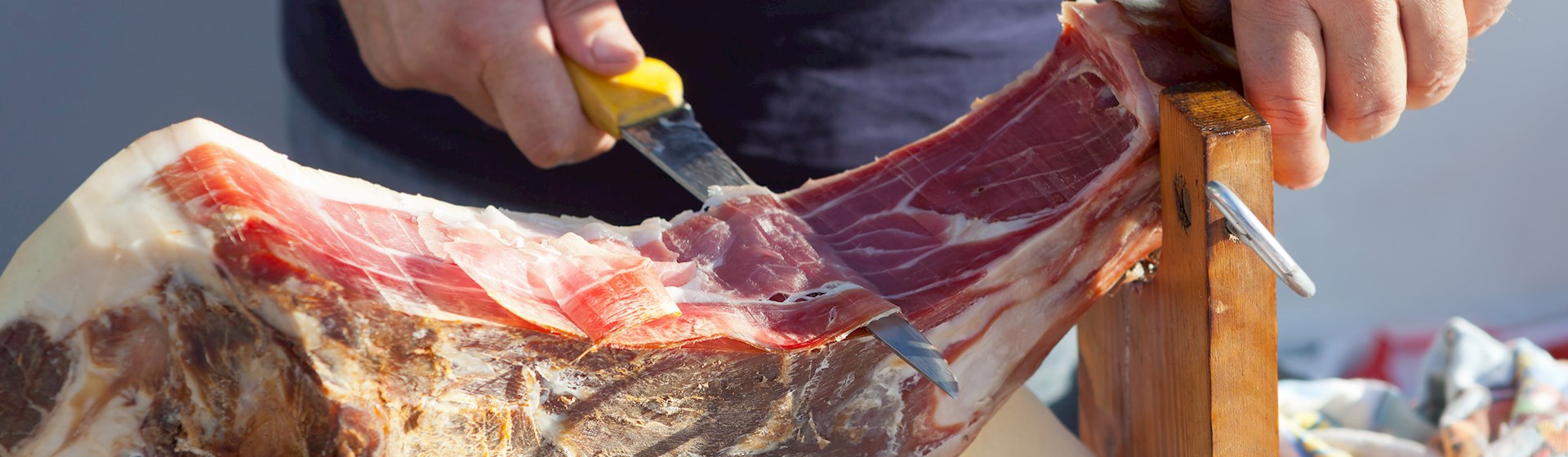
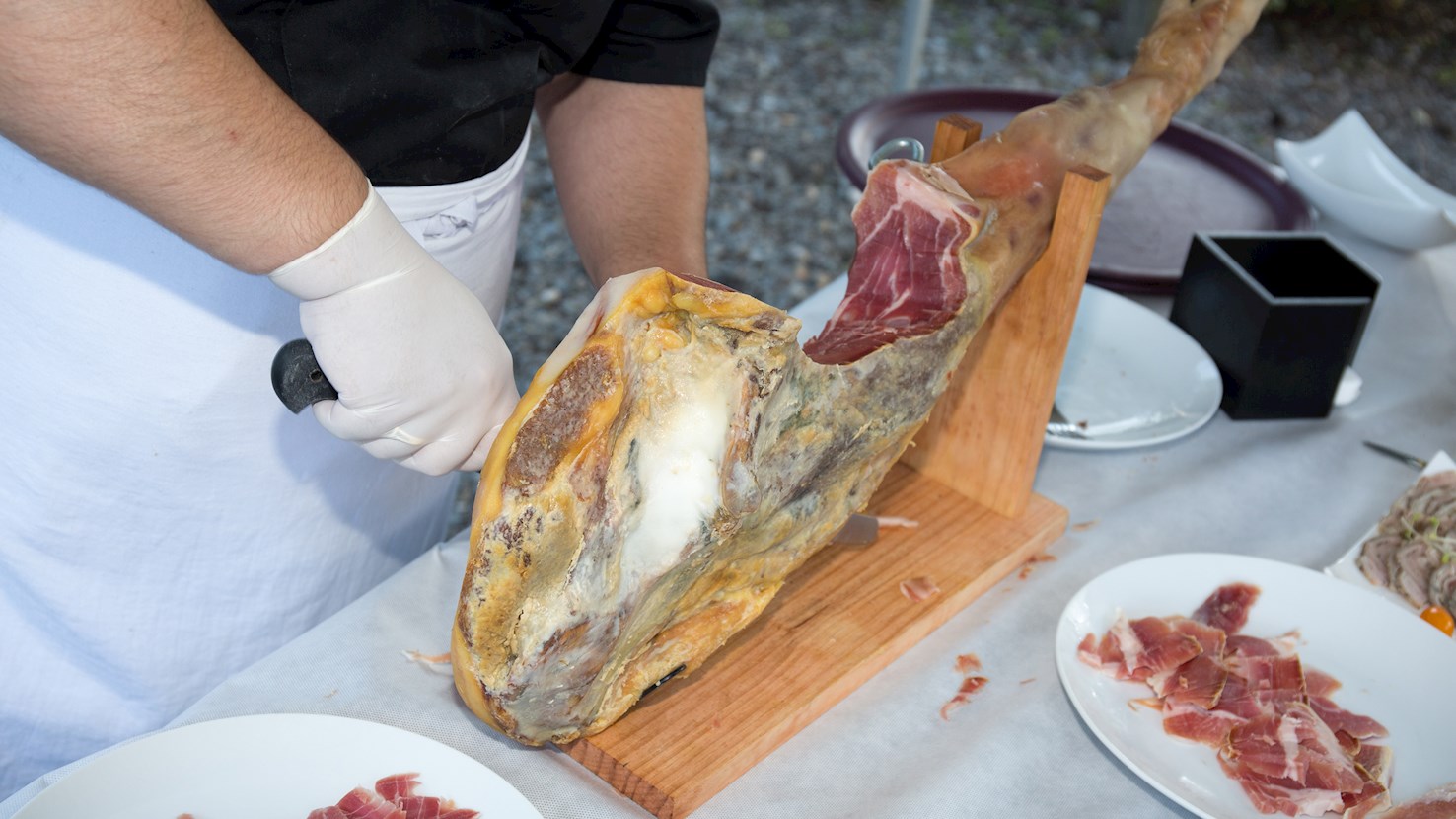
Dalmatinski pršut is a cured, smoked, and dried ham that is usually served thinly sliced alongside bread, cheese, or fruit such as melon. Unlike its Italian (prosciutto) and Istrian counterparts, the Dalmatian version of pršut is wood-smoked and dried for a minimum of twelve months. It is produced with fresh pork legs, with the bone, skin and subcutaneous fat. After preparation, which includes dry-salting, pressing, and seasoning, it is smoked and left to dry and mature in the air. The final period is strongly influenced by the cold and dry Bora wind, which creates favorable conditions for maturation. The combination of Mediterranean climate and traditional preparation techniques contribute to the exceptional quality of pršut, which is appreciated for its mildly smoky aroma, soft texture, and slightly salty taste.
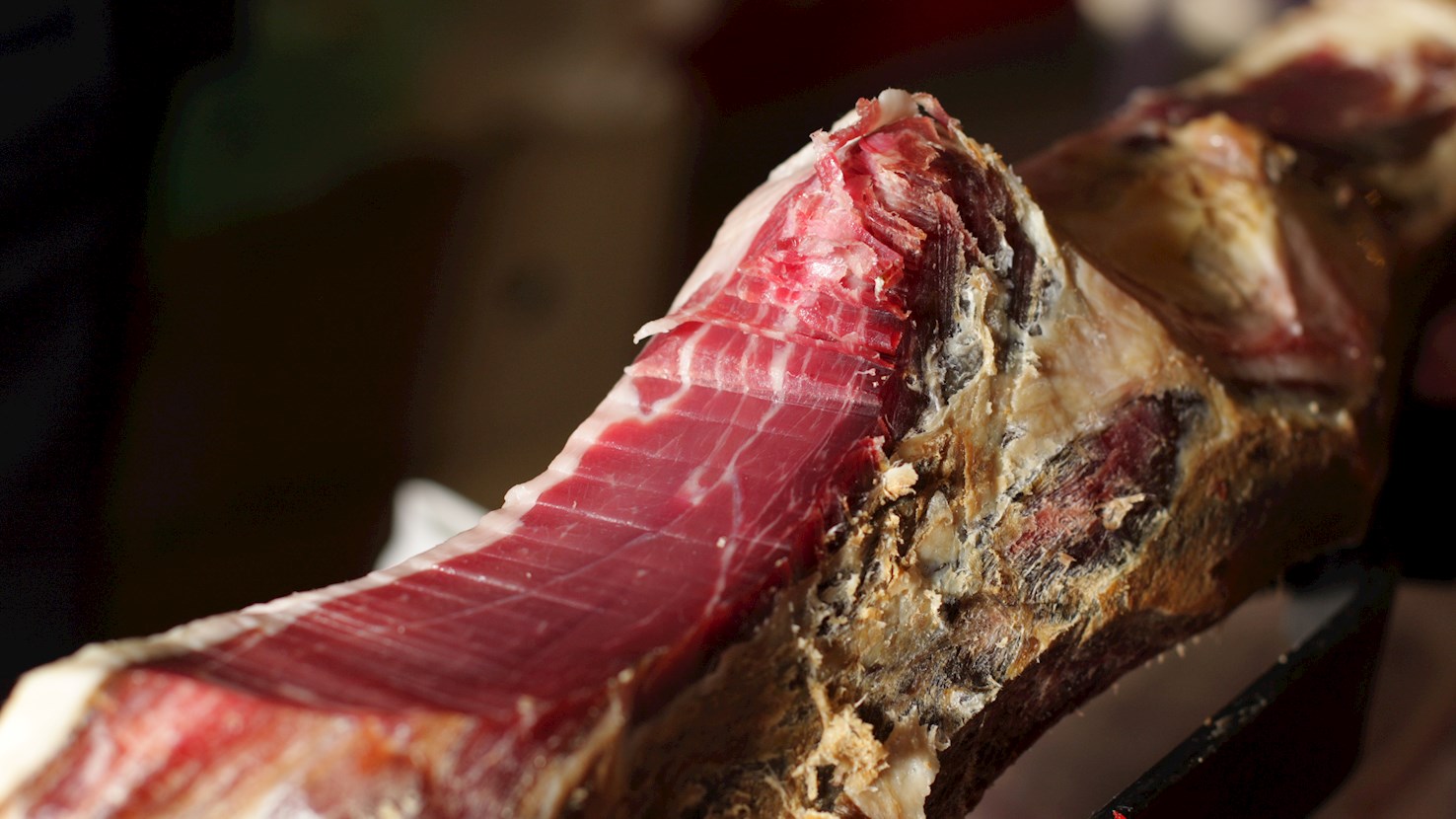
Considered to be of the best quality of all the Croatian prosciuttos, Drniš prosciutto is a cured, smoked and dried ham produced in this region since the 14th century. It is scientifically proven that the submediterranean microclimate conditions around Drniš make this type of ham different from those produced in Istria or Dalmatia. The thighs used in the production of pršut must be of premium quality, sourced locally and weigh more than 11 kilograms. The prepared meat is salted, pressed, cold-smoked and dried for a minimum of 12 months. It is dried in the wind, and the balance between the cold and dry Bora wind, and the warmer Jugo wind, is essential for it to develop all its characteristic aromas and flavors. The ham is intense ruby-red in color, shiny when sliced and has a sweet and aromatic flavor. It should almost melt in the mouth and should not have any acidity, bitterness or rancid aftertaste.
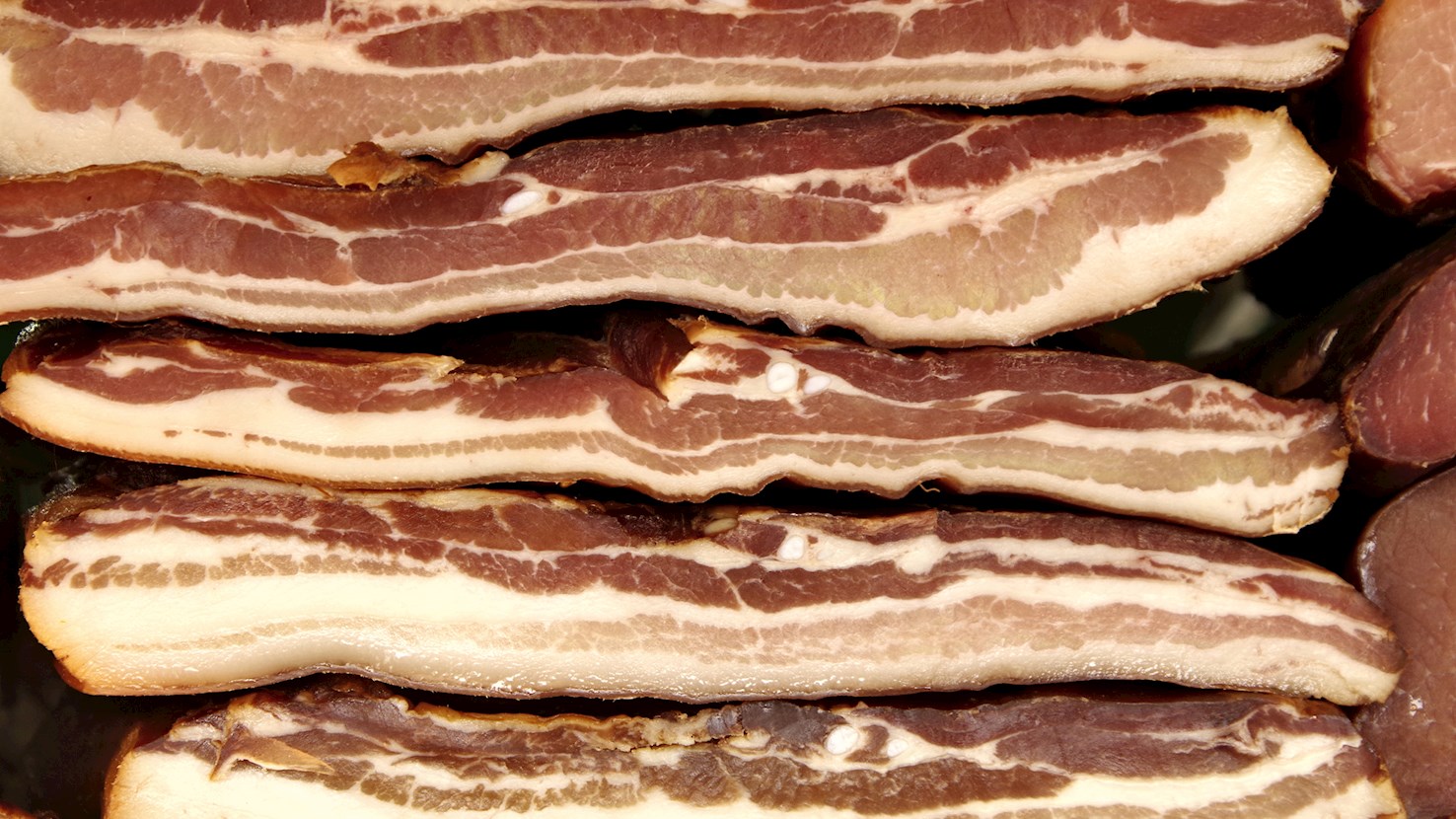
Dalmatinska panceta is a traditional meat product that can only be produced in Lika-Senj, Zadar, Dubrovnik-Neretva, Split-Dalmatia, and Šibenik-Knin counties. This preserved and cured meat product is made from streaky bacon with its skin on and without the rib bones. The streaky bacon from the pig’s chest and belly is cured in brine or salted, cold-smoked, and dried in the Bora wind. Dalmatinska panceta has a texture that’s firm, elastic, and easy to slice. The aroma is typical of preserved cured pork products and slightly smokey, while the flavor is slightly salty. The whole process, from salting to maturing, must take at least 65 days. Once finished, the product is sold whole, in slices or in pieces.
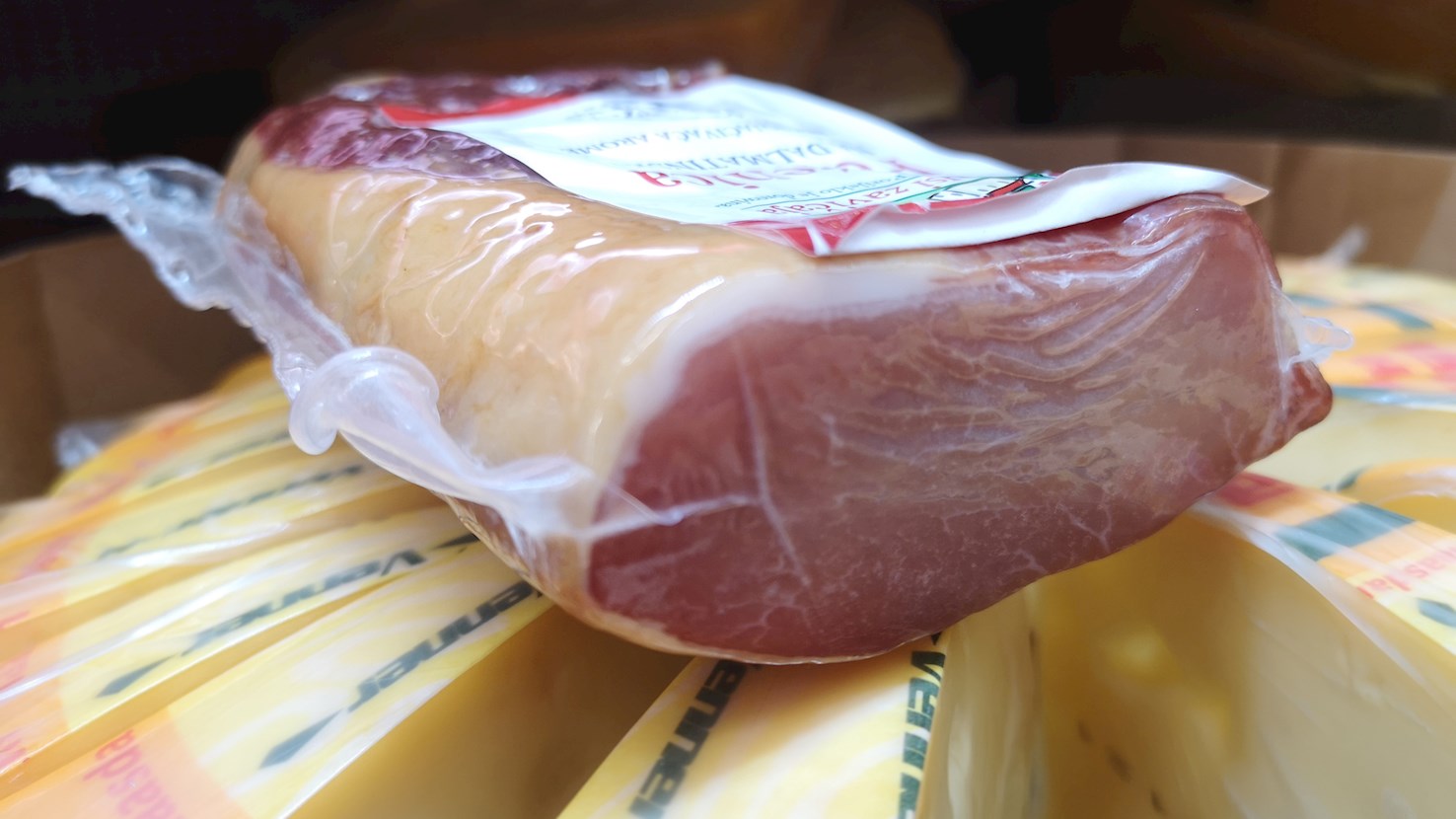
Dalmatinska pečenica is a traditional meat product that can only be produced in Lika-Senj, Zadar, Dubrovnik-Neretva, Split-Dalmatia, and Šibenik-Knin counties. This preserved and cured meat product is made from the trimmed longissimus dorsi muscle of the pig. The meat is salted or cured in brine, cold-smoked, and dried in the Bora wind. The texture is firm, elastic, compact, and easy to slice. The aroma is typical of preserved cured pork products and mildly smokey, while the flavor is slightly salty. The entire process lasts at least 45 days, from salting to maturing. Once finished, the product can be sold whole, in slices or in pieces. This delicacy is also served in many traditional restaurants throughout Croatia. It is recommended to serve this meat product with bread and cheese.
Posedarski pršut is a variety of Dalmatian prosciutto that has been traditionally prepared in Posedarje. This Croatian gourmet delicacy is typically made from the hind legs of a high-quality pig. The meat is entirely free from any additives or preservatives, and it is seasoned only with sea salt before it is pressed, dried, and allowed to mature for at least 12 months. The drying process of the prosciutto usually involves smoking with juniper wood and drying naturally in the fierce Dalmatian bora wind, which is said to infuse the meat with droplets of pure sea salt directly from the sea as well as with the scent of fresh mountain air coming from the nearby Velebit Mountain. With a flavor and quality said to be unrivaled, the prosciutto is typically sliced paper-thin and paired with cheese and a glass of fine wine, or drizzled with olive oil and eaten with slices of fresh bread.
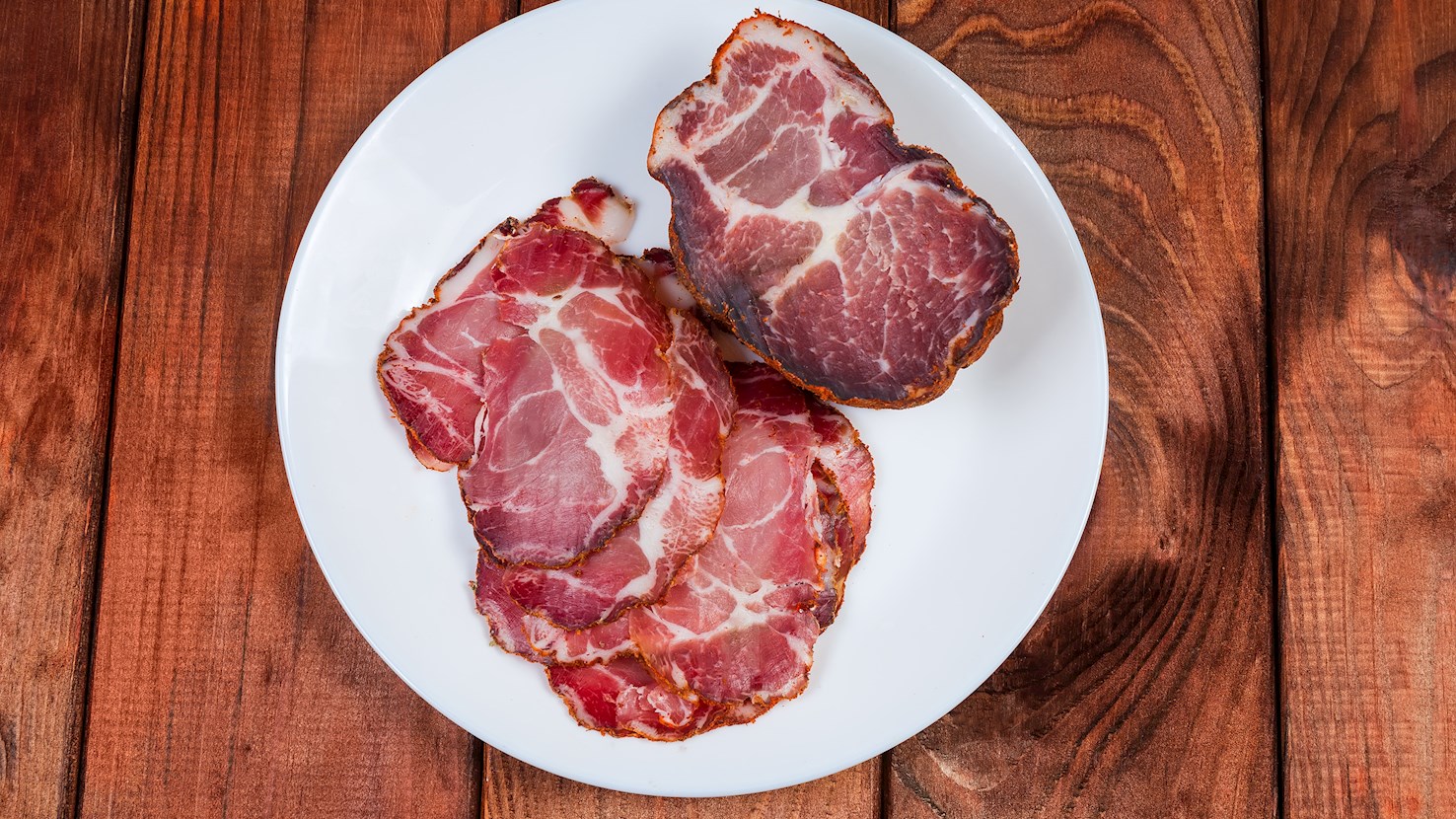
Ninski šokol is a traditional dried and cured meat product originating from Nin in Croatia. It's made from pork neck according to secret family recipes, some of which are over 300 years old. The meat is placed in local Nin sea salt (Ninska sol) and it's soaked and cooked in red wine, seasoned with spices such as cloves, cinnamon, pepper, nutmeg, and many more, then stuffed into pork or beef casings. The šokol is smoked and dried in the bora wind for six months before it's ready for consumption. During holidays and special occasions, šokol is usually sliced and served as a cold starter in local restaurants and homes. Every year, during the third week in July, a festival called Šokolijada is held in honor of this unique local product.
Kaštradina is a popular local specialty coming from the Croatian regions of Lika and Dalmatia. It is a salted, smoked, and dried product made from the meat of castrated lambs, sheep, or goats, hence the name kaštradina that is derived from the word castrated. It is believed that the Dalmatian kaštradina saved the Venetians during the 17th-century plague. The meat is traditionally stewed with kale and collard greens, due to their strong flavors that can match the pungent aroma of the meat. Additional ingredients might include onions, carrots, and garlic. There are some regional differences regarding the dish, so on the island of Pag, kaštradina is usually accompanied by sauerkraut, while in Sinj, it is typically served with mashed potatoes on the side.
TasteAtlas food rankings are based on the ratings of the TasteAtlas audience, with a series of mechanisms that recognize real users and that ignore bot,
nationalist or local patriotic ratings, and give additional value to the ratings of users that the system recognizes as knowledgeable.
TasteAtlas Rankings should not be seen as the final global conclusion about food. Their purpose is to promote excellent local foods,
instill pride in traditional dishes, and arouse curiosity about dishes you haven’t tried.
The initial list of top producers was compiled based on available reviews, awards, local recommendations, media and blog coverage, and consumer reviews.
The list will be updated with ratings from TasteAtlas local ambassadors and TasteAtlas users.





What People Say