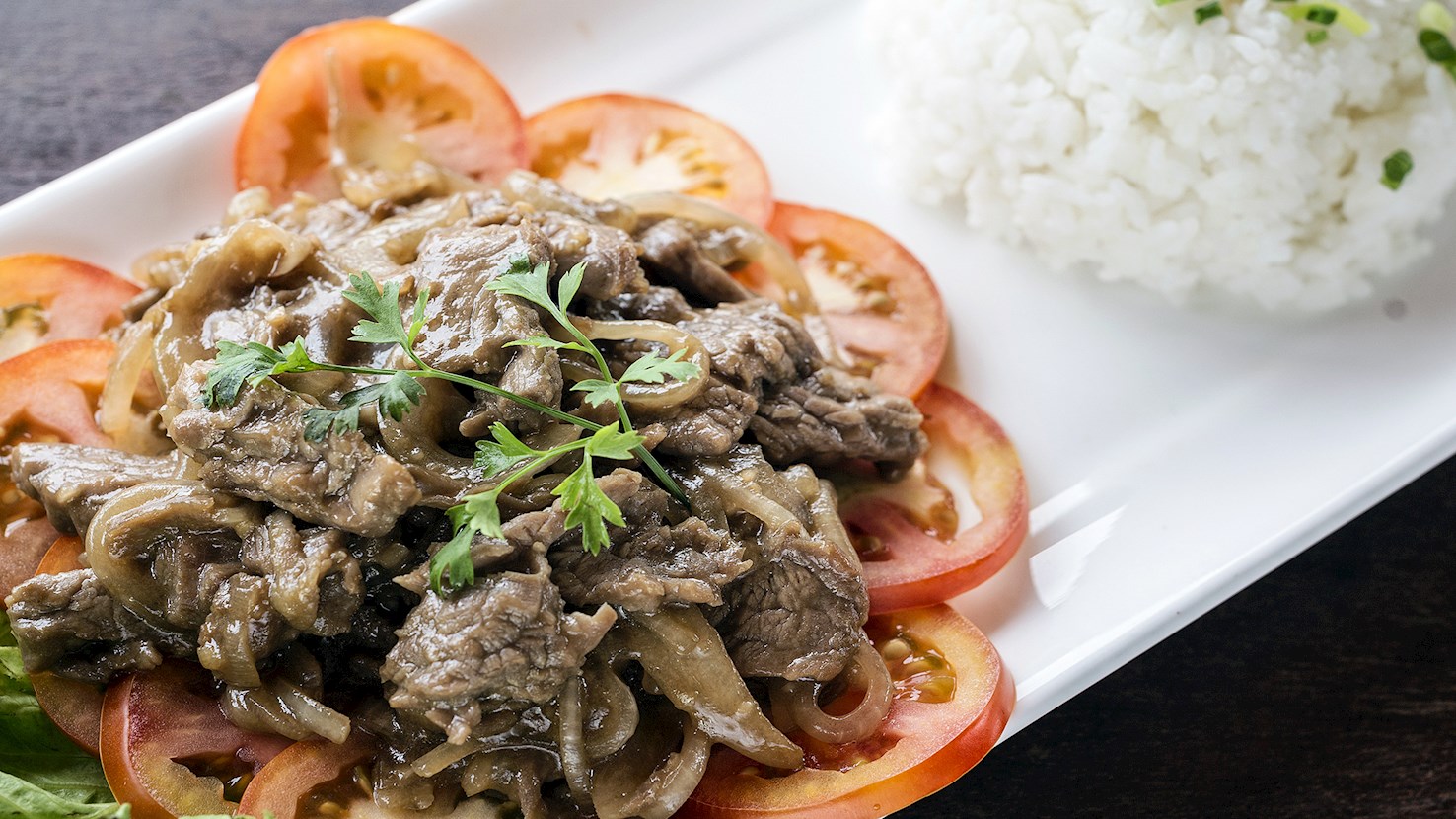
Lok lak is a Cambodian stir-fry utilizing beef, chicken, or shrimp as the key ingredients, although beef is typically the most popular option. For the beef version, a bed of lettuce leaves is traditionally topped with cucumbers, tomatoes, raw onions, and stir-fried beef along with its juices. The dish is typically consumed by pulling lettuce leaves from the bottom and adding other ingredients into it, so it is consumed similar to a wrap. Lok lak is often paired with rice on the side, and it was supposedly brought to the country by the French people from Vietnam.
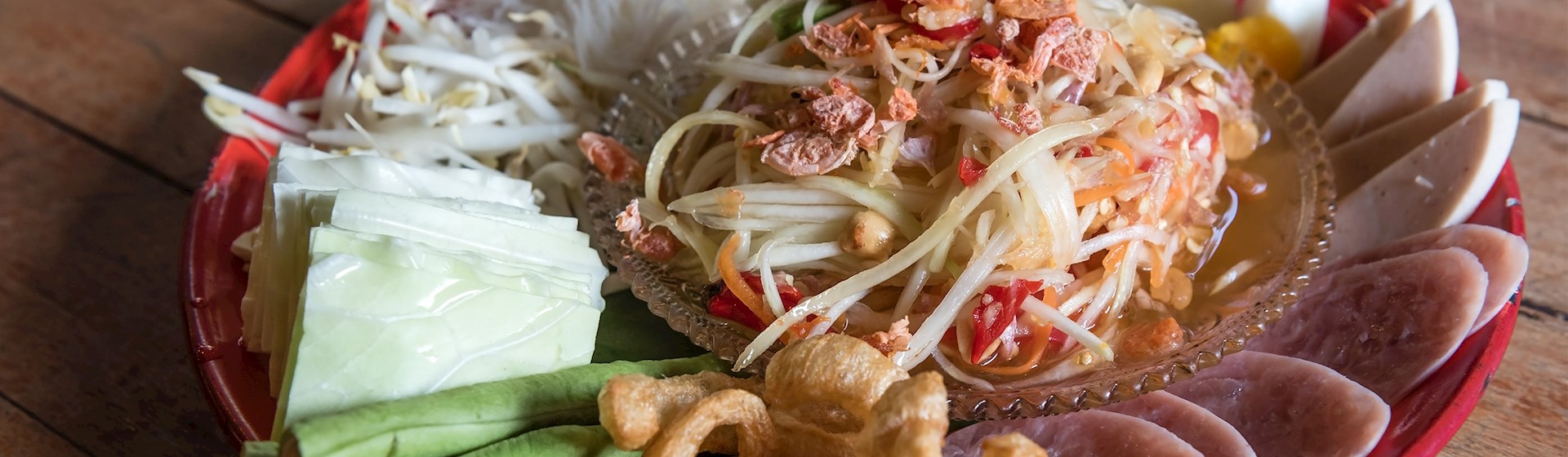
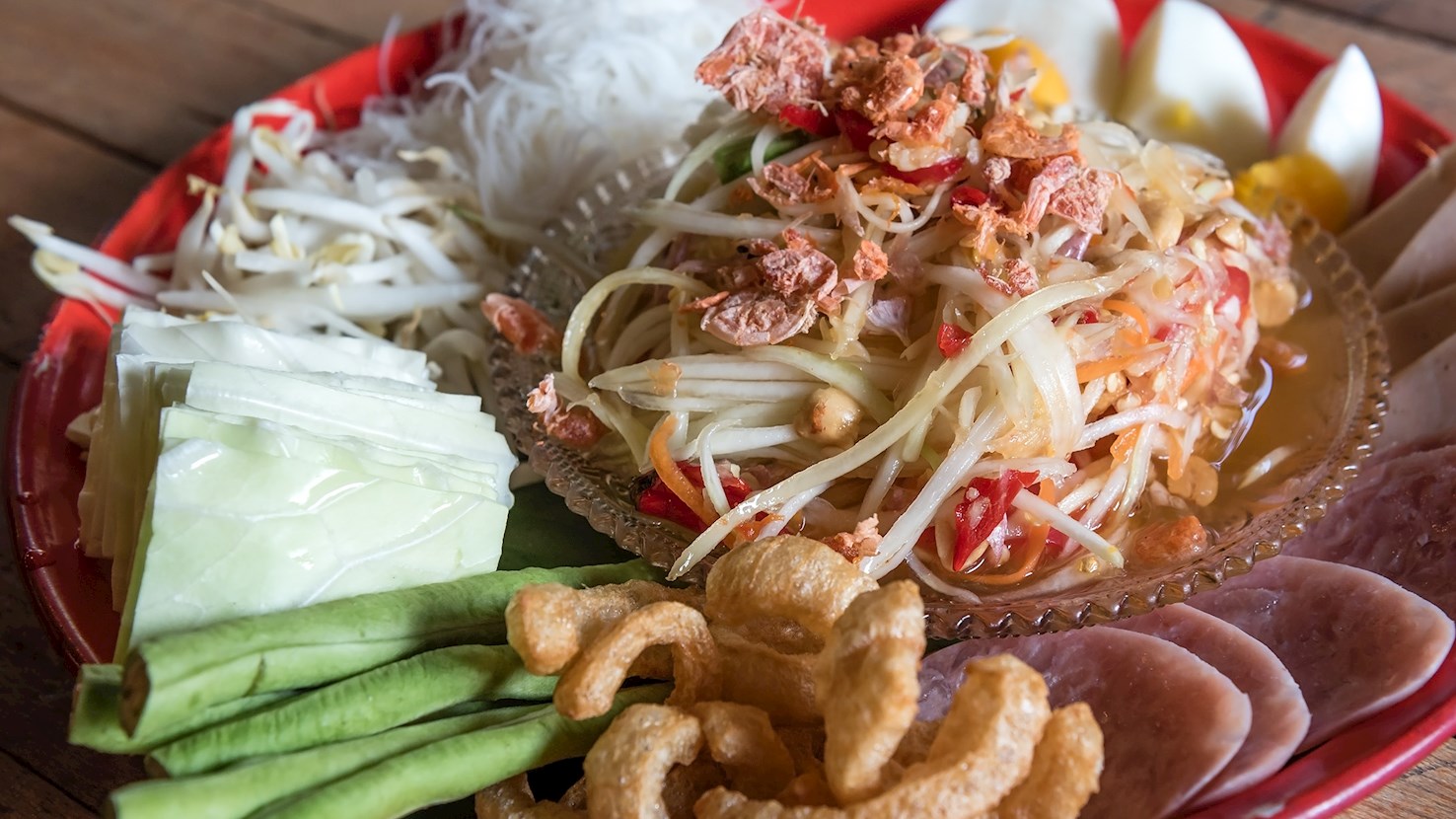
Bok l’hong, meaning pounded papaya in Khmer, is a Cambodian take on the green papaya salad that is widely consumed throughout Southeast Asia and is believed to have originated in Laos. Like the Lao and Thai versions, the Cambodian papaya salad usually requires the shredded fruit to be pounded with other ingredients, while the Vietnamese variety doesn't involve pounding of the fruit. The salad often contains tamarind, galangal, and prohok, a type of Cambodian fish paste. Bok l'hong can also feature smoked fish or salted crabs, and it is usually consumed with steamed rice and grilled meat such as chicken. One significant difference between the traditional Laotian green papaya salad and the Cambodian version of the salad lies in the use of white fish sauce in the latter instead of the much more pungent fermented fish sauce which is typically used in the former. Just like in Thailand, Vietnam, and Laos, in Cambodia, green papaya salad is available in numerous restaurants and is a common street food item.
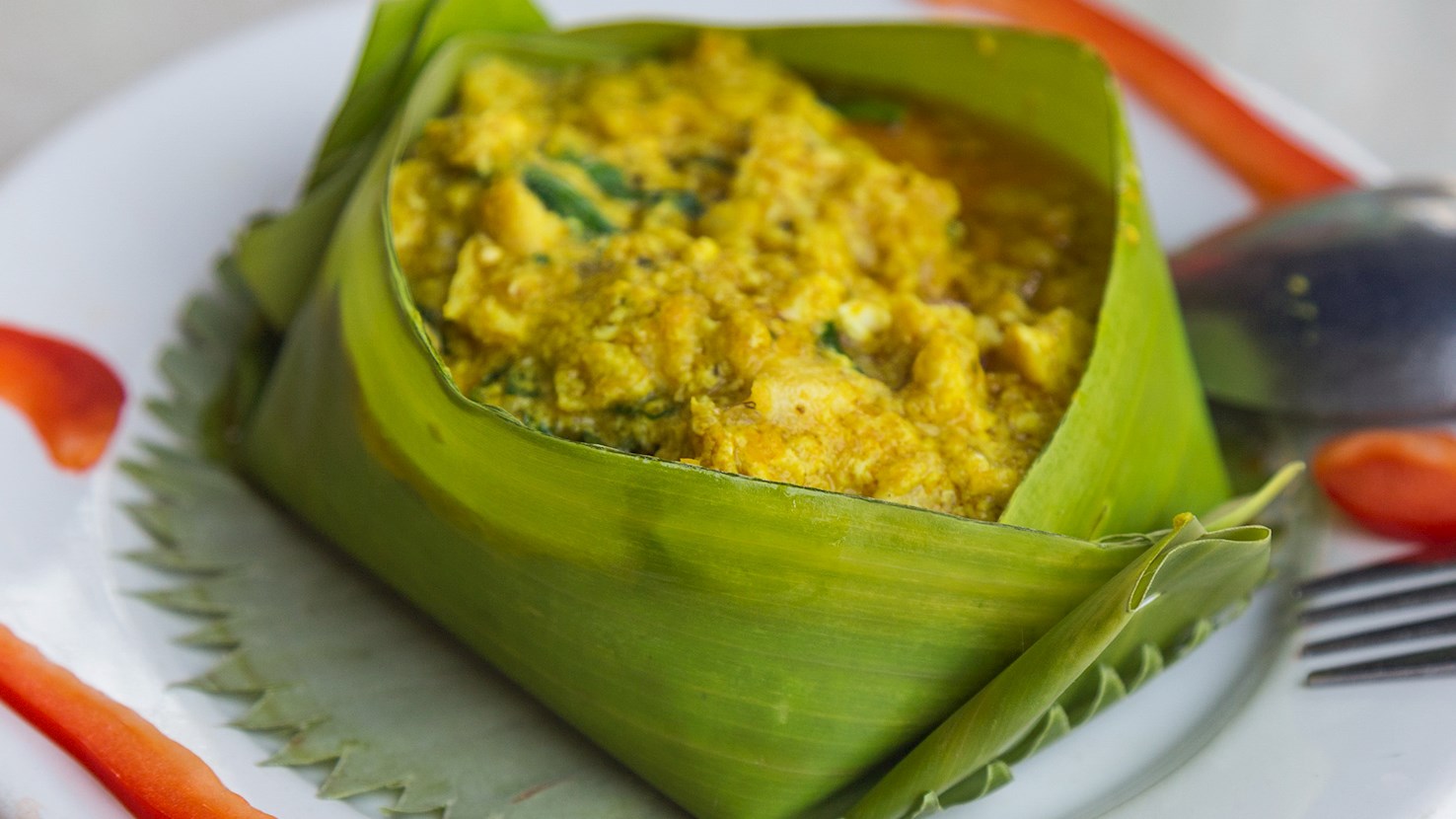
Amok trey is Cambodia's national dish, a fragrant and spicy coconut fish curry that is tenderly steamed in banana leaves, although chicken, tofu, and snails can also be used as a substitute for the main protein. The flavour of the dish is reminiscent of a mild Thai red curry. Usually served in coconut shells, amok trey is the main dish of the Water Festival in Cambodia, celebrating the change of Tonle Sap River's flow, and is a way to thank the Mekong River for providing Cambodia with abundant fish and fertile land. The fish is soaked in a rich curry paste and placed in little steamer cups made from banana leaves, imparting their specific flavor to the dish. The cups are steamed over boiling water, with the aromas of sweet coconut, galangal, and turmeric filling the air. After the dish is done, some coconut cream is usually spooned on top, and the whole thing is garnished with sliced chilies or noni leaf. Jasmine rice makes a great accompaniment to this fragrant and savory dish.
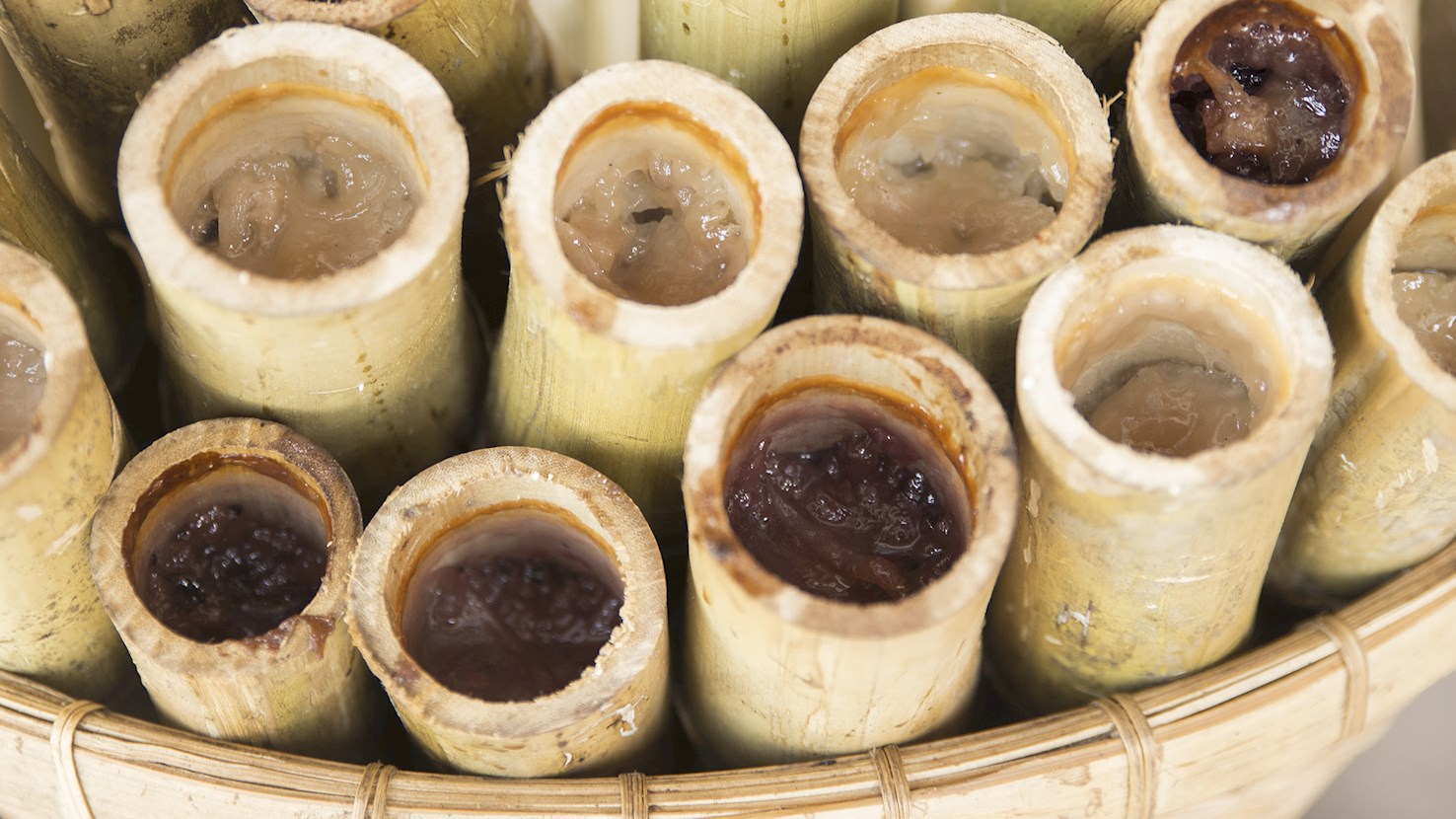
Khao lam or kralan is a unique Southeast Asian dessert consisting of sweet sticky rice, either white or red, steamed in bamboo tubes, popular in Thailand, Myanmar, Cambodia, and Laos. The simplest, original version included only rice mixed with water and salt, but more elaborate interpretations nowadays include the addition of grated coconut, sugar, coconut milk, and red beans. The rice is mixed with the desired ingredients and placed inside specially prepared bamboo sticks. Coconut milk is added on top of the rice, and then the stick is sealed and carefully placed on a construction over hot coals. This unusual slow-cooking process transforms the rice into a sweet and rich creation, similar to custard or rice pudding. Modern versions come in a variety of different flavors such as taro, durian, Thai custard, or corn, which are usually tucked in the center of the roll. Khao lam is regarded as a filling treat and is usually sold by street vendors at food fairs, around the temples, and at numerous Asian markets.
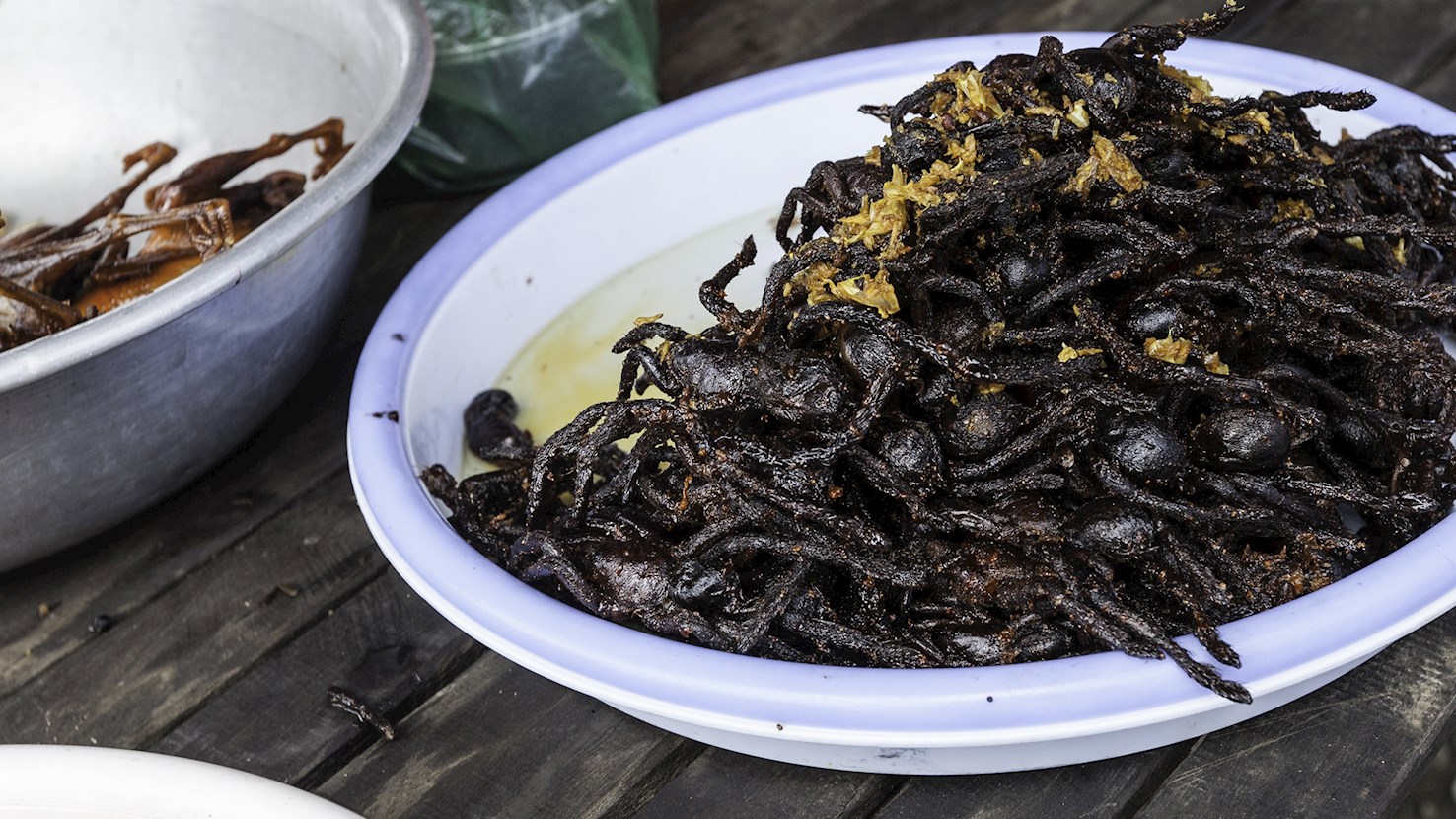
The city of Skuon in Cambodia is so infested with spiders that the nearly-starved locals have adapted and started consuming them in the 1970s, and the practice has continued ever since. It is no wonder that the city is known as Spider Town or Spiderville. The spiders (usually tarantulas) are breaded and deep-fried in hot oil, then served with some fresh local herbs on a bed of rice or noodles. The flavor of these critters has been described as a cross between cod and chicken – at least the hairy legs are supposed to taste so, because consumers are warned not to bite into the abdomen, which contains spiders’ internal organs and bodily fluids.
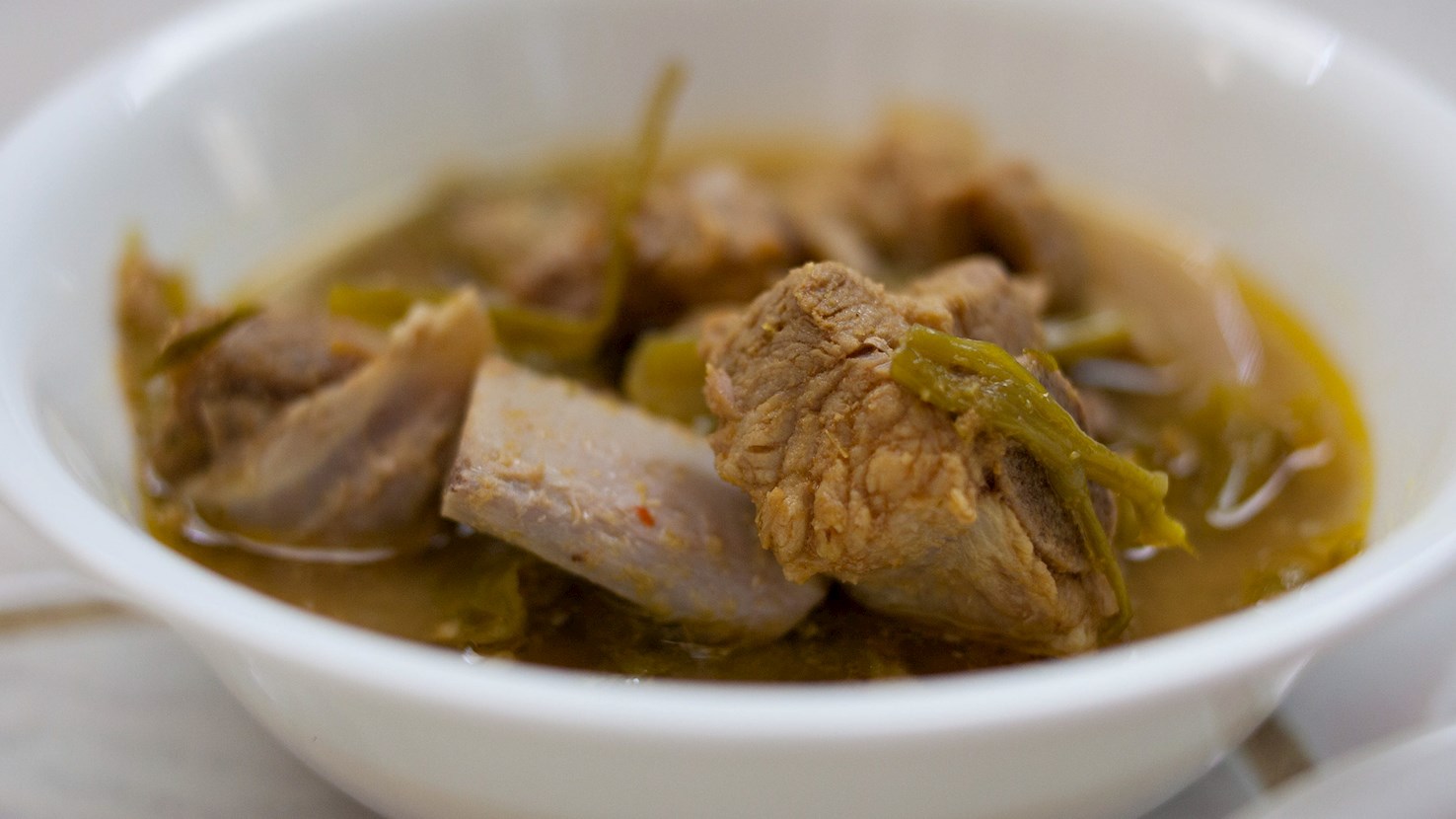
Samlar kari is a traditional chicken curry consisting of pieces of chicken in a silky-smooth coconut sauce that is typically flavored with Cambodian kroeung paste, shrimp paste, fish sauce, and palm sugar. This soupy curry derives its distinctive flavor and fragrance from the red kroeung paste used in it, which is a type of Cambodian curry paste made with lemongrass, turmeric, galangal, kaffir lime leaves and zest, red chilis, shallots, and garlic. The dish can optionally be enriched with vegetables such as sweet potatoes, onions, bamboo shoots, carrots, eggplants, asparagus beans, or spinach. Aromatic, fragrant, and spicy, the chicken curry is usually consumed either heaped over steamed rice or with slices of bread or noodles and a fresh vegetable salad on the side. Samlar kari is a typical, traditional preparation throughout rural Cambodia during Cambodian New Year, Pchum Ben, and other festivities and special occasions.
Chien chuon is a Cambodian fish specialty that is made with crispy fried fish cooked with a rich sauce containing stir-fried ginger and garlic. Other typical ingredients added to the sauce include fish sauce, oyster sauce, vinegar, sugar, cornstarch, tomatoes, black beans, fermented soybeans, roasted shallots, and cellophane noodles. Trout, tilapia, snapper, bream, trei ta-aon, and trei keh are some of the usual types of fish used in this dish. The fish is usually garnished with fresh coriander and sliced red chilis on top, and it is typically served with steamed white rice. Chien chuon is a staple in numerous Cambodian restaurants throughout the country.
Samlar machu, meaning sour soup in Khmer, is a traditional dish made with meat, fish, or seafood and vegetables cooked in a sour broth base. The soup usually contains seasonal local vegetables and herbs such as Cambodian water spinach, shallots, scallions, tomatoes, kaffir lime leaves, slek kantrop, hot basil, cilantro, and lemongrass. There’s also a version that calls for pineapples. Other key ingredients in this dish are minced prohok, a fermented fish sauce, and Cambodian kroeung, a type of curry, while the typical souring agents include krasaing fruit seeds, tamarind, or kaffir lime juice. Samlar machu is usually flavored with fish sauce, fried garlic, and chilis, and it is commonly eaten with jasmine rice for lunch. In Cambodia, the variations on this sour soup are limitless, and various vegetables and herbs can be used in its preparartion, depending on the region and the seasons.
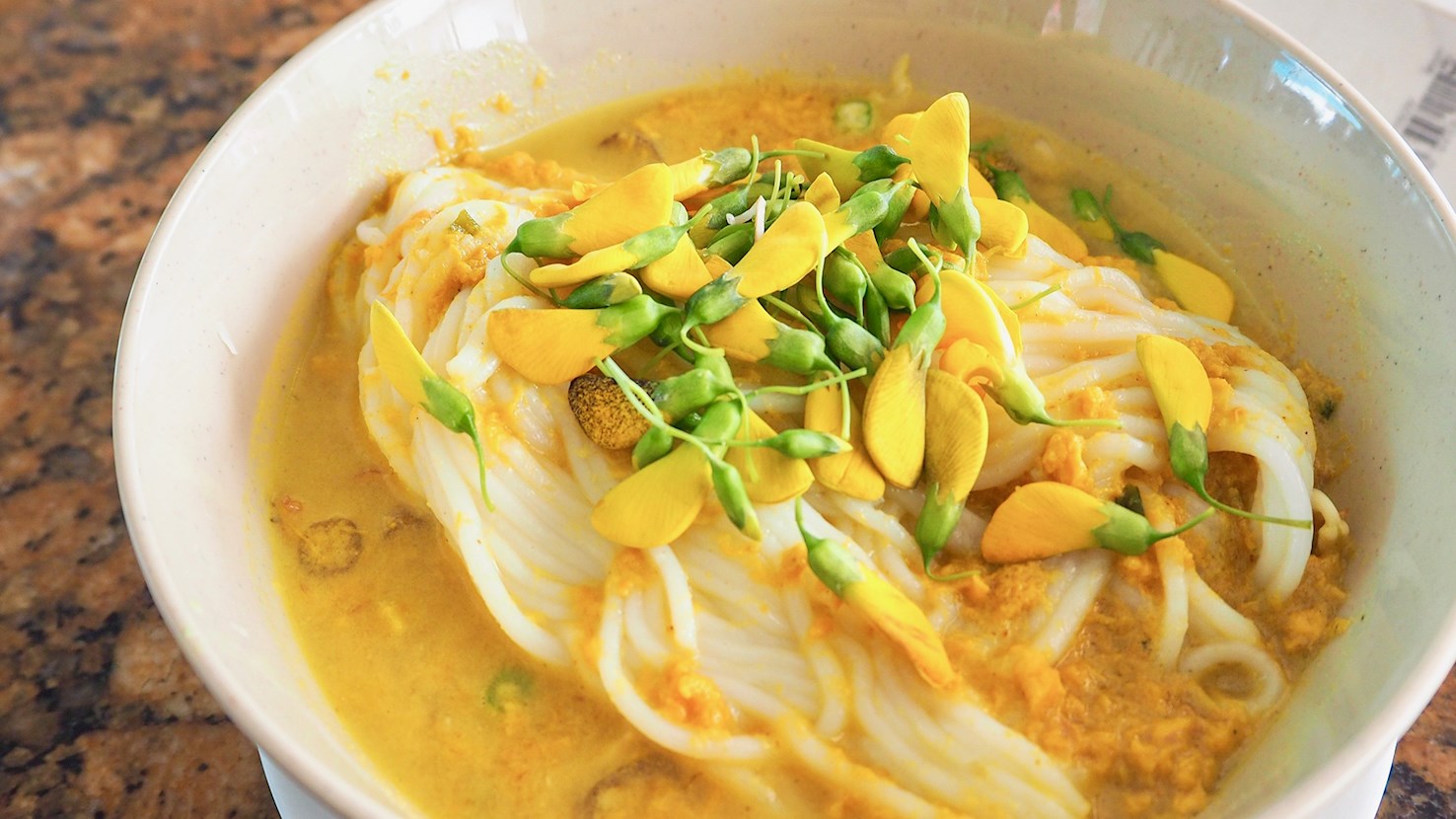
Num banh chok, or Khmer nooodles, is a rice-noodle meal, usually served with a light fish gravy and a generous assortment of raw vegetables and herbs. The fresh white noodles are soft, slightly elastic, and mildly tangy from fermentation; the familiar Khmer-style gravy is yellow to greenish yellow, fragrant with lemongrass and turmeric, and textured with finely pounded fish. Cucumber, bean sprouts, banana blossom, and leafy herbs add varying degrees of crunch, bitterness, or freshness to each mouthful. Also spelled nom banh chok, the name refers to both the noodles and the assembled meal, which explains why bowls bearing it can have quite different sauces. It is particularly associated with breakfast, though people eat it beyond the morning and serve it at both everyday meals and larger gatherings. Its origins are not well documented. Stories linking it to an ancient inventor or claiming it introduced noodles to other countries belong to folklore rather than established chronology. Its ingredients, however, are firmly rooted in Cambodia’s rice-growing and freshwater-fishing environments, especially around the Mekong and Tonlé Sap. Preah Dak, in Banteay Srei district northeast of Siem Reap, is a well-known noodle-making center, where household production has sustained both local vendors and places serving the finished bowls. Making the noodles involves considerably more work than boiling dried vermicelli. Rice is soaked and wet-ground, then allowed to ferment and lose excess water. The exact sequence and timing vary between producers, but the drained rice mass must be worked into a smooth dough that can pass through a press without breaking into uneven fragments. Some hand-making methods include partially cooking a compacted lump of rice dough before pounding and kneading it, gradually incorporating water to reach the required consistency. This handling gives the dough enough cohesion to form continuous strands despite containing no wheat gluten. It is then forced through small holes directly into boiling water. Once set, the noodles are lifted out, rinsed in cool water, and gathered into loose portions, often arranged in shallow baskets. They are moist fresh noodles intended for prompt use, with a faint fermented aroma rather than the neutral flavor of many dried rice noodles. Their surface carries the gravy while the strands retain a gentle resilience. For the widely eaten fish version, freshwater fish such as snakehead is simmered, carefully deboned, and pounded or finely broken down. The flesh becomes part of the gravy itself, giving it body without requiring large pieces of fish in every serving. Its principal aromatic seasoning is kroeung, a family of Cambodian herb and spice pastes whose composition varies with the meal. Here, lemongrass and turmeric commonly appear with garlic, fingerroot, and makrut lime aromatics. Thorough pounding breaks down the fibrous ingredients, so they disperse through the liquid rather than leaving coarse pieces among the noodles. Fingerroot contributes a distinct earthy fragrance, while turmeric supplies much of the yellow color. Prahok, salted fermented fish, adds depth and salinity; the gravy dilutes its concentrated flavor rather than serving it as a large, separate portion. Coconut milk or cream appears in many versions, though richness varies, and the sauce need not resemble a thick coconut curry. Fish cooking liquid helps keep it loose enough to run between the strands and reach the vegetables underneath. The term “green curry,” sometimes used in English descriptions, can therefore be misleading if it suggests a strongly chili-driven sauce. The usual fish gravy emphasizes herbs, roots, and fermented fish, with chilies available separately where desired. The vegetables are a substantial part of the bowl, not a token garnish. Finely sliced banana blossom brings a slightly astringent bite, cucumber adds moisture, and long beans or water-lily stems provide firmer crunch. Basil, mint, rice paddy herb, and other local greens may be offered according to location and availability. No single assortment is universal. The noodles are usually served cool or at room temperature when assembled, and the gravy isn't necessarily poured boiling, allowing the raw additions to retain their texture. Regional versions broaden the name considerably. In Kampot, a cold, salad-like bowl combines noodles with dried shrimp, crushed peanuts, coconut dressing, and a sweetened fish-sauce dressing over cucumber, sprouts, and herbs. Another established form, num banh chok samlor kari, uses a red coconut curry, commonly with chicken or beef and vegetables, in place of the lighter fish gravy. These are substantial changes in flavor and structure, rather than minor differences in garnish. Across Cambodia, num banh chok is sold at markets, roadside stalls, and neighborhood eateries, as well as from mobile vendors; baskets and pots suspended from a shoulder pole are a long-established way of carrying the components separately. Assembly happens at serving, with noodles, vegetables, and gravy brought together in the bowl, with extra greens served alongside. Fresh chilies or a local sweet, sour, or savory condiment allow the seasoning to be adjusted without changing the whole pot. Plain tea or water suits the herbal fish version, while an iced coffee can accompany it at breakfast; additional bread or rice is generally unnecessary because the noodles already make a complete meal.
Yaohon is a Cambodian hot pot that contains a variety of vegetables, meat, and seafood. The broth is based on a mixture of coconut milk or cream, chicken broth, and coconut soda, and it is typically flavored with barbecue sauce, fish sauce, soybean curd sauce, makrut lime leaves, lemongrass, and palm sugar. Typical vegetables include watercress, spinach, and bok choy, while the selection of meat and seafood usually includes beef, chicken, shrimps, squids, oysters, and mussels. Other ingredients featured in this flavor-packed broth are crushed peanuts, quail eggs, mushrooms, and (optionally) beer. Sweet, spicy, and savory, yaohon is commonly enjoyed with rice noodles or steamed rice.
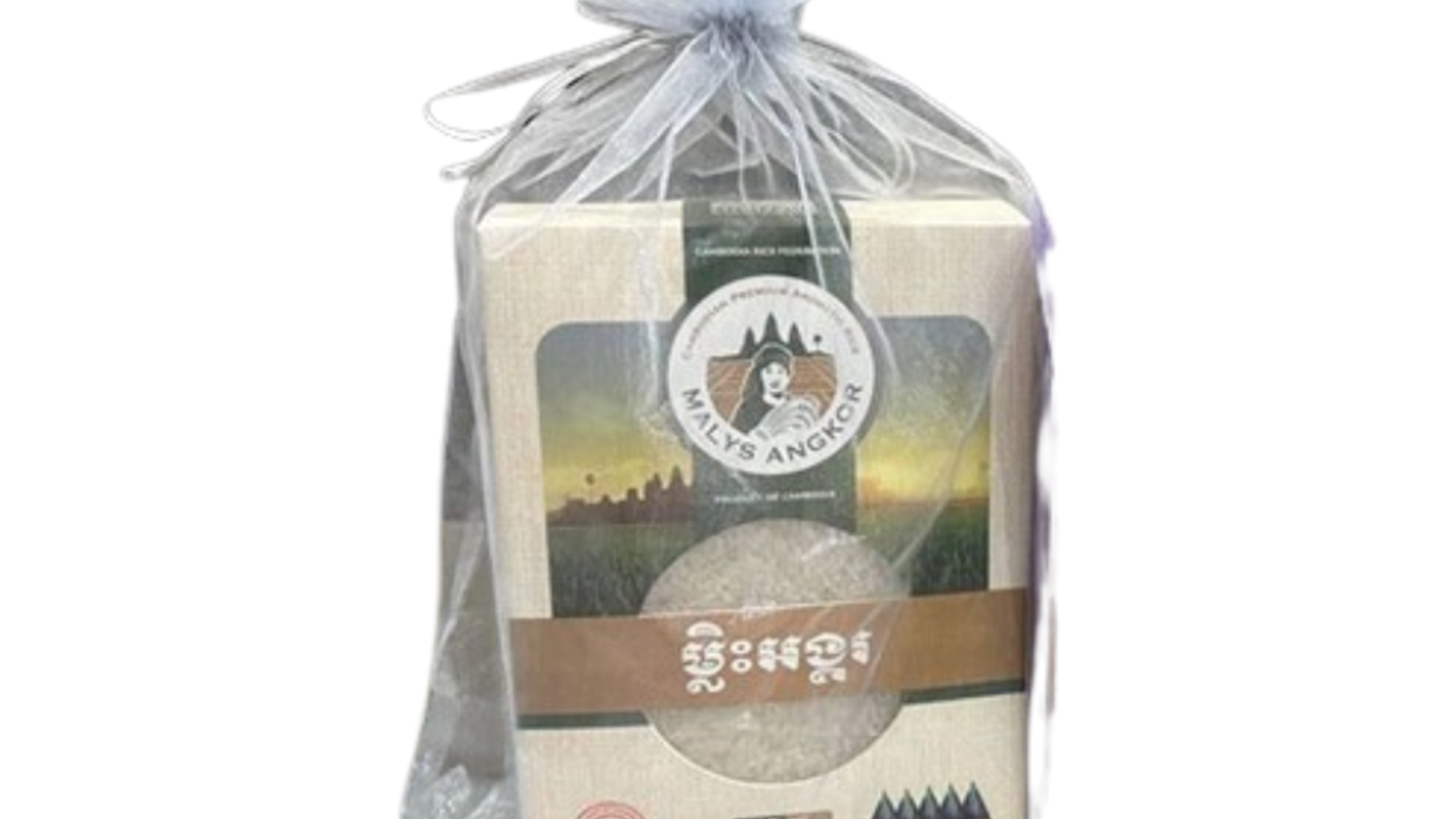
Malys Angkor is a certification brand that represents the highest quality of Cambodian aromatic rice and is owned by the Cambodia Rice Federation. This mark guarantees that the rice originates from verified sources in Cambodia and meets the highest standards in terms of quality, flavor, and origin.
The Malys Angkor brand includes highly prized varieties such as Phka Rumduol and other traditional types, known for their delicate texture, jasmine fragrance, and slightly sweet taste. The brand was created to unify and promote the identity of Cambodian rice on the global market, and its authenticity has been recognized through multiple wins of the prestigious "World’s Best Rice" award.
Malys Angkor is not just a brand - it is a symbol of national pride, sustainable agriculture, and the exceptional culinary value of Cambodia.
Awards
International World Rice Conference - World’s Best Rice
(2024, 2022, 2018)
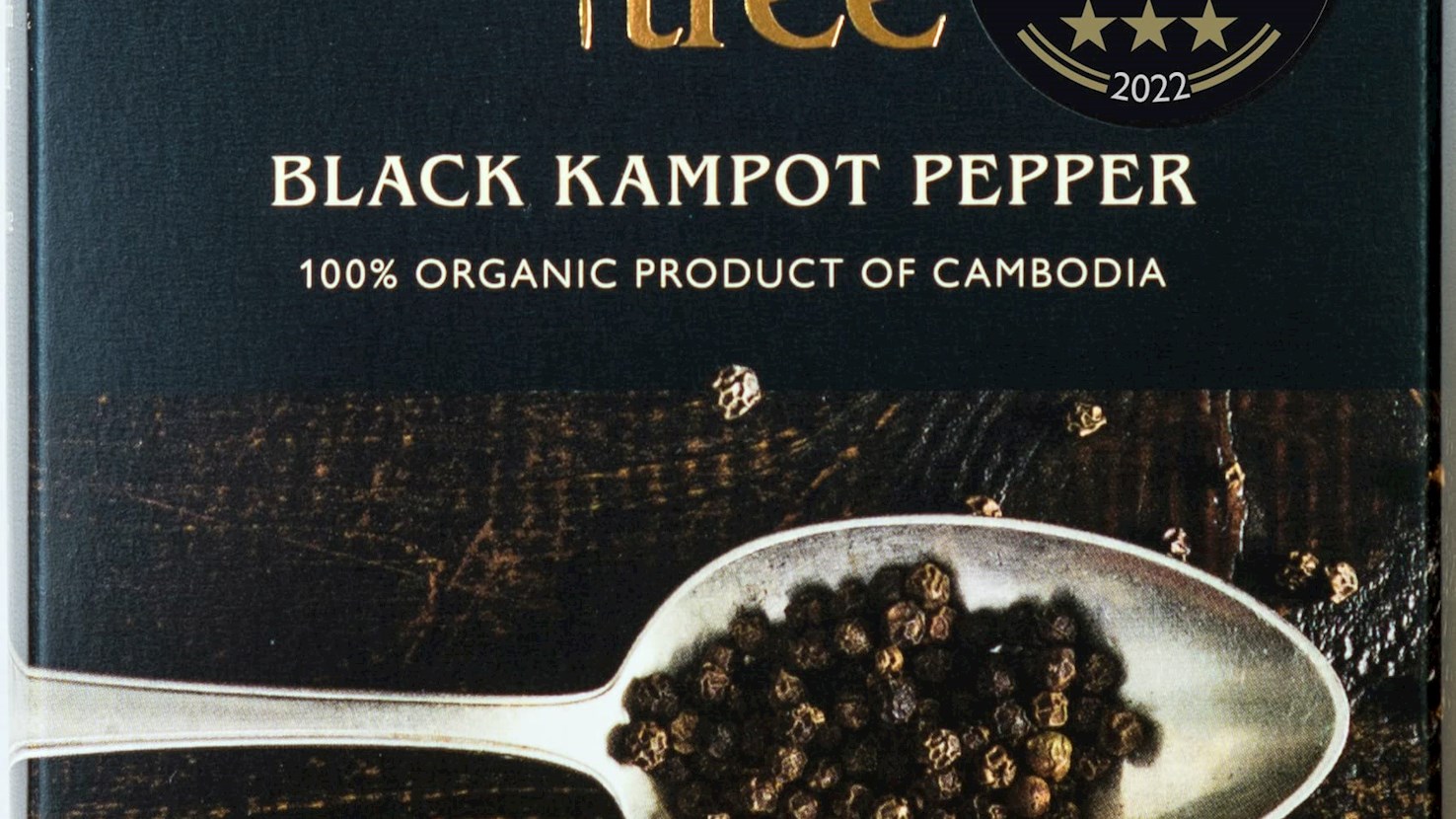
Bo Tree Farm is a spice blend and seasoning producer located in Cambodia. The company specializes in cultivating organic Kampot pepper, a variety highly prized within the culinary world.
Bo Tree Farm emphasizes sustainable farming practices and works closely with local communities to ensure ethical production. They export their pepper globally, and it is known for its distinct flavor profile and high quality.
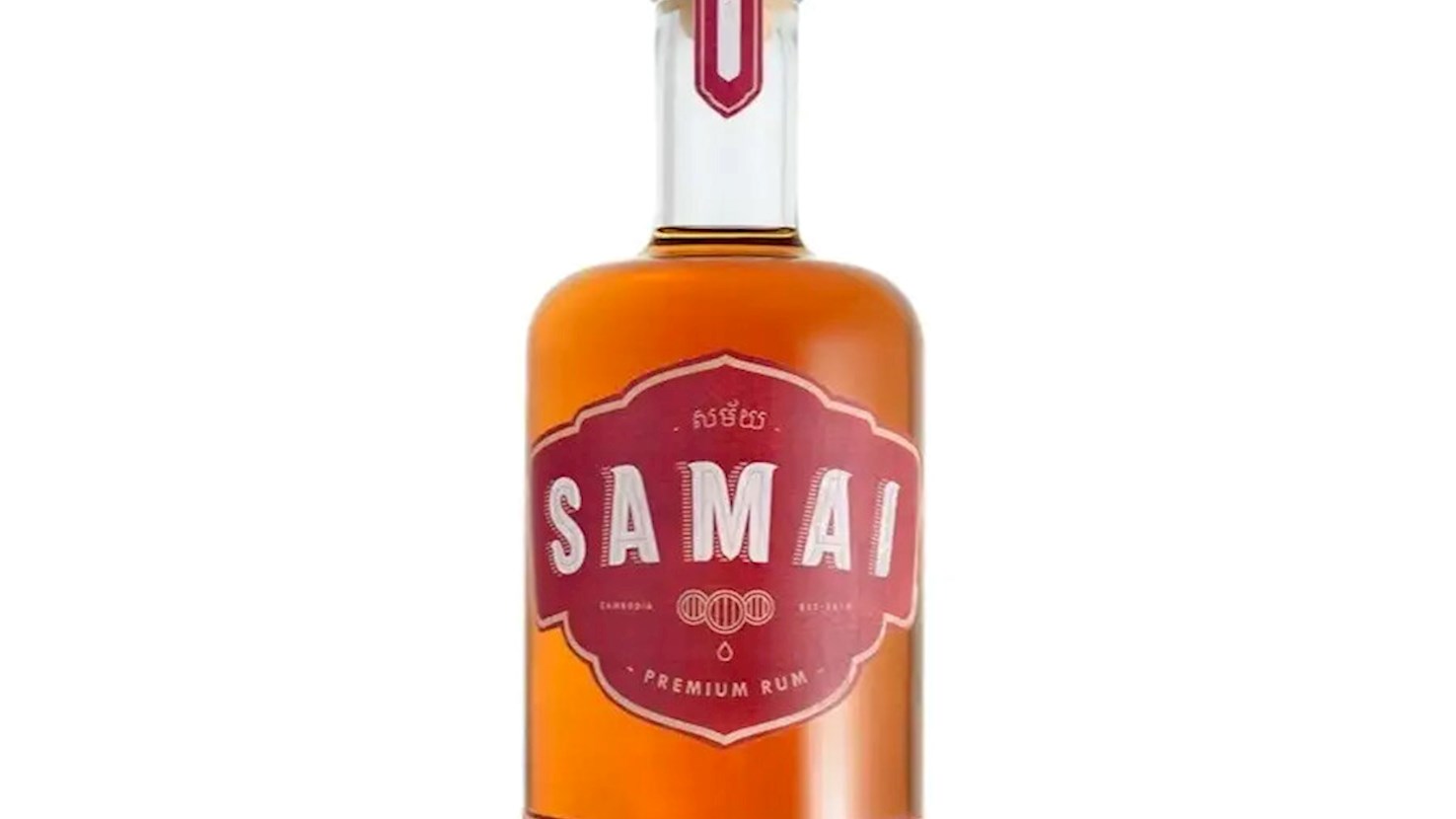
Samai Distillery, established in 2014, is Cambodia's first premium rum producer, located in the heart of Phnom Penh. Founded by a team of passionate individuals, including master distiller Ms. Moang Darachampich, the distillery combines Latin American rum-making traditions with Asian roots to create handcrafted rums that reflect the richness of Cambodian terroir.
Samai sources high-quality, locally grown sugarcane to produce rich molasses, the base for all their premium rums. The production process involves traditional copper pot stills and column stills, allowing for a balance between flavorful, intense rums and smoother, lighter spirits.
Aging takes place in a variety of barrels, including French and American oak, ex-bourbon, and sherry casks, imparting unique characteristics to each rum. Samai Distillery has gained international recognition, with its rums winning numerous awards from competitions such as the San Francisco World Spirits Competition and the London International Spirits Challenge.
TasteAtlas food rankings are based on the ratings of the TasteAtlas audience, with a series of mechanisms that recognize real users and that ignore bot,
nationalist or local patriotic ratings, and give additional value to the ratings of users that the system recognizes as knowledgeable.
TasteAtlas Rankings should not be seen as the final global conclusion about food. Their purpose is to promote excellent local foods,
instill pride in traditional dishes, and arouse curiosity about dishes you haven’t tried.
The initial list of top producers was compiled based on available reviews, awards, local recommendations, media and blog coverage, and consumer reviews.
The list will be updated with ratings from TasteAtlas local ambassadors and TasteAtlas users.









What People Say