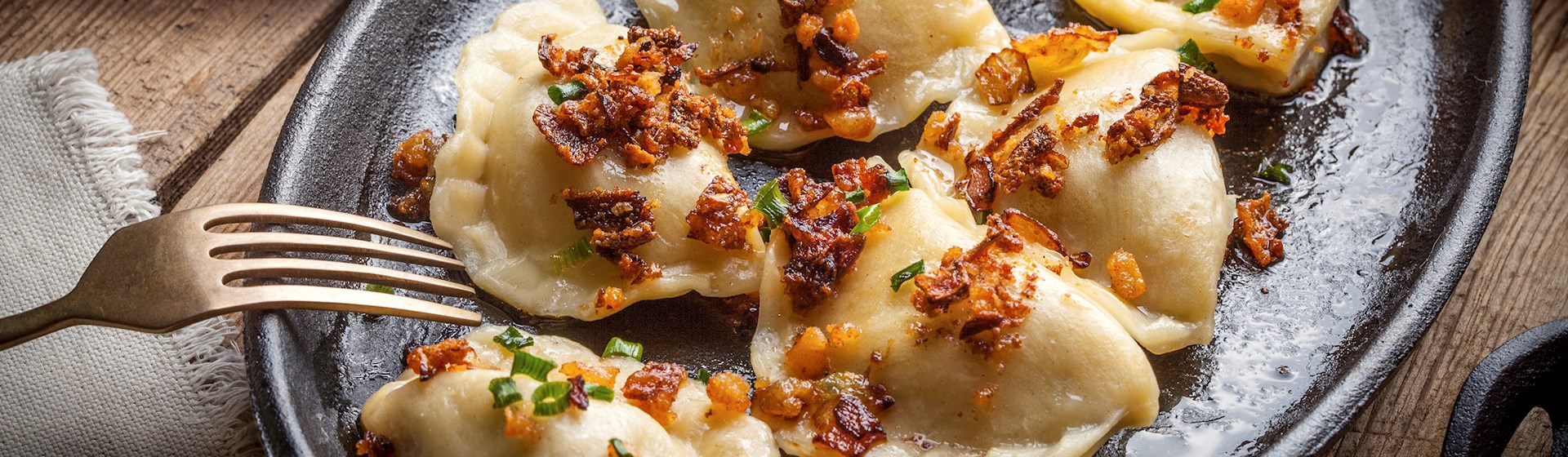
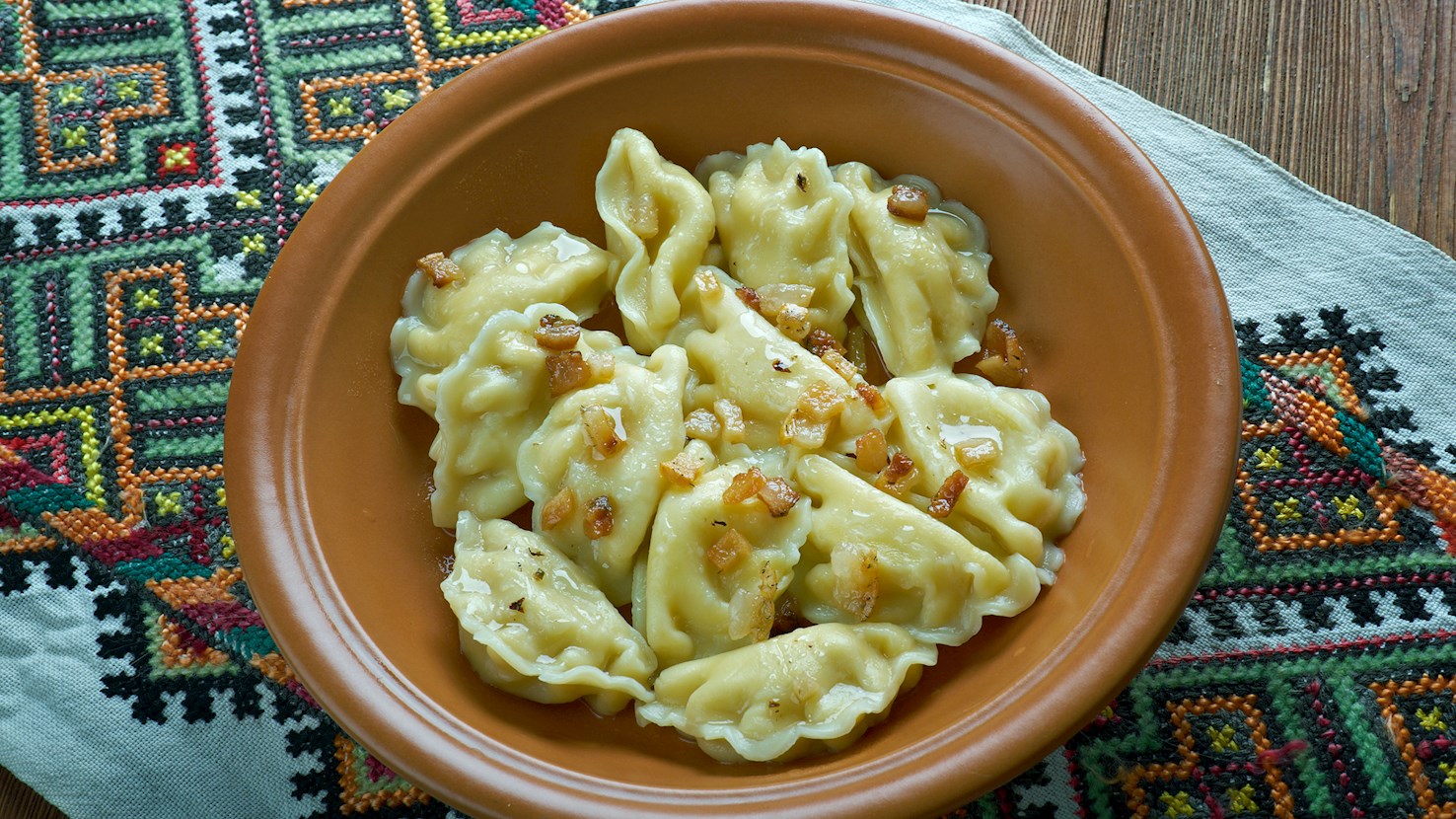
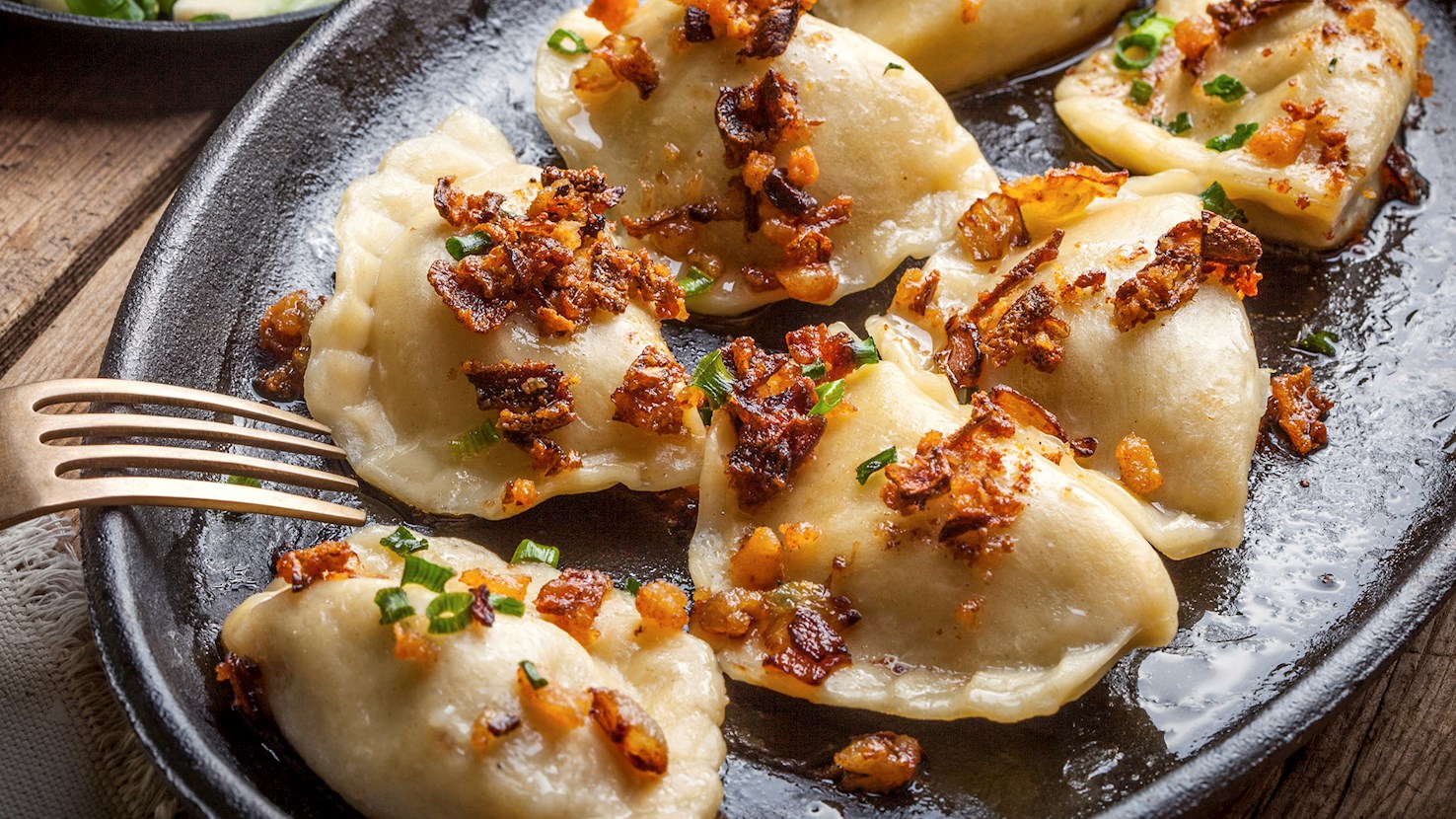
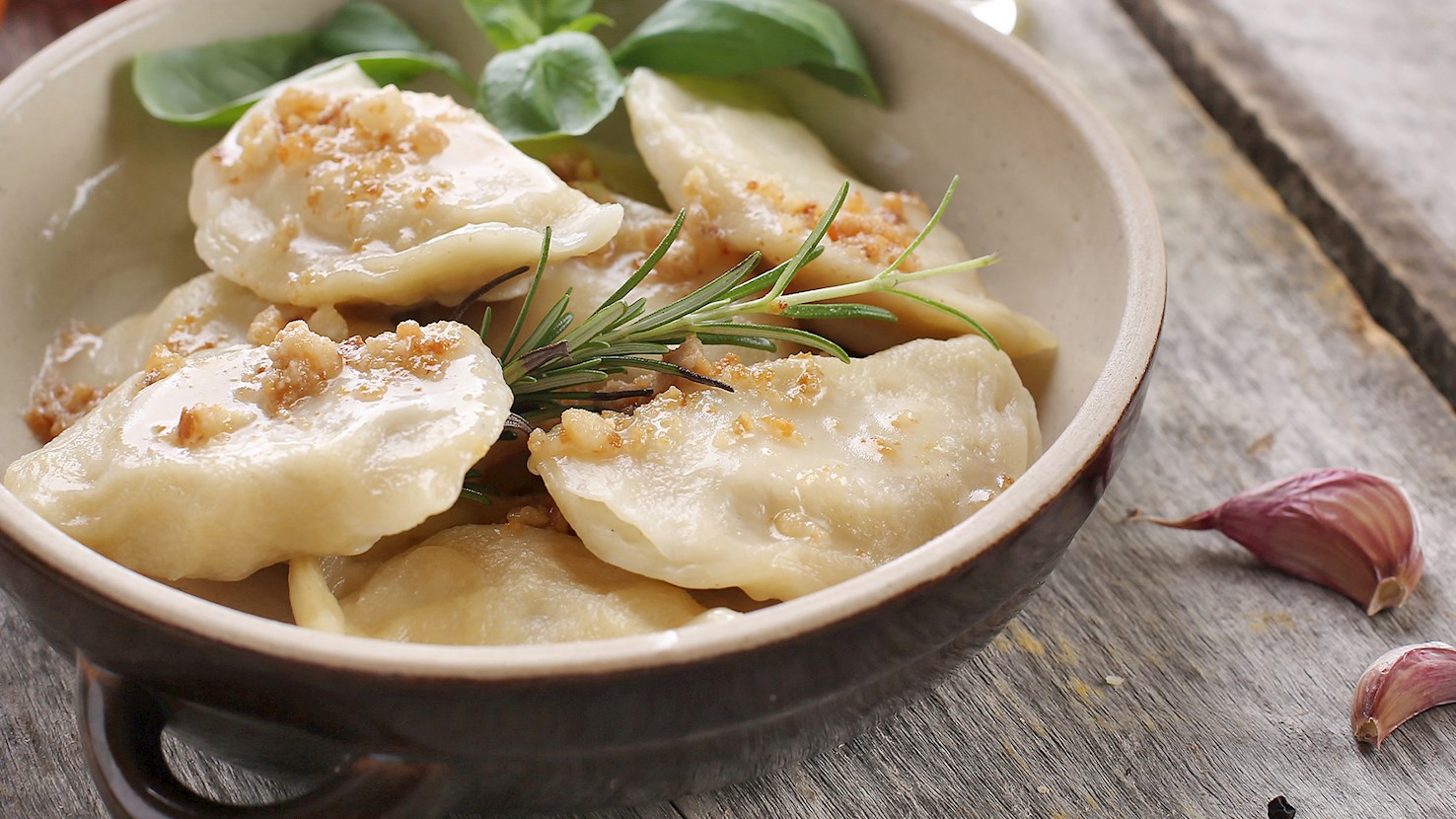
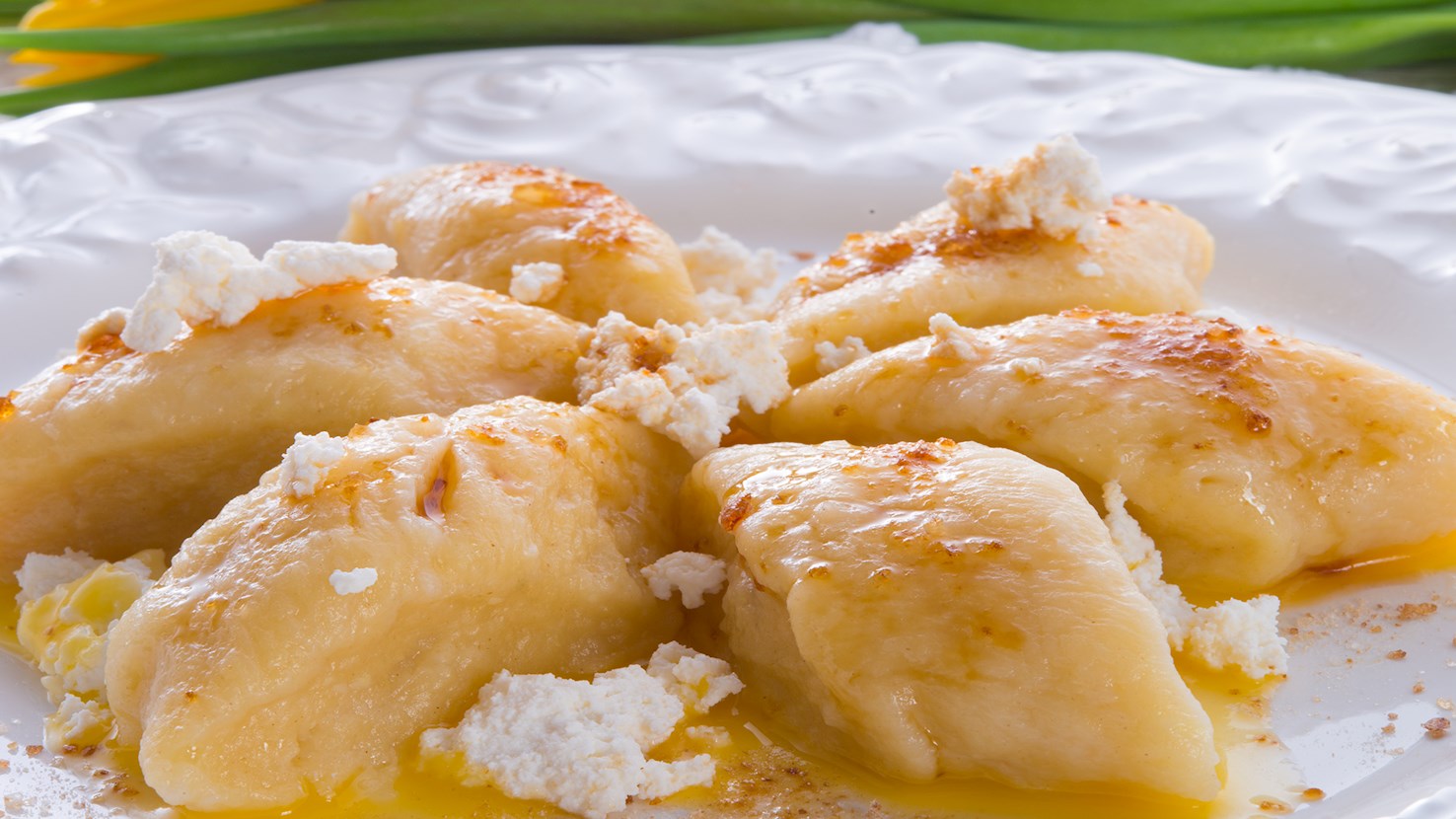
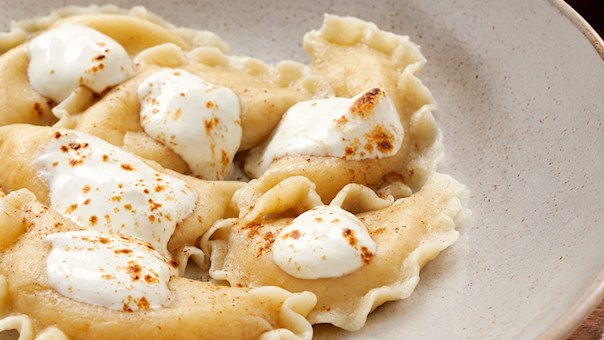
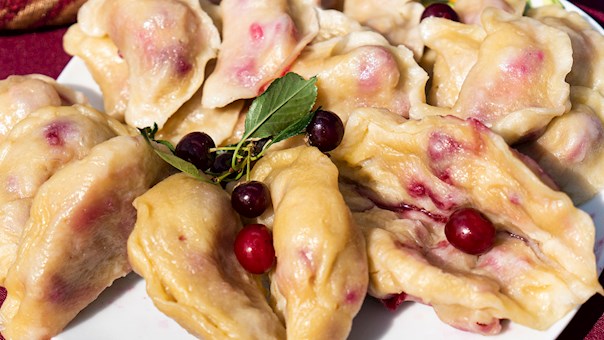
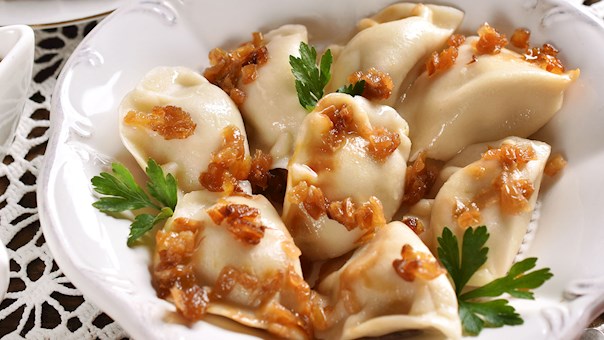
Originating from the historical region of Red Ruthenia, these soft, crescent-shaped dumplings are filled with a combination of potatoes and cheese, which is occasionally modified with various seasonings or fried onions. Pierogi ruskie are usually boiled and shortly fried until they develop a crispy texture. The dumplings are often served sprinkled with cracklings, crispy fried onions, or bacon, and can be enjoyed as a hearty appetizer or as a main course. In Ukraine, the pierogis are called varenyky, and they are so popular that there is even a monument celebrating varenyky in the city of Cherkasy. The sweet, fruit-filled version of varenyky is typically served with sugar and sour cream.
These stuffed dumplings derived their name from the Polish word for filled dumpling: pieróg. This former peasant food evolved into one of Poland's favorite dishes. Every family has their own version of pierogi filling, and the ingredients that can be used are limited only by the imagination of the chef. Pierogi can be sweet, savory, or spicy, and the most common fillings include cheese, onions, ground meat, mushrooms, potatoes, and sauerkraut. The sweet versions commonly include various berries, such as strawberries or blueberries. Traditionally, these dumplings are served as the 12th course of a traditional Polish Christmas Eve dinner. As the entire meal must be meatless, the filling usually consists of mushrooms, cabbage, and sauerkraut. Although pierogi have been made since the 13th century, it is not known where they were originally created—the Poles, Romanians, Russians, Ukrainians, Lithuanians, and Slovaks all claim they should be credited as the inventors of the pierogi. Others claim that it was brought to the West by the Tatars, and some say that the original pierogi traveled from China and reached Europe through Italy. Despite all this uncertainty, one fact is indisputable—the word pierogi first appeared in print in the second half of the 17th century. Today, pierogi are extremely popular throughout the country, and can be found in numerous pierogarnia eateries on Polish street corners. Poland also celebrates National Pierogi Day every year on October 8th, while the city of Kraków boasts its own annual Pierogi Festival held on August 17th.
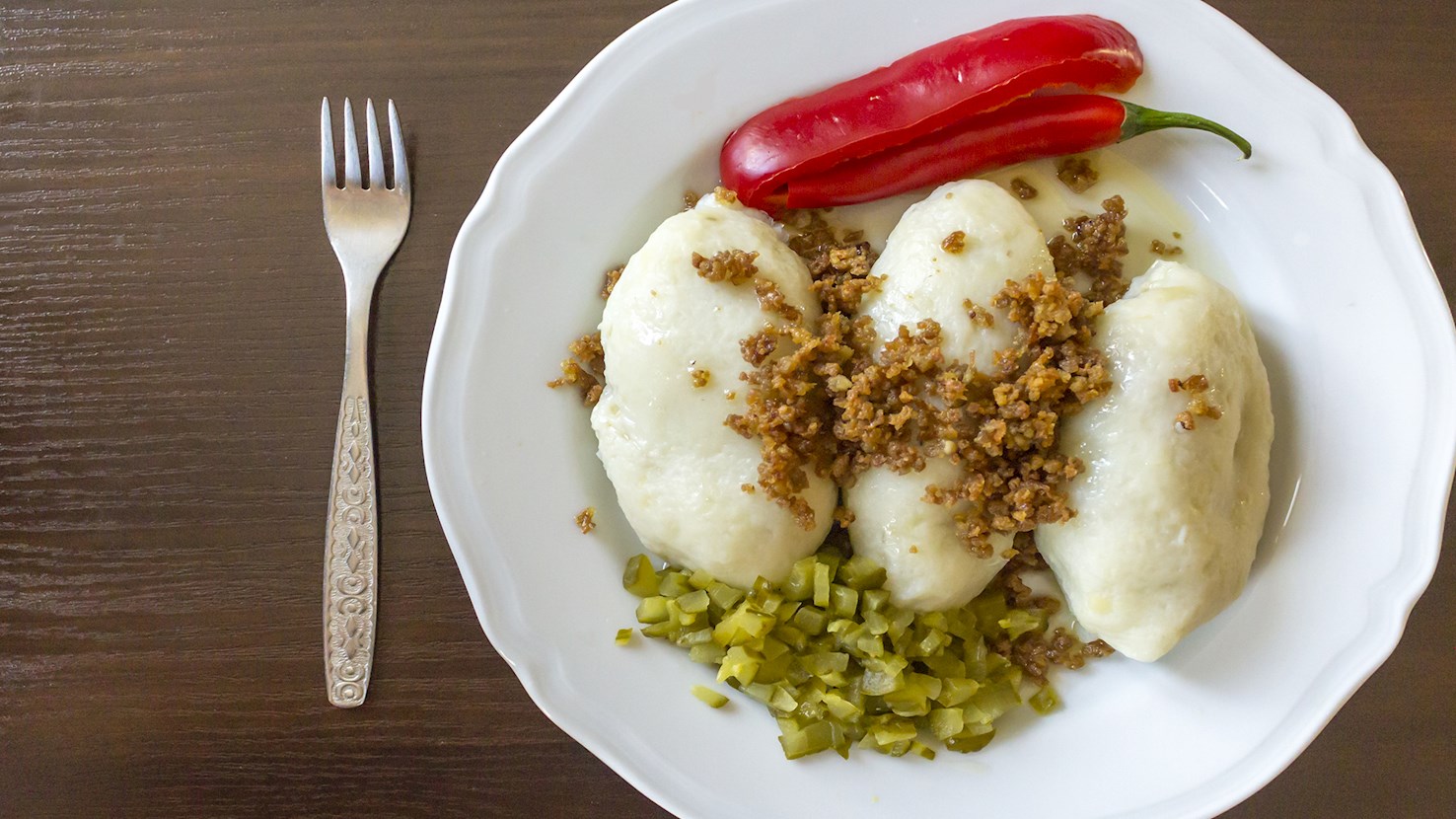
Known as koldūnai in Lithuania, kalduny in Belarus and kołduny in Poland, these stuffed dumplings boiled in salted water are a staple of regional cuisine. Traditionally filled with minced pork, beef, chicken, curd cheese, or mushrooms, they make for an excellent lunch choice and can be enjoyed with a variety of garnishes, from butter and black pepper to mayonnaise, sour cream, crispy bacon, or spirgučiais (a type of pork rind).
Translated as lazy pierogi, these simple dumplings do not share many similarities with the traditional pierogi. They are made with fresh cottage cheese, eggs, and flour, shaped into a soft dough that is either cut into uniform shapes or casually torn and cooked in water. With their neutral taste, leniwe pierogi can be enjoyed as a side dish, a sweet dessert, or a savory main course. They are traditionally served with buttered breadcrumbs, various meat toppings or drippings, or simply sprinkled with cinnamon-spiced sugar.
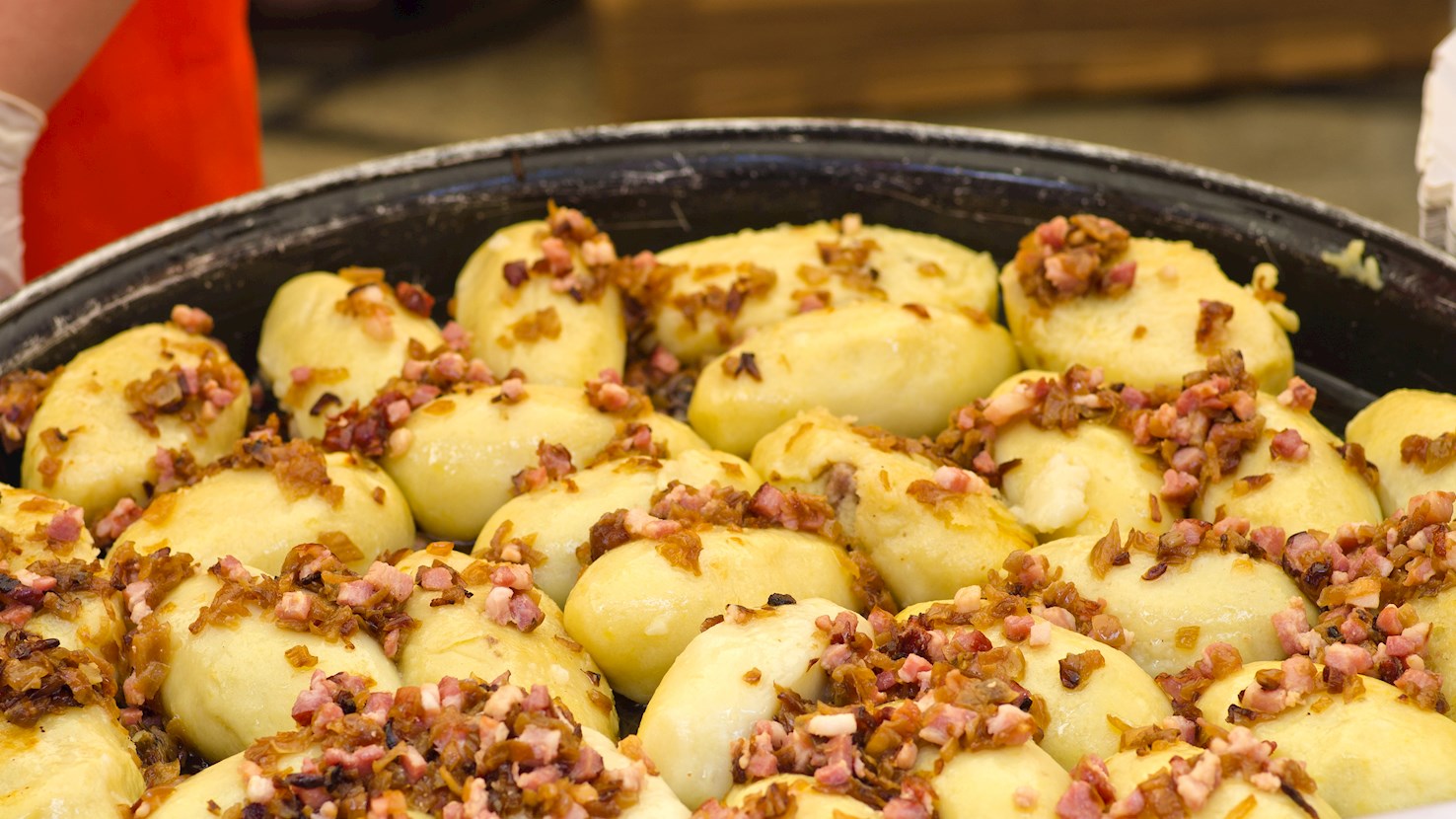
These large, oval-shaped potato dumplings are traditionally filled with a combination of sautéed onions and ground meat, while some versions occasionally employ mushrooms, sauerkraut, or cheese. They are usually associated with the northeastern regions and are believed to have been influenced by a similar Lithuanian dish that goes under the name cepelinai. Kartacze dumplings are usually served accompanied by sautéed onions and crispy bacon bits, and are typically enjoyed as a filling main course.
The dough for these famous Polish potato meat dumplings is made with mashed or grated raw potatoes – or occasionally a combination of both – mixed with flour, salt, and eggs in order to create a pliable and soft batter for the dish. Even though they can be eaten plain, pyzy are usually made with a delectable stuffing hidden inside the dough. The most common choice of filling is minced meat, usually a mix of pork and beef, which is frequently enriched with onions, sautéed mushrooms, or traditional Polish cottage cheese. The stuffing is placed inside the dough, and the package is then rolled into a small round ball and boiled. The finished pyzy are soft and delicate, and their mild doughy exterior perfectly complements the rich, meaty filling. They are occasionally shallow-fried, giving them a thin and crunchy outer layer. Pyzy are most commonly served with a topping of sautéed onions, pieces of fried bacon, meat dripping, and salty pork cracklings. This hearty and nourishing winter treat is usually served as a main course. In Poznán, the pyzy are made with yeast dough and can be stuffed or plain. The dumplings are usually served with duck meat and red cabbage.
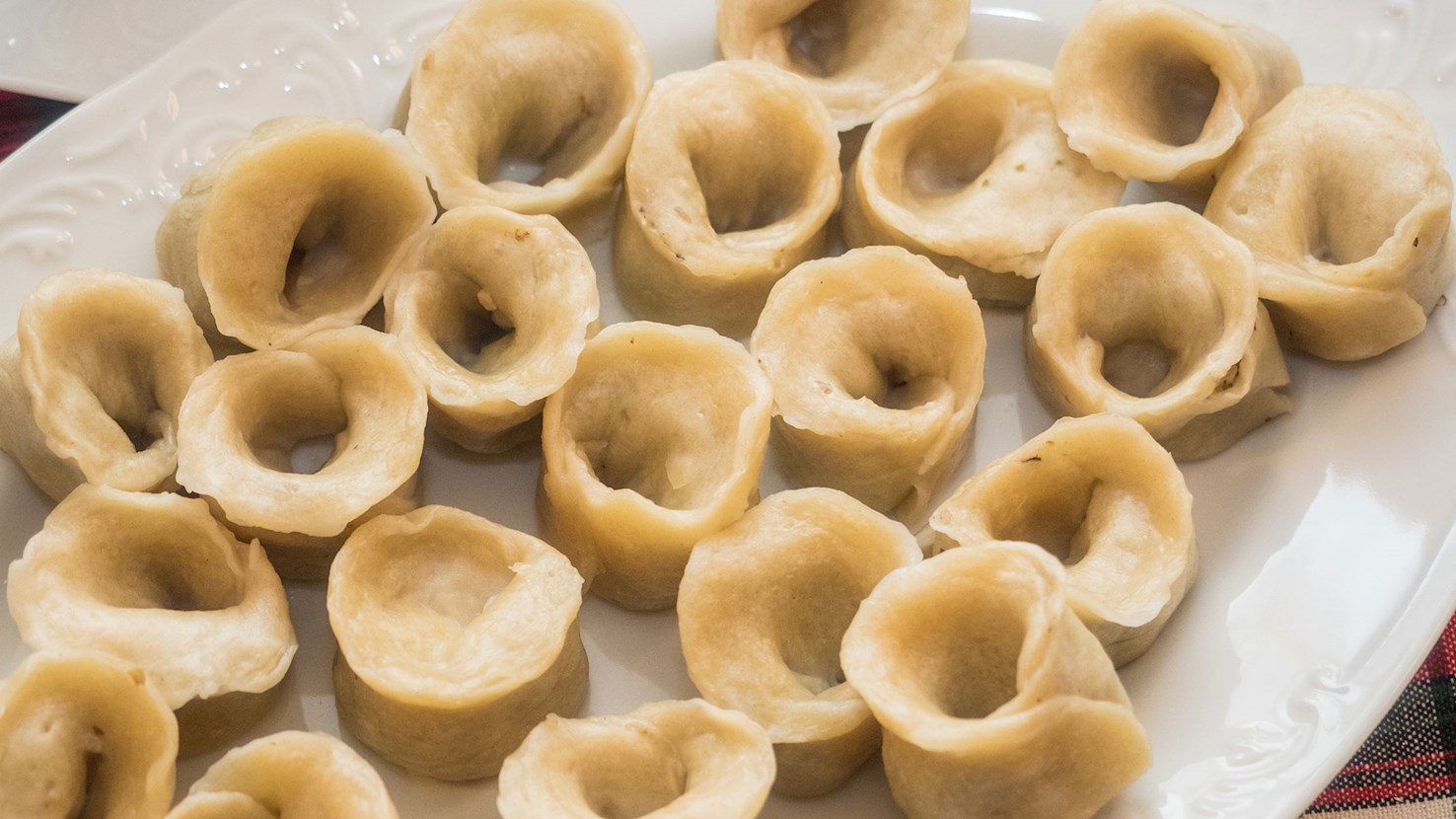
Uszka are small, ear-shaped dumplings found in Polish, Ukrainian, and Belarusian cuisine, made from thin wheat dough wrapped around a savory filling and usually served in soup or broth. Their name means “little ears” in Polish, a simple description of the way each dumpling is folded, sealed, and curved into a compact shape. In Poland, they are most closely associated with clear red barszcz, especially during Wigilia, the traditional meatless Christmas Eve supper. The classic Polish version is usually filled with dried forest mushrooms, especially porcini, whose strong, earthy aroma gives the dumplings their distinctive character. The mushrooms are soaked, cooked, finely chopped, and mixed with sautéed onions, pepper, salt, and sometimes breadcrumbs, creating a filling that is dark, fragrant, and concentrated without being heavy. Sauerkraut and mushroom fillings are also common, adding a sharper, fermented note, while everyday versions may use meat, buckwheat, or other savory mixtures depending on the region, season, and household. The dough is deliberately plain, usually made from flour, water, and salt, sometimes softened with egg or a little fat, because its purpose is not to compete with the filling but to hold it gently. It is rolled thin, cut into small pieces, filled sparingly, and carefully pinched shut before the ends are brought together to form the little ear shape. Their small size is part of their charm. Unlike larger dumplings such as pierogi or varenyky, uszka are rarely meant to stand alone as a full meal. They are designed to be served in hot liquid, where they become tender but still keep their shape, releasing a faint mushroom aroma into the broth with each spoonful. Uszka are especially valued for their practicality and ceremony. They can be prepared ahead of time, cooked or frozen, and then added to soup just before serving, which makes them ideal for holiday meals built around many dishes. At the Christmas Eve table, they are not merely a garnish for barszcz but an integral part of the soup. Other than barszcz, they may be served in mushroom soup, clear broth, or with melted butter and onions.
Pierogi nowodworskie are pierogi from the village of Nowodwór, known for a filling made of white farmer's cheese twaróg and roasted brown buckwheat. The secret to this dish lies in the region's sandy, poor-quality soil, which made growing hardy buckwheat an absolute necessity for local survival. To make the filling, the earthy, nutty roasted buckwheat is mixed with fresh, creamy white cheese. But instead of just sticking to the standard salt and fried onions used across the rest of eastern Poland, in Nowodwór, they do something completely unexpected: they fold in sweet raisins, fresh green mint, and a pinch of warming ginger and cinnamon. This mix of savory cheese, hearty grains, sweet fruit, and sharp spices creates a complex, slightly sweet-and-salty flavor you won't find anywhere else. Stuffed inside a soft, simple wheat dough, folded into small half-moons, and pinched shut with a classic ruffled edge, pierogi nowodworskie are served piping hot, generously glazed with melted butter, and lightly dusted with granulated sugar or a dollop of thick, sweet cream.
Pierogi z kapustą i grzybami leśnymi are Polish dumplings that are filled with a heavily seasoned mixture of slow-cooked sauerkraut and dried wild forest mushrooms. While variations exist across all of Poland, this highly specific regional iteration from the heavily forested Lubusz Voivodeship carries a profound historical pedigree, brought to the area following World War II by displaced populations resettled from the eastern territories around Lviv and Stanyslaviv. Dumplings are created with hyper-local sourcing of two key ingredients. First, locals exclusively use kamienna głowa (lit. stone head) cabbage, a late-harvest, densely packed white cabbage variety perfectly suited to the local climate and soil, which is shredded and barrel-fermented with salt and spices in the autumn. Second, the filling demands wild mushrooms—specifically noble porcini or bay boletes—foraged directly from the vast Lubusz forests, cut into exact quarters or sixths, and dried to concentrate their deep, earthy umami flavor. To prepare the filling, cooks rehydrate and finely chop the dried mushrooms, thoroughly boil the fermented cabbage to soften it, then squeeze it completely dry, and aggressively combine the two with onions that have been deeply caramelized in clarified butter, seasoning the heavy mass exclusively with coarse salt and sharp black pepper. This dense filling is enclosed in a pale, creamy dough, shaped into 5–8-centimeter (2–3-inch) half-moons, and sealed tightly with either a smooth pinch or a decorative ruffled edge. The dumplings are rapidly boiled for about five minutes until they float to the surface, at which point local cooks employ a crucial technical trick: instantly shocking them with a cup of cold water in the pot before draining, a process that completely halts the cooking and ensures the dough remains perfectly springy and delicate rather than turning mushy on the plate. These dumplings are a staple of the Lubusz diet all year long—usually served on a random weekday, smothered in hot pork cracklings. But when Christmas Eve arrives, the pork fat is strictly forbidden, and the dumplings take center stage on the holiday table, drenched simply in warm clarified butter.
Pierogi z kapustą kiszoną i ziemniakami are savory, meatless Polish dumplings consisting of an elastic wheat wrapper stuffed with a heavily seasoned blend of boiled potatoes and sauerkraut, deeply woven into the region's Christmas Eve (Wigilia) fasting traditions. While the ingredients might sound ubiquitous across Eastern Europe, this specific iteration comes from the village of Bytkowice, with a profound historical lineage tied directly to the massive post-World War II border shifts. Following the war, displaced Polish citizens from the Eastern Borderlands (Kresy) were resettled in central Poland, bringing with them culinary traditions heavily influenced by Ukrainian varenyky—specifically, the practice of cutting intensely sour cabbage with the starchy bulk of mashed potatoes to stretch limited winter pantry rations. The sauerkraut, the key ingredient, must be aggressively fermented and deeply sour before cooking. Because it is first stewed in a small amount of water to soften it—a process that naturally leaches away some of its tartness—starting with a mild sauerkraut would result in an unacceptably bland filling. Once the stewed sauerkraut is cooled and squeezed dry, it is finely chopped and vigorously folded into hot, freshly mashed potatoes along with deeply caramelized onions, salt, and black pepper. This dense, tangy starch mixture is then enveloped in a remarkably resilient dough made from wheat flour, whole eggs, hot water, and a splash of oil, rolled to a precise 3 millimeters thick (1/8-inch), and cut into 5-centimeter (2-inch) crescents. The dumplings are rapidly boiled in salted water until their creamy-yellow skins float to the surface, though locals frequently take them a step further by heavily pan-frying them in oil the following day until the delicate pastry develops a shattering, deep golden crust.
TasteAtlas food rankings are based on the ratings of the TasteAtlas audience, with a series of mechanisms that recognize real users and that ignore bot,
nationalist or local patriotic ratings, and give additional value to the ratings of users that the system recognizes as knowledgeable.
For the “Top 18 Polish Dumplings” list until June 15, 2026, 2,686 ratings were recorded, of which 2,012 were recognized by the system as legitimate.
TasteAtlas Rankings should not be seen as the final global conclusion about food. Their purpose is to promote excellent local foods,
instill pride in traditional dishes, and arouse curiosity about dishes you haven’t tried.