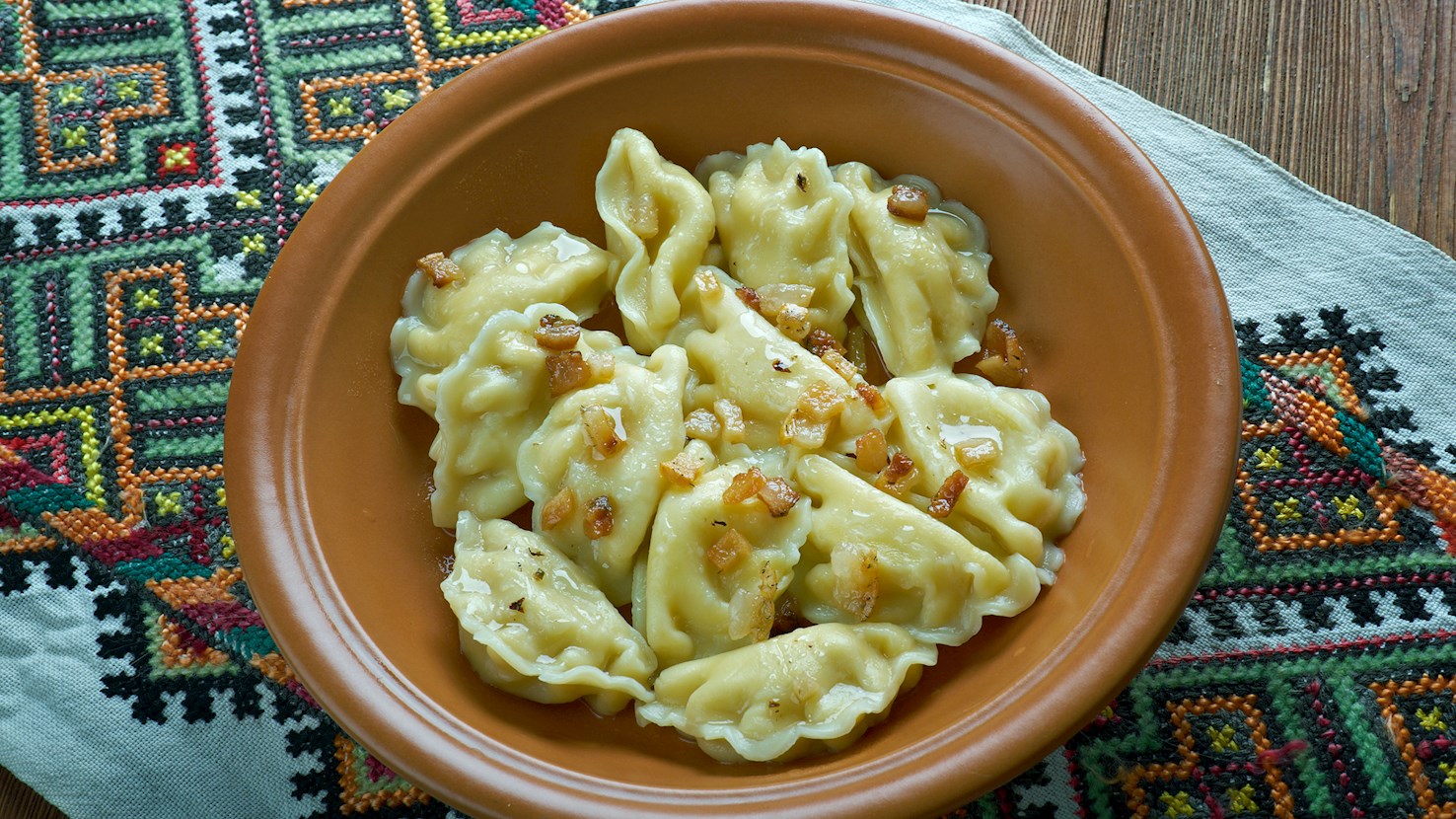
Originating from the historical region of Red Ruthenia, these soft, crescent-shaped dumplings are filled with a combination of potatoes and cheese, which is occasionally modified with various seasonings or fried onions. Pierogi ruskie are usually boiled and shortly fried until they develop a crispy texture. The dumplings are often served sprinkled with cracklings, crispy fried onions, or bacon, and can be enjoyed as a hearty appetizer or as a main course. In Ukraine, the pierogis are called varenyky, and they are so popular that there is even a monument celebrating varenyky in the city of Cherkasy. The sweet, fruit-filled version of varenyky is typically served with sugar and sour cream.
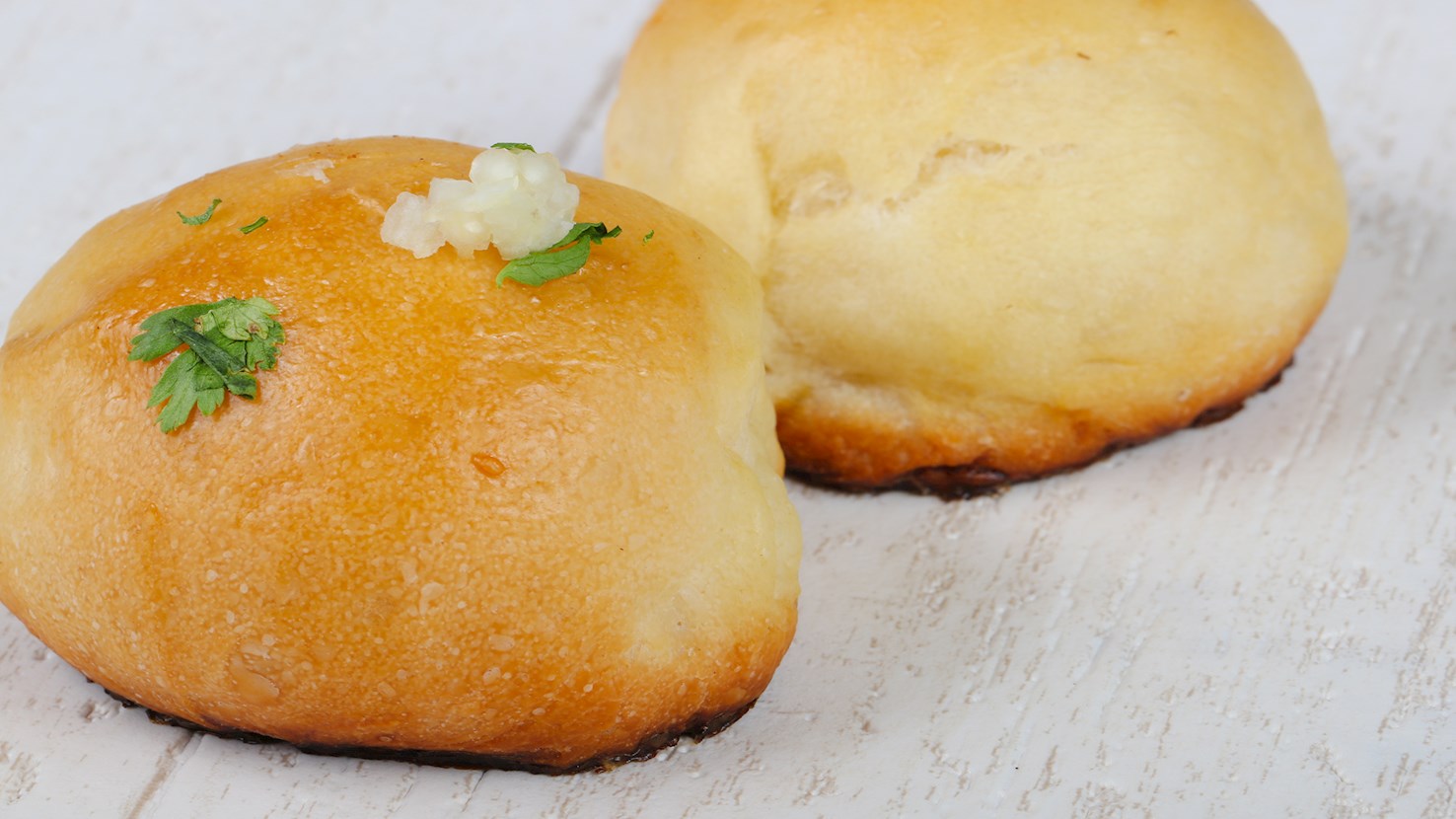
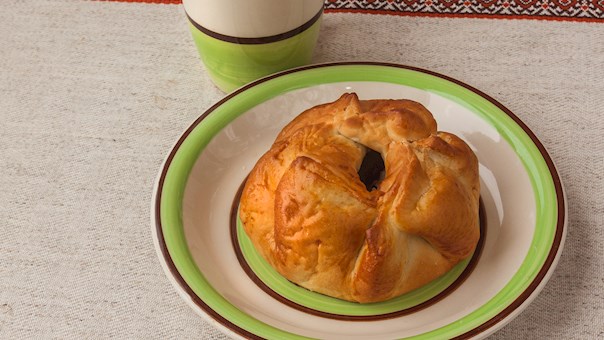
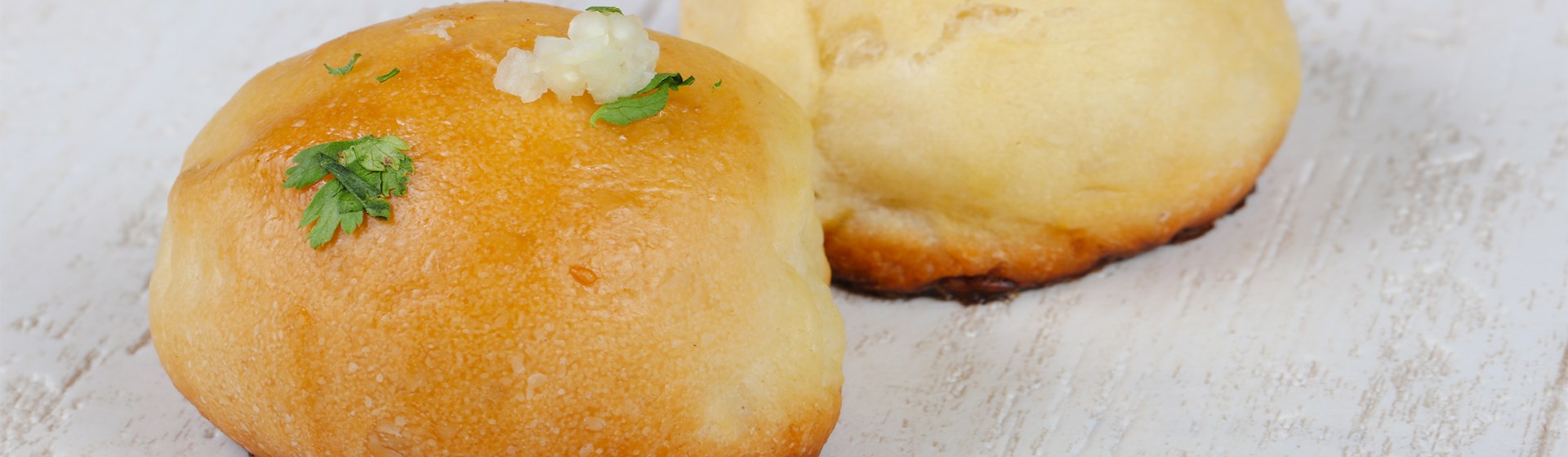
Pampushki are small Ukrainian yeasted buns. They can be prepared in sweet or savory versions. The dough usually consists of milk, flour, eggs, sugar, butter, yeast, oil, and salt, and it is then shaped into small balls. The sweet version is often stuffed with ingredients such as fruit jam, berries, fresh fruit, or cottage cheese, while the savory ones have no filling, but are traditionally flavored with garlic sauce and served alongside borscht.
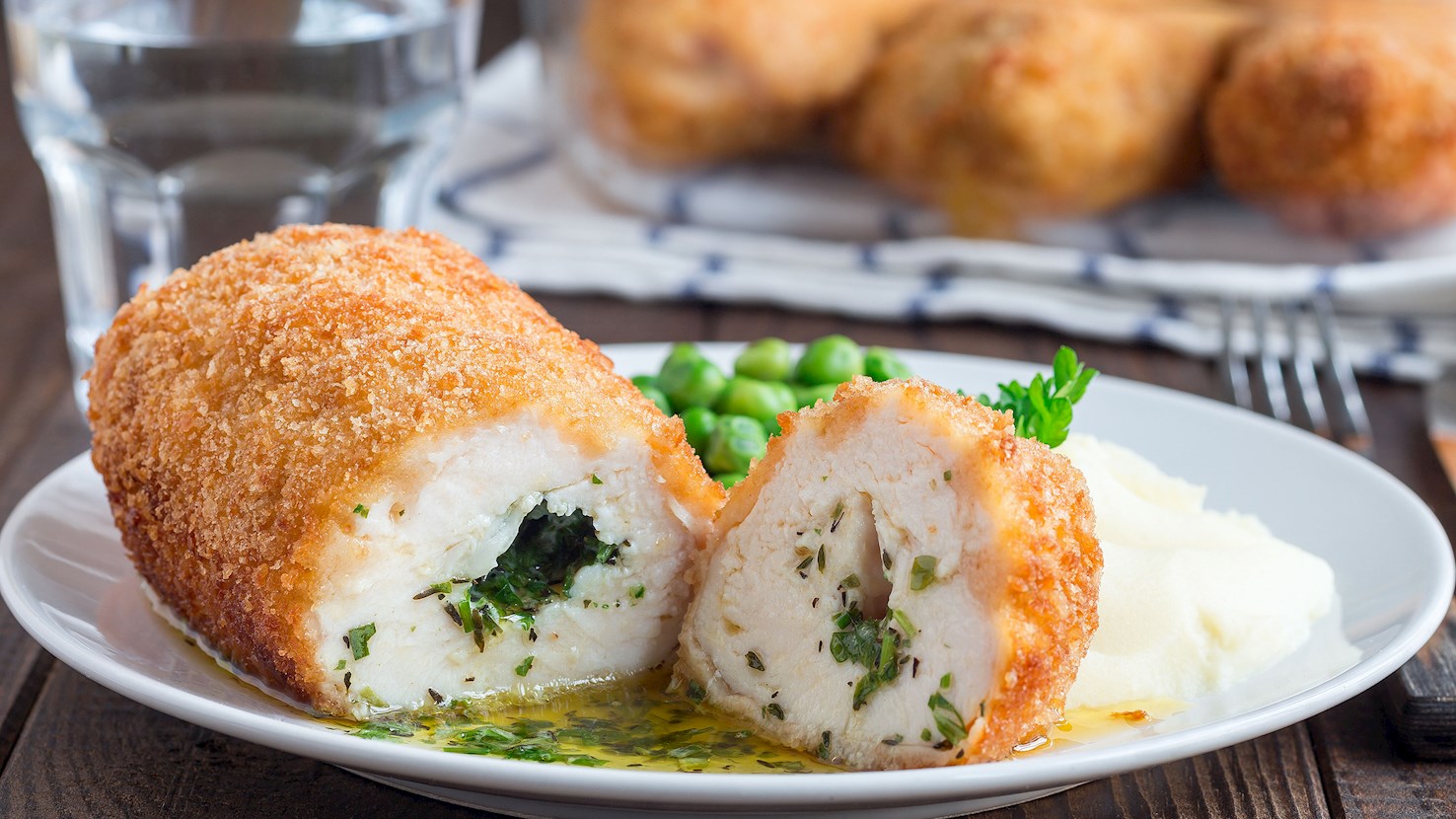
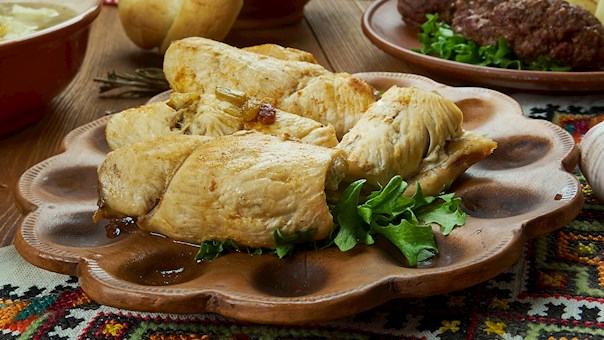
Chicken Kyiv consists of a boned, flattened chicken breast that is rolled around chilled herb butter, breaded, and then fried. Although the dish is very popular, no one knows where it came from or how it got its name, and there are numerous contradicting theories attributing its invention to Ukrainian, Russian, and French chefs. It was at the height of its popularity in the 1970s, but quickly fell out of favor in the late 1980s with the rise of nouvelle cuisine. Interestingly, in Soviet hotels’ tourist brochures, guests were warned of the dangers of splattering themselves with hot butter.
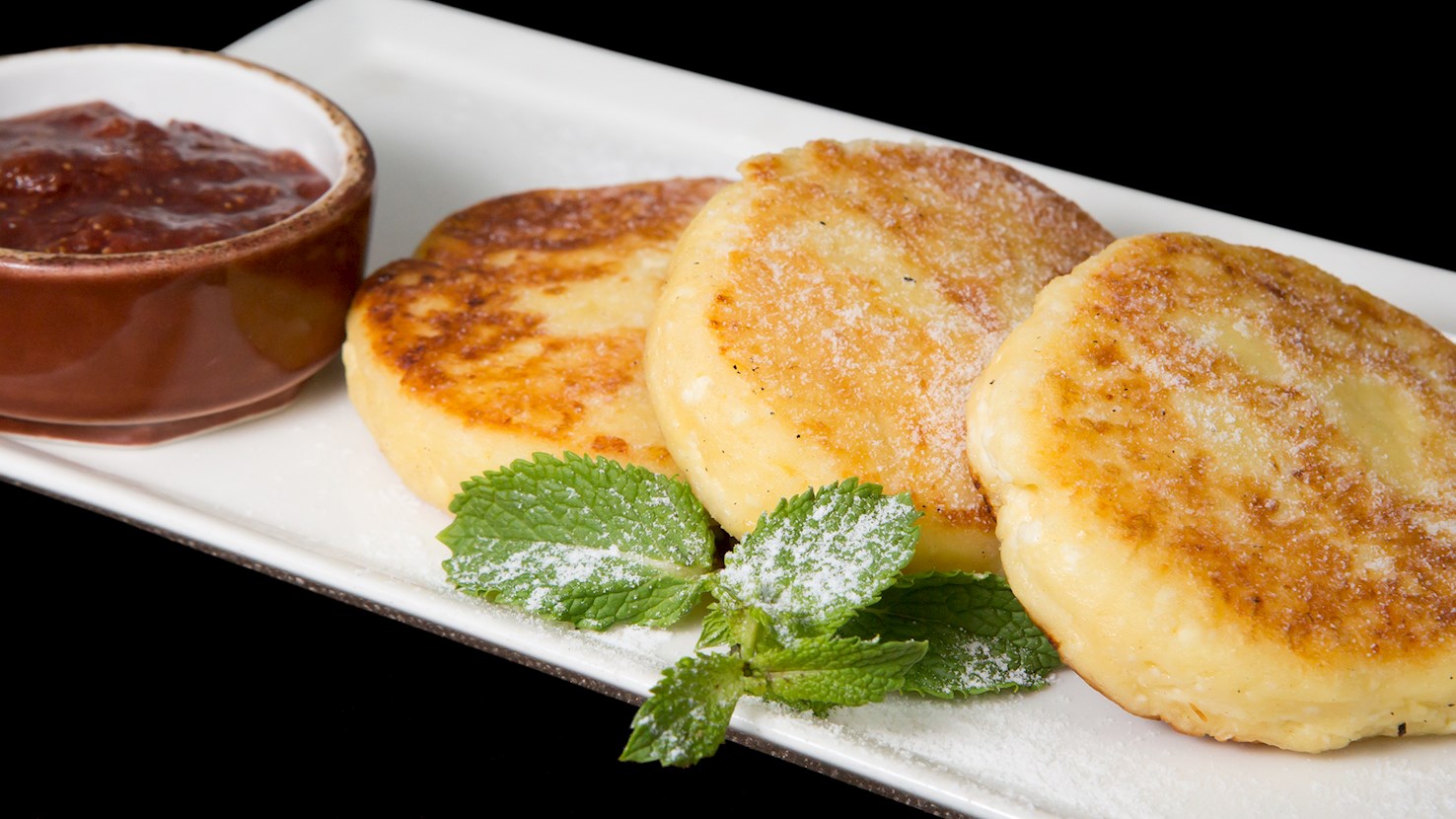
Syrniki is a dessert consisting of fried cottage cheese pancakes that are usually garnished with honey, fruit jam, sour cream, or applesauce. It is part of the Russian (where it's sometimes also called tvorozhniki), Belarusian, Ukrainian, Latvian and Lithuanian cuisine. Cottage cheese is traditionally first swetened with sugar, then combined with flour into a dough which is fried in hot oil until it develops a golden-brown color. Syrniki can be served for breakfast or consumed as a tasty dessert after a large meal.
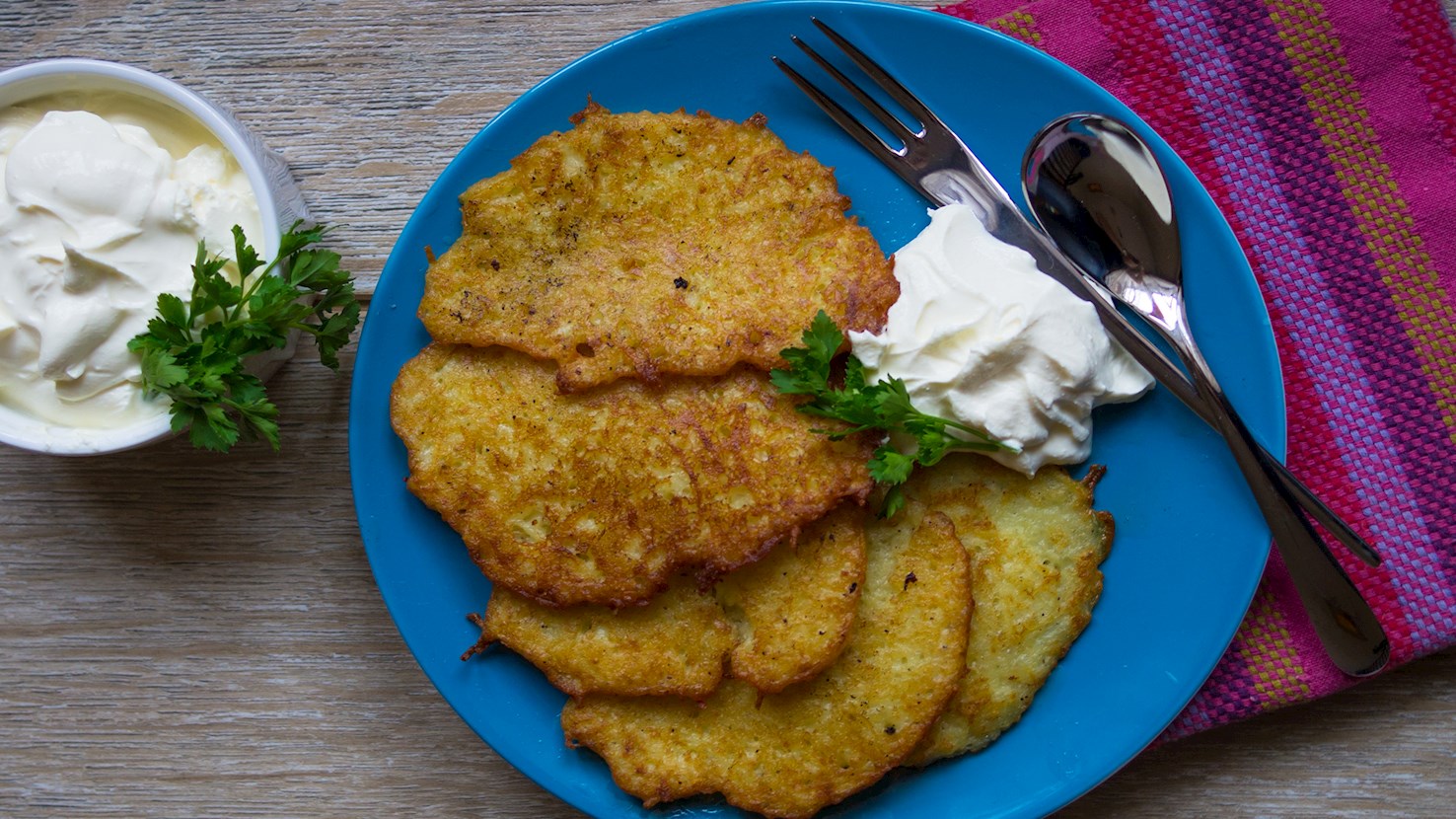
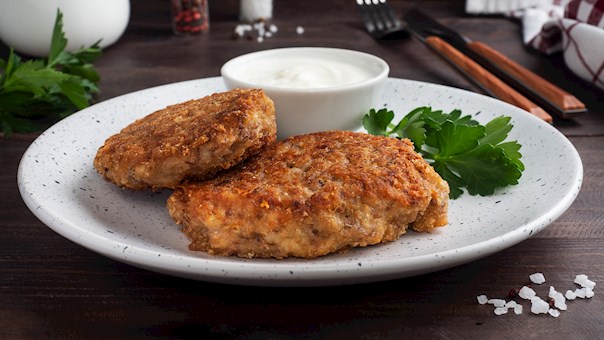
Deruny are classic Ukrainian potato pancakes made with finely grated potatoes, onions, eggs, flour, and sour cream. Once prepared, the batter is fried in a pan, resulting in small pancakes with a soft and moist interior and a slightly brown exterior. Deruny are traditionally served hot, paired with a dollop of sour cream. There are many versions of these pancakes, with added ingredients such as ground meat, mushrooms, or cabbage.
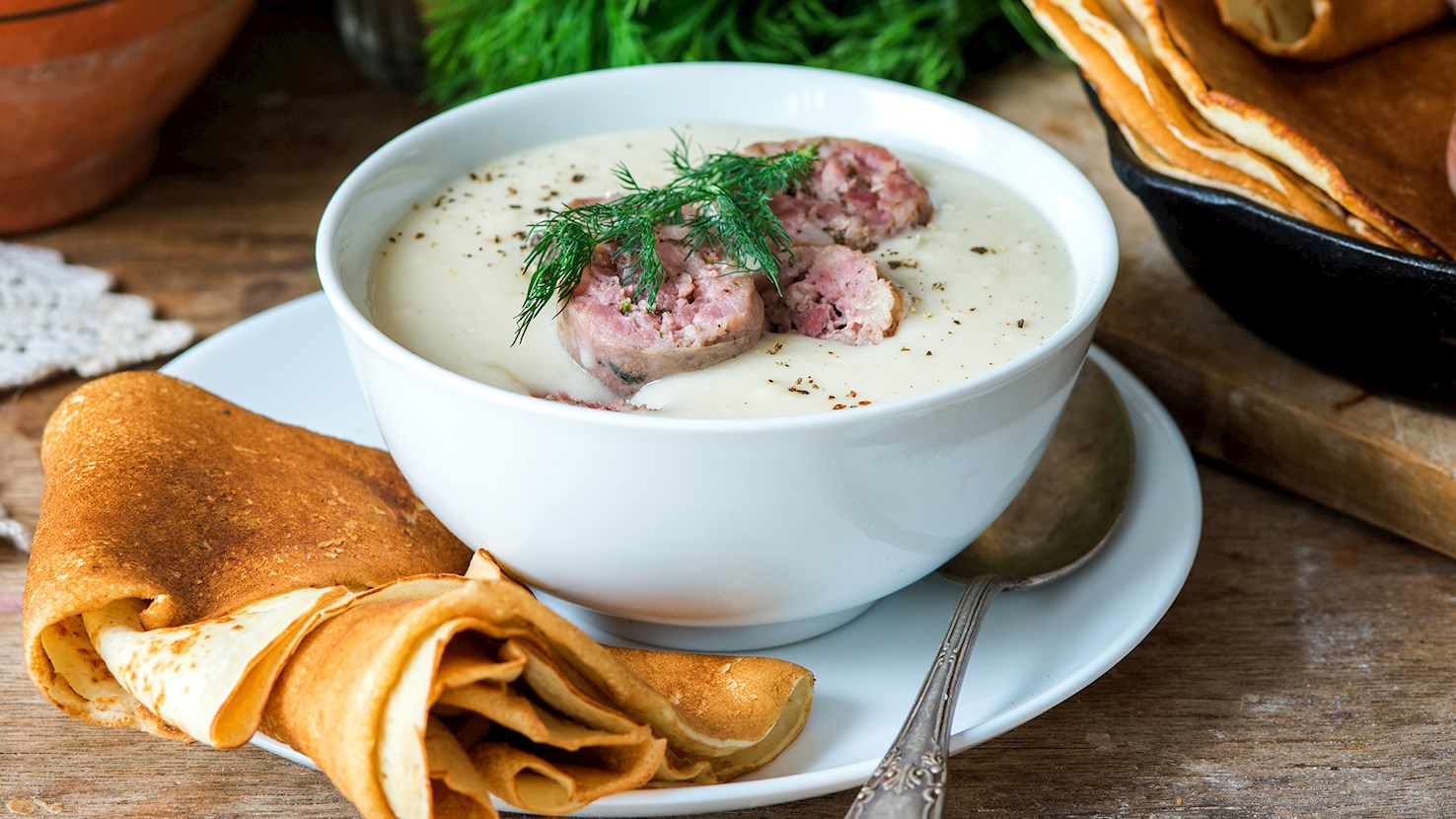
Machanka is a Belarusian and Ukrainian stew made with a combination of pork, sour cream, flour, and beef stock. The meat can include bacon, sausages, or ham, all cut into very small pieces. This soup-like stew is typically enriched with onions, mushrooms, and dill. Quite commonly, machanka is served with draniki pancakes, consisting of potatoes, flour, lard, and salt, and some claim that the proper way to consume machanka is to roll up the potato pancakes and dip them into the stew.
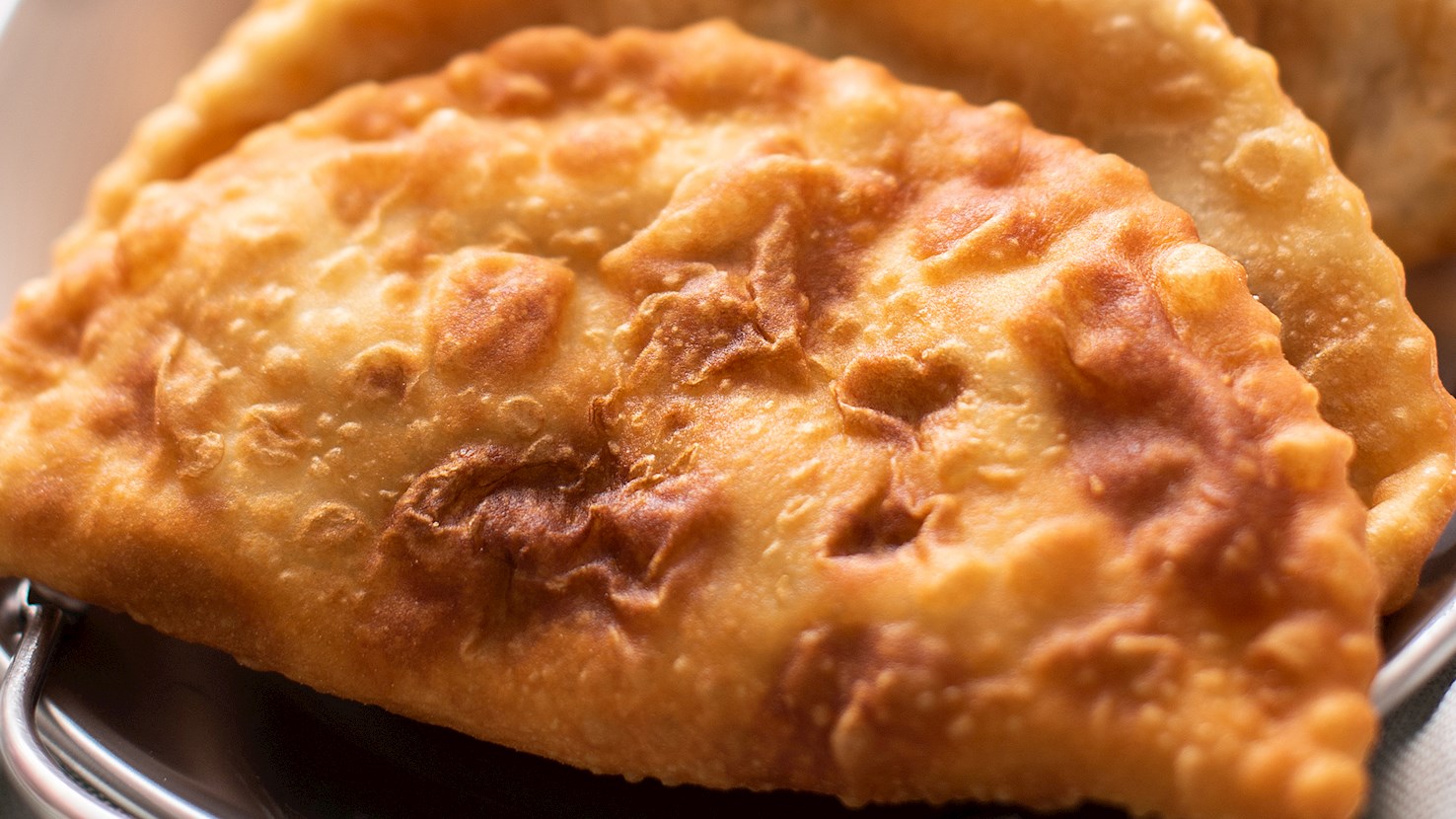
Chebureki, known in Türkiye and among the Crimean Tatar diaspora as çiğ börek, is a deep-fried, unleavened turnover filled with a seasoned mixture of ground meat and onions. It is the national dish of the Crimean Tatars, originating from the Crimean Peninsula along the northern coast of the Black Sea. The name is derived from the Crimean Tatar word "çiberek," which was later adapted into the Russian "chebureki." The development of this food is tied to the nomadic and pastoral history of the Crimean Khanate, where the reliance on sheep and cattle necessitated recipes that could turn flour and meat into calorie-dense, portable meals. As the Crimean Tatar population moved through Central Asia, the Caucasus, and into Anatolia, the dish became a common fixture in the culinary landscapes of the former Soviet Union and Türkiye, specifically becoming a localized specialty in the city of Eskişehir. The preparation begins with a dough consisting only of flour, water, and salt, which is rolled out until it is thin and translucent. The filling is composed of ground beef or lamb, a high volume of finely minced or grated onions, and a purposeful addition of water. This water is critical because it ensures the meat stays moist and creates a pressurized steam pocket during the frying process. The meat mixture is placed raw onto the dough, which is then folded into a half-moon shape and sealed tightly using a fork or a crimping tool. The pastry is submerged in a large volume of hot oil, where the high heat causes the water in the filling to vaporize instantly. This steam forces the dough to puff outward, creating a hollow interior while the exterior develops a signature blistered and bubbly texture. A unique physical property of chebureki is the savory broth that collects inside the pastry as the raw meat and onions cook in their own steam. Because the meat is not pre-cooked, the juices are trapped entirely within the dough, resulting in a distinct liquid center. It is eaten by hand, usually starting at the top corner to allow the steam to escape slowly and to prevent the hot internal juice from spilling. In street food kiosks and specialized restaurants, it is typically served as a standalone item or as part of a light meal. The most common beverage pairing is ayran, a chilled, salted yogurt drink, which helps to neutralize the richness of the fried dough. In some regions, it is also served with a side of spicy tomato sauce or hot black tea to contrast the savory profile of the lamb or beef.
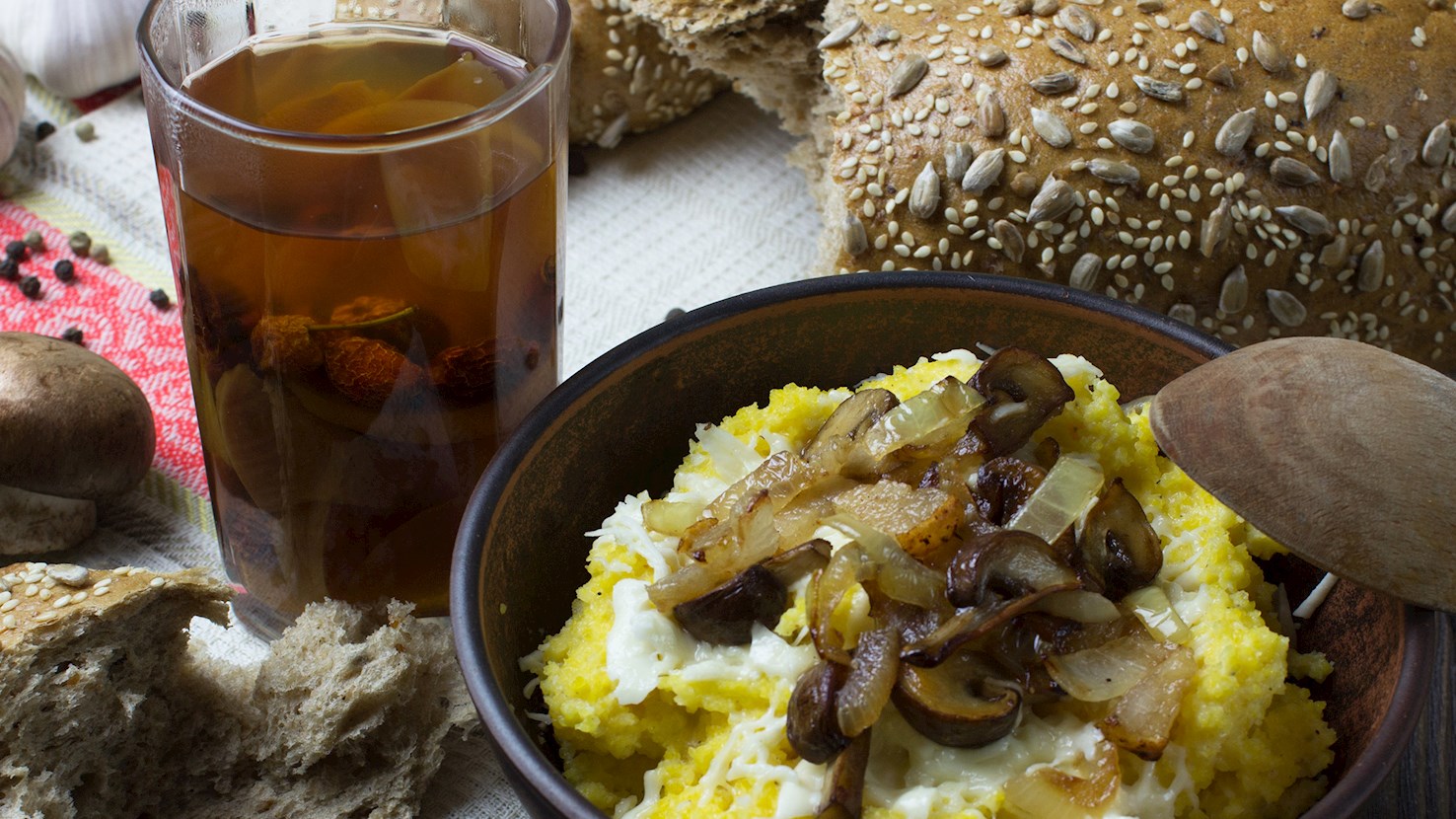
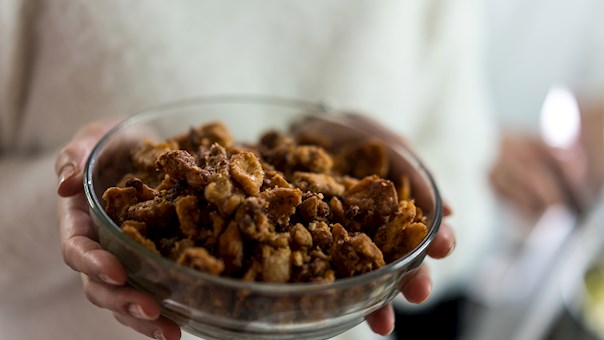
Traditionally prepared over an open fire, this velvety Ukrainian corn porridge originated in the Carpathian highlands. It consists of corn flour cooked in a mixture of sour cream and Bryndza cheese. In the past, it was associated exclusively with the Hutsul minority, where the task of preparing the dish was reserved for men. Today, the dish is an indispensable part of traditional Ukrainian cuisine and it is commonly consumed throughout the country. Found on menus of most traditional restaurants, it usually comes served with fried bacon bits, crumbled Bryndza, mushroom sauce, or crispy cracklings.
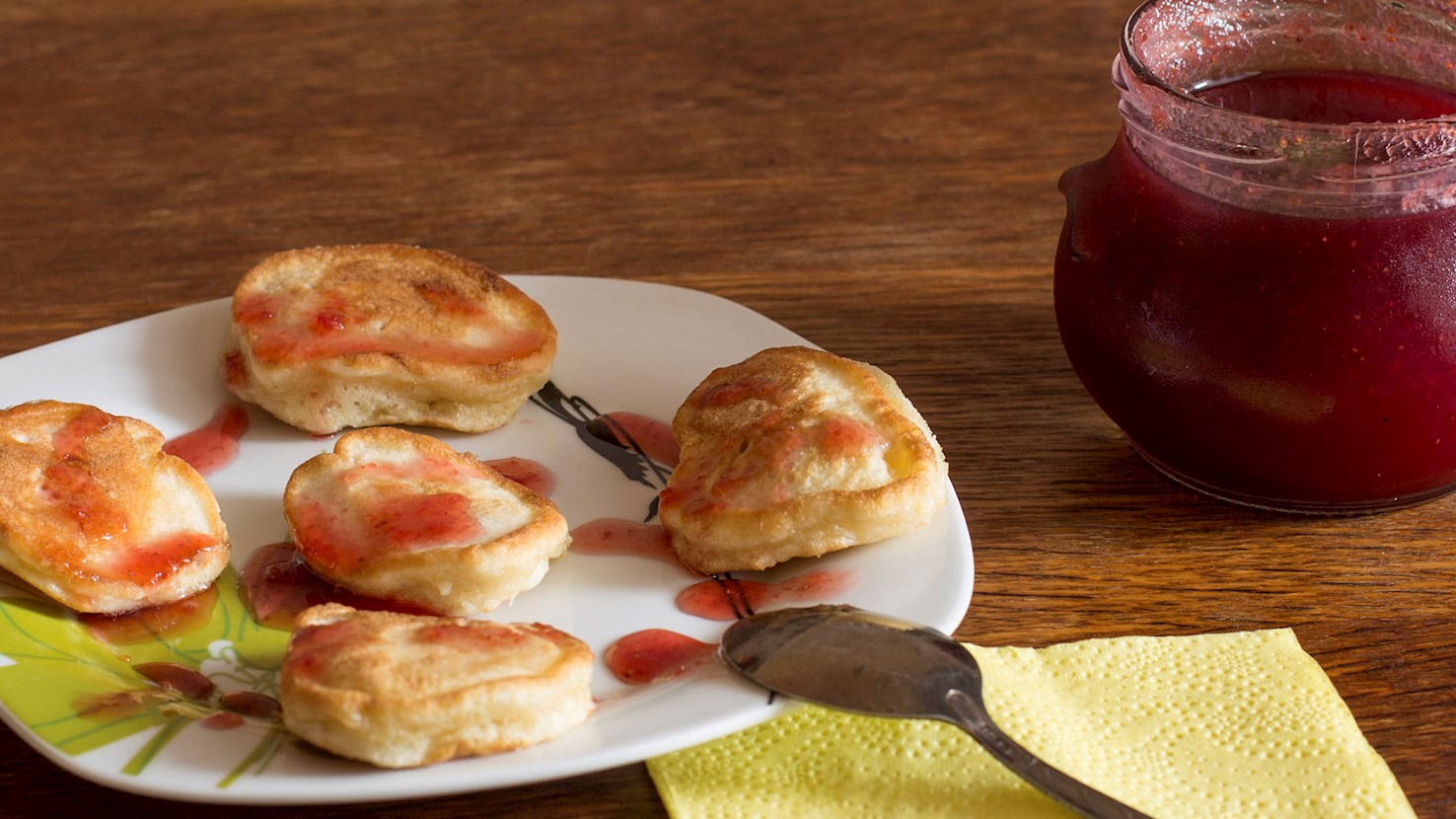
Small, but packed with flavor, the batter for these famous Russian pancakes differs from those for traditional pancakes as it is prepared with kefir, a fermented milk product with a slightly sour taste. Aside from kefir, the remaining ingredients for oladyi are typical for any run-of-the-mill pancake – flour, sugar, salt, and eggs. They are pan-fried into small rounds, similar to American-style pancakes. The pancakes turn golden brown when finished, and they are chewy with crunchy edges. They are slightly sweet and neutral in flavor, while the kefir lends them a mild sour note. These small, thick pancakes can be served plain or with honey, chocolate, fresh fruit, sour cream, or a variety of fruit preserves. Fresh fruit and chocolate chips are also occasionally added to the batter. Oladyi are a typical breakfast dish, and they are best served hot off the griddle while they are still fluffy and soft in the center and crunchy around the edges.
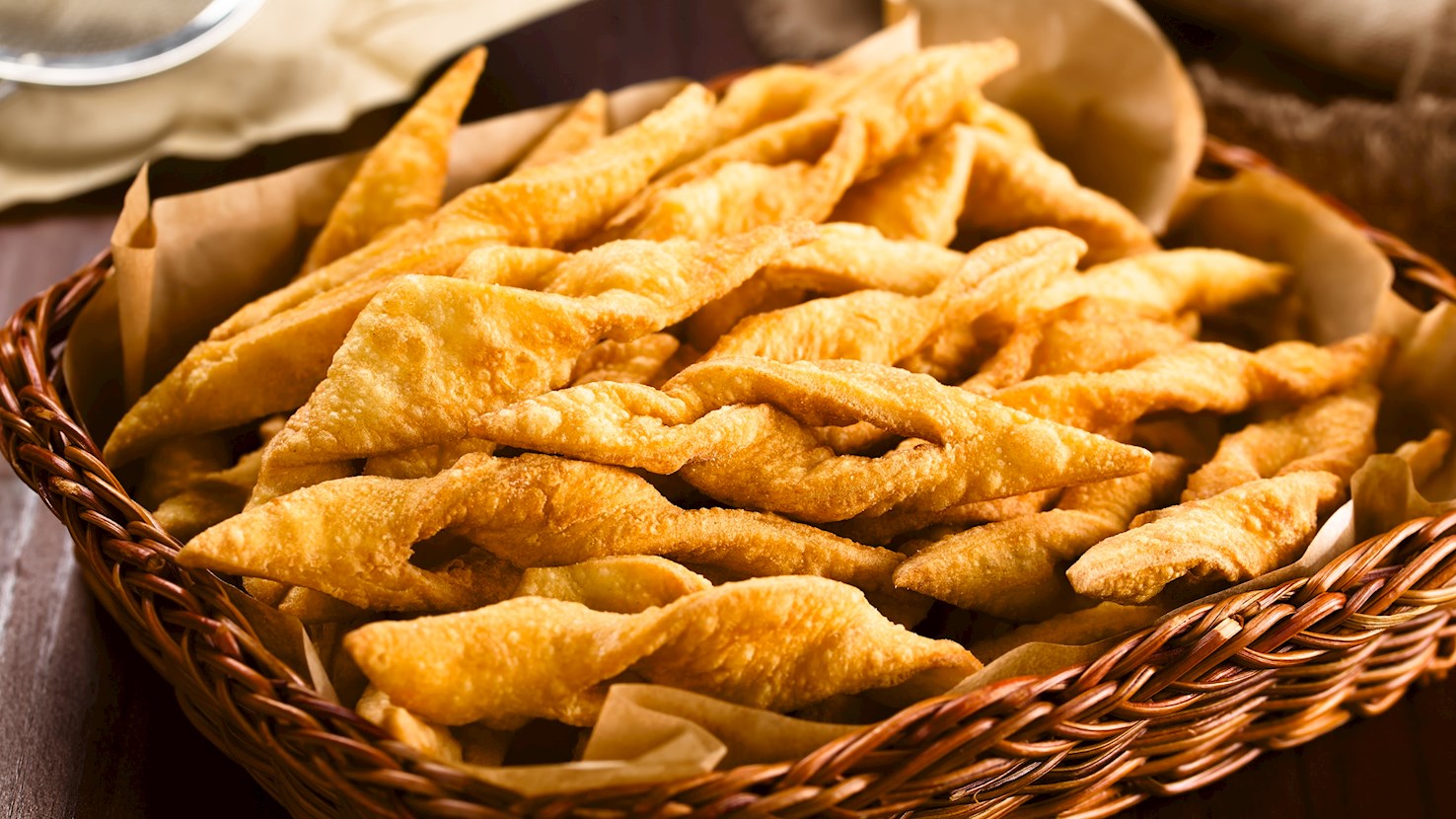
Verhuny is a traditional pastry originating from Ukraine. The pastry is usually made with a combination of flour, baking soda, butter, eggs, sugar, white wine vinegar, sour cream, vodka, oil, salt, and lard. The flour is mixed with baking soda, butter, eggs, sugar, vinegar, sour cream, vodka, and salt in order to get a firm dough. The dough is rolled thinly and sliced diagonally to get a diamond shape. A slash is made in the center of each diamond, and one end of the dough is pulled through the opening. Verhuny are then fried in lard until golden and drained on paper towels. Before serving, the pastries are often sprinkled with sugar.
Syroman is a cheese producer based in Kyiv, Ukraine. The company specializes in crafting a variety of artisan cheeses using traditional methods. Syroman focuses on high-quality ingredients sourced locally.
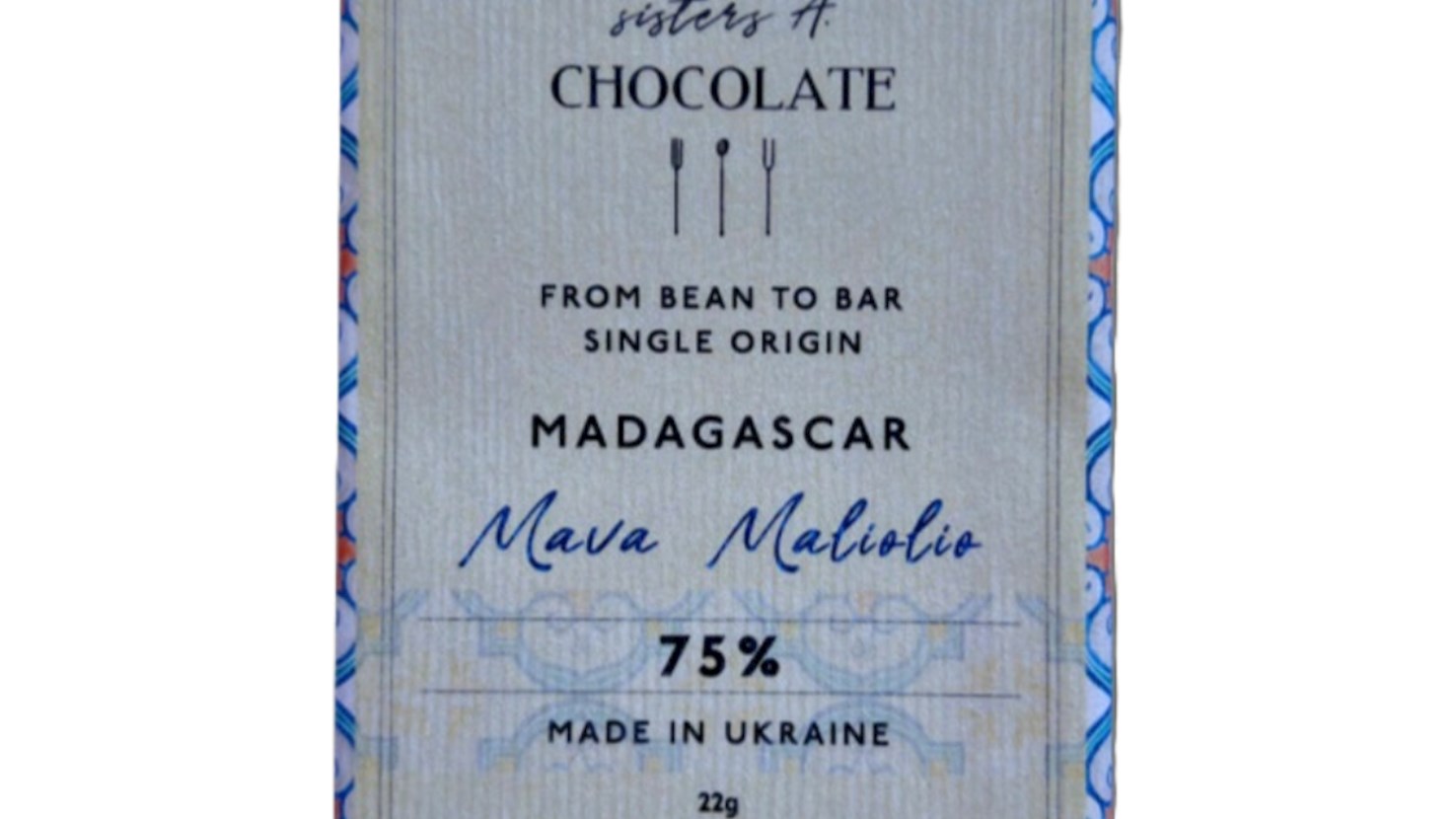
Sisters A. Chocolate is a craft chocolate brand dedicated to creating high-quality bean-to-bar chocolates. They focus on ethically sourced cacao, unique flavor combinations, and artisanal production methods to deliver rich and authentic chocolate experiences.
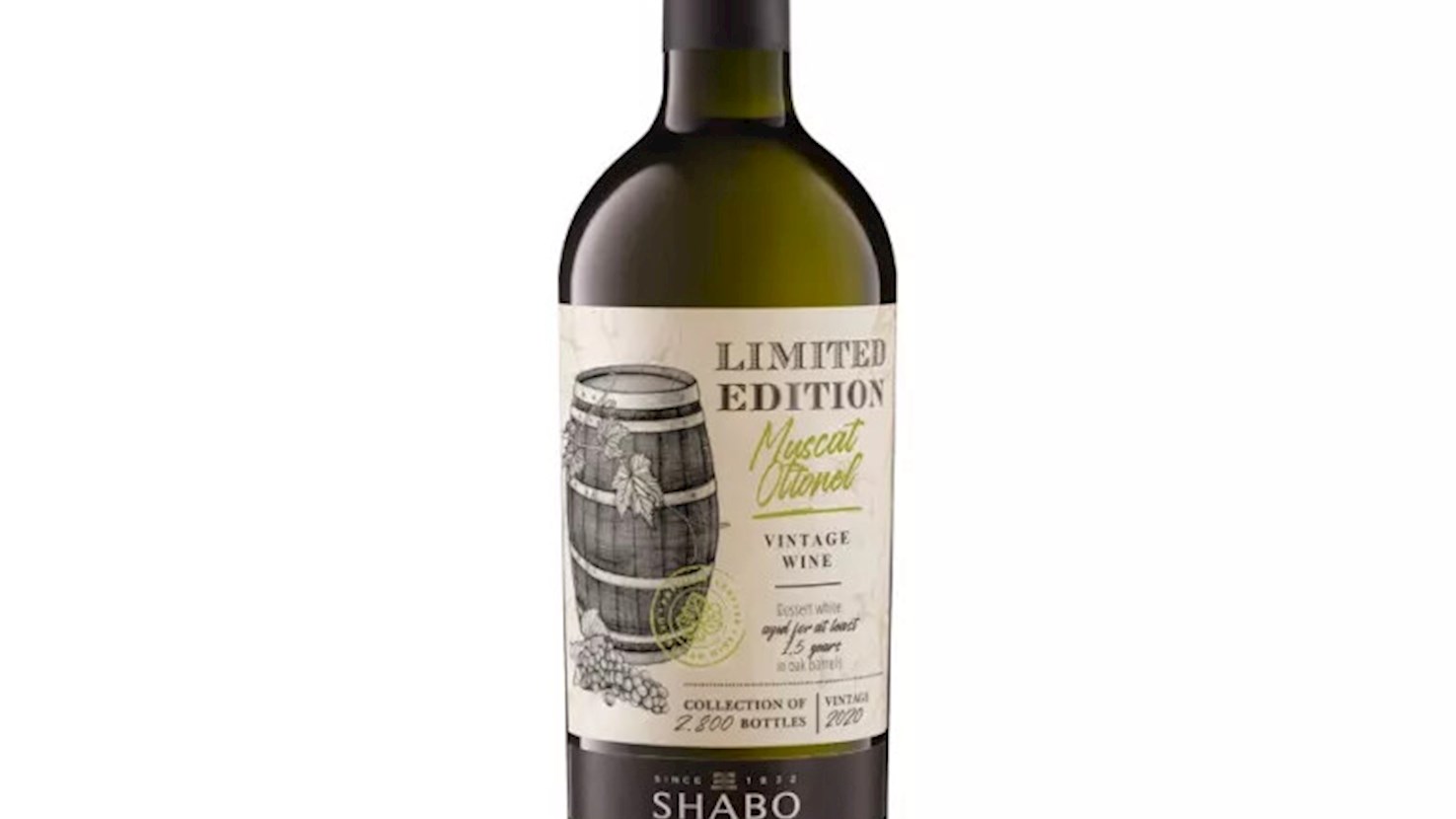
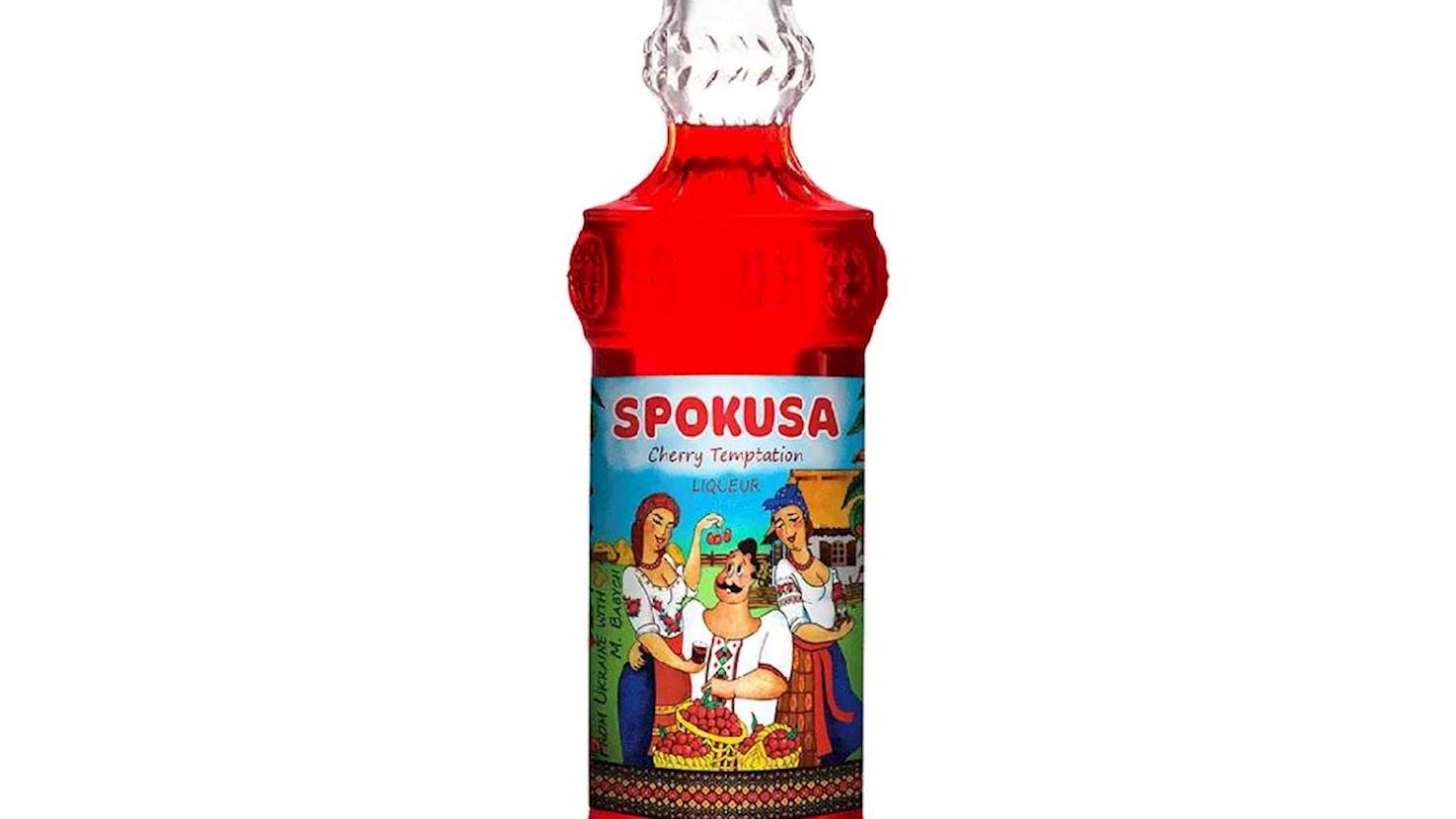
Shabo is a renowned producer of wine and alcoholic beverages from Ukraine, established in 2003. The company's headquarters are located in the village of Shabo in the Odesa region, which boasts a long tradition of winemaking dating back to the 16th century. The company spans over 1,200 hectares of vineyards and produces a wide range of wines, cognacs, brandies, and liqueurs. Shabo is known for combining traditional winemaking methods with modern technologies, resulting in high-quality products that have won numerous international awards.
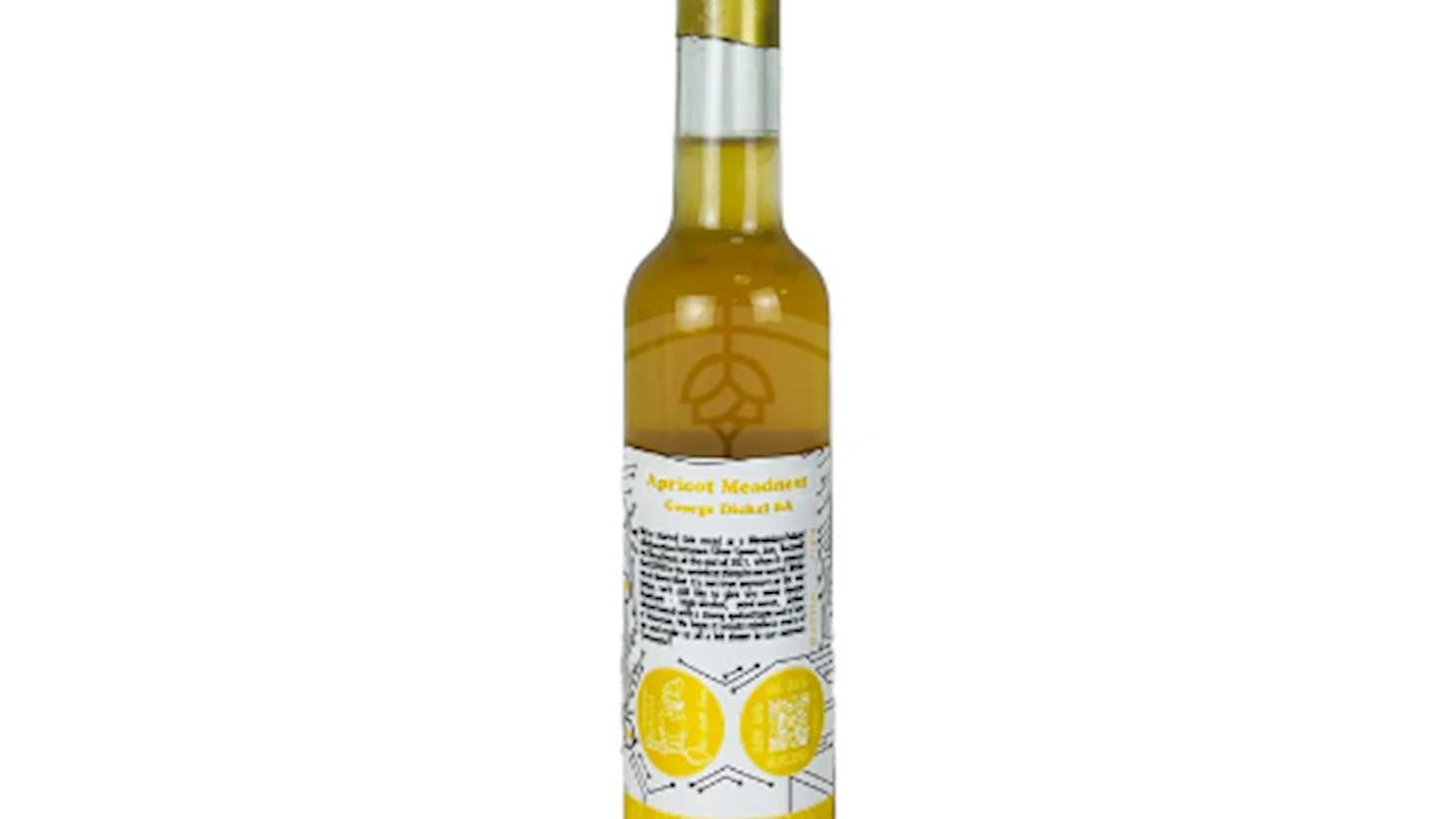
Silver Spoon Brewery is a Ukrainian craft meadery and brewery known for its experimental approach to producing meads and braggots - hybrids that bridge the worlds of mead and beer. Their work is defined by the exploration of boundaries between fermented honey, malt, and spices, resulting in complex and multi-layered beverages. Founded with the idea of merging the tradition of honey as a primary ingredient with modern brewing techniques, they maintain a hands-on, artisanal approach and a commitment to high quality. Their portfolio includes both sweet and semi-dry varieties, often enhanced with fruit, spices, or oak aging. Their artistic sensibility is also reflected in the label design, which embodies a modern aesthetic and the experimental spirit of the brand. Silver Spoon Brewery seamlessly blends creativity and technical precision, bringing a distinctive Ukrainian identity to the world of modern mead. Their philosophy is rooted in the exploration of new flavors while honoring the traditional foundation - honey as a symbol of natural purity and complexity. Each of their bottles represents a fusion of tradition, innovation, and passion for fermentation.
Stranger Craft Chocolate is a Ukrainian bean-to-bar chocolate producer founded in 2016 in Poltava, positioned from the very beginning as a small, authentic, craft-oriented brand. Behind the project are its founders, Ruslan and Tetyana, whose vision is built on direct work with raw cacao and full control over every stage of production. Stranger sources carefully selected cacao beans from different origins, including Tanzania, the Dominican Republic, and Madagascar, allowing each bar to clearly express the character of its terroir. Production follows a classic bean-to-bar approach: bean selection, small-batch roasting, winnowing, and long refining, without the use of industrial additives. Special attention is given to achieving balance between acidity, bitterness, and the natural sweetness of cacao. The brand’s visual identity is minimalist and distinctive, reflecting a contemporary craft philosophy. Today, Stranger chocolates are available in specialized shops and curated gourmet channels across Europe and beyond. The brand positions itself at the intersection of modern design, artisanal precision, and deep respect for the origin and character of cacao.
Awards
International Chocolate Awards - Silver
(2025, 2021)
International Chocolate Awards - Bronze
(2025, 2022)
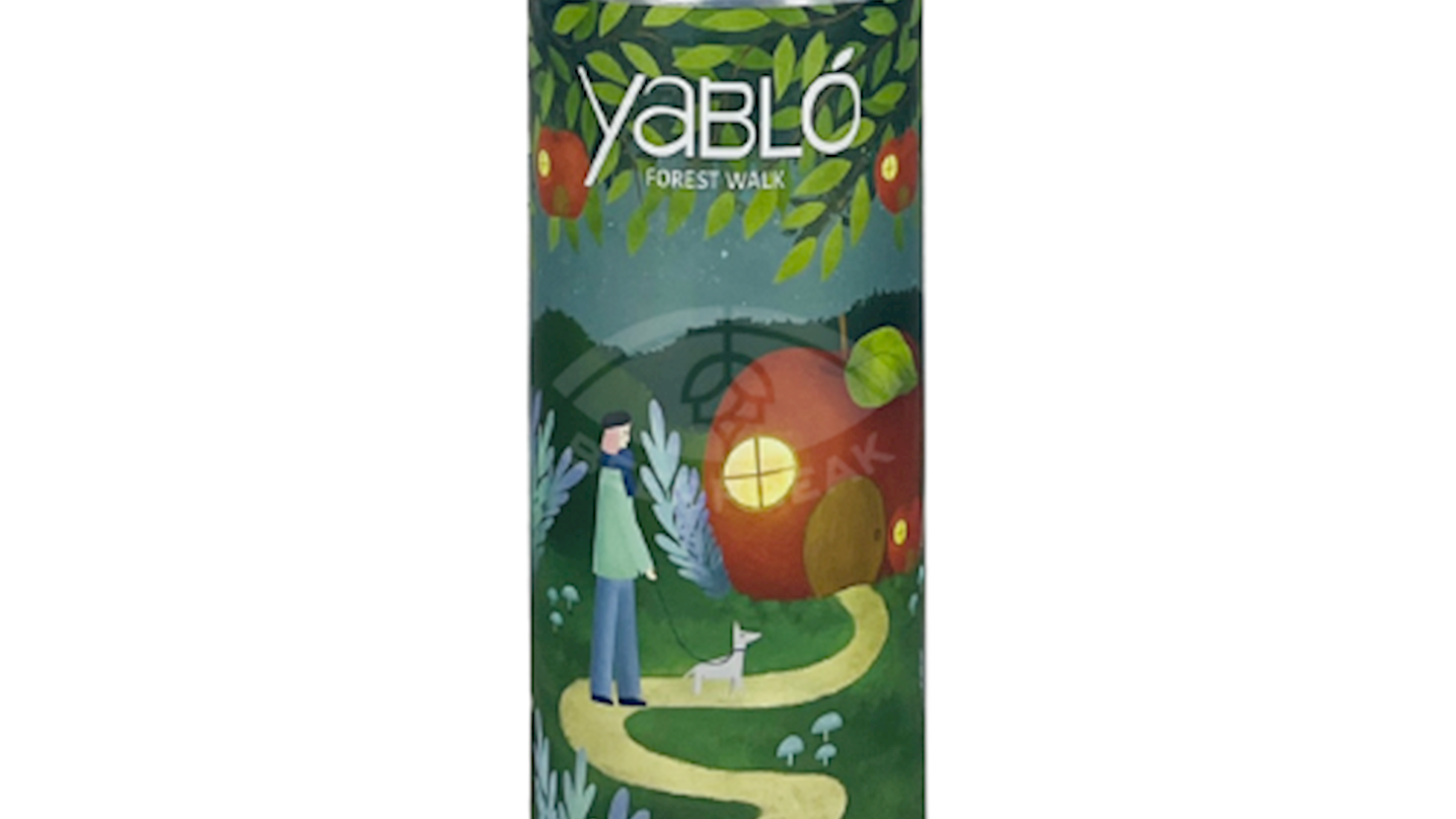
Yabló is a Ukrainian cider producer that works with local apple varieties and uses direct pressing techniques to preserve the natural and authentic character of its products. Their approach is based on the idea that cider should convey the qualities of the fruit and the terroir it comes from, with fermentation carried out using minimal intervention and without unnecessary additives. The portfolio includes more than twenty labels covering a wide range of styles - from classic dry ciders rooted in European tradition, to semi-dry and fruit-forward versions enhanced with berries or citrus, as well as experimental releases featuring spices, hops, or less common fermentation methods. This diversity shows how cider can range from a simple, refreshing everyday drink to more layered profiles suited for careful tasting. Yabló’s work combines local knowledge and modern practices, aiming to present cider as a meaningful part of gastronomic culture, both in Ukraine and on the international scene.
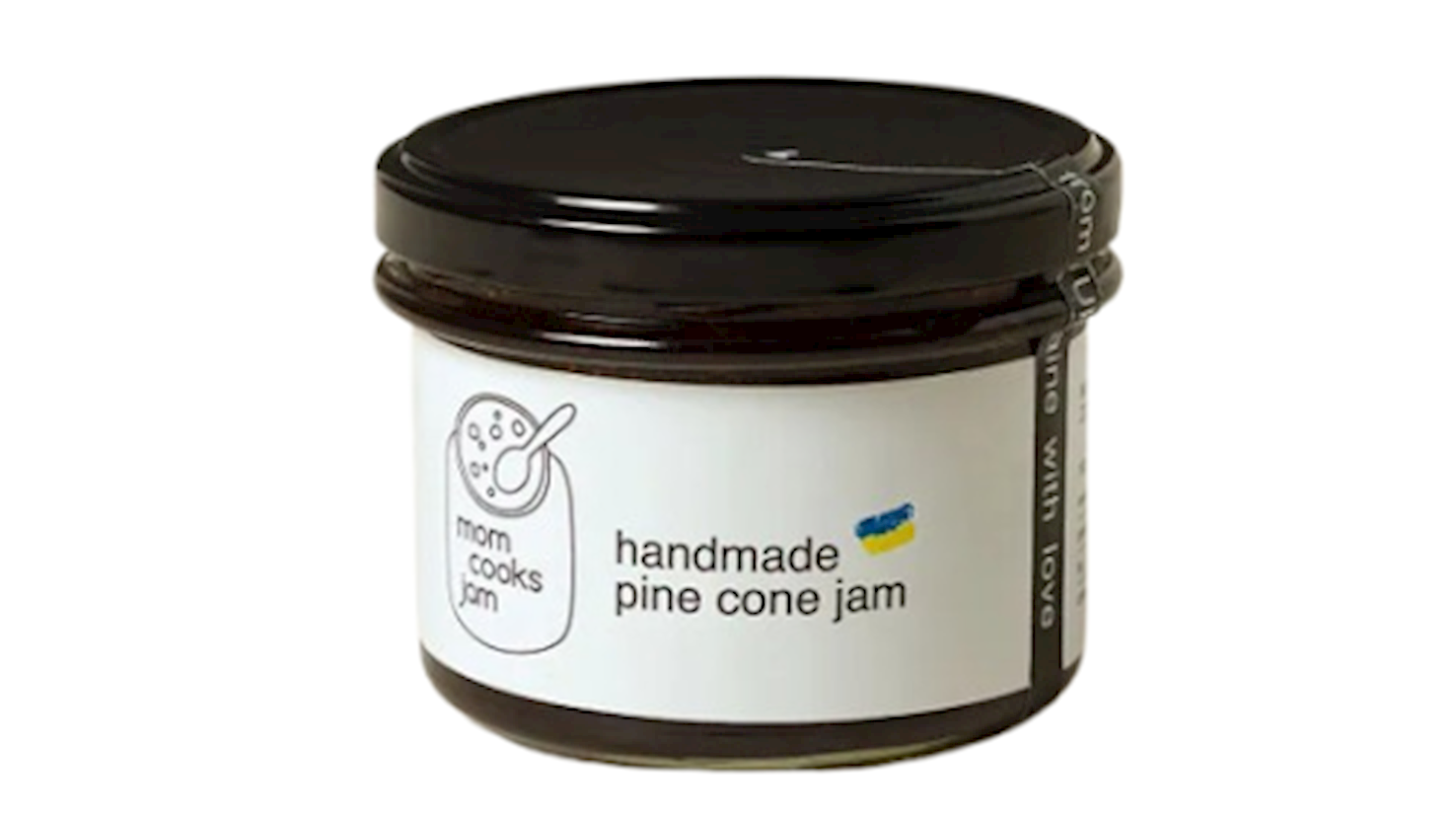
Mom Cooks Jam is a family-run artisanal jam brand that grew out of a simple yet authentic story - homemade preserves a mother had been making for her family for years, which gradually evolved into a small business with international reach. The brand was founded with the idea of preserving the taste of seasonal fruit and traditional recipes, without industrial processing or unnecessary additives. Its products rely on natural ingredients, with no artificial colors or preservatives, and are prepared by hand in small batches to ensure quality control. Mom Cooks Jam has gained particular recognition for its unusual and distinctive products, such as jam made from young green pine cones, harvested early and processed according to old recipes typical of Eastern Europe. Alongside pine cone preserves, the range also includes more classic fruit jams, always with an emphasis on natural flavor and a rustic texture. The brand operates between Ukraine and the United States, giving it a unique international dimension, while its identity remains firmly rooted in family values and craftsmanship. Packaging and visual style follow the same philosophy - simple, warm, and understated. It is precisely this combination of tradition, family spirit, and authentic recipes that gives Mom Cooks Jam a clear and recognizable character in the market of artisanal food products.
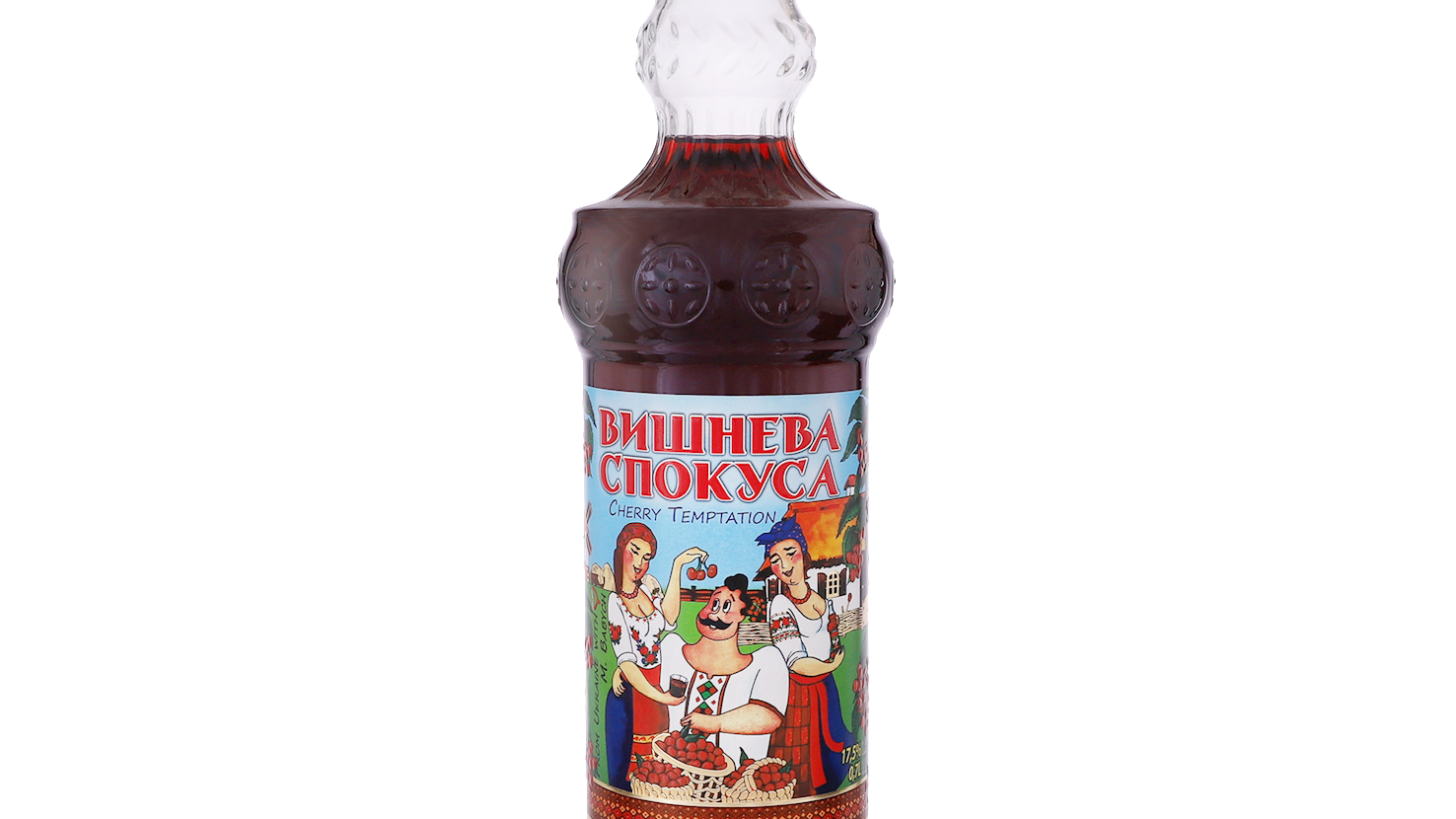
Bayadera Group is one of the largest producers and distributors of alcoholic beverages in Eastern Europe, founded in 1991 and headquartered in Kyiv, Ukraine. The company is a leader in the alcohol industry, renowned for the high quality of its products and its innovative approach to production and distribution.
Bayadera Group also boasts an impressive export network, covering over 35 countries worldwide. The company employs modern technologies in production and has developed more than 100 authentic alcoholic beverage recipes, many of which are protected by patents.
Their mission is a blend of tradition and innovation, with a strong emphasis on quality, responsibility towards the local community, and sustainable use of natural resources.
TasteAtlas food rankings are based on the ratings of the TasteAtlas audience, with a series of mechanisms that recognize real users and that ignore bot,
nationalist or local patriotic ratings, and give additional value to the ratings of users that the system recognizes as knowledgeable.
For the “Top 38 Ukrainian Foods” list until June 04, 2026, 4,488 ratings were recorded, of which 2,808 were recognized by the system as legitimate.
TasteAtlas Rankings should not be seen as the final global conclusion about food. Their purpose is to promote excellent local foods,
instill pride in traditional dishes, and arouse curiosity about dishes you haven’t tried.
The initial list of top producers was compiled based on available reviews, awards, local recommendations, media and blog coverage, and consumer reviews.
The list will be updated with ratings from TasteAtlas local ambassadors and TasteAtlas users.