Krapfen was probably the first European-style doughnut to appear, followed by similar varieties in other countries. These pastries are traditionally prepared with leavened dough that is deep-fried until golden and crispy on the outside, while they remain soft, light, and airy on the inside. Though krapfen can be prepared plain, they are most often filled or topped with jams, and vanilla or chocolate custards, while the top is usually dusted with powdered sugar or drizzled with chocolate. The origin of the word krapfen dates back to 9th century, and the recipes in German can be found as early as the 14th century. The sweet versions of the pastry became predominant, and have remained closely associated with the Carnival, a festive period which precedes Christian Lent. Interestingly, during the Carnival, one krapfen in a batch filled with jam and fruit preserves might contain a filling of mustard as a prank. It is believed that doughnuts spread throughout many central European countries, which adopted the technique but used different regional names. Consequently, krapfen in Germany goes under Berliner, pfannkuchen, faschingskrapfen, krebbel, or kreppel. In Poland, they are known as pączki or krepel, Hungarians refer to them as fánk, Slovak as šišky, while the Czechs use the term koblihy. In Slovenia, they are better known as krofi, while the standard name throughout Croatia, Bosnia, and Serbia is krofne or krafne. In St. Petersburg, Russia, the doughnuts are known as pyshki (either ring-shaped or without a hole), and there is a local café that has been serving pyshki prepared from the original recipe since the 1960s.
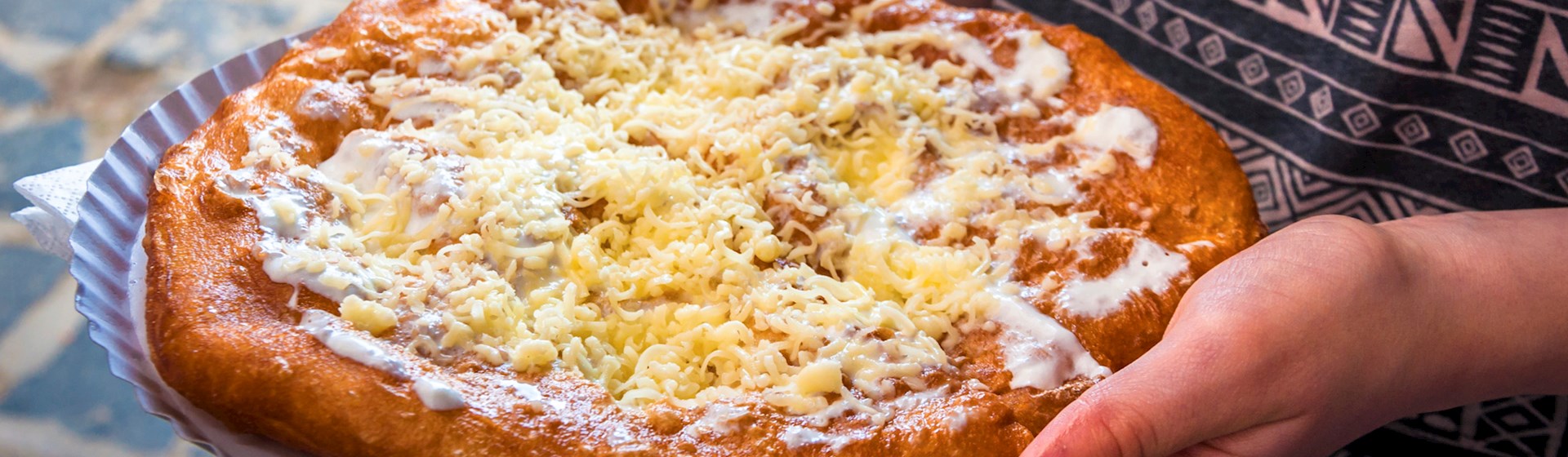
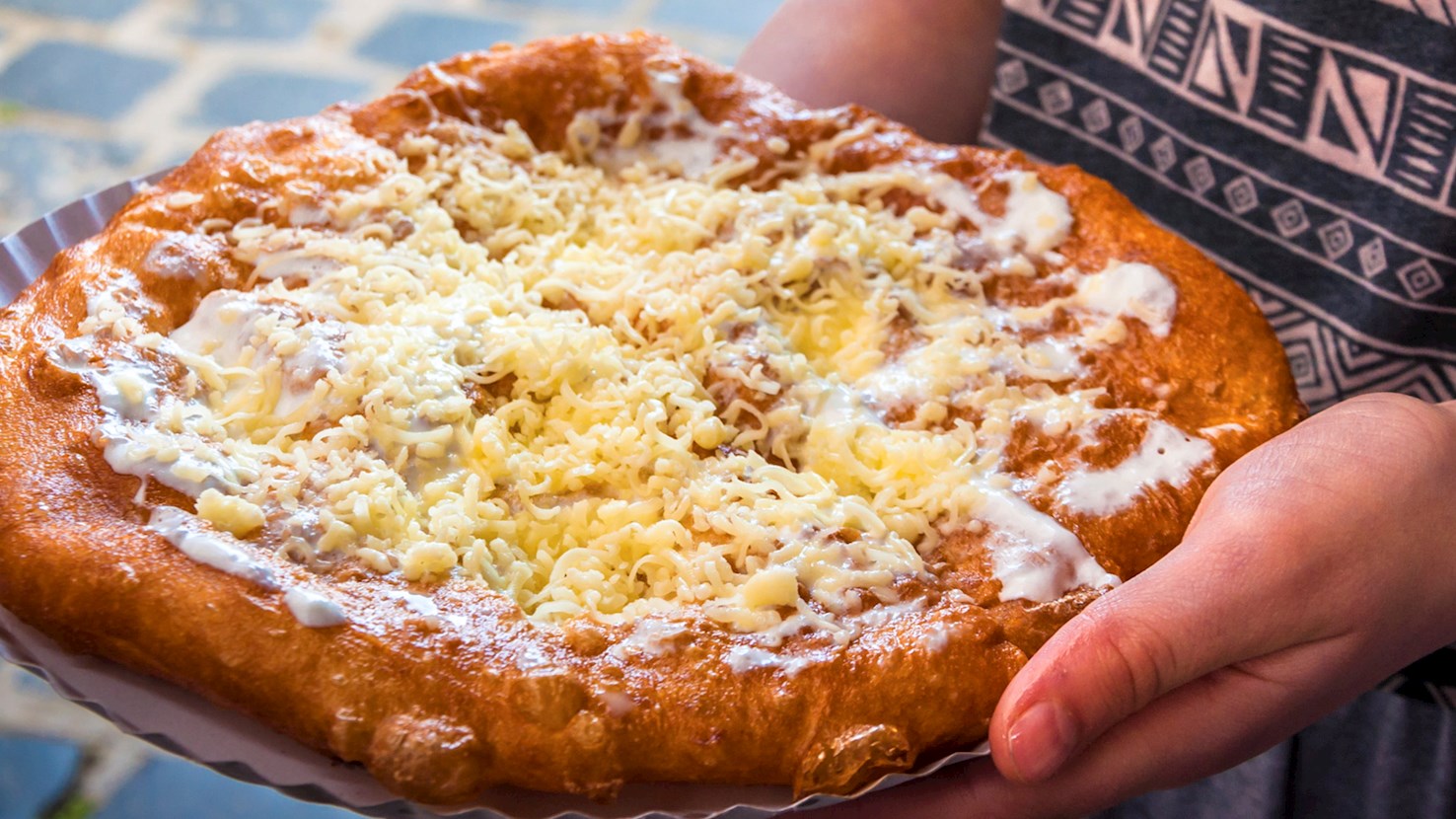
Lángos is a Hungarian specialty made by deep-frying a basic dough consisting of water, flour, yeast, sugar, and salt until it develops a golden-brown color. Sour cream, milk, or yogurt can all be used instead of water. Lángos is traditionally consumed fresh and warm as a snack, and it can be topped with anything from sour cream and grated cheese to garlic sauce and salt, although it is often consumed plain, as it is. The name of the dish comes from the word láng, meaning flame, since it was originally baked near the flames of a brick oven, unlike today, when it is regularly deep-fried in oil. Some believe that lángos was created under Turkish influence, while others believe it comes from the ancient Romans. This popular street food specialty can be found at numerous fairs, festivals, beaches, and amusement parks throughout Hungary, Austria, Croatia, and Romania.
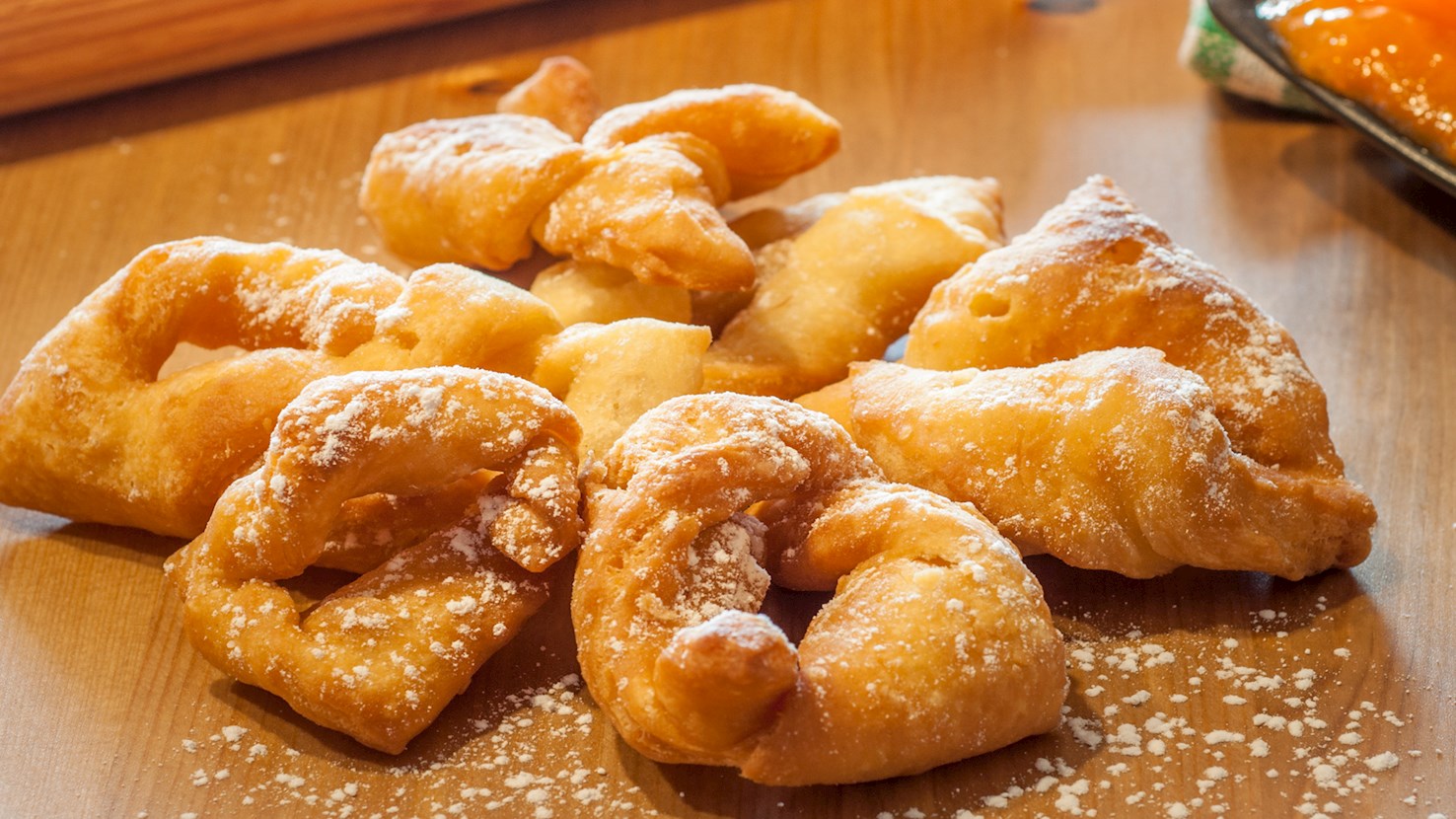
Csöröge are essentially the Hungarian version of angel wings. These sweet and crispy pastries are made with a dough consisting of egg yolks, flour, baking powder, sugar, and salt. The dough is traditionally twisted into thin bows or ribbons, and it is then deep-fried before being sprinkled with powdered sugar. Csöröge are especially popular during the festive Christmas season.
TasteAtlas food rankings are based on the ratings of the TasteAtlas audience, with a series of mechanisms that recognize real users and that ignore bot,
nationalist or local patriotic ratings, and give additional value to the ratings of users that the system recognizes as knowledgeable.
For the “Top 3 Hungarian Fried Dough Foods” list until May 16, 2026, 1,245 ratings were recorded, of which 986 were recognized by the system as legitimate.
TasteAtlas Rankings should not be seen as the final global conclusion about food. Their purpose is to promote excellent local foods,
instill pride in traditional dishes, and arouse curiosity about dishes you haven’t tried.