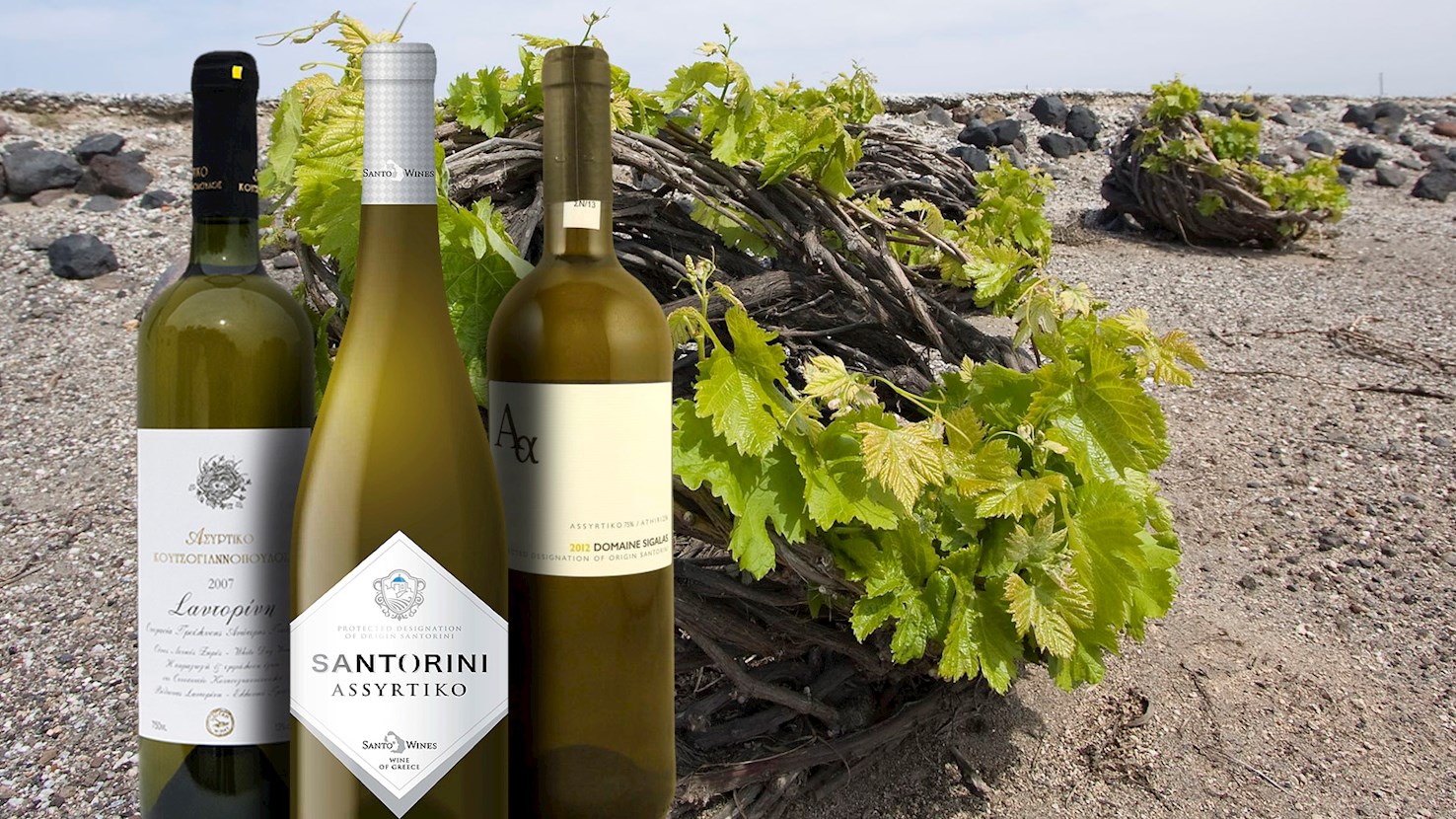
This Greek white grape variety is indigenous to the island of Santorini, but it can also be found on other Aegean island such as Paros. The soil of the island, which is rich in volcanic ash, seems to enable the grapes to retain their acidity regardless of how long they ripen, which gives these wines a long aging potential. Its popularity has grown recently due to its unusual character, which does not reflect the hot climate it comes from. Assyrtiko wines are dry, full-bodied white wines with citrus aromas and a pleasant minerality. This wine can also be blended with two other local varieties, Aidani and Athiri, during the production of the sweet wine Vinsanto. The dry version makes a great complement to fish, seafood, and anything salty or briny.
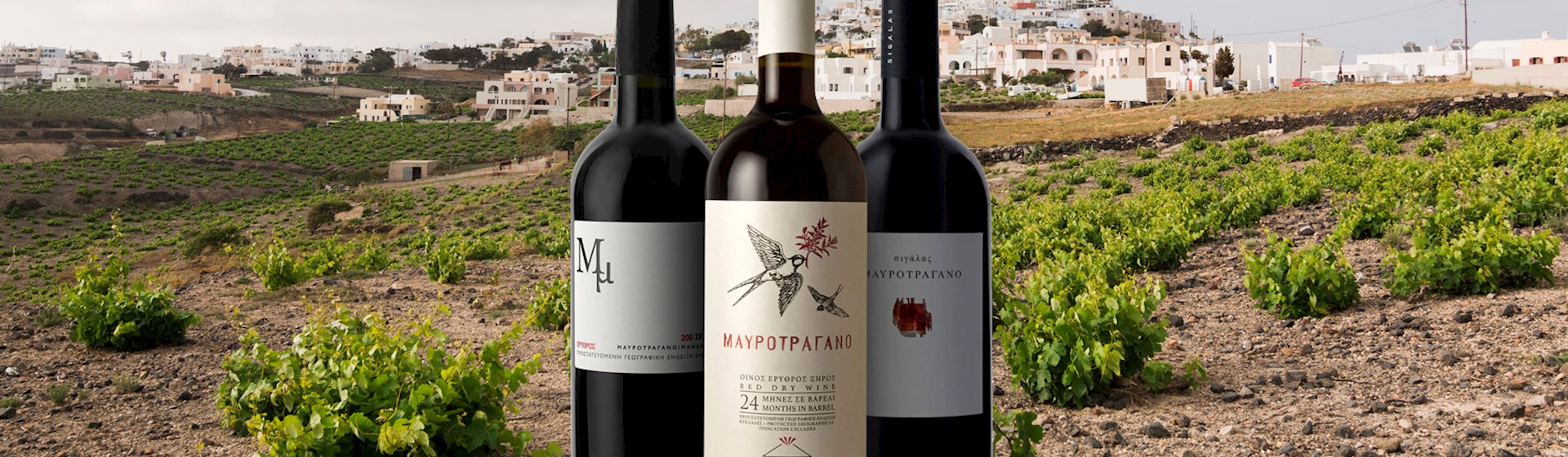
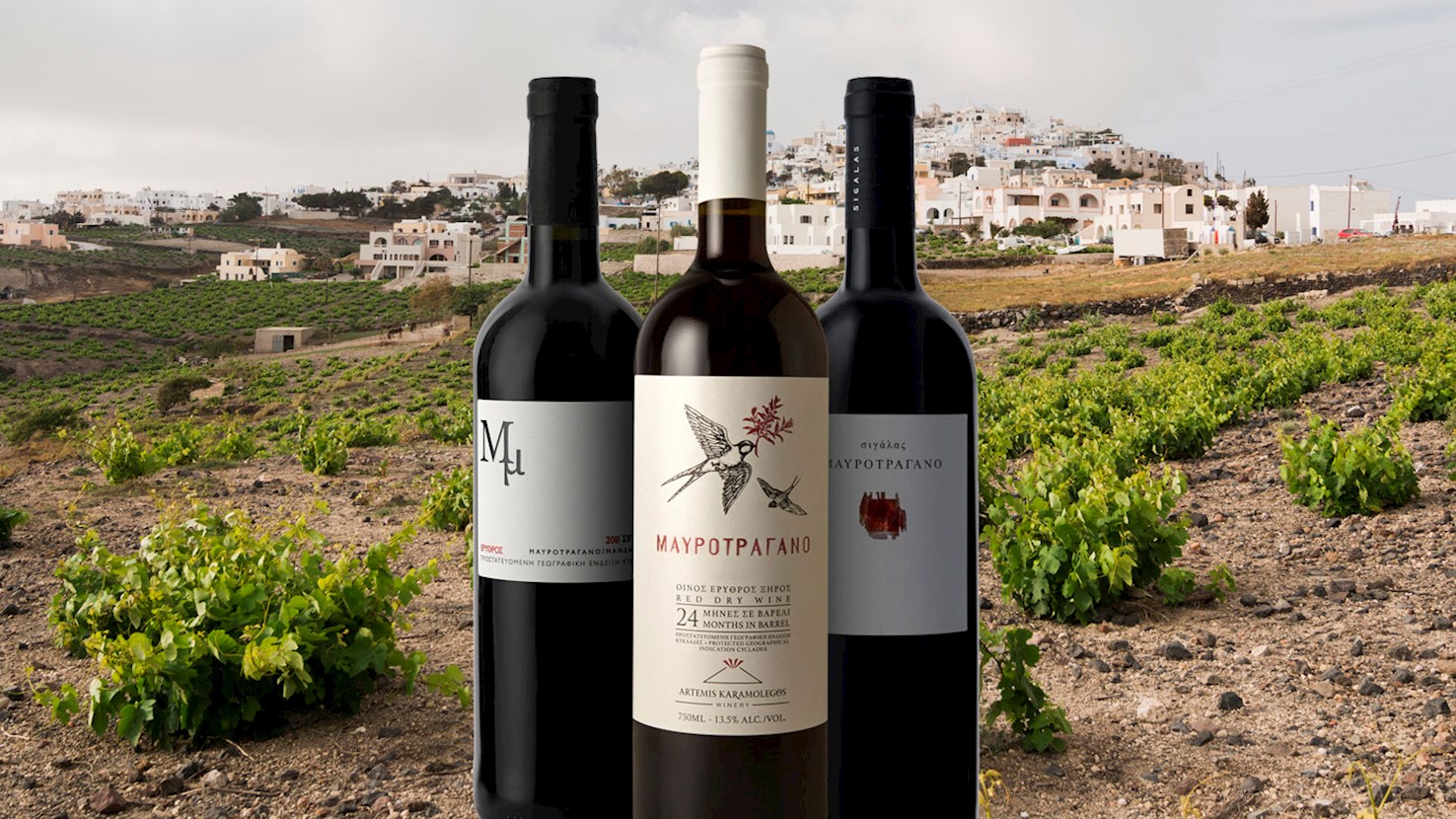
Mavrotragano is an old Greek variety that is currently experiencing a revival. The grape originates from Santorini, and it was mostly used in bland dessert wines and blends. It was nearly extinct until the winemakers Haridimos Hatzidakis and Paris Sigalas used a novel approach to create concentrated dry wines that showed fantastic potential. The wines made from Mavrotragano are densely colored with fruity and spicy notes reminiscent of dark berries, cinnamon, tobacco, and white pepper. They often have herbal and earthy nuances, and most examples will have bright acidity and firm, velvety tannins. They usually have excellent aging potential. These wines pair well with red meat, game, charcuterie, and aged cheese.
Aidini is a white grape variety from Greece, grown mainly on Santorini, but also present on the other Cycladic islands. It is valued for producing white wines with moderate alcohol, relatively soft acidity, and aromatic notes shaped by the warm, dry, maritime climate of the Aegean. The grape thrives in volcanic and limestone soils, where limited rainfall and strong island winds encourage low yields and concentrated fruit. Aidini is often used in blends alongside grapes such as Assyrtiko or Athiri, though several producers bottle it as a single-varietal wine to highlight its distinct character. Its recognition as a separate variety developed in Viticultural zones of the Cyclades where multiple white grapes were grown side by side for local consumption, and where growers distinguished Aidini for its ability to maintain aromatic expression in hot, arid conditions. Vineyard observations showed that the grape ripened reliably and provided softer structure than Assyrtiko, making it useful in blends that required a more moderate profile. As Greek winemaking modernized, Aidini gained attention for its suitability to light, aromatic wines aimed at showcasing regional identity rather than relying solely on more dominant indigenous grapes. In the islands where it is grown, its cultivation is closely tied to bush-trained vines adapted to strong winds and shallow soils. Preparation for winemaking begins with harvesting grapes in late summer, pressing them gently, and fermenting the juice in stainless steel tanks to preserve aromatic clarity. Some producers experiment with neutral oak, but the grape is most often vinified in a manner that emphasizes freshness. The resulting wines are typically dry, with citrus, floral, and stone-fruit notes, shaped by the warm climate and the grape’s relatively low acidity. Aidini’s moderate structure makes it accessible as a standalone varietal wine and useful as a blending partner that softens the edges of more austere Cycladic grapes. Aidini wines are served chilled in tavernas, coastal restaurants, and wine bars across the Greek islands and mainland. They pair well with seafood such as grilled fish, calamari, and shellfish; vegetable dishes including fava, tomato-based stews, and roasted zucchini; and lighter poultry preparations flavored with lemon and herbs. The wine’s gentle acidity and aromatic profile also complement mezze dishes like dolmades, fried cheese, and salads with olives and capers. It is consumed locally during summer months and increasingly appears in export markets where regional Greek varieties are highlighted.
TasteAtlas food rankings are based on the ratings of the TasteAtlas audience, with a series of mechanisms that recognize real users and that ignore bot,
nationalist or local patriotic ratings, and give additional value to the ratings of users that the system recognizes as knowledgeable.
For the “Top 3 Local Fruits in Santorini” list until June 15, 2026, 120 ratings were recorded, of which 58 were recognized by the system as legitimate.
TasteAtlas Rankings should not be seen as the final global conclusion about food. Their purpose is to promote excellent local foods,
instill pride in traditional dishes, and arouse curiosity about dishes you haven’t tried.