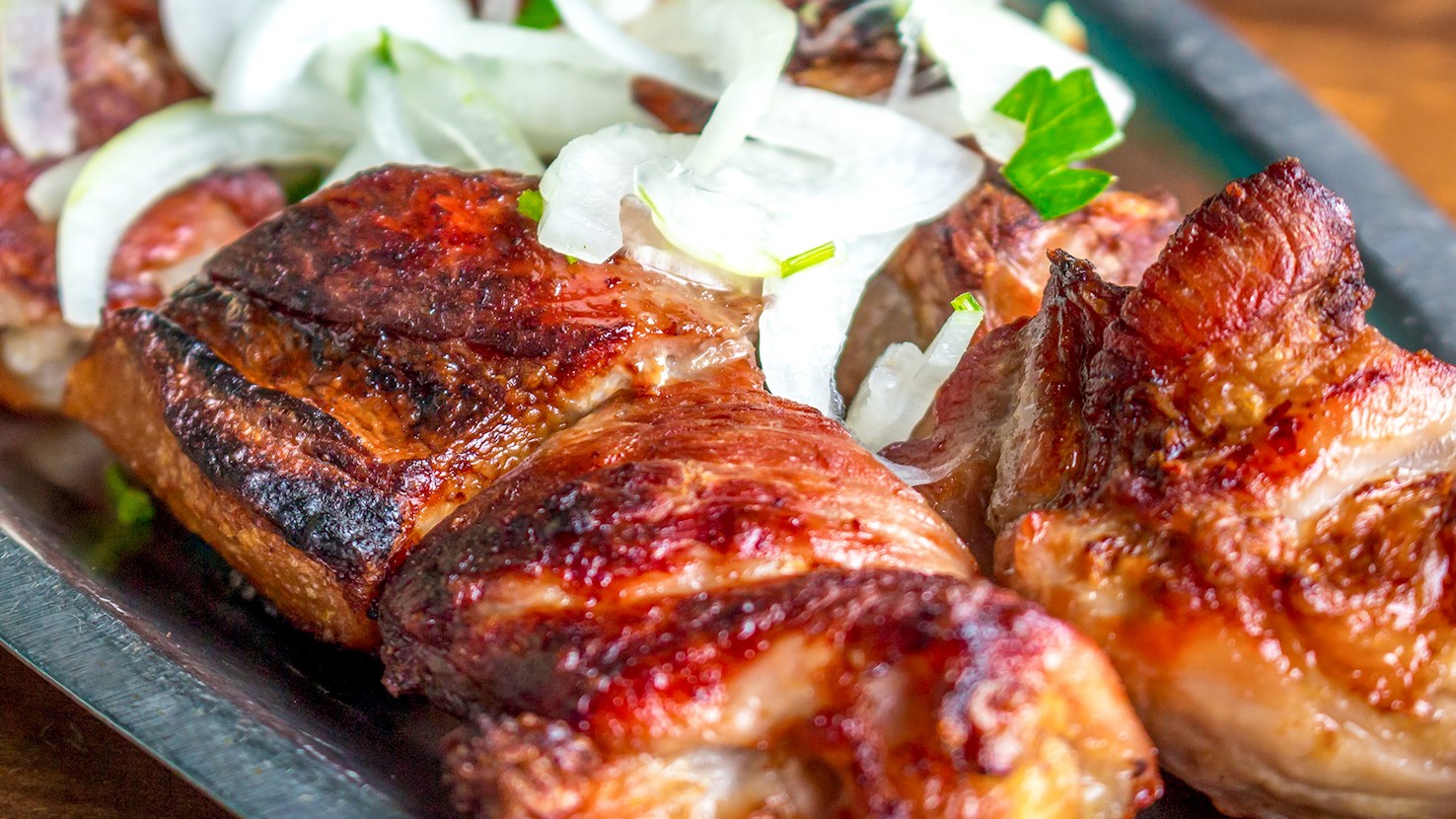
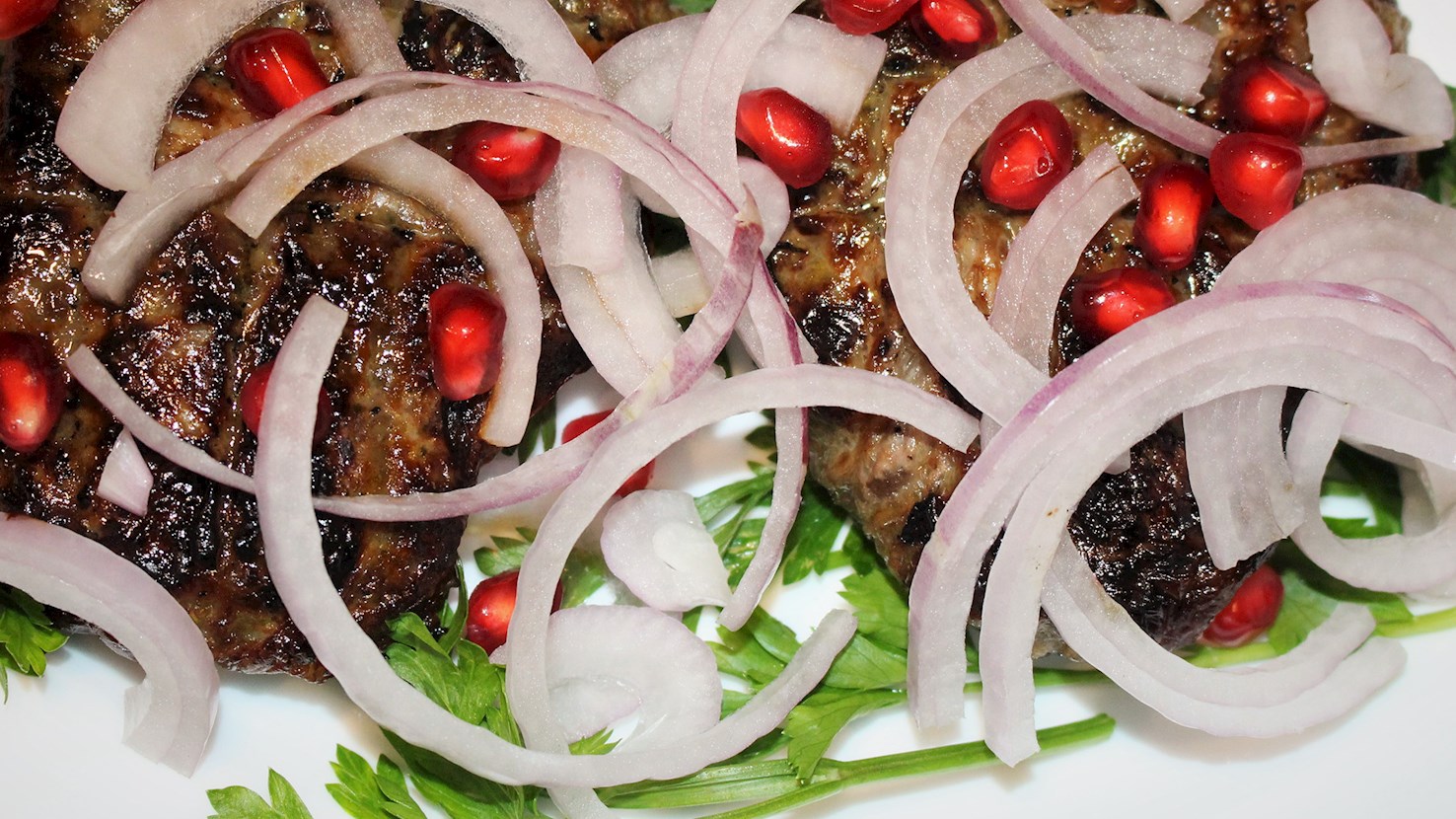
Mtsvadi is a traditional dish consisting of a skewered shish kebab. Pork, mutton, or veal is typically marinated in a mixture of lemon juice, pomegranate juice, tarragon, salt, pepper, and chopped onions, so that it remains tender and juicy when grilled. Mtsvadi is often prepared outdoors over an open fire. It is recommended to serve the dish with tkemali plum sauce, raw onion rings, sliced tomatoes, and pomegranate seeds.
Similar to a goulash, chashushuli is a hearty beef and tomato stew hailing from Georgia. The stew is typically made with a combination of beef (sometimes veal or pork), tomatoes, onions, water or meat broth, garlic, and a generous amount of spices and herbs such as basil, chili pepper, parsley, fenugreek, summer savory, and bay leaves, yielding a highly aromatic and flavor-packed dish. Chashushuli is considered a version of another traditional Georgian beef stew called ostri, which uses almost all of the same ingredients as chashushuli, but it also contains coriander seeds and involves a different method of preparation. When preparing chashushuli, the meat needs to be fried before it is mixed with the rest of the ingredients and stewed, whereas the preparation of ostri requires no pre-cooking of the meat and everything is cooked in one pot from the beginning. Spicy and filling, the stew is typically served hot with Georgian bread such as shoti and a glass of fine Saperavi wine.
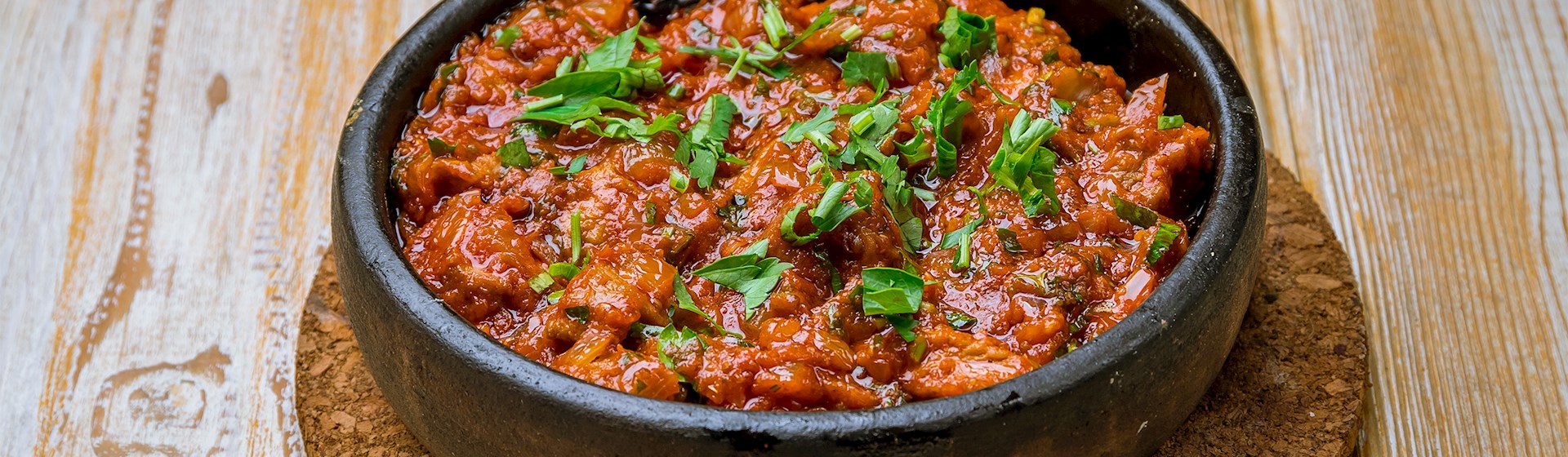
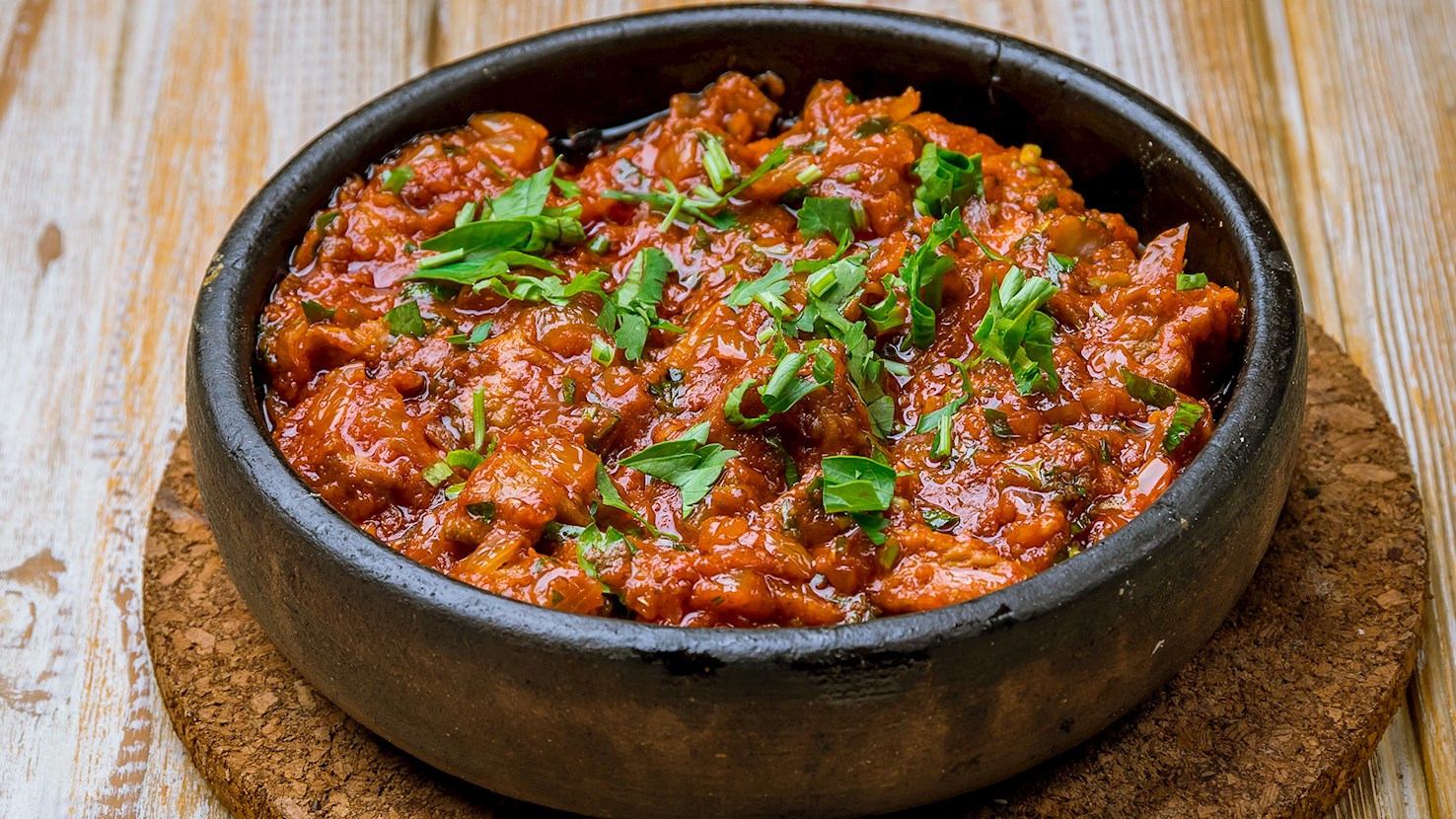
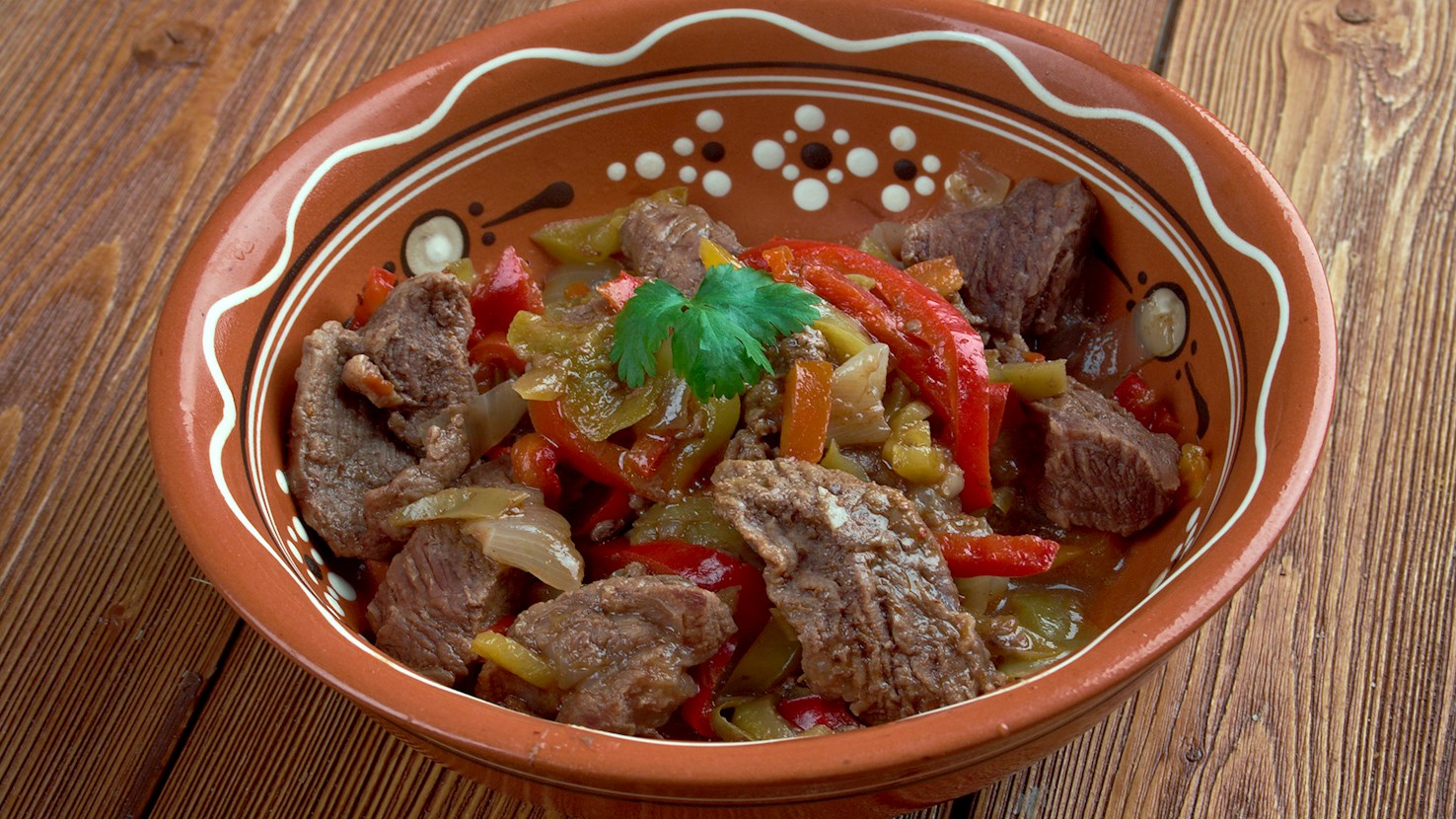
Chanakhi is a hearty Georgian stew made with lamb, eggplant, sweet peppers, and tomatoes. The stew is typically flavored and seasoned with coriander, basil, pepper, and salt. This flavorful dish is traditionally served in individual clay pots, called chanakhi, hence the name. It is believed that chanakhi tastes even better if reheated the next day, when all of the flavors have been thoroughly combined.
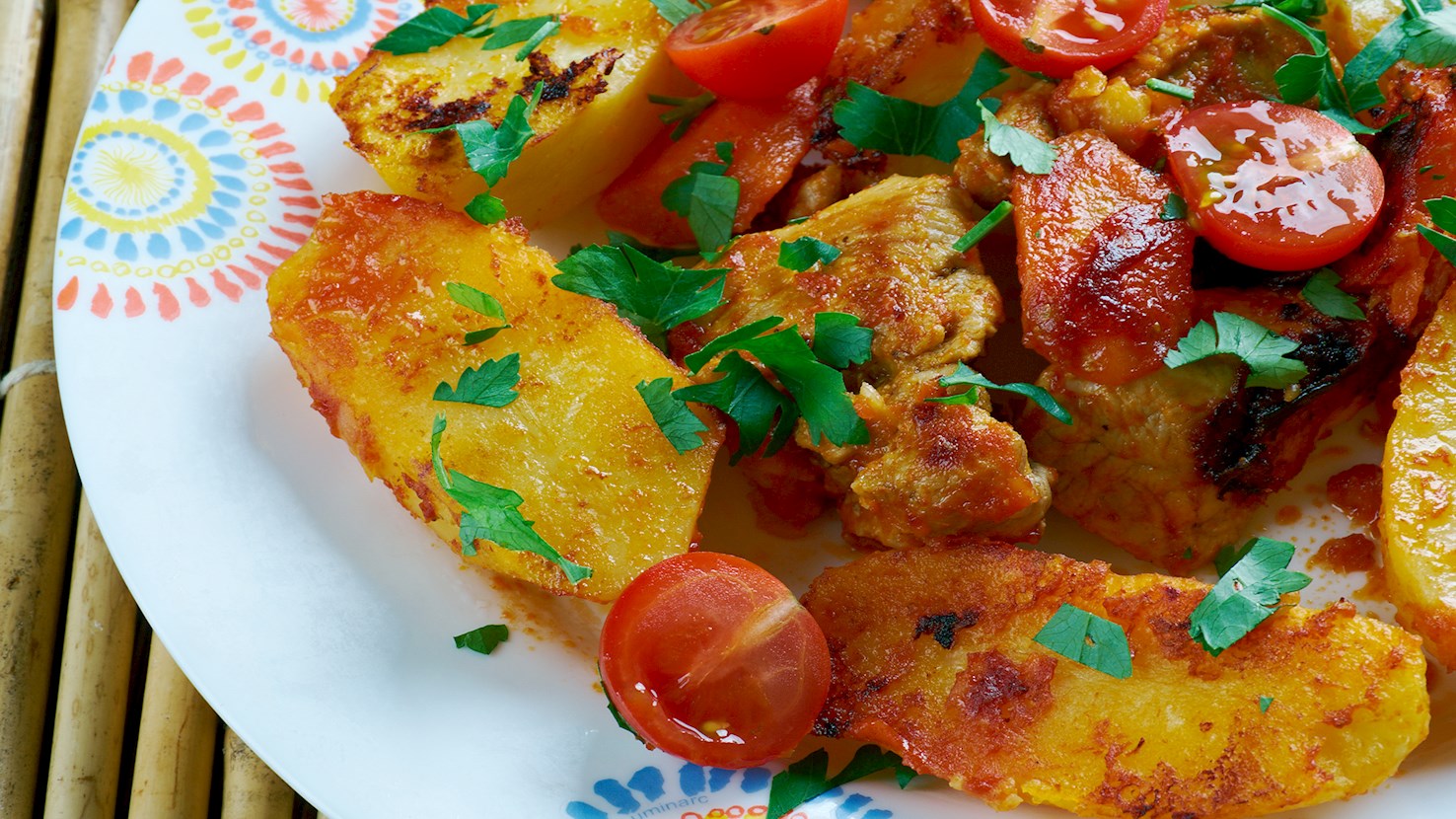
Ojakhuri is a hearty combination of browned meat, fried or roasted potatoes, onions, and seasonings, usually served hot. Pork is the most common meat, but beef, veal, chicken, bacon, and mushrooms also appear in recipes. The name is an adjective derived from ojakhi, meaning family or household, and can be translated as “familial,” “domestic,” or “home-style.” Ojakhuri is firmly established as home-style food in Georgia, but its development cannot be assigned to a specific decade or circumstance. The best-known version begins with pork shoulder or neck. Both cuts contain enough intramuscular fat and connective tissue to remain moist under high heat. Lean pork loin can be used, but it dries more easily and lacks the richness that coats the potatoes and onions. The meat is cut into evenly sized chunks. Uniform pieces brown at a similar rate and are less likely to leave some sections dry while others remain underheated. Pork shoulder can be cut into medium cubes, while neck may be divided into slightly larger pieces because its fat keeps it succulent. The pork is seasoned with salt and black pepper before entering a wide, heavy pan. Cast iron works particularly well because it retains heat after the cold meat is added. The pieces should lie in a single layer with enough space between them for moisture to escape. Crowding the pan causes the released juices to collect around the meat. Instead of browning, the pork steams in its own liquid. Working in batches allows a dark golden crust to form while the interior remains juicy. Only a small amount of oil may be needed when the pork is fatty. As the pieces heat, their fat renders into the pan and becomes the base for the potatoes and onions. If the meat is lean or the pan begins to dry, you can add additional oil. The meat does not always need to leave the pan immediately after searing. Some versions brown the pork first, then lower the heat and continue until it becomes tender. Others remove it temporarily so that the potatoes can fry in the rendered fat without the meat becoming overdone. Both methods are valid. Potatoes are cut into medium cubes, wedges, or thick irregular pieces. Waxy potatoes retain their shape more reliably, while floury varieties develop a softer, fluffier center. The pieces should be similar in size so that they finish at the same time. The potatoes may be added raw to the rendered pork fat, fried separately, parboiled before frying, or roasted until golden. Frying them separately offers the greatest control over texture because the surface can become crisp without exposing the meat to excessive heat. Parboiling shortens the frying stage and encourages a fluffy center. The drained potatoes should be allowed to release surface steam before entering hot fat. Wet pieces lower the pan temperature and are more likely to stick or soften rather than brown. When the potatoes go directly into the pork fat, they should be turned only after a crust has formed. Constant stirring tears the surface and prevents even browning. The ideal result combines crisp golden edges with a fully tender interior. Thinly sliced white or yellow onions are added after the potatoes have developed some color. Adding them too early can cause the onions to burn before the potatoes soften. The slices should become tender and lightly browned while retaining enough structure to remain visible. Garlic may be minced, crushed, or thinly sliced. It’s added near the end because prolonged high heat makes it bitter. Some versions use several cloves, while others rely more heavily on onion and omit garlic entirely. Once the potatoes and onions are ready, the browned pork returns to the pan. The ingredients are folded together carefully so that the potatoes keep their shape and the meat becomes coated in the rendered fat and seasonings. Ground coriander seed is a common seasoning. It brings a warm, citrus-like aroma that works with pork, potatoes, and onion. Black pepper is also widely used, while red pepper, paprika, dried marigold, barberry, bay leaf, adjika, or mixed spice blends may appear in different versions. Blue fenugreek can be included as well. Its dry, aromatic bitterness is powerful, and too much can dominate the pork and potatoes. The same applies to mixed spice blends. Ojakhuri does not require an overwhelming quantity of seasonings to be recognizable. Some recipes add white wine, white wine vinegar, tomato purée, or a combination of these ingredients. Wine contributes moisture and acidity while loosening browned material from the base of the pan. Vinegar sharpens the fatty pork, and tomato adds sweetness, acidity, and color. Fresh tomatoes and bell peppers also appear in some versions. Tomatoes release liquid and create a softer, saucier result, especially during summer. Bell peppers add sweetness and a mild vegetal flavor. Neither belongs in every version. The finished mixture should remain relatively dry rather than resemble a stew. The potatoes and meat may be glossy with rendered fat and reduced juices, but they should not sit in a deep pool of liquid. Any added wine, vinegar, or tomato should reduce enough to cling to the ingredients. Chicken produces a distinct version. Bone-in thighs remain juicy and contribute more flavor than skinless breast meat. The chicken may be divided into pieces and browned before the potatoes are added, or roasted separately and combined near the end. Chicken fat is generally less abundant than rendered pork fat, so additional oil or butter may be needed to brown the potatoes properly. The result is not automatically light in total fat; that depends on whether the skin is retained and how much added fat enters the pan. Dried marigold is often in chicken ojakhuri. It contributes a warm yellow-orange tone and a mildly floral, earthy aroma. Coriander, black pepper, garlic, and fresh herbs may support it. Veal can also replace pork. Because it is usually leaner, it benefits from shorter browning and gentler finishing. Very small cubes can become dry before the potatoes are ready, so the meat is often seared quickly, removed, and returned once the potatoes have softened. Beef requires attention to the cut. Tender beef can be seared rapidly, while tougher sections need a longer covered stage with a little liquid before they become pleasant to chew. Simply replacing pork with any piece of beef without changing the timing can produce hard meat. Rachuli bacon is used in an established regional variation. Its cured, fatty character seasons the potatoes as it browns. Because the bacon already contains substantial salt, the remaining ingredients should be seasoned carefully. Some versions combine it with Imeretian cheese and fresh vegetables. Mushroom ojakhuri replaces the meat with mushrooms rather than trying to imitate its texture exactly. Button, oyster, or other firm mushrooms can be used. They absorb garlic, onion, butter, and seasonings while supplying their own savory flavor. Mushrooms release a considerable amount of water. They should be heated in a broad pan until this liquid evaporates and their surfaces begin to brown. Adding potatoes before that stage can leave the entire mixture damp and pale. An established mushroom version combines fried potatoes with mushrooms, butter, green onions, and Imeretian cheese. The cheese softens over the hot ingredients and gives the meatless variation additional richness and salt. Mushroom ojakhuri therefore does not always consist only of mushrooms, potatoes, garlic, and fenugreek. Ketsi is a shallow earthenware pan used for heating and serving several foods in Georgia. Ojakhuri is frequently presented in one, especially in restaurants, but ketsi service is not mandatory. A cast-iron skillet, heavy frying pan, or oven-safe ceramic vessel can also be used. When a ketsi is used, it must be heated gradually unless the manufacturer states that it can withstand sudden temperature changes. Unprotected earthenware can crack if transferred directly from a cold surface into extreme heat or if cold liquid is added while the vessel is scorching. The meat and potatoes may be transferred to a preheated ketsi and placed in the oven for several minutes. This finishing stage reheats the ingredients evenly, crisps exposed potato edges, and keeps the food hot at the table. The oven stage is optional. Ojakhuri can be completed entirely in a skillet and served immediately. Leaving an already dry mixture under intense heat for too long can toughen the meat, burn the onions, and turn the potatoes hard at the edges. A hot ketsi continues heating the food after it leaves the oven. The meat and potatoes may still be sizzling when served, but the vessel should be placed on a heat-resistant board. Its handles and rim remain hot enough to cause burns. Fresh cilantro is a common finishing herb. It is chopped and scattered over the surface just before serving so that its aroma remains clear. Parsley, green onions, or a mixture of fresh herbs may replace or accompany it. Pomegranate seeds sometimes appear as a garnish in some modern presentations. The sauce is generally offered on the side rather than poured automatically over the whole pan. This allows each portion to retain its crisp texture and lets the amount of acidity be adjusted. Tkemali is a frequent accompaniment, not something that must always be present. Other sour additions can serve a similar purpose. White wine vinegar may already be incorporated into the pan, while pickled vegetables, fresh tomato, or a sharp salad can balance the rendered fat. Bread is sometimes served alongside, although the potatoes already supply a substantial starch component. Ojakhuri is best served immediately after the meat and potatoes have been combined.
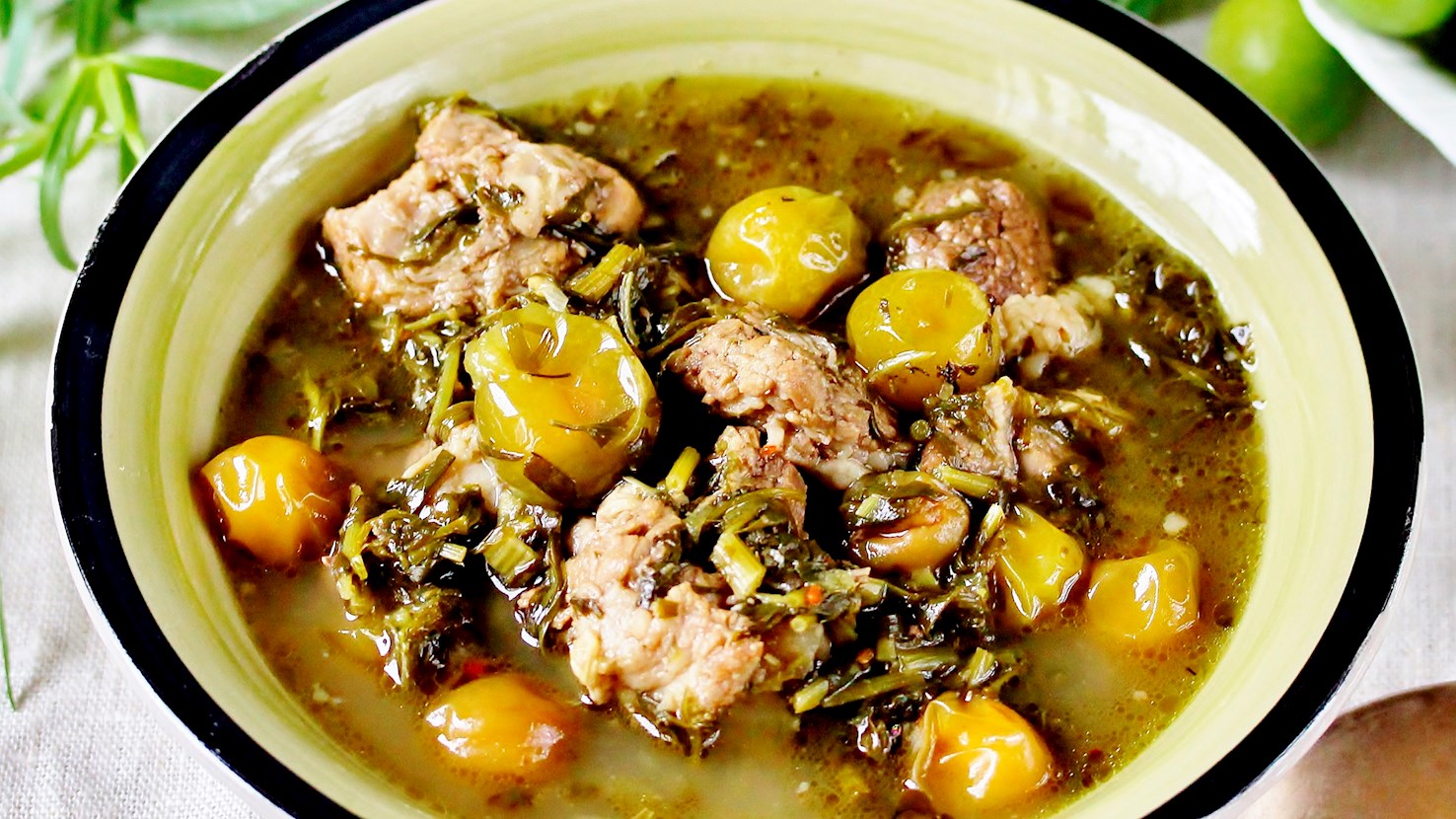
Chakapuli is a popular Georgian stew consisting of either beef or lamb meat, unripe sour plums, onions, green peppers, white wine, and herbs and seasonings such as tarragon, coriander, garlic, and salt. It is especially popular during spring, when the plums are still unripe. Chakapuli is often served during the feast of Orthodox Easter, and it is recommended to serve it hot with Georgian bread on the side.
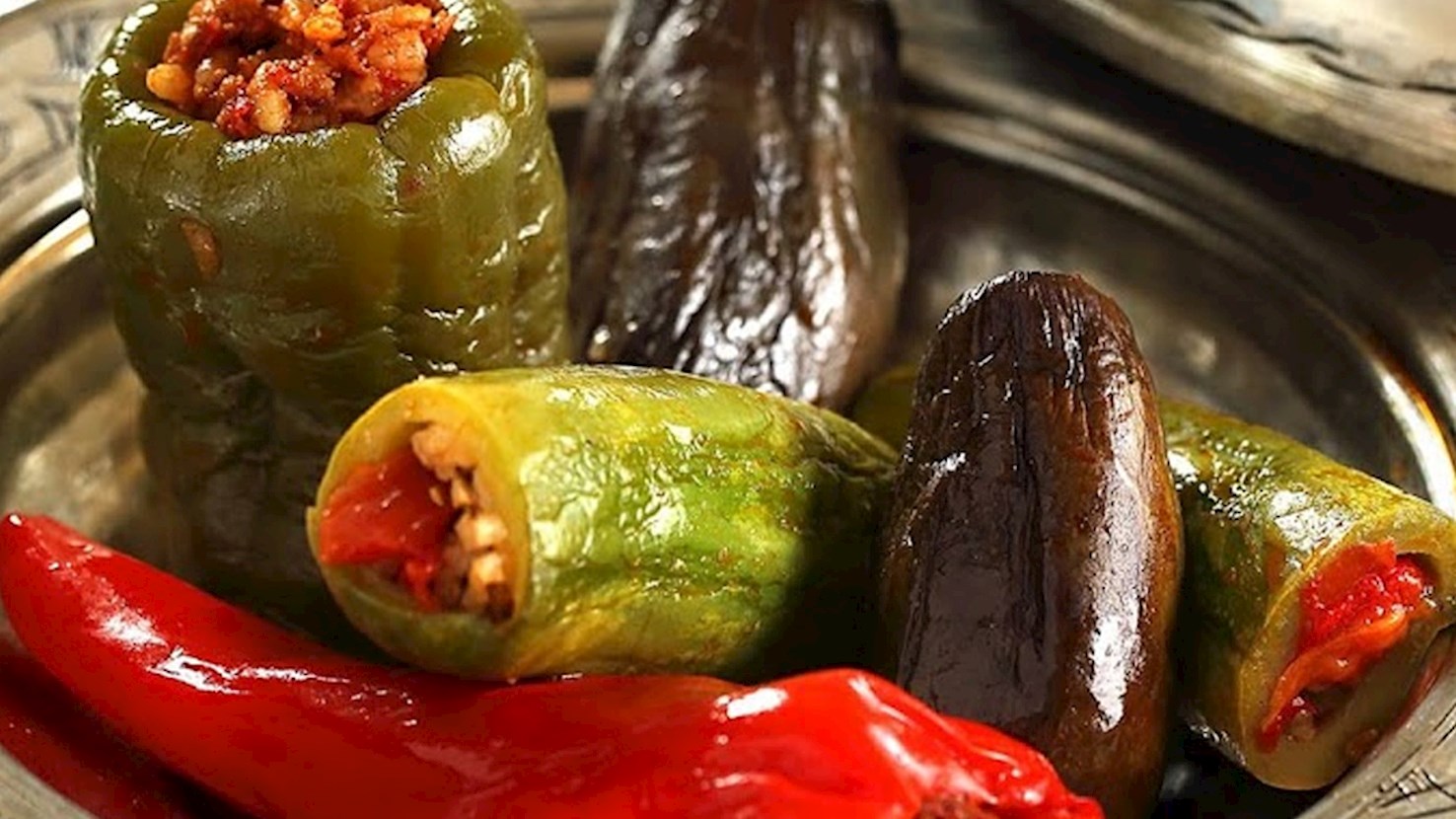
Dolma is a broad family of foods made by filling vegetables, fruits, leaves, seafood, or other edible casings with rice, minced meat, herbs, spices, or combinations of these ingredients. In its most familiar vegetable form, peppers, eggplants, zucchini, tomatoes, onions, or squash blossoms hold the filling. Some versions are rich with lamb or beef and served warm, while others rely on rice, olive oil, herbs, pine nuts, and currants and are served cool or at room temperature. Dolma is therefore not one fixed recipe but a large culinary category found across lands once connected by the Ottoman Empire. The exact birthplace of stuffed vegetables is not documented. Stuffed foods existed before the Ottoman period, and a tenth-century Arabic-language cookbook compiled in Baghdad contains several filled items. Ottoman sources show that stuffed vegetables and fruits had become a distinct and increasingly varied category by the fifteenth century. Records from that century mention stuffed onions and apples. Sixteenth-century sources add gourds, vine leaves, cabbage, carrots, immature squash, eggplants, and pumpkins. By the seventeenth century, Istanbul reportedly had about fifty specialist shops known as dolmacı, selling several kinds of filled vegetables. These records confirm the importance and expansion of dolma in Ottoman food culture, but they do not prove that the method itself originated in the kitchens of Topkapı Palace. The claim that palace ledgers from the reign of Süleyman I document massive purchases of eggplants and zucchini specifically for dolma is not securely supported. The name comes from the Turkish verb dolmak, meaning to become full or be filled. Dolma denotes something that has been filled. It is divided into two groups: dolma without meat and dolma with olive oil. Those without meat and cooked with olive oil are called yalanci, meaning imitation. A closely related term, sarma, comes from sarmak, meaning to wrap or roll. In current Turkish usage, a hollow vegetable filled through an opening is usually called dolma, while a filling enclosed in a grape, cabbage, chard, or other leaf is more precisely called sarma. However, dolma is often used for both stuffed vegetables and leaf-wrapped rolls. The Ottoman Turkish form of the word was recorded in a major multilingual dictionary published in 1680. A common meat-filled version begins with firm, fresh vegetables of similar size so that they soften at roughly the same rate. Bell peppers are opened around the stem and cleared of seeds and white membranes. Zucchini and short eggplants are trimmed and hollowed from one end with a narrow corer or small spoon. Tomatoes are opened at the top, and their pulp is removed and often retained for the sauce or filling. The vegetable walls should be thin enough to become tender but thick enough to hold their shape. Removing too much flesh leaves a fragile shell that can split as the rice expands. The hollowed vegetables do not need to be reduced to an extremely thin casing. Eggplants may be lightly salted and rested before filling, especially when they are mature or strongly flavored. Onions require a different method: they are softened briefly in hot water, separated into flexible layers, and wrapped around the filling. Squash blossoms are handled gently, with the inner stem or pistil removed before the petals are filled and folded closed. A common filling combines short-grain white rice with raw minced lamb or beef, finely chopped yellow onion, fresh dill, mint, parsley, black pepper, allspice, and salt. This is one important form, but the exact balance changes by region. Garlic, paprika, dried mint, cinnamon, cumin, tomato paste, pomegranate molasses, chopped tomato, or rendered fat may also appear. Some fillings contain more meat than rice, while others use rice mainly to soften and extend the meat mixture. Dried currants can be added to meat-based fillings, but they are more strongly associated with meatless olive-oil versions. Their sweetness is usually balanced with black pepper, allspice, cinnamon, lemon, or fresh herbs rather than allowed to dominate the filling. The rice is usually rinsed and drained before mixing. Depending on the recipe, it may enter the bowl raw, partly cooked, or briefly fried with onion. Raw rice absorbs the cooking liquid and the juices released by the vegetables and meat. Partly cooked rice shortens the simmering time and makes the final texture easier to control. Short- or medium-grain rice is useful because it becomes tender while helping the filling hold together. Long-grain rice, bulgur, cracked wheat, lentils, and chickpeas also appear in regional versions. The filling should be mixed evenly but not compressed into a heavy paste. Raw minced meat becomes dense when worked too aggressively. Each vegetable is filled only about two-thirds to three-quarters full, leaving space for the rice to swell. Packing the mixture tightly to the rim can split tomatoes and zucchini, push the caps from peppers, or force the filling into the cooking liquid. The filled vegetables are arranged snugly in a wide, deep pot. Peppers and tomatoes often stand upright, while zucchini and eggplants may lie on their sides or be fitted in alternating directions. Tomato tops, pepper caps, small tomato slices, or vegetable trimmings may be placed over the openings to help contain the filling. A heatproof plate can be set over the vegetables to keep them stable, particularly when the pot also contains leaf rolls or loosely packed pieces. The cooking liquid varies. Water, meat broth, tomato juice, crushed tomatoes, diluted tomato paste, olive oil, lemon juice, or combinations of these can be used. It is normally poured around the vegetables rather than directly into every opening. The liquid should reach partway up their sides without completely flooding the pot. The vegetables release additional water as they soften, while the rice absorbs both the added liquid and the juices from the meat. Too much liquid can leave the filling loose and watery, while too little may leave the rice hard. The pot is covered, brought to a gentle simmer, and kept over low heat until the rice is tender, the vegetables can be pierced easily, and the meat is fully cooked. Vigorous boiling can tear the softened shells and scatter the filling. Cooking time depends on the vegetable, the rice, and the size of each portion. The finished filling should be moist but not soupy. Rice that remains hard indicates too little liquid, insufficient time, or a shell packed too tightly for the grains to expand. A loose center usually results from excessive liquid, very juicy vegetables, or rice that was already close to fully cooked before it entered the pot. Resting the covered pot briefly after the heat is turned off allows the rice to absorb remaining juices and helps the filling settle. This also makes the vegetables easier to lift without breaking. The meatless olive-oil form, widely known as zeytinyağlı dolma, removes the minced meat and increases the importance of rice, onion, herbs, spices, and olive oil. Pine nuts and currants are especially associated with this style rather than with every meat filling. Cinnamon, allspice, black pepper, mint, dill, parsley, and sometimes a small amount of sugar may create a fragrant sweet-savory balance. The onions and pine nuts are often softened in olive oil before the rice and seasonings are added. The rice may be partly cooked at this stage or added raw, depending on the final simmering method. This filling is not made only with rice, pine nuts, currants, and enormous amounts of oil. Recipes vary, and herbs, onions, tomato, lemon, spices, or other grains may be central. Nor does it have to simmer exclusively in a bath of lemon juice and olive oil. Water is normally needed to soften the rice, while lemon supplies acidity and olive oil gives the filling its smooth texture and rounded flavor. Meatless versions are usually served cool or at room temperature after the rice has absorbed the aromatic liquid. Chilling is possible, but refrigerator-cold dolma can taste muted because the olive oil thickens and the aromas become less pronounced. Allowing it to lose the deepest chill before serving usually gives a softer texture and clearer flavor. Leaf-wrapped versions use grape leaves, cabbage, chard, collards, or other flexible leaves. Fresh grape leaves are blanched briefly, while preserved leaves are rinsed to remove excess brine. Cabbage leaves are softened in hot water and trimmed where the central rib is too thick. A small amount of filling is placed near one edge, the sides are folded inward, and the leaf is rolled into a compact cylinder. The roll must be secure but not excessively tight because the rice still needs room to expand. Dolma containing lamb or beef is commonly served hot or warm because the melted animal fat, softened rice, and cooking juices are most pleasant before they congeal. The pieces are lifted carefully onto a wide ceramic platter or served directly from the pot with some of the reduced liquid spooned around them. Plain yogurt is a frequent accompaniment to meat-filled dolma. It may be served beside the vegetables, spooned over them, or mixed with crushed garlic and salt. The cool acidity and lactic tang balance the fat and spices, while the thick texture clings to the warm vegetables. Yogurt is common rather than compulsory, and pouring a heavy layer over the entire platter can conceal the individual flavors. Olive-oil versions are more often served cool or at room temperature as an appetizer, side plate, or part of a larger spread. Lemon wedges commonly accompany them, but a heavy squeeze is optional. A modest amount of fresh juice can sharpen the rice and herbs; too much may overpower the currants, pine nuts, olive oil, and delicate vegetable casing. Dolma can function as a starter, side, or main course. Meat-filled peppers, eggplants, zucchini, and tomatoes are substantial enough to anchor a meal, particularly with yogurt and bread. Smaller olive-oil vegetables and leaf rolls are often served in modest portions with other cold plates. Bread may collect the cooking juices, while rice-based versions generally need no additional starch.
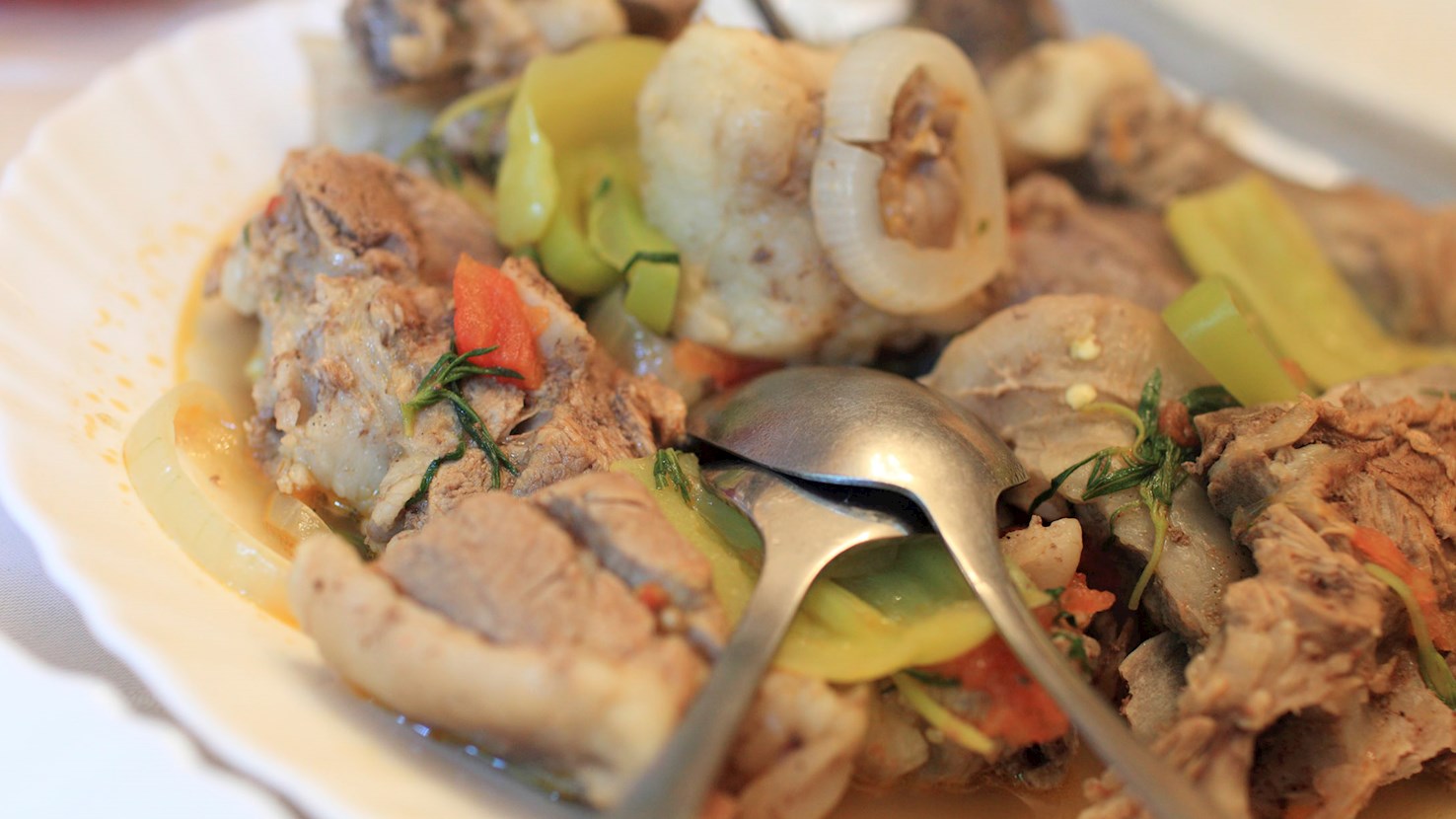
Khashlama is a straightforward and traditional meat dish originating from the Caucasus region. Although time-consuming, the dish is made by simply boiling large chunks of meat, usually beef or lamb, in hot water. The traditional version of this famous dish does not include other ingredients, except a few spices, making the boiled pieces of meat the star of the dish. Because of this, khashlama contains only the finest meat cuts available. The origins of the dish believe to be in the Georgian Kakheti region, where it is regarded as a regional signature dish. However, it is also widely popular in the neighboring Armenia, causing disputes over the true origin of the dish. Traditionally, khashlama is prepared on an open fire, slowly, until the meat is perfectly tender. It is commonly flavored with onions, garlic, bay leaves, and peppercorns. Because it is rather time-consuming, the dish is usually served on special occasions, and it is a common staple of supra, a traditional Georgian feast. Boiled pieces of meat are commonly served hot and garnished with a generous amount of coarse salt and chopped parsley.
Abkhazura is a traditional dish originating from Abkhazia. These spicy meatballs are prepared with a combination of beef, pork, parsley, dill, coriander, pepper, onions, and summer savory. The meat needs to be tightly rolled in caul fat before it's seasoned with spices and fried in a pan. These meatballs are traditionally served with tkemali sauce.
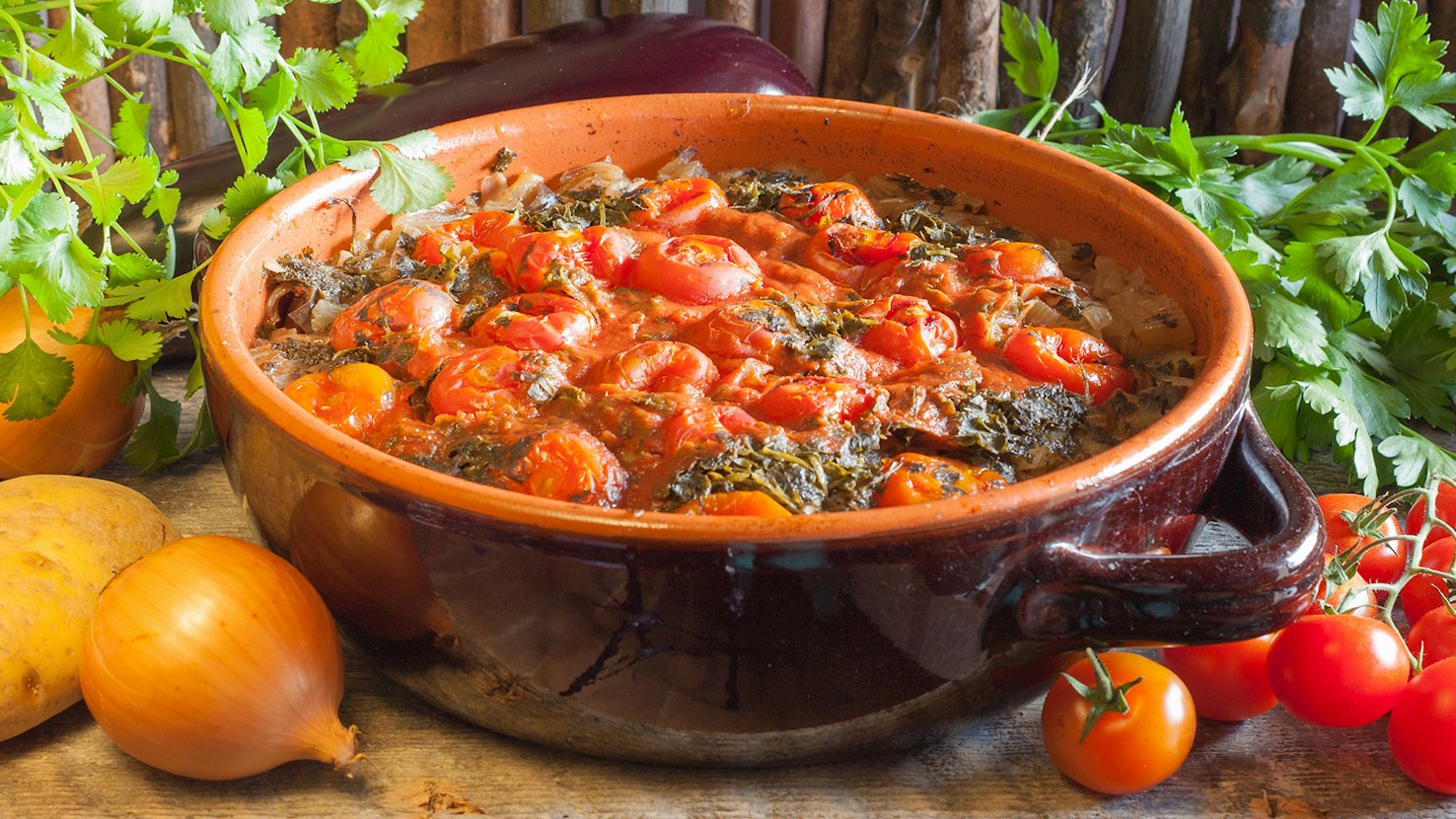
Buglama is a popular Azerbaijani and Georgian dish consisting of lamb pieces that are stewed with onions, tomatoes, peppers, a variety of spices including black pepper and bay leaves, and a small amount of liquid. The name of the dish means steamed, referring to the fact that the lamb is cooked in its own juices. Although lamb is the most common option, it is not unusual to prepare buglama with fish.
Kayrma is a traditional meat dish originating from Georgia. The dish is usually made with a combination of lamb shoulder, oil, onions, garlic, pomegranate juice, bay leaves, and salt. The lamb and bay leaves are cooked in oil until the meat is almost tender. The onions and garlic are sautéed in oil, then mixed with the pomegranate juice and lamb pieces. Before serving, the dish is seasoned with salt and it's usually accompanied by rice or bread on the side.
TasteAtlas food rankings are based on the ratings of the TasteAtlas audience, with a series of mechanisms that recognize real users and that ignore bot,
nationalist or local patriotic ratings, and give additional value to the ratings of users that the system recognizes as knowledgeable.
For the “Top 10 Georgian Meat Dishes” list until September 15, 2026, 1,717 ratings were recorded, of which 812 were recognized by the system as legitimate.
TasteAtlas Rankings should not be seen as the final global conclusion about food. Their purpose is to promote excellent local foods,
instill pride in traditional dishes, and arouse curiosity about dishes you haven’t tried.




What People Say