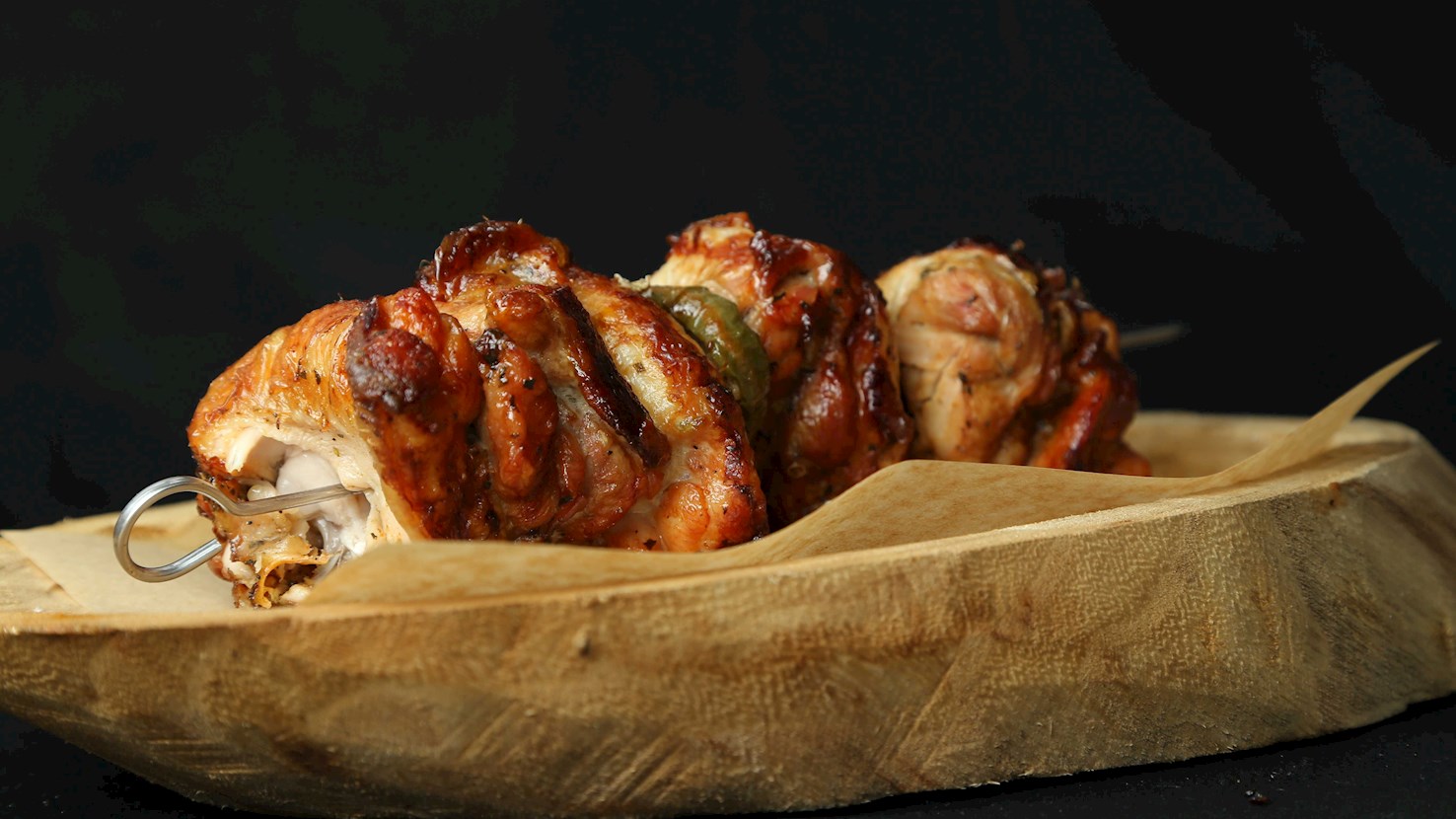
Kontosouvli is a traditional dish consisting of large pieces of pork marinated in a mixture of herbs and spices, then skewered and slowly cooked on a rotisserie, much like a gyro or souvlaki. The marinade often contains ingredients such as garlic, oregano, thyme, rosemary, paprika, olive oil, lemon juice, and red wine. After marinating, the meat is threaded onto a large skewer and roasted over an open flame, which results in a rich and flavorful outer crust with a juicy, tender interior. The cooked meat is typically served in thick slices, often accompanied by pita bread, tzatziki sauce, and horiatiki salad, among other possible accompaniments. It was traditionally prepared for Easter, but today it can be found on the menus of Greek tavernas throughout the year.
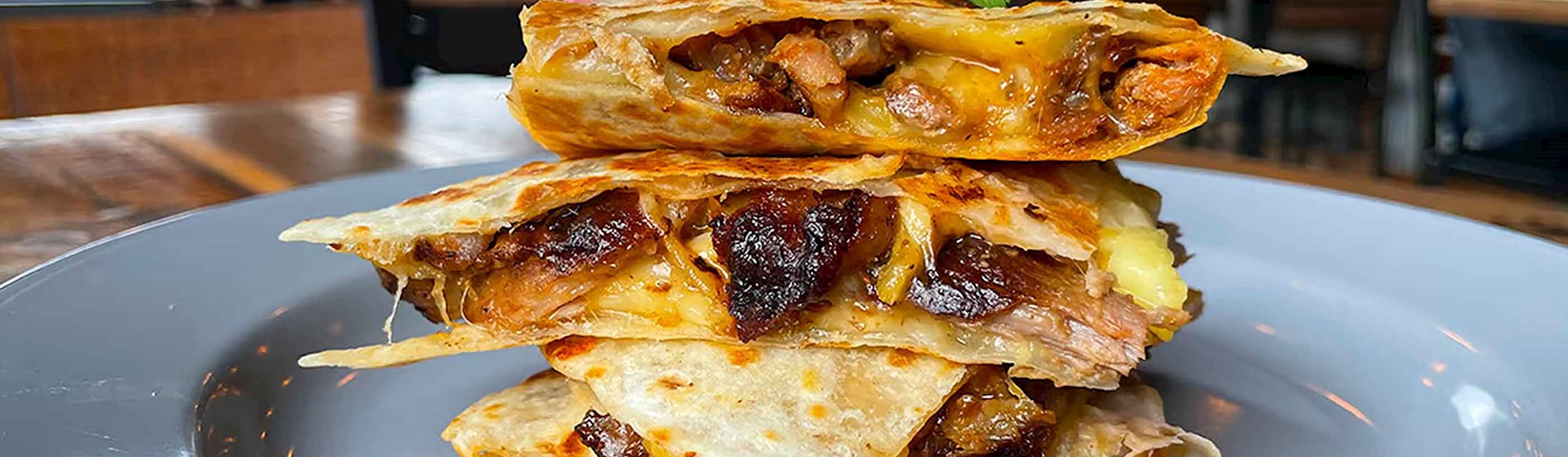
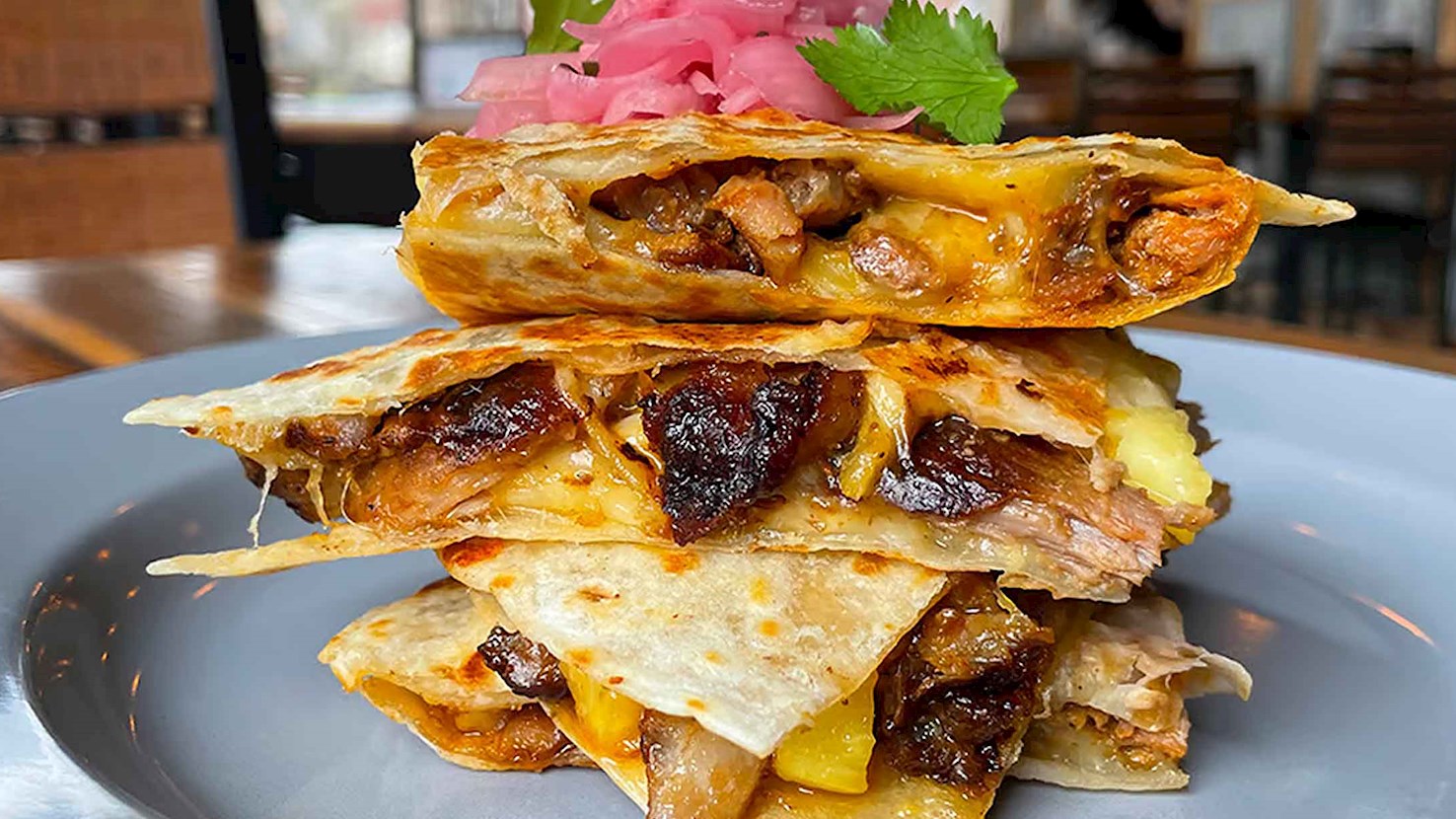
Gringas is a typical Mexican dish made with flour tortillas filled with al pastor marinated pork meat, cheese, and, most commonly, pineapple slices, although onions, chili sauce, and coriander can all be added to the dish according to the customer's preference. The combination of these ingredients is then grilled in the same manner as a quesadilla. The tortillas are usually folded in half and consumed like a taco. The name of the dish, a feminine form of gringo, is believed to have come from the idea that flour tortillas are more popular than corn tortillas north of the Mexican border.
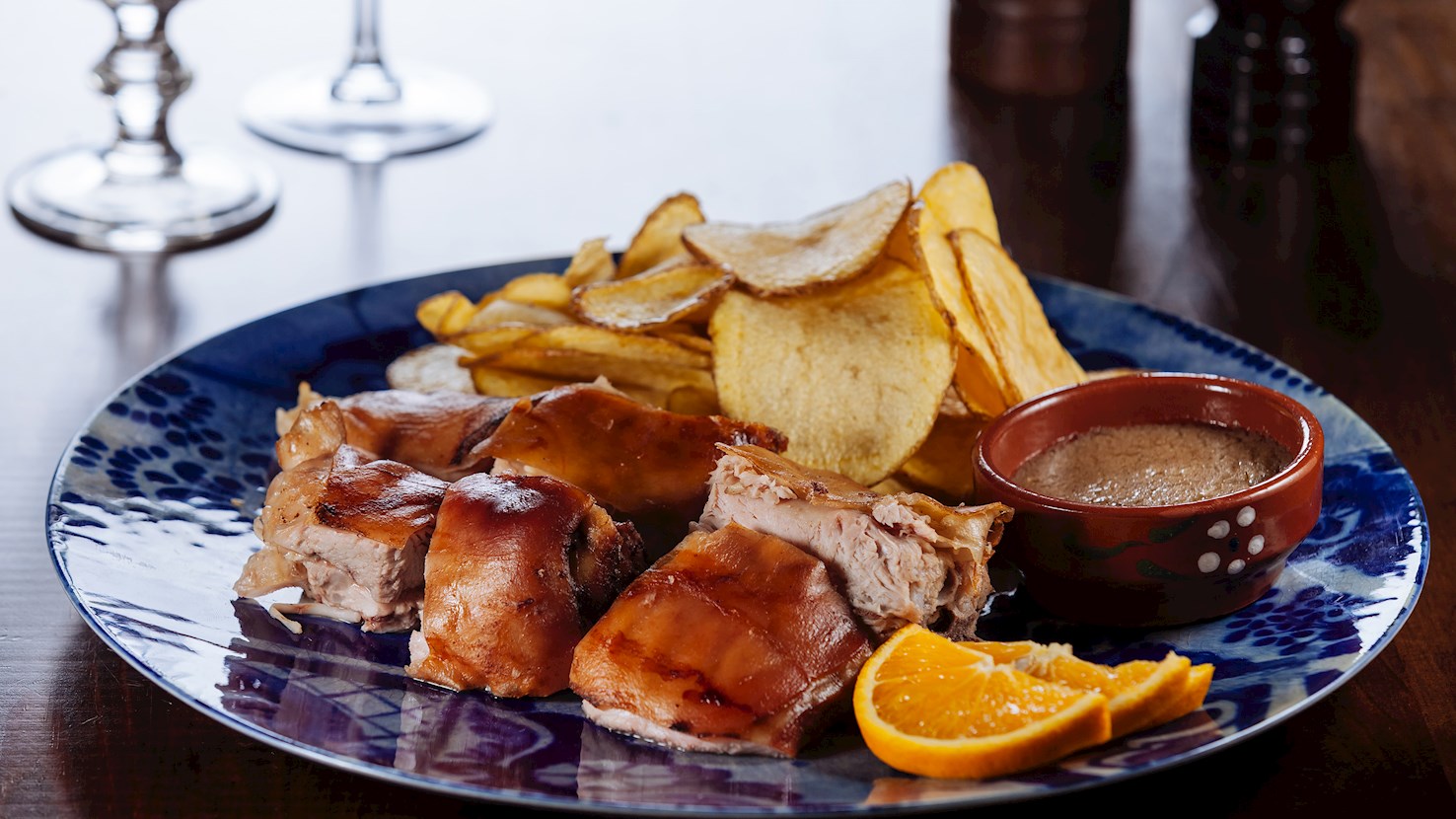
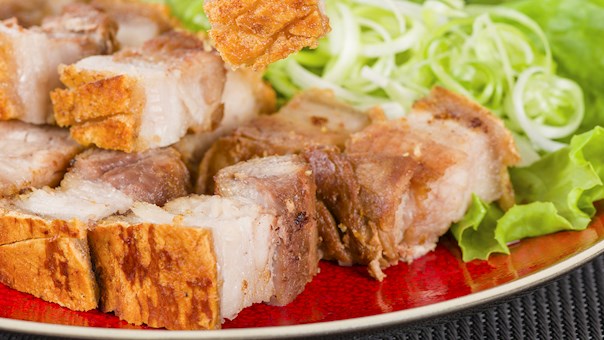
Leitão a Bairrada is a Portuguese dish of suckling pig that's roasted and basted until the flesh becomes creamy and the skin develops its typical crunchiness. It is said that the best place to try this delicacy is the Bairrada wine region, particularly the city of Mealhada. Pigs from this region are considered the best in Portugal, and they feed mostly on acorns. Their meat is rubbed with fat, coarse salt, pepper, and garlic, and it's then skewered on a pole before being cooked in eucalyptus-and-vine-fueled ovens. Once prepared, the suckling pig is traditionally served with batatas fritas, orange slices, and a fresh salad on the side. The dish is so popular in Portugal that there is even a brotherhood of Leitão da Bairrada.
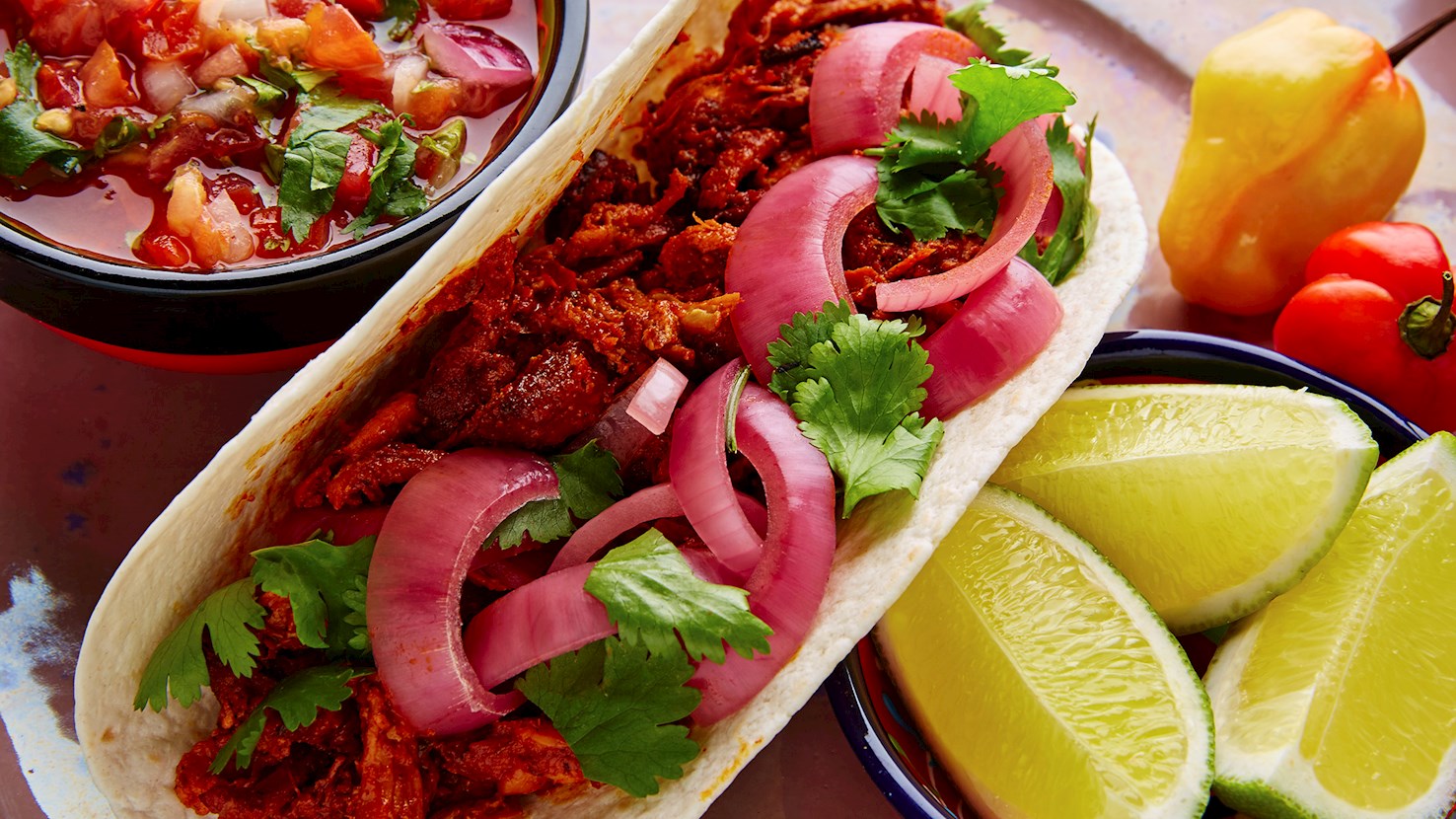
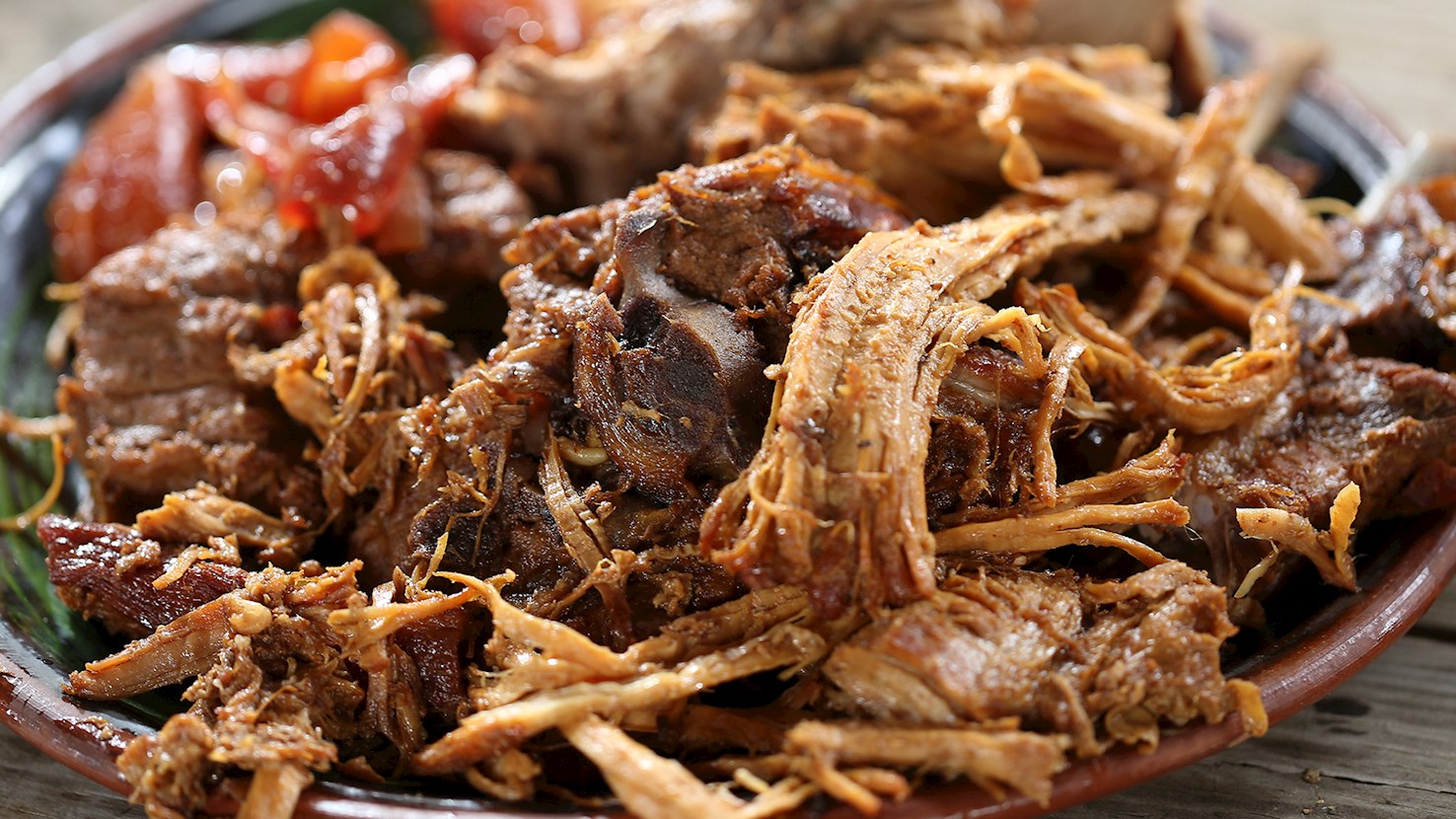
Cochinita pibil is a Mexican pork dish originating from Yucatan. Pork is marinated in a combination of annatto paste, bitter orange juice, and garlic. It is slowly baked and then shredded and served on tortillas, tacos, or on its own with shallots, pickled onions, salsa, and various roasted vegetables. Cochinita pibil is characterized by the red color of the meat, imparted by the annatto seeds from the marinade. Originally, pork was wrapped in banana leaves prior to baking, but today a foil or any other suitable wrapping can be used instead. Since cochinita means baby pig, and pibil means buried or underground, it acts as a proof that the original recipe used a whole suckling pig that was buried in a pit for roasting. This Mayan-influenced dish is most often served on weekends in many Mexican homes, usually as a Sunday family ritual.
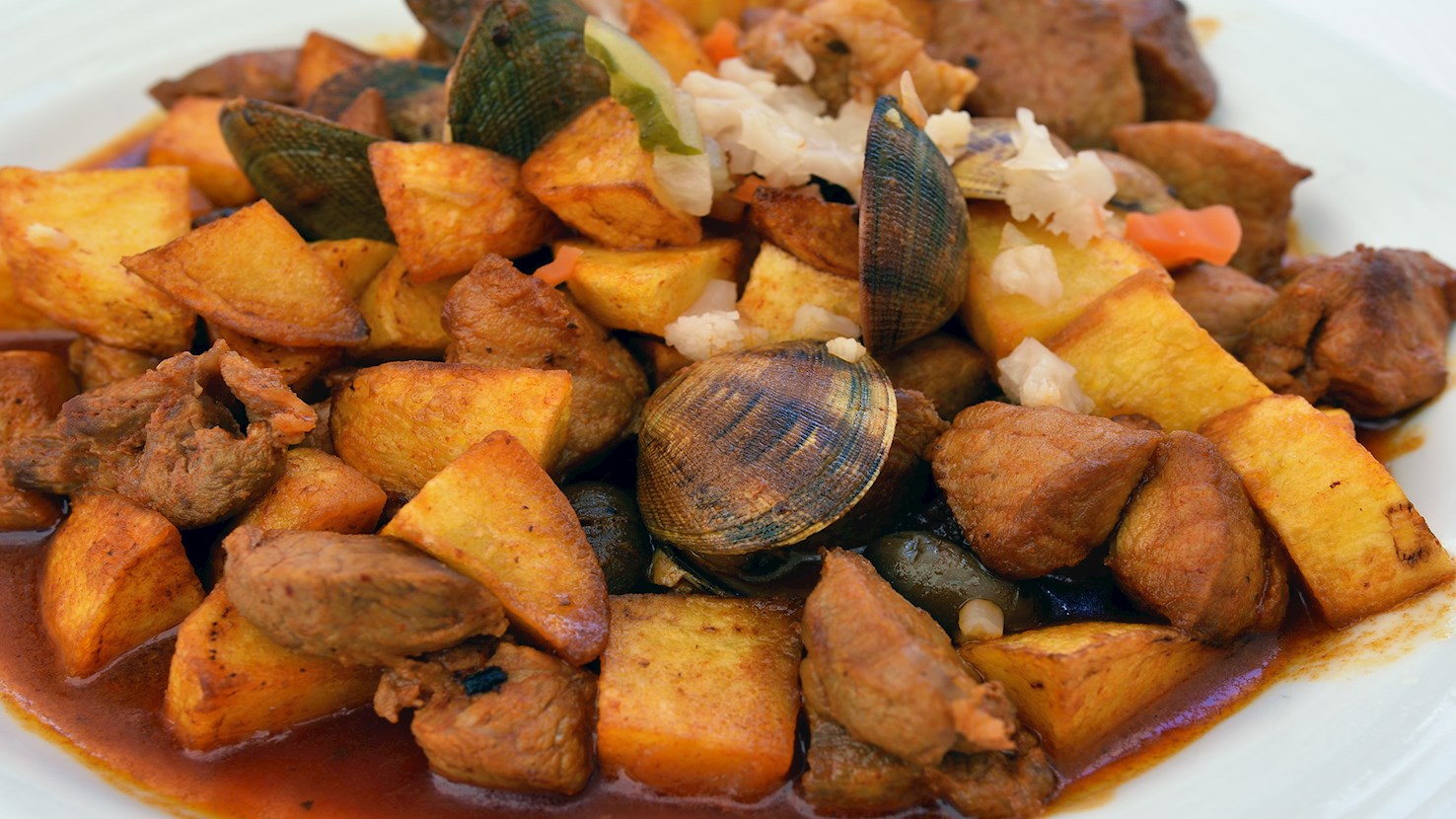
This traditional Portugal dish combines marinated pieces of pork with clams and a lightly spicy, wine-infused sauce. Though the name of this classic might imply it originated in Alentejo, it is believed that it initially appeared in the Algarve region, but was given its current name because of the highly-prized black pigs that are most commonly reared in Alentejo. The dish is a restaurant staple that is found throughout Portugal. It is usually garnished with fresh cilantro and paired with lemon wedges, pan-fried potatoes, and country-style bread on the side.
Leitão assado no forno is a Portuguese roast pork dish, and the name itself stands for "oven-roasted suckling pig". A young suckling pig is typically chosen for this dish, as it has tender and flavorful meat. The piglet is seasoned with a mix of ingredients that usually include garlic, white pepper, salt, and sometimes a touch of chili pepper. Some recipes might also include herbs or other flavorings. The seasoned piglet is then roasted in a wood-fired oven, which gives it a distinct and smoky flavor. It is continually basted during the cooking process to keep it moist and flavorful. The skin becomes crispy and golden. Once roasted, the pig is traditionally cut into pieces and served with its own juices or a sauce made from the drippings. It's often accompanied by side dishes like roasted potatoes, salads, or rice. The dish is frequently paired with sparkling wine or red wine, especially if you're in the Bairrada region, which is known for its wines.
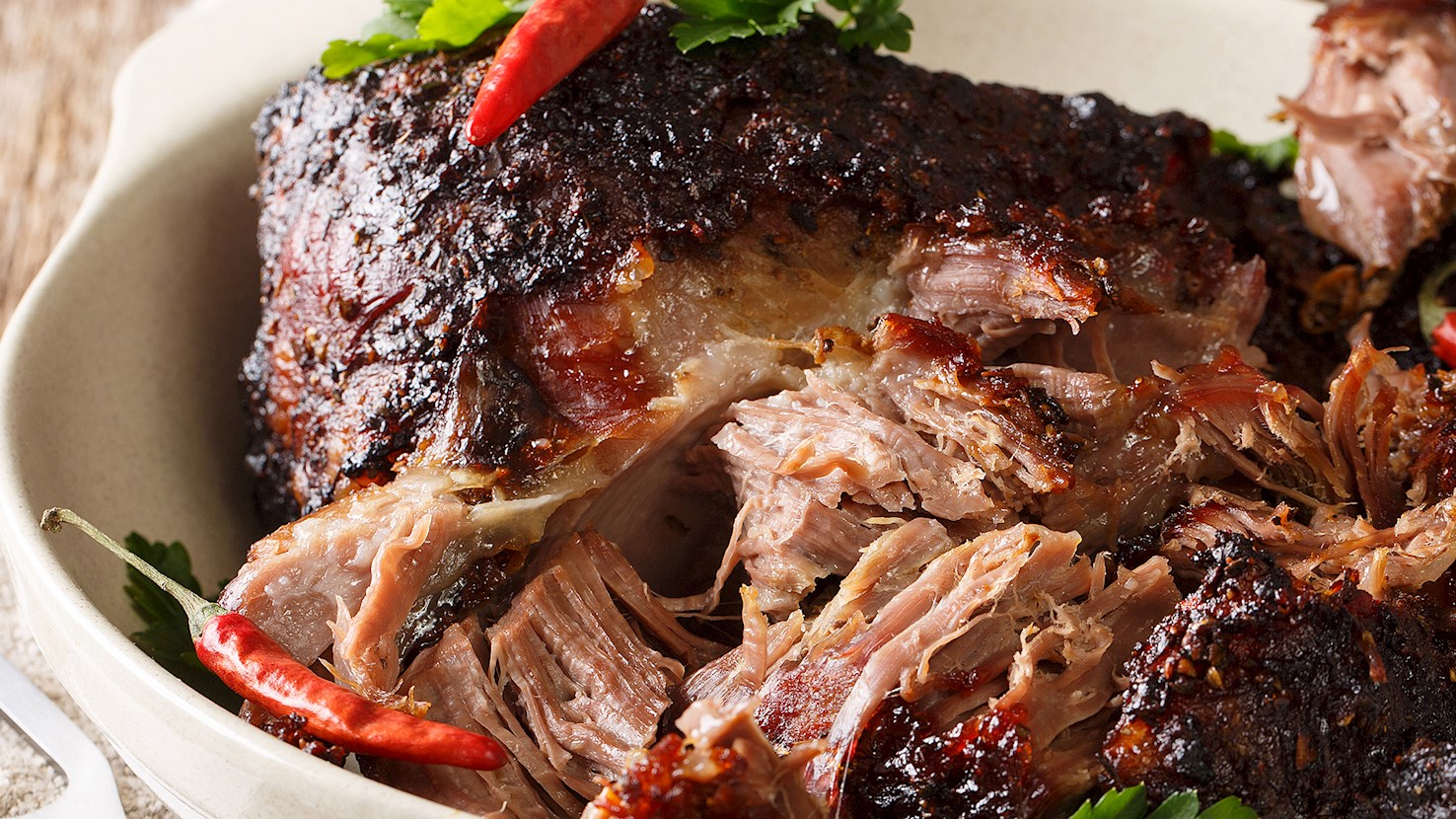
Pernil is one of Puerto Rico's most famous dishes, a succulent roasted pork shoulder that is traditionally seasoned in a marinade called adobo mojado, consisting of paprika, salt, vinegar, garlic, and oregano. The name of the dish is derived from the Spanish word pierna, meaning leg, but it is also a Catalan word for ham, referring to the traditional recipe that calls for fresh ham. Because pork shoulder is more available and costs less than ham, it has become a key ingredient in pernil. Many people prefer it since it is believed to be much more flavorful than ham. The dish is a staple at numerous Puerto Rican festivities such as birthdays or weddings, where many people feast on the crunchy skin and tender meat that falls off the bone.
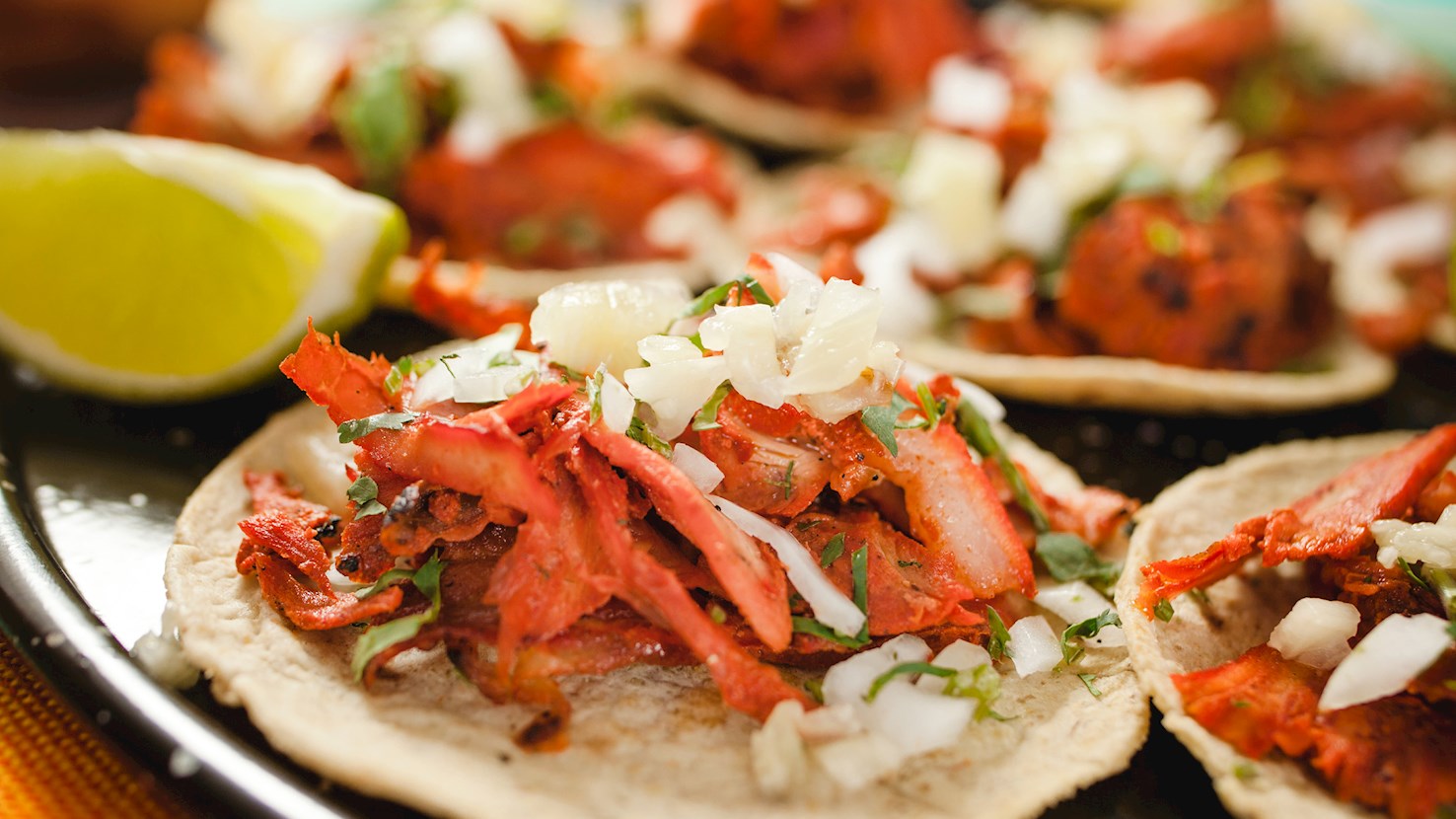
Tacos al pastor are thinly sliced pork marinated in a complex blend of dried chilies, spices, and achiote, stacked onto a vertical spit, and served on small corn tortillas with pineapple, onions, and cilantro. The origins of this vibrant street food trace back to the 1920s and 1930s when Lebanese immigrants arrived in Puebla, bringing with them the method of roasting lamb on a vertical, spinning spit known as a shawarma. Over the decades, local palates adapted this Middle Eastern technique, substituting the original lamb with thinly sliced pork shoulder and replacing Mediterranean spices with indigenous ingredients. Handling the meat involves a meticulous multi-day process. The pork is bathed in a thick, vibrant red adobo. This marinade relies heavily on rehydrated guajillo and ancho chilies, acidic vinegar, earthy cumin, fragrant oregano, and a dense paste made from crushed annatto seeds called achiote, which imparts the signature crimson hue. The marinated pork slices are tightly layered onto a long metal rod, forming a large, bell-shaped mound called a trompo. An onion and a peeled pineapple are typically placed at the very top of the spit. As the metal rod slowly rotates next to a vertical gas-powered heat source, the outer layer of the pork develops a charred, crispy crust while the interior remains succulent, constantly basted by the dripping juices of the roasting fruit above. While pork remains the standard base, multiple variations exist to accommodate different tastes. Chicken al pastor has emerged as a lighter alternative, utilizing the exact same red adobo but applied to stacked poultry. Plant-based iterations frequently utilize sliced king oyster mushrooms or textured soy protein bathed in the chile paste and griddled rather than spit-roasted. Another highly popular adaptation is the gringa, which takes the carved al pastor meat and places it inside a flour tortilla with melted cheese, then heats the entire package on a flat-top grill until the cheese bubbles. The serving style is fast-paced and visually theatrical. An individual wielding a long, sharp knife shaves the deeply caramelized exterior of the spinning meat directly into a pair of small, warm corn tortillas held in the opposite hand. A flick of the wrist slices a thin wedge of roasted pineapple from the top of the spit, letting it fall perfectly onto the waiting meat. The assembled meal is immediately dressed with finely diced white onions, chopped fresh cilantro, a generous squeeze of lime juice, and a spoonful of spicy salsa—most often a smoky chipotle or a bright, fiery salsa verde made from tomatillos.
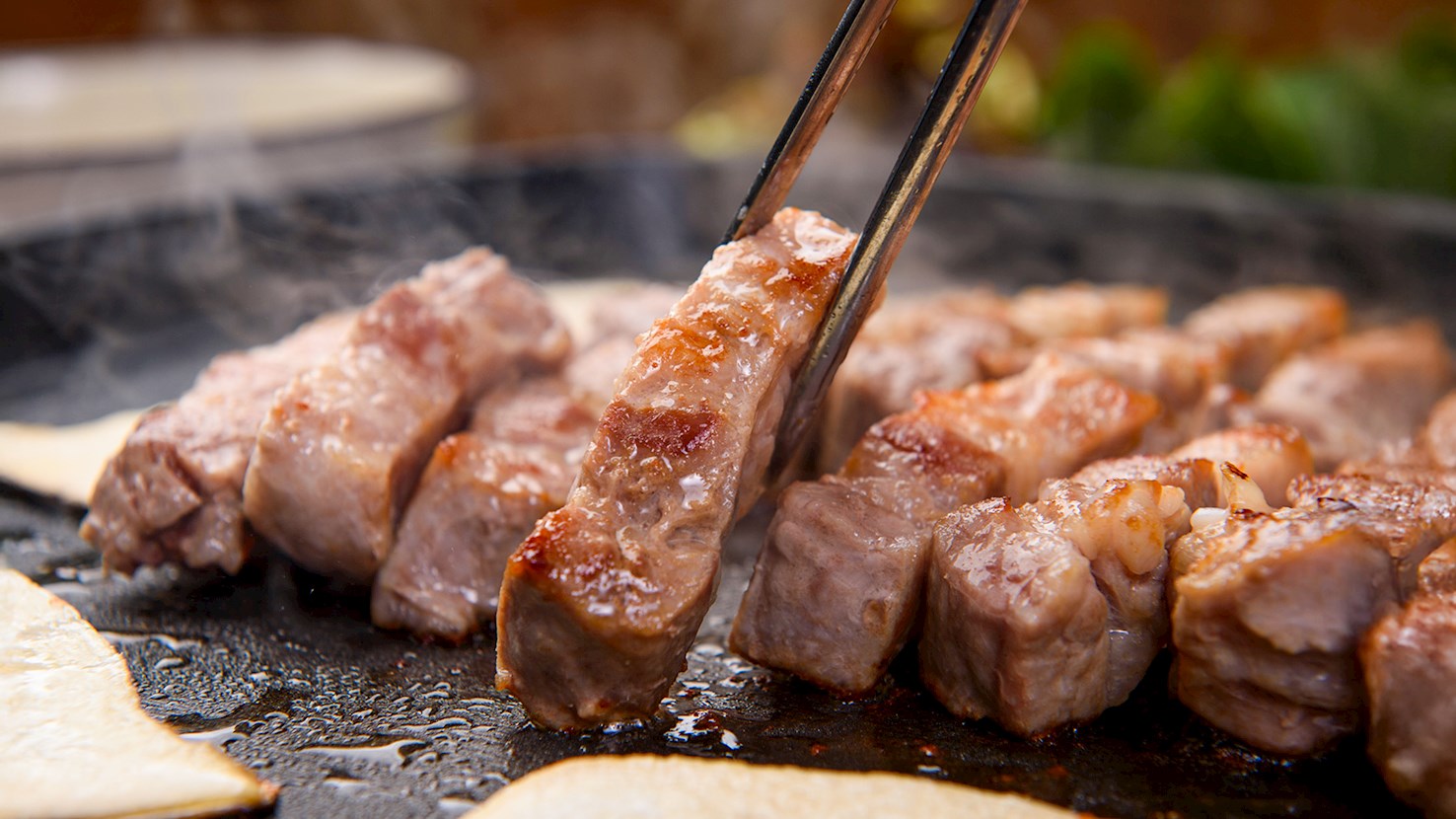
Samgyeopsal is a grilled meat dish featuring thick slices of unmarinated pork belly cooked directly on a hot metal pan at the dining table. The uneasoned pieces of pork belly are placed on a very hot grill, often set at a slight tilt to allow the rendered fat to slide downward and pool in a small collection cup. To maximize flavor, thick wedges of raw garlic, sharp white onions, enoki mushrooms, and deeply fermented sour kimchi are deliberately positioned at the lower end of the sloped metal to fry aggressively in the dripping pork fat. Once the meat develops a deeply browned, crispy exterior, individuals utilize metal tongs and large kitchen scissors to snip the long strips into bite-sized squares right on the hot surface. Samgyeopsal is eaten wrapped in lettuce, either green lettuce or perilla, known as ssam. A piece of the sizzling meat is dragged through gireumjang, a simple mixture of toasted sesame oil, coarse sea salt, and black pepper, or heavily coated in ssamjang, a thick, spicy paste combining fermented soybeans and chili. The dipped pork goes into the leaf alongside the grilled garlic, raw green chilies, and a sharply dressed scallion salad, before the entire bundle is folded tightly and eaten in a single, massive bite. Cold shots of clear distilled liquor, specifically soju, almost universally accompany the heavy meal to cut through the intense grease. While the plain, unseasoned slabs represent the absolute standard, there are massive variations in thickness and marinades. Daepae samgyeopsal uses freezing temperatures to slice the belly remarkably thin, resembling wood shavings, which crisp up rapidly over heat in mere seconds. Ogyeopsal leaves the chewy skin fully attached, offering a five-layered cut with significantly more bounce and texture. Other modern iterations soak the raw meat in red wine, coat it heavily in green herbs, or entirely ditch the unmarinated rule by submerging the strips in sweet soy sauce or fiery red chili paste before hitting the grill. The name of the dish consists of three words: sam (three), gyeop (layered), and sal (meat), so it can be literally translated as three-layered meat, referring to the three visible layers of the meat. The massive surge in this specific fatty cut dates to the late 20th century, accelerating during the economic boom of the 1980s and 1990s. During this era, export markets heavily favored lean pork cuts, leading to massive quantities of the rejected fatty belly sections flooding the domestic market at incredibly low prices. Concurrently, a widespread belief emerged among coal miners and construction workers that consuming the heavily greasy meat effectively washed away toxic dust accumulated in the throat and lungs after a long shift. This combination of cheap abundance and perceived health benefits firmly cemented grilled meat as an absolute staple, so much so that March 3rd is universally celebrated as a dedicated holiday for eating samgyeopsal, a date that mirrors the three layers in the meat. The dish is most commonly accompanied by lettuce, raw garlic, green chili peppers, kimchi, and green onions. Two dipping sauces are traditionally served on the side: one is ssamjang, consisting of sesame oil, chili paste, and soybean paste, and the other is gireumjang, consisting of sesame oil, salt, and black pepper.
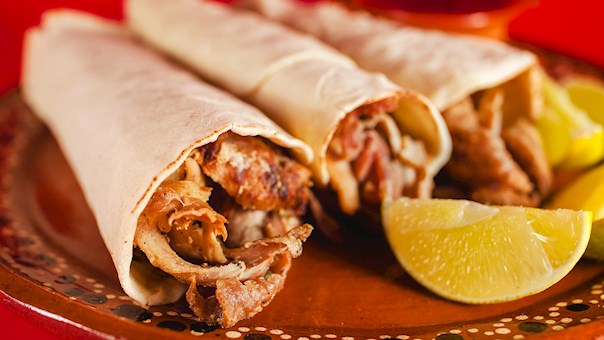
Originating from the Mexican state of Michoacán, carnitas is a flavorful dish made from pork (usually front sections or pork shoulder) that is braised, roasted, or slow-cooked in its own fat for a long time until fully tender and succulent. The heat is then turned up until the meat is crispy on the exterior and can be shredded. Carnitas, which translates to little meats, is often served with tortillas, accompanied by salsas, beans, guacamole, lime, or fresh vegetables. In Michoacán, carnitas are found everywhere from street stalls to upscale restaurants, although the dish is more often made for special occasions such as Christmas, anniversaries, or birthdays. Tender, fresh, and tasty, carnitas are a special treat for meat lovers worldwide.
TasteAtlas food rankings are based on the ratings of the TasteAtlas audience, with a series of mechanisms that recognize real users and that ignore bot,
nationalist or local patriotic ratings, and give additional value to the ratings of users that the system recognizes as knowledgeable.
For the “Top 100 Pork Dishes in the World” list until September 15, 2026, 16,571 ratings were recorded, of which 10,717 were recognized by the system as legitimate.
TasteAtlas Rankings should not be seen as the final global conclusion about food. Their purpose is to promote excellent local foods,
instill pride in traditional dishes, and arouse curiosity about dishes you haven’t tried.










What People Say