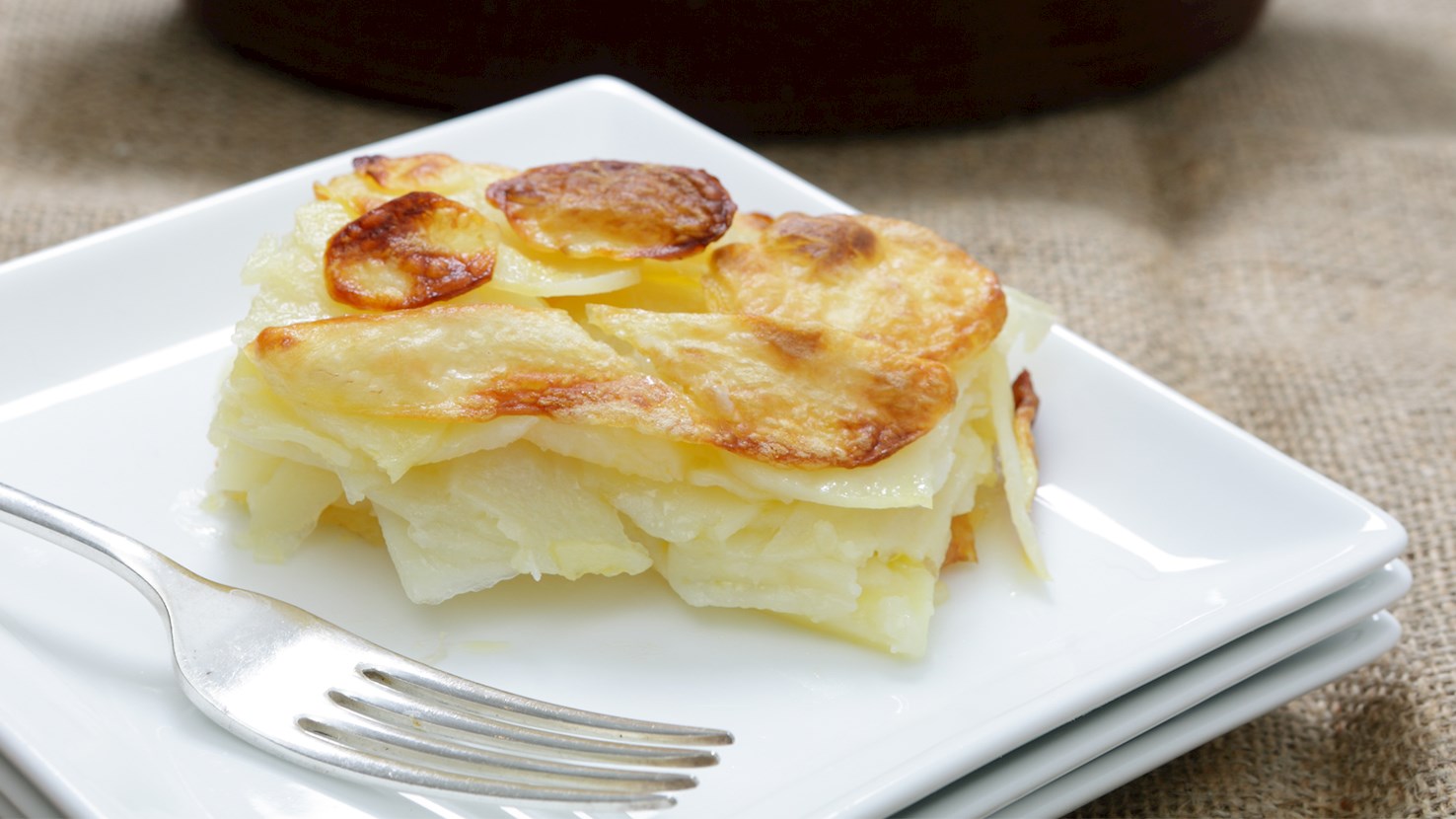
Pommes Anna is a minimalist, yet challenging French potato dish consisting of peeled, thinly sliced potatoes and butter. The dish is typically seasoned only with salt and pepper. The potato slices are arranged in overlapping layers, drizzled with butter, cooked on top of the stove, then baked in the oven. When served, the baking dish is inverted, so the bottom of the casserole ends up on top. The dish was invented by a chef named Adolf Dugléré in the 19th century, who named it after one of these two actresses – either Anna Deslions or Anna Judic. Pommes Anna are typically served as a side dish accompanying roasted meat dishes.
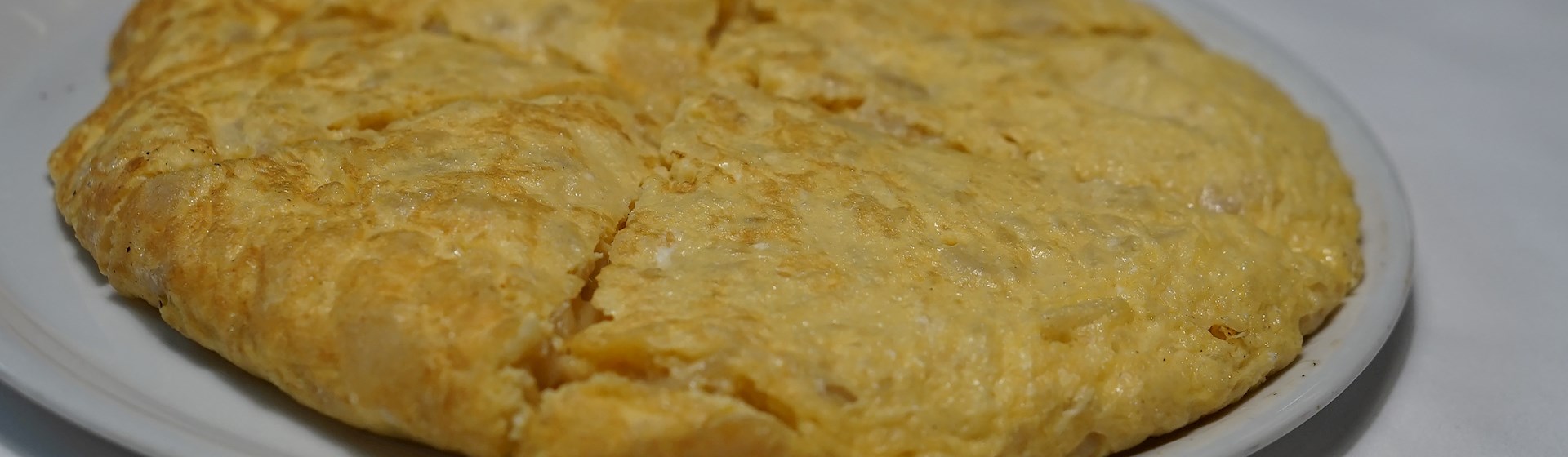
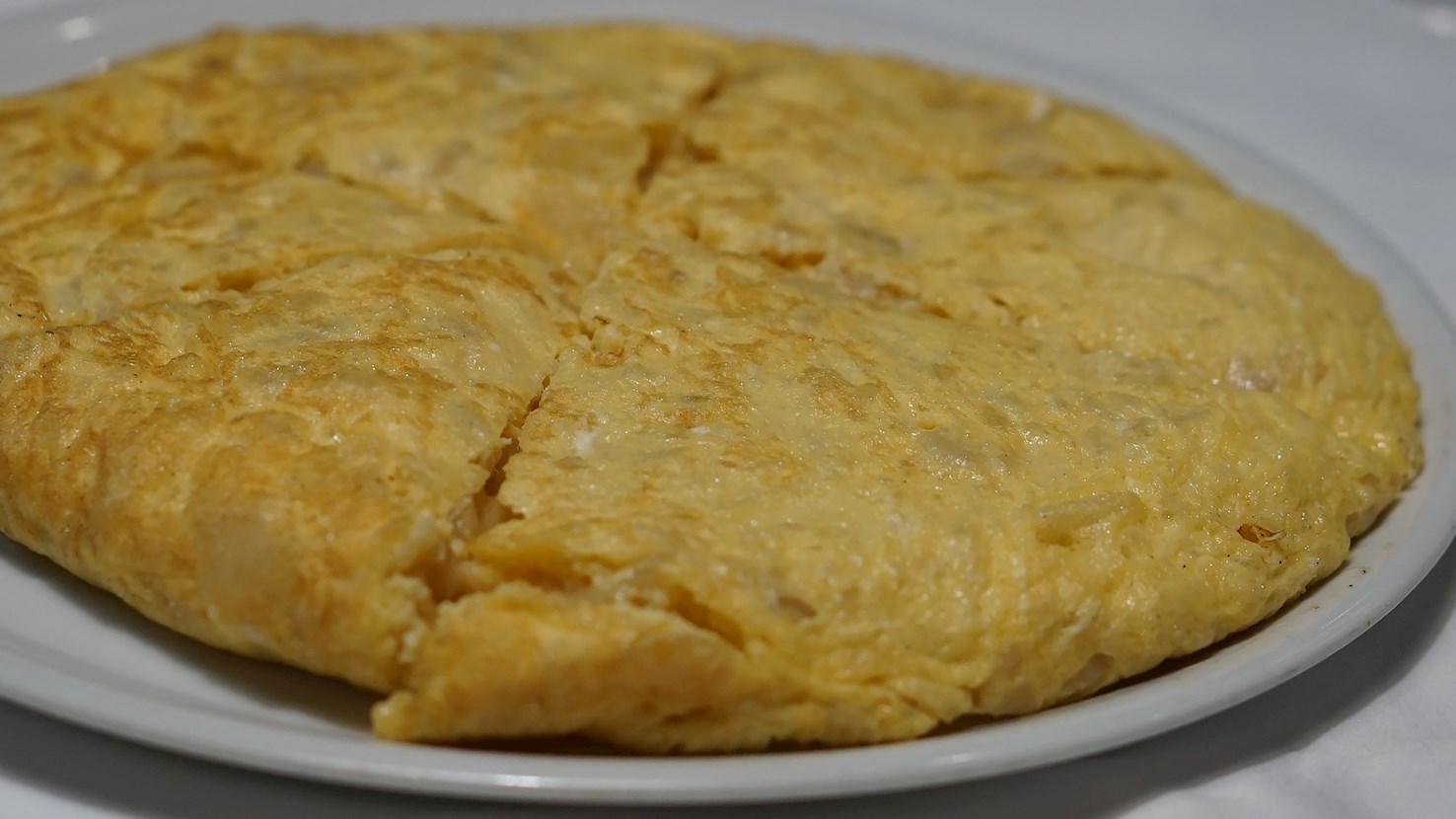
Tortilla de Betanzos is a Spanish dish originating from the Galician municipality of Betanzos. This dish is basically a local variety of tortilla de patatas or Spanish omelet. In Betanzos, it consists of potatoes, eggs, oil, and salt, nothing more and nothing less, so don't even think about tasting onions or chorizo in this local delicacy. The city became famous for its omelets because of a local woman, Angelita, who always prepared them without onions. But there's more – the eggs have to be really runny (resulting in really juicy omelets), while local high-quality potatoes have to develop a perfectly golden color during the frying process.
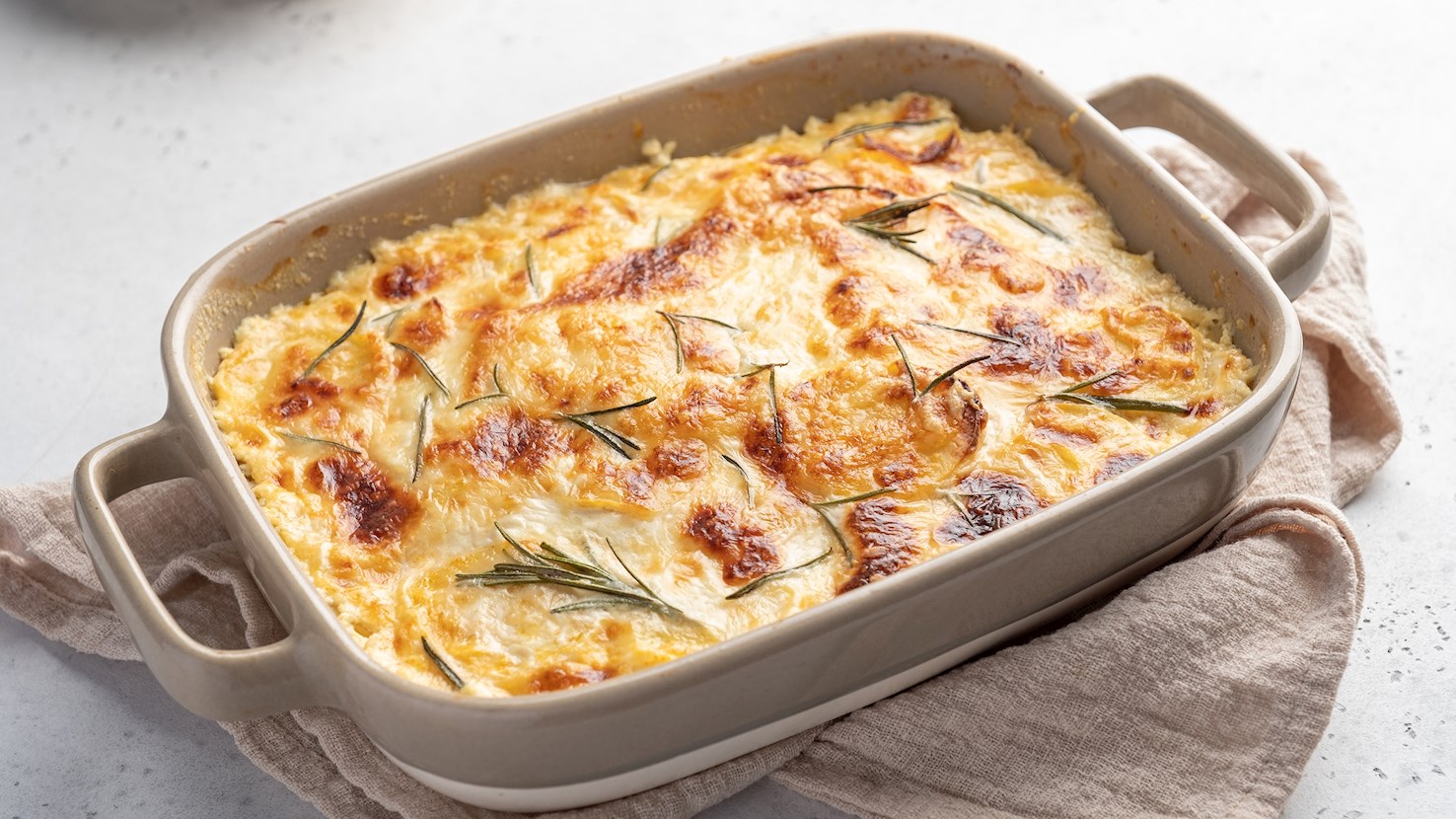
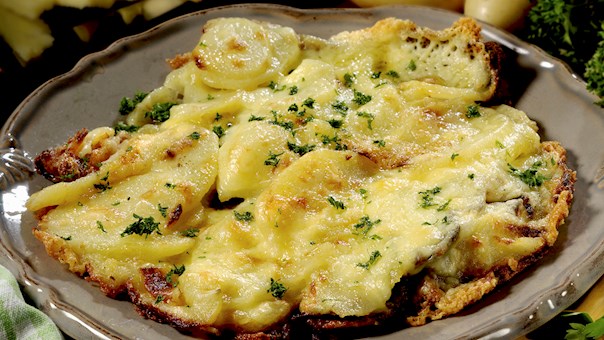
Traditionally consumed by peasants in the historic Dauphiné region in France, gratin dauphinois is a savory dish consisting of thinly sliced potatoes, crème fraîche, and butter baked in a shallow earthenware cooking vessel. The dish can be eaten on its own, preferably with a salad on the side, or as an accompaniment to fish or meat dishes. The term gratin originally referred to the flavorful crust that was left in the pan after the dish was baked. The first mention of the dish dates back to July 12th, 1788, when it was served at a dinner hosted by Charles-Henri, Duke of Clermont-Tonnerre and Lieutenant-General of the Dauphiné, for the officials of the city of Gap in the modern-day Hautes-Alpes region.
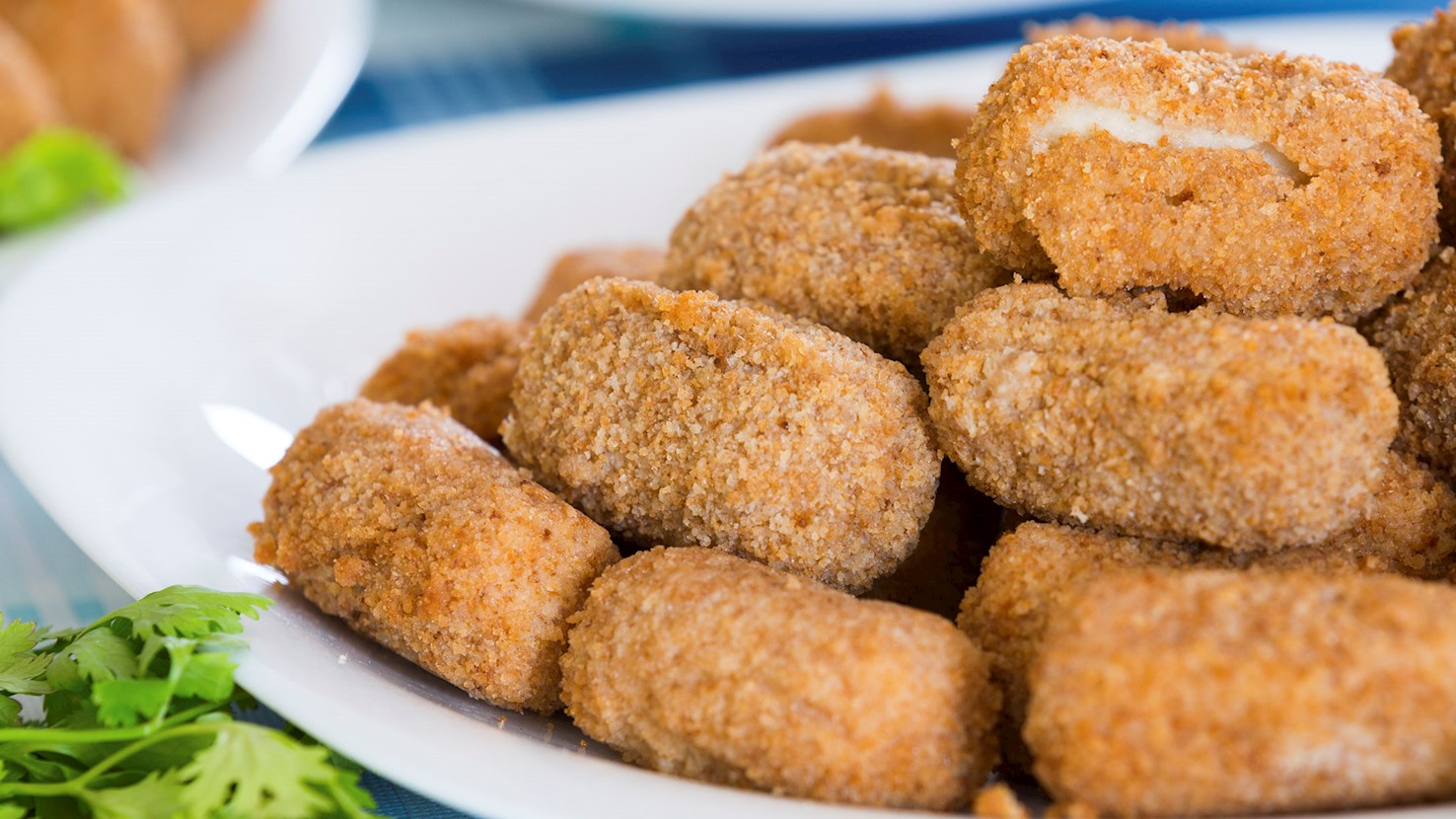
Crocchè is a famous Sicilian deep-fried snack. Also known as crocchè di patatte, and panzarotti in Neapolitan, it is made with mashed potatoes, eggs, Parmigiano and mozzarella cheese, and parsley or mint leaves. Additional ingredients occasionally include provolone cheese, prosciutto, and salami. This tasty snack with a crunchy exterior and silky soft interior was inspired by the famous French croquette, and it originated in the 17th century, when potatoes became a staple ingredient in Sicily. Crocchè is most commonly regarded as Italian street food, but it is occasionally also served in restaurants as a side dish or antipasto. It is best to consume it freshly fried, hot, and crunchy, when it is usually served with a splash of lemon juice.
One of the best-loved dishes of the Alps, tartiflette is a mouth-watering gratinated potato dish from the mountainous region of Savoie in France. It is made with medium-sized potatoes, white wine, Reblochon cheese, onions, smoked salt pork (lardons fumés), and often crème fraîche. The dish is baked in the oven until the cheese browns and melts. The modern tartiflette was invented in the 1980s as a reimagining of an old gratinated potato, cheese, and onion dish called péla. It was created by the union of Reblochon cheesemakers in order to increase the cheese’s popularity. The dish instantly caught the attention of both professional cooks and the general public, and over time it became popular outside the French borders, most notably in Italy and Switzerland. Tartiflette is usually served piping hot, ideally with a green salad and a glass of French white wine on the side.
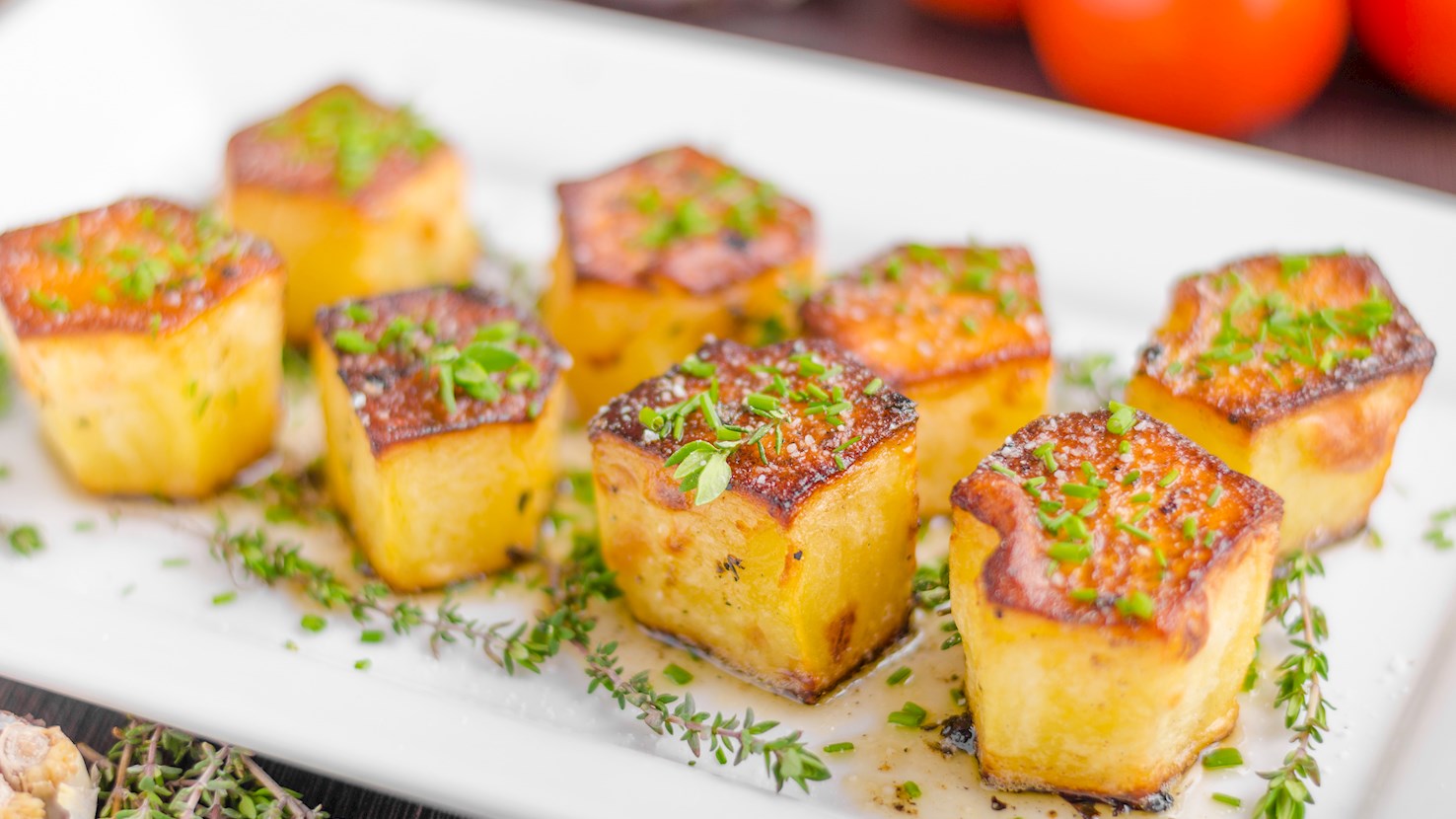
Pommes fondantes is a traditional side dish originating from France and a technique of cooking new potatoes. The potatoes are well-scraped, washed, and dried, and then browned in butter, either whole, or with the ends cut off. They're roasted in butter and chicken or beef stock until fully cooked. If properly prepared, the potatoes should be golden on the outside and melting inside. The flavor of butter is essential to the dish, and margarine should be avoided at all costs because it will leave a sediment at the bottom of the pan that burns and sticks. Pommes fondantes are typically served as an accompaniment to meat dishes.
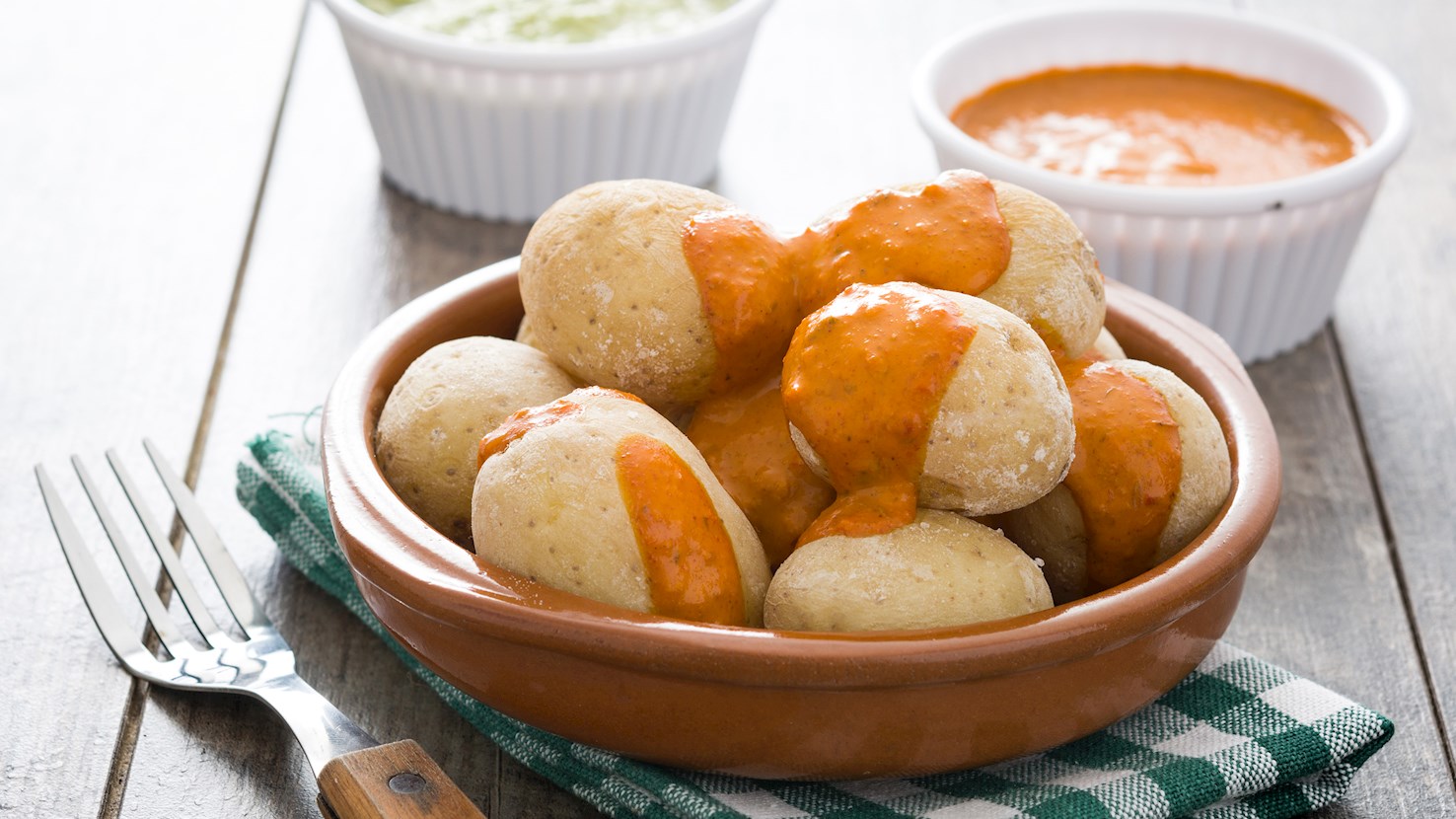
Papas arrugadas (wrinkly potatoes) is the signature dish of the Canary Islands. This incredibly simple specialty is made with whole, unpeeled potatoes that are thoroughly cleaned and then cooked in salted water. The dish was traditionally prepared with seawater, but nowadays, the water is usually just heavily salted. When cooked, the potatoes are put in the same pot without the water. The process allows any additional moisture to evaporate, leaving the potatoes somewhat dry while the skin attains its specific wrinkly appearance—hence the name—and a thin layer of salt. The dish is found in most traditional restaurants, and it is typically served as an accompaniment to hearty stews, though the potatoes can be served on their own as a simple and filling snack. Usually, the potatoes will come drizzled with mojo verde or mojo rojo—two typical Canarias sauces. The dish is best prepared with two potato varieties found on the Canary Islands, papas negra and papas bonita.
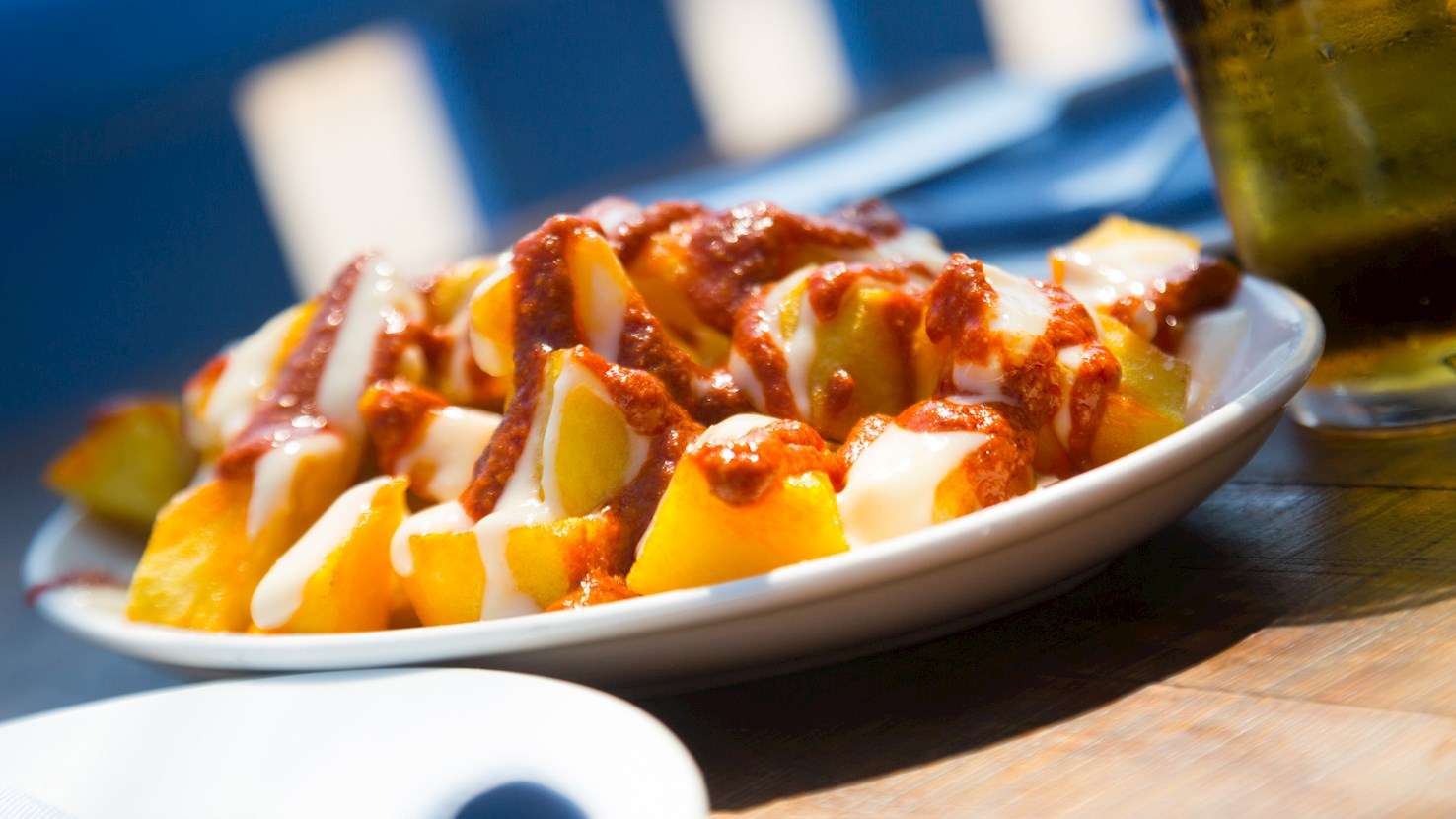
Patatas bravas is a traditional tapas dish consisting of potato cubes drenched in a spicy tomato sauce with onions, garlic, chili powder, and pimentón. This flavorful combination of ingredients is a staple at numerous tapa bars throughout Spain, and it is especially popular as a late-night snack. The dish is traditionally served with aioli sauce on top, but there is also a variety of other toppings that can be ordered with the snack, such as chorizo slices or fried fish.
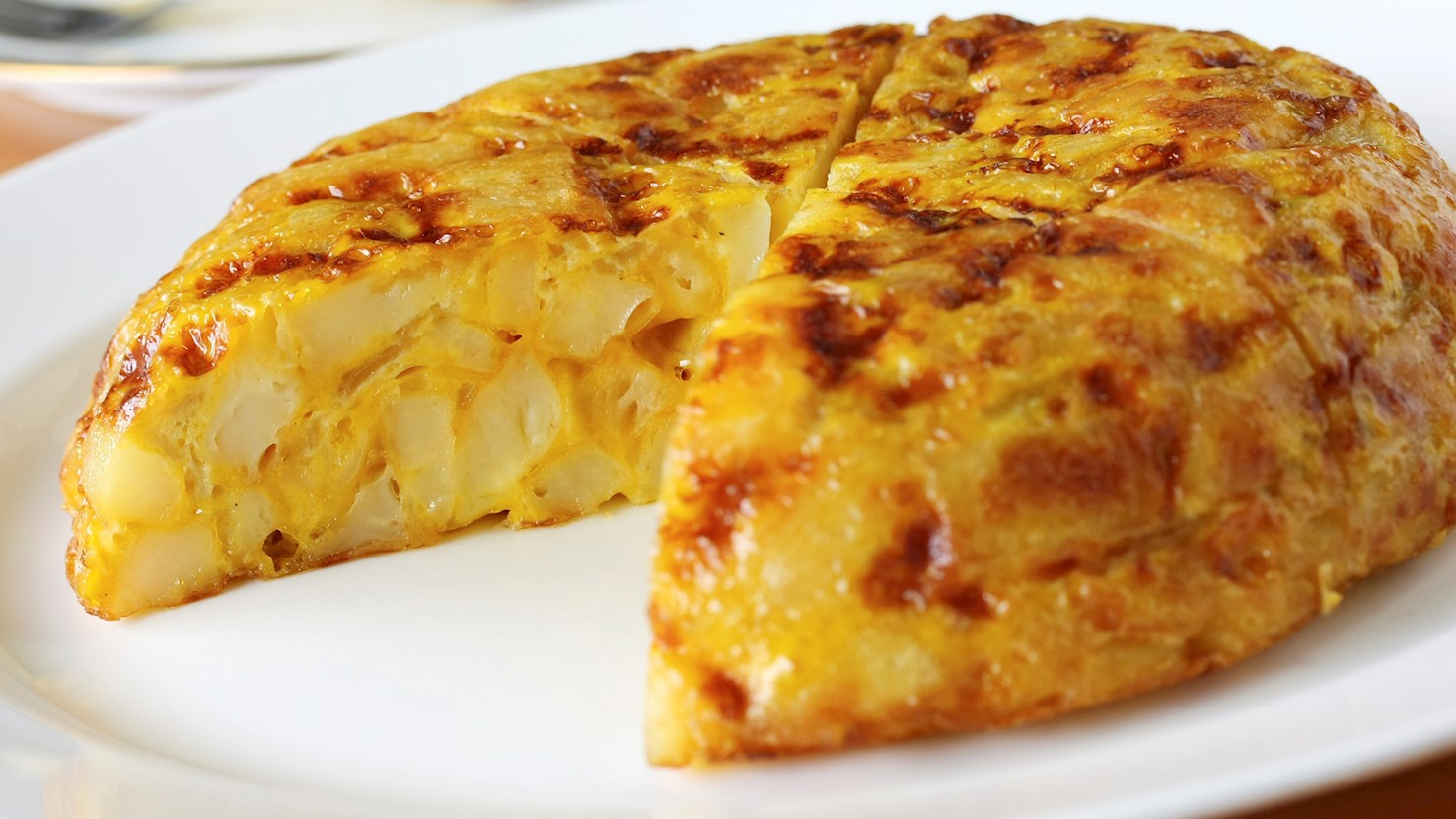
Tortilla de patata, often called Spanish omelette, is a dish from Spain made with little more than potatoes, eggs, olive oil and salt, sometimes enriched with onions depending on preference. It is one of the country’s most recognisable recipes, found in homes, markets and restaurants across every region. What began as a humble preparation using the most accessible ingredients has become a national emblem of Spanish cooking. The origins of tortilla de patata can be traced back to the 19th century, when the widespread cultivation of potatoes in Europe after their introduction from the Americas made them a cheap and nourishing staple. One of the most cited references comes from Villanueva de la Serena in Extremadura, where a local story credits the invention of the dish to a housewife who, during wartime scarcity, made a simple meal for General Tomás de Zumalacárregui using just eggs, potatoes, and a little onion. Zumalacárregui is then said to have popularised it among his troops during the First Carlist War (1830s), because it was filling, cheap, and easy to prepare. Over time, the dish spread beyond its rural beginnings and established itself in urban kitchens, taverns and eventually restaurants. Its reputation grew not through extravagance but through its comforting simplicity and consistency. The preparation is straightforward yet requires care. Potatoes are sliced or diced and gently cooked in olive oil until tender but not browned. They are then mixed with beaten eggs and cooked slowly in a pan until set, with the centre either firm or slightly runny depending on regional and personal tastes. The decision to include onions, a matter of constant debate in Spain, adds sweetness and depth but is by no means universal. Tortilla can be served warm or cold, cut into wedges or cubes, making it as suitable for a full meal as it is for tapas. It can be eaten at any time of day, whether as breakfast, a light lunch, dinner or a late-night snack. Its portability has also made it popular as a dish taken on picnics or eaten at festivals. Variations exist, such as tortillas filled with vegetables, ham or cheese, but the potato and egg base remains constant. Today, tortilla de patata is eaten everywhere in Spain, from cafés and bars to fine dining establishments that may reinterpret it in creative ways.
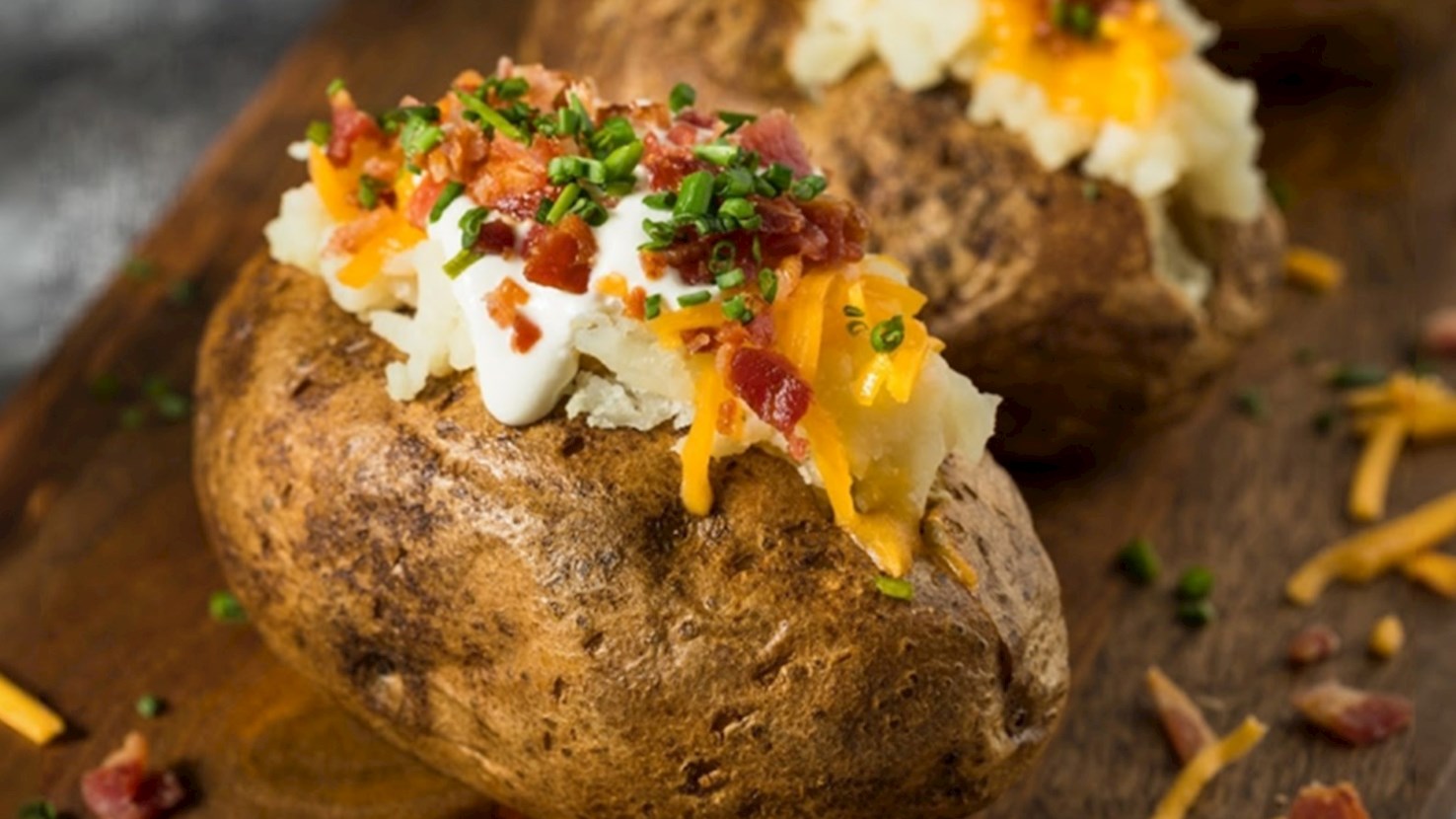
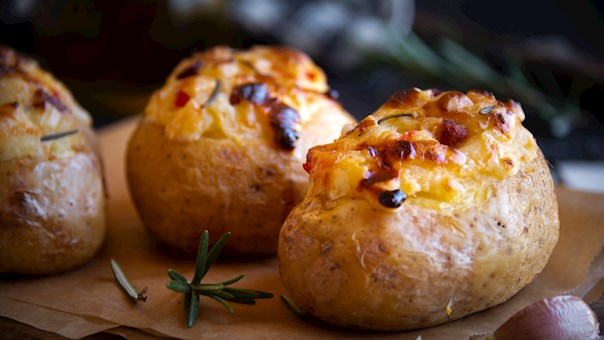
Baked potato is a whole potato baked in the oven until the inside becomes soft and the skin turns crispy. The most commonly used potatoes for baking are russet potatoes, known for their high starch content, which results in a fluffy interior when baked. The potato is first cleaned thoroughly to remove any dirt. Some people prick the potato with a fork or knife to allow steam to escape during baking, which helps prevent it from bursting. The potato is then baked in the oven at a high temperature, usually around 400°F (200°C), for about an hour. The baking process creates a soft, fluffy interior and a crispy, flavorful skin. After baking, the potato is often split open and served with various toppings. Popular toppings include butter, sour cream, shredded cheese, bacon bits, and chives, but more elaborate options like chili, sautéed vegetables, or pulled pork can also be used. This dish can be both a side and a main course, and in recent years it has become a popular street food option.
TasteAtlas food rankings are based on the ratings of the TasteAtlas audience, with a series of mechanisms that recognize real users and that ignore bot,
nationalist or local patriotic ratings, and give additional value to the ratings of users that the system recognizes as knowledgeable.
For the “Top 63 Western European Potato Dishes” list until October 15, 2026, 3,633 ratings were recorded, of which 2,999 were recognized by the system as legitimate.
TasteAtlas Rankings should not be seen as the final global conclusion about food. Their purpose is to promote excellent local foods,
instill pride in traditional dishes, and arouse curiosity about dishes you haven’t tried.







What People Say