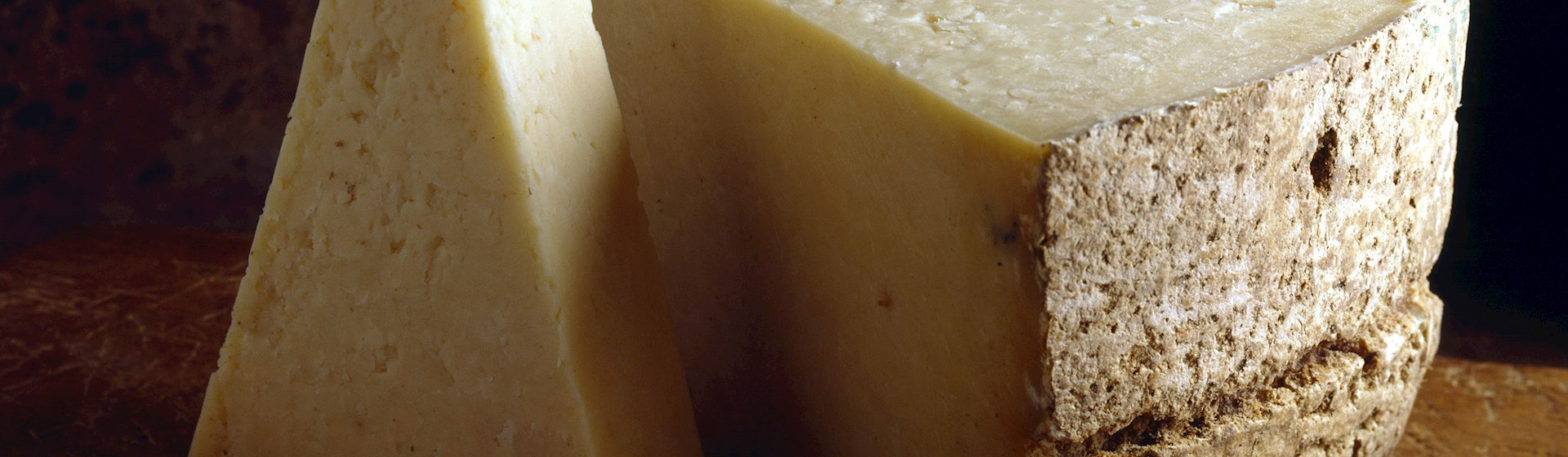
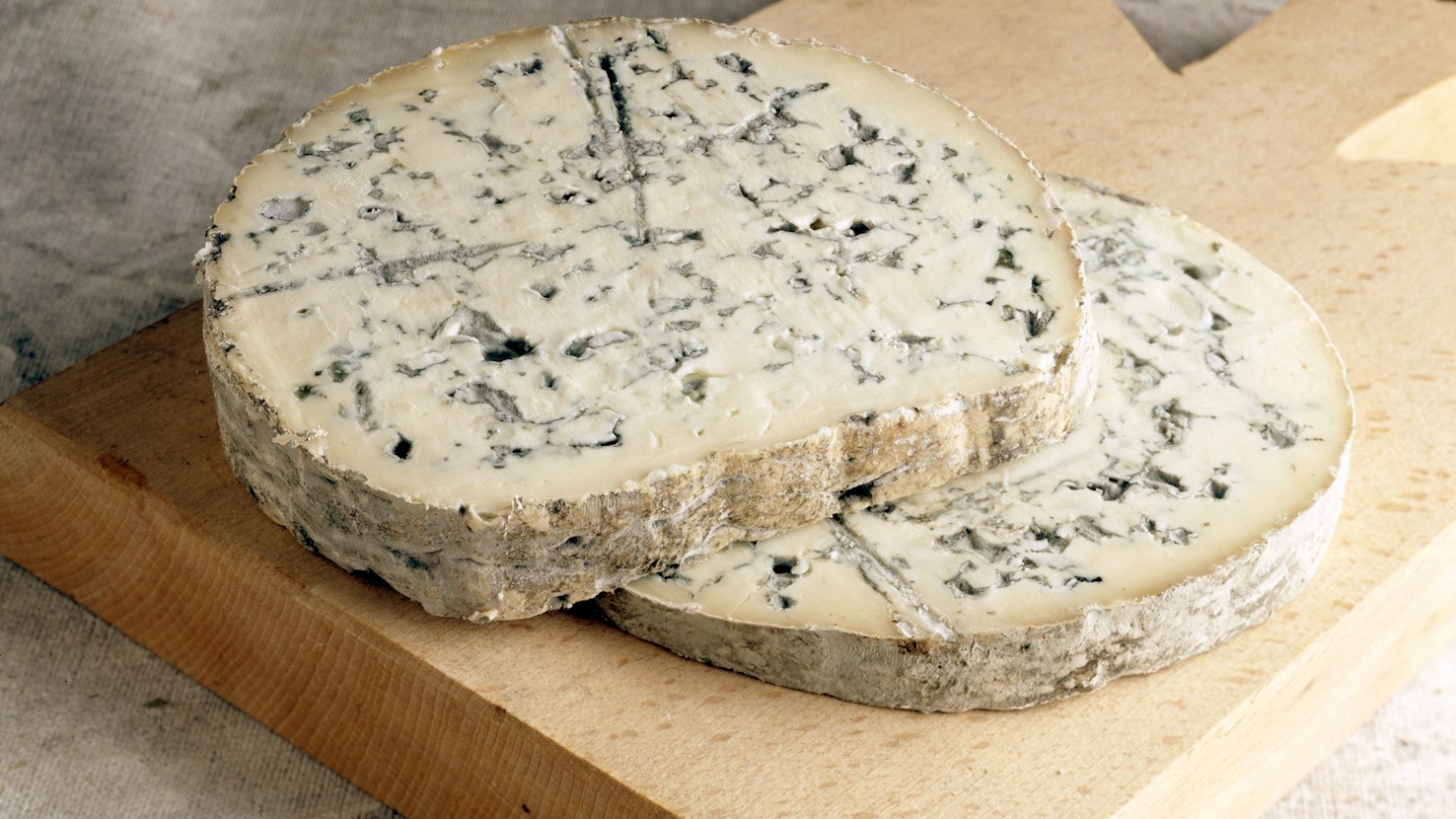
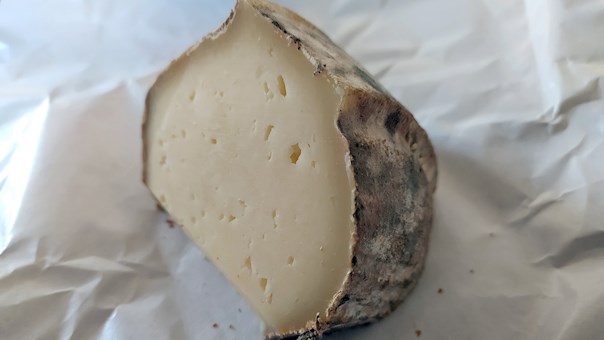
Saint-Nectaire is a semi-hard, double pressed farm cheese made in Auvergne from cow's milk and sold in the shape of a flat wheel. It must mature for at least six weeks on rye straw mats before being marketed. As the cows graze on pastures at high altitudes, the cheese has a unique sweet, hazelnut-like flavor and a smell reminiscent of mushrooms and hay. Its texture is silky and creamy, and it melts in the mouth. It can be recognized by the green label on its thick rind, which can be white, yellow or red, depending on the stage of maturation. It goes perfectly with crusty bread and a glass of red wine.
Salers is a soft farm cheese made from cow's full-fat milk, the final product weighs 35 to 50 kilograms and has been produced in the French region of Cantal since the High Middle Ages. It's made immediately after milking and then matured for at least three months. Its rind is hard and brown and becomes even harder and crustier as it matures. The interior of Salers is rich yellow in color, with fruity aromas and the taste is nutty, spicy and intense, reminiscent of raw onions, wild flowers, and freshly cut grass. Do not confuse it with Cantal cheese, as Salers must be made only from the milk of cows that graze the mountain pastures in the summer. Enjoy it paired with a glass of well-rounded white or red wine.
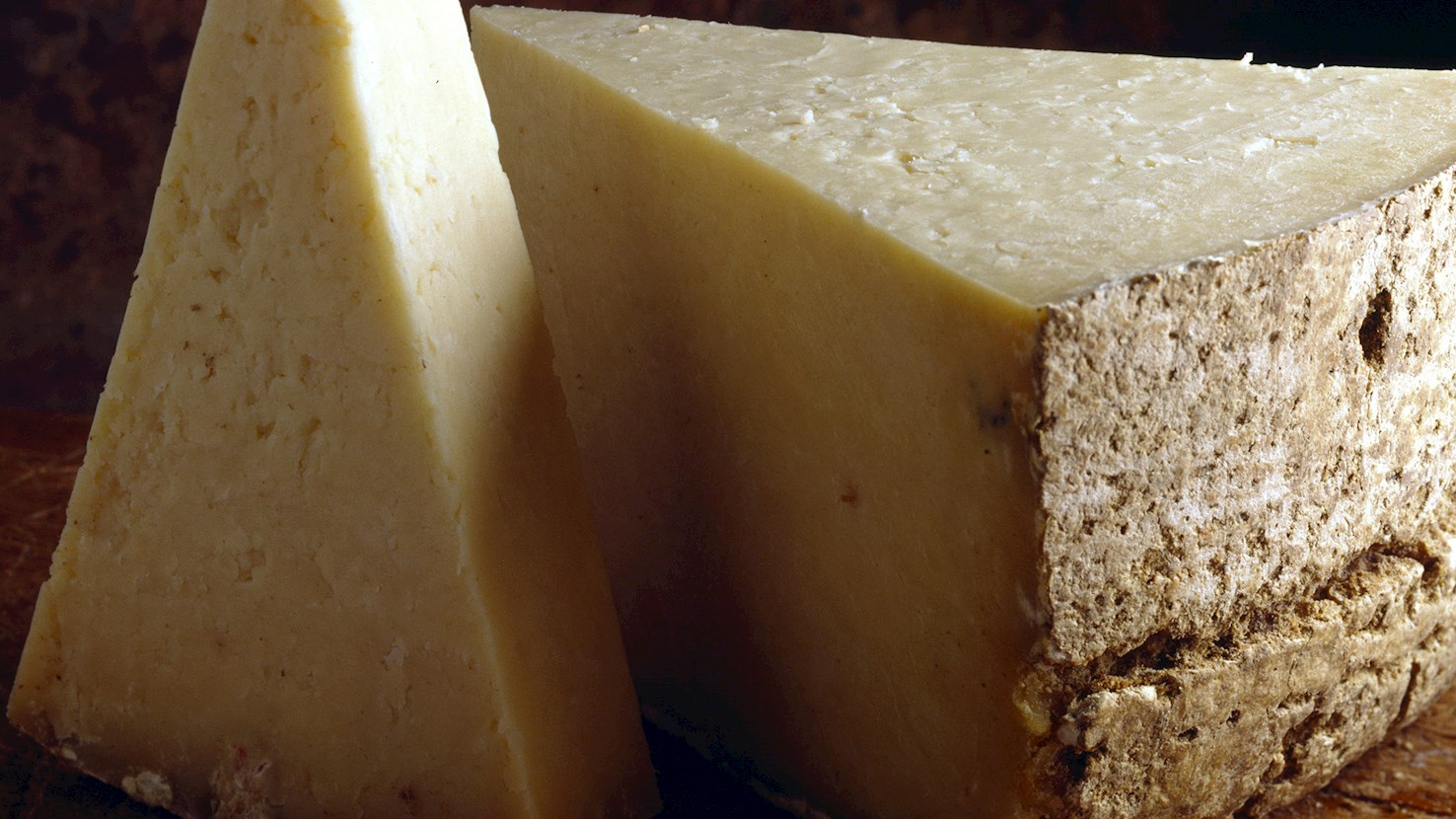
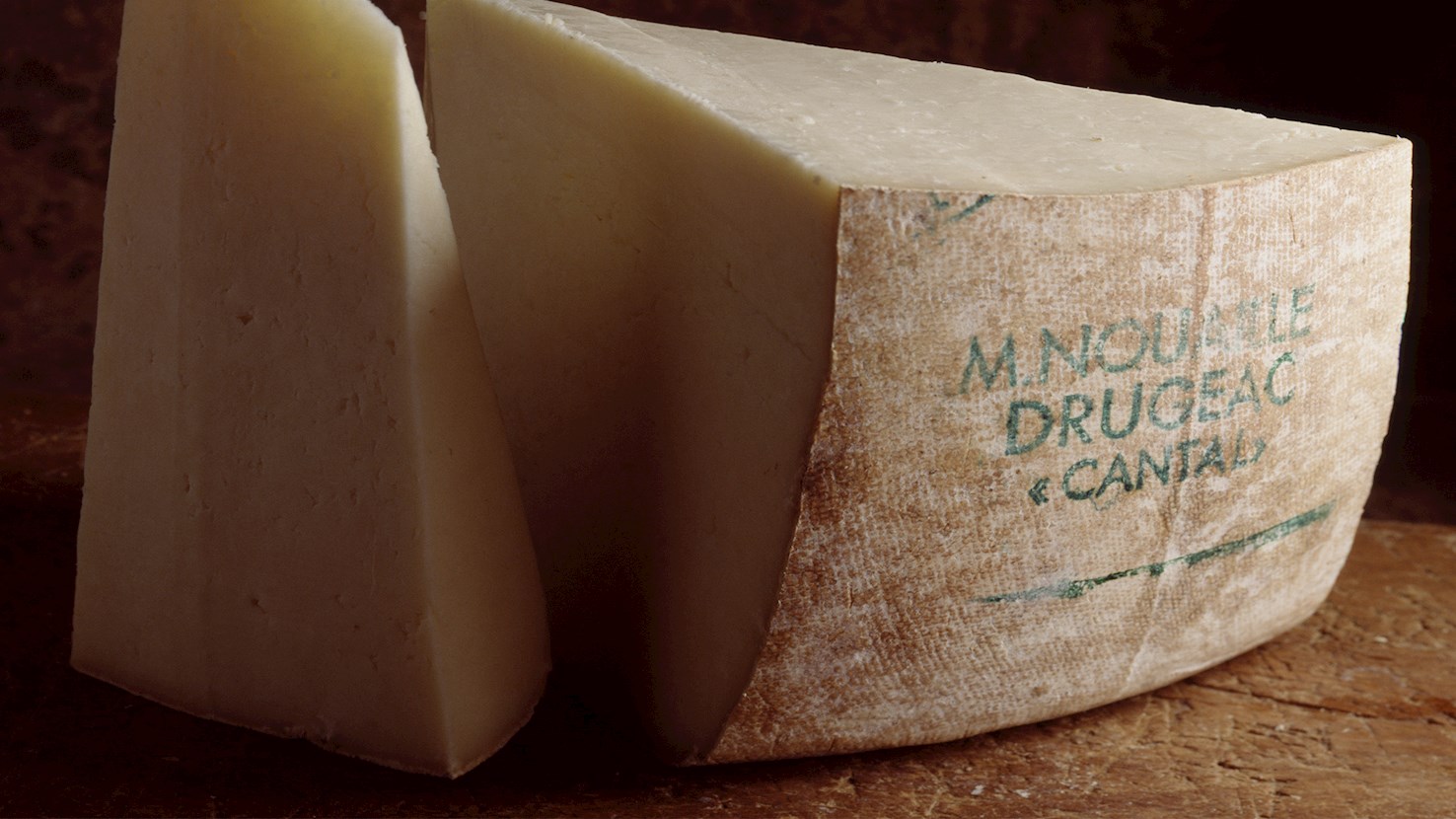
Cantal is a double pressed, semi-hard cow's milk cheese made in the Cantal region in France. The curd is pressed, matured and ground, and the granules are then salted, placed in moulds and pressed again to mature for at least 30 days in cellars where it gets turned regularly. It is one of the oldest French cheeses. Depending on its age, its flavor can vary from fresh, sweet, vanilla-like in young Cantal to strong, peppery, hazelnut-like and spicy in well-matured Cantal (8 months). It is recommended to pair it with fruits such as apples and grapes, use it in soups, fondues and salads or drink a glass of bold red wine with it.
Fourme d'Ambert is an unusually tall, round, blue cheese that is unpressed and uncooked, with a high fat content (50%). It's made from pasteurized or raw cow's milk and it is one of the oldest cheeses in France. On the exterior it has a dry gray moldy rind, while on the interior it is creamy white with green or blue veins dispersed throughout the body. Fourme d'Ambert is matured for up to 28 days in caves in the French regions of Puy-de-Dôme, Cantal, and Loire. During the maturation process, the cheese is injected with sweet white wine. The flavor is delicate and mild with a velvety mouthfeel, with earthy, mushroomy, sweet, and creamy notes. Serve it with port wine and sliced fresh pears, apples, walnuts, and raisins for a nice dessert, or crumble it on salads.
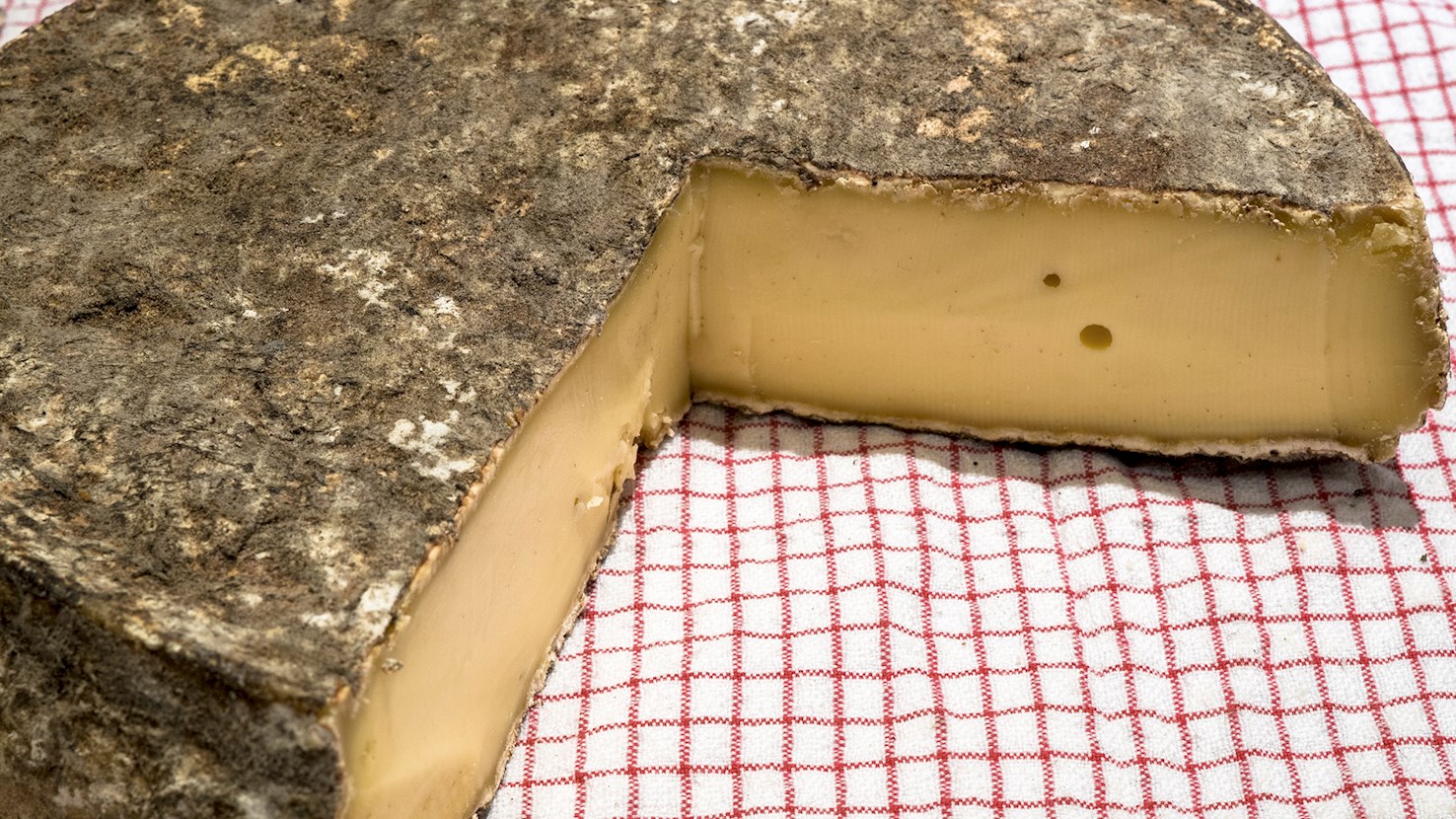
Tomme d'Auvergne is a semi-hard cow's milk cheese from France. Its origins lie in the high pastures of Auvergne, where farmers turned surplus milk into pressed cheeses suited for aging through the cold months. Belonging to the family of tommes de montagne—pressed, uncooked cheeses made in mountainous regions of France—tomme d'Auvergne distinguishes itself through its volcanic environment, cool cellars, and the milk of local cow breeds such as Montbéliarde or Salers. The cheese has a cylindrical shape, measuring about 4.5 cm (2 inches) high, 17.5 to 20 cm (7-8 inches) in diameter, and weighing between 600 g and 1.5 kg (1.3-3.3 lb), making it smaller and more compact than many other tommes. Its production begins with raw or thermized cow's milk, which is gently heated and combined with rennet to form a curd. The curd is cut into small grains, lightly stirred, and pressed to remove whey, then molded into rounds. After demolding, the cheeses are salted either by hand or in brine, then placed in humid, cool cellars carved from volcanic rock to mature for six to ten weeks. During aging, the rind develops its recognizable mottled gray and white bloom, a result of natural cellar microflora. The interior paste becomes firm yet supple, pale ivory in color, and smooth, sometimes showing small, irregular eyes. The flavor starts lactic and slightly acidic, with fresh butter and cream notes, and deepens as it matures, gaining nutty, earthy tones with a mild cellar aroma. Some producers extend maturation for a denser texture and more pronounced flavor, while younger wheels retain a fresher tang. The natural rind, left unwashed, gives the cheese its characteristic rustic look and contributes subtle mushroom-like aromas. Tomme d'Auvergne is eaten at room temperature, served on a cheese board or with rustic bread, cured meats, or boiled potatoes. It pairs well with red wines from the region, such as Saint-Pourçain or Côtes-d'Auvergne, whose fruit and acidity balance the cheese's smooth texture, or with dry white wines or local ciders that bring out its lactic freshness and soft nuttiness.
Roue de Ris is a sheep’s-milk cheese produced in the commune of Ris in France. Its development stems from the artisanal dairy practices of the Limagne valley where local producers began refining ewe’s milk into pressed, cave-aged wheels to highlight the richness of regional flocks. The cheese takes its name from its shape—“roue,” meaning wheel—and its place of origin. It is made from pasteurized sheep’s milk, coagulated with rennet, and formed into large cylindrical molds weighing about seven to eight kilograms (15-17 lb) and measuring close to thirty centimeters (12 inches) across. After molding, the curd is lightly pressed, salted on the surface, and transferred to cellars where it matures for roughly three months. During aging, the rind forms naturally and develops a light brown to gray hue, while the paste remains pale, supple, and slightly elastic with small, irregular openings. The flavor profile evolves from mild and milky at the start of ripening to rounder and more aromatic with nut and hay notes toward the end. Variations of Roue de Ris may arise from differences in humidity and airflow within aging caves, influencing both rind character and texture, or from adjustments in salting, which can yield a slightly stronger or gentler expression. Some producers also market smaller wheels aged for shorter periods to emphasize freshness. What distinguishes Roue de Ris is its scale and its use of pure ewe’s milk in a large, pressed format more commonly associated with cow’s-milk cheeses, producing a unique balance between density and creaminess. The cheese is eaten at room temperature, typically as part of a cheese board or in rustic meals with country bread, fruit, and cured meats. It pairs well with dry white wines from the Auvergne or a light red such as a Saint-Pourçain, which complements its smooth texture and subtly nutty aroma.
Grand tomachon is a bloomy rind, cow's milk, press-drained cheese produced in Auvergne. Its roots lie in the dairying culture of the region where local producers shaped and aged semi-hard cheeses for local markets, and over time grand tomachon became distinguished for its relatively brief maturation and characteristic rind. In its manufacture whole or thermised cow’s milk is coagulated, the curd cut and placed into flat cylindrical moulds measuring roughly 32 cm (12 inches) in diameter and about 7 cm (3 inches) in height, then lightly pressed and drained, salted, and matured for around five to six weeks until the rind develops a grey, slightly “flowered” appearance and faint yellow spots signify readiness. The paste inside is semi-firm, shows scattered small eyes, and offers a lactic, mildly nutty profile with subtle cellar or undergrowth notes. Variants of grand tomachon involve differences in aging duration—short-aged wheels maintain firmer texture and fresher lactone notes while those aged at the upper limit of six weeks soften more and deepen in aroma—and some producers may alter the crust-rubbing process or the humidity during maturation to affect rind development and flavor intensity. A notable feature of this cheese lies in its size and rind type: much larger than typical tommes at around 6 kg (13 lb) and bearing a grey bloomy rind rather than a washed or waxed coating, giving it its distinctive look and profile. Grand tomachon is best enjoyed at room temperature on a cheese board or as part of a meal, served with country bread and fresh fruit or raw vegetables, and pairs well with a crisp white wine such as a regional Chardonnay or an AOC red like Saint-Pourçain, both of which can complement its smooth texture and gentle flavor.
Fromage de pays is a semi-hard, blue cow's milk cheese produced in the Cantal department. Its origin comes from small-scale dairying in that locality where milk from local herds was turned into a pressed, aged cheese under a commercial mark defined for the region. In its manufacture, whole cow’s milk is collected from farms within the defined territory, the milk is coagulated, the curd is cut and then pressed into cylindrical molds, salted either by immersion or rubbing, and then aged in cellars until the paste becomes firm and the rind natural. The shape commonly is a flattened cylinder and the weight may vary, while the paste develops small eyes and a fine texture typical of that region. Variants of Fromage de pays include versions with slightly different aging periods—short-aged wheels maintain a firmer texture and milder flavor while longer-aged examples become creamier internally and show deeper nutty notes—and some makers adjust the salt or pressing to modulate moisture and flavor intensity. Fromage de pays is served at room temperature on a cheese platter, often with country bread and fresh fruit, and pairs well with a full-bodied red wine or a sturdy white wine from the region that can stand up to the firm texture and subtle nut-and-cream flavor of the cheese
Fromage aux artisons is a farmhouse cheese made with unpasteurized cow's milk from the Velay plateau (Haute-Loire) in France. Its origins trace back to rural farms around the 16th century where households used milk from their own herds to produce cheeses for local consumption and payment of rents, and over time artisans refined the process of allowing acarus mites (known locally as artisons) to colonize the rind under natural conditions. The production process begins by blending the partly-skimmed milk of the previous day with fresh whole milk, adding rennet to coagulate, cutting the curd, molding and lightly salting it, then allowing the cheese to dry for two to five days on poplar wooden slats; after this initial phase the cheese moves to an aging room where thousands of acarus (Acarus siro) are introduced or allowed to develop naturally on the rind and over a period of three weeks to two months the mites dig into the exterior and influence the aroma and texture of the cheese. Variations include cheeses aged for different durations—shorter affinage yields a firmer, chalkier paste, while longer aging delivers a more creamy interior and richer aroma—and some producers make organic versions of the cheese with certification, or carry out the aging entirely in mountain caves for slower development. What sets this cheese apart is the deliberate use of the mites on the rind as a key part of the aging process, giving the cheese its characteristic rind sculpture and subtle under-woodland flavor coupled with cream or chamomile notes. Fromage aux artisons is best served at room temperature on a cheese platter or as part of a meal, with both its rind and paste enjoyed together, and it pairs effectively with a crisp white wine from the region or a light sweet aperitif wine that balances the mild acidity and hides of dry under-wood flavor.
Fourme de Rochefort‑Montagne is a semi-hard, raw-cow-milk cheese produced around the Rochefort-Montagne region of France. Its origin reaches back over two centuries when farmers in the mountain pastures used immediate renneting of freshly-milked raw milk and simple draining methods to make a firm, press-drained cheese that could serve as payment for rent and as a staple of alpine dairy economy. In the production process whole raw cow’s milk is renneted soon after milking, the curd is cut and sometimes stirred with hot water to encourage firm curd formation, then pressed and drained inside cylindrical moulds (diameter roughly 28-30 cm / 12 inches, height 8-12 cm / 3-5 inches, weight 5-8 kg / 11-18 lb) for about 24 hours, salted, then aged in cellars or caves for a minimum of 3 weeks (often up to 2-4 months) until the rind becomes ash-grey with brownish reflections and the paste ivory-colored with moisture and aromas of dried fruit, warm milk and subtle acidity. Variations of Fourme de Rochefort-Montagne arise when producers adjust the aging duration (shorter aging yields a firmer texture and milder flavor, longer aging produces a softer paste with deeper aroma), or when milk from different herds and altitudes is used, and some versions now carry organic certification; a distinguishing feature of this cheese is its raw-milk basis combined with press-drainage and modest size cylinders which give it a relatively firm yet supple texture and a flavor profile that sits between mild and mountain-intense. Fourme de Rochefort-Montagne is best served at room temperature on a cheese board or sliced as part of a main dish, and pairs well with a full-bodied regional red wine or with a nutty-aromatic white that complements its dairy-rich paste and fruit-drying notes.
TasteAtlas food rankings are based on the ratings of the TasteAtlas audience, with a series of mechanisms that recognize real users and that ignore bot,
nationalist or local patriotic ratings, and give additional value to the ratings of users that the system recognizes as knowledgeable.
For the “Top 11 Auvergnese Semi-hard Cheeses” list until May 30, 2026, 336 ratings were recorded, of which 256 were recognized by the system as legitimate.
TasteAtlas Rankings should not be seen as the final global conclusion about food. Their purpose is to promote excellent local foods,
instill pride in traditional dishes, and arouse curiosity about dishes you haven’t tried.