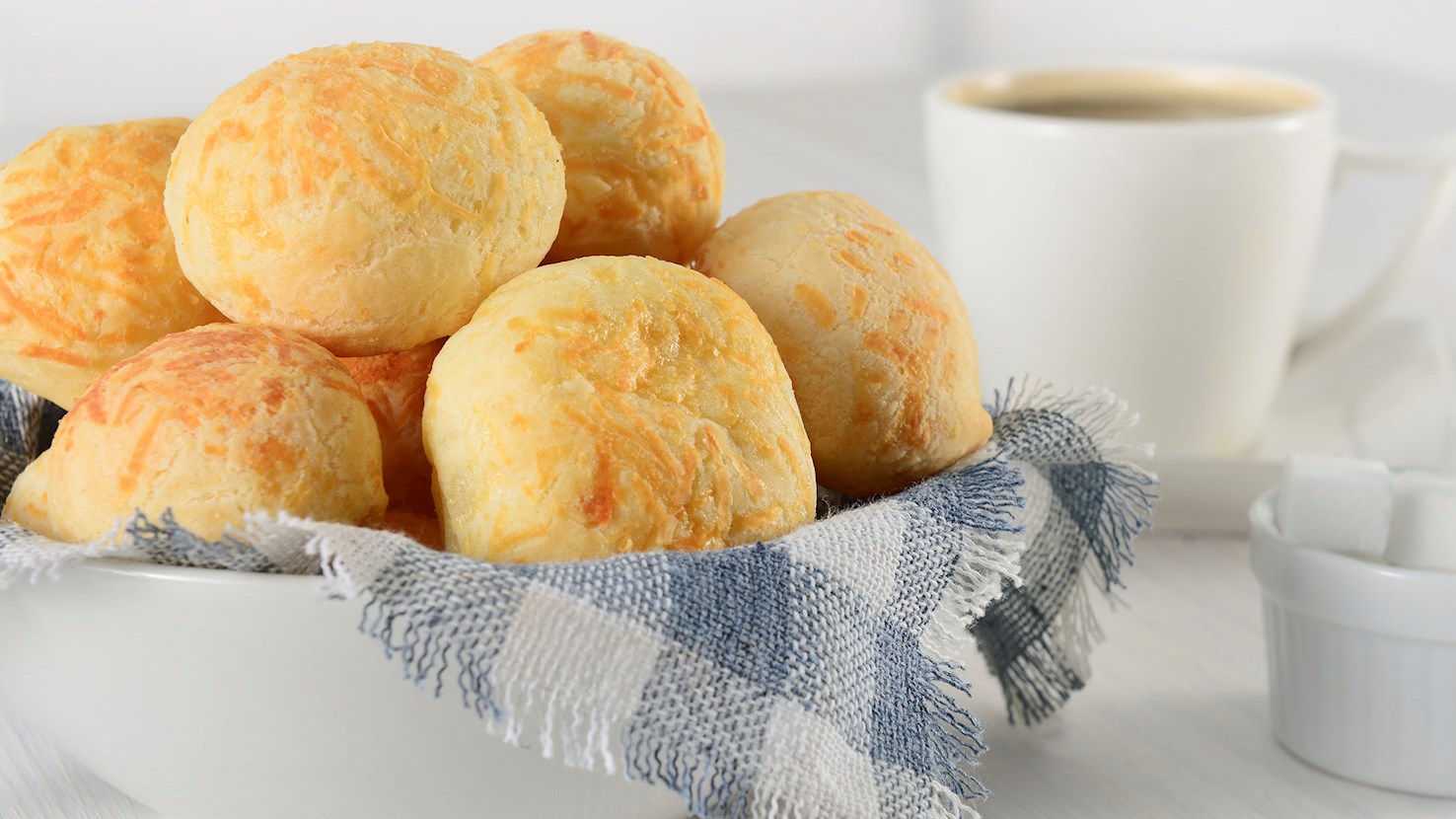
Literally translated to cheese bread, pão de queijo has its origins in the culinary inventions of African slaves, when they started to use the residue of the cassava plant. A fine white powder, or starch, was rolled into balls and baked. At the time, no cheese was added, so it was just baked starch, but at the end of the 19th century, when slavery ended, other foods started to become available to the Afro-Brazilians for the first time. In the state of Minas Gerais, the dairy center of Brazil, cheese and milk started to be added to the starchy balls, and pão de queijo was created. Today, it is a popular Brazilian snack or breakfast food that is also widely consumed in northern Argentina, sold at numerous coffee shops, snack bars, and bakeries.
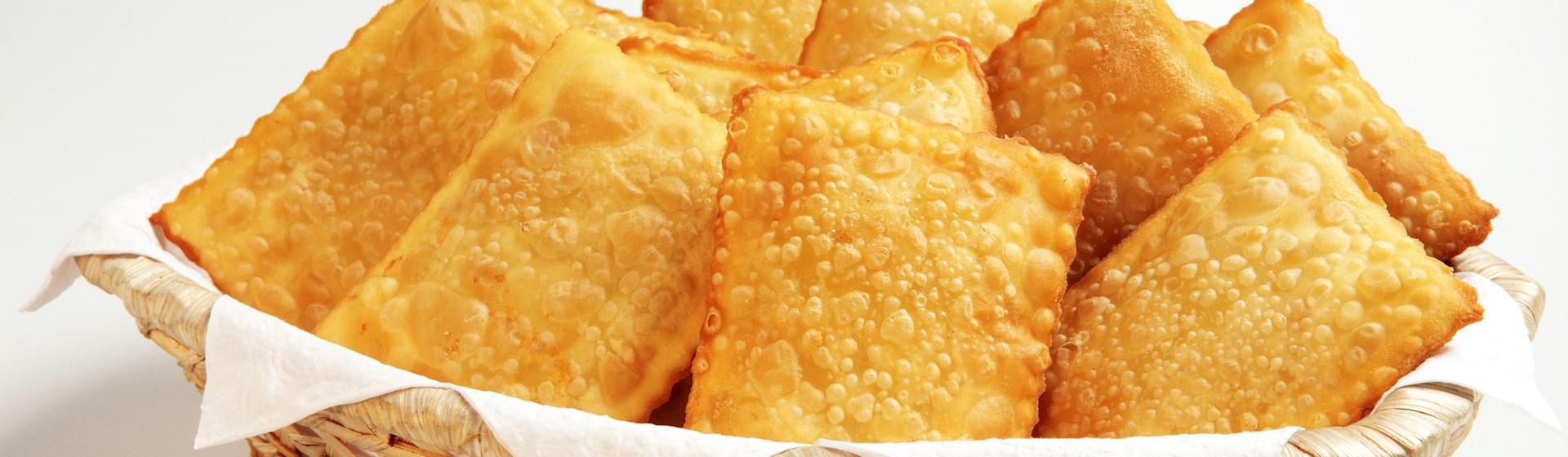
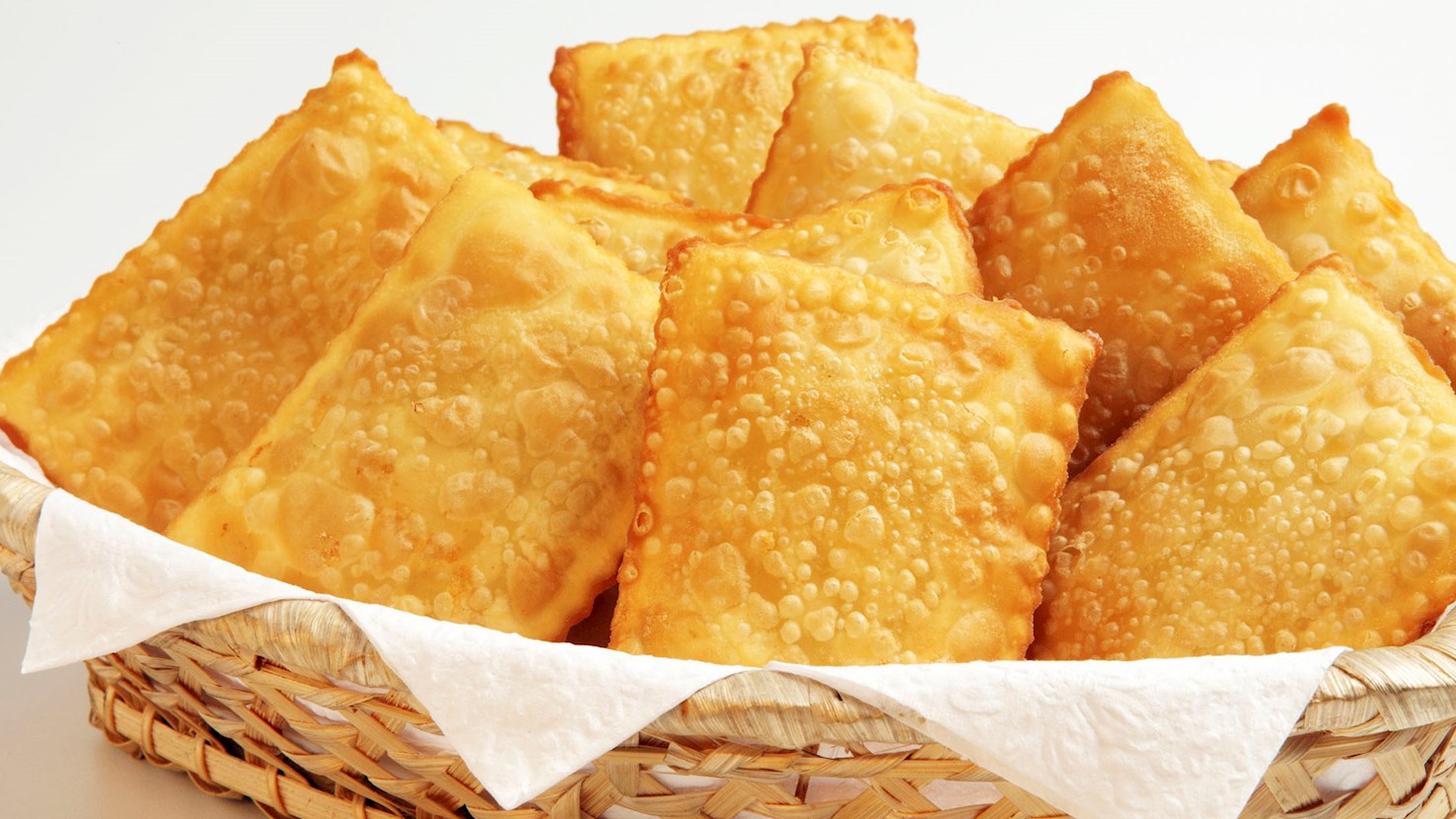
One of the most common fast food items in Brazil is known as pastel, a deep-fried, stuffed pastry. This half-circle or rectangle-shaped miniature pie is stuffed with a variety of ingredients, most commonly shredded chicken, ground beef, mozzarella, or small shrimps. Sweet varieties also exist, and they are usually made with chocolate, bananas, or guava jam, but they are not as common as their savory counterparts. The exact origin of the dish is not familiar, but it is believed that pastel evolved from the Chinese spring roll, which was brought to Brazil by Japanese immigrants. The shape and the ingredients changed, but pastel retained its thin and crispy outer layer. They are usually served hot and are most commonly accompanied by beer or a glass of sugarcane juice. It is a snack that is usually sold in snack bars, and it is almost always meant to be eaten by hand.
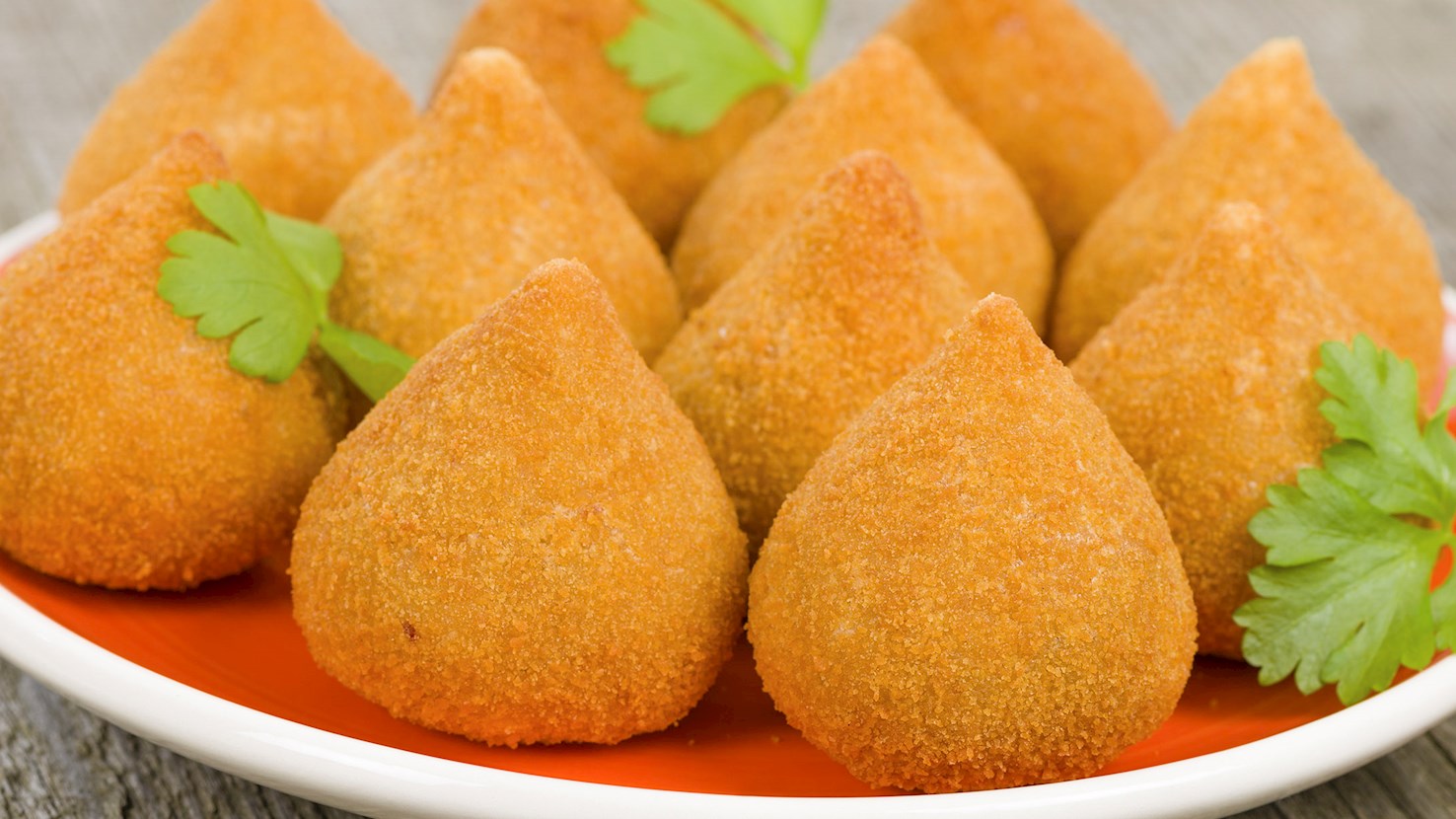
One of Brazil's favorite street foods, coxinha (lit. little thigh) is a crispy croquette filled with chicken meat and cream cheese that is cleverly shaped into a chicken drumstick, then breaded and deep-fried. Coxinha originated around São Paulo in the 19th century, and by the 1950s it spread to Rio de Janeiro and Paraná, having now become one of the most popular salgados (savory appetizers) across the country. Legend has it that coxinha was first made for the Brazilian princess Isabel's son who only liked chicken thigh meat. However, according to food historians, it was probably invented during the industrialization of São Paulo to be marketed as a cheaper and more durable substitute to traditional chicken cuts that were sold at the gates of local factories as snacks for the workers. Nowadays, coxinhas can be found anywhere from Brazilian snack bars called lanchonetes, cafés, buffets and even bakeries to numerous stand-up lunch counters and street food stalls. The perfect coxinha has a golden, crunchy crust which envelopes the chicken stock and flour dough and breaks away into its creamy interior made with shredded chicken breast and Catupiry requeijão cremoso cheese. It is typically flavored with onion, garlic, cilantro, and lime. For a well-rounded snack, these delicious Brazilian chicken-filled nibbles are usually served with hot chili sauce, vinaigrette or garlic mayonnaise, and best enjoyed with a glass of cold beer.
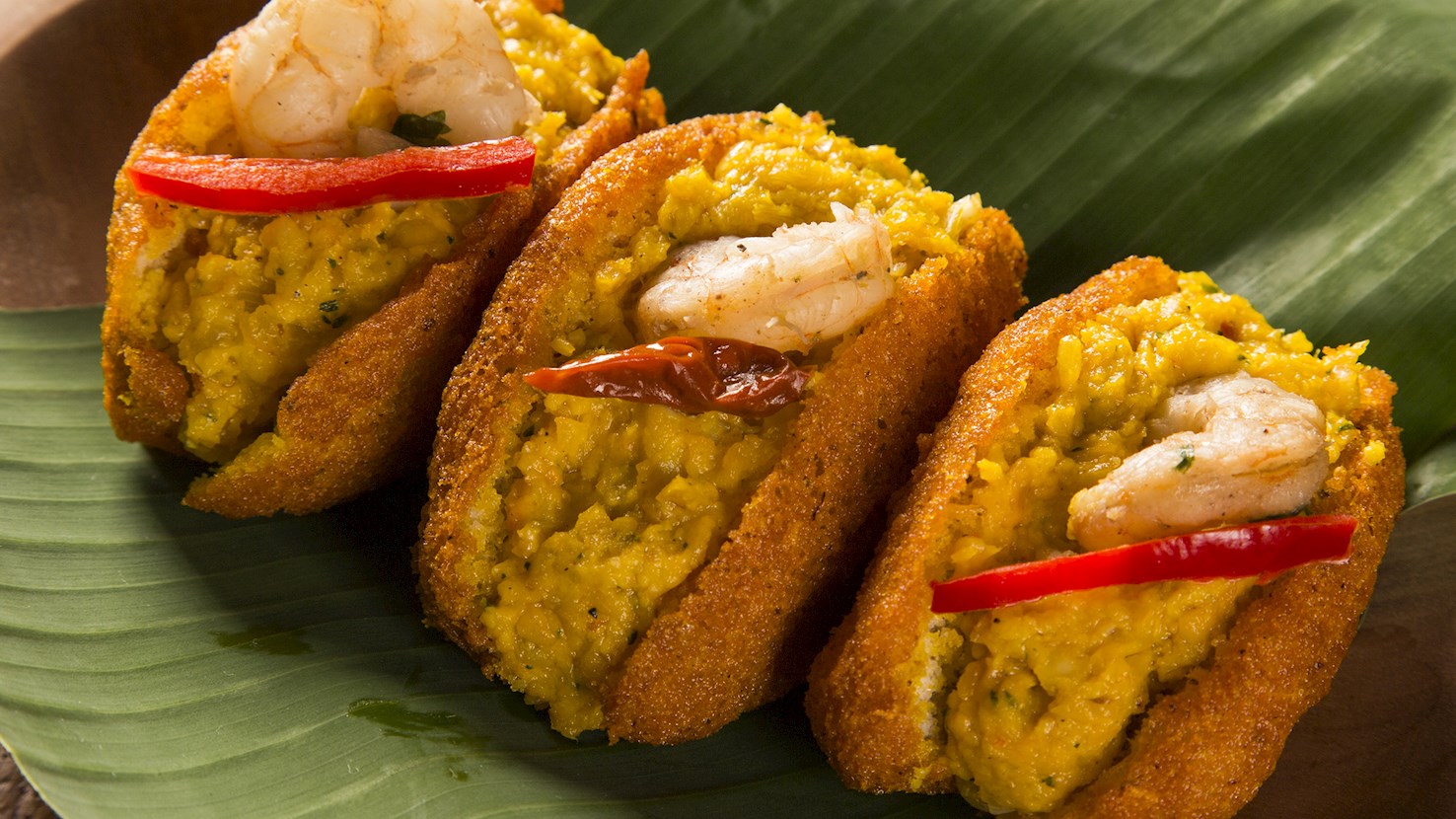
In Bahia, the northeastern state of Brazil, there is a dish that is considered to be the most popular street food around, called acarajé. It consists of black-eyed peas or cowpeas that are formed into a ball, deep-fried in dendé palm oil, split in half, then stuffed with flavorful, spicy pastes made from numerous ingredients such as cashews, palm oil, and shrimp. The most common accompaniments to the dish include a tomato salad and homemade hot pepper sauces. The recipe for the dish originated during the colonial period of the country, from the Nigerian slaves who first started selling it on the streets of Brazil. Today, acarajé represents a good example of how African influences have been shaping Brazil's cultural heritage and its culinary identity.
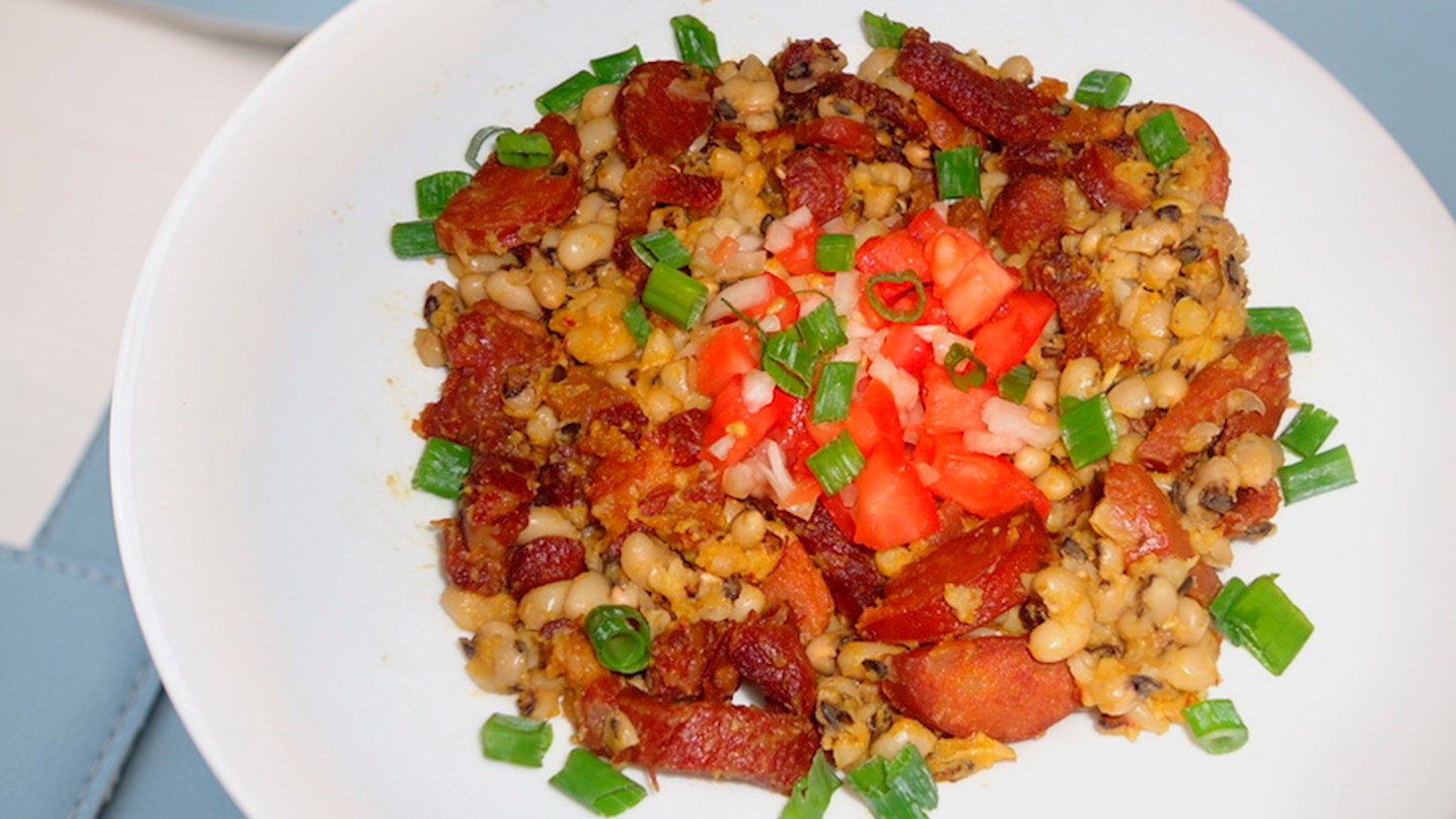
Arrumadinho is a complex Brazilian dish that is usually served as an appetizer. The dish is a combination of four elements that are neatly organized and served together as a complete meal. The essential parts are sliced, sun-dried beef, diced and mixed vegetable vinaigrette, beans, typically black eyed peas, and farofa – a toasted cassava flour mixture. All of the ingredients are seasoned with clarified butter, neatly arranged and served on a plate. The four elements of arrumadinho can either be mixed or consumed as individual dishes. A plate of arrumadinho is usually shared by a couple or a group of people, typically followed by a glass of cold beer or a freshly prepared caipirinha. The dish can usually be found in the northeast of Brazil, more precisely in the state of Pernambuco, where it is believed to have originated. It is often sold at food stands as a snack, but it is also commonly served as an appetizer in elegant restaurants.
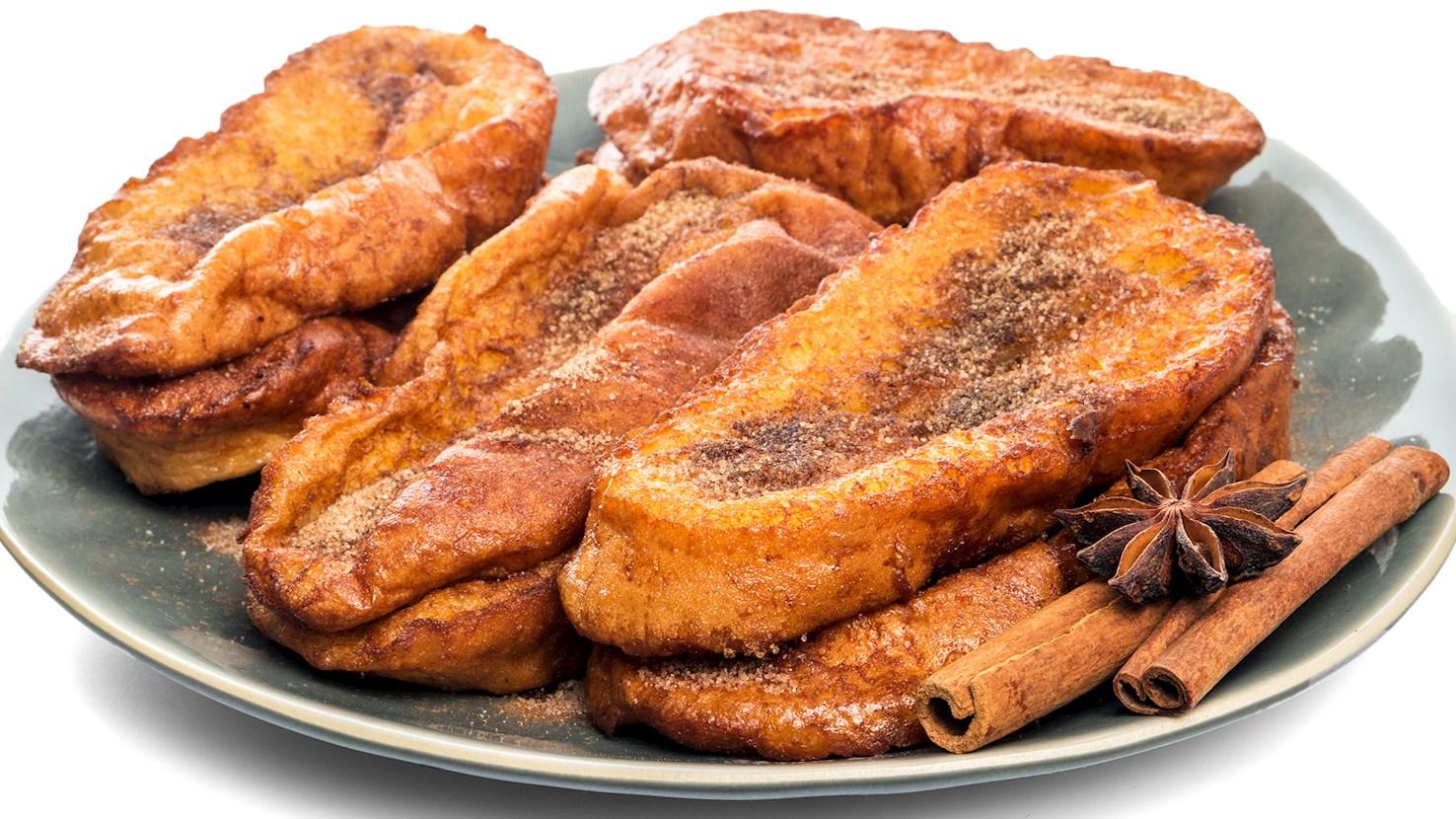
Rabanada is the Portuguese and Brazilian version of french toast. It's made with round or oval stale bread cut in thick slices that's dipped in milk (or milk, sugar, and vanilla) and beaten eggs, fried in oil, then sprinkled with cinnamon sugar. As a result, rabanada is sweeter and crunchier than the American french toast. The first mention of rabanada dates back to the 15th century, when it was described by Juan del Encina as a dish that's helpful for recovery from childbirth, which is why rabanada is alsko known as fatia parida, meaning slices for the new mom. The first recipe dates back to the 17th century, and by the beginning of the 20th century, the treat was commonly served in the taverns of Madrid, accompanied by jugs of wine. Nowadays, it is particularly popular during Christmas time but can be enjoyed year-round in many parts of Brazil and Portugal.
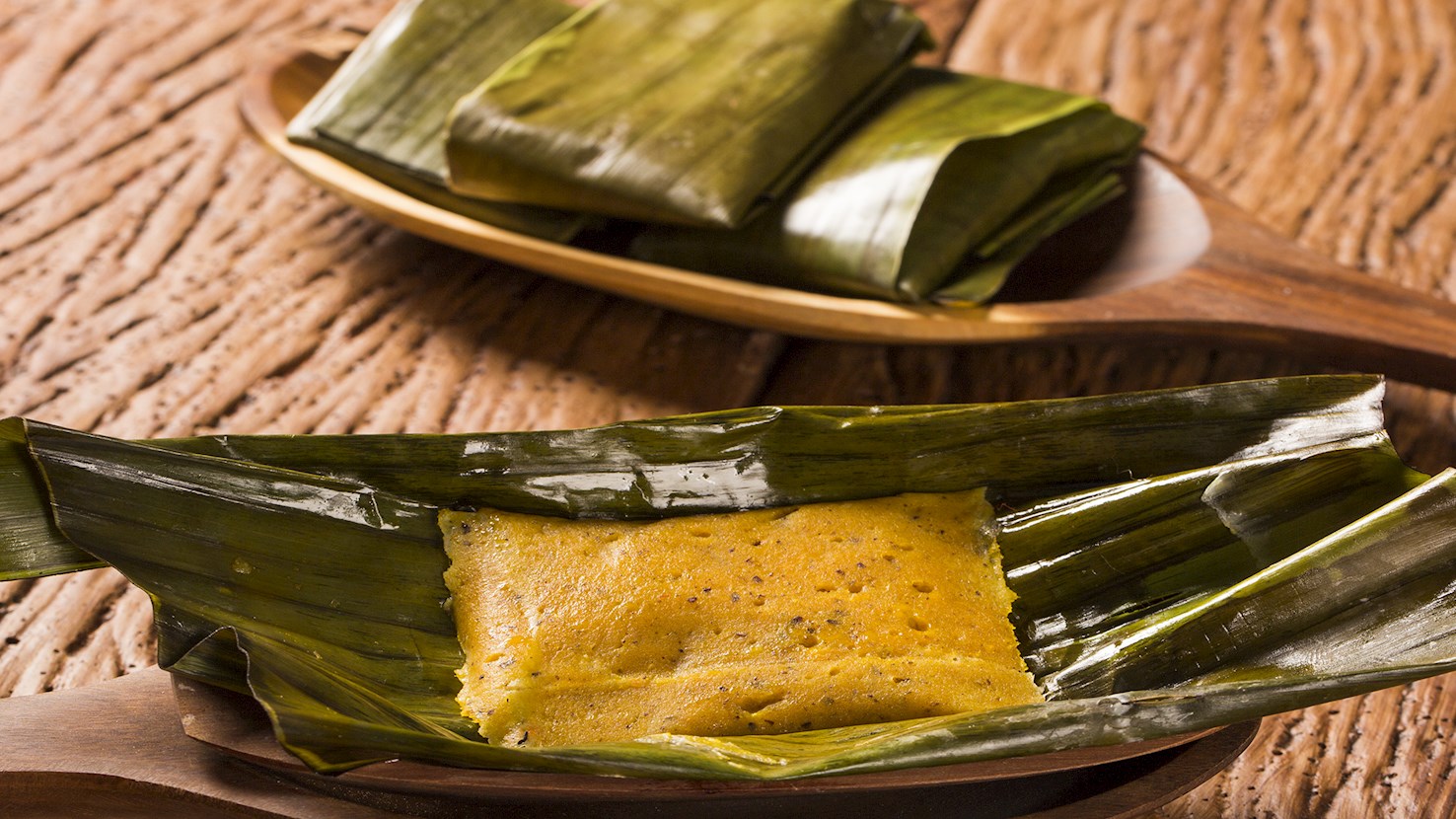
Abará is a popular Brazilian snack consisting of black-eyed peas or beans that are mashed into a paste, then steamed in a banana leaf. The dish is very similar to another Brazilian snack, acarajé, which is fried instead of being boiled or steamed. Black-eyed peas are a staple of traditional Brazilian cuisine, especially in the Bahia region, the center of Brazil's Afro-Brazilian culture. Abará is closely associated with Candomblé, an Afro-Brazilian religion where it is one of the ritual foods offered to the gods and goddesses (called the Orixás) during the ceremonial festivities. The dish is typically served at room temperature, and it is best accompanied by a freshly-made hot pepper sauce, served in most restaurants in Bahia, which is considered unusual elsewhere in the country.
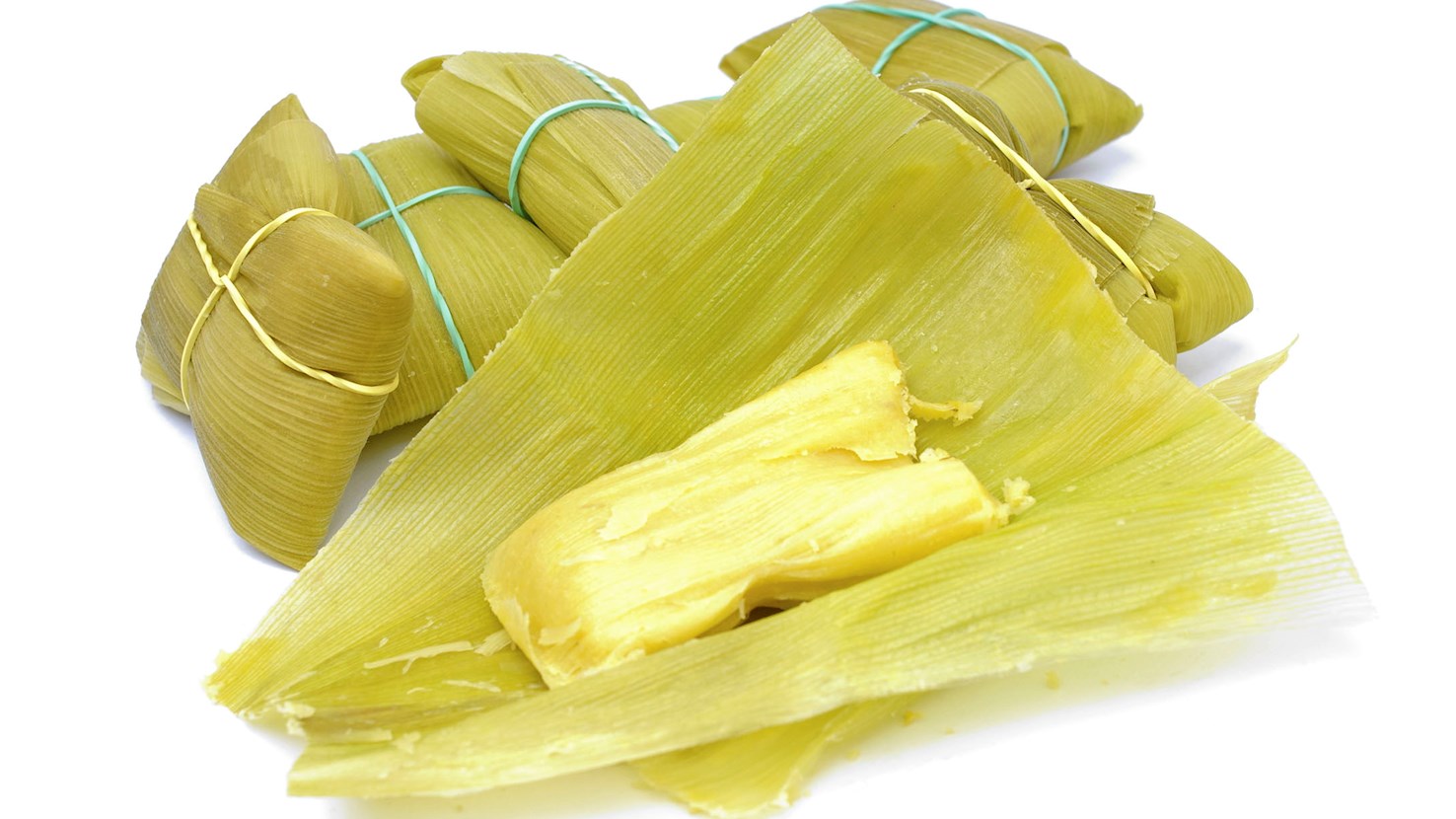
Similar to Mexican tamales, pamonha is a traditional dish made with fresh corn. The dough, or more precisely the paste, is made out of grated and juiced corn. It is tightly wrapped in fresh corn husks and cooked in boiling water. Depending on the ingredients, pamonhas can be either sweet or savory. The savory varieties are usually prepared plain or made with chopped meat, sausages, or cheese. The sweet version of pamonhas is often made by incorporating coconut milk or coconut pulp in the dough. Pamonhas are traditionally eaten all year round in Brazil, but they are usually associated with Festa Junina, the annual Brazilian festivity celebrated throughout June, marking the end of the harvest season and the beginning of Brazilian winter. The snack was primarily sold as a street food item, but nowadays the tradition has disappeared, and pamonhas are usually prepared at home or served in traditional Brazilian restaurants.
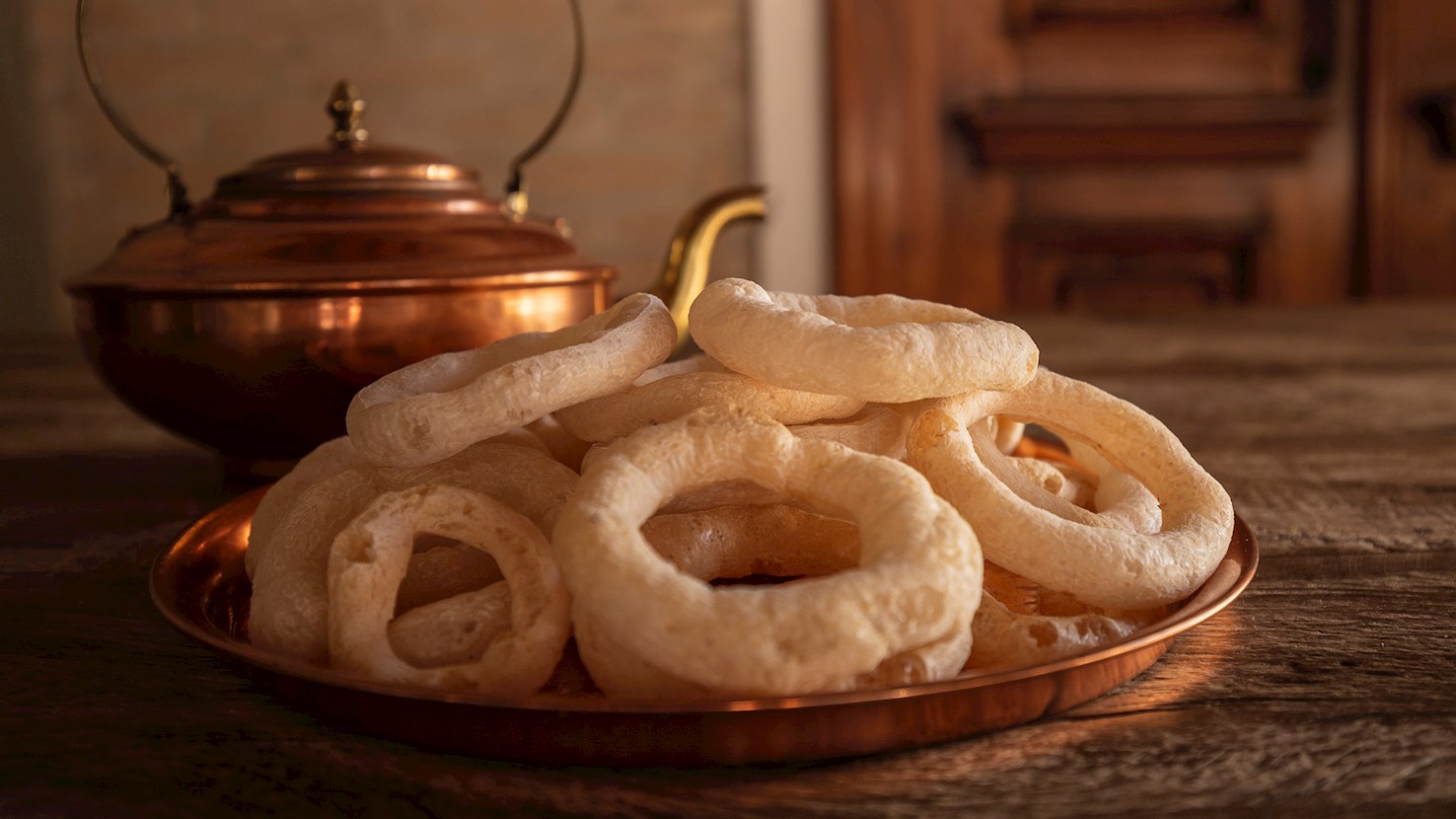
Biscoito de polvilho is a traditional, starchy, salted cookie from Brazil. The cookies are characterized by their round, puffy shape and a crispy exterior. The word from its name, polvilho, is derived from the Latin word pulvis and the Spanish polvillo, meaning fine powder, referring to the sour cassava starch, a key ingredient used in the preparation of these snacks. Biscoito de polvilho can be traced back to the 18th century, when it was prepared on farms in the state of Minas Gerais and served to the plantation owners along with cheese and coffee as an afternoon snack. Due to their unique flavor and airy texture, the cookies are so popular in Brazil that they can even be found at most supermarkets, or bought from numerous beach food vendors.
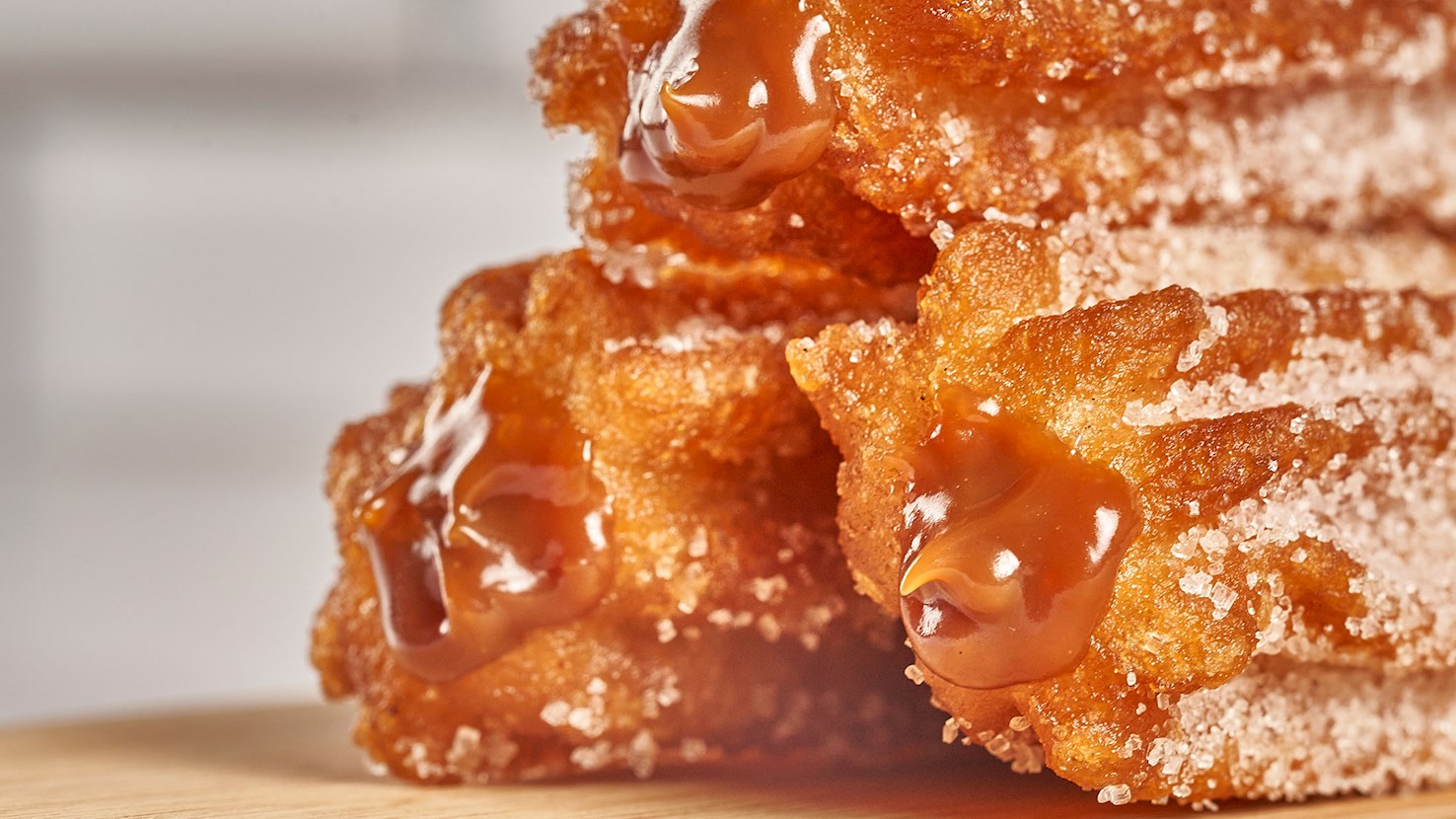
Churros rellenos are a variation of fried dough pastry characterized by a thick, ridged cylinder shape containing a hollowed central core filled with sweet fillings, originating across various countries in Latin America including Argentina, Mexico, Brazil, and Uruguay. The evolution of this item began after European colonization introduced wheat-based dough and deep-frying methodologies to the Americas, where local regional bakers adapted the plain, thin Spanish design by expanding the outer diameter of the pastry tool and integrating enriched ingredients like milk, butter, or eggs into the recipe mix, creating a sturdier dough that could support structural modification and internal sweet spreads. Preparation requires heating water, fat, and flour into a uniform paste that is transferred to a heavy-duty mechanical extruder equipped with a specialized, wide star-shaped die featuring a solid central pin, which forms the necessary interior cavity as the dough gets pressed directly into deep vats of hot vegetable oil or lard heated to approximately one hundred and eighty degrees Celsius. Once the exterior achieves a golden color and a firm, crispy texture, the pastry is removed from the oil, drained, rolled immediately in granulated sugar or a sugar-and-cinnamon mixture, and moved to a filling station where manual syringe pumps inject viscous fillings like dulce de leche, cajeta, pastry cream, or chocolate syrup straight into the hollow channel. The structural requirement for deep, pronounced ridges along the exterior of the pastry serves a precise engineering function by expanding the total surface area of the dough, which prevents the dense pastry from expanding unevenly and exploding due to internal steam buildup during the rapid deep-frying process. Churros rellenos are served hot or at ambient temperature immediately following the injection process to prevent the outer crust from turning soft from the moisture of the internal filling. The product is consumed extensively in urban public spaces, coastal beach resorts, specialized bakeries, and mobile street food carts, typically eaten by hand directly from greaseproof paper sleeves or cardboard trays. For beverage and food pairings, the high sugar density and fried structural profile require bitter or acidic liquid accompaniments to cleanse the palate, meaning they are commonly consumed alongside bitter Argentine mate, strong black espresso, or unsweetened hot chocolate, while savory flavor pairings are virtually nonexistent due to the dominant sweet profile of the central filling.
TasteAtlas food rankings are based on the ratings of the TasteAtlas audience, with a series of mechanisms that recognize real users and that ignore bot,
nationalist or local patriotic ratings, and give additional value to the ratings of users that the system recognizes as knowledgeable.
For the “Top 10 Brazilian Snacks” list until October 15, 2026, 2,355 ratings were recorded, of which 1,717 were recognized by the system as legitimate.
TasteAtlas Rankings should not be seen as the final global conclusion about food. Their purpose is to promote excellent local foods,
instill pride in traditional dishes, and arouse curiosity about dishes you haven’t tried.



What People Say