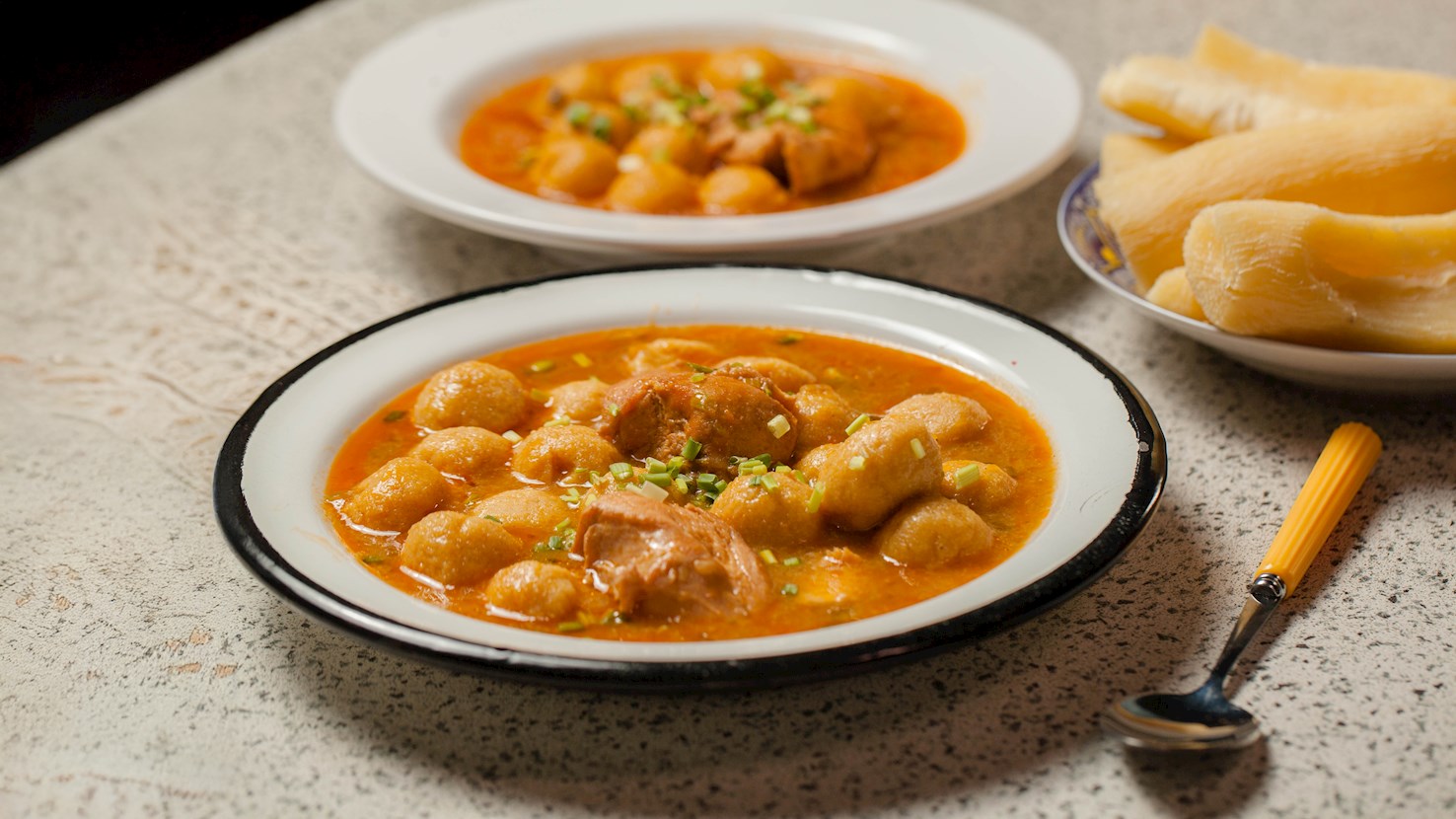
Traditionally, vori-vori consists of a rich chicken broth, chicken pieces, vegetables, seasonings, and small dumplings formed from cornmeal and queso Paraquay. The broth is prepared by simmering a whole chicken—often a free-range hen prized for its depth of flavor—with onions, tomatoes, bell peppers, and herbs until the meat is tender and the liquid becomes a fragrant, golden base. While the broth cooks, the dumplings are prepared by mixing cornmeal with crumbled Paraguayan cheese and moistening the mixture with a bit of hot broth until it forms a soft, workable dough. Small balls roughly the size of marbles are rolled by hand. Once the broth has developed its flavor, the dumplings are dropped into the pot, sinking at first and then rising to the surface once fully cooked, thickening the broth a bit while they cook. The soup is seasoned with salt, pepper, oregano, and parsley, and served steaming hot, often finished with a sprinkle of chopped green onions. Although the classic form of vori vori centers on chicken and cheese dumplings, the dish has many traditional variations. Some households prepare a beef-based version, while others favor vori vori blanco, a creamier interpretation that incorporates milk or extra fat into the broth. In rural areas, cooks often add chunks of pumpkin or squash, which lend sweetness and body to the soup. Carrots, celery, potatoes, cassava, and corn kernels are also common additions, depending on what is available. Modern variations sometimes include eggs or butter in the dumpling dough for a firmer or richer texture, and a few contemporary cooks add chili peppers for heat. However, this is not part of the original tradition.
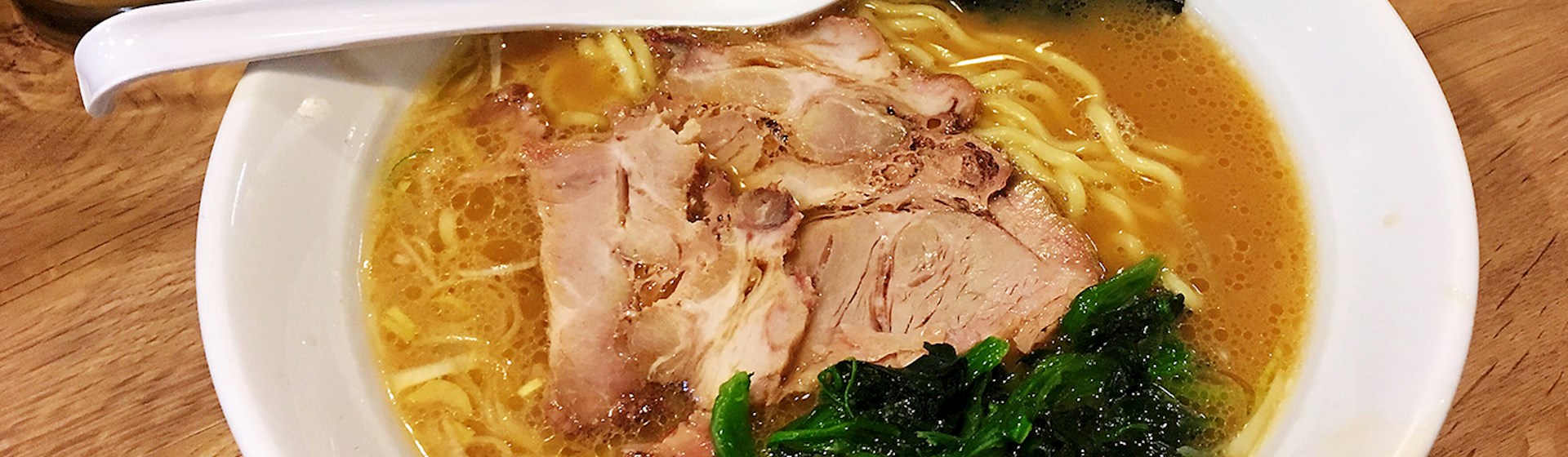
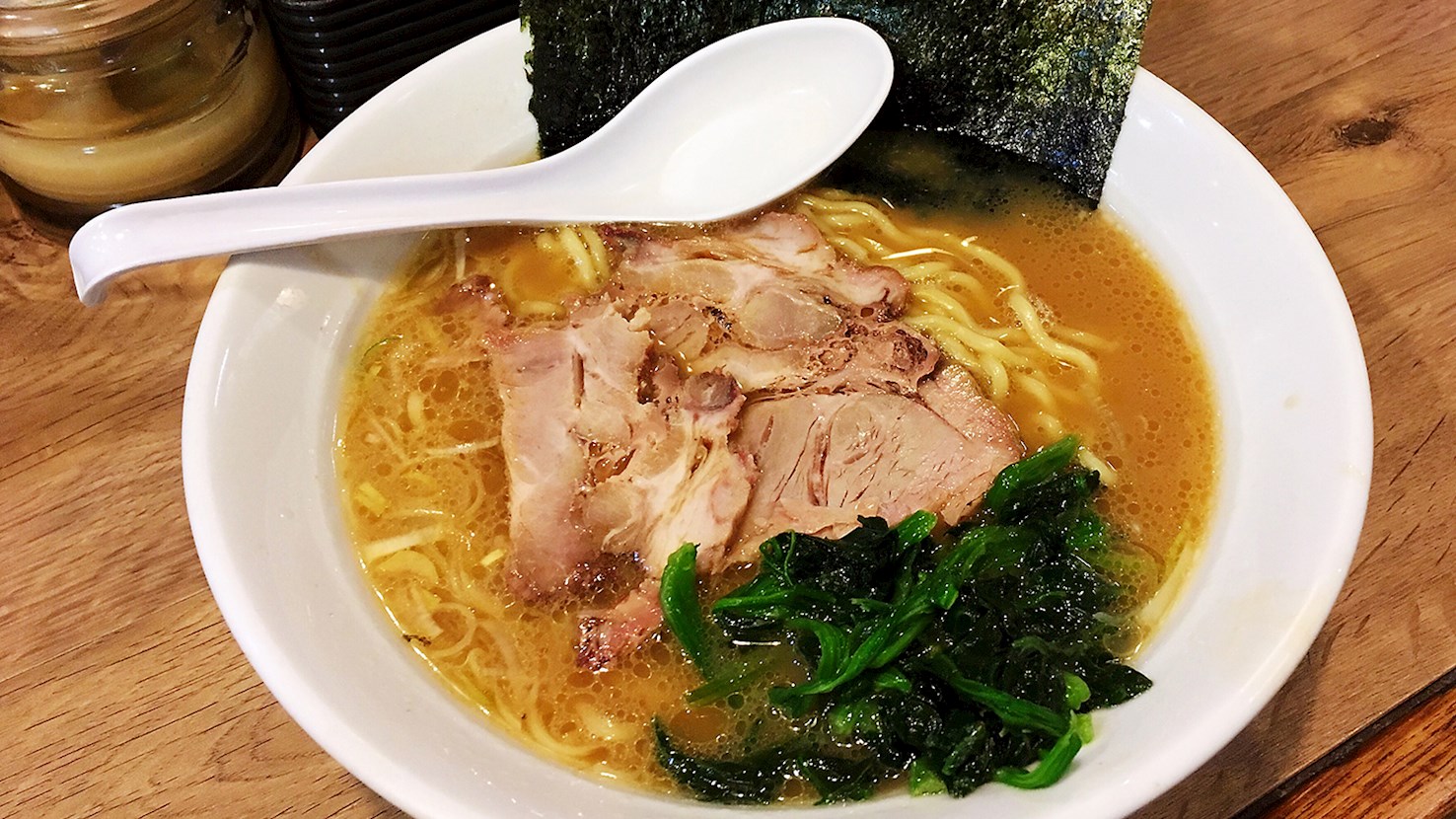
Yokohama-style ramen is best known as iekei ramen, a powerful, pork-and-soy–forward style that originated in Yokohama in the mid-1970s and has since become one of Japan’s most recognizable ramen traditions. The style traces back to Yoshimuraya, opened in 1974 by Minoru Yoshimura, whose goal was not to invent an academic regional specialty but to create something filling, bold, and satisfying for working people. Drawing on the richness of Kyushu tonkotsu ramen and the salty clarity of Tokyo shoyu ramen, Iekei emerged as a hybrid that favored impact over delicacy, with a dense, opaque, and assertively seasoned broth. Over time, shops connected by lineage or inspiration adopted the character 家 (“ie,” meaning house), and the term “Iekei” came to describe the style as a whole rather than a single restaurant. The soup begins with pork bones and chicken carcasses, cooked aggressively to extract fat, collagen, and umami. Unlike lighter shoyu ramen, the goal is body and opacity rather than clarity, though shops vary in how emulsified they push the broth. This stock is not fully seasoned on its own; instead, saltiness and structure come from a separate soy-based seasoning called tare, added to each bowl individually. Floating on the surface is chicken oil (chīyu), an essential aromatic element that adds richness, traps heat, and gives the soup its characteristic sheen. Japanese sources and modern analysis alike emphasize that this trio—pork-and-chicken stock, shoyu tare, and chicken oil—is non-negotiable; remove any one of them, and the ramen no longer reads as Iekei. This ramen traditionally uses thick, straight, alkaline noodles that are shorter than average, lightly flattened, and firm enough to push back against the heavy broth rather than dissolve into it. Kansui gives them their springy bite and pale yellow color, while the thickness allows them to carry fat and soy without turning mushy. This balance is crucial: the noodles are not meant to be elegant, but structural, providing chew and contrast to the richness of the soup. Many descriptions of the style stress that noodle choice is as defining as the broth itself. Toppings in Iekei ramen are not decorative; they are part of the identity of the dish. A classic bowl almost always includes sheets of nori, a mound of blanched spinach, and slices of chashu pork. Spinach, in particular, plays an important functional role, cutting through fat and salt with bitterness and freshness. Chashu varies by shop and cook—pork belly is popular for its richness, while traditional shops often use loin and may smoke it after cooking, but it is typically cooked until very tender, cooled, and sliced thinly. Chopped scallions and marinated eggs are common additions, and many shops keep a range of condiments at the counter, reflecting the style’s roots in casual, customizable ramen culture. Assembly is fast and intentional: tare goes into the bowl first, followed by hot soup and oil, then noodles and toppings. Lekei ramen is meant to be eaten immediately; even with sturdy noodles, the texture changes quickly as they absorb the broth. Many shops serve rice alongside the ramen, a pairing that makes sense given the soup’s saltiness and depth. Customization is another defining feature. Customers are often asked to choose noodle firmness, soup strength, and oil level, allowing the same kitchen to produce bowls that range from relatively restrained to unapologetically heavy. This flexibility has helped Iekei spread widely without losing its core identity. At the same time, the style has diversified: some shops emphasize a sharper soy profile, others a rounder, fattier broth; some lean closer to tonkotsu, others toward shoyu. Personal additions like pepper, garlic, ginger, chili, sesame seeds, or vinegar are common and culturally accepted, reinforcing the idea that Iekei is as much about satisfaction as it is about precision.
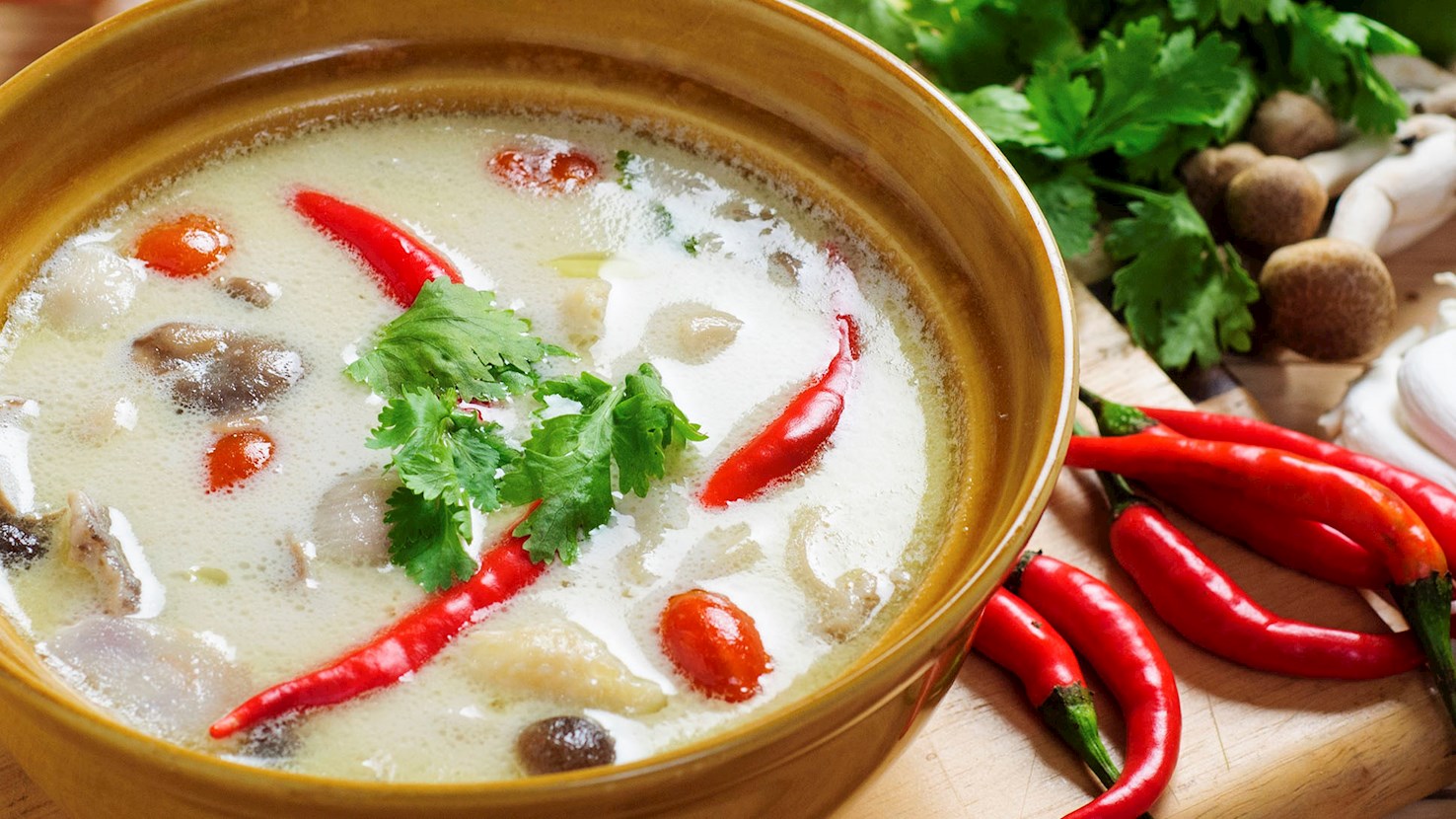
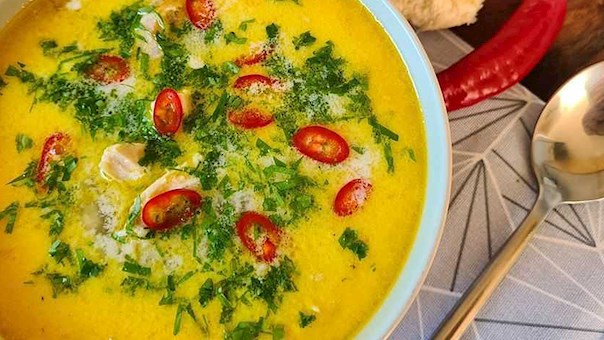
Tom kha gai is a comforting Thai soup that combines subtle flavors and simple ingredients. It starts with chicken, usually boneless thighs, simmered in coconut milk and chicken stock or water for a rich base. The key ingredient, galangal, similar to ginger, adds a sharp, citrusy, almost piney flavor. Lemongrass and makrut lime leaves are also essential, giving the soup a light, citrusy note. Thai chilies are included to add a bit of heat but are balanced by the savory taste of fish sauce. Mushrooms, like straw or oyster, are thrown in for texture. The soup gets a slight sweetness from palm sugar and a tang from a bit of lime juice, which must be added off heat. Typically served hot, tom kha gai is often garnished with a sprinkle of cilantro or green onions. It's enjoyed alongside or over a bowl of steamed jasmine rice, making for a simple yet flavorful meal.
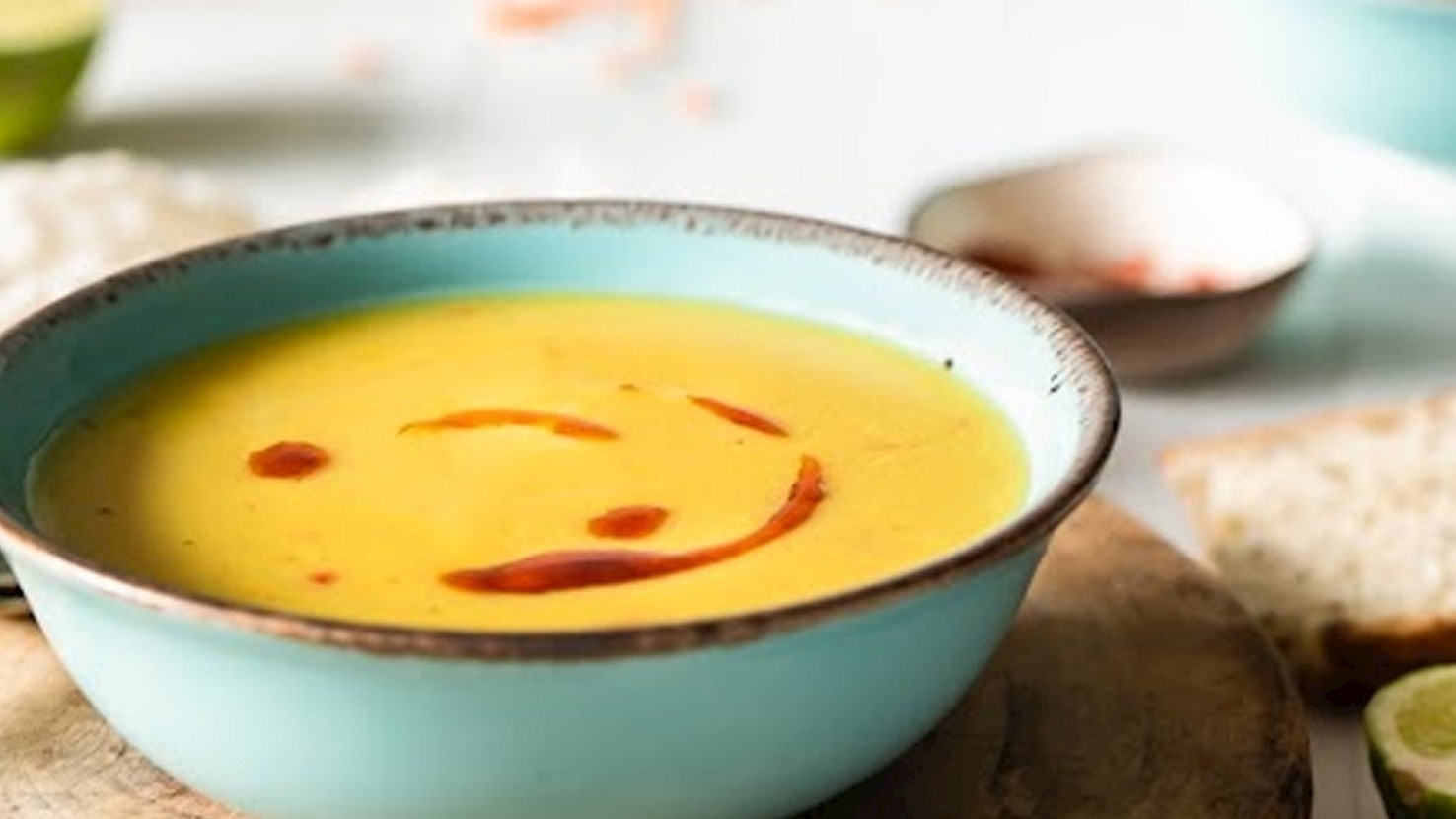
Mercimek Çorbası, translated from Turkish as "lentil soup," is a staple in Turkish cuisine, beloved for its simplicity, nourishing qualities, and comforting flavors. This traditional soup is primarily made with red lentils, which cook quickly and blend into a smooth, creamy consistency, making it not only delicious but also very easy to prepare. The basic recipe calls only for red lentils, onions, butter, broth, red pepper flakes, and salt. Still, carrot, potato, tomato paste, and spices such as cumin and mint are also often included. The soup is prepared by sautéing onions, and sometimes carrots and garlic in a bit of butter or oil until they are soft. Red lentils are then added along with and broth. The mixture is simmered until the lentils and vegetables are completely soft. After cooking, the soup is typically blended until smooth and then seasoned with salt, pepper, and spices like cumin. It's commonly finished with a drizzle of sauteed red pepper flakes or paprika. Mercimek Çorbası is often served hot with a lemon wedge on the side and often accompanied by a piece of crusty bread or pita. It's a common starter but can also stand as a light main dish.
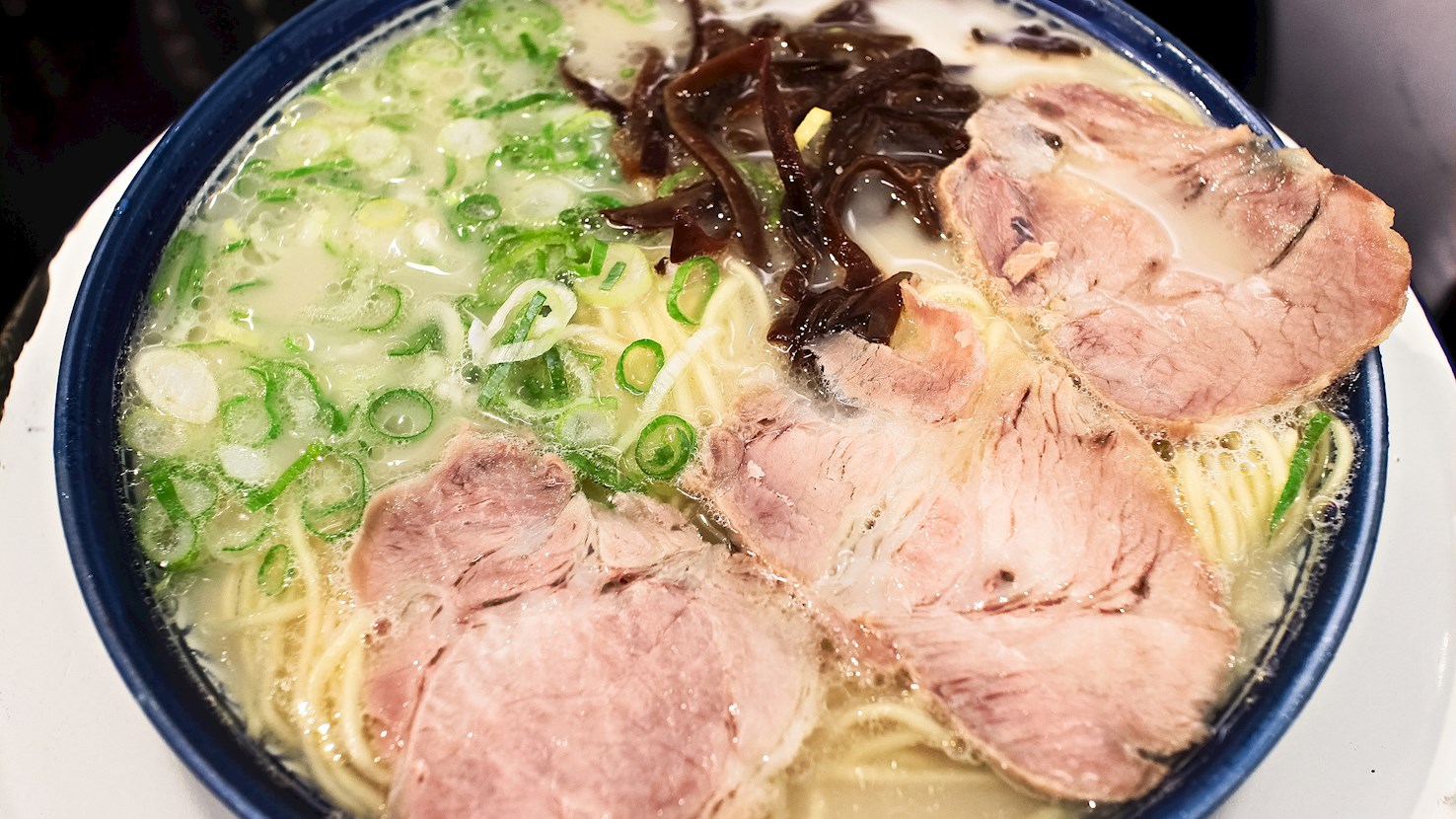
Milky, lip-smacking broth and extra thin wheat noodles are the main charachteristics of this ramen, originally from Fukuoka. Although at its basic, ramen prepared this way consists of nothing more than pork bones broth, noodles, chashu pork, and green onions — additional toppings are often included as well, though — each said component takes time and care to prepare, most notably the broth which can cook for as little as 8 to 12 hours to up to 36 to 60 hours, depending on the recipe and the desired outcome. The preparation begins by simmering the bones, pork skin, and pig's trotters in water first, which is a step that helps remove the dirt and scum. The bones are then washed and scrubbed of scum under running water, and placed in a fresh pot of water so they are completely covered and then simmered for a minimum of 8 to 12 hours. At some point, while the broth cooks, roasted vegetables can be added to give it a more complex flavor. Once cooked, the broth is filtered to rid of it of all impurities. Also, while the broth is cooking, other components of the ramen are prepared. Chashu pork is made with pork belly which is rolled and tied with a kitchen twine, so it cooks more evenly and it doesn't fall apart as it cooks. It is cooked typically in a mixture of mirin, soy sauce, sake, and sugar, together with some herbs and aromatics like ginger, scallions, and garlic. When cooked, the cooking liquid is filtered and can be used to make a ramen egg, if desired. Once all of these components are made, it's time to cook the noodles. The key is not to overcook them, so only a 10-second boil will suffice. The basic rendition of hakata ramen consists of only broth and thin, straight noodles, topped with slices of chashu pork and chopped green onions, seasoned with just salt or either soy sauce, mayu sauce, and/or tare. However, this basic rendition can be upgraded with additional toppings such as mayu, sweet corn, ramen egg, menma, crushed garlic, and nori sheets.
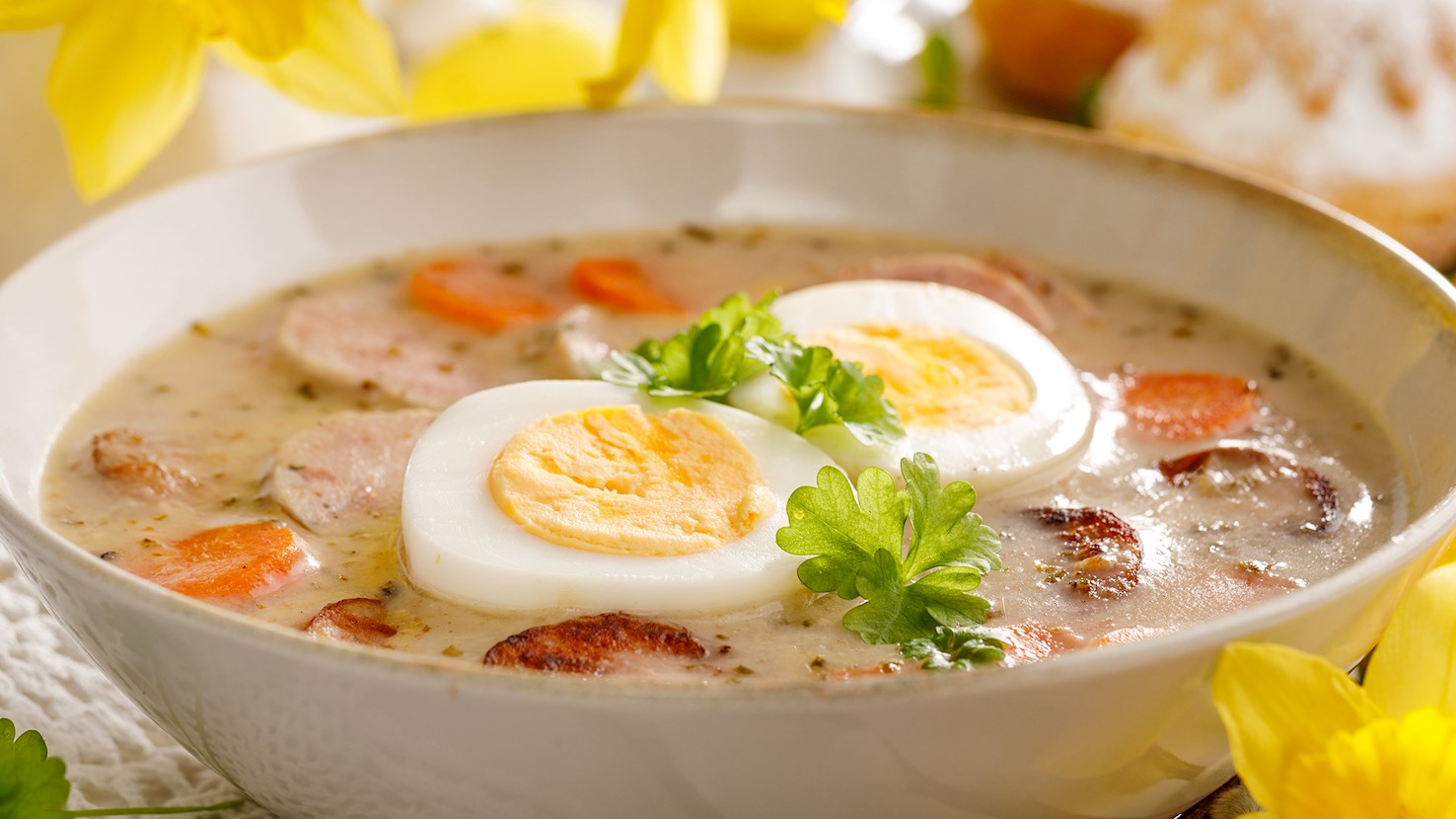
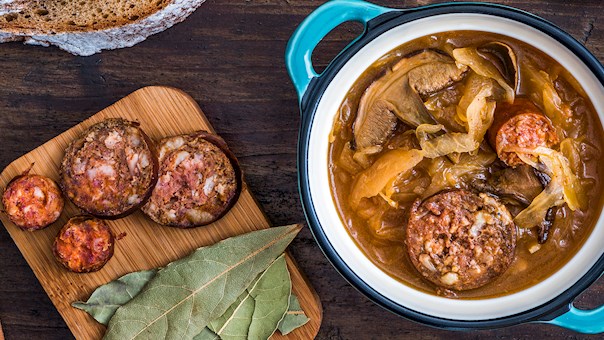
Żurek is a traditional Polish soup known for its distinctive sour flavor from a fermented rye flour or oatmeal starter. This soup is an integral part of Polish cuisine and is especially popular during Easter celebrations, though it is enjoyed year-round. The fundamental component of żurek is the fermented rye flour starter, known as "zakwas." This starter is made by mixing rye flour with water and allowing it to ferment for several days. The fermentation process creates the characteristic sour taste of the soup. To make zakwas, rye flour is mixed with water and sometimes a piece of rye bread crust to aid fermentation. It is left at room temperature for 3-5 days, during which natural bacteria and wild yeast ferment the mixture. The soup base is typically a meat or vegetable broth. Other typical ingredients include a white sausage (biała kiełbasa), which is often pre-cooked separately, smoked bacon or other meats, and vegetables like carrots, celery, and onions. Potatoes are a common ingredient, often diced and added to the soup before zakwas. Garlic, marjoram, bay leaves, allspice, and peppercorns are common seasonings used to enhance the flavor, while sliced or halved hard-boiled eggs are frequently added just before serving. Żurek is often served in a bread bowl made from a round loaf of rye bread, adding to the rustic and hearty appeal of the dish. It can also be served in regular bowls with a side of crusty bread.
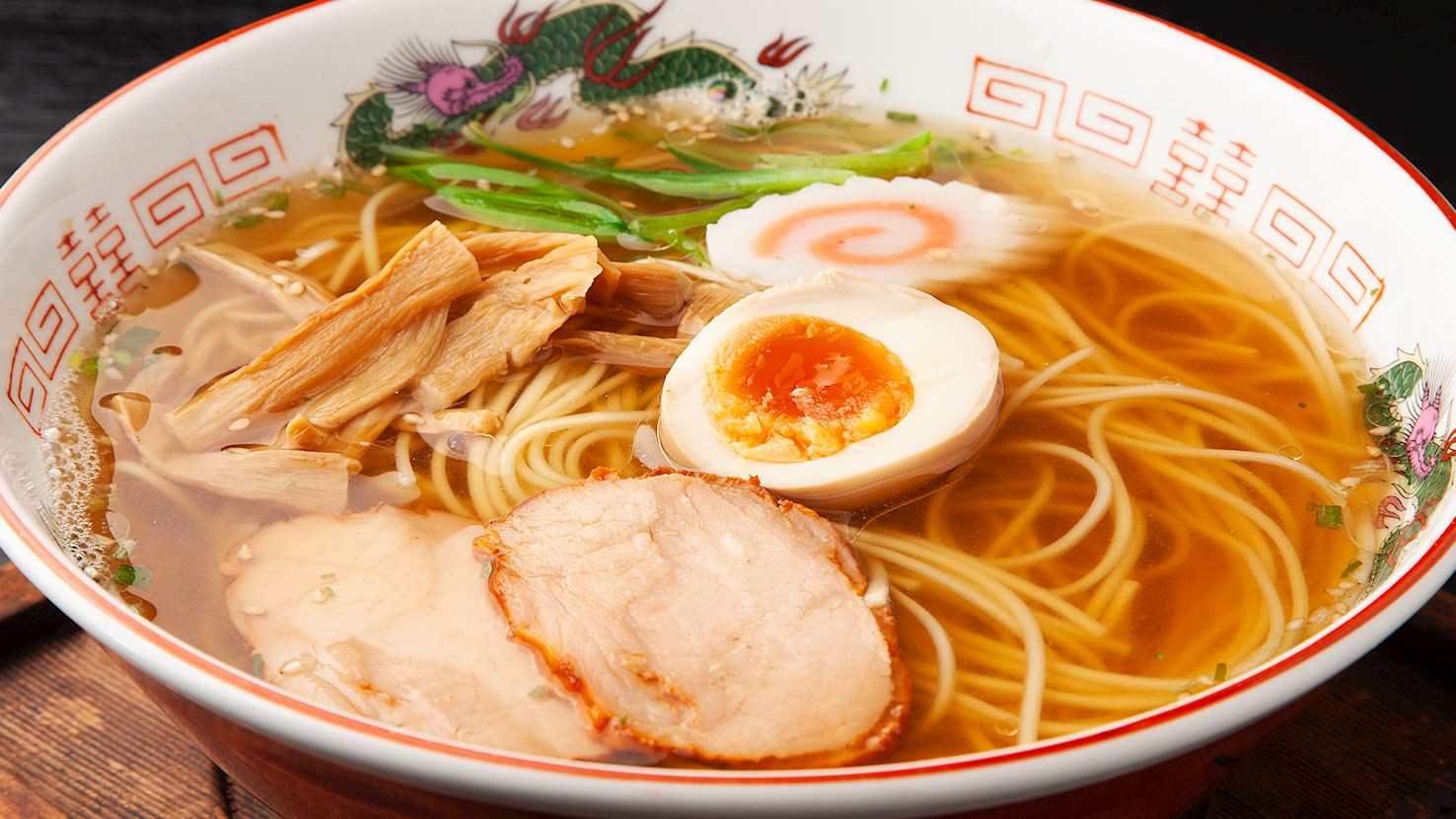
The ramen restaurant G Men 7’s chuka soba has been the inspiration for this old-school shoyu ramen recipe, which, unlike other shoyu ramens, does not have dashi components — there is only one kind of broth made with pork and chicken. The soup and the tare should be made a day in advance so the flavors have time to develop. The recipe is adapted from the YT channel Way of Ramen, a popular and respectable channel that is the go-to place for any and every ramen lover.
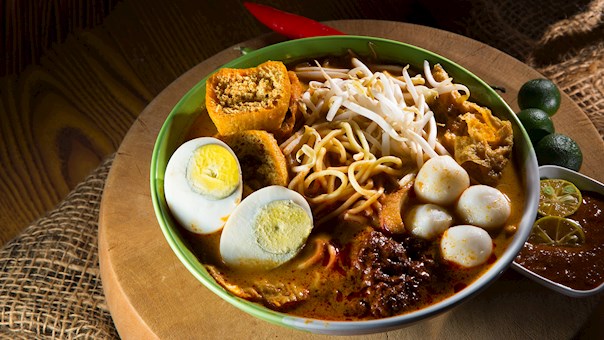
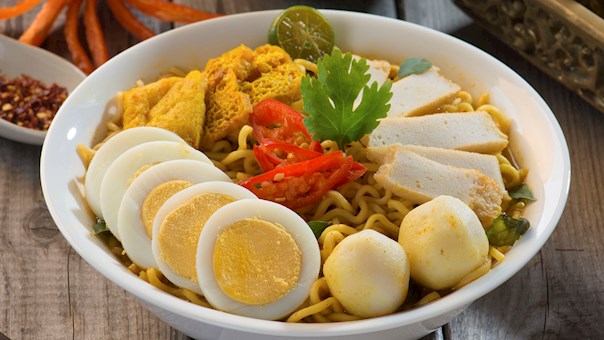
The following recipe is adapted from the Huang Kitchen website (www.huangkitchen.com). For maximum flavor, blanch the bean sprouts just before assembling the dish.
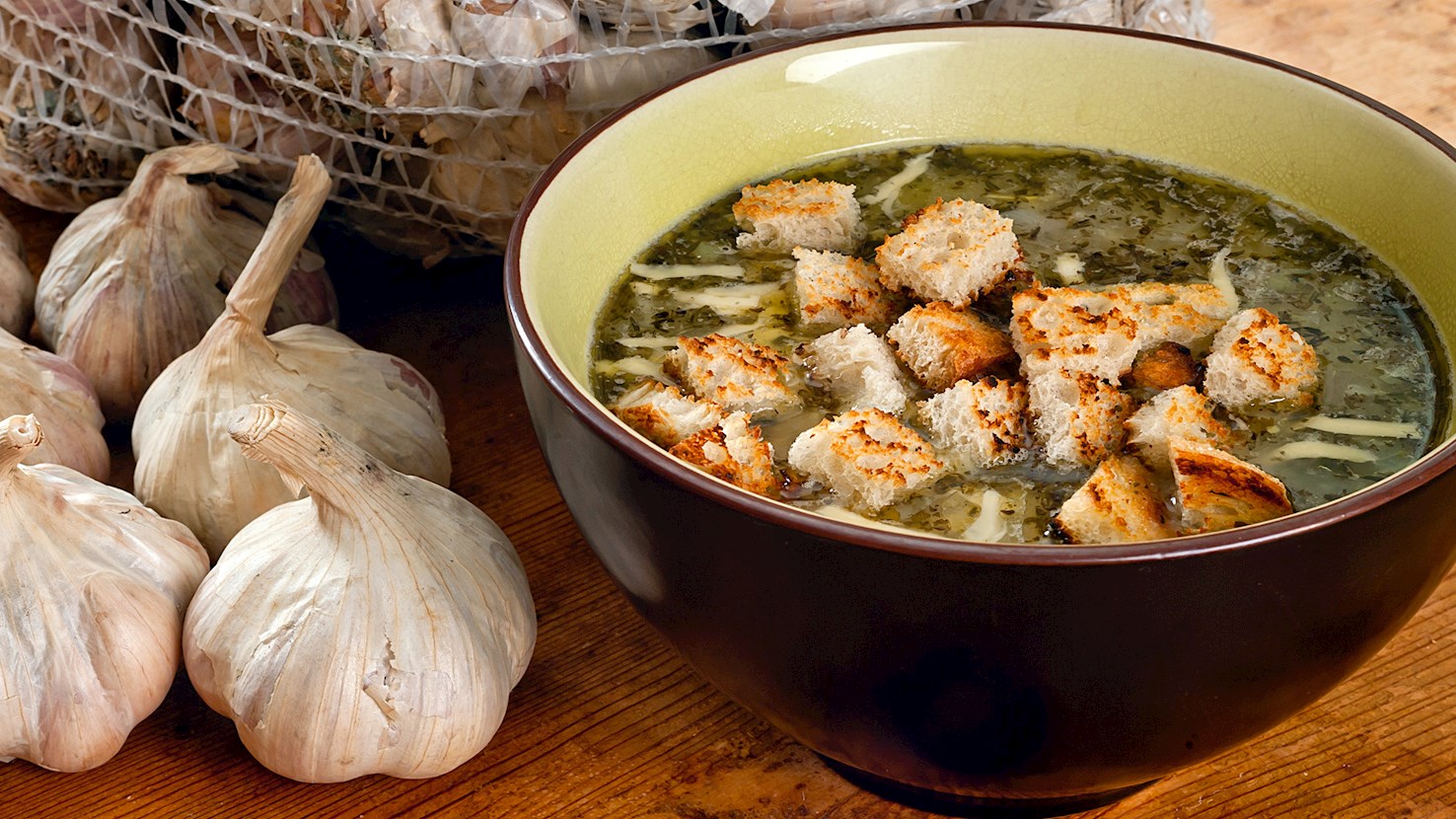
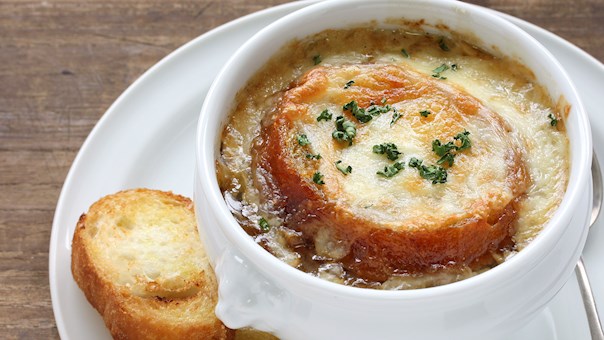
Česnečka is a traditional Czech garlic soup renowned for its strong garlic flavor and simplicity. It is a staple in Czech cuisine and is especially popular as a remedy for colds and flu, thanks to garlic's well-known medicinal properties, including its ability to boost the immune system. The basic ingredients for česnečka include a generous amount of garlic, potatoes, water, and seasonings, traditionally marjoram, caraway seeds, pepper, and bay leaves. Some variations of the soup might replace water with chicken broth and include onions, sausages, greens, or mushrooms or be thickened with a flour roux or beaten eggs to give it a more substantial texture. Česnečka is traditionally served with croutons, making it a filling and comforting meal. For extra richness, ham or cheese can be added to the soup.
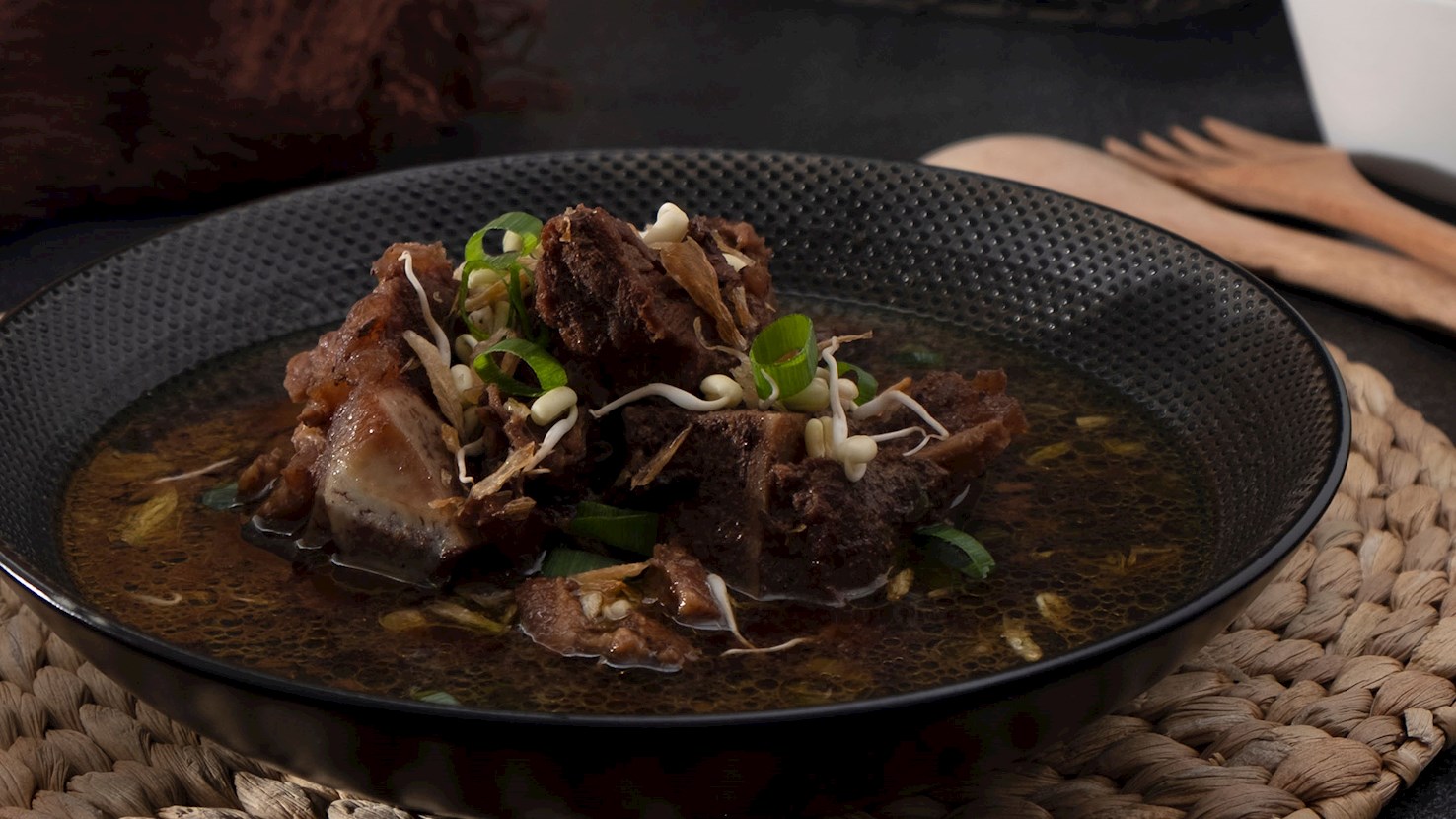
Rawon is a traditional Indonesian black beef soup known for its deep, earthy flavors and distinctive dark color, which comes from keluak (Indonesian black nuts). Originating from East Java, it is a beloved dish often served with rice and condiments. The dish is made by simmering beef, typically brisket, shank, or ribs, in a spiced broth. The seasoning includes a paste of (typically) keluak, shallots, garlic, candlenuts, red chilies, turmeric, cumin, pepper, ginger, cutcherry, galangal, coriander, and shrimp paste, which is sautéed until fragrant before being added to the broth. Kaffir lime leaves, lemongrass, green onions or leeks, and sometimes tamarind contribute additional depth to the flavor. The result is a rich, savory soup with a slightly nutty and tangy profile. Rawon is often garnished with bean sprouts, fried shallots, and scallions and served with accompaniments like sambal (spicy chili paste), salted egg, and krupuk (crispy crackers). Its bold, aromatic taste makes it a standout dish in Indonesian cuisine.
TasteAtlas food rankings are based on the ratings of the TasteAtlas audience, with a series of mechanisms that recognize real users and that ignore bot,
nationalist or local patriotic ratings, and give additional value to the ratings of users that the system recognizes as knowledgeable.
For the “Top 48 Soup Recipes” list until August 17, 2026, 58,607 ratings were recorded, of which 33,023 were recognized by the system as legitimate.
TasteAtlas Rankings should not be seen as the final global conclusion about food. Their purpose is to promote excellent local foods,
instill pride in traditional dishes, and arouse curiosity about dishes you haven’t tried.









What People Say