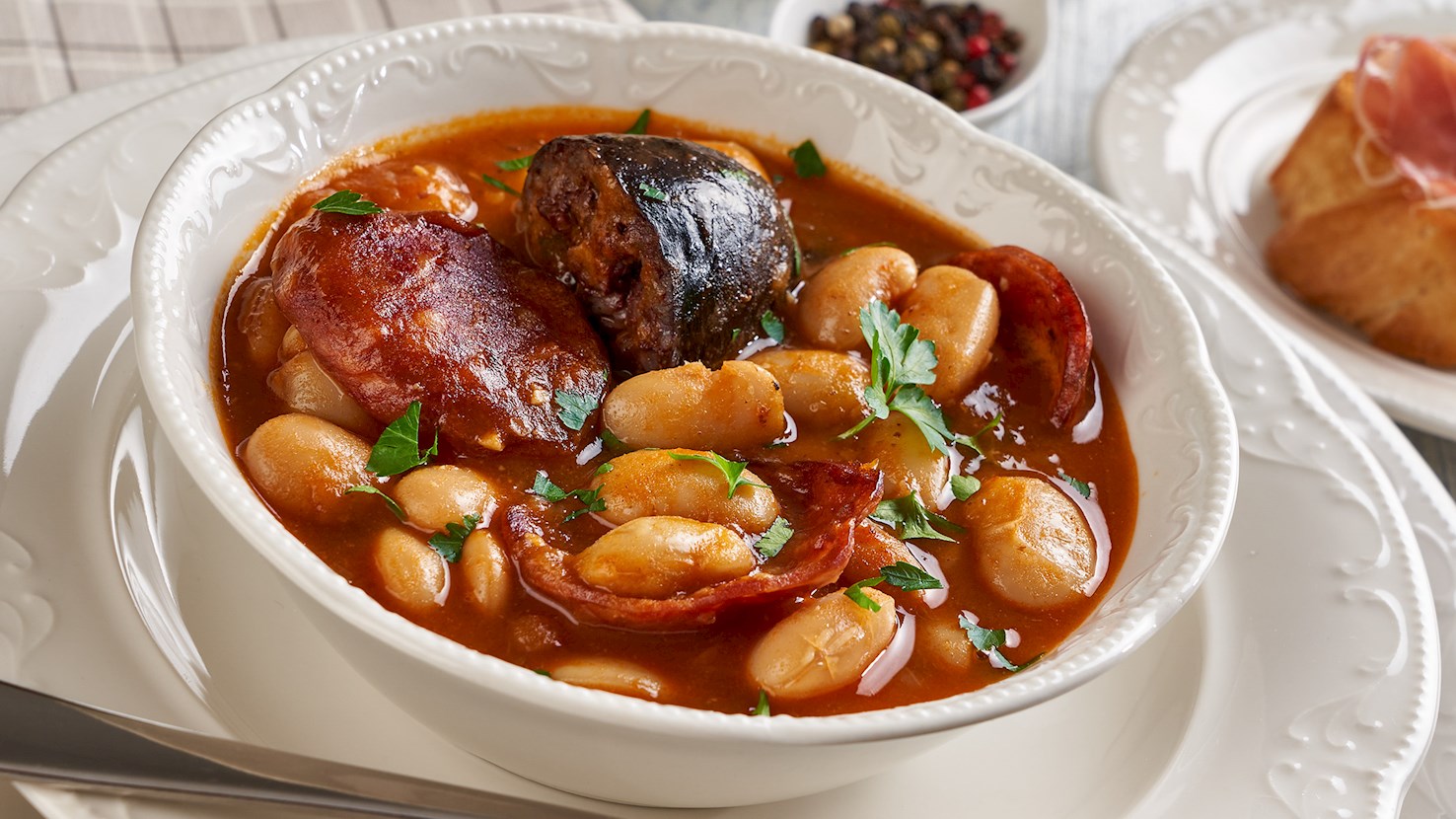
This comforting stew known as fabada Asturiana is a signature dish of the famous Spanish region of Asturias. The stew consists of plump white beans, chorizo, morcilla blood sausages, and pork fat, flavored with smoked paprika and saffron. Some recipes also use olive oil. Spicy and hearty, with robust and earthy flavors, this Spanish classic combines simple ingredients to create an extraordinary dish. It is believed that fabada appeared sometime between the 19th and the 20th century. Due to its nutritious elements, it is usually enjoyed in the colder winter months. Fabada is a staple of every traditional and authentic Spanish restaurant, and its less sophisticated versions are often sold in supermarkets. In restaurants, it is mainly served as a starter or a main dish and is usually accompanied by slices of crusty bread.
Pote asturiano is a hearty stew from Asturias, made with white beans, cabbage, potatoes, and various meats. It is considered one of the cornerstones of Asturian cuisine, and was especially common in farmhouses and mountain villages, where pigs were slaughtered in late autumn and their meat cured for use throughout the winter. Over time, the stew became a fixture of family tables and local festivities, passed down through generations while remaining true to its rustic roots. Today, it is regarded as one of the most emblematic dishes of Asturian gastronomy, served in homes, restaurants, and countryside taverns throughout the region. The preparation of pote asturiano is deliberate and unhurried. Large white beans, often of the faba variety, are soaked overnight and then simmered gently with chunks of cured pork products such as chorizo, morcilla (blood sausage), lacón, chosco, and ham bone, which infuse the broth with depth and richness. Sometimes pig offal or bacon is included, depending on the recipe. Potatoes and chopped cabbage are added partway through the cooking process, absorbing the broth's flavors and thickening the stew. The dish is left to cook slowly over several hours until the beans are tender and the flavors are fully melded. The name pote itself refers to the pot in which the stew is cooked, emphasizing its origins as a farmhouse meal prepared over an open hearth. Pote asturiano is most often served as a main course, especially during the colder months, and is typically enjoyed in generous portions that highlight its comforting, communal nature. It can be served all together in one dish or in two courses, with beans and vegetables first and the meats served separately. It is often accompanied by crusty bread to soak up the flavorful broth and pairs well with Asturian cider, whose acidity cuts through the richness of the dish. In some areas, red wines from nearby León or Rioja are also popular accompaniments.
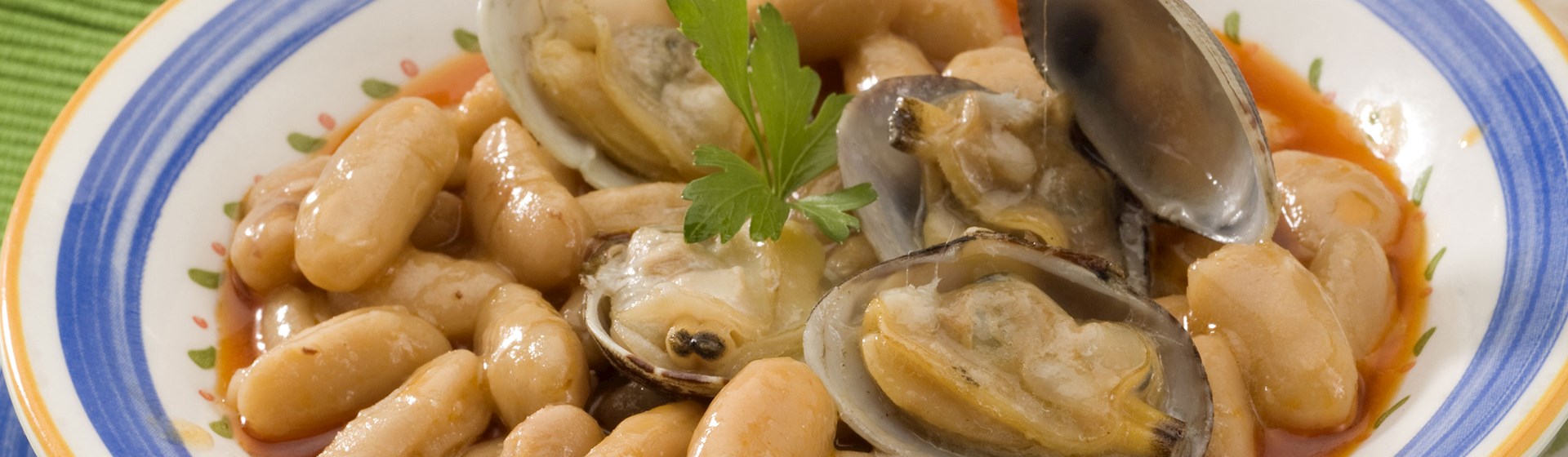
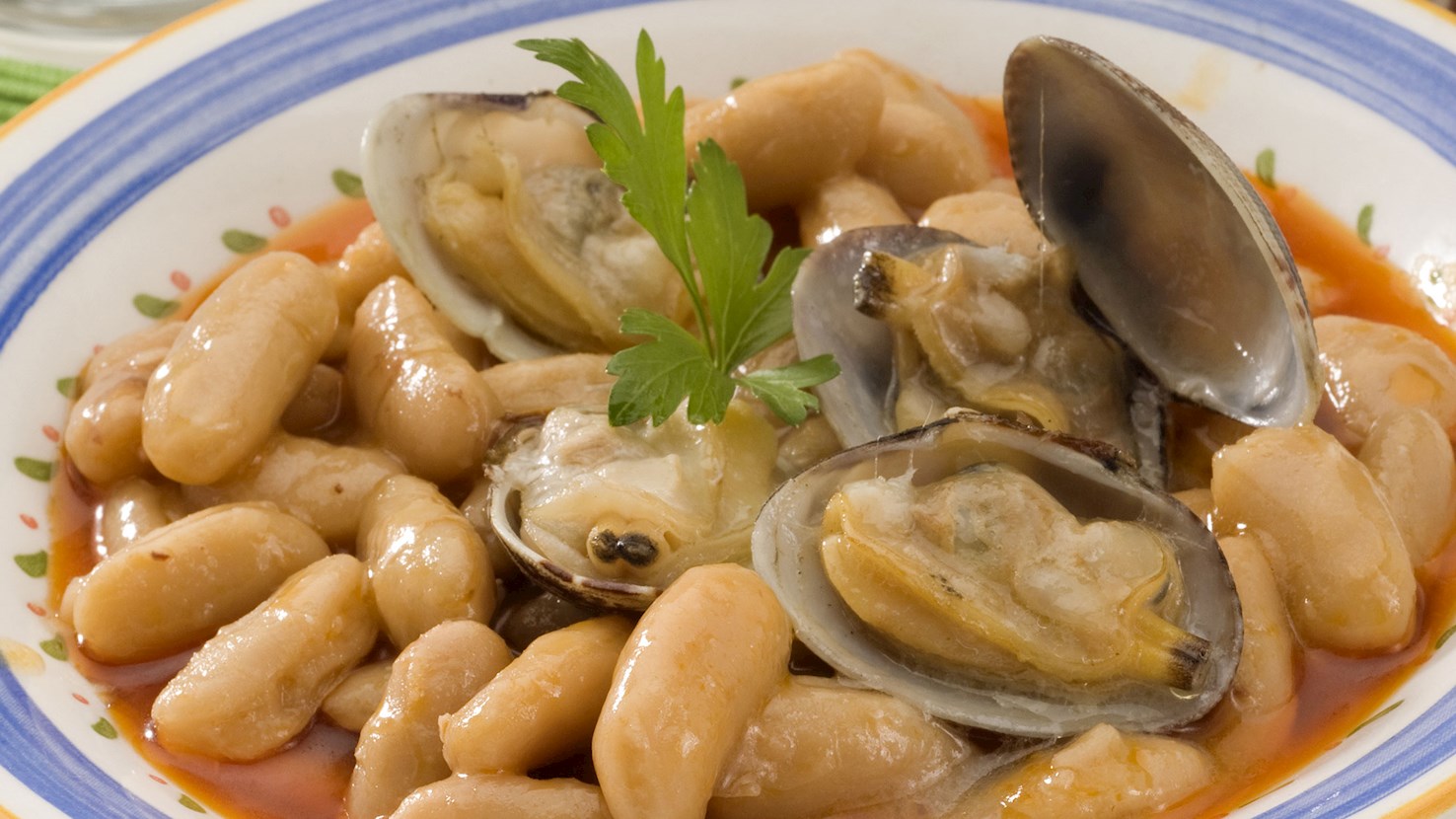
Fabes con almejas is a hearty bean-and-clam stew from Asturias that combines creamy white beans, usually the prized Asturian fabes, with fresh clams in a delicate yet flavorful broth. Its origins date back to the region’s rural cooking, where beans were a dietary cornerstone and stews formed the basis of everyday meals. Clams, abundant along the Cantabrian coast, were incorporated to create a lighter, more refined alternative to the heavier meat-based bean stews common in the area, such as fabada asturiana. Over time, fabes con almejas gained recognition as a distinctive dish in its own right, celebrated for its balance of earthy legumes and fresh seafood. By the twentieth century, it had become a staple of local restaurants and family kitchens alike, especially during Lent and spring, when seafood dishes were more prominent on the table. Preparation begins with the beans, which are soaked overnight and then gently simmered in water with aromatics such as onion, garlic, bay leaf, and sometimes a piece of leek until tender and creamy. In a separate pan, garlic and finely chopped onion are sautéed in olive oil, often with a spoonful of paprika to add depth.. The cleaned clams are then introduced, cooking just until they open and release their juices. A paste made of bread and seasonings is added to thicken the sauce, and the clams are reintroduced. Finally, the cooked beans are combined with the clam mixture, saffron is added, and the stew is simmered briefly to allow the flavors to meld without overcooking the seafood. The result is a dish with a silky broth, tender beans, and clams that retain their delicate texture. Fabes con almejas is most often served as a main course, especially during spring or at festive meals. It is typically eaten with crusty bread, which is used to soak up the flavorful broth, and is often paired with a crisp white wine such as Albariño or a light cider, another hallmark of Asturian gastronomy.
TasteAtlas food rankings are based on the ratings of the TasteAtlas audience, with a series of mechanisms that recognize real users and that ignore bot,
nationalist or local patriotic ratings, and give additional value to the ratings of users that the system recognizes as knowledgeable.
For the “Top 3 Asturian Stews” list until June 15, 2026, 147 ratings were recorded, of which 107 were recognized by the system as legitimate.
TasteAtlas Rankings should not be seen as the final global conclusion about food. Their purpose is to promote excellent local foods,
instill pride in traditional dishes, and arouse curiosity about dishes you haven’t tried.