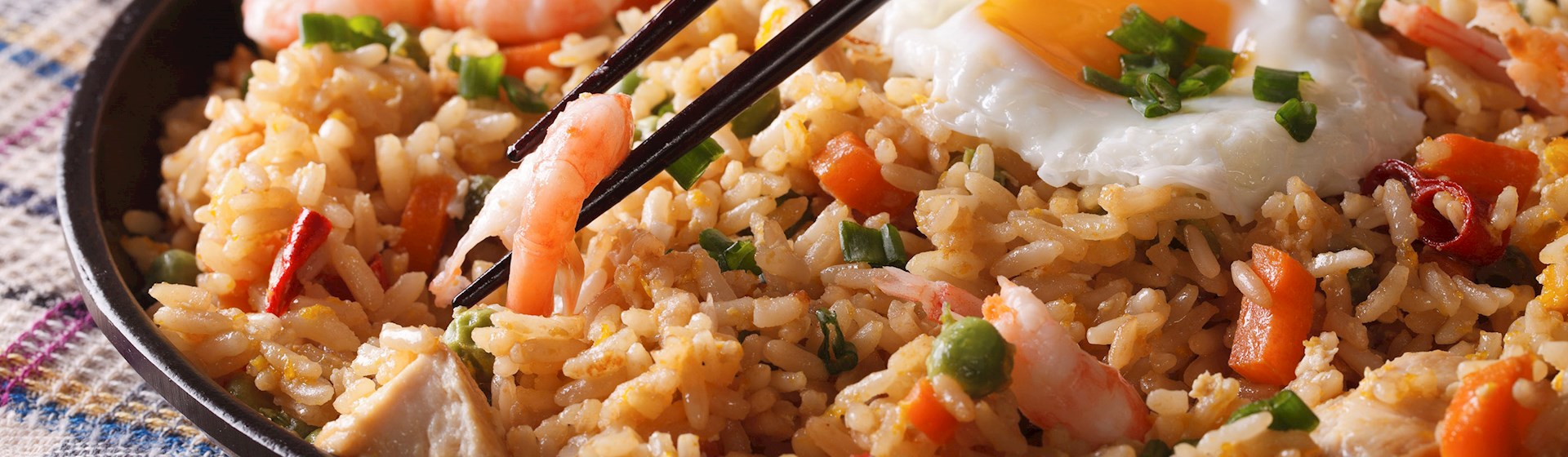
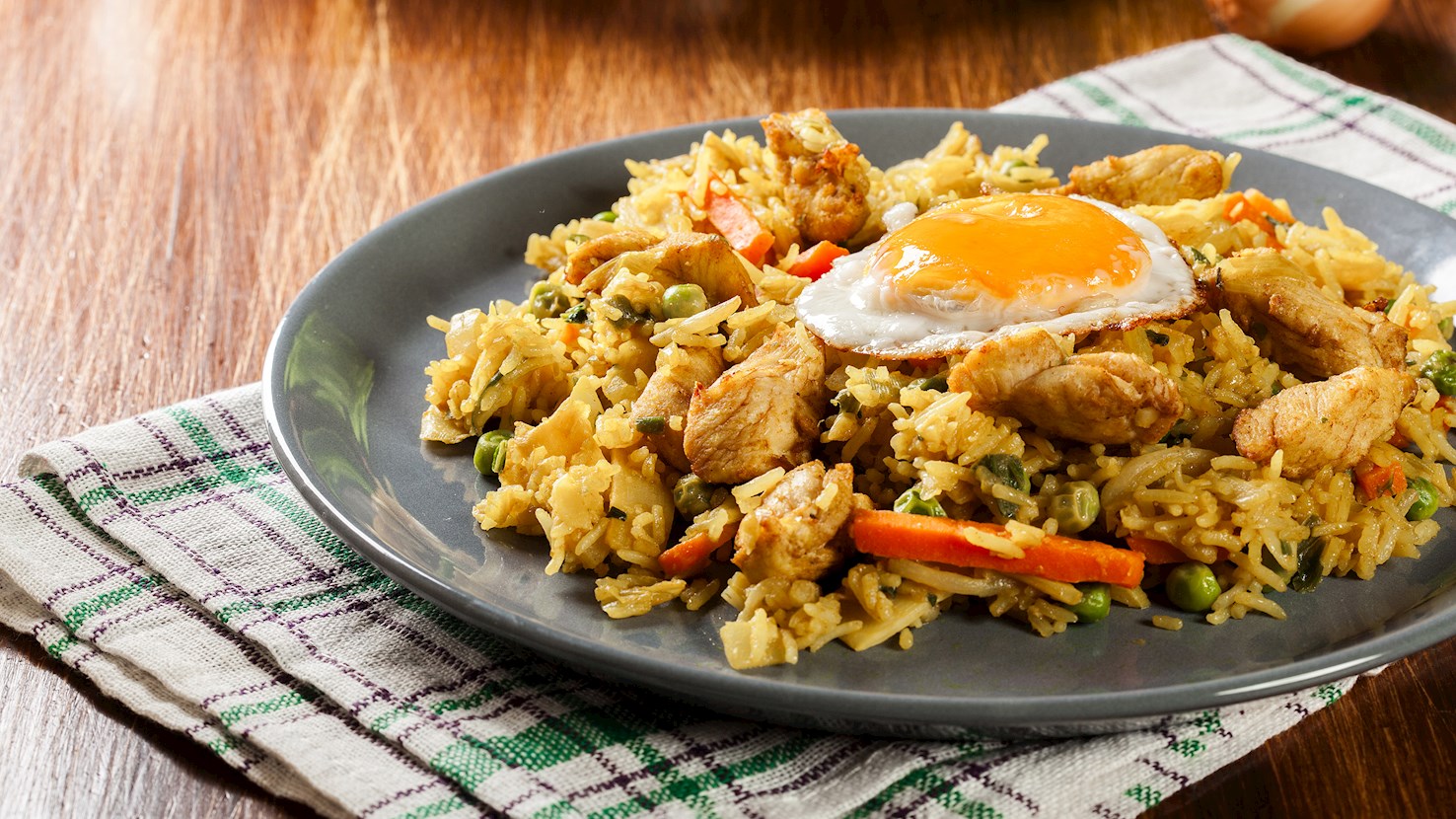
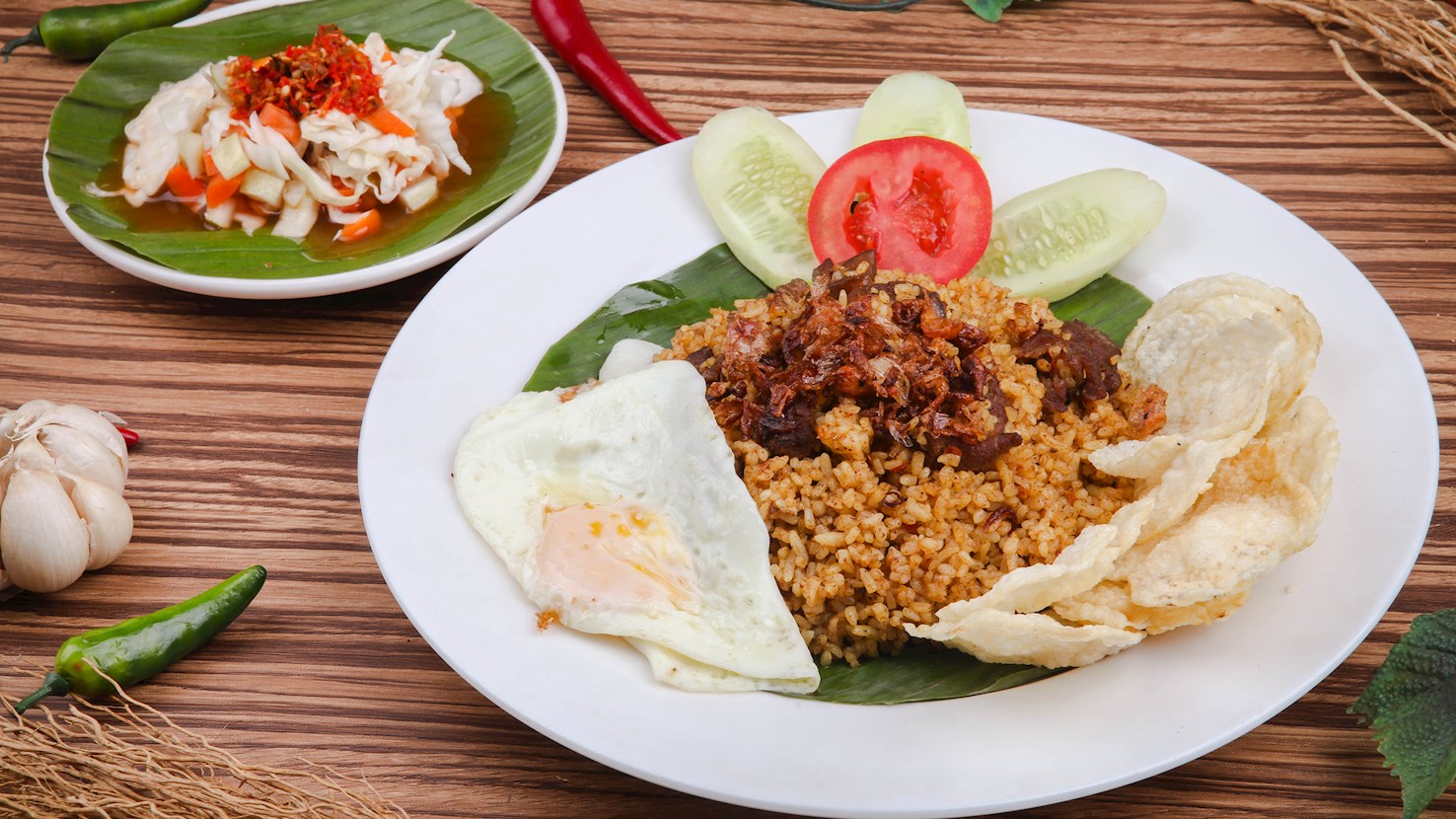
Nasi goreng ayam is a traditional fried rice dish that's also popular in Singapore, Brunei, and Malaysia. Although there are many versions of this nasi goreng variety, it is usually made with a combination of chicken thighs, oil, salt, white pepper, shallots, rice, turmeric, soy sauce, fish sauce, galangal, ginger, garlic, scallions, kecap manis, and hot peppers. Most of the ingredients are fried with rice, and the dish is then topped with fried eggs, fried shallots, and sliced chili peppers. It's recommended to serve nasi goreng ayam with prawn crackers on the side.
Nasi goreng is often referred to as the Indonesian version of fried rice. Although it is considered to be the national dish of Indonesia, it is also commonly eaten in Malaysia and Singapore. It is believed that the tradition of frying rice in Indonesia came from the Chinese culture, when the trade between the two countries started to develop. Indonesians adopted the Chinese tradition based on the belief that it is sinful to waste food, and soon, like many other versions of fried rice, nasi goreng was created. Since it was developed out of a practical need, it is usually eaten for breakfast and made with leftover rice from the previous day. Precooked rice is usually fried in a small amount of oil, then spiced up with shallots, garlic, chili, or ginger. Indonesian fried rice is distinguished by the generous use of sweet soy sauce, and because of that, it has a deeper and spicier flavor than other varieties of fried rice. Nasi goreng is commonly served with eggs. Usually, they are mixed in the rice or fried and served on the side.
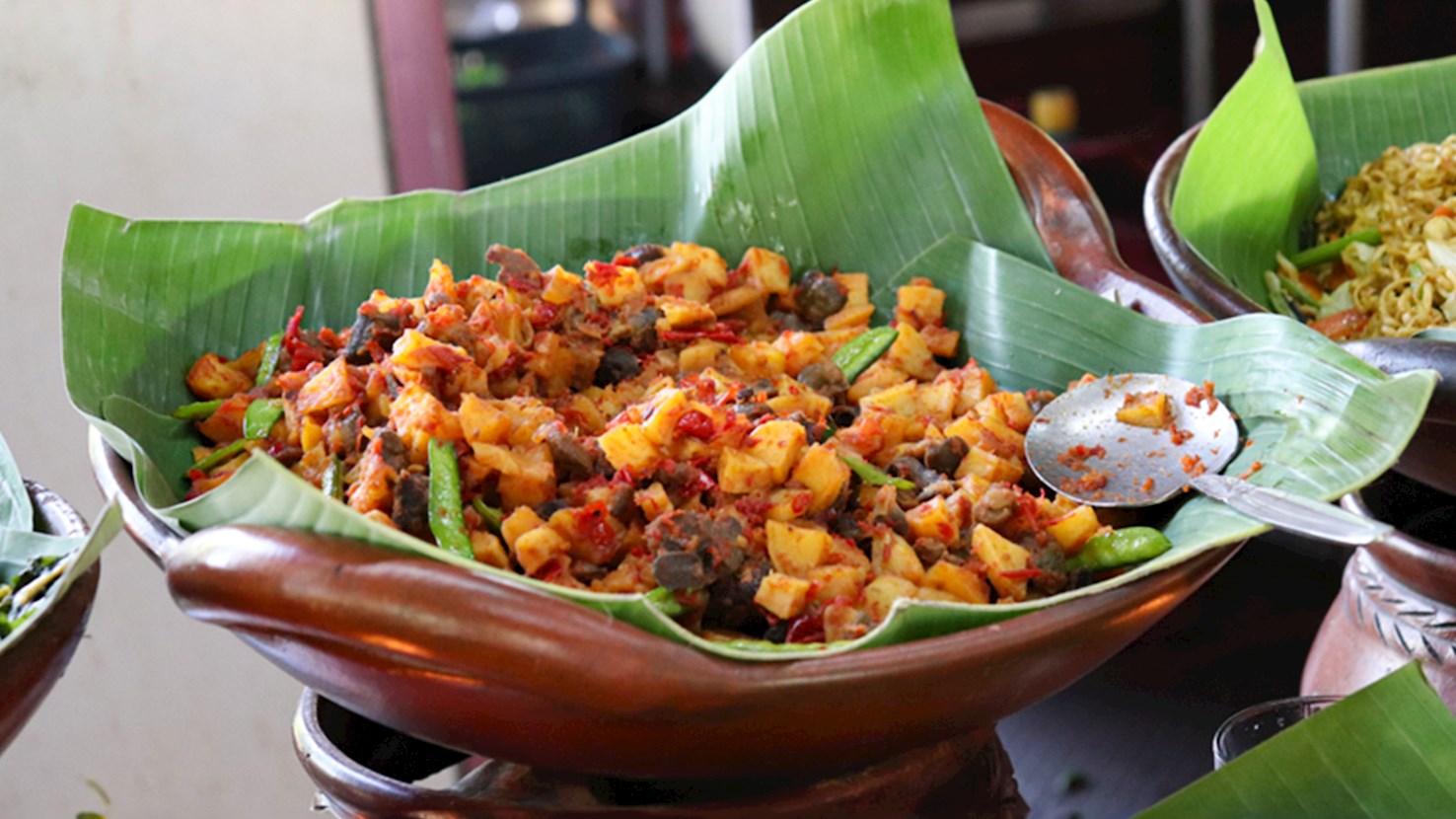
Sambal goreng, which translates to "fried sambal," is a term used in Indonesian cuisine that can refer to a variety of spicy, fried dishes made with sambal. As a dish, sambal goreng can range from vegetables, meat, to tofu or tempeh, all cooked with a spicy mixture of ground chilies, shallots, garlic, and often includes shrimp paste (terasi), along with other ingredients like tomato, tamarind for sourness, and palm sugar for a hint of sweetness. Coconut milk is sometimes added to create a rich, creamy texture. One popular variant is sambal goreng kentang (potato sambal goreng), which includes fried potatoes, liver (often chicken liver), and sometimes prawns, cooked in a spicy and savory sauce. Another version is sambal goreng ati (liver sambal goreng), focusing on the liver cooked with the sambal sauce.
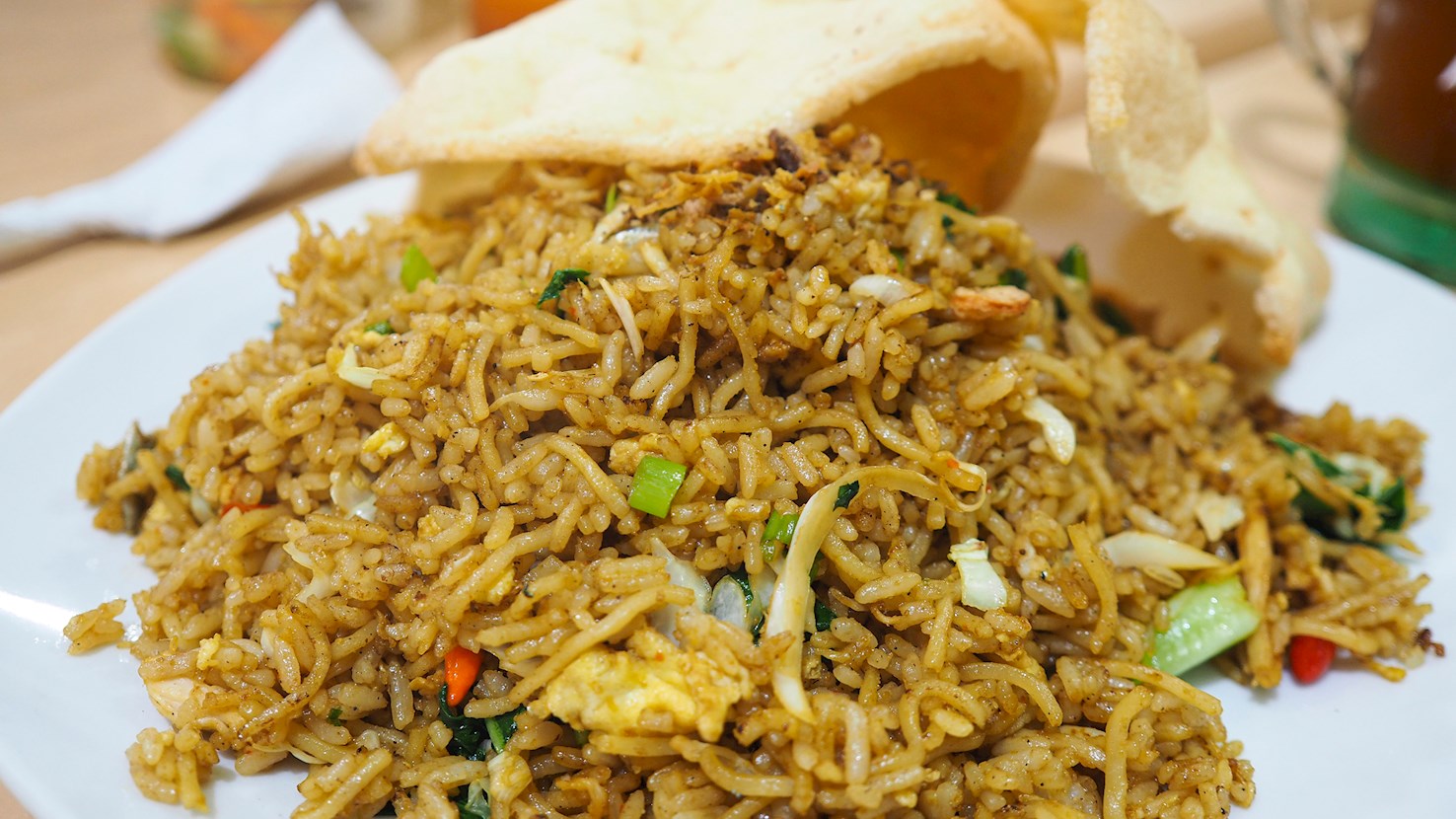
Nasi goreng mawut is a distinctive Indonesian fried rice dish that comes from Central and East Java. Its name loosely means “messy fried rice,” referring to the way rice and noodles are mixed together in the same pan to create a hearty, satisfying meal. The dish starts with leftover steamed rice, which is stir-fried along with yellow egg noodles, vegetables such as cabbage and mustard greens, scrambled egg, and often slices of chicken, beef, or meatballs. The combination of rice and noodles sets nasi goreng mawut apart from other types of fried rice commonly found across Indonesia, giving it a varied texture and a more substantial, filling character. Preparation begins by sautéing ground shallots, garlic, chilies, and sometimes shrimp paste or sweet soy sauce to form an aromatic base. The protein and vegetables are added next, then the rice and noodles are tossed in and cooked together until heated through and lightly caramelized. A final drizzle of kecap manis, Indonesia’s thick sweet soy sauce, lends a glossy coating and a mild sweetness that balances the savory flavors. The dish is typically garnished with fried shallots and sliced fresh cucumber, and it may be served with crackers or pickled vegetables on the side. Nasi goreng mawut reflects the resourceful cooking style of Java, where leftover rice and noodles are transformed into a convenient one-pan dish. It is commonly sold by street vendors and small eateries, where it is cooked to order over high heat so the rice stays firm and the noodles retain their springy texture.
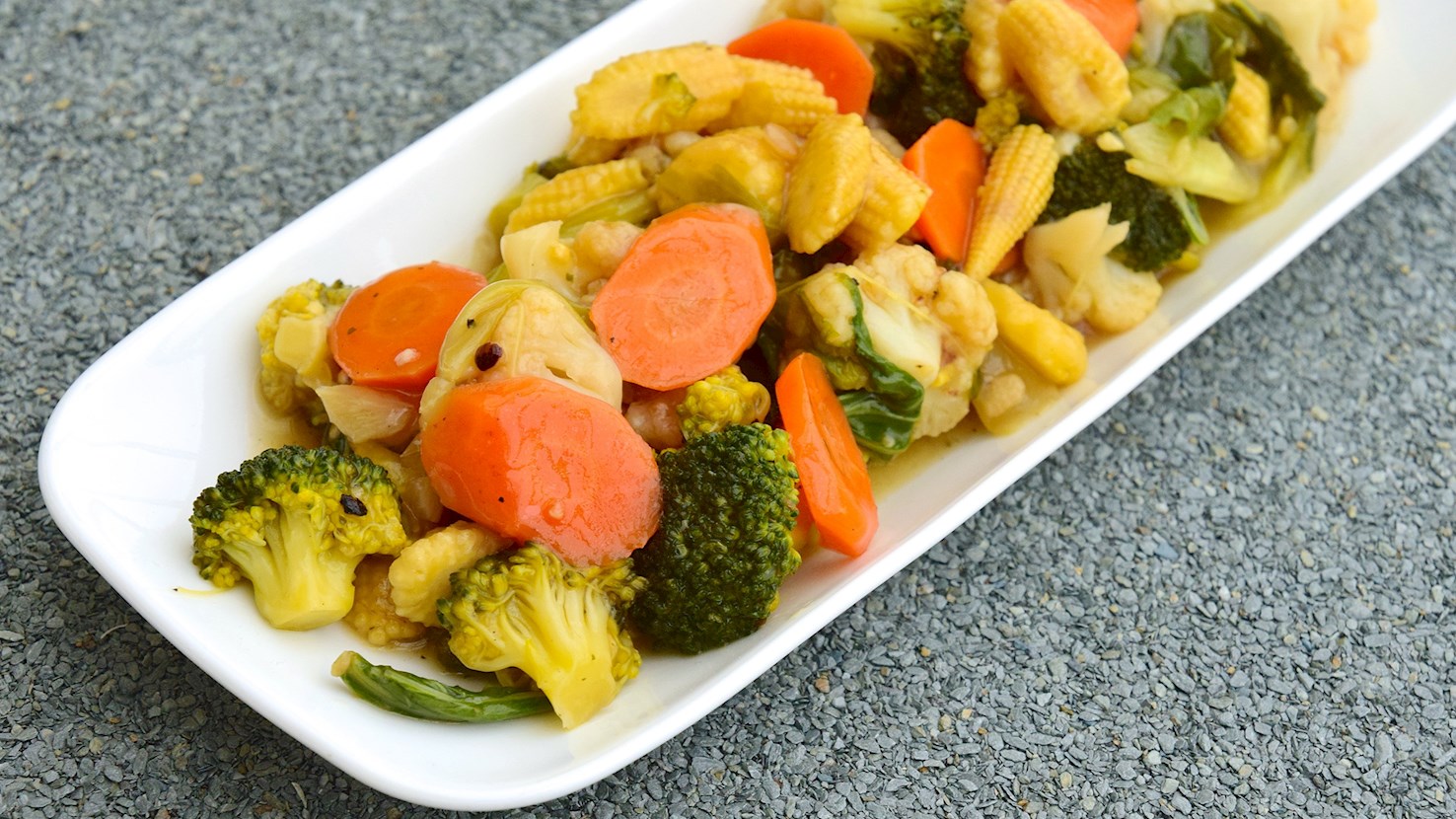
Cap cai (also spelled cap cay) is a popular Indonesian-Chinese stir-fry dish featuring a colorful medley of mixed vegetables, sometimes combined with meat, shrimp, or tofu, all cooked in a savory garlic-based sauce. The name comes from Hokkien Chinese, where cap means "ten" and cai means "vegetables" — though the number of vegetables used is flexible and symbolic rather than literal. Cap cai originated from Chinese immigrants in Indonesia and has since become a beloved household dish, especially known for its versatility, affordability, and balance of flavors. The vegetable mix often includes carrots, cabbage, cauliflower, baby corn, mushrooms, and Chinese greens, stir-fried quickly to retain their crunch and color. Protein additions like chicken, prawn, or meatballs are common, especially in the cap cai kuah (with broth) version, which has a light, soupy sauce. The dry version (cap cai goreng) has a thicker, richer glaze. The seasoning is typically a blend of garlic, oyster sauce, soy sauce, a touch of sesame oil, and sometimes chicken stock or cornstarch slurry for body, and the dish is served with steamed rice or as part of a larger meal.
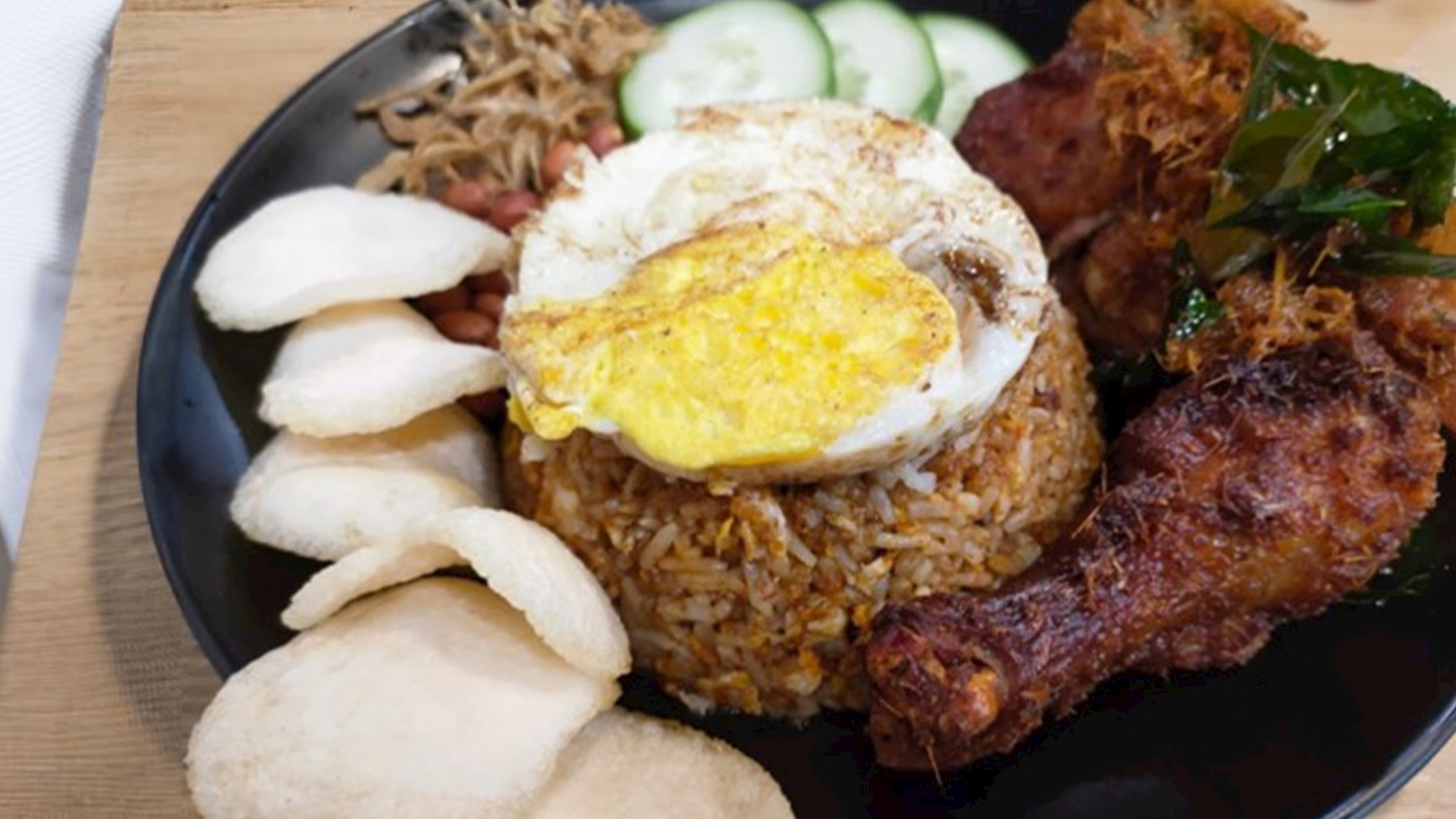
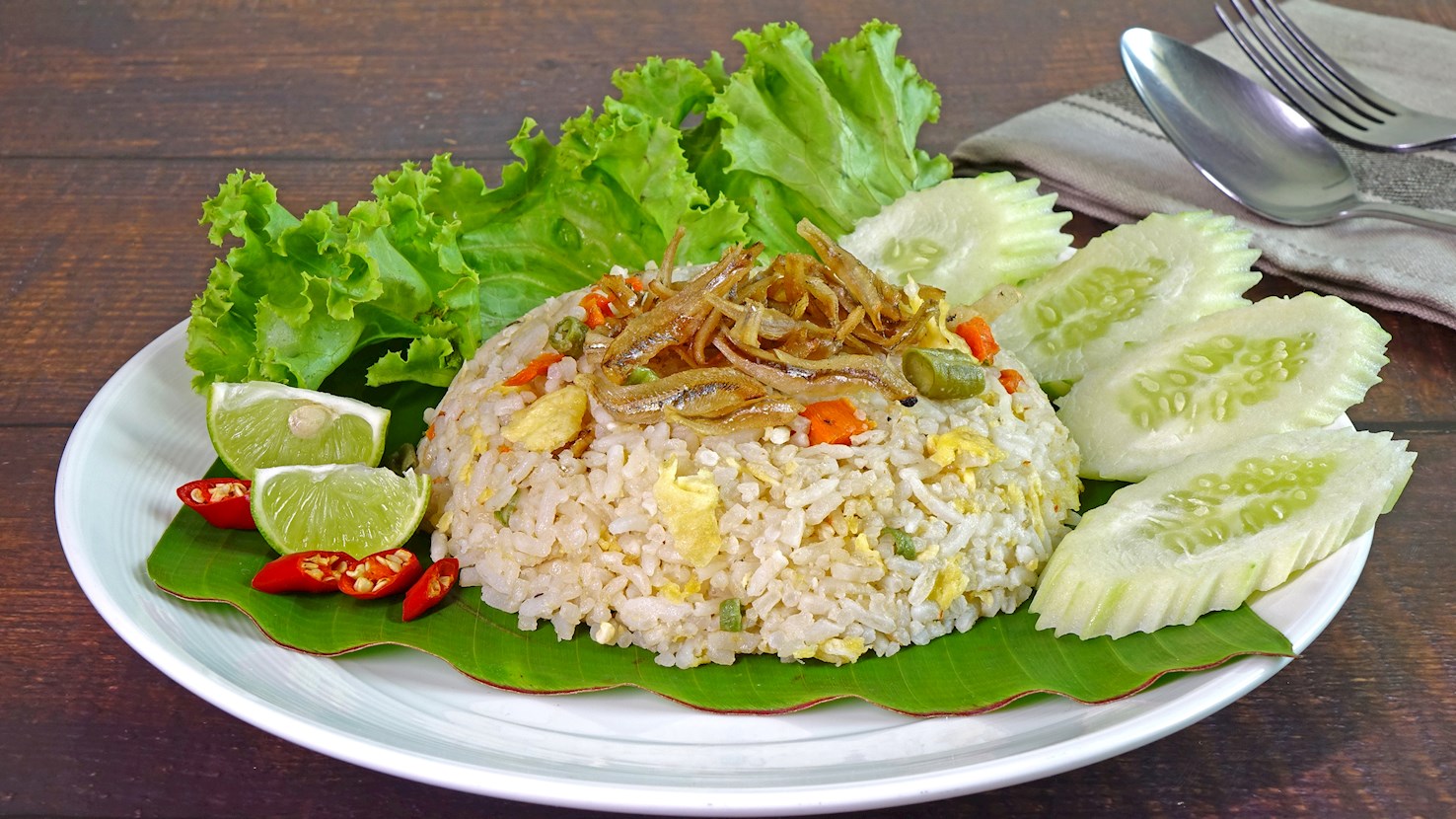
Nasi goreng kampung is a village-style fried rice dish widely enjoyed in both Malaysia and Indonesia, where it reflects a rustic approach to cooking that relies on simple ingredients and strong, savory flavors. In both countries, the dish is known for its use of sambal, fried anchovies, and leftover rice, creating a meal that is filling and uncomplicated. In Malaysia, nasi goreng kampung is especially popular in hawker centers and roadside stalls, where it is prepared quickly to order and typically served with a fried egg and fresh cucumber slices. The Malaysian version is characterized by the generous use of crispy anchovies and a chili paste that is stir-fried until aromatic before the rice is added. Soy sauce is often included to round out the seasoning, and kangkung or long beans are common additions for extra texture. In Indonesia, the dish is prepared in a similar way but may go by names such as nasi goreng pedas kampung or simply nasi goreng pedas. Indonesian cooks often include ikan teri (small dried anchovies) or leftover cooked meats, and some recipes use a touch of terasi, the fermented shrimp paste that gives many Indonesian sambals their distinctive depth. The rice is typically cooked with a combination of garlic, shallots, chilies, and sometimes sweet soy sauce or kecap manis, depending on regional preference. In both versions, the dish is valued for its flexibility, allowing home cooks to adapt it with whatever vegetables and proteins are available. Nasi goreng kampung is commonly eaten for breakfast, lunch, or late-night supper. Its straightforward preparation makes it one of the most accessible fried rice styles across Southeast Asia. While restaurant versions sometimes include elaborate garnishes, the most authentic examples are often the simplest, relying on the freshness of the sambal and the texture of the fried anchovies to carry the flavor. In Malaysia, the name has become a recognizable label on menus, sometimes causing confusion among visitors who expect it to be connected to Western interpretations of “village cuisine.” In Indonesia, the concept of kampung cooking is understood more broadly as a way of describing food prepared without elaborate sauces or commercial seasoning pastes.
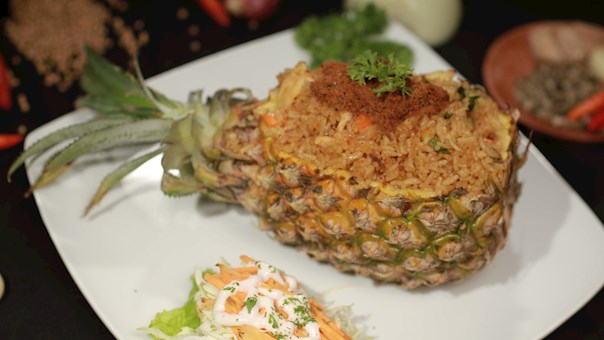
Nasi goreng kunyit is a fried rice dish that features turmeric as a defining ingredient, giving it a distinctive yellow color and earthy flavor. It originates from Indonesia and is commonly found in home kitchens and street food stalls, particularly in Java and Sumatra, where turmeric is frequently used in everyday cooking. The term “nasi goreng” means fried rice, while “kunyit” is the Indonesian word for turmeric. This variant is one among many regional expressions of Indonesia’s national comfort food, differing from the more common dark soy sauce-based versions by its brighter profile and use of fresh spices. The base of nasi goreng kunyit is cooked rice, preferably leftover rice from the previous day to ensure a firmer texture when fried. The rice is stir-fried with a freshly ground paste made from garlic, shallots, chilies, and turmeric root or turmeric powder. This paste is fried until aromatic, then mixed with the rice and other optional ingredients such as shredded chicken, diced tofu, small prawns, or chopped vegetables. The turmeric not only colors the dish but also adds a subtle bitterness that is often balanced by salt, sugar, and a squeeze of lime or dash of fish sauce, depending on local preferences. The dish is usually cooked in a wok or wide frying pan over high heat, allowing the rice to take on a slightly toasted texture while absorbing the flavors of the spice paste. It is often served with accompaniments such as sliced cucumber, fried shallots, a fried egg, or crispy crackers, but these additions vary by region and availability. Some versions include coconut milk or lemongrass for added complexity, though the core identity of nasi goreng kunyit remains grounded in its use of turmeric as the primary flavoring and coloring agent. While not as internationally recognized as other Indonesian rice dishes, it is well-regarded locally for its simplicity, nutritional value, and ease of preparation. It is often eaten as a breakfast or lunch dish, particularly when leftover rice and ingredients need to be repurposed into a quick and satisfying meal.
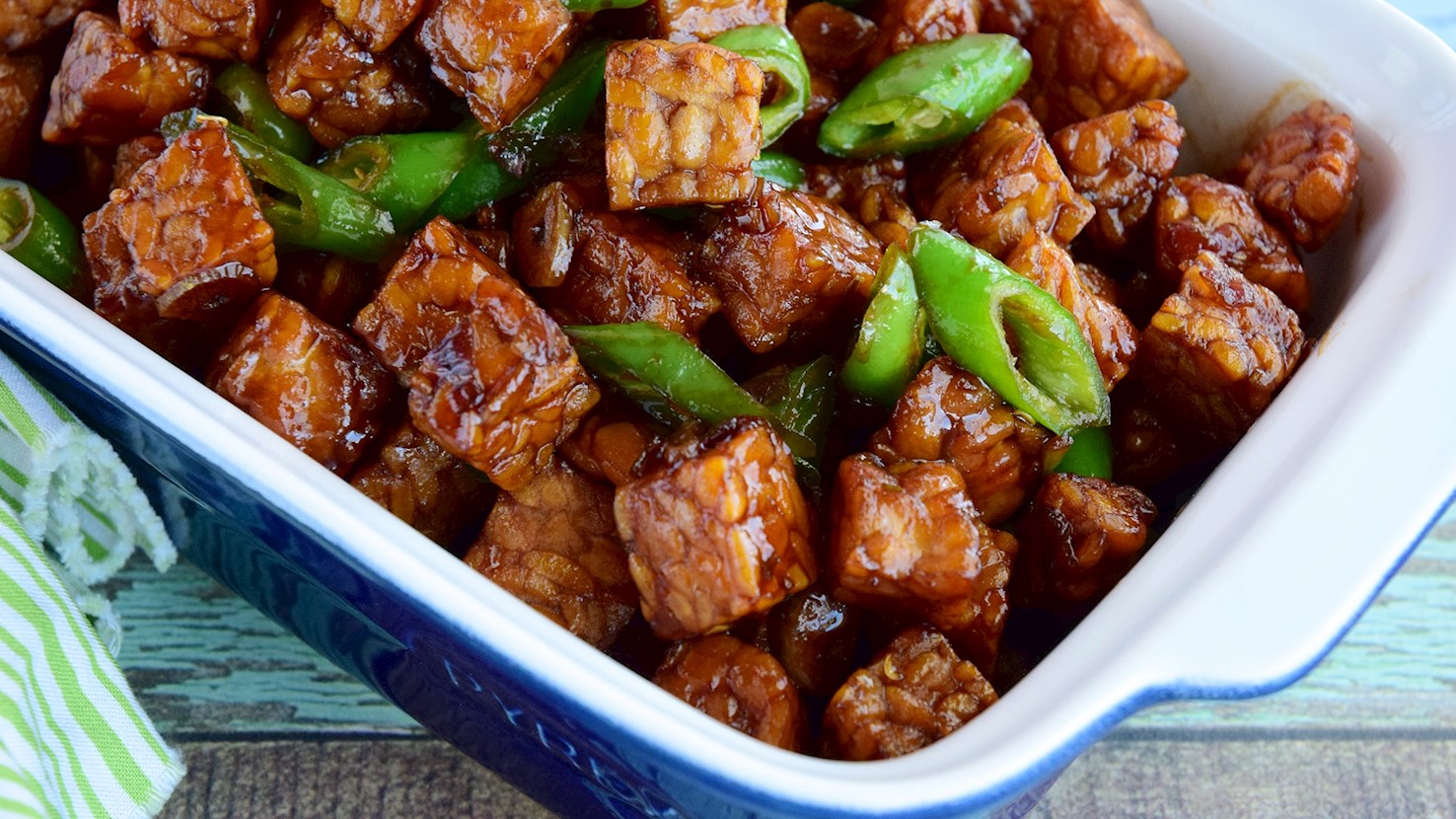
Tempe orek is an Indonesian stir-fry dish made with tempe, a traditional fermented soybean cake that originated in Java. In tempe orek, tempe is typically sliced into small matchsticks or cubes and then fried until golden, giving it a satisfying chew and slightly crispy edges. The fried tempeh is then tossed in a rich caramelized sauce made from a combination of kecap manis (Indonesian sweet soy sauce), garlic, shallots, and chilies, sometimes enhanced with bay leaves, galangal, or a touch of tamarind for added complexity. The result is a glossy, aromatic dish that balances sweetness, saltiness, and mild heat—flavors that are quintessential to Javanese cooking. Tempe orek is commonly served as a side dish alongside steamed rice, vegetables, and other main courses, often as part of a larger nasi rames or nasi campur spread. In some homes, it is made dry and stir-fried until the sauce clings tightly to the tempe, making it suitable for travel or packed lunches; in others, it’s prepared with a bit more sauce, ideal for soaking into warm rice.
Nasi goreng kambing is an Indonesian fried rice dish made with spiced goat meat, prepared and enjoyed throughout Jakarta and other cities on Java. The dish has a reputation for its robust flavor, which comes from the combination of slow-cooked goat pieces and a complex spice mixture that often includes coriander, cumin, ginger, and sometimes a little curry powder. Vendors cook the goat meat first until tender and fragrant, then shred or chop it into smaller pieces before stir-frying it with cold rice. The cooking process begins by heating oil in a large wok or shallow pan, then sautéing ground shallots, garlic, and chilies until aromatic. Sliced tomatoes or tomato paste are sometimes added to deepen the flavor. Once the seasoning base is ready, the prepared goat meat is tossed in and cooked briefly to blend the spices, followed by cold rice that is broken up and stirred to absorb the seasoning. Sweet soy sauce, known as kecap manis, is added for a glossy finish and a mild sweetness that balances the richness of the meat. Some cooks include sliced cabbage, scallions, or pickled vegetables to create contrast in texture and taste. The dish is usually served with acar (pickled cucumber and carrot) and a side of kerupuk (crispy crackers). Nasi goreng kambing is closely associated with roadside food stalls and casual eateries, where it is prepared in large batches, especially in the evening when people gather for dinner. In Jakarta, it is commonly found around Tanah Abang and Kebon Sirih, neighborhoods known for late-night vendors specializing in goat-based dishes. The rice is typically cooked over high heat to develop a smoky aroma known locally as “aroma gosong,” which many diners consider an essential feature of good fried rice. The dish has roots in Arab and South Asian culinary influences that entered Indonesia through centuries of trade and migration, which explains the use of warm spices and goat meat instead of the more common chicken or beef. While nasi goreng kambing is less widely known outside Indonesia compared to simpler versions of fried rice, it has gained attention among travelers and local food enthusiasts for its distinctive seasoning and hearty character. Some vendors still prepare it over charcoal stoves to enhance the smoky taste, and recipes often vary slightly depending on family preference or regional custom.
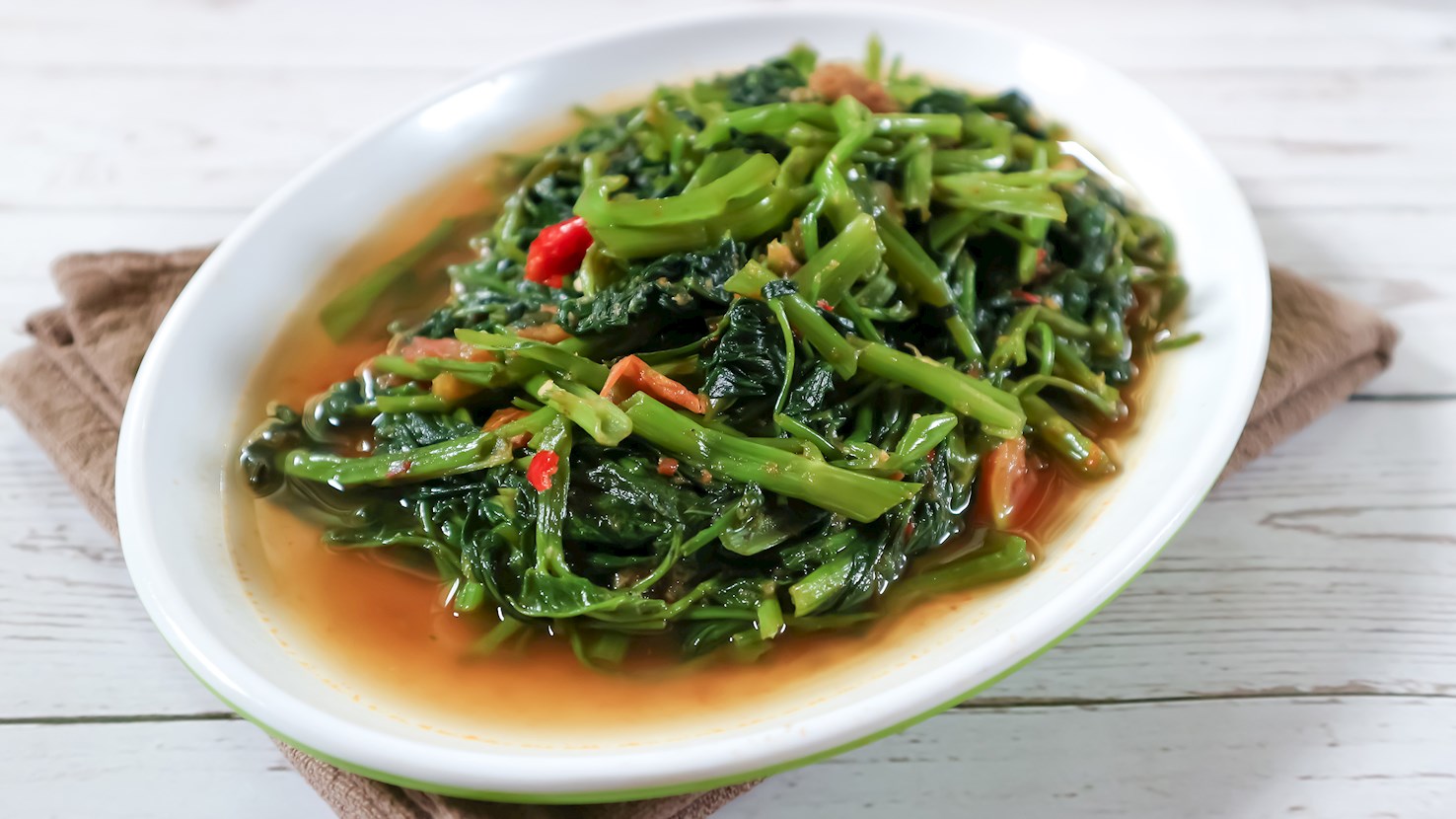
Tumis kangkung is one of the quintessential dishes of everyday Indonesian cooking, a deceptively simple stir-fry of water spinach that delivers far more flavor than its humble ingredients might suggest. Kangkung, also known as water spinach or morning glory, grows abundantly in the humid tropical lowlands of Indonesia, often along rice paddies and riverbanks. Its hollow stems and tender leaves make it an ideal canvas for bold flavors, and in the case of tumis kangkung, those flavors come in the form of garlic, shallots, bird’s eye chilies, and the all-important terasi, a fermented shrimp paste that infuses the dish with a deep, savory backbone. Cooked over high heat in a wok or skillet, the ingredients come together in minutes: first the aromatics sizzling in oil until fragrant, then the chopped greens tossed in quickly so they wilt and soften while retaining their vibrant color and snappy stems. The result is a dish that is spicy, pungent, and slightly sweet, with a balance of textures that keeps every bite interesting. Unlike the milder stir-fried greens of neighboring cuisines, tumis kangkung embraces the assertiveness of Indonesian flavor. The use of terasi sets it apart, providing a layer of umami that is earthy and complex without being overpowering when handled with care. Some cooks add a splash of kecap manis, Indonesia’s sweet soy sauce, to round out the heat with a caramel-like sweetness, while others prefer to keep it lean and hot, allowing the vegetable’s natural earthiness to come through. It is rarely eaten on its own; instead, it plays the supporting role in a typical Indonesian meal, served with rice and proteins like fried tempeh, grilled fish, or spicy chicken. Found in warungs, street stalls, and family kitchens across the archipelago, tumis kangkung is a culinary equalizer, enjoyed by all classes and cooked with nearly the same method from city to village.
TasteAtlas food rankings are based on the ratings of the TasteAtlas audience, with a series of mechanisms that recognize real users and that ignore bot,
nationalist or local patriotic ratings, and give additional value to the ratings of users that the system recognizes as knowledgeable.
For the “Top 12 Indonesian Stir-fry Dishes” list until May 16, 2026, 688 ratings were recorded, of which 524 were recognized by the system as legitimate.
TasteAtlas Rankings should not be seen as the final global conclusion about food. Their purpose is to promote excellent local foods,
instill pride in traditional dishes, and arouse curiosity about dishes you haven’t tried.