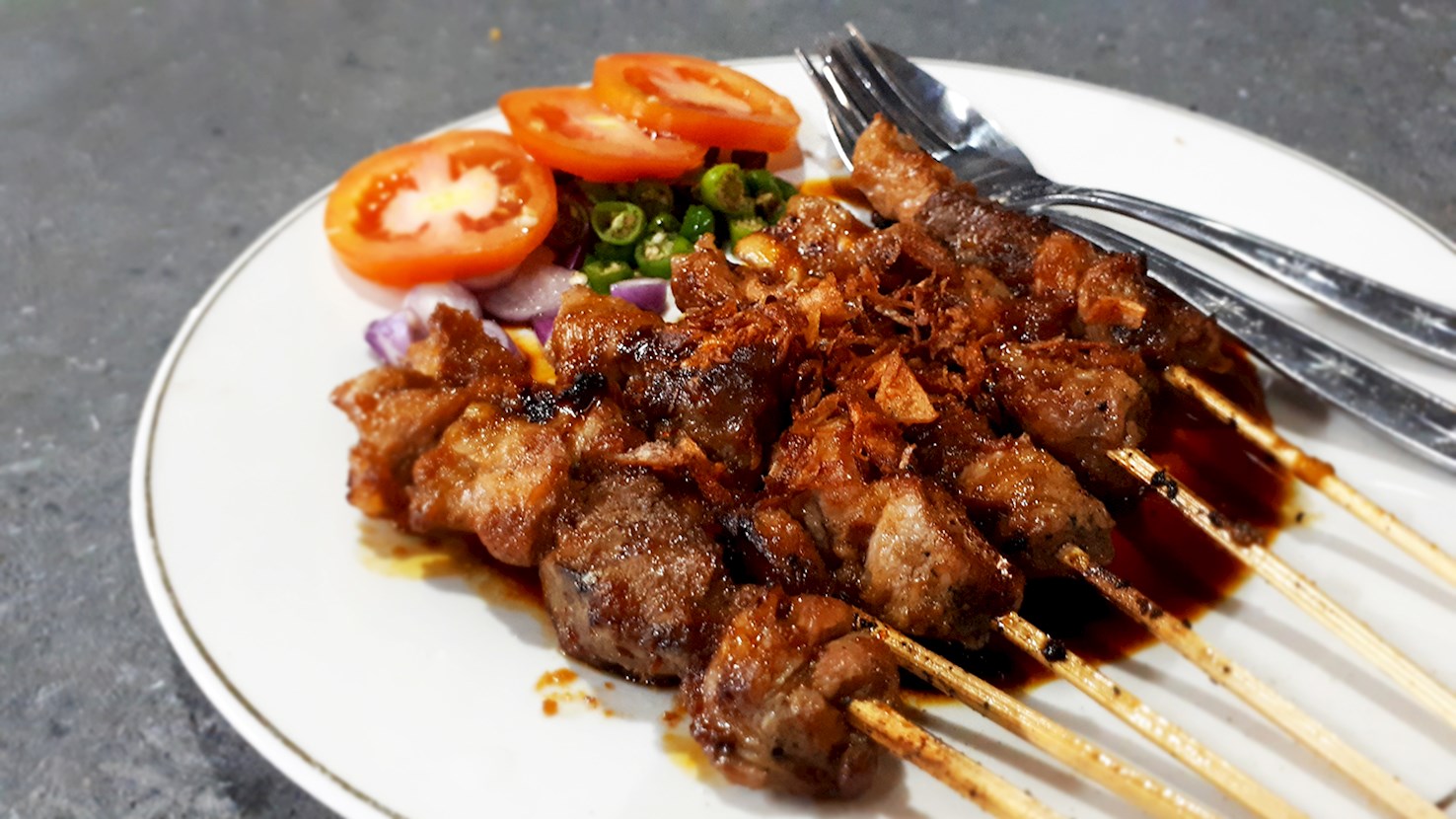
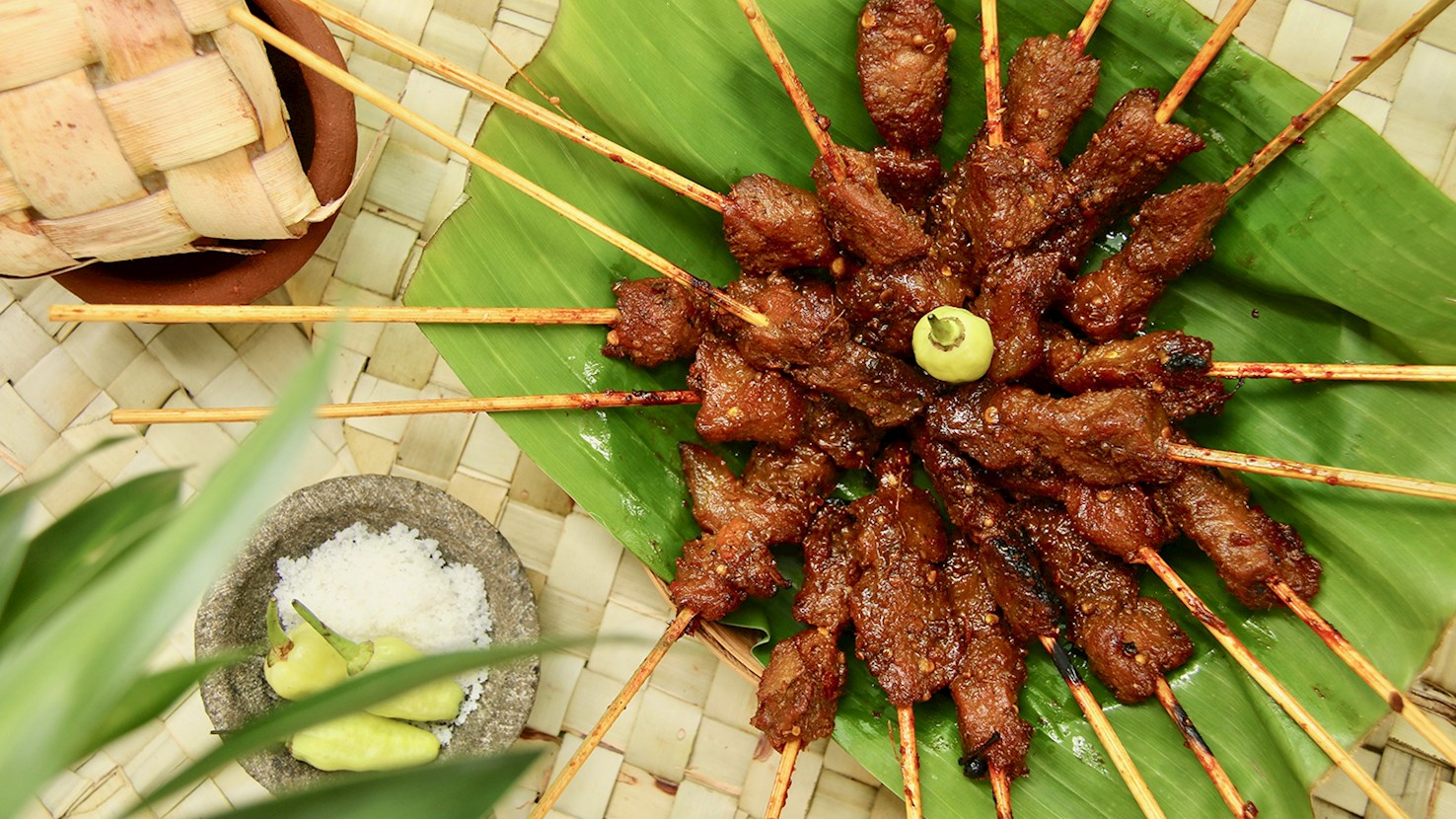
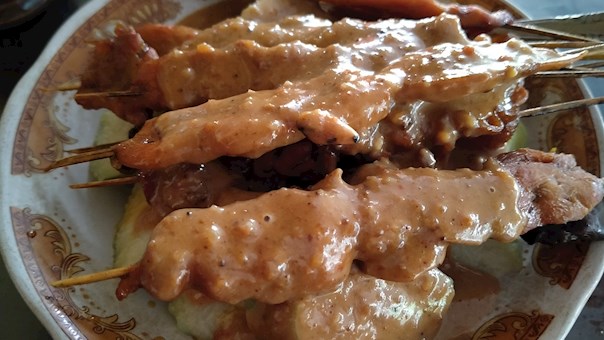
Sate kambing is a traditional dish and a type of satay prepared with goat or mutton as the main ingredient. The meat is cut into chunks or cubes and it's marinated in a combination of ingredients such as kecap manis (sweet soy sauce), galangal, ground shallots, pineapple juice, and (often) chili peppers. After it's been marinated, the meat is placed on skewers that are larger and thicker than the ones used for chicken satay as the texture and thickness of mutton or goat is tougher than chicken. The skewers for sate kambing are usually made from bamboo. The meat is grilled, then served with kecap manis sauce, peanut sauce, or chili sauce, consisting of shallots, bird eye chili peppers, and kecap manis. Some like to eat sate kambing with steamed rice or rice cakes on the side. This type of sate is especially popular in Java.
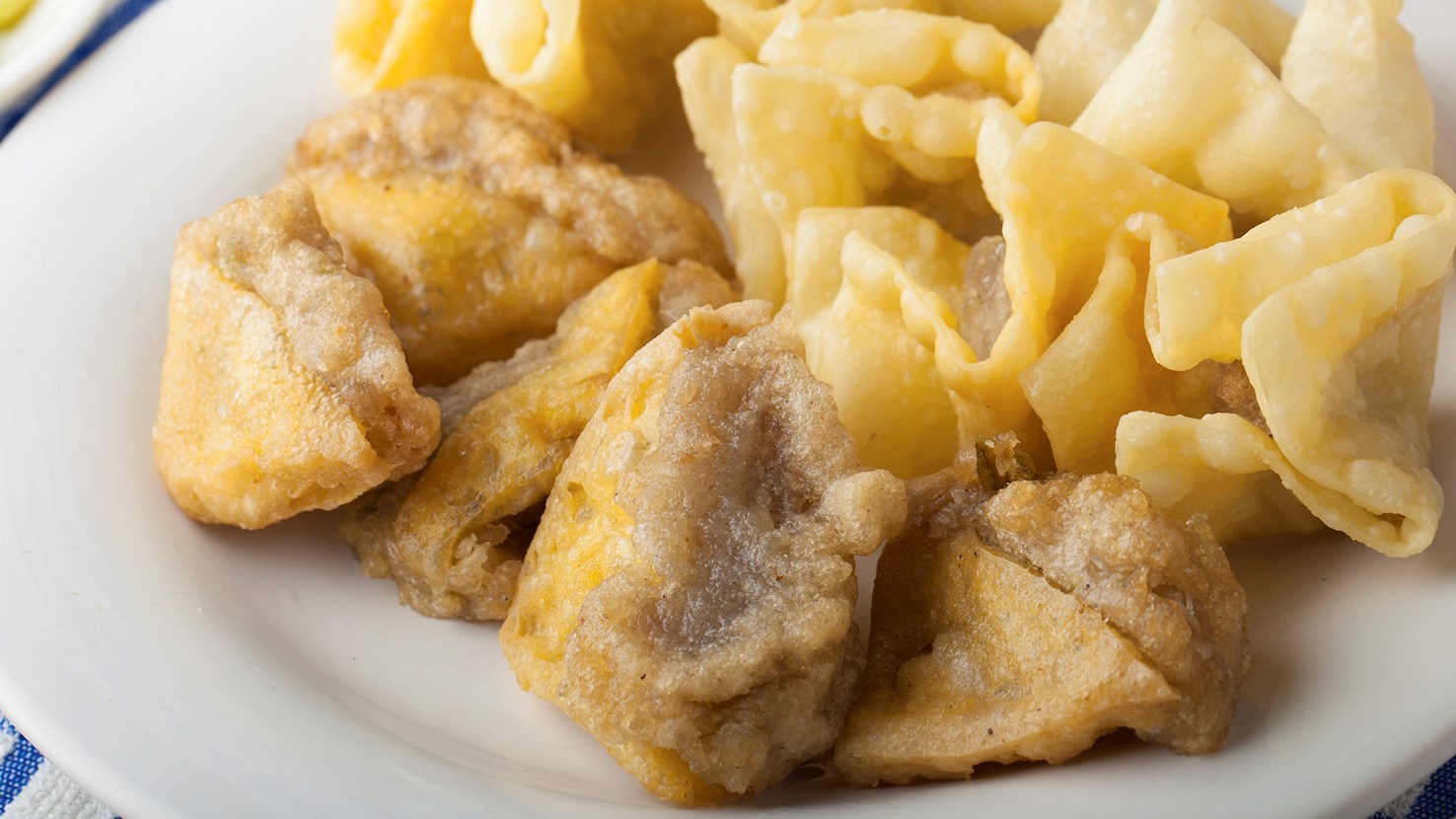
One of the most famous snacks in Indonesia is batagor, a fried fish dumpling served in a traditional spicy sauce. It has roots in the Chinese culinary tradition, which has left a trace on many Indonesian dishes. Although this famous snack is reminiscent of the more famous Chinese dumpling, its distinguishable characteristic is that it is fried, not steamed. The most common fish used to make the dish is wahoo, but tuna, mackerel, and even prawns can also be used. Potatoes, tofu, or cabbage are also occasionally added to the dish. Batagor is the perfect snack because of the way it is served. When fried, the dumplings are cut into small bite-sized pieces and covered in peanut, soy, and chili sauce with a splash of lime juice. It was invented in the 1980s in Bandung, but today it can be found throughout Indonesia. Since it is quickly prepared, it is commonly sold by street vendors, but it can also be found in many Indonesian restaurants.
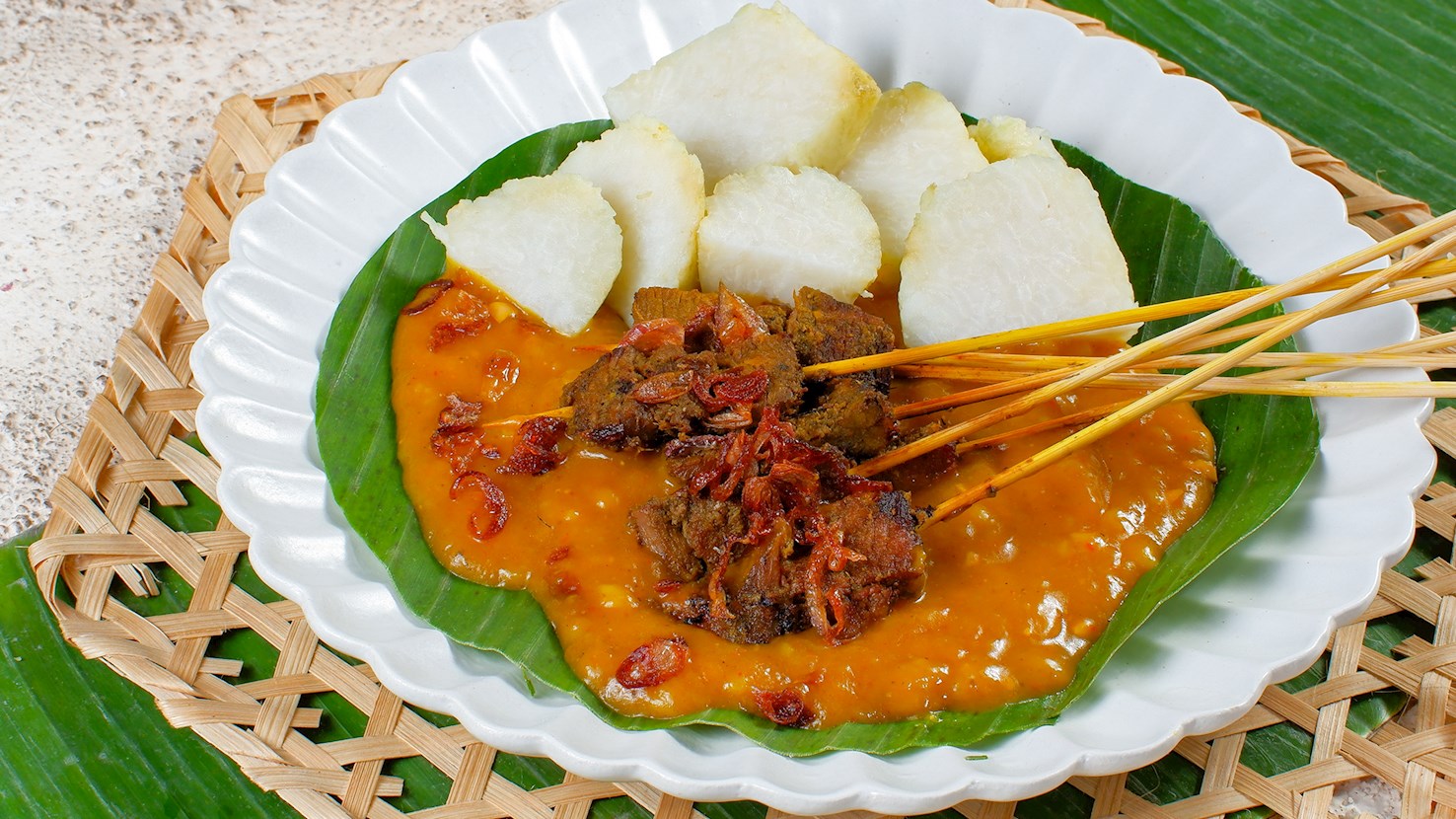
Padang satay is a spicy, rich, and aromatic Indonesian satay originating from Padang, West Sumatra, known for its thick, flavorful curry-based sauce. Unlike other Indonesian satay varieties that use peanut sauce or sweet soy sauce, Padang satay is distinct for its bold, turmeric-infused, and mildly spicy gravy, made from beef broth, rice flour, and a blend of local spices. The skewered meat—usually beef, beef tongue, or offal like intestines and heart—is first boiled in spiced broth until tender, then grilled over charcoal to achieve a smoky, caramelized crust. The signature thick, golden-brown sauce is made by reducing the broth used to cook the meat, thickened with rice flour, and enhanced with galangal, turmeric, coriander, cumin, lemongrass, and chilies, giving it a savory, slightly spicy, and deeply aromatic flavor. Padang satay is typically served on banana leaves, accompanied by steamed rice cakes (ketupat or lontong) and topped with crispy fried shallots, adding a final layer of crunch and fragrance.
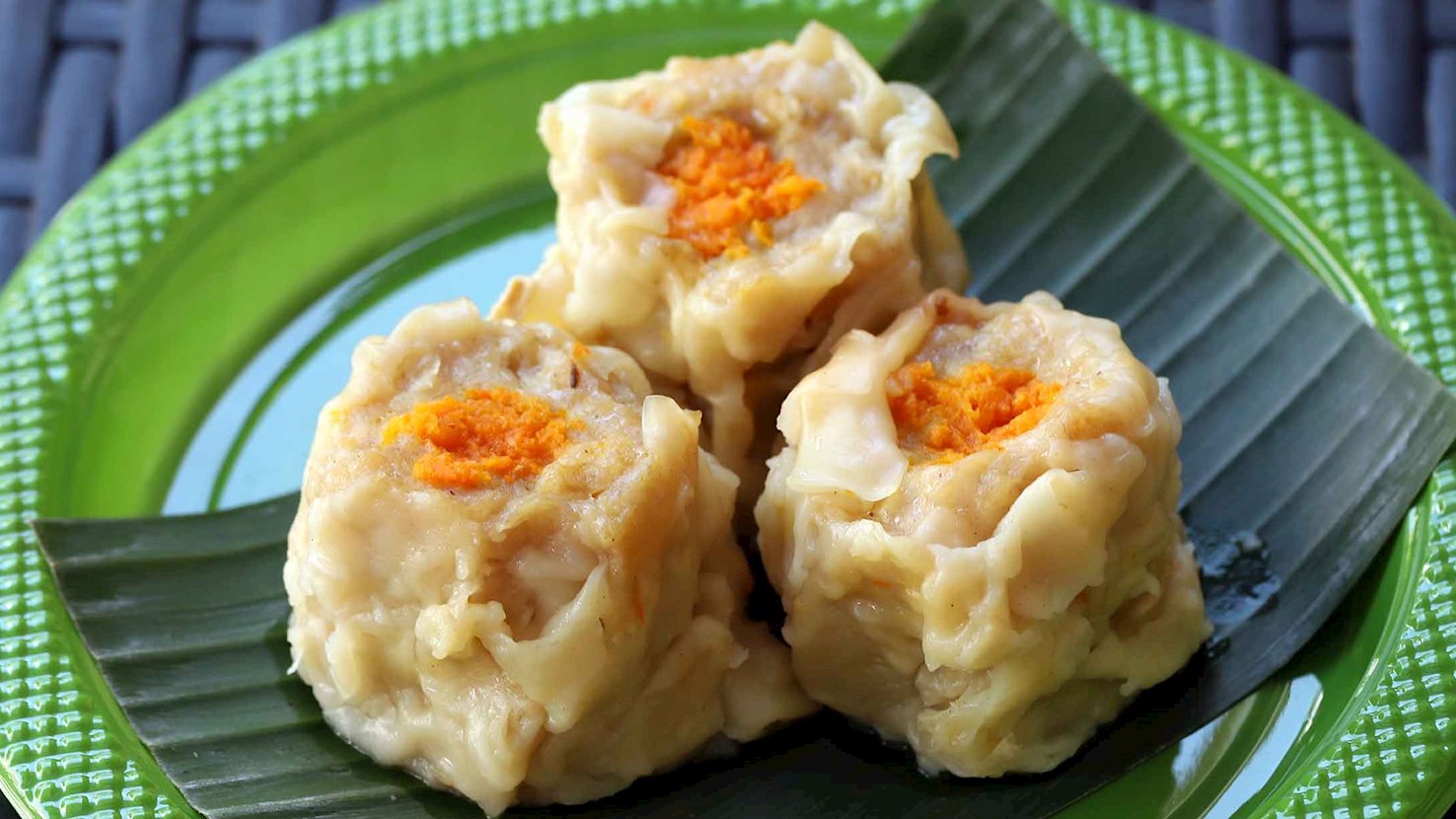
Siomay is a steamed dumpling filled with a dense fish and tapioca paste, permanently paired on a plate with steamed cabbage rolls, boiled potatoes, soft white tofu, hollowed-out bitter gourd, and a hard-boiled egg, all covered in a sweet and spicy peanut sauce. The history of this street food traces back to Chinese immigrants who introduced the pork-filled dim sum known as shumai to the archipelago. Local populations adapted the original ingredients to meet Islamic halal dietary requirements by replacing the pork filling with locally caught fish. Spanish mackerel, known regionally as ikan tenggiri, serves as the standard protein base for the filling, though some variations use ground tuna, prawns, or threadfin. Blending the raw, minced seafood with tapioca flour, shallots, garlic, salt, and white pepper creates a highly sticky and resilient paste. Sellers pack this savory paste into round wonton wrappers, stuff it directly into slices of tofu, and press it into the centers of sliced green pare, a sharply bitter gourd. A large, multi-tiered metal steamer gently cooks the dumplings and the accompanying whole potatoes, cabbage leaves, and eggs until they are fully tender. Mobile vendors strap these hot steamers onto the backs of bicycles or mount them on wooden pushcarts to travel through residential neighborhoods and busy commercial streets. A customer selects their preferred combination of fish dumplings and vegetables from the hot steam bath. The seller immediately snips the chosen items into bite-sized pieces using a pair of sharp metal scissors directly over a shallow plate or a folded paper cone. A thick, warm peanut sauce goes directly over the chopped pieces. Creating this sauce requires frying raw peanuts until golden before grinding them into a paste with red chili peppers, garlic, shallots, palm sugar, tamarind juice, and salt. A finishing squirt of fresh kalamansi lime juice cuts through the nuts' heavy fat. A heavy drizzle of kecap manis, a molasses-like sweet soy sauce, creates a dark webbing over the top of the plate. The final combination balances the chewy, savory seafood paste with the sharp snap of bitter gourd, the neutral starch of potato, and the rich heat of peanut gravy. The city of Bandung in West Java claims the most famous iteration of this meal, frequently marketed as Siomay Bandung by street vendors far outside the city limits. People consume this warm meal at any hour of the day as a filling snack or a casual dinner, eating the sauce-drenched pieces with a fork and a spoon.
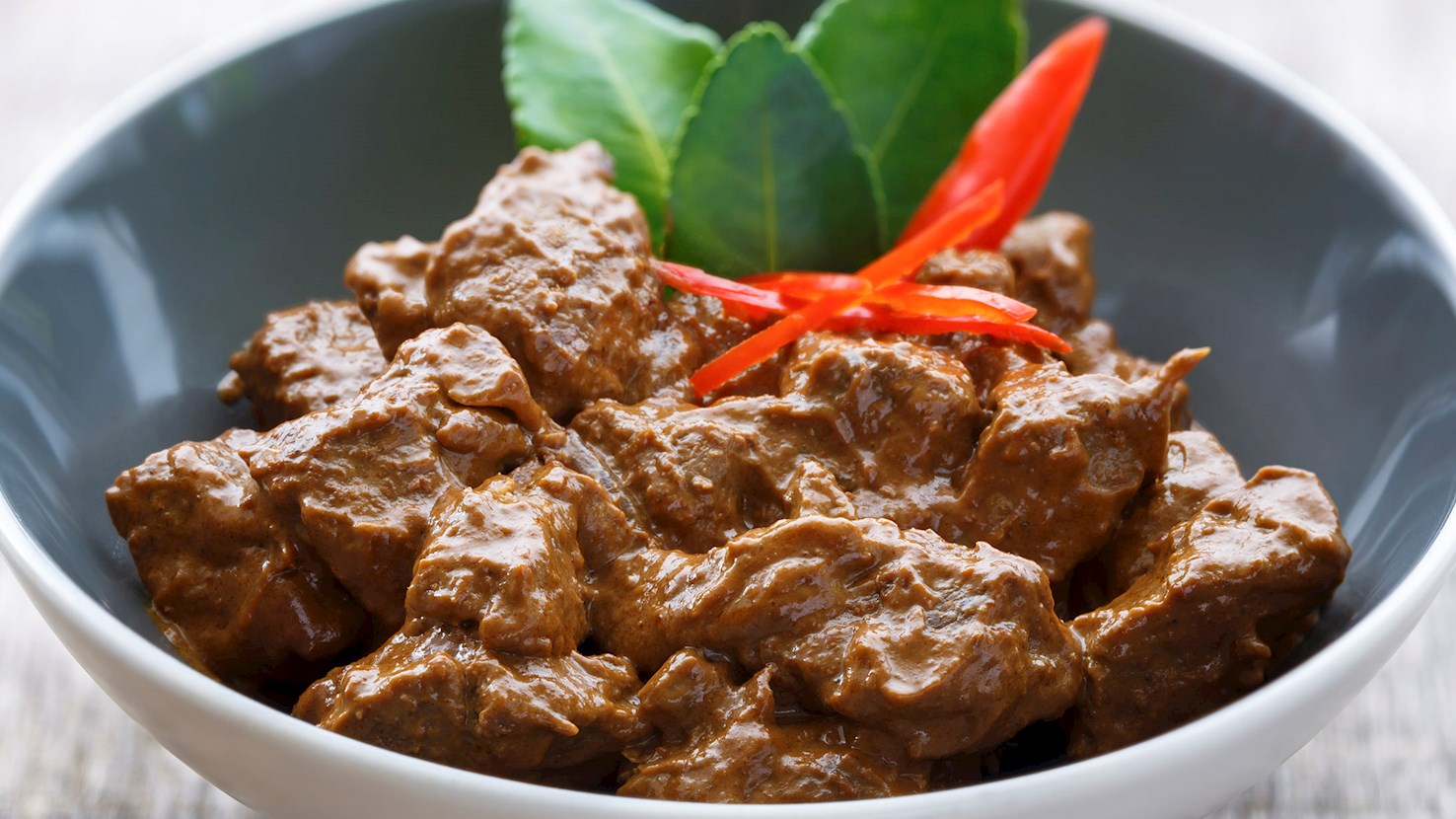
Rendang is an Indonesian meat dish which originated among the Minangkabau people in West Sumatra. The dish is famous for its spiciness and a long cooking procedure. It is often compared to Indian curry because of its consistency and unique flavors. The theory about how rendang was invented claims that the generous use of spices and long cooking hours were employed to preserve the meat in hot and tropical climates, such as Indonesian, so unsurprisingly, the need to preserve meat for a longer period appeared among the Minangkabau people. They were mainly traders who underwent long journeys and needed food which could stay fresh for weeks. However, the dish has a more symbolic meaning to them, because the main four ingredients used in rendang represent the Minangkabau society: the meat symbolizes leaders, coconut is a symbol of intellectuals, chili represents religious leadership, and other spices signify the rest of society. Today, rendang has surpassed Indonesian borders and has a reputation as one of the most delicious dishes in the world.
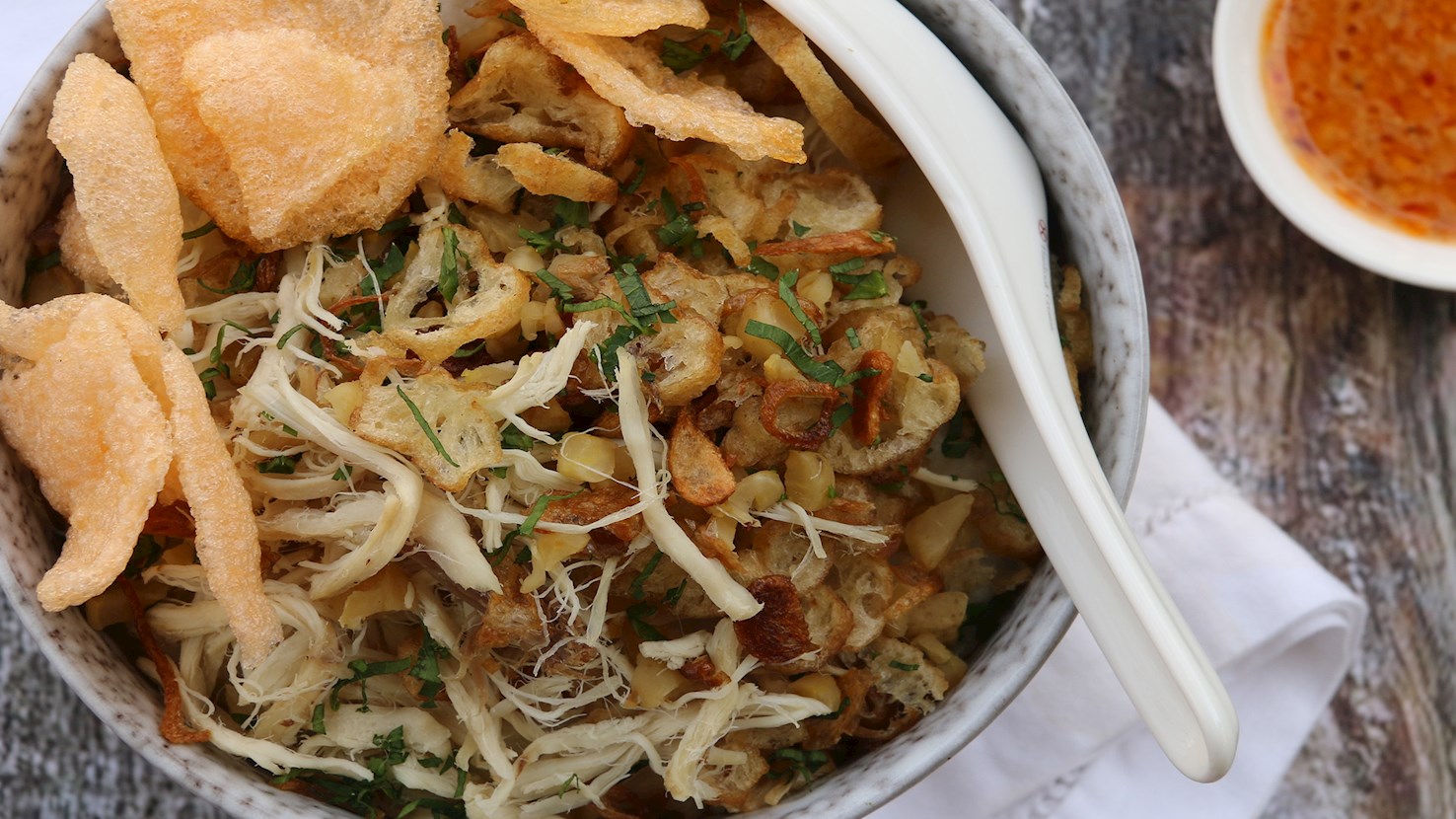
Bubur ayam is the Indonesian version of chicken congee, a thick rice porridge topped with shredded chicken and various savory condiments. This breakfast staple probably originates from the Chinese rice porridge, but it employs regionally available ingredients and toppings to create an authentic Indonesian dish. The process starts with boiling chicken (usually darker, on the bone pieces), and the same broth is typically used to cook the rice until it becomes dense in consistency. Besides rice porridge and shredded chicken, bubur ayam can employ a myriad of other ingredients. It is commonly topped with sliced scallions, crispy fried shallots, chopped cilantro, crushed peanuts, fried crullers, and sliced boiled eggs. Before it is served, bubur ayam is usually generously doused with soy sauce, sesame oil, or fish sauce. Unlike other traditional Indonesian dishes, this chicken porridge is not overly spicy, but the fiery sambal sauce can be served on the side, if desired. Bubur ayam is one of the most common street food varieties in Indonesia - each morning, numerous street vendors can be seen selling this comforting porridge as a nutritious breakfast dish.
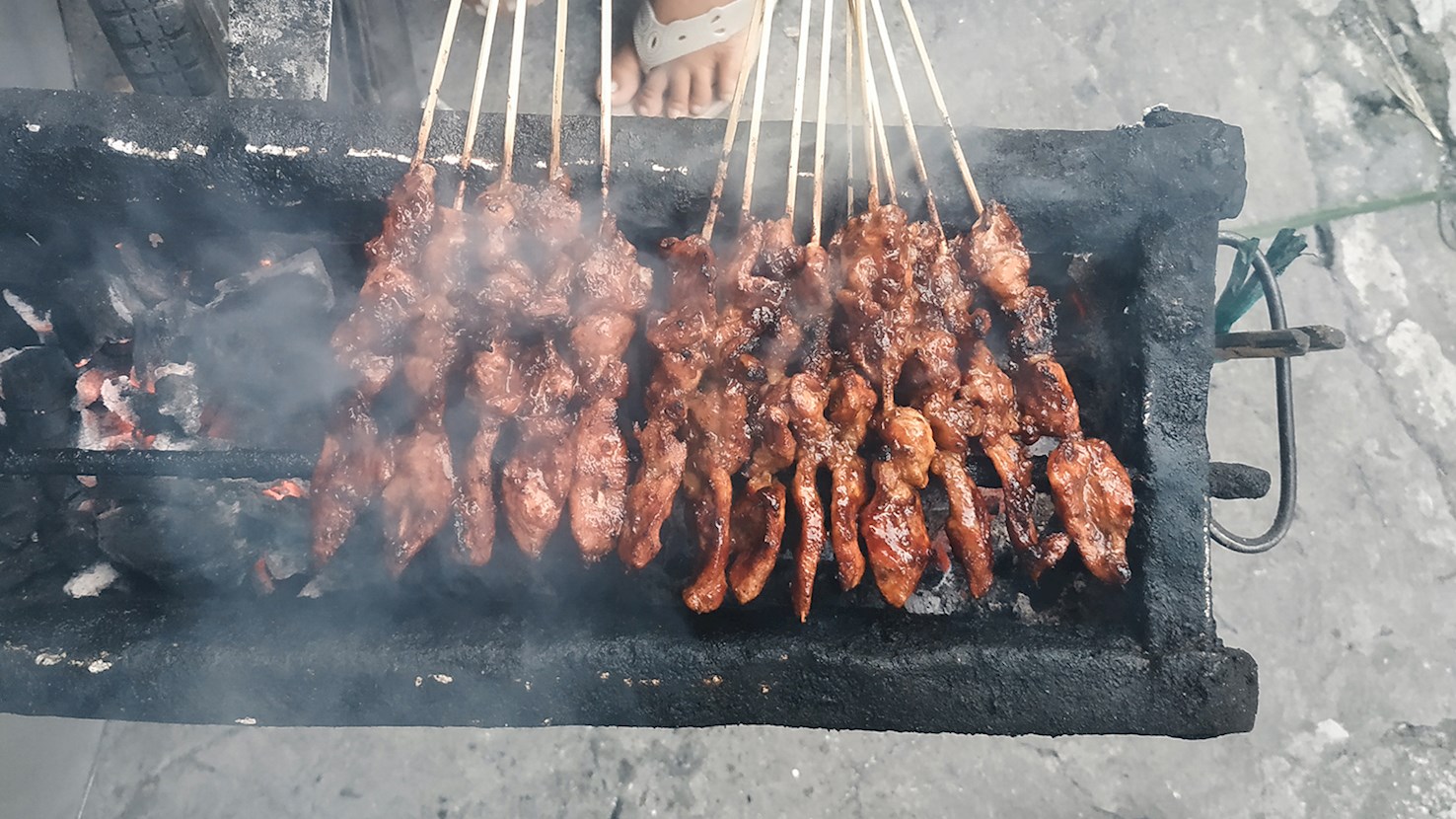
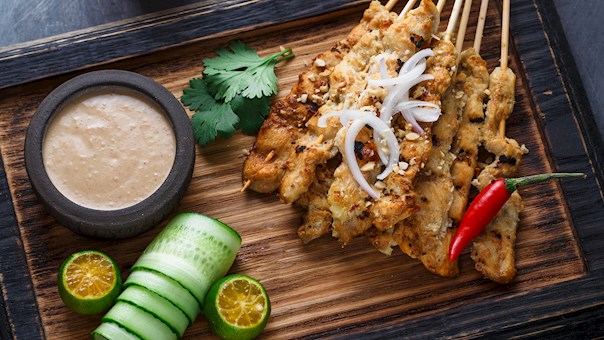
Sate Madura is a popular Indonesian skewered meat dish that originates from the island of Madura, located just northeast of Java. It is one of the most widely recognized regional variations of sate in Indonesia, known for its distinctively rich, sweet-savory peanut sauce and smoky, charcoal-grilled aroma. Typically made with small cuts of chicken or beef, the meat is marinated, skewered onto bamboo sticks, and grilled over hot coals while being brushed with a glaze that often includes sweet soy sauce, garlic, and shallots. What sets sate Madura apart from other styles is the generous use of thick, dark kecap manis and the robust, slightly caramelized peanut sauce that is poured over the cooked skewers just before serving, often accompanied by fried shallots and rice cakes called lontong. The roots of sate Madura lie in the island’s long-standing culinary influence on Javanese street food culture. Sellers from Madura have historically migrated to urban centers such as Jakarta and Surabaya, bringing their version of sate to roadside stalls, markets, and night-time food courts. Their presence has made sate Madura almost synonymous with street-side grilling throughout Indonesia, where the sight of glowing charcoal pits and the aroma of seared meat have become an essential part of the evening food scene. Often served on brown wax paper or banana leaves, sate Madura is eaten with the hands or simple wooden forks, emphasizing its role as a deeply rooted, everyday comfort food.
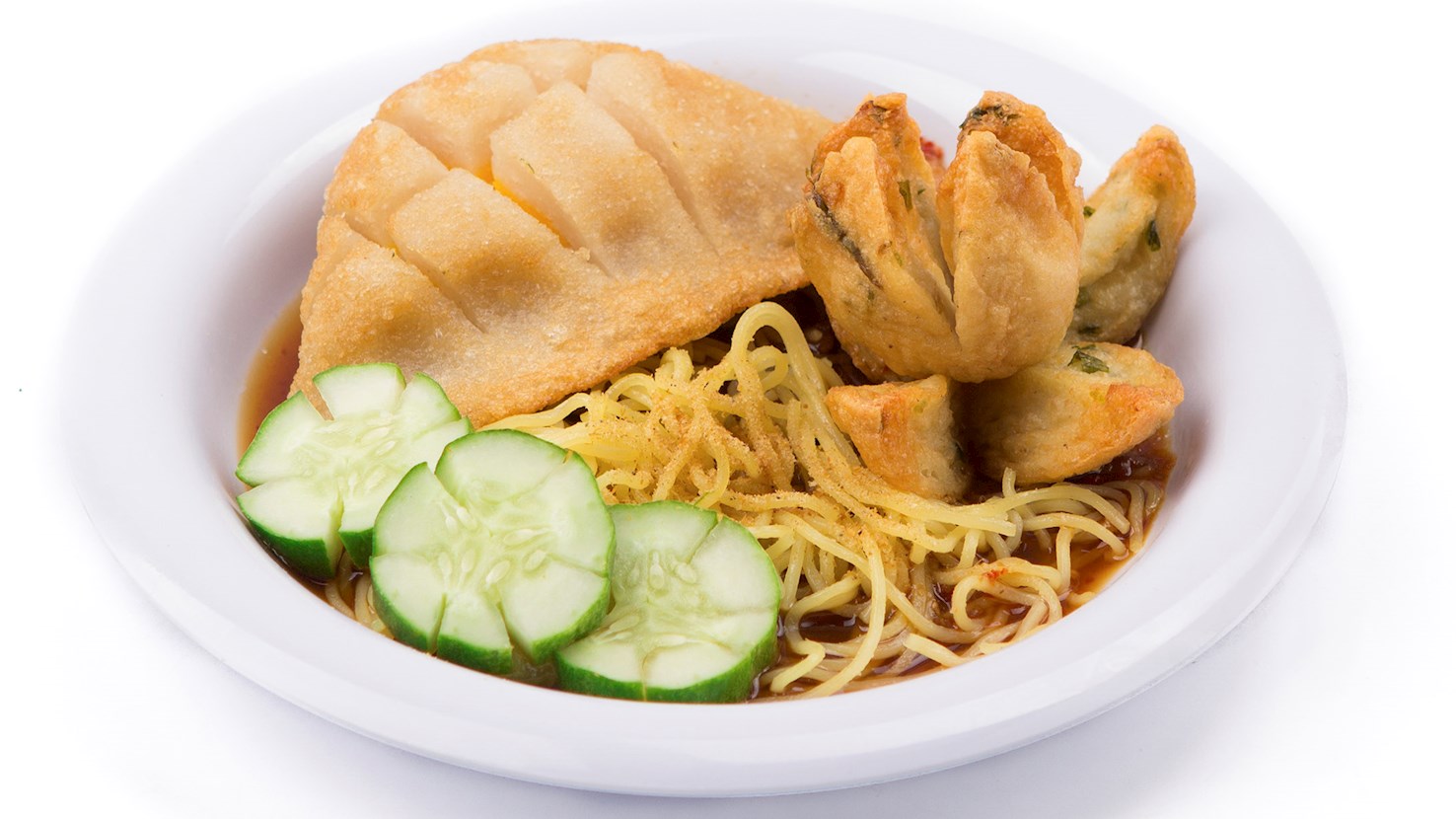
Pempek is a traditional fish cake made with ground fish meat and tapioca. The actual origin of this dish is the city of Palembang, situated in the South Sumatra province. The origin story of pempek says that an old Palembang citizen was tired of the traditional fried or grilled fish, so he thought of an innovative way to ground the meat, mix it with tapioca flour, and deep-fry it to get a crunchy and delicious snack. He then used to cycle through the city and sell the fish cakes to Palembang citizens. Over time, pempek was recognized as a praise-worthy snack, and today it is considered to be a traditional Indonesian delicacy. These round or rectangular cakes are usually steamed, and right before serving they are fried in vegetable oil and cut into bite-sized pieces. Sliced cucumbers, noodles, or rice are typical accompaniments, and the traditional sweet and sour sauce is usually served on the side so the customers can adapt the flavors to their taste.
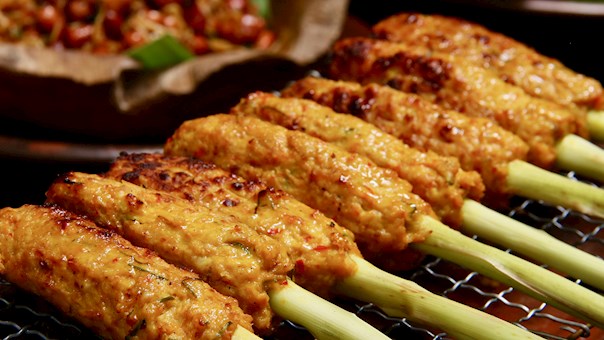
Sate babi is an Indonesian pork satay that originates primarily from the Chinese-Indonesian and Balinese communities, offering a distinctive take on the country’s iconic skewered meat dishes. Unlike most Indonesian sate, which is often made from chicken, beef, or goat due to the country’s majority Muslim population, sate babi is popular in regions where pork is widely consumed, such as Bali, North Sulawesi, and parts of Java with significant non-Muslim populations, particularly among Chinese-Indonesians. The dish consists of small cuts of pork that are marinated in a richly seasoned mixture before being skewered and grilled over charcoal. The marinade typically includes garlic, shallots, coriander, tamarind, soy sauce, palm sugar, and sometimes lemongrass or ginger, resulting in a flavor profile that is simultaneously savory, sweet, and aromatic. The meat is usually cut into bite-sized cubes or thin slices, allowing it to cook quickly while maintaining a tender, juicy interior and slightly charred exterior. During grilling, the skewers are often brushed with the leftover marinade to deepen the flavor and create a glossy, caramelized finish. In Bali, sate babi is often prepared for religious ceremonies and festive gatherings, where it is served alongside lawar, rice, and spicy sambal. It holds an important cultural role, symbolizing celebration and abundance. In Chinese-Indonesian cuisine, it is commonly sold at street stalls and small family-run warungs, especially in urban areas like Jakarta and Surabaya, where it is typically served with rice, pickled vegetables, and a thick peanut or soy-based sauce. The Balinese version tends to be spicier and more aromatic, reflecting the island’s bold and vibrant culinary traditions, while Chinese-Indonesian versions may lean slightly sweeter and more soy-forward.
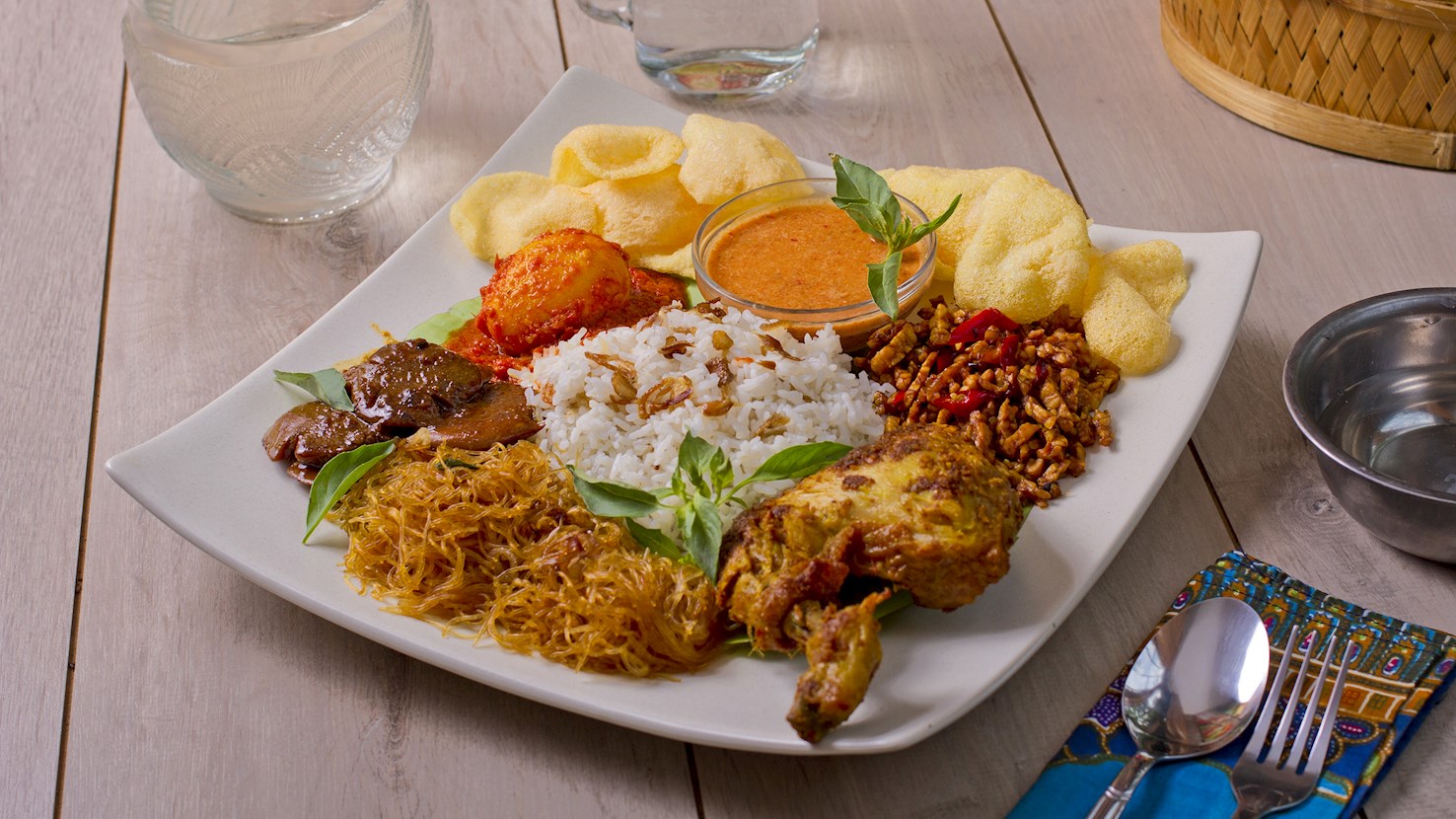
Nasi uduk is one of numerous Indonesian rice-based dishes. The rice in nasi uduk is cooked in coconut milk together with lemongrass, cloves, pandan leaves, and cinnamon. The process results in wonderfully fluffy, fragrant rice, and right before it is served, each portion is usually topped with fried shallots. It is a dish rarely eaten on its own, but rather served with a variety of side dishes and condiments. Most commonly a variety of stewed and fried meat, rice noodles, eggs, tempeh, tofu, fried anchovies, and rice crackers are served alongside rice. Regular sambal, the spicy Indonesian hot sauce, or peanut sambal are the most common condiments served with nasi uduk. However, it is usually the customer who can choose the additional ingredients and create their version of the meal. The dish is usually served in warungs, traditional Indonesian eateries, or at Indonesian food stalls. It can also be bought already prepared and wrapped in fresh banana leaves. Nasi uduk is believed to have originated in Jakarta, but it can be found in other parts of Indonesia as well.
TasteAtlas food rankings are based on the ratings of the TasteAtlas audience, with a series of mechanisms that recognize real users and that ignore bot,
nationalist or local patriotic ratings, and give additional value to the ratings of users that the system recognizes as knowledgeable.
For the “Top 64 Indonesian Street Food” list until October 15, 2026, 3,592 ratings were recorded, of which 2,442 were recognized by the system as legitimate.
TasteAtlas Rankings should not be seen as the final global conclusion about food. Their purpose is to promote excellent local foods,
instill pride in traditional dishes, and arouse curiosity about dishes you haven’t tried.






What People Say