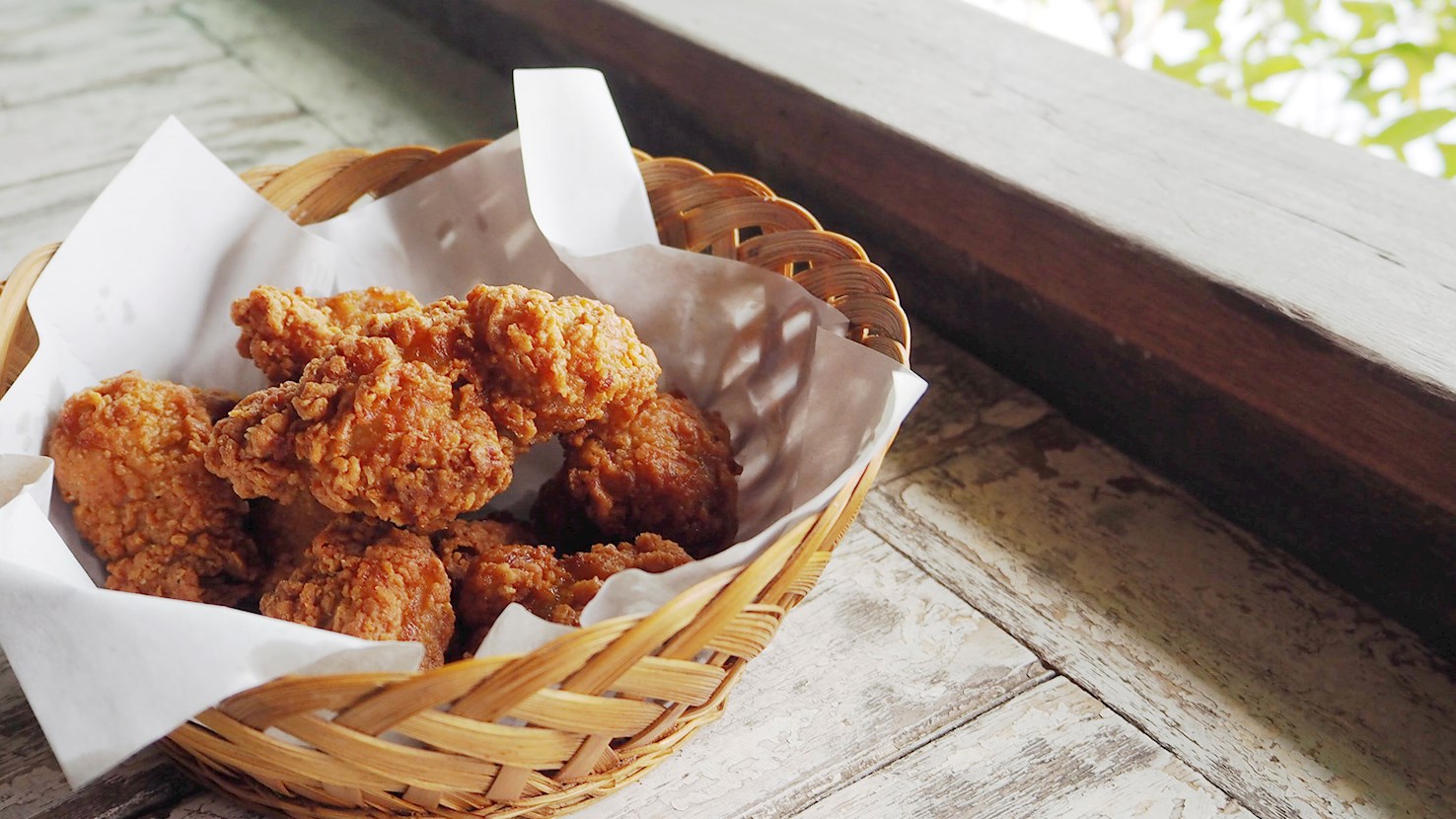
Also known as dry-frying, karaage is a Japanese cooking technique in which various foods are first lightly coated in arrowroot starch, then deep-fried. The use of arrowroot starch preserves the natural water content of fried foods and produces a crispy outer surface, but alternatively, other coating ingredients such as wheat flour, tapioca, or potato starch can also be used. Karaage can be used for frying various meats and fish, but it is most often associated with chicken, and involves a special variant called tatsutaage, where pieces of chicken are first marinated in a mixture of sake, soy sauce, and sugar which are then lightly covered with arrowroot starch and deep-fried. This method makes the meat succulent on the inside and particularly crispy on the outside. If not specified otherwise, karaage usually refers to fried chicken, but apart from chicken, the technique is sometimes used with other ingredients such as askarei (flounder), ika (bits of squid), and gobo (burdock root). Japanese karaage dishes are usually seasoned with garlic and ginger, and served with soy sauce on the side. They are a staple of informal Japanese gastropubs called izakayas, casual places for after-work drinks and snacks, but they are also available freshly fried as take-out food in numerous supermarkets and convenience stores.
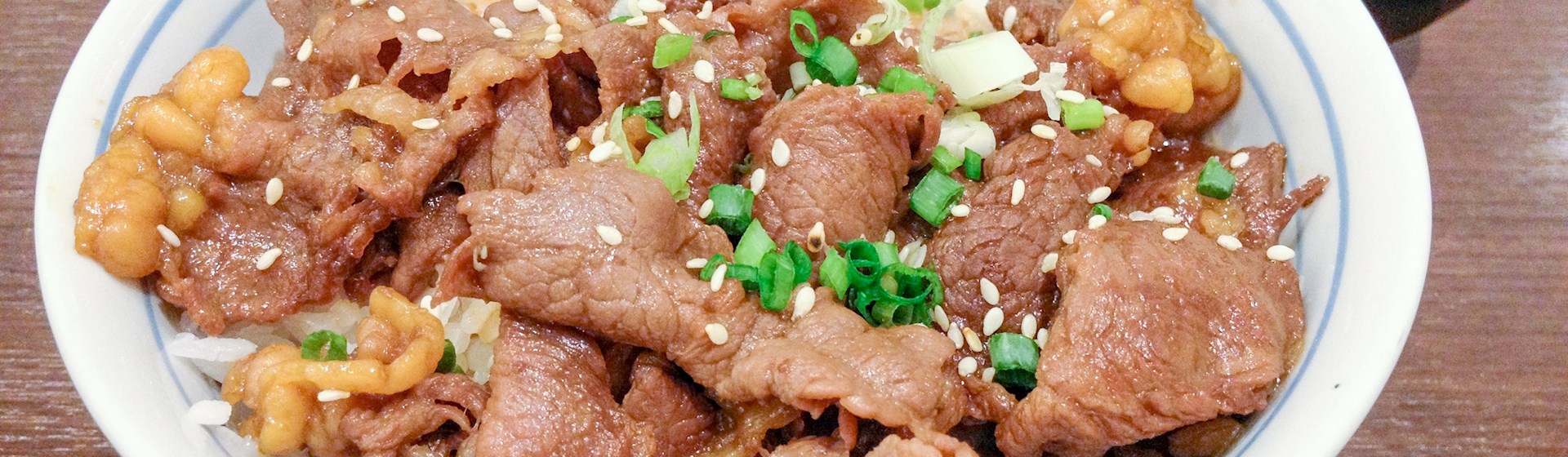
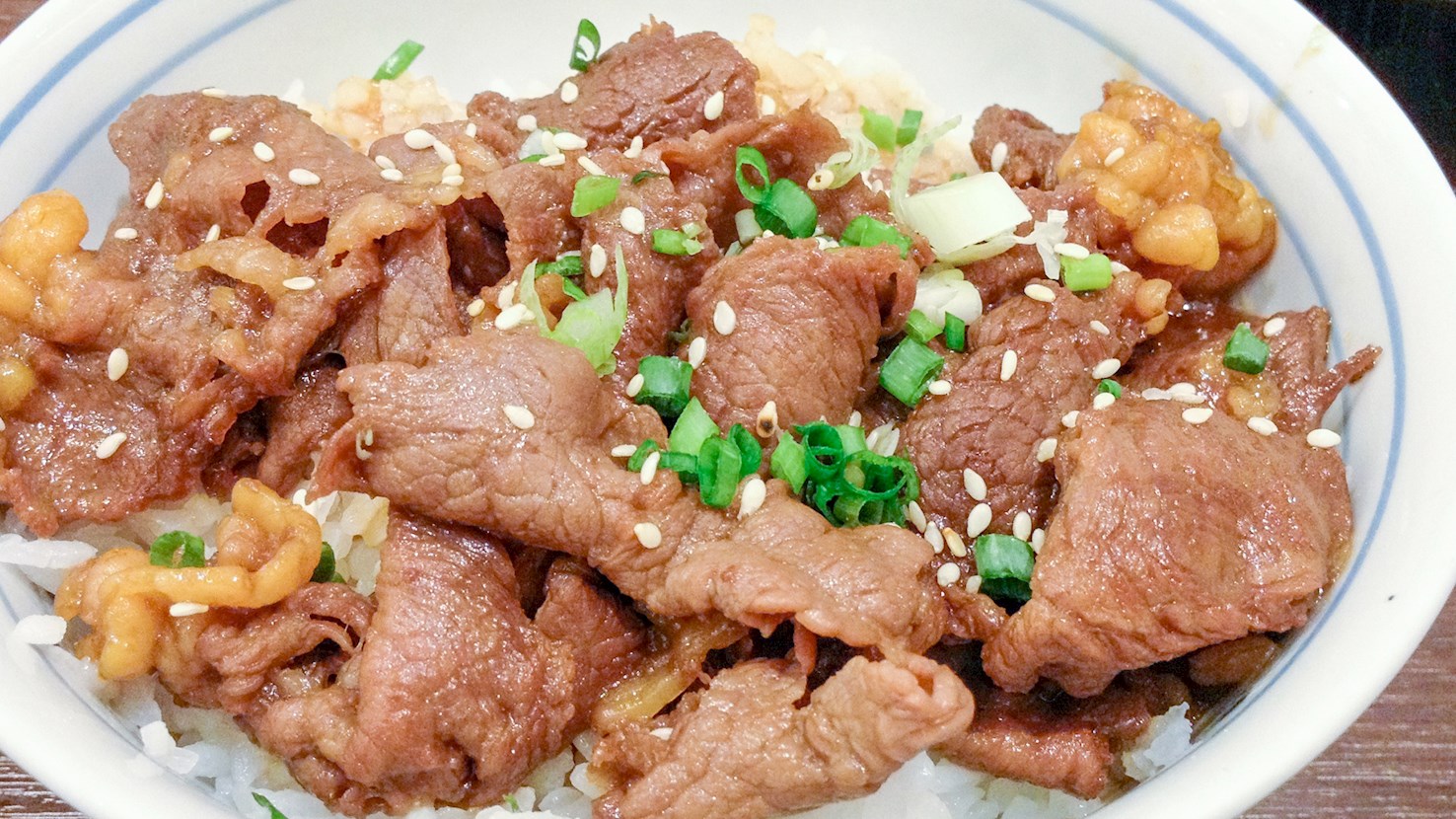
Gyūdon is one of the most popular and inexpensive fast food dishes in Japan. Its name can be literally translated to beef bowl. The dish consists of beef and onions served over a bowl of rice. Beef and onions are cooked in a combination of mirin, sugar, sake, and soy sauce, imparting a salty-sweet flavor to the dish. In the restaurants, known as gyūdon-ya, there is often pickled red ginger and red chili at the table, so anyone can season their dish according to personal preferences. The restaurants are often frequented by numerous hungry students who eat on a budget, and some of those restaurants are open 24 hours a day. A beaten raw egg is sometimes stirred into the dish, while chopped green onions are a common garnish. Miso soup, salads, or kimchi are regular side dishes accompanying gyūdon. It is said that the first version of gyūdon stems from an old dish called gyūnabe, where thinly sliced beef is cooked with vegetables in a pot. The first popular version of gyūdon appeared in 1862 in the Kantō region, and it has remained an inexpensive, yet nourishing and flavorful dish until today.
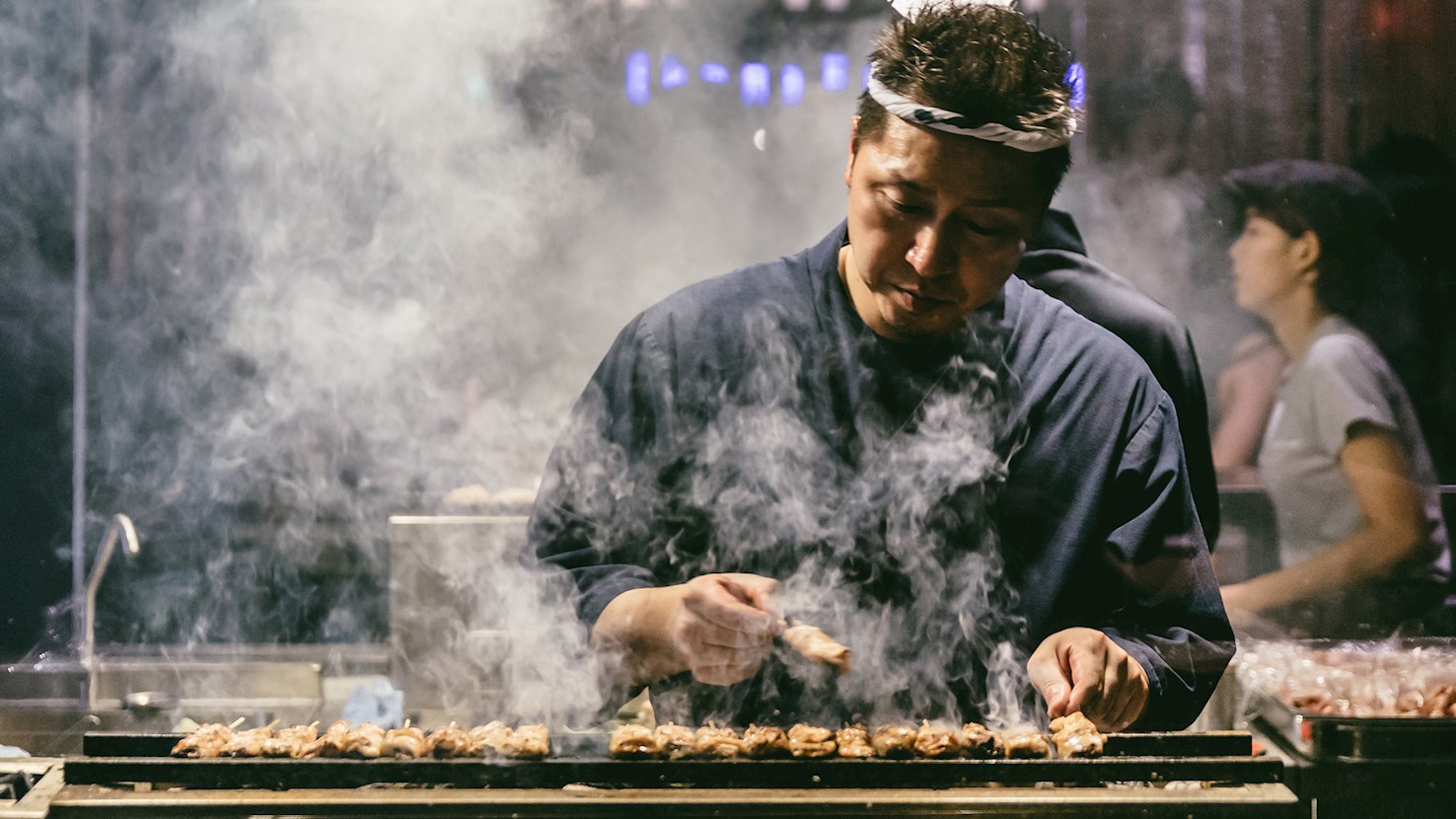
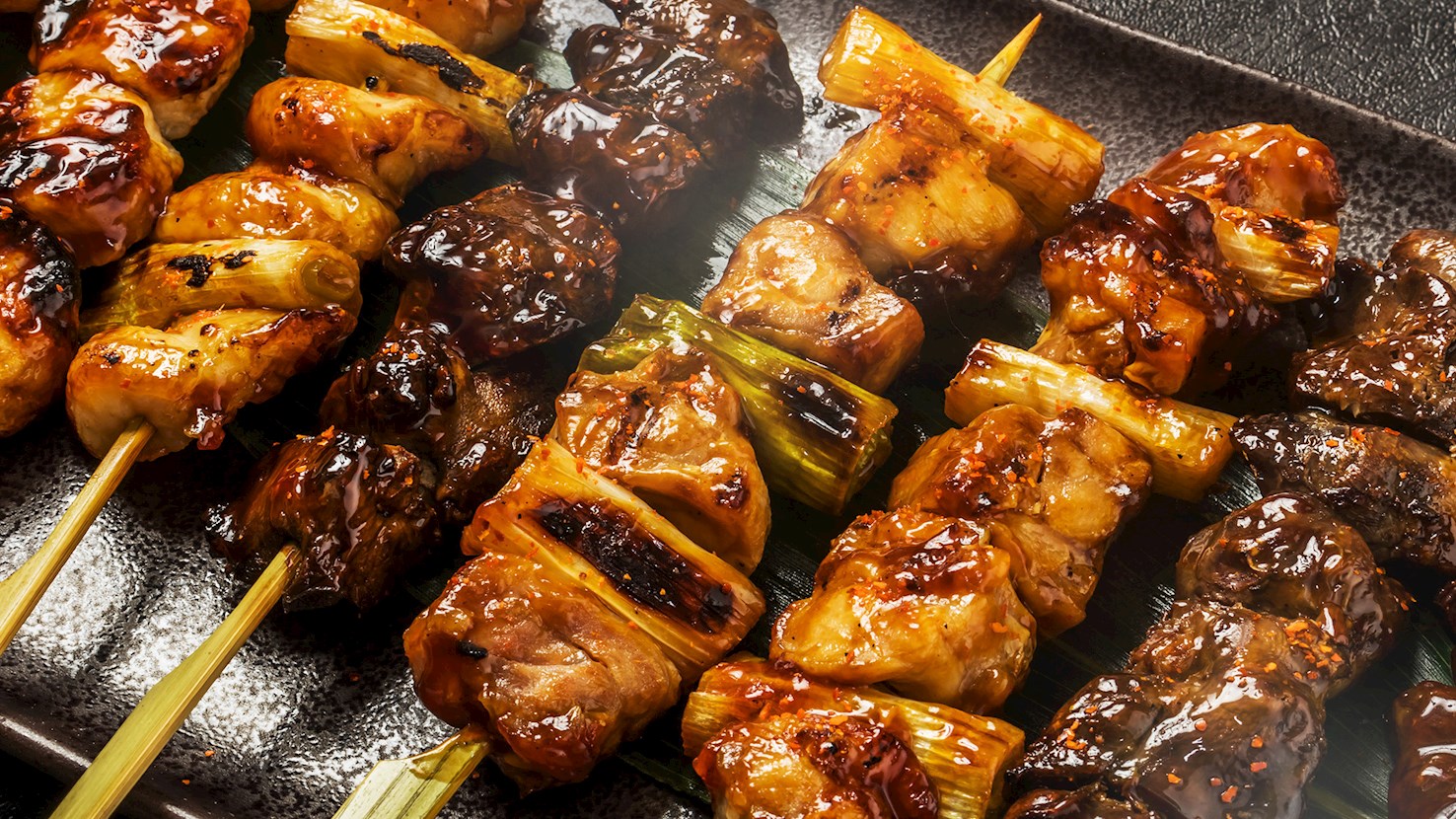
Yakitori refers to Japanese grilled chicken where pieces of chicken meat are skewered with a particular type of skewer called kushi (which can be made from either steel or bamboo) and are then traditionally grilled over a charcoal fire. Depending on the cut of chicken and the method of preparation, there are various types of this dish. An important step in the making of yakitori is the seasoning, either salty or salty-sweet, which can be done during or after grilling. Salty seasoning is just salt that can sometimes be combined with pepper, while salty-sweet seasoning is actually tare sauce made from mirin, soy sauce, sake, and sugar. Present-day versions of yakitori first appeared during the Meiji Era in the 19th century, but once chicken became abundantly available in the 1950s, the popularity of skewered chicken skyrocketed and the dish became popular among the masses. In Japan, yakitori can be purchased in specialized yakitori shops called yakitori-ya, but it is also often served in Japanese gastropubs known as izakaya. Since skewered chicken is so easy to prepare, plus it's portable, it is also a popular street food sold at yatai, the small Japanese food stalls. The dish is meant to be eaten with hands only, often directly off the skewer, and can be paired with a side of roasted vegetables, while each bite should ideally be washed down with ice-cold beer.
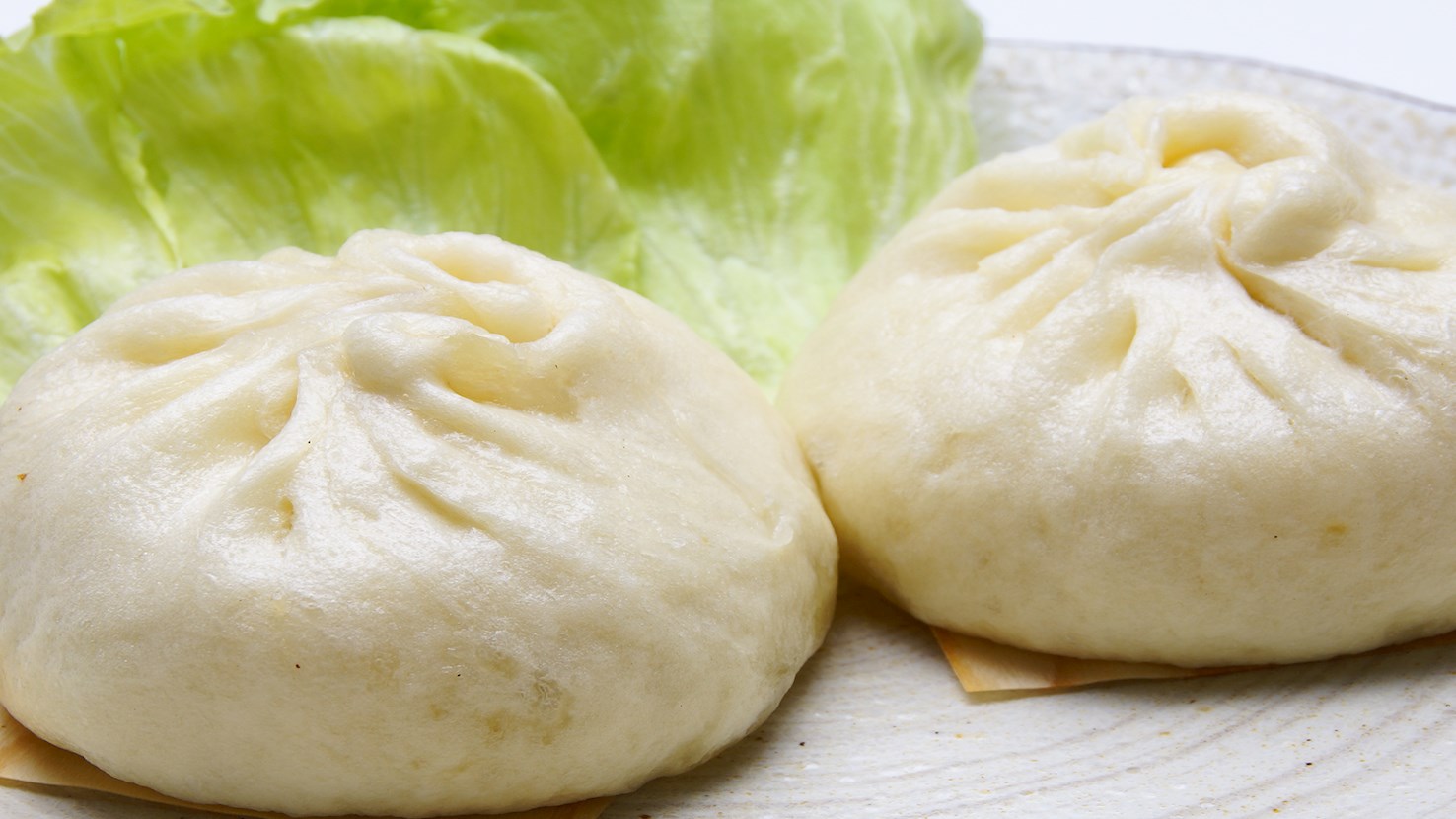
Nikuman are Japanese-style steamed pork buns which were influenced by the traditional Chinese baozi. They consists of leavened wheat dough wrapped around a flavorful ground pork filling. The meat is combined with different vegetables and usually seasoned with soy sauce and various condiments and spices. The soft, warm, and juicy nikuman buns are mostly enjoyed in wintertime as a popular and comforting street food. They are available in many Chinese restaurants and numerous grocery stores throughout the country.
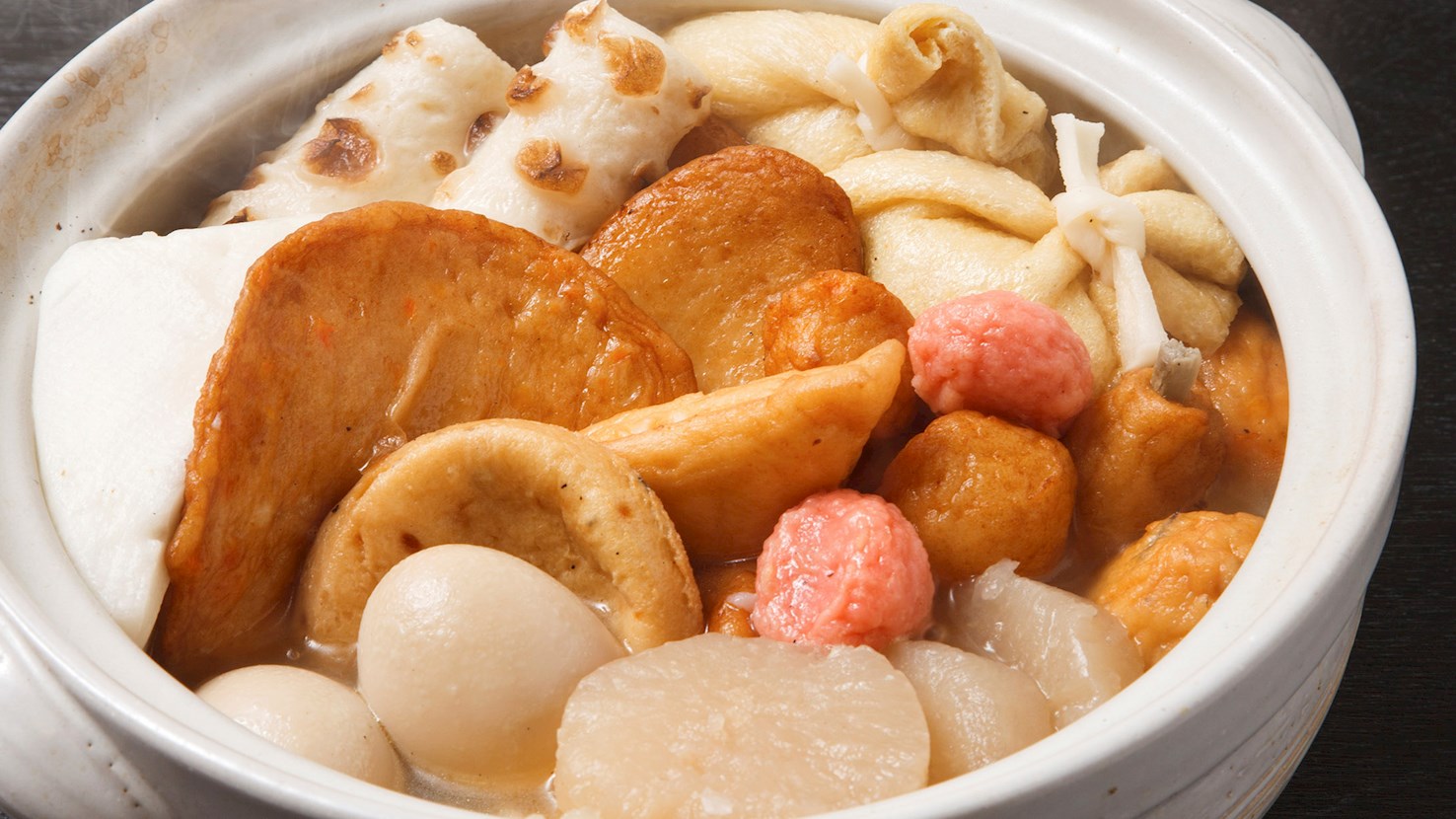
Best known as a food cart meal intended for relaxing after a day of hard work, oden is a one-pot dish with numerous ingredients such as fish balls, fish cakes, konnyaku, deep-fried tofu, eggs, and vegetables, simmered in a light, soy sauce-based broth. Oden is extremely popular during the winter, and it can often be found in Japan around September or October. Although it can be found at street stands, oden is also often made at home, bought in convenience stores, and served in some specialty restaurants. It is said that the dish has its roots in the Muromachi era, and that it is an evolved version of a dish called dengaku, referring to tofu and konnyaku pieces that were coated with miso paste and grilled on skewers. The name oden is the first part of the word dengaku, with the polite 'o' added as a prefix.
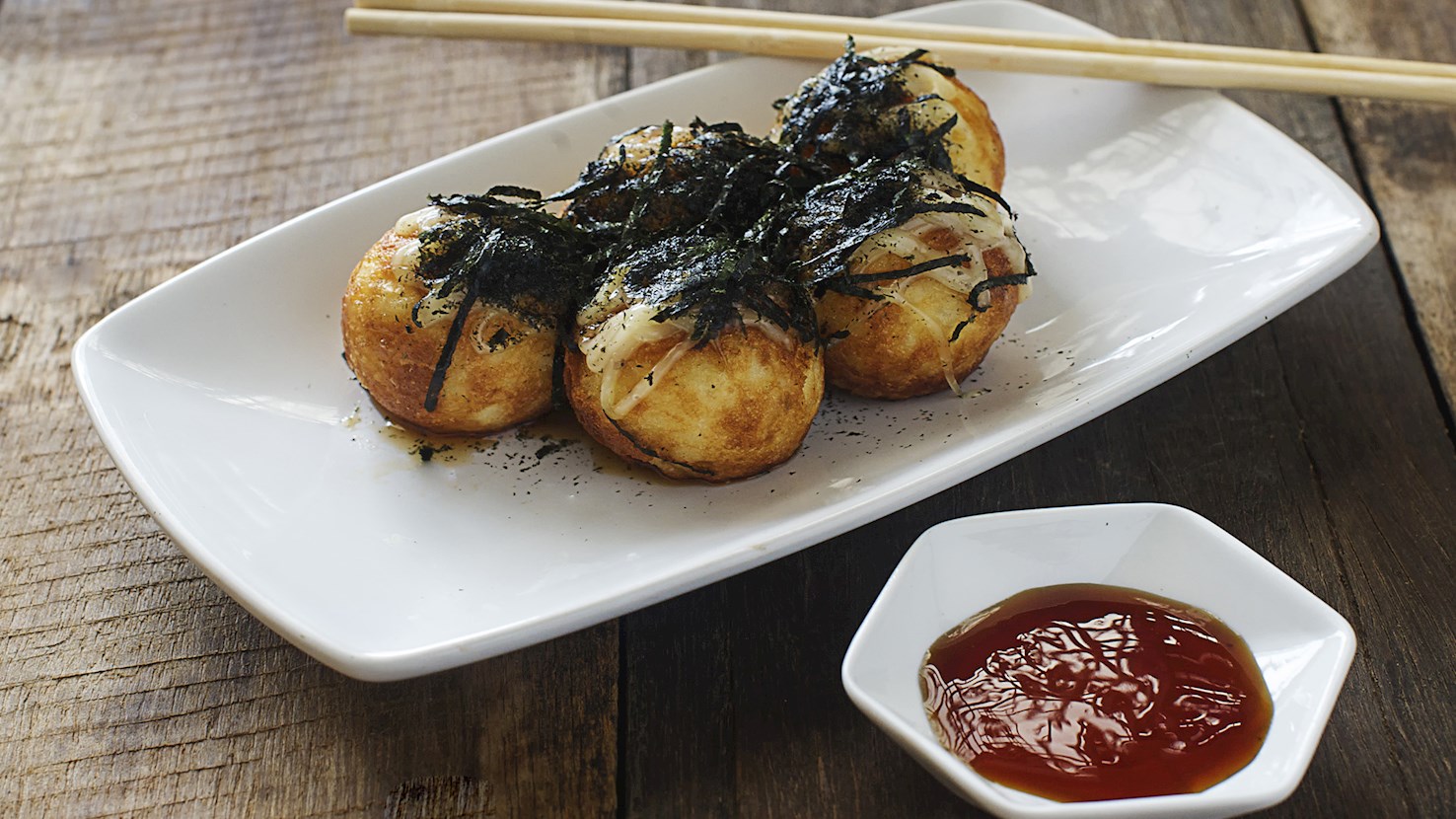
The small, round takoyaki are one of the most famous Japanese snacks, made with a simple egg batter that is enriched with diced octopus pieces. These tiny balls get their signature shape from the traditional iron pan in which they are grilled. The pan is filled with small round molds in which the batter is poured and swirled until the traditional round shape has been developed. The creamy egg mix consists of wheat flour, soy sauce, and dashi stock, and after it has been poured into the sizzling molds it is topped with tender octopus pieces. Sliced scallions, pickled ginger, crispy fried tenkasu pieces, and dried fish flakes are often incorporated to elevate the flavors of the dish. Takoyaki is believed to have originated in Osaka in 1935, and the invention of this Japanese classic is usually linked to Endo Tomekichi, a street vendor who used to sell chobayaki pancakes which were baked in similar molds. He added boiled octopus and other flavorings to create what would become one of the favorite Japanese snacks. Although octopus is the traditional complement to takoyaki, homemade varieties can include many different ingredients. Takoyaki can be found everywhere in Japan: at numerous food courts, stores, bought from street vendors, or served in specialized takoyaki restaurants. They are always served hot and are usually sold in packs of eight or twelve pieces. Traditionally, each serving is topped with a thick takoyaki sauce (similar to Worcestershire sauce), Japanese mayonnaise, a sprinkle of dried seaweed, and a layer of smoky fish flakes.
Negima is a yakitori variety that is made with sliced chicken thighs or chicken breasts that are skewered together with pieces of green or Welsh onions (negi). Like other types of yakitori, negima is also typically seasoned with salt (shio), or a thick and subtly sweet soy sauce condiment known as tare. The ingredients are alternated on bamboo skewers and are then grilled over charcoal on traditional yakitori grills. Negima is one of the most common types of yakitori in Japan. It is commonly prepared and served in restaurants and izakaya bars.
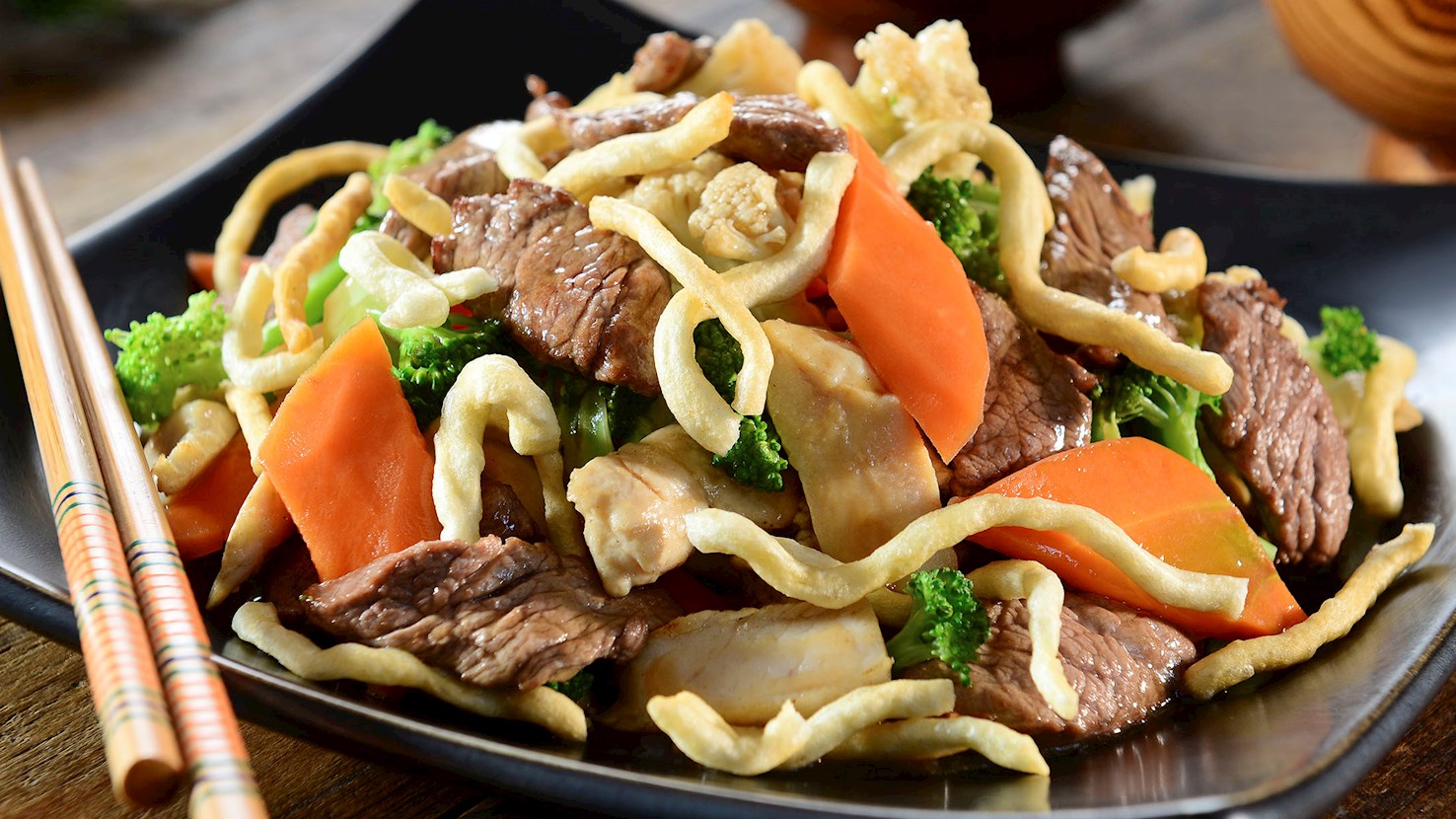
Yakisoba is the Japanese variety of fried noodles. Originating from the Chinese chow main, these noodles are usually mixed with a variety of meat and vegetables. Japanese favorites are usually pork, cabbage, onions, and carrots. The most common noodle varieties used in the dish are ramen noodles (made with wheat flour) or soba noodles (made with buckwheat). Although soba noodles did give the name to the dish, the ramen variety is still the most common type used in yakisoba. When the meat and vegetables are stir-fried, and the noodles are fully cooked, a special yakisoba sauce, similar to the thick Worcestershire sauce, is added to complete the dish. Yakisoba noodles are eaten everywhere in Japan, they can be found in restaurants or at traditional food stands, but they are also commonly prepared at home. There are numerous varieties of yakisoba noodles in Japan, and every restaurant, seller, or family has their signature yakisoba recipe. Typically, the noodles are served on a plate alongside different condiments such as fish flakes, mayonnaise, pickled ginger, and ground seaweed. Occasionally, they come in sandwich form, when they are served in a special bun and garnished with pickled ginger and special Japanese mayonnaise.
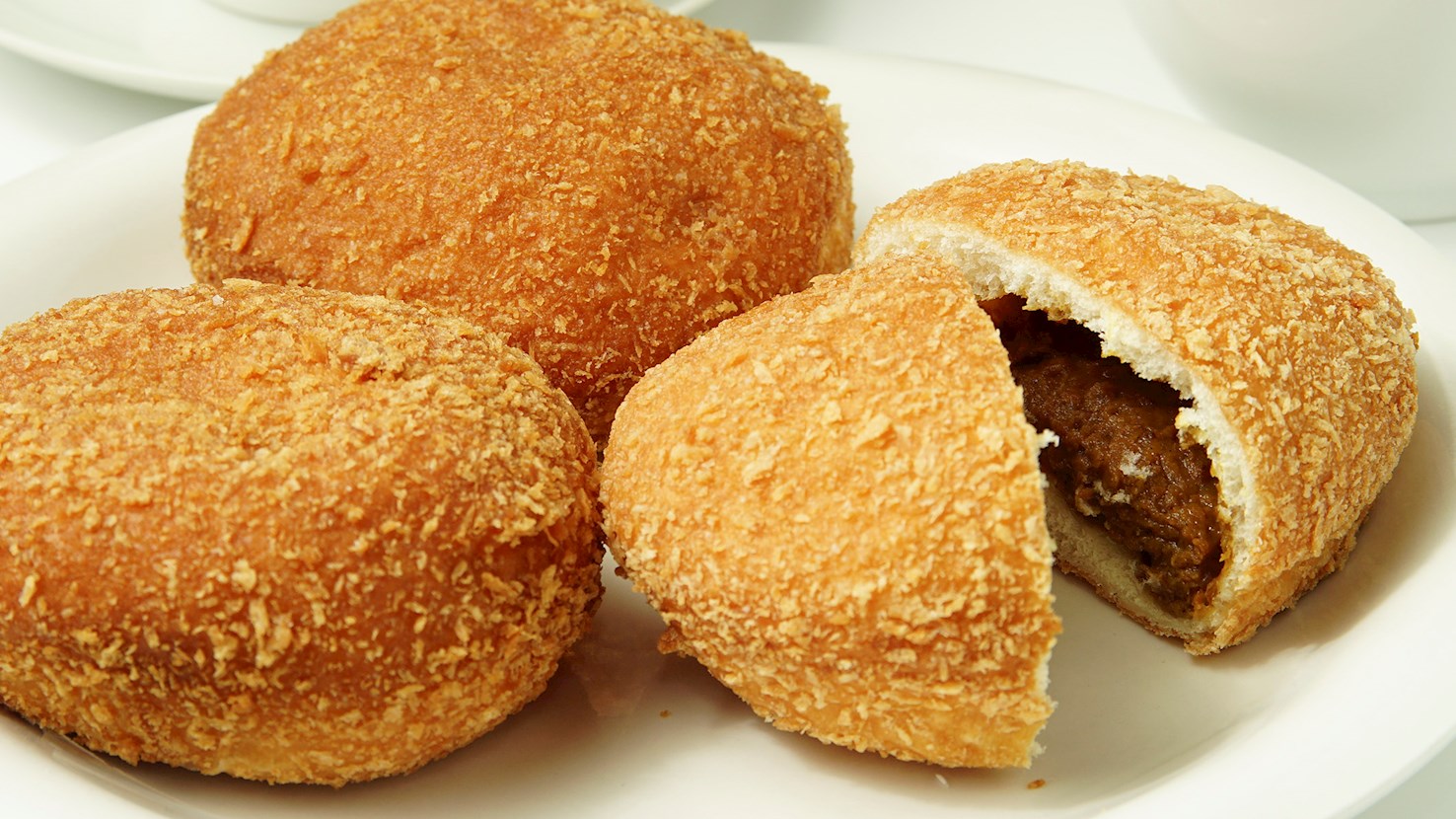
Karē pan is a savory bread made with a slightly firm dough, filled with a thick, heavily spiced paste, then coated in coarse breadcrumbs and deep-fried until crisp. It was created in Tokyo around 1927, spearheaded by inventor Toyoji Nakata, during an era when Western culinary imports were rapidly merging with local tastes. The foundation of this snack required the independent evolution of its two main components. Bread originally arrived via Portuguese merchants centuries earlier but faced severe bans during the Edo period, only to resurge much later as a portable military ration before evolving into sweet treats like jam and cream buns. Concurrently, curry arrived via British routes in the late 19th century, distinctly thickened with a flour roux rather than the liquid Indian counterparts, and was heavily promoted by the military for its nutritional density. The fusion of this thickened sauce with the crunchy breadcrumb coating of a Western-style meat cutlet created this specific oval-shaped snack, sometimes referred to as a curry donut. It requires a dough similar to standard butter rolls, but mixed significantly firmer to trap the dense filling. The interior filling must be cooked down to remove excess moisture; otherwise, the liquid would seep through and tear the bread. To maintain perfect balance, the filling never exceeds 70% of the total dough weight. The stuffed, sealed dough is rolled thoroughly in breadcrumbs and dropped into hot oil. This sudden immersion in boiling fat causes the dough to expand rapidly, naturally forming a distinct, empty air pocket between the golden crust and the dark filling. Because managing the high moisture of the filling in an oven requires advanced technical skill, deep-frying remains the dominant method, though a lighter, oil-free variation known as yaki kare pan exists to cater to health-conscious consumers. Beyond the standard oval or flattened football shape, the interior accommodates a wide variety of fillings, frequently augmented with rich beef tendons, ground keema, melted cheese, or even whole soft-boiled eggs. Due to its fried exterior, the bread boasts a notably long shelf life compared to other baked goods, making it highly suitable for transport and takeout. Sold widely in supermarkets, convenience stores, and specialized bakeries, karē pan is consumed entirely by hand as a quick snack or a fast lunch, or paired with a cold beer when the spice levels are elevated.
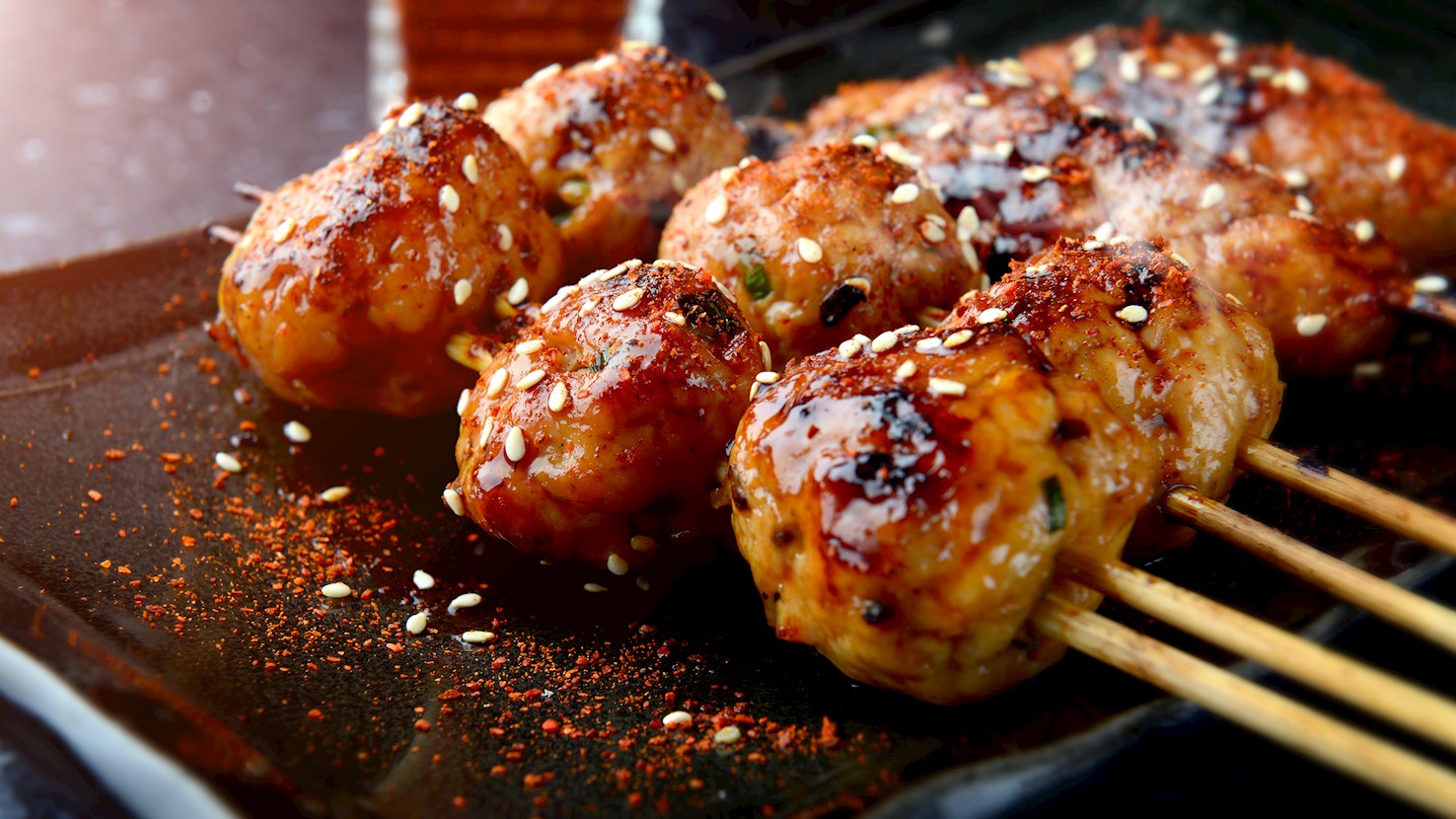
Tsukune is a yakitori version that is prepared with ground chicken. The meat is seasoned, and it is typically formed in oblong patties or small meatballs that are skewered on bamboo sticks. Like other types of yakitori, the skewers are typically seasoned with salt (shio) or tare—subtly sweet combination based on soy sauce, sake, and mirin, while the meat can be enriched with sliced scallions, garlic, ginger, onions, or shiso leaves. Tsukune is usually served with a raw egg yolk and various toppings. The dish is a staple at specialized yakitori establishments.
TasteAtlas food rankings are based on the ratings of the TasteAtlas audience, with a series of mechanisms that recognize real users and that ignore bot,
nationalist or local patriotic ratings, and give additional value to the ratings of users that the system recognizes as knowledgeable.
For the “Top 16 Japanese Street Food” list until October 15, 2026, 2,705 ratings were recorded, of which 2,397 were recognized by the system as legitimate.
TasteAtlas Rankings should not be seen as the final global conclusion about food. Their purpose is to promote excellent local foods,
instill pride in traditional dishes, and arouse curiosity about dishes you haven’t tried.



What People Say