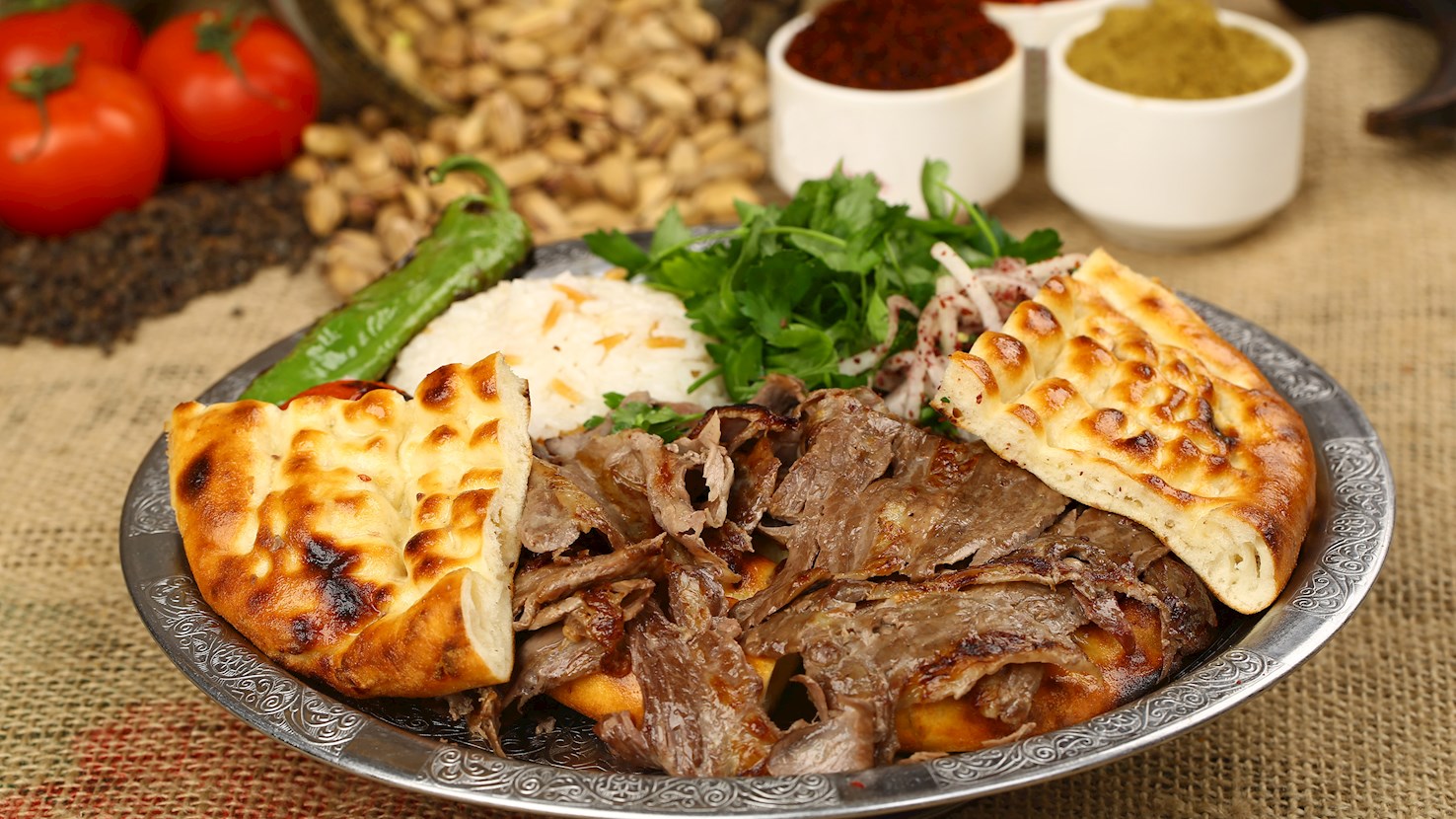
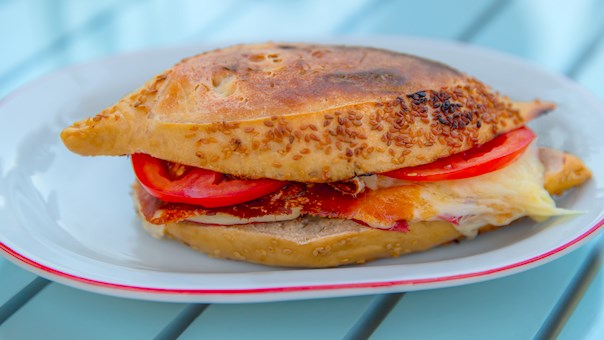
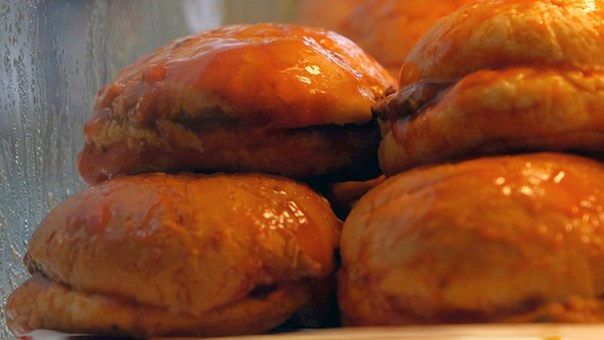
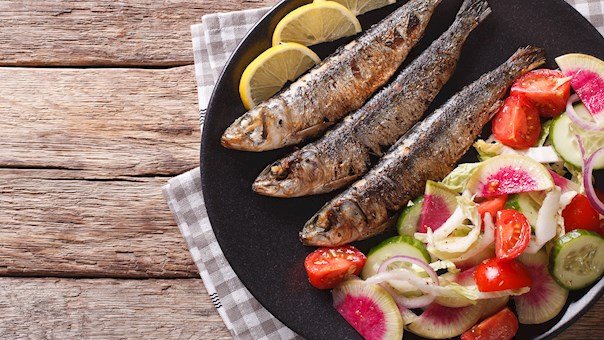
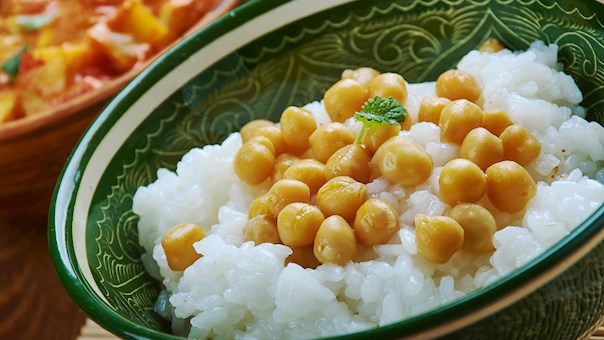
Döner kebab is a delicacy that is known throughout the world, consisting of grilled pieces of meat that are shredded from a vertical skewer. The meat is typically seasoned with fresh herbs and spices. Originally, the meat used in döner was exclusively lamb, but today in Istanbul, there are kebabs prepared with a combination of lamb and beef, or sometimes only with beef. Meat that is grilled vertically on a skewer isn't a new thing, as it has been mentioned in the 18th-century Ottoman travel books. The sandwich form döner kebab, which means rotating kebab, appeared in the early 1970s in Berlin. It is believed that Kadir Nurman was the first to place the shaved pieces of meat into a flatbread and serve it with vegetables such as tomatoes, lettuce, onions, cucumbers, and a squirt or two of sauce, unlike before, when the ingredients were served on a plate. Along with many of the Turkish variations on döner kebab, there are also numerous other regional variations in countries such as Armenia, Vietnam, Austria, Germany, France, and the United Kingdom.
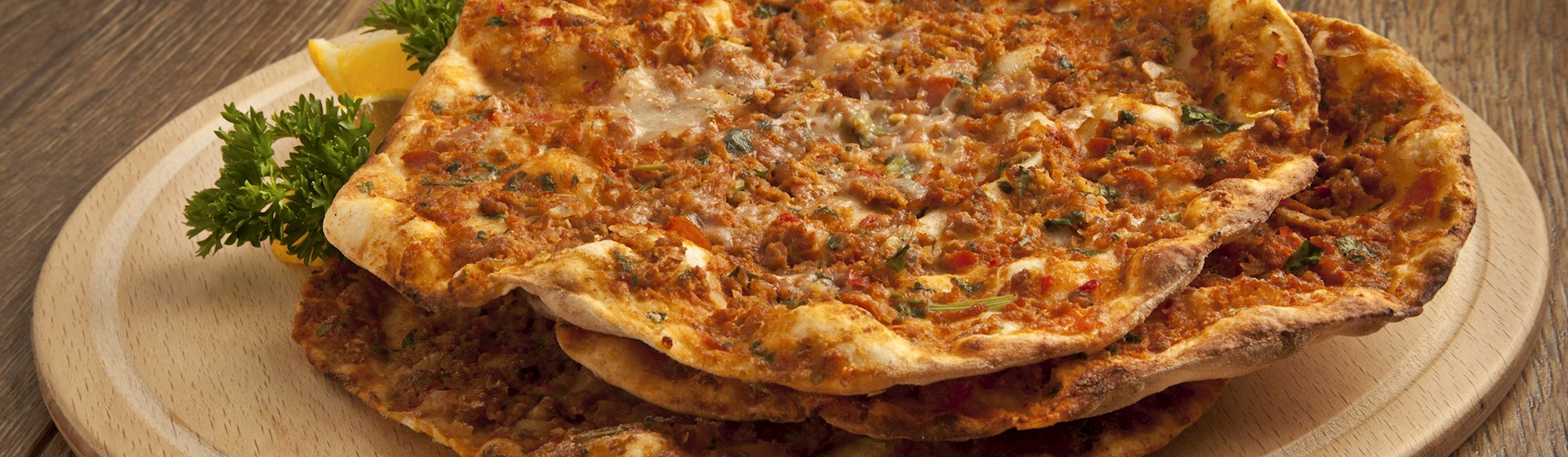
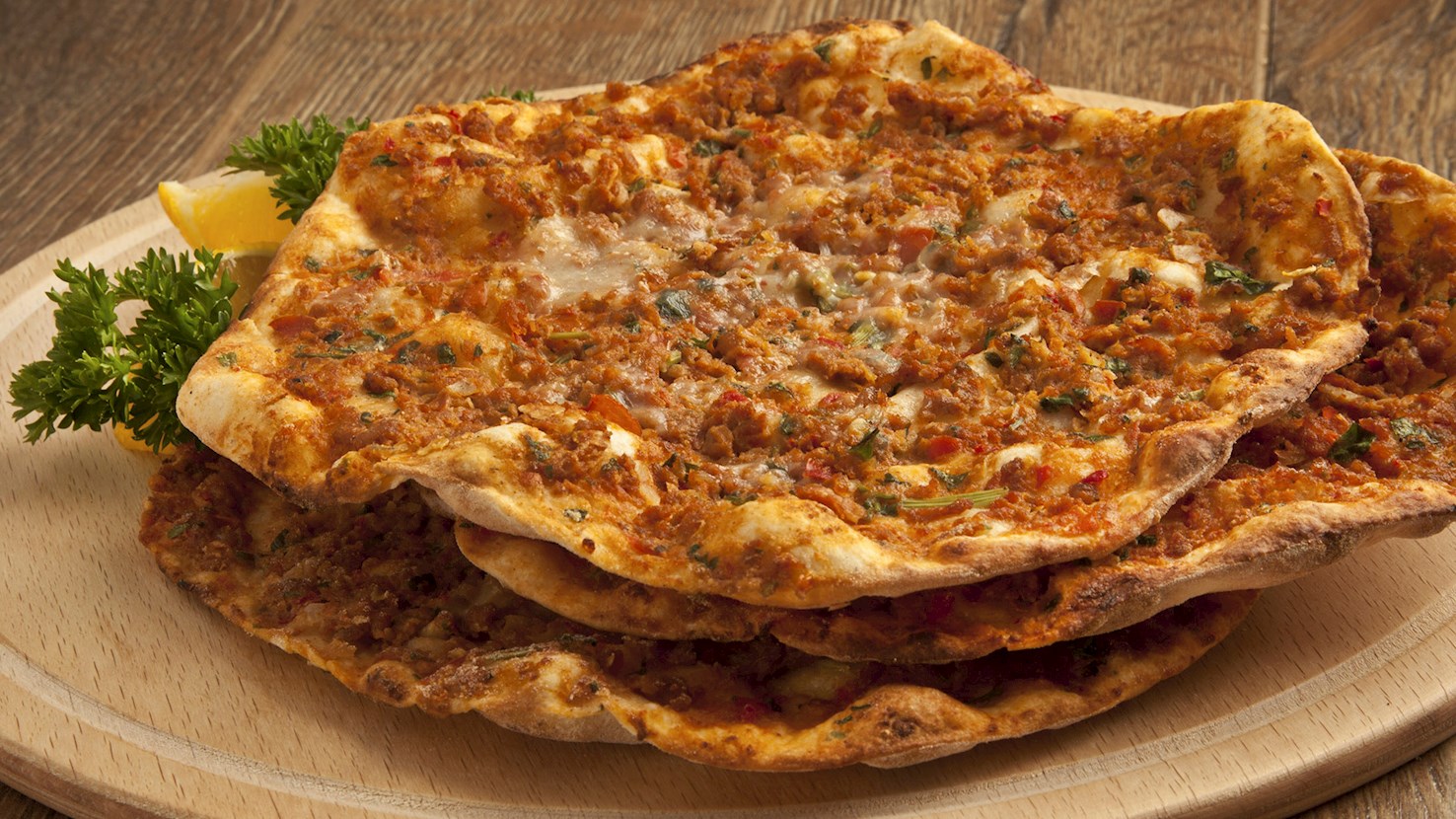
Even though lahmacun is popularly nicknamed Turkish pizza, it's origin is disputed and can be traced to Armenia, Syria, Lebanon, and Turkiye. It can be found at numerous street stalls as well as in virtually any traditional restaurant, but also in kebab eateries where they typically serve mini lahmacuns as appetizers. The perfect lahmacun is made by rolling a ball of sturdy semolina dough into a thin disc which is only lightly spread with meat - either lamb or beef, minced to a paste together with chili, onions, and other seasonings. The dish is then shortly baked in a super-hot (and preferably wood-fired) oven. Lahmacun is best served hot with a drizzle of lemon juice. It is traditionally enjoyed folded around the crispy onions and a parsley salad known as piyaz. It is recommended to pair lahmacun either with the salty, cold yogurt beverage called ayran, or şalgam suyu, the barrel-fermented juice of red carrot pickles, which is salted, spiced, and flavored with the aromatic turnip called çelem.
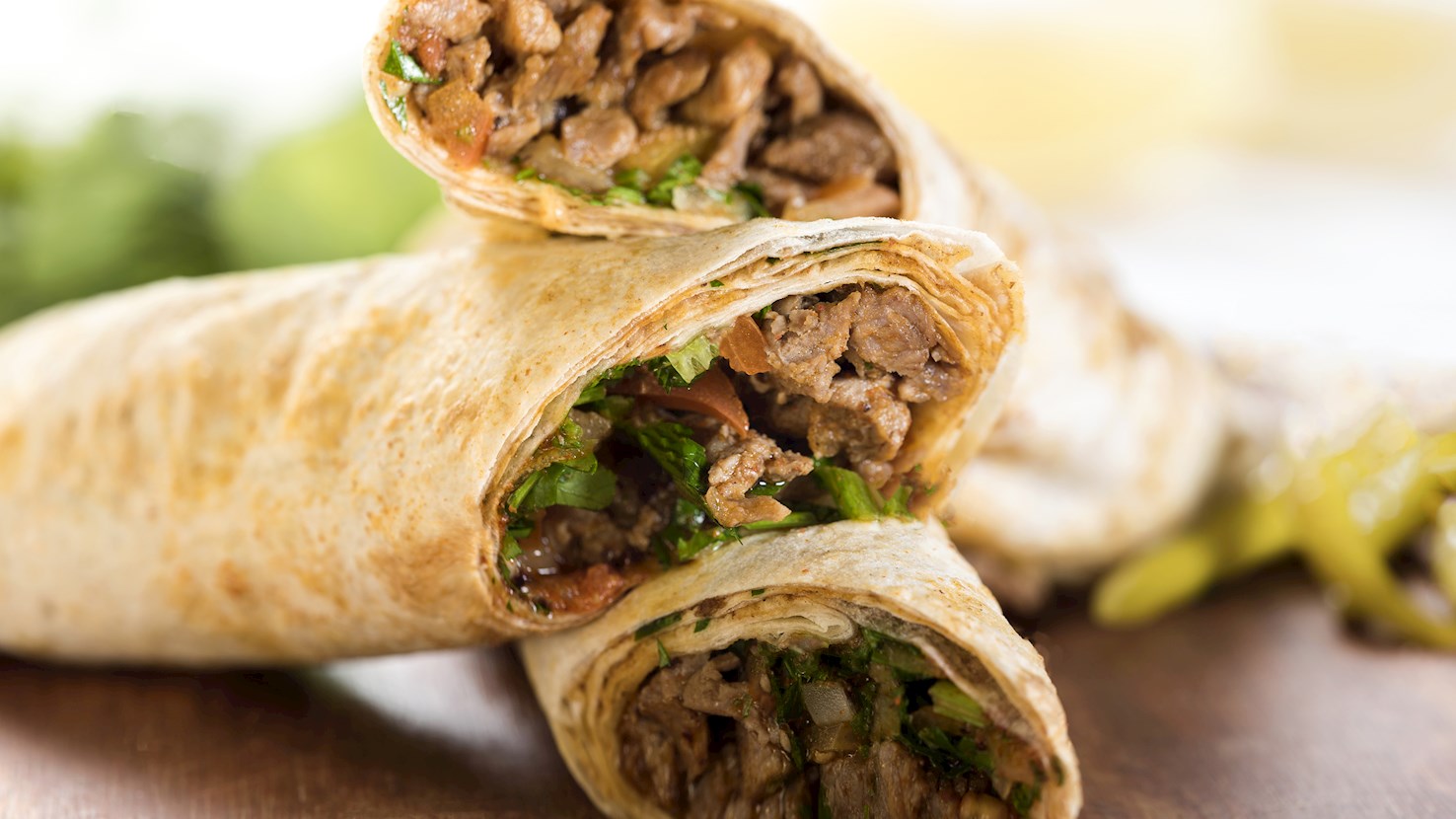
Tantuni is a traditional street food dish from Mersin, consisting of thinly sliced beef or lamb that is seasoned with Turkish spices and herbs, usually cooked with onions and tomatoes. The combination is cooked in specially designed tantuni pans. Traditionally, the dish is served rolled in lavash, with ground sumac and a lemon wedge on the side. Since every tantuni chef has his own method and secret technique of preparing the dish, it is said that the flavors of tantuni are never the same. Tantuni was originally created as a poor man's dish - it's very nutritious because it consists of meat with a lot of fat stuffed into bread. Some believe that the name of the dish refers to the sound that the meat and spices make when they are brought from the rim of the pan to its center.
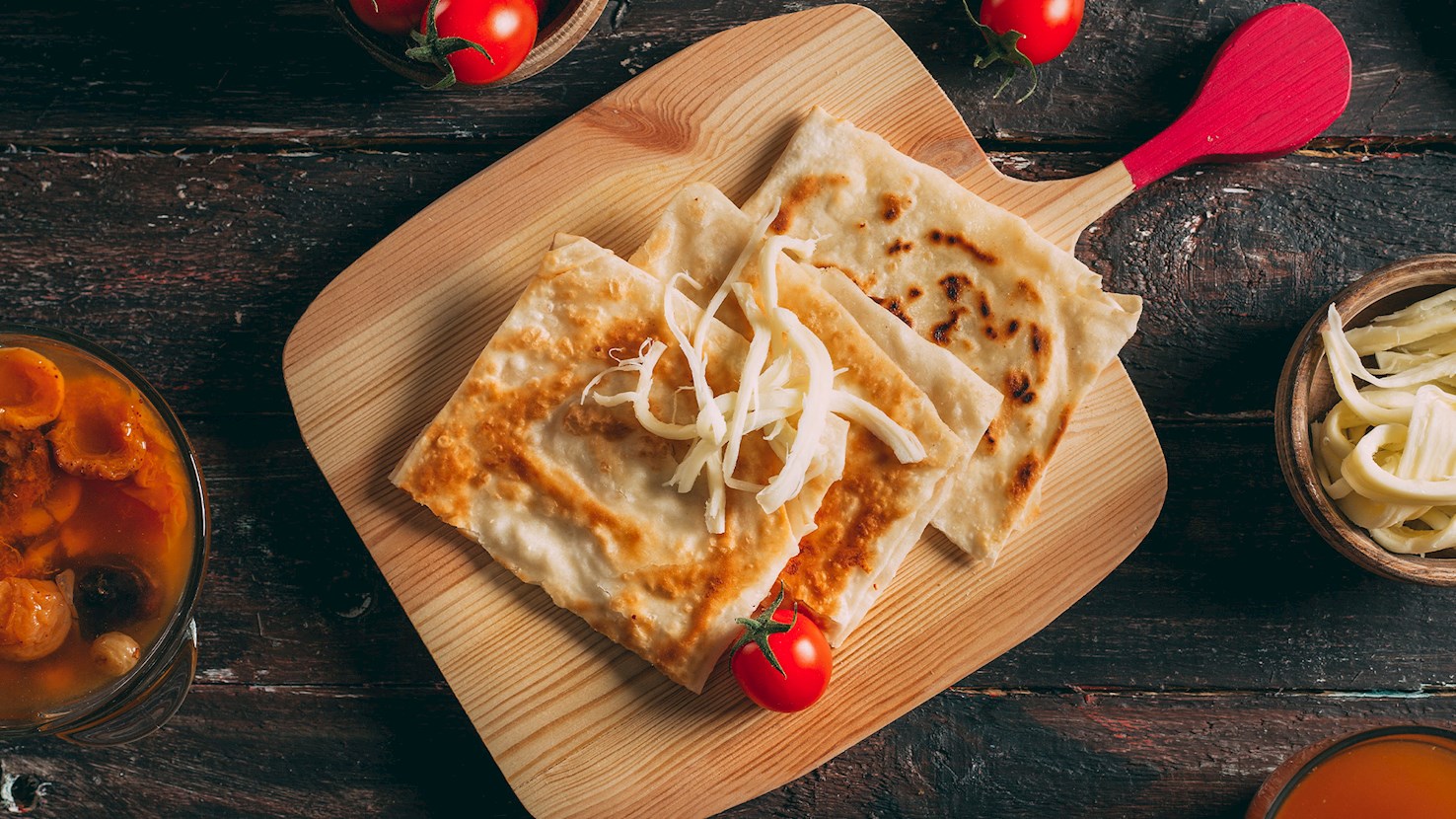
Gözleme is a Turkish flatbread consisting of flour, water, yeast, olive oil, and yogurt, which prevents the flatbread from going too brittle. The dough is filled with ingredients such as meat, vegetables, eggs, various cheeses, or mushrooms, and is then baked on a sac griddle. Originally, gözleme was served for breakfast or as a light afternoon snack, but today it has a status of popular fast food that can be found throughout the country's restaurants, food carts, and cafés.
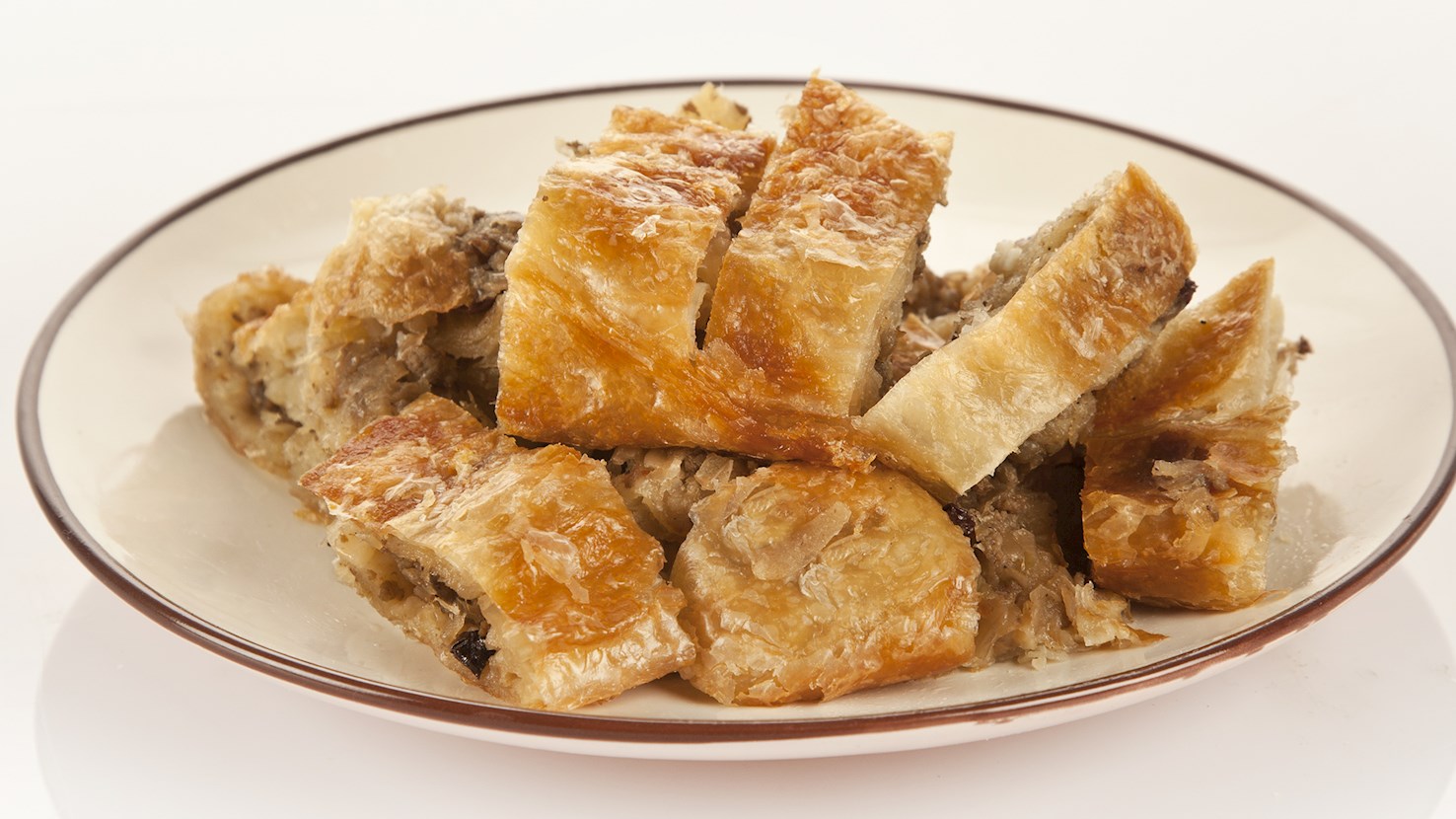
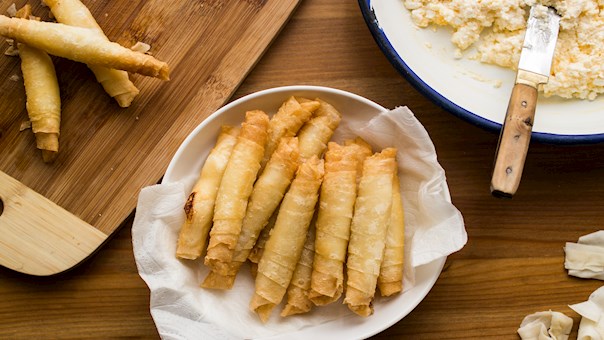
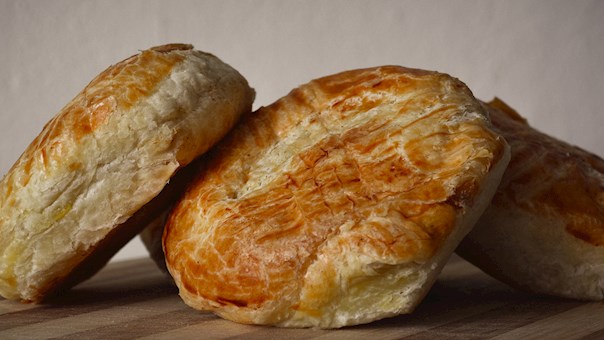
Kol böreği is a Turkish börek variety made with puff pastry that is shaped into a spiral. The pastry is filled with a variety of ingredients such as cheese, spinach, potatoes, or ground meat with pine nuts and currants. The name of the dish means arm börek, referring to the long, arm-like visual appearance of the pastry. After it has been baked at low temperature, kol böreği is typically cut into smaller pieces.
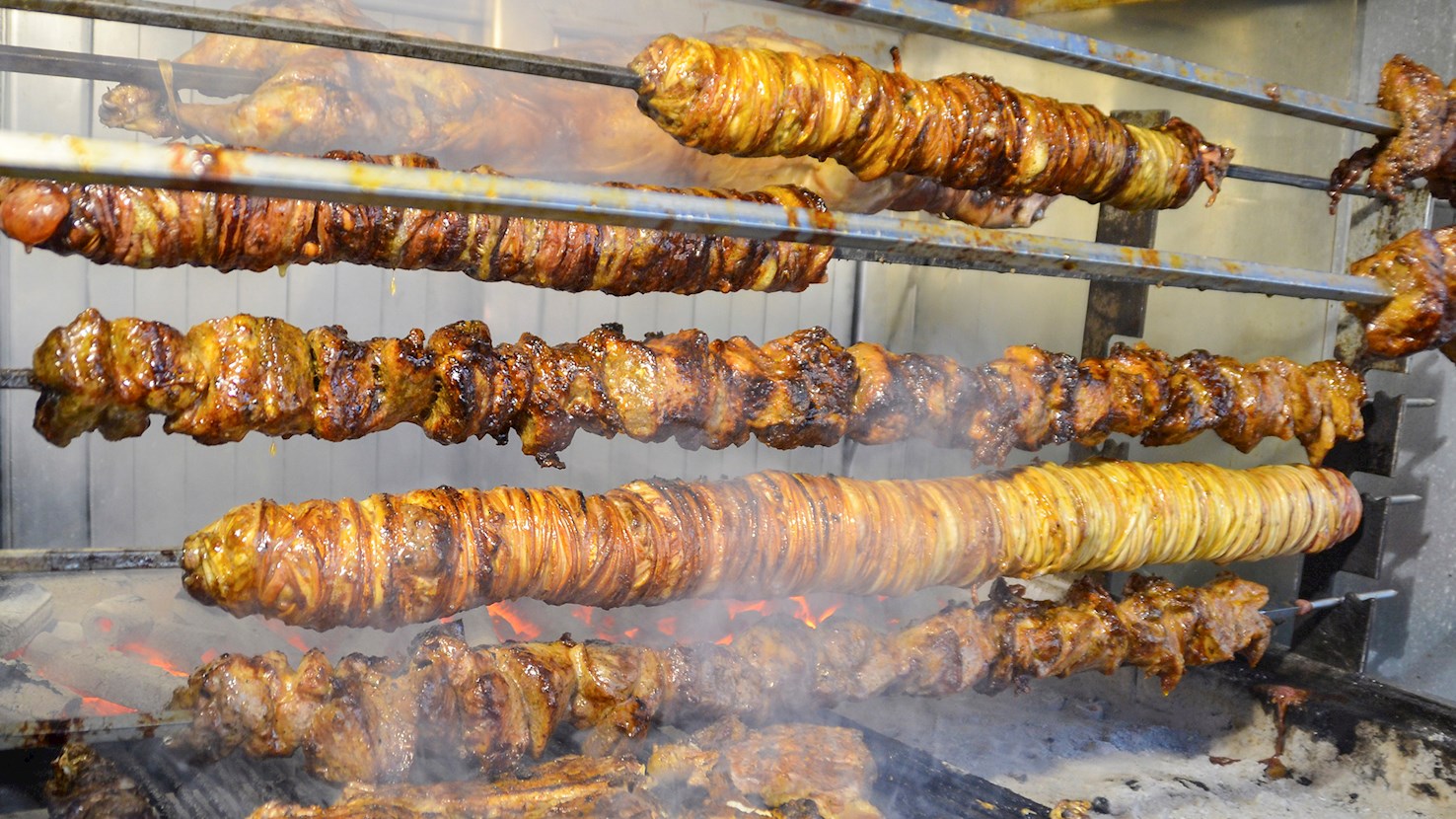
Kokoreç is a traditional dish that's also popular in other countries, especially in Greece, where it's known as kokoretsi. However, there are some differences between the Turkish and Greek versions. In Greek cuisine, people use lamb offal such as lungs, kidneys, hearts, and liver, and in Türkiye, they use small and large intestine and sweetbreads without any additional ingredients. For the Turkish version, kokoreç, the ingredients are rinsed and cleaned, then wrapped onto iron skewers to be grilled over charcoal. Once done, the dish is usually served with bread or tucked inside the bread with various spices such as oregano, cumin, and chili flakes. You can find this dish at street food vendors or in countless kokoreç restaurants.
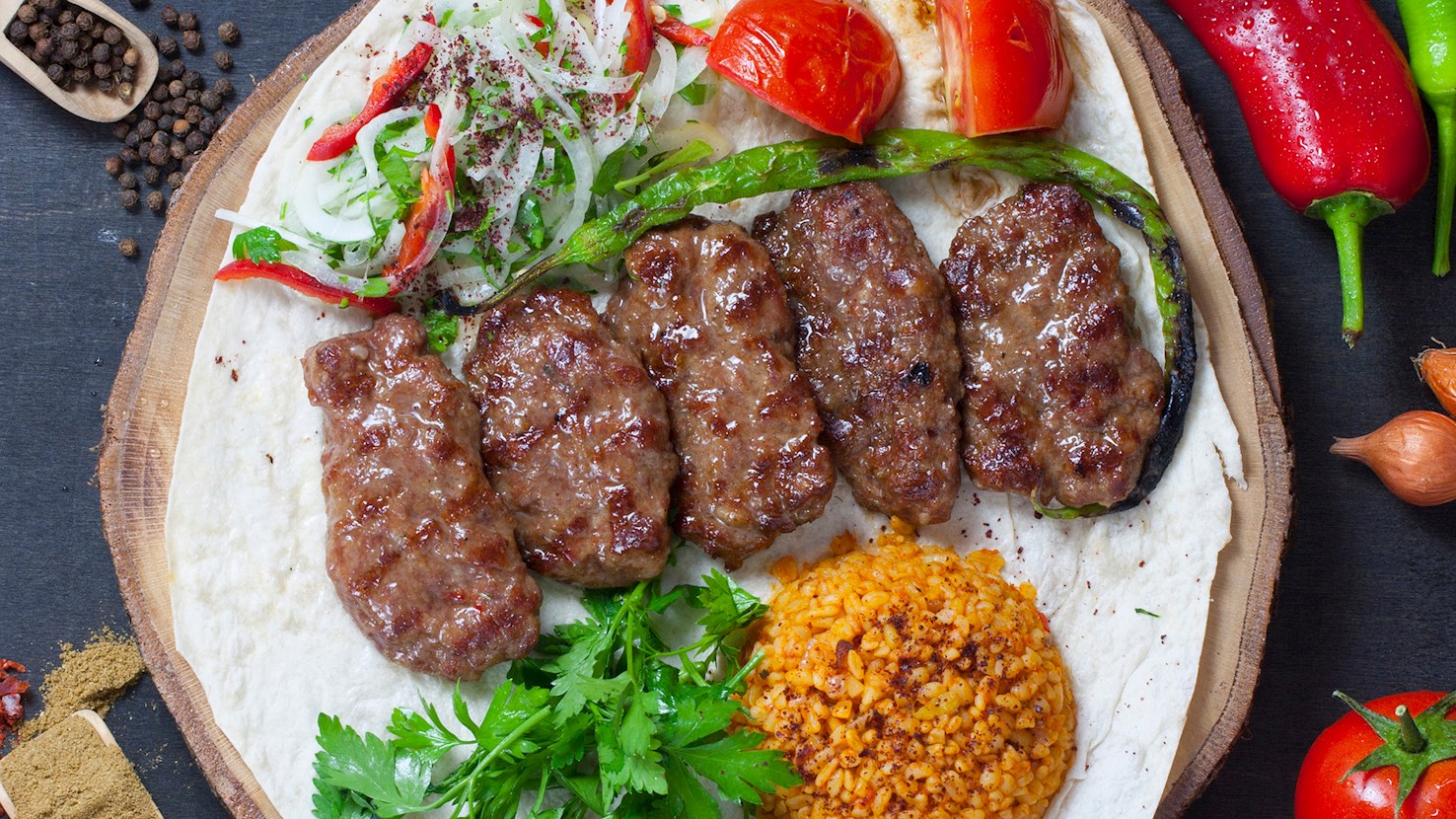
Kofta or köfte are walnut-sized fried meatballs, usually made from ground beef or lamb. It is a popular Turkish meze dish that is often prepared for special occasions and cocktail parties, since the meatballs are quite easy to prepare and can be easily consumed with a toothpick. Köfte come in various degrees of spiciness and in numerous forms - from egg-coated and fried kadin budu to Adana kofte from the south-east of Turkey. In eastern Turkey, the most popular variety is called içli köfte, full of flavor due to large amounts of butter in the filling. Another interesting variety is called cizbiz kofta, one of the most popular street food items in the country, its name coming from the sound which the thin meat patties make when placed on the grill. Whether fried, stewed, drenched in sauce, or grilled, the variations are virtually infinite and every kofta dish pairs well with a glass of turnip juice and fried potatoes on the side.
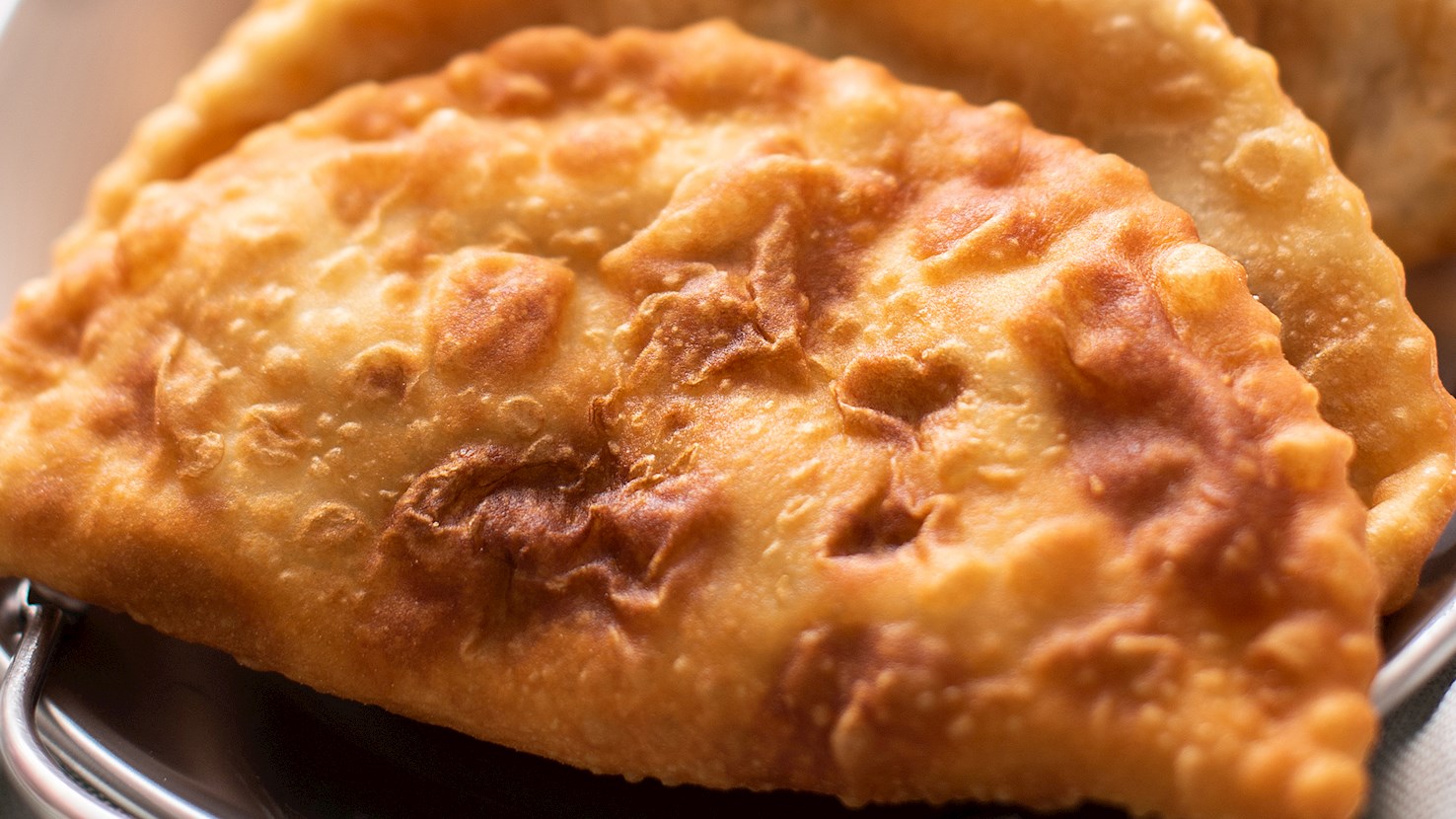
Chebureki, known in Türkiye and among the Crimean Tatar diaspora as çiğ börek, is a deep-fried, unleavened turnover filled with a seasoned mixture of ground meat and onions. It is the national dish of the Crimean Tatars, originating from the Crimean Peninsula along the northern coast of the Black Sea. The name is derived from the Crimean Tatar word "çiberek," which was later adapted into the Russian "chebureki." The development of this food is tied to the nomadic and pastoral history of the Crimean Khanate, where the reliance on sheep and cattle necessitated recipes that could turn flour and meat into calorie-dense, portable meals. As the Crimean Tatar population moved through Central Asia, the Caucasus, and into Anatolia, the dish became a common fixture in the culinary landscapes of the former Soviet Union and Türkiye, specifically becoming a localized specialty in the city of Eskişehir. The preparation begins with a dough consisting only of flour, water, and salt, which is rolled out until it is thin and translucent. The filling is composed of ground beef or lamb, a high volume of finely minced or grated onions, and a purposeful addition of water. This water is critical because it ensures the meat stays moist and creates a pressurized steam pocket during the frying process. The meat mixture is placed raw onto the dough, which is then folded into a half-moon shape and sealed tightly using a fork or a crimping tool. The pastry is submerged in a large volume of hot oil, where the high heat causes the water in the filling to vaporize instantly. This steam forces the dough to puff outward, creating a hollow interior while the exterior develops a signature blistered and bubbly texture. A unique physical property of chebureki is the savory broth that collects inside the pastry as the raw meat and onions cook in their own steam. Because the meat is not pre-cooked, the juices are trapped entirely within the dough, resulting in a distinct liquid center. It is eaten by hand, usually starting at the top corner to allow the steam to escape slowly and to prevent the hot internal juice from spilling. In street food kiosks and specialized restaurants, it is typically served as a standalone item or as part of a light meal. The most common beverage pairing is ayran, a chilled, salted yogurt drink, which helps to neutralize the richness of the fried dough. In some regions, it is also served with a side of spicy tomato sauce or hot black tea to contrast the savory profile of the lamb or beef.
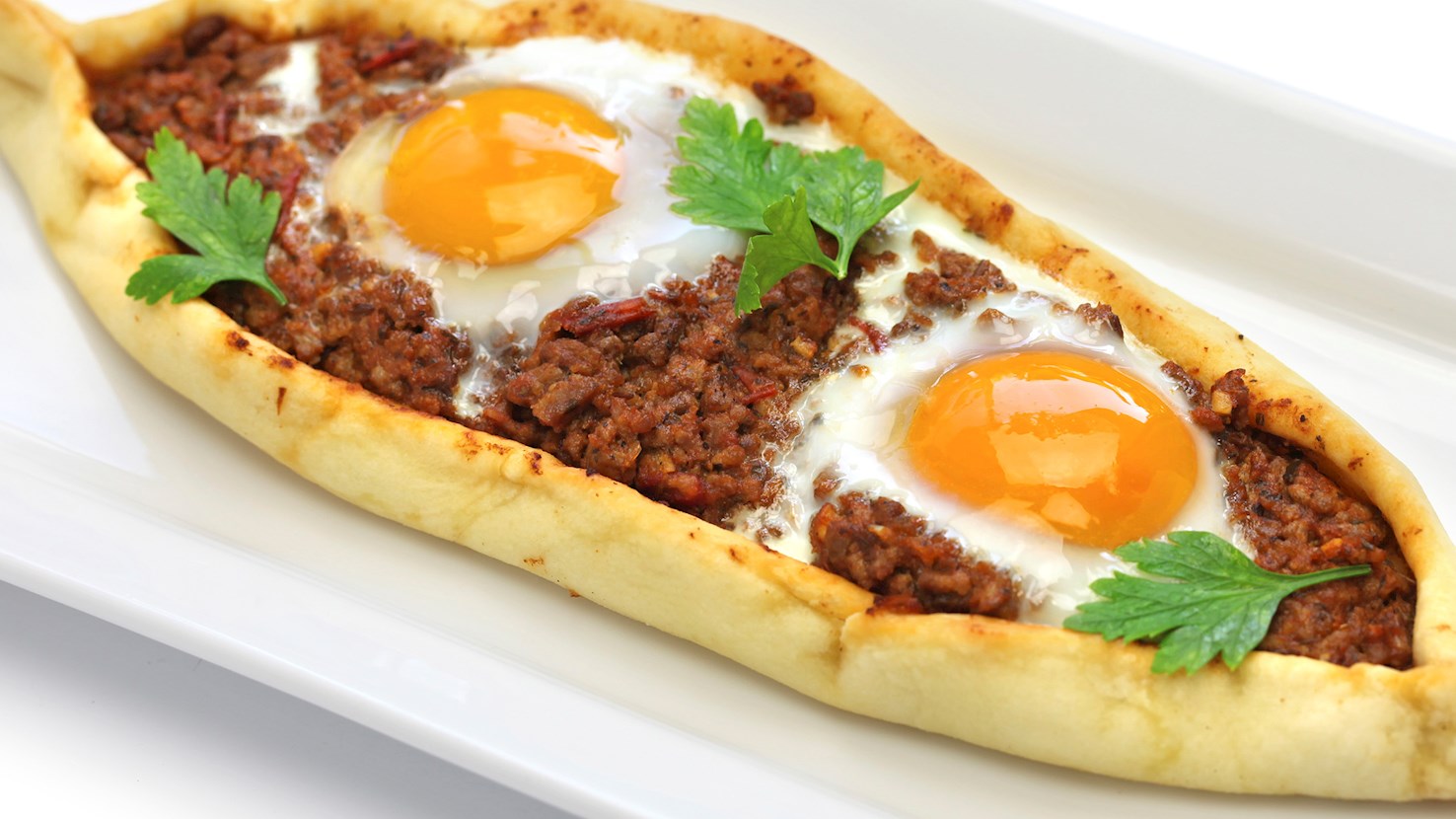
The Turkish egg-topped flatbread filled with cheese, pepper and tomato, known as yumurtalı pide (lit. egg pita) hails from the Kayseri region in Middle Anatolia where locals sometimes also use another Anatolian delicacy as a topping for this type of pide bread - thinly sliced, spice-coated, and dry-cured beef called pastırma. Yumurtalı pide is made with soft, chewy, oval-shaped pita dough, like most traditional Turkish pita breads, and other regional pizza-like foods. For the perfect yumurtalı pide, the egg is cracked in the middle of each bread only minutes before the end of baking. Beloved throughout the country, this is one of the ultimate Turkish breakfast dishes, but it is also widely available as a snack at numerous bakeries and street stalls.
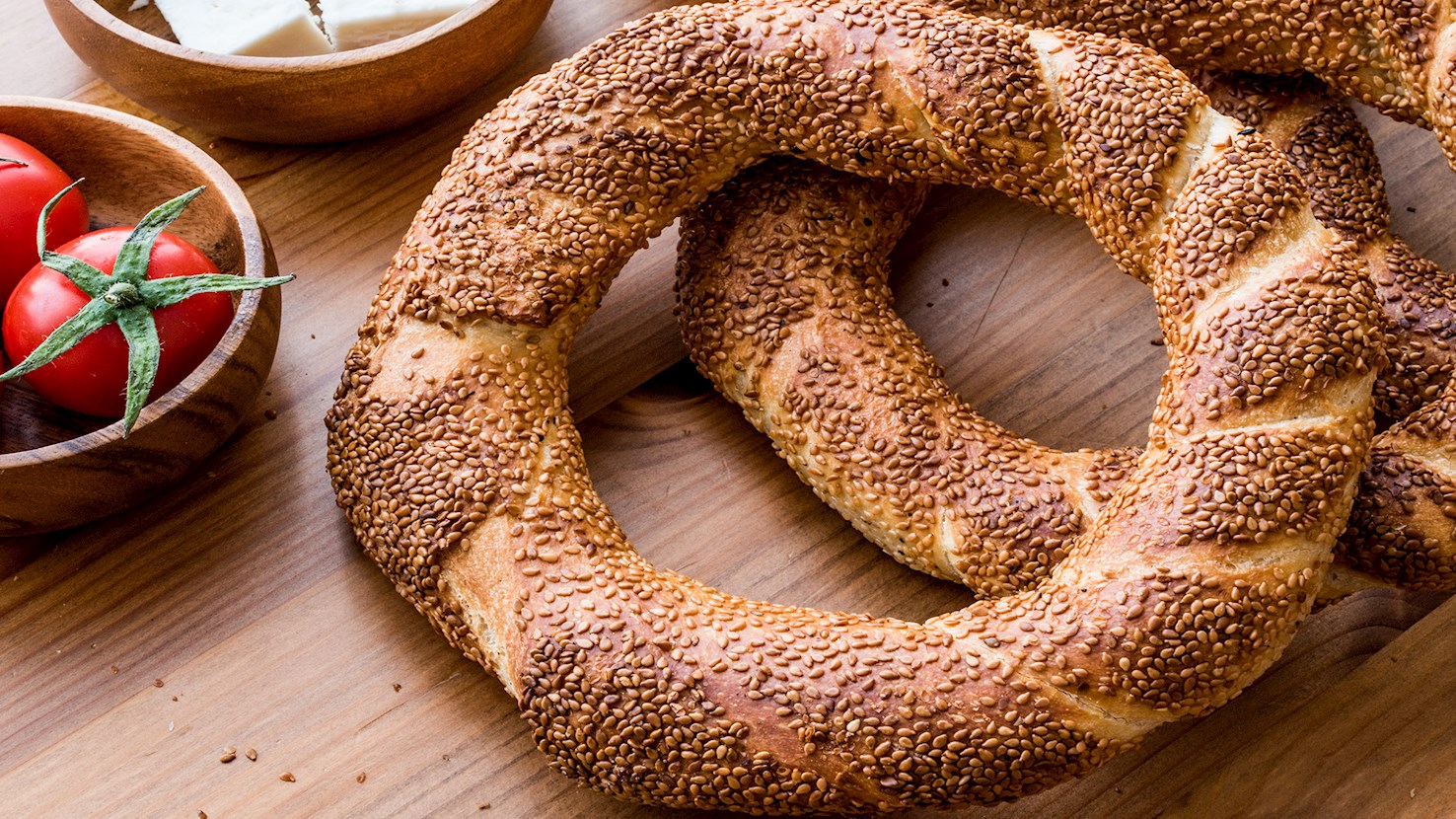
Turkish simit is a circular bread that's commonly accompanied by either tea or ayran (salted yogurt drink) and consumed for breakfast with fruit preserves or in savory combinations with cheese, pastırma (salt cured beef), and fresh vegetables. It is believed that simit has been baked in Istanbul since the 1500s, while the name hails from the Arabic word samīd, meaning white bread or fine flour. The dough itself is very similar to that of a bagel, except instead of boiling, the proofed dough is shaped and dipped into fruit molasses with water before being baked with a coating of toasted sesame seeds on top. In Türkiye, simits are sold by street vendors who walk around either pushing trolleys or carrying trays piled with these delicious, crunchy crusted bagels on their heads.
TasteAtlas food rankings are based on the ratings of the TasteAtlas audience, with a series of mechanisms that recognize real users and that ignore bot,
nationalist or local patriotic ratings, and give additional value to the ratings of users that the system recognizes as knowledgeable.
For the “Top 21 Turkish Street Food” list until May 15, 2026, 7,241 ratings were recorded, of which 4,197 were recognized by the system as legitimate.
TasteAtlas Rankings should not be seen as the final global conclusion about food. Their purpose is to promote excellent local foods,
instill pride in traditional dishes, and arouse curiosity about dishes you haven’t tried.