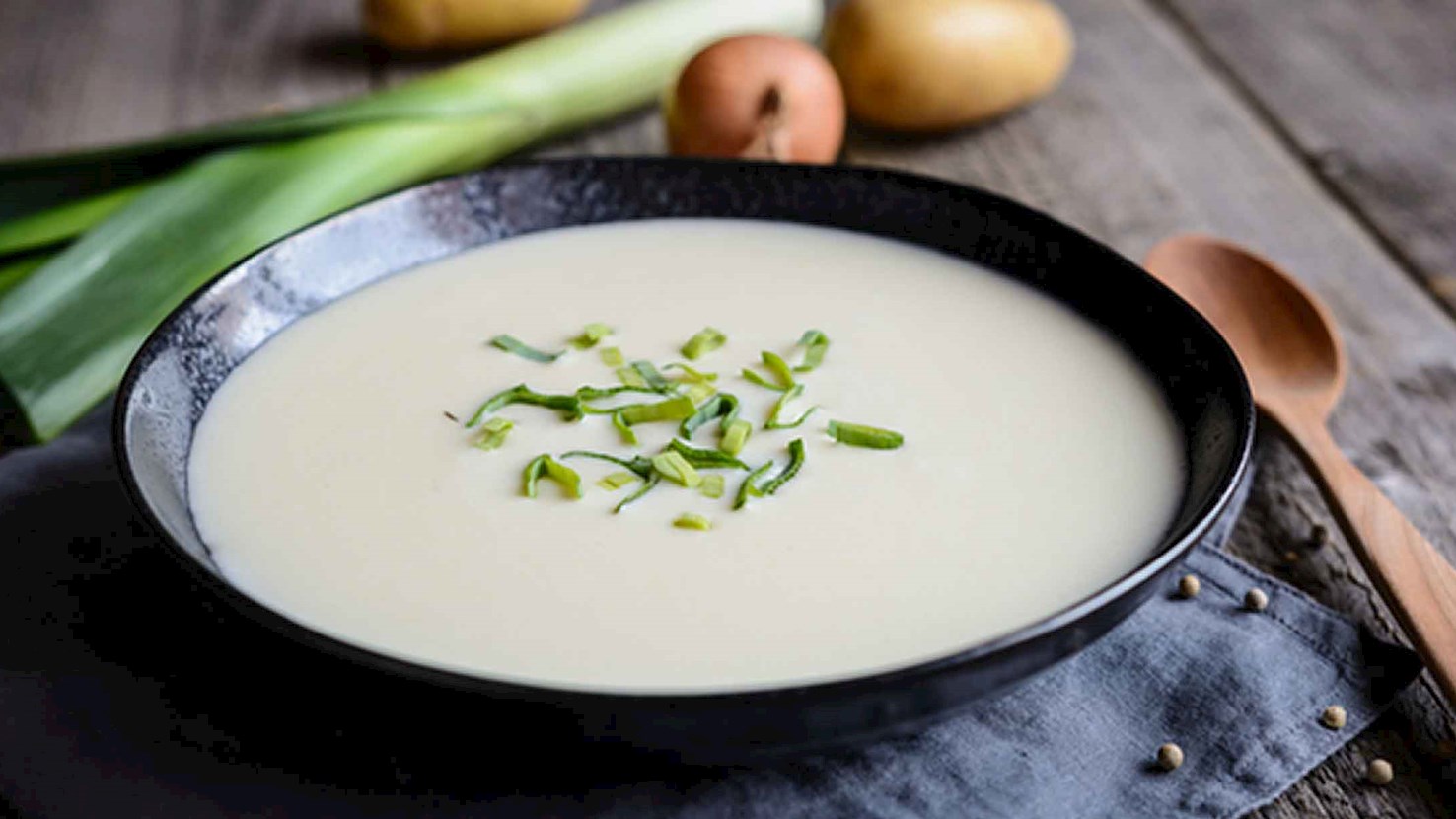
This thick French soup is made with puréed leeks, onions, potatoes, cream, and chicken stock. There is an ongoing debate about its origin – some claim it has French roots, while others insist that the soup is an American invention. One group of food historians say that the soup was invented by French chef Jules Gouffe in 1859, while others believe the original creator to be Louis Diat, a French chef who worked at the New York Ritz-Carlton. Inspired by the potato and leek soup of his childhood, he named the soup crème Vichyssoise glacée after his hometown of Vichy. Today, the soup is traditionally served cold and is often garnished with fresh chopped chives.
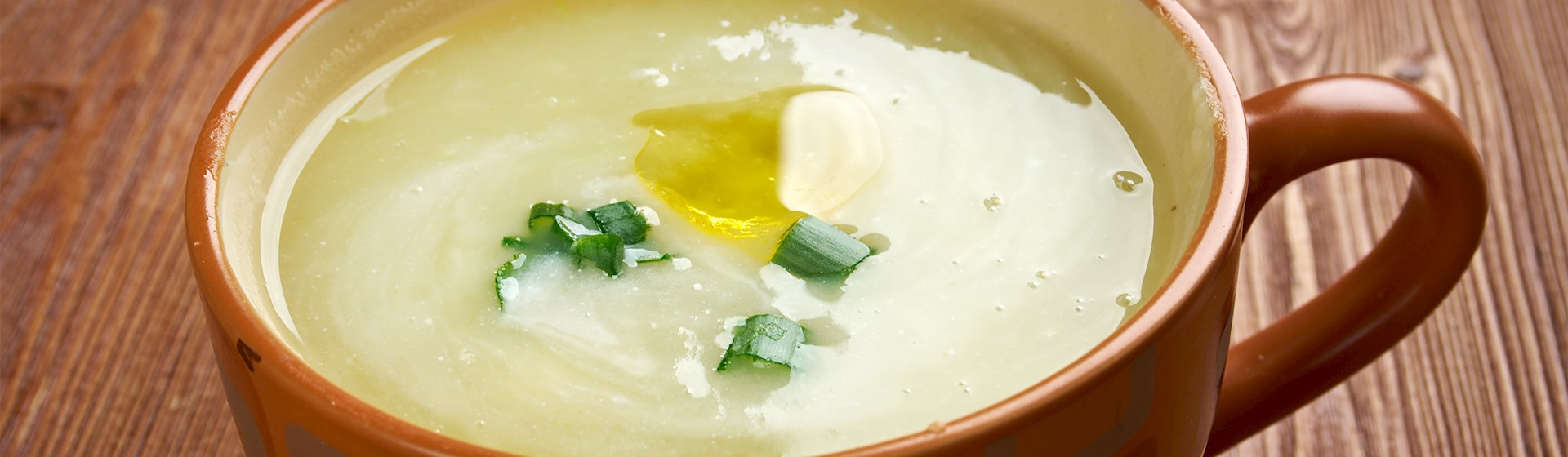
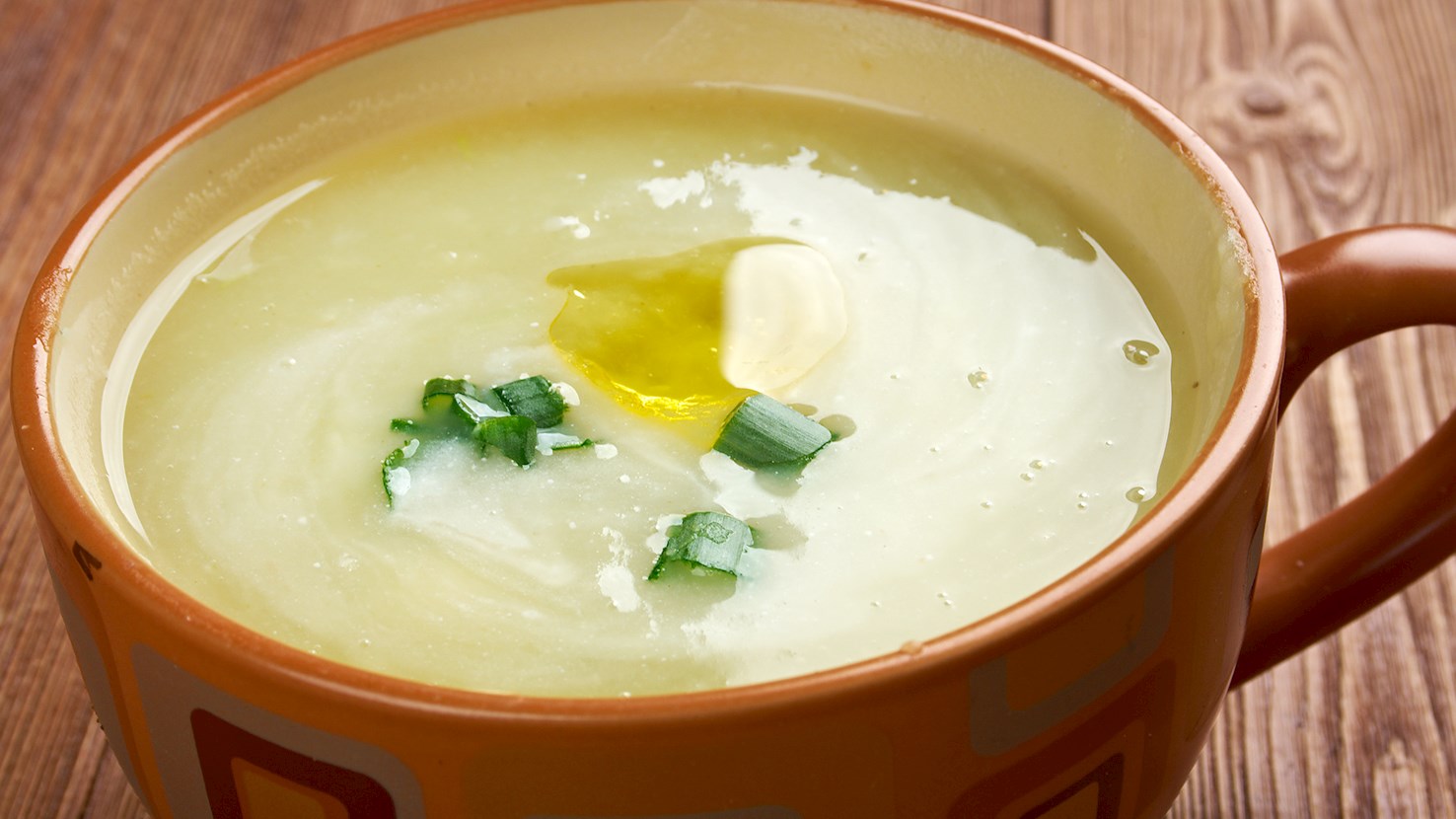
Potage Parmentier is a traditional potato and leek soup that's usually served hot. It can be served as an appetizer, a side-dish alongside meat courses, or as a stand-alone afternoon snack. The soup consists of potatoes and leeks, or optionally onions, which are cooked and puréed until they develop a smooth, delicate consistency. Broccoli, asparagus, parsley, or parsnips can also be added to the mixture. In French cuisine, dishes labeled Parmentier will always have potatoes as their main ingredient. This is in reference to Antoine-Augustin Parmentier, the agronomist who made the potatoes popular in France. Potage Parmentier shares many similarities with another potato and leek soup, vichyssoise. The latter is said to have been created in the United States by a French chef, Louis Diat. Potage Parmentier may be enjoyed with croutons and a dash of cream.
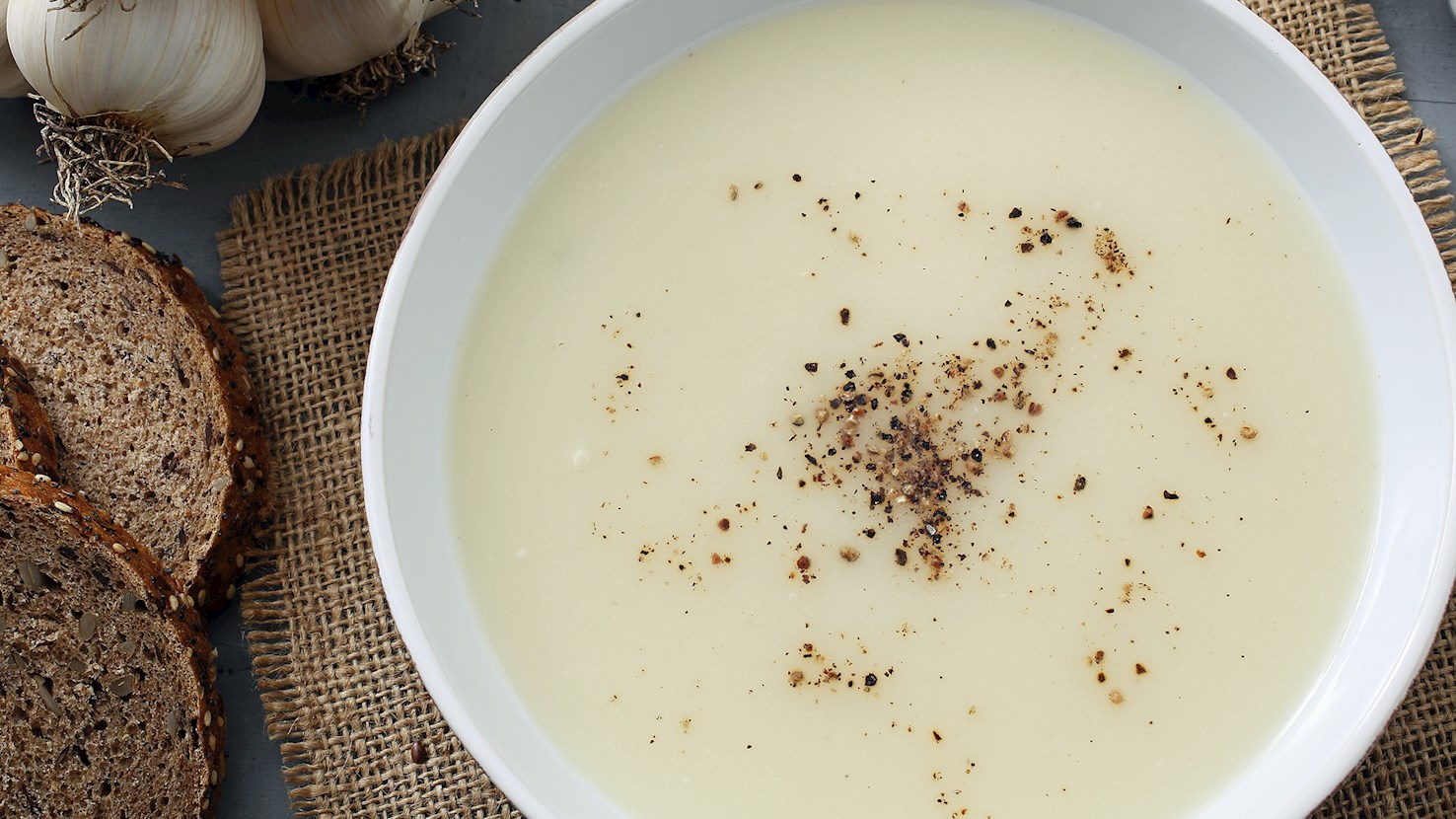
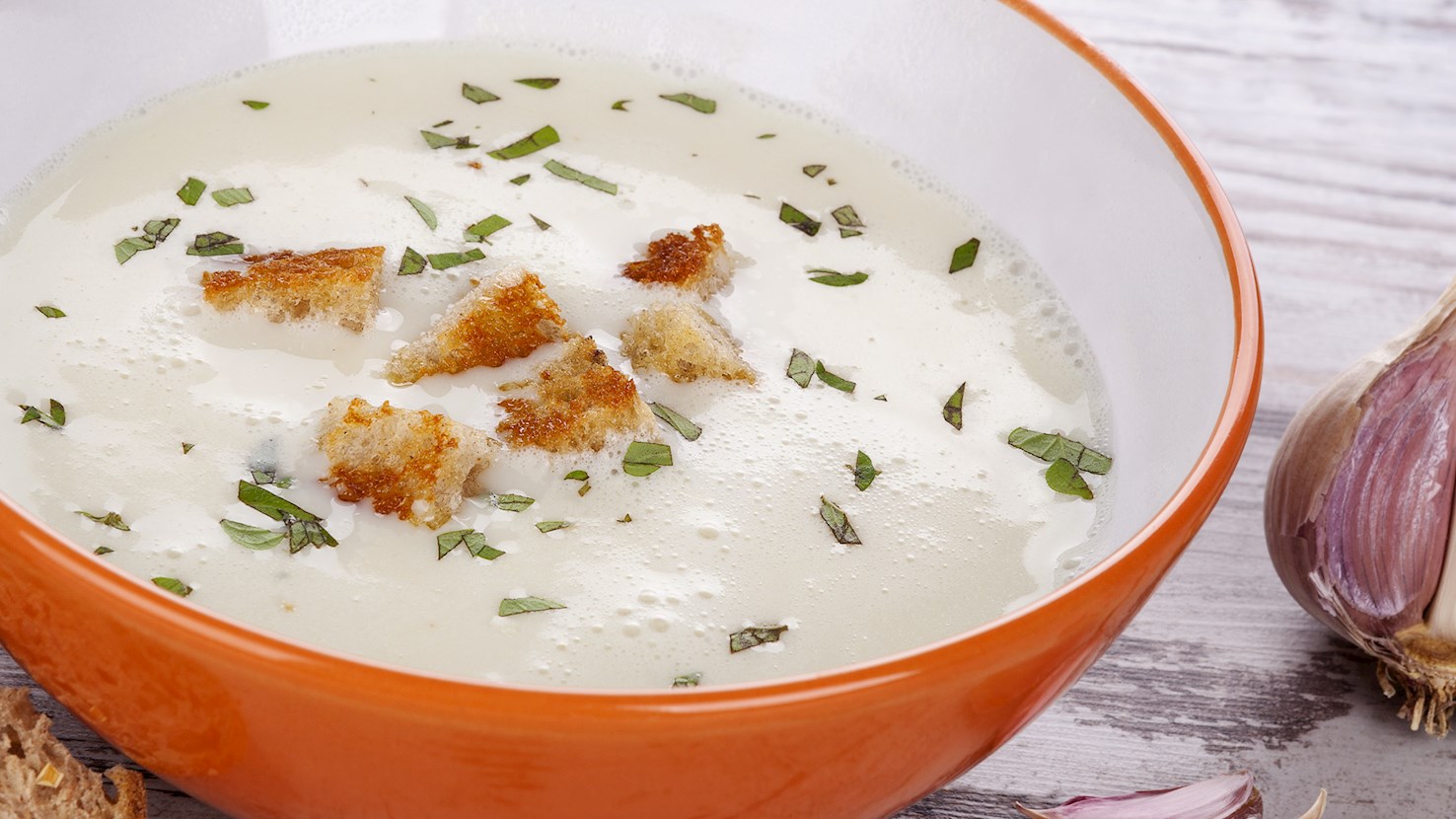
In the south of France, garlic is not only thought of as a culinary herb, but also as a vegetable, so it is no surprise that garlic soup is so deeply rooted in the traditional cuisine of regions like Occitanie and Provence. Its origins can be traced to the Middle Ages when soupe à l'ail was dished out only for special occasions and found on the table of noble families, since black pepper—one of the essential ingredients—was among the most expensive spices at the time. French garlic soup is typically served with poached eggs and slices of baguette bread browned in olive oil.
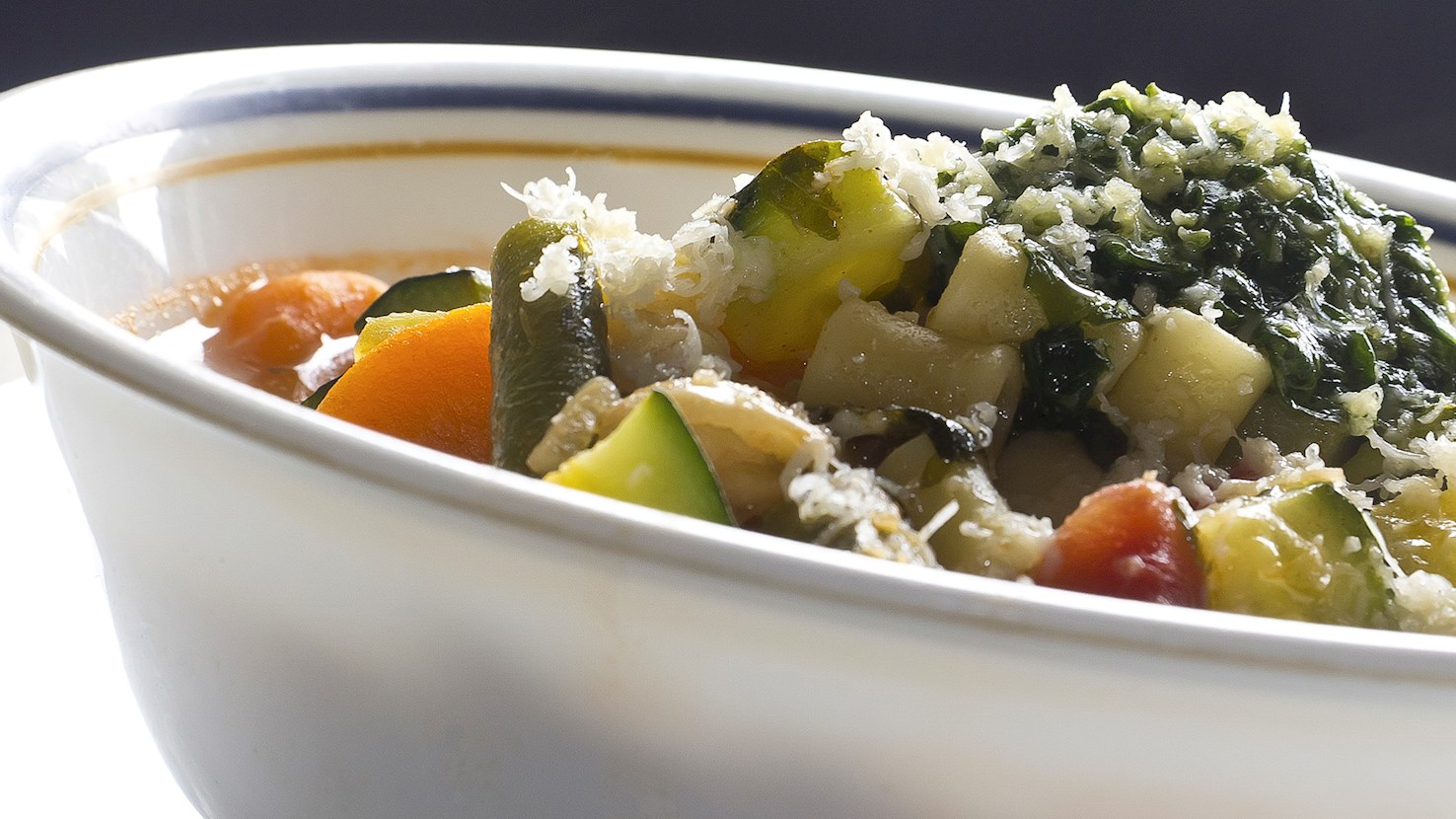
Borrowing its name from a traditional French paste, soupe au pistou is a popular soup similar to the Italian minestrone. Based on fresh seasonal ingredients, the soup can be made with various vegetables such as carrots, potatoes, beans, zucchini, peas, long green beans, or any other available vegetables. Pasta is typically added to improve the texture of the soup. However, the crucial ingredient is pistou, a traditional French paste made with basil, olive oil, and garlic, with the occasional addition of grated cheese or tomatoes. The paste can be thoroughly mixed in the entire pot of soup, but it can also be placed in individual bowls and left for the guests to swirl it in and adjust the taste according to their preferences. The soup is usually served warm and it is traditionally prepared during the summer season, when there is an abundance of fresh vegetables. Believed to have originated in the 18th century, this fresh and flavorful vegetable soup still stands as one of the most authentic Provençal dishes.
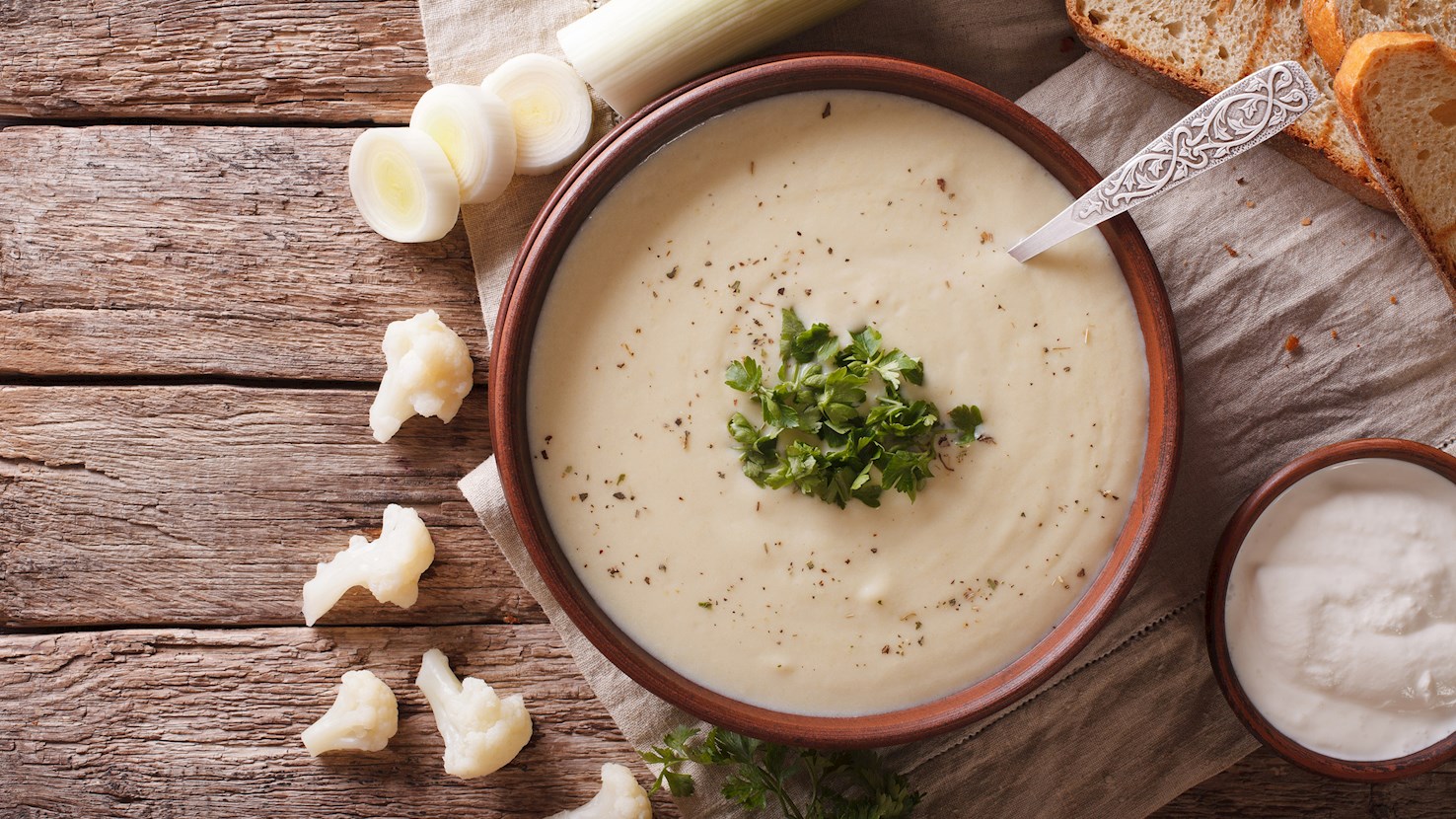
Crème Dubarry is a French cream of cauliflower soup. It's typically made with a combination of cauliflower, butter, flour, milk, stock, onions, egg yolks, grated cheese, cream, and spices such as nutmeg. The soup is thickened with béchamel sauce (flour, butter, milk), then blended until smooth, and finally reheated and garnished with chopped chives or a dusting of paprika. The soup was named after Comtesse du Barry, the mistress of King Louis XV. Nowadays, whenever you see the term du Barry or Dubarry, know that the dish includes cauliflower.
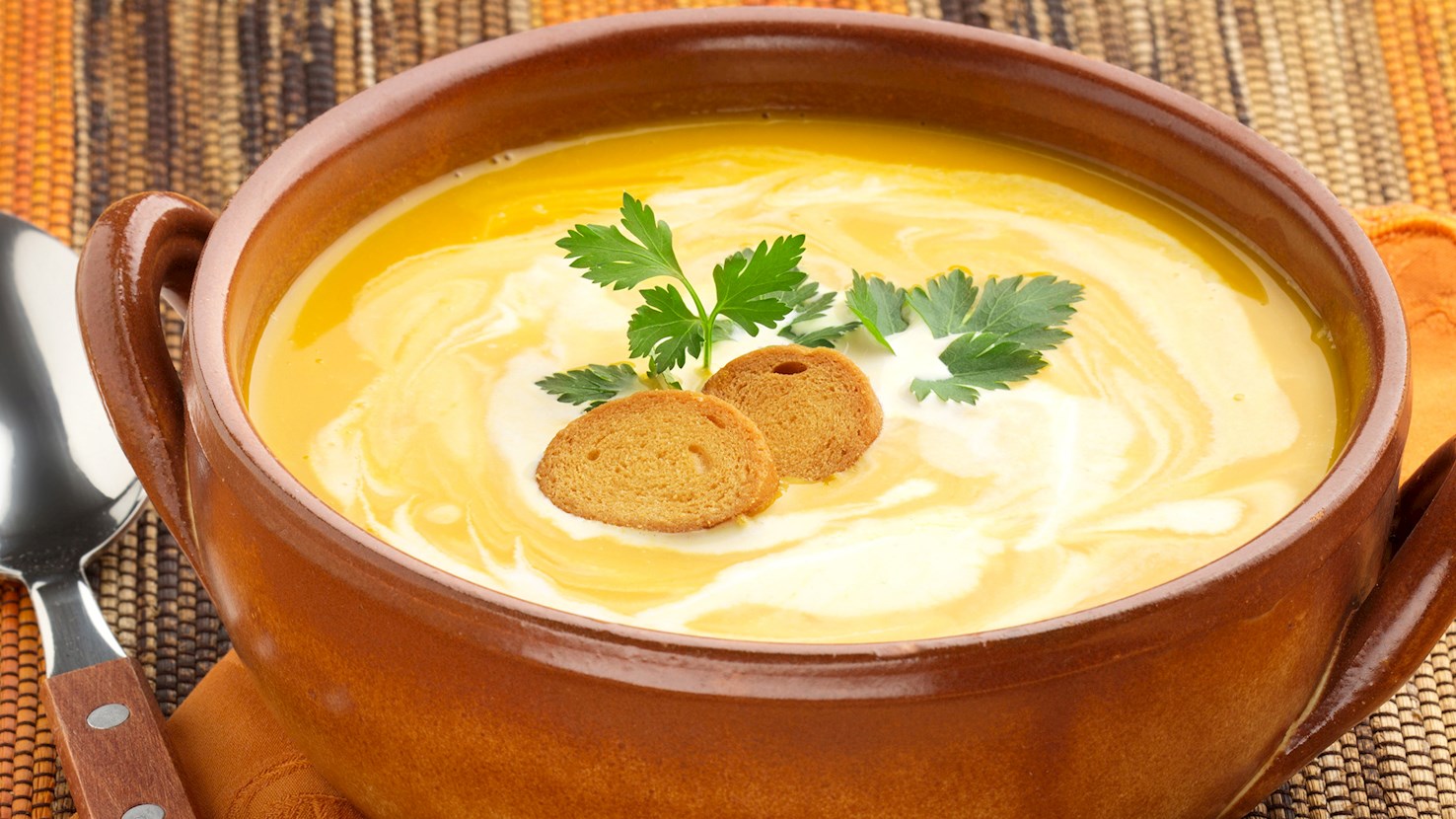
This famous French carrot soup is claimed by Crécy-la-Chapelle in the Seine-et-Marne department and Crécy-en-Ponthieu of the Somme department. Both towns are widely known for their carrots and, interestingly, any French recipe bearing the name Crécy is made with carrots. Also known as potage de Crécy, this French classic is usually thickened with rice, flavored with fresh herbs like chervil, mint, chives, or parsley, and typically served garnished with croutons.
This traditional southwestern French garlic soup consists of large amounts of garlic, onions, roux, and stock or water. Egg whites and yolks are often added to tourin to thicken it. As garlic is both delicious and believed to have serious health benefits, this dish has understandably gained in popularity in recent times. There is even a tourin cook-off each February in the town of Villeréal in the Lot-et-Garonne region, celebrating the expertise of local chefs in preparing this flavorful soup. In southern France, it is a tradition to serve the dish to newlyweds. Tourin is usually served over a piece of toasted bread and garnished with croutons and parsley. Another popular way of serving the soup is to cover it with a slice of Gruyère cheese and place it under a broiler until the cheese melts.
Soupe à l’échalote d’Avranches is a shallot-based soup from the town of Avranches, recognised locally as a modest winter speciality made from farm ingredients such as shallots, potatoes, butter, flour, stock, and crème fraîche. Regional culinary references describe it simply and precisely as a Norman speciality composed of about ten finely chopped shallots and three potatoes cut into small dice, sautéed in butter or “graisse normande”, bound with a spoonful of flour, then cooked in water or vegetable stock before being enriched with cream and served very hot over croutons. The soup belongs to a broader family of rustic Norman preparations that use dairy and alliums generously, and it appears in lists of recipes from the Manche alongside other local soups such as soupe à la graisse and mussel or cress soups, confirming its link to everyday cooking in this part of Normandy. Commentaries on Norman cuisine point out that garlic, onions and shallots have been cultivated in the region since at least the Middle Ages, when abbeys levied tithes on these crops; over time, varieties adapted to the damp, mild climate were selected, and a simple farmhouse soup based specifically on shallots rather than onions took hold around Avranches, later being identified by name in local and national food lexicons. Making the soup follows a clear sequence: shallots and potatoes are peeled, the shallots finely chopped and the potatoes cut into small cubes, then both are gently browned together in butter until they take on a light colour; flour is added and cooked briefly to form a light roux, before water or vegetable broth is poured in and the mixture simmers until the potatoes are soft and the flavours have blended. At the end of cooking, a portion of the hot liquid is mixed with crème fraîche, which is then stirred back into the pot, giving the soup its creamy texture. The soup is brought to the table very hot and ladled over slices or cubes of dry bread or croutons placed in the bowl. In recent years, plant-based versions have appeared, replacing butter with oil and dairy cream with plant cream. The soup is eaten mainly in Avranches and across Normandy as a simple winter starter or light evening meal, both in private homes and in restaurants that feature regional cooking, and it is often cited in overviews of French soups as one of the emblematic Norman potages. Wine-pairing guides describe it as a straightforward dish that matches best with easy-drinking “vins de copains”, recommending unpretentious dry whites or light reds such as Buzet or other southwest appellations, and by extension, similar supple Loire or southwest wines that do not overpower the delicate shallot and cream. In a more local register, the soup pairs naturally with Norman cider, whose freshness cuts the richness of the butter and cream, and it is often served with simple accompaniments such as extra bread, a green salad, or a piece of cheese, forming an uncomplicated but clearly regional meal.
TasteAtlas food rankings are based on the ratings of the TasteAtlas audience, with a series of mechanisms that recognize real users and that ignore bot,
nationalist or local patriotic ratings, and give additional value to the ratings of users that the system recognizes as knowledgeable.
TasteAtlas Rankings should not be seen as the final global conclusion about food. Their purpose is to promote excellent local foods,
instill pride in traditional dishes, and arouse curiosity about dishes you haven’t tried.




What People Say