


shutterstock

17 Traditional Foods
You Have To Try in Corfu City

Last updated on May 22, 2026
01

Pastitsada

4 ·

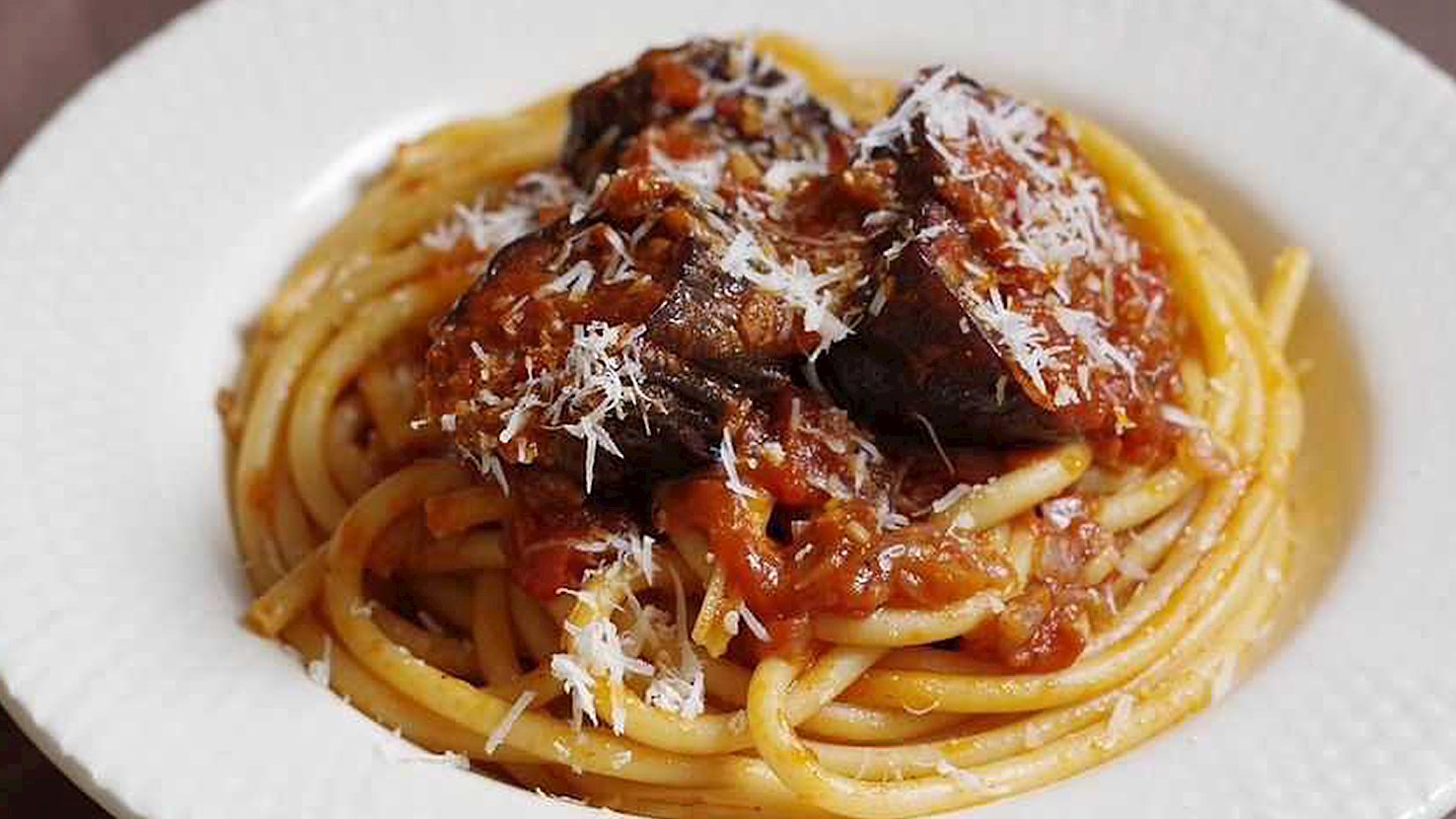
This traditional Greek dish hails from Corfu and typically employs rooster cuts or beef. The meat is primarily seared and then sautéed in a flavorful tomato-based sauce alongside onions, garlic, olive oil, wine, and various spices that typically include nutmeg, cinnamon, and cloves. A staple in each traditional tavern on Corfu, the dish is traditionally served over penne, bucatini or spaghetti and is occasionally enjoyed topped with grated cheese.

02

Sofrito

4 ·

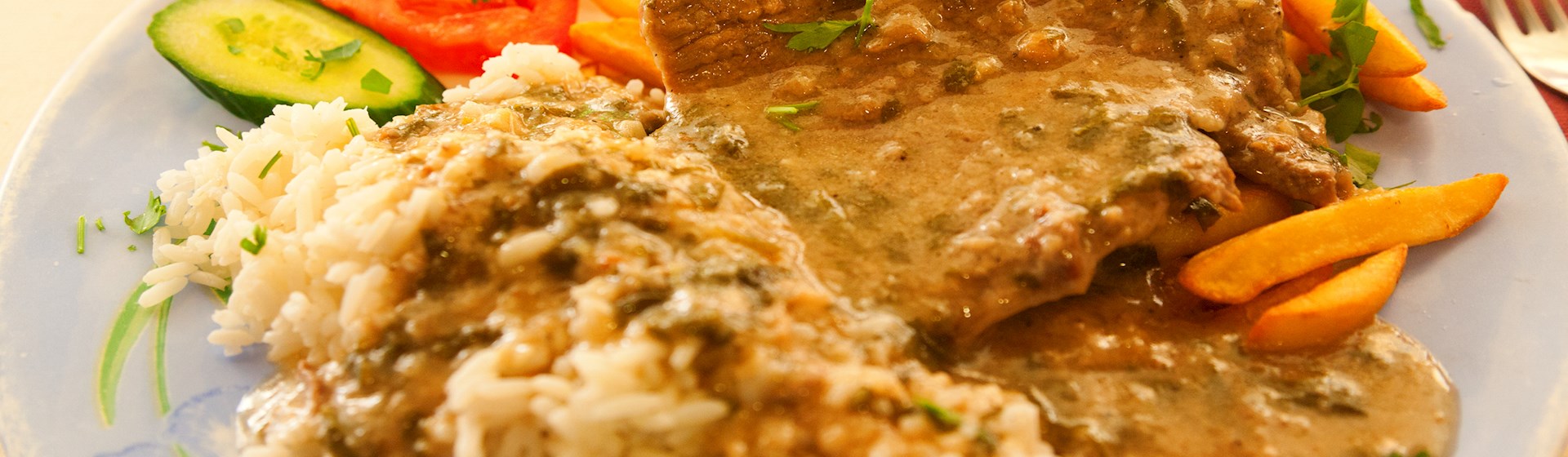
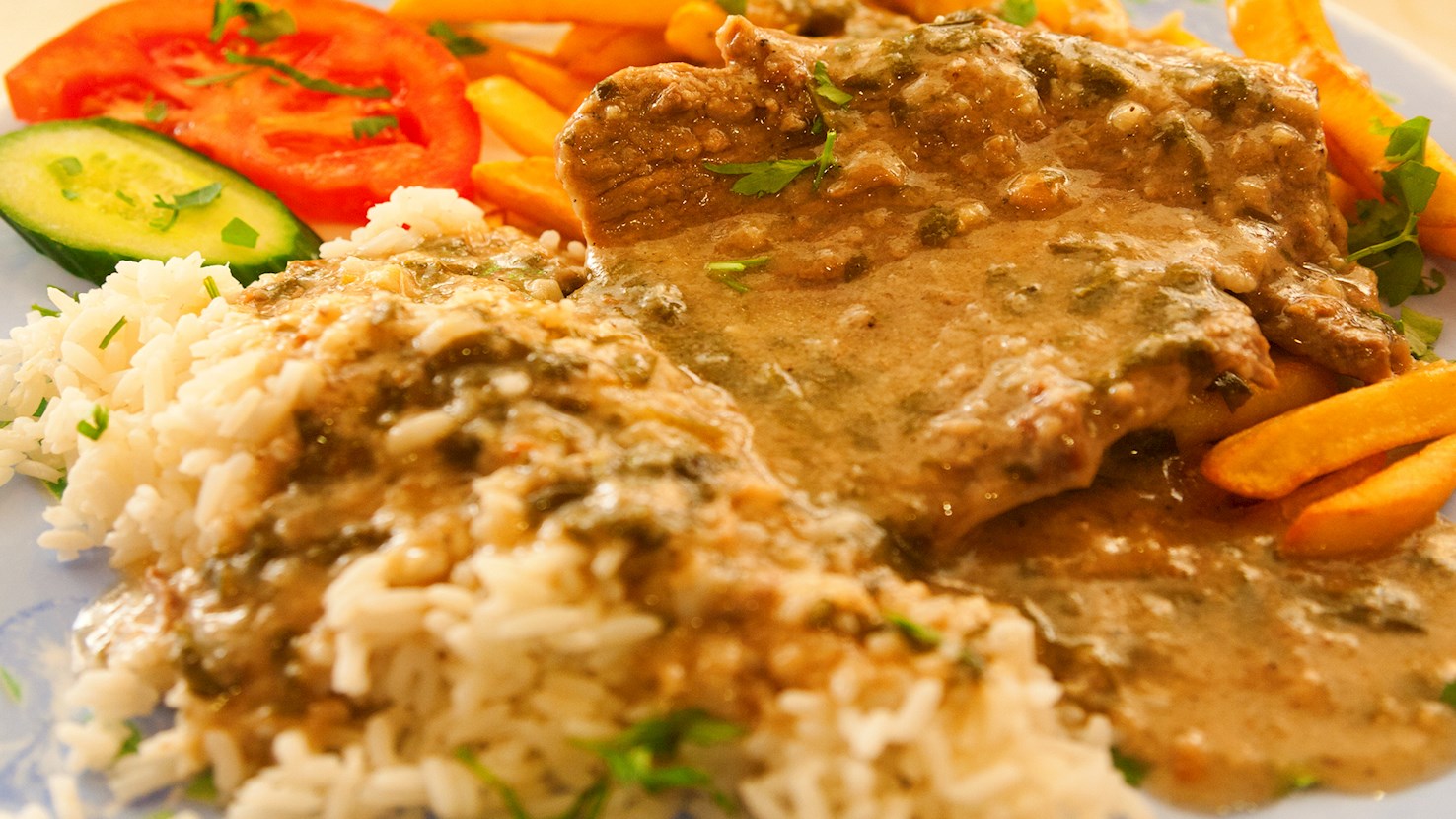
Greek sofrito is a dish consisting of tender cuts of beef or veal that are lightly dredged in flour and then slowly sautéed in a flavorful sauce based on white wine, which is additionally seasoned with garlic, parsley, and vinegar. Though it is considered a delicacy that hails from Corfu, it is commonly enjoyed throughout the country. Because the term sofrito stems from the Italian language, meaning to sautée, and the whole island was under the Venetian rule for centuries, it is believed that the dish was inspired by traditional Venetian cuisine. Greek sofrito is typically accompanied by rice, potatoes, or crusty bread.

03

Souvlaki

4.3 ·

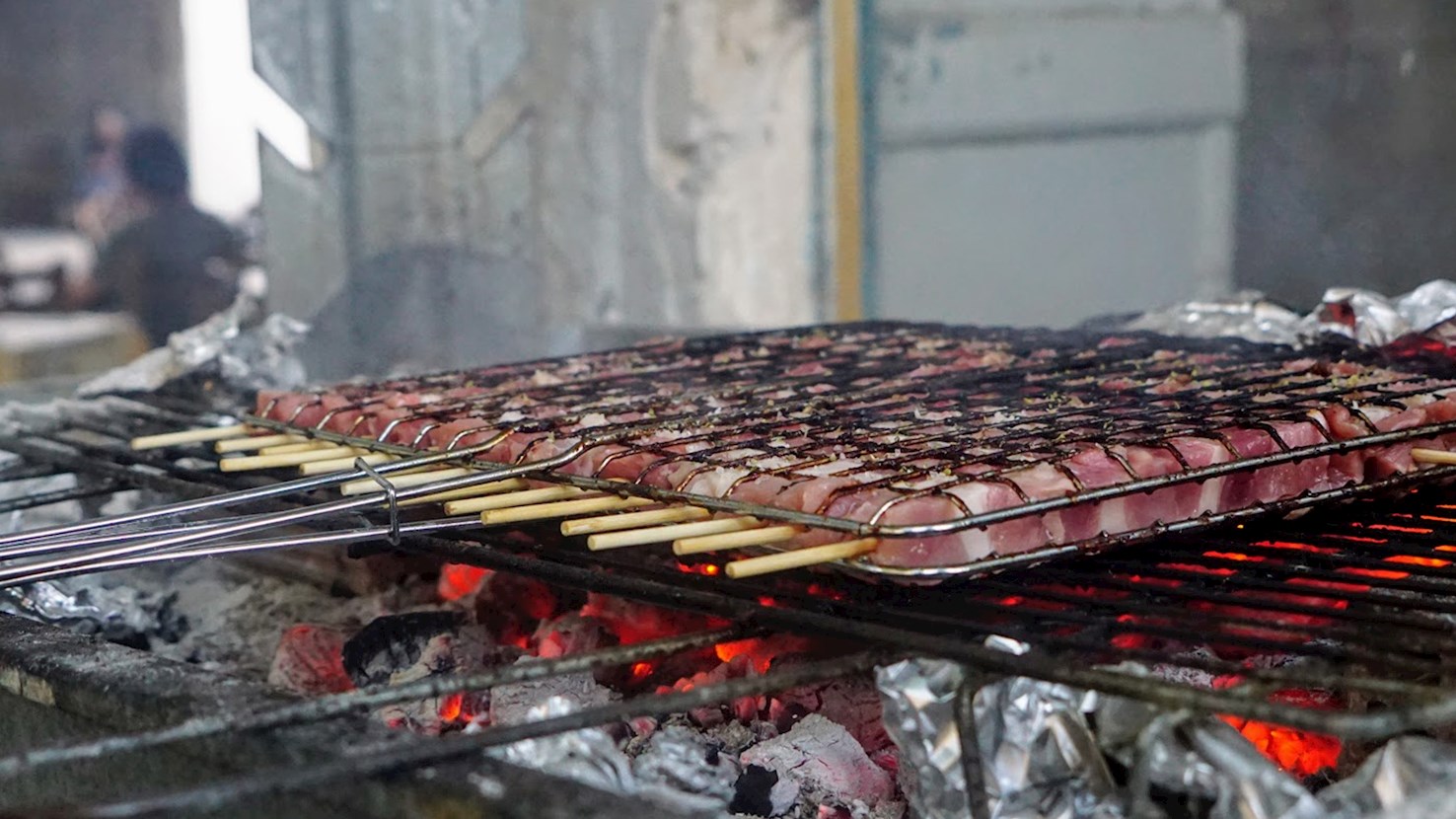
Souvlaki is one of the most popular Greek dishes, consisting of small cubes of skewered and grilled pork, chicken, lamb, or beef. It is a popular fast food item that is usually served in souvladzidika, small eateries that also often serve gyros and other similar grilled meat dishes. Souvlaki first appeared in ancient Greece, when it was called kandaulos, consisting of a combination of grilled meat, pita bread, cheese, and dill. The name of the dish is a diminutive of the Greek word souvla, meaning spit. The first souvlaki shop opened in Livadia in 1951, and today, souvlaki is sold in almost every Greek city, ordered as a takeaway, on the beaches, or on numerous street corners. It is usually served with a slice of bread or pita bread, tomatoes, parsley, onions, sometimes chips, and thick yogurt or tzatziki. There's also an oversized variety of souvlaki called kontosouvli in which large chunks of marinated meat, onions, tomatoes, and peppers are cooked on long and slim skewers over charcoal.

04

Bourdeto

3.5 ·

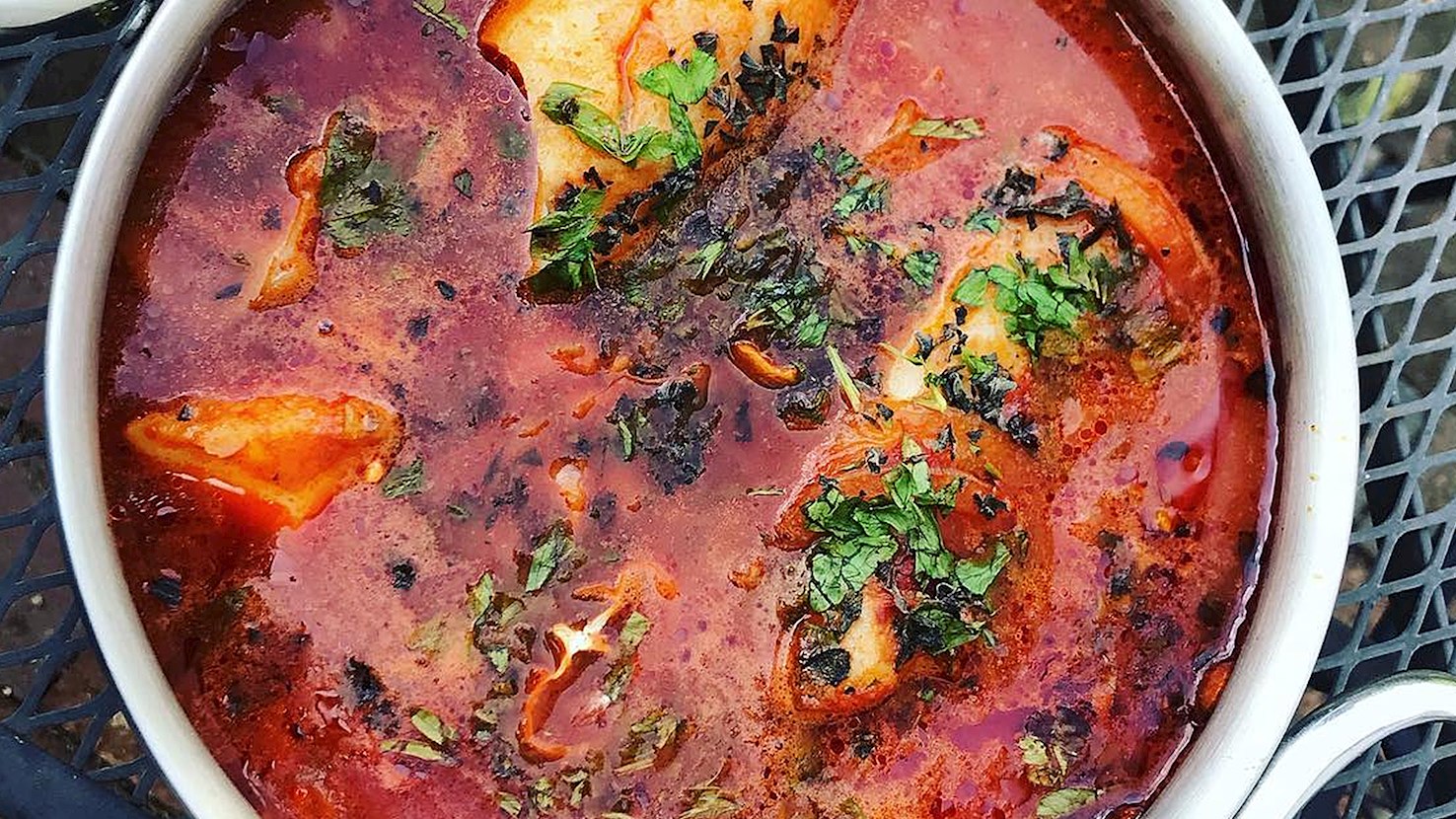
This rustic dish combines fish and a rich tomato sauce that is enriched with sweet and spicy paprika and onions. It hails from Corfu, and it was probably modeled on a similar Venetian dish known as brodetto. On Corfu, it can be prepared with various types of fish, though scorpionfish is believed to be the best choice. Bourdeto is typically finished off with a splash of lemon juice and is always enjoyed freshly prepared. It is usually accompanied by potatoes or slices of country-style bread. A similar dish is also found in Croatia, where it goes under the name brudet.

05

Gyros

4.3 ·

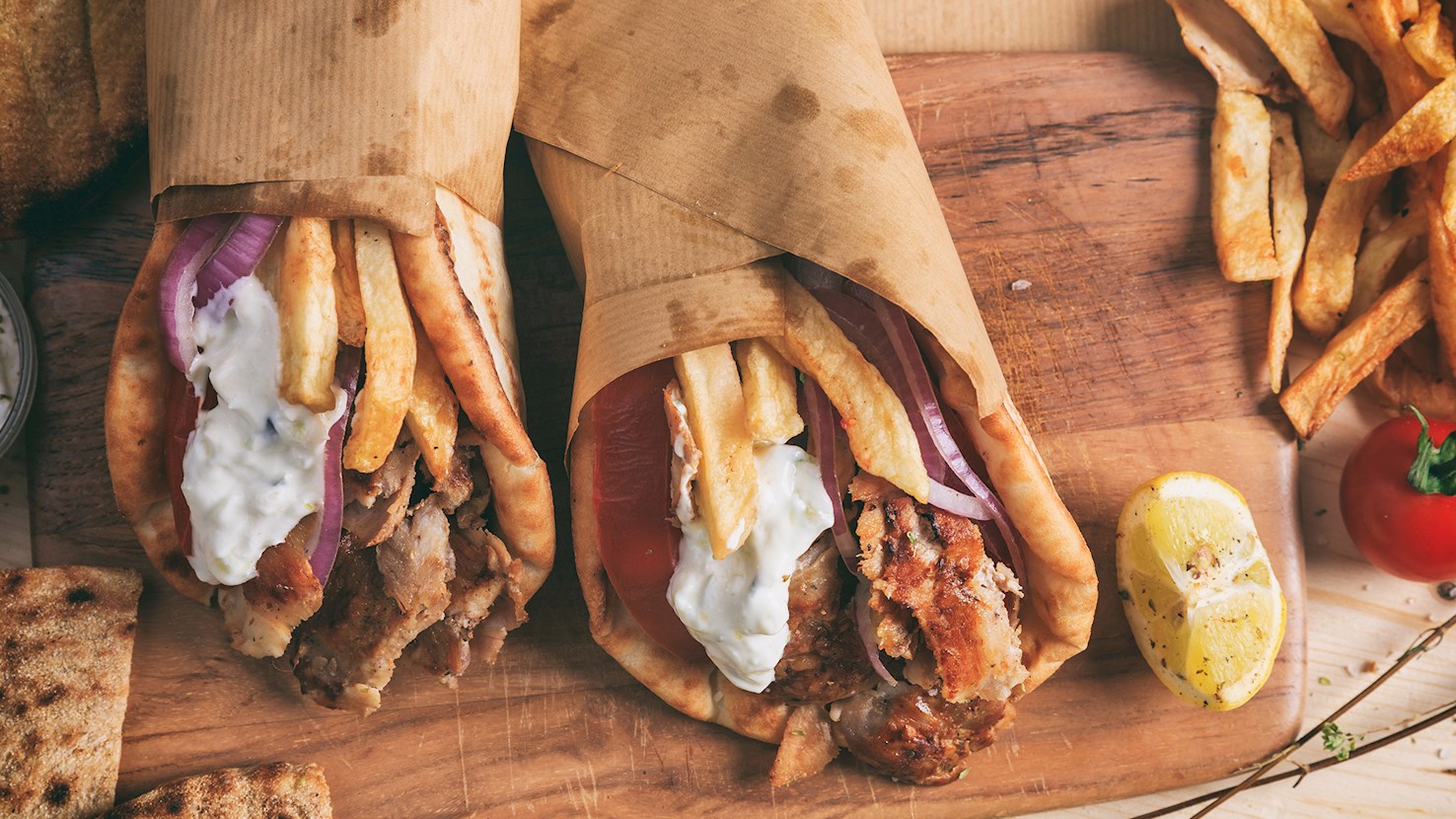
Gyros is one of the most popular Greek street food dishes, consisting of meat such as pork and chicken (in Greece) or lamb and veal (popular in other countries) cooked on a vertical spit. The meat is sliced in thin shavings and is then usually placed in a pita bread along with sauces such as tzatziki and vegetables such as tomatoes, onions, lettuce, and cucumbers. Gyros is derived from the Greek word gheereezo, meaning to turn, referring to the constantly rotating vertical spit on which the meat is cooked. Some believe that gyros originated during the time of Alexander the Great, when his soldiers skewered the meat on their swords and cooked it over a fire. Others claim that gyros was introduced to Greece in 1922, with the refugees from Constantinople and Smyrna. Many of the refugees became merchants and opened their shops with tiny holes in the wall, where gyros was sold. After WWII, gyros gained popularity and spread to Europe, Australia, and the United States. Today, gyros is known as one of the most popular street food varieties around the world.

Best restaurants
06

Horiatiki salata (Greek salad)

4.2 ·

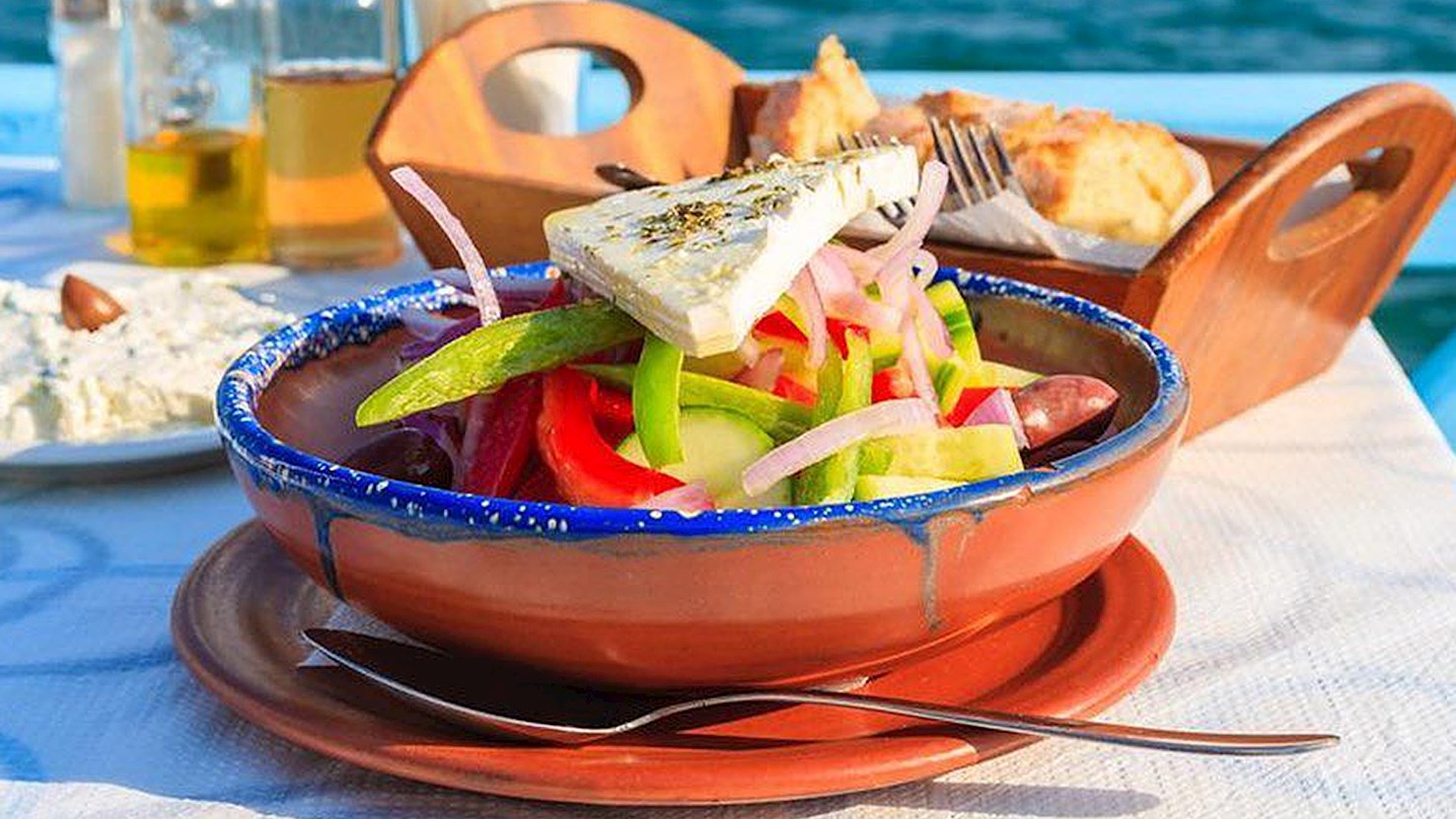
Greek salad, also known as village salad or horiatiki is the national dish of Greece, consisting of quartered tomatoes, sliced red onions, and chunky slices of cucumber. Depending on the region, there can also be olives, green peppers, feta cheese, oregano, salt, pepper, or a typical dressing made from olive oil and lemon or vinegar (optionally). When feta cheese is present in the salad, it is usually just sliced, but in some cases it's mixed in with a fork until slightly crumbled. Its name suggests that it was a rural dish, when farmers would take some essential ingredients to the field and mix them together. Greek salad is a true summer dish, full of refreshing, raw vegetables and herbs. It is best to prepare it with ripe tomatoes that are in season, while the olives should be of the Kalamata variety. Served in a shallow bowl, it is present on numerous Greek tables, either at home or in the taverns.

07

Saganaki

4.4 ·

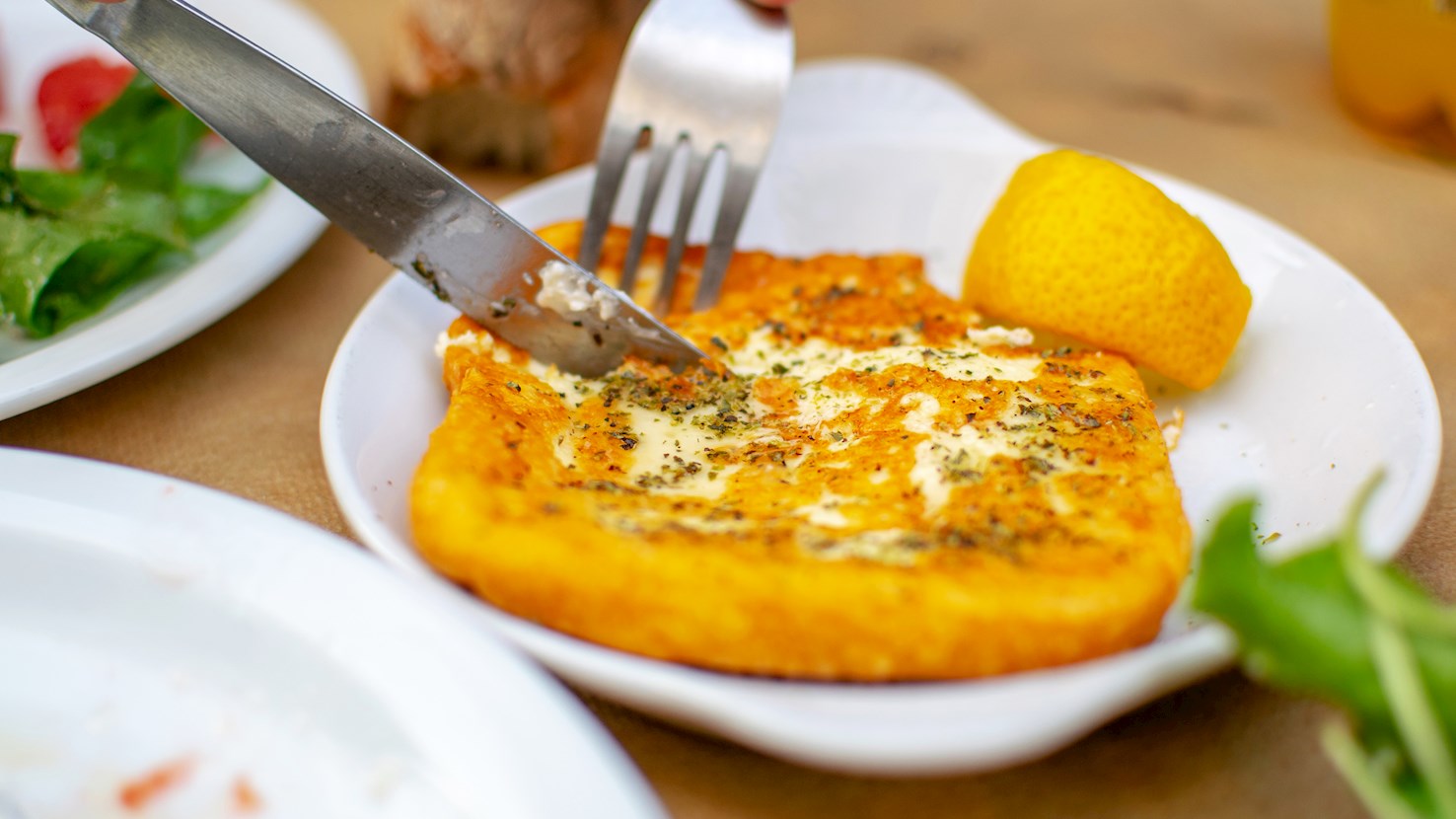
Saganaki is a highly popular Greek appetizer where various vegetables, meats, or seafood such as shrimp or mussels are wrapped in cheese, then pan-fried or seared. The cheese can also be prepared on its own, without any accompaniments. It is then pan-seared until it develops its distinctive golden crust, and served in the so-called sagani, a small, two-handled pan in which it was fried. In the past, the word saganaki referred to a method of spicing up the local cheese by Greek peasants, who would pan-fry different varieties of cheese such as feta, kashkaval or manori. While regional variations of the dish include the use of formaela cheese in Arachova and halloumi in Cyprus, the cheese used in a typical Greek saganaki is usually graviera, kefalograviera, kasseri, kefalotyri, sheep's milk feta or any other firm cheese that melts well without losing its shape. Saganaki is sometimes enlivened by a splash of traditional Greek spirits like Metaxa brandy or Ouzo, an anise-flavored aperitif. Outside of Greece, particularly in the US, saganaki is typically flambéed at the table, and this flaming culinary showmanship is a tradition which reportedly first started in Chicago's Greektown. When the lighter comes out to ignite the pan, one can often hear "Opa!", the Greek expression for joy. After cheering, the diners usually cut off chunks of cheese that are crispy on the outside and soft and runny on the inside, and then sprinkle their saganaki with lemon juice, savoring it with some freshly baked pita bread.

08

Moussaka

4.1 ·

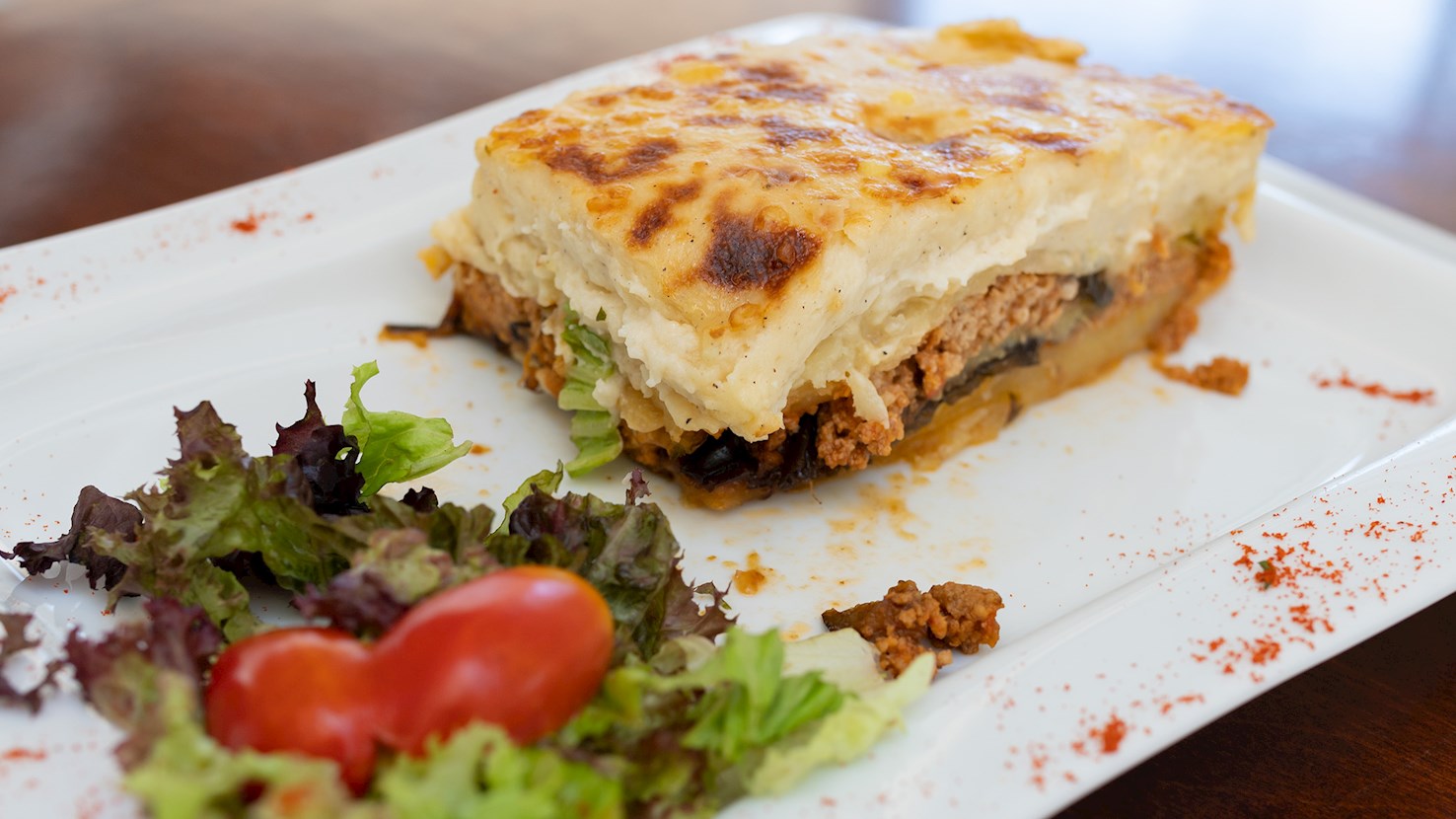
Moussaka is one of the best known Greek dishes – a baked casserole consisting of ground lamb meat and layers of sliced eggplant, covered with a thick layer of bechamel sauce that gets golden and crusty as it bakes. The lamb is sometimes replaced with beef, while the eggplants might be replaced with zucchini or potatoes. It is likely that moussaka has Middle-Eastern origins, and it was introduced when the Arabs brought the eggplant to Greece. Its Greek name mousakás is derived from the Turkish musakka, which came from the Arabic word musaqqa'ah, meaning chilled. Moussaka is not an everyday dish–it is baked as a special treat for guests and family on festive days. An exotic version of lasagna, without the pasta, moussaka is exceptionally healthy due to the abundance of vegetables used in the dish. It is commonly cut into squares and served warm, not hot, as the dish needs some resting time in order to firm up.

09

Tzatziki

4.2 ·

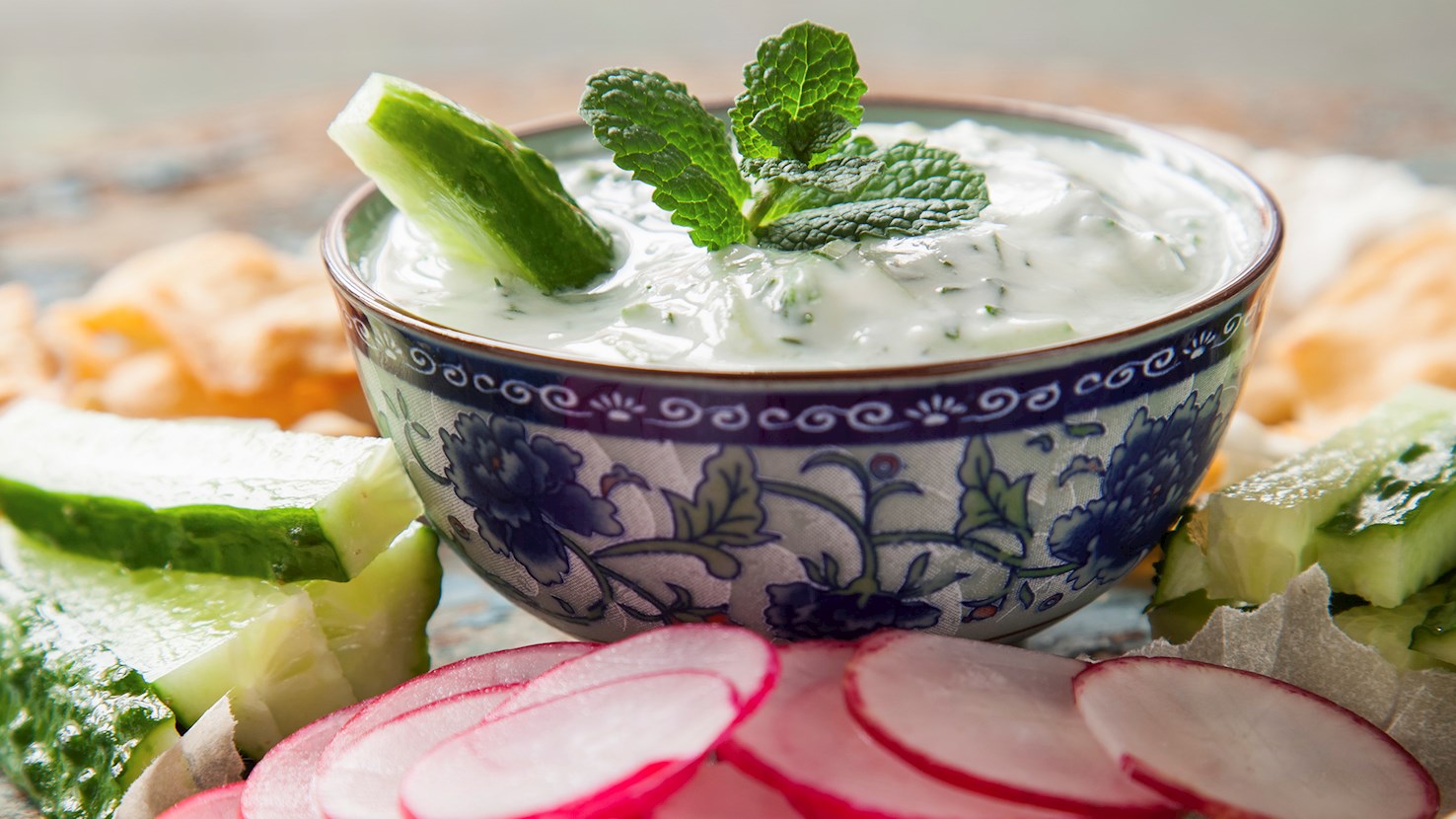
Tzatziki is a Greek concoction made from yogurt, cucumbers, garlic, and numerous herbs and spices such as dill, mint, or parsley. It is usually served as a sauce accompanying many meat dishes, as a simple dip, or an appetizer. Its name is derived from the Turkish word cacik, denoting a very similar dip, although some suspect that tzatziki was derived from the Indian raita dip. Tzatziki is always served cold, and it is especially popular to serve it with dishes such as gyros and souvlaki. Often, it is served with pita bread as part of the first course of a big meal. With its huge popularity, and the fact that it is one of the best summer dips, it is not strange that there are many regional variations of tzatziki, in countries such as Iran, Iraq, Turkey, Cyprus, Bulgaria, and Serbia.

10

Pastitsio

4.2 ·

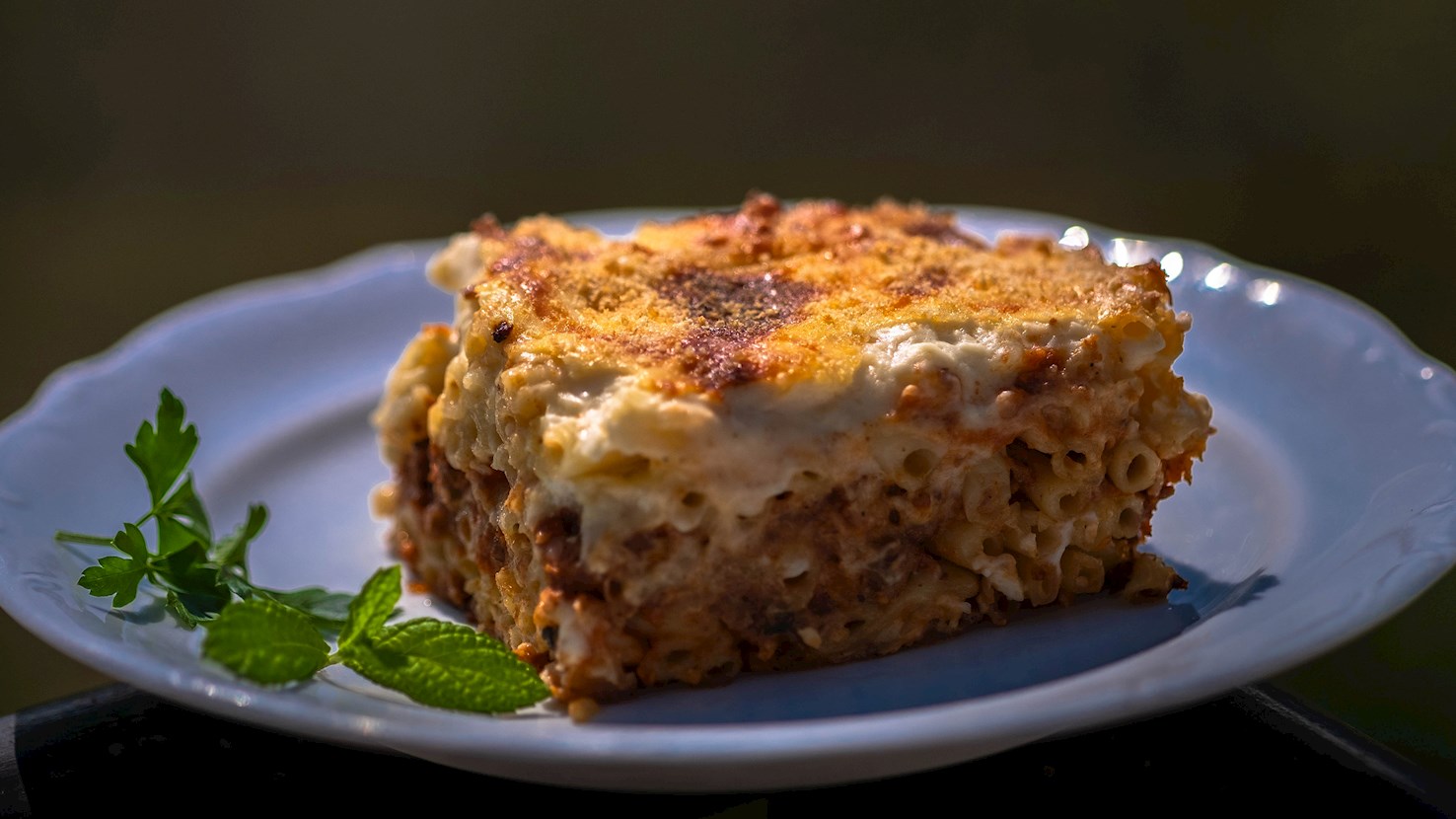
Although the Greeks did not invent pasta, they have been consuming similar foods since ancient times. Actually, some terms we usually associate with Italian food like lasagna and macaroni are thought by some to be of Greek origin. However, this dish takes its name from the Italian pasticcio, a large family of pies featuring pasta and ragú. Pastitsio is to Greeks what lasagne are to the Italians and what mac and cheese is to Americans - intensely aromatic, rich and gooey layers of tubular pasta in a hearty sauce consisting of tomatoes and ground lamb or beef meat, topped with béchamel sauce and, ideally, sprinkled with grated kefalotyri or kasseri cheese. It is a perfect dish for a cold winter night with its intense flavors of cinnamon, nutmeg, cloves, and allspice. In Greece, pastitsio is often enjoyed in February, during the weeks that precede Lent, and on the Sunday of Apokreos, the last day on which the observant are allowed to eat meat. Because it is prepared in large amounts and quite inexpensive, it is also an ideal dish for large crowds of people.

Best restaurants
11

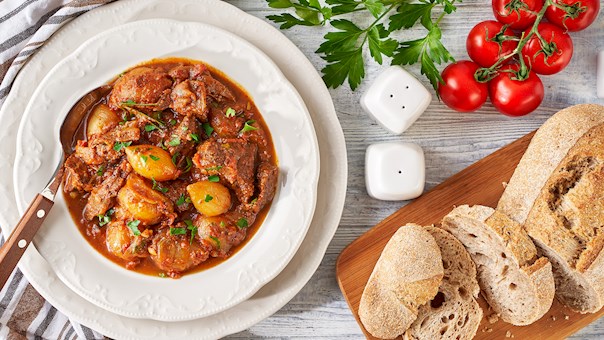
Stifado

4.2 ·
12

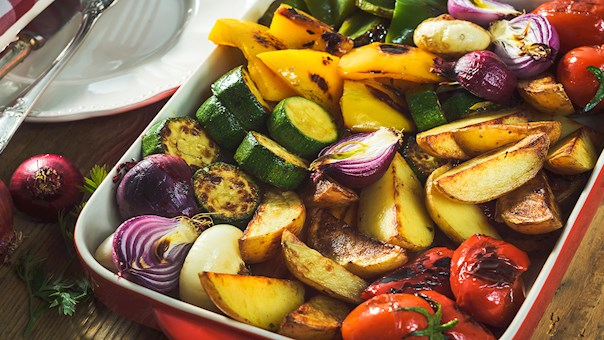
Briám

4 ·
14

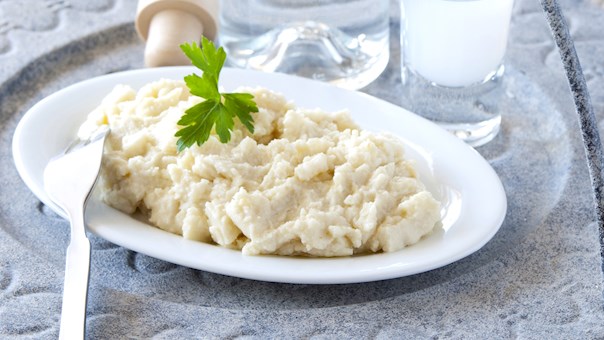
Skordalia

4.1 ·
15

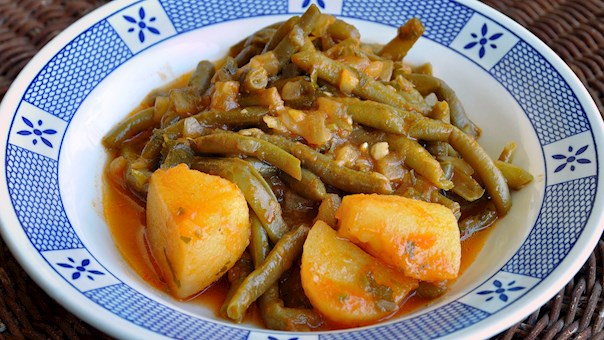
Fasolakia

3.7 ·
17

Tsigareli

n/a ·
About this ranking

TasteAtlas food rankings are based on the ratings of the TasteAtlas audience, with a series of mechanisms that recognize real users and that ignore bot, nationalist or local patriotic ratings, and give additional value to the ratings of users that the system recognizes as knowledgeable. For the “17 Traditional Foods You Have To Try in Corfu City” list until May 22, 2026, 0 ratings were recorded, of which 0 were recognized by the system as legitimate. TasteAtlas Rankings should not be seen as the final global conclusion about food. Their purpose is to promote excellent local foods, instill pride in traditional dishes, and arouse curiosity about dishes you haven’t tried.

Similar lists