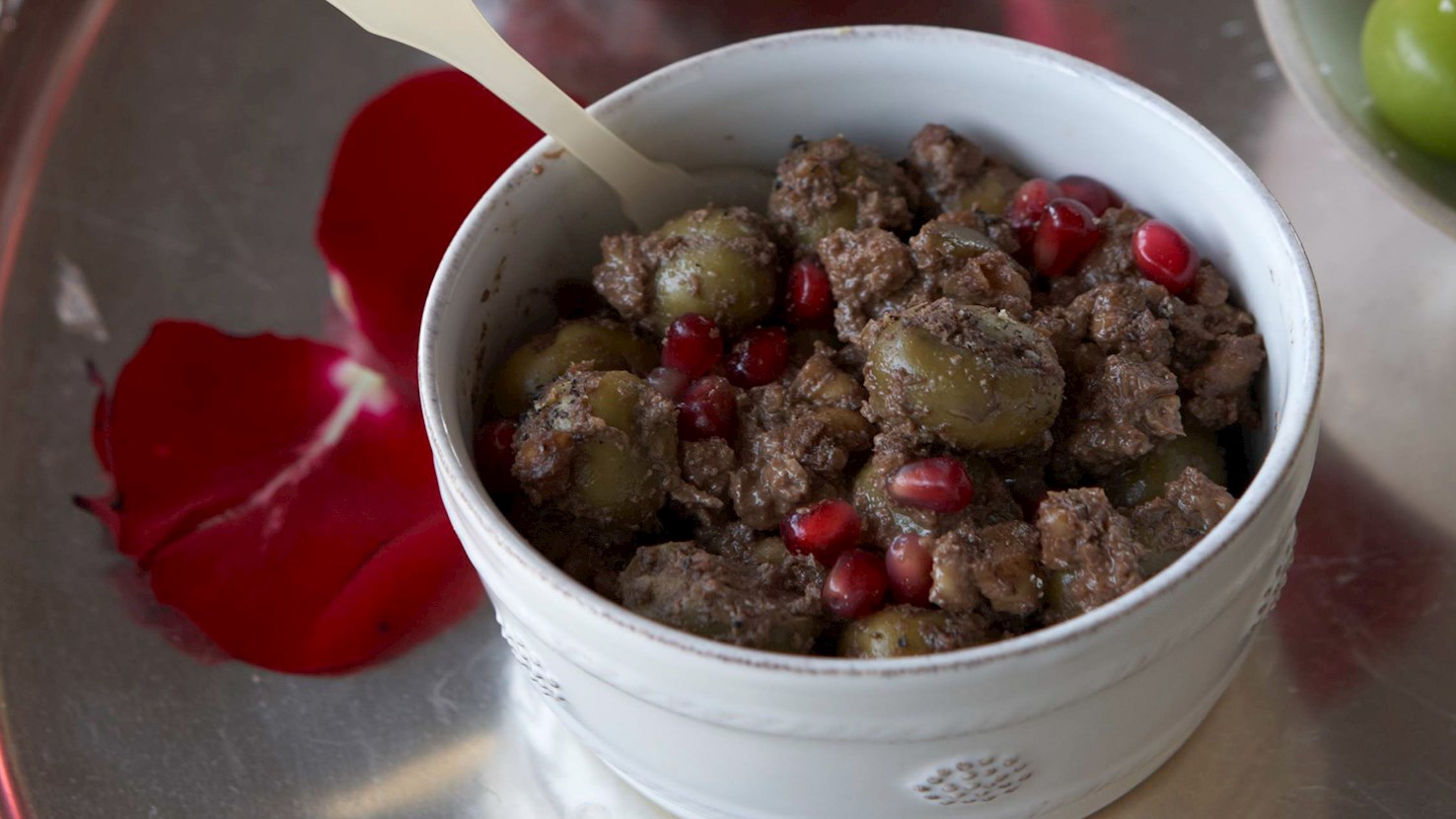
Zeytoon parvardeh is an olive-based appetizer originating in Iran’s northern Caspian region, particularly the province of Gilan. Known for combining pitted green olives with pomegranate molasses, walnuts, garlic, and herbs, it balances tangy, earthy, and aromatic notes that reflect the diverse agricultural produce of the area. The dish belongs to the group of flavorful mezze and accompaniments that characterize Gilani cuisine, where local olives are cultivated in abundance near the coastal plains. The history of zeytoon parvardeh is tied to the long-standing cultivation of olives and pomegranates in northern Iran. The Caspian provinces have been centers of horticulture for centuries, benefiting from humid subtropical weather and fertile soils. Olives were introduced to the region many generations ago and became a staple crop, integrated into recipes that made use of other locally available ingredients such as walnuts and aromatic herbs. Over time, families developed their own versions of the seasoned olive mixture, often preparing it in small batches to serve with meals or offer to guests. Preparation starts with high-quality green olives that are rinsed, drained, and sometimes pitted, depending on preference. Walnuts are finely ground or chopped to a coarse texture, then mixed with crushed garlic and fresh herbs, usually mint and sometimes savory or cilantro. Pomegranate molasses is stirred in to create a sweet and sour base that clings to the olives. A touch of salt, sometimes a squeeze of fresh lemon juice, and a drizzle of olive oil complete the mixture. The ingredients are combined thoroughly so that the flavors soak into the olives, then the dish is covered and left to rest in the refrigerator for several hours or overnight. In Gilan, zeytoon parvardeh is a common feature of meals served alongside rice dishes, kebabs, or fish. Some households also offer it as an appetizer with flatbread. The dish stands out for its combination of textures: the firmness of the olives, the crunch of walnuts, and the syrupy richness of the pomegranate molasses. Although it is sometimes prepared fresh, many cooks believe it tastes better after sitting for a day so the flavors meld. Today, zeytoon parvardeh remains widely eaten in northern Iran and has gained popularity in other parts of the country as a specialty product often sold in jars at markets or brought home as a souvenir from trips to the Caspian coast. It is enjoyed both at family gatherings and in restaurants that showcase Gilani cooking, where it is valued for its vibrant taste and connection to the region’s agricultural traditions.
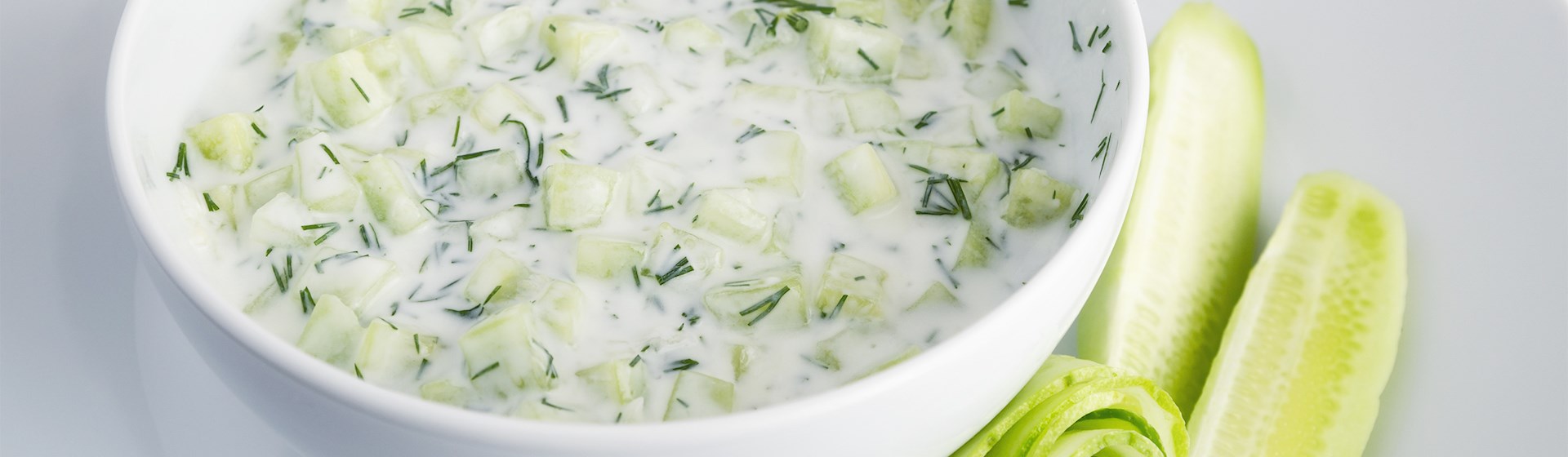
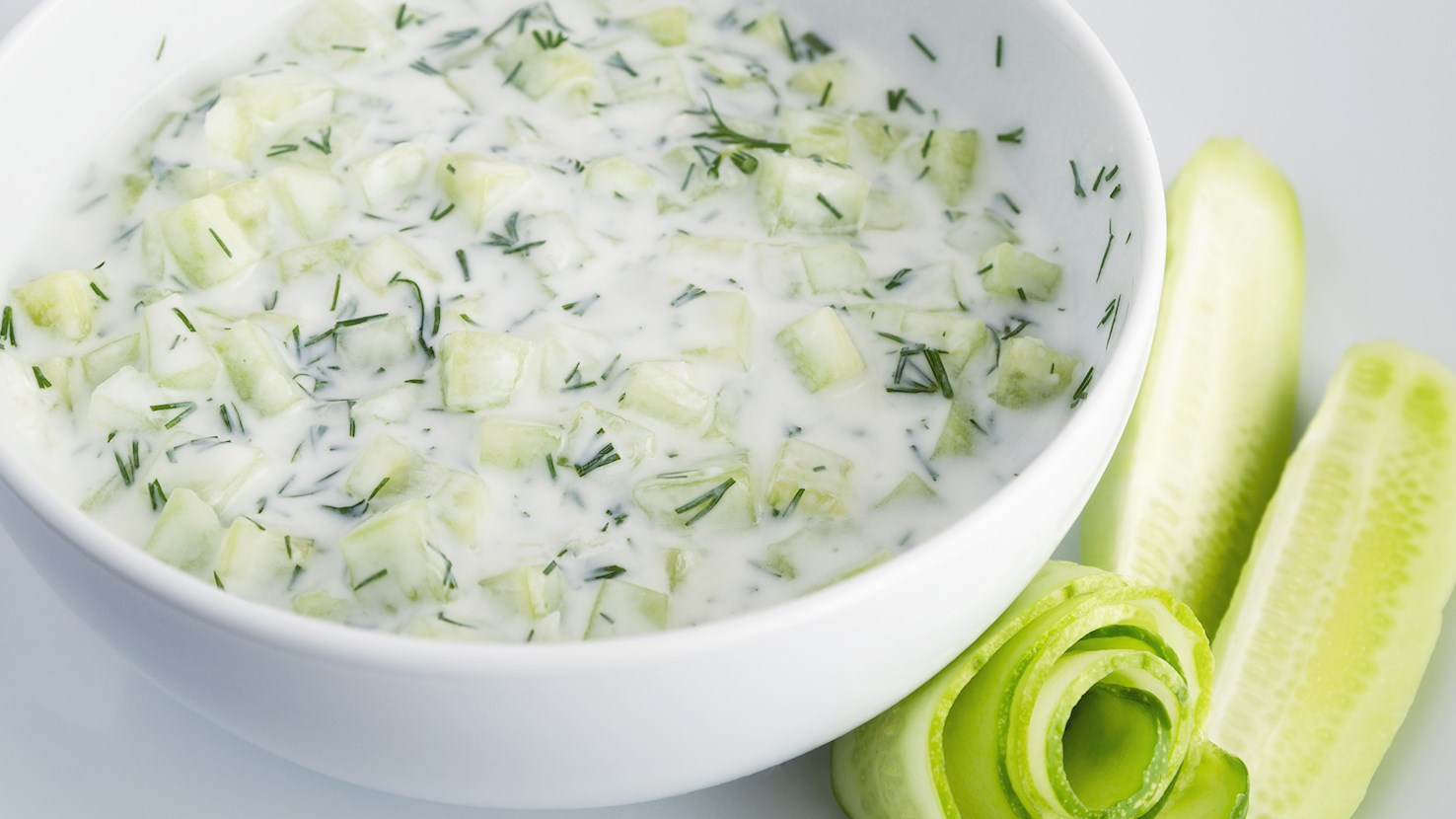
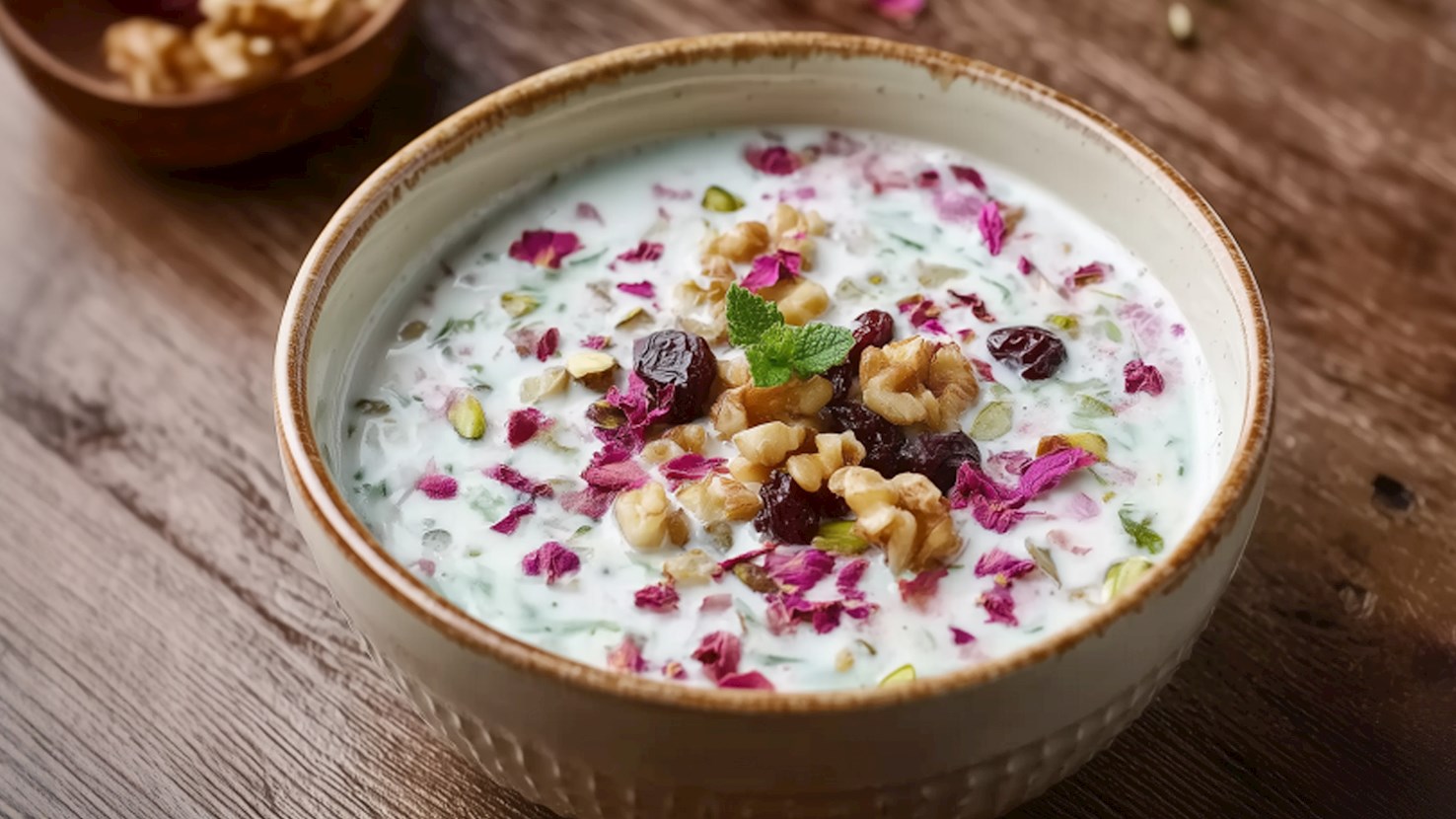
Mast o khiar is a cold yogurt dip from Iran, prepared by combining strained or plain yogurt with diced cucumber and aromatic herbs. It is part of the broad category of side dishes known as borani or yogurt salads, which are served to accompany a variety of Persian meals. This preparation is especially common during warm months, when its cooling qualities are appreciated alongside rice and grilled meats. The history of mast o khiar is closely linked to the long tradition of yogurt consumption in Iran, where dairy has played an important role in the diet for centuries. Early references to similar yogurt and vegetable combinations appear in medieval Persian cookbooks, which describe how thick strained yogurt was mixed with herbs and sometimes walnuts or raisins. Over time, cucumbers became a standard addition as they were cultivated more widely, and recipes evolved to include fresh mint and dried rose petals for fragrance. To prepare mast o khiar, yogurt is mixed until smooth and lightly salted. The cucumber is peeled if desired and cut into small cubes, then folded into the yogurt. Fresh herbs, most often mint and dill, are finely chopped and stirred in. Depending on the recipe, ground black pepper, crushed walnuts, and raisins may also be added to give more complexity. A small amount of dried rose petals is often sprinkled over the top for aroma and color. The dish is chilled briefly so the flavors combine. Mast o khiar is typically served as a side dish in a shallow bowl or small plate. It can be eaten plain with a spoon or used as a topping for warm flatbreads. In family meals and gatherings, it often appears next to platters of kebab or stewed dishes, where its freshness provides balance to richer flavors.
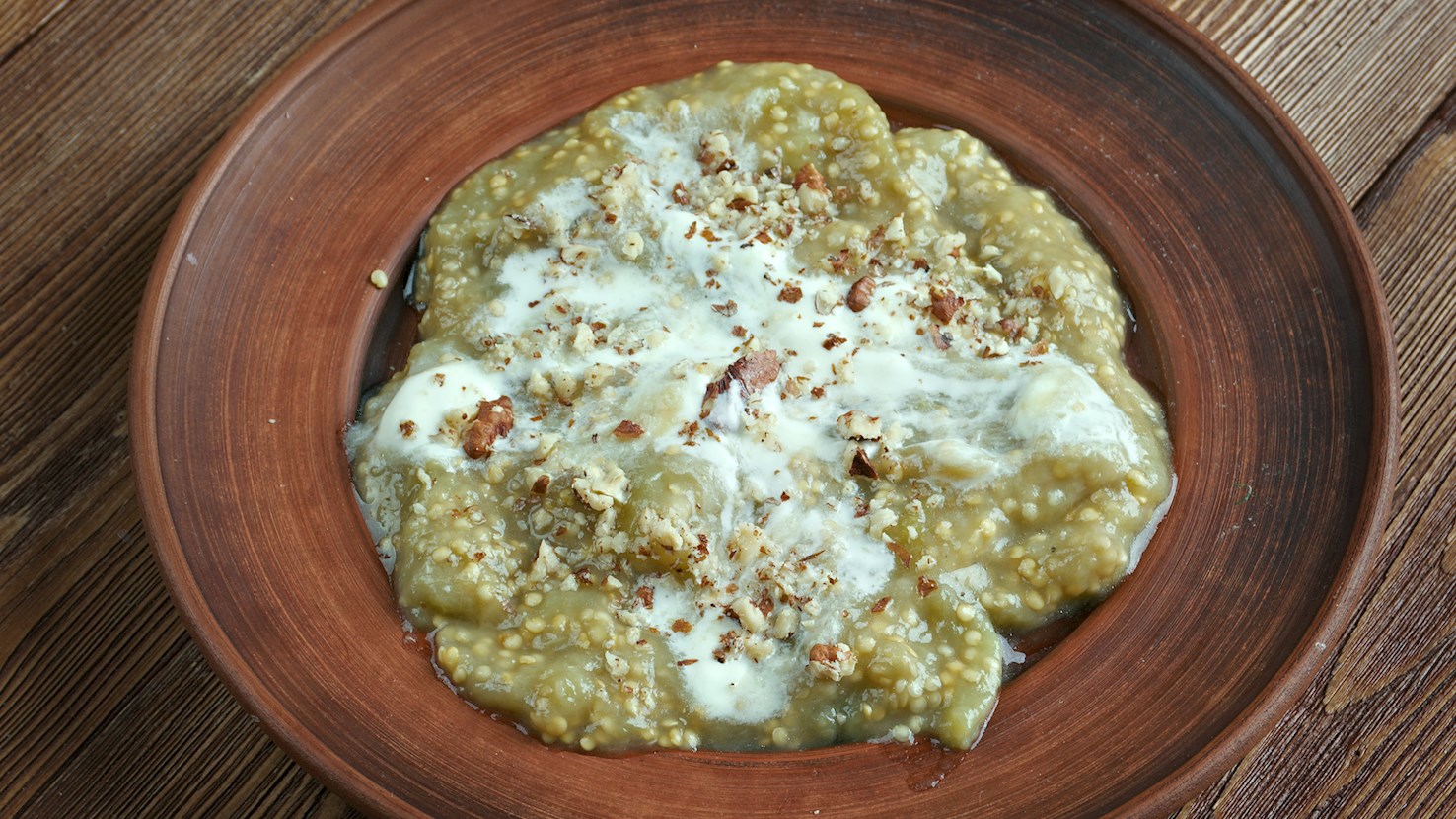
Kashk-e bademjan is an Iranian dish that brings together mashed roasted eggplant with kashk, a fermented dairy product similar to whey, seasoned with fried onions, garlic, and aromatic spices. It originates in central and northern Iran, where eggplant is a staple ingredient and kashk has long been used to enrich stews, dips, and soups. Kashk-e bademjan is commonly prepared as an appetizer or light meal and is typically served warm with flatbread. The history of the dish reflects the evolution of Persian cooking techniques that highlight vegetables and dairy. For centuries, eggplant has been cultivated in Iran and cooked in many forms, from simple grilled slices to elaborate stews. Kashk, produced by fermenting and drying drained yogurt, has been a source of protein and flavor since ancient times. The combination of these ingredients, along with caramelized onions and mint, developed into a recognizable preparation that has been passed down in Iranian households. Preparation begins by roasting or frying eggplants until they are very soft, which gives the dish its characteristic creamy texture. The cooked eggplant is mashed or chopped finely, then gently simmered with sautéed onions, garlic, turmeric, and sometimes ground walnuts for richness. Kashk is stirred in gradually to create a smooth consistency and a tangy depth of flavor. A portion of fried onion and dried mint is reserved for garnish, adding both aroma and visual contrast. Kashk-e bademjan is served in a shallow dish, topped generously with the reserved onions and mint, and often drizzled with additional warm kashk. While some recipes use a food processor for a smoother finish, others retain more texture by mashing the eggplant by hand. In Iran, it is usually accompanied by warm sangak or lavash bread and sometimes served alongside fresh herbs, radishes, and pickled vegetables.
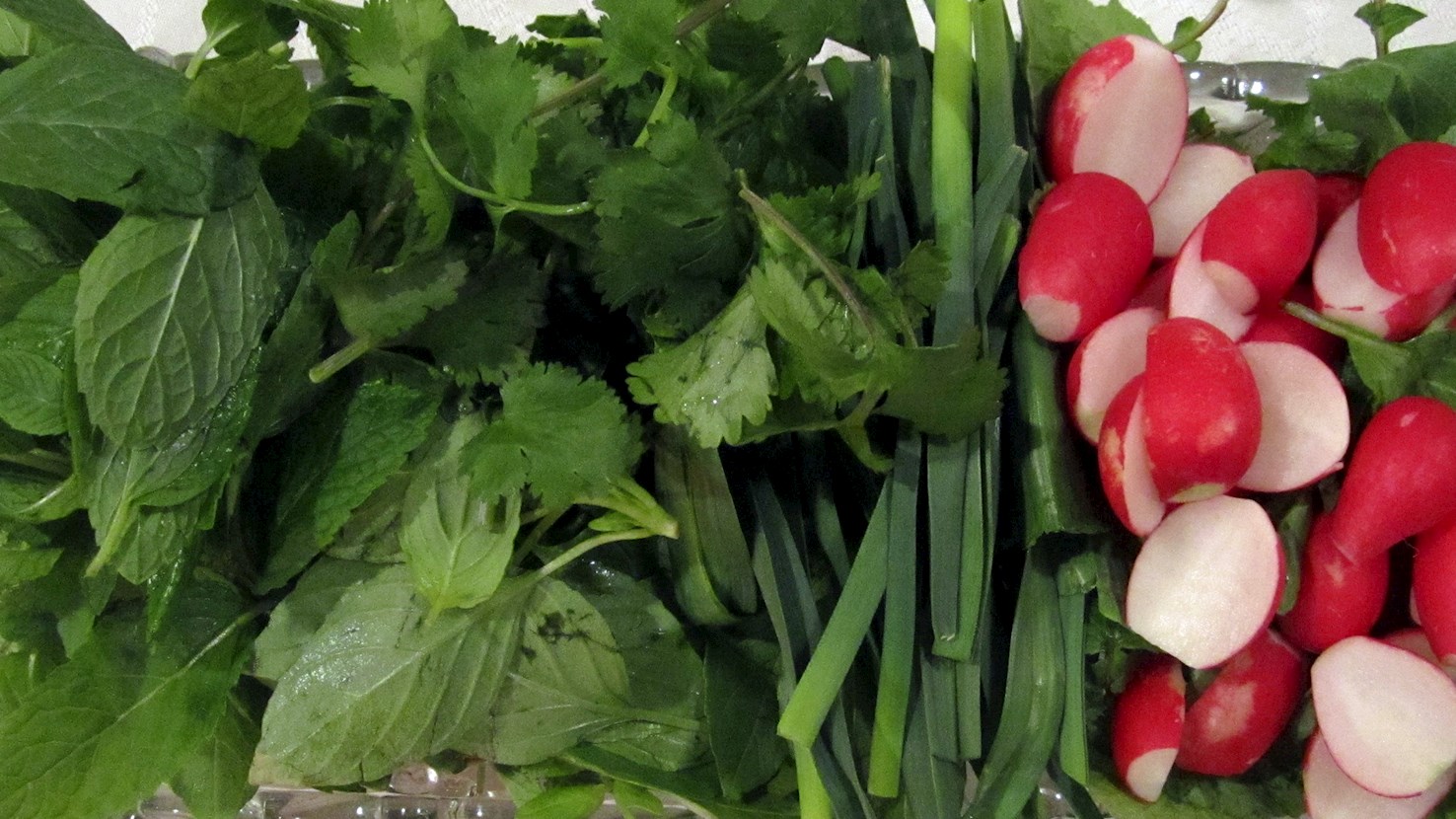
Sabzi khordan is an assortment of fresh herbs and raw vegetables that comes from Iran and plays an essential role in Persian meals. Rather than being a dish with cooking steps, it is a carefully arranged platter of greens that are served as an accompaniment to stews, kebabs, cheese, and bread. The term means “eating herbs,” reflecting the importance of aromatic plants in Iranian cuisine and the way they are integrated into daily dining. The use of fresh herbs as a central part of the meal can be traced back to ancient Persia, where they were valued not only for their flavor but also for their perceived health benefits. Historical texts and poetry often reference gatherings where herbs and bread were shared among family and guests. Over time, sabzi khordan became a standard element of the Iranian table, offered at both casual and formal meals. Its place in Persian hospitality has remained unchanged, reflecting a cultural preference for food that feels abundant and balanced. Preparation requires no cooking but involves careful washing, trimming, and arranging of the herbs and vegetables. A typical platter includes basil, mint, tarragon, cilantro, green onions, and radishes. Other additions can be watercress, savory, dill, or small romaine leaves, depending on the region and season. The herbs are washed in cold water to remove any grit and are often soaked briefly to stay crisp. Once drained, they are arranged in loose bunches or layered on a large dish, sometimes alongside wedges of fresh white cheese like feta, walnuts, and thin sheets of soft flatbread. Sabzi khordan is eaten by taking a handful of herbs and folding them into a piece of bread, creating a fresh bite that complements richer dishes. This combination adds a cool, aromatic contrast to stews such as ghormeh sabzi or kebabs like koobideh. In many homes, the platter is kept on the table throughout the meal so diners can graze on herbs between bites. Besides its role as a side, sabzi khordan represents an appreciation for freshness and simplicity that is central to Iranian food culture. It is served in restaurants, at picnics, and during family gatherings, offered to guests as a gesture of generosity. Whether paired with warm bread and cheese or served with elaborate main courses, sabzi khordan remains a constant feature of Persian dining and a symbol of how raw ingredients can enhance and balance a meal.
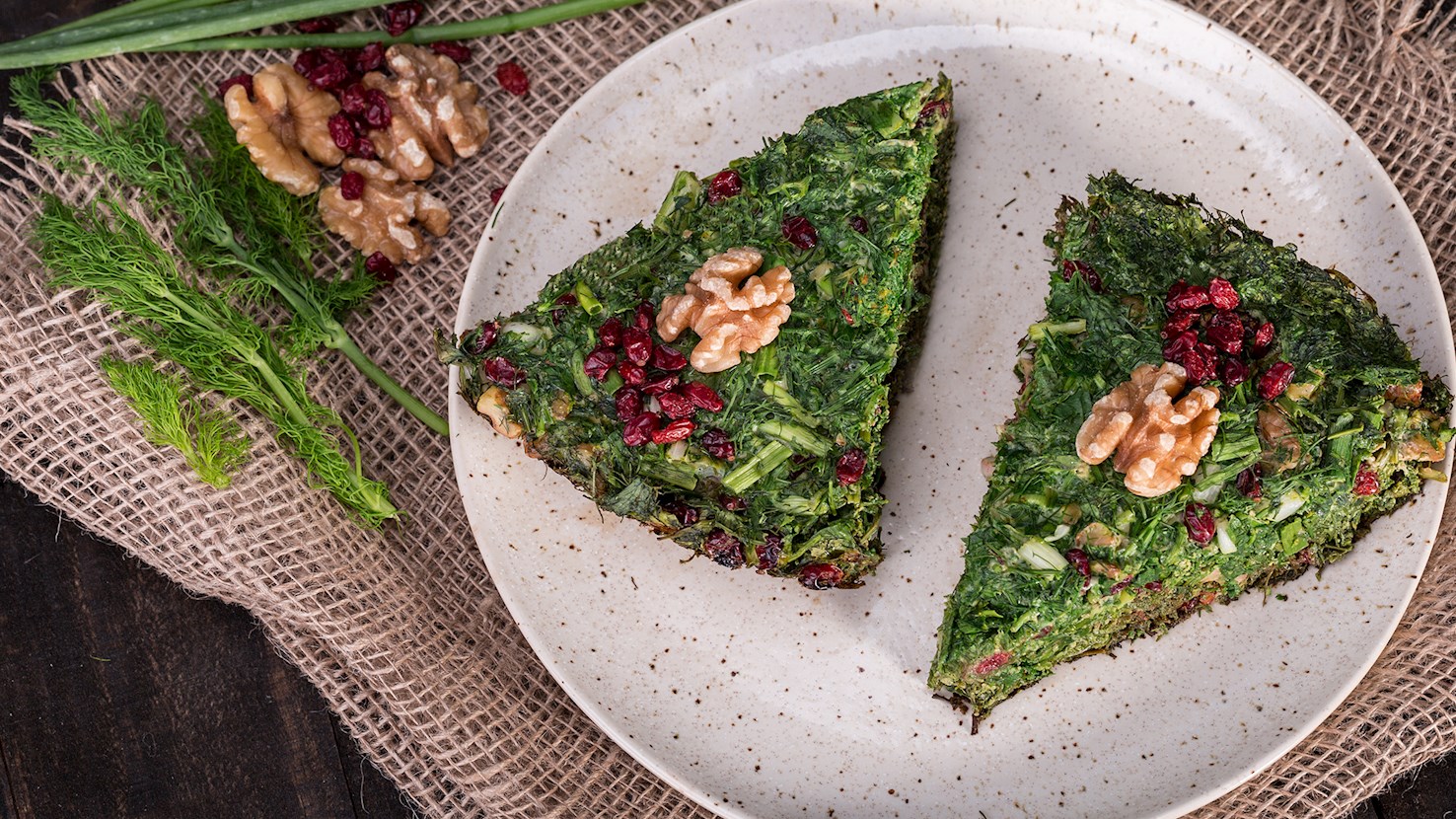
Kuku sabzi is a vibrant Iranian herb frittata that comes from Persian cuisine and is especially associated with Nowruz celebrations marking the Persian New Year. This dish relies on a mixture of finely chopped fresh herbs bound together with eggs and lightly seasoned with turmeric, walnuts, and barberries or dried berries for a bright, tangy contrast. The origins of kuku sabzi are centuries old, connected to the Persian use of herbs as both culinary and medicinal staples. Early references appear in Persian cookery texts that document recipes combining eggs with fresh vegetables and herbs as a way to create nourishing meals using whatever was locally available. Over generations, cooks refined the proportions to achieve a balance where the herbs remain dominant, and the eggs act more as a binder than a filling. While kuku sabzi is eaten year-round, it became particularly linked with the symbolic renewal of spring during Nowruz, when meals emphasize fresh greens as a sign of life and prosperity. Preparation begins by thoroughly washing and drying a variety of herbs, typically including parsley, coriander, chives or green onions, dill, and sometimes spinach or fenugreek leaves. These are chopped very finely by hand or with a food processor. Eggs are whisked separately and seasoned with salt, pepper, and turmeric. The herbs are folded into the eggs until the mixture is thick and vividly green. Some recipes add crushed walnuts for texture and soaked barberries or zereshk to provide a subtle tartness. The batter is then poured into a well-oiled pan and cooked gently over low to medium heat until the edges set. It can be finished by flipping or by baking briefly to firm the center. The result is a tender, cohesive cake that is rich in herbs with a golden crust. In Iran, kuku sabzi is commonly cut into wedges or squares and served warm or at room temperature. Some families garnish it with additional barberries or sprinkle it with ground walnuts before serving. During Nowruz, it often appears alongside rice, pickles, yogurt, and fresh flatbread. One aspect of kuku sabzi is how its preparation reflects personal and regional tastes: some cooks prefer it thick and dense with a soft middle, while others spread it thin for more browning and a crisp texture. Throughout Iran, kuku sabzi is enjoyed as a main dish, side, or mezze.
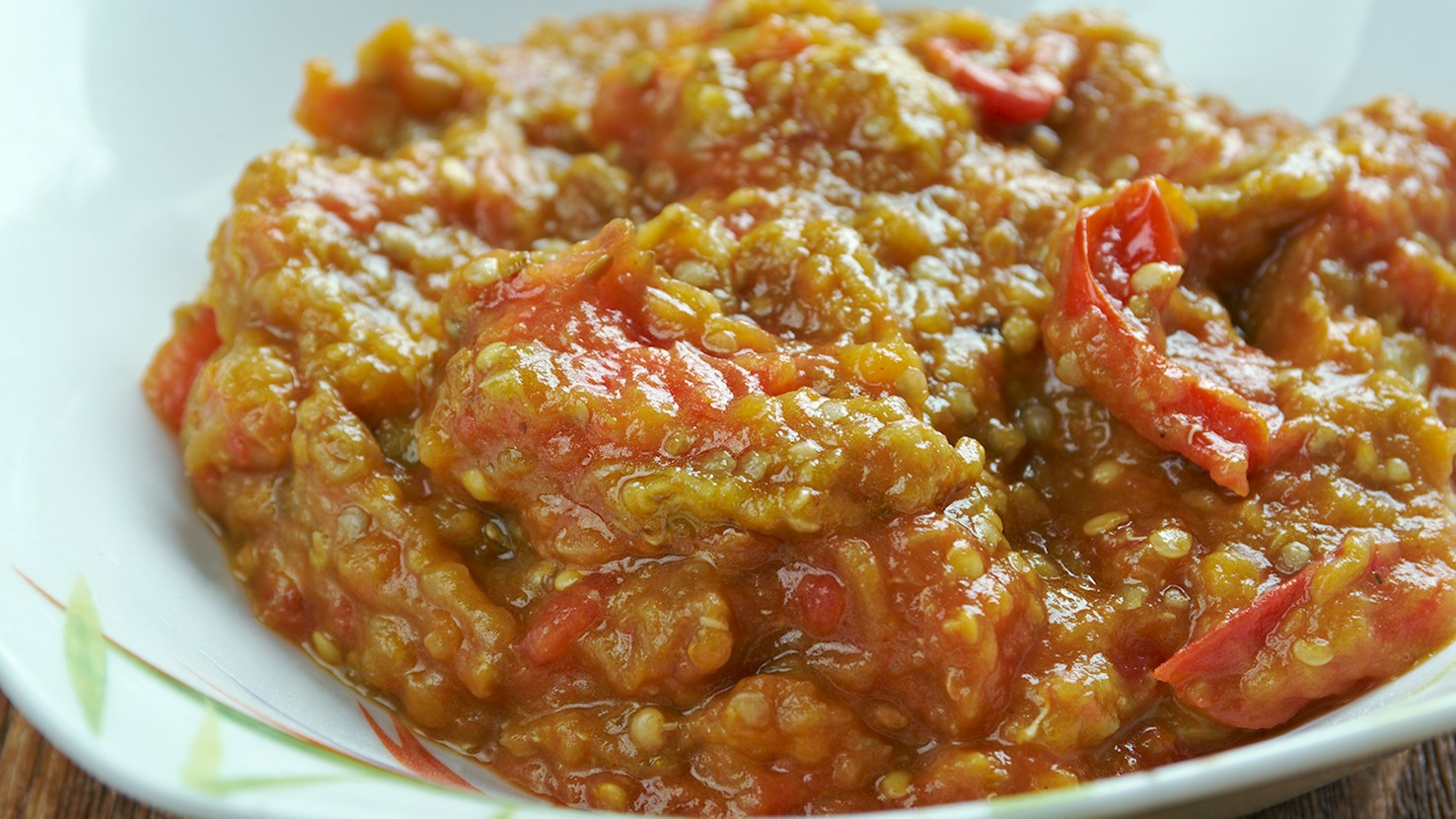
Mirza Ghassemi is a distinctive Iranian dish from Gilan Province on the Caspian Sea coast, known for its combination of smoky grilled eggplants, tomatoes, garlic, and eggs. Its origins are often attributed to Mirza Ali Khan Ghassemi, a 19th-century governor of Rasht, who is said to have introduced the recipe to the local cuisine, though the use of eggplant and garlic in northern Iranian cooking predates his era. Over time, Mirza Ghassemi spread from Gilan to other parts of Iran, becoming a familiar offering in homes and restaurants that serve Gilaki food. To prepare it, large eggplants are first roasted over an open flame or under a broiler until the skins are charred and the flesh softens, imparting the dish’s signature smoky taste. The eggplants are peeled and mashed, then cooked slowly with chopped tomatoes and plenty of finely minced garlic. Once the mixture thickens, eggs are cracked directly into the pan and stirred through until just set, giving the dish a creamy, cohesive texture. The preparation is relatively straightforward, but patience is important to build depth of flavor. Mirza Ghassemi is typically served warm as a main or side dish, often accompanied by flatbread such as lavash or sangak. Some households add turmeric or a pinch of black pepper for extra seasoning, while others prefer it more simply seasoned to highlight the vegetables. A common way of eating it is to tear pieces of bread and scoop up the mixture, sometimes along with pickles or fresh herbs. Though similar eggplant dishes are found across the Middle East, the prominence of garlic and the inclusion of eggs set Mirza Ghassemi apart. Its popularity in Gilan reflects the region’s reliance on fresh produce and smoky, robust flavors that have long shaped the local table. Today, it is frequently offered in Iranian restaurants that highlight northern specialties and is a favorite during casual gatherings and family meals.
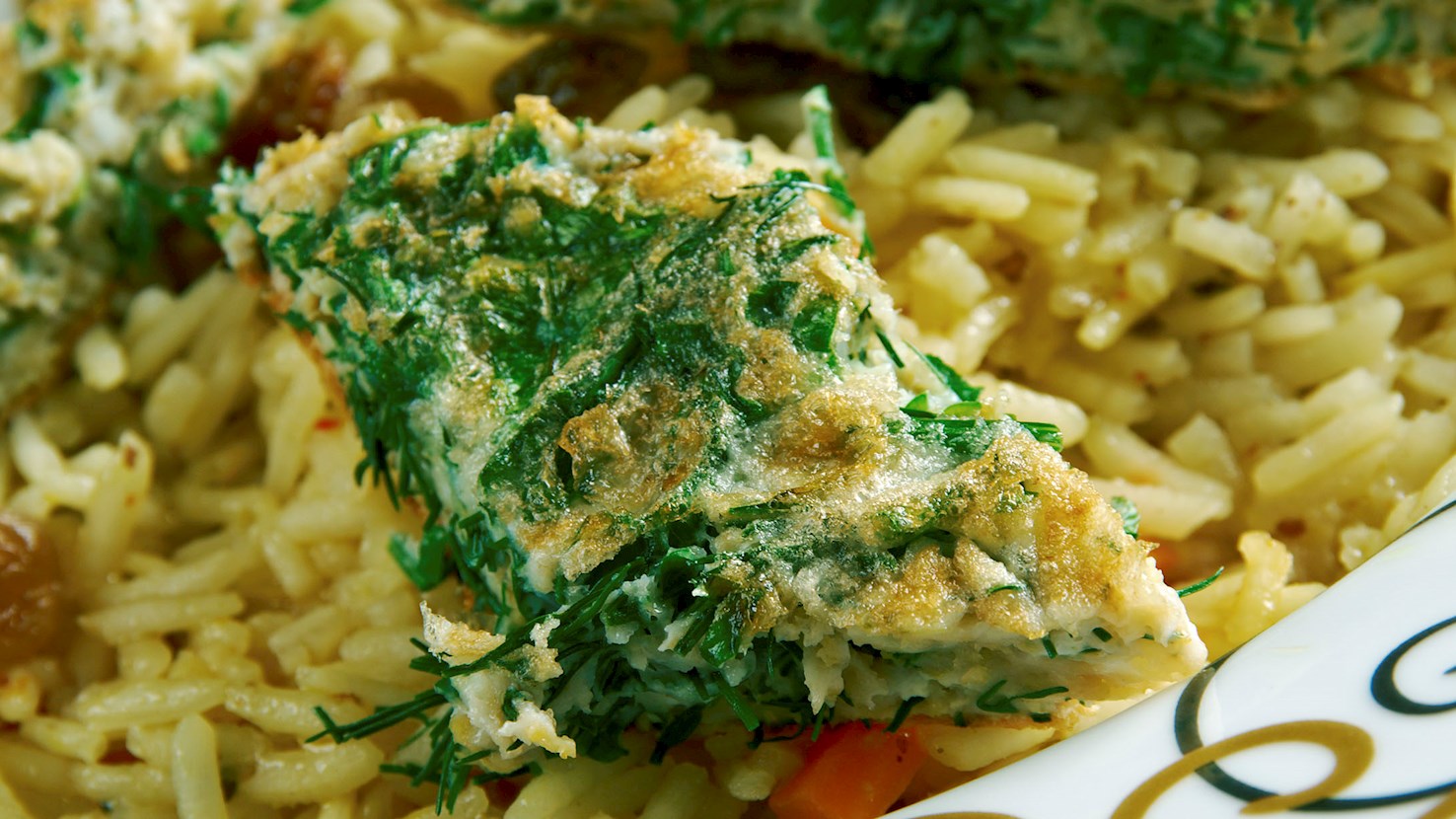
Kuku is the universal term for a broad group of Iranian dishes that resemble a thick omelet. It is often compared to a frittata, but the ratio of filling to eggs is much higher, resulting in a dense, flavorful mixture held together with just enough beaten egg to bind it. Kuku has origins across Iran, where it appears in everyday meals as well as celebratory spreads, and it is especially popular as part of light dinners and picnic foods. The most recognized variety, kuku sabzi, is prepared with a generous quantity of finely chopped fresh herbs such as parsley, cilantro, dill, and chives, combined with eggs, turmeric, walnuts, and sometimes barberries. The preparation of kuku begins by washing and finely chopping the herbs or vegetables. In some cases, grated potatoes or zucchini are used as the main component instead of greens. The chopped ingredients are seasoned with salt, pepper, and spices like turmeric or cumin, then mixed thoroughly with eggs. The mixture is poured into a well-oiled pan and cooked over gentle heat so that the bottom sets without burning. Traditionally, the kuku is flipped to cook both sides evenly, either by inverting it onto a plate and sliding it back into the pan or by baking it briefly in the oven. The result is a golden crust and a moist interior. Kuku is commonly served warm or at room temperature, cut into wedges or squares. It can be accompanied by flatbreads, yogurt, fresh herbs, or pickled vegetables. Kuku sabzi is particularly associated with Nowruz, the Persian New Year, when it is prepared to celebrate renewal and the arrival of spring. Other varieties include kuku sibzamini, made with mashed or grated potatoes, and kuku kadoo, which features zucchini. While each version has its own character, the unifying quality is the generous inclusion of vegetables or herbs bound lightly with egg. Beyond Iran, kuku has gained recognition among Persian diaspora communities and is often included in cookbooks and restaurant menus introducing Iranian home cooking to broader audiences.
Ab doogh khiar is a cold Persian dish that originates from various regions of Iran, especially popular in the central and southern provinces where the summer heat inspires meals designed to refresh and hydrate. It is essentially a chilled yogurt and cucumber soup combining thick strained yogurt called mast or doogh (a diluted yogurt drink), finely chopped cucumbers, and an assortment of herbs such as mint, dill, and tarragon. Walnuts, raisins, and dried rose petals are often added to enrich the taste and texture. Its history goes back centuries, when nomadic groups and rural communities created light meals to sustain themselves in hot weather without requiring elaborate cooking. The practice of mixing yogurt with water and vegetables has ancient roots in Iranian cuisine, and over time the recipe developed to include additional flavorings and garnishes reflecting regional preferences and family customs. Preparation typically starts with blending thick yogurt or doogh with chilled water until smooth. Cucumbers are diced or grated, and herbs are chopped finely before being folded into the base. The mixture is seasoned with salt and sometimes crushed garlic, then topped with crushed walnuts, soaked raisins, and a sprinkle of dried edible rose petals. Occasionally small pieces of flatbread or ice cubes are stirred in just before serving. One detail that distinguishes ab doogh khiar is that it blurs the line between a soup and a beverage. It is often served in bowls or deep plates, but in rural areas it may be poured into large glasses and sipped directly. Ab doogh khiar is mainly eaten as a lunch or light dinner during warm months. It pairs well with flatbread and raw vegetables and is especially valued for its cooling qualities. Across Iran, you will find it in home kitchens, casual eateries, and picnic baskets, appreciated for its simplicity and ability to bring together fresh dairy and garden produce in a single dish.
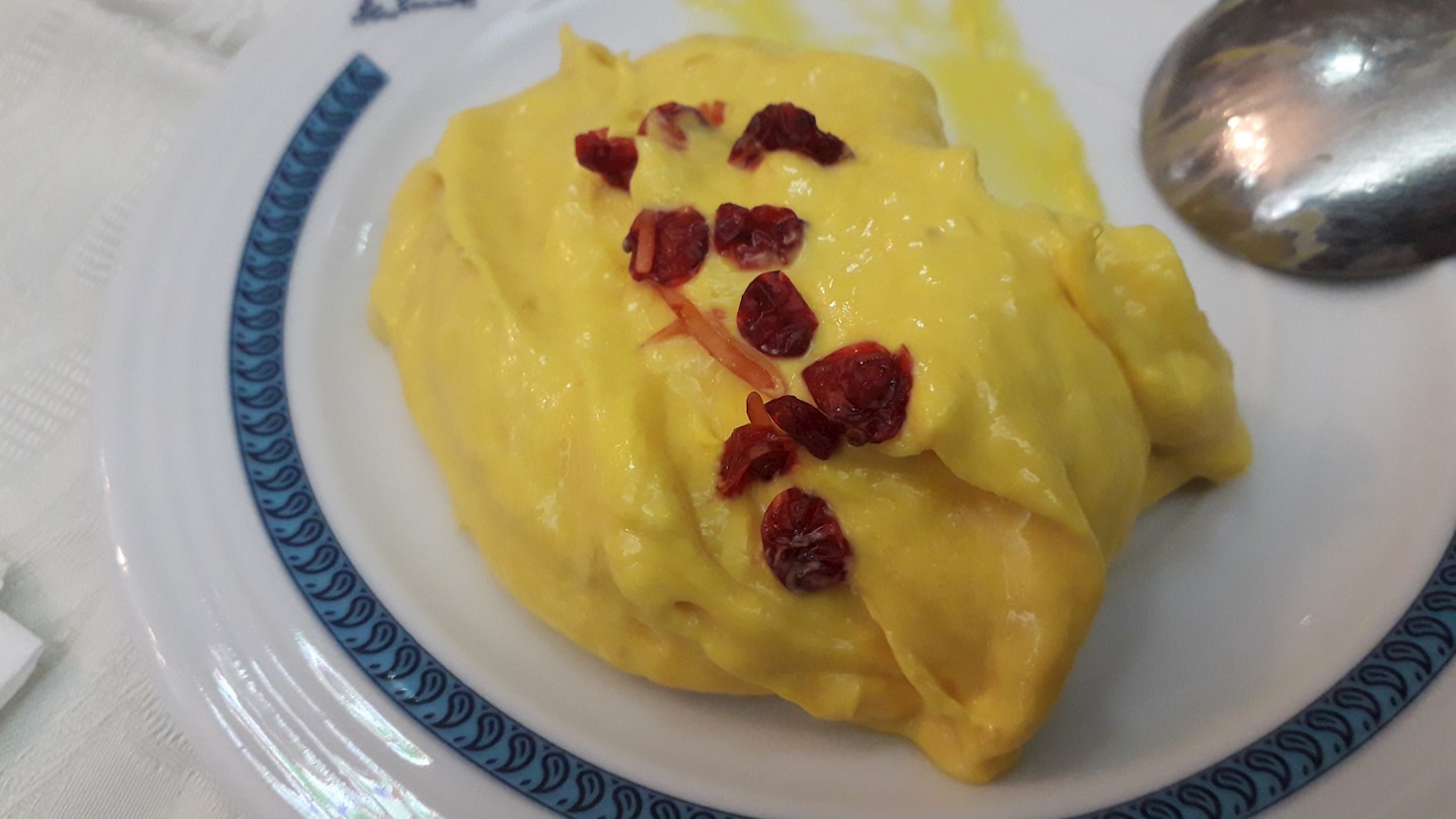
Khoresht mast is a distinctive Iranian dish originating from the city of Isfahan, known for its unique blend of savory and sweet flavors that set it apart from most Persian stews. Despite the word khoresht commonly referring to a main course stew, this preparation functions more as a dessert or a festive side dish. It is prepared by simmering cooked and shredded lamb or beef with thick yogurt, egg yolks, sugar, saffron, and sometimes rosewater, which transforms the mixture into a rich, golden pudding-like consistency. Historically, Khoresht mast evolved in the kitchens of Isfahan during periods when elaborate courtly cuisine valued combinations of meat with sweet ingredients. Unlike many other Persian stews served over rice, this one was reserved for ceremonial occasions and banquets. Over generations, the dish became associated with weddings, large gatherings, and Nowruz festivities, gradually shifting from a main course to a sweet specialty that showcases both dairy and meat in a single preparation. Preparation begins with gently cooking the meat until it is tender enough to shred finely. The shredded meat is then blended with strained yogurt and lightly beaten egg yolks, which help stabilize the texture and create a smooth, cohesive base. Saffron dissolved in warm water gives the dish its vivid yellow hue and delicate aroma. The mixture is slowly cooked while sugar is incorporated, transforming it into a thick, creamy consistency reminiscent of a sweet custard. Once removed from the heat, the dish is chilled and garnished with slivers of pistachios and almonds. Khoresht mast is often served cold in small bowls or shallow dishes, offering a contrast of temperature and flavor next to other rich, warm dishes. In Isfahan, it is frequently accompanied by fresh herbs, pickles, and breads, or placed on the table as an indulgent palate cleanser between courses. Recipes can vary by household, with some cooks favoring more pronounced floral notes from rosewater or cardamom, while others prefer a more restrained, purely saffron-forward character-
TasteAtlas food rankings are based on the ratings of the TasteAtlas audience, with a series of mechanisms that recognize real users and that ignore bot,
nationalist or local patriotic ratings, and give additional value to the ratings of users that the system recognizes as knowledgeable.
TasteAtlas Rankings should not be seen as the final global conclusion about food. Their purpose is to promote excellent local foods,
instill pride in traditional dishes, and arouse curiosity about dishes you haven’t tried.



What People Say