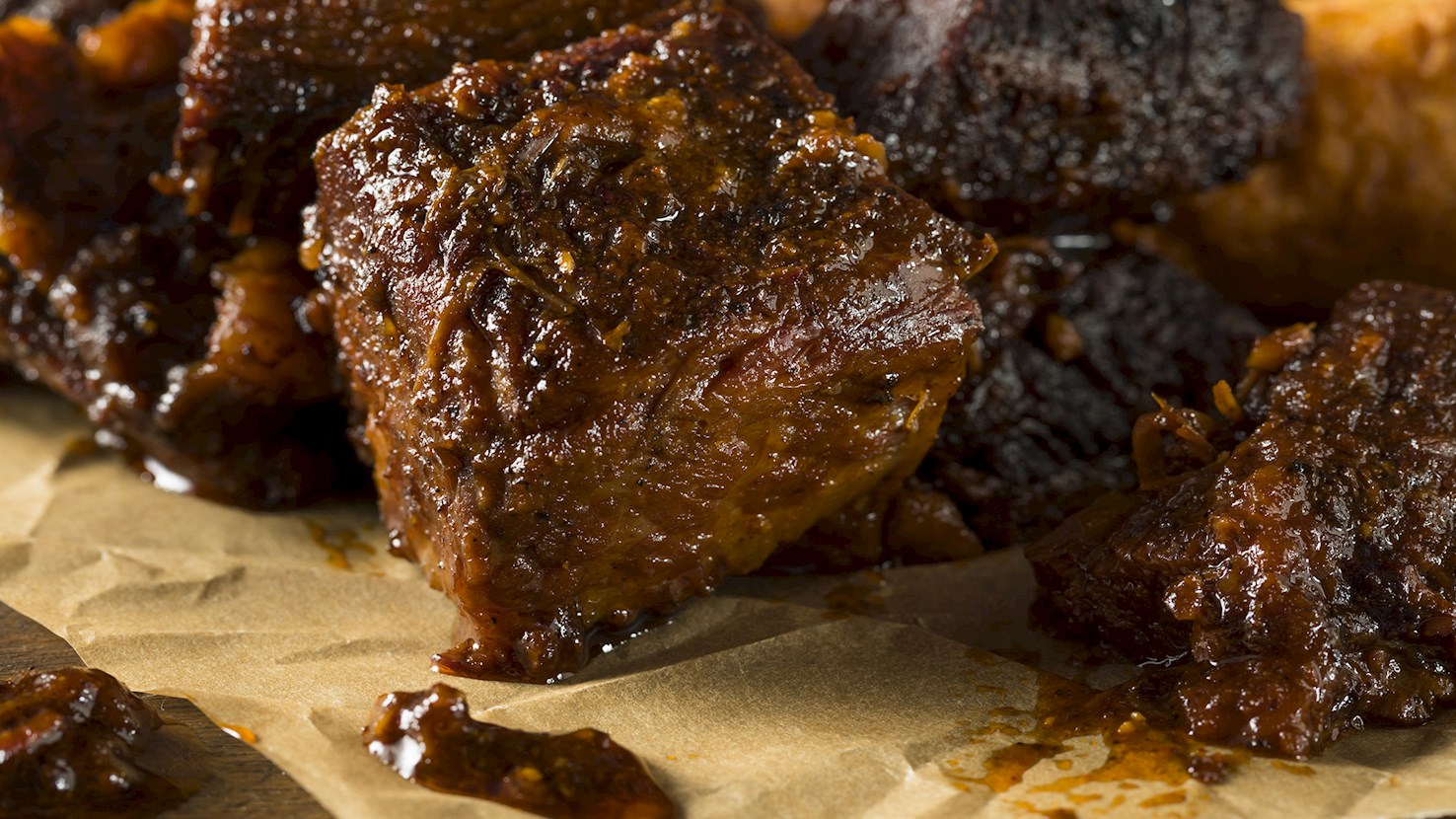
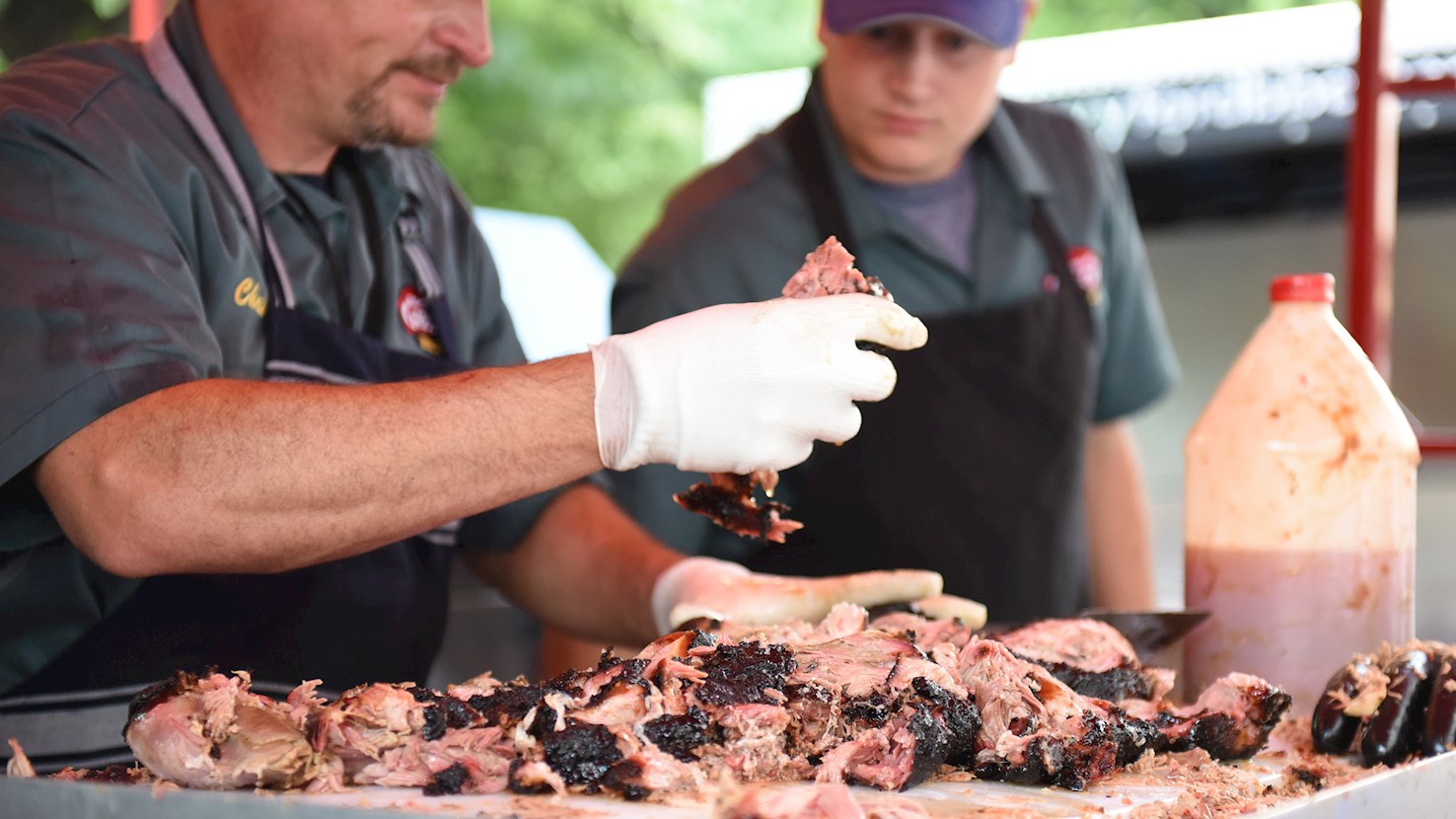
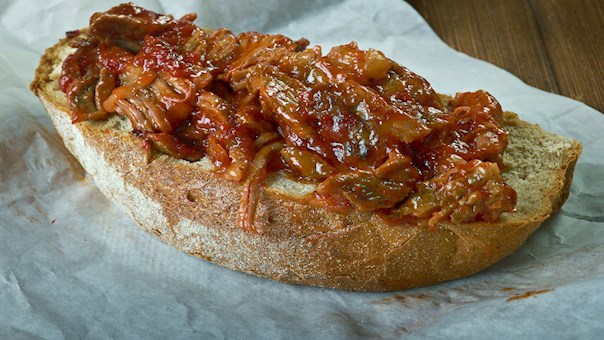
Burnt ends are a delicious specialty originating from Kansas City. The name refers to the unusually-shaped, tougher, fattier end pieces of barbecued brisket which were served as appetizers, placed into stews, or given to customers free of charge. These smoky burnt ends capture melted fat during the barbecue process, making them incredibly flavorful. Nowadays, they are a staple menu item in the city, usually served cubed on their own or smothered in barbecue sauce. Burnt ends can also be used in sandwiches or combined with baked beans and french fries.
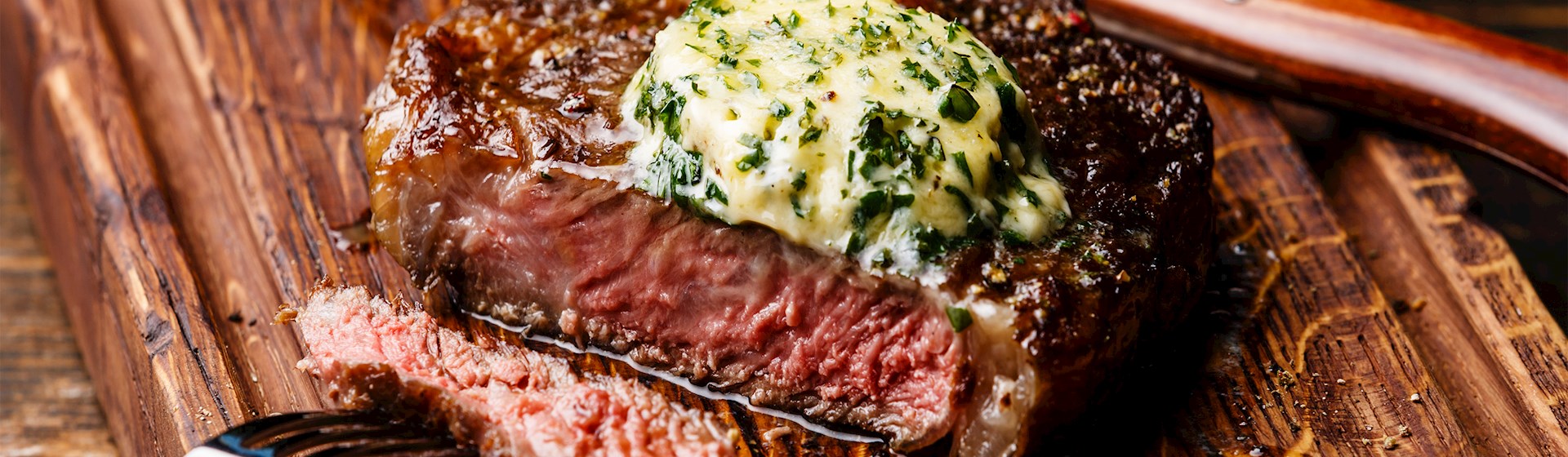
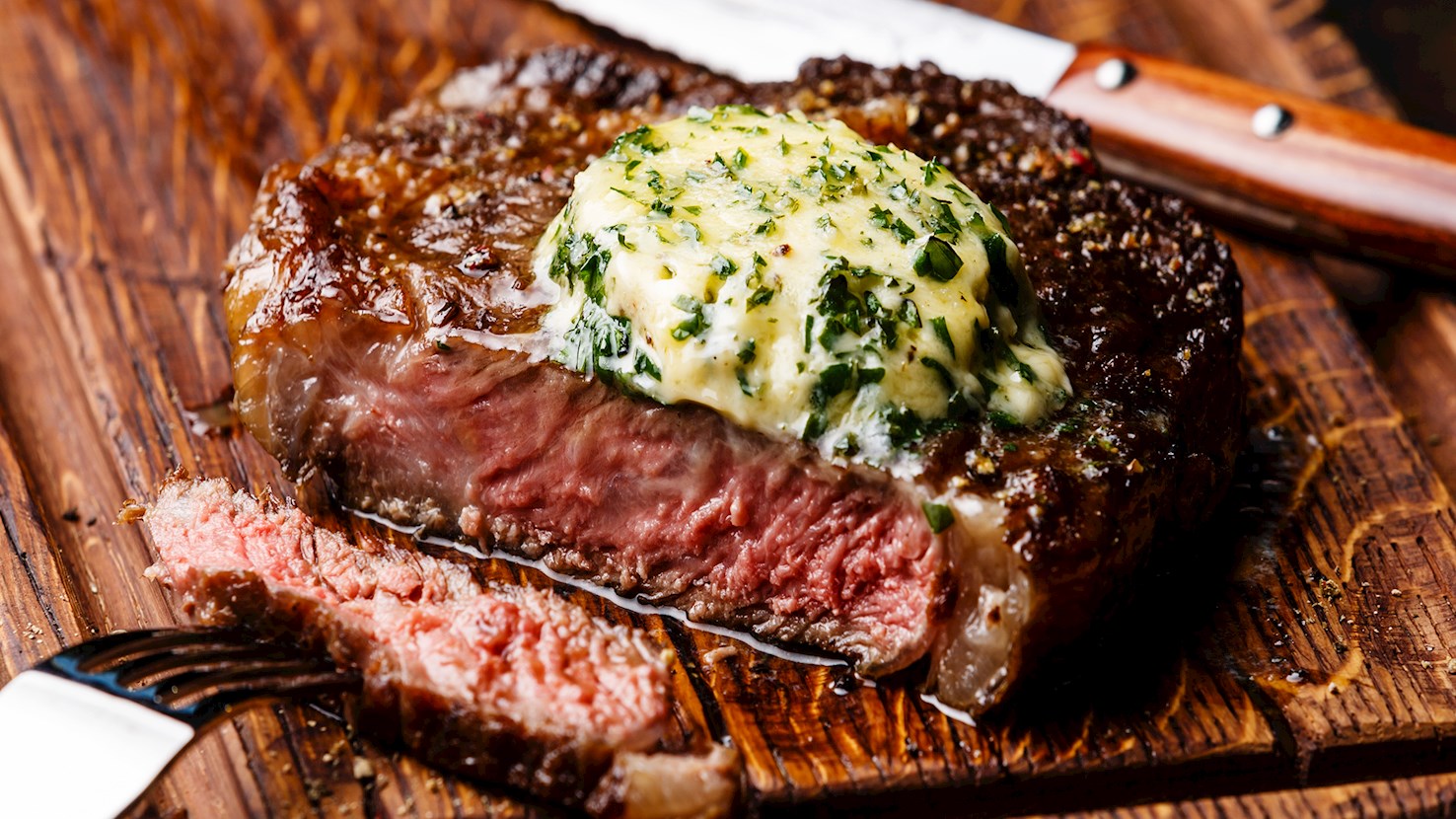
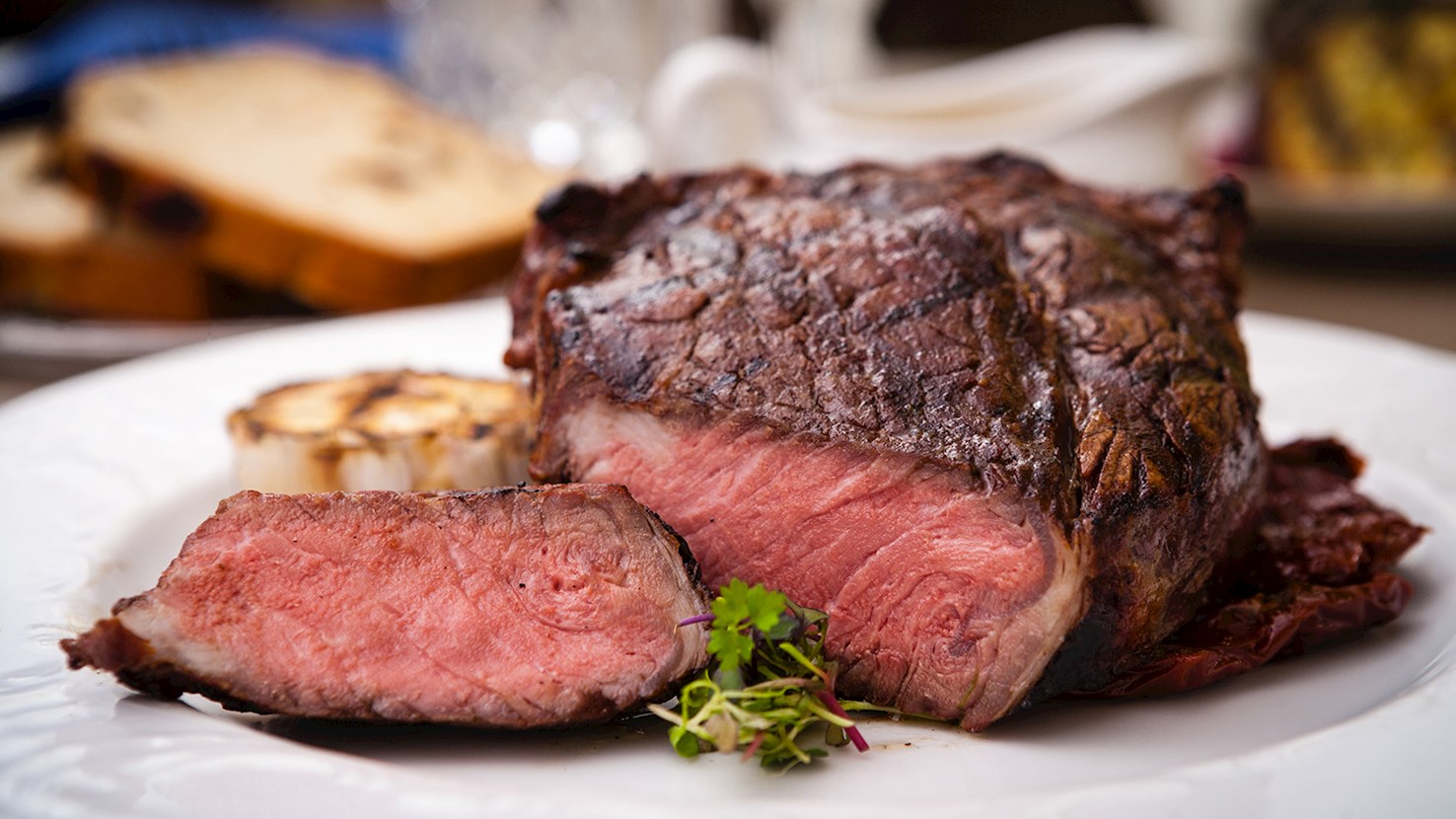
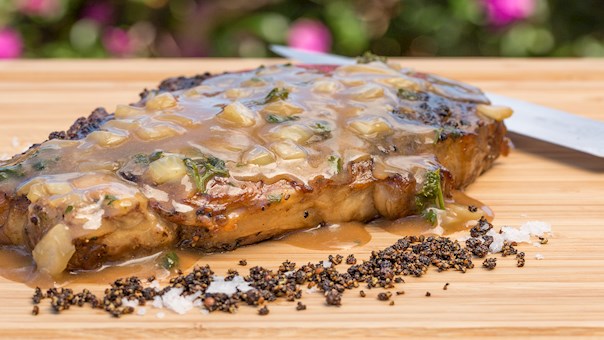
Created between 1840 and 1850, the Delmonico steak is a mystery that perplexes many. What you order in one restaurant may be different in another. Various food critics and food historians have come up with more than several differing opinions about this steak, and whether it is bone-in or -out, sirloin, or some other high-priced cut of beef. Moreover, while the two original chefs de cuisine of Delmonico Restaurant in New York City have both confirmed the preparation method, they still manage to differ slightly. If you order a Delmonico steak at Delmonico's today, you'll get a boneless rib-eye steak that's brushed with butter and beef fat after it has been taken out of the broiler. And though there are many debates about the origin of this steak, one thing can be certain: Delmonico steak is synonymous with the best piece of meat you can get when you walk into a restaurant.
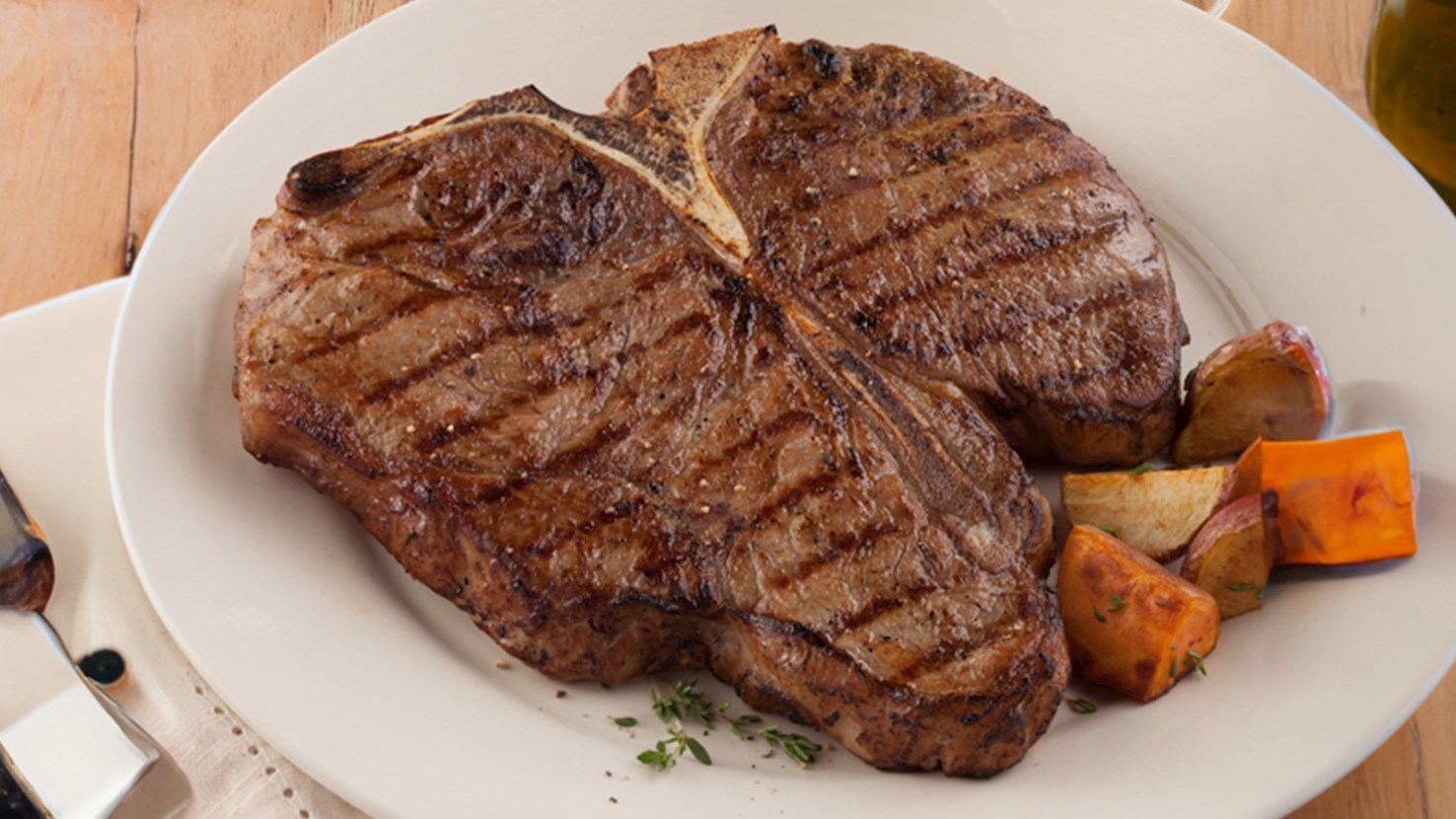
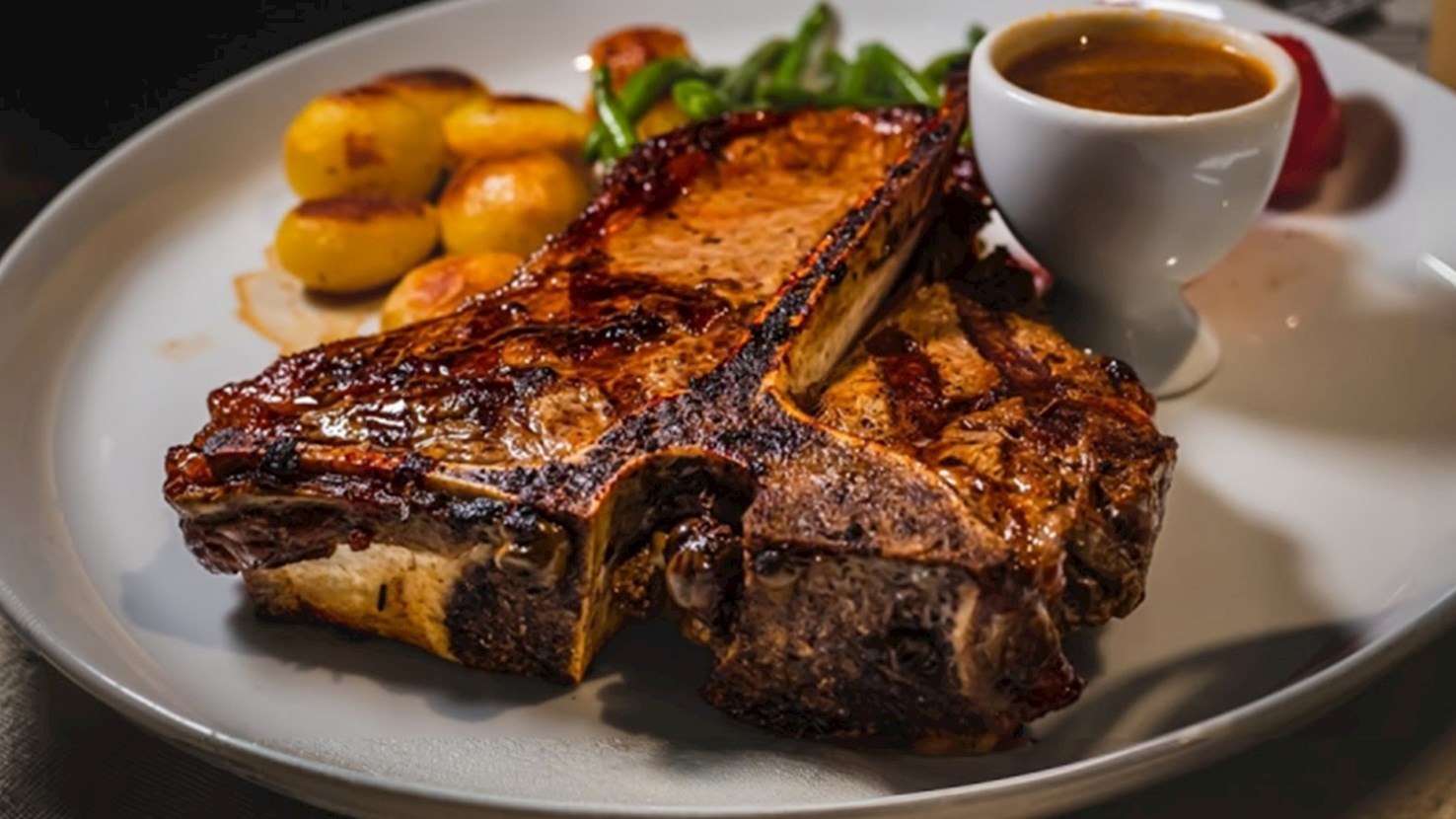
A porterhouse steak is a large, thick cut of beef taken from the rear end of the short loin. Although it is not linked to a specific country of origin, it is most commonly associated with British and American cuisines. It is named "porterhouse" because it was traditionally served in 18th-century porterhouses, which were inns or restaurants that served porter beer. The porterhouse steak is closely related to bistecca alla Fiorentina and is similar to a T-bone steak. The difference between a T-bone and a porterhouse is that the latter is cut from further back on the short loin, resulting in a larger portion of tenderloin and a larger overall size. The defining characteristic of a porterhouse steak is the T-shaped bone that runs through the center, separating two different cuts of meat: the strip steak (commonly known as the New York strip - marbled, flavorful cut known for its beefy taste) and the tenderloin (also known as filet mignon - tender and lean cut, prized for its mild flavor). A properly cooked porterhouse steak will have a juicy and tender texture with a combination of flavors from both the strip steak and the tenderloin. Due to its large size, it is often considered a steak for sharing or for those with hearty appetites. Porterhouse steaks are commonly grilled or pan-seared to enhance their natural flavors, and they are often served with accompaniments like vegetables, potatoes, or sauces.
Entrecôte is a type of beef steak that's cut from between the ribs, but it's more commonly known as a thin and boneless rib-eye steak. The butchers cut bone-in rib-eyes with the bone on each side, but there are also six leftover boneless steaks from the meat between each bone-in rib-eye, and they're known as the entrecôtes. Due to the fact that these cuts are thin, it makes them great for quick cooking on the grill or in a pan (high heat), but it's important not to overcook them. The steaks are juicy, tender, and generously marbled. This type of meat cut is popular in France and Europe, and the word entrecôte means between the ribs.
T-bone steak is a popular cut of beef that comes from the short loin section of the cow. It is easily recognizable by the T-shaped bone that runs through the center of the steak, dividing two different cuts of meat. On one side of the bone is the New York strip (or striploin), known for its balance of flavor and tenderness. On the other side is a small portion of the tenderloin (or filet mignon), which is incredibly tender but less flavorful than the strip side. The T-bone steak is prized for offering both of these cuts in one piece, providing a combination of tenderness and flavor in a single steak. It is typically grilled or pan-seared and served as a hearty main dish. T-bone steaks are often associated with steakhouses and are best cooked to medium-rare or medium to preserve their tenderness and juiciness. T-bone steaks are closely related to porterhouse steaks, which are similar but have a larger portion of the tenderloin. The main difference between the two is the size of the tenderloin—porterhouse steaks are cut from the rear end of the short loin, where the tenderloin is thicker, while T-bones are cut more toward the front, where the tenderloin is smaller.
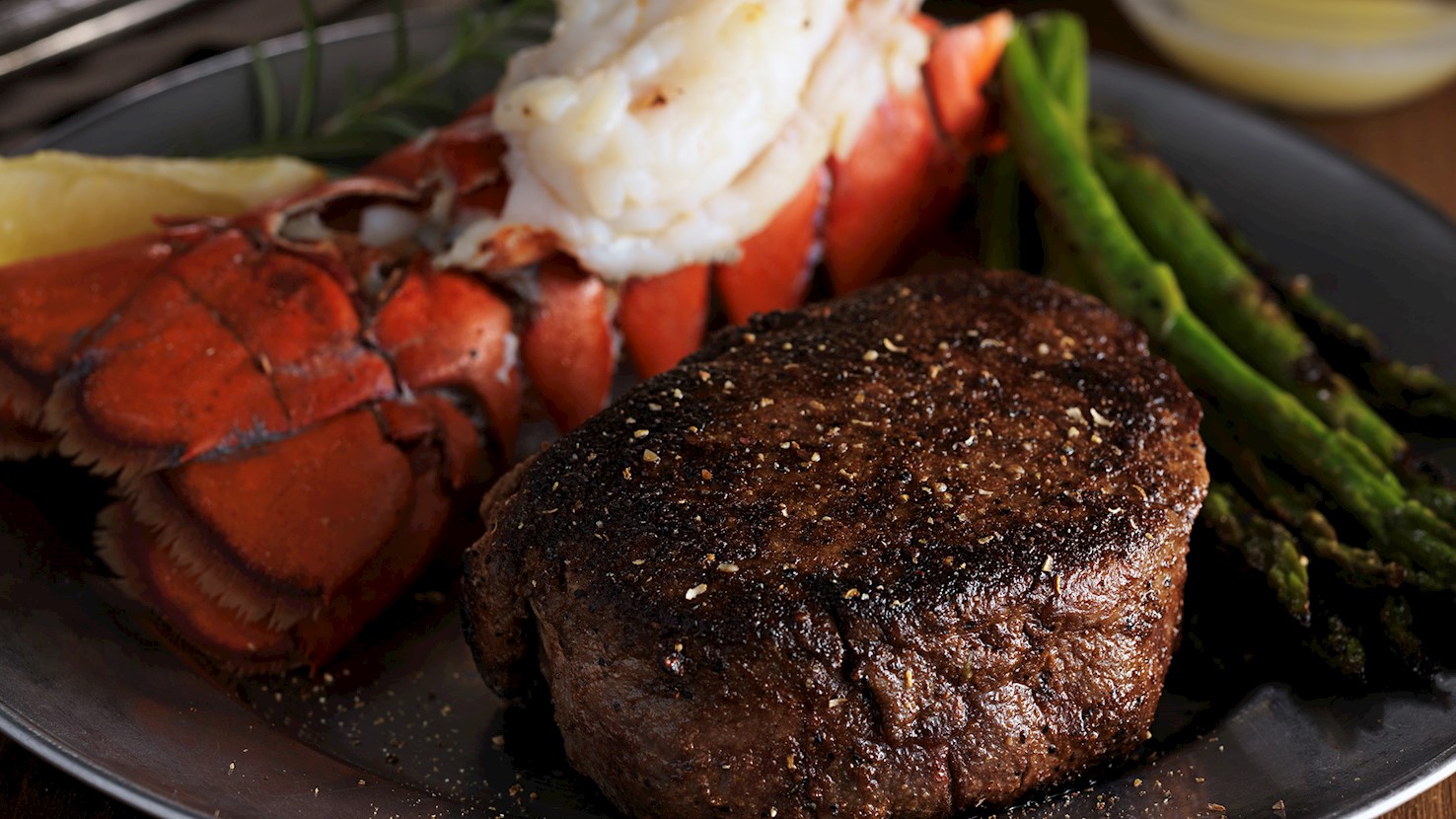
A variety of foods might be included in a surf and turf, but traditionally, it is an entrée that includes both a portion of meat and a portion of seafood. The meat is usually a steak, while the seafood might be anything from lobster to shrimps or prawns. The origins of surf and turf are hard to pinpoint, but steak and seafood meals became popular throughout the United States during the 1960s. The meat is typically grilled and served with an accompanying thick sauce, while the seafood is usually grilled, fried, baked, or boiled, depending on the choice of seafood. Although surf and turf is sometimes associated with low-quality food, it can often be the most expensive item on a menu, since it uses expensive ingredients. However, surf and turf dishes are still quite popular, and there is even a food holiday called National Surf and Turf Day, celebrated every leap year on February 29.
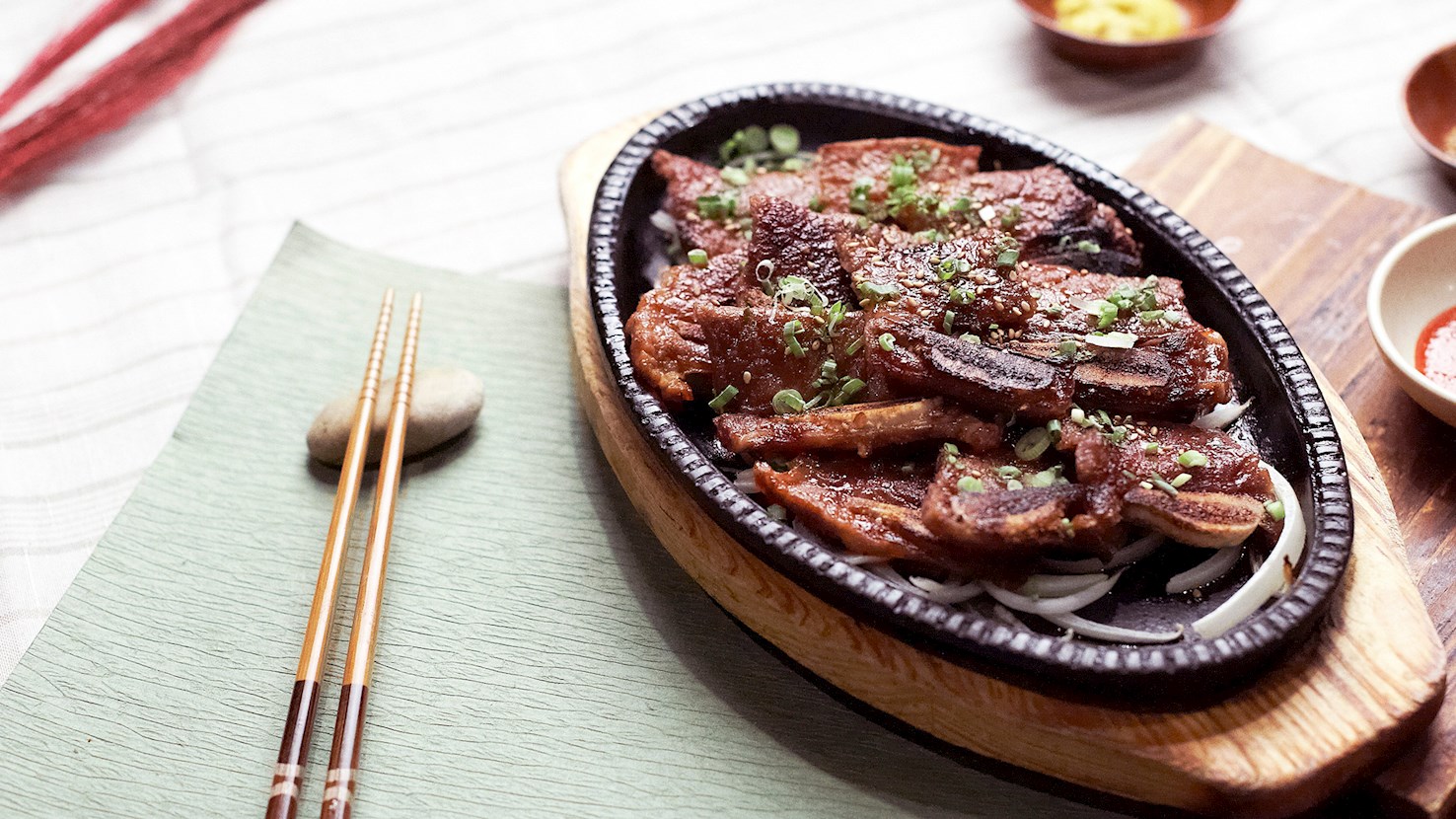
Korean galbi includes various dishes made with beef short ribs, and this version differs in the specific cut of meat. Unlike the traditional galbi in which the ribs are sliced along the bones (also known as the English cut), in L.A. galbi, the ribs are cut across the bones into thin strips. The ribs should be marinated, typically in different combinations of soy sauce, onions, and Asian pears, and are then grilled over charcoal. Two main theories explain the origin and the name of L.A. galbi. While the less popular claims that the name stems from the lateral cut, it has been widely accepted that the dish initially appeared among the Korean community in Los Angles. The dish is now equally popular throughout South Korea. Like its traditional counterpart, L.A. galbi is also served with rice and various side dishes (banchan).
Pit beef is an American barbecue technique originating from Maryland. The technique features beef, usually top round, that's grilled quickly over charcoal, becoming crusty on the exterior while remaining succulent and almost rare on the inside. The meat is later sliced into thin strips and often used as a sandwich stuffing, preferably on Kaiser rolls or rye bread. The sauce for Maryland pit beef contains horseradish instead of the usual barbecue sauces based on ketchup, vinegar, and brown sugar. It is believed that pit beef first started gaining popularity in the 1970s in Baltimore's working-class neighborhoods.
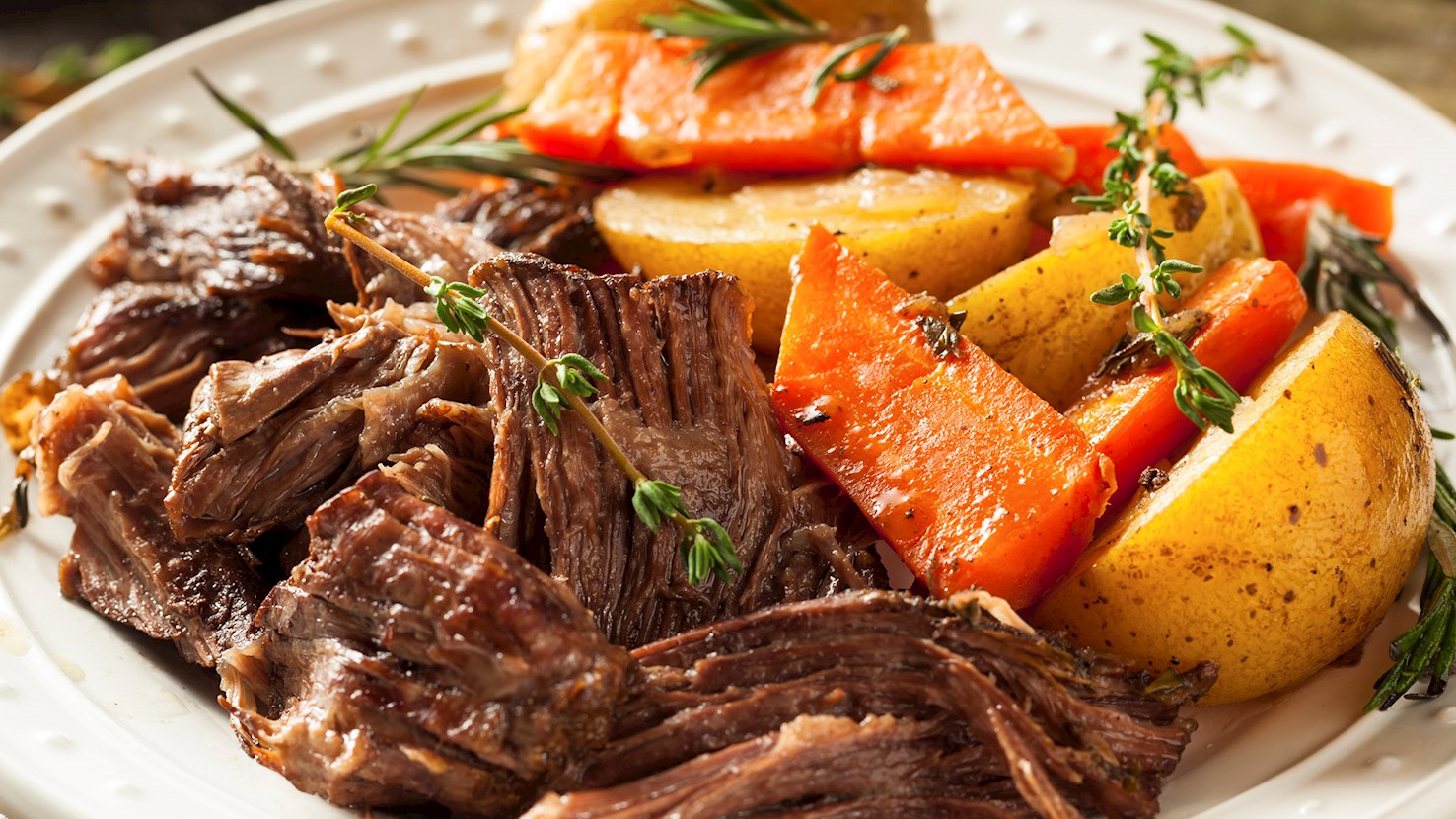
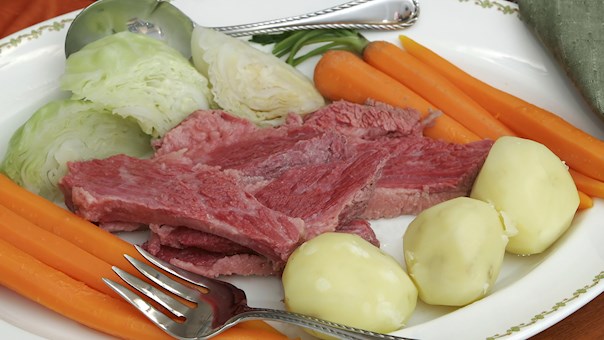
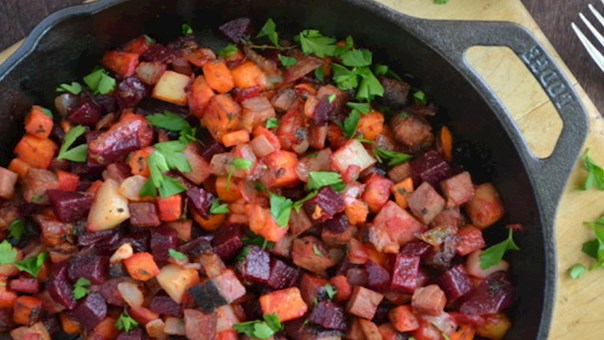
Pot roast, also known as Yankee pot roast, is a slow-braised beef-and-root-vegetable dish that transforms tough, inexpensive cuts of meat into meltingly tender New England comfort food. It is a masterclass in culinary alchemy that evolved from the colonial "New England Boiled Dinner," in which cooks prepared entire meals in a single cauldron over an open hearth. The "Yankee" moniker is a direct nod to famous New England frugality. Early settlers couldn't afford to waste anything, so they adopted European braising techniques—brought over by French and German immigrants—to tenderize heavily worked beef. Unlike European braises that lean on heavy wine reductions and delicate mushrooms, the original Yankee version was strictly utilitarian. It relied on hearty cellar-stored root vegetables, simple beef broth, and whatever herbs were on hand, built to feed a crowd and warm you to the bone during brutal Northeast winters. A true Yankee pot roast isn't about fancy ingredients; it's about combining the right structural components and relying on the magic of braising. The foundation is the meat, typically a three to four-pound chuck roast, brisket, or bottom round. These cuts are high in connective tissue, which might seem tough initially, but during a long cook, that collagen melts into gelatin, creating a silken texture. Before cooking, the beef is generously salted and aggressively seared on all sides in a heavy Dutch oven over medium-high heat. This crucial step creates the Maillard reaction, building the deep, savory flavor profile of the final gravy. Once browned, the meat is set aside while coarsely chopped aromatics like onions and garlic are sautéed until translucent. A splash of broth or red wine is then used to deglaze the pot, scraping up all the caramelized brown bits from the bottom to ensure no flavor is lost. With the savory base built, the beef is returned to the pot along with herbs like fresh thyme and a bay leaf. The braising liquid—usually a mix of beef stock and crushed tomatoes—is poured in just until it comes about halfway up the sides of the meat. It is essential not to submerge the beef entirely, as the goal is to create a moist, low-temperature environment that gently breaks down the tough fibers. The pot is covered tightly and left to simmer gently on the stovetop for several hours. Timing the addition of the root vegetables is the secret to a perfect roast; adding them at the beginning will cause them to disintegrate into mush. Instead, wait until the beef is about an hour away from being fork-tender before tucking large chunks of carrots, potatoes, celery, and turnips around the meat. Once both the meat and vegetables are meltingly soft, they are removed to a platter where the beef can be sliced against the grain or pulled apart with forks. The remaining liquid in the pot, infused with rich beef fat and sweet vegetables, can be skimmed and served as a pan sauce or thickened with a flour slurry to create a hearty gravy, completing a timeless New England feast.
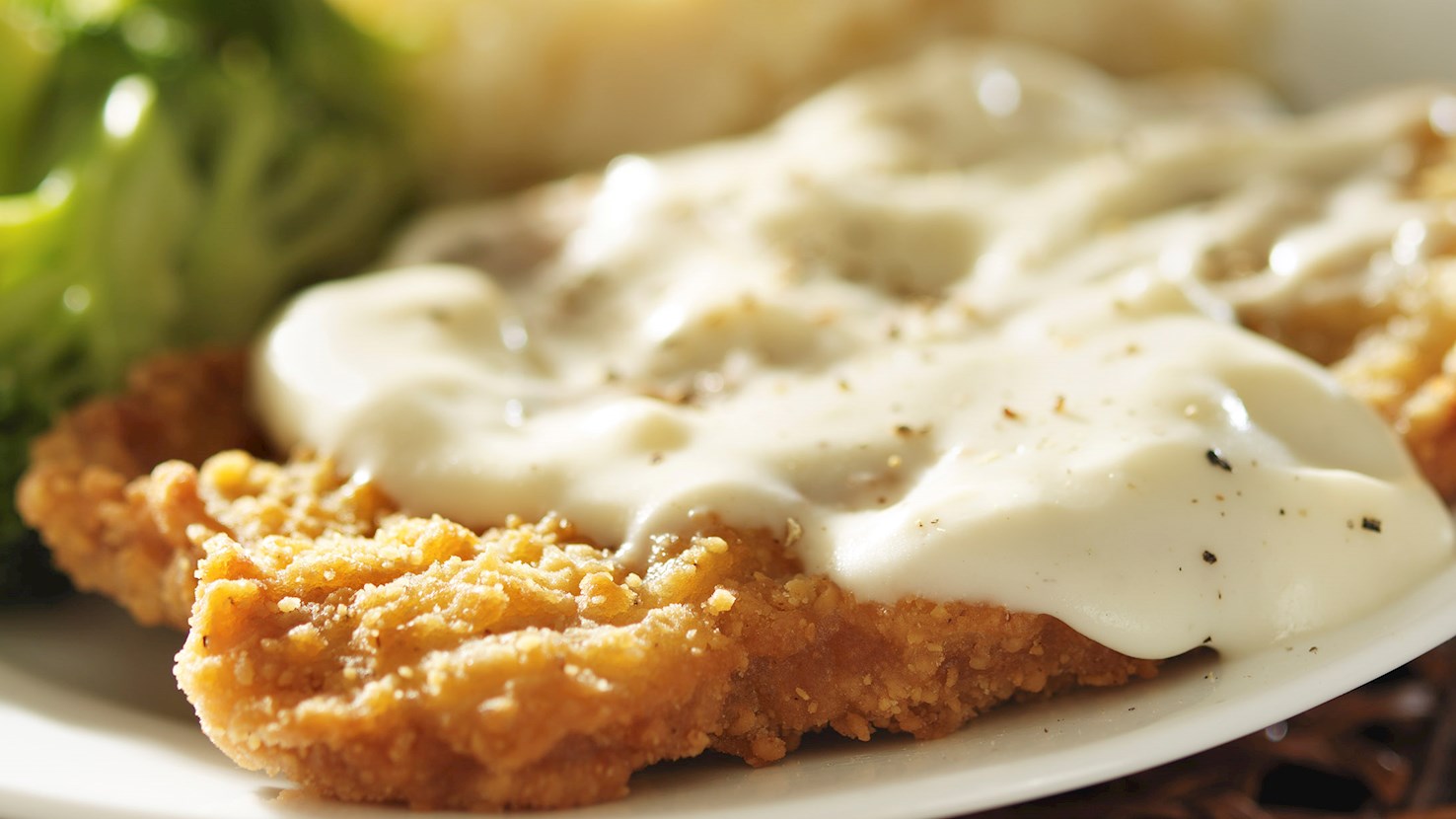
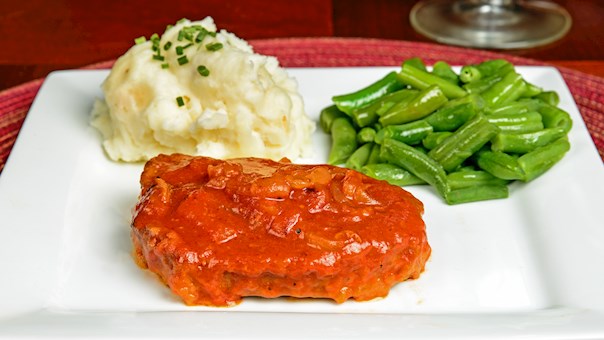
One of the staples of the Southern U.S. cuisine called chicken fried steak contains no chicken at all, contrary to what one might think upon seeing the name of the dish. It consists of a thin, breaded, and fried cut of beef that is traditionally served with a side of mashed potatoes and drizzled with cream gravy. The dish got its name due to the fact that the method of preparation is very similar to that of fried chicken. Originally, the first recipes for batter-fried steaks had appeared in Southern cookbooks during the early 1800s. In the old days, the cut of beef was inexpensive and tough, usually round steak, but today many restaurants use more expensive cuts such as tenderloin and rib-eye. It is believed that the dish stems from German immigrants who brought an Austrian dish called Wiener schnitzel to Texas, a meal that is quite similar to chicken fried steak. What started as making use of meat of questionable quality evolved into a unique Texas delicacy, a perfect combination of meat, grease, and batter.
TasteAtlas food rankings are based on the ratings of the TasteAtlas audience, with a series of mechanisms that recognize real users and that ignore bot,
nationalist or local patriotic ratings, and give additional value to the ratings of users that the system recognizes as knowledgeable.
For the “Top 17 American Beef Dishes” list until September 15, 2026, 1,425 ratings were recorded, of which 1,332 were recognized by the system as legitimate.
TasteAtlas Rankings should not be seen as the final global conclusion about food. Their purpose is to promote excellent local foods,
instill pride in traditional dishes, and arouse curiosity about dishes you haven’t tried.



What People Say