shutterstock

Top 22 Cambodian Foods

Last updated on June 17, 2026

Best Cambodian foods

01
Stir-fry

Lok lak

4.2 ·

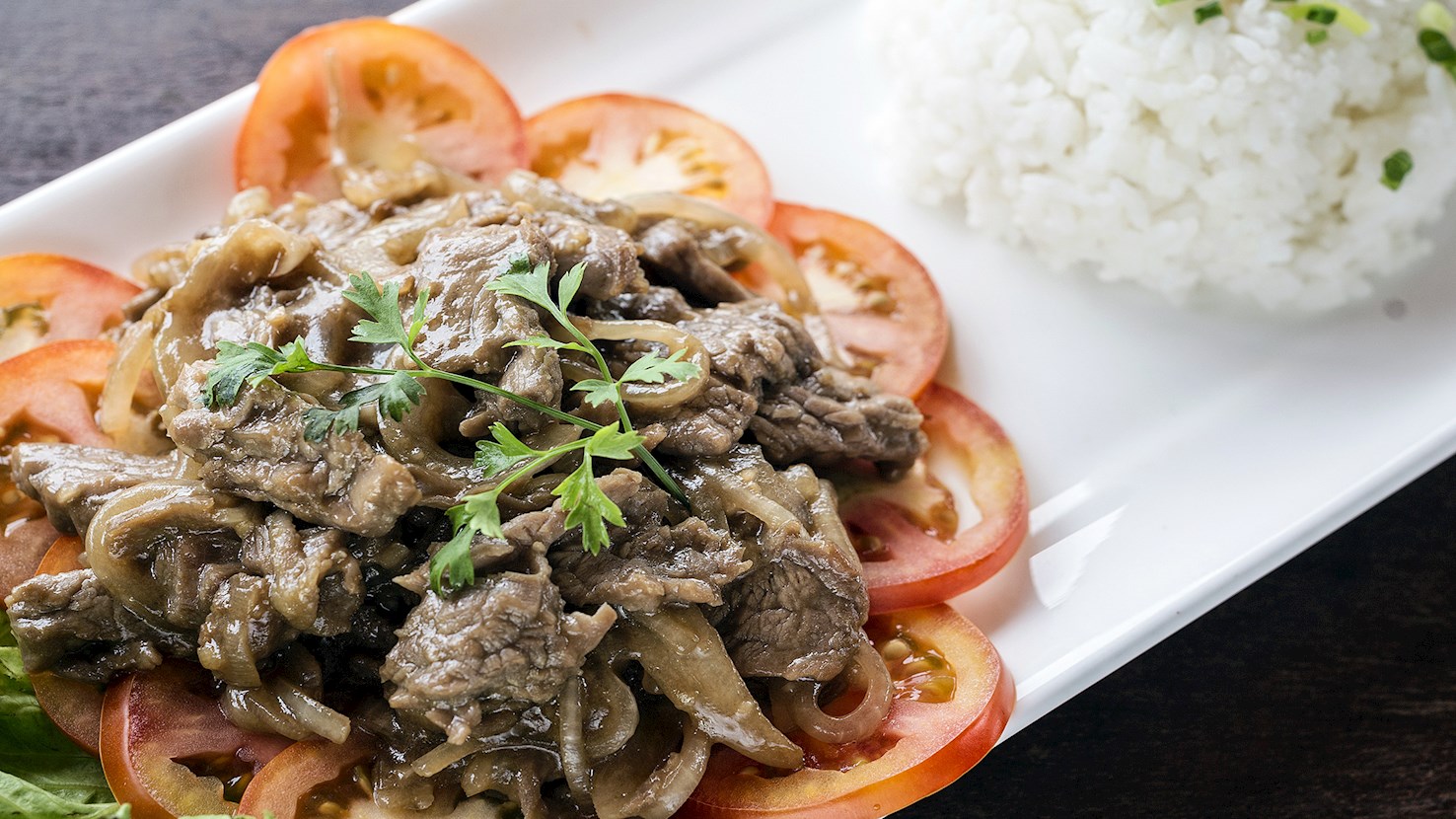
Lok lak is a Cambodian stir-fry utilizing beef, chicken, or shrimp as the key ingredients, although beef is typically the most popular option. For the beef version, a bed of lettuce leaves is traditionally topped with cucumbers, tomatoes, raw onions, and stir-fried beef along with its juices. The dish is typically consumed by pulling lettuce leaves from the bottom and adding other ingredients into it, so it is consumed similar to a wrap. Lok lak is often paired with rice on the side, and it was supposedly brought to the country by the French people from Vietnam.

02
Salad

Bok l'hong (Green papaya salad)

3.9 ·

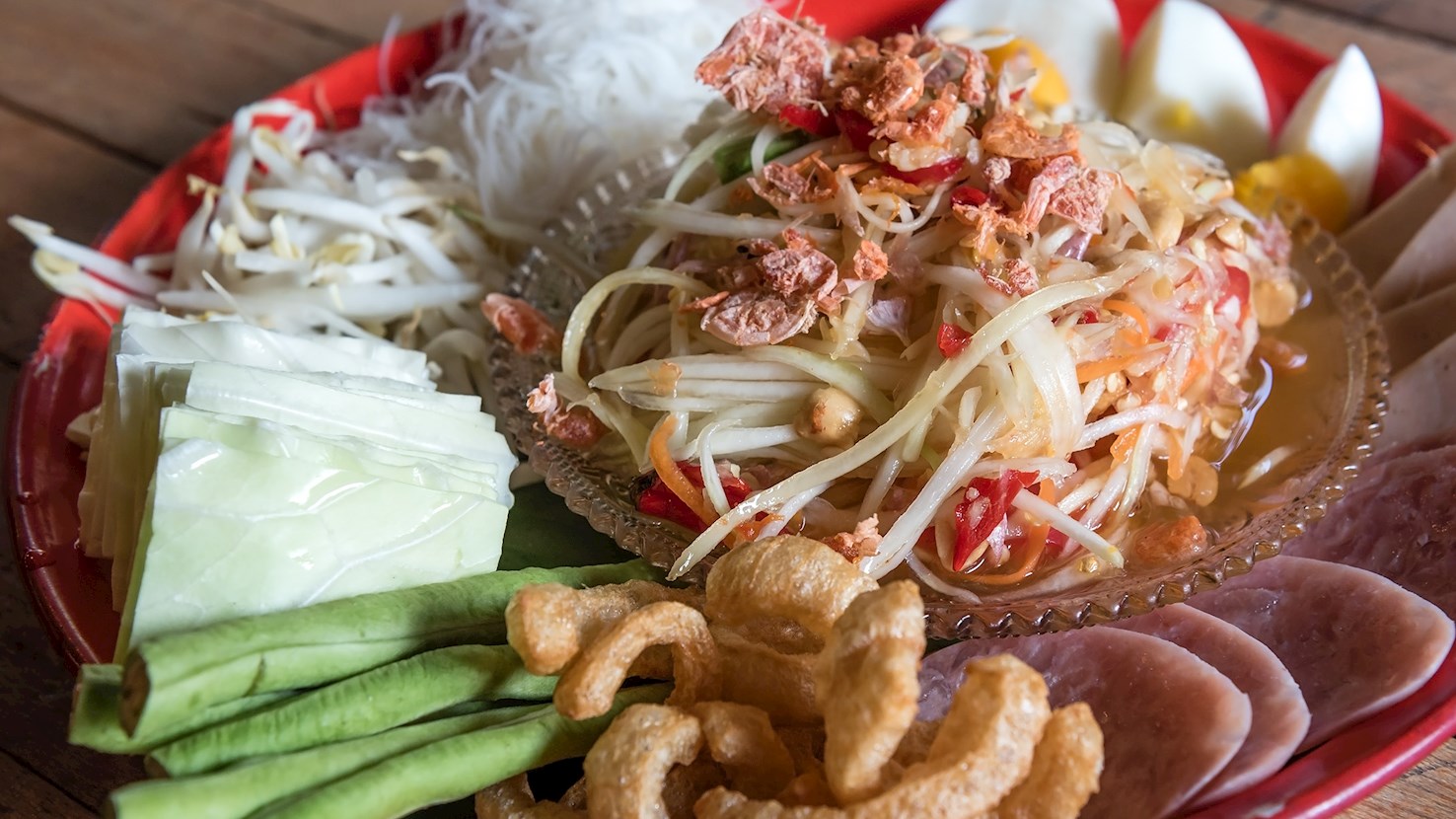
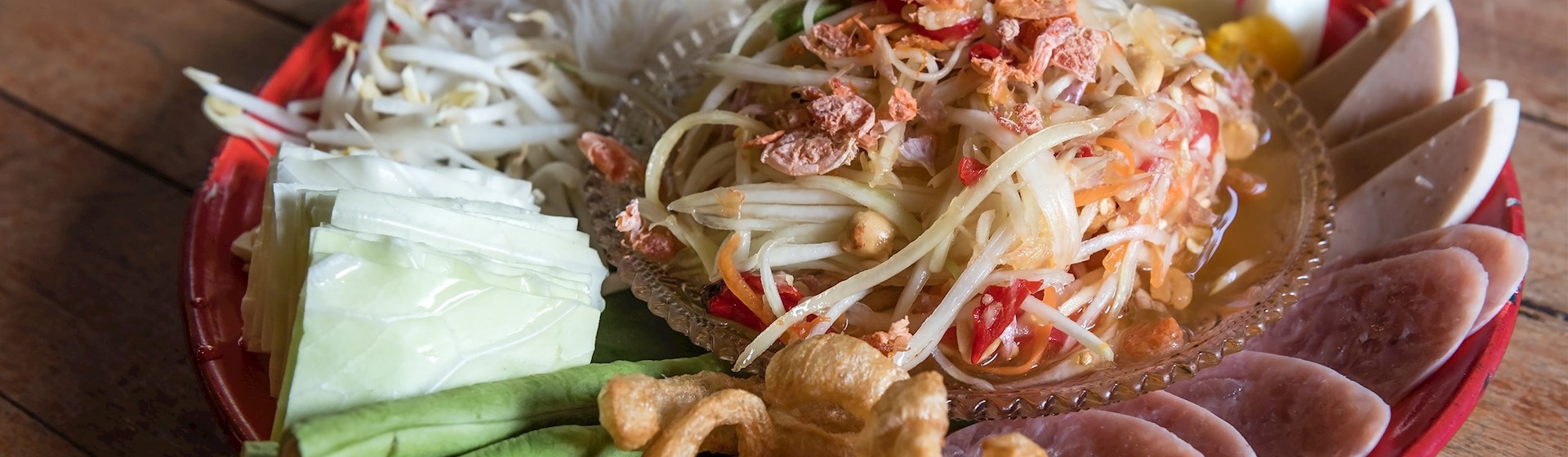
Bok l’hong, meaning pounded papaya in Khmer, is a Cambodian take on the green papaya salad that is widely consumed throughout Southeast Asia and is believed to have originated in Laos. Like the Lao and Thai versions, the Cambodian papaya salad usually requires the shredded fruit to be pounded with other ingredients, while the Vietnamese variety doesn't involve pounding of the fruit. The salad often contains tamarind, galangal, and prohok, a type of Cambodian fish paste. Bok l'hong can also feature smoked fish or salted crabs, and it is usually consumed with steamed rice and grilled meat such as chicken. One significant difference between the traditional Laotian green papaya salad and the Cambodian version of the salad lies in the use of white fish sauce in the latter instead of the much more pungent fermented fish sauce which is typically used in the former. Just like in Thailand, Vietnam, and Laos, in Cambodia, green papaya salad is available in numerous restaurants and is a common street food item.

03
Fish Dish

Amok trey (Steamed curried fish)

3.8 ·

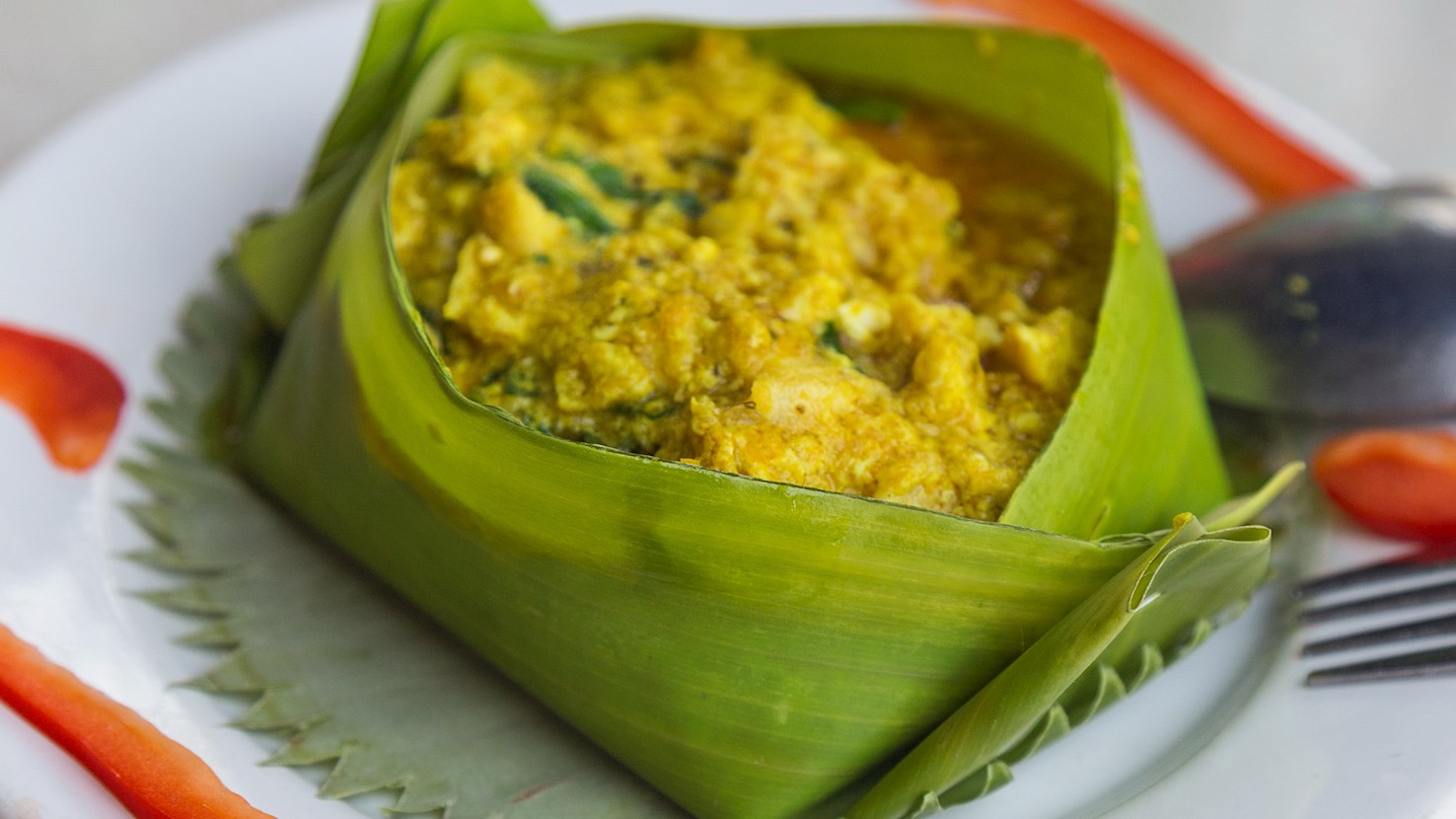
Amok trey is Cambodia's national dish, a fragrant and spicy coconut fish curry that is tenderly steamed in banana leaves, although chicken, tofu, and snails can also be used as a substitute for the main protein. The flavour of the dish is reminiscent of a mild Thai red curry. Usually served in coconut shells, amok trey is the main dish of the Water Festival in Cambodia, celebrating the change of Tonle Sap River's flow, and is a way to thank the Mekong River for providing Cambodia with abundant fish and fertile land. The fish is soaked in a rich curry paste and placed in little steamer cups made from banana leaves, imparting their specific flavor to the dish. The cups are steamed over boiling water, with the aromas of sweet coconut, galangal, and turmeric filling the air. After the dish is done, some coconut cream is usually spooned on top, and the whole thing is garnished with sliced chilies or noni leaf. Jasmine rice makes a great accompaniment to this fragrant and savory dish.

04
Dessert

Kralan

3.2 ·

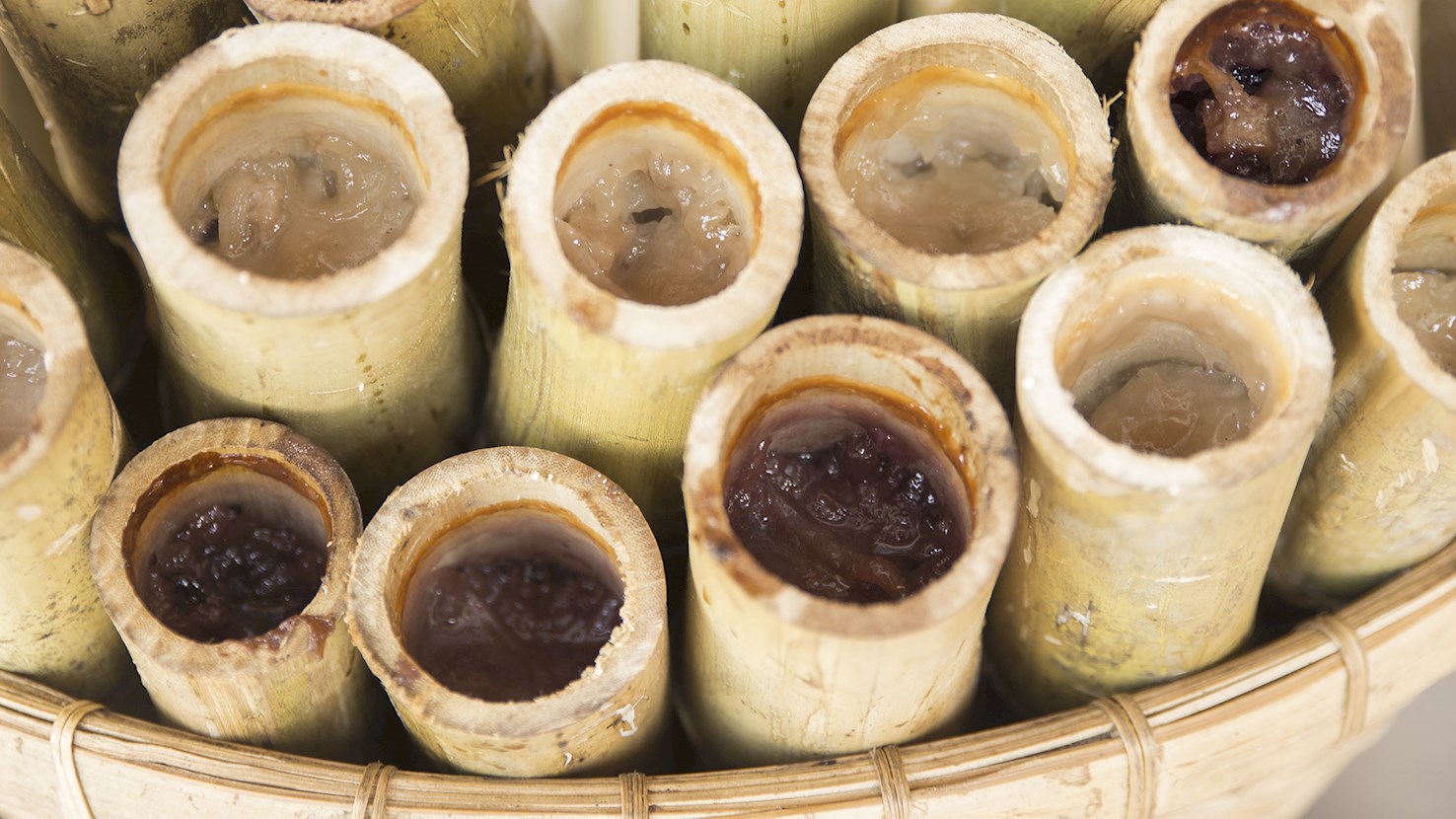
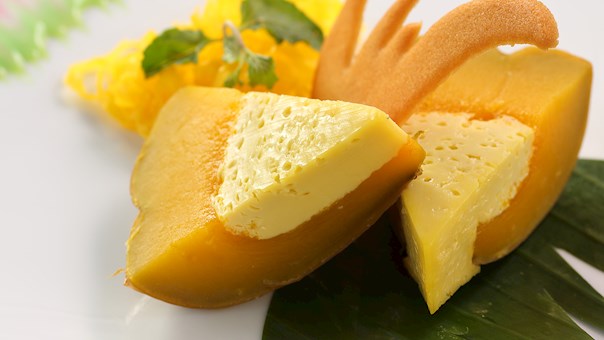
Khao lam or kralan is a unique Southeast Asian dessert consisting of sweet sticky rice, either white or red, steamed in bamboo tubes, popular in Thailand, Myanmar, Cambodia, and Laos. The simplest, original version included only rice mixed with water and salt, but more elaborate interpretations nowadays include the addition of grated coconut, sugar, coconut milk, and red beans. The rice is mixed with the desired ingredients and placed inside specially prepared bamboo sticks. Coconut milk is added on top of the rice, and then the stick is sealed and carefully placed on a construction over hot coals. This unusual slow-cooking process transforms the rice into a sweet and rich creation, similar to custard or rice pudding. Modern versions come in a variety of different flavors such as taro, durian, Thai custard, or corn, which are usually tucked in the center of the roll. Khao lam is regarded as a filling treat and is usually sold by street vendors at food fairs, around the temples, and at numerous Asian markets.

05
Street Food

A-ping (Fried spider)

2.2 ·

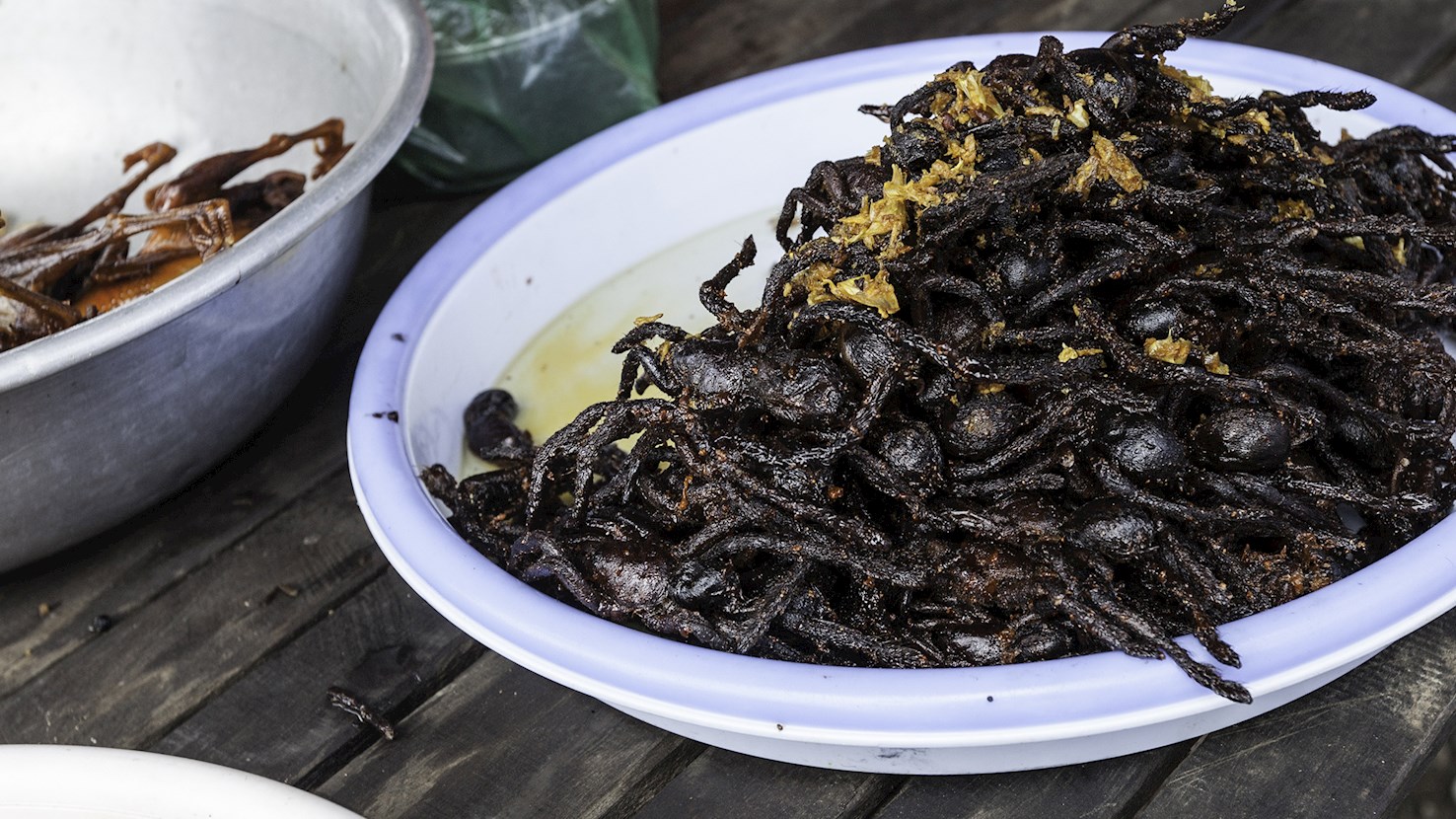
The city of Skuon in Cambodia is so infested with spiders that the nearly-starved locals have adapted and started consuming them in the 1970s, and the practice has continued ever since. It is no wonder that the city is known as Spider Town or Spiderville. The spiders (usually tarantulas) are breaded and deep-fried in hot oil, then served with some fresh local herbs on a bed of rice or noodles. The flavor of these critters has been described as a cross between cod and chicken – at least the hairy legs are supposed to taste so, because consumers are warned not to bite into the abdomen, which contains spiders’ internal organs and bodily fluids.

06
Stew

Samlar kari

n/a ·

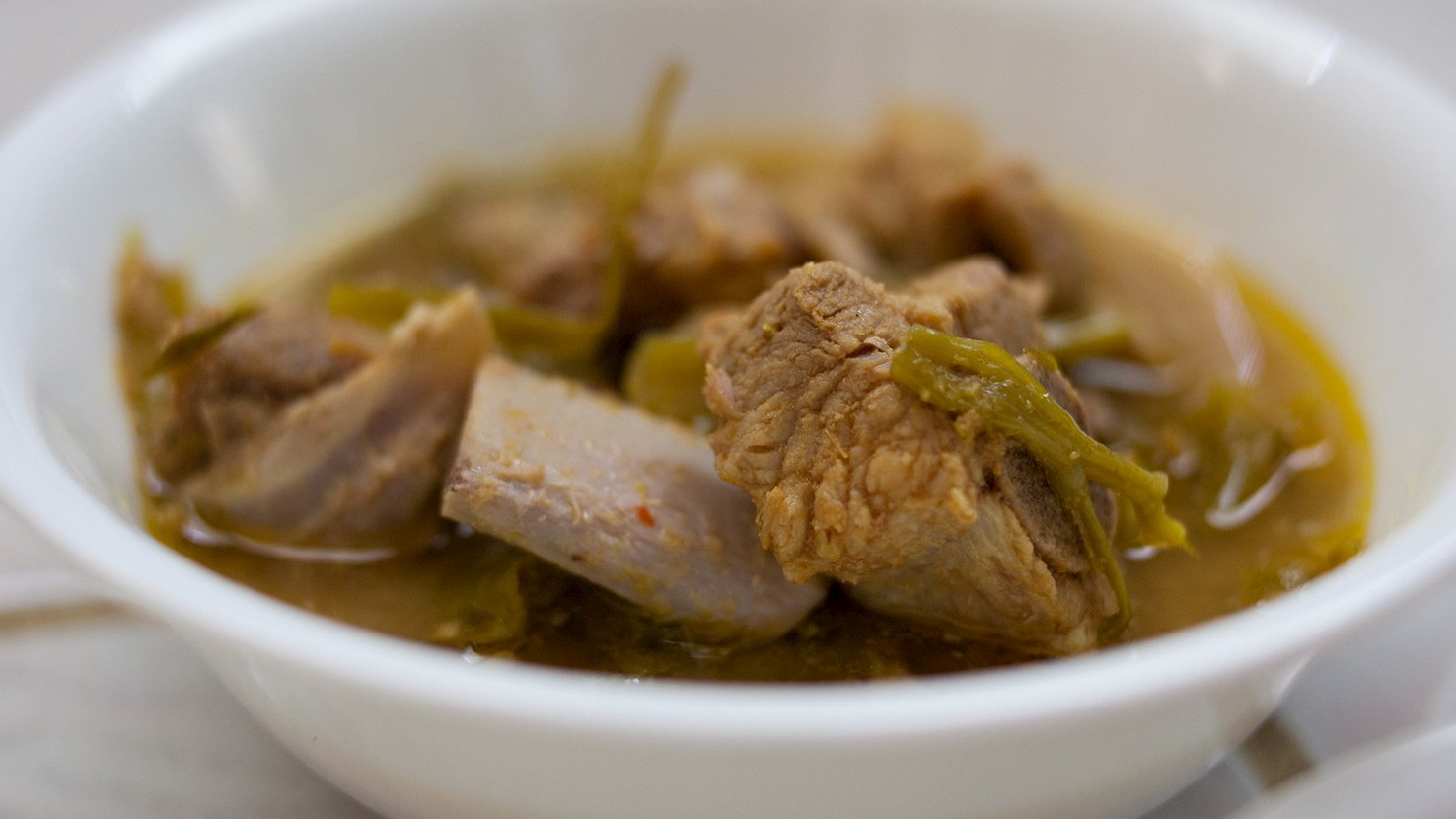
Samlar kari is a traditional chicken curry consisting of pieces of chicken in a silky-smooth coconut sauce that is typically flavored with Cambodian kroeung paste, shrimp paste, fish sauce, and palm sugar. This soupy curry derives its distinctive flavor and fragrance from the red kroeung paste used in it, which is a type of Cambodian curry paste made with lemongrass, turmeric, galangal, kaffir lime leaves and zest, red chilis, shallots, and garlic. The dish can optionally be enriched with vegetables such as sweet potatoes, onions, bamboo shoots, carrots, eggplants, asparagus beans, or spinach. Aromatic, fragrant, and spicy, the chicken curry is usually consumed either heaped over steamed rice or with slices of bread or noodles and a fresh vegetable salad on the side. Samlar kari is a typical, traditional preparation throughout rural Cambodia during Cambodian New Year, Pchum Ben, and other festivities and special occasions.

07
Fish Dish

Chien chuon (Crispy fried fish with ginger-garlic sauce)

n/a ·

Chien chuon is a Cambodian fish specialty that is made with crispy fried fish cooked with a rich sauce containing stir-fried ginger and garlic. Other typical ingredients added to the sauce include fish sauce, oyster sauce, vinegar, sugar, cornstarch, tomatoes, black beans, fermented soybeans, roasted shallots, and cellophane noodles. Trout, tilapia, snapper, bream, trei ta-aon, and trei keh are some of the usual types of fish used in this dish. The fish is usually garnished with fresh coriander and sliced red chilis on top, and it is typically served with steamed white rice. Chien chuon is a staple in numerous Cambodian restaurants throughout the country.

08
Soup

Samlar machu

n/a ·

Samlar machu, meaning sour soup in Khmer, is a traditional dish made with meat, fish, or seafood and vegetables cooked in a sour broth base. The soup usually contains seasonal local vegetables and herbs such as Cambodian water spinach, shallots, scallions, tomatoes, kaffir lime leaves, slek kantrop, hot basil, cilantro, and lemongrass. There’s also a version that calls for pineapples. Other key ingredients in this dish are minced prohok, a fermented fish sauce, and Cambodian kroeung, a type of curry, while the typical souring agents include krasaing fruit seeds, tamarind, or kaffir lime juice. Samlar machu is usually flavored with fish sauce, fried garlic, and chilis, and it is commonly eaten with jasmine rice for lunch. In Cambodia, the variations on this sour soup are limitless, and various vegetables and herbs can be used in its preparartion, depending on the region and the seasons.

09
Noodle Dish

Num banh chok (Khmer noodles)

3.4 ·

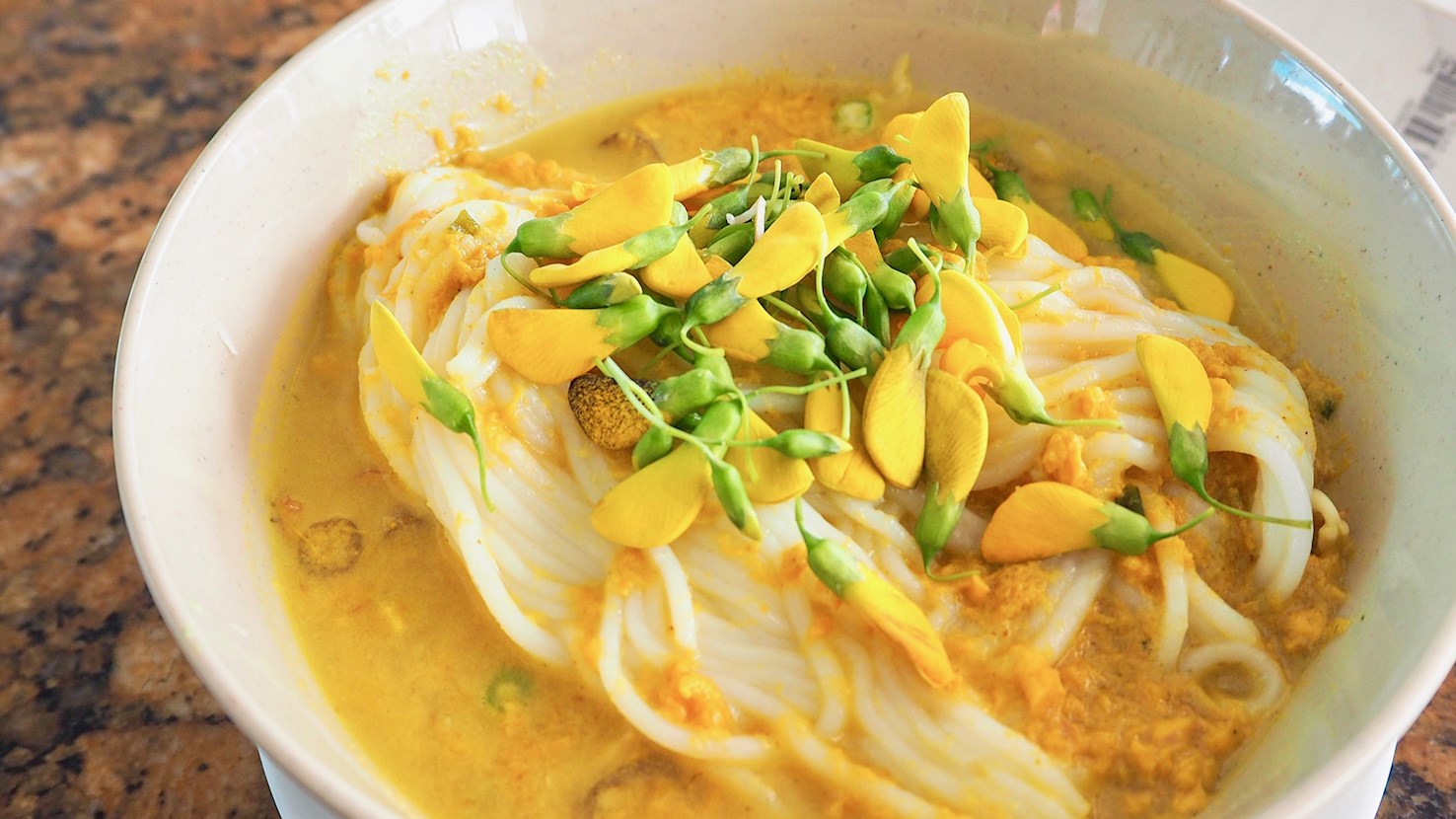
Num banh chok or Khmer noodles is a Cambodian dish that is typically served for breakfast or consumed as an afternoon snack. These fermented rice noodles are hand-made in stone or wooden mills, then topped with fish gravy and raw vegetables such as banana blossom, cucumbers, and water lily stems, along with a variety of fresh herbs such as mint and basil. Nowadays, there are many variations on this noodle dish that is typically eaten in warm weather, and some even say that the Chinese got the idea for rice noodles from the Cambodians, referring to a legend about Thun Chey who was exiled from the Khmer Empire to China.

10
Stew

Yaohon

n/a ·

Yaohon is a Cambodian hot pot that contains a variety of vegetables, meat, and seafood. The broth is based on a mixture of coconut milk or cream, chicken broth, and coconut soda, and it is typically flavored with barbecue sauce, fish sauce, soybean curd sauce, makrut lime leaves, lemongrass, and palm sugar. Typical vegetables include watercress, spinach, and bok choy, while the selection of meat and seafood usually includes beef, chicken, shrimps, squids, oysters, and mussels. Other ingredients featured in this flavor-packed broth are crushed peanuts, quail eggs, mushrooms, and (optionally) beer. Sweet, spicy, and savory, yaohon is commonly enjoyed with rice noodles or steamed rice.

Best Cambodian food products

01
Rice

Malis Angkor

5 ·
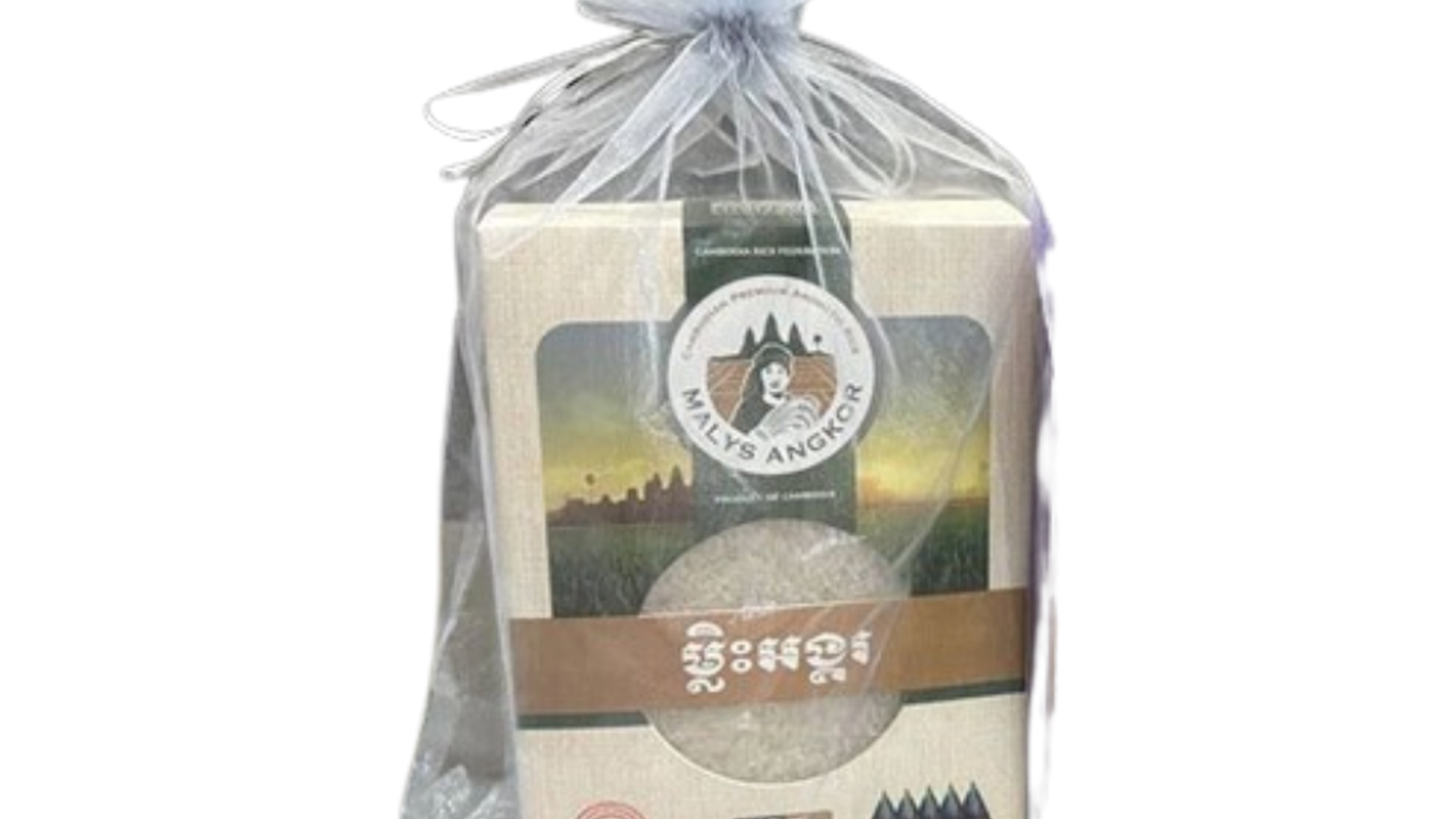
Malys Angkor is a certification brand that represents the highest quality of Cambodian aromatic rice and is owned by the Cambodia Rice Federation. This mark guarantees that the rice originates from verified sources in Cambodia and meets the highest standards in terms of quality, flavor, and origin. The Malys Angkor brand includes highly prized varieties such as Phka Rumduol and other traditional types, known for their delicate texture, jasmine fragrance, and slightly sweet taste. The brand was created to unify and promote the identity of Cambodian rice on the global market, and its authenticity has been recognized through multiple wins of the prestigious "World’s Best Rice" award. Malys Angkor is not just a brand - it is a symbol of national pride, sustainable agriculture, and the exceptional culinary value of Cambodia.
Awards
International World Rice Conference - World’s Best Rice (2024, 2022, 2018)
02
Spirit

Samai Distillery

4.8 ·
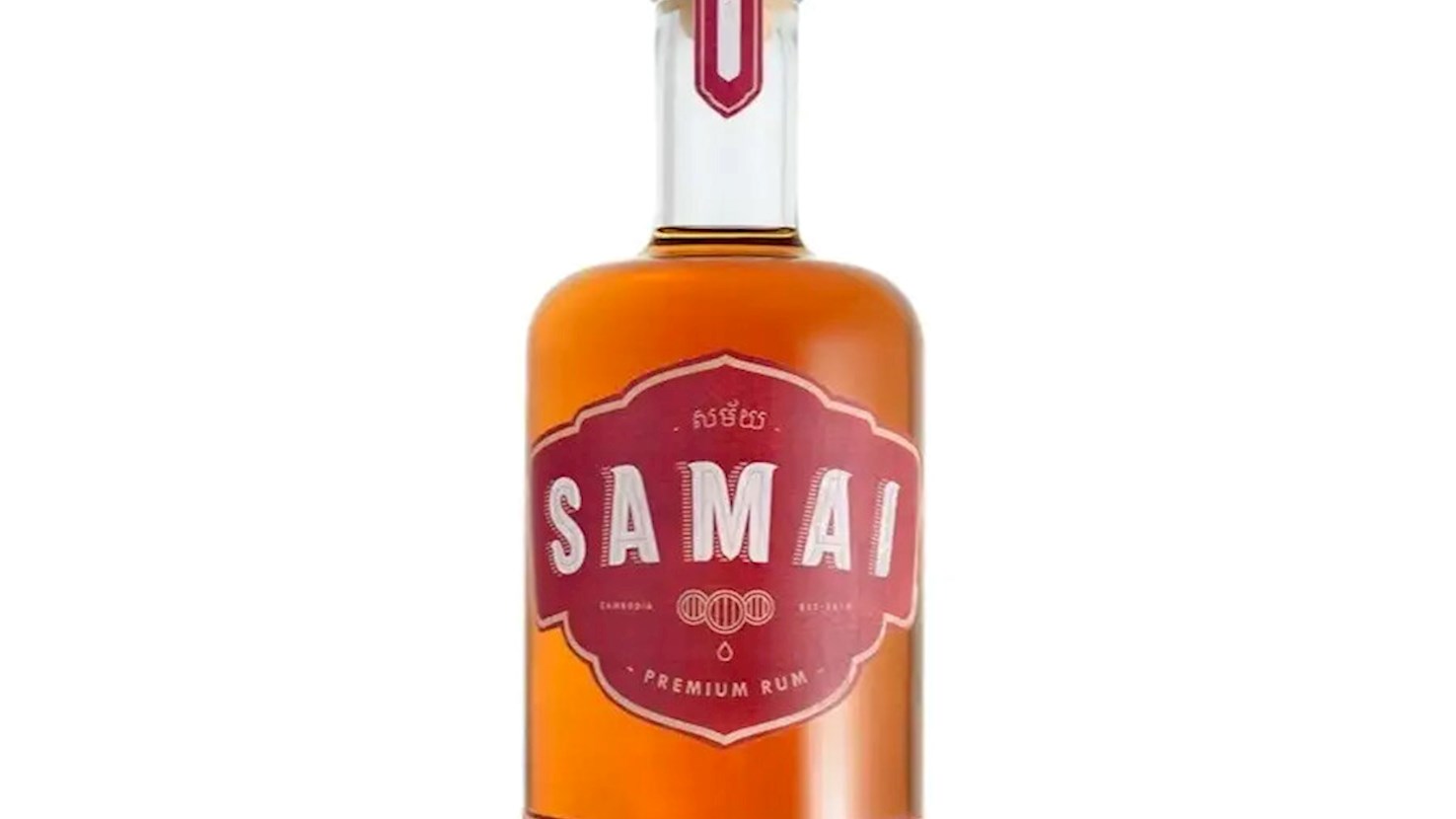
Samai Distillery, established in 2014, is Cambodia's first premium rum producer, located in the heart of Phnom Penh. Founded by a team of passionate individuals, including master distiller Ms. Moang Darachampich, the distillery combines Latin American rum-making traditions with Asian roots to create handcrafted rums that reflect the richness of Cambodian terroir. Samai sources high-quality, locally grown sugarcane to produce rich molasses, the base for all their premium rums. The production process involves traditional copper pot stills and column stills, allowing for a balance between flavorful, intense rums and smoother, lighter spirits. Aging takes place in a variety of barrels, including French and American oak, ex-bourbon, and sherry casks, imparting unique characteristics to each rum. Samai Distillery has gained international recognition, with its rums winning numerous awards from competitions such as the San Francisco World Spirits Competition and the London International Spirits Challenge.
Awards
IWSC- International wine & spirit competition - Spirit Gold (2024, 2023)
London Spirits Competition - Gold (2024)
03
Spirit

Mawsim Distillery (Unwaspa Co.)

4.8 ·
Awards
World Gin Awards - World's Best Flavoured Gin (2023)
IWSC- International wine & spirit competition - Spirit Gold (2023)
04
Herb/Spice

Bo Tree Farm

4.8 ·
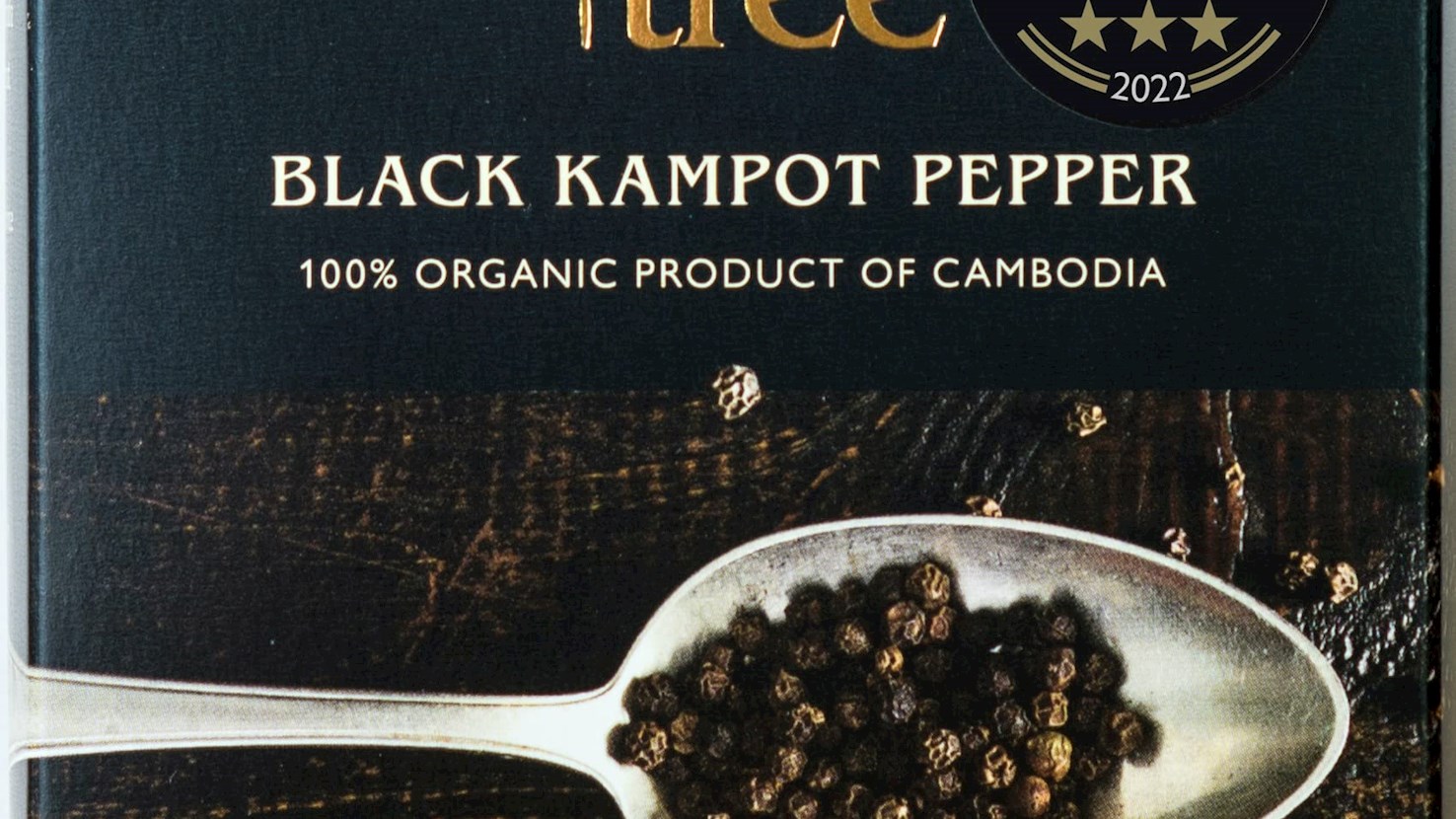
Bo Tree Farm is a spice blend and seasoning producer located in Cambodia. The company specializes in cultivating organic Kampot pepper, a variety highly prized within the culinary world. Bo Tree Farm emphasizes sustainable farming practices and works closely with local communities to ensure ethical production. They export their pepper globally, and it is known for its distinct flavor profile and high quality.
Awards
Great Taste Awards - 3 Stars (2022, 2021)
Great Taste Awards - 2 Stars (2023, 2022, 2021)
05
Spirit

Seekers Independent Spirits Co.

4.5 ·
Awards
IWSC- International wine & spirit competition - Spirit Gold (2024)
Read more
View all
View map
About this ranking

TasteAtlas food rankings are based on the ratings of the TasteAtlas audience, with a series of mechanisms that recognize real users and that ignore bot, nationalist or local patriotic ratings, and give additional value to the ratings of users that the system recognizes as knowledgeable. For the “Top 22 Cambodian Foods” list until June 17, 2026, 442 ratings were recorded, of which 236 were recognized by the system as legitimate. TasteAtlas Rankings should not be seen as the final global conclusion about food. Their purpose is to promote excellent local foods, instill pride in traditional dishes, and arouse curiosity about dishes you haven’t tried.

The initial list of top producers was compiled based on available reviews, awards, local recommendations, media and blog coverage, and consumer reviews. The list will be updated with ratings from TasteAtlas local ambassadors and TasteAtlas users.

Similar lists