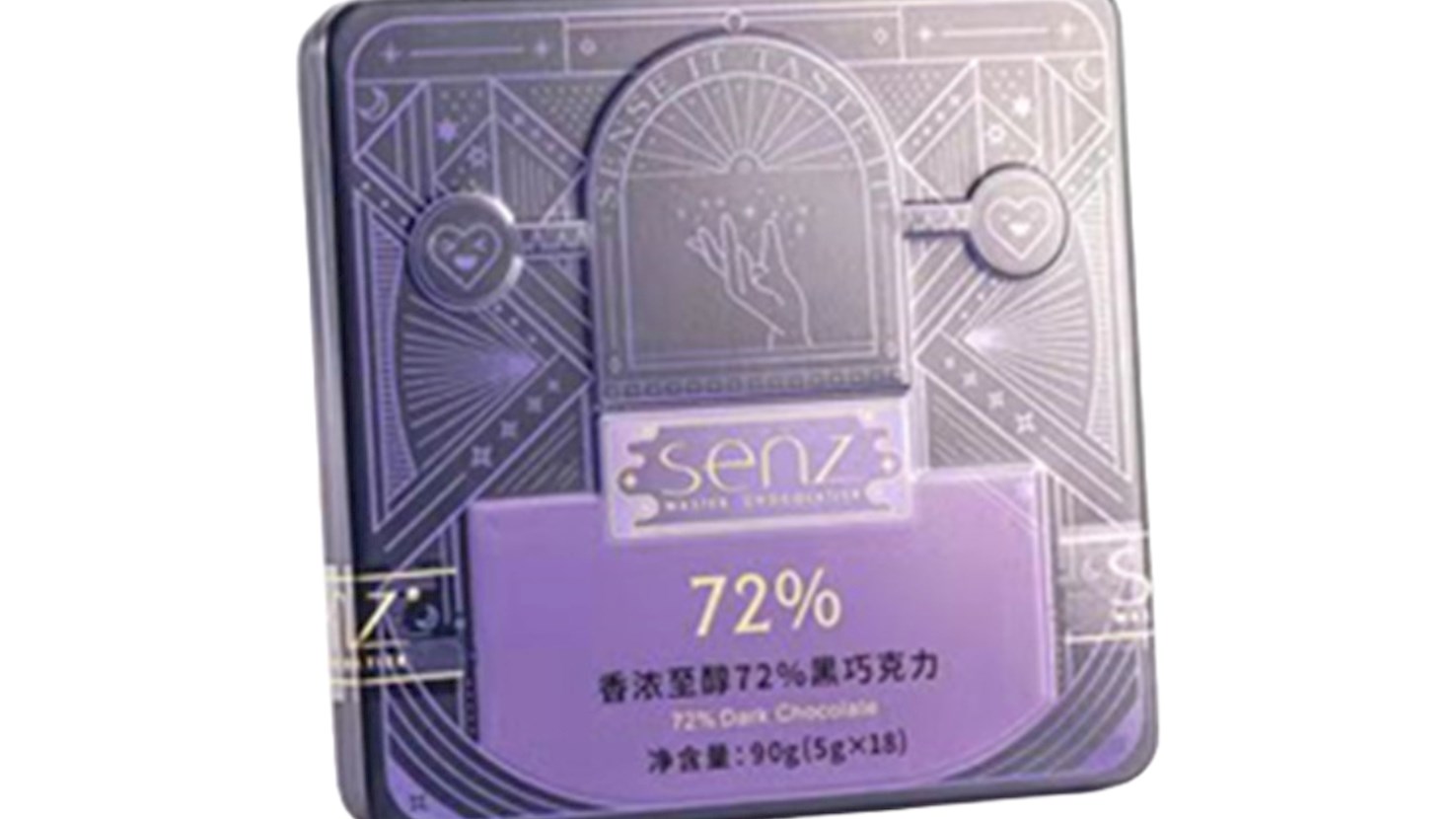
Lanhe Foods is a renowned chocolate manufacturer based in Suzhou, Jiangsu Province, China. Established in 2009, the company specializes in crafting high-quality chocolates, blending traditional Belgian chocolate-making techniques with modern innovations. With a production facility built to Belgian standards and machinery imported from Belgium and Germany, Lanhe Foods offers exceptional chocolates tailored to the tastes of Chinese consumers. Led by Belgian chocolate master Dany Deraymaeker, the company combines expertise and passion to deliver unique and delightful chocolate experiences.
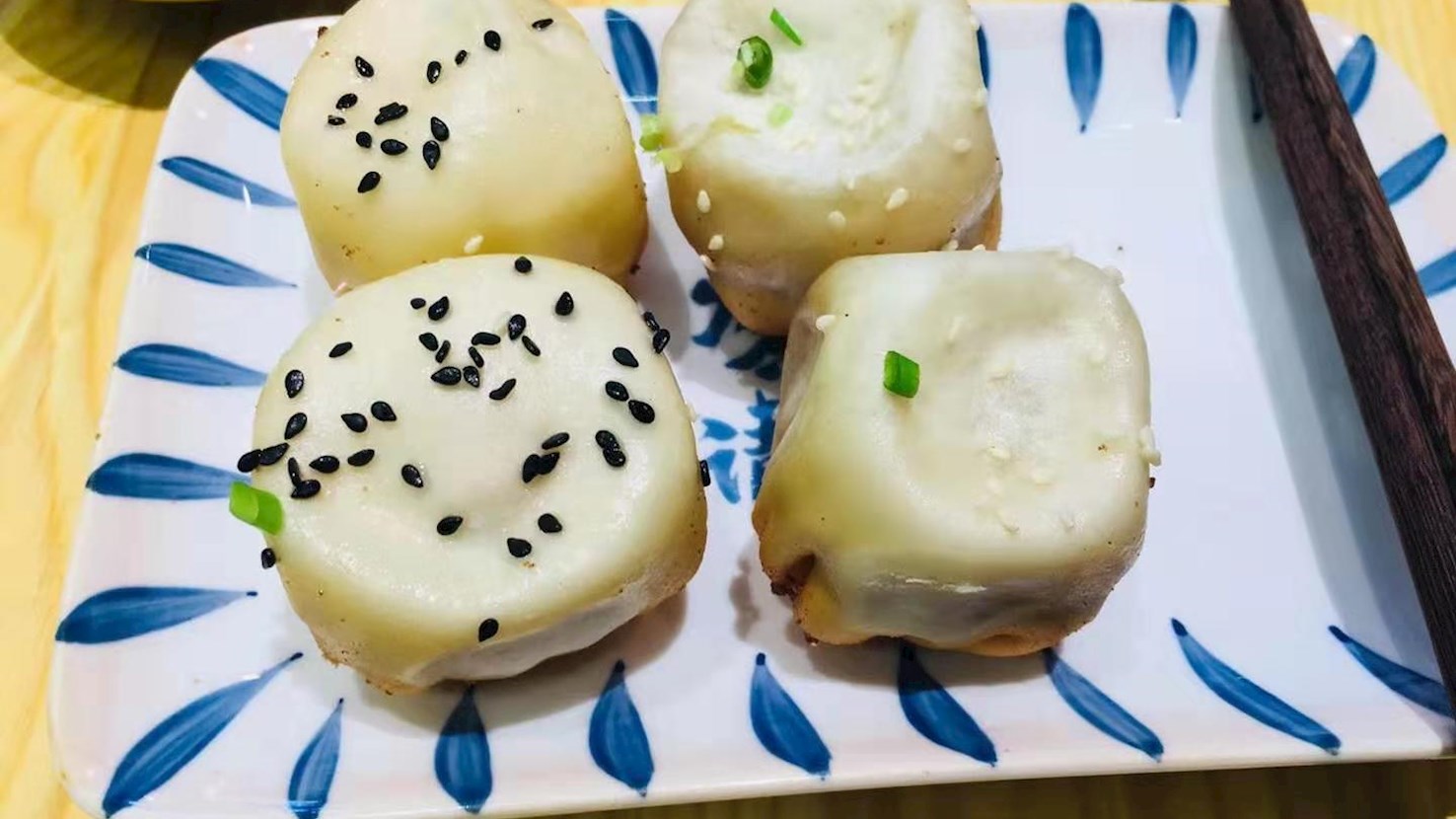
Among the broad group of Chinese dumplings, shengjian mantou stands out as a unique pan-fried variety. Belonging to the category of soup dumplings, or soup buns, they are slightly different than the more famous xiao long bao. Shengjian mantou can be made with minced pork, vegetable, or shrimp as the base, often incorporated with cabbage and chives, then infused with soy sauce, sesame oil, and occasionally ginger and garlic. The fillings are wrapped in a traditional soft leavened dough which might vary in thickness. When wrapped, the dumplings are pan-fried in shallow oil, and alternatively covered in water to produce the steaming effect. This technique provides texturally exciting dumplings, with a soft top and a crispy brown bottom. They are typically sold by piece, and before serving they are sprinkled with black or white sesame seeds, chopped cilantro, or spring onions. Although they can be found in restaurants, they are typically bought at street stands and food stalls which specialize in the preparation of this nutritious delicacy. It is believed that shengjian mantou originally appeared as a part of the traditional dim sum meals, and the first specialized shops started to open in the 1930s. The place of origin is usually associated with Suzhou and Shanghai, but today these delicious hearty dumplings can be found in other parts of China, as well as in numerous Chinese restaurants around the world.
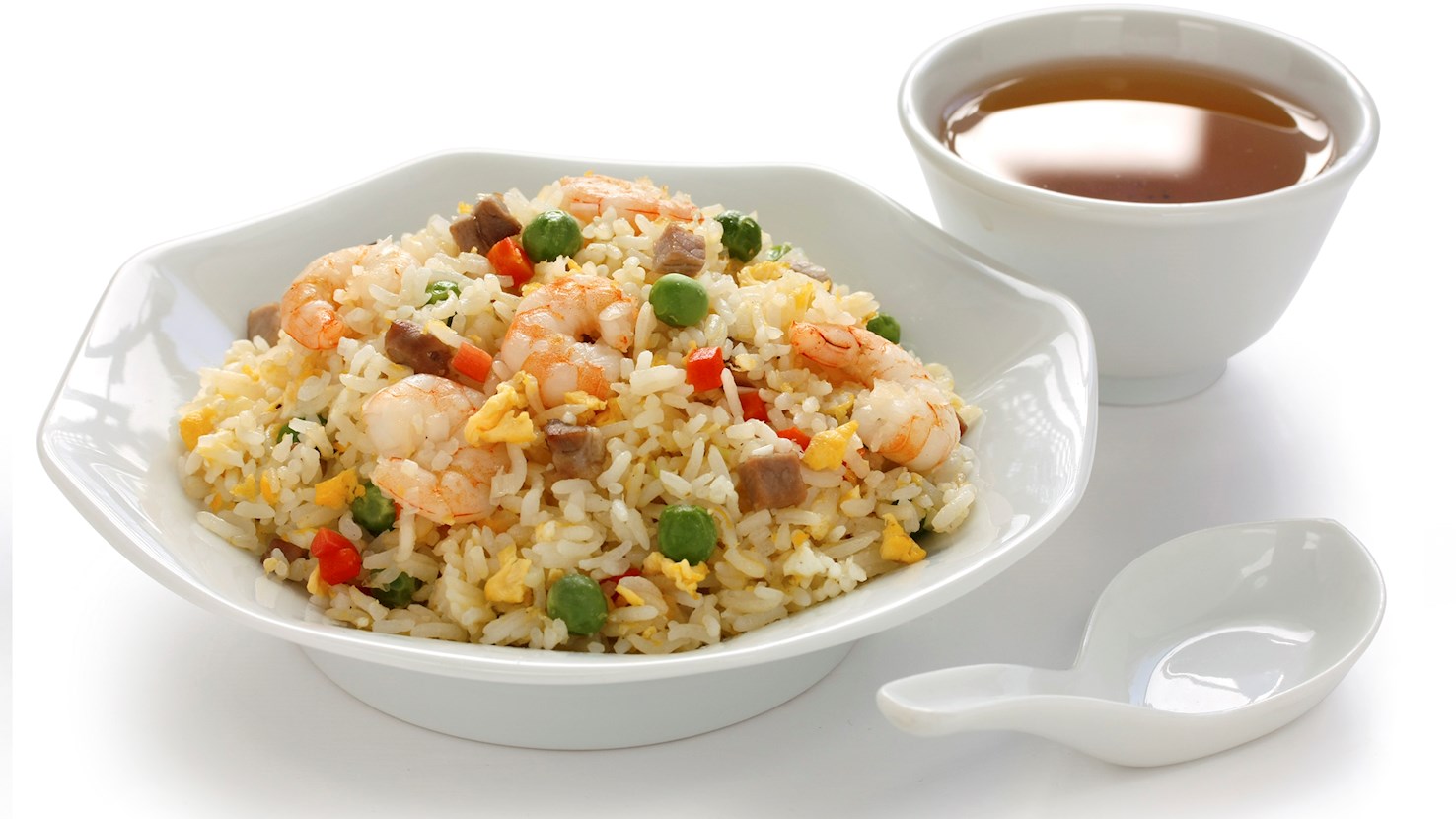
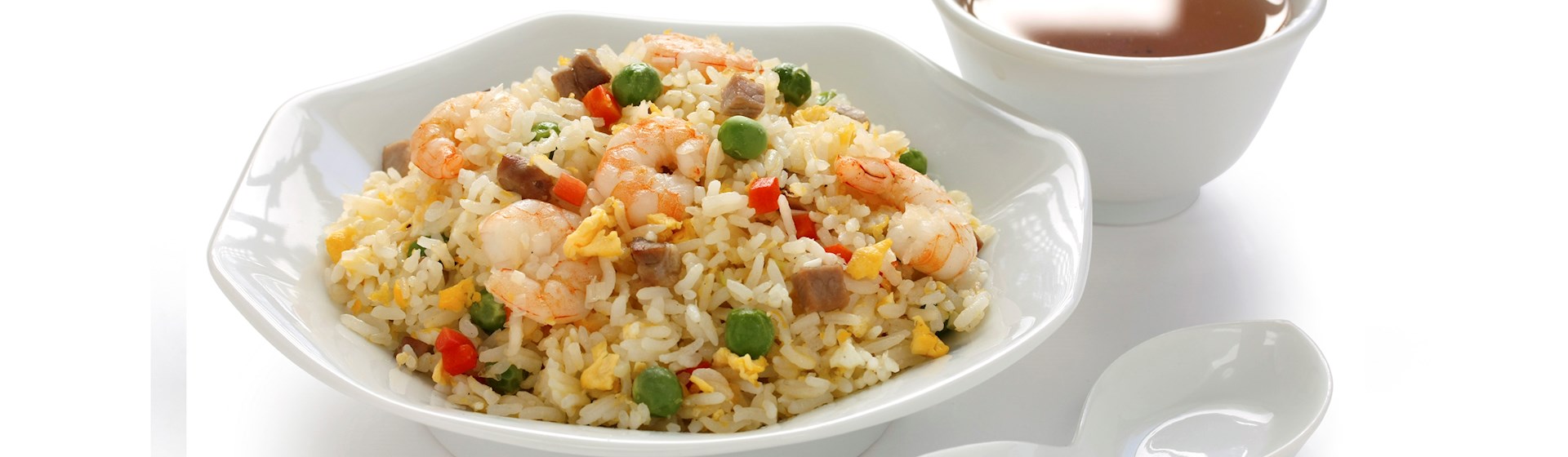
Yangzhou fried rice is a Chinese dish consisting of rice, eggs, and vegetables such as carrots, mushrooms, peas, while the common additions also include shrimps, meat, scallions, and Chinese ham. Traditional versions sometimes may incorporate sea cucumbers, crab meat, and bamboo shoots. It is believed that the dish originates from General Yang Su of the Sui Dynasty. Because it was one of his favorite dishes, he introduced it to the Yangzhou culture when he patroled Jiangdu with Emperor Yangdi. Originally, it was a peasant food prepared with leftover rice combined with small bits of meat and vegetables. Yangzhou fried rice is traditionally served after the main meal and before dessert at Chinese celebrations. Nowadays, there are numerous versions of the dish that may be flavored with soy sauce, red sauce, or Shaoxing rice wine.
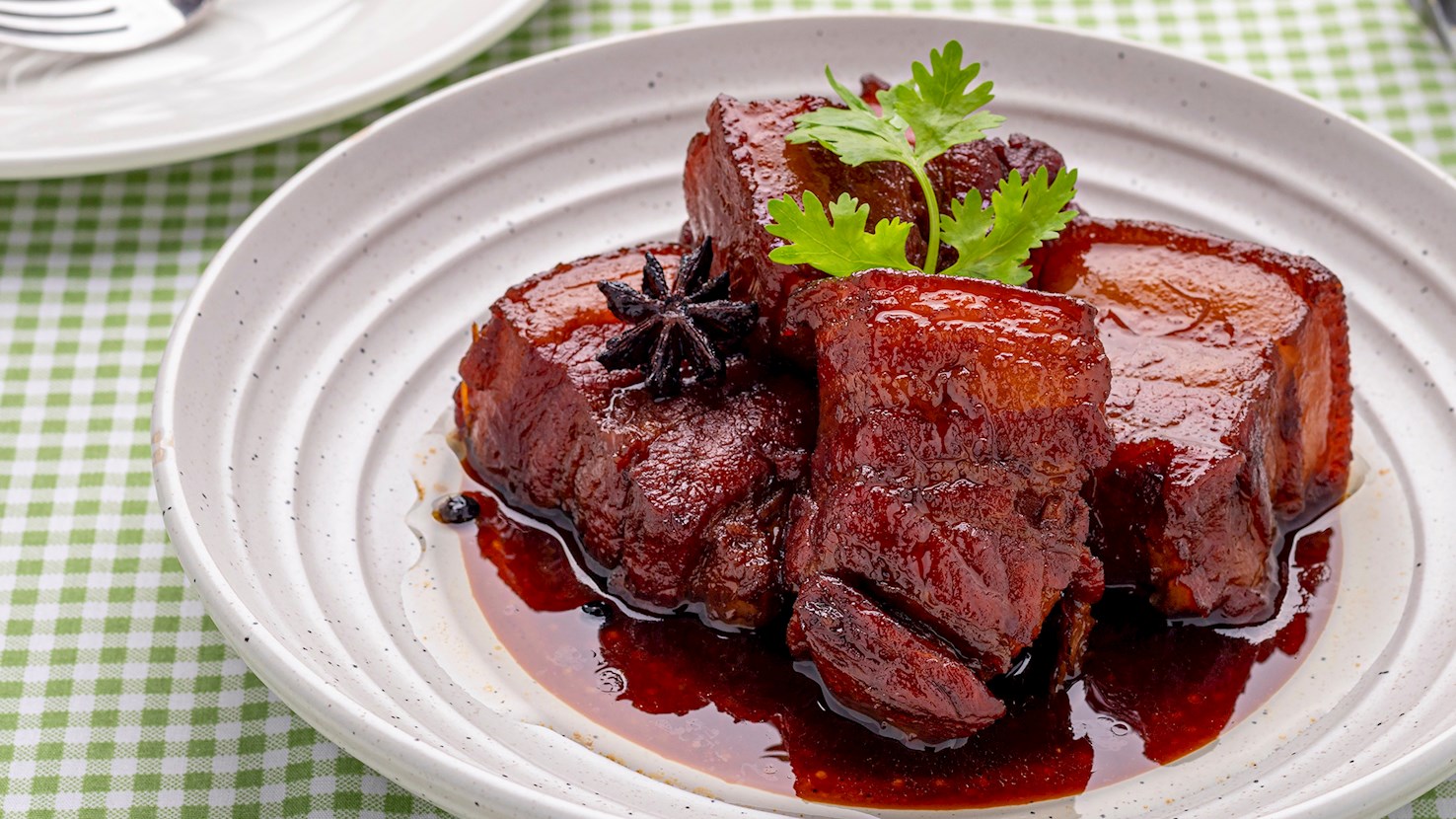
Hóngshāoròu is a Chinese braised pork dish made with pork belly slowly cooked in a mixture of soy sauce, sugar, rice wine, and aromatics until it becomes tender and richly flavored, with a glossy red-brown sauce coating each piece. It originates from the Jiangnan region of eastern China, particularly Jiangsu and Zhejiang provinces, but it is now deeply embedded in the culinary identity of many regions, each with slight variations in seasoning and texture. The technique of red-braising, which gives the dish its name, has been part of Chinese cooking for centuries, arising from a broader practice of slow-cooking meat in soy sauce and sugar to preserve moisture and develop depth of flavor. The dish gained prominence in imperial kitchens and scholar households during the Ming and Qing dynasties, where long, gentle braises were favored for their ability to transform inexpensive cuts of meat into luxurious dishes. Over time, hóngshāoròu became a home-cooked staple and a centerpiece at festive meals, symbolizing abundance and comfort. Preparation typically begins with selecting pork belly that has alternating layers of meat and fat, which ensures the right balance of tenderness and richness. The pork is blanched briefly to remove impurities, then caramelized with sugar in oil or water until lightly browned, a step that deepens the color and flavor of the final dish. Soy sauce, Shaoxing wine, ginger, star anise, and occasionally cinnamon or dried chilies are added, and the mixture is simmered slowly for one to two hours. During this time, the meat absorbs the flavors of the sauce and becomes soft enough to melt in the mouth, while the braising liquid reduces into a thick, glossy coating. Hóngshāoròu is served hot, usually as a centerpiece dish accompanied by plain steamed rice, which absorbs the rich sauce. It is often paired with lighter side dishes such as blanched greens or pickled vegetables, which provide contrast to its richness. In some regions, it is served with steamed buns or mantou, allowing diners to soak up the sauce.
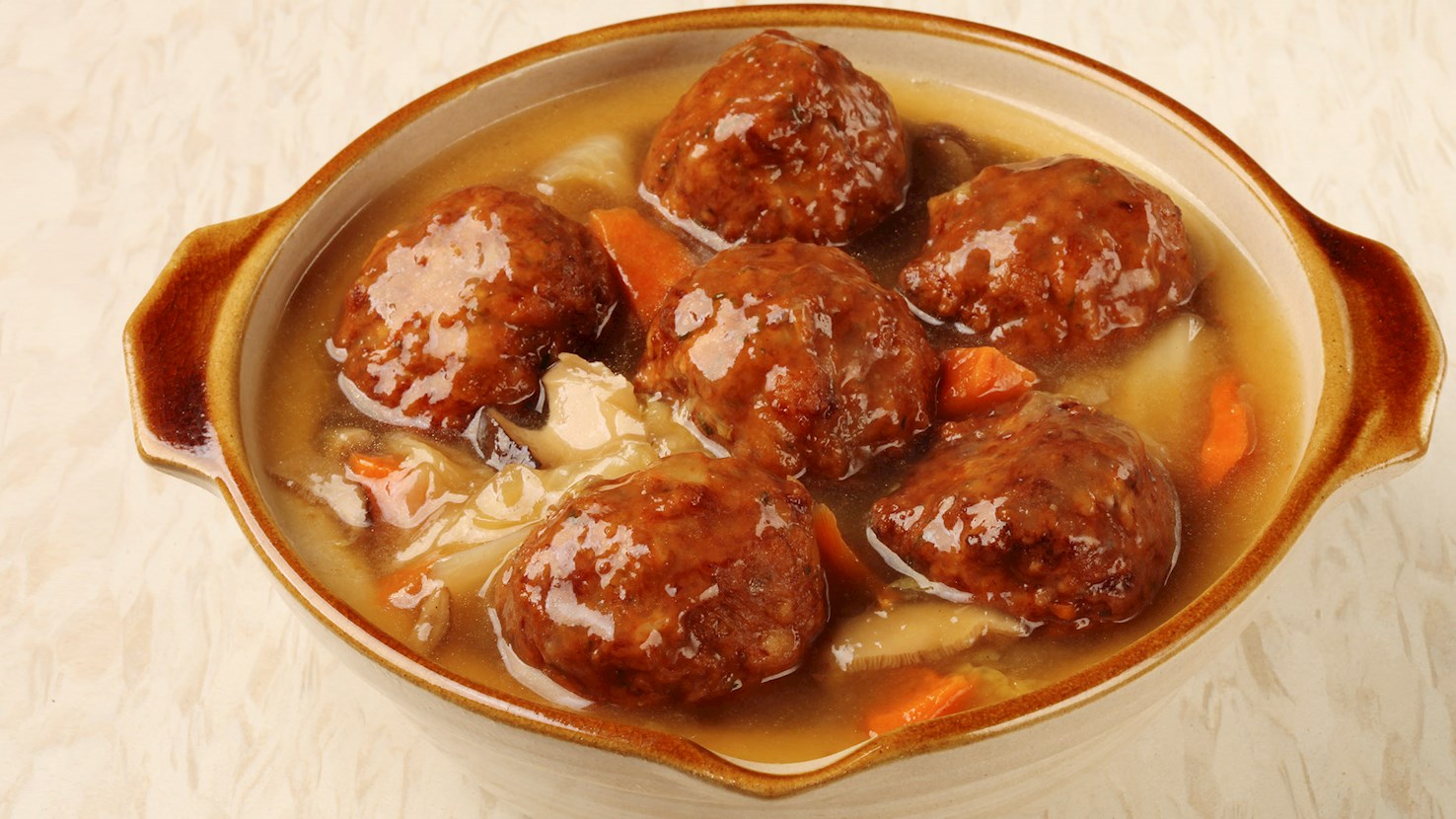
Contrary to what one might think upon hearing the name of the dish, lion's head is a meal consisting of big pork meatballs that are stewed with noodles and vegetables such as cabbage. It dates back to the times of the Sui Dynasty, when Emperor Yang took a trip to Yangzhou and made his chefs prepare a dish that was inspired by the Yangzhou landscapes, which he loved. The meatballs looked similar to the Chinese guardian lion's head, so the name stuck until today. In China, there are two versions of the dish - one is served in a rich, brown sauce (Zhenjiang variety), and the other in a lighter broth (Yangzhou variety). Rustic and hearty, this classic dish also became a part of Shanghai cuisine in the late 19th and early 20th century.
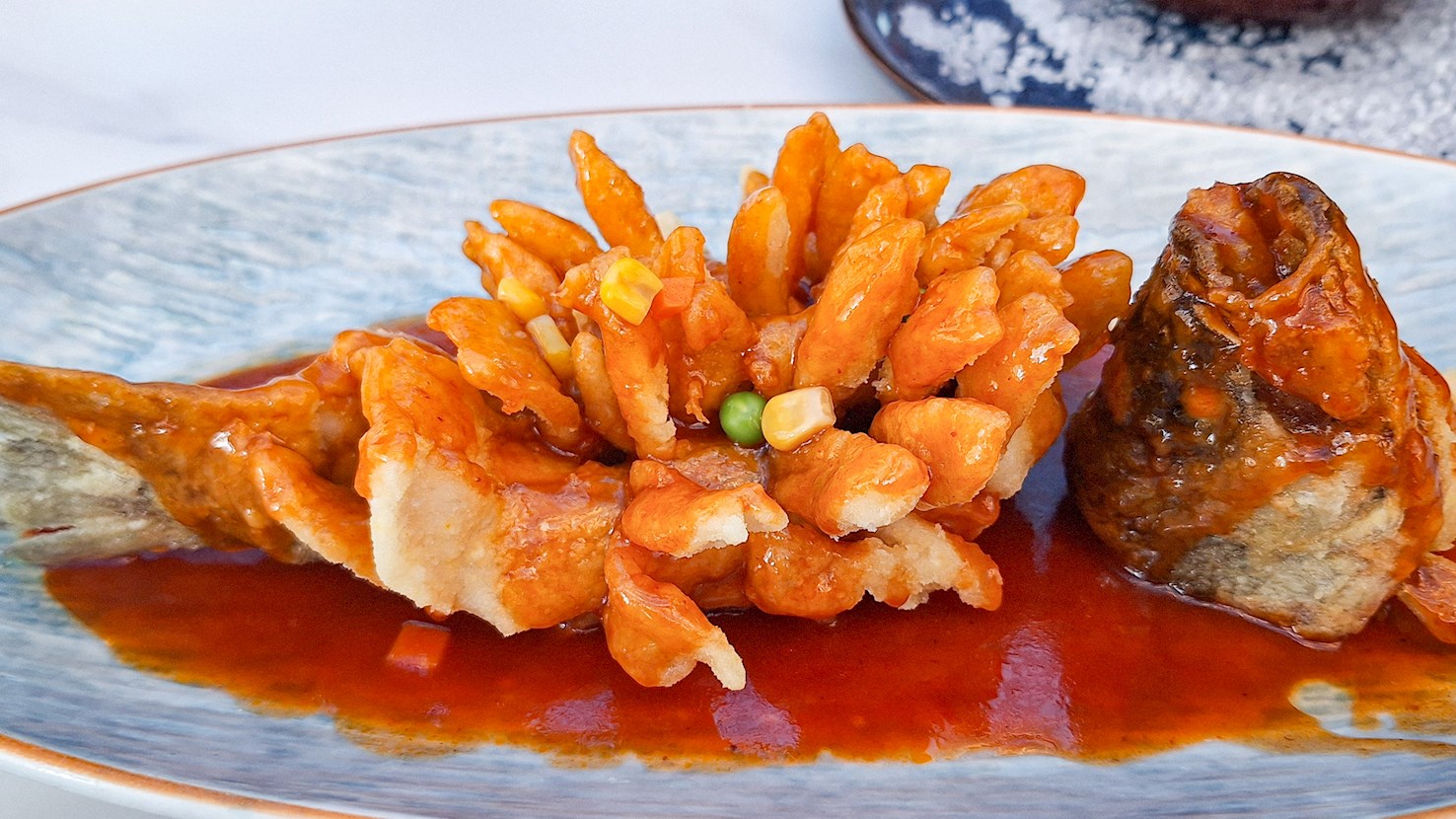
Sōngshǔ guìyú is a Jiangsu dish made from mandarin fish that is carefully cut, fried, and coated in a sweet and sour sauce, special because its precise preparation makes the flesh fan out like a squirrel’s tail while keeping a crisp texture and delicate flavor. Originating in Suzhou, it reflects the refined artistry of Jiangsu cuisine, where attention to knife skills, balance of taste, and visual presentation has long been valued. The dish became well known during the Qing dynasty, when Suzhou’s culinary culture emphasized both elegance and technical skill, and it soon became a highlight of banquets and formal gatherings. The preparation begins by cleaning the mandarin fish, leaving the head and tail intact while crosshatching the flesh so that it opens up when fried. After coating with starch, the fish is deep-fried until golden, puffed, and crisp, then served with a glossy sauce made from vinegar, sugar, soy sauce, and tomato paste or ketchup. This combination produces a dish that is visually striking and texturally balanced, with the crisp surface absorbing the tangy and sweet sauce. Today, it remains a centerpiece in Suzhou and across Jiangsu, often served at banquets, festivals, and family celebrations. It is eaten communally, shared at the center of the table, and continues to represent both the delicacy of freshwater fish and the craftsmanship of Jiangsu’s culinary heritage.
Suzhou mooncake are a particular variety of mooncake that originated from Suzhou. Differing significantly from the perhaps more widely-known Cantonese-style mooncakes, Suzhou mooncakes boast a flaky, multi-layered crust and usually comes with savory fillings. The most popular version includes fillings such as minced pork, spiced to perfection with soy sauce, sugar, and other seasonings. These mooncakes are traditionally enjoyed during the Mid-Autumn Festival but can often be found year-round in Suzhou and surrounding areas, cherished for their unique textures and delectable flavors.
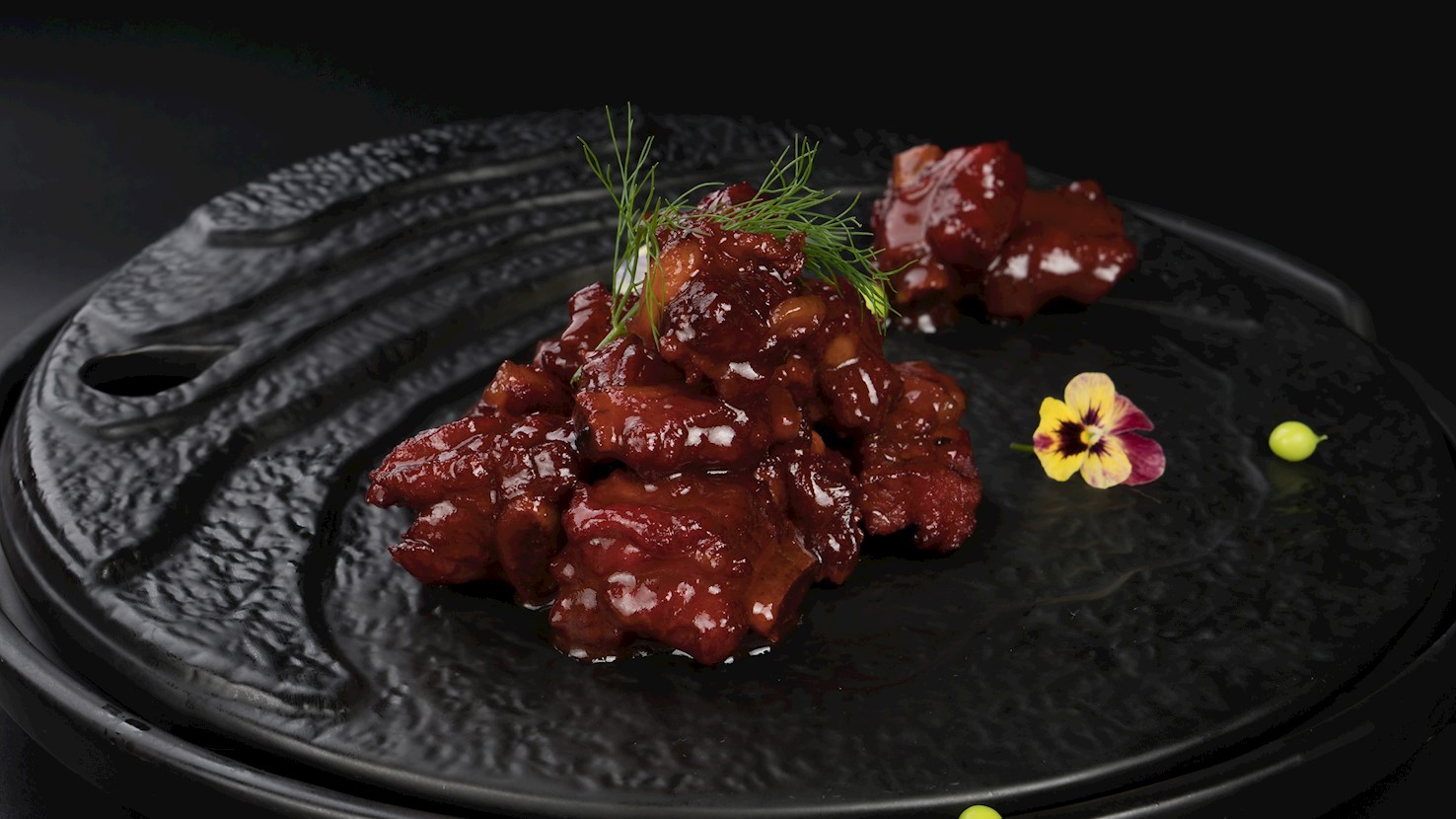
Wu xi rou gu tou is a traditional dish originating from Wuxi in Jiangsu. The dish is usually made with a combination of pork ribs, ginger, scallions, Shaoxing wine, star anise, cinnamon, soy sauce, sugar, salt, stock, and potato starch. The ribs are cut into fat squares of meat that are salted, chilled, covered with cold water, boiled, drained, rinsed, and placed in a clay pot or a pan with scallions, ginger, wine, spices, soy sauce, stock, and sugar. The dish is simmered over medium heat for an hour, and the ginger, scallions, and spices are then removed and the sauce is left to reduce. Potato starch is added to the sauce, and the ribs are then served with the thickened gravy.
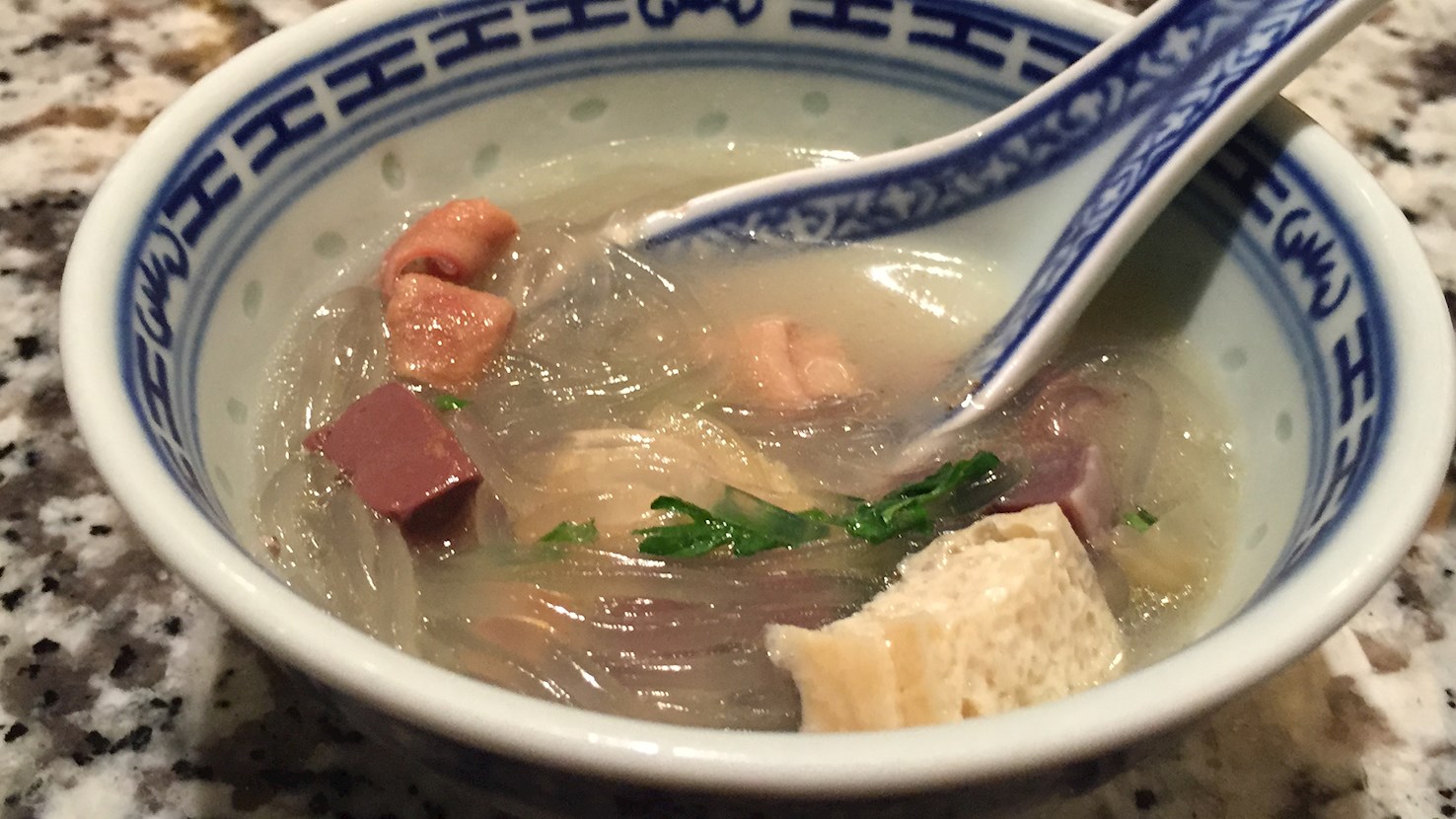
Duck blood and vermicelli soup is a traditional delicacy made by cooking vermicelli, duck liver, blood, and intestines with dried tofu, dried shrimp, ginger, sesame oil, and caraway seeds. Although the dish is consumed in many Chinese regions, it is a specialty of Nanjing, famous throughout the world for its duck dishes, which is why it is sometimes referred to as the capital of duck. According to a popular story, a poor man in Nanjing had killed a duck and used a bowl to hold its blood. While cleaning the duck, he accidentally dropped some vermicelli into the bowl and cooked the stew afterwards. When he tasted the stew, he found it quite flavorful, and a wealthy man heard about the newly created dish, thus employing the poor man as a cook for his family. Today, duck blood and vermicelli soup hold the status of a Nanjing favorite, while some cooks add 20 different Chinese herbs in the soup, believing that their ingredients help with blood circulation, removal of toxins from the body, and the maintenance of one's beauty.
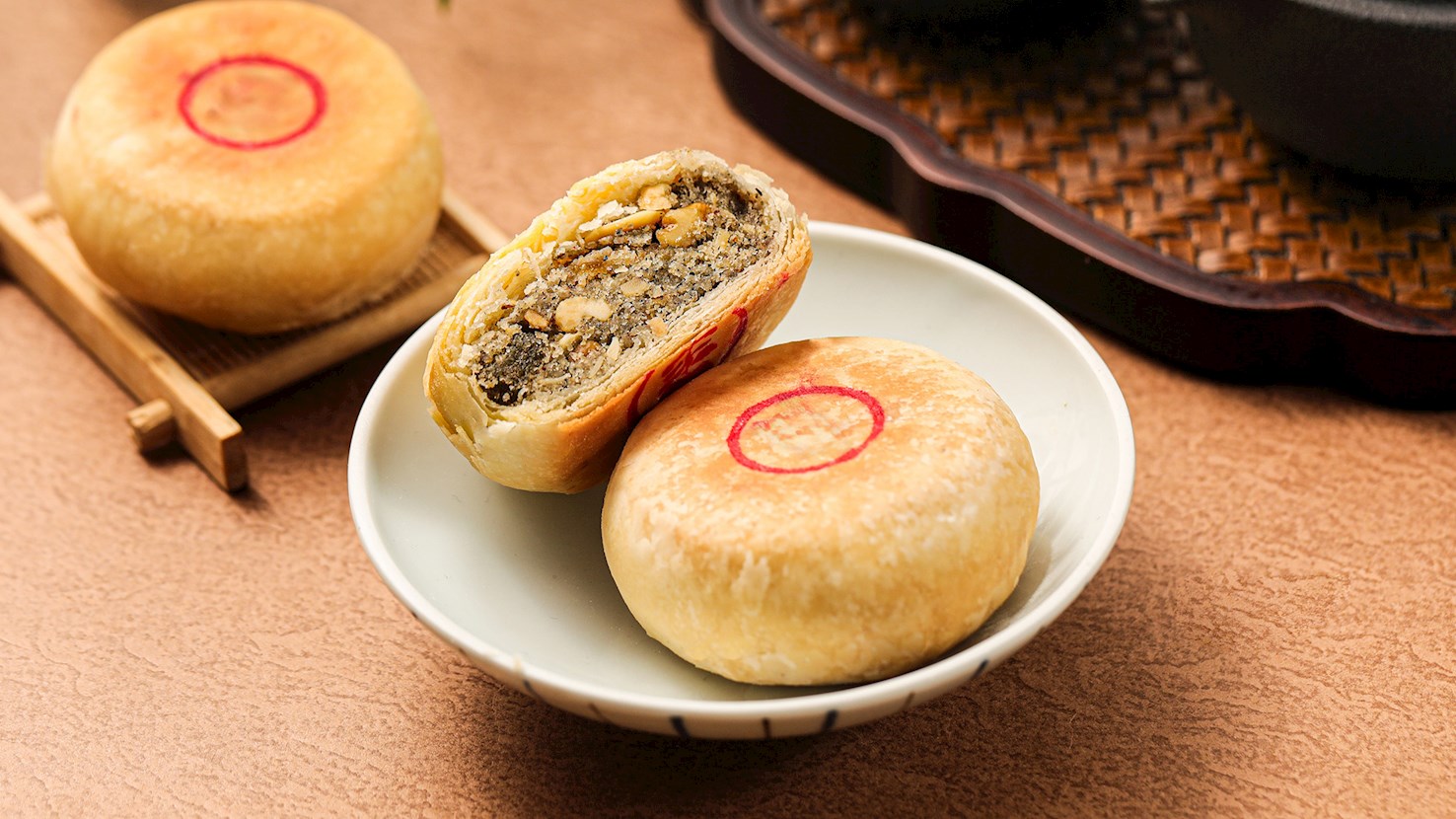
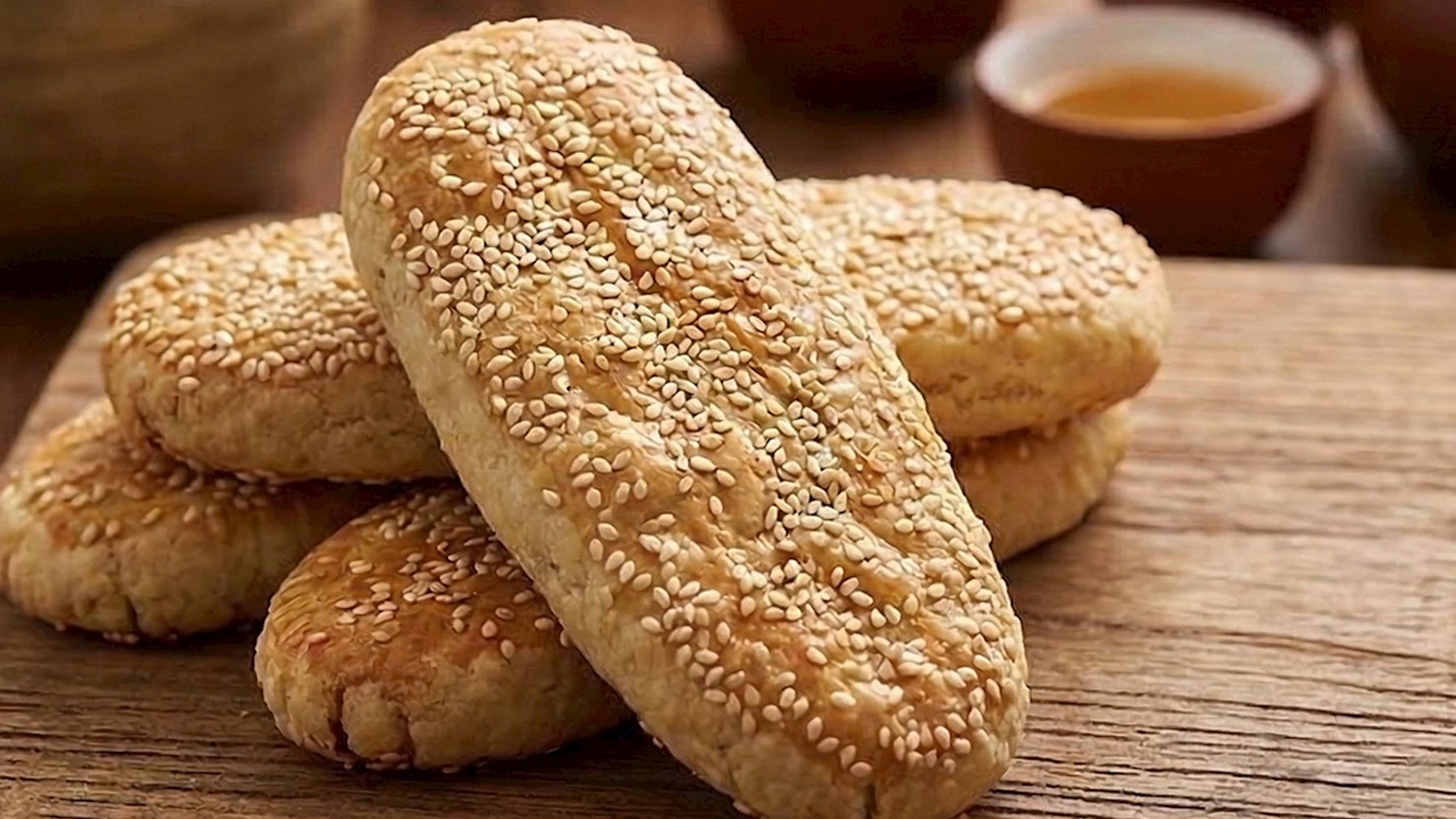
Wà dǐ sū is a pastry from Suzhou in Jiangsu province, recognized as part of the refined Jiangnan style of baked goods. Its name, which means “sock-bottom pastry,” comes from its oval, flat shape that resembles the sole of a cloth shoe. The pastry is known for its crisp, flaky texture and mild sweetness, often paired with tea or included in pastry assortments given during festivals and gatherings. The roots of this pastry lie in Suzhou’s long-standing reputation for fine pastry-making, where cooks developed techniques of layering dough with lard to achieve delicacy and lightness. Over time, wà dǐ sū became one of the characteristic pastries of the region, noted for its distinctive shape and balance of flavors. It was part of the broader Jiangnan confectionery culture, which emphasized refinement and variety, making it popular not only in households but also in teahouses where small pastries were served as companions to leisurely tea drinking. The preparation of wà dǐ sū involves two types of dough: one made with flour and water, and another enriched with lard. These are layered and folded repeatedly, then rolled out to create the many thin, crisp layers that define the pastry. The filling usually consists of sesame and sugar, though red bean paste and other sweet fillings can also be used. The shaped pastries are brushed, sometimes sprinkled with sesame seeds, and baked until golden. When finished, they are light, brittle, and aromatic, with the filling providing sweetness against the neutral crispness of the pastry shell. Today, wà dǐ sū is eaten mainly in Jiangsu and the wider Jiangnan region. It is sold in pastry shops, served in teahouses, and brought home as a sweet to share with family or guests.
Nánjīng chòu dòufu is a regional style of stinky tofu from the city of Nanjing in Jiangsu province, known for its golden exterior, softer texture, and mild yet distinctive aroma compared to other versions found across China. While the dish shares the same foundation of fermented tofu, the Nanjing style emphasizes a balance between pungency and accessibility, making it a popular snack in the city’s markets and snack stalls. The roots of stinky tofu in Nanjing go back to the broader development of fermented soy products in southern China, where preserving tofu not only extended its shelf life but also created unique flavors appreciated by local communities. In Nanjing, the process was refined to produce a tofu that developed a noticeable but not overpowering odor, resulting in a snack more approachable than some of the sharper styles from Hunan or Shaoxing. Over time, it became part of the city’s street food culture, closely tied to the bustling markets and neighborhoods where residents sought out affordable, flavorful snacks. The preparation involves soaking tofu in a brine of fermented vegetables, herbs, and seasonings that impart both aroma and depth of flavor. Once fermented, the tofu cubes are fried in oil until the outside turns golden brown and slightly crisp, while the inside remains soft and tender. The fried tofu is then served hot, usually topped with garlic sauce, chili paste, or a drizzle of soy-based seasoning. Some vendors also add pickled vegetables or herbs to enhance the flavor. The result is a snack that combines the distinct character of fermented tofu with the savory richness of its toppings. Today, Nánjīng chòu dòufu is eaten primarily as a street snack in Nanjing, often found in night markets, food stalls, and busy shopping streets. It is enjoyed by locals as a quick bite between meals and sought out by visitors who want to experience the city’s distinct version of a nationally known dish.
TasteAtlas food rankings are based on the ratings of the TasteAtlas audience, with a series of mechanisms that recognize real users and that ignore bot,
nationalist or local patriotic ratings, and give additional value to the ratings of users that the system recognizes as knowledgeable.
For the “Top 11 Jiangsu Foods” list until June 02, 2026, 479 ratings were recorded, of which 410 were recognized by the system as legitimate.
TasteAtlas Rankings should not be seen as the final global conclusion about food. Their purpose is to promote excellent local foods,
instill pride in traditional dishes, and arouse curiosity about dishes you haven’t tried.
The initial list of top producers was compiled based on available reviews, awards, local recommendations, media and blog coverage, and consumer reviews.
The list will be updated with ratings from TasteAtlas local ambassadors and TasteAtlas users.