


shutterstock

Top 44 Sichuan Foods

Last updated on June 02, 2026

Best Sichuan foods

01
Noodle Dish

Dàndànmiàn (Dan Dan noodles)

4.3 ·

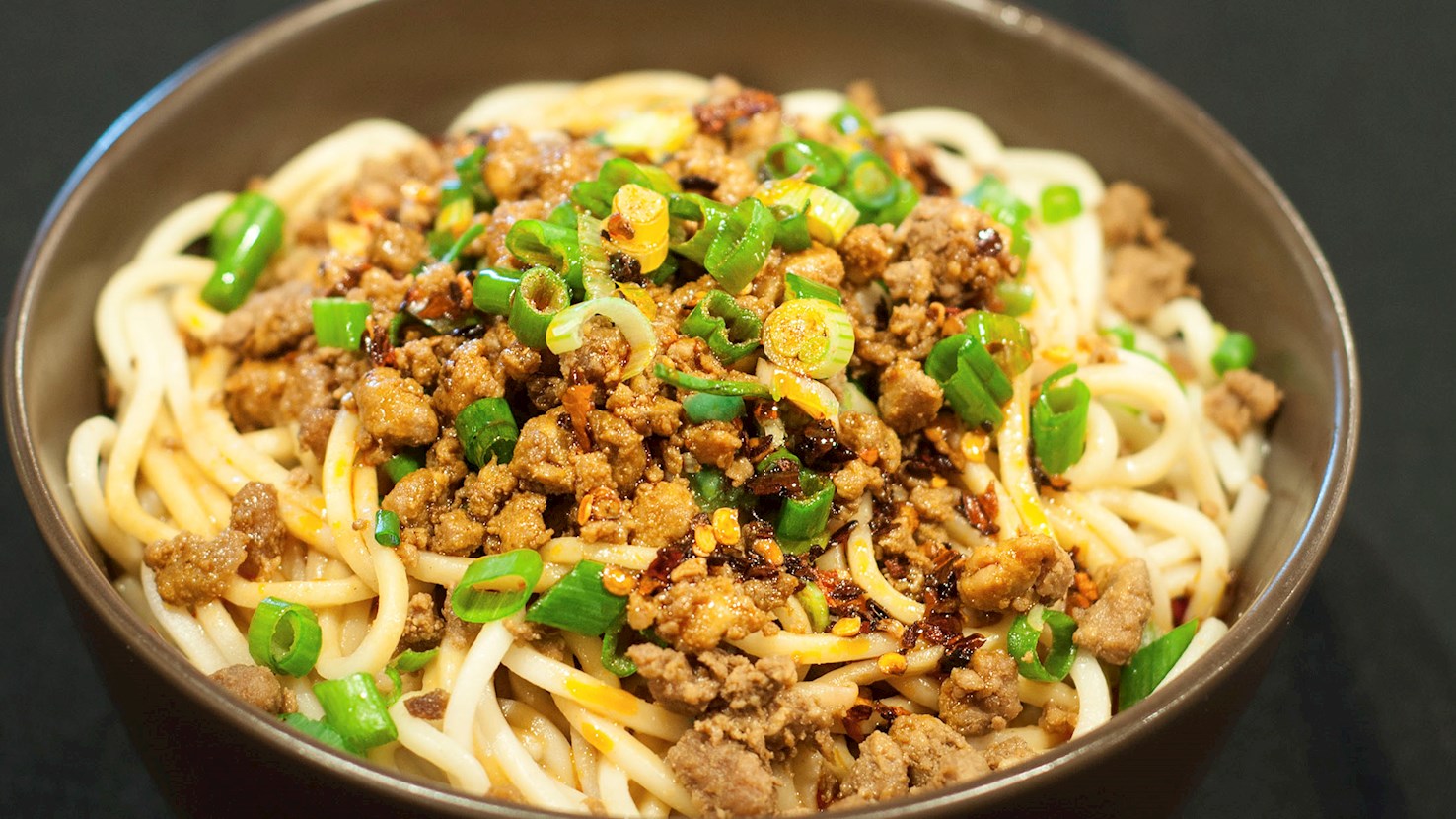
Traditional dan dan noodles are a true classic of Chinese cuisine. The star of the dish is a spicy sauce served with the noodles. Made with chili oil, preserved vegetables, Sichuan peppercorn, and sometimes sesame or peanut paste, the sauce bursts with heat and complex flavors. The meat, most commonly minced pork or beef, is also commonly included, but mainly acts as a garnish. In China, the varieties differ only slightly, but worldwide the traditional dan dan noodles have been adjusted to the more gentle western palate and use significantly fewer spices. The dish originated in the Sichuan province, and it is still one of the most common dishes in the area. The name itself comes from the way the noodles were initially offered to the Sichuan citizens and refers to the bamboo pole carried on the shoulders, which was used to transport the dish through the city streets. Today, the dish is usually served in restaurants, but is still equally attractive and retains the original flavors. Whether they are eaten hot or cold, dan dan noodles are usually served in smaller portions, as an appetizer, the main dish, and sometimes even as an accompaniment. Typical garnishes include sliced scallions, chopped peanuts, or sesame seeds.

02
Stew

Sìchuān huǒguō (Sichuan hot pot)

4.3 ·

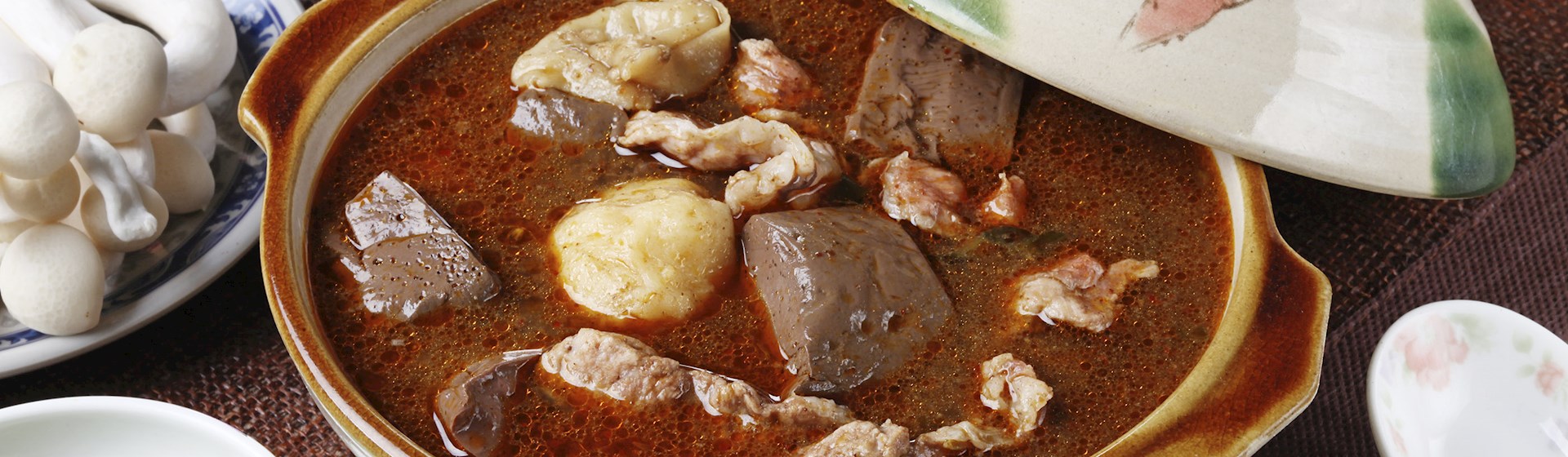
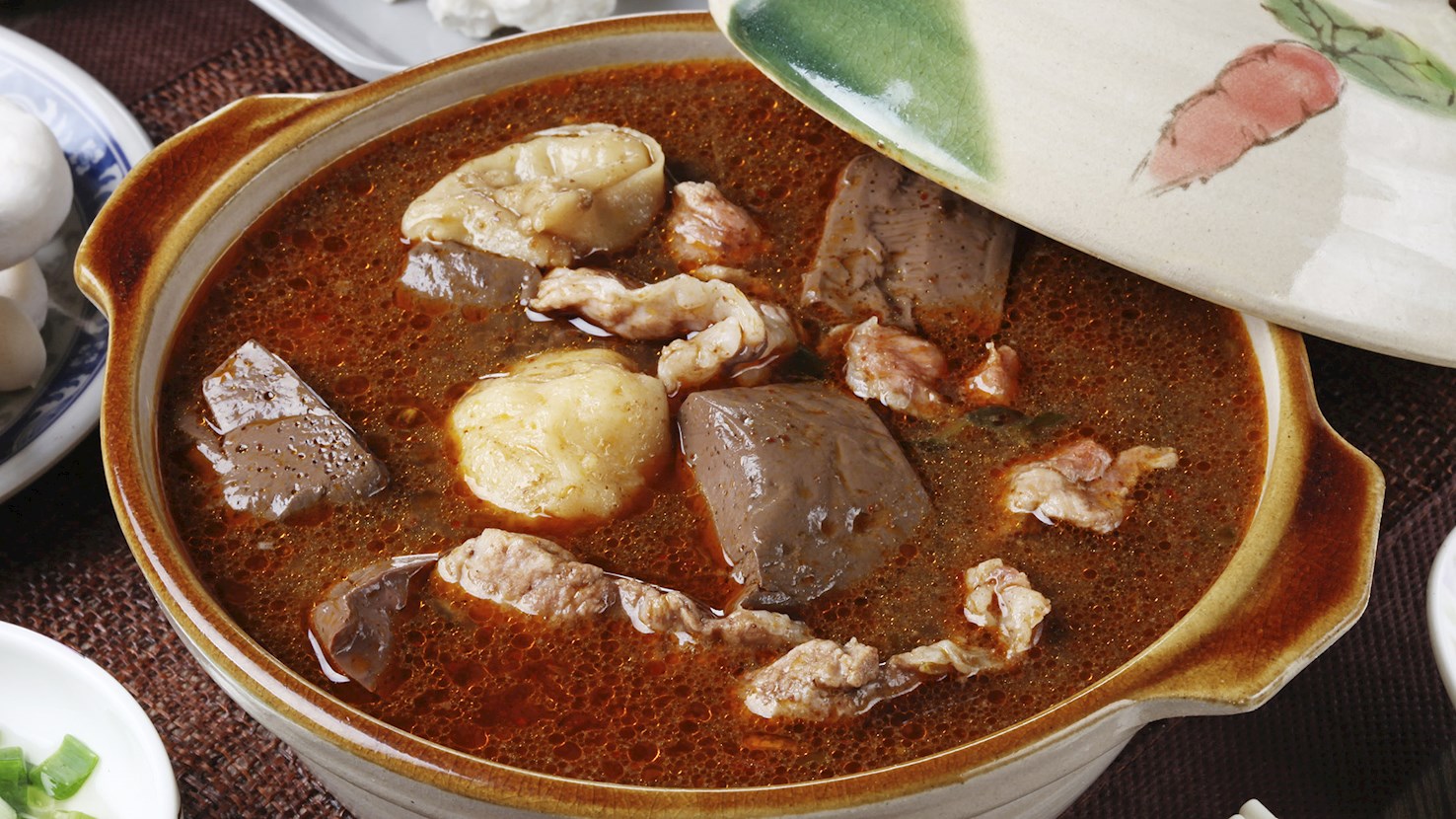
Sichuan hotpot is a numbingly hot and spicy dish made by poaching raw ingredients in a pot of boiling broth. The ingredients might include sliced meat, offal, seafood, vegetables, noodles, and most importantly, Sichuan peppercorns. Consuming hotpot is a communal affair, so people usually gather around the pot while socializing and adding the ingredients into it. As its name suggests, the dish was invented in Sichuan at the beginning of the 20th century. Originally, fisherman and port workers from the region could not afford regular cuts of meat, so they used offal, which was cooked in a spicy broth in order to disguise its pungent aromas. Over time, the dish evolved and became extremely popular throughout China and in the United States of America, due to the addition of fragrant spices and other flavorful ingredients such as ginger, garlic, cinnamon, and Sichuan bean paste. Although the dish is consumed throughout the year, it is most popular during winter because it warms the body and improves circulation.

03
Stir-fry

Huíguōròu (Twice-cooked pork)

4.2 ·

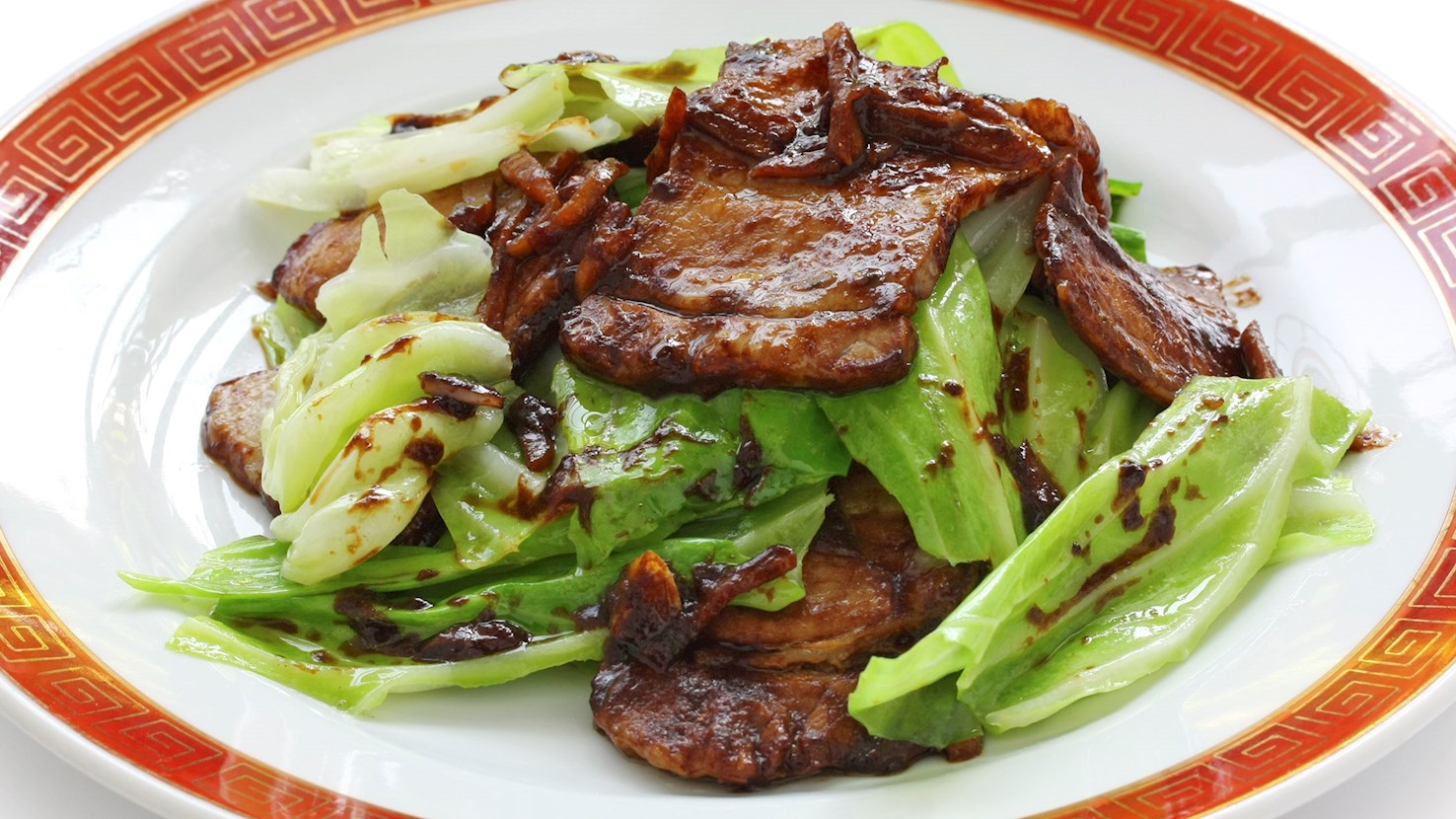
Twice cooked pork is a Sichuan specialty prepared by cooking fatty pork leg or belly (with the skin intact) in two different ways. Pork is first simmered in a pot and cooled in the refrigerator in order for the meat and fat to firm up. After that, the meat is sliced and stir-fried with vegetables such as cabbage, bell peppers, leeks, and mushrooms until it develops a brown color and the skin gets crispy on the edges. Ingredients may vary from one cook to another, but most of them add a sauce made with rice wine, soy sauce and various other condiments to the wok along with meat and vegetables. It is believed that the dish was invented during the Song Dynasty period by a poet who was preparing a pork dish for his friend. He cooked the meat in a pot and forgot about it, and when he returned, he saw that the liquids had evaporated, and the meat was sizzling in its own fat, thus a new dish was created. Today, the people of Sichuan traditionally have a feast on every 1st and 15th lunar month, where twice cooked pork is prepared as the main star of the festivities.

04
Stew

Mapo doufu

4.2 ·

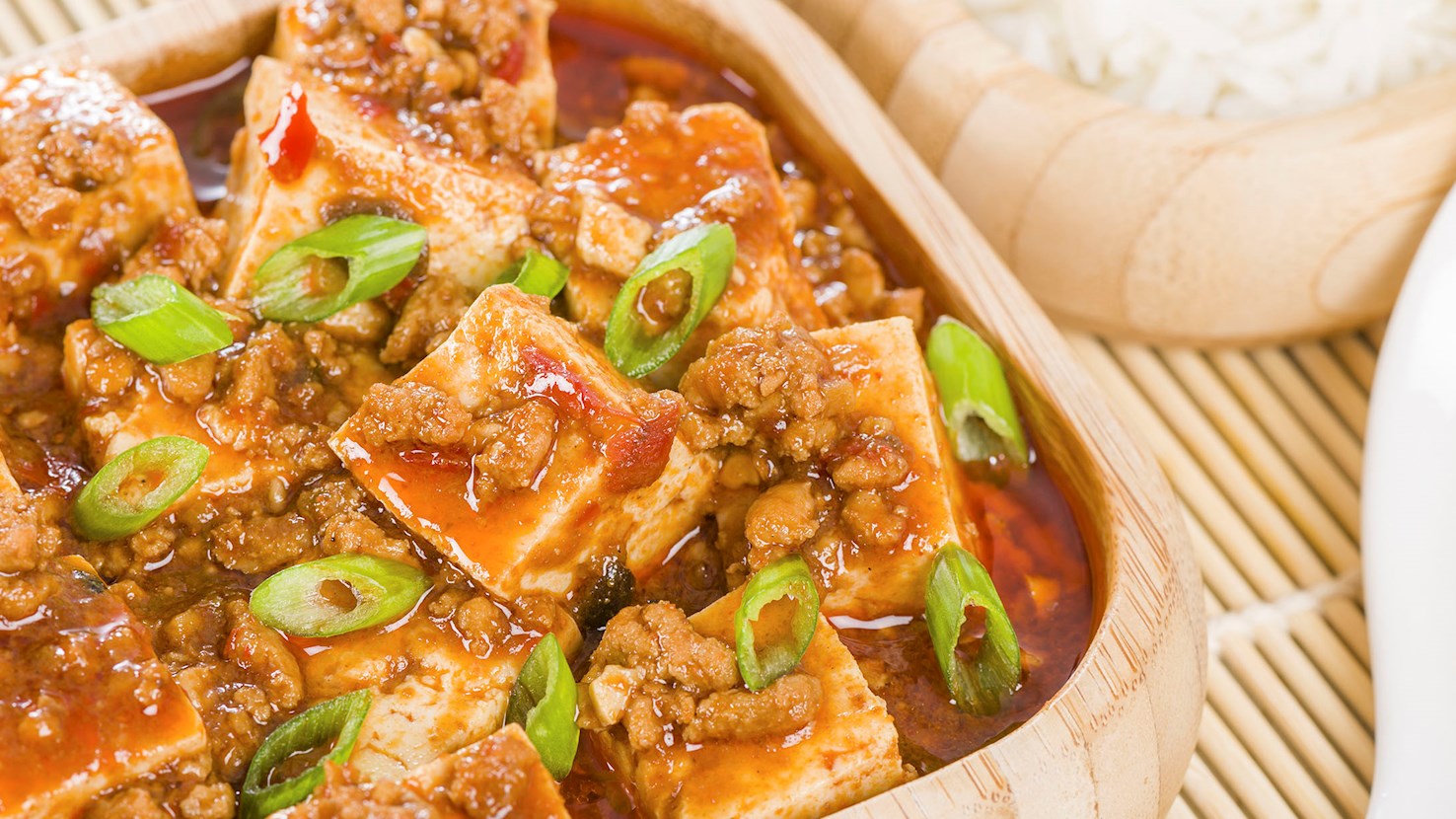
Sichuan in origin, mapo doufu consists of tofu cubes settled in a spicy sauce containing minced meat, traditionally beef or pork, and fermented black beans known as douchi. The dish is said to have been invented in a small restaurant called Chen Xingsheng in Chengdu back in 1862, while the name of the dish comes from the lady cook who created it. Namely, the word mapo is an abbreviation which can be translated as pockermarked grandma, referring to the woman's appearance. The numbing spiciness and hotness of the dish come from Sichuan peppercorns, chili oil, and doubanjiang, a broad bean paste, whereas additional ingredients include wine rice, soy sauce, ginger, garlic, a garnish of chopped green onions, and optionally, starch, which is used as a thickener. Once cooked, mapo doufu will have a spicy top oil layer which serves to preserve the heat of the dish. Steamed white rice is the perfect accompaniment to this dish, but mapo doufu can also be eaten on its own.

05
Stir-fry

Gong bao (Kung pao chicken)

4.1 ·

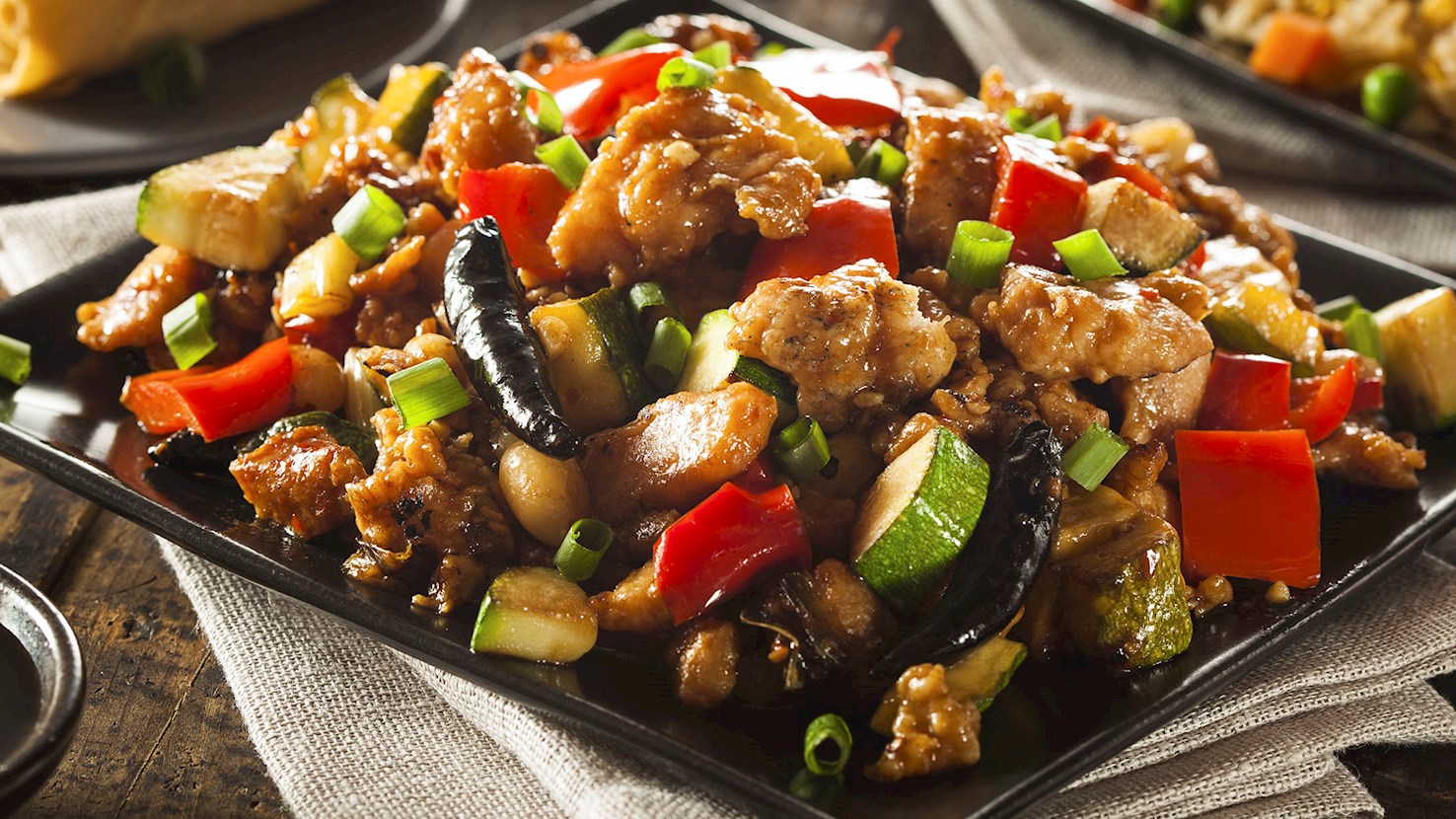
A staple of westernized Chinese cuisine and one of the favorite dishes of foreigners in China, kung pao chicken is a spicy stir-fry dish made with diced chicken, vegetables, peanuts, and Sichuan peppercorns. It was invented in the Sichuan province and has a unique, interesting origin story. In the 19th century, a boy named Ding Baozhen fell into a river and almost drowned. A passing stranger saved him, and as the years went by, Ding grew up to become a government official. He went to visit the man who saved him and ate a dish made with diced chicken, peanuts, and spicy peppercorns while visiting his home. Ding loved the dish so much that he asked the chef for a recipe, and then started serving it to his guests. The dish quickly spread in the Sichuan province, and many years later, it is still popular both in China and in the rest of the world. Although it's commonly eaten in North America, the dish is cooked differently and lacks the unique spice that makes the original so flavorful, because it was illegal to import it to the United States until 2005. However, it remains one of the most popular dishes in most Chinese restaurants throughout the world.

06
Soup

Suān là tāng (Hot and sour soup)

3.9 ·

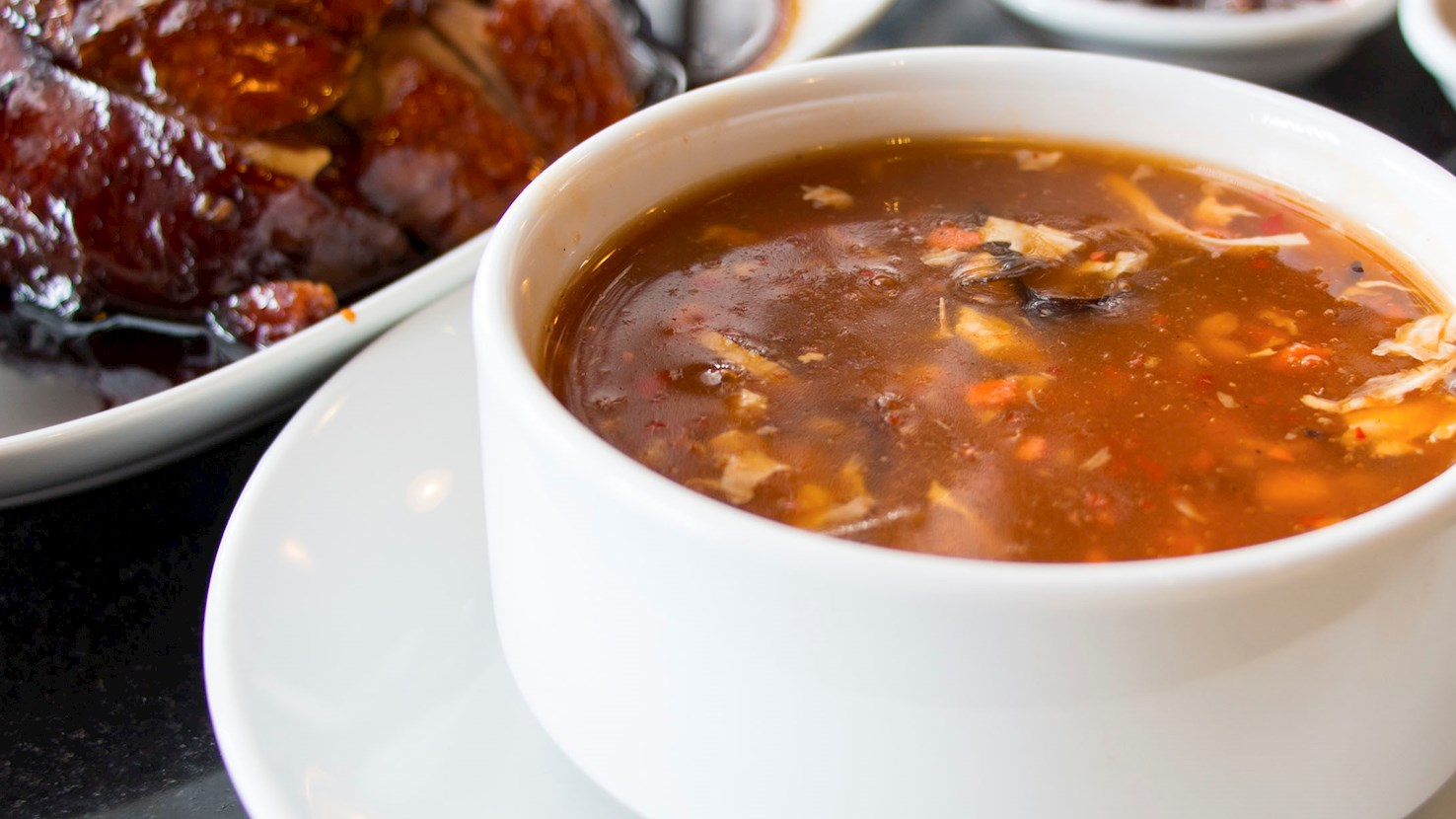
Originating from either Sichuan or Beijing, hot and sour soup is a classic meal that is suitable for every occasion and most weather conditions. It typically contains ingredients such as day lily buds, bamboo shots, tofu, wood ear fungus, and soy sauce-flavored broth. The hotness comes from red or white peppers, while the sour flavor is achieved by the use of vinegar. Hot and sour soup is commonly consumed after a big meal or as a hangover cure. It is also said that the soup is a great choice for giving a boost to one's appetite.

07
Noodle Dish

Mǎyǐ shàngshù (Ants climbing a tree)

3.8 ·

Mǎyǐ shàngshù is a Sichuan noodle dish known for its spicy, savory flavor and unique appearance, whose name translates to “ants climbing a tree.” Despite the vivid name, it contains no insects; instead, the dish features minced meat clinging to glass noodles, resembling small specks on branches. It originates from Sichuan province in southwestern China, where bean-based sauces, chili, and fermented seasonings form the foundation of much of the local cuisine. It developed as a humble home-cooked meal, created from simple, accessible ingredients: vermicelli noodles made from mung beans and small amounts of minced pork or beef. Because meat was scarce and precious in rural households, cooks learned to stretch its flavor by finely chopping and stir-frying it with seasonings to coat the noodles. Over time, the dish moved from family kitchens to restaurant menus, appreciated not for extravagance but for the way it transforms basic elements into a deeply flavored whole. It represents the resourcefulness and precision found throughout Sichuan cuisine, where layering condiments and aromatics creates depth far beyond the simplicity of the ingredients. Preparation begins with soaking the dried glass noodles until soft and pliable. Minced meat is fried in a hot wok with oil until fragrant, then mixed with doubanjiang, the Sichuan chili bean paste that provides the dish’s defining color and flavor. Aromatics such as garlic, ginger, scallion, and sometimes fermented black beans are added, along with soy sauce, rice wine, and stock. Once the sauce reaches a rich consistency, the softened noodles are added directly to the wok, where they absorb the liquid and take on a reddish hue. The result is a glossy tangle of noodles evenly coated with minced meat and sauce, the flavors concentrated and slightly smoky from the fried bean paste. A touch of sugar balances the salt and spice, while a small drizzle of sesame oil or vinegar may be added before serving. It is eaten hot, usually as part of a family meal or in small local restaurants specializing in Sichuan stir-fries and noodles. It can stand alone as a light meal or accompany rice and side dishes such as cold cucumber salad or stir-fried greens that temper the chili heat. In homes, it is often prepared for casual lunches or dinners, while in restaurants it appears as one of the essential items in the repertoire of Sichuan-style small plates.

08
Duck Dish

Zhāngchá yā (Zhangcha duck)

3.5 ·

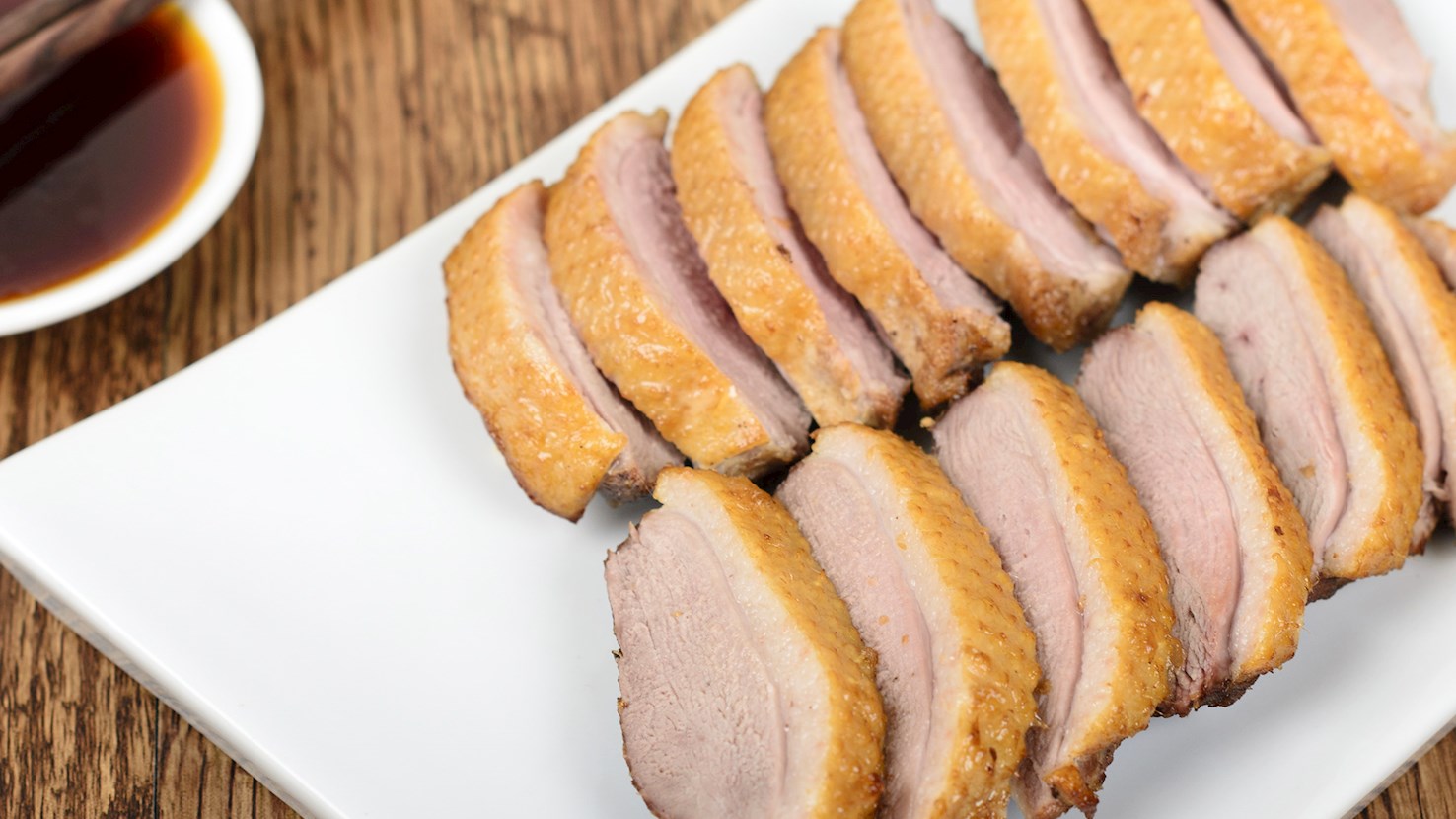
Zhangcha duck is a duck smoked with tea and camfor, originating from the Chinese province of Sichuan which is famed for its spicy dishes. The preparation of this meal is a five-step process; first, it’s marinated, then boiled, air-dried, smoked, and finally, fried. When served, pieces of duck meat are topped on gebao — a clam-shaped bun.

09
Technique

Gānguō (Dry pot)

n/a ·

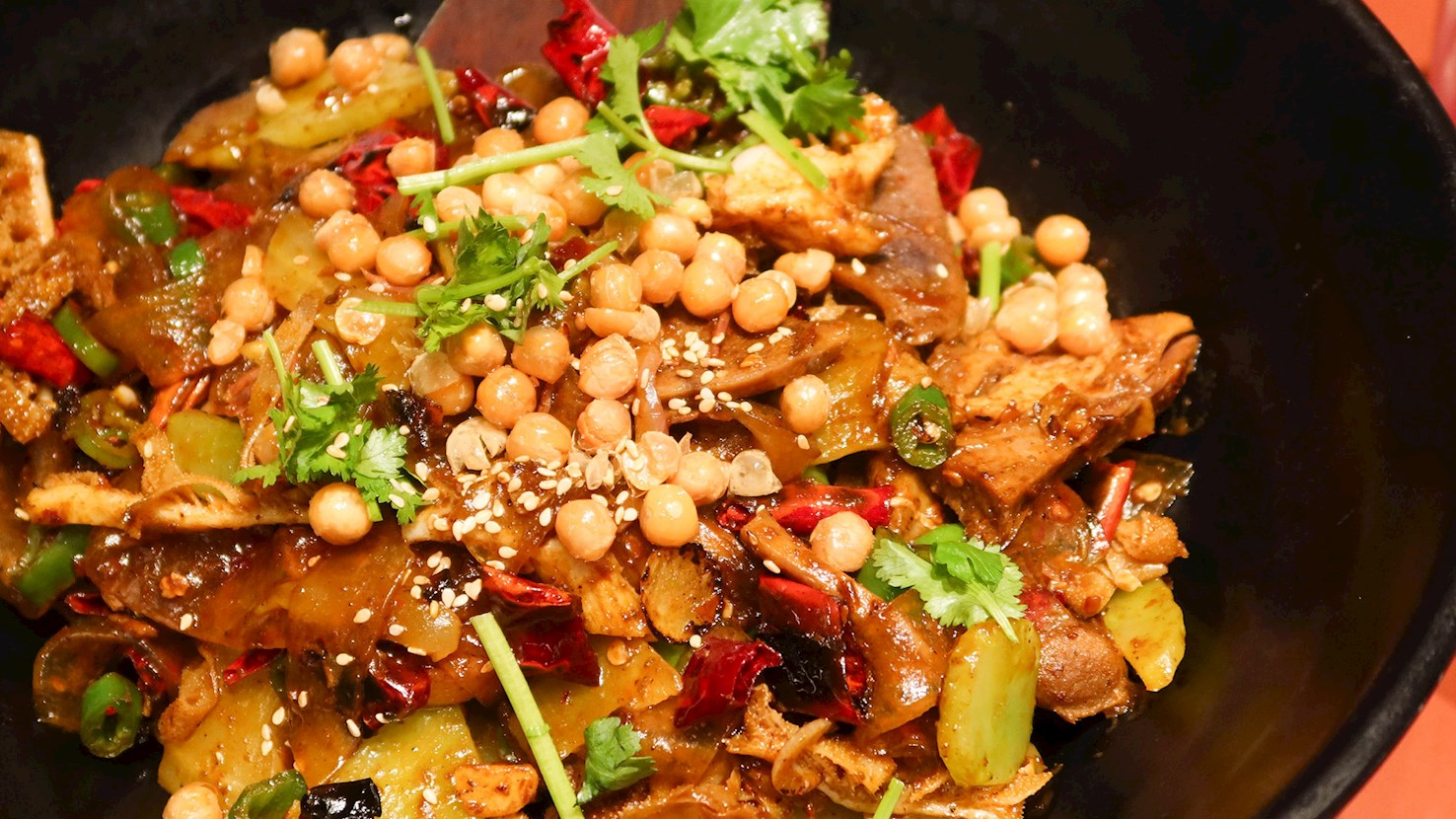
Gānguō is a style of Chinese cooking and a type of dish originating from Sichuan province, characterized by its dry, intensely flavored stir-fry made with meat, seafood, or vegetables cooked in a heavy iron pot with a rich blend of spices, chili, and aromatics. The term literally means “dry pot,” referring to the method in which ingredients are fried and seasoned until the moisture evaporates, leaving a thick coating of spiced oil and sauce. The roots of gānguō cooking lie in Sichuan’s restaurant culture, particularly in the regions around Chengdu and Chongqing, where communal eating and hotpot-style meals have long been central to social life. It evolved as a variation of huǒguō (hotpot), but instead of cooking ingredients in boiling broth, chefs began stir-frying them directly with chilies, peppercorns, and sauces to intensify their flavor. As dining culture modernized in the late twentieth century, dry pot dishes became a popular alternative to the more time-consuming hotpot, offering the same social experience with a faster, more concentrated taste. This shift reflected urban dining habits, where the emphasis moved toward dishes that could be shared yet prepared quickly, without losing the sensory impact associated with Sichuan cuisine. Preparation of gānguō begins with the selection of a main ingredient, commonly chicken, beef, fish, shrimp, or even frog, paired with a mix of vegetables such as lotus root, potato, bean sprouts, and leeks. These are briefly blanched or par-cooked to retain texture. In a heavy wok or iron pot, dried chilies, Sichuan peppercorns, garlic, ginger, and scallions are fried in oil to release their aroma. The main ingredients are then added and stir-fried over high heat with fermented bean paste (doubanjiang), soy sauce, and cooking wine. The process continues until most liquid has evaporated, creating a dry, fragrant coating around each piece. At the table, the dish is often served in the same pot used for cooking, kept hot over a small burner to preserve its temperature and aroma. In Sichuan and beyond, gānguō is eaten as a shared centerpiece at the table, accompanied by steamed rice or cold side dishes that balance its heat. It is particularly popular in gatherings, where friends or family eat directly from the pot, pairing it with light soups or cold drinks such as beer or herbal tea.

10
Appetizer

Suanla bocai (Hot and sour spinach)

n/a ·

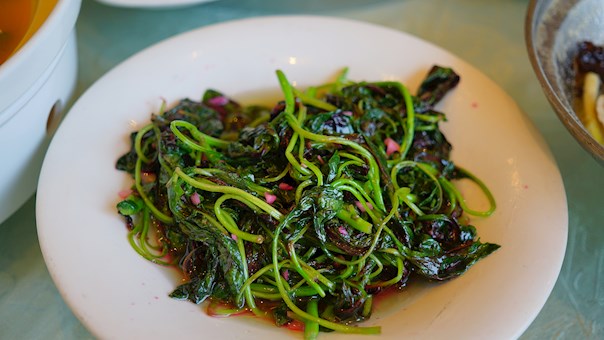
Suanla bocai is a traditional dish originating from Sichuan. It's usually made with a combination of spinach, Zhenjiang vinegar, soy sauce, chicken stock, sugar, and chili oil. The spinach is blanched, refreshed under cold water, drained, cut into strips, and arranged on a serving dish. A mixture of soy sauce, chicken stock, chili oil, sugar, and Chinkiang vinegar is stirred into a sauce that is then poured over the spinach before the dish is ready to be served. Suanla bocai is always served cold, usually as an appetizer.

Best Sichuan food products
01
Spirit

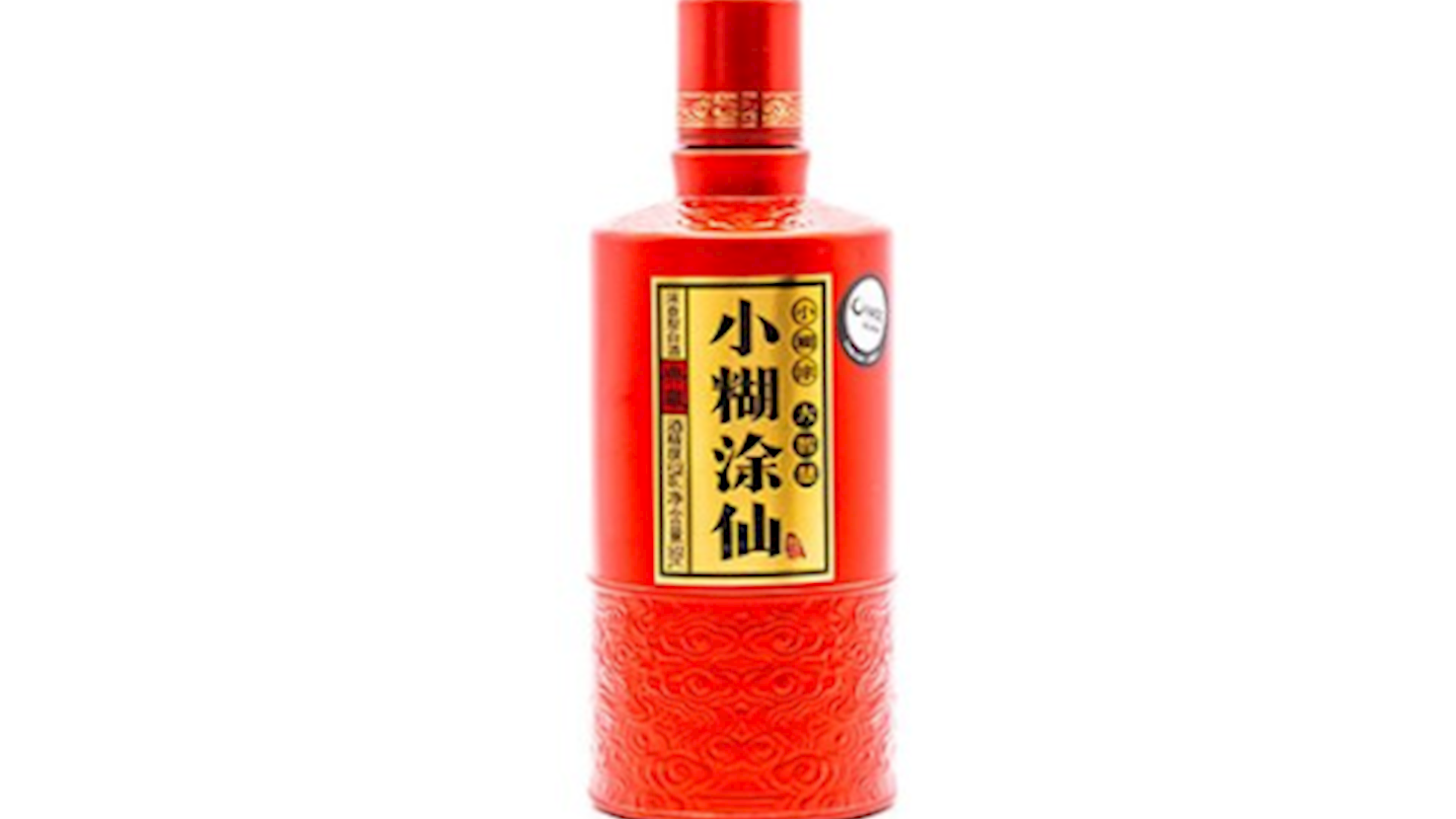
Xiaohutuxian Group

5 ·
Xiaohutuxian Group is a modern Chinese distillery based in Chengdu, Sichuan Province, specializing in the production of high-quality baijiu spirits that seamlessly blend tradition and innovation. The company has built a reputation as one of the leading producers in the premium segment of the Chinese market, combining authentic fermentation and distillation methods with a modern approach to design, marketing, and brand identity. A particular focus is placed on preserving the microbial culture and grain base traditionally used in Chinese baijiu production, ensuring consistency in quality and richness of flavor. Their spirits are distinguished by complex aromatic profiles that unite floral, fruity, nutty, and umami tones, creating a unique tasting experience. The company’s vision is to connect the past and future of Chinese distillation - honoring tradition while introducing technological innovation and contemporary aesthetics. Today, Xiaohutuxian Group stands as a symbol of the new wave of Chinese producers redefining the global identity of baijiu, combining artisanal precision, cultural authenticity, and distinctive design into a single, harmonious whole.
Awards
SFWSC - San Francisco World Spirits Competition - Double Gold (2024, 2023)
IWSC- International wine & spirit competition - Spirit Gold (2024, 2023, 2022, 2021, 2020)
02
Spirit

Luzhou Laojiao

5 ·
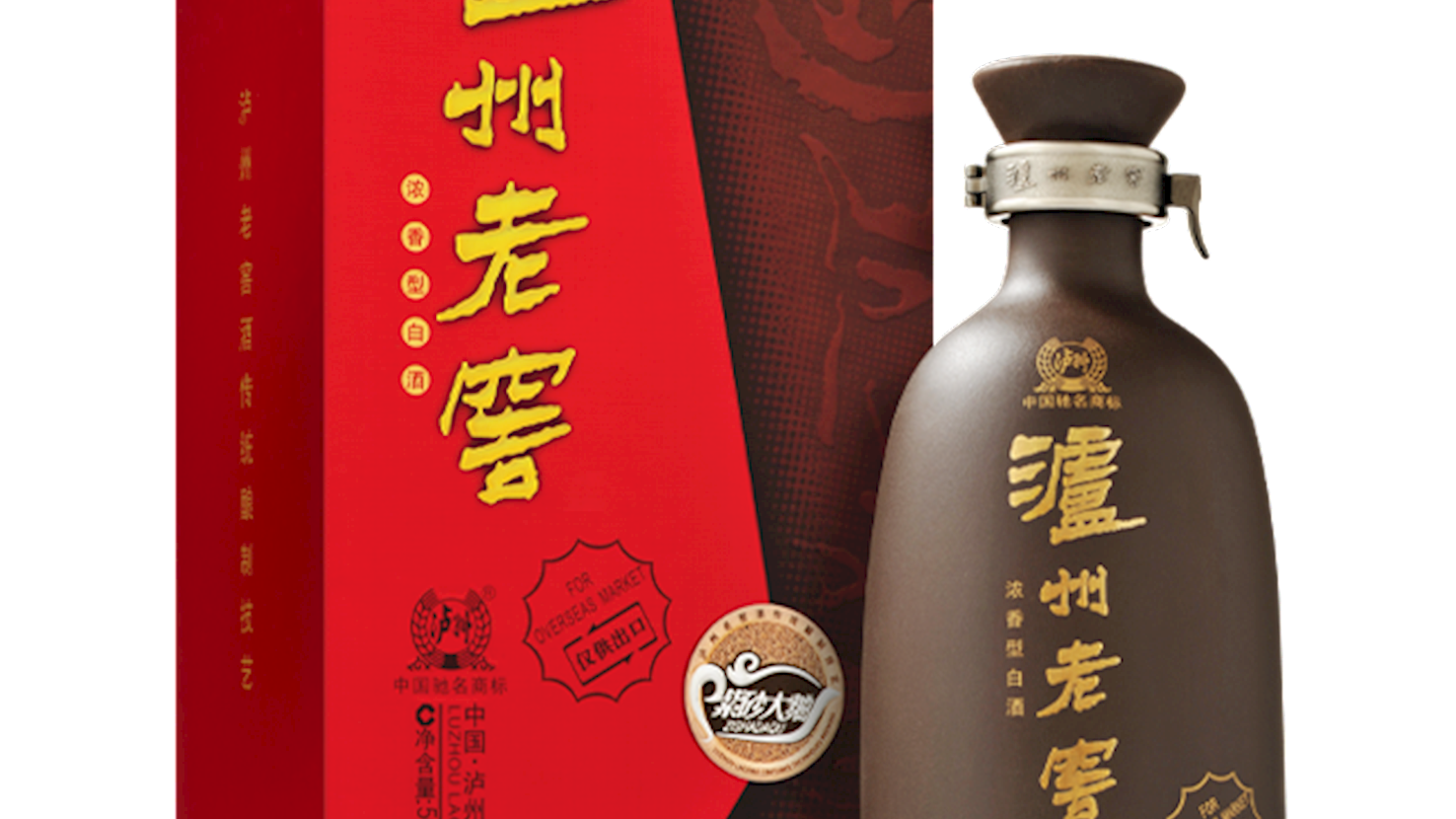
Luzhou Laojiao is a baijiu brand originating from Luzhou in Sichuan Province, a region regarded as one of the historical centers of Chinese baijiu and the homeland of the iconic “strong-aroma” style. The brand relies on traditional fermentation in clay pits, where the unique local microflora and aged pit mud (niqu) create an aromatic profile that is deeply tied to the Luzhou terroir. Luzhou Laojiao focuses on producing more accessible, everyday expressions of baijiu, aimed at consumers who want an authentic Sichuan-style spirit without the premium pricing of high-end labels. Its production follows core principles of the Luzhou school: sorghum as the primary grain, multi-stage fermentation, and repeated distillation to achieve a soft, balanced, and aromatic spirit. Widely present in local retail and dining settings, the brand is associated with affordability, consistent quality, and the characteristic richness of Sichuan baijiu. In this way, Luzhou Laojiao plays a role in preserving regional identity while offering a genuine, approachable interpretation of one of China’s oldest distillation traditions.
Awards
SFWSC - San Francisco World Spirits Competition - Double Gold (2024, 2023)
IWSC- International wine & spirit competition - Spirit Gold (2024)
03
Spirit

Wuliangye

5 ·
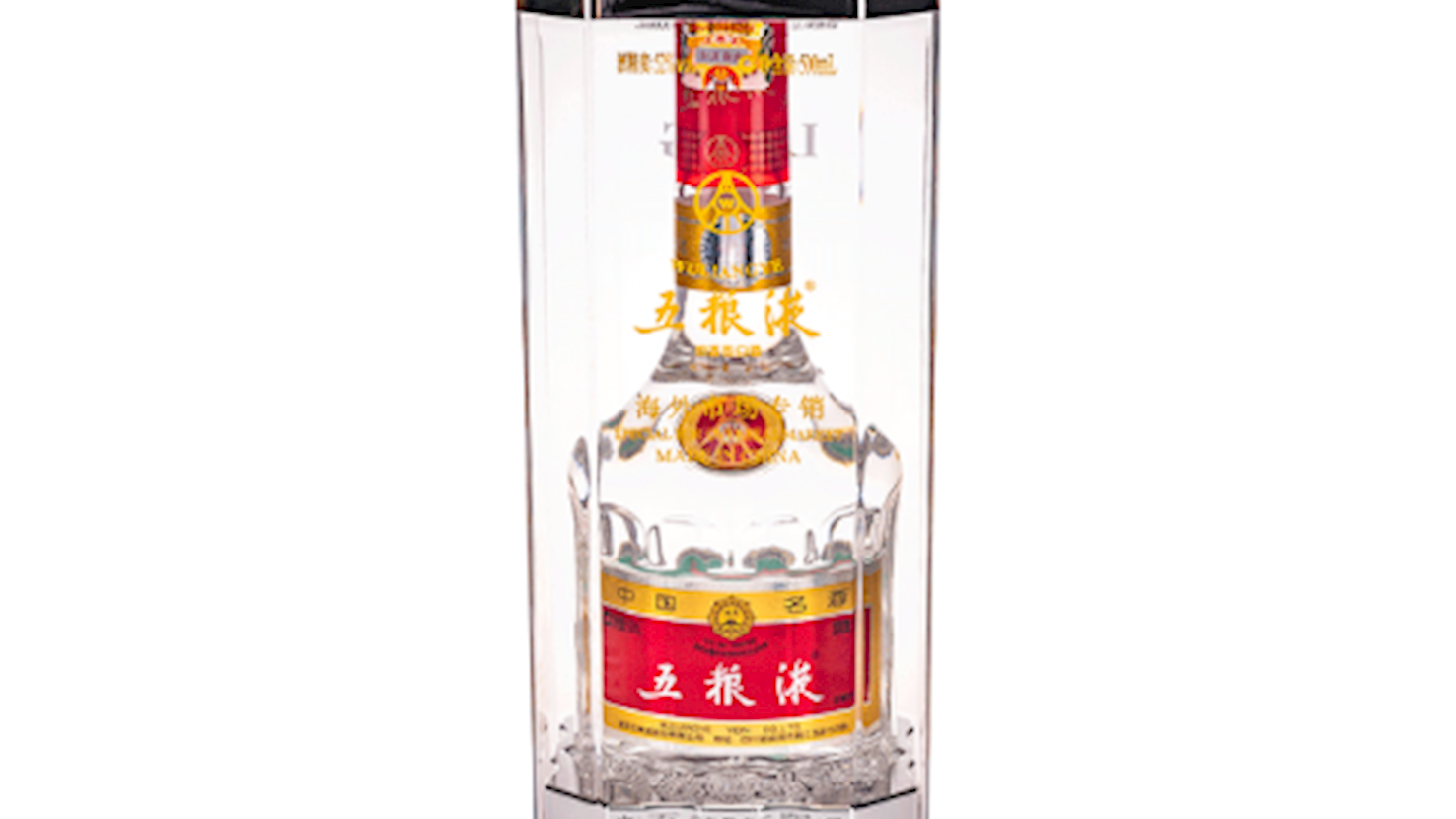
Wuliangye is one of China’s most iconic and prestigious baijiu brands, originating from Yibin in Sichuan Province, a region whose unique microclimate and underground clay fermentation pits create ideal conditions for producing the traditional “strong-aroma” style. It is crafted from a distinctive blend of five grains - sorghum, regular rice, glutinous rice, wheat, and corn - which together contribute to its rich, multilayered aromatic profile. Fermentation takes place in ancient earthen pits, followed by distillation and aging that develop notes of exotic fruit, gentle esters, herbal nuances, and a subtle underlying sweetness. Recognized as a national symbol of Chinese distillation heritage, Wuliangye is frequently served at state events and prestigious banquets, while also maintaining strong international recognition through global exports. Its complex, unmistakable flavor and longstanding craftsmanship make it one of the most influential representatives of the baijiu tradition and a benchmark for anyone seeking to understand the depth and diversity of this category.
04
Condiment

Sichuan Pixian Douban

5 ·
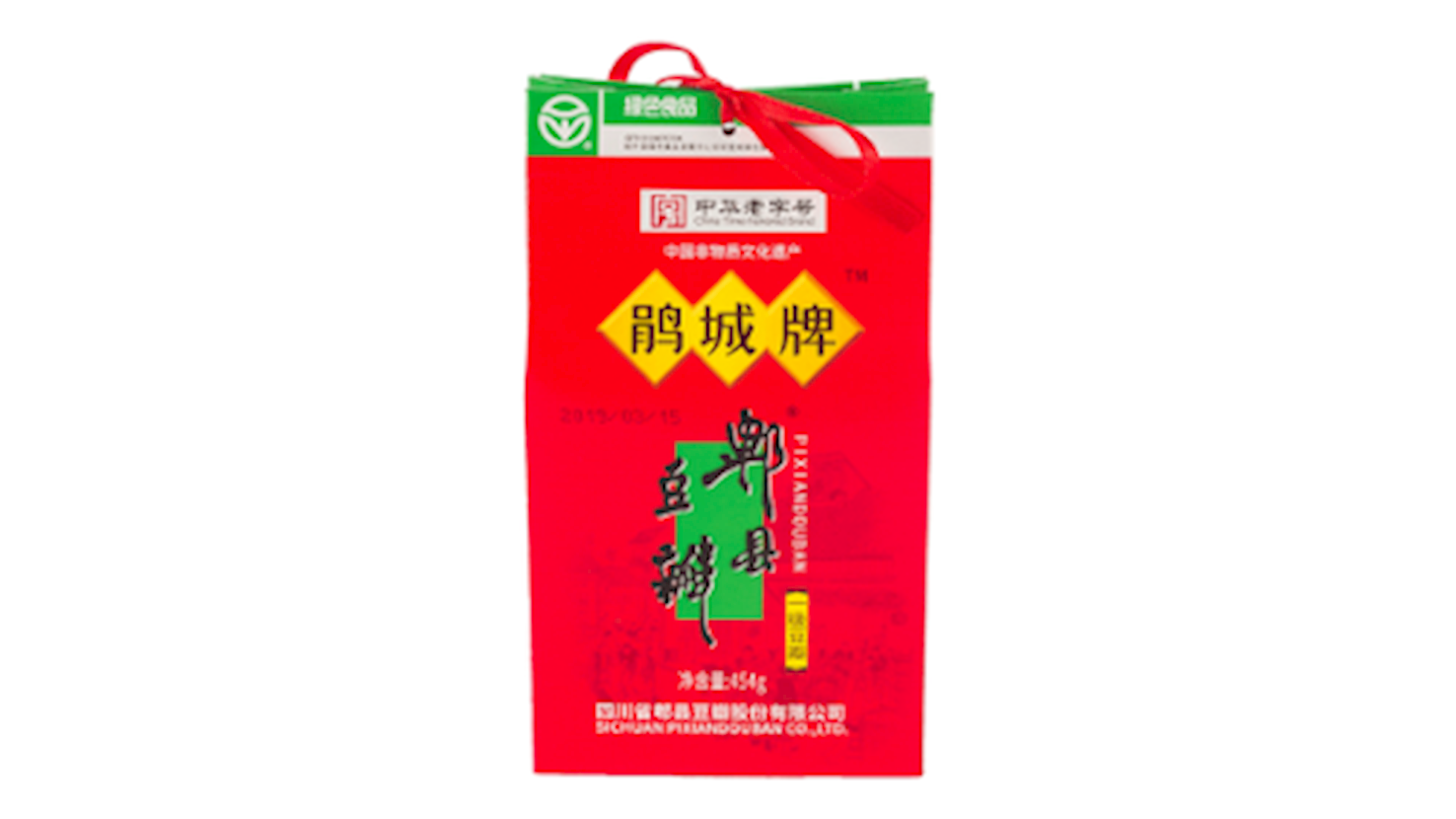
Sichuan Pixian Douban is a historic brand from Pidu District (formerly Pixian) in Sichuan Province, known for producing traditional doubanjiang made from fermented fava beans and chili peppers. Its production dates back to the 17th century, giving the brand an exceptional heritage and a strong connection to the local climate and microbial environment that shape the fermentation process. The core of their method involves long, natural sun-fermentation, the use of the local Erjingtiao chili variety, and aging in clay vessels, resulting in a deeply layered, umami-rich flavor profile. The brand holds a protected geographical indication, ensuring that the paste originates directly from Pixian and follows traditional, region-specific techniques. It is recognized for its thick texture, visible bean-and-chili structure, and a distinctive aroma that cannot be reproduced through industrial shortcuts. Because of its authenticity, Pixian douban is considered the benchmark for Sichuan cuisine and the foundation of classics such as Mapo tofu and twice-cooked pork. Despite partial modernization of the industry, the brand continues to uphold original methods that preserve the unique character of natural fermentation. This combination of tradition, terroir, and craftsmanship makes Sichuan Pixian Douban one of China’s most respected and influential producers of doubanjiang.
05
Spirit

Guiyahui

5 ·
Awards
IWSC- International wine & spirit competition - Spirit Gold Outstanding (2023)
06
Spirit

JinShaoFangBaijiu

5 ·
Awards
SFWSC - San Francisco World Spirits Competition - Double Gold (2024)
07
Spirit

Guizhou Wenzhong Baijiu Co.

5 ·
Awards
IWSC- International wine & spirit competition - Spirit Gold Outstanding (2023)
08
Spirit

Jiangsu Haizhouwan Baijiu

5 ·
Awards
IWSC- International wine & spirit competition - Spirit Gold Outstanding (2023)
09
Condiment

Sichuan Baoningcu

4.9 ·
Sichuan Baoningcu is a traditional vinegar producer from Sichuan Province, known for its long history and preserved fermentation methods rooted in local artisanal practices. Production relies on slow, natural fermentation in clay vessels, using high-quality grains and region-specific water, which give the vinegar its characteristic aroma, gentle acidity, and layered flavor. Their range includes classic and long-aged vinegars, organic varieties, and specialty lines designed for both professional kitchens and everyday home cooking. Today, Baoningcu is regarded as one of the key representatives of authentic Sichuan vinegar craftsmanship, with products widely used in traditional Chinese cuisine as well as in international gastronomy that values pronounced, naturally fermented character.
10
Spirit

Jiangsu Dongfangding Wine Co.

4.8 ·
Awards
IWSC- International wine & spirit competition - Spirit Gold (2023)
Read more
View all
View map
About this ranking

TasteAtlas food rankings are based on the ratings of the TasteAtlas audience, with a series of mechanisms that recognize real users and that ignore bot, nationalist or local patriotic ratings, and give additional value to the ratings of users that the system recognizes as knowledgeable. For the “Top 44 Sichuan Foods” list until June 02, 2026, 1,414 ratings were recorded, of which 1,249 were recognized by the system as legitimate. TasteAtlas Rankings should not be seen as the final global conclusion about food. Their purpose is to promote excellent local foods, instill pride in traditional dishes, and arouse curiosity about dishes you haven’t tried.

The initial list of top producers was compiled based on available reviews, awards, local recommendations, media and blog coverage, and consumer reviews. The list will be updated with ratings from TasteAtlas local ambassadors and TasteAtlas users.

Similar lists