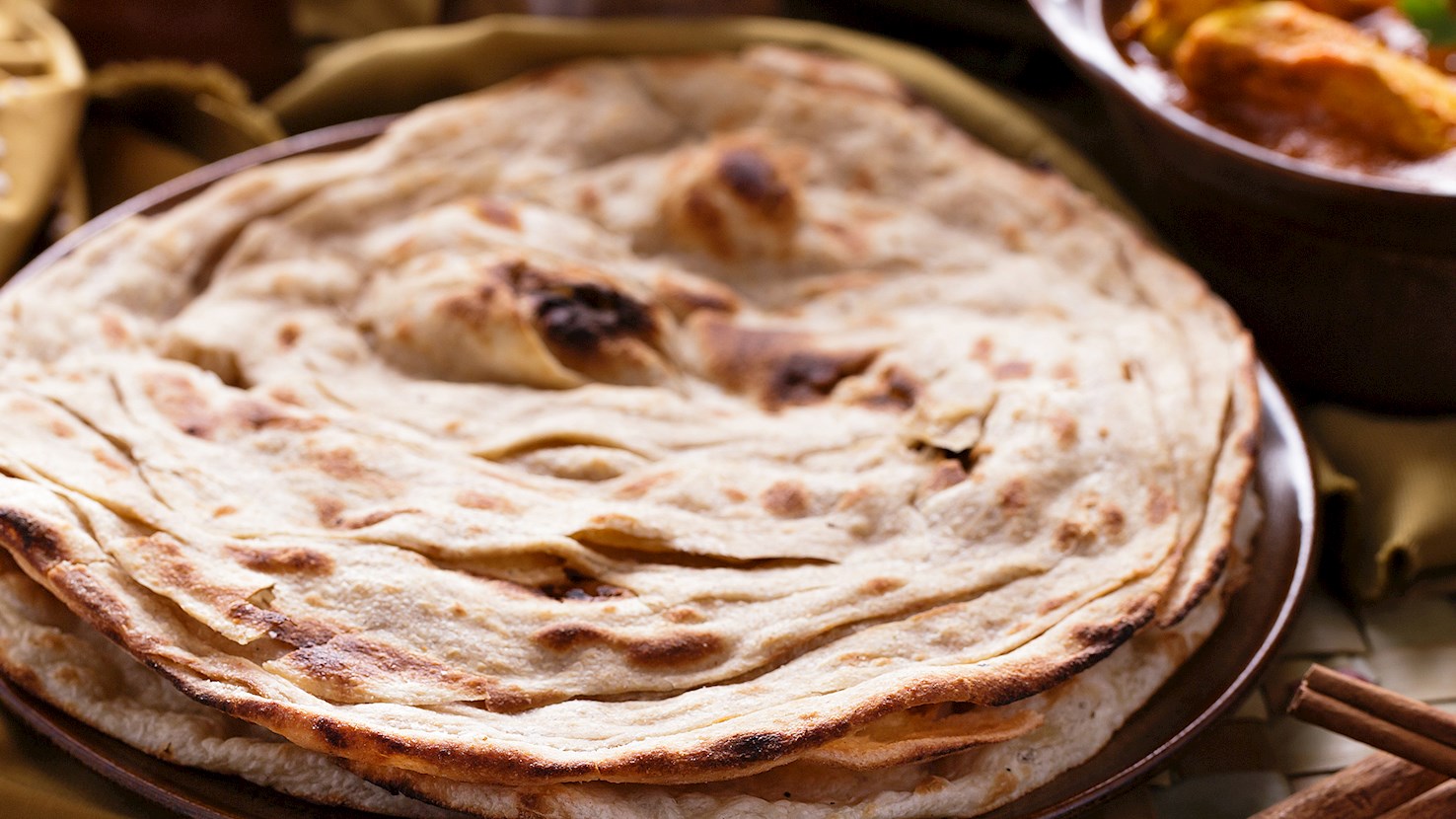
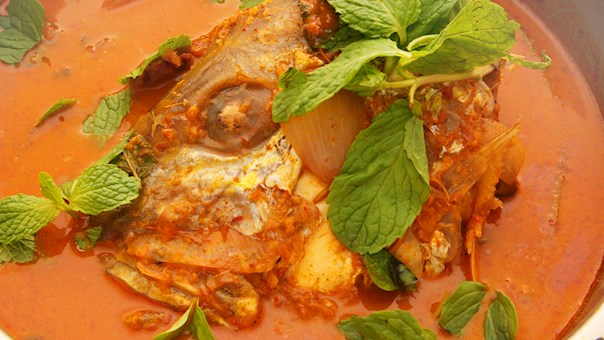
Roti prata is a pan-fried laminated flatbread with a crisp, blistered exterior and a soft, elastic center formed from many thin layers. It is made by stretching wheat dough until almost transparent, coating it with fat, folding or coiling it, and frying it on a flat griddle. Ghee is closely associated with the bread, although margarine and vegetable oil are now equally common. Roti prata is most strongly associated with Singapore, while the closely related form sold in Malaysia is generally called roti canai. Both belong to the wider family of layered flatbreads connected with paratha and the thinner, highly laminated parotta of southern India. Similar breads are also found in Sri Lanka, Myanmar, Thailand, Brunei, and parts of Indonesia. Its development in the Malay Peninsula is connected with migration from the Indian subcontinent during the nineteenth and early twentieth centuries. Tamil Muslim communities from the Coromandel Coast played a particularly important role in establishing food stalls and restaurants in Singapore. Migrants from Kerala and the Malabar Coast also contributed to the broader culinary culture from which prata emerged. Roti prata became closely associated with Indian Muslim food stalls, coffee shops, markets, and later hawker centers. Its modest ingredients, compact size, and substantial energy value made it suitable for workers around ports, commercial districts, and other busy urban areas. However, there is no strong evidence that it began exclusively as a meal for plantation and dock laborers. It developed as an inexpensive everyday food that could be eaten at breakfast, lunch, dinner, or late at night. The name combines two related culinary terms. Roti is an Indo-Aryan word used broadly for bread or flatbread. Prata is generally understood as a shortened local form of paratha or parotta, rather than a separate word meaning only “flat.” The name therefore reflects the bread’s connection with the layered flatbreads of the Indian subcontinent. The dough usually contains strong wheat flour, water, salt, sugar, and fat. Ghee, margarine, or vegetable oil can supply the fat, while some formulas also include egg, milk, or condensed milk for greater tenderness and browning. Commercial yeast and chemical raising agents are generally unnecessary because the layers are created through kneading, resting, stretching, folding, steam, and hot fat rather than fermentation. The dough is kneaded until smooth, elastic, and capable of stretching without tearing. It is then divided into uniform balls and coated generously with oil or fat. The portions must rest long enough for the gluten to relax, commonly for at least one to five hours and sometimes overnight. They do not need to remain completely submerged in oil, although a generous coating prevents the surface from drying and makes the dough easier to stretch. Each rested ball is flattened on an oiled stainless-steel or stone work surface. An experienced vendor lifts, swings, slaps, and rotates the dough repeatedly until it expands into a nearly transparent sheet several times its original size. The rapid movement helps stretch the dough evenly, but the result also depends on properly developed and rested gluten. The sheet can alternatively be pulled outward by hand without being thrown through the air. Fat is spread across the thin sheet before the edges are folded inward. The dough may be folded into a flat square or gathered into a long rope and wound into a spiral. Folding creates overlapping sheets separated by a fine coating of fat, while small pockets of air remain between some of the layers. A coiled portion normally rests again before being flattened for frying. The shaped bread is placed on a hot, well-greased iron griddle. Heat turns the water inside the dough into steam, which expands between the fat-coated layers and pushes them apart. At the same time, direct contact with the griddle produces dark brown blisters and a crisp, golden surface. The heat must be strong enough to brown the exterior without scorching it before the inner dough is fully set. Once the prata leaves the griddle, it is often clapped or compressed quickly from opposite sides. This is not intended simply to crush the bread. It loosens the layers, breaks the rigid outer shell into flakes, releases trapped steam, and helps keep the surface crisp. The motion can be performed between the hands or against a clean work surface and should be firm without reducing the bread to fragments. The plain form is known as roti kosong, meaning empty or unfilled bread. Its flavor comes from toasted wheat, browned fat, salt, and the lightly sweet dough. Roti prata is served immediately while the crust is still crisp and the internal layers remain hot and flexible. It is commonly torn by hand into small pieces, exposing the soft, elastic center. Forks and spoons may also be supplied, especially for filled versions or when several sauces accompany the bread. The standard accompaniments are curries and lentil gravies. A thin, tangy fish curry provides acidity and heat, while mutton or chicken curry gives the bread a richer coating. Dal supplies a milder, earthy alternative based on lentils. Some stalls serve more than one sauce, allowing pieces of prata to be dipped into different gravies during the same meal. Sweet serving styles are equally established. Plain prata can be dipped into coarse white sugar, served with sugar beside the curry, or covered with condensed milk. These combinations are especially common at breakfast and as late-night food, although prata is eaten throughout the day.
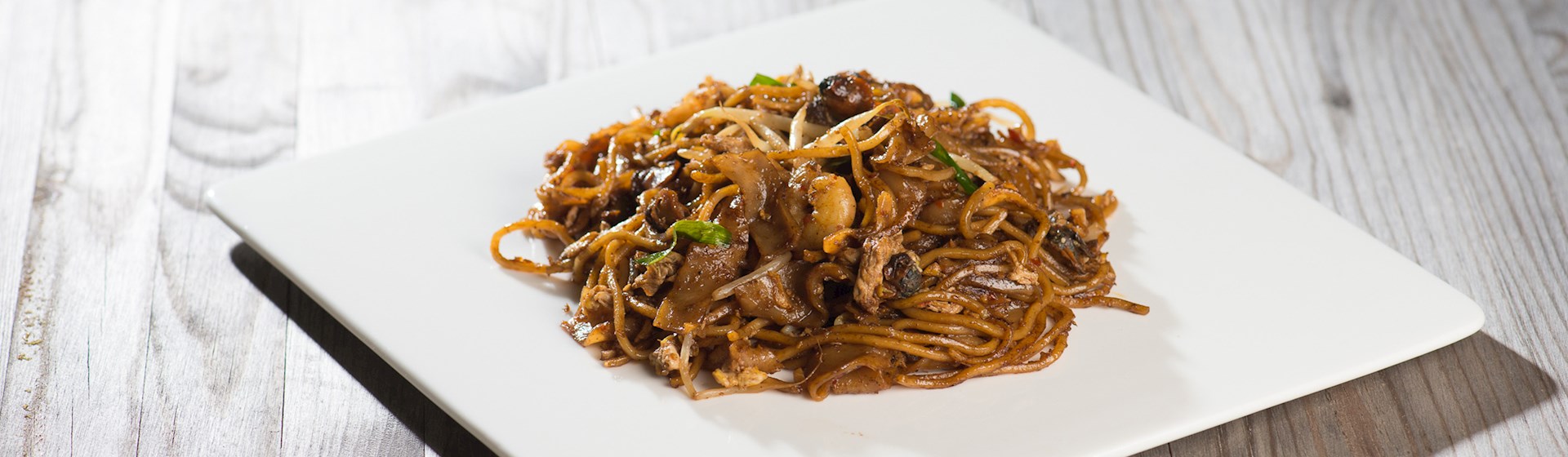
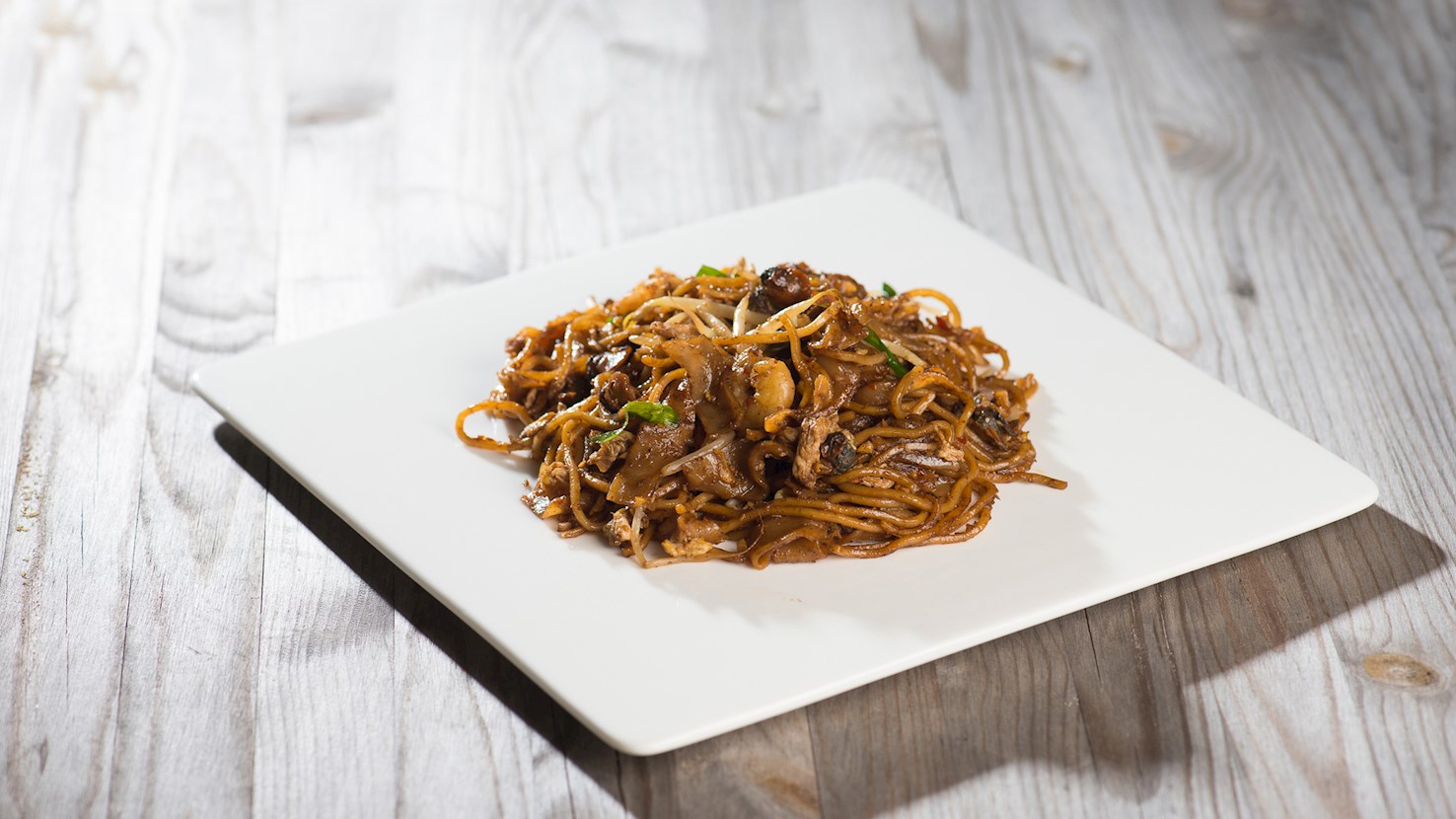
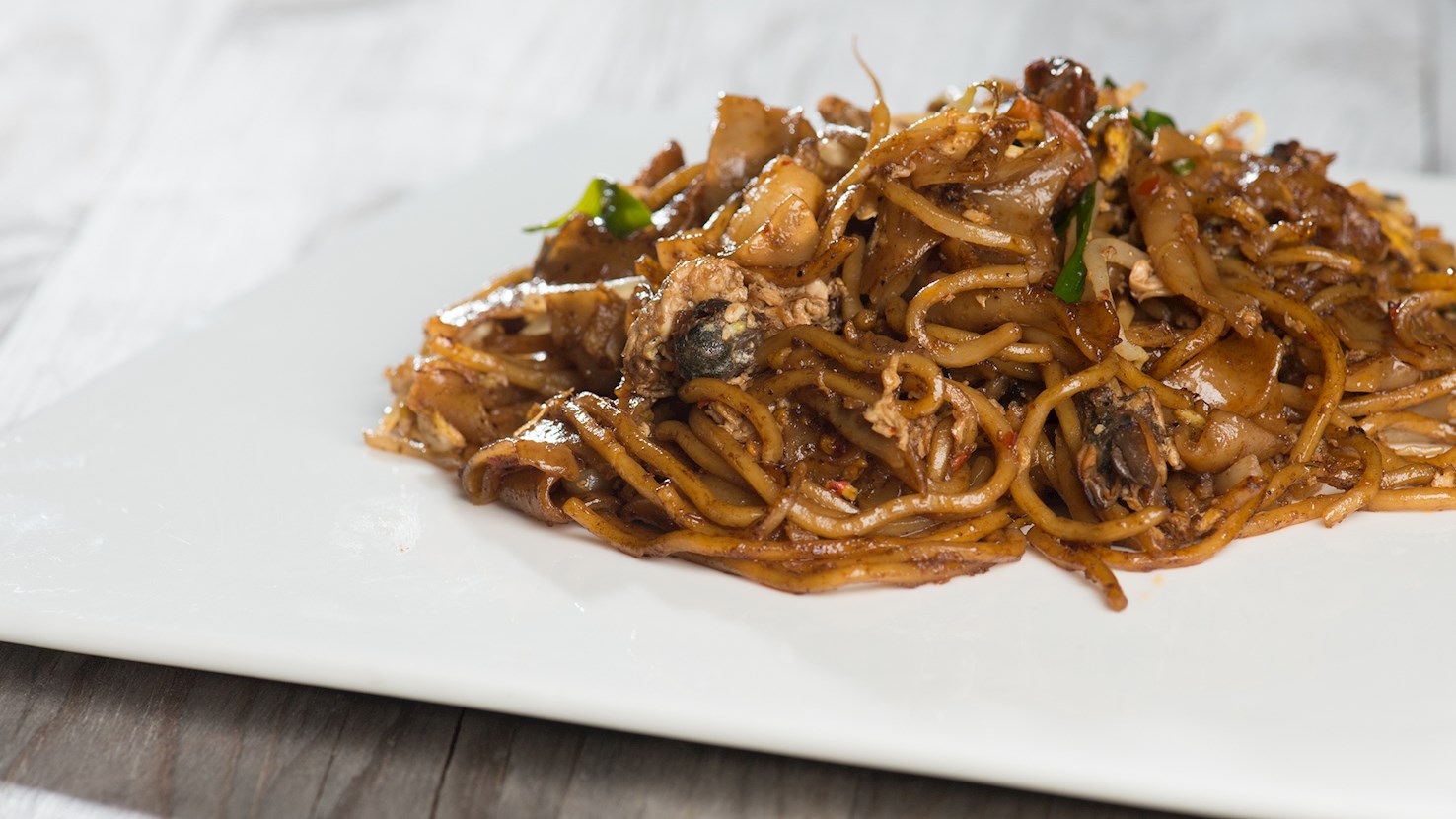
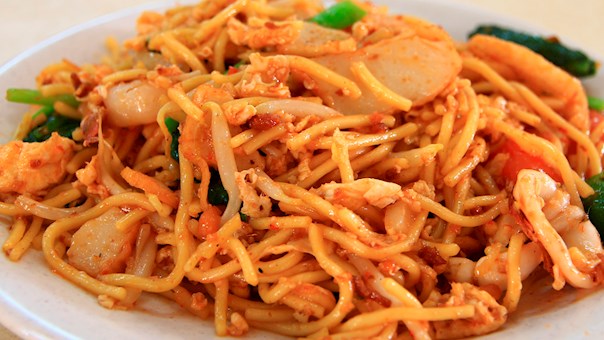
Char kway teow is one of the most popular street dishes in Malaysia and Singapore. Despite numerous regional varieties, it is usually made with flat rice noodles, shrimps, eggs, cockles, bean sprouts, chives, and Chinese sausage. All the ingredients are usually fried and coated in soy sauce, while some versions also incorporate shrimp paste, garlic, fried pork lard, and sometimes even yellow wheat noodles. Among the numerous theories about the origin of the dish, the most popular claims that it was invented in the Singaporean Teochew community by Chinese immigrants, while the name stems from Hokkien, char meaning fried and kway teow denoting flat rice noodles. Classic Teochew variety that is lighter and slightly drier than the Singaporean counterpart is especially popular in Malaysian Penang where it is considered to be a signature dish of the region. Originally, char kway teow was a poor man’s dish made by farmers and fishermen out of leftover ingredients. Realizing how delicious this combination is, they started selling it on the street, and it quickly caught on. Apart from Singapore and Malaysian Penang, a variety of char kway teow is also found in Indonesia. In Penang, some vendors still serve it on banana and palm leaves, the way it was traditionally served from its beginnings.
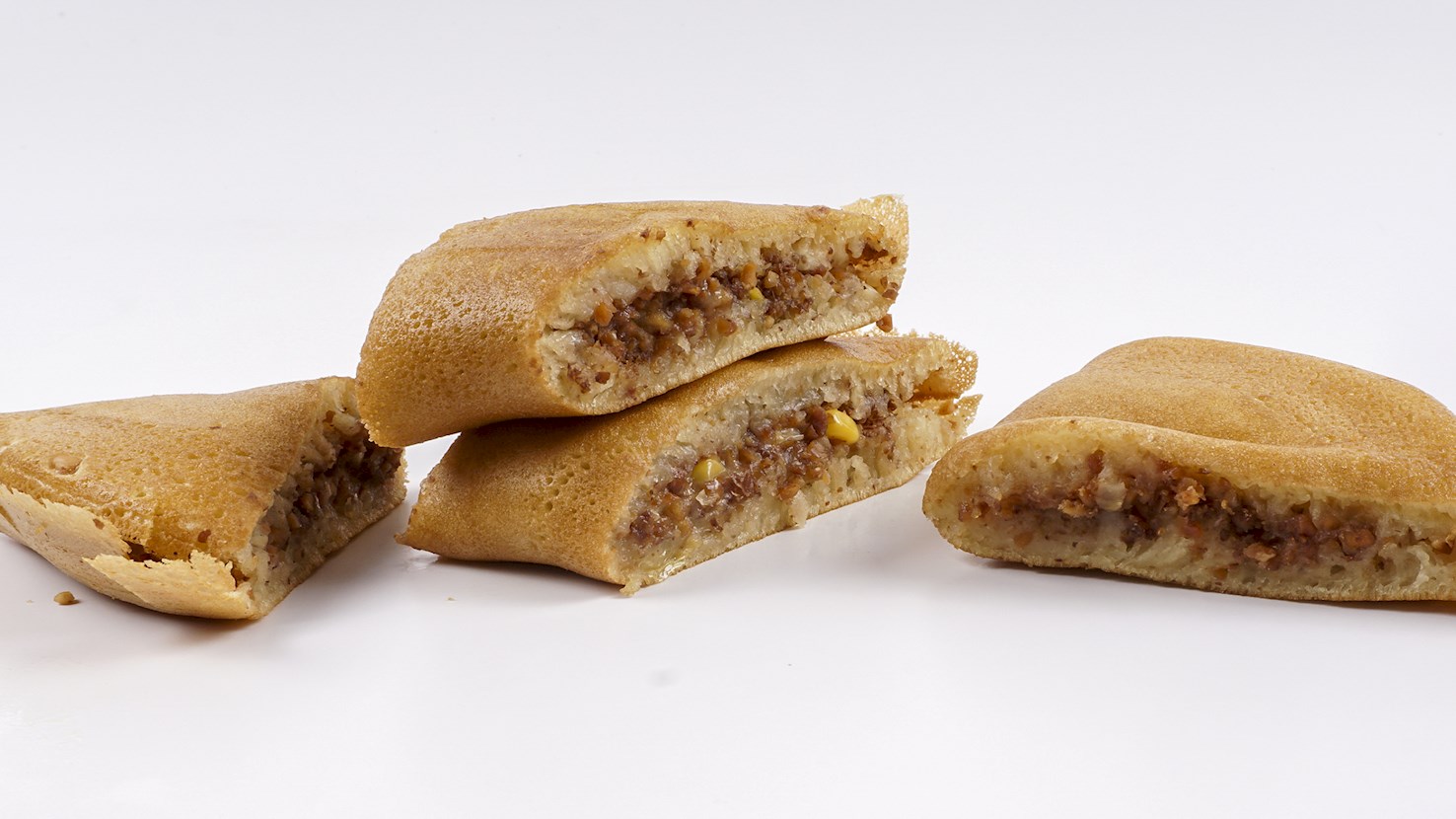
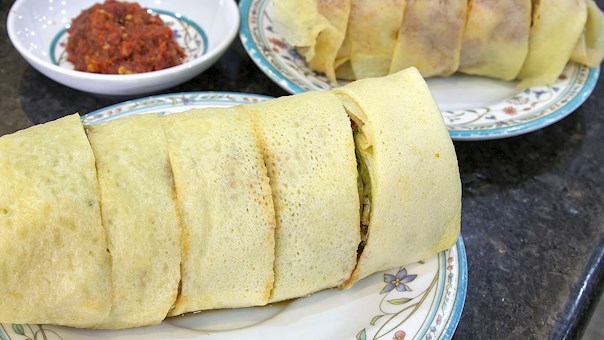
This sweet turnover pancake comes under various names throughout Malaysia, Indonesia, Brunei, and Singapore. Regardless of the location, it can be prepared either in a thin and crispy variety or as a thick and soft pancake. Traditional fillings typically include a combination of ground or roughly chopped peanuts, sugar, and butter, but the modern varieties may include anything from corn, chocolate chips, and raisins to grated cheese or condensed milk. Though not much is known about its origin, it is believed that is was first introduced in Penang by the Chinese who migrated from the province of Fujian.
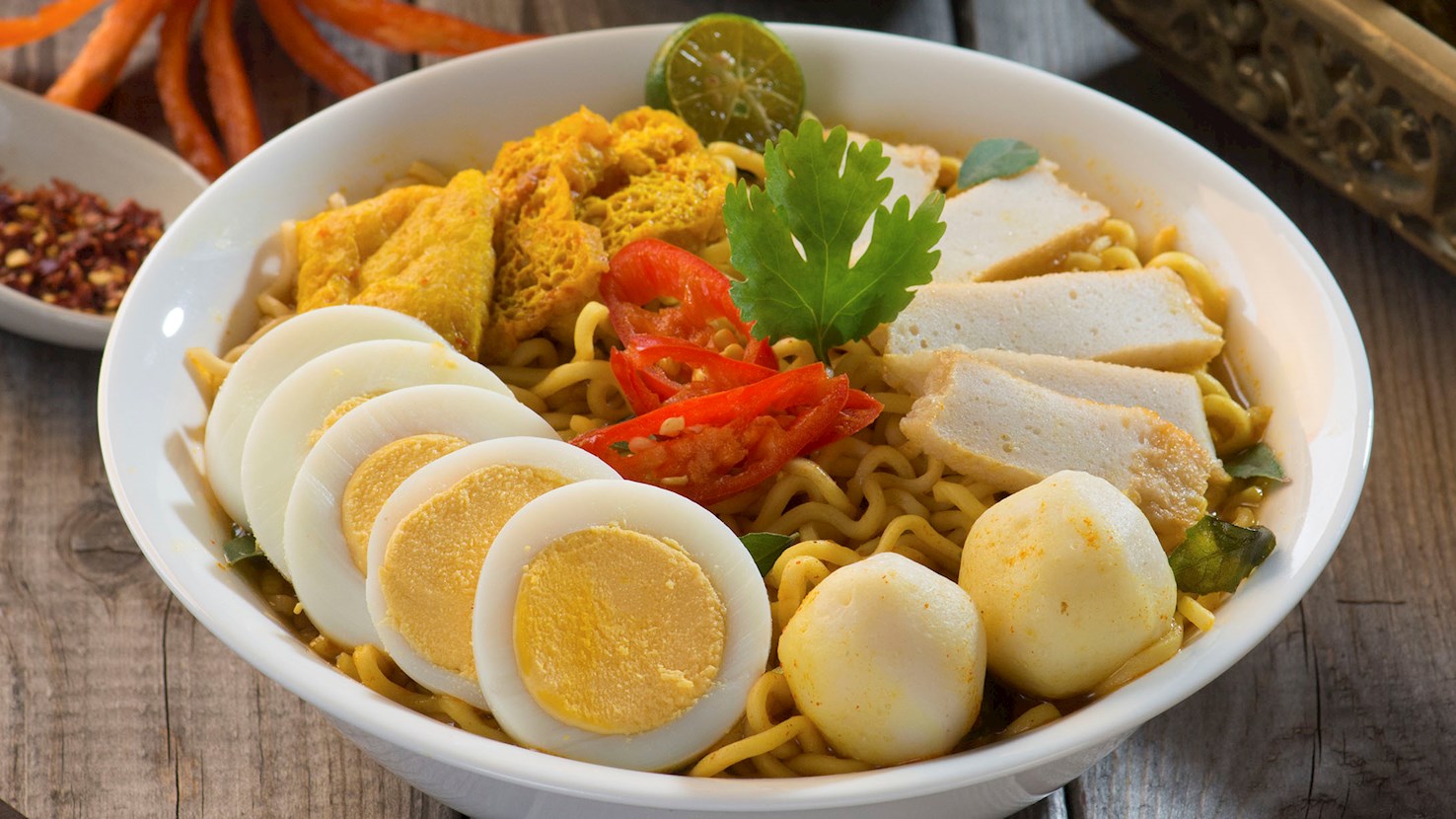
Curry mee is a spicy noodle soup commonly eaten in Malaysia and Singapore (where it's often called curry laksa). It is a true fusion dish, influenced by Indian, Chinese, and Southeast Asian culinary traditions. It is one of the numerous varieties of laksa, the quintessential noodle soups of Southeast Asia. The basis for this creamy dish is made with curry and coconut milk which form the unusual sweet and spicy sauce. Although very similar to curry, the sauce for curry mee is usually much thinner, but still has a strong and rich flavor. Traditionally, thin rice noodles are used in curry mee, and they are often cut into smaller pieces in order to ease the consumption. Other ingredients include tofu puffs, prawns, and fishcakes. The most traditional versions of curry mee also include a very unusual ingredient - cockles, saltwater clams which are usually served raw. Before serving, the dish is spiced with a dollop of traditional chili sauce and chopped coriander leaves. Curry laksa is the favorite variety in Singapore, where it is often referred to only as laksa. In Singapore, it is the most common hawker-style dish, and many vendors prepare curry laksa as their signature dish.
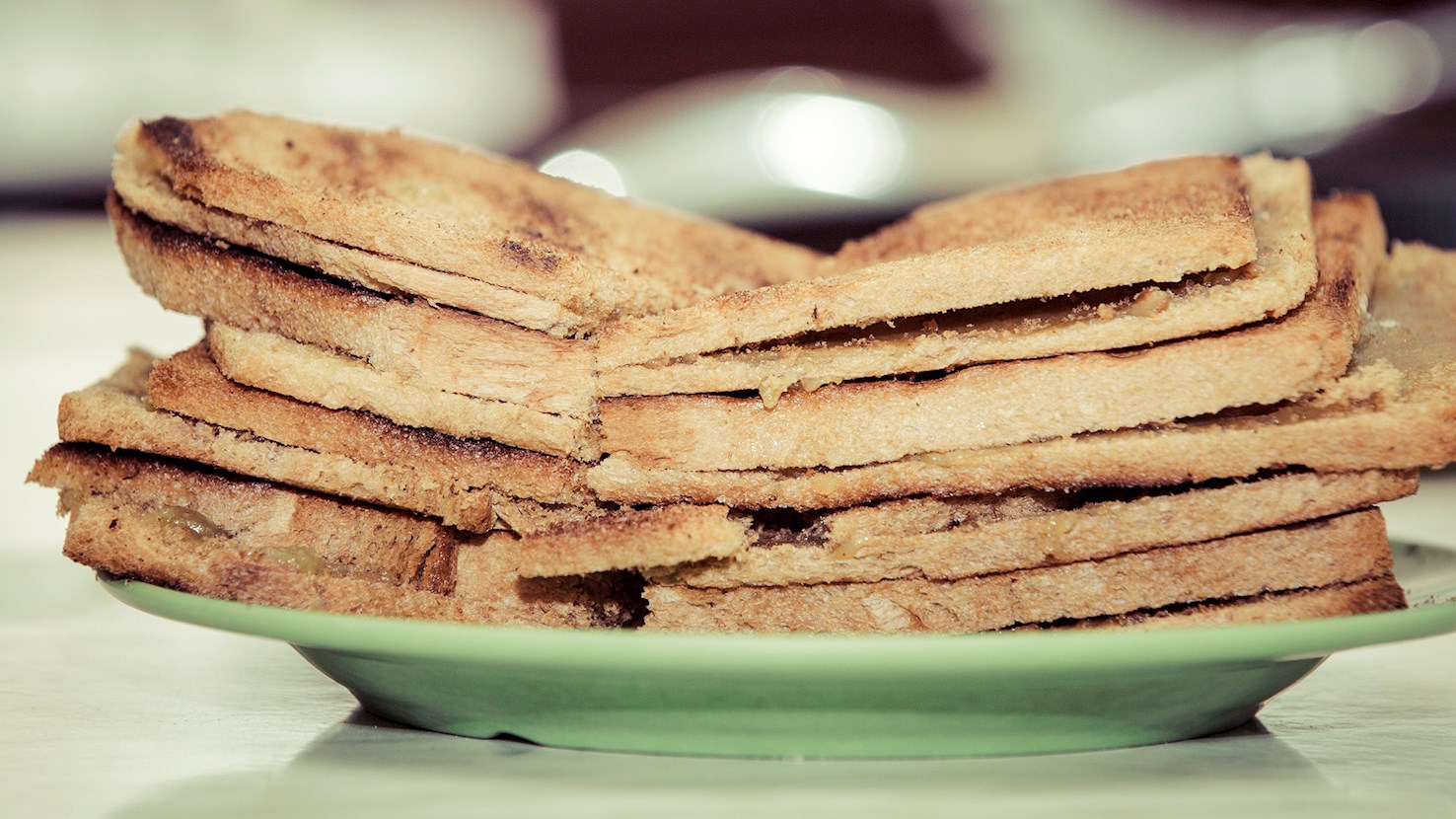
Kaya toast is a popular Malaysian and Singaporean breakfast consisting of two slices of toasted bread filled with kaya, a traditional spread made with sugar, eggs, coconut milk, and pandan flavoring. The dish is typically served with a slice of butter and two semi-boiled eggs on the side, paired with a cup of milk tea or hot coffee. It is believed that the dish originated with Hainanese people who worked on British ships as cooks. Eventually, they settled in Singapore and started to sell their food to the locals, who then replaced the British jams with local coconut spreads. Today, there is a variety of kaya toasts such as cracker kaya toast, steamed kaya toast, and French kaya toast.
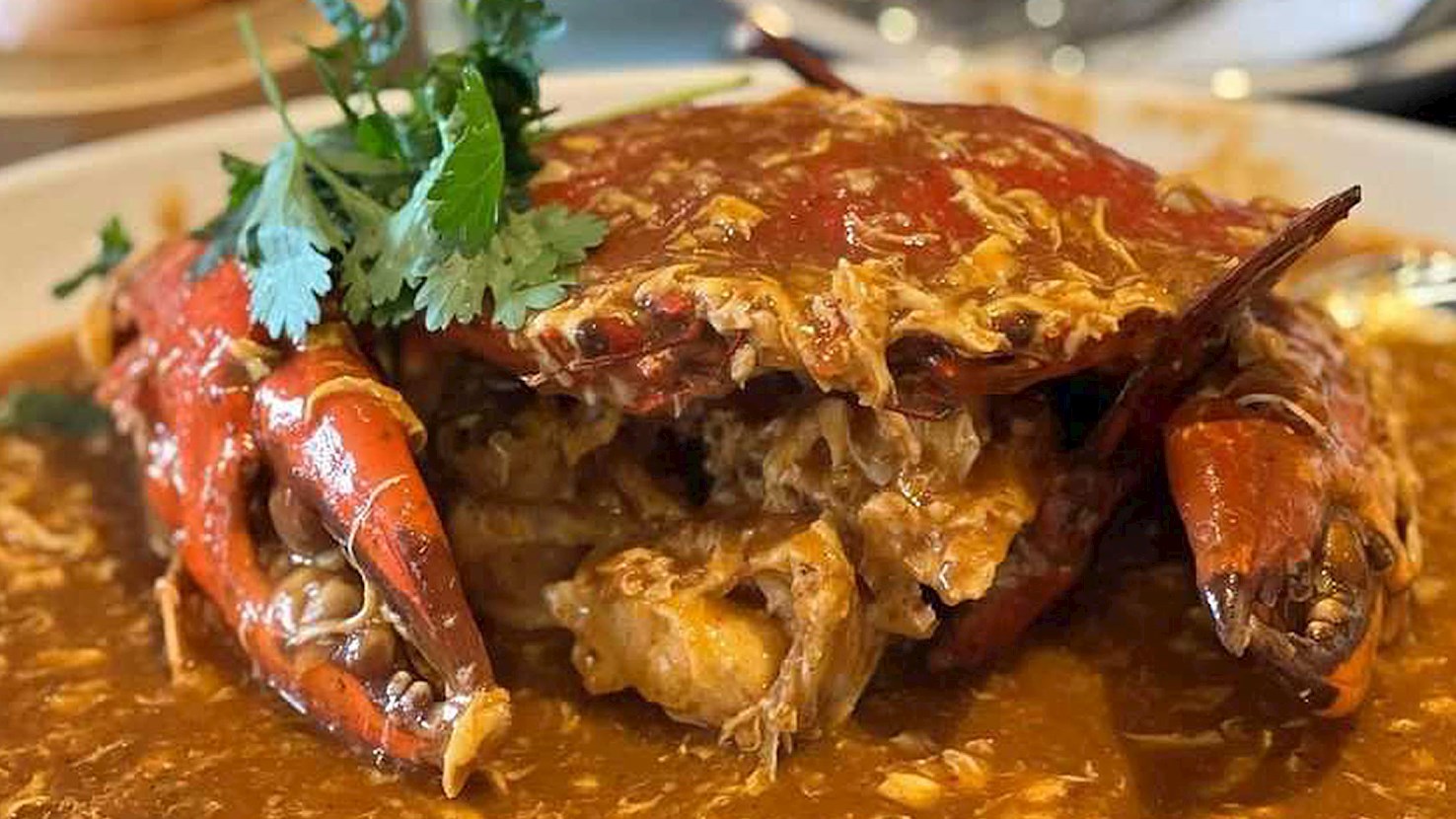
Like many other dishes in Asia, chilli crab started as a street food item, but it has eventually become so popular that today it is considered to be the national dish of Singapore. It consists of a stir-fried crab covered in a succulent, spicy sauce. The story of chilli crab's origin is a well-known anecdote - it was invented in the 1950s by Cher Yam Tian, who wanted to modify her stir-fried crab recipe by adding bottled chili sauce into the dish. The result was so delicious that her family persuaded her to start selling the dish, so chilli crab began its way to become the signature dish of Singapore. The dish is served in many restaurants in the country, and since the crab is served in a shell, the consumption of chilli crab is a unique experience. The diners must use their hands to crack the shell open in order to get hold of the tender crab meat hiding on the inside. Usually, mallets or nutcrackers are used to ease the whole procedure. Bread is commonly served together with the crab, and it is mainly used to soak up the delicious spicy gravy.
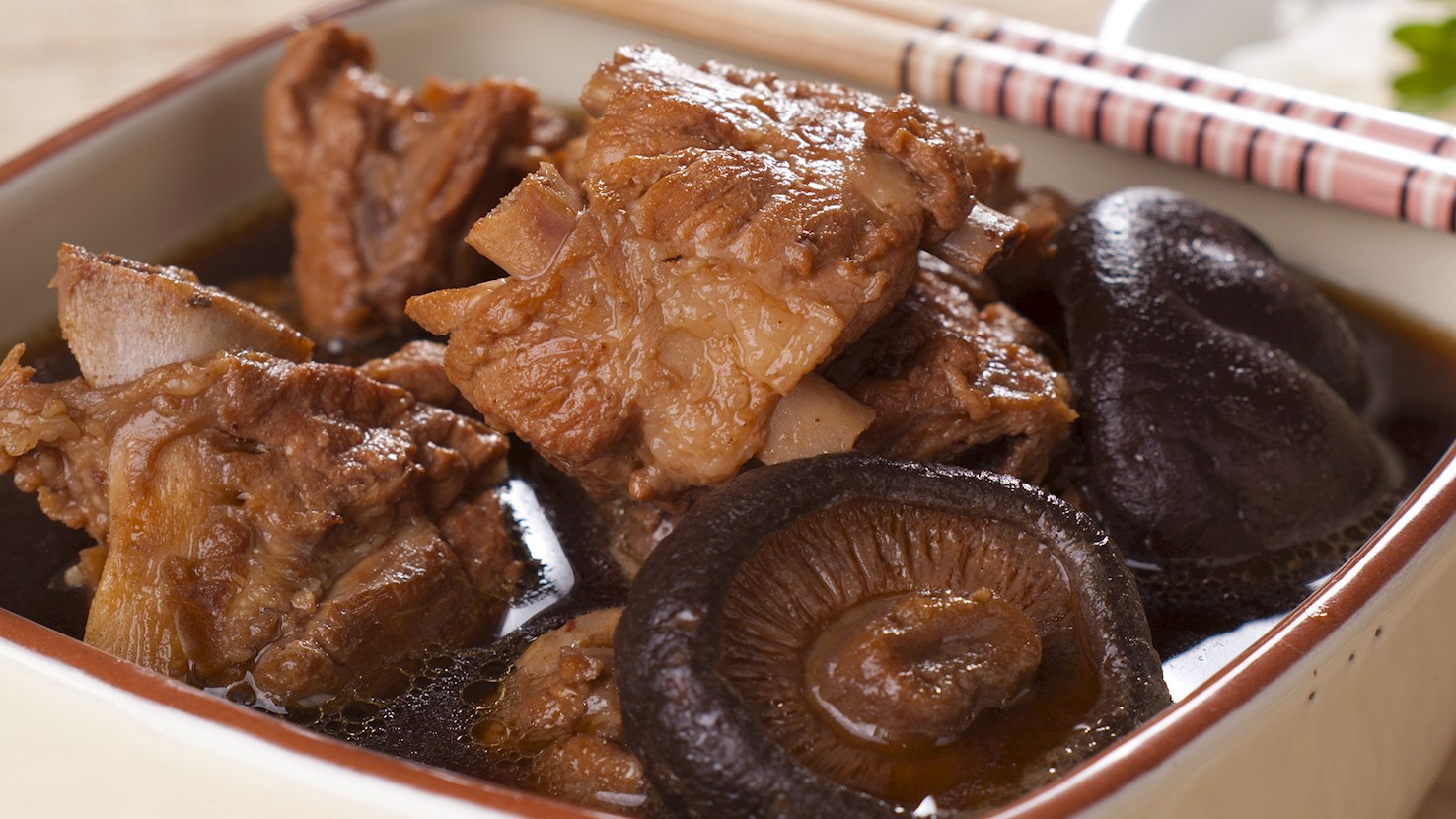
Even though it is traditionally associated with Malaysia and Singapore, this hearty dish stems from the Chinese culinary tradition. In its simplest form, it consists of various pork cuts that are cooked in a flavorful broth which is seasoned with star anise, cinnamon, garlic, and fennel. It is commonly complemented with tofu puffs or mushrooms and usually comes served with several condiments. Among the numerous stories of its origin, the most probable claims that the Fujian immigrant Lee Boon Teh was the first who started selling the dish in Klang—a city that is recognized as the place where the authentic bak kut teh originated. However, the authenticity of this theory has been disputed by the Singaporeans, who also claim the dish as their original invention. Regardless of these conflicting theories, bak kut teh remains a classic dish which perfectly illustrates the rich culinary heritage of both countries.
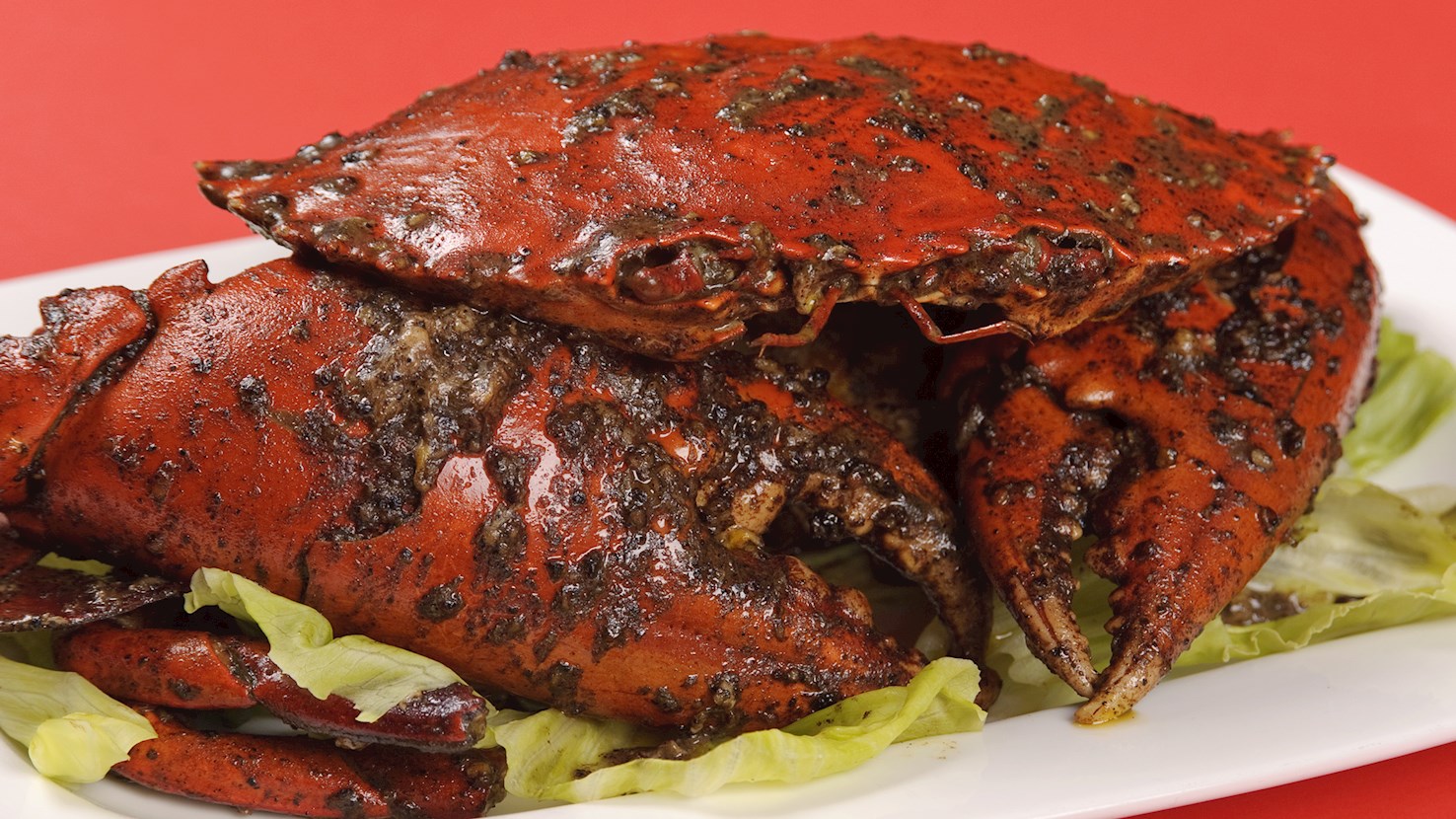
Black pepper crab is the unofficial national dish of Singapore, made by stir-frying crab pieces with black pepper, garlic, shallots, and oyster sauce over high heat. The dish is seldom prepared at home, but people can easily find it at numerous street stalls and seafood restaurants. Once the crab is cooked, it is often garnished with coriander leaves and paired with rice on the side.
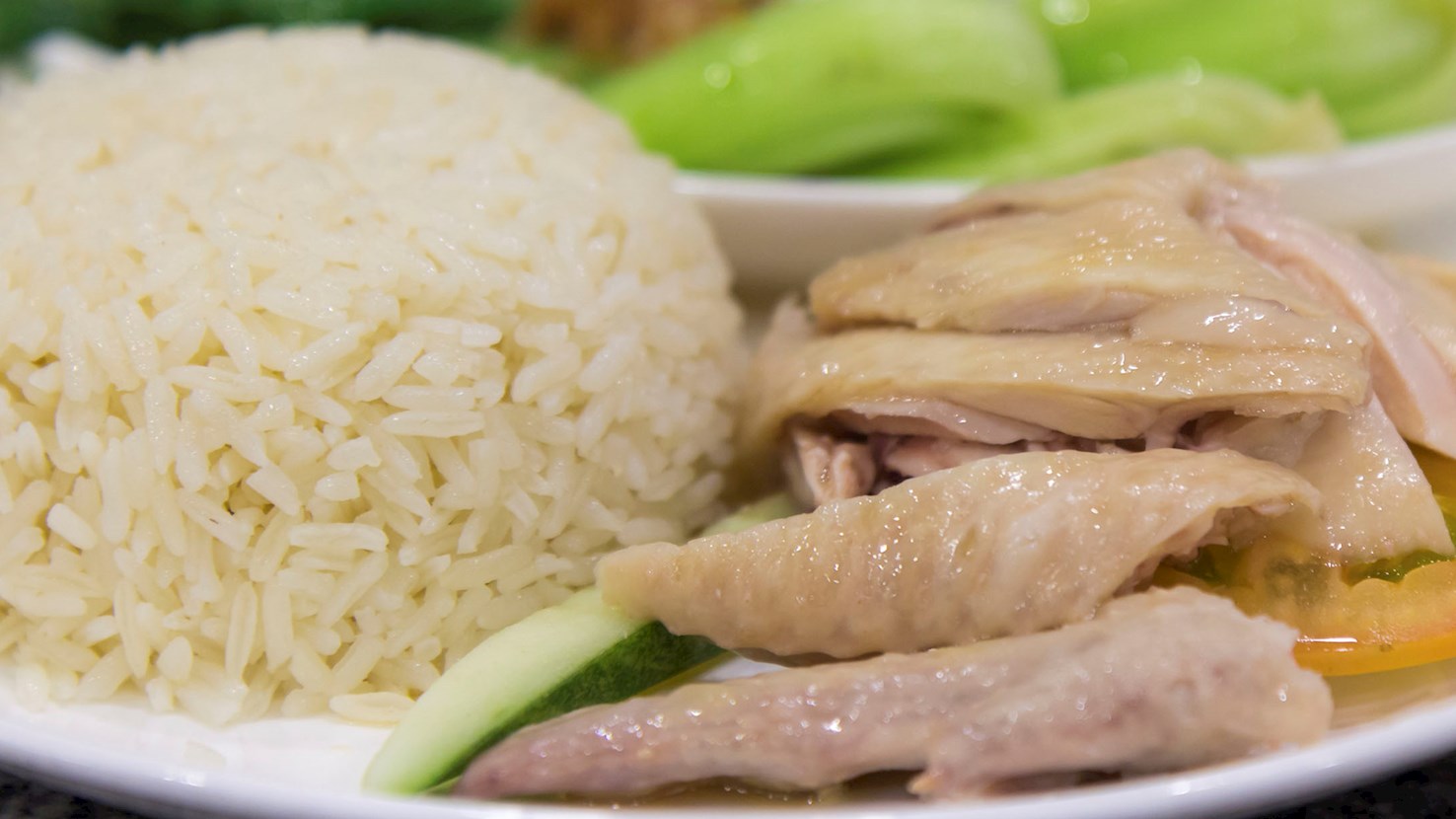
Originally invented on Hainan, a tropical island located south of China, the humble Hainanese chicken rice has evolved into one of the most popular dishes in Singapore. It consists of steamed chicken that is cut into bite-sized pieces, then served with fragrant white rice. When plated, the dish is drizzled with soy sauce and sesame oil, and it is served with sliced cucumbers and a spicy chili sauce. Frequently, the steaming liquid is subsequently spiced and served as a soup. The recipe was brought to Singapore by Hainanese migrants in the 19th century, and the first vendor selling this unique dish in Singapore opened his stall in the 1940s. There is, however, some difference between the Hainanese and Singaporean varieties of the dish: the Hainanese prefer to use pork broth and serve the dish with pounded ginger instead of chili sauce. Regardless of the original, the Singaporean version became the favorite variety, and today it is often referred to only as Singaporean chicken rice. Although it is also served in restaurants, this well-known dish is usually sold by street vendors which can be found on every street corner in Singapore.
Beef kway teow is a Singaporean and Malaysian noodle dish that can be served either as a quick meal or as a side dish to bigger meals. In order to prepare it, broad and flat rice noodles are stir-fried with vegetables and herbs, and topped with slices of beef. There is also a version of this dish in a form of a soup similar to Thai beef soup, but it is usually prepared as a "dry" dish, in a thick gravy flavored with chili, soy sauce, and sesame oil. A variety of the dish is popular in Indonesia, where it’s commonly enriched with garlic, meatballs, cabbage, soy sauce, and black pepper.
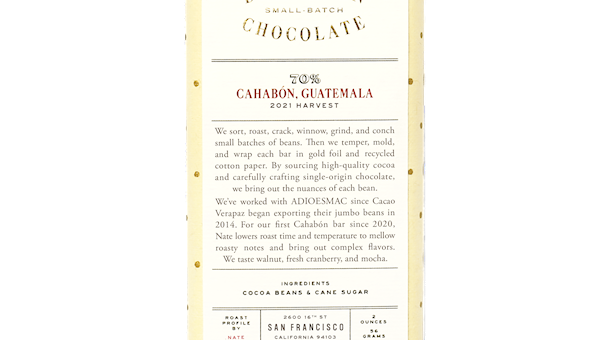
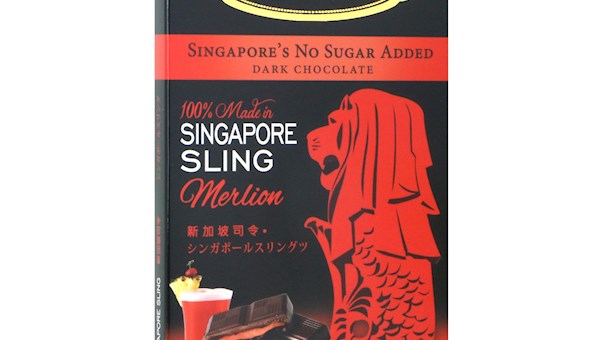
Origin, based in Singapore, specializes in crafting single-origin chocolate, emphasizing the unique flavors from specific regions where the cacao is sourced. The company focuses on sustainable practices and fair trade, ensuring ethical sourcing of their cacao beans.
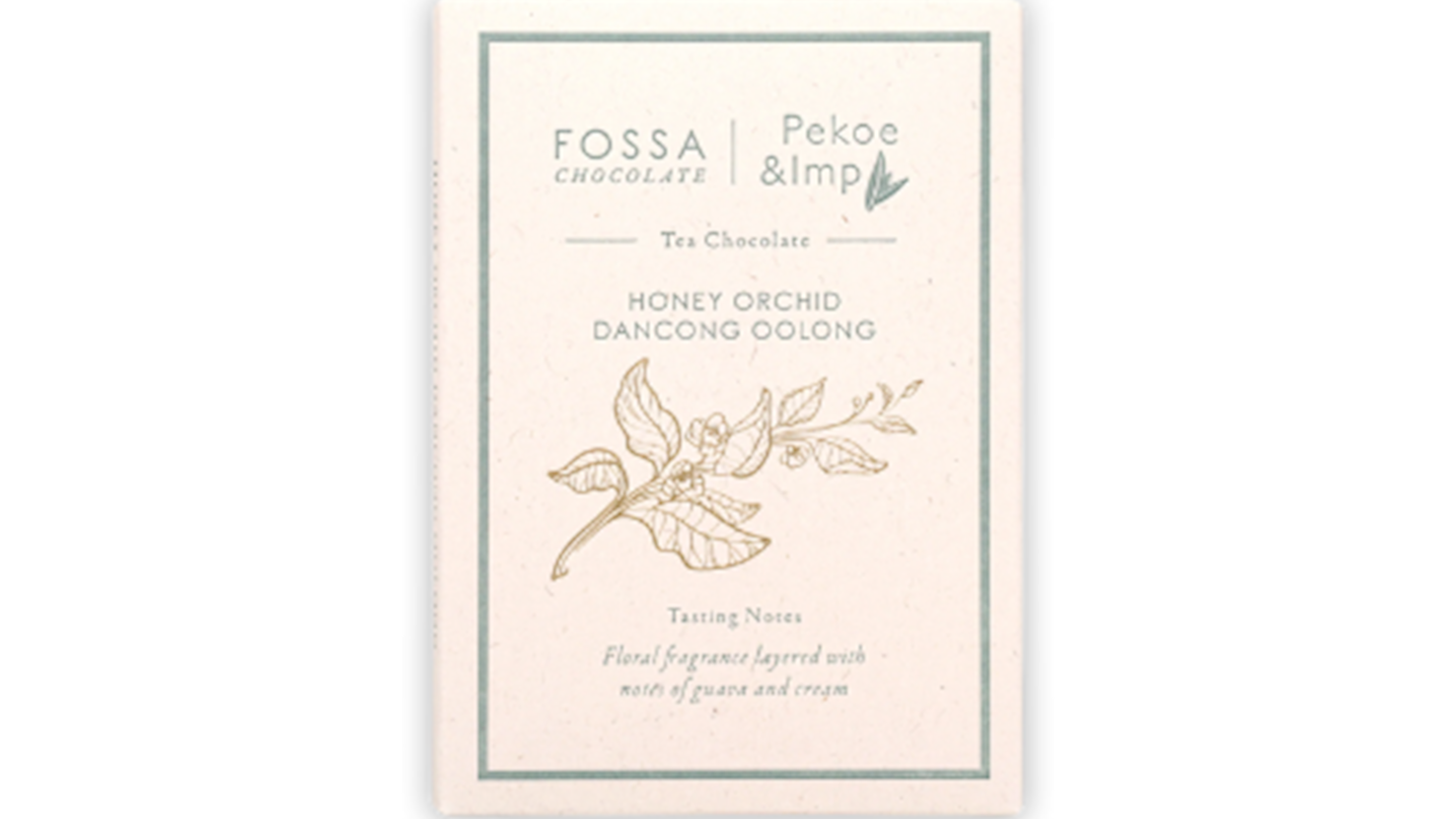
Fossa Chocolate is a Singaporean brand specializing in handcrafted chocolate bars. It was founded in 2017 by Jay Chua, Charis Chia, and Yilina Leong, inspired by their experience with unique flavors of single-origin chocolate, particularly from Madagascar.
Their mission was to bring rich, natural cacao flavors to Singapore, where such products were previously unavailable. Fossa Chocolate uses high-quality, sustainably grown cacao beans, often sourced directly from farms in Southeast Asia, Africa, and Latin America.
Each chocolate batch goes through seven stages of production: from sorting and roasting the beans to grinding and molding the bars. The chocolates are hand-packaged, and every step is closely monitored to preserve quality and flavor.
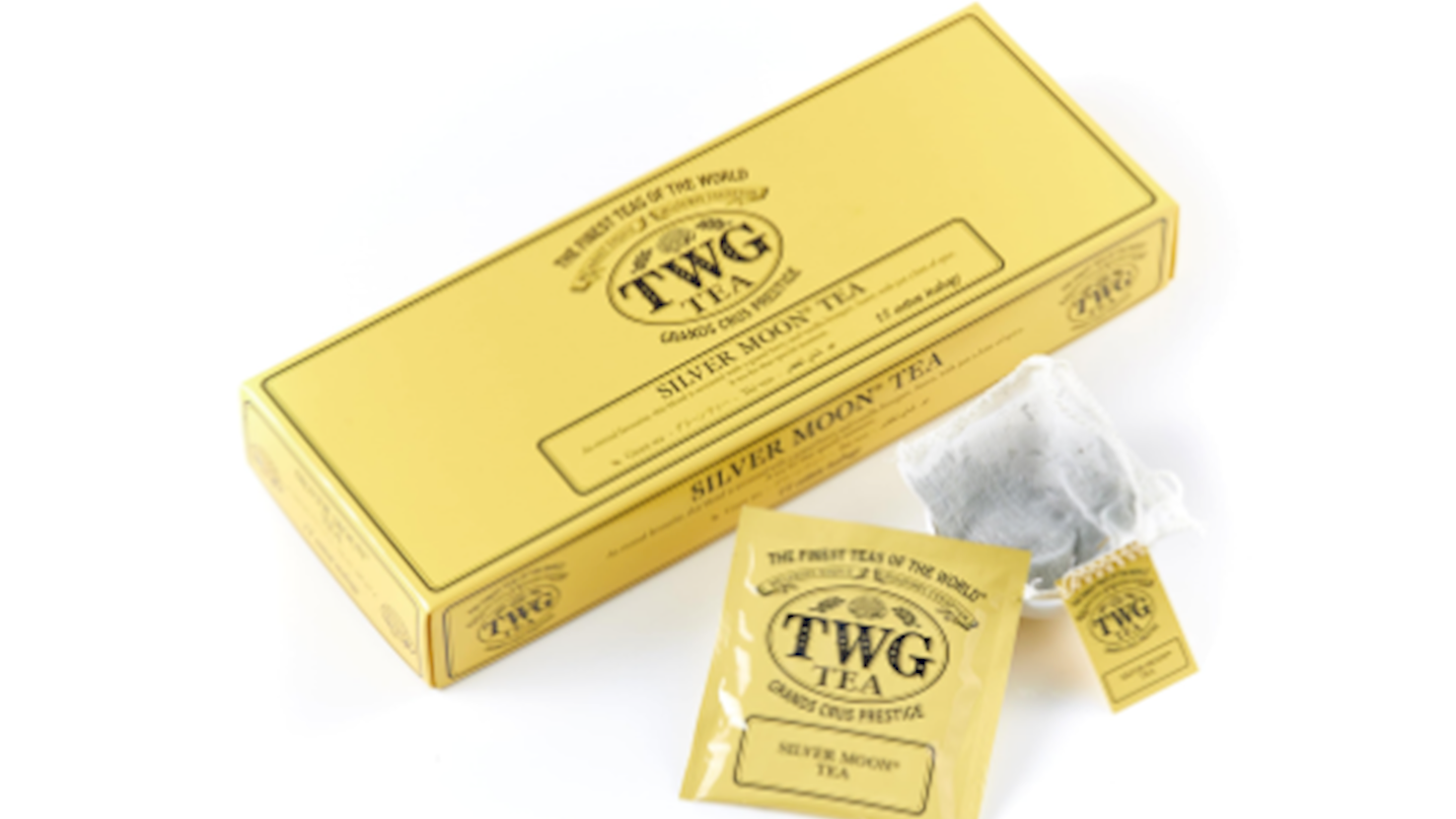
TWG Tea is a luxurious tea brand based in Singapore, offering a wide range of high-quality, expertly curated teas. Known for its opulent offerings, TWG Tea brings together the finest leaves from around the globe, creating sophisticated blends with a focus on flavor, aroma, and refinement.
Since its establishment, TWG Tea has become synonymous with luxury, offering an extensive collection of rare and premium teas, including blends, single-origin teas, and exclusive collections.
In addition to their exceptional range of teas, TWG Tea also provides artisanal accessories and gifts. They have created a refined tea experience through their salons and boutiques worldwide, where customers can immerse themselves in a world of luxury and tradition.
Whether you're a tea connoisseur or a casual drinker, TWG Tea’s expertly crafted blends cater to a variety of tastes, offering something truly special for every tea lover.
TasteAtlas food rankings are based on the ratings of the TasteAtlas audience, with a series of mechanisms that recognize real users and that ignore bot,
nationalist or local patriotic ratings, and give additional value to the ratings of users that the system recognizes as knowledgeable.
For the “Top 44 Singaporean Foods” list until September 30, 2026, 2,467 ratings were recorded, of which 1,932 were recognized by the system as legitimate.
TasteAtlas Rankings should not be seen as the final global conclusion about food. Their purpose is to promote excellent local foods,
instill pride in traditional dishes, and arouse curiosity about dishes you haven’t tried.
The initial list of top producers was compiled based on available reviews, awards, local recommendations, media and blog coverage, and consumer reviews.
The list will be updated with ratings from TasteAtlas local ambassadors and TasteAtlas users.






What People Say