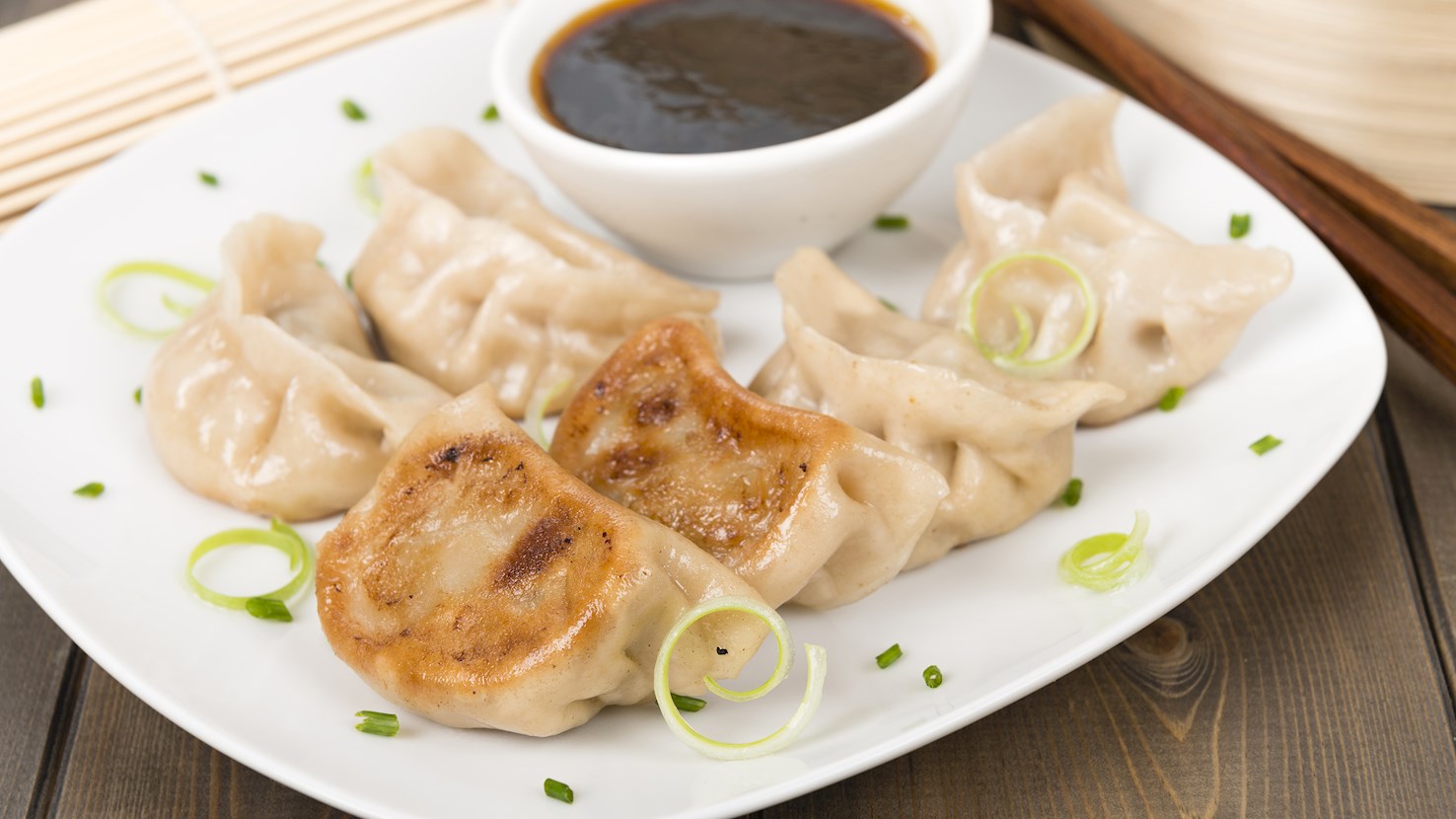
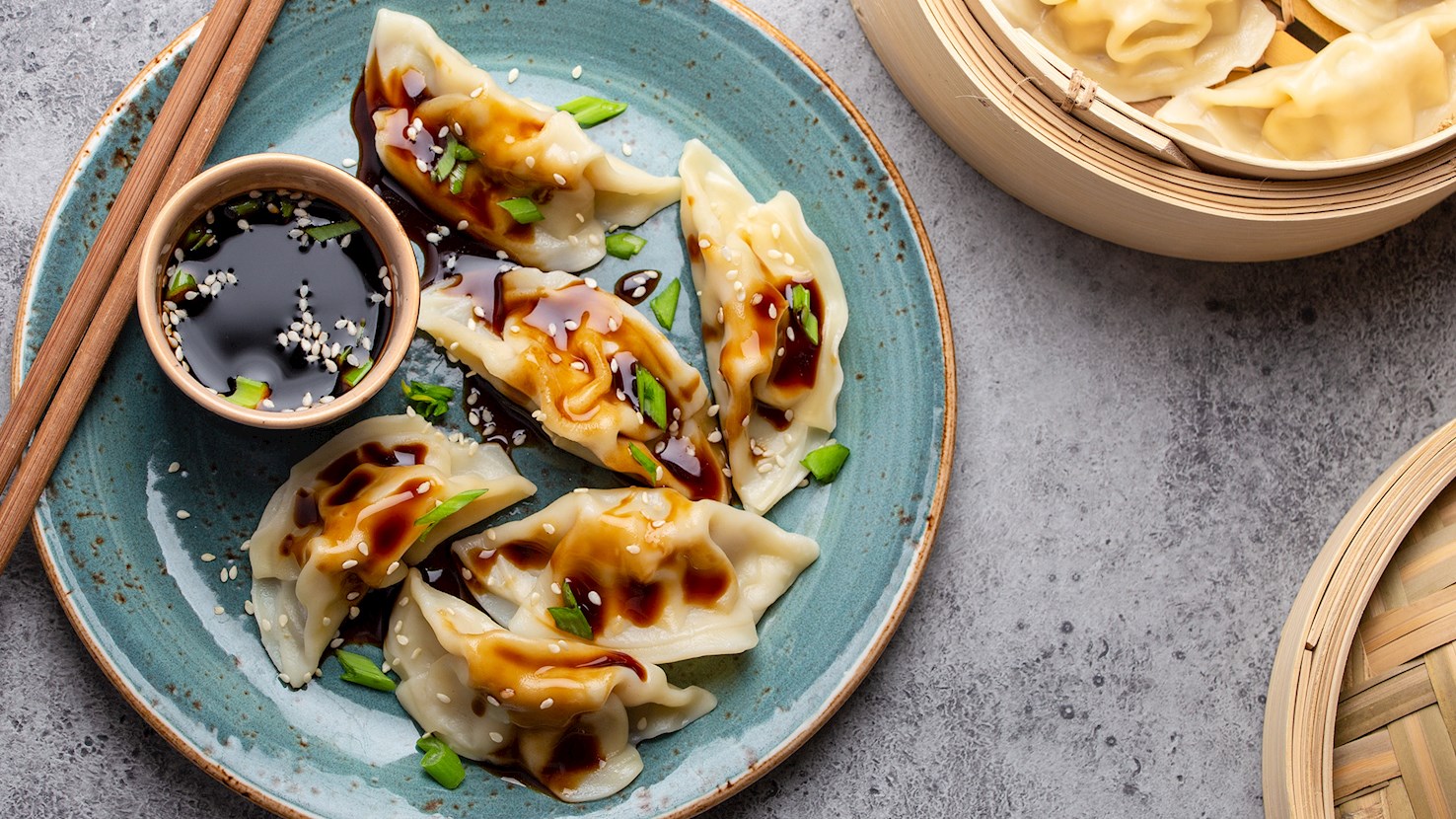
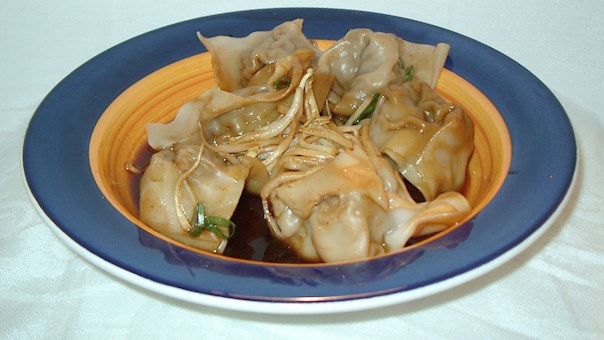
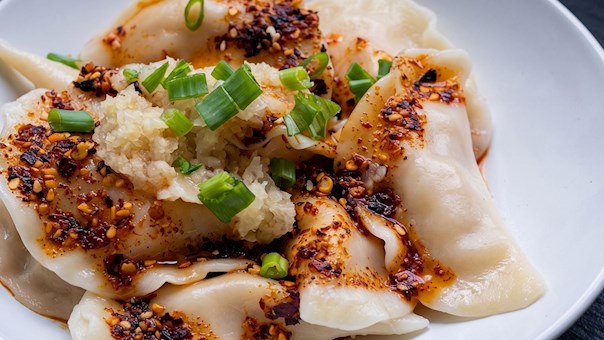
Zhēngjiao is a traditional dish consisting of steamed dumplings. The texture is somewhere between the crinkly and tender skins of boiled dumplings (shui jiao) and the crisp-bottom, chewy top style of pan-fried dumplings (guo tie or jian jiao or potstickers). Once steamed, these dumplings will have a translucent wrapper covering the filling, which usually consists of pork and chives, cabbage, shrimp, or a combination of different vegetables. When served, zhēngjiao dumplings are often served with soy dipping sauce on the side.
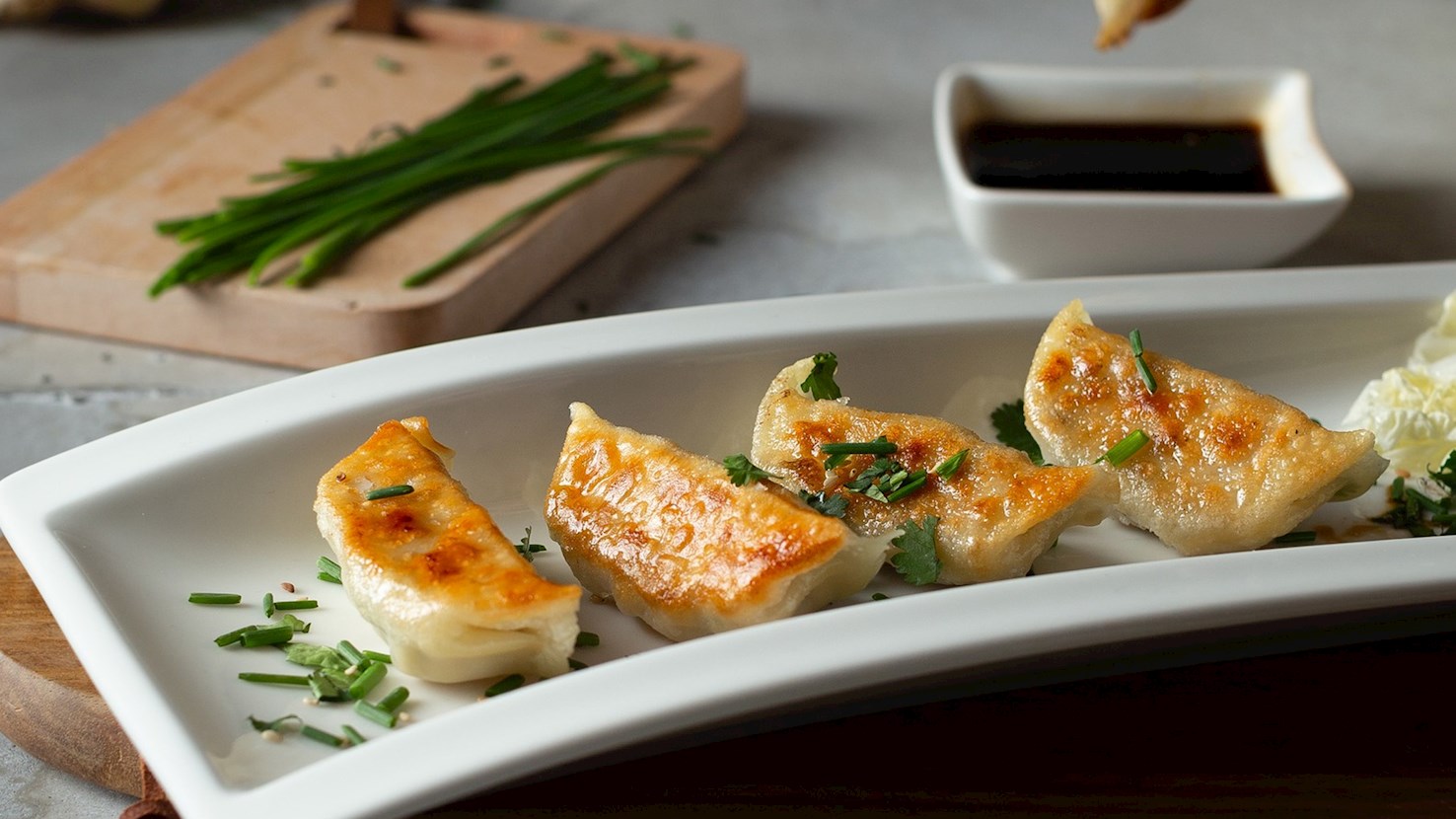
The pan-fried variety of the Chinese jiaozi dumpling, known as guotie, is a Northern Chinese dumpling typically filled with minced pork, Chinese cabbage, scallions, ginger, rice wine, and sesame seed oil. Crunchy and soft textures are achieved by a special method of preparing; while the bottom of the dumpling is frying, a small amount of liquid is added to the pan which is then covered, thus allowing the rest of the dumpling and the filling to steam. When it comes to the shape, guotie should always be long and straight as it can stand more easily and it does not fall over during cooking. Goutie can be literally translated as pot sticks, so these dumplings are often nicknamed potstickers, especially in North America. Although the first-known mention of goutie dates back to the Song Dynasty, today they are a popular street food, often eaten as a snack or an appetizer, typically accompanied by a dipping sauce.
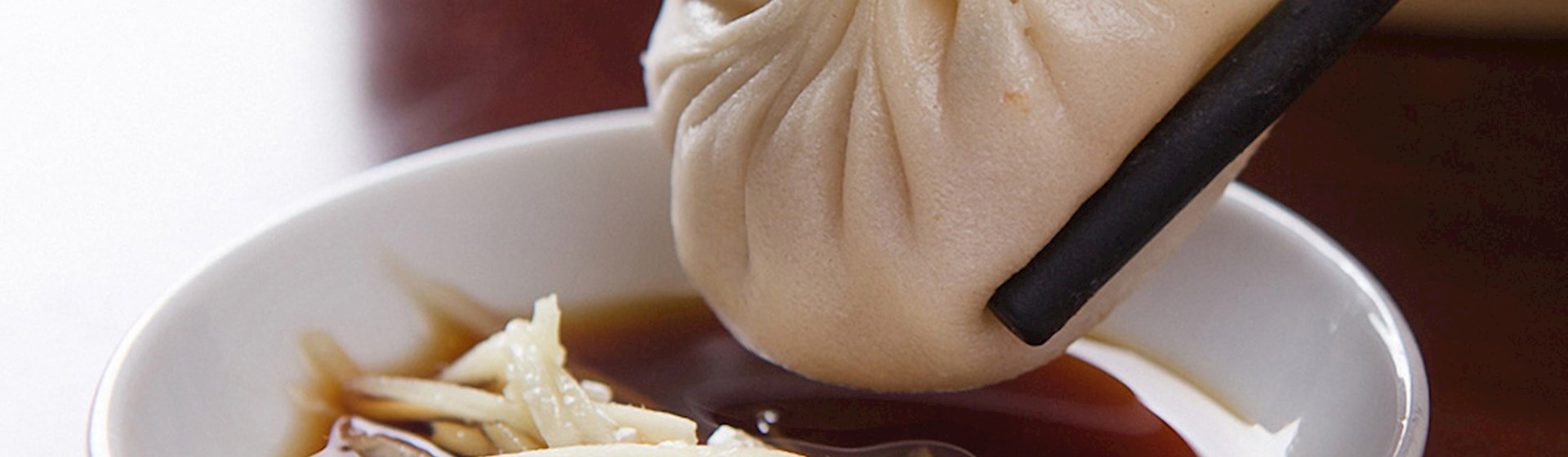
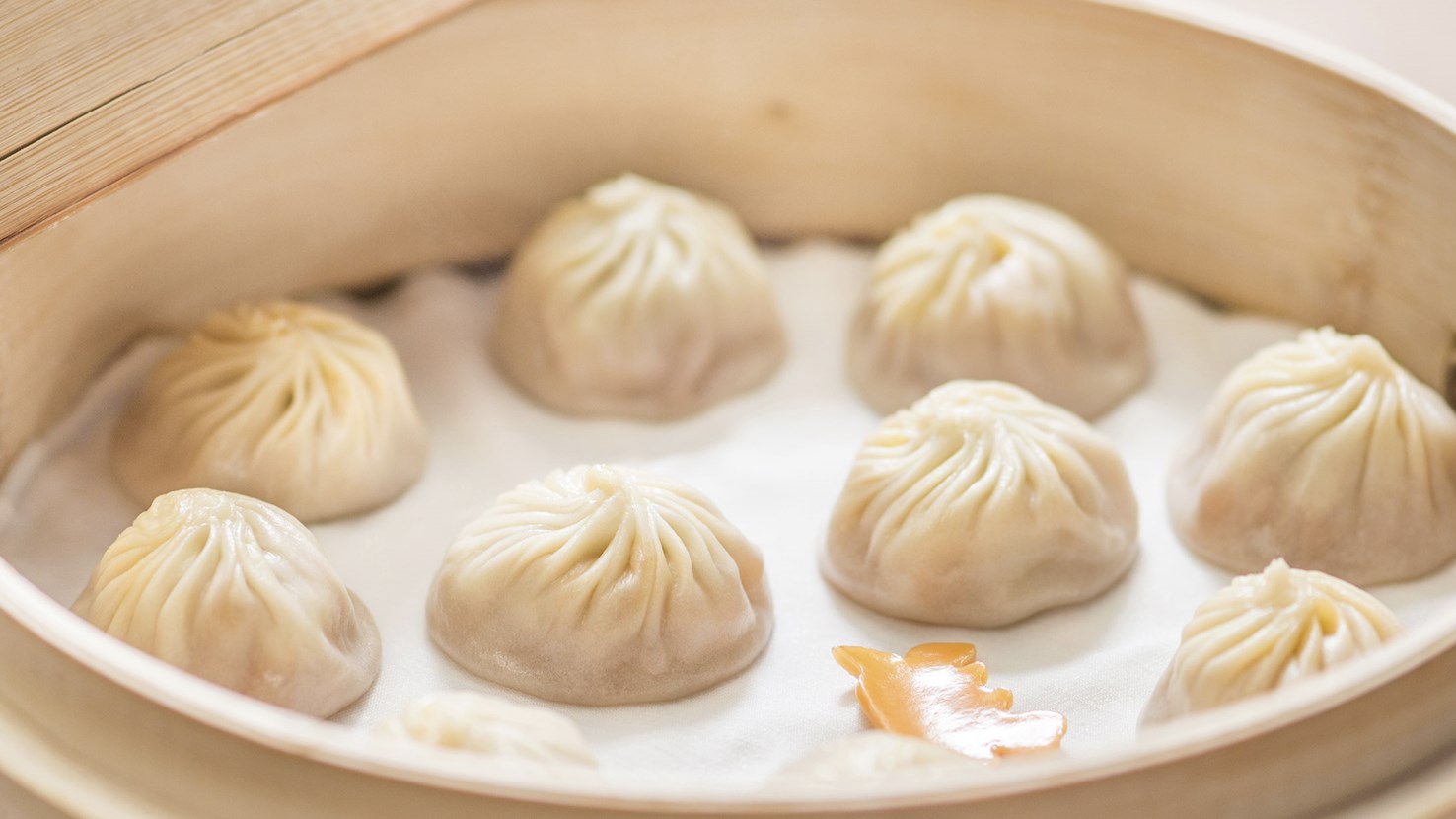
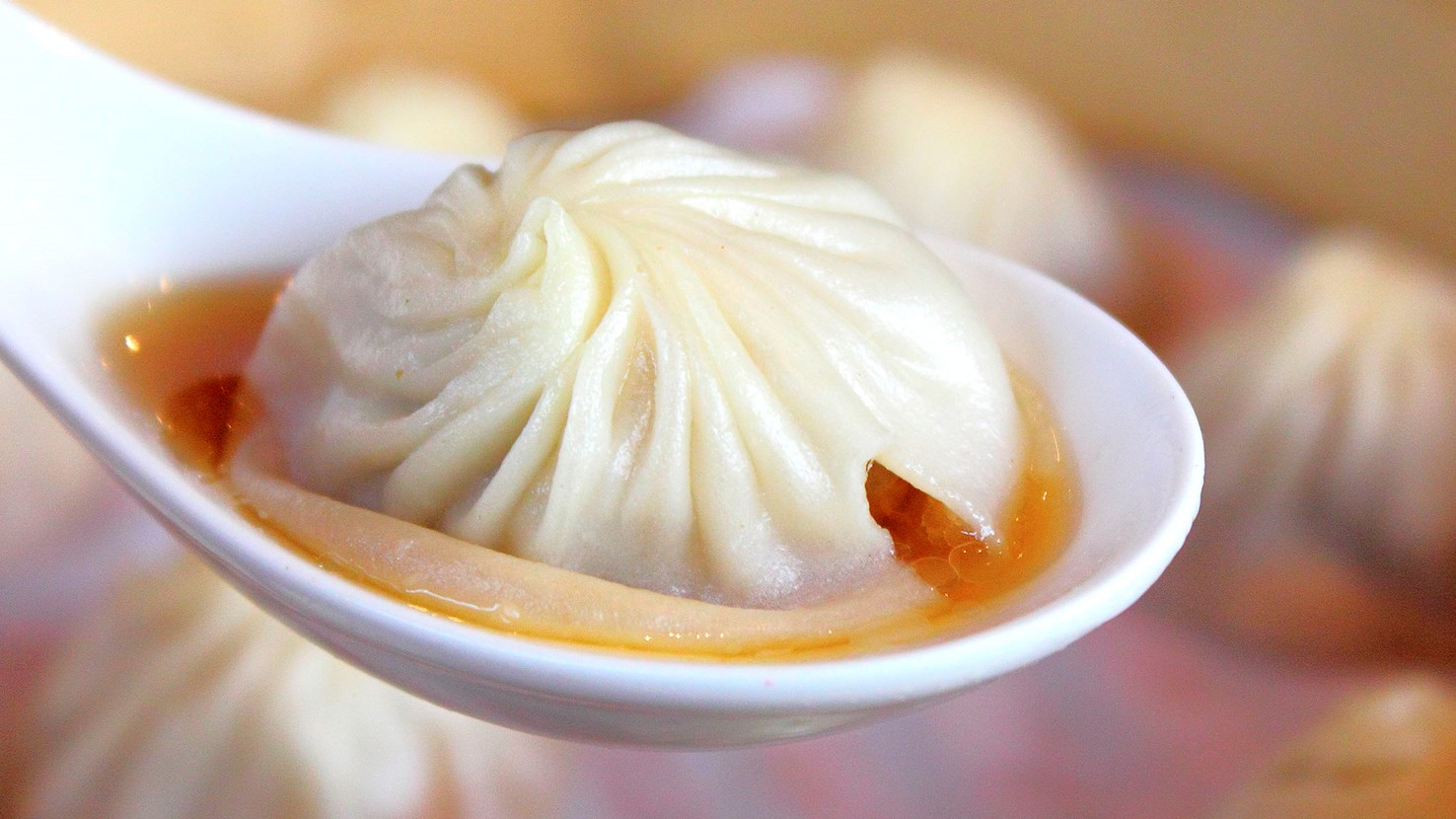
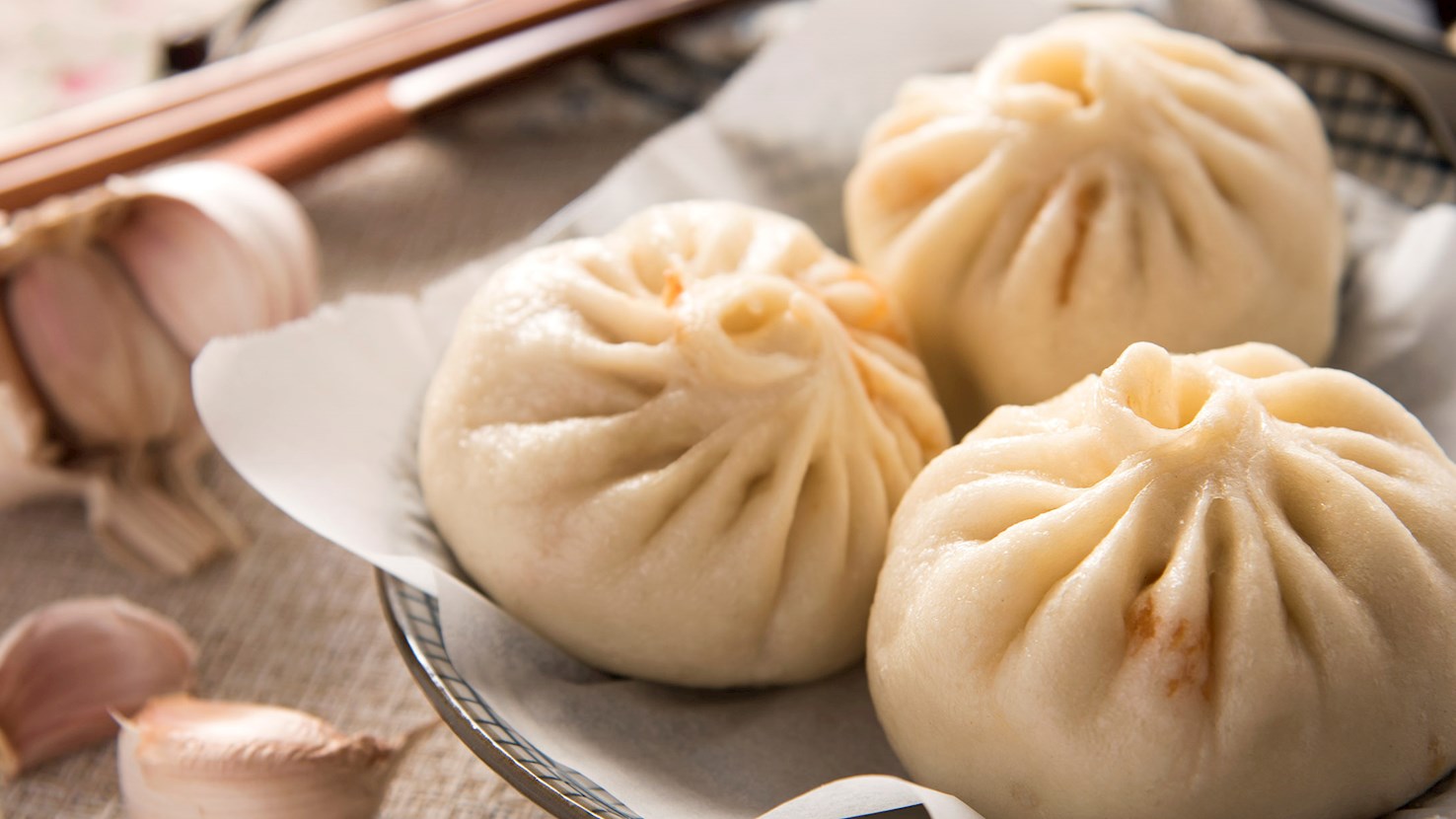
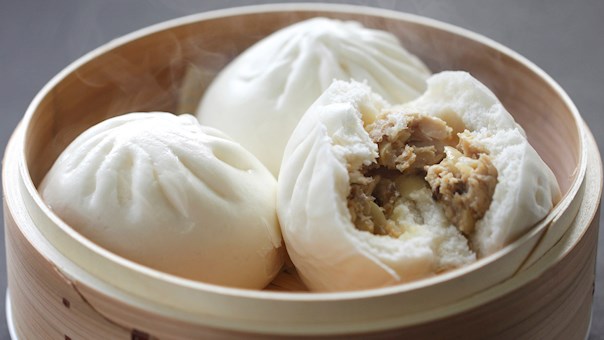
The name tangbao or tangbaozi refers to a broad group of steamed Chinese soup-filled dumplings. Depending on the origin, dumplings can be made with leavened or plain dumpling dough which is usually wrapped around a gelatinous filling, twisted and sealed at the top, and then steamed. While they steam, the firm filling (usually made with minced pork or crab meat) transforms into a flavorful soup, which stays safely secured inside the bun. Due to the nature of this Chinese delicacy, they are always served immediately after steaming, so the soup stays liquid and hot. Because of the sizzling filling, tangbao buns should be consumed with precaution and usually employ a unique eating technique. Chopsticks are used to hold the bun at the top, and a small bit is taken from the side, allowing the soup to pour into the wide spoon held underneath. The soup and the dumpling are usually eaten alternatively, but can also be enjoyed one at the time. One of the most common varieties of the dish includes the tangbao dumplings originating from the Jiangsu province, which are usually large in form and often come with a straw tucked inside the bun, which is used to slurp the delicious soup. Xiaolongbao, the authentic Shanghai version, is famous for its small size and slightly thinner dough. All the varieties found in China and in Chinese restaurants around the world are typically served as a snack, as a part of dim sum meals, or as a satisfying appetizer.
Xiaolongbao are soup-filled dumplings originating from the 19th-century Nan Xiang, what is today Shanghai's Jiading district. It is believed that the first form of xiaolongbao was sold by Huang Mingxian, a shop owner who wanted to evolve the classic dumpling due to the increased competition of neighboring vendors. The dumplings are usually filled with a large volume of soup and minced pork, then steamed in a specially-designed bamboo steamer. Sometimes, xiaolongbao can also be filled with crab or shrimp meat. The dough is quite thin, and it is believed that it should be thicker than tang bao, but not as thick as shen jian bao. It is recommended to serve xiaolongbao dumplings while they are still hot, preferably with a vinegar and ginger dip on the side.
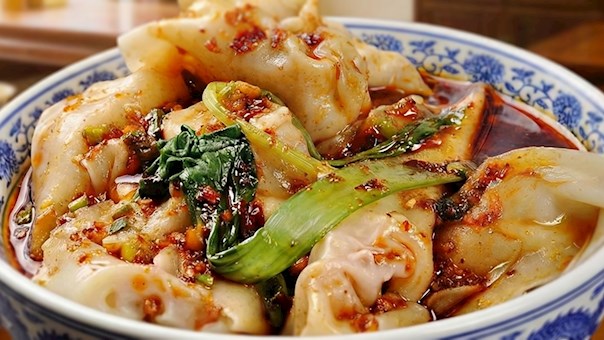
These Chinese dumplings known as jiaozi, consisting of a thinly rolled piece of dough which contains either meat or a vegetable filling, are one of the most popular and most commonly eaten dishes in China and East Asia. They can be served either as an appetizer or as the main course, always with a side of soy sauce-based dipping sauce. Traditionally, jiaozi are always eaten for Chinese New Year. Depending on how they are cooked, jiaozi dumplings can be classified into three categories: boiled, steamed, and pan-fried, but when it comes to folding techniques, there are many, and the most popular one is known as pinched-edge fold, which results in crescent-shaped jiaozi, the most popular shape in China. Well-known variations of jiaozi dumplings include the smaller variety gaau ji that has a thin, translucent wrapping, the pan-fried guotie, and the Japanese-style dumpling, gyoza.
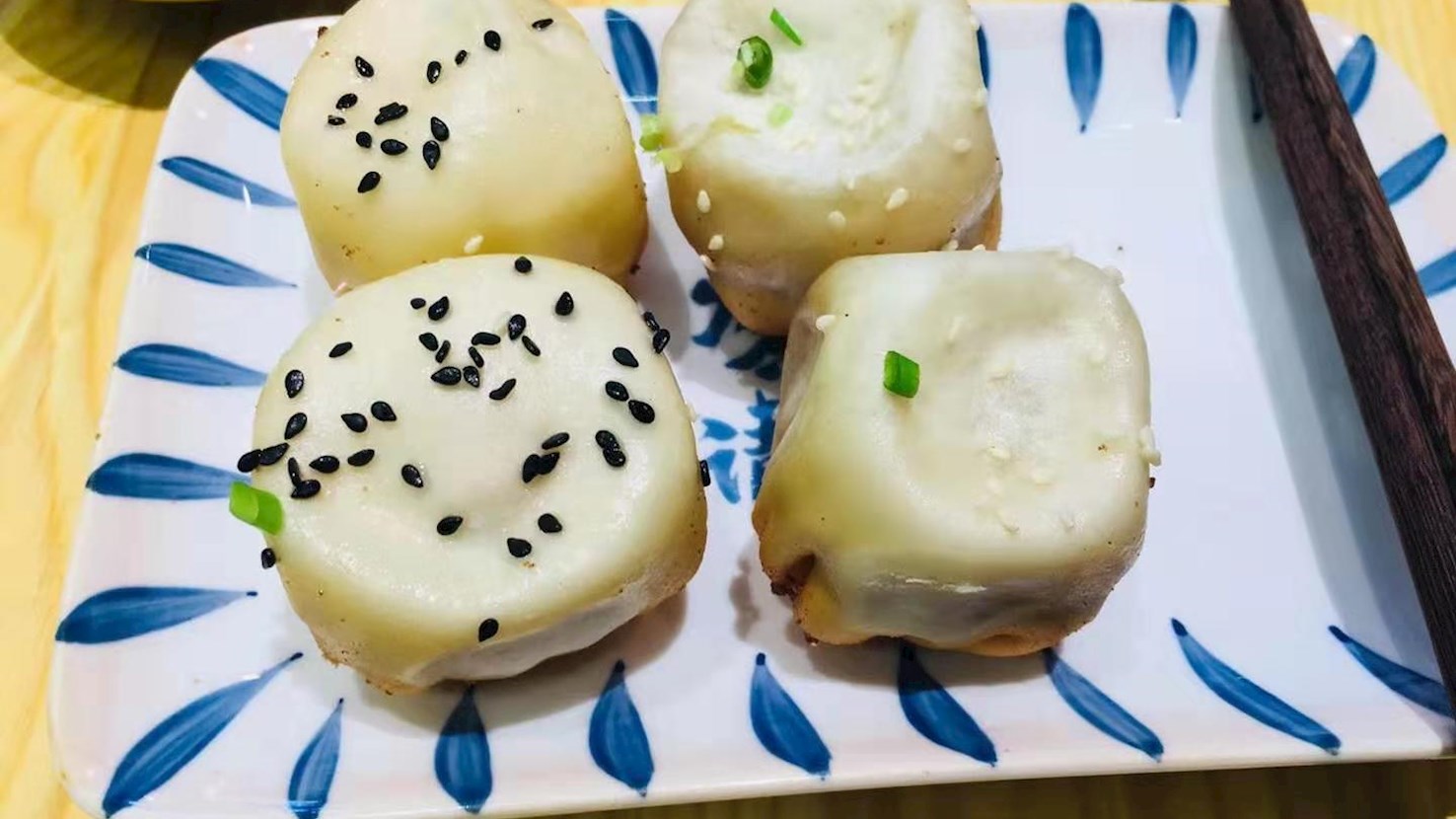
Among the broad group of Chinese dumplings, shengjian mantou stands out as a unique pan-fried variety. Belonging to the category of soup dumplings, or soup buns, they are slightly different than the more famous xiao long bao. Shengjian mantou can be made with minced pork, vegetable, or shrimp as the base, often incorporated with cabbage and chives, then infused with soy sauce, sesame oil, and occasionally ginger and garlic. The fillings are wrapped in a traditional soft leavened dough which might vary in thickness. When wrapped, the dumplings are pan-fried in shallow oil, and alternatively covered in water to produce the steaming effect. This technique provides texturally exciting dumplings, with a soft top and a crispy brown bottom. They are typically sold by piece, and before serving they are sprinkled with black or white sesame seeds, chopped cilantro, or spring onions. Although they can be found in restaurants, they are typically bought at street stands and food stalls which specialize in the preparation of this nutritious delicacy. It is believed that shengjian mantou originally appeared as a part of the traditional dim sum meals, and the first specialized shops started to open in the 1930s. The place of origin is usually associated with Suzhou and Shanghai, but today these delicious hearty dumplings can be found in other parts of China, as well as in numerous Chinese restaurants around the world.
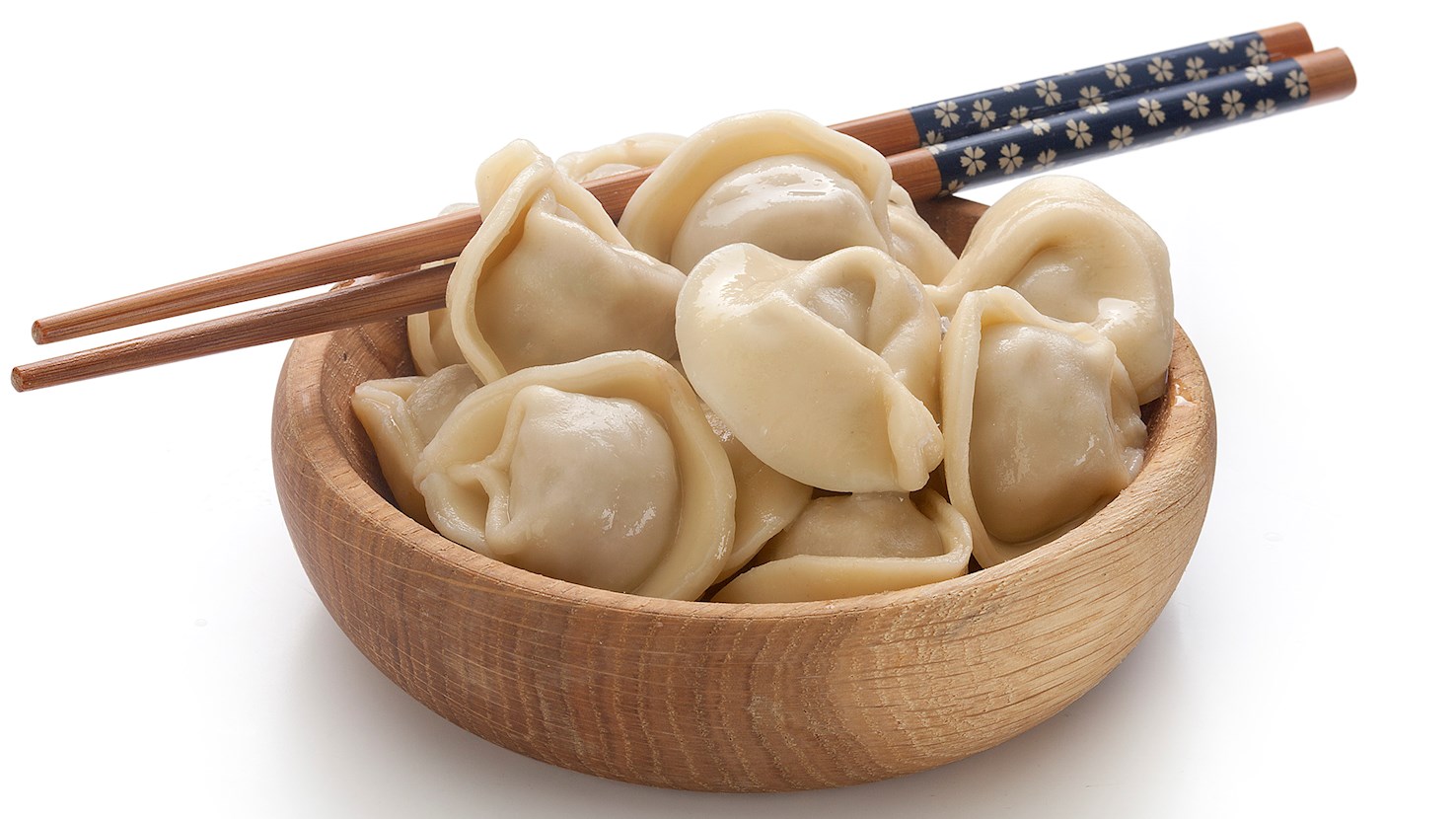
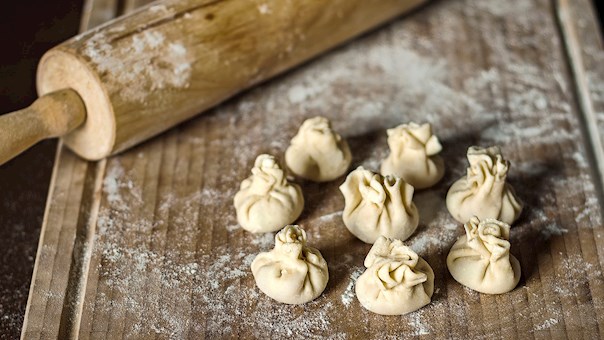
Shuǐjiǎo are boiled dumplings in which an unleavened wheat dough wrapper is folded around a savory filling of minced meat and finely chopped vegetables. The origins date back to the Eastern Han Dynasty and are attributed to the physician Zhang Zhongjing, who formulated it as a medicinal remedy to treat frostbitten ears during severe winters, using warming herbs and mutton wrapped in dough scraps. Over the centuries, this medicinal application evolved into a widespread culinary staple closely associated with the Lunar New Year, as its crescent shape resembles ancient metal ingots, symbolizing prosperity and wealth. The plain wheat flour and water are kneaded into a smooth, elastic dough, which rests briefly before being rolled into long cylinders. These cylinders are cut into small, uniform nubs and flattened with a small wooden rolling pin into thin, circular wrappers, ideally leaving the center slightly thicker than the edges to hold the heavy filling without tearing. A spoonful of the minced mixture—usually seasoned heavily with soy sauce, toasted sesame oil, minced ginger, and white pepper—is placed in the center. The dough is folded in half, and the edges are firmly pinched together to seal the contents, often incorporating multiple tight pleats along the rim for structural integrity. A large pot of water is brought to a rolling boil, and the raw dumplings are dropped inside. As they boil, cold water is added directly to the pot up to three times to lower the temperature slightly; this technique ensures the raw meat inside finishes cooking before the delicate exterior disintegrates into starch. Once they float continuously at the surface and the skins turn slightly translucent, they are scooped out with a slotted spoon. While the base assembly remains uniform, the internal components vary drastically by geographic region and personal preference. Northern areas heavily favor napa cabbage and ground pork, while southern regions often incorporate whole shrimp, garlic chives, or shiitake mushrooms. Vegetarian versions rely entirely on pressed tofu, glass noodles, and wood ear mushrooms to provide bulk and texture. Regardless of the interior, they hit the table steaming hot on large communal plates. They are immediately consumed after being dunked into small, individual bowls containing a sharp, customizable mixture of black rice vinegar, light soy sauce, raw crushed garlic, and roasted chili oil.
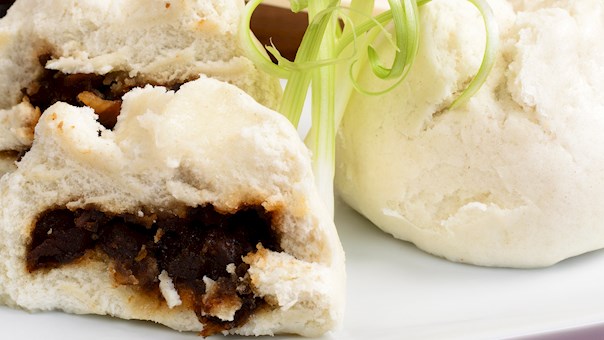
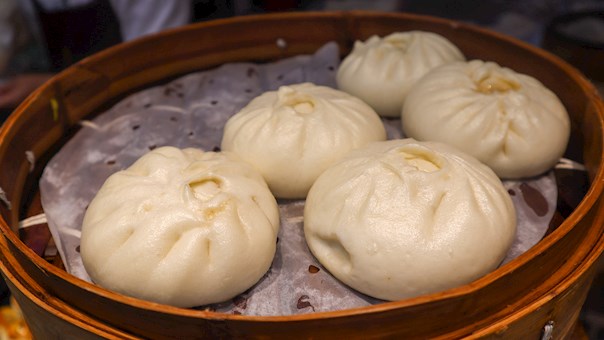
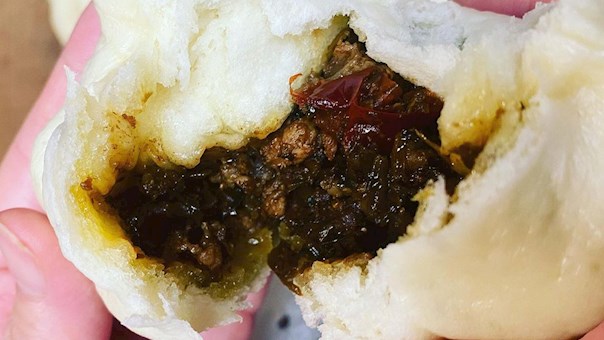
One of China's favorite breakfast foods and an everyday snack, baozi - or simply bao, as it’s usually called - is a steamed bun, made with the so-called mantou bread, and stuffed with a wide variety of fillings ranging from savory to sweet, but they typically include various meats, seafood, or vegetables. Most popular types are char siu bao, filled with Cantonese-style barbecued pork; the smaller, mincemeat-filled Shanghai-style baozi called xiao long bao or Shengjian mantou; and the succulent tangbao or guantang bau, large soup-filled bao buns made with pork or crab stock. These are usually served in their own individual steaming basket, with a straw used to drink the soup while the rest of the bun is eaten later. The flavorful baozi buns were originally known as a peasant dish, but with high-end restaurants breathing new life into this working-class Chinese staple, the once humble steamed bun is finally seeing its renaissance. In China, however, they are still found in virtually every corner, freshly prepared on the spot using bamboo steaming baskets, and sold by numerous street vendors.
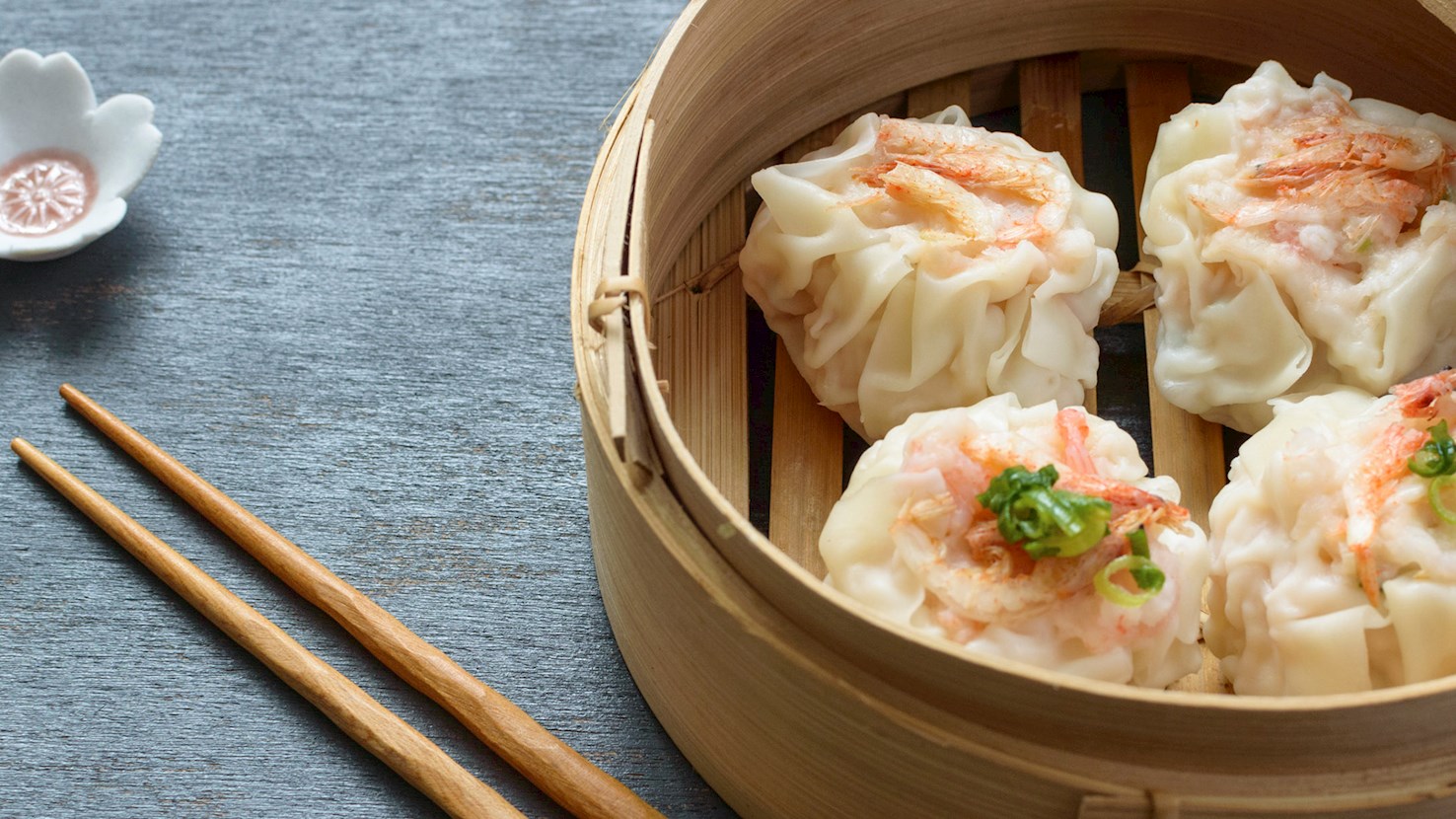
Shumai, literally translated as to cook and sell, is a staple of dim sum cuisine consisting of an open-topped dumpling filled with steamed ground pork, and sometimes finely chopped shrimp or Chinese black mushrooms. When it's cooked, shumai is often garnished with a single pea, a fish egg, or a small piece of carrot on top. It originated in tea houses along the Silk Road in Cantonese China, and since then, the dish has spread throughout the world. In China, there are numerous regional variations of this flavorful delicacy, but it is also extremely popular in Indonesia, Japan, and the Philippines. In Indonesia, the dish is usually accompanied by tofu, vegetables, and peanut sauce; in the Philippines it is accompanied by rice or various dips; and in China, shumai is often served with har gow, another type of dumpling filled with shrimp, scallions, and bamboo shots.
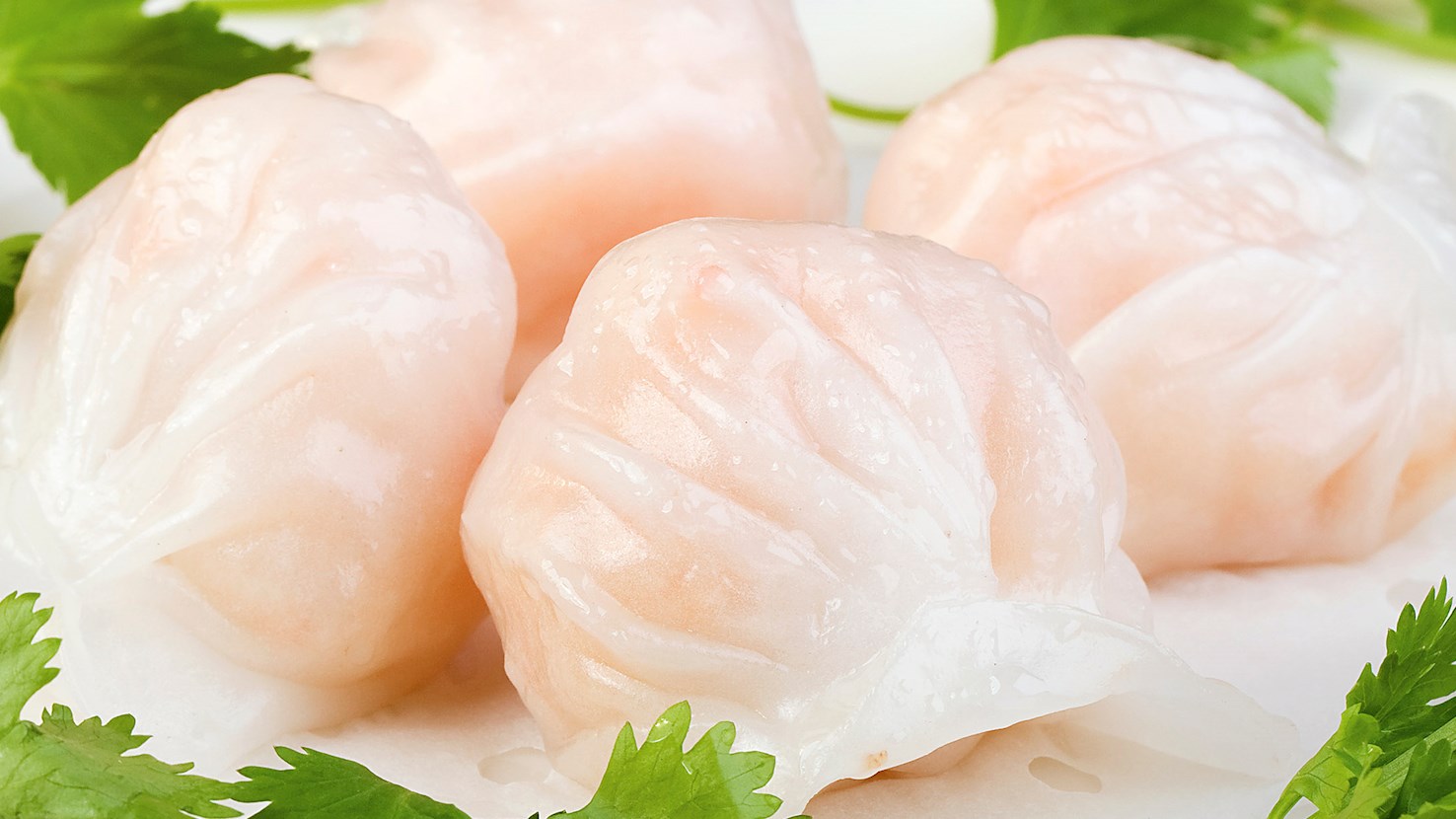
Har gow is a Cantonese dumpling characterized by a delicate, translucent wrapper enveloped around a shrimp filling. The dish was created out of necessity when the owner of a small, family-style teahouse from Guangzhou came up with an idea to buy the shrimp from local fishermen and use it to make dumplings that the locals would love. The idea was a great success, and since the beginning of the 19th century, shrimp dumplings were a staple in many teahouses. Today, har gow dumplings are a part of dim sum where they are commonly paired with sieu mai, a Cantonese dumpling with pork and mushrooms. Due to the particular way in which the wrapper is folded, the main visual feature of har gow is its pleated shape, ideally having even up to 9-13 pleats. The wrappers are made with a combination of wheat starch, corn starch, and lard, filled with a mixture of either minced or whole shrimp and bamboo shoots. Once steamed, the dough should be chewy and almost see-through, but firm enough to be handled with chopsticks, whereas the filling should remain crisp.
TasteAtlas food rankings are based on the ratings of the TasteAtlas audience, with a series of mechanisms that recognize real users and that ignore bot,
nationalist or local patriotic ratings, and give additional value to the ratings of users that the system recognizes as knowledgeable.
For the “Top 21 Chinese Dumplings” list until October 15, 2026, 4,336 ratings were recorded, of which 3,690 were recognized by the system as legitimate.
TasteAtlas Rankings should not be seen as the final global conclusion about food. Their purpose is to promote excellent local foods,
instill pride in traditional dishes, and arouse curiosity about dishes you haven’t tried.



What People Say