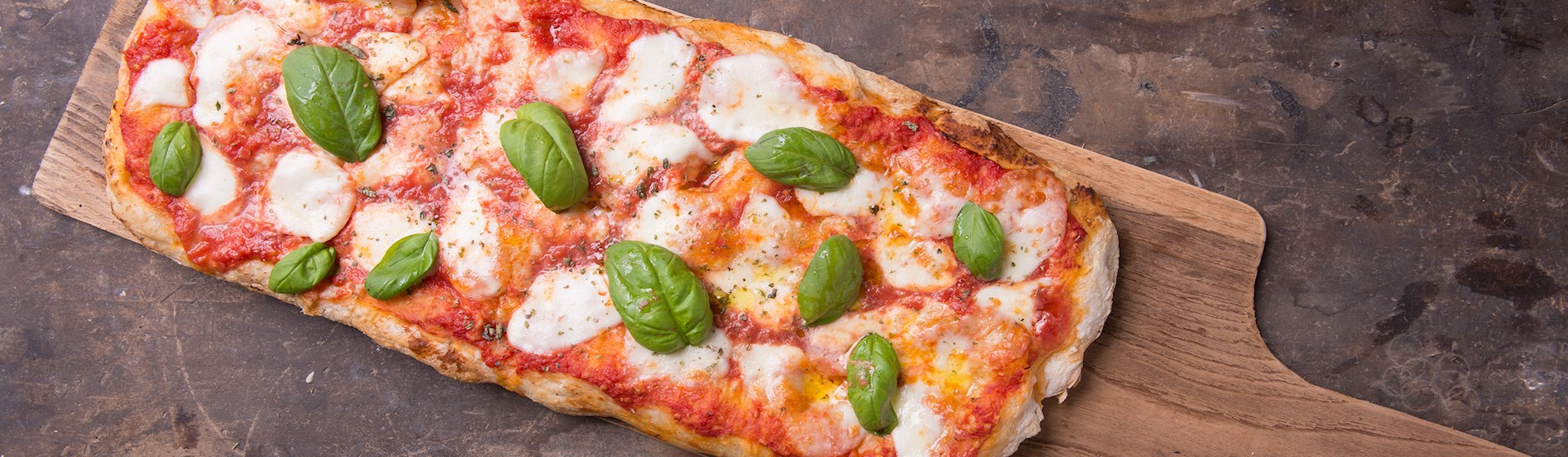
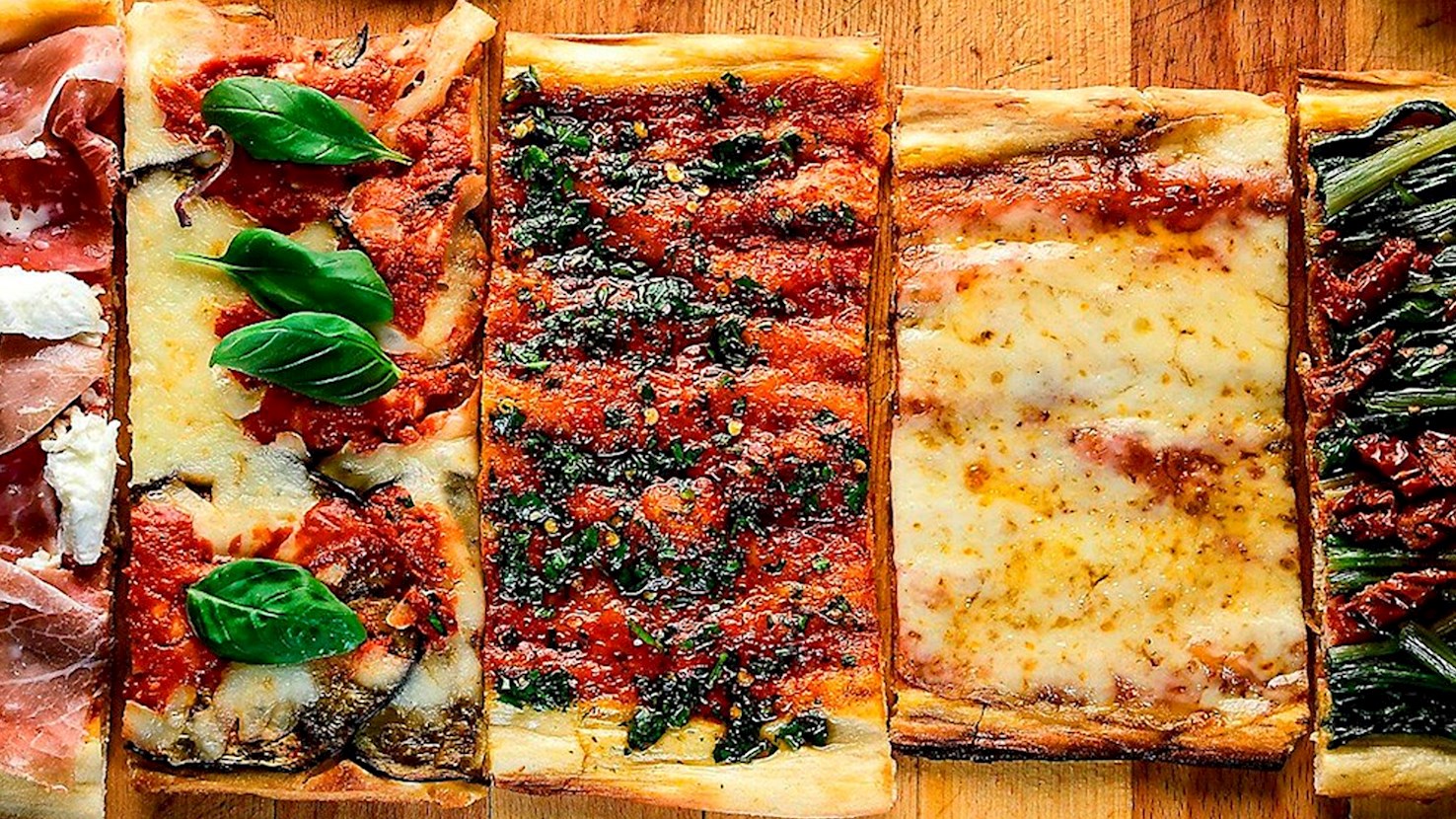
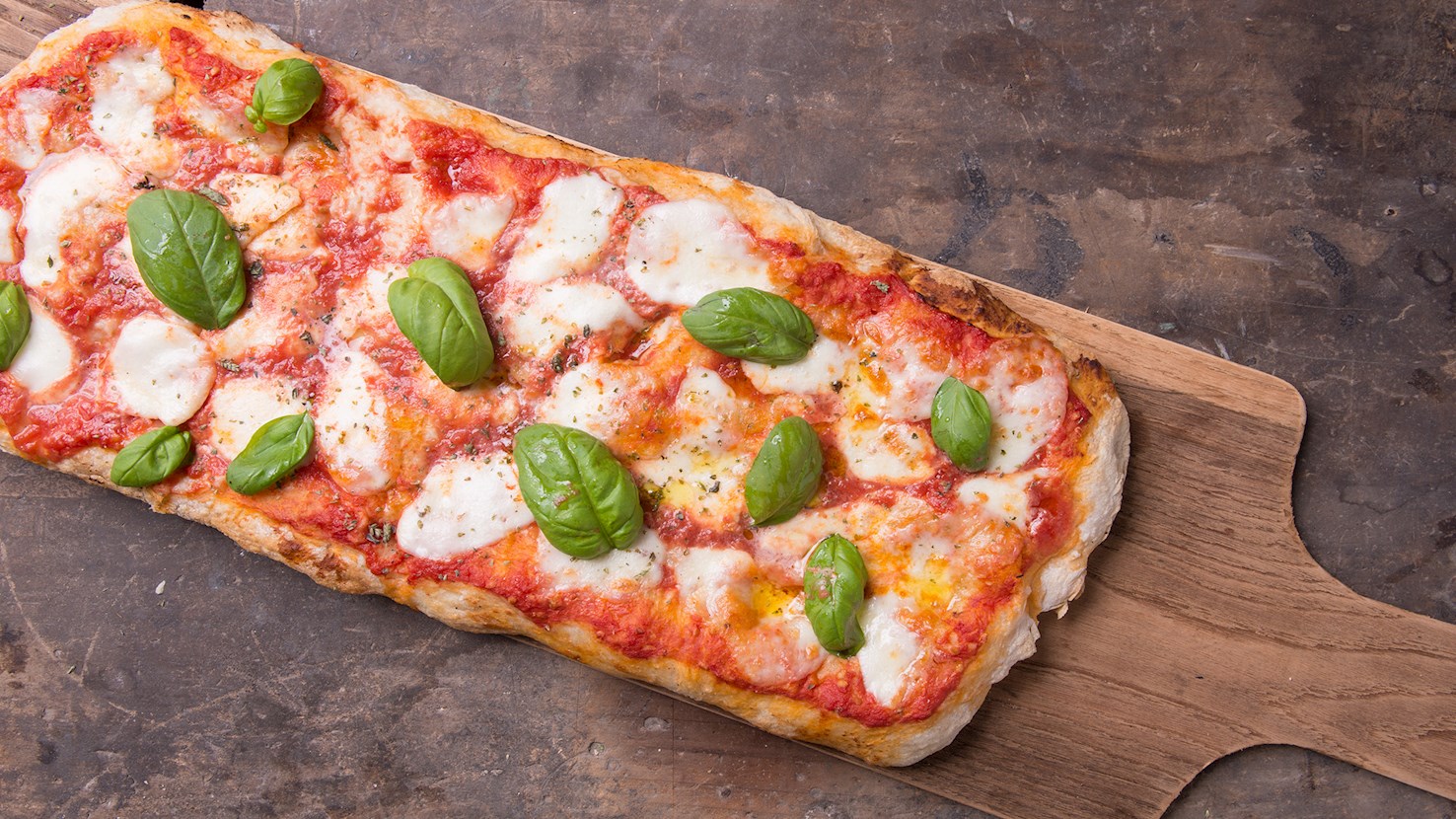
Pizza al taglio is a variety of Italian pizza that is baked in rectangular trays and sold sliced into squares or rectangles. Prices can be marked either per slice of pizza or per kilogram. The first pizza al taglio was baked in Rome in the late 1950s, when it was topped with olive oil and tomato sauce. Today, the dish is one of the most loved street food items both in Rome and in most of Italy. When making pizza al taglio, it is important to let the dough rise and ferment for a longer period of time. The dough is usually baked, topped, and then baked once more, resulting in an evenly-cooked pizza that's light, airy, and easily digestable.
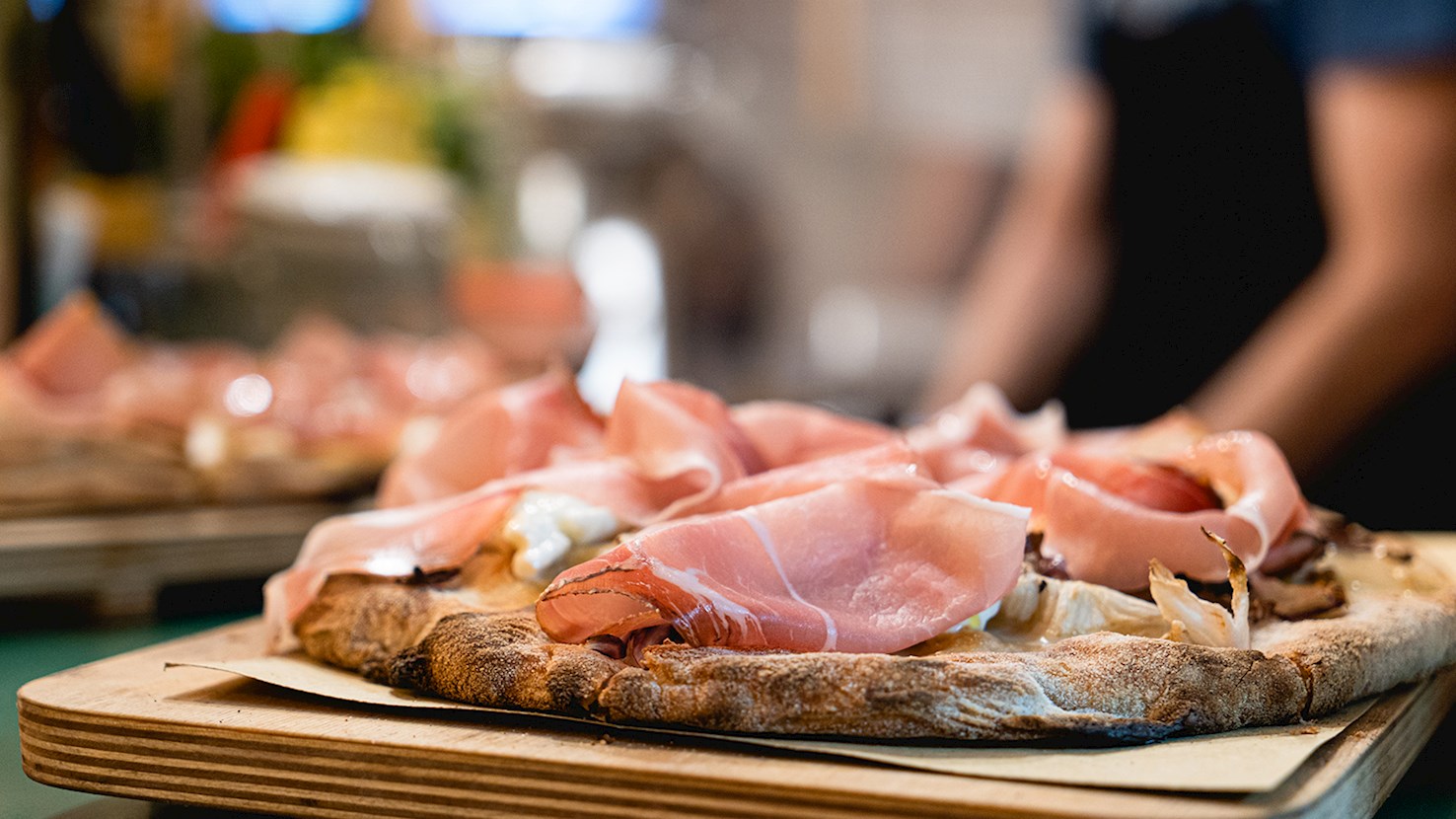
Typically shared among groups and consumed by the slice, the Roman invention known as pizza alla pala is a long, oval-shaped flatbread made with a high-hydration, long-rising dough. It is baked in electric ovens, transferred to a wooden board called pala, then topped with various fresh ingredients. The pizza is characterized by a thick crust and a tender, fluffy interior, while the toppings can be anything from prosciutto and cherry tomatoes to various cheeses, olives, and spicy salami.
Pinsa romana is an ancient Italian dish and the ancestor to the classic pizza we know today. The main ingredient is pinsa romana flour, a mix of wheat flour type 0, soy flour, rice flour, and dried mater dough. This ancient pizza has an oval (or sometimes rectangular) shape, the higher hydration of the dough (making it more digestible), and the dough contains less fats and carbohydrates than regular pizza. The dough for pinsa romana is always prepared with cold water. In ancient Rome, pinsa was prepared by poor peasants, and the name is derived from the word pinsere, meaning to stretch or to spread, referring to the dough and its elongated shape. Due to the fact that the major difference between pinsa romana and pizza is in the dough, not the toppings, it can be topped with most ingredients, such as tomato sauce, herbs, mozzarella, salami, and mushrooms.
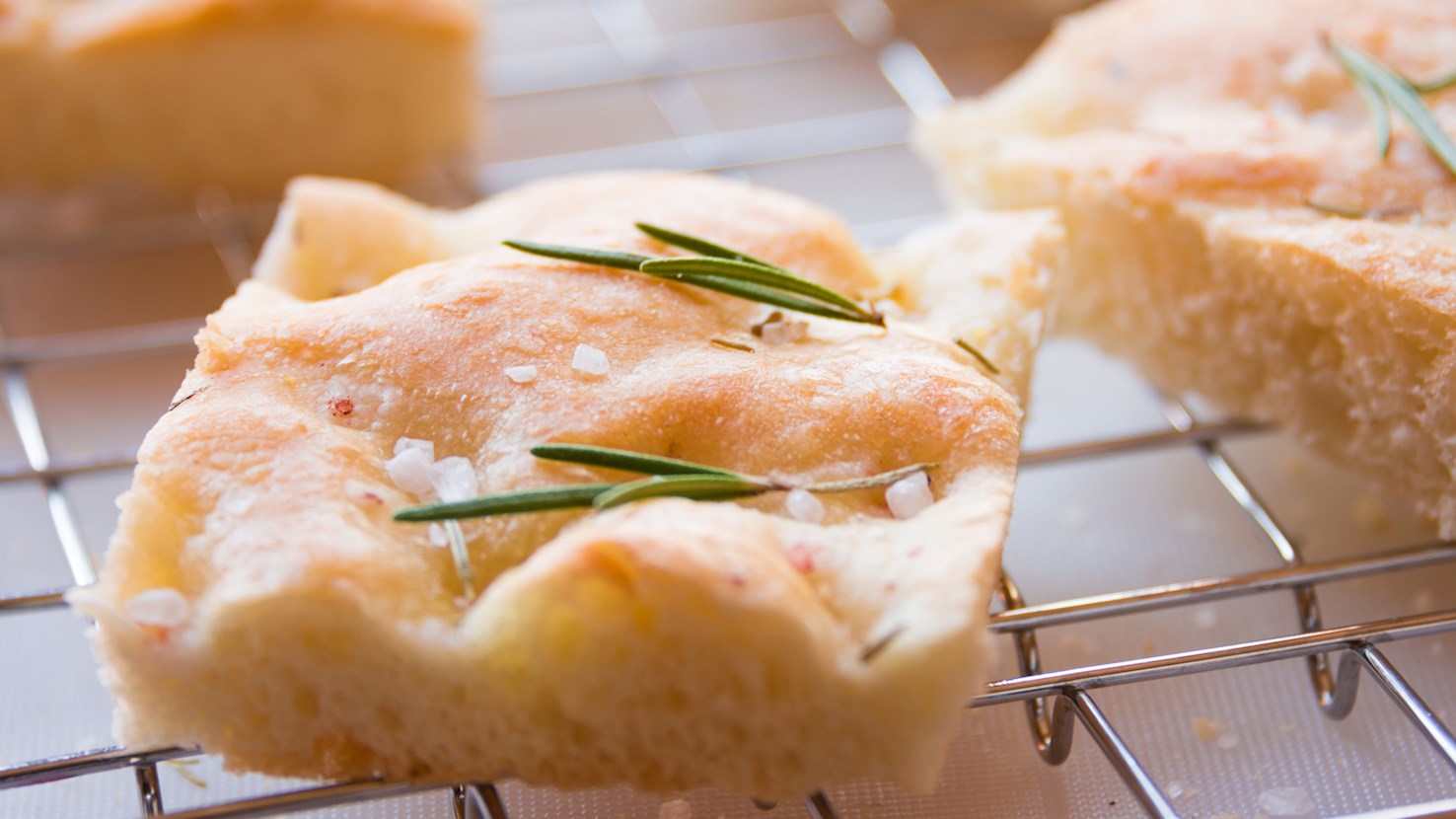
Pizza bianca or white pizza is a variety of pizza which omits tomato sauce from the equation, often substituting it with pesto or sour cream. In Rome, pizza bianca is prepared with no sauce whatsoever, and it is instead topped with salt and olive oil, while chopped rosemary is sometimes sprinkled on top. There are numerous versions of pizza bianca, and the toppings vary accordingly, but the crucial element in all of them is that there should not be any kind of red sauce on the dough.
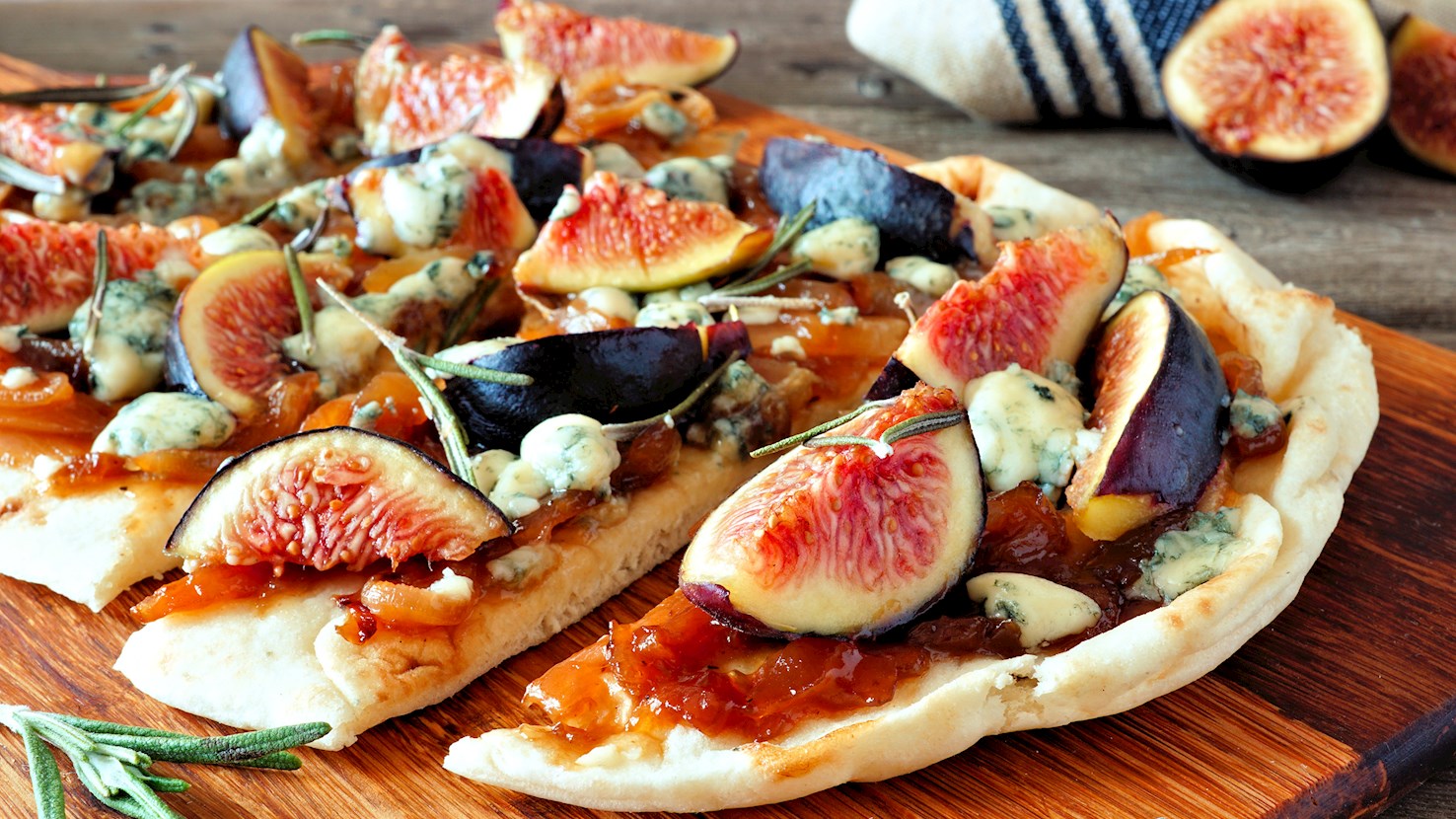
Pizza e fichi is a variety of pizza bianca, which is usually topped with mozzarella, garlic, salt, olive oil, and, sometimes, rosemary leaves. This Roman version of pizza bianca, called pizza e fichi, is essentially the same, apart from the fact that it is additionally topped with chopped pieces of succulent figs. The best figs are available in September, or sometimes in late August, making pizza e fichi a highly seasonal pizza variety.
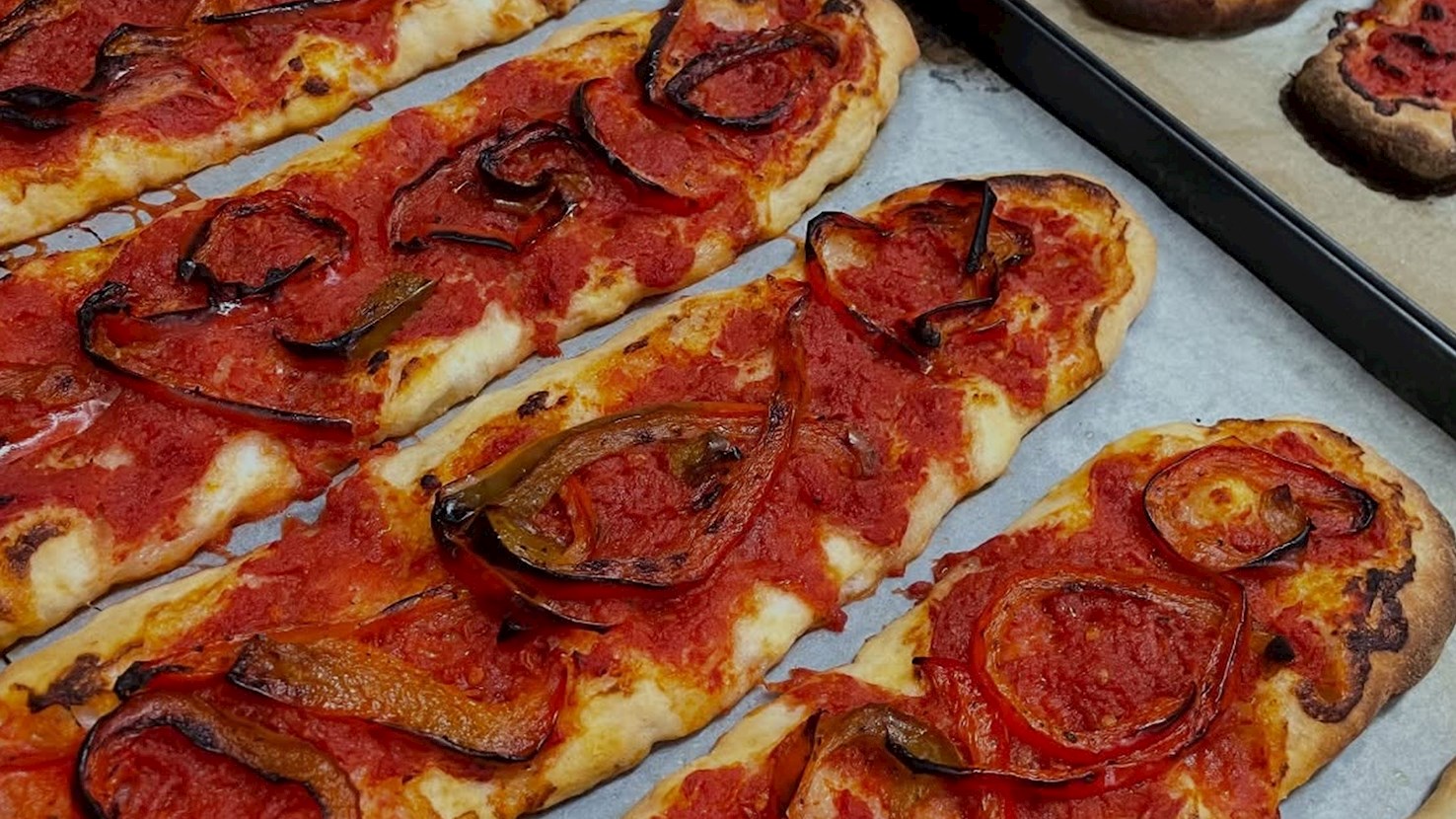
Lingue di pizza, translating to "pizza tongues," are long, oval-shaped flatbreads originating from the central and northern regions of Italy, specifically associated with artisanal bakeries in Rome and the surrounding Lazio area. They are distinguished by their elongated, narrow form which typically measures between thirty and fifty centimeters in length. The item is a variation of pizza bianca or focaccia, characterized by a crunchy exterior and a thin, airy crumb. Unlike standard round pizzas, lingue di pizza are designed for portability and are frequently sold as a snack or an accompaniment to other foods rather than a standalone circular meal. The development of this format is a direct result of the operational constraints and physical dimensions of wood-fired bakery ovens used in Italian towns during the early to mid-20th century. Bakers utilized leftover bread dough to test the temperature of the oven floor before loading larger loaves. By stretching small portions of dough into long, thin shapes, they maximized the available narrow spaces between larger round loaves, ensuring no heat or space was wasted. This utilitarian practice evolved into a deliberate production method as the demand for quick, hand-held street food grew in urban centers. The specific shape was favored because it allowed for even baking and a high ratio of crust to soft interior, which helped the bread maintain its structural integrity when topped with heavy ingredients. Preparation involves a dough made from wheat flour, a high percentage of water, yeast, salt, and malt. The dough undergoes a fermentation period of at least twenty-four hours to develop a complex flavor and large air pockets. Once leavened, the dough is divided into small balls and stretched by hand into long, thin strips on a floured surface. A unique technical aspect of the baking process is the high-heat environment, often exceeding three hundred degrees Celsius, which causes the dough to blister rapidly and creates a characteristic "bubbly" surface. Before entering the oven, the surface is dimpled with fingertips and brushed with extra virgin olive oil and coarse sea salt. In many variations, the dough is par-baked and then topped with ingredients such as prosciutto, arugula, or cherry tomatoes for a final short bake. Lingue di pizza are eaten throughout Italy, primarily as a mid-morning snack or an appetizer during the late afternoon. They are served either plain or topped with various cured meats and cheeses. The long shape allows the bread to be cut into smaller rectangular sections or eaten whole by hand while standing. It is common to find them in specialized bakeries served on wooden boards or wrapped in brown paper. They are frequently paired with sparkling white wines like Prosecco or light Italian lagers, which complement the salty and oily profile of the crust. In non-alcoholic contexts, they are often served alongside sparkling water or bitter citrus-based sodas.
TasteAtlas food rankings are based on the ratings of the TasteAtlas audience, with a series of mechanisms that recognize real users and that ignore bot,
nationalist or local patriotic ratings, and give additional value to the ratings of users that the system recognizes as knowledgeable.
For the “Top 6 Roman Pizzas” list until October 15, 2026, 902 ratings were recorded, of which 765 were recognized by the system as legitimate.
TasteAtlas Rankings should not be seen as the final global conclusion about food. Their purpose is to promote excellent local foods,
instill pride in traditional dishes, and arouse curiosity about dishes you haven’t tried.



What People Say