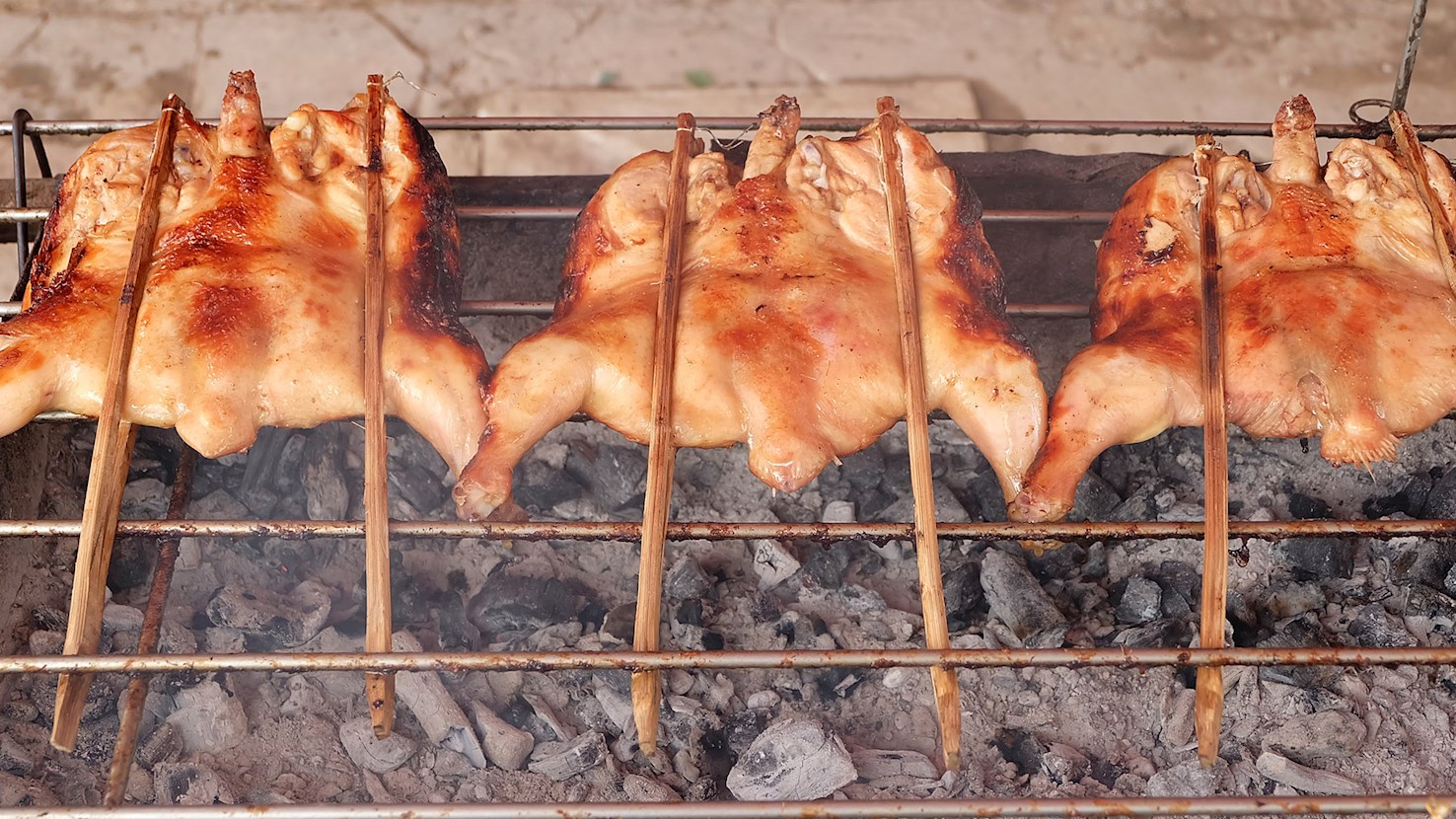
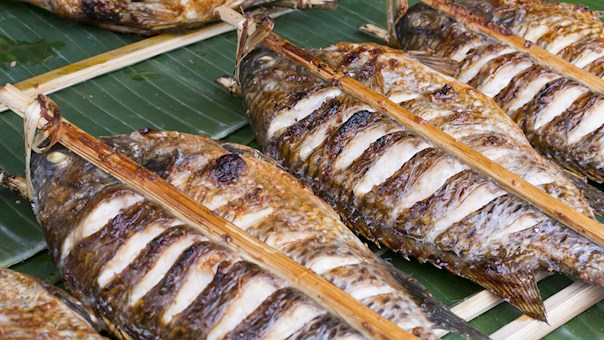
Kai yang is a charcoal-grilled chicken dish strongly associated with Isan, northeastern Thailand, and with the closely connected food culture of Laos, where the corresponding dish is known as ping kai. The chicken is usually marinated with garlic, coriander root, pepper, fish sauce or another salty seasoning, and often lemongrass and turmeric, then flattened and grilled slowly over charcoal until the skin is browned and the meat remains juicy. In Thai, kai means chicken and yang means grilled or roasted, so the name literally means “grilled chicken.” In Lao, the order is reversed in ping kai, with ping referring to grilling. The broader preparation is rooted in Lao food culture and the closely related cuisine of Isan. The two regions share language, ingredients, glutinous-rice eating habits, fermented seasonings, grilled foods, and numerous dishes that developed across a cultural area predating the modern border between Laos and Thailand. Lao grilled chicken, or ping kai, is an established part of everyday food in Laos, while kai yang became one of the defining grilled foods of Isan. As with som tam, assigning the preparation to a sharply separated modern national cuisine obscures this connection. The Lao form is generally regarded as the earlier basis, while the Thai name kai yang became widely used as the dish spread from Isan into the rest of Thailand. There is no documented individual creator or precise date for the dish. Grilling poultry over charcoal is much older than the modern restaurant and street-food versions, and the preparation developed in communities where chickens could be raised domestically, seasoned with locally available aromatics, and cooked over an open fire. Its close association with glutinous rice is particularly significant: sticky rice is the staple grain of Laos and Isan, and grilled meats are naturally suited to meals in which small portions of rice are formed by hand and eaten with meat, salads, dipping sauces, and vegetables. During the twentieth century, kai yang became increasingly visible outside northeastern Thailand as migration from Isan brought regional foods to Bangkok and other urban centers. The same movement that helped establish som tam, larb, and sticky rice as widely recognized Thai foods also expanded the market for Isan grilled chicken. Roadside vendors and small restaurants proved especially well suited to the dish because chickens could be marinated in advance and cooked continuously over charcoal, then chopped to order. Today it is sold across Thailand even though its strongest culinary identity remains northeastern. The chicken is commonly prepared whole, split along the breast or backbone and flattened so that the legs, thighs, and breast cook more evenly. Some vendors halve the bird instead. The flattened chicken may be secured between split bamboo sticks or reinforced with bamboo skewers, which keep it open during cooking and make it easier to turn over the grill. Leaner, relatively small chickens have historically been valued because their firmer meat responds well to slow charcoal cooking. There is no single compulsory marinade, but garlic, coriander root, and pepper form one of its most characteristic aromatic bases. Lemongrass, turmeric, fish sauce, soy or seasoning sauce, ginger, palm sugar, and sometimes coconut milk may also be used depending on the regional or vendor style. The aromatics are commonly pounded before being rubbed into the chicken, allowing them to adhere closely to the skin and meat. Thailand Foundation recipes, for example, combine garlic, coriander root, black pepper, lemongrass, ginger, seasoning sauce, and turmeric, while other established formulas use fish sauce and palm sugar. These differences are better understood as regional and household variation than as evidence of one standardized formula. After marinating, the chicken is grilled over charcoal at moderate or relatively low heat rather than placed directly over an intense flame. The slower cooking is important because the bird is usually grilled in large sections or whole and must cook through to the bone without burning the skin. Vendors may position the chicken well above the coals and regulate the fire to prevent flare-ups. The goal is a browned, slightly crisp exterior with some charcoal aroma, not a heavily blackened surface. The broad, flattened shape also allows more skin to face the heat directly and helps produce relatively even browning. Once cooked, kai yang is generally chopped through the bone into manageable pieces and served hot or warm. The skin should remain browned and aromatic, while the meat should be moist rather than dry. Unlike fried chicken, there is no coating or batter, and unlike heavily glazed barbecue, the surface is not defined by a thick sauce. Most of the seasoning enters the chicken before cooking, while dipping sauces are served separately. Regional versions have acquired reputations of their own. In Thailand, places such as Wichian Buri in Phetchabun and Khao Suan Kwang in Khon Kaen are particularly associated with distinctive grilled-chicken styles. Laos has its own famous regional example, Ping Kai Seno from Seno in Savannakhet province. The Seno version developed as a roadside specialty in the early 1990s, became strongly associated with travelers using Route 13, and later received national ODOP recognition. It should therefore be treated as a specific regional version of Lao grilled chicken rather than as the starting point of the broader dish. The most characteristic Thai serving combines kai yang with som tam and khao niao, or glutinous rice. The three are so closely associated in Isan eating that they are often ordered together as a complete meal. The cool, crisp, acidic and chili-heavy papaya salad offsets the fatty skin and savory marinade of the chicken, while sticky rice provides the main starch and can be shaped into small pieces and eaten by hand. Thailand’s tourism and culinary sources repeatedly present grilled chicken and som tam together, reflecting how established the combination has become. A dipping sauce commonly accompanies the chicken. In Isan this may be nam chim jaew, a salty, sour and spicy sauce commonly built around fish sauce, lime or tamarind, dried chili, shallot, and toasted rice powder. Other vendors serve a sweeter chili-garlic dipping sauce. In Laos, grilled chicken can be accompanied by jeow, the broad family of Lao dipping sauces. Fresh cucumber, raw vegetables, herbs, larb, and other grilled meats can be added when kai yang forms part of a larger shared meal. Kai yang is eaten throughout the day and is particularly well suited to informal meals, street stalls, markets, roadside restaurants, picnics, and shared family tables. Whole birds may be purchased to take away and eaten with baskets of sticky rice and som tam, while restaurants usually chop the chicken into portions before serving. The combination remains strongly associated with Isan even though it has become part of mainstream Thai restaurant and street-food culture. Cold lager is one of the most natural beverage pairings, particularly when the chicken is eaten with spicy som tam and nam chim jaew. In Laos, Beerlao commonly fills the same role with ping kai, while water and unsweetened tea work well with the salty, aromatic meat.
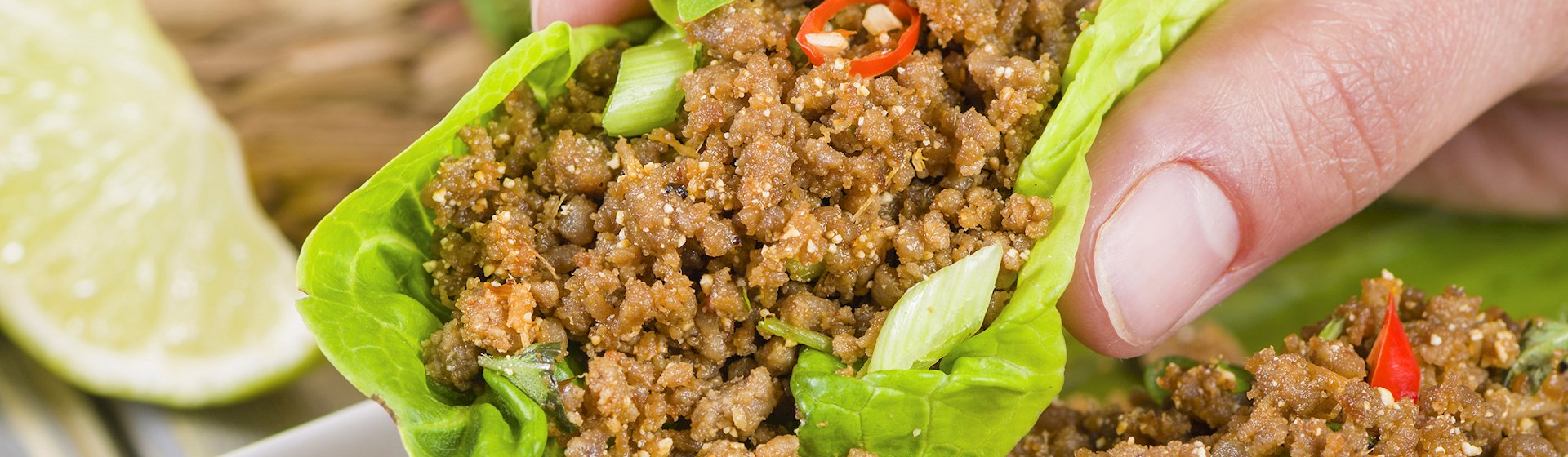
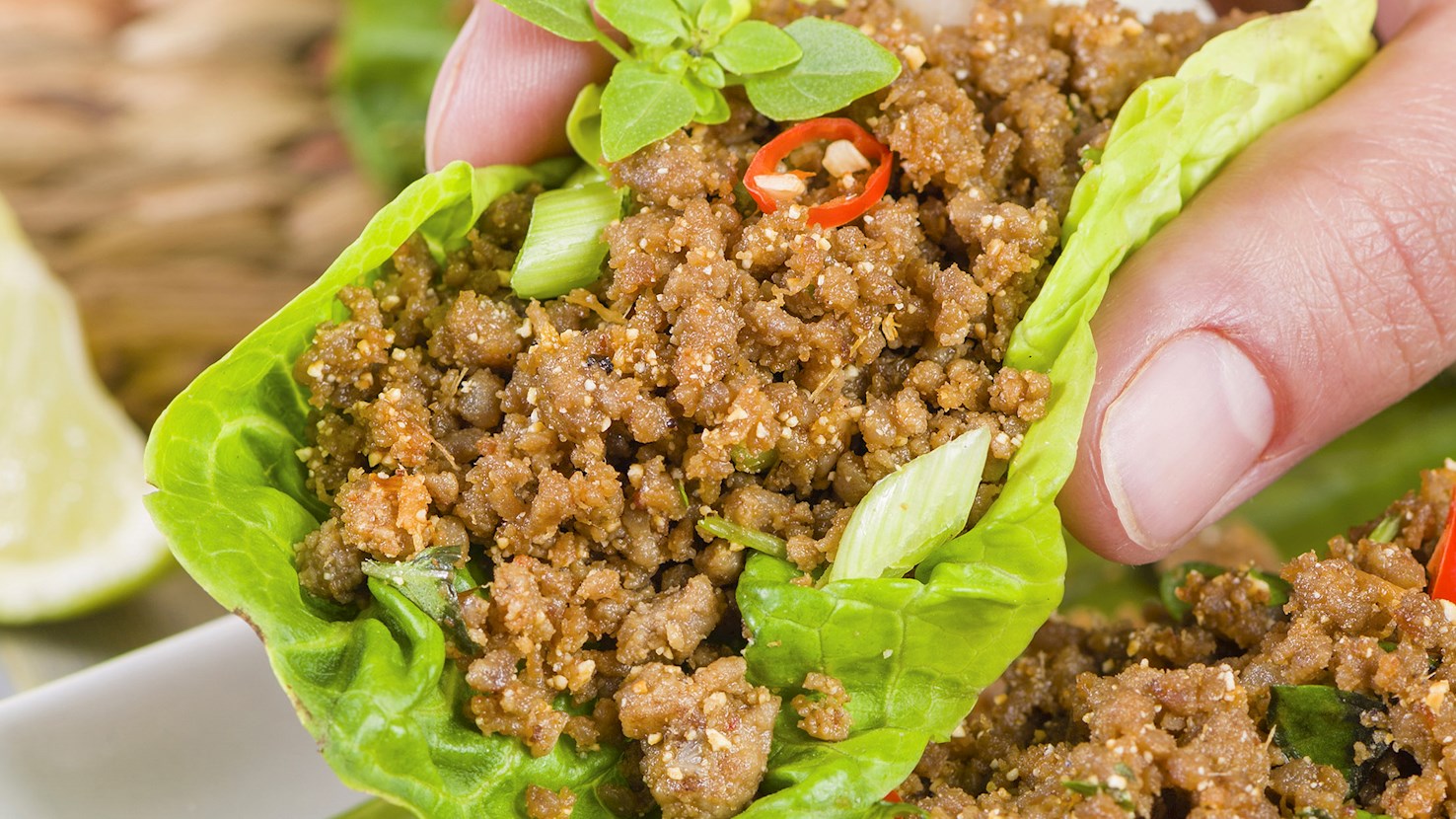
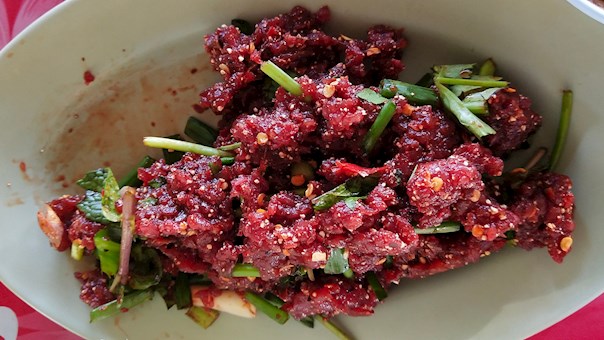
Larb, also spelled laap or larp, is a seasoned minced meat salad originating from Laos, where it functions as a national dish, and widely consumed throughout the Isan region of northeastern Thailand. The dish developed among ethnic Lao agrarian communities along the Mekong River basin as a method to process fresh livestock, wild game, or river fish immediately following slaughter, serving as a focal point for communal labor exchanges and ceremonial feasts. Preparation involves finely hand-chopping lean meat and offal, most commonly pork, beef, chicken, duck, or fish, and quickly blanching or cooking it in a small amount of broth before tossing the warm meat with fermented fish sauce (padaek or nam pla), lime juice, ground dried chili flakes, sliced red shallots, chopped mint, cilantro, and culantro. What distinguishes larb from other Southeast Asian seasoned meat preparations is the essential addition of khao khua, a coarse powder produced by dry-roasting raw glutinous rice grains until golden brown and grinding them, which acts as a textural thickening agent that binds the citrus-herb dressing to the minced protein while imparting a roasted, nutty flavor profile. Northern Thai variants (larb Lanna) differ by substituting lime juice and fish sauce with a complex blend of dried spices, including long pepper, dried ginger, and star anise, often incorporating fresh bile or blood for bitterness. Larb is eaten at room temperature or warm during daily family meals, market stalls, and village gatherings across Laos and northern Thailand. Diners eat the dish by hand, rolling small portions of warm steamed sticky rice (khao niao) into balls to scoop up the minced meat alongside raw vegetable garnishes including cabbage wedges, Thai eggplant, green beans, and cucumber slices, pairing the meal with cold lager beer, crushed sugar cane juice, or iced green tea.
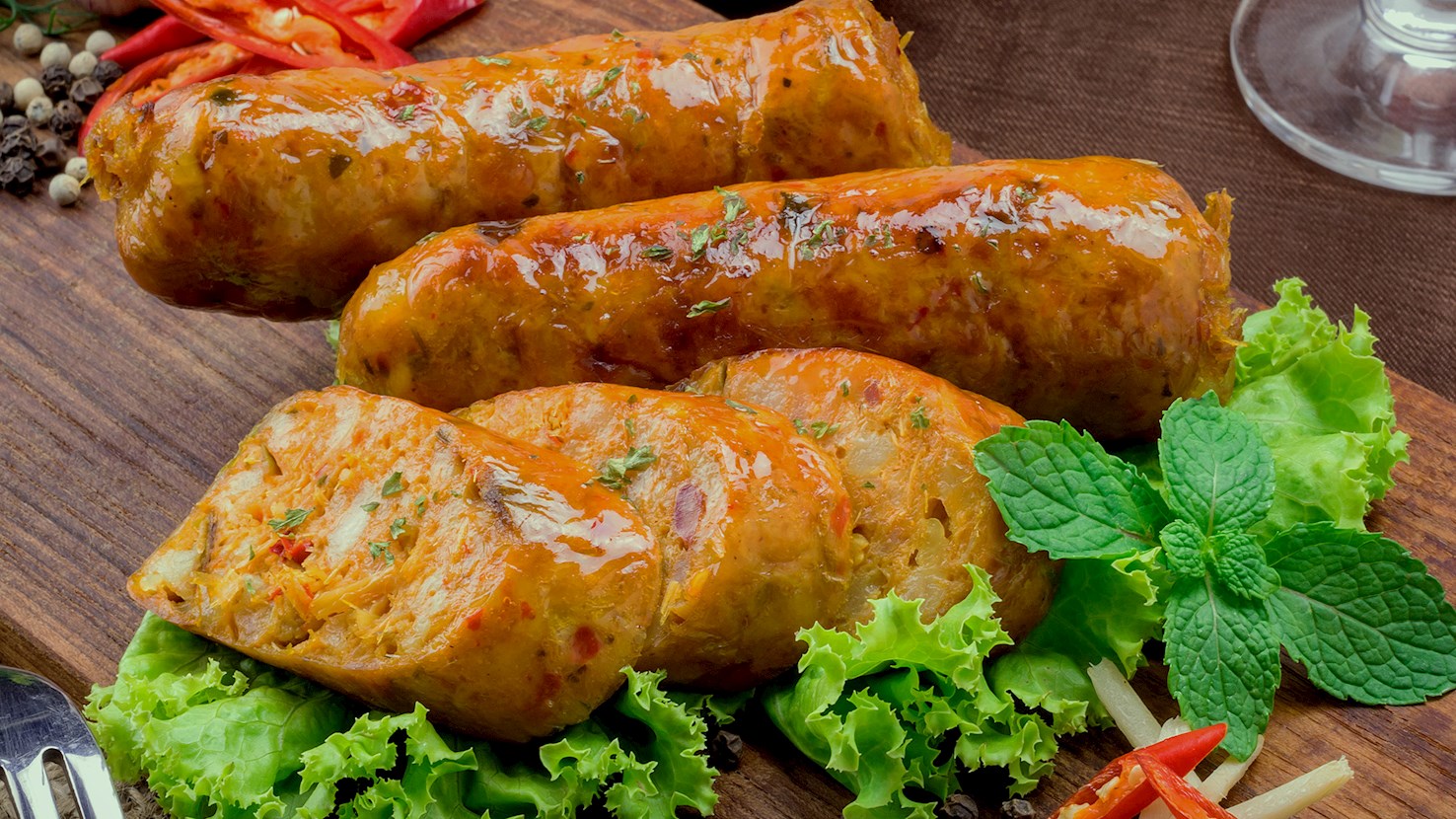
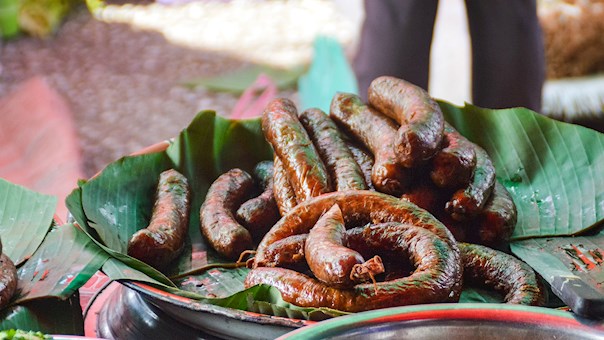
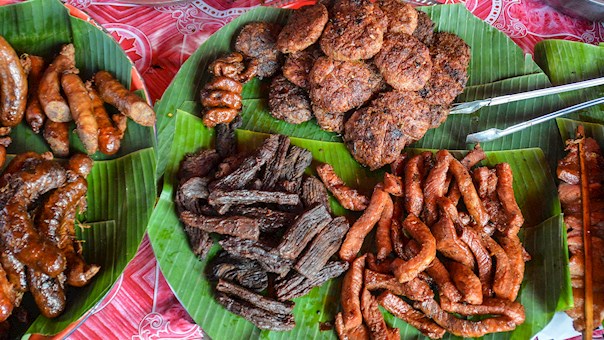
Sai oua, also known as Northern Thai herbal sausage or Lao sausage, is a grilled pork sausage heavily spiced with a pounded curry paste, originating from Northern Thailand and Luang Prabang in northern Laos. The dish developed among the Tai Yuan and Lanna cultures as a preservation method for pork meat and fat following livestock slaughter, utilizing locally grown aromatics to extend shelf life in tropical climates without cold storage. Preparation involves pounding a dense curry paste composed of dried red chilies, lemongrass, galangal, kaffir lime zest, garlic, shallots, fresh turmeric, shrimp paste, and salt using a granite mortar and pestle before combining it with coarsely ground pork shoulder, pork fat, fish sauce, and finely shredded fresh kaffir lime leaves. The mixture is stuffed tightly into natural pork small intestine casings, tied into long coils or individual segments, pricked with small needles to prevent bursting during heat expansion, and slow-grilled over charcoal embers at low temperatures until the casing turns crisp and the inner fat renders into the herbal meat paste. What sets sai oua apart from other Southeast Asian sausages is its high ratio of fresh herb paste to meat, often up to thirty percent of the total filling by weight, resulting in a dense, non-fermented sausage with a vivid yellow-orange interior from fresh turmeric and a fibrous, aromatic structure throughout. Unlike fermented regional sausages like sai krok Isan or naem, sai oua relies entirely on direct heat cooking and fresh herb aromatics rather than lactic acid fermentation. Sai oua is eaten hot or at room temperature at morning markets, street food stalls, and family meals throughout Chiang Mai, Chiang Rai, and northern Lao provinces. Diners slice the grilled coils crosswise into bite-sized rounds and eat them by hand alongside steamed glutinous rice (khao niao), fresh green chili dipping paste (nam phrik noom), pork cracklings (kab moo), raw cabbage leaves, and sliced fresh ginger, pairing the sausage with cold amber lagers, iced herbal infusions, or fresh coconut water.
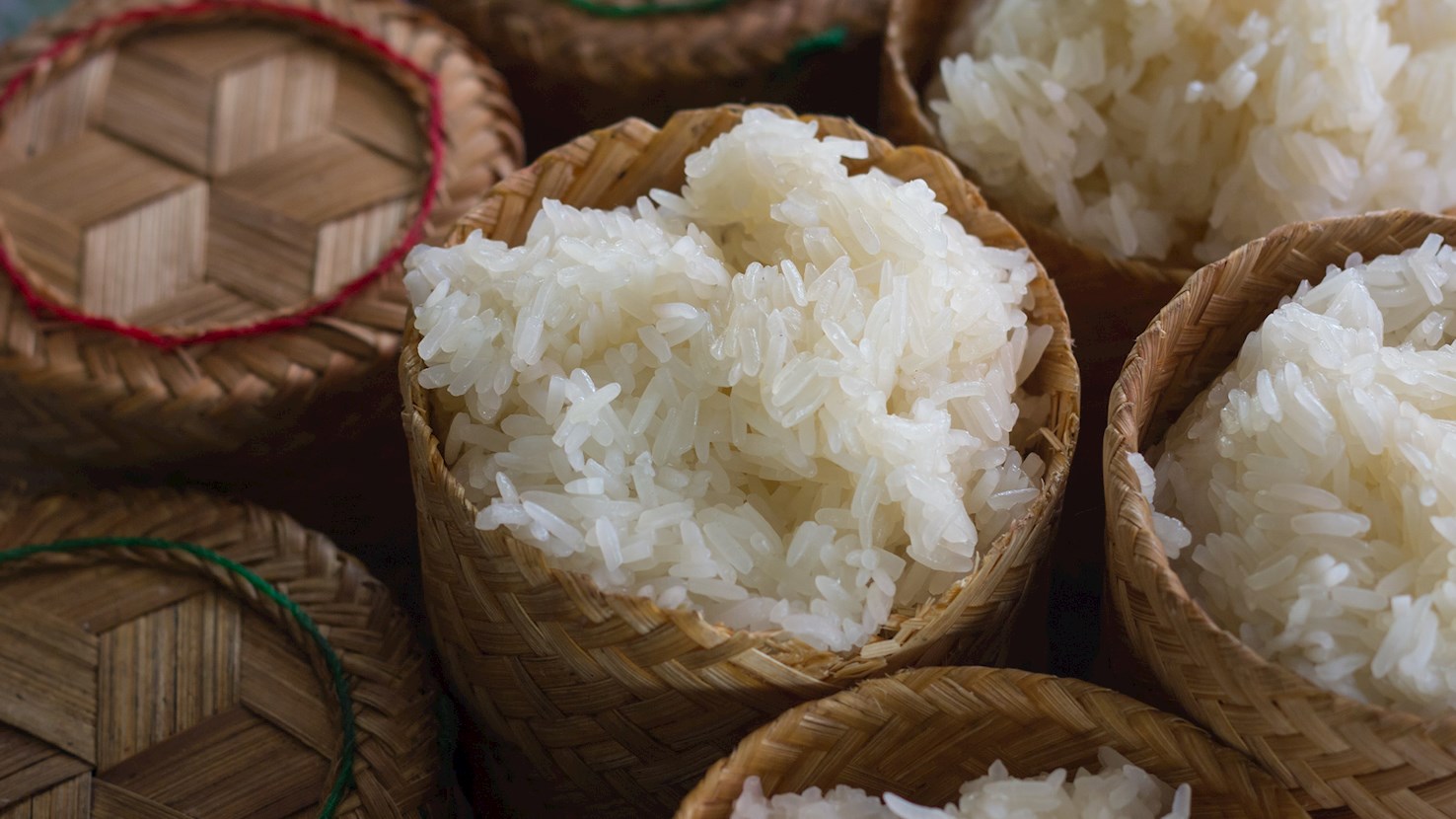
Khao niao, also known as glutinous rice or sticky rice, is a steamed, short-grain staple food originating from Laos and the Isan region of northeastern Thailand, where it serves as the primary dietary carbohydrate. Archaeological evidence indicates that agricultural societies in the Mekong River basin domesticates and cultivated glutinous rice varieties over four thousand years ago, favoring them due to their high caloric yield and adaptability to rain-fed upland terracing and riverbed farming. Preparation requires soaking the opaque, raw grains in cold water for four to eight hours to soften the outer endosperm, draining the water, and placing the soaked rice into a cone-shaped woven bamboo basket (huat) set over a pot of boiling water (maw neung) to cook purely by steam for twenty to thirty minutes without direct contact with liquid water. Following steaming, the hot rice is turned out onto a flat wooden tray or mat and kneaded briefly with a paddle to release excess steam, preventing condensation from making the grains soggy, before being transferred into small, tightly woven bamboo containers (kratip) that retain warmth and moisture. Khao niao is eaten at domestic meal tables, street vendor stalls, and communal agricultural field lunches across Laos and northern and northeastern Thailand. Diners eat the rice by reaching directly into the bamboo container with their right hand, pinching off a small portion, rolling it into a compact ball between the fingertips, and using it as an edible utensil to scoop up minced meat salads like larb, spicy papaya salad (som tam), grilled chicken (kai yang), or chili dipping pastes (nam phrik), pairing the meal with cold lagers, Thai iced tea, or fresh sugarcane juice.
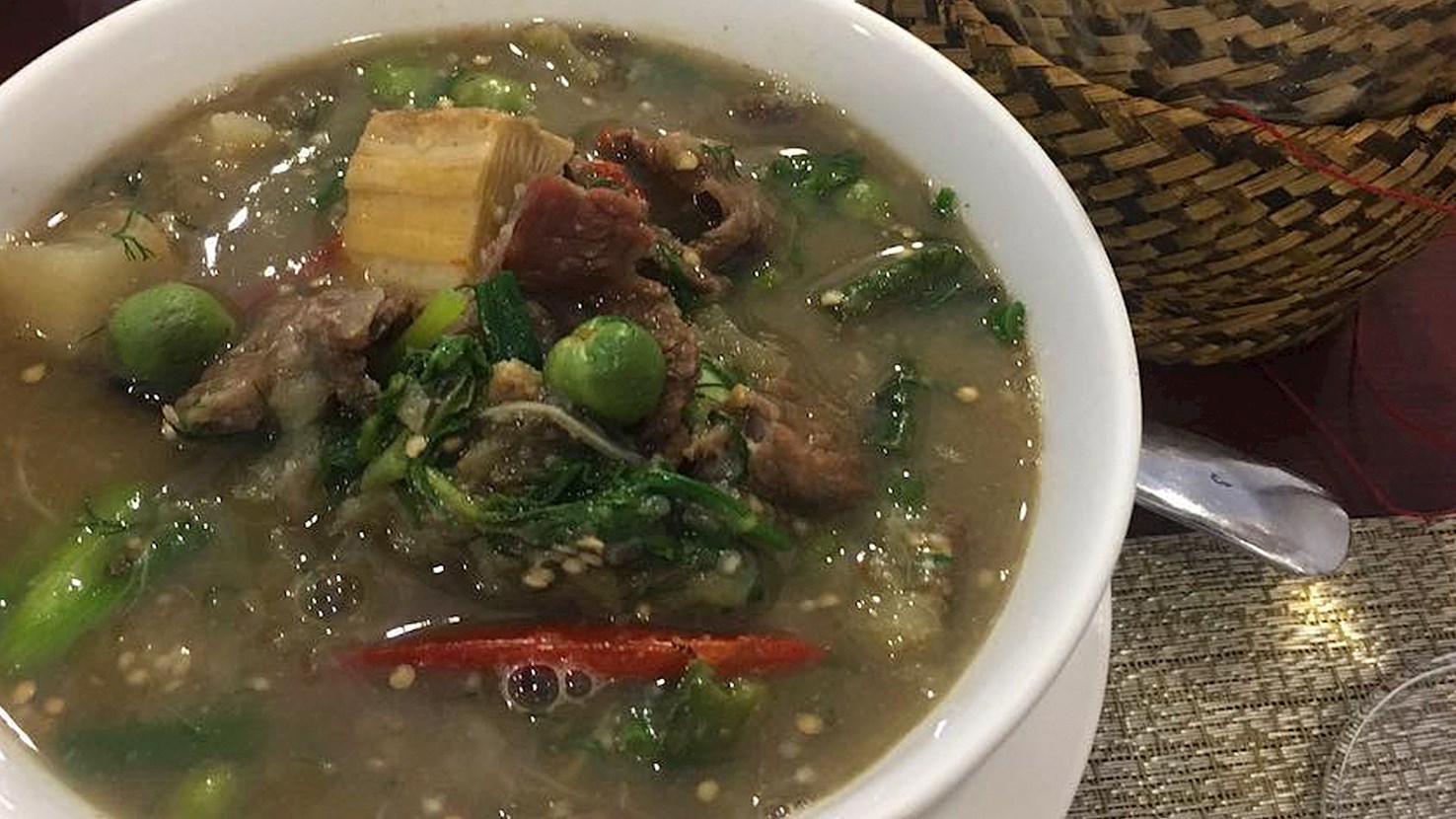
Or lam is a thick stew from Luang Prabang in northern Laos, made with meat, vegetables, herbs, fermented fish seasoning, chilies, and mai sakhan, a peppery woody vine that gives the dish its most distinctive flavor. Water buffalo is one of the meats most closely associated with the Luang Prabang version, although beef, game birds, chicken, pork, and other meats can also be used. The stew is neither a curry nor a thin soup: its liquid is reduced and thickened, partly through long cooking and partly through eggplants that are removed from the pot, pounded, and returned to the broth. The result is substantial enough to cling to the meat and vegetables while still remaining spoonable. Or lam is especially identified with Luang Prabang and the surrounding region rather than Laos as a whole, and many of its characteristic ingredients reflect the forest, river, garden, and livestock foods historically available in northern Lao communities. Its older forms belong to the cooking culture of Luang Prabang, where locally gathered leaves, mushrooms, game, buffalo, fermented fish, herbs, and forest aromatics were regularly combined in soups and stews. One of the most important written records comes from Phia Sing, a cook and master of ceremonies attached to the former royal household of Luang Prabang. His recipes, eventually published in 1981, include several forms of or lam and provide unusually detailed evidence of how the stew was prepared in the first half of the twentieth century. His or lam sin kuay, made with water buffalo, combines dried buffalo meat and skin with shallots, lemongrass, chilies, round eggplants, sa khan, leafy vegetables, young chili shoots, sweet basil, dill, fried pork skin, salt, and padaek, the Lao fermented fish condiment. He also recorded a quail version, showing that or lam was defined more by its method, seasonings, and texture than by one mandatory meat. Phia Sing also distinguished or lam from a looser preparation called or ro, in which meat or fish, mushrooms, and whatever vegetables happened to be available could be added more freely. His distinction indicates that even within Luang Prabang cooking there was an understood structure to or lam rather than the name referring to any mixed stew. The recognizable version depended on a particular combination of aromatics, vegetables, herbs, fermented fish, and the peppery sa khan. The ingredient that most clearly separates or lam from other Lao stews is mai sakhan, usually shortened to sakhan. It is the woody stem of a climbing plant in the pepper family, identified in botanical surveys of Luang Prabang markets as Piper ribesioides or Piper interruptum. Instead of using leaves or peppercorns, cooks cut short pieces from the thick vine, peel away the rough exterior, and place the pieces directly into the stew. Sakhan produces a peppery heat with a slightly numbing sensation that develops gradually in the mouth. It is not normally eaten like a soft vegetable; diners chew or suck the softened pieces for their flavor and discard the remaining woody fiber if it is too tough. The ingredient is used elsewhere in northern Lao cooking, but its association with or lam is particularly strong. Preparation usually begins by simmering the meat with water, lemongrass, shallots, chilies, eggplants, sakhan, salt, and padaek. In Phia Sing's buffalo version, dried buffalo meat and prepared buffalo skin are cooked together from the beginning. Buffalo skin requires substantial preliminary treatment: it may be singed over charcoal to remove the outer surface, scraped clean, cut into pieces, soaked, and then simmered until chewy but tender. The use of skin gives the stew a gelatinous quality and introduces a texture that remains characteristic of older Luang Prabang versions. Modern restaurant versions frequently use fresh beef or buffalo instead, and chicken is also common when buffalo is unavailable. The eggplants perform a structural role as well as providing flavor. Small round Lao eggplants are simmered until soft, then removed along with the cooked chilies and pounded into a coarse paste before being stirred back into the pot. This naturally thickens the liquid without flour, coconut milk, or a European-style starch slurry. The technique produces the dense, slightly coarse consistency associated with Luang Prabang or lam. Some contemporary recipes use pounded or ground sticky rice as an additional thickener, but the documented Phia Sing buffalo version achieves much of its body through the cooked and crushed eggplant. Once the meat is tender and the eggplant mixture has been returned to the broth, vegetables are added according to season and availability. Yard-long beans, mushrooms, leafy greens, young chili shoots, and local forest vegetables can all appear. Dill and Lao basil are especially characteristic finishing herbs. They are generally added toward the end so their aroma remains noticeable rather than disappearing during prolonged simmering. Spring onions and coriander may also be used. Padaek provides much of the seasoning. Unlike clear commercial fish sauce, padaek contains fermented freshwater fish and has a stronger aroma, thicker consistency, and deeper savory flavor. In older cooking, it could be placed in a small strainer or basket suspended in the liquid so that its flavor entered the broth while coarse fish solids remained behind. Or lam is usually only moderately hot from chili. Much of its perceived heat comes instead from sakhan, which produces a different sensation from capsicum chilies: peppery, warm, slightly bitter, and gently numbing. The combination of sakhan, dill, basil, lemongrass, fermented fish, and softened eggplant gives the stew a flavor profile that is difficult to reproduce accurately when sakhan is omitted. Black pepper and Sichuan pepper are sometimes proposed as substitutes outside Laos, but together they can only approximate its peppery and numbing qualities; they do not reproduce the woody and herbal character of the vine itself. Dried meat is another feature of older Luang Prabang versions that has become less universal in restaurant cooking. Drying buffalo meat allowed it to be stored for longer periods and intensified its flavor before it entered the stew. Phia Sing's recorded buffalo version uses dried meat rather than fresh steak, while dried or specially prepared buffalo skin adds another preserved component. These ingredients make the older form considerably different from modern recipes that simply simmer cubes of fresh beef with vegetables. Fried pork skin may also be stirred in near the end, where it softens slightly while retaining some texture. The dish was closely connected with the former royal food culture of Luang Prabang but was not confined to the palace. Phia Sing's daughter identified or lam sin kuay as one of her father's favorite foods, and contemporary cooks in Luang Prabang continue to prepare versions closely related to his recorded recipe. The dish also demonstrates how royal and everyday Lao cooking overlapped: sticky rice, buffalo, fermented fish, forest plants, eggplants, dill, and sakhan were all ingredients rooted in the surrounding region rather than imported luxury products. Or lam is served hot in a communal bowl or individual bowls and is normally eaten with Lao sticky rice, khao niao. A small ball of sticky rice can be formed with the fingers and eaten between spoonfuls of stew or used to pick up some of the thick broth. Fresh vegetables can be served alongside; Phia Sing's quail version specifies young cucumbers, eggplants, salad leaves, watercress, and other uncooked vegetables. His buffalo version was served with fermented pork or fermented fish preparations, showing that or lam could form part of a larger meal rather than necessarily standing alone. Today it remains particularly associated with Luang Prabang, where it appears in homes, markets, Lao restaurants, and hotel dining rooms, usually made with buffalo or beef and served with sticky rice. Grilled river fish, Luang Prabang sausage, fresh vegetables, and simple herb dishes work well alongside it, although the stew is substantial enough to serve as the main element of a meal. Beerlao is a practical beverage pairing because its clean, lightly bitter character works with the fermented fish, herbs, and peppery sakhan, while plain water or unsweetened tea are common non-alcoholic choices. Lao rice spirits can accompany it as part of a larger shared meal.
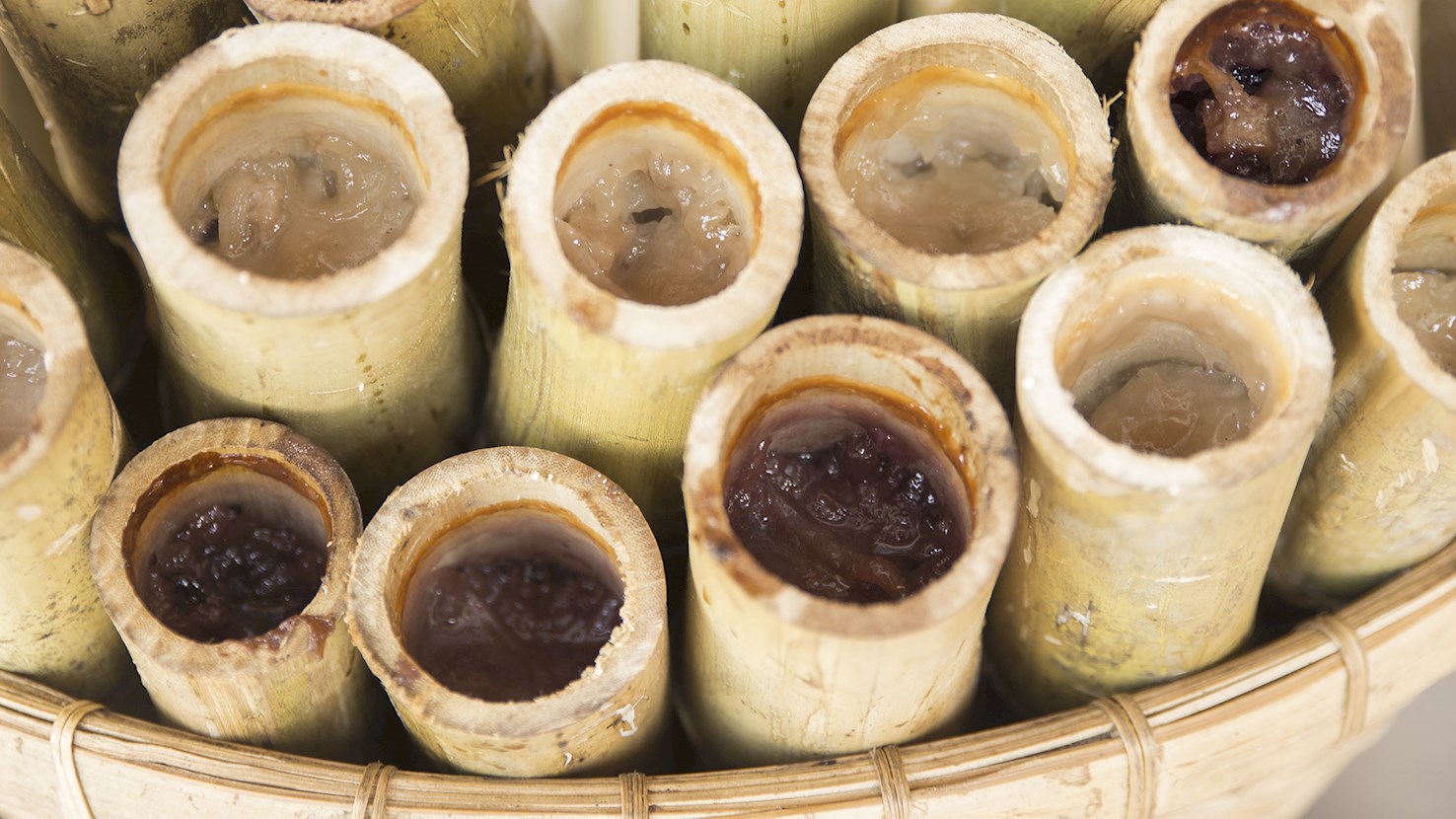
Khao lam or kralan is a unique Southeast Asian dessert consisting of sweet sticky rice, either white or red, steamed in bamboo tubes, popular in Thailand, Myanmar, Cambodia, and Laos. The simplest, original version included only rice mixed with water and salt, but more elaborate interpretations nowadays include the addition of grated coconut, sugar, coconut milk, and red beans. The rice is mixed with the desired ingredients and placed inside specially prepared bamboo sticks. Coconut milk is added on top of the rice, and then the stick is sealed and carefully placed on a construction over hot coals. This unusual slow-cooking process transforms the rice into a sweet and rich creation, similar to custard or rice pudding. Modern versions come in a variety of different flavors such as taro, durian, Thai custard, or corn, which are usually tucked in the center of the roll. Khao lam is regarded as a filling treat and is usually sold by street vendors at food fairs, around the temples, and at numerous Asian markets.
Khao jao is a Laotian dish made with steamed white rice. It is a variation of the more popular khao niaw, made with jasmin rice instead of glutinous rice. The steamed rice is used as an ingredient for various stir-fried dishes. Lao food typically contains strong-flavored local greens and spices such as galangal, garlic, red chilies, and tamarind. Thus, khao jao and khao niaw were used by peasants as side dishes to offer a more balanced and nourishing meal.
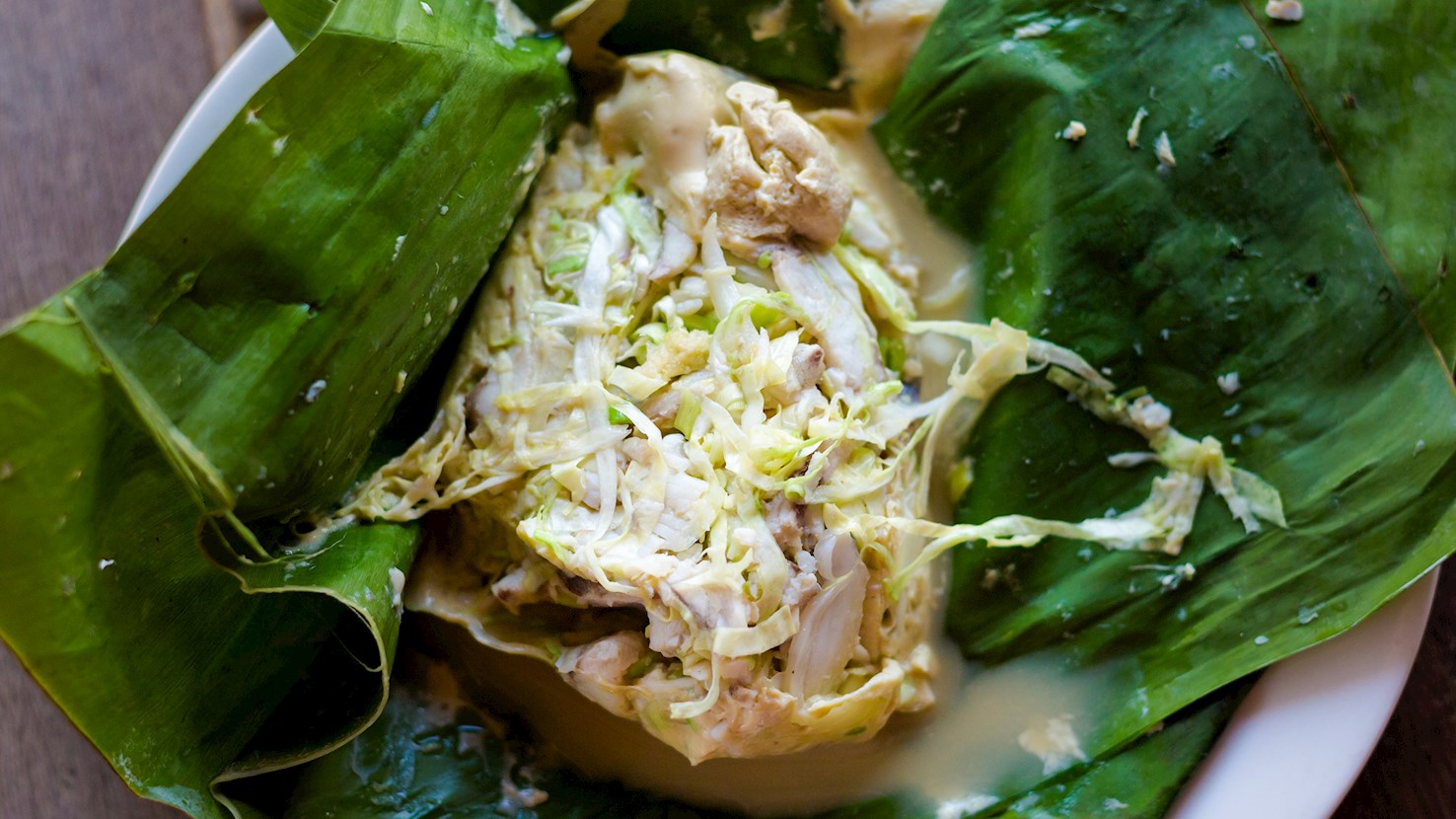
Usually associated with Luang Prabang, steamed fish in banana leaves is a dish that combines flaked fish with sticky rice powder, fish sauce, as well as different spices and herbs such as kaffir lime leaves, chili peppers, and lemongrass. The spices are usually ground in a mortar and then incorporated with the fish and other ingredients in a mixture that is neatly wrapped inside banana leaves. The dish can be placed in whole banana leaves or small, individual-sized parcels, and it usually comes served with rice and a dipping sauce on the side. Although various types of fish can be used, catfish is the most common choice in Laos.
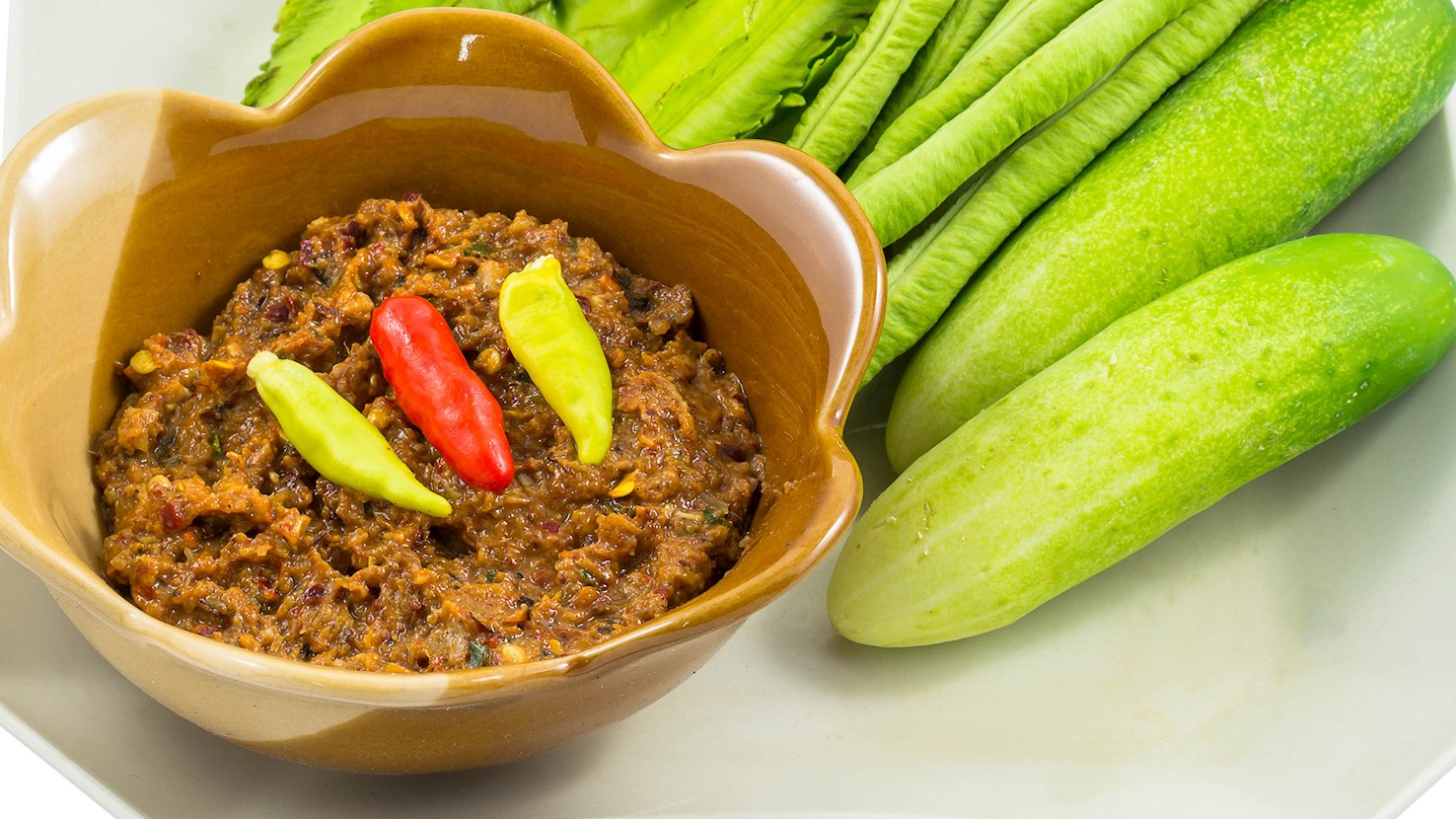
A favorite of both Lao natives and visitors alike, jaew bong is a spicy variety of a traditional dipping sauce (jaew) that accompanies most Lao dishes. This particular variety is the signature relish of the former royal capital of the Kingdom of Laos (pre-1975) - Luang Prabang. The city itself is also referred to as the culinary capital of the country, as the best native chefs were hired to cook for the king. Jaew bong has an intensely sweet, aromatic, and spicy flavor profile that can be adjusted for heat, depending on the recipe and personal preference. The traditional ingredients are dried red chili peppers, garlic, shallots, galangal, coriander leaves, and dried water-buffalo skin. Nowadays, the recipes often also include dried shrimp, palm sugar, and fish sauce. It is typically used in small quantities and paired with relatively bland-tasting dishes such as sticky rice and steamed vegetables.
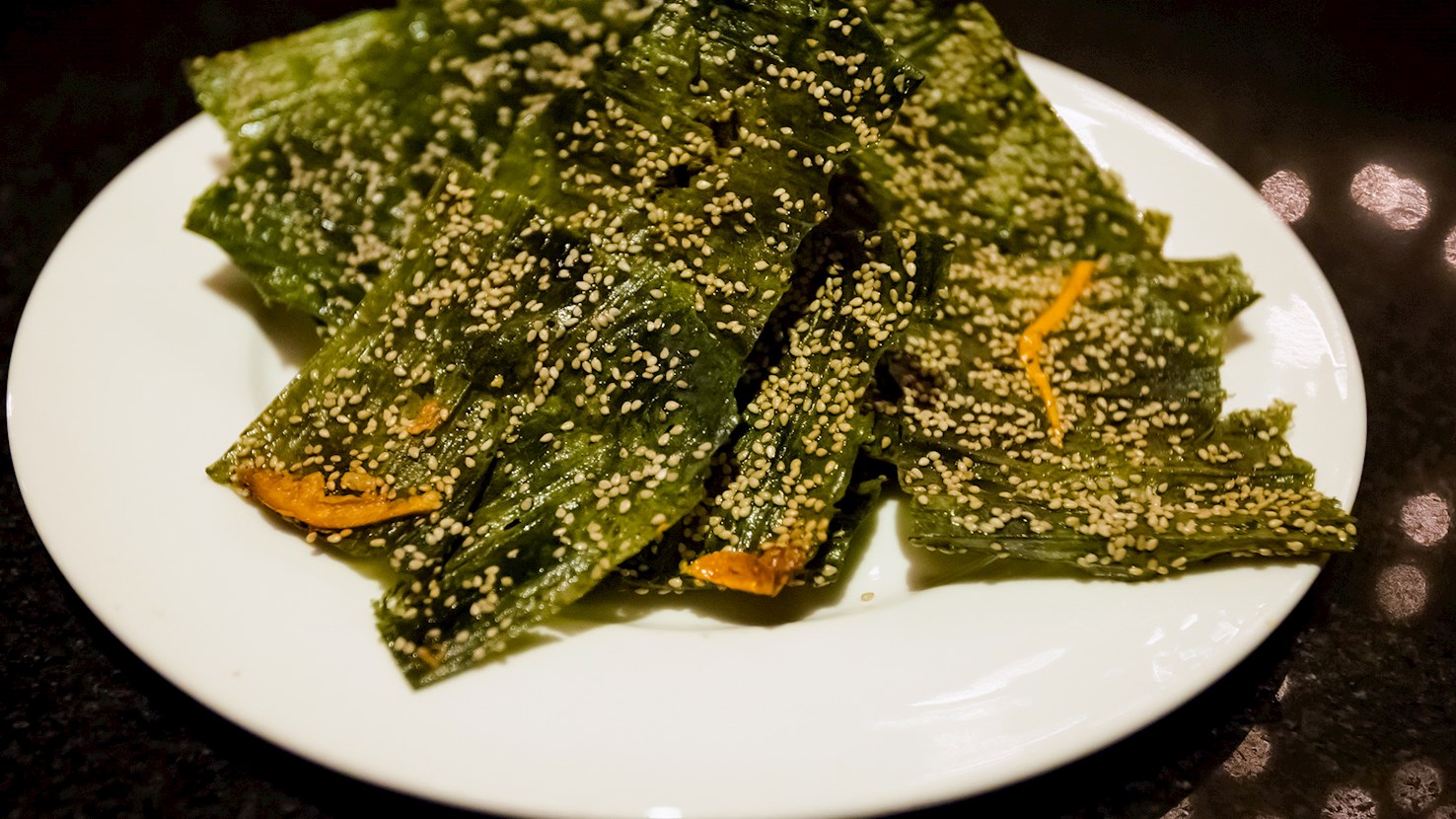
Kaipen is a Lao food made from freshwater river algae that is pressed into thin sheets, seasoned, sun-dried, and usually flash-fried before eating. It is most closely associated with Luang Prabang in northern Laos, where it is one of the city's best-known local foods. The main ingredient, called kai in Lao, is a filamentous green freshwater algae that grows attached to rocks in clear, moving water. It is often described in English as Mekong river weed or river moss, although it is an alga rather than a moss or marine seaweed. The word paen refers to a sheet, so the name essentially describes river algae formed into sheets. Kaipen is strongly identified with the rivers around Luang Prabang, particularly the Mekong and Nam Khan, although related dried river-algae foods are also produced elsewhere in northern Laos. The production of edible river algae in northern Laos developed in communities located along rivers where the plant grows naturally on submerged rocks. There is no reliably documented individual creator or precise date for the development of kaipen. The knowledge of collecting, cleaning, drying, and preserving the algae has instead been maintained within riverside communities over generations. Luang Prabang became particularly associated with the sesame-covered sheet form, while other northern Lao areas developed their own versions. In Luang Namtha, for example, dried kai paen may be flavored with ginger juice as well as tamarind, galangal, garlic, onion, tomato, and sesame. This wider distribution shows that eating freshwater algae is not confined to one city, although the Luang Prabang version has become the best-known form nationally and among visitors to Laos. Kaipen production is closely determined by the river cycle. The algae grows best when the water is relatively clear and river levels are low, so harvesting takes place mainly during the dry season. In the Luang Prabang area, the collection period is generally described as running from roughly October or November until April, depending on rainfall and local river conditions. The algae grows directly on underwater rocks in stretches of flowing water. Harvesters enter the river and collect the long green strands by hand, leaving the underlying environment capable of producing another crop when conditions permit. Heavy rainfall and muddy water interfere with its growth, making production much more difficult during the wet season. Producers around Luang Prabang have historically gathered kai from the Mekong and Nam Khan, although declining availability in some areas has also led producers to obtain it from smaller waterways. Freshly collected kai contains sand, grit, fragments of plants, and other material from the river, so cleaning is one of the most important stages. The algae is repeatedly washed in clean water and carefully picked over. In some production methods it is also beaten or pounded with wooden implements, which helps remove impurities and breaks the mass into a texture that can be spread evenly. The cleaned algae is drained and gathered into portions before being formed into sheets. Unlike seaweed sheets manufactured from a finely processed slurry, kaipen generally retains some of the visible fibrous character of the original algae. This gives the finished product a coarser and more irregular structure than Japanese nori. The cleaned algae is spread in a thin layer across woven bamboo mats, mesh screens, or similar drying surfaces. It is pressed and worked outward until it forms a relatively even sheet. A flavored liquid may then be brushed over the surface. Recipes and household methods differ, but tamarind water, salt, galangal, ginger, or other seasonings can be used at this stage. Sesame seeds are one of the ingredients most strongly associated with Luang Prabang kaipen. Thin pieces of garlic, tomato, onion, or spring onion may also be scattered over the wet algae so that they become fixed to the sheet as it dries. The prepared mats are placed in direct sunlight, generally for a day or two, until most of the moisture has disappeared and the algae can be lifted from the surface as a complete sheet. Drying serves several purposes. It preserves a highly perishable river product, allows the algae to be stored beyond the relatively short harvesting season, and produces a sheet strong enough to transport and sell. Large dried sheets can be stacked or packaged and kept until required. They are commonly sold in markets in Luang Prabang and are also distributed elsewhere in Laos. The dried sheets are not necessarily considered ready to eat. The usual final treatment is a very brief frying in hot oil, which changes their texture almost immediately. Because the sheets are thin and dry, only a few seconds are needed. Prolonged frying can burn the algae and create a noticeably bitter flavor. A properly fried piece becomes light, brittle, and crisp while retaining the sesame seeds and other dried seasonings attached to its surface. This two-stage process distinguishes kaipen from simply cooked freshwater algae. The algae is first turned into a preserved, seasoned sheet and only later cooked immediately before serving. Production therefore resembles a preservation craft as much as a cooking technique. The large sheets also provide a practical way of converting soft, slippery strands of freshwater algae into a stable product that can be stored, transported, portioned, and fried as needed. Commercial producers have more recently developed roasted ready-to-eat forms, but these are a modern adaptation. For much of its use in Luang Prabang, dried kaipen was sold as a product that still required frying or roasting before consumption. One Luang Prabang producer began developing a packaged roasted version in 2019 and launched it commercially in 2022, specifically to make the food ready to eat directly from the packet. Once fried, kaipen is usually cut or broken into rectangular pieces and eaten with the fingers. The texture is very crisp, while the flavor combines the vegetal character of the freshwater algae with toasted sesame, garlic, and whatever other seasonings have been dried onto the surface. The oil used for frying adds richness but the cooking is so brief that the pieces should not become heavily saturated. Kaipen is sometimes compared with nori because both are dried green sheets made from aquatic organisms, but the resemblance is mainly visual and structural. Nori is produced from marine red algae that is processed into extremely thin, uniform sheets, while kaipen comes from freshwater green algae and normally retains a rougher, more fibrous texture. The sesame seeds, garlic, tomato, and other ingredients dried directly onto the sheet also make the Lao product a seasoned food before it reaches the frying stage. The most characteristic accompaniment in Luang Prabang is jaew bong, also spelled jeow bong, a thick chili relish associated with the city. It is made from dried chilies and aromatics and commonly has a balance of heat, sweetness, saltiness, and fermented or savory flavors. Some versions include strips of dried buffalo skin. Pieces of crisp kaipen are dipped directly into the relish, giving a combination of brittle riverweed and dense chili paste. The pairing is common enough that kaipen and jaew bong are frequently served together as an appetizer or drinking snack in Luang Prabang. Kaipen can also accompany sticky rice and other northern Lao foods. In Luang Namtha, fried riverweed is eaten with sticky rice at breakfast and can accompany aw lahm, a thick Lao stew. Because the fried sheets are salty, crisp, and strongly seasoned, they work particularly well alongside softer foods such as sticky rice and stews rather than requiring another fried accompaniment. They may also be served as part of a shared meal, where pieces are broken off and eaten between bites of other dishes. In Luang Prabang, however, kaipen is especially common as a snack or appetizer in restaurants, markets, and homes. Dried sheets are sold as a local food product, while restaurants usually fry them shortly before serving so that they remain crisp. Beer is one of the most established beverage pairings, particularly Beerlao, since the dry, crisp, salty sheets work naturally as a drinking snack. Lao rice whisky can also accompany it, while unsweetened tea is a suitable non-alcoholic option. The most representative way to eat kaipen remains straightforward: freshly fried pieces of seasoned riverweed, served crisp and warm with jaew bong on the side, often accompanied by sticky rice or a cold beer. In this form, kaipen remains particularly associated with Luang Prabang and with the seasonal use of the freshwater algae that grows in the rivers of northern Laos.
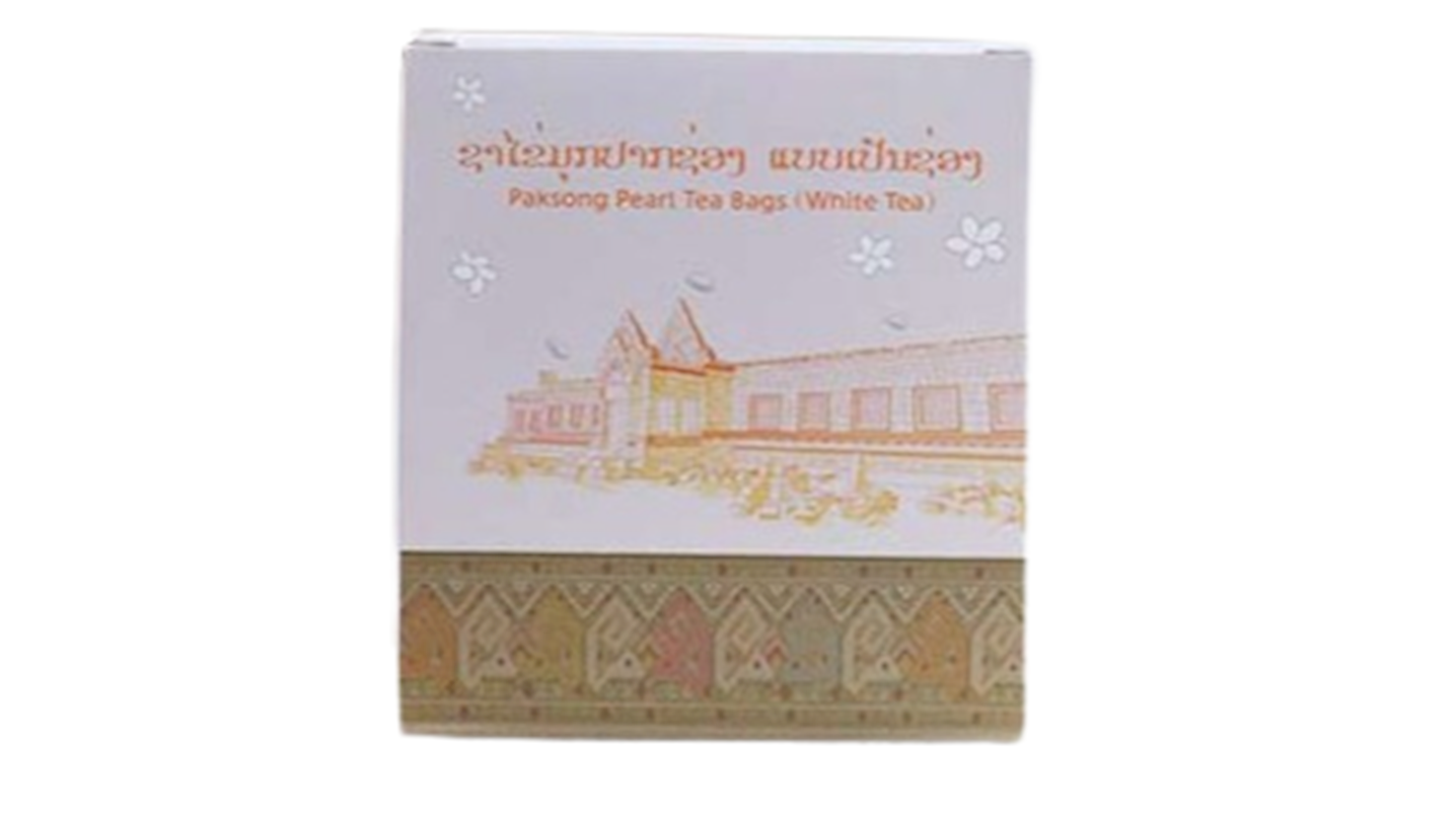
36 Manor is a premium tea brand located in Laos, specifically known for its Paksong teas grown on the Bolaven Plateau, a region famous for its volcanic soils and high-altitude climate. The company, under the Rongxing Group, has developed a unique approach to tea production, offering a variety of high-quality teas such as black tea, green tea, and white tea, often highlighted by their "Paksong" series.
These teas are enriched by the pristine environment of the plateau, where aged tea trees and traditional craftsmanship are key to creating distinctive, aromatic blends.
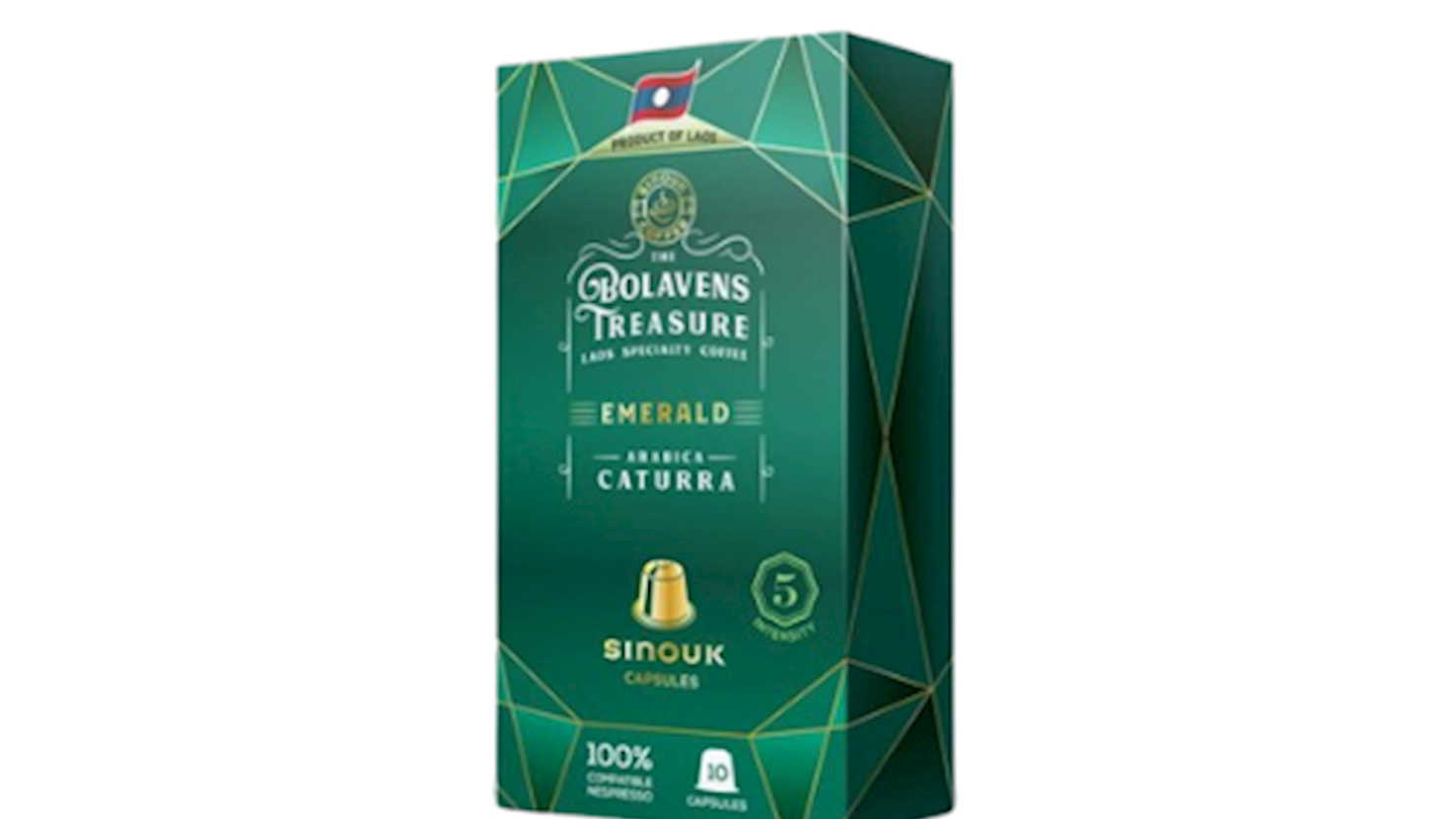
Sinouk Coffee is one of the most influential and established coffee producers in Laos, deeply rooted in the Bolaven Plateau - a region known for its volcanic soil and cool, high-altitude climate ideal for cultivating high-quality Arabica. Founded in 1994, the company is considered a pioneer of modern Lao coffee, developing its own plantations, controlling every stage of processing, and promoting awareness of local origin and quality.
The beans are hand-picked, processed using both washed and natural methods, and roasted in small batches to achieve a consistent and expressive flavor profile. Their range includes single-origin Arabica, Arabica-Robusta blends, capsules, and drip bags, while the Café Sinouk network and the Sinouk Coffee Pavilion serve as key hubs for coffee culture, education, and tasting experiences.
Sinouk Coffee also plays a significant role in the Lao Coffee Association, making it a central force in the country’s coffee sector and a prominent representative of Lao coffee internationally.
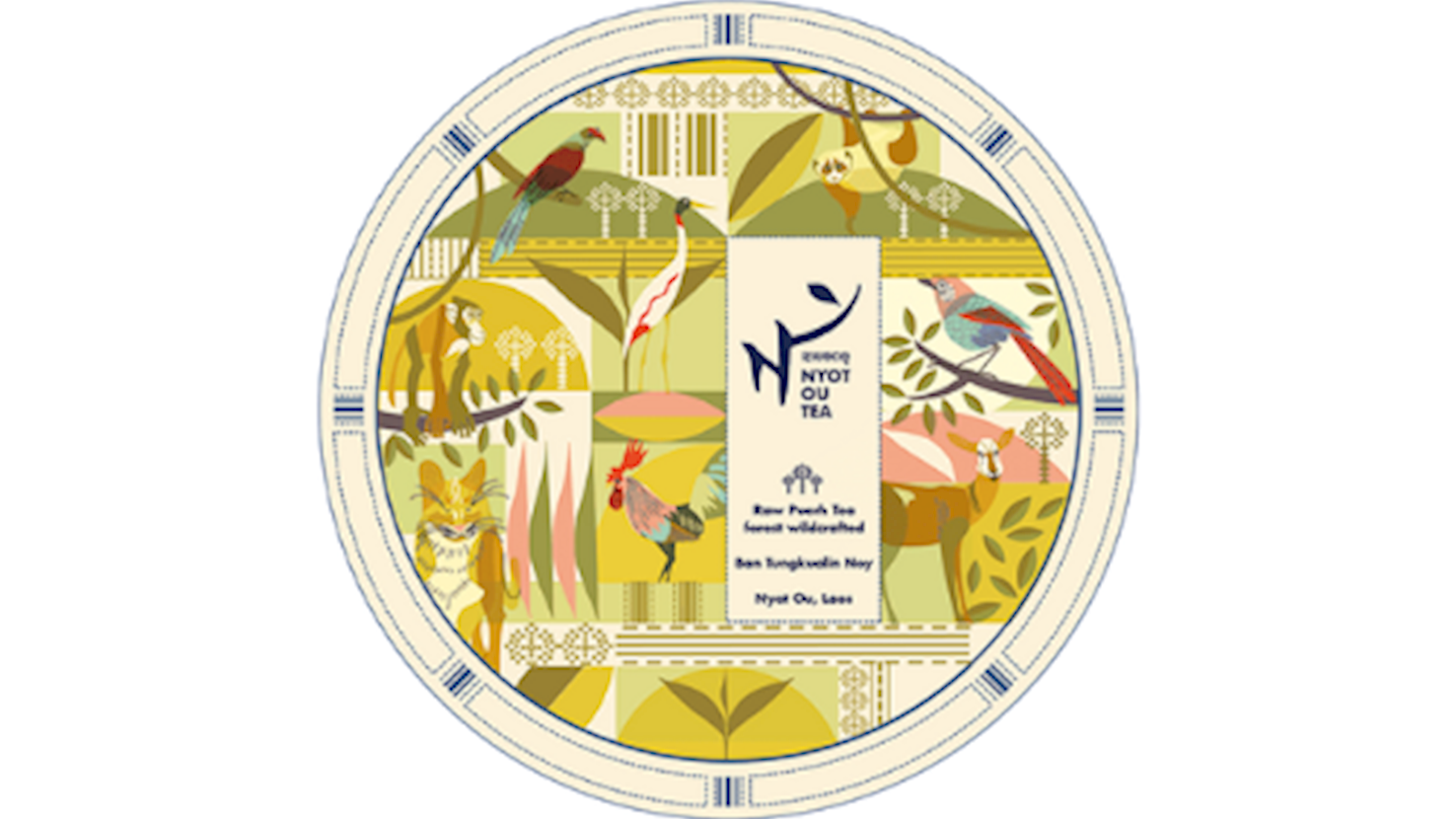
Nyot Ou Tea is a small cooperative from northern Laos that focuses on hand-harvested and traditionally processed teas sourced from the forested mountain areas of the Nyot Ou region in Phongsaly Province. Their teas come from old, often wild tea trees growing in diverse agro-forestry ecosystems, which gives them a distinctive natural terroir marked by herbal, citrus, or earthy notes depending on the variety and harvest season.
Production follows strict agroecological principles - no pesticides, minimal intervention, and fully manual processing at every stage. The cooperative brings together small producers from four villages and actively supports community development, with a strong emphasis on women’s participation, who make up about half of the members and are involved both in fieldwork and decision-making.
The assortment includes raw puerh, white, and green teas, each offering profiles that range from light floral-herbal freshness to more complex woody and mineral layers. With its focus on ecological integrity, authentic origin, and traditional craftsmanship, Nyot Ou Tea stands out as a producer ideal for those seeking teas with a clear identity and pure, forest-driven aromatic character.
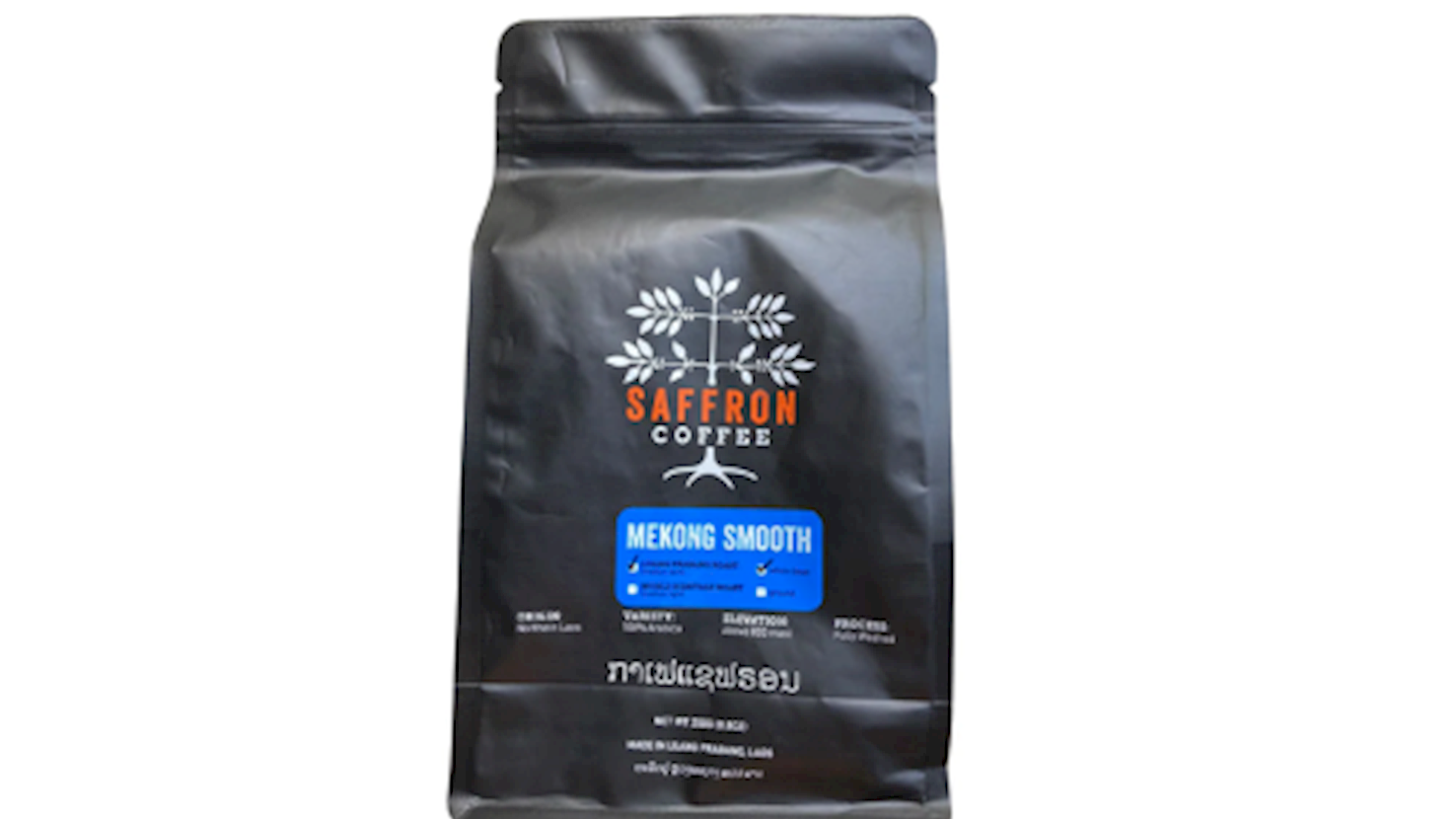
Saffron Coffee is a specialty coffee producer from northern Laos, built on a model that links sustainable agriculture with the development of mountain communities. Their Arabica is grown under shade in agro-forestry environments, where slower cherry ripening and rich biodiversity create a clean, balanced cup profile.
The coffee is hand-picked, processed using the washed method, and meticulously hand-sorted to retain only the highest-quality beans, while roasting is done in small batches by their in-house team. Operating under a “profit-for-purpose” principle, Saffron reinvests part of its revenue into farmer training, seedling distribution, and guaranteed bean purchasing - providing a sustainable alternative to the region’s former dependence on opium cultivation.
The brand is also known for its café and roastery in Luang Prabang, where visitors can experience the full “cherry-to-cup” process, taste different roast profiles, and enjoy local drink variations. This approach makes Saffron Coffee a standout example of how high-quality coffee production can be meaningfully integrated with community empowerment and environmental stewardship.
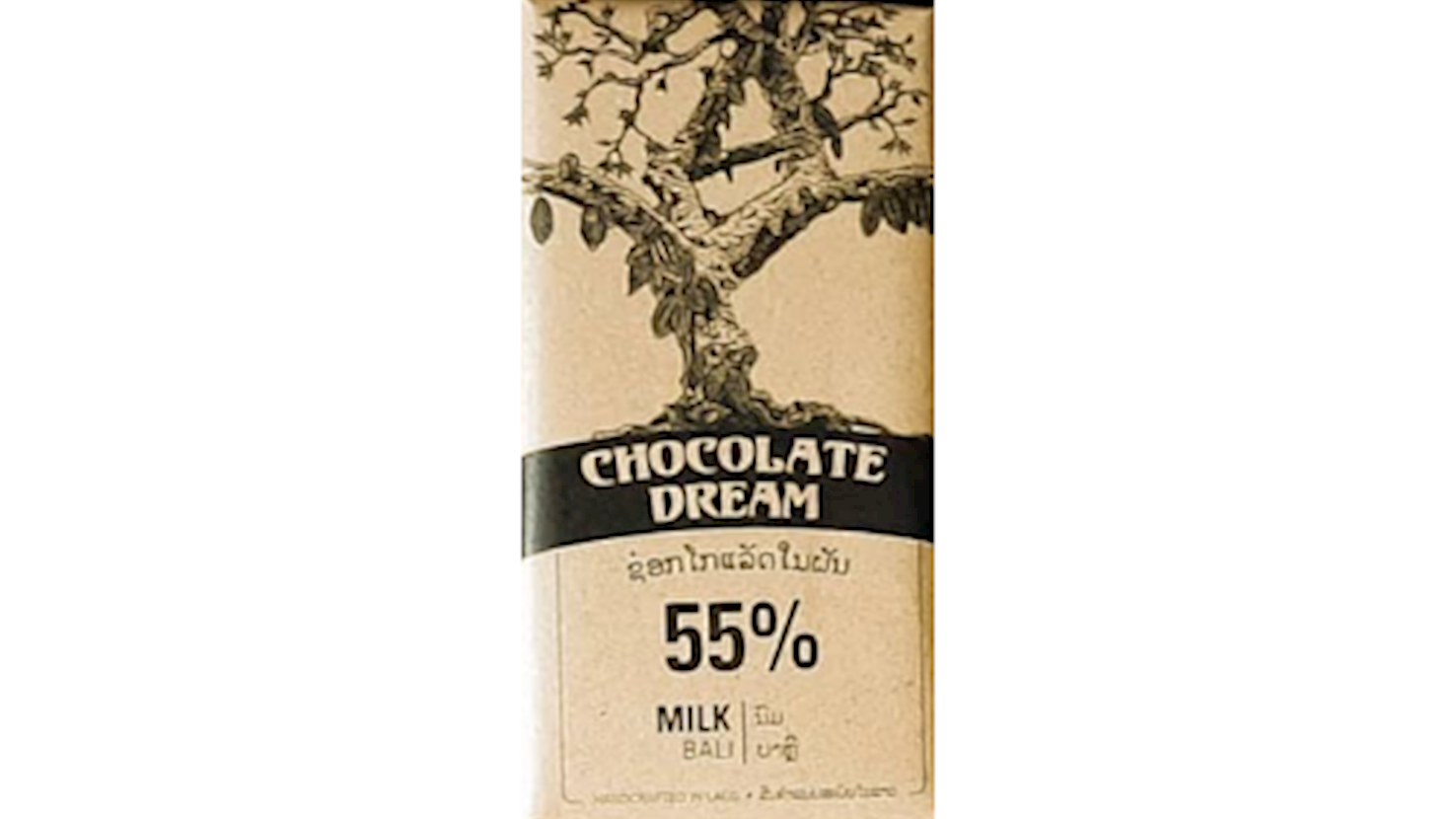
A Chocolate Dream By Mikaël is a small artisan chocolate workshop in Laos producing bean-to-bar chocolate made exclusively from locally grown cacao. The brand works closely with farmers in the Vientiane region, applying direct-trade principles and supporting sustainable cacao cultivation.
Every stage of production - from selecting and fermenting the beans, to drying, stone-grinding, and tempering - is carried out by hand in small batches, ensuring tight quality control and a flavor profile that reflects the distinctive Laotian terroir. The chocolates are made with a short, clean ingredient list, free from additives and industrial emulsifiers, allowing the natural complexity of the cacao to take center stage.
Known for its authenticity, close collaboration with local growers, and micro-batch craftsmanship, A Chocolate Dream By Mikaël stands out as one of the most compelling craft chocolate producers in the Lao artisan food scene.
TasteAtlas food rankings are based on the ratings of the TasteAtlas audience, with a series of mechanisms that recognize real users and that ignore bot,
nationalist or local patriotic ratings, and give additional value to the ratings of users that the system recognizes as knowledgeable.
For the “Top 28 Lao Foods” list until September 30, 2026, 771 ratings were recorded, of which 643 were recognized by the system as legitimate.
TasteAtlas Rankings should not be seen as the final global conclusion about food. Their purpose is to promote excellent local foods,
instill pride in traditional dishes, and arouse curiosity about dishes you haven’t tried.
The initial list of top producers was compiled based on available reviews, awards, local recommendations, media and blog coverage, and consumer reviews.
The list will be updated with ratings from TasteAtlas local ambassadors and TasteAtlas users.





What People Say