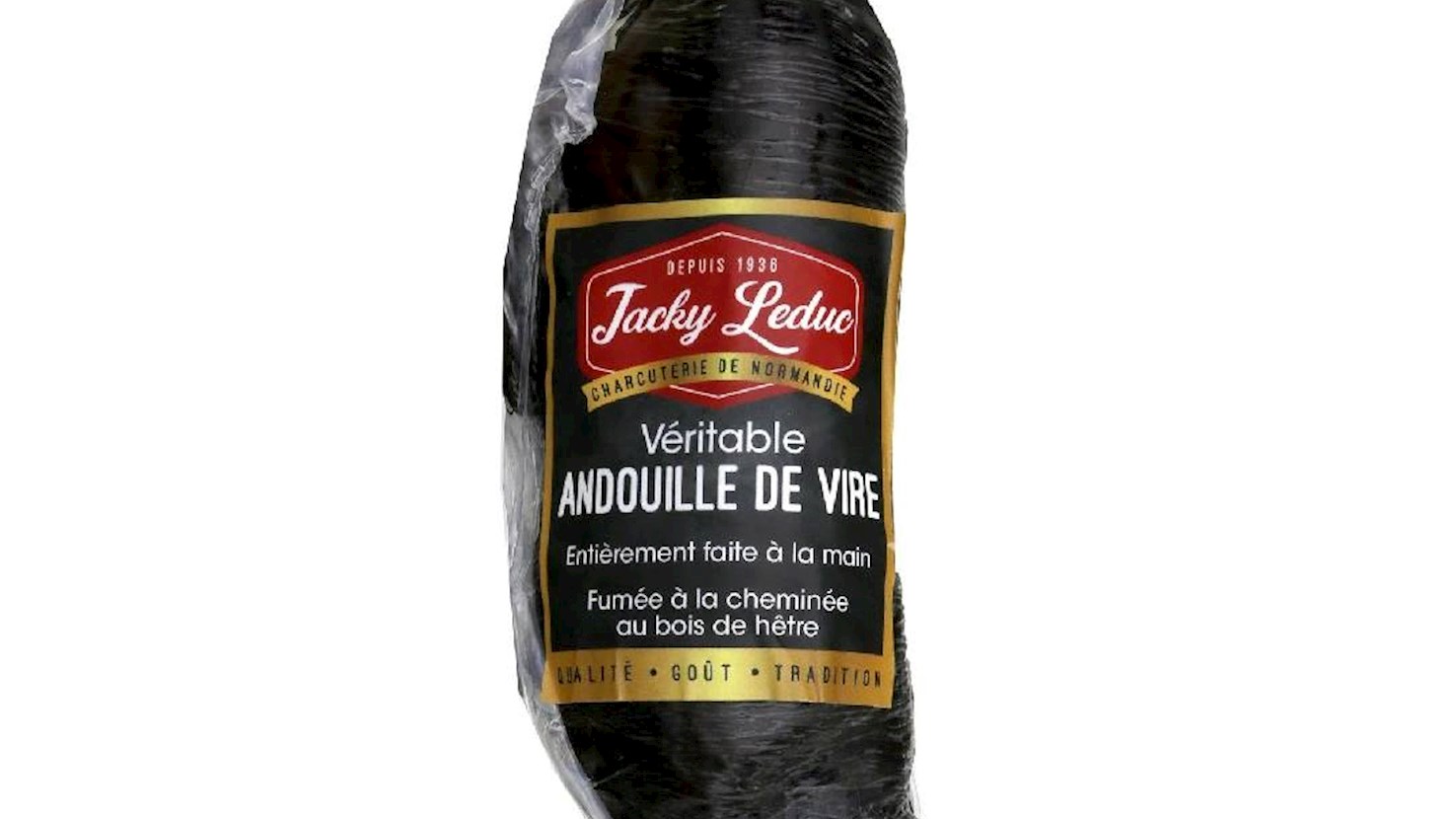
Jacky Leduc is a renowned French producer of cured meats, with a rich tradition dating back to 1936. Based in the heart of Normandy, in the town of Le Teilleul, this family-owned business has built a strong reputation for the exceptional quality of its products, crafted using traditional recipes and artisanal techniques.
The company’s signature product is the famous Andouille de Vire, a smoked sausage characteristic of the Normandy region, prepared with carefully selected ingredients and smoked over beechwood. In addition, Jacky Leduc offers a wide range of charcuterie specialties, including hams, pâtés, rillettes, blood sausages, and products made from pork, poultry, and tripe.
Their production process seamlessly combines tradition with modern quality control methods, earning them the prestigious "Entreprise du Patrimoine Vivant" (Living Heritage Company) label. This designation is awarded to French companies that possess exceptional artisanal and industrial expertise.
Beyond production, Jacky Leduc offers visitors the opportunity to tour their facility and learn more about the craft behind their products. At their store in the La Pommeraie industrial zone, lovers of fine cured meats can indulge in authentic Normandy flavors and explore a selection of regional delicacies.
With a dedication to premium ingredients, respect for tradition, and continuous innovation, Jacky Leduc has become a benchmark for quality in the world of French charcuterie.
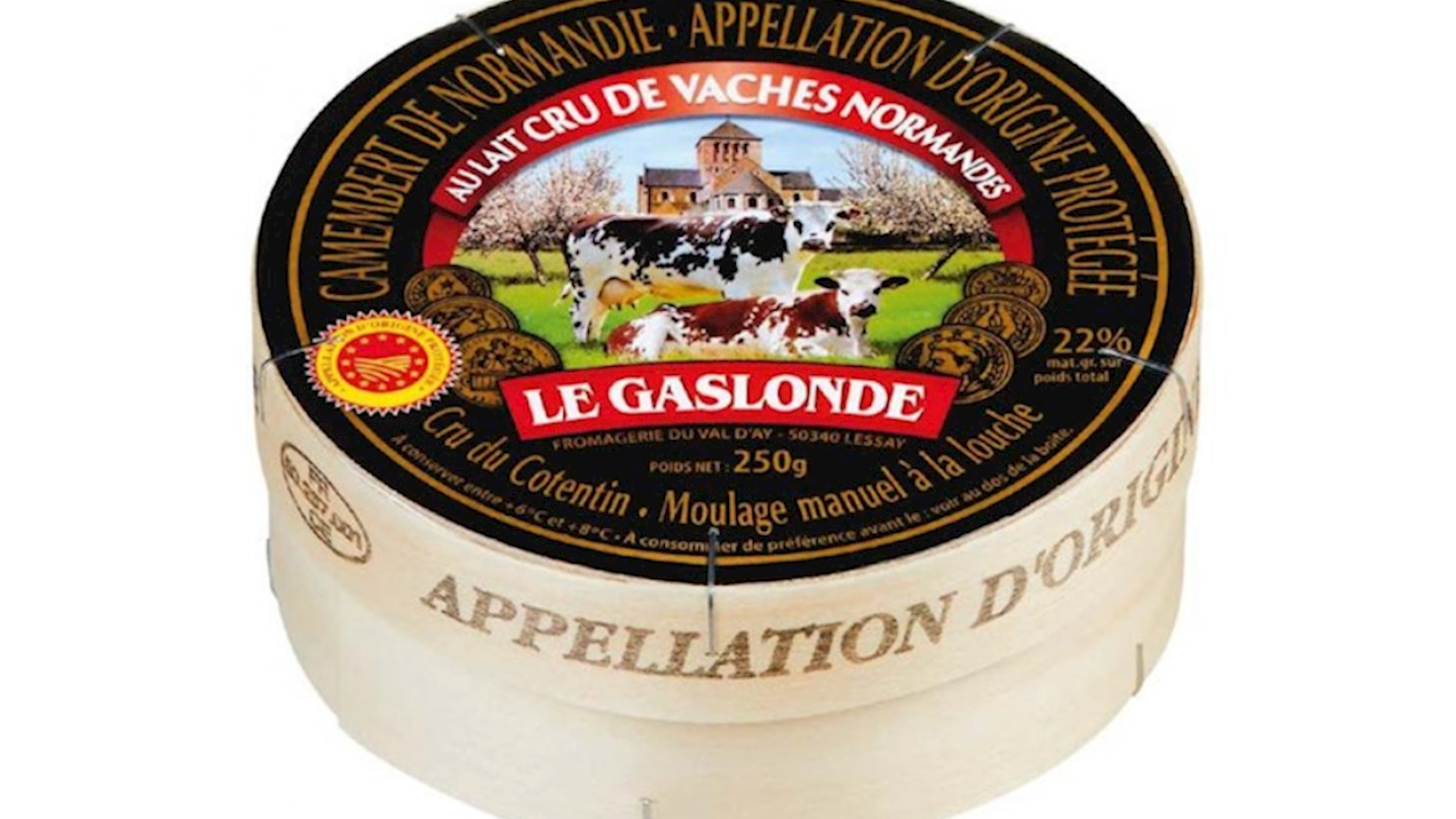
Fromagerie Réo is a renowned dairy established in 1931 in the town of Lessay, in the Normandy region of France. It specializes in the production of traditional dairy products, particularly Camembert de Normandie AOP made from raw milk, which is hand-ladled to preserve the authenticity and quality of this iconic French cheese. In addition to Camembert, Fromagerie Réo also produces other traditional cheeses with Protected Designation of Origin (AOP) status. The creamery collaborates with around 50 local milk producers within a 30 km radius, supporting the local economy and promoting sustainable production practices.
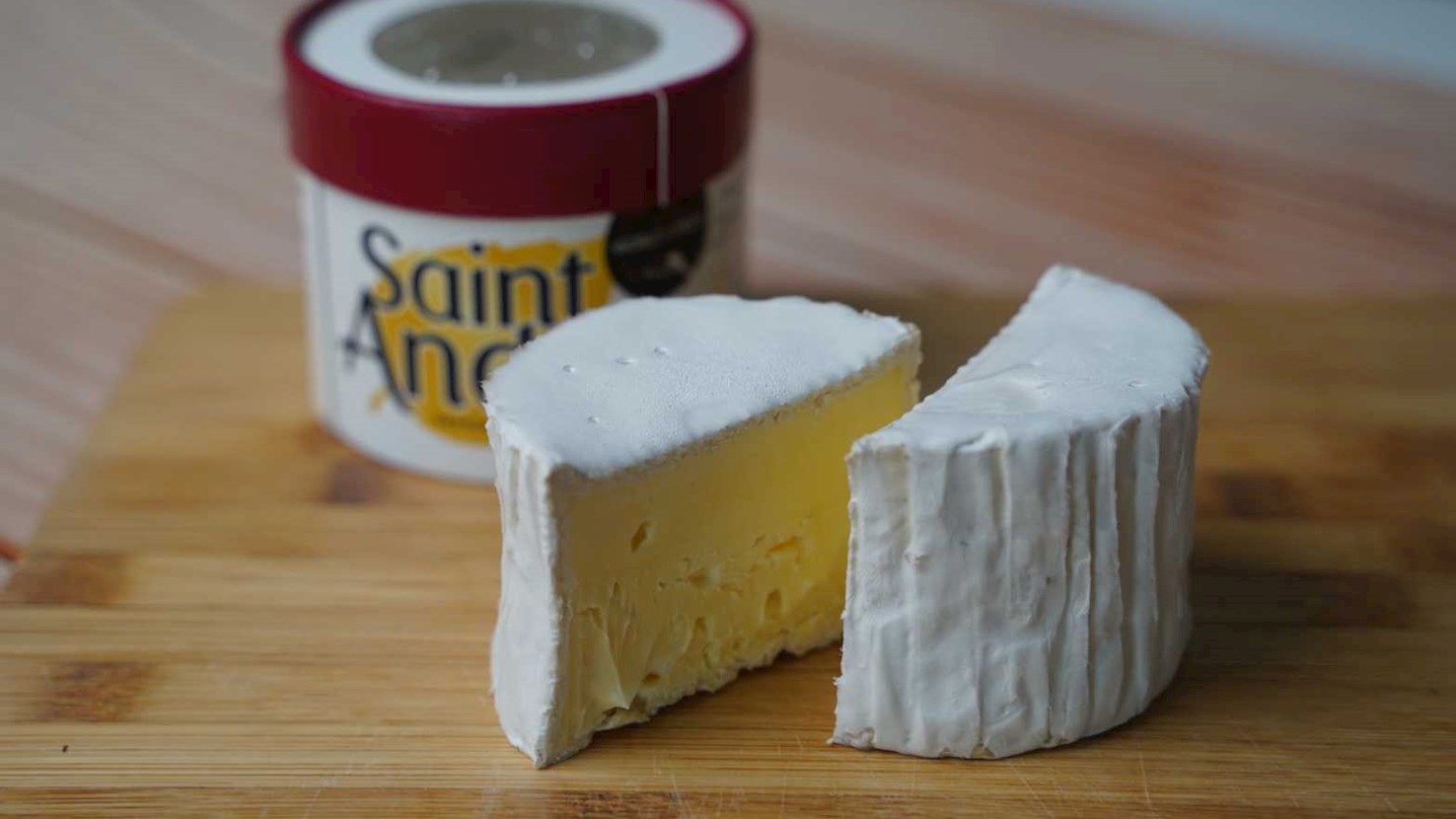
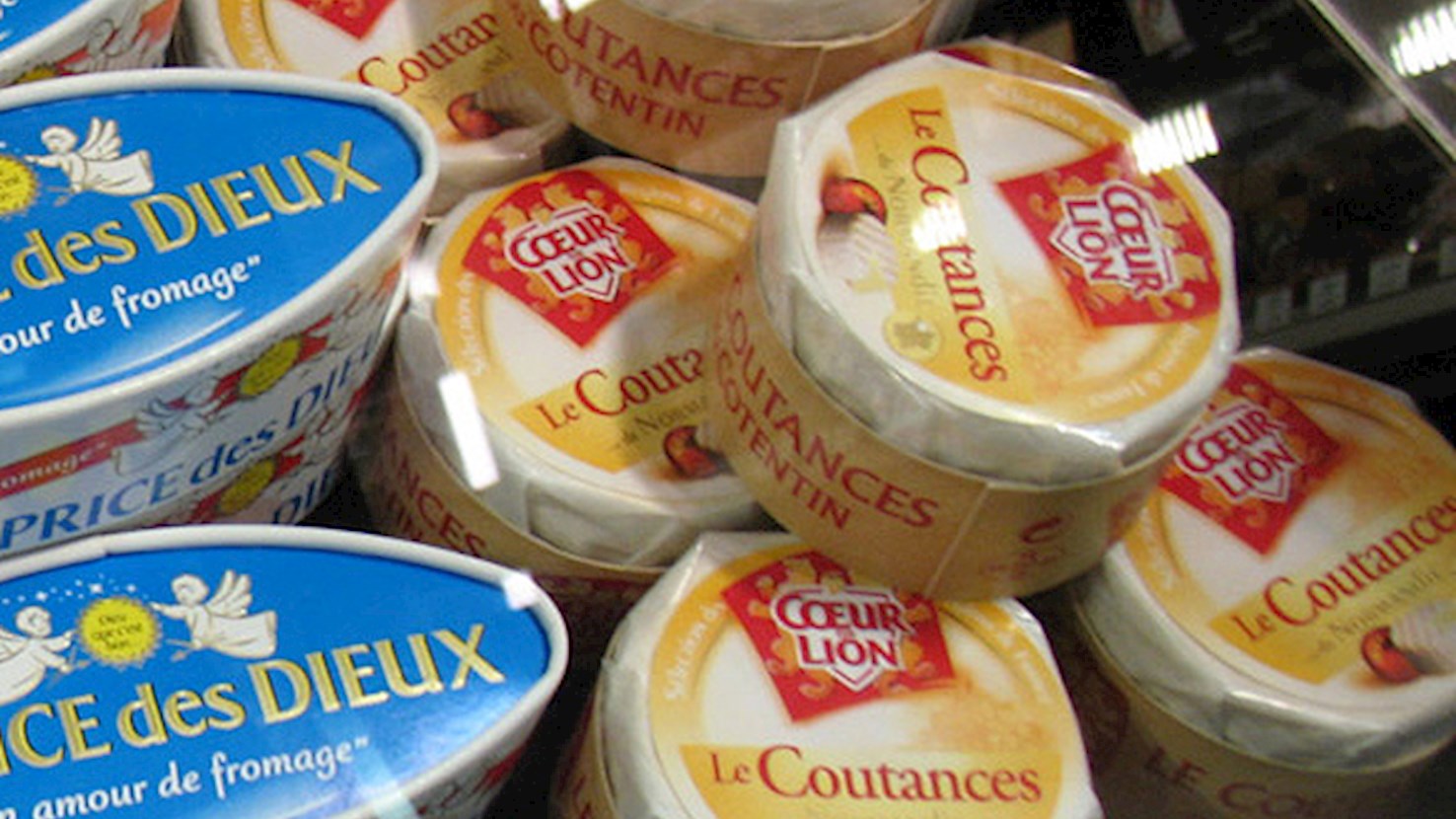
Often called the heavenly cheese, St. André is a French triple-crème cheese made from cow’s milk. It originated from Coutances in the region of Normandy. Underneath its bloomy edible rind, there is a dense, creamy-textured body with mild and rich aromas and flavors which can best be described as sour, tangy, buttery, and salty. Because it is enhanced with the addition of heavy cream, its fat content is quite high - typically 75%. It is recommended to pair it with crusty bread, pear slices, or a glass of light and fruity rosé.
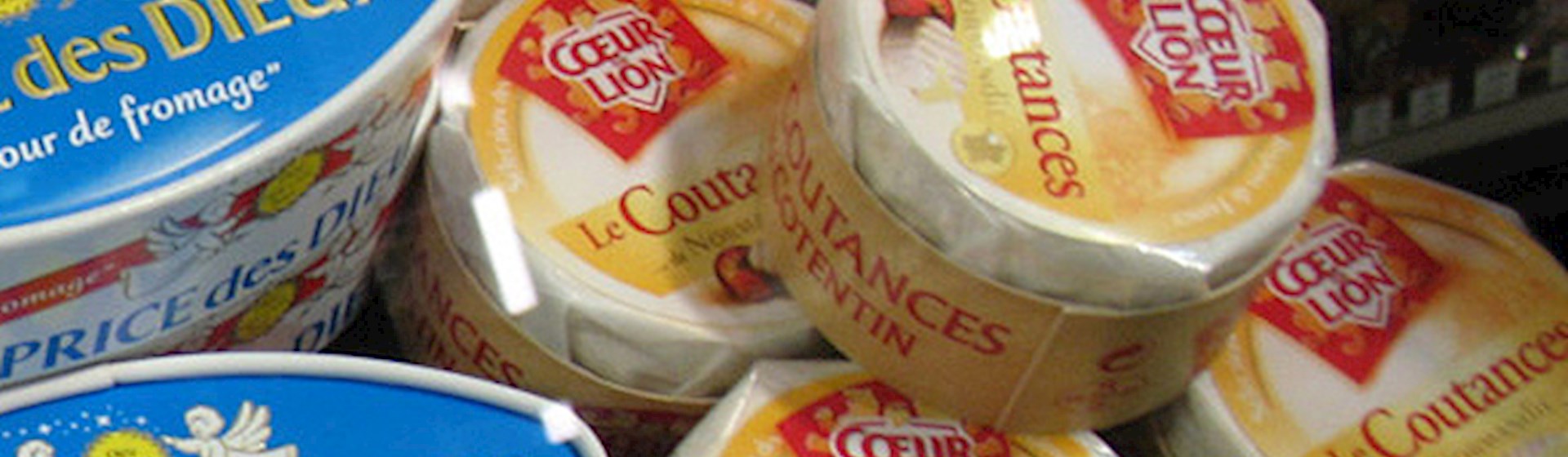
Coutances is a soft French cheese originating from the Normandy coast. The cheese is made from cow’s milk and is characterized by its rich, creamy texture, intense flavor, and milky aftertaste. On the exterior, it has a soft, bloomy white rind, while on the inside it is soft and yellow.
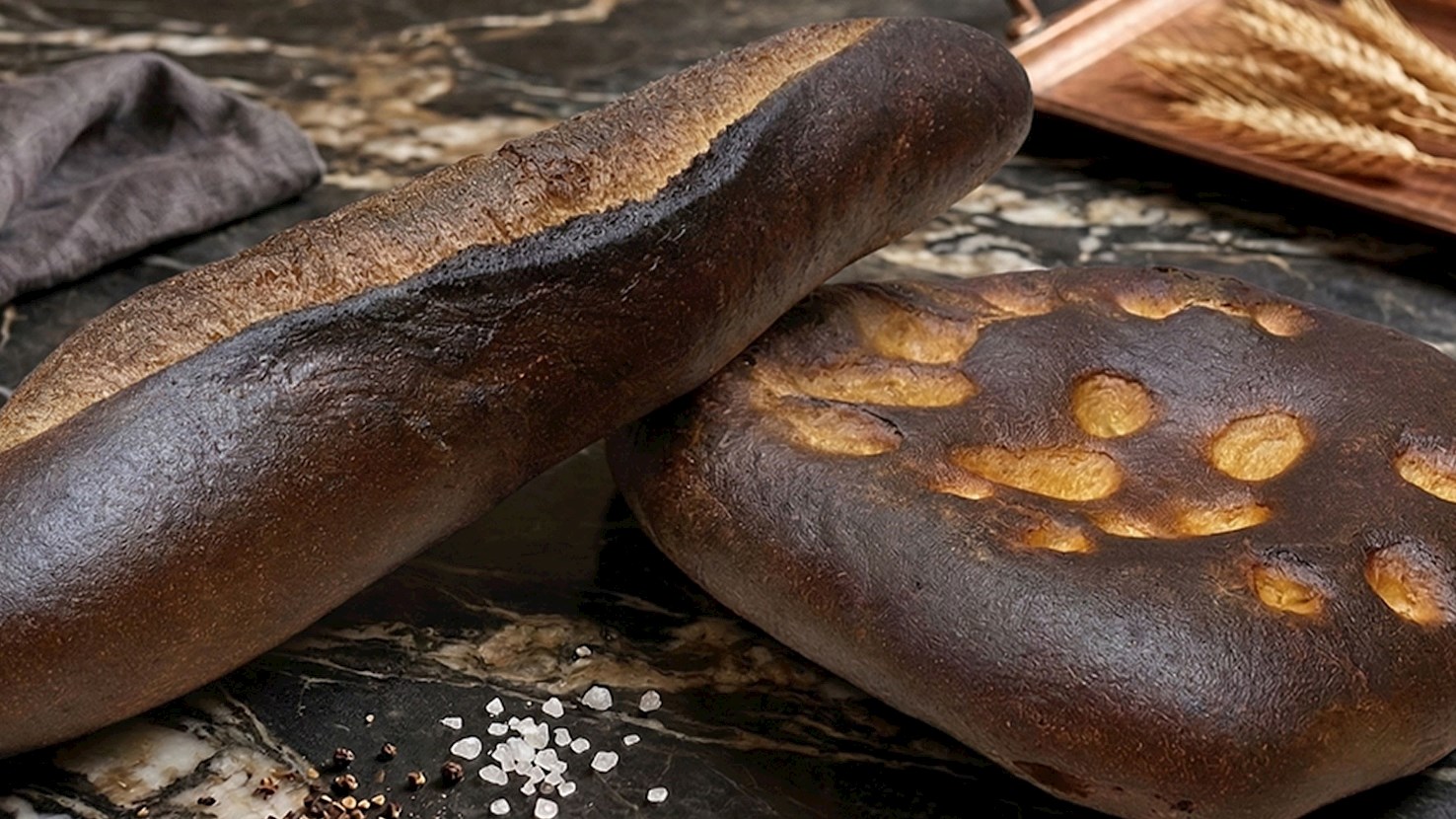
Pain à soupe is a substantial, rustic bread hailing from the Manche department. Typically baked in large round or oval shapes, it features a rugged, thick crust and a densely packed, dry interior. Made simply from wheat flour, water, yeast, and salt, it has a mild, low-acid flavor profile. Its primary defining trait is its structural resilience, engineered specifically to soak up large amounts of liquid without turning to mush. This loaf has its roots in the resourcefulness of rural farming and coastal communities. Historically, bread needed to endure for several days, and as it staled, it had to remain useful to prevent food waste. It became intrinsically tied to the daily dietary staple of soup, providing a hearty, caloric base that transformed simple broths into sustaining meals for laborers. The baking process starts with a low-hydration (stiff) dough that is kneaded until highly elastic and firm. After a slow fermentation, the dough is formed into large loaves and baked extensively. This thorough baking develops a hard outer shell that protects the crumb, ensuring that as the bread ages, it dries out completely rather than spoiling or developing mold. Differences among these loaves are generally minimal, mostly restricted to the overall size of the bread and the coarseness of the flour used—coarser grinds are sometimes preferred to increase liquid absorption. Regardless of these minor tweaks, the essential characteristic is always the bread's ability to hold its shape and cohesion when submerged in hot liquid. As its name suggests, pain à soupe is designed to be eaten presoaked. Thick slices of the aged, dry bread are placed at the bottom of a bowl, and piping hot vegetable, meat, or fish soup is ladled directly over them. The bread softens to a palatable texture while maintaining its form. It is often enriched with a bit of butter or grated cheese and is traditionally enjoyed as a complete, satisfying meal, typically washed down with unpretentious beverages like water or local rustic cider.
Soupe à l’échalote d’Avranches is a shallot-based soup from the town of Avranches, recognised locally as a modest winter speciality made from farm ingredients such as shallots, potatoes, butter, flour, stock, and crème fraîche. Regional culinary references describe it simply and precisely as a Norman speciality composed of about ten finely chopped shallots and three potatoes cut into small dice, sautéed in butter or “graisse normande”, bound with a spoonful of flour, then cooked in water or vegetable stock before being enriched with cream and served very hot over croutons. The soup belongs to a broader family of rustic Norman preparations that use dairy and alliums generously, and it appears in lists of recipes from the Manche alongside other local soups such as soupe à la graisse and mussel or cress soups, confirming its link to everyday cooking in this part of Normandy. Commentaries on Norman cuisine point out that garlic, onions and shallots have been cultivated in the region since at least the Middle Ages, when abbeys levied tithes on these crops; over time, varieties adapted to the damp, mild climate were selected, and a simple farmhouse soup based specifically on shallots rather than onions took hold around Avranches, later being identified by name in local and national food lexicons. Making the soup follows a clear sequence: shallots and potatoes are peeled, the shallots finely chopped and the potatoes cut into small cubes, then both are gently browned together in butter until they take on a light colour; flour is added and cooked briefly to form a light roux, before water or vegetable broth is poured in and the mixture simmers until the potatoes are soft and the flavours have blended. At the end of cooking, a portion of the hot liquid is mixed with crème fraîche, which is then stirred back into the pot, giving the soup its creamy texture. The soup is brought to the table very hot and ladled over slices or cubes of dry bread or croutons placed in the bowl. In recent years, plant-based versions have appeared, replacing butter with oil and dairy cream with plant cream. The soup is eaten mainly in Avranches and across Normandy as a simple winter starter or light evening meal, both in private homes and in restaurants that feature regional cooking, and it is often cited in overviews of French soups as one of the emblematic Norman potages. Wine-pairing guides describe it as a straightforward dish that matches best with easy-drinking “vins de copains”, recommending unpretentious dry whites or light reds such as Buzet or other southwest appellations, and by extension, similar supple Loire or southwest wines that do not overpower the delicate shallot and cream. In a more local register, the soup pairs naturally with Norman cider, whose freshness cuts the richness of the butter and cream, and it is often served with simple accompaniments such as extra bread, a green salad, or a piece of cheese, forming an uncomplicated but clearly regional meal.
Boudin noir de Coutances is a robust, artisanal black pudding originating from the town of Coutances and its neighboring municipalities within the Manche department. Emerging from the area's rich heritage of domestic pig rearing and small-scale butchery, local charcutiers developed a highly specific balance of ingredients that distinguishes this sausage from other regional varieties, keeping its production fiercely localized and avoiding industrial manufacturing. The defining composition involves approximately 35 percent fresh pig’s blood, 30 percent finely minced raw onions, and roughly a quarter pork fat combined with "ratis"—a highly specific fat painstakingly scraped from cleaned intestines. These ingredients are thoroughly mixed, seasoned, and stuffed tightly into the pig's large intestine or cæcum, which imparts the sausage's signature thick diameter and ensures the slices remain intact during cooking. The stuffed casings are gently poached in hot water just until the blood coagulates without rupturing the skin, after which they are cooled and sold ready to reheat. What truly sets this blood sausage apart is the heavy reliance on raw, rather than cooked, onions, infusing the final product with exceptional moisture and a distinct natural sweetness, while the inclusion of the ratis highlights the specialized, zero-waste craft of the area's butchers. To serve, the boudin is typically pan-fried in butter to achieve a delicately crisp exterior that yields to a soft, savory center. It is frequently enjoyed as a hearty main course alongside mashed potatoes and warmly sautéed apples, or incorporated into creative bistro dishes like a Parmentier. Whether savored in a rustic home kitchen or a Norman eatery, it is best accompanied by a crisp regional cider that echoes the apple garnishes, an acidic dry white wine to slice through the heavy fats, or a structured, supple red such as a Marcillac or a lightweight Loire Valley vintage.
TasteAtlas food rankings are based on the ratings of the TasteAtlas audience, with a series of mechanisms that recognize real users and that ignore bot,
nationalist or local patriotic ratings, and give additional value to the ratings of users that the system recognizes as knowledgeable.
For the “Top 6 Traditional Foods in Manche” list until June 02, 2026, 1 ratings were recorded, of which 1 were recognized by the system as legitimate.
TasteAtlas Rankings should not be seen as the final global conclusion about food. Their purpose is to promote excellent local foods,
instill pride in traditional dishes, and arouse curiosity about dishes you haven’t tried.
The initial list of top producers was compiled based on available reviews, awards, local recommendations, media and blog coverage, and consumer reviews.
The list will be updated with ratings from TasteAtlas local ambassadors and TasteAtlas users.