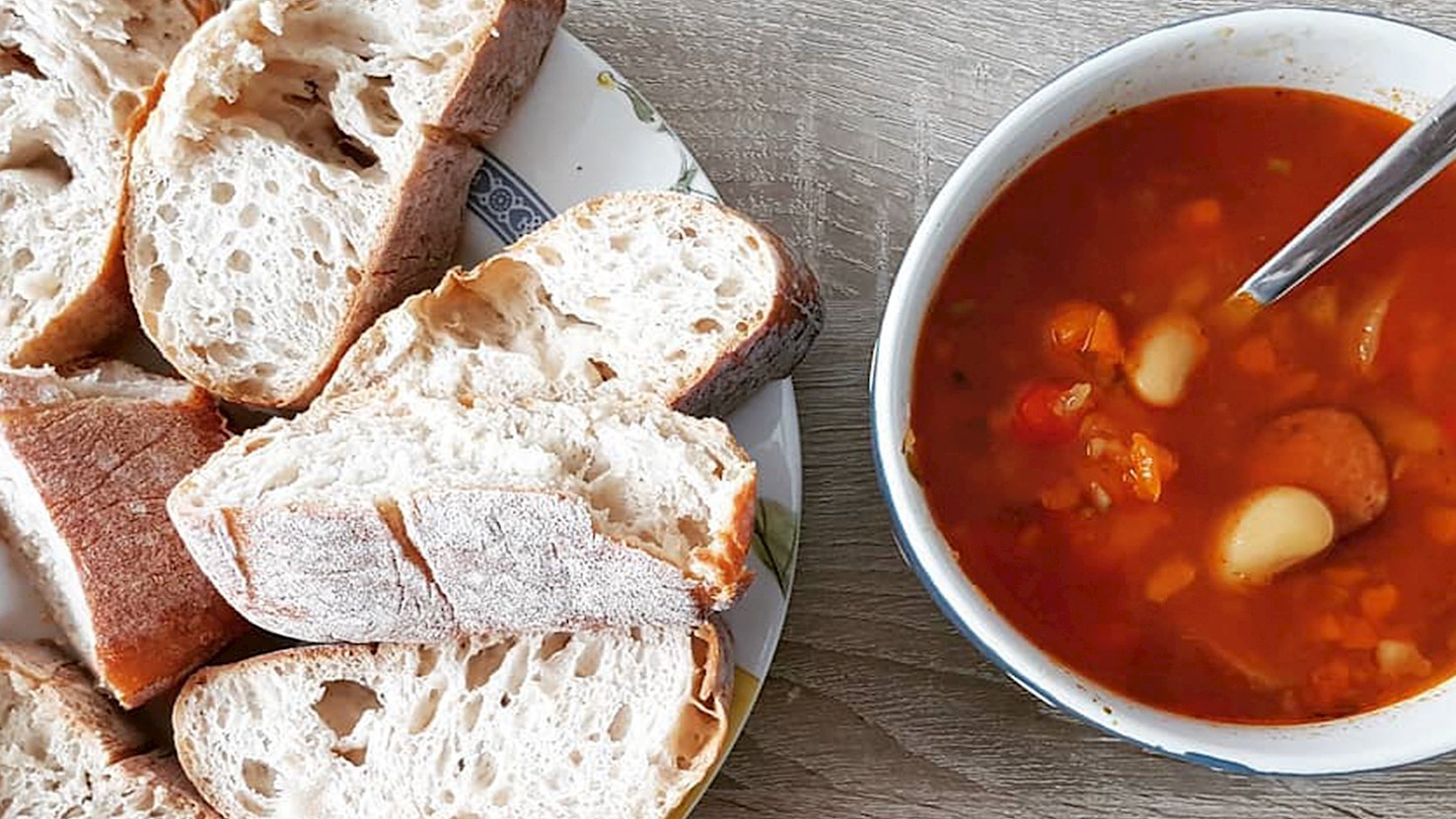
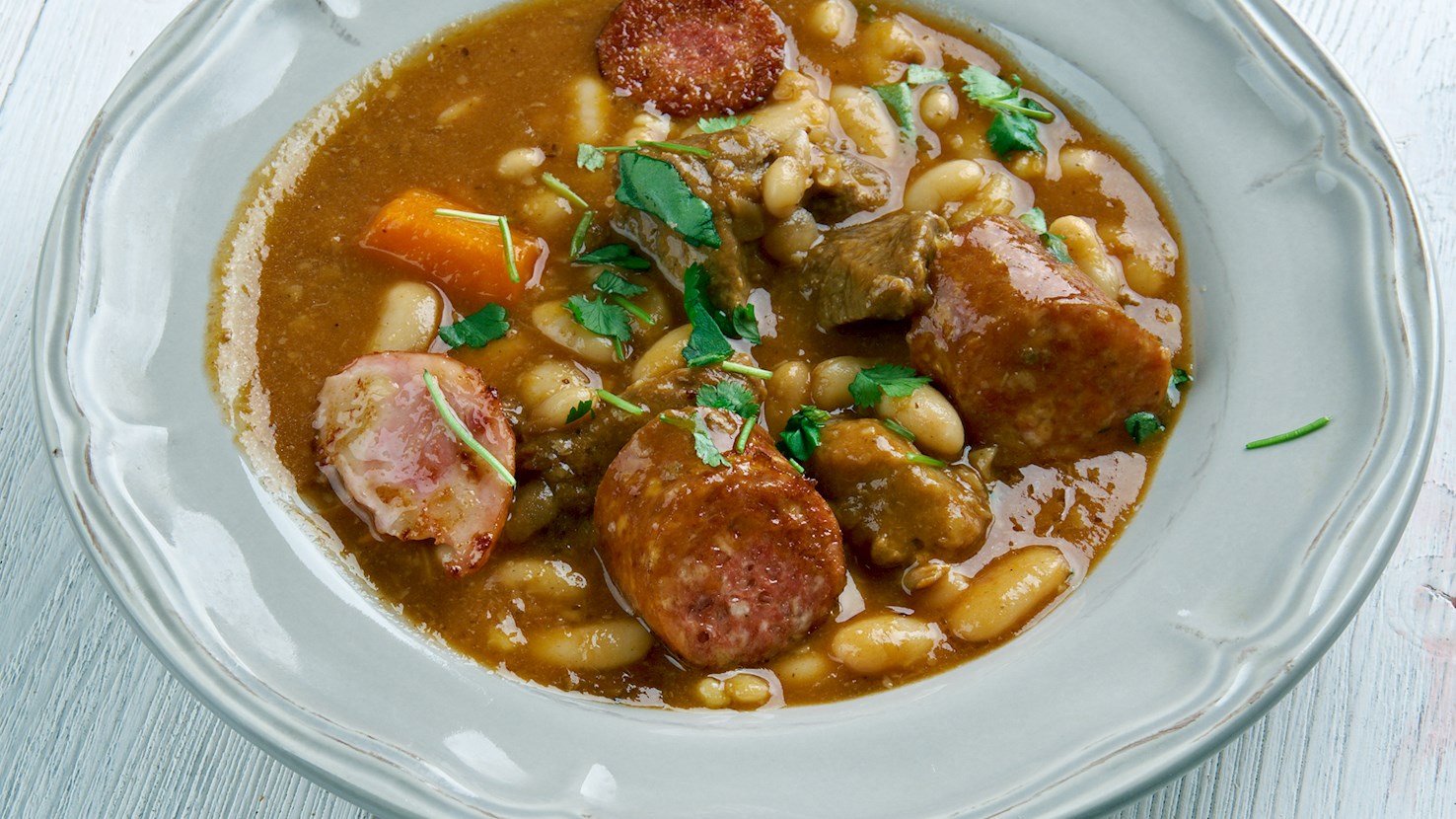
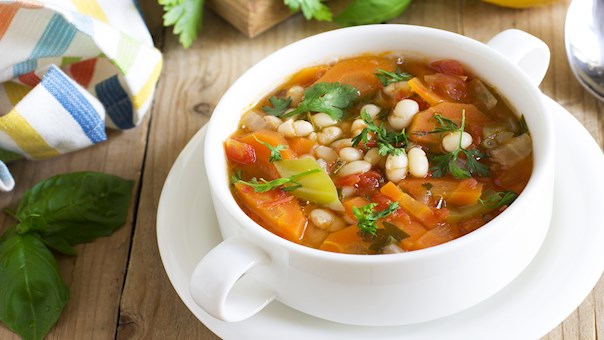
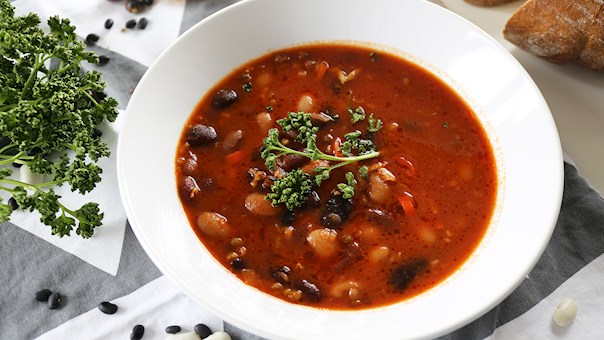
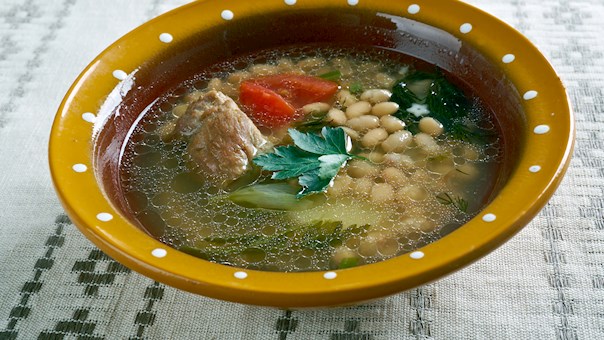
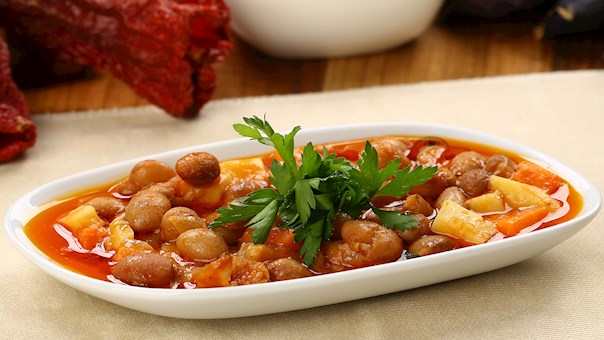
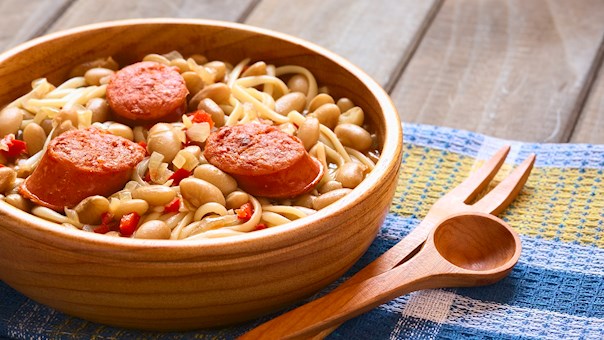
Rich and smoky, this white bean soup with smoked meat is a staple in most Romanian households. It consists of boiled dry white beans enriched with chunks of smoked meat such as pork knuckles or ribs, ham, or bacon, as well as root vegetables. Typical vegetables include celery root, onions, parsley roots, carrots, and bell peppers. The soup is traditionally seasoned with either celery leaves and parsley, lovage, or tarragon. Warm and filling, the soup is perfect for the winter season. It is typically consumed with a salad of red onions, pickled chilis, and slices of fresh bread or thick polenta.
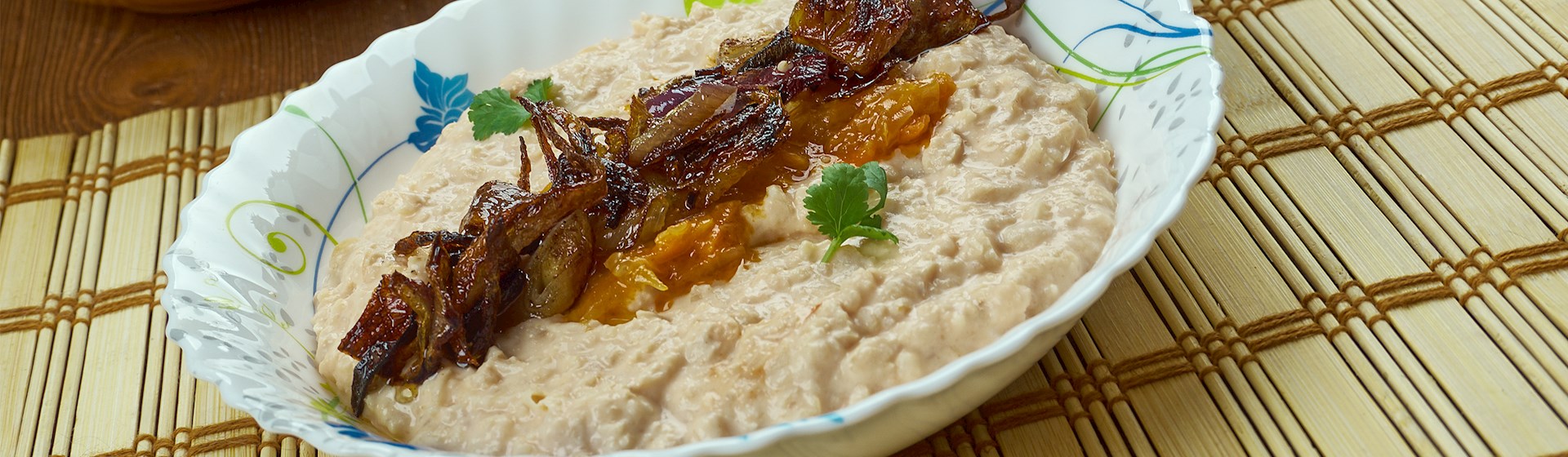
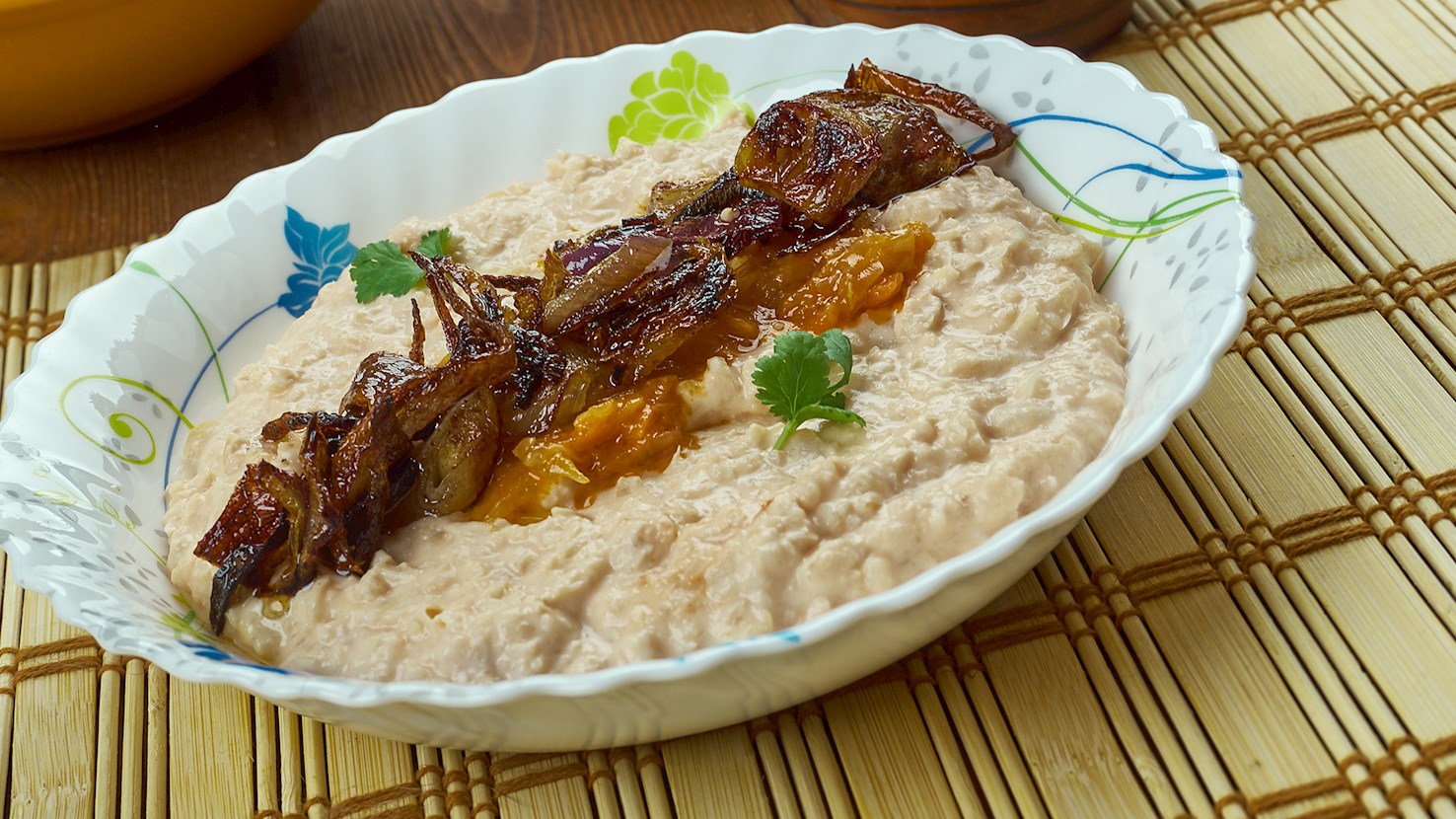
Fasole batută is a traditional bean paste consisting of mashed white beans combined with minced garlic, oil, bean stock, salt, and pepper. It is typically topped with onions which have been cooked with tomato paste, sugar, and paprika powder. Smooth and creamy, this bean paste pairs well with crusty bread, flatbread, olives, and roasted peppers. It can be served as a spread, or as a side dish accompanying meat or fish dishes. In Moldova, this bean paste is called fasole făcăluită and calls for the addition of carrots.
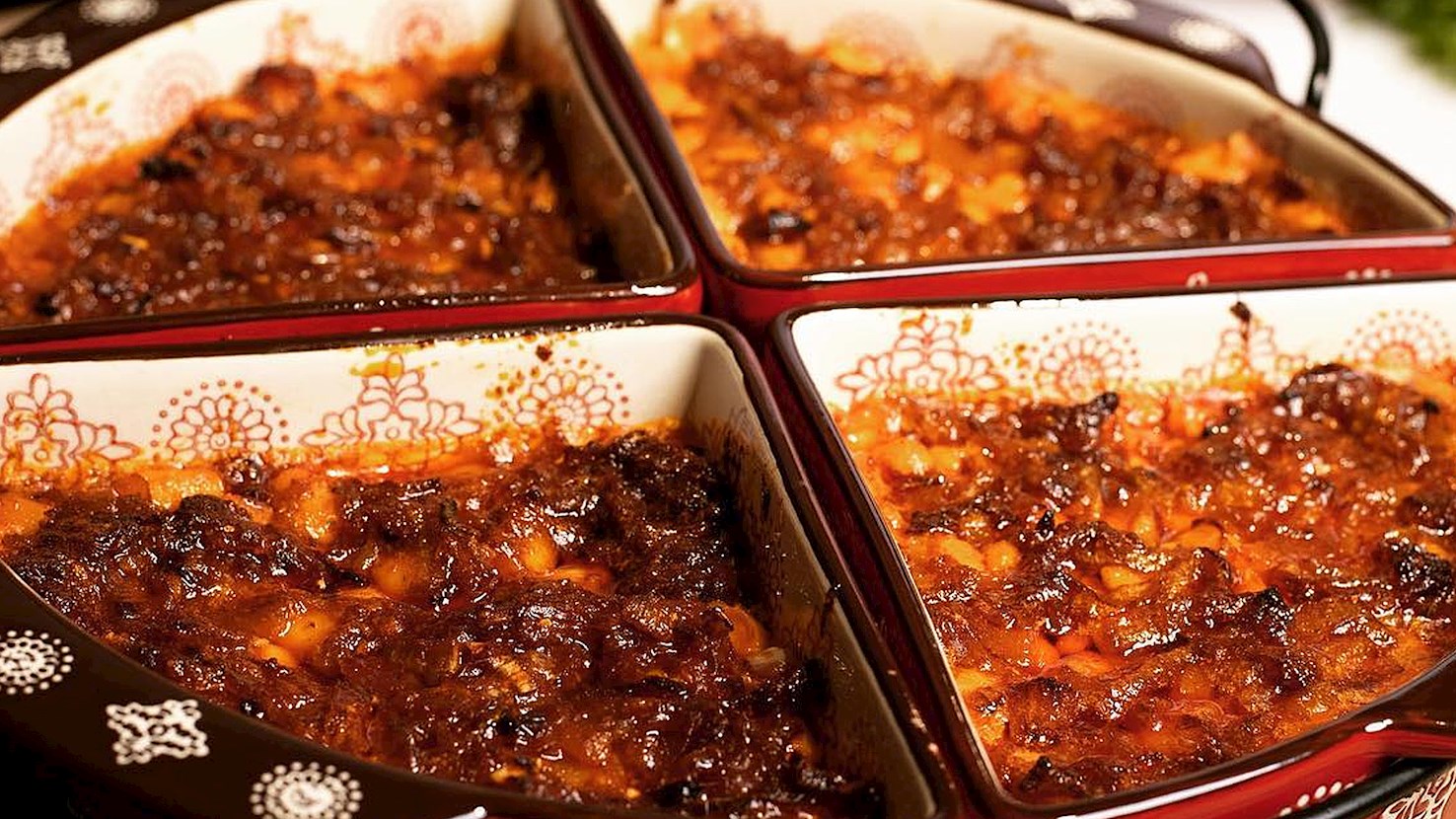
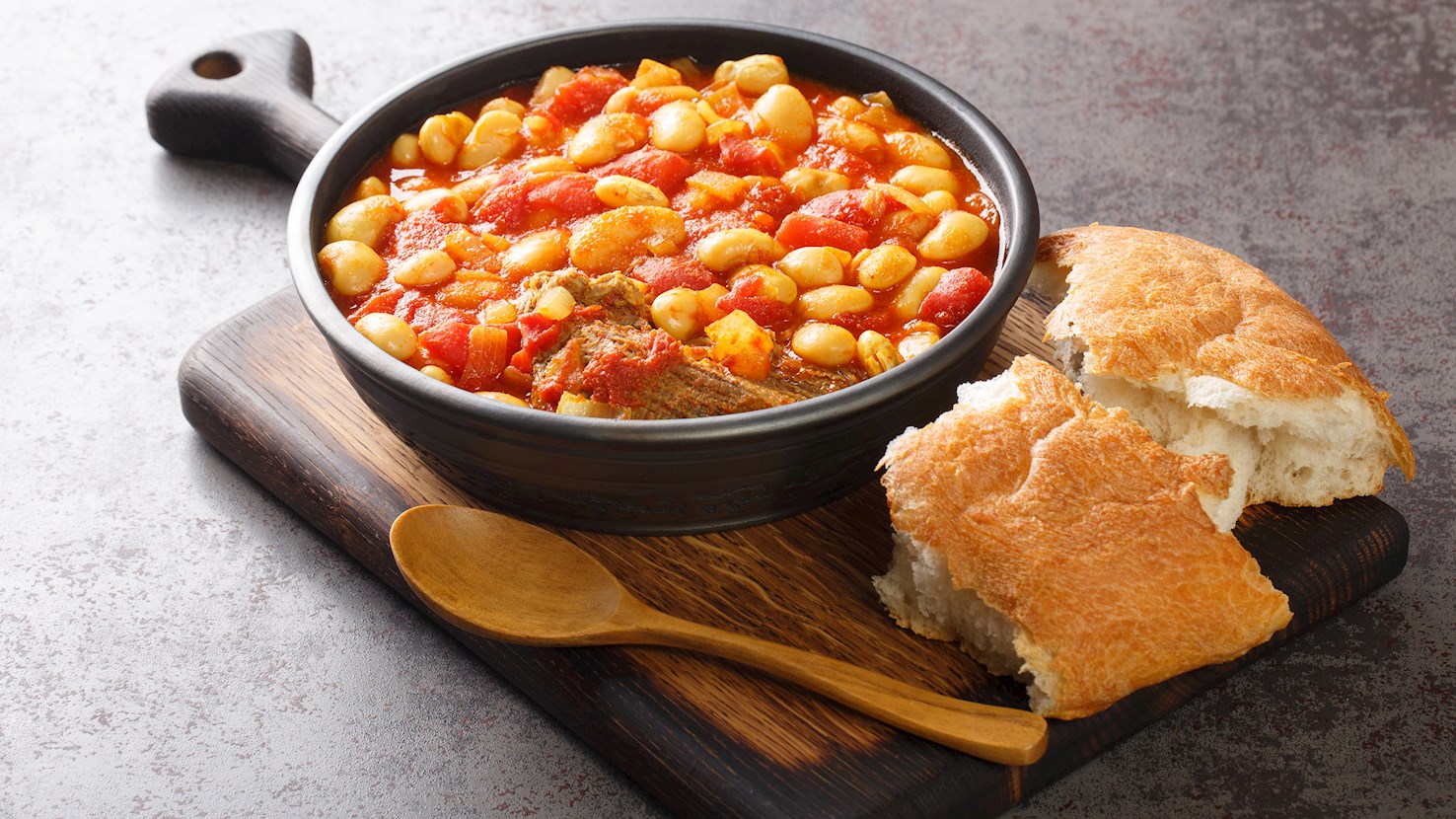
Tavče gravče is the national dish of North Macedonia consisting of beans stewed with onions, oil, dried pepper flakes, and seasonings such as salt, parsley, and black pepper. Although it is primarily a vegetarian dish, some recipes call for the addition of smoked pork, bacon, sausages, or suho meso. The dish is baked in an earthenware bowl and usually served in it, keeping the beans warm. Tavče gravče is traditionally enjoyed on Fridays or during fasting (the original vegetarian recipe), but in restaurants, it is often served as a side dish to grilled meats.
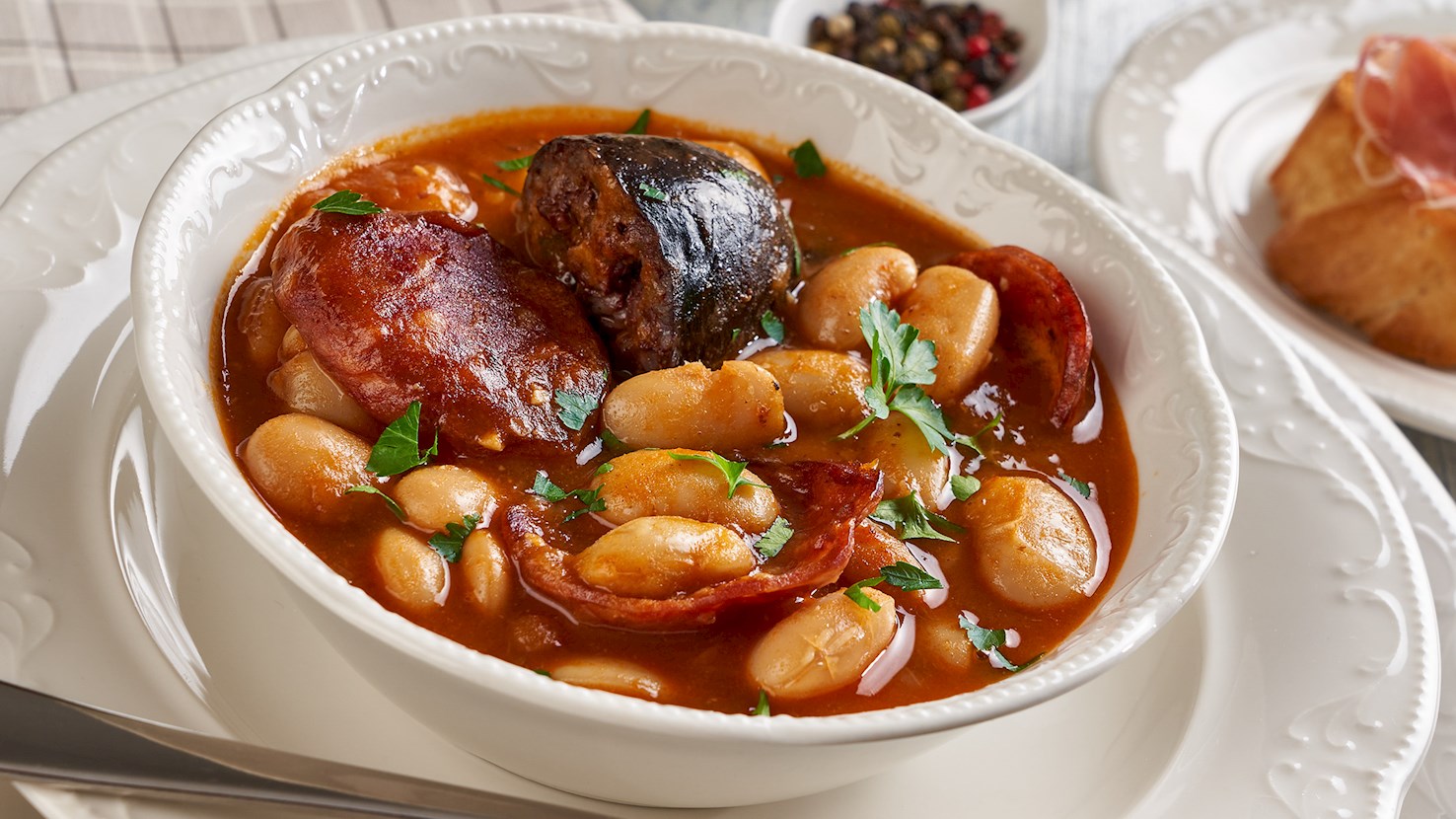
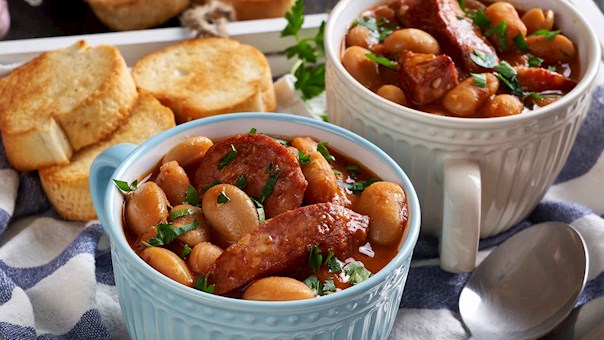
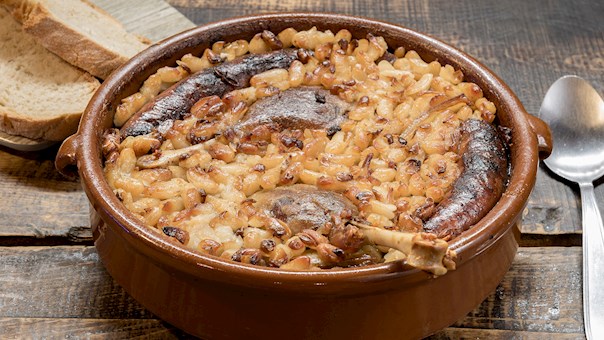
This comforting stew known as fabada Asturiana is a signature dish of the famous Spanish region of Asturias. The stew consists of plump white beans, chorizo, morcilla blood sausages, and pork fat, flavored with smoked paprika and saffron. Some recipes also use olive oil. Spicy and hearty, with robust and earthy flavors, this Spanish classic combines simple ingredients to create an extraordinary dish. It is believed that fabada appeared sometime between the 19th and the 20th century. Due to its nutritious elements, it is usually enjoyed in the colder winter months. Fabada is a staple of every traditional and authentic Spanish restaurant, and its less sophisticated versions are often sold in supermarkets. In restaurants, it is mainly served as a starter or a main dish and is usually accompanied by slices of crusty bread.
Loubia is a traditional North African dish consisting of stewed white beans. This dish is very popular in Moroccan, Tunisian, Algerian, and Libyan homes, where the beans that have been simmered in a zesty tomato-based sauce are typically scooped up with homemade flatbread. It is comfort food that can be served both as an appetizer, garnished with some coriander or parsley, and as a side dish - especially when used as an accompaniment to fried fish. Simple, quick, and delicious - it is unsurprising that loubia is commonly found in homes throughout Maghreb region.
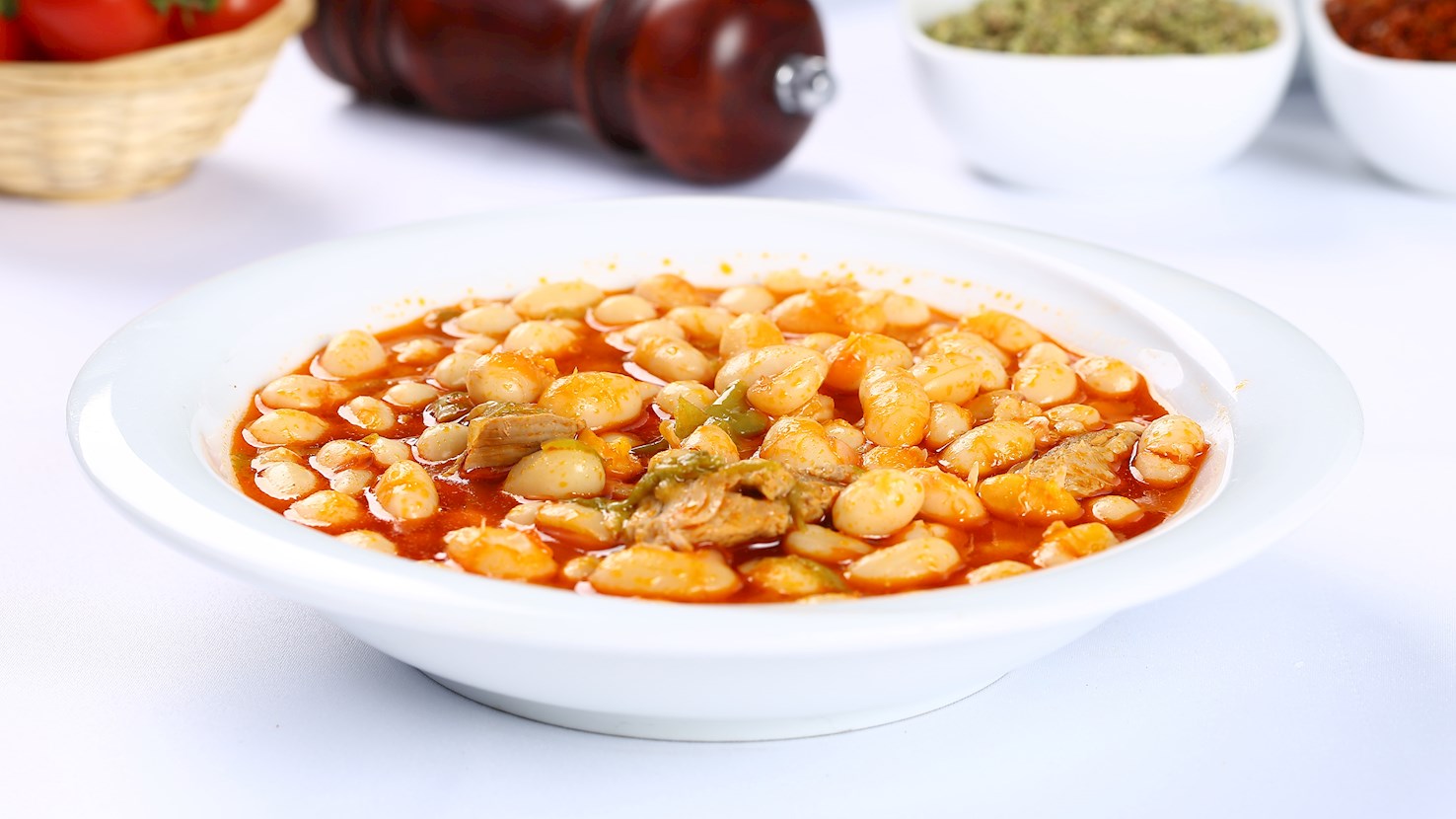
This traditional Turkish white bean stew is a staple in virtually every household and lokanta—an establishment serving simple but hearty meals to people on the go. Kuru fasulye translates to dried beans which are first soaked and then cooked together with sautéed chopped onions, green peppers, tomatoes, and salça (tomato paste). The dish can also be enriched with meat - typically lamb - in a variation known as etli kuru fasulye.
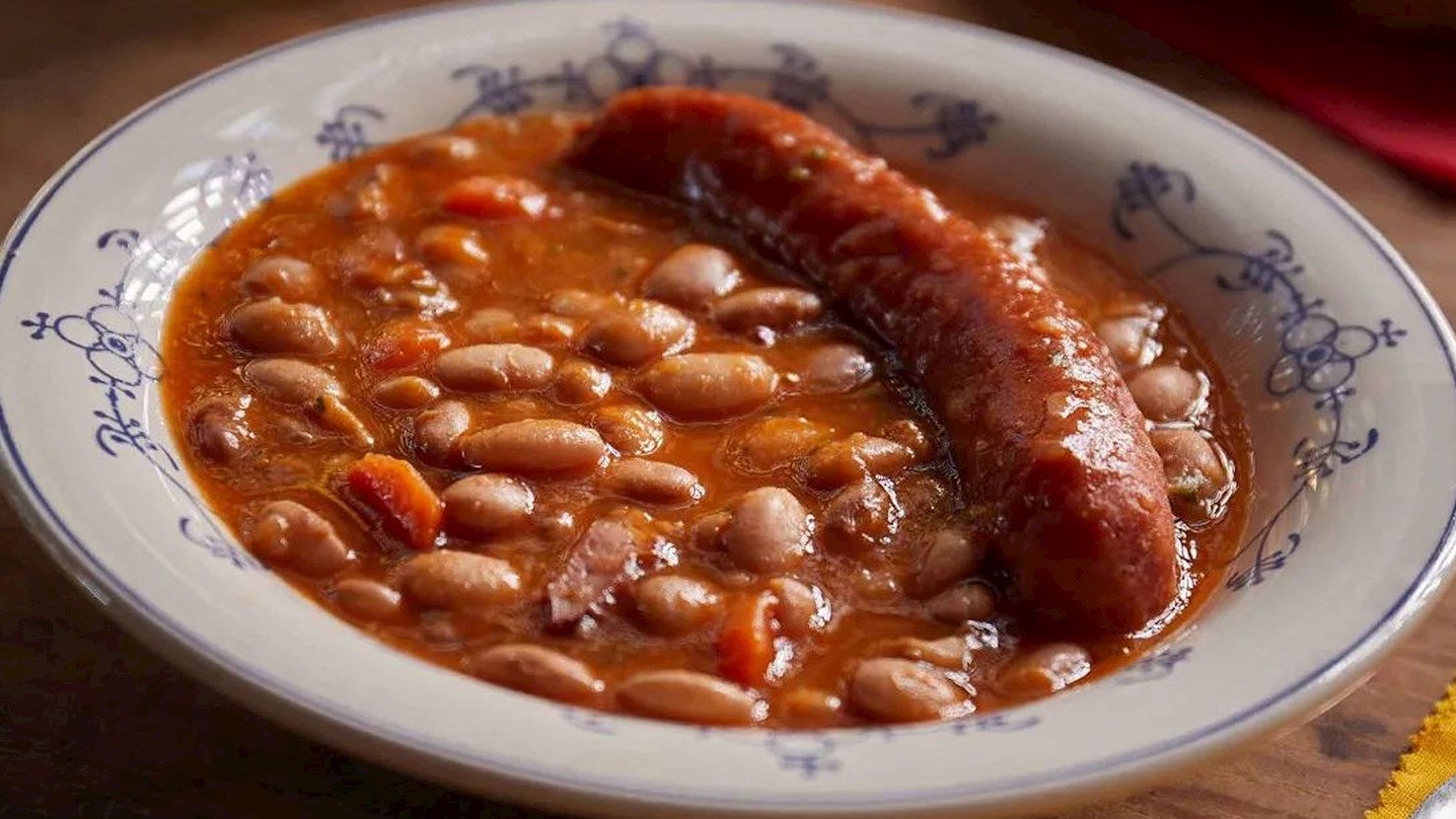
Pasulj is a popular Serbian bean soup that is traditionally prepared with white beans. The beans are usually simmered with sausage, bacon, or ham, and vegetables such as onions and carrots. Paprika, bay leaves, and garlic are commonly used as seasonings in the soup. Pasulj is a typical representative of Serbian comfort food, and it is also very popular throughout the Balkans, especially in the neighboring countries. It is recommended to serve the dish with some crusty bread or sliced raw onions on the side.
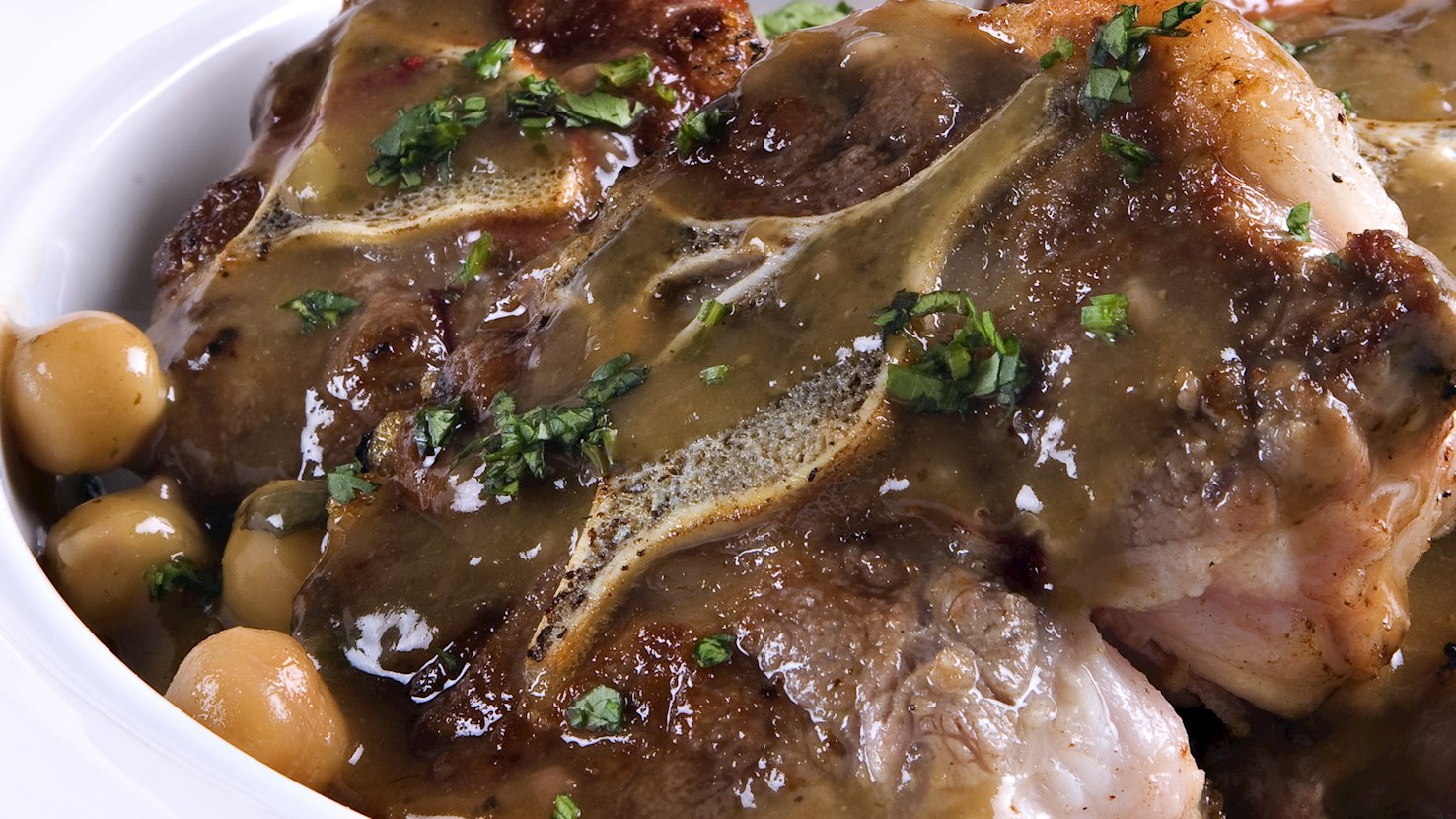
Oxtail with broad beans in Jamaica is a slow-cooked dish made from seasoned oxtail braised with butter beans, aromatics, and herbs until the meat becomes tender and the sauce thickens through natural gelatin released during cooking. It is prepared across the island in homes, canteens, and small restaurants, and is one of the most widely recognized Jamaican stews. The dish developed as cooks made use of oxtail, a cut that required long cooking but offered strong flavor and richness, and combined it with imported canned butter beans, which became readily available in Jamaican shops during the twentieth century and blended easily into the stew. The preparation reflects the influence of Afro-Caribbean cooking techniques centered on slow braising, seasoning with allspice and thyme, and creating a thick, savory gravy that pairs well with starchy sides common in the region. Preparation begins by cutting the oxtail into sections, seasoning them with salt, pepper, allspice, garlic, thyme, and often browning sauce or soy sauce for color. The meat is usually browned first to develop flavor, then simmered in water or stock with onions, scallions, carrots, and Scotch bonnet pepper placed whole or pierced for controlled heat. As the stew cooks, the collagen in the oxtail thickens the liquid, creating a gravy-like sauce. Butter beans are added toward the end so they remain intact but take on the flavor of the broth. Some cooks add a small amount of flour or cornstarch if they prefer a thicker sauce, though many rely solely on the natural gelatin from the meat. The combination of slow-cooked oxtail and soft beans gives the dish a characteristic contrast between rich, sticky meat and tender legumes. Oxtail with broad beans is eaten throughout Jamaica and in Jamaican communities abroad, often served with rice and peas, plain rice, fried dumplings, or boiled ground provisions such as yam or banana. It appears on lunch menus, at family gatherings, and at weekend cookshops where long-cooked stews are common. Beverage pairings include sorrel drink, ginger beer, dark rum, or simple iced water, depending on the setting. When served in restaurants or at home, the dish is often accompanied by sliced vegetables or a small salad to provide contrast to the richness of the stew.
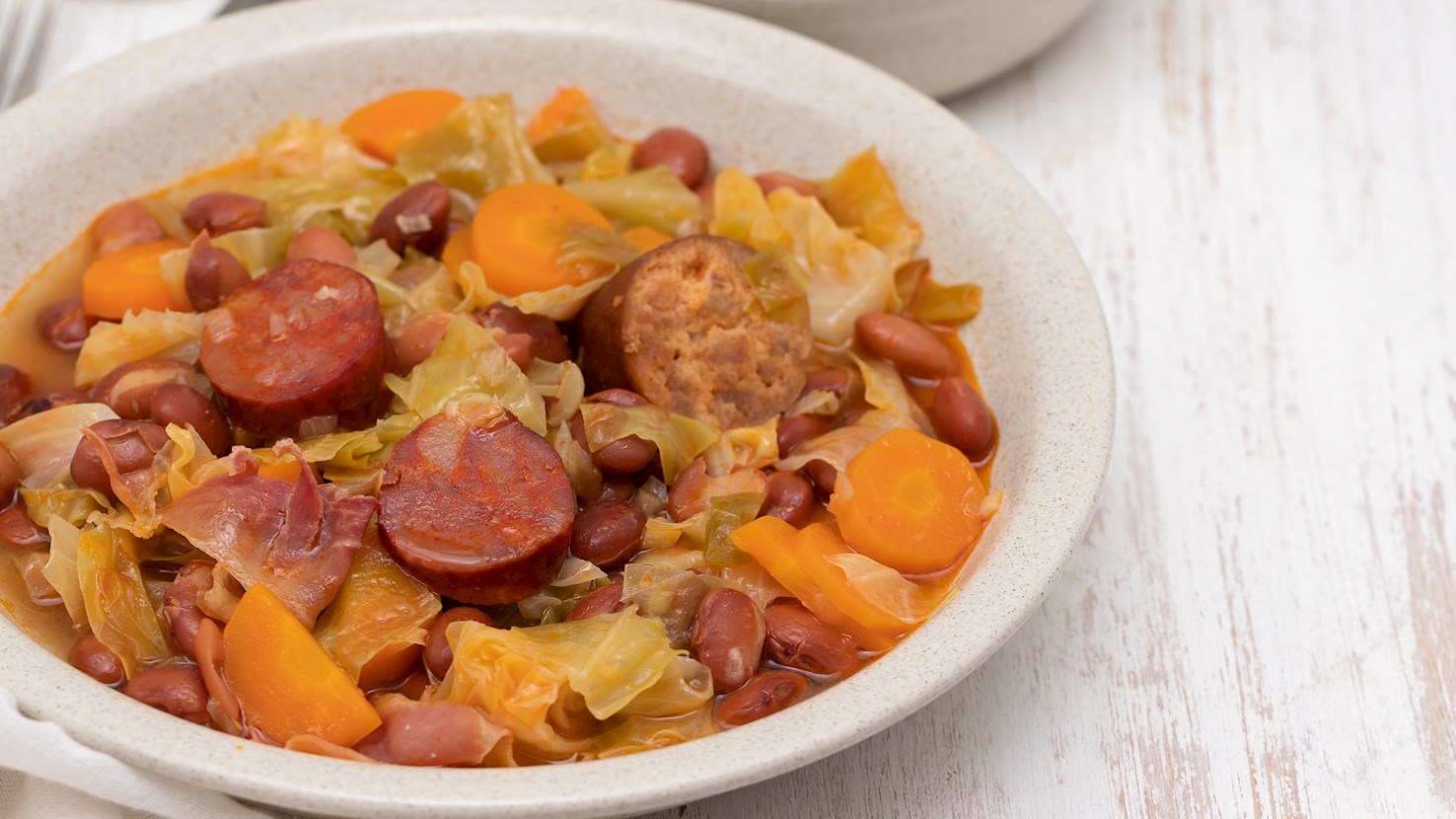
Feijoada is a hearty bean stew that appears in several local and international varieties. Although it is often assumed that feijoada originated in Brazil, where it is considered a national dish, it was primarily made in Portugal before it was introduced to Brazil. The Portuguese version is believed to have originated in the north of Portugal, but today it appears in several versions throughout the country. It is usually made with red kidney or white beans, while the additions usually include pork, blood sausage (morcela), farinheira sausage, or chouriço. Some variations also include vegetables. Similar versions of feijoada are found in most Portuguese colonies, including Brazil, Macau, Angola, Mozambique.
The essential ingredients in this hearty Cantabrian stew include white beans and collard greens (berza), but the dish is commonly enriched with chorizo (pork sausage) and morcilla (blood sausage), pork ribs, and bacon. It is believed that the stew was invented in the 17th century, but it was given its current name in the 1960s. Unlike many other types of Spanish stews where the broth is served separately, cocido montañés is typically enjoyed as a one-course meal.
TasteAtlas food rankings are based on the ratings of the TasteAtlas audience, with a series of mechanisms that recognize real users and that ignore bot,
nationalist or local patriotic ratings, and give additional value to the ratings of users that the system recognizes as knowledgeable.
For the “53 Best Rated Dishes with White Beans” list until May 22, 2026, 989,158 ratings were recorded, of which 646,966 were recognized by the system as legitimate.
TasteAtlas Rankings should not be seen as the final global conclusion about food. Their purpose is to promote excellent local foods,
instill pride in traditional dishes, and arouse curiosity about dishes you haven’t tried.