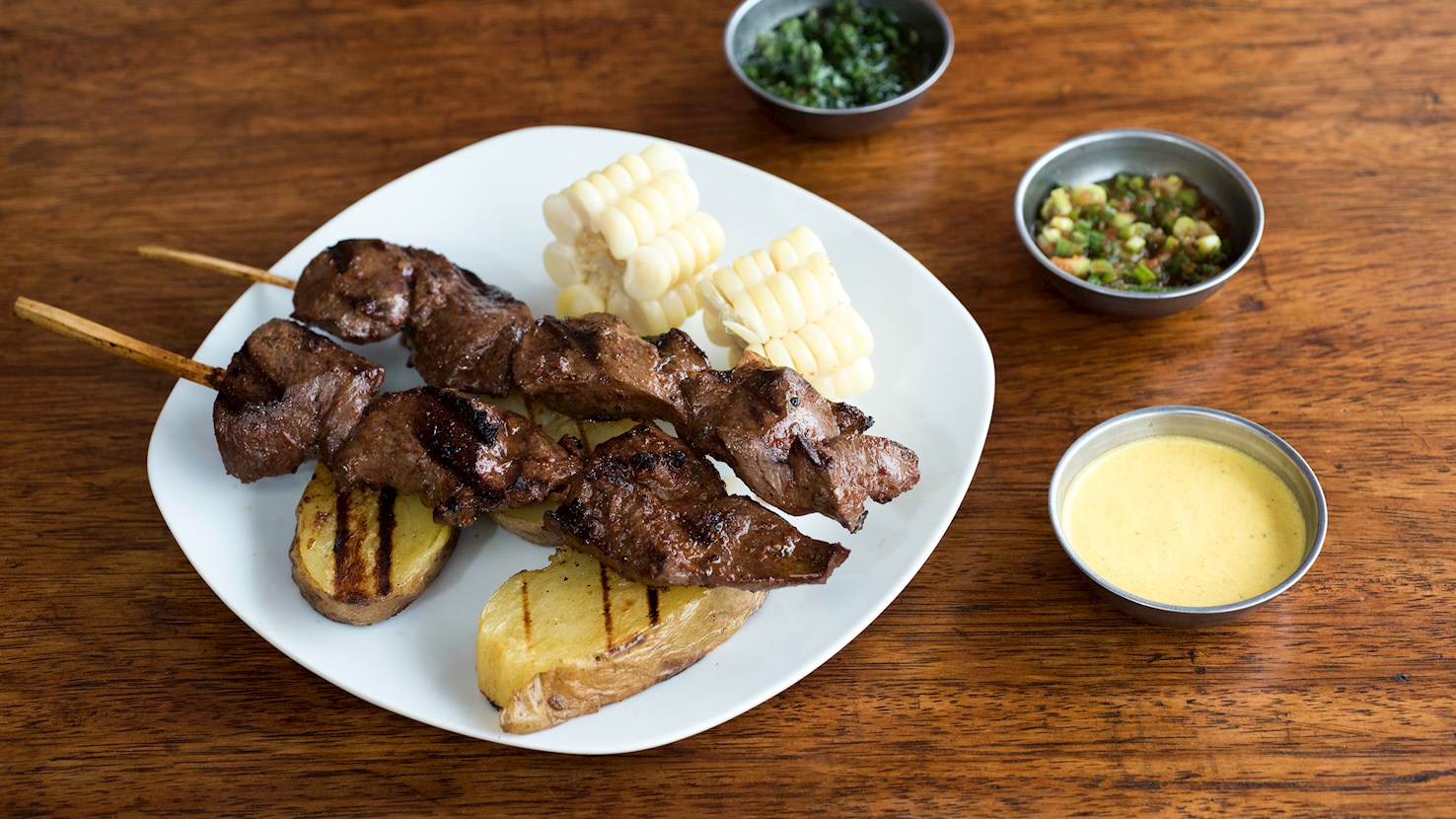
Anticuchos de corazón stand as one of Peru’s most recognizable street dishes, carrying a history that mirrors the country’s cultural and culinary evolution. Its origins trace back to pre-Hispanic Andean practices of roasting skewered meat over fire, later reinterpreted during the colonial era by enslaved Africans who made use of beef heart—then considered a low-value cut—to create a dish that would grow into a defining symbol of Peruvian cuisine. The preparation begins with careful cleaning of the beef heart, removing exterior fat, sinew, and blood vessels, then cutting it into evenly sized cubes that cook quickly while remaining tender. The heart is prized for its dense yet delicate texture when handled properly. The marinade is central to the dish and traditionally includes ají panca, a deep red Peruvian chili with mild heat and smoky fruitiness, often complemented by ají mirasol or ají amarillo for brightness. Garlic, ground cumin, black pepper, oregano, vinegar, oil, and sometimes dark beer are added to round out the flavor. The meat is marinated for several hours or overnight, allowing the seasoning to penetrate while softening the fibers. Once marinated, the beef heart is threaded onto skewers—traditionally cane or bamboo—and grilled over charcoal or a very hot grill. Constant basting (traditionally with corn husks) is essential: the leftover marinade is mixed with oil and brushed onto the skewers repeatedly to keep the meat moist and build layers of flavor as it cooks. Properly grilled anticuchos develop a charred exterior while remaining juicy inside, with a balance of smokiness, spice, and acidity. Timing is crucial, as overcooking can quickly toughen the meat. The seasoning profile may vary slightly by household, with adjustments to chili ratios or spice levels, but ají panca remains the backbone in most traditional recipes. Anticuchos de corazón are traditionally served hot, straight from the grill, often accompanied by boiled or roasted potatoes and large-kernel Peruvian corn (choclo). A spoonful of salsa criolla—made from thinly sliced red onion, chili, lime juice, and cilantro—is commonly served on the side to add freshness and acidity. In street settings, they are eaten standing, shared, and enjoyed late into the evening, frequently paired with a simple glass of beer or chicha.
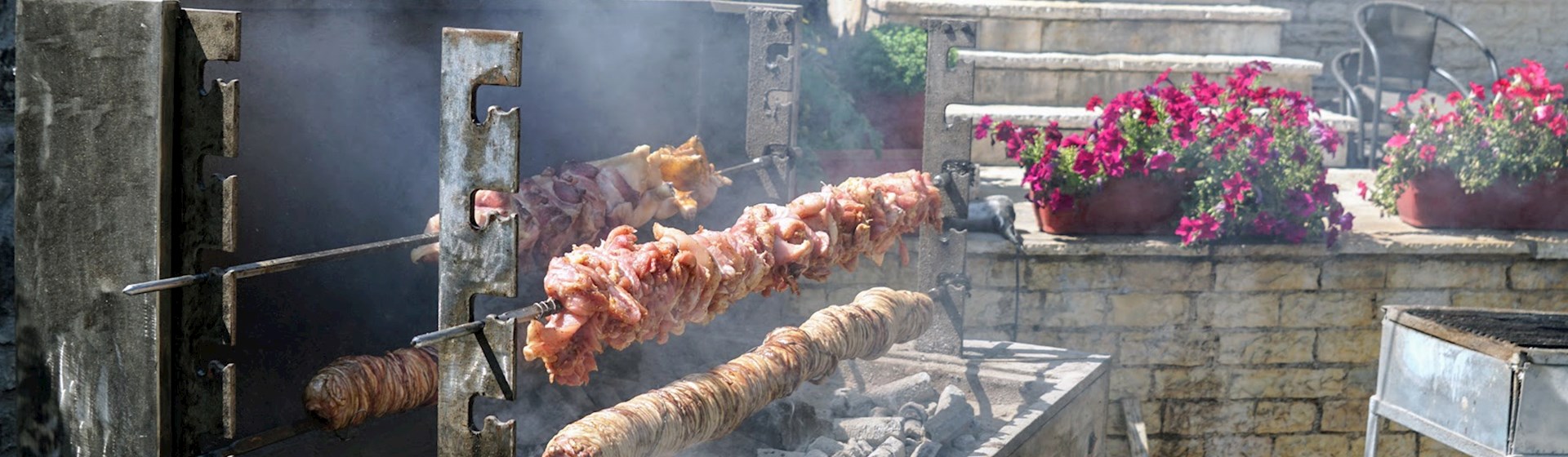
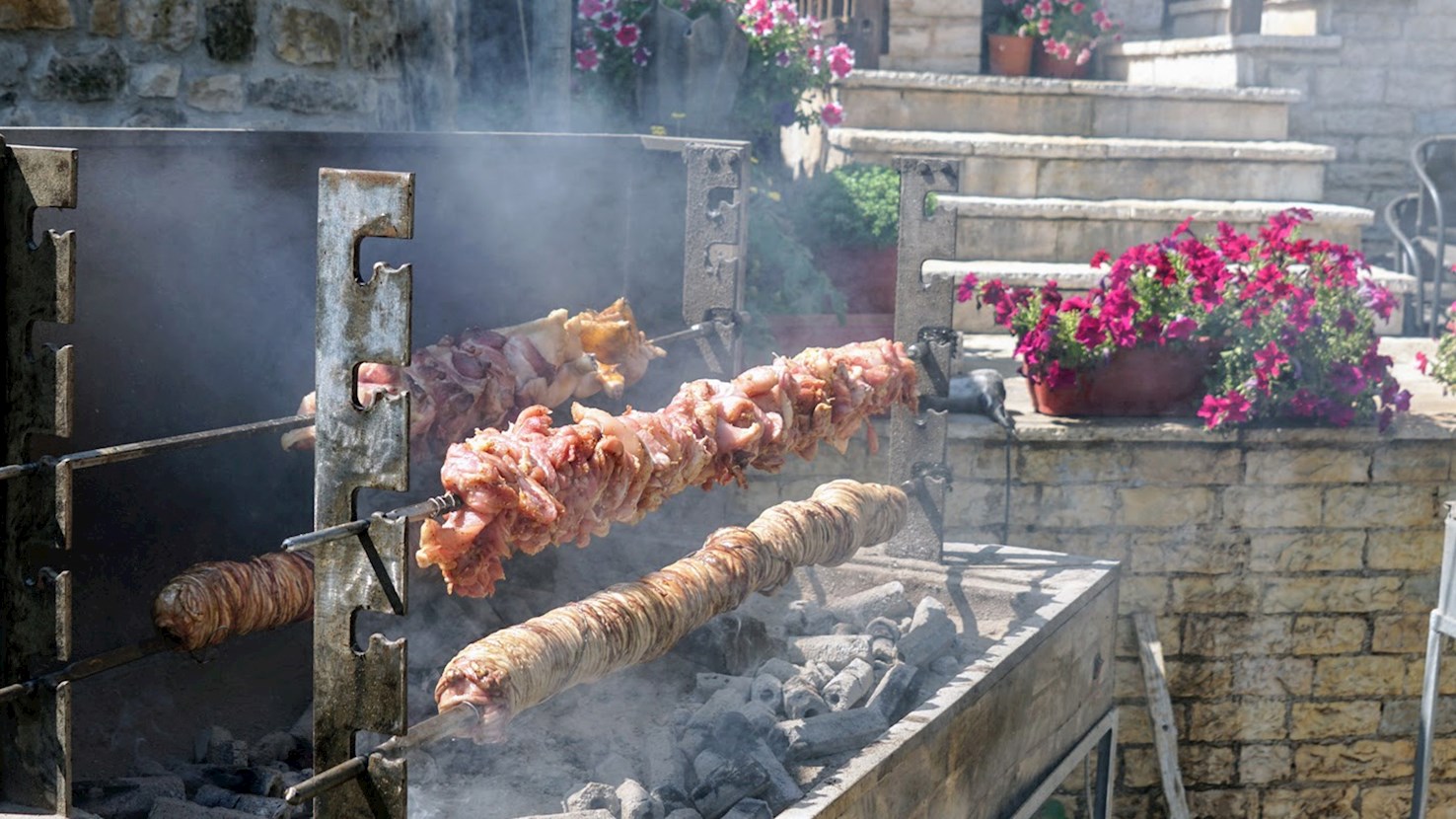
Kokoretsi is a traditional Greek dish that uses lamb or goat offal, including the liver, lungs, heart, kidneys, and sweetbreads, cut into small pieces and wrapped in intestines that are then roasted. The intestines are thoroughly cleaned and inverted to ensure cleanliness. The offal is seasoned with salt and garlic, but the seasoning can also include herbs like rosemary and oregano, lemon zest, pepper, and olive oil. Caul fat, a lacy membrane encasing the organs, can also be used to wrap the offal before the intestines for added moisture and flavor. The prepared skewer is roasted slowly over embers or in an oven. Initially, it is cooked at a moderate temperature to ensure the offal is cooked through; then, the temperature is increased (or the kokoretsi is placed closer to the embers) to brown and crisp the outer layer. The cooking process usually takes several hours, with the kokoretsi being basted with its own juices or additional olive oil to keep it moist. Kokoretsi is typically served hot, cut into thick slices directly from the skewer, often accompanied by lemon wedges and garnished with fresh herbs. It is commonly served with bread, fresh salads, and sometimes roasted potatoes. Kokoretsi is a beloved dish, especially during festive occasions such as Easter. It is a part of traditional celebrations and family gatherings, where its preparation and cooking are communal activities.
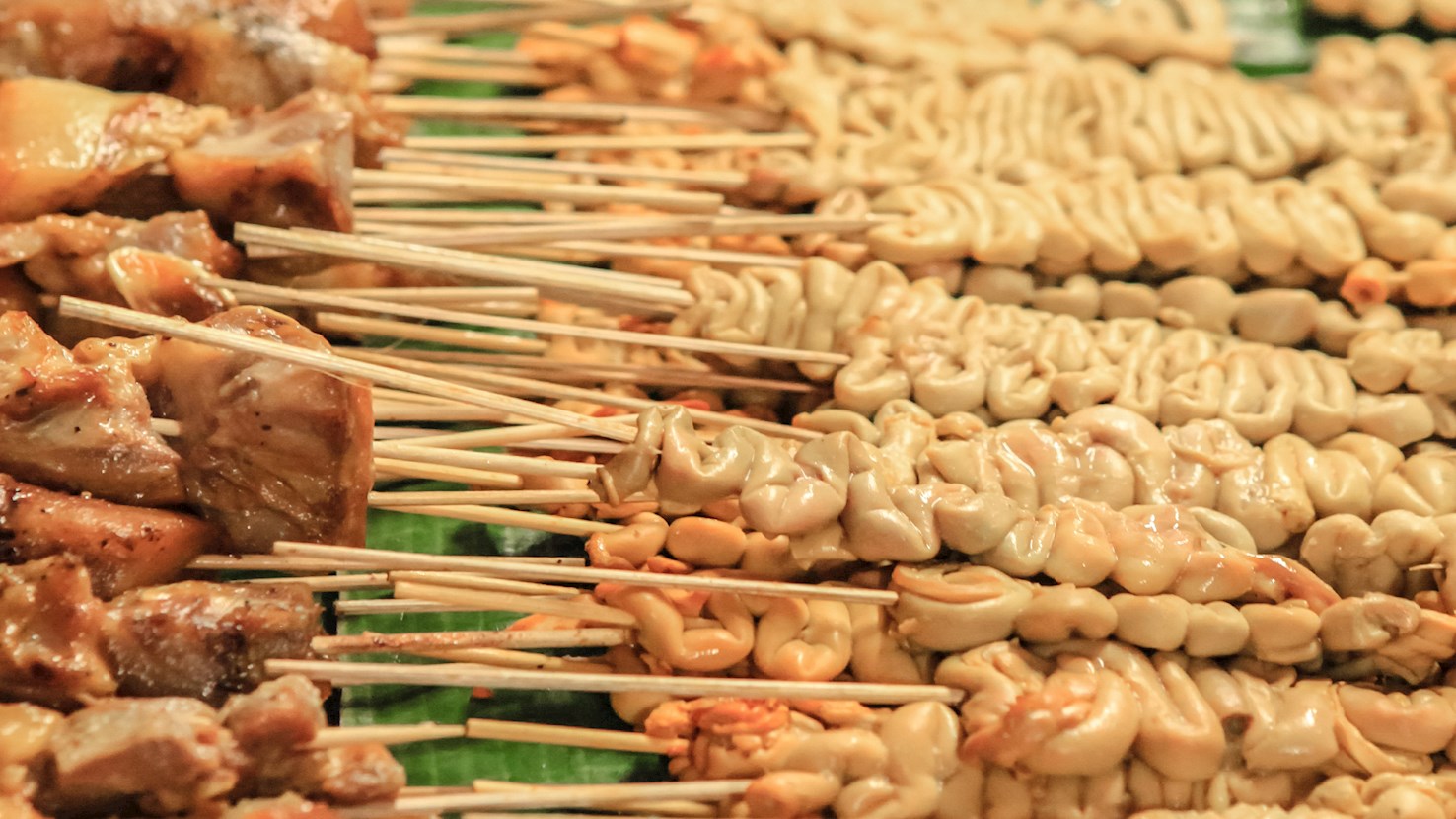
Isaw, an inexpensive Filipino street food dish consists of boiled, then grilled pork or chicken intestines. The dish is made with intestines, soy sauce, vinegar, salt, peppercorn, dried bay leaves, onion, garlic, chilies, and more often than not, banana ketchup. The intestines are meticulously cleaned and boiled in seasoned water. After cooling, they are cut into smaller pieces, skewed, and grilled over hot charcoal, basted in a soy sauce mixture. Isaw is served hot, usually accompanied by some soy sauce or a spiced dip made with vinegar, onion, garlic, and chilies. Isaw is most commonly sold at street stalls named isawans, and is traditionally consumed as an afternoon snack.
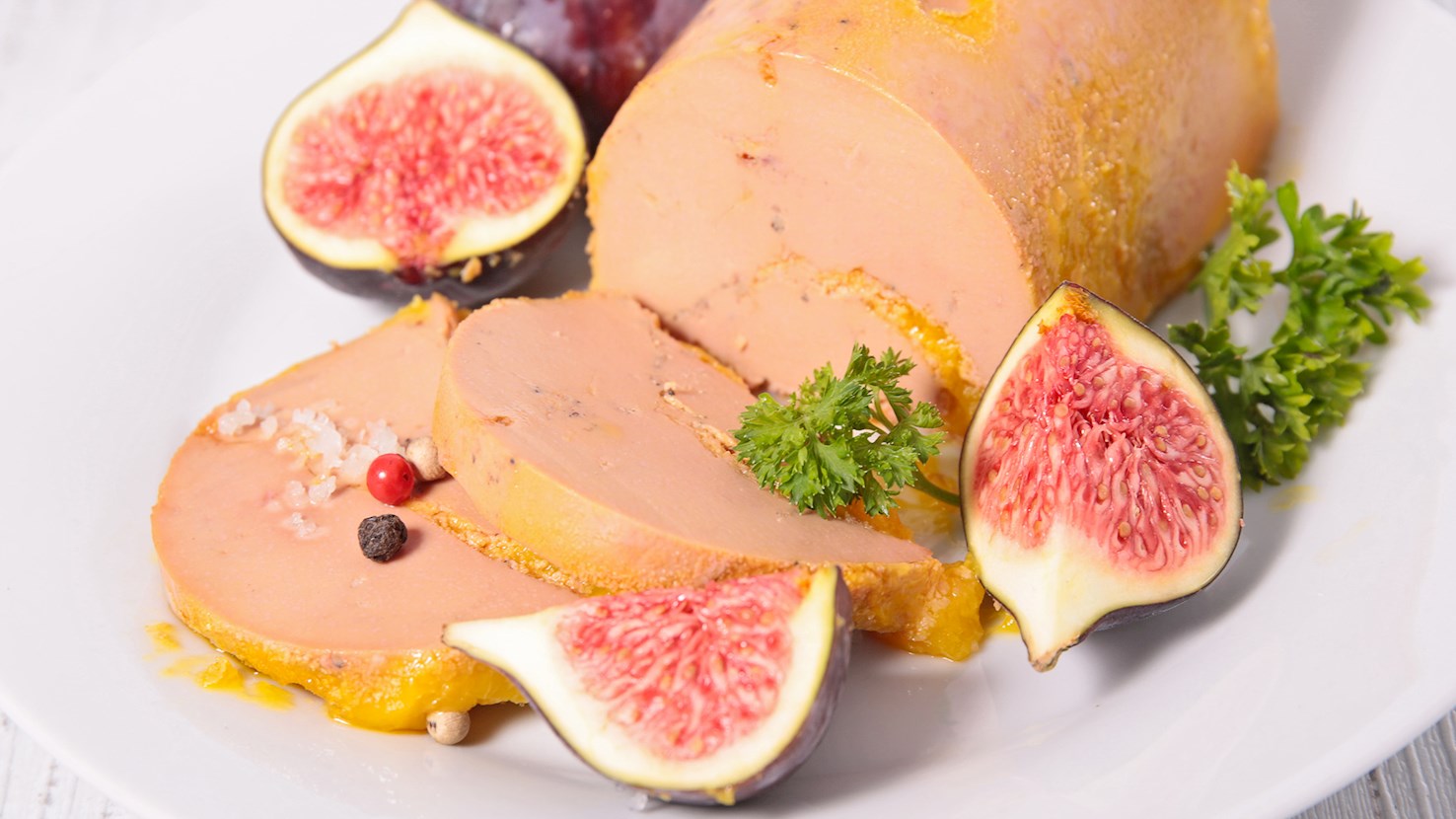
Accessed via Epicurious.com, this recipe is adapted from D'artagnan's Glorious Game Cookbook, by Ariane Daguin, George Faison, and Joanna Pruess. To make this foie gras terrine, you will need a 3-inch deep, oval terrine dish, a piece of cardboard that’s been cut to fit the top of the terrine, and 3-pound weights. The dish can be made three to five days ahead and should be kept inside its mold, covered with plastic wrap and chilled. Once unmolded, the dish will keep for three days if kept tightly wrapped in plastic wrap and chilled. Serve slices of foie gras with toasted bread or baguette.
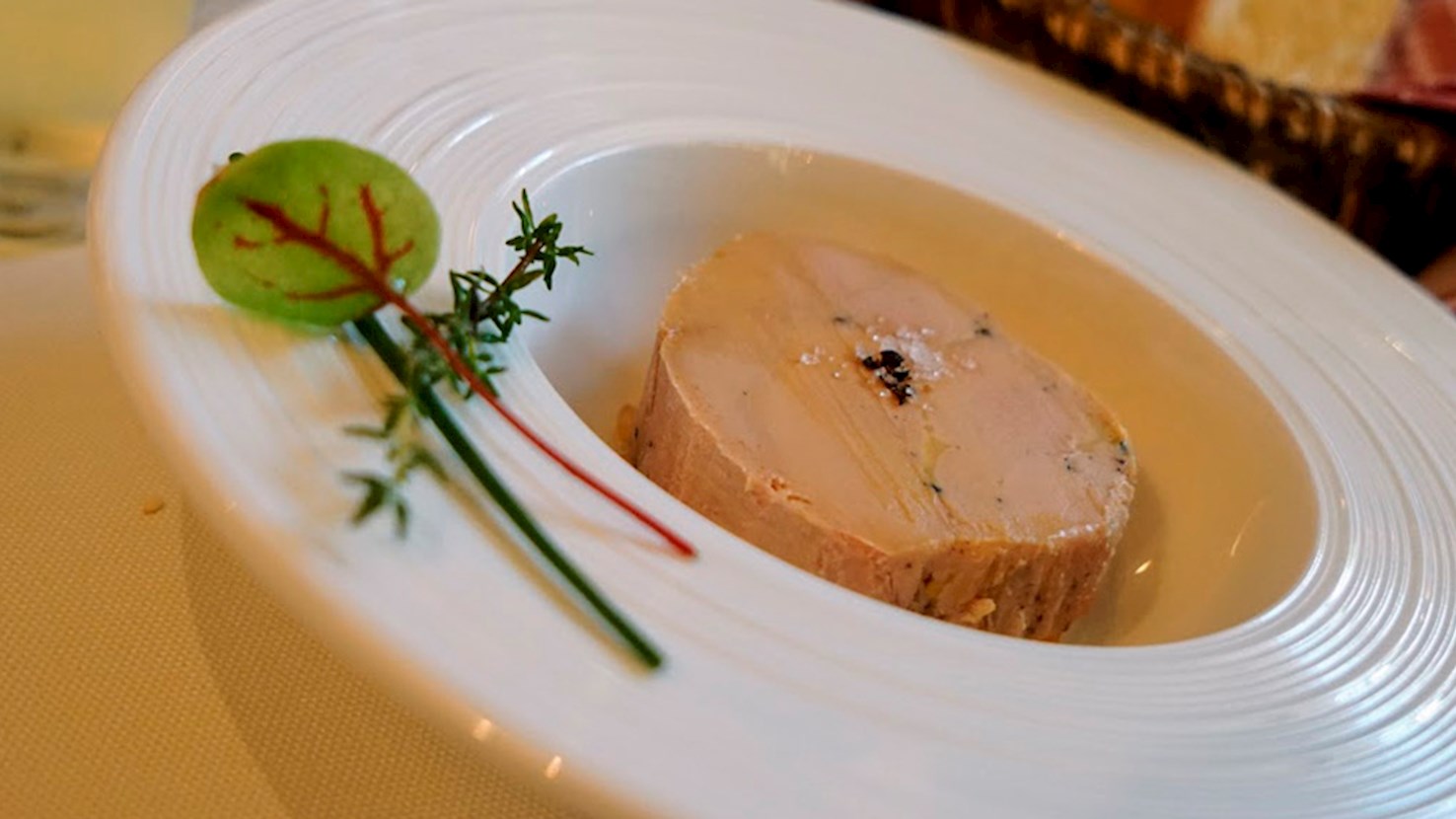
According to French law, foie gras is defined as a liver of a duck or goose that's been fattened through a process called gavage, which is a method of force-feeding corn with a feeding tube. Also, foie gras comes in various, legally defined presentations. There are whole liver lobes, one or two, called foie gras entier, liver pieces which are reassembled together are labeled just as foie gras, while a cooked, moulded block with 98% or more foie gras is called bloc de foie gras. In case it is labeled avec morceaux it is mandatory that it contains at least 50% of goose foie gras pieces or in case of duck, 30%. Pâté de foie gras and mousse de foie gras should have at least 50% if not more of foie gras, while 75% of foie gras or more should be used in parfait de foie gras. When it comes to cooking foie gras, there are many techniques out there, and they are usually divided into hot and cold preparations. Some cook foie gras completely as in the case of searing, while others are raw preparations, as in the case of foie gras au torchon. However, the most traditional and popular is foie gras terrine, where foie gras is cooked in a bain-marie and then cooled in the refrigerator for at least a day. Foie gras mousse is also quite popular, as well as pâté of foie gras. Usually served as an appetizer, foie gras can be eaten hot or cold and is typically paired with toasted bread, and sweet or red wines. Also, depending on the preparation, foie gras can also be served with various sauces, or with various fruit preserves and dried fruits. It can also be served as a side dish to steak, or added to sauces.
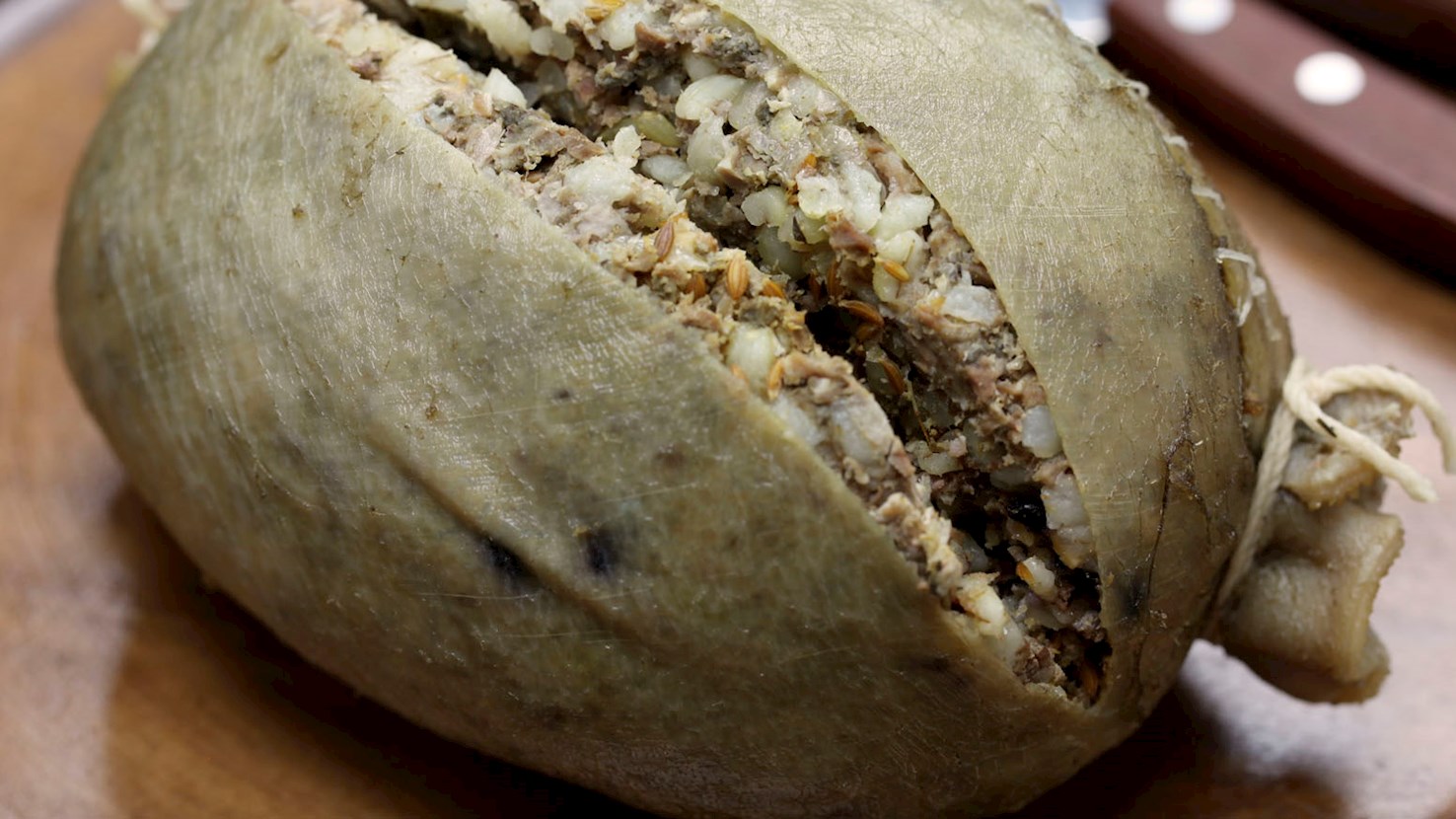
One of the finest examples of traditional Scottish cuisine, haggis may not look attractive at first glance, but it compensates its looks with a rich, meaty taste which some people also describe as earthy and nutty. Basically, haggis is a savory pudding prepared with meat, oatmeal, onions, suet, salt, and pepper, and in this case, meat refers to sheep’s pluck or offal — heart, lungs, and liver. The haggis is traditionally encased in a sheep’s stomach, which is, in modern times, sometimes replaced with a synthetic sausage casing. The first step is to soak the sheep’s stomach in salted water and to turn it inside out. The heart, lungs, and liver are cooked in unsalted water for 1,5 hours or until tender, after which they are left to cool. The stock is reserved for later preparation, while the pluck is chopped, minced or grated, and mixed with onions, suet, lightly toasted oatmeal, salt, and pepper. The mixture is then stuffed into the sheep’s stomach, which is tied or sewn, pierced in a few spots, and cooked for 3 hours until it swells. Prior to serving, haggis is transferred onto a serving plate, patted dry, and cut with a sharp knife, so the delicious, crumbly filling pours out. The color of the filling can range from light brown to almost black, which depends on the proportion of the used ingredients. Traditionally, haggis is served with a side of bashed neeps and mashed tatties (turnips and potatoes), as well as a glass of Scottish whisky.
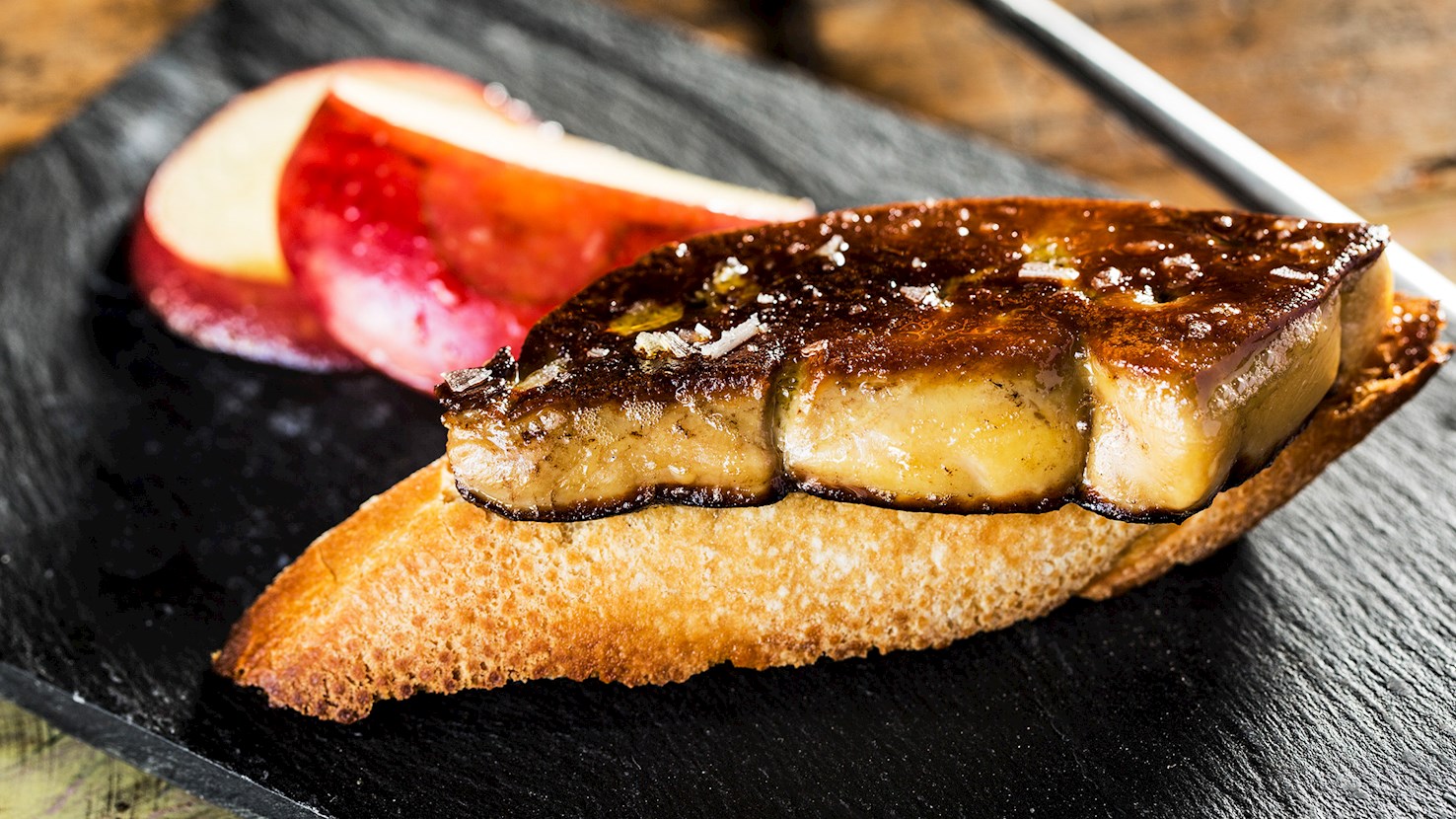
Adapted from Dartagnan.com, this is a recipe for pan-seared foie gras slices. When searing foie gras, it is crucial that you don't overdo it as that will ruin its texture — it will become too gamey. You can serve seared foie gras atop of bread in which case you just need to sprinkle it with coarse salt before serving, or if looking to kick it up a notch, pair it with a sauce of your liking, a choice of which is suggested in the recipe. Take the foie gras out of the refrigerator 10-15 minutes before slicing it, or buy already pre-sliced, portioned and packaged foie gras.
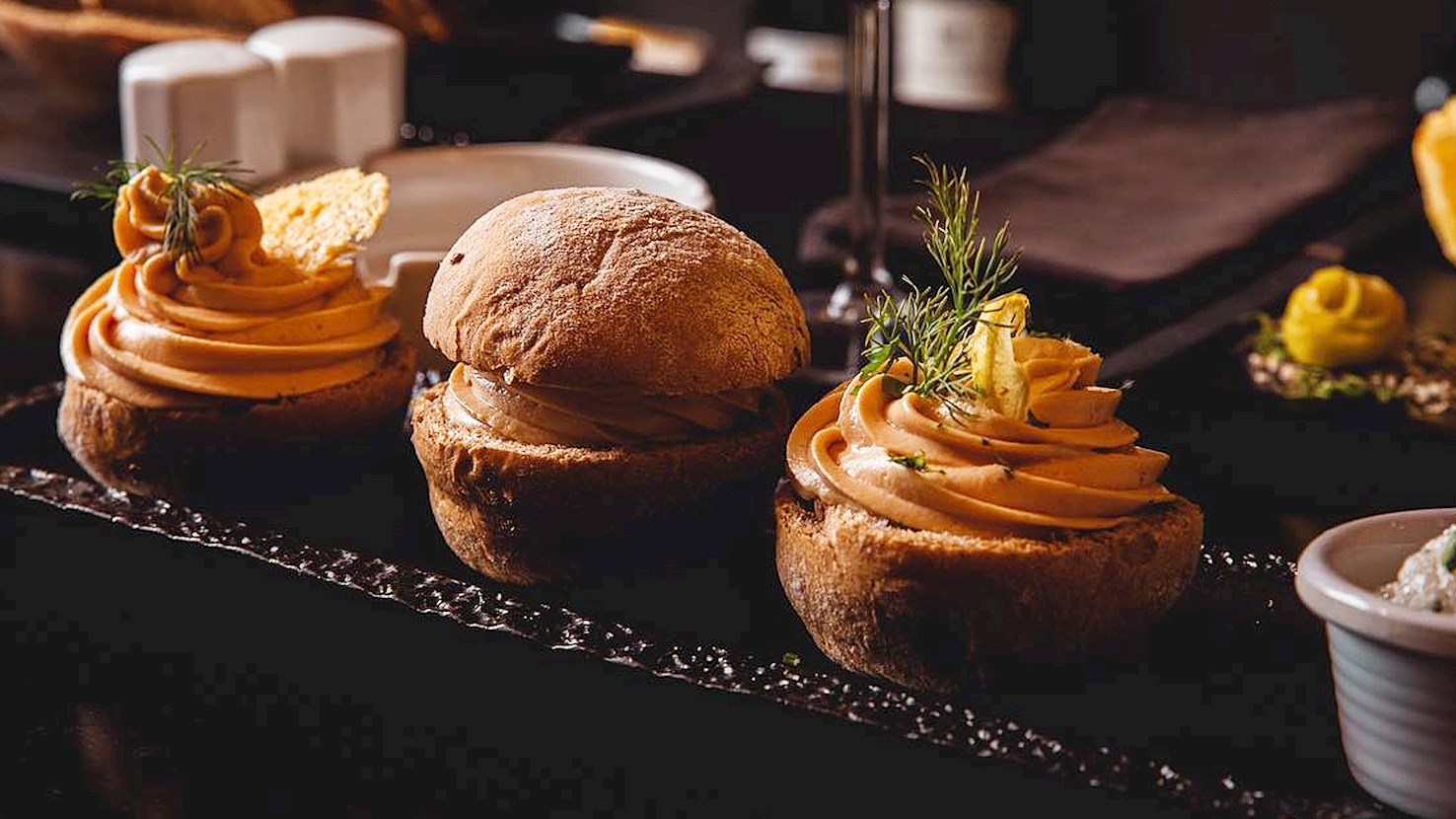
Adapted from cuisineaz.com, this is a straightforward recipe for foie gras mousse. Pieces of foie gras are melted in whipped cream, and the mixture is then mixed twice, so it turns foamy. The resulting mousse is served in verrines, but any other glasses will do, and decorated with pieces of foie gras and berries.
TasteAtlas food rankings are based on the ratings of the TasteAtlas audience, with a series of mechanisms that recognize real users and that ignore bot,
nationalist or local patriotic ratings, and give additional value to the ratings of users that the system recognizes as knowledgeable.
For the “Top 8 Offal Dish Recipes” list until August 17, 2026, 10,211 ratings were recorded, of which 5,617 were recognized by the system as legitimate.
TasteAtlas Rankings should not be seen as the final global conclusion about food. Their purpose is to promote excellent local foods,
instill pride in traditional dishes, and arouse curiosity about dishes you haven’t tried.


What People Say