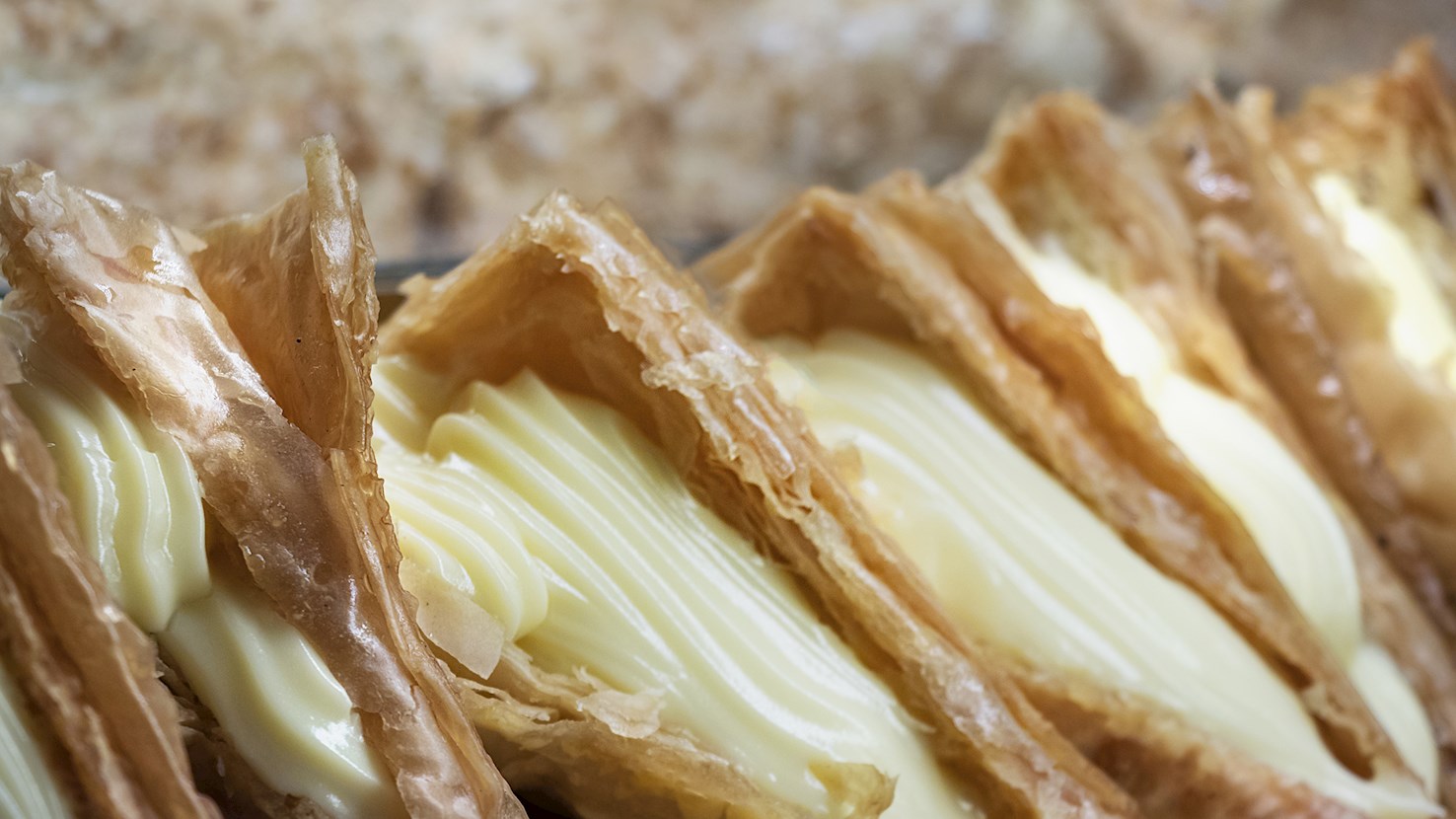
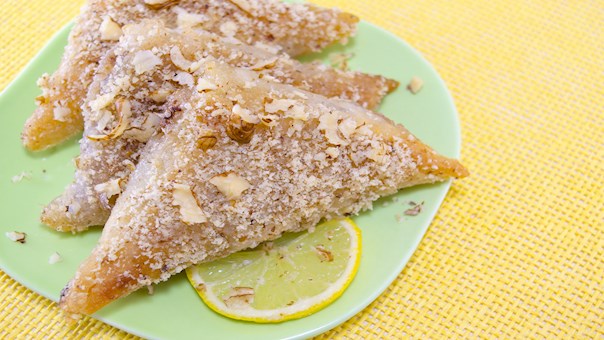
Trigona panoramatos is a traditional sweet pastry originating from the outskirts of Thessaloniki. These crispy and buttery triangular (cone-shaped) phyllo pastries are typically soaked in syrup and filled with creamy custard. The custard is usually made with a combination of egg yolks, flour, butter, milk, sugar, vanilla, and heavy cream. The phyllo triangles are baked until golden brown, dipped in cold syrup consisting of sugar and water, and then filled with the chilled custard. Trigona is often garnished with chopped nuts before consumption.
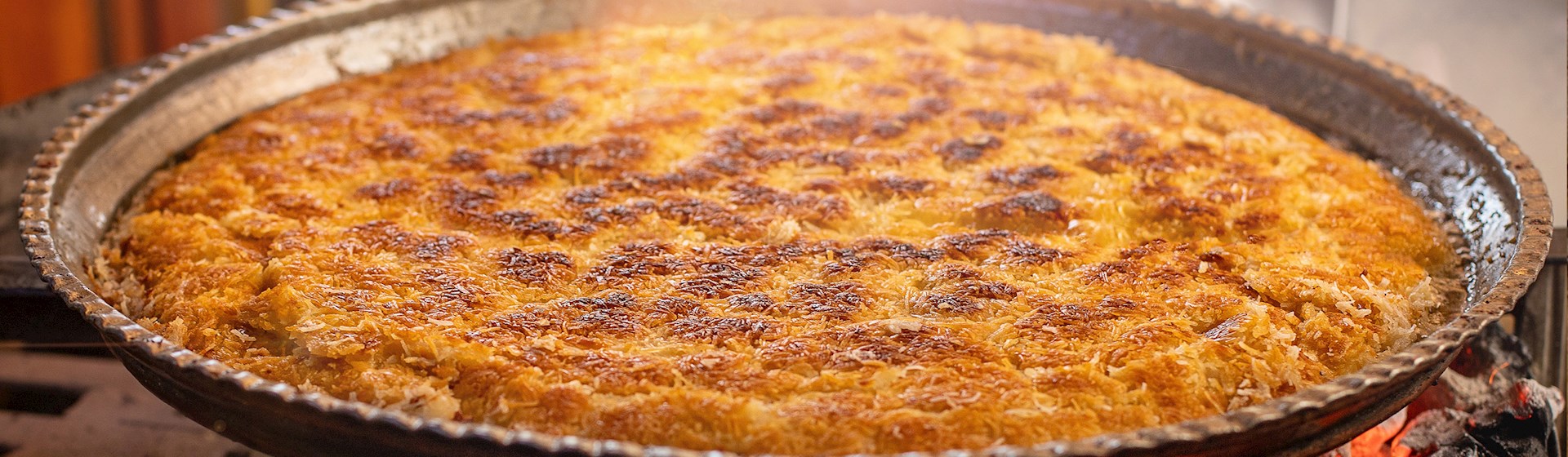
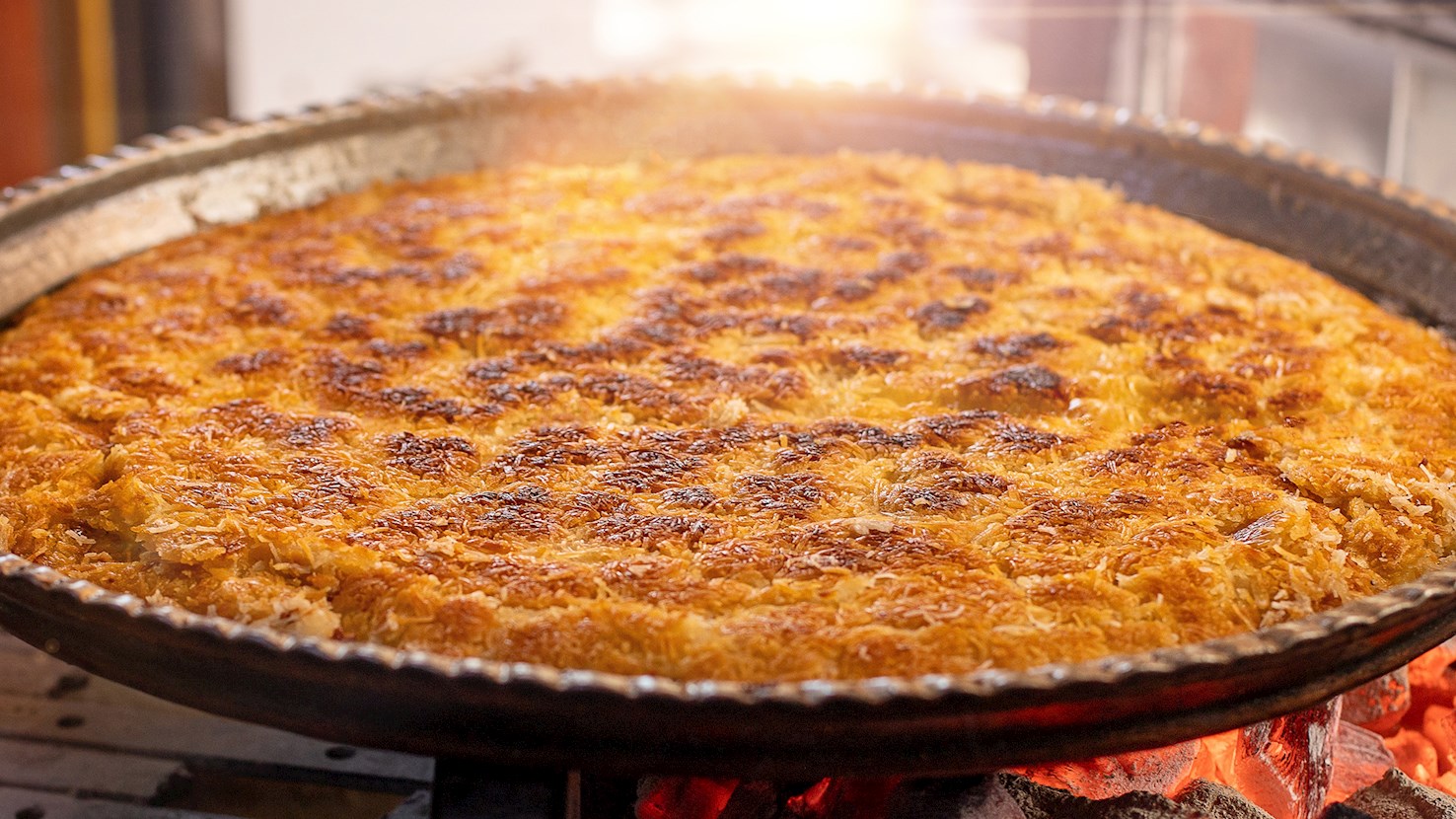
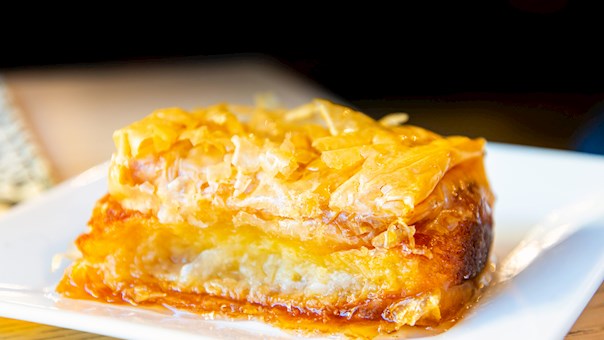
Antakya künefesi is a traditional kunāfah variety hailing from the ancient Turkish city of Antakya, made from shredded phyllo pastry filled with creamy unsalted cheese. The origins of this dish can be traced back to the Ottoman Empire, and to this day, it has remained one of the authentic representatives of Antakyan culinary heritage and traditions. To make Antakya künefesi, the pastry is first prepared by shredding phyllo dough into thin strips and placing it into a flat, round tray. The dough, in this form known as kadayıfın, is then topped with a mixture of unsalted cheese, traditionally Hatay peyniri, and another layer of shredded phyllo dough. After the concoction is baked on both sides (a step that makes this kunāfah variety unique), it is soaked with hot, sweet syrup made with sugar, water, and lemon juice. Antakya künefesi is served warm and garnished with chopped pistachios, walnuts, or hazelnuts. In 2006, this delicious dessert received the Protected Geographical Indication certificate.
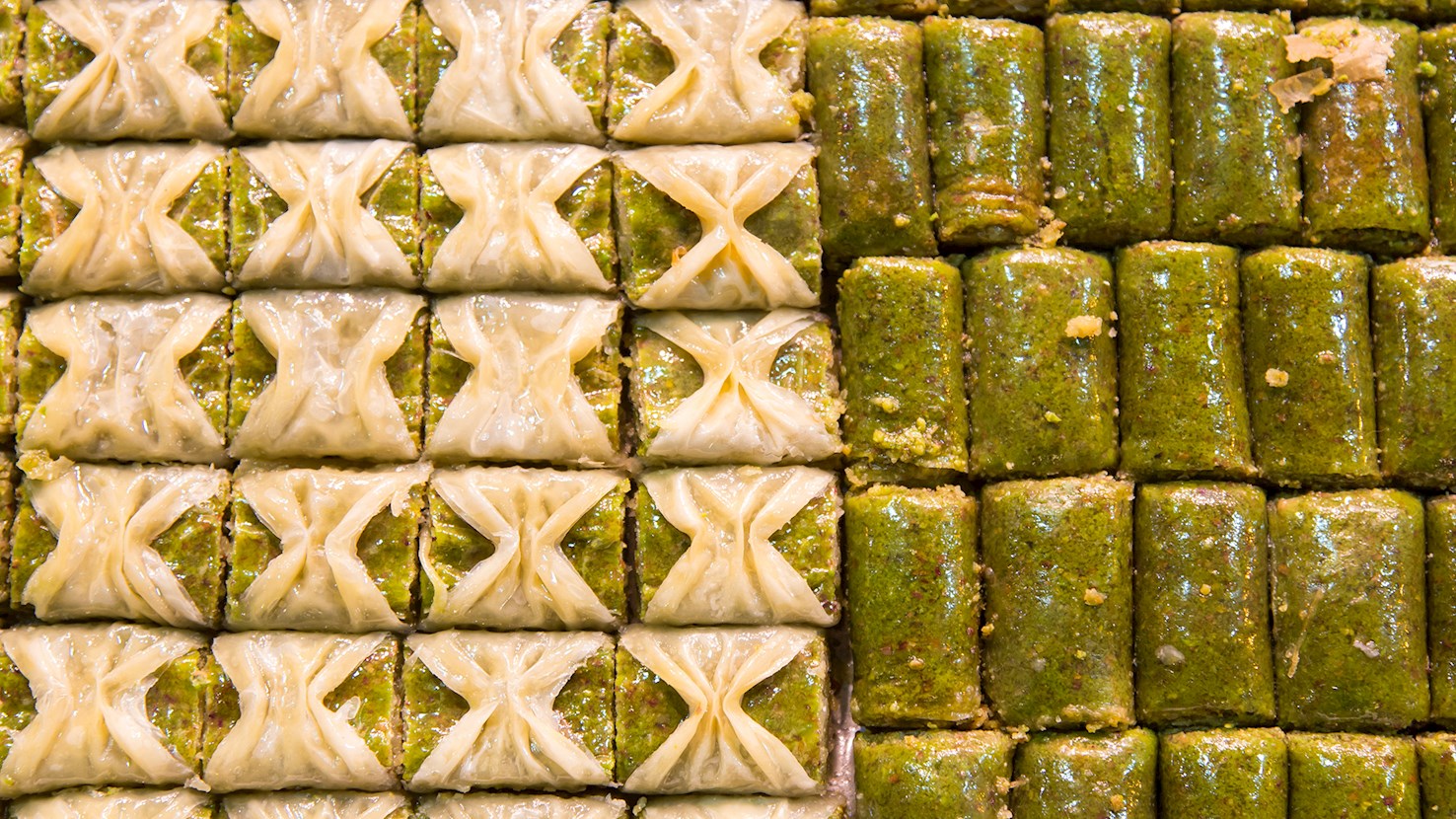
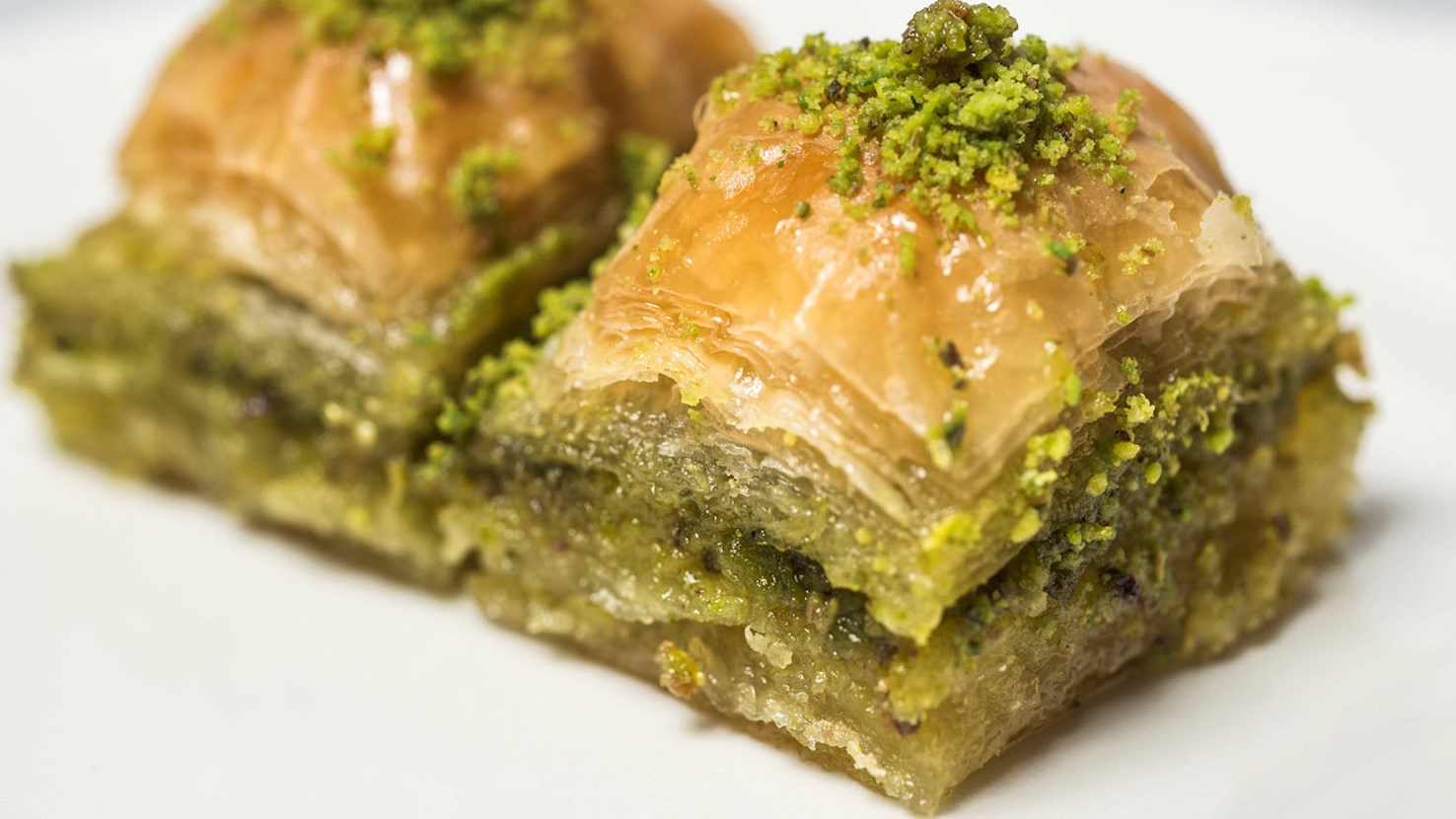
This Turkish sweet is made with a smooth, green, paste-like filling known as fıstık ezmesi (lit. pistachio butter). It is like a pistachio version of marzipan, and its bright green color is all-natural—it comes from the early-harvested Gaziantep pistachios. The delicious pistachio paste is wrapped around a single sheet of phyllo dough, just to hold its green goodness together, which is why this type of baklava is called either fıstıklı sarma or fıstıklı dürüm, meaning pistachio wrap or pistachio roll.
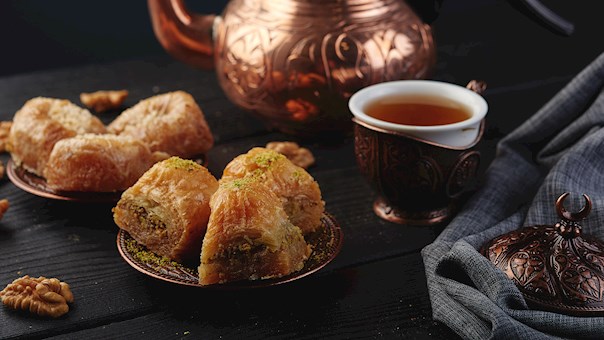
The ancient Anatolian city of Antep, today known as Gaziantep, is Türkiye's gastronomic capital famous for being home to the world’s finest pistachios and the delicious Antep baklavası. Originally an Ottoman legacy, baklava is regarded as one of the greatest creations from the pastry chefs at Topkapı Sarayı, the major royal residence of Ottoman sultans from the 15th to the 19th century. Baklava was traditionally prepared for Eid-al-Fitr, also known in Türkiye as Ramazan or Şeker Bayramı, a religious holiday when Muslims celebrate the ending of Ramadan, the Islamic holy month of fasting. Today, this Turkish treat is available year-round, and with more than 500 baklava bakeries in the city of Gaziantep, it is definitely not to be missed, especially during the pistachio harvest from midsummer to September, when these emerald-colored nuts are just the right size for baklava. To make this popular pastry, the finely crushed, genuine Gaziantep pistachios are generously spread between paper-thin sheets of phyllo dough which are brushed with melted butter and smeared with semolina cream. Antep baklava is then splashed with another dose of melted butter, baked, and finally, poured over with a hot sugar and lemon juice syrup. According to Turkish ustaları or master bakers, a well-baked baklava is tender, but at the same time has a perfect crunch to it. When divided with a fork, it makes a cracking sound which is not only a sign of freshness, but also a sign of the finest baklava, which isn't too sweet or heavy and leaves a heavenly taste in your mouth. Garnished with crushed pistachios, and often topped with kaymak, Turkish clotted cream, or a scoop of milk-flavored ice cream called kaymaklı dondurma, Antep baklava goes a long way: it can be enjoyed either with Turkish coffee in the morning or as a mid-afternoon treat with a cup of tea, but also as an after lunch or dinner dessert.
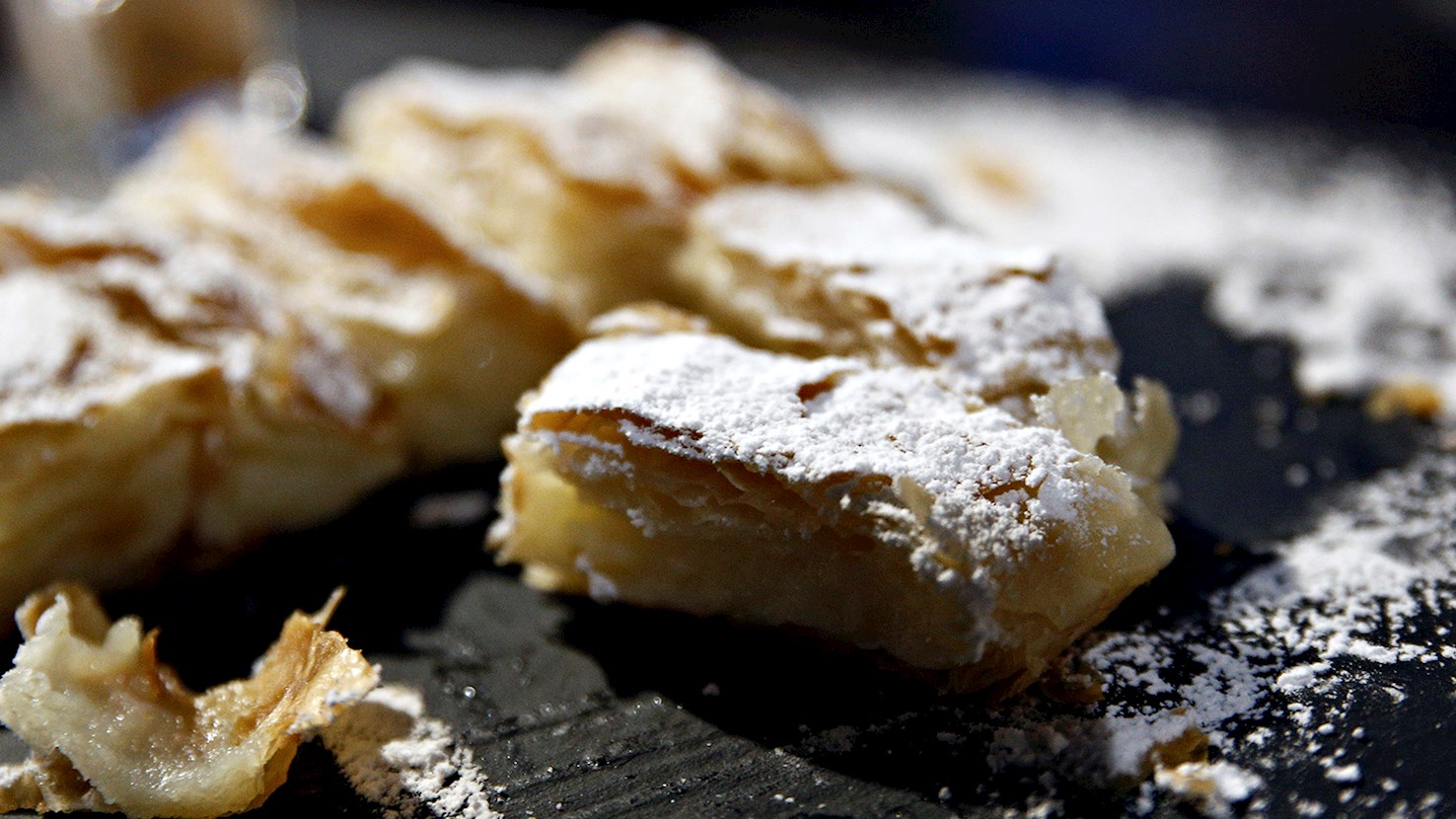
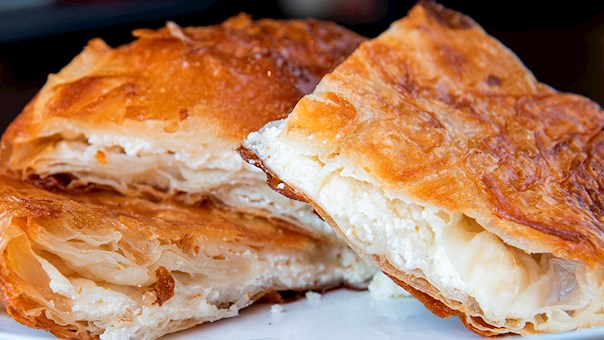
Bougatsa is a traditional, rustic Greek pie consisting of a phyllo pastry layered with a filling of semolina custard, although there are variations with minced meat or cheese. The name of the dish is a derivation of the Ottoman word pogatsa, denoting a pie filled with cheese. Bougatsa has origins from the Byzantine period, when Constantinople was Greek, and it began as a dough that was stuffed with numerous sweet and savory fillings. Over time, bougatsa evolved to incorporate a thinly rolled, hand-made phyllo pastry. As many Turkish immigrants settled in Northen Greece, bougatsa became a specialty of Serres and Thessaloniki. Today, the pies can be found throughout Greece in specialty shops called bougatsopolia, selling bougatsas exclusively.
Sirnica is a savory Bosnian pie consisting of phyllo dough that is filled with a combination of fresh cow cheese, sour cream, and eggs. Thin sheets of dough, locally known as jufka, are spread with the cheese mixture and the whole pie is traditionally rolled into a spiral. Before serving, sirnica is occasionally sprinkled with water, oil, or milk. Although it can be enjoyed on its own, this savory pie is often accompanied by yogurt or sour cream.
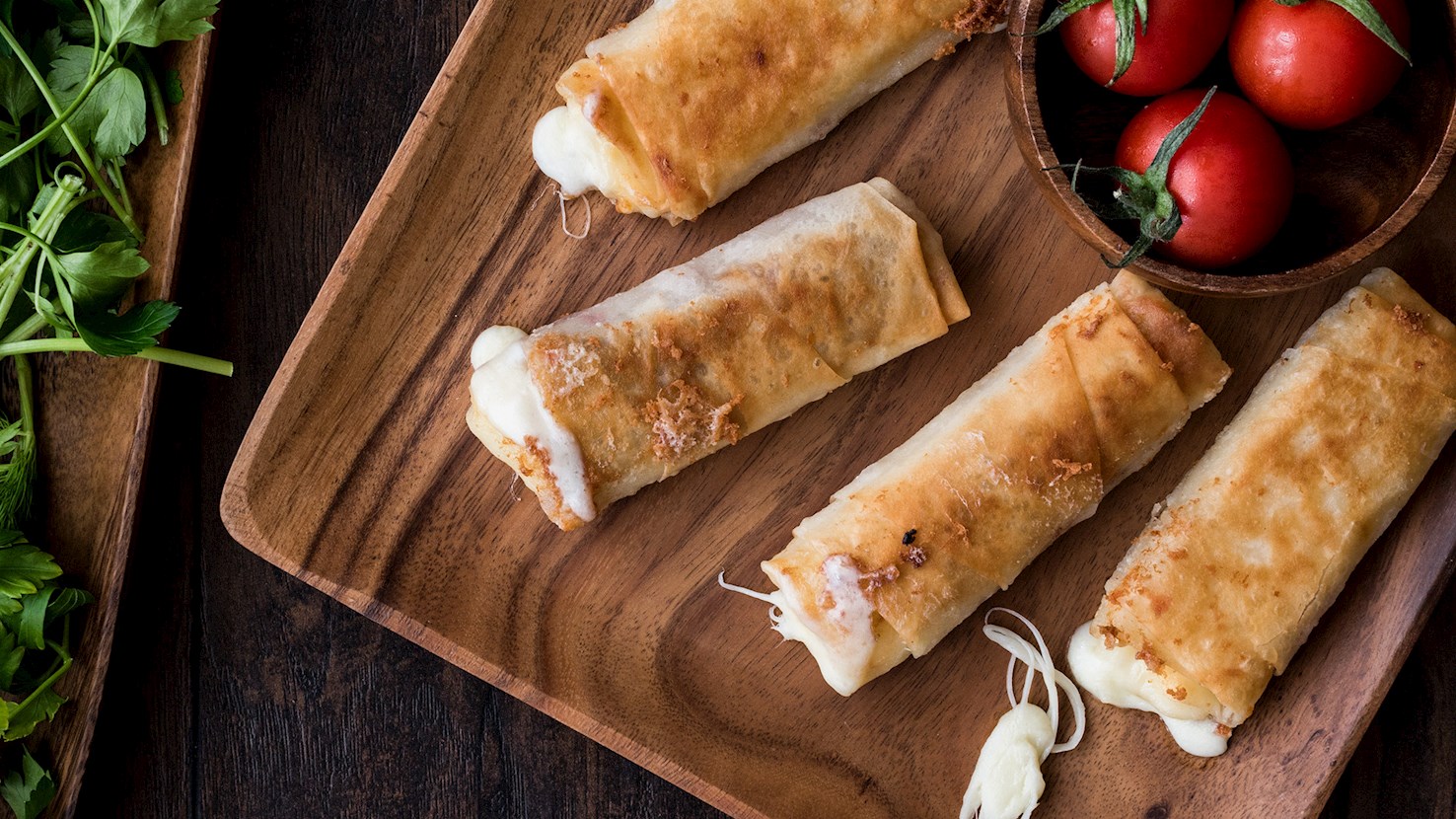
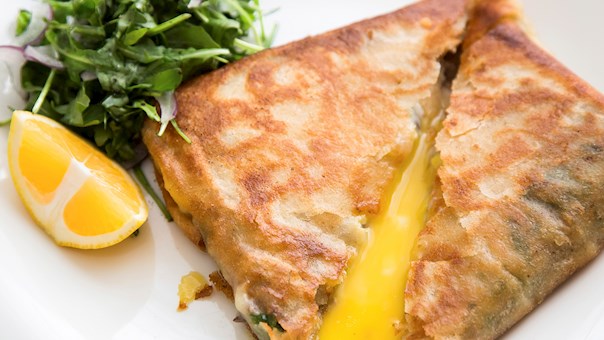
Paçanga böreği is a Turkish börek variety that's especially popular in the region of Anatolia and in Istanbul, where it's regarded as a traditional Sephardic Jewish specialty of the city. It's made by stuffing yufka or phyllo pastry with pastirma (salted, aged, dried beef) and kasar cheese. Apart from the basic ingredients, some people also like to add peppers and tomatoes to the filling. The dough is rolled, cut into rectangles, then fried. This börek can also be baked, but frying is the traditional method. Paçanga böreği is served hot and it's typically eaten as an appetizer.
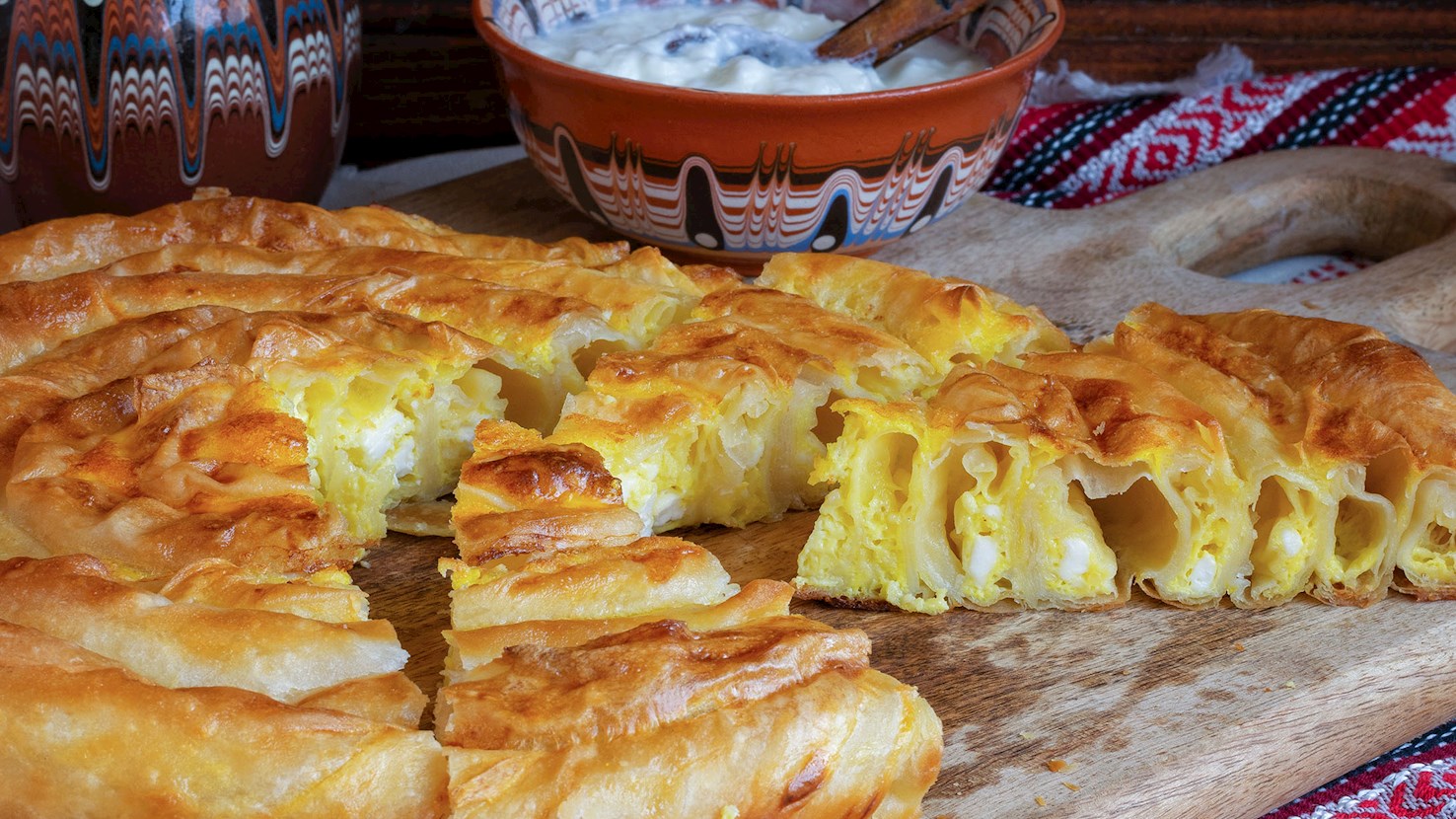
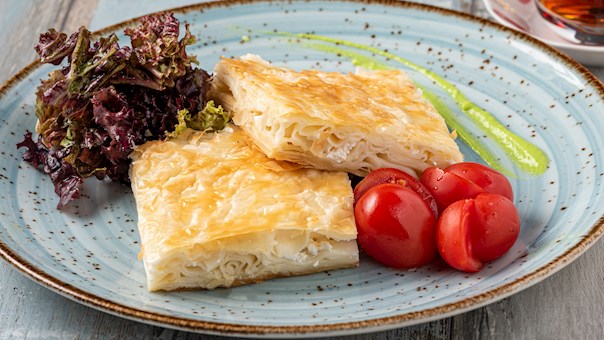
The Bulgarian pie banitsa made with cheese is the main version of this traditional pie. It's made by layering sheets of buttered phyllo pastry with a combination of eggs, yogurt, and cheese such as sirene and feta. There's an optional ingredient in the preparation of banitsa and it's baking soda, which makes the yogurt rise and makes the pie fluffier and richer in flavor. Traditionally, banitsa with cheese was prepared and served on Christmas and New Year's Eve, but nowadays it can also be bought throughout the year at grocery stores, street vendors, kiosks, and pretty much everywhere. Apart from this basic variety, there are also other types of savory or sweet banitsa pies filled with various vegetables and fruits.
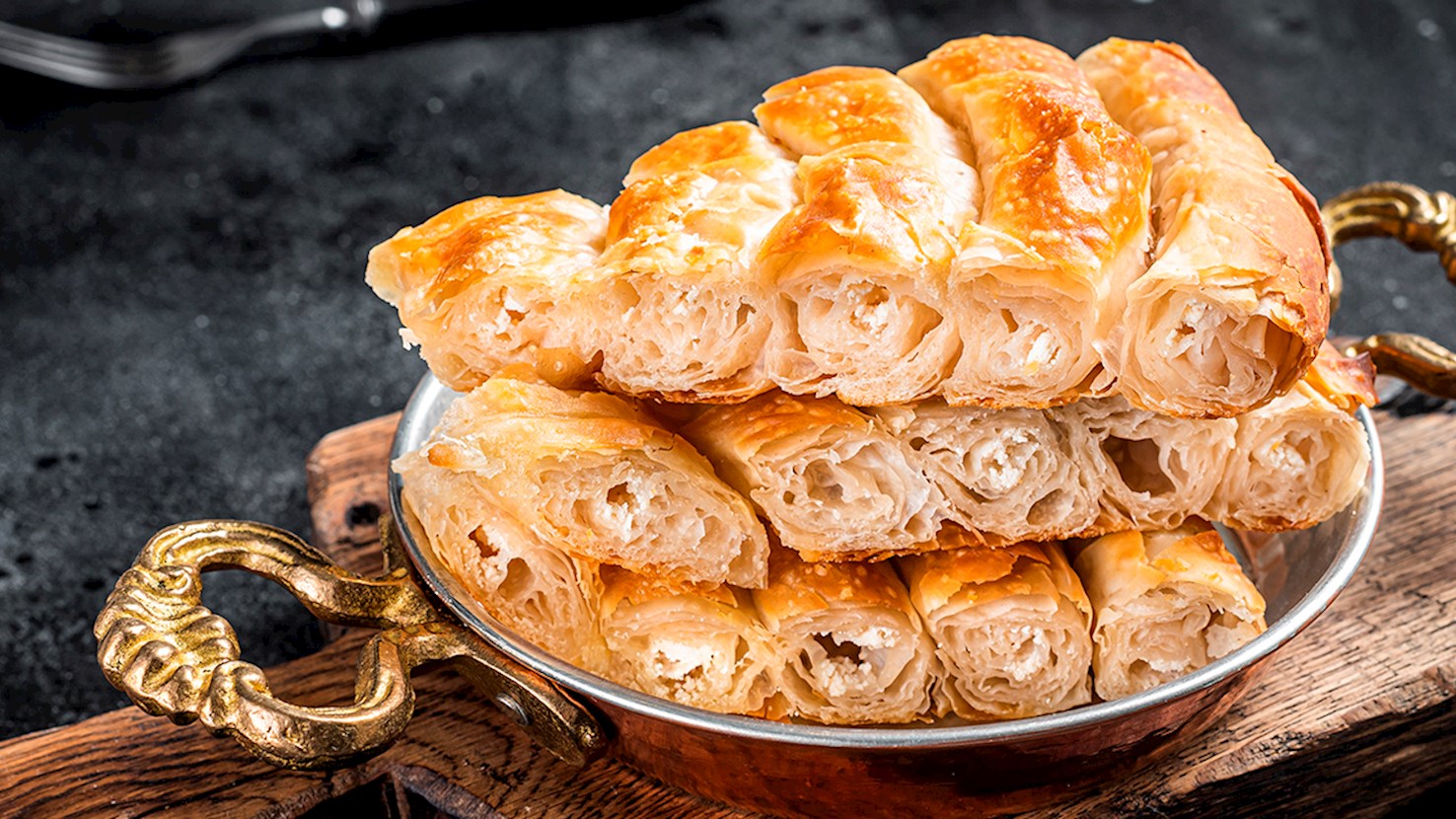
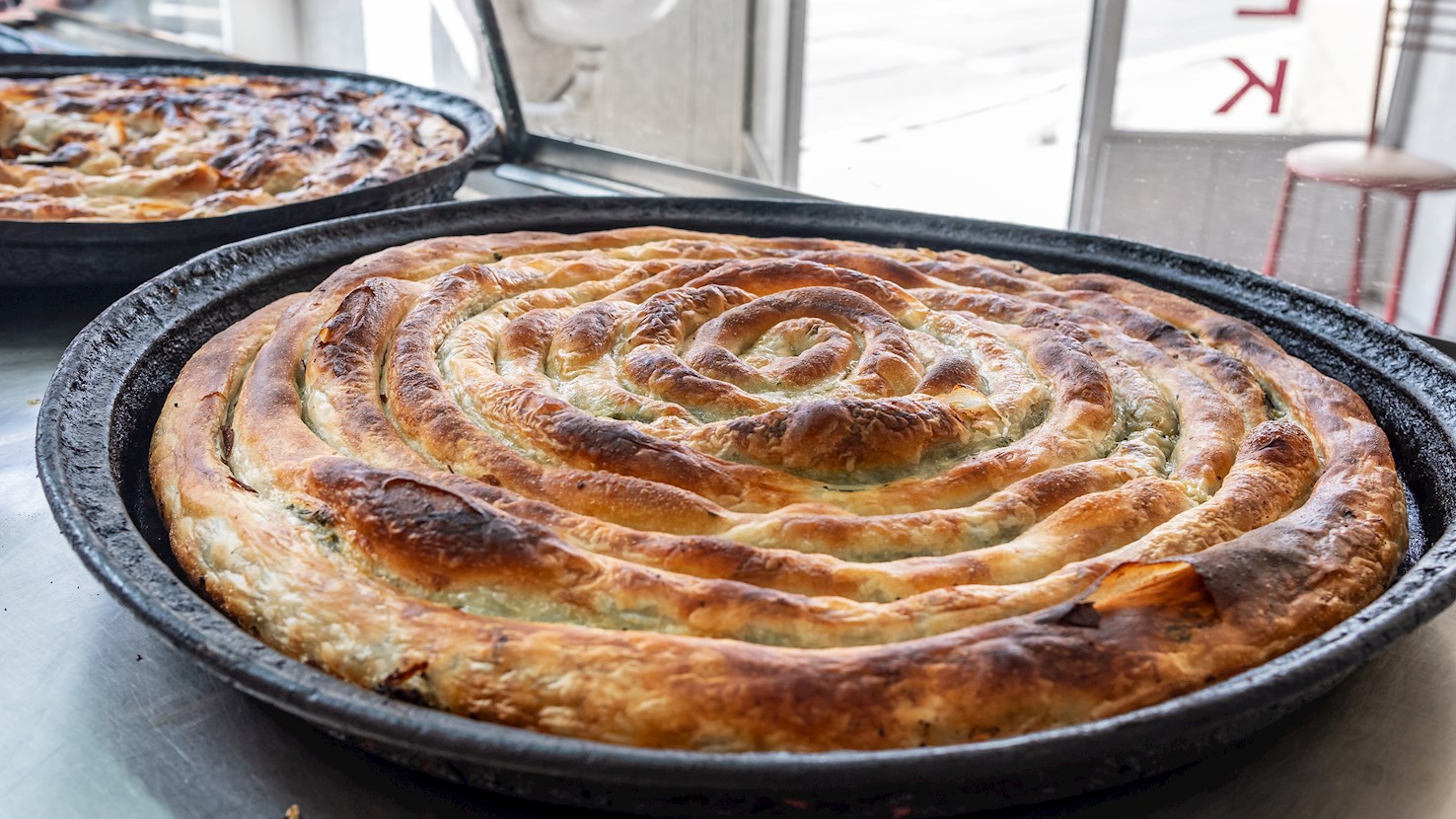
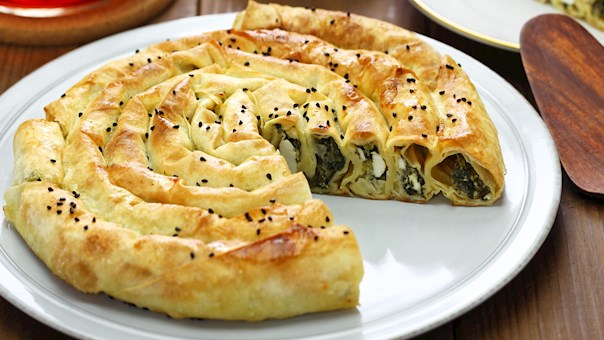
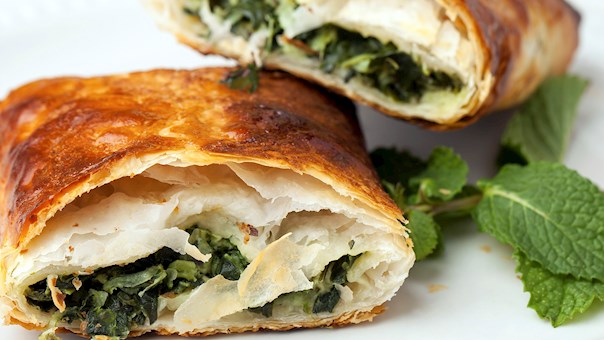
Burek consists of layers of phyllo dough stuffed with various savory fillings. Despite its Turkish origins, this dish has evolved into a proud gem of Bosnian national cuisine. Although most locals claim that only burek with ground beef can be called burek, the same dish also appears with other fillings, and these other varieties are known by different names: sirnica (cottage cheese), zeljanica (spinach), and krompiruša (potatoes). Burek is baked rolled into a snail-like shape and this type is typically found in bakeries, while traditional restaurants often make it in the form of a pie, which is sliced into quarters before serving. The dish is wildly popular all across the Balkans, though in Bosnia and Herzegovina, the cultural significance of this everyday staple is incomparable and best summed up in a number of local proverbs suggesting that if a woman can make a good burek, she's eligible for marriage.
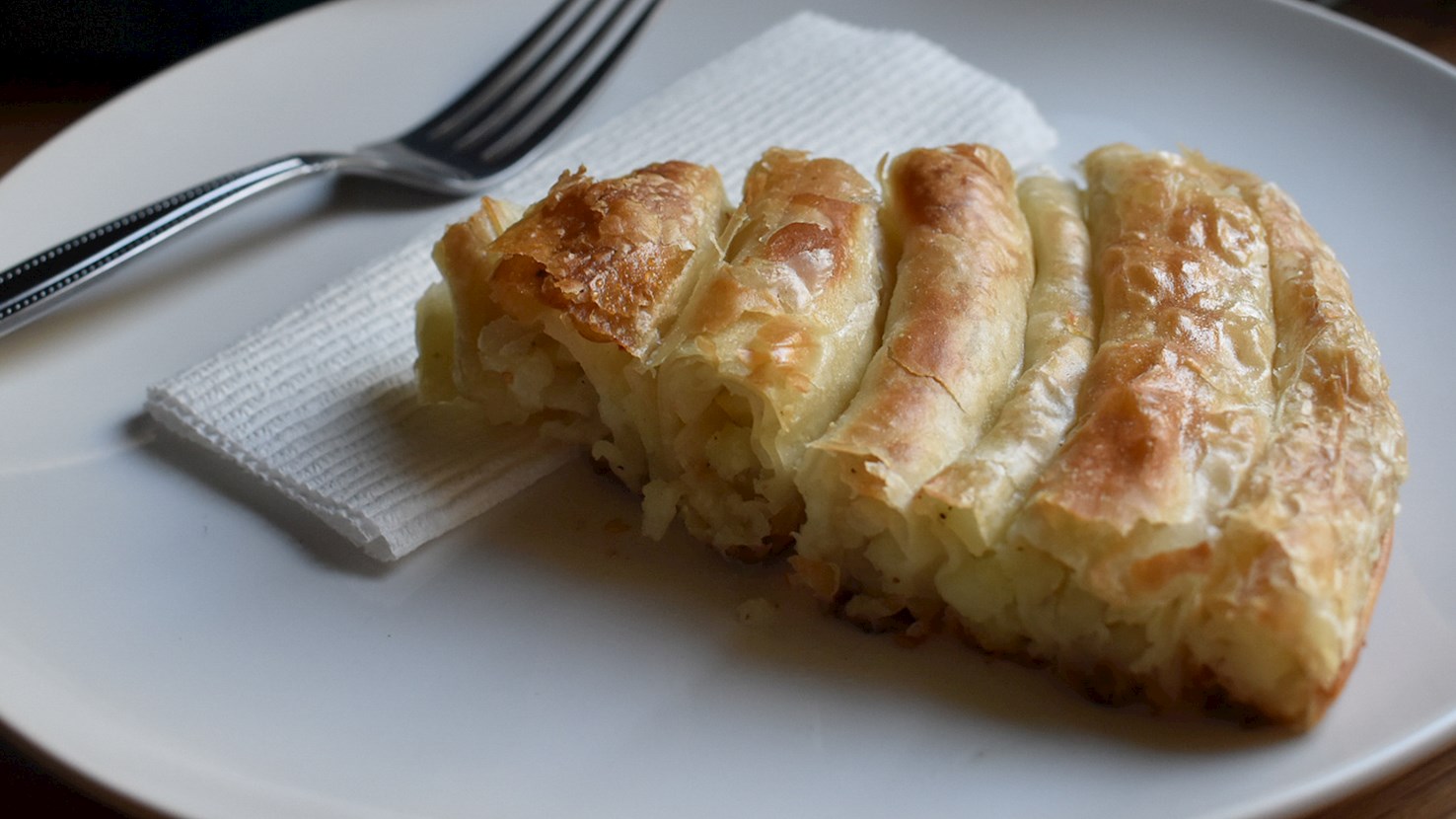
This variety of traditional Bosnian pastry (pita) employs potatoes as the star ingredient. The pastry is prepared with thin sheets of phyllo dough, known as jufke, and a filling that combines diced potatoes, seasonings, and (optionally) grated onions. The rolled dough is shaped into a coil, and the whole pastry is occasionally coated with sour cream or sprinkled with water, oil, or milk. Krumpiruša is traditionally shaped into a large, round pie-like pastry, and it is best served freshly prepared with yogurt, sour cream, or sour milk on the side.
TasteAtlas food rankings are based on the ratings of the TasteAtlas audience, with a series of mechanisms that recognize real users and that ignore bot,
nationalist or local patriotic ratings, and give additional value to the ratings of users that the system recognizes as knowledgeable.
For the “Top 67 Phyllo Pastries in the World” list until September 15, 2026, 12,666 ratings were recorded, of which 5,939 were recognized by the system as legitimate.
TasteAtlas Rankings should not be seen as the final global conclusion about food. Their purpose is to promote excellent local foods,
instill pride in traditional dishes, and arouse curiosity about dishes you haven’t tried.




What People Say