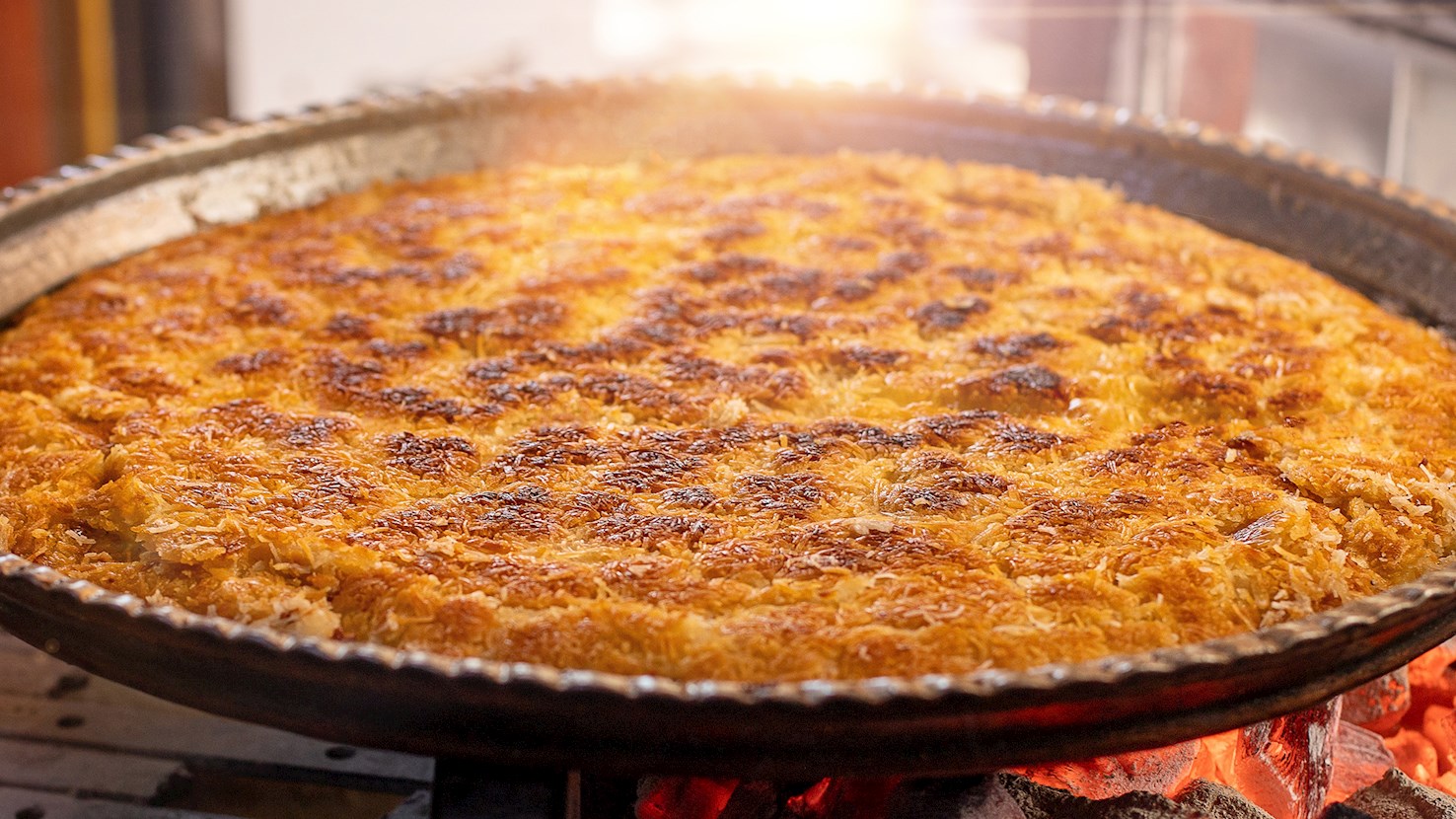
Antakya künefesi is one of Hatay’s most iconic desserts, bringing together local technique, regional cheese, and a strong culinary tradition. Though it consists of only thin pastry strands, butter, cheese, and a light syrup, each element is handled with great care. In Antakya, kadayıf dough is traditionally made from flour and water, poured as a thin batter through a long-spouted cezve onto a hot copper plate, where it cooks instantly into delicate, hair-fine threads. This handmade kadayıf is a defining feature of the dessert. At home, where such equipment isn’t available, cooks often adapt the dough with a little cornstarch to create a smoother, more pourable batter that can be piped onto a nonstick pan while still producing the lacy texture associated with true Antakya kadayıf. Butter is equally essential. Instead of clarified butter, Antakya künefesi uses natural, unsalted churned butter traditionally made from yogurt or ayran and today often produced from fermented cream. Its rich flavor helps the pastry brown evenly and gives the dessert its signature crisp exterior. The cheese—fresh, unsalted, and stretchy Antakya künefelik peyniri—softens without melting, creating the familiar pull when cut. Antakya künefesi is assembled by pressing buttered kadayıf into a shallow tray, adding a layer of cheese, and covering it with more kadayıf before cooking slowly over low heat or in an oven. Once the bottom turns golden, the dessert is flipped and browned on the other side. There are small variations: some cooks finish künefe in a wood-fired oven for deeper caramelization, some add a touch of sugar to promote browning, and others enrich the butter with a bit of rendered sheep’s tail fat, a traditional flavor booster in Hatay. Thickness can vary, though Antakya künefesi is typically about 1 to 2 centimeters (about 1/2 inch) thick. The syrup is intentionally simple—just sugar, water, and a little lemon—simmered lightly so it stays thin and doesn’t overwhelm the cheese or butter. It must be lukewarm when poured over the hot dessert to preserve crispness while absorbing quickly. Antakya künefesi is served immediately, often topped with crushed pistachios, its cheese stretching in long threads, alongside tea or cold milk.
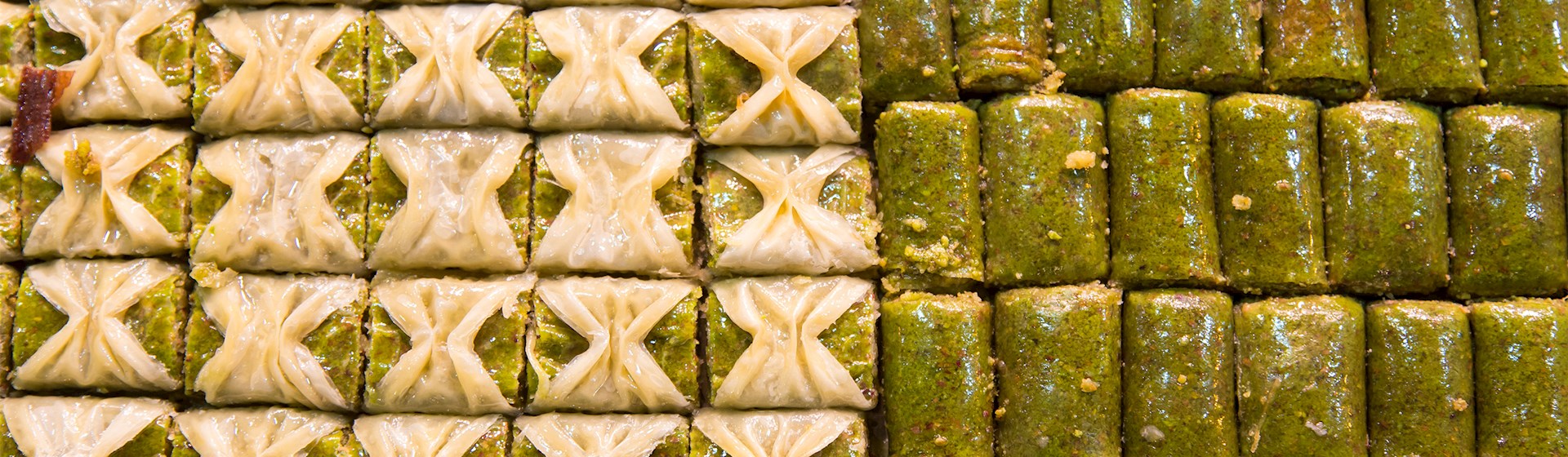
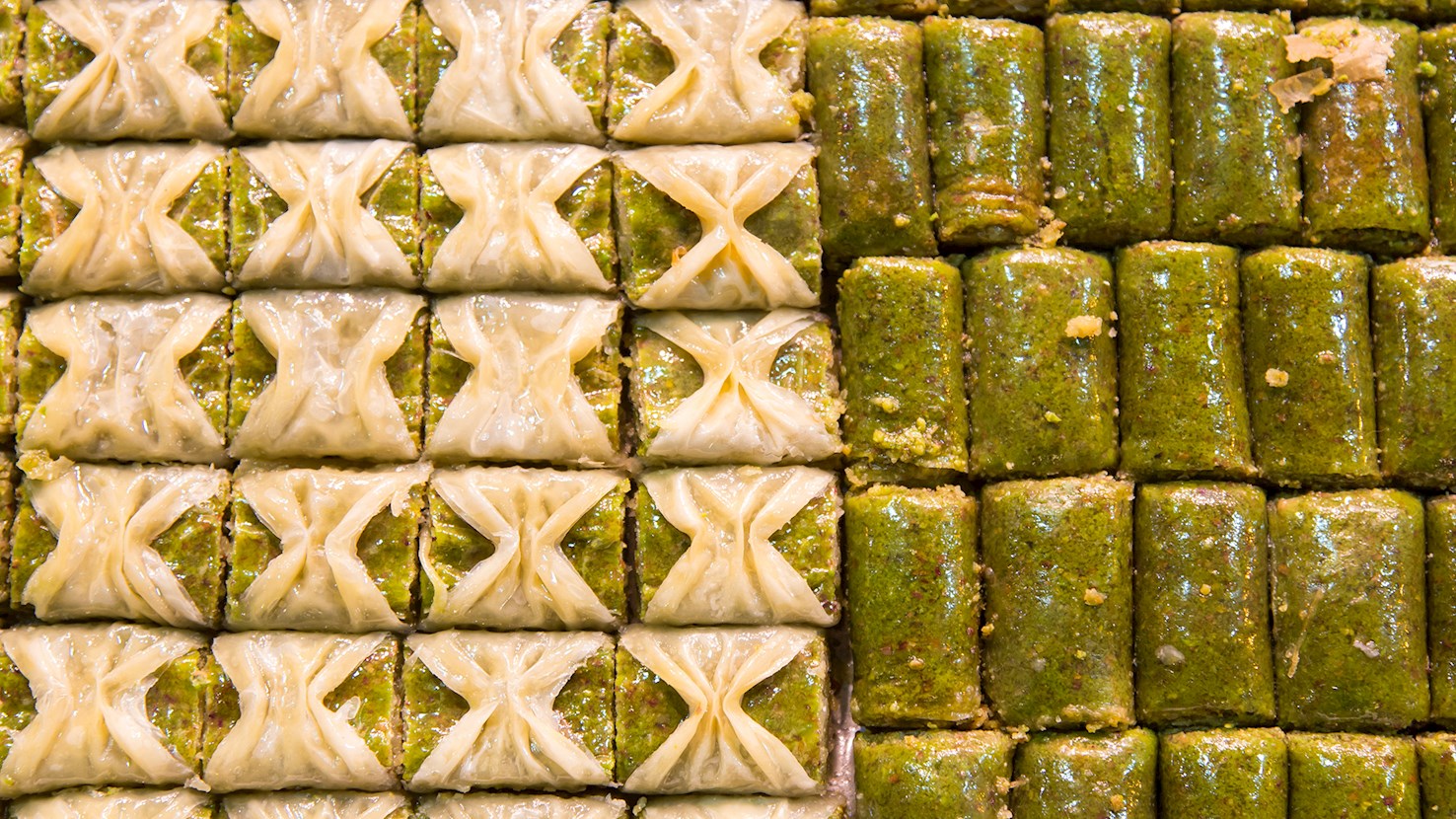
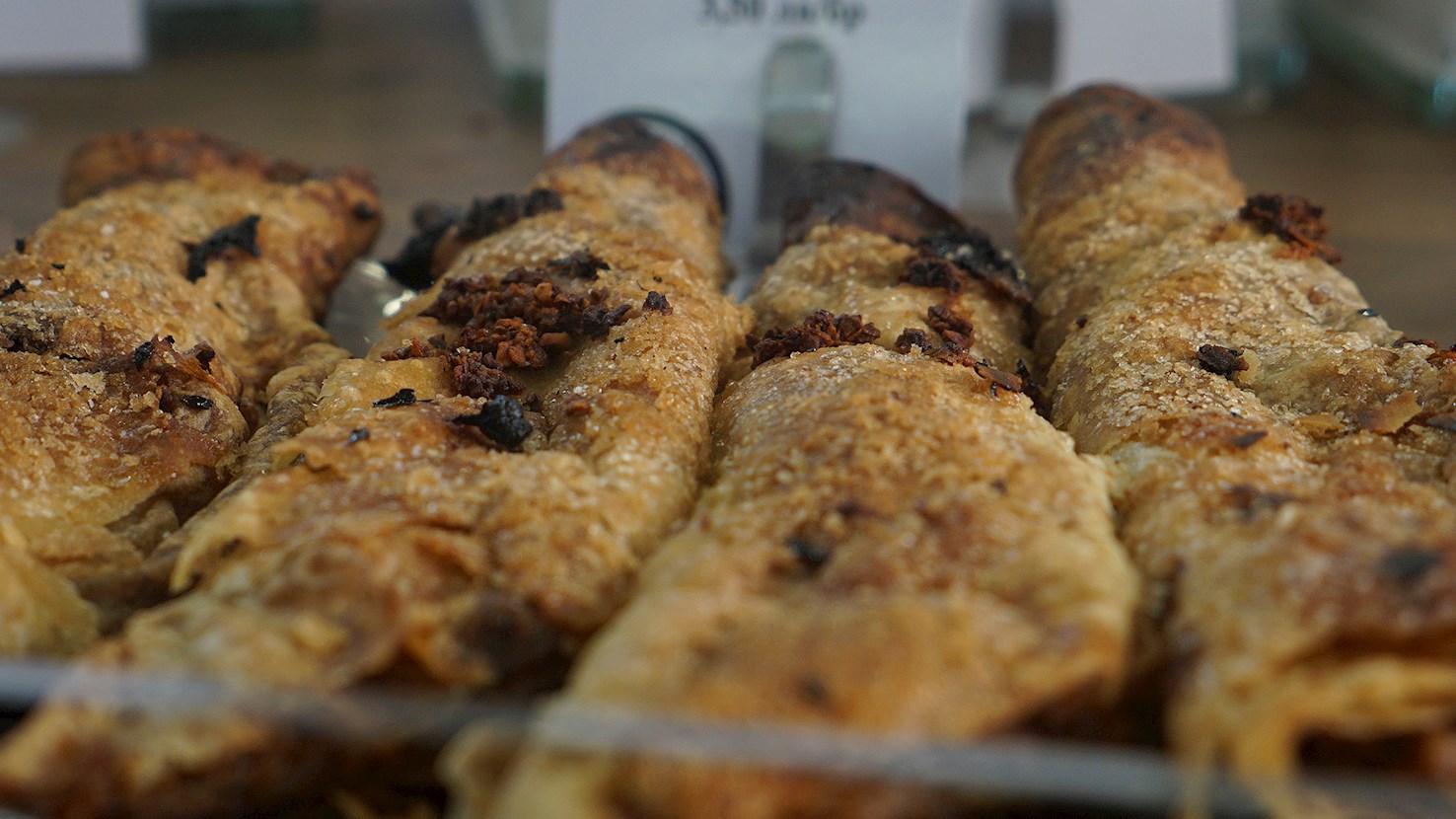
Fıstıklı sarma is one of the most precise and pistachio-focused expressions of Turkish baklava, prized for its tight roll, crisp exterior, and dense, aromatic center. Closely associated with the pastry culture of Gaziantep, it differs from layered baklava in both structure and intent: instead of distributing nuts between sheets, all of the flavor is concentrated into a compact filling wrapped in thin phyllo dough. The result is a pastry that is controlled, balanced, and intensely nut-forward, without excess sweetness or decoration. The ingredients used in fıstıklı sarma are deliberately few. Thin phyllo sheets form the structure; traditionally, these are made by hand from flour, water, egg, vinegar, salt, and a small amount of fat, kneaded smooth, divided, rested, and rolled gradually with starch to prevent sticking. The sheets are thin yet resilient, strong enough to be brushed with butter and rolled tightly without tearing. Pistachios are the defining element and the only nut used. Usually, they are ground very finely until they release their natural oils and form a dense, cohesive paste, though a smaller portion may be left slightly coarser to add texture. Clarified butter provides richness and clean flavor, and a light syrup made from sugar, water, and a few drops of lemon juice supplies moisture and sweetness without overwhelming the pastry. Preparation centers on precision. Each phyllo sheet is lightly brushed with clarified butter, then a thick line of pistachio filling is placed along the edge or evenly across the sheet. The dough is rolled tightly into a compact cylinder, creating many fine layers around the filling. The rolls are arranged snugly in a buttered tray, coated with more butter, cut into short segments, and baked—often at a relatively low temperature—to ensure even crisping without drying. Once baked, the hot pastry is finished with warm or lukewarm syrup, applied sparingly so the layers remain distinct and crisp while the interior softens just enough to carry sweetness. Variations exist within these strict boundaries. Some versions increase the pistachio-to-phyllo ratio for an especially dense interior, while others mix finely ground pistachio paste with a small amount of chopped nuts for contrast. Differences may also appear in roll thickness or cut size. Fıstıklı sarma is traditionally served at room temperature, once the syrup has fully settled. It is usually presented plain or with a light dusting of pistachio, accompanied by Turkish coffee or tea.
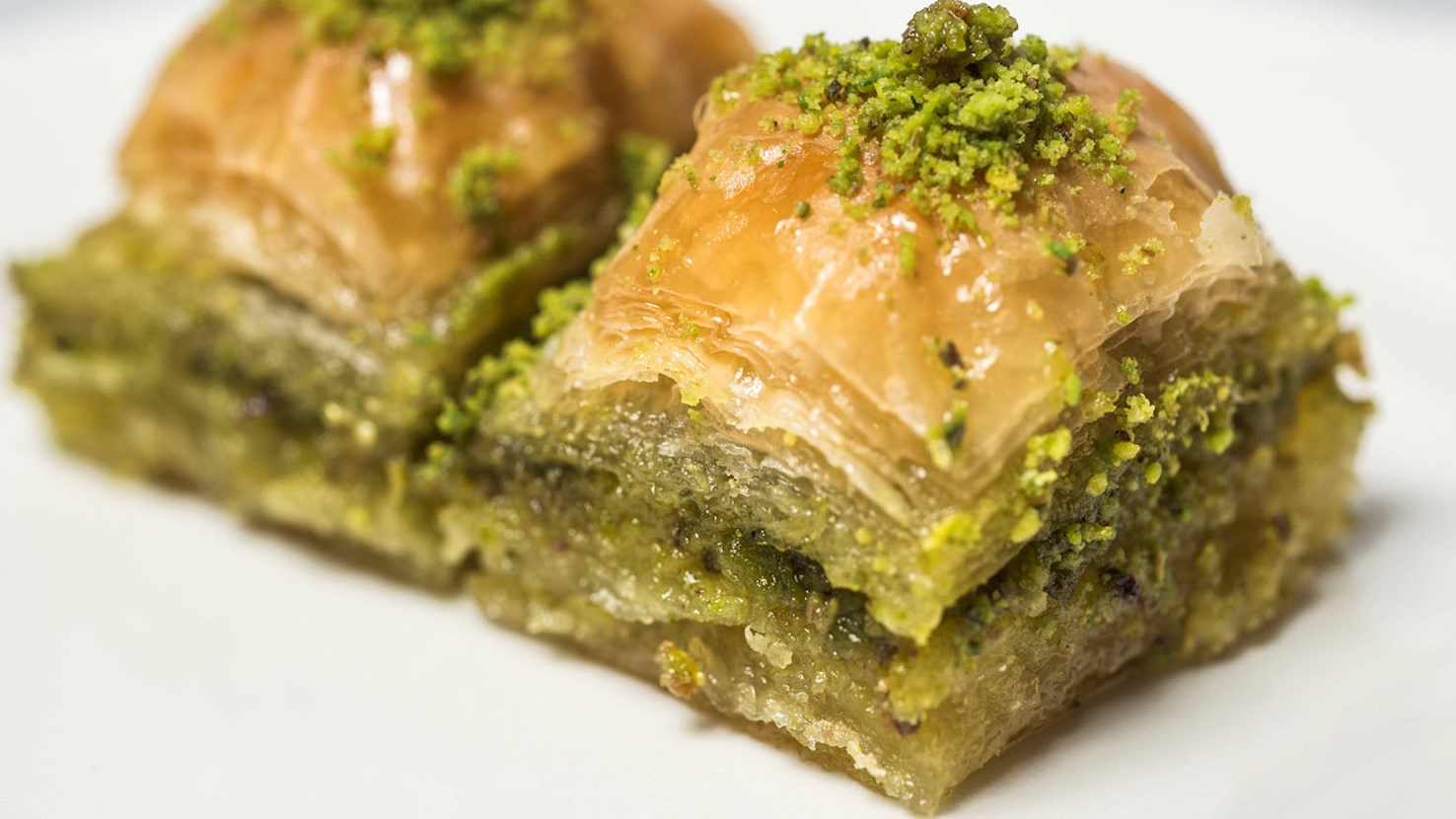
Gaziantep baklavası is widely regarded as the reference standard for baklava, defined by precision, balance, and uncompromising ingredient quality. Originating in Gaziantep, it reflects a pastry tradition in which technique is codified, and restraint is valued as highly as richness. The aim is clarity rather than excess: crisp layers, clean butter flavor, and the natural aroma of pistachios. The structure of Gaziantep baklavası is deliberate. Traditionally, it is built with forty sheets of phyllo dough, divided evenly between the base and the top, a proportion that ensures crispness without dryness and richness without weight. The phyllo itself is a foundational element, traditionally made by hand from a simple mixture of flour, water, egg, vinegar, salt, and a small amount of fat. After kneading until smooth, the dough is divided into small portions and rested to allow the gluten to relax. Each piece is then rolled gradually, using starch to prevent sticking, into thin, even sheets that are resilient enough to hold butter and filling while still baking into a delicate crust. This method has long been practiced in home kitchens and bakeries alike and relies on patience and careful handling rather than specialized equipment. Clarified butter is brushed between the sheets, providing richness while preventing scorching and preserving separation during baking. Pistachios are central and exclusive: Gaziantep baklavası uses only pistachios, never walnuts. The majority are ground very finely to integrate seamlessly with the layers, while a smaller portion is left more coarsely chopped to add texture and definition. Their natural sweetness and aroma eliminate the need for spices or additional flavorings. The syrup is intentionally restrained, made from sugar, water, and a small amount of lemon juice, never honey. It is cooked lightly and poured over the baklava while the pastry is hot and the syrup is lukewarm, allowing even absorption without softening the crisp layers. Assembly takes place directly in the baking tray. Buttered phyllo sheets form the base, followed by an even distribution of pistachios and the remaining sheets on top. The pastry is cut before baking, usually into diamonds or squares, and baked until deeply golden on both the top and bottom. Precision at every stage is essential, as excess butter, syrup, or filling can compromise the final texture. Within this disciplined framework, recognized variations exist. The “dry” version contains no cream or milk-based filling and is valued for its pronounced crispness and longer shelf life. The “fresh” style includes a thin layer of semolina cream or is served with kaymak, adding softness and moisture while maintaining clear structural definition. Related pastries, such as carrot-slice baklava or şöbiyet, follow the same principles but differ in shape or filling. Gaziantep baklavası is traditionally served at room temperature, once the syrup has fully settled. It is typically enjoyed plain or with a small portion of kaymak, alongside Turkish coffee or tea, with minimal garnish so the pastry itself remains the focus.
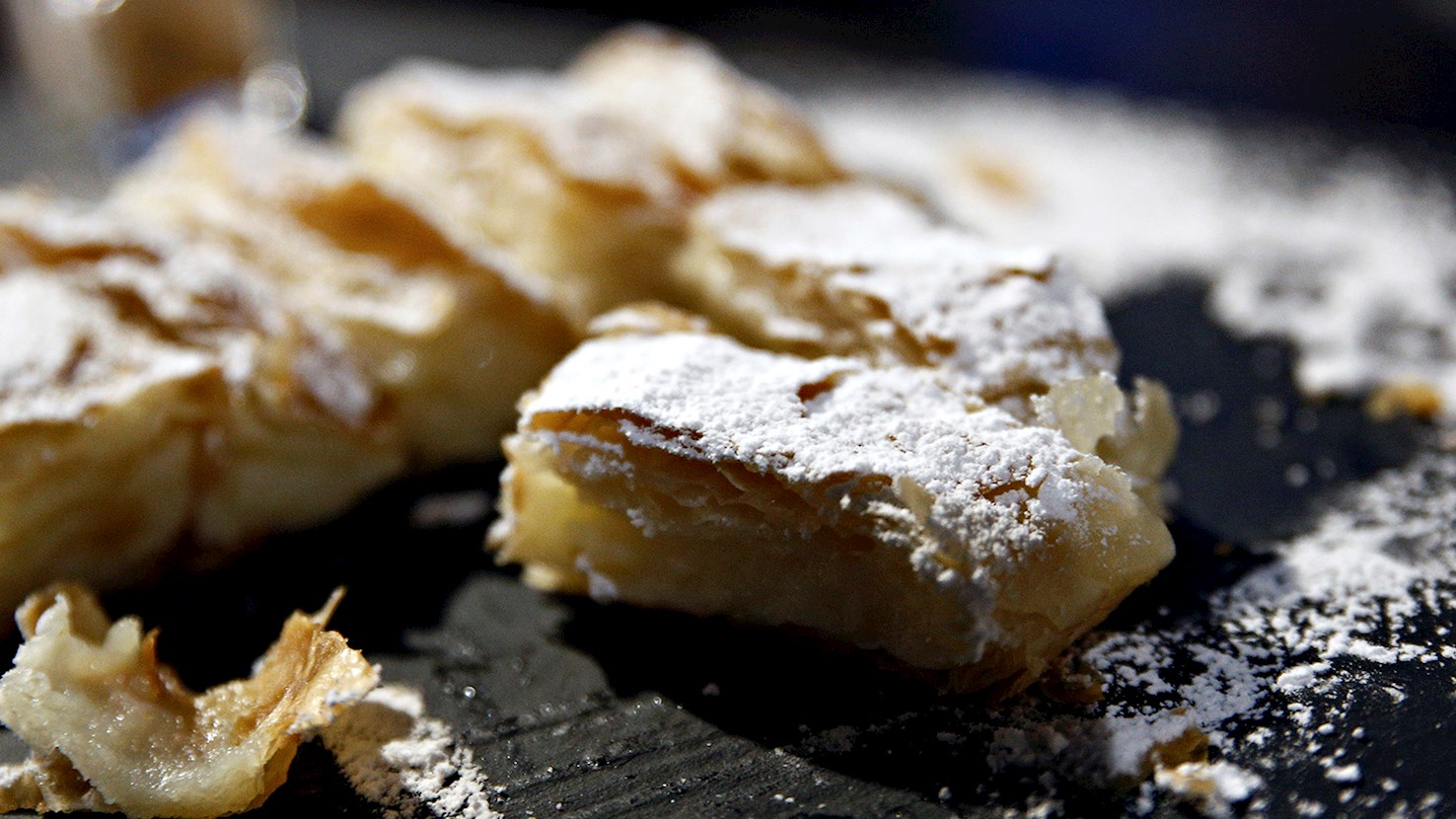
Bougatsa is a traditional Greek pastry made by layering thin sheets of phyllo dough, usually brushed with butter or oil, around a filling that can be either sweet or savory. The preparation typically involves assembling the filling—such as semolina custard, feta cheese, spinach, or spiced minced meat—then placing it between two layers of phyllo pastry or wrapping it in multiple layers of phyllo, folding it like an envelope, and baking until golden and crisp. Although savory versions like feta bougatsa or meat bougatsa are especially popular, sweet bougatsa, filled with semolina custard and topped with cinnamon and powdered sugar, is commonly considered the poster child. Modern recipes often use ready-made phyllo, but traditional methods involve hand-stretching homemade dough, a skill passed down through generations. Bougatsa is typically served warm, cut into squares, and enjoyed as breakfast, a snack, or a light meal.
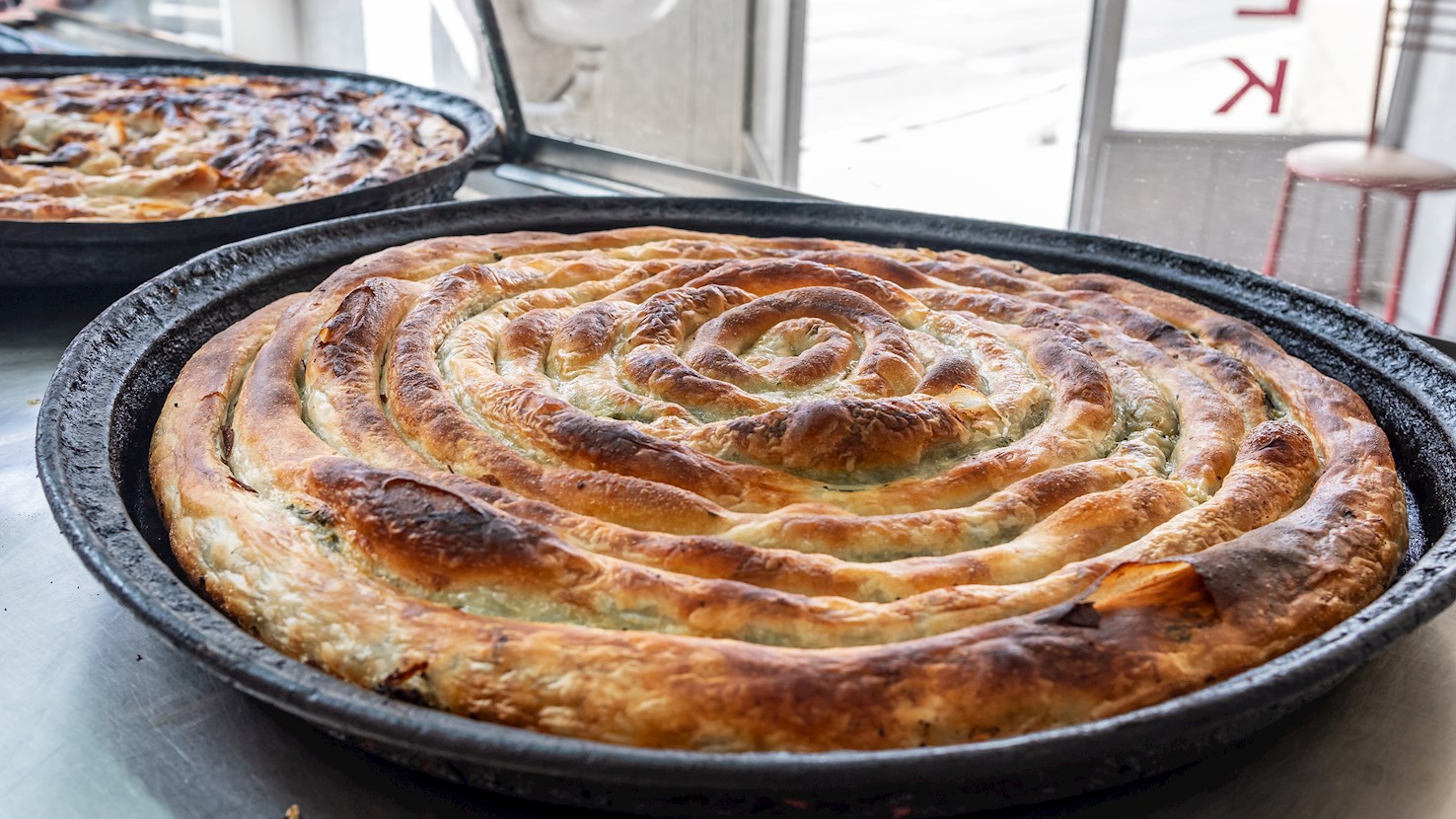
Burek is a savory pastry made with thin, hand-stretched dough (jufka) filled with seasoned meat, most often beef. The meat is typically ground, but burek prepared with hand-chopped meat is especially prized. The dough is rolled around the filling, coiled into a spiral or layered, and baked until crisp and golden. Unlike in some neighboring countries, where burek refers to pastries with various fillings, in Bosnia and Herzegovina, the word burek specifically means a meat-filled pastry; other fillings, such as cheese, spinach, or potatoes, carry different names, like sirnica, zeljanica, or krompiruša. It can be eaten hot or cold, often accompanied by yogurt, and is considered one of the defining dishes of Bosnian cuisine.
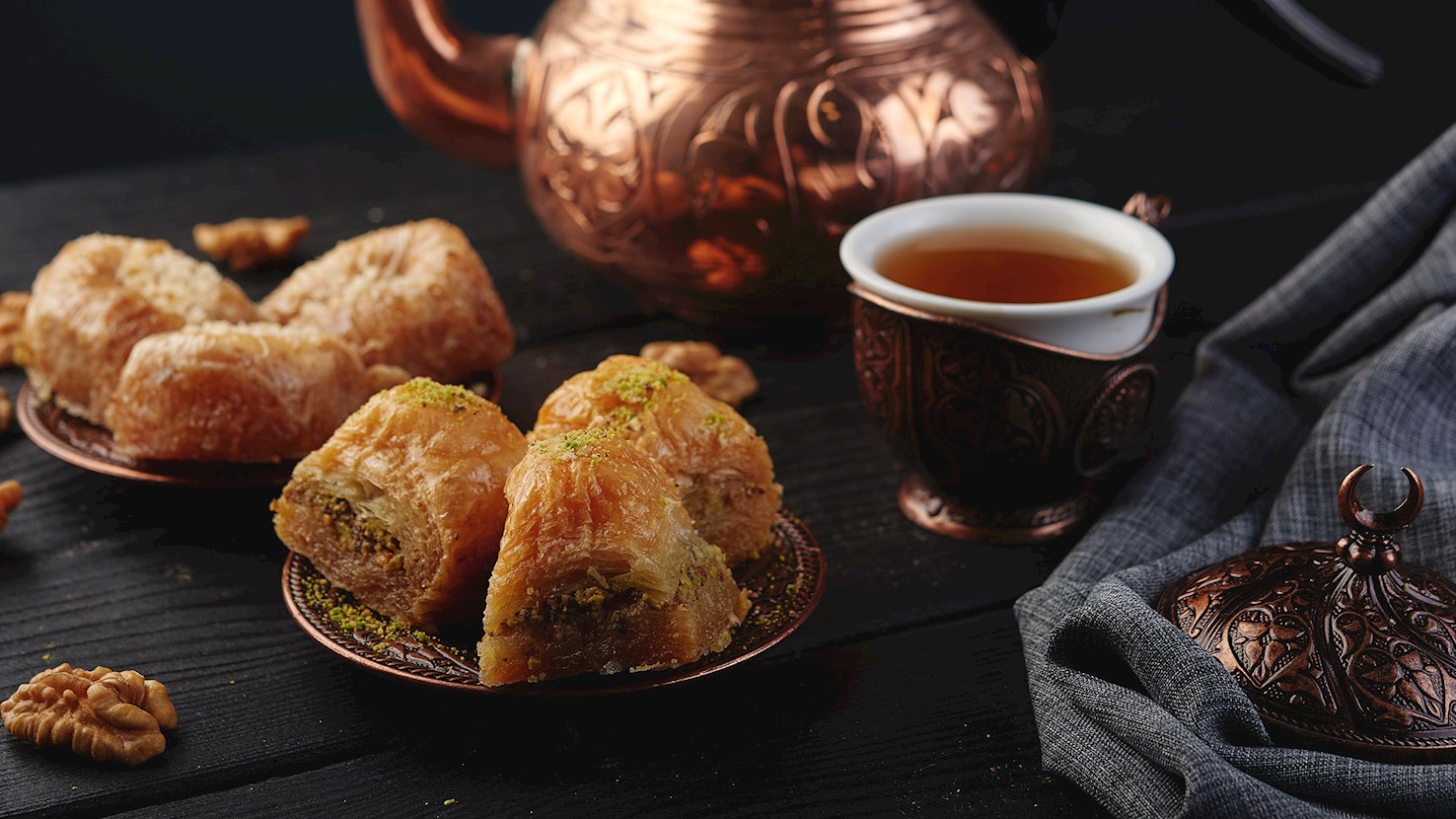
This famous dessert consists of three essential components – phyllo dough, a nutty filling, and syrup. As opposed to the simplicity of the ingredients, making the dough is a difficult endeavour that takes some practice to master. Many recipes today will skip the dough-making process entirely and opt for pre-made phyllo sheets instead. Today, there are numerous different types of baklava with different fillings, but the Turkish original uses pistachios with no added flavorings or spices. Other nutty fillings are used depending on the region, such as walnuts and hazelnuts, which are then paired with spices like cinnamon or cardamom. The syrup that is poured over at the end is nothing more than water and sugar, however some like to add lemon juice, as it prevents the sugar from crystallizing.
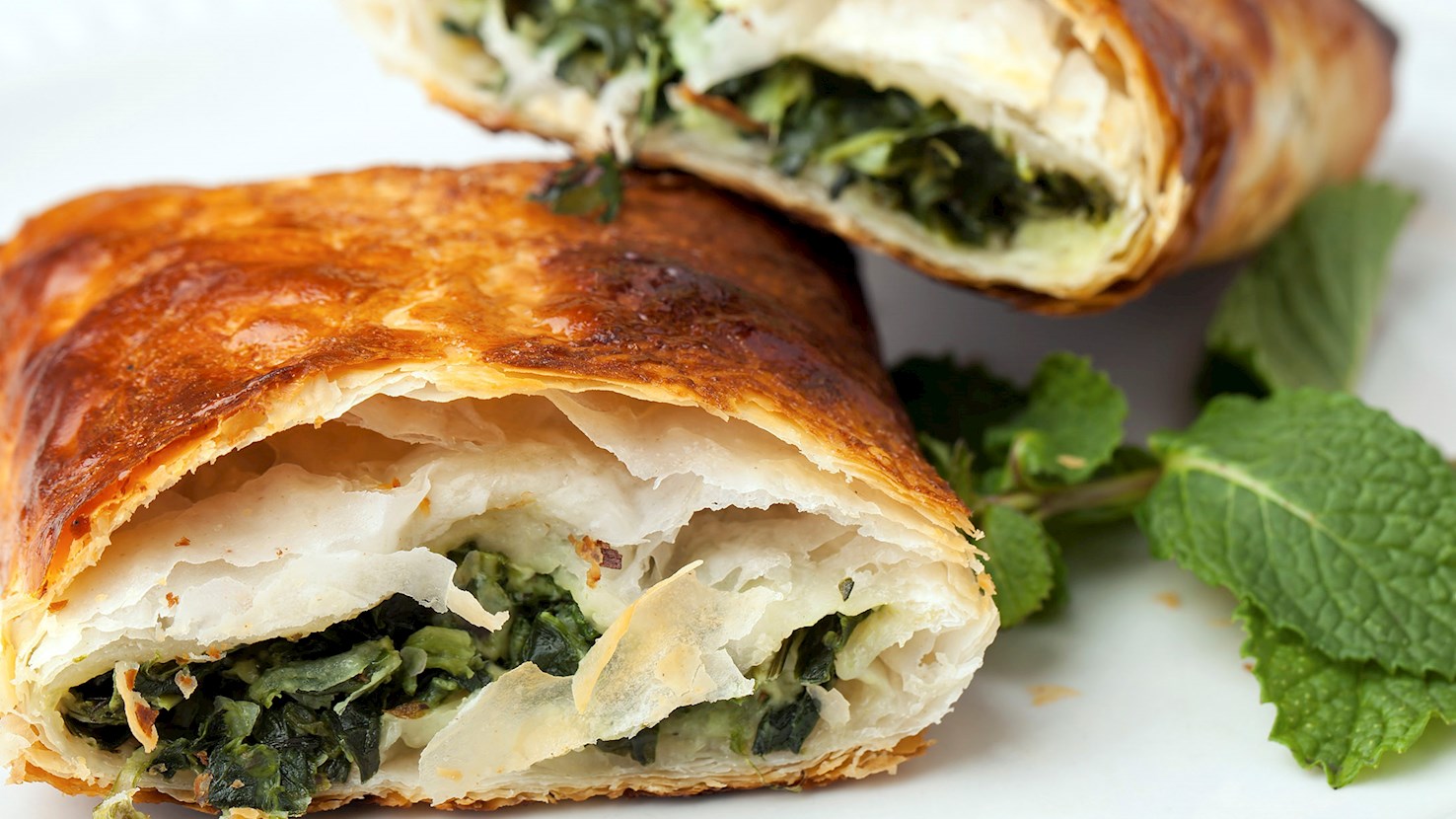
The traditional Greek savory pie, spanakopita, although time-consuming to prepare, is incredibly versatile since it can be served as a snack, an appetizer, or a light main course if paired, for example, with a salad. The preparation starts with making the dough from flour, water, salt, and sometimes vinegar, and even yogurt, which is then rolled into thin sheets. The filling typically consists of spinach, feta, and eggs, but can also often include onions, dill, parsley, spring onions, lemon, and different kinds of greens and herbs, depending on the recipe. It can also include grains like rice, barley, or tarhana which have the role of soaking up the excess liquid from the filling as the pie bakes. Spanakopita can be assembled one of three ways: in a baking dish, as a layered pie, and as rolls which are then formed into a snail-like shape, or as triangles, perfect for serving as hors-d'oeuvres. However, it is important to note that before the filling is added, a crucial step is to brush each layer of phyllo pastry with butter or olive oil. Once baked, spanakopita is cut into portions, either squares or triangles and should be served warm.
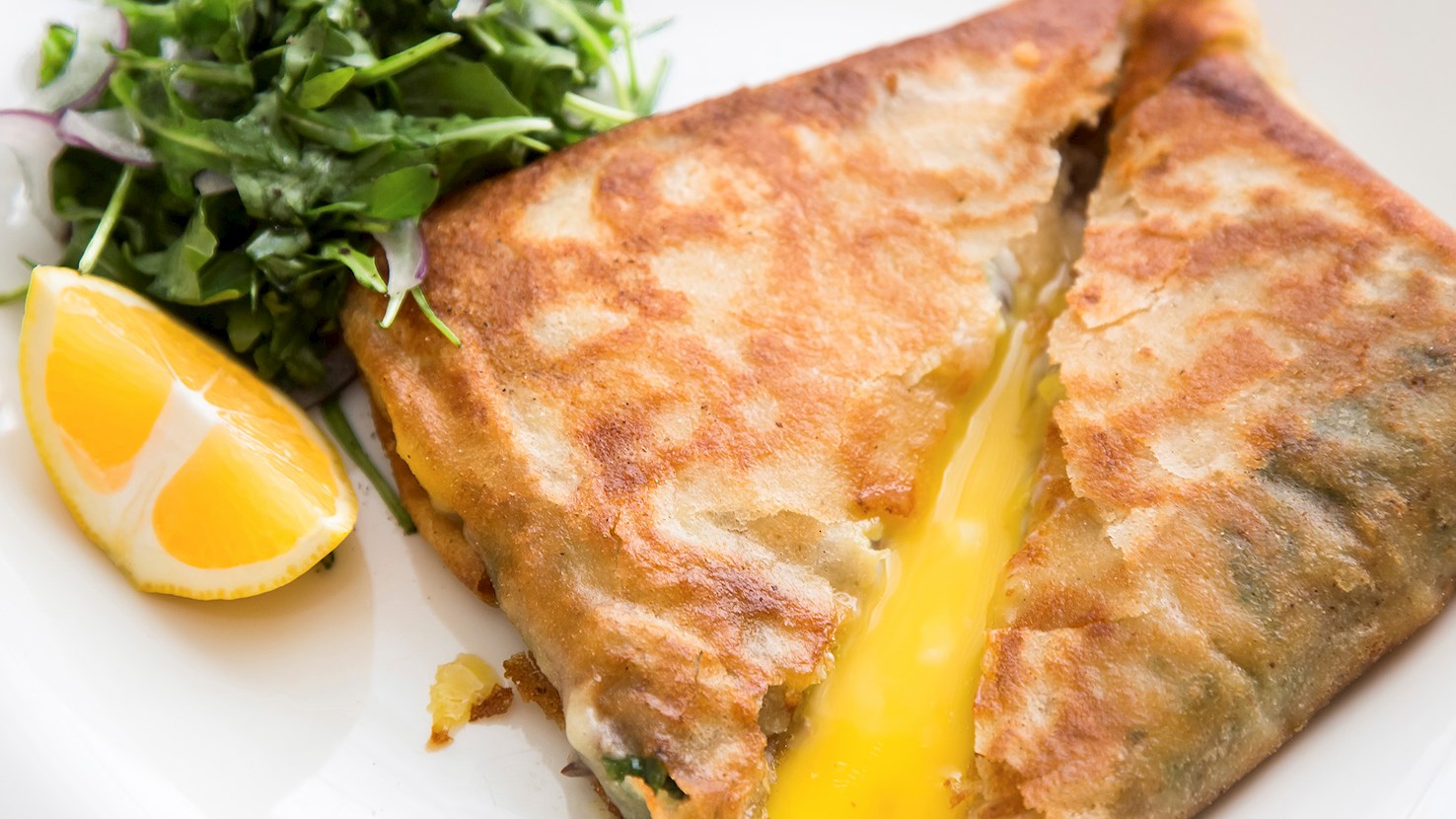
The classic Tunisian brik consists of a thin pastry sheet (called malsouka or warqa), filled usually with a mixture of tuna, mashed potato, onion, parsley, and capers, with a raw egg cracked directly into the center before sealing. The pastry is folded—usually into a triangle or oval—and pan-fried in oil until golden and crispy, while the egg inside remains soft or runny. Brik dough can be homemade, but ready-made malsouka, phyllo, or wonton wrappers are often used as substitutes. The thinness of the pastry allows it to crisp quickly in hot oil, forming a delicate, flaky shell. Across North Africa, variations exist under different names: in Algeria and Morocco, similar pastries known as bourek or briouat are made with diverse fillings. They may be baked rather than fried and shaped into rolls rather than triangles. Brik is typically served hot, accompanied by lemon wedges, a green salad, or a touch of harissa. In many Tunisian households, a sprinkle of sweet paprika is added just before serving.
The authentic tikvenik recipe is published with the permission of the Bulgarian Ministry of Tourism, and is their official recipe for the dish, as well.
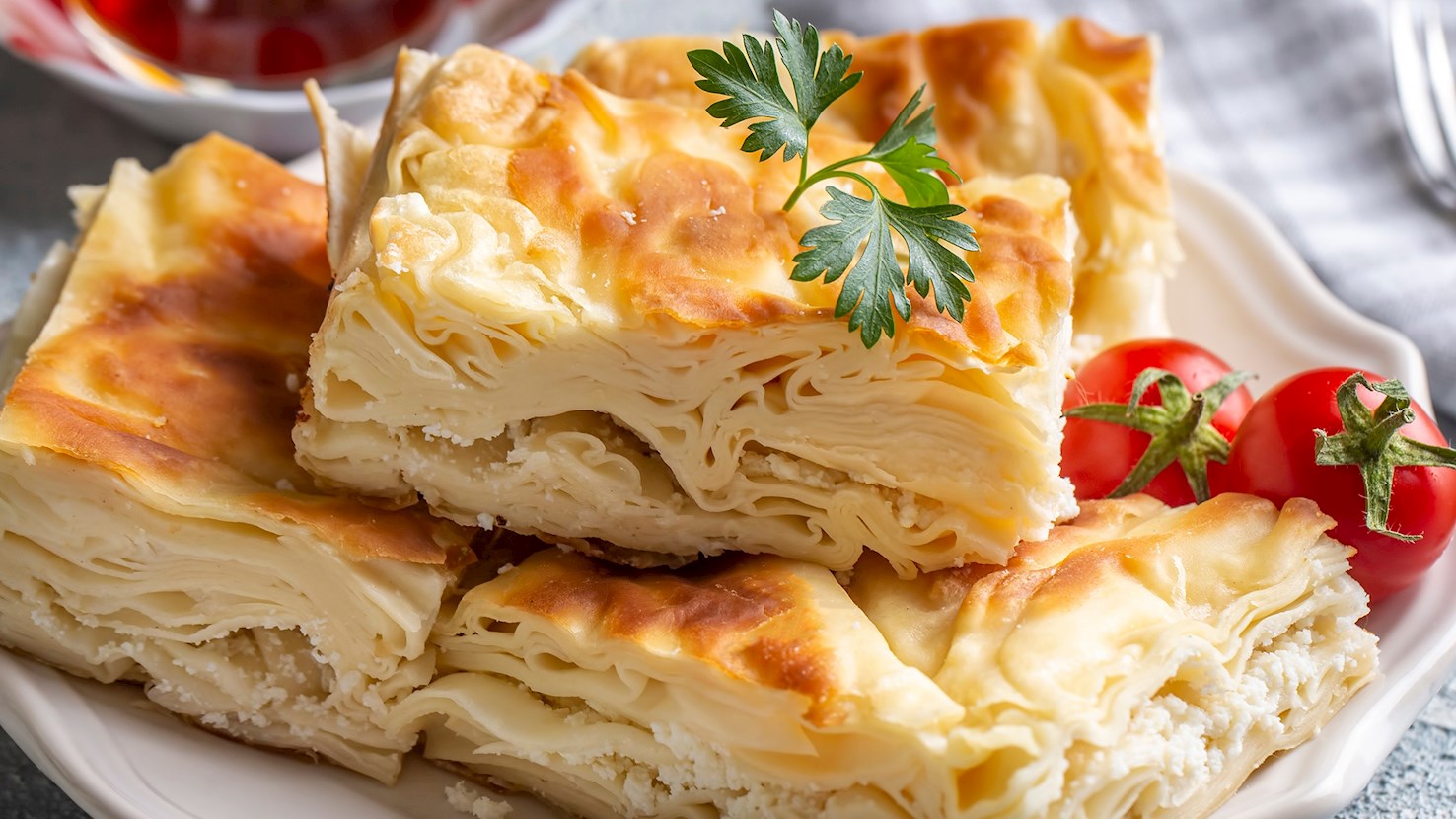
This recipe shows the classic preparation of tepsi böreği that has a spinach filling. The recipe is adapted from the gastronomy book Turkish Cuisine With Timeless Recipes.
TasteAtlas food rankings are based on the ratings of the TasteAtlas audience, with a series of mechanisms that recognize real users and that ignore bot,
nationalist or local patriotic ratings, and give additional value to the ratings of users that the system recognizes as knowledgeable.
For the “Top 10 Phyllo Pastry Recipes” list until May 22, 2026, 12,297 ratings were recorded, of which 5,667 were recognized by the system as legitimate.
TasteAtlas Rankings should not be seen as the final global conclusion about food. Their purpose is to promote excellent local foods,
instill pride in traditional dishes, and arouse curiosity about dishes you haven’t tried.