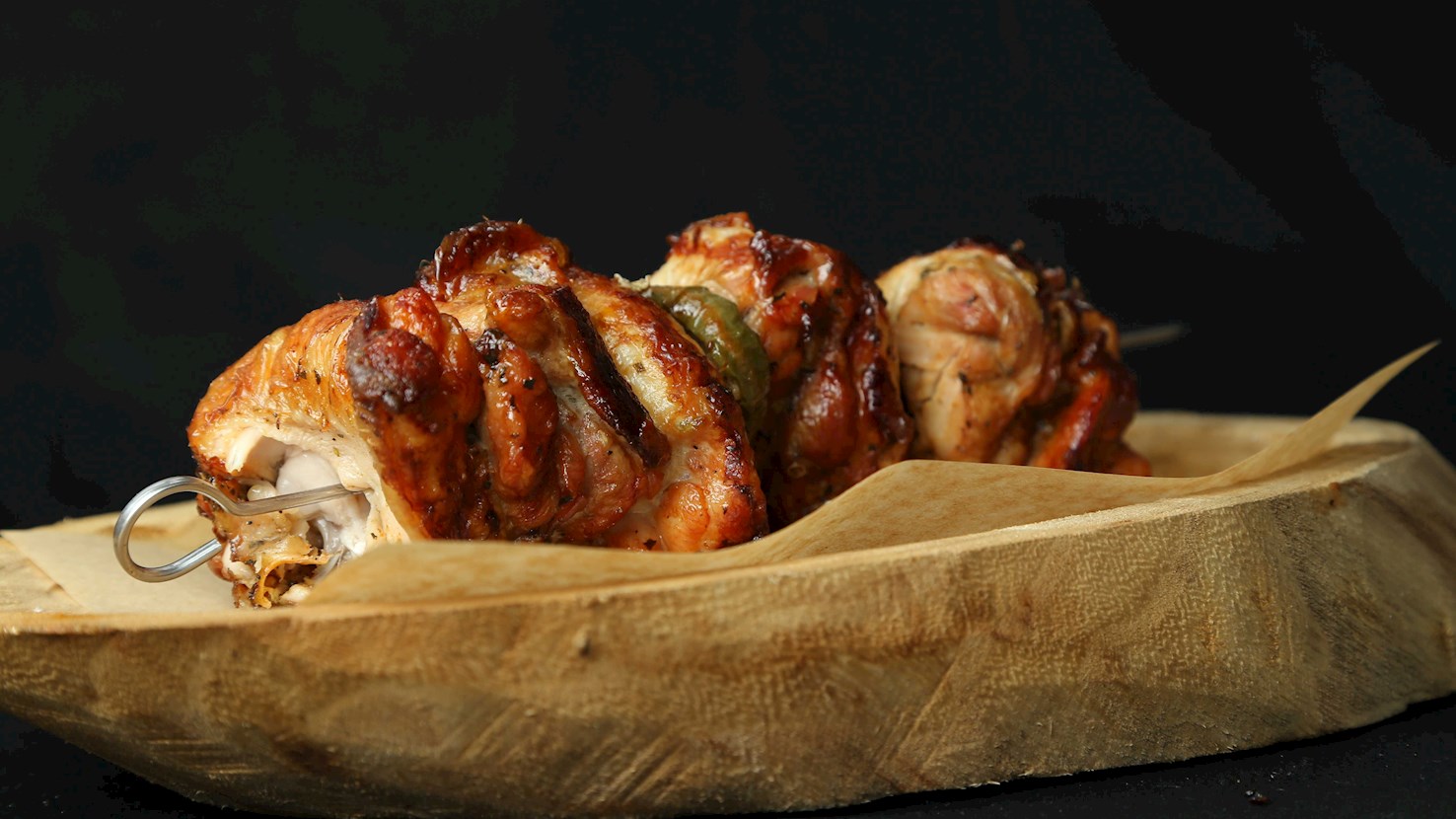
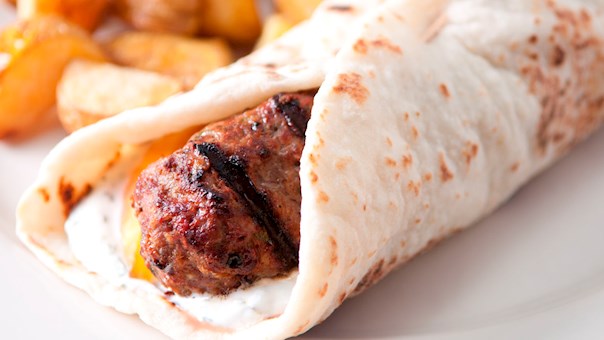
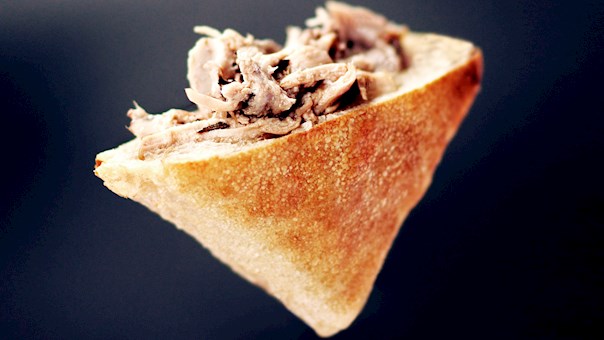
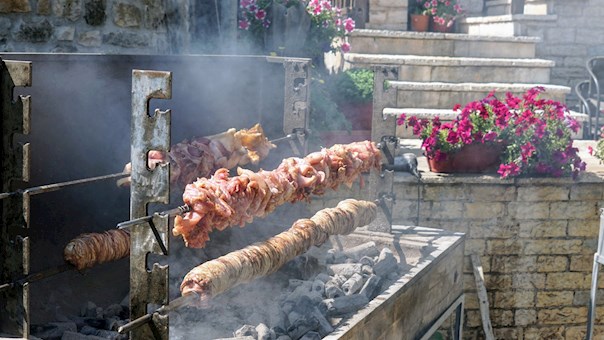
Kontosouvli is a traditional dish consisting of large pieces of pork marinated in a mixture of herbs and spices, then skewered and slowly cooked on a rotisserie, much like a gyro or souvlaki. The marinade often contains ingredients such as garlic, oregano, thyme, rosemary, paprika, olive oil, lemon juice, and red wine. After marinating, the meat is threaded onto a large skewer and roasted over an open flame, which results in a rich and flavorful outer crust with a juicy, tender interior. The cooked meat is typically served in thick slices, often accompanied by pita bread, tzatziki sauce, and horiatiki salad, among other possible accompaniments. It was traditionally prepared for Easter, but today it can be found on the menus of Greek tavernas throughout the year.
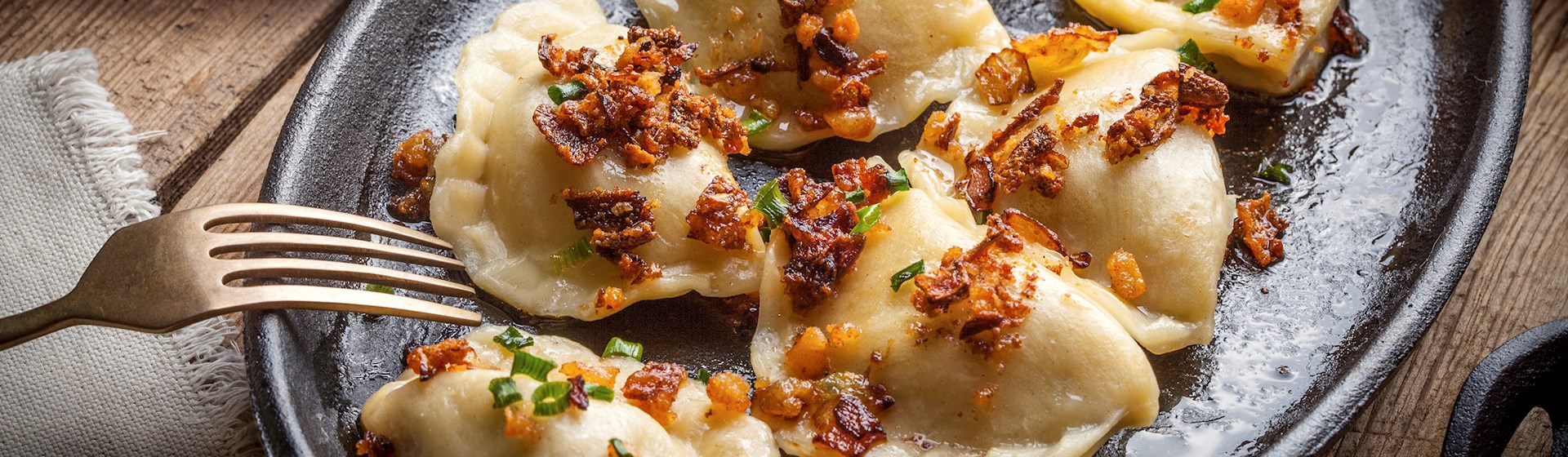
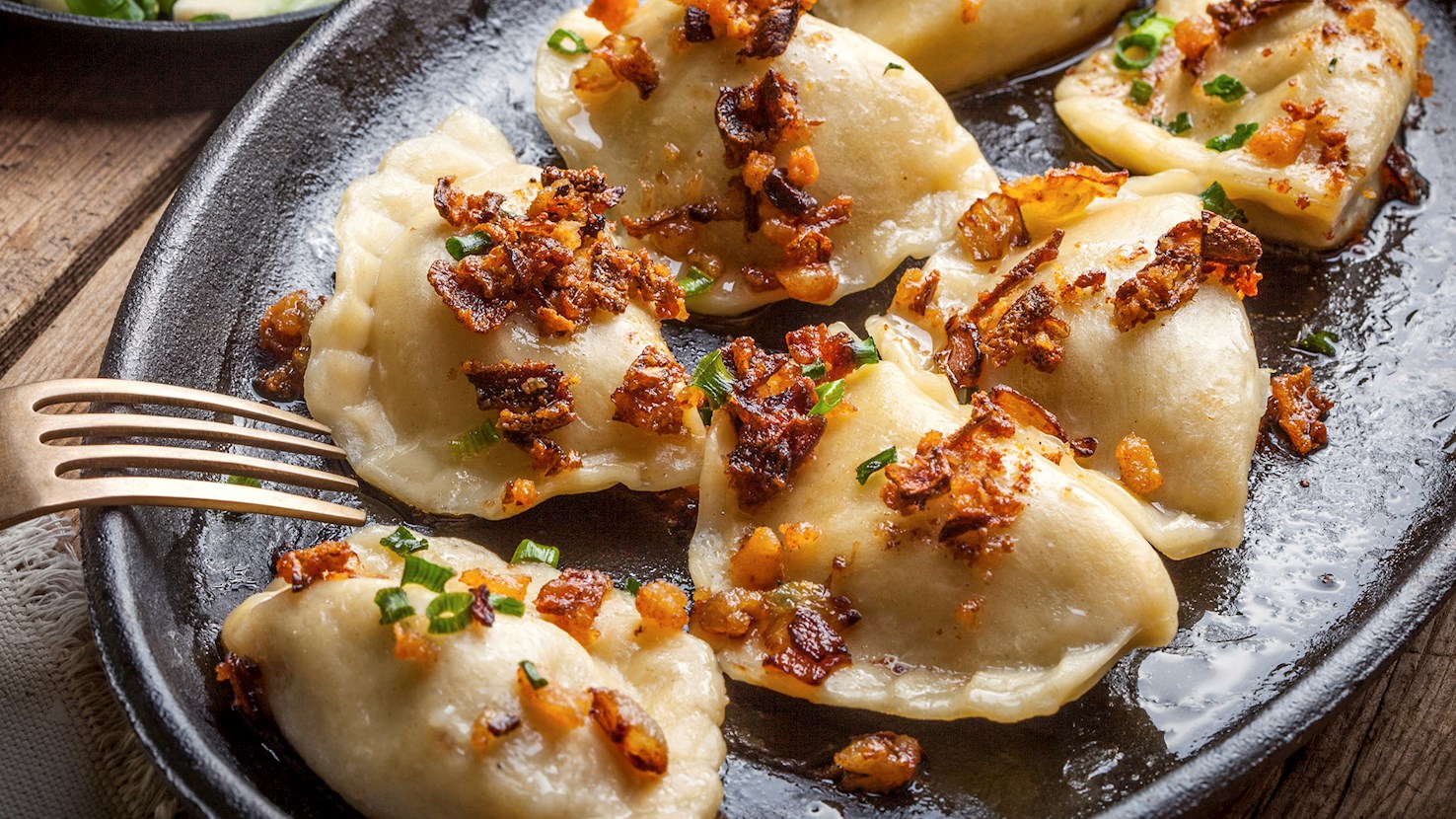
These stuffed dumplings derived their name from the Polish word for filled dumpling: pieróg. This former peasant food evolved into one of Poland's favorite dishes. Every family has their own version of pierogi filling, and the ingredients that can be used are limited only by the imagination of the chef. Pierogi can be sweet, savory, or spicy, and the most common fillings include cheese, onions, ground meat, mushrooms, potatoes, and sauerkraut. The sweet versions commonly include various berries, such as strawberries or blueberries. Traditionally, these dumplings are served as the 12th course of a traditional Polish Christmas Eve dinner. As the entire meal must be meatless, the filling usually consists of mushrooms, cabbage, and sauerkraut. Although pierogi have been made since the 13th century, it is not known where they were originally created—the Poles, Romanians, Russians, Ukrainians, Lithuanians, and Slovaks all claim they should be credited as the inventors of the pierogi. Others claim that it was brought to the West by the Tatars, and some say that the original pierogi traveled from China and reached Europe through Italy. Despite all this uncertainty, one fact is indisputable—the word pierogi first appeared in print in the second half of the 17th century. Today, pierogi are extremely popular throughout the country, and can be found in numerous pierogarnia eateries on Polish street corners. Poland also celebrates National Pierogi Day every year on October 8th, while the city of Kraków boasts its own annual Pierogi Festival held on August 17th.
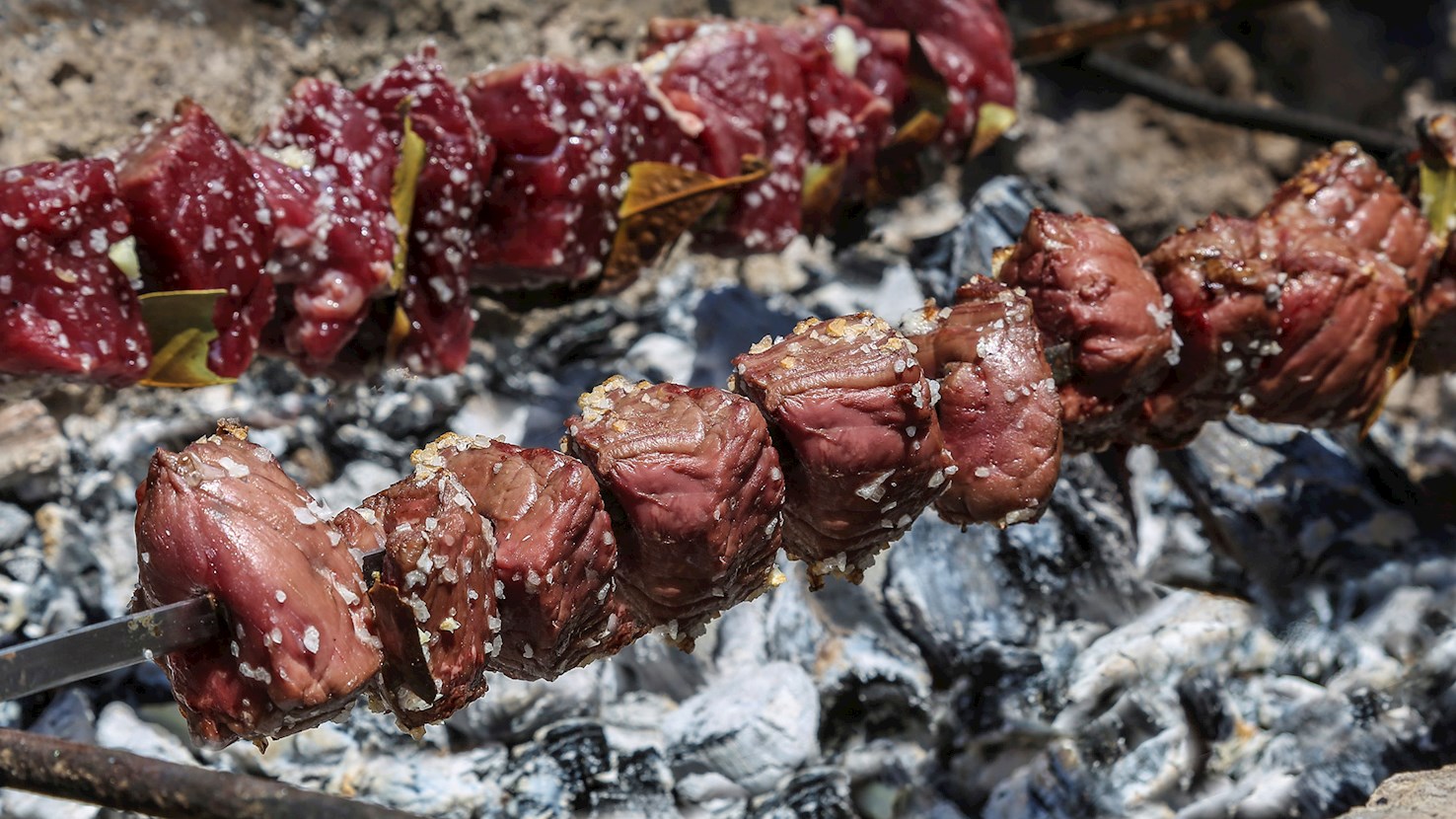
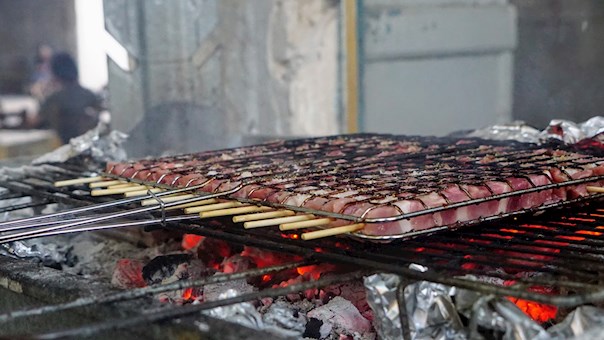
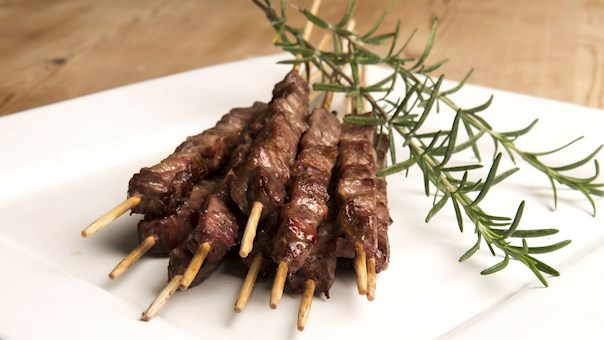
Espetada is a traditional dish and a specialty of the island of Madeira. It consists of big pieces of beef that are marinated in salt and garlic, then skewered on a bay leaf stick. The stick is placed over hot coals until the meat is properly cooked. It is the most popular dish to serve at picnics or parties in Madeira. Espetada is often served with the skewer hung vertically from a hook, so that the flavorful juices can drip down onto a plate filled with thick-sliced, crusty bread. Pork, sausages, and squid can all act as a substitute for beef in espetada, but then it is not a typical Madeira dish anymore. Since it is a great summer dish, it is recommended to pair espetada with a glass of cold sangria.
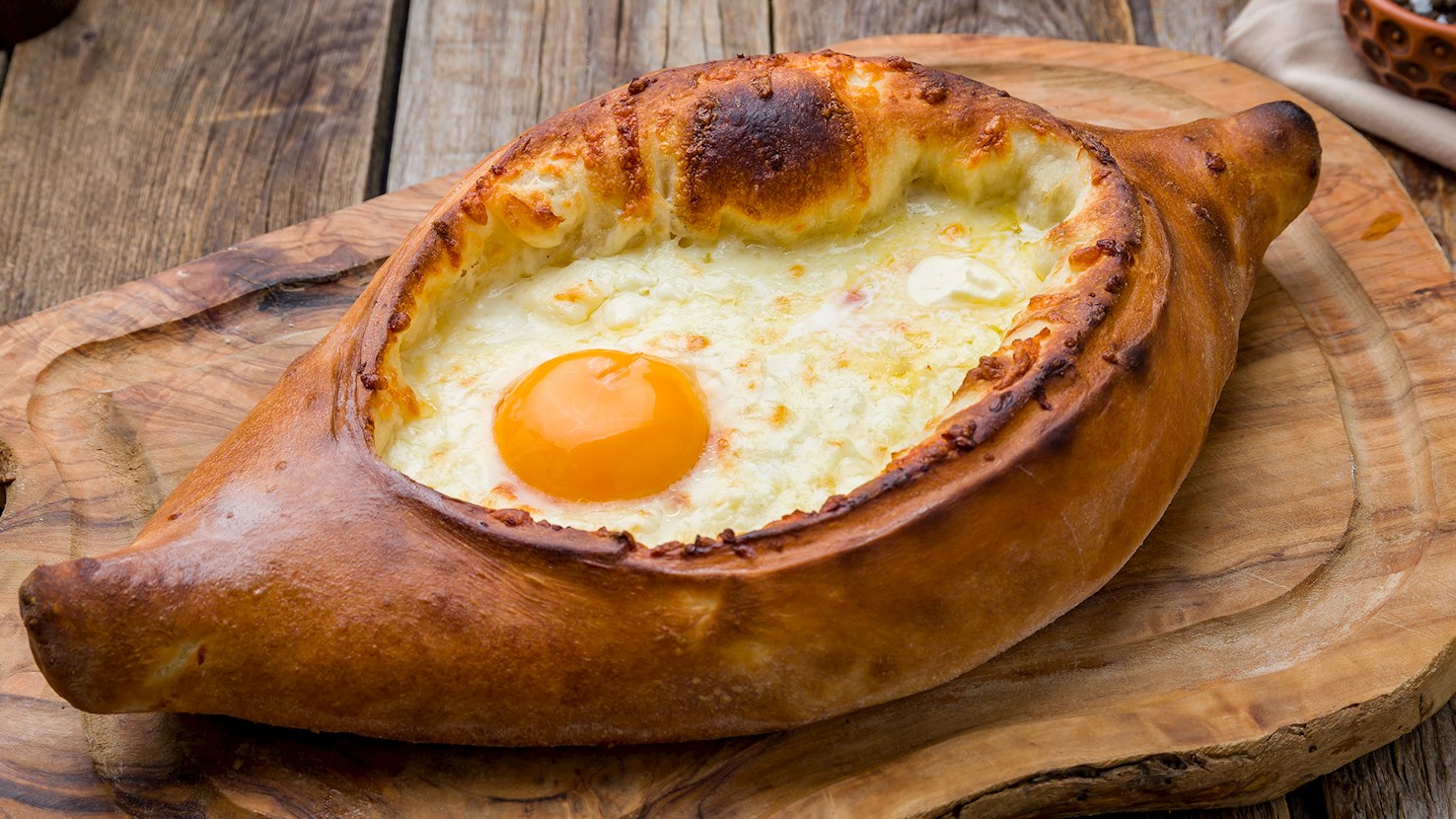
This simple cheese bread known as khachapuri is the most famous dish in Georgia. It is traditionally topped with melted cheese, eggs and butter. There are different types of khachapuri, and even though some new cheese varieties such as mozzarella and feta have been incorporated in the dish, the most common additions still include traditional Georgian Sulguni or Imeretian cheese. It is shaped into different forms, and depending on the baking procedure and its form, it can be consumed individually or shared. Two of the most common varieties include the Imeretian khachapuri, shaped into a circular form, and Adjaran khachapuri, the open-faced version topped with butter and a raw egg on top. Although it is considered a snack, khachapuri can often be consumed as a full meal. It can also be bought at numerous kiosks located alongside Georgian roads. Khachapuri is also often prepared in Russia, in the whole area of the former Soviet Union, and throughout the world.
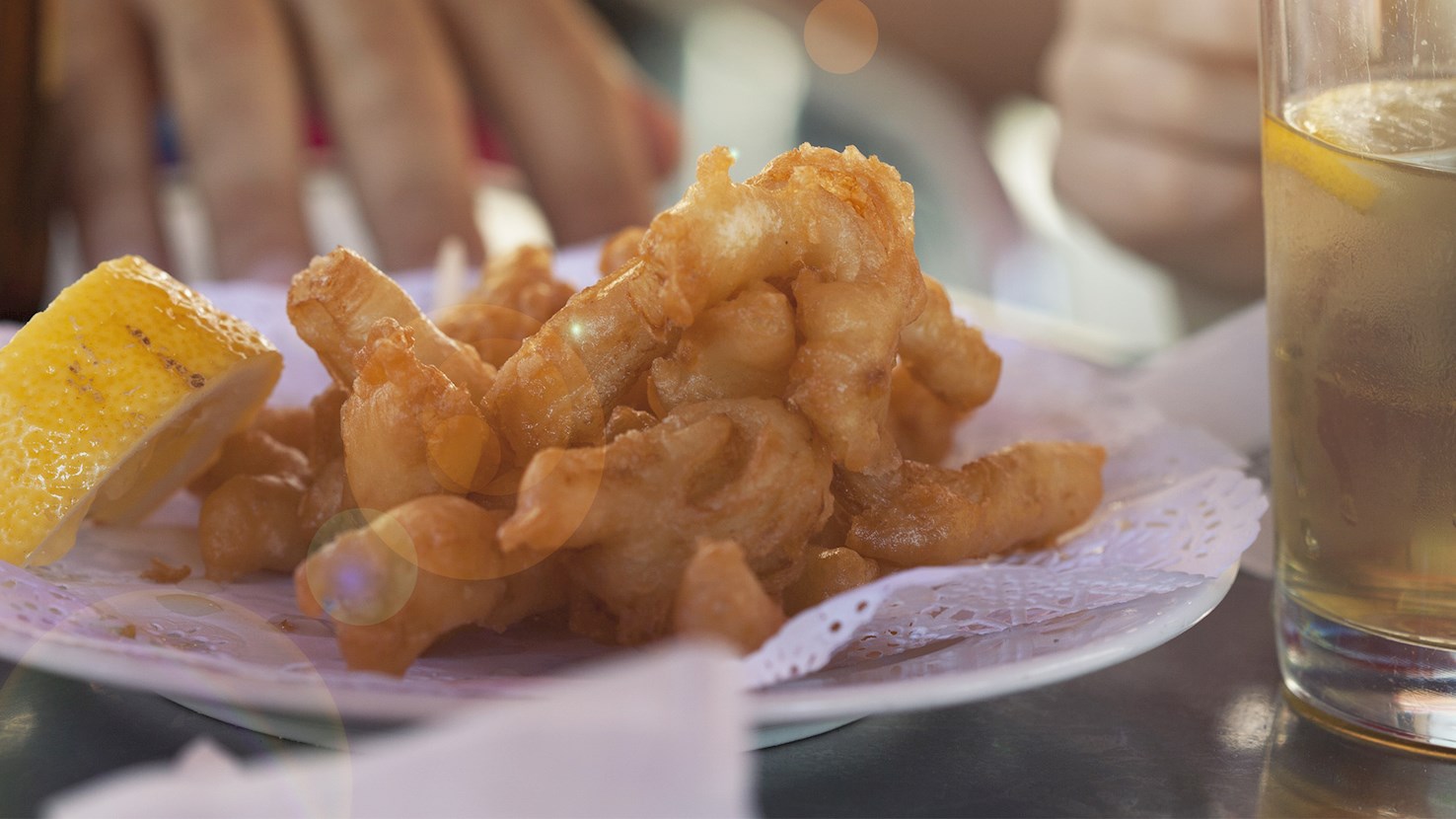
Rabas or fried squid is the quintessential seafood tapa of the Cantabrian coast. Made with sliced squid strips or rings that are lightly battered or breaded before they are fried to crispy perfection, this dish is best savored when lightly seasoned with salt and with an optional drizzle of fresh lemon juice. There are numerous variations on the dish depending on the species of squid, the type of flour, or the oil used in the preparation, as well as the preferred version of cutting the squid (strips, rings, or other shapes). The best rabas are, nevertheless, those made with fresh squid, defined by a firm consistency, thin coating, tender bite, and natural seawater flavor. This Spanish appetizer pairs well with a glass of dry white wine or a cold beer and is available in almost any bar and restaurant throughout the region.
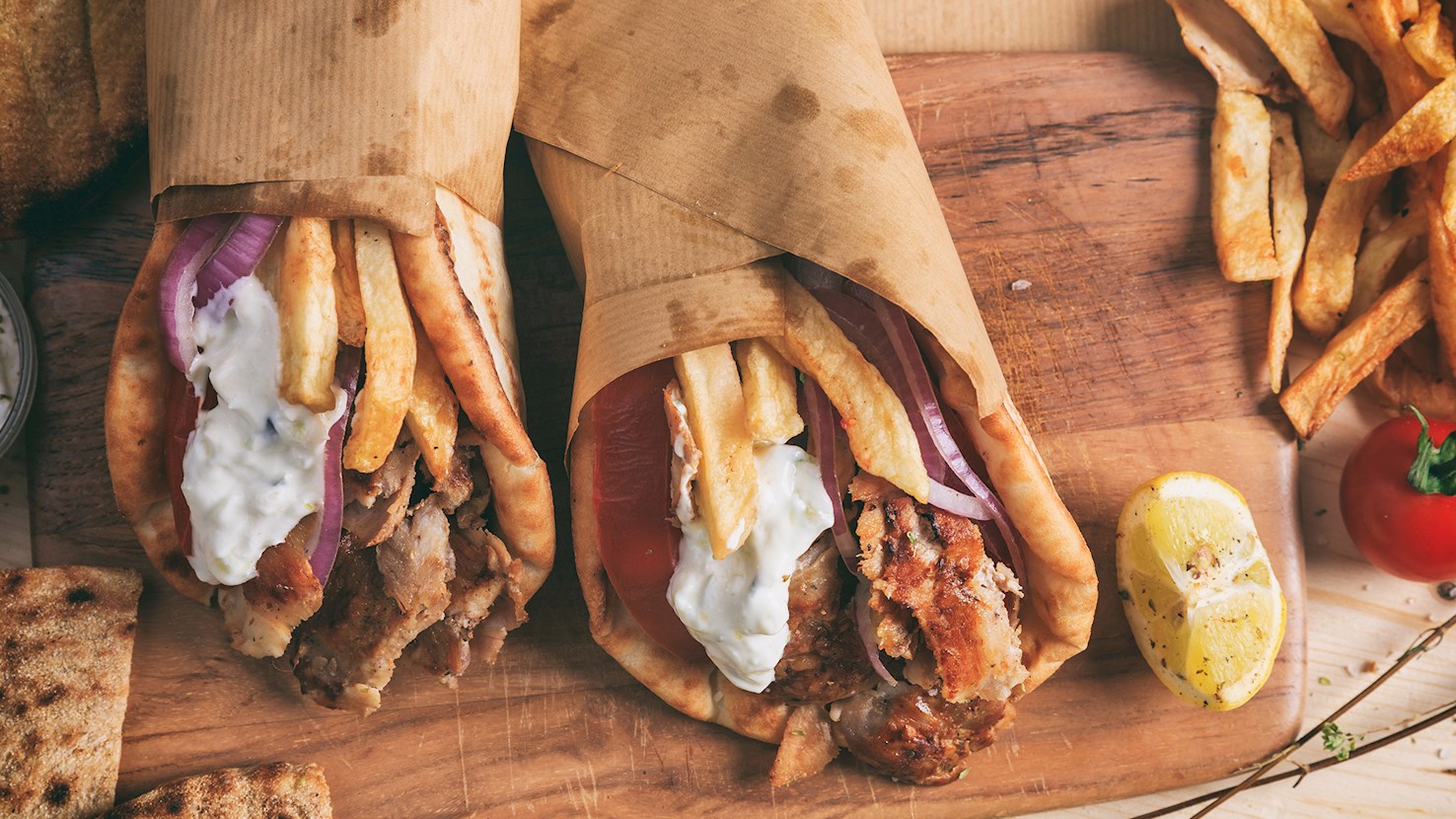
Gyros is one of the most popular Greek street food dishes, consisting of meat such as pork and chicken (in Greece) or lamb and veal (popular in other countries) cooked on a vertical spit. The meat is sliced in thin shavings and is then usually placed in a pita bread along with sauces such as tzatziki and vegetables such as tomatoes, onions, lettuce, and cucumbers. Gyros is derived from the Greek word gheereezo, meaning to turn, referring to the constantly rotating vertical spit on which the meat is cooked. Some believe that gyros originated during the time of Alexander the Great, when his soldiers skewered the meat on their swords and cooked it over a fire. Others claim that gyros was introduced to Greece in 1922, with the refugees from Constantinople and Smyrna. Many of the refugees became merchants and opened their shops with tiny holes in the wall, where gyros was sold. After WWII, gyros gained popularity and spread to Europe, Australia, and the United States. Today, gyros is known as one of the most popular street food varieties around the world.
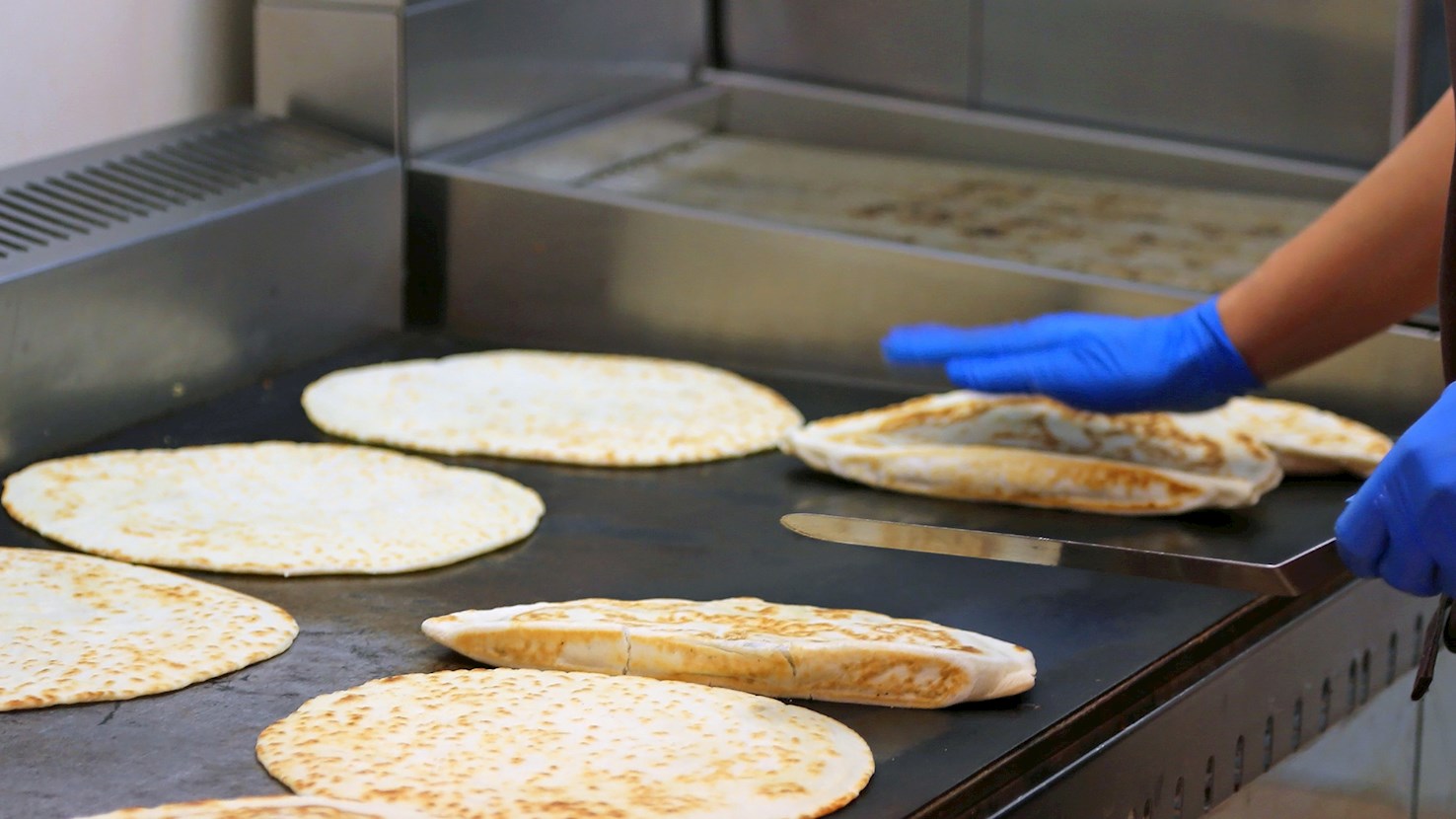
Even though today this griddled Italian flatbread is typically enjoyed as a sandwich (one of the most popular fillings includes prosciutto, creamy soft cheeses like squacquerone, tomatoes, and a handful of peppery wild arugula), Piada or piadina Romagnola was once merely a staple of the poor, often made with maize flour and called la pjida ad furmantoun in Romagnolan dialect. In his poem entitled La Piada, which is sort of an ode to the beloved Romagnolan piadina, a 19th century Italian poet Giovanni Pascoli calls it "the bread of poverty, humanity, and freedom", describing it as "smooth as a leaf and as big as the moon." Since then, the humble, rustic piadina has come a long way and even today takes a special place in the regional cuisine, having been awarded the Protected Geographical Indication status. Le piadine, in plural, can take virtually any ingredients as their filling, and they can be easily found freshly prepared at numerous street kiosks called piadinerie, as it is best to eat a piadina only minutes after it comes off the cast-iron griddle while it's still pliable and warm - the perfect frame for the almost-melting soft cheese and delectable, thinly sliced charcuterie.
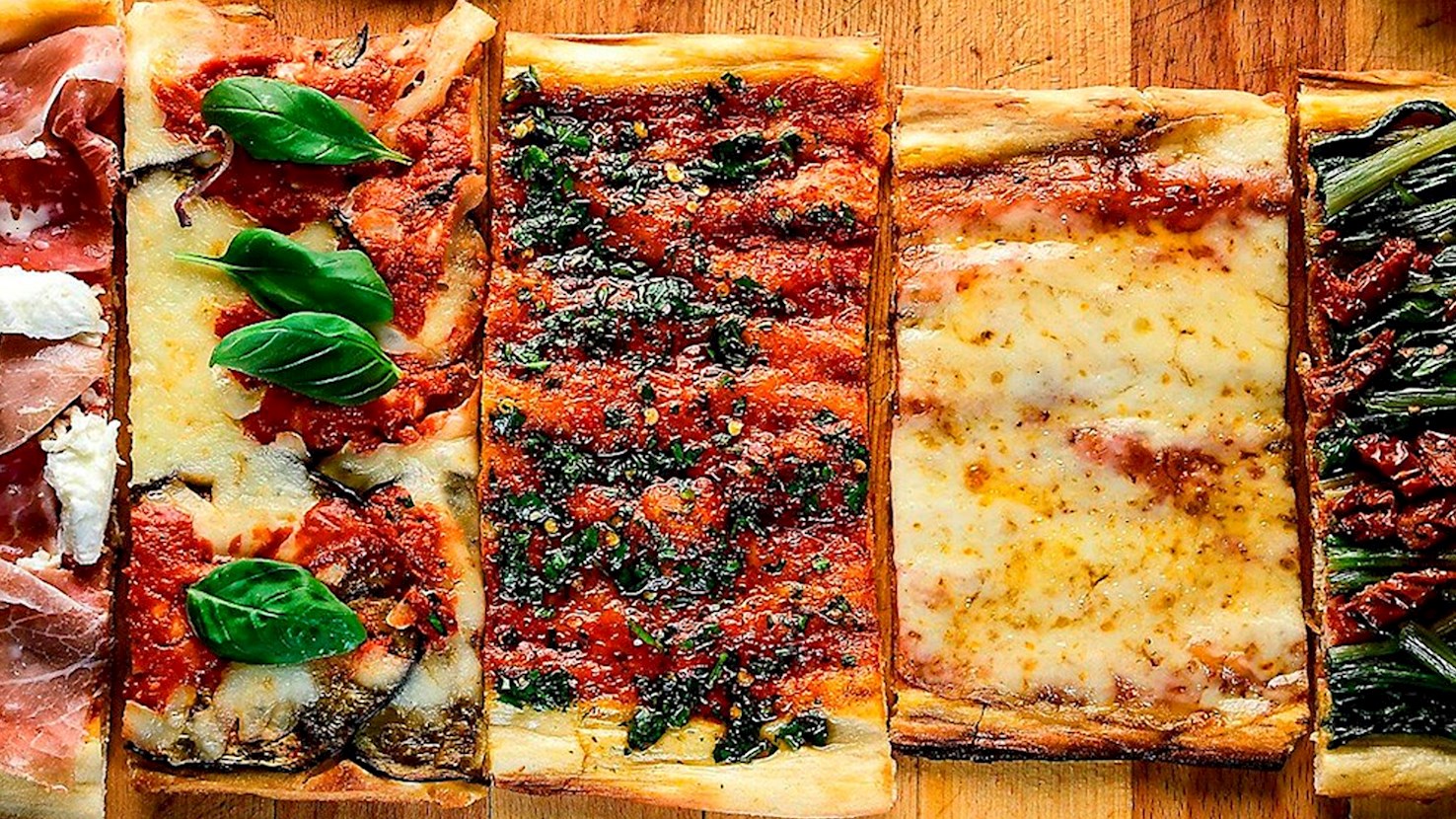
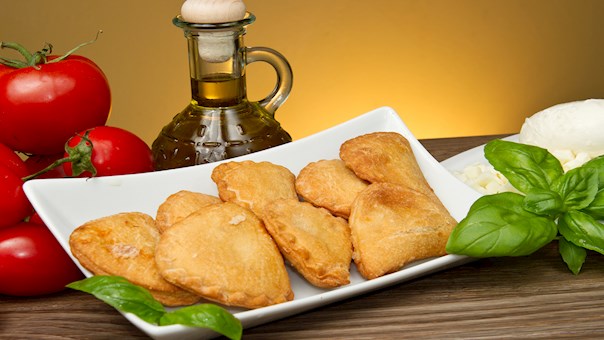
Pizza al taglio is a variety of Italian pizza that is baked in rectangular trays and sold sliced into squares or rectangles. Prices can be marked either per slice of pizza or per kilogram. The first pizza al taglio was baked in Rome in the late 1950s, when it was topped with olive oil and tomato sauce. Today, the dish is one of the most loved street food items both in Rome and in most of Italy. When making pizza al taglio, it is important to let the dough rise and ferment for a longer period of time. The dough is usually baked, topped, and then baked once more, resulting in an evenly-cooked pizza that's light, airy, and easily digestable.
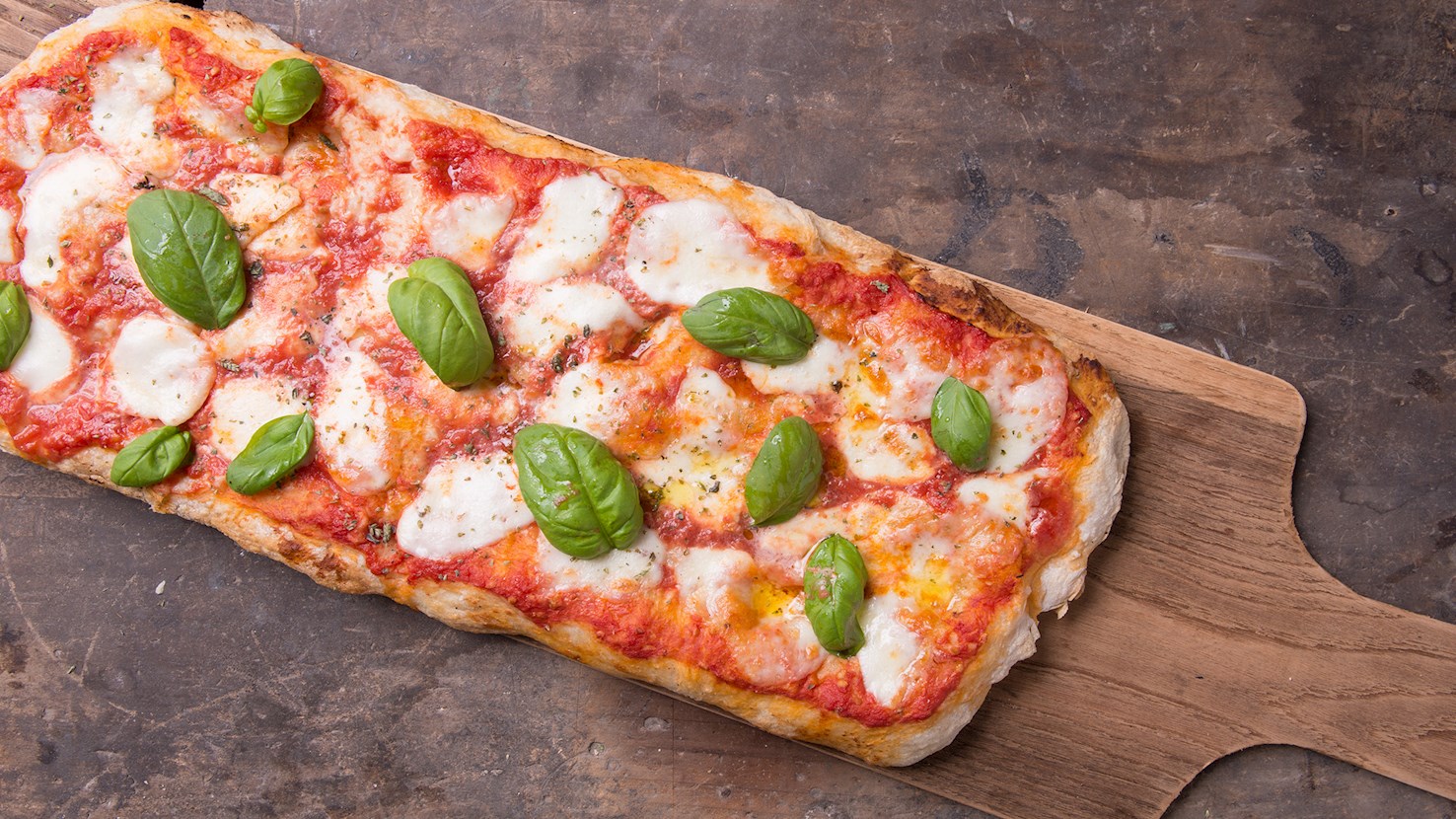
Typically shared among groups and consumed by the slice, the Roman invention known as pizza alla pala is a long, oval-shaped flatbread made with a high-hydration, long-rising dough. It is baked in electric ovens, transferred to a wooden board called pala, then topped with various fresh ingredients. The pizza is characterized by a thick crust and a tender, fluffy interior, while the toppings can be anything from prosciutto and cherry tomatoes to various cheeses, olives, and spicy salami.
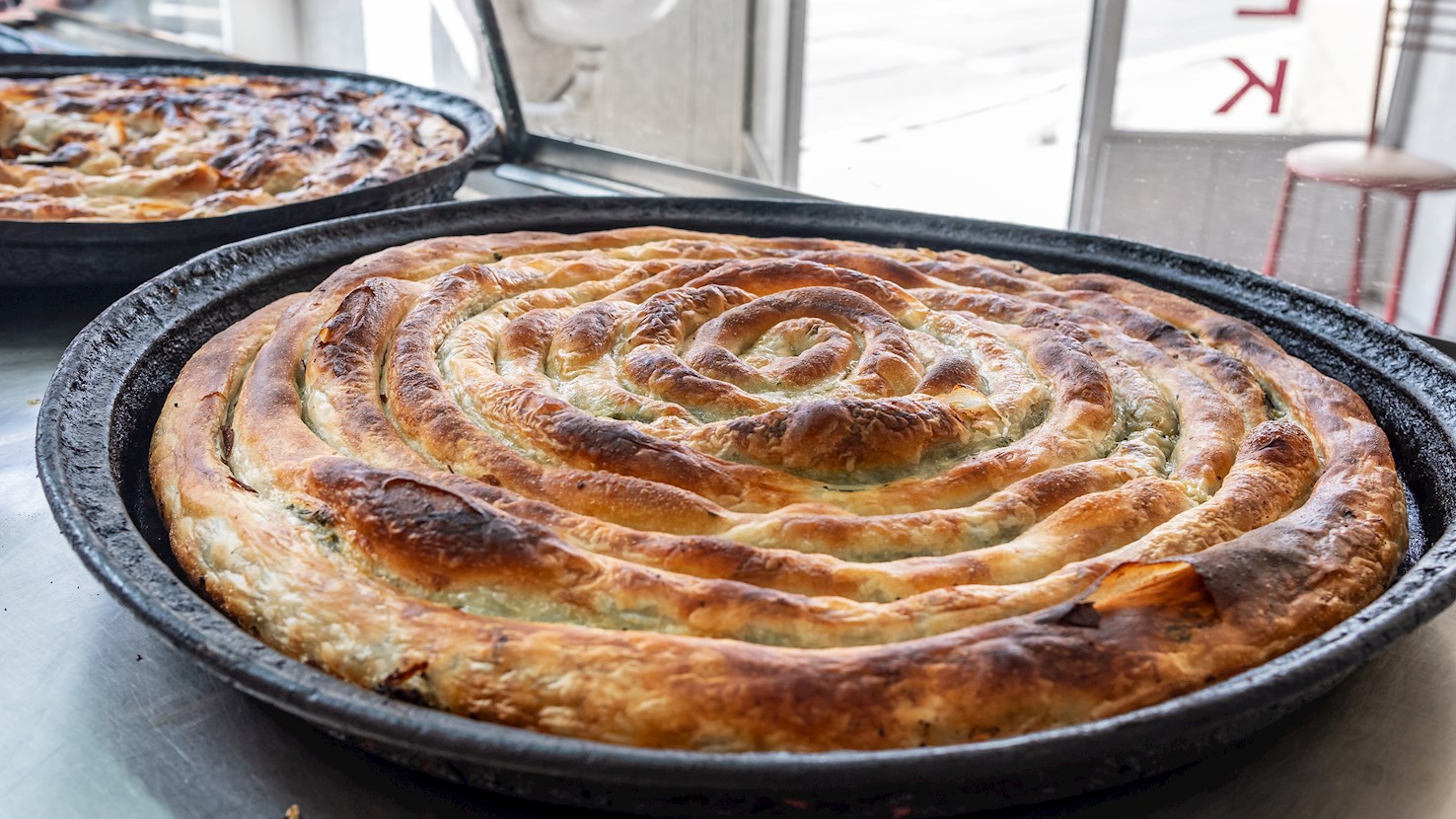
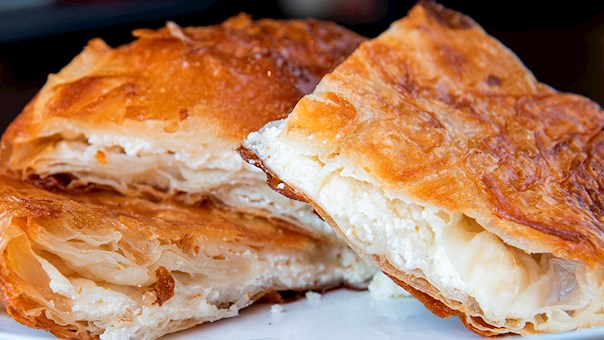
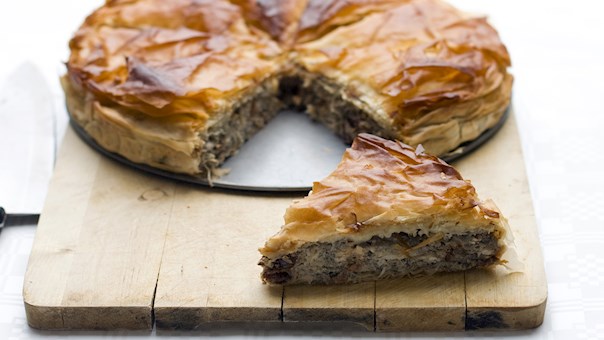
Burek consists of layers of phyllo dough stuffed with various savory fillings. Despite its Turkish origins, this dish has evolved into a proud gem of Bosnian national cuisine. Although most locals claim that only burek with ground beef can be called burek, the same dish also appears with other fillings, and these other varieties are known by different names: sirnica (cottage cheese), zeljanica (spinach), and krompiruša (potatoes). Burek is baked rolled into a snail-like shape and this type is typically found in bakeries, while traditional restaurants often make it in the form of a pie, which is sliced into quarters before serving. The dish is wildly popular all across the Balkans, though in Bosnia and Herzegovina, the cultural significance of this everyday staple is incomparable and best summed up in a number of local proverbs suggesting that if a woman can make a good burek, she's eligible for marriage.
TasteAtlas food rankings are based on the ratings of the TasteAtlas audience, with a series of mechanisms that recognize real users and that ignore bot,
nationalist or local patriotic ratings, and give additional value to the ratings of users that the system recognizes as knowledgeable.
For the “Top 100 European Street Food” list until October 15, 2026, 25,442 ratings were recorded, of which 18,239 were recognized by the system as legitimate.
TasteAtlas Rankings should not be seen as the final global conclusion about food. Their purpose is to promote excellent local foods,
instill pride in traditional dishes, and arouse curiosity about dishes you haven’t tried.












What People Say