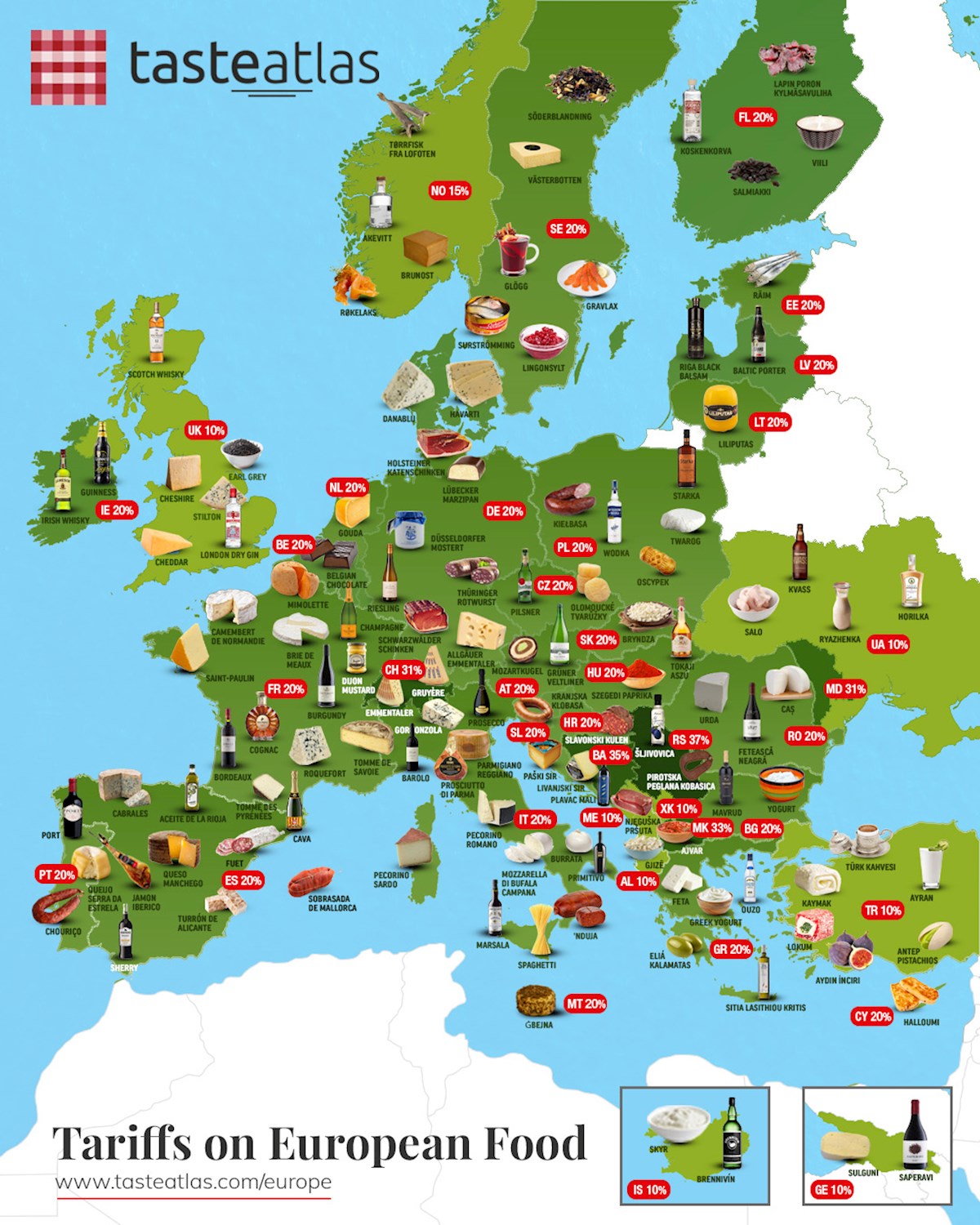
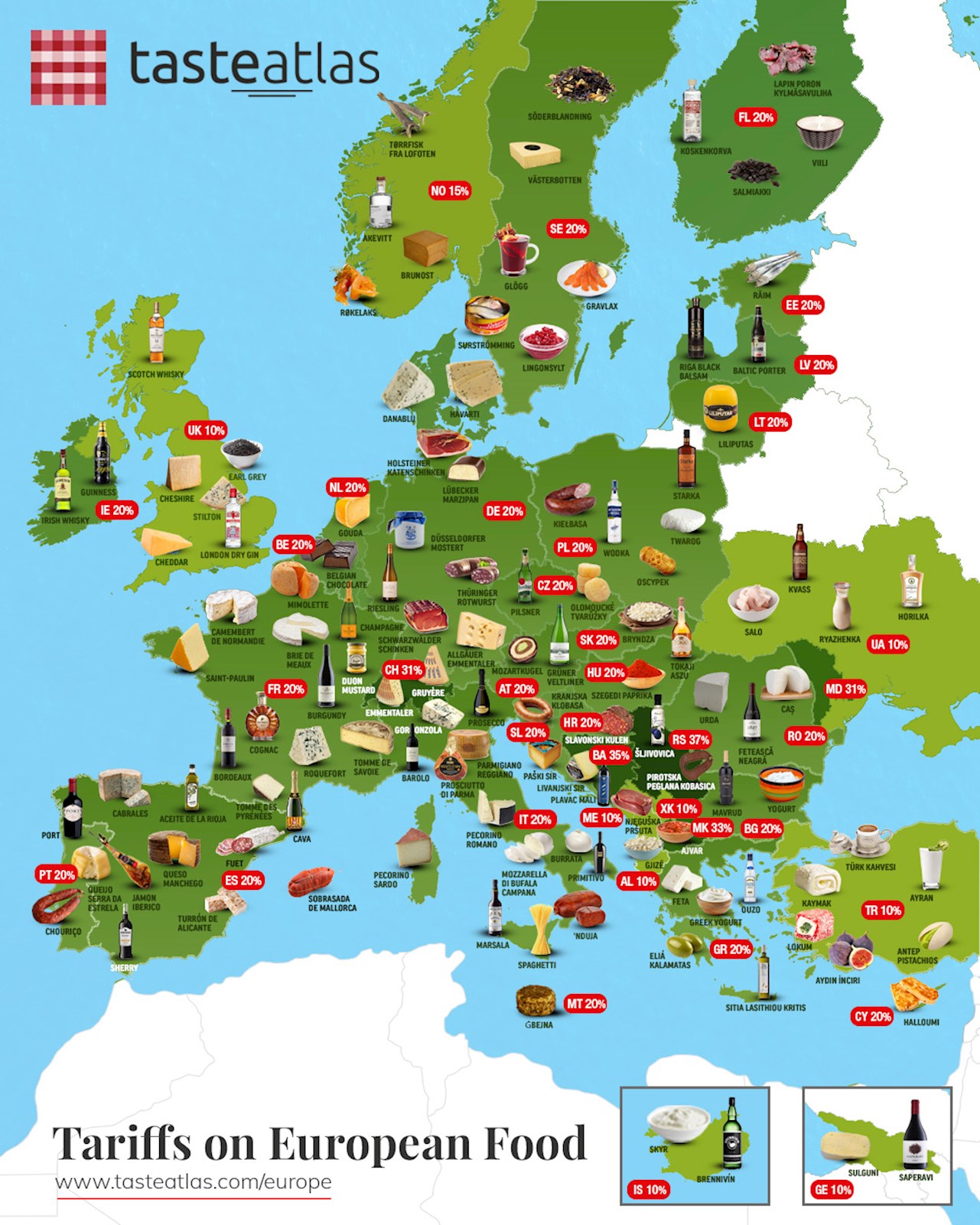
Italy: 20% tariff
Parmigiano Reggiano is a staple in American kitchens, prized for its nutty, complex flavor. Prosciutto di Parma is widely used in charcuterie boards and upscale sandwiches. San Marzano tomatoes are favored by chefs for authentic Italian sauces. Americans increasingly seek out balsamic vinegar from Modena for dressings and glazes. Italian espresso brands like Illy and Lavazza dominate premium coffee markets. Olive oil from Tuscany has a cult following among home cooks and professionals alike.
Italian food: https://www.tasteatlas.com/italy
France: 20% tariff
Champagne from the Champagne region is the gold standard for celebrations in the U.S. Brie and Camembert are common on cheese boards and in gourmet grocery stores. Dijon mustard and French cornichons are essential in deli-style meals. French wine, especially Bordeaux and Burgundy, enjoys elite status in wine cellars across America. Macarons from Ladurée and Pierre Hermé are a luxury dessert trend. Foie gras remains controversial but sought-after in fine dining.
French food: https://www.tasteatlas.com/france
Spain: 20% tariff
Jamón Ibérico is a prized delicacy in American charcuterie circles, often imported at high prices. Manchego cheese is a best-seller at specialty shops and wine bars. Spanish olive oil, especially from Andalusia, is growing in demand among health-conscious consumers. Rioja and Albariño wines are increasingly featured on American wine lists. Tinned Spanish seafood—mussels, octopus, and sardines—are gaining traction in gourmet markets. Paprika (pimentón) from La Vera is used by chefs seeking bold, smoky flavor.
Spanish food: https://www.tasteatlas.com/spain
Germany: 20% tariff
Bratwurst and Weisswurst are festival favorites, especially during Oktoberfest celebrations in the U.S. German beer—especially from Bavaria—is well-represented in American craft and import selections. Riesling, particularly from the Mosel region, is one of the most appreciated white wines among American sommeliers. Sauerkraut and mustards are common in delis and sandwich shops. German pretzels and baked goods have carved out a niche in artisan bakeries. Black Forest ham (Schwarzwälder Schinken) is found in high-end delis.
German food: https://www.tasteatlas.com/germany
United Kingdom: 10% tariff
English cheddar, especially aged farmhouse varieties, is a best-seller in American cheese shops. British tea brands like Twinings and Yorkshire Tea are common in grocery stores and tearooms. HP Sauce and Branston Pickle are found in British-style pubs across the U.S. Shortbread and digestive biscuits are popular in specialty and mainstream supermarkets. British ales and stouts are widely distributed. Clotted cream and scones are key features of high tea menus.
UK food: https://www.tasteatlas.com/united-kingdom
Greece: 20% tariff
Greek feta is a favorite cheese for salads, sandwiches, and baked dishes in American households. Kalamata olives are widely available and used in Mediterranean cuisine across the U.S. Extra virgin olive oil from Crete and the Peloponnese is highly regarded for its purity. Greek yogurt—led by brands like Fage—has revolutionized the dairy aisle in America. American chefs use mastiha and ouzo to add unique flavors to desserts and cocktails. Greek wines, like Assyrtiko from Santorini, are gaining attention in wine circles.
Greek food: https://www.tasteatlas.com/greece
Portugal: 20% tariff
Port wine, especially from the Douro Valley, is a respected dessert wine in American wine bars. Conservas—Portuguese tinned seafood—have become trendy snacks and tapas items. Pastéis de nata (custard tarts) are a rising favorite in gourmet bakeries. Portuguese olive oil is appreciated for its robustness and peppery notes. Vinho Verde is popular among younger wine drinkers for its crisp, refreshing profile. Salted cod (bacalhau) appears in Portuguese-American communities and specialty restaurants.
Portuguese food: https://www.tasteatlas.com/portugal
Austria: 20% tariff
Austrian wines, especially Grüner Veltliner and Blaufränkisch, are gaining favor in wine bars and among sommeliers. Mozartkugeln (chocolate-marzipan balls) are sold in specialty stores and gift shops. Austrian pumpkin seed oil is used in gourmet salads and fine dining. Sachertorte is a known reference point in high-end dessert menus.
Austrian food: https://www.tasteatlas.com/austria
Croatia: 20% tariff
Dalmatian prosciutto (pršut) is entering U.S. charcuterie selections, often compared with Italian counterparts. Croatian olive oil from Istria is winning international awards and catching attention among American chefs. Wines like Plavac Mali and Pošip are slowly making their way into boutique wine shops. Paški sir (Pag cheese) is gaining a cult following among cheese connoisseurs. Croatian truffles, especially from the Motovun forest, are used in fine dining and specialty imports.
Croatian food: https://www.tasteatlas.com/croatia
Netherlands: 20% tariff
Gouda and Edam cheeses are widely recognized and enjoyed in the U.S., both aged and young versions. Stroopwafels are now sold in major coffee chains and as snack items in gourmet markets. Dutch licorice (drop) has a niche fanbase in the U.S., particularly among expats. Dutch gin (jenever) is being rediscovered in the American craft cocktail scene. Bitterballen and Dutch pancakes have found a place in Dutch-themed or European fusion eateries.
Dutch food: https://www.tasteatlas.com/netherlands
Belgium: 20% tariff
Belgian chocolate brands like Neuhaus and Godiva are household names in the U.S. Belgian waffles—both Liège and Brussels styles—are sold in food trucks, cafés, and brunch spots. Trappist beers from Belgian abbeys are a staple in American craft beer shops. Belgian fries (frites) with mayonnaise have influenced food trends and menus. Chimay and Duvel beers are considered premium imports by American beer enthusiasts. Speculoos cookie butter has gone mainstream in the U.S. as a spread and dessert ingredient.
Belgian food: https://www.tasteatlas.com/belgium
Switzerland: 31% tariff
Swiss cheese, especially Emmental and Gruyère, is used in fondue and upscale grilled sandwiches. Toblerone and Lindt chocolate are extremely popular in American supermarkets and duty-free stores. Raclette is now featured in specialty dining pop-ups and gourmet experiences. Swiss wines are rare but sought-after among high-end wine collectors. Rösti has inspired variations in American brunch menus.
Swiss food: https://www.tasteatlas.com/switzerland
Hungary: 20% tariff
Hungarian paprika is an essential spice in American kitchens focused on Eastern European or gourmet recipes. Tokaji dessert wine has a niche but growing presence in the U.S. wine scene. Hungarian salamis and sausages, like téliszalámi, are used in charcuterie boards and specialty delis. Hungarian pickled vegetables are sold in ethnic grocery stores and farmers' markets.
Hungarian food: https://www.tasteatlas.com/hungary
Türkiye: 10% tariff
Turkish coffee is widely available in specialty cafés and Middle Eastern grocery stores, often served in traditional cups. Turkish delight (lokum) is sold in gift shops and ethnic markets, especially around holidays. Ayran, a salted yogurt drink, is gaining interest among health-conscious consumers and Mediterranean eateries. Antep pistachios from Türkiye are prized in the U.S. for their intense flavor and vibrant green color, often used in premium baklava, ice cream, and gourmet snacks.
Turkish food: https://www.tasteatlas.com/turkiye
Sweden: 20% tariff
Gravlax (cured salmon) is popular in U.S. Nordic and brunch restaurants. Swedish meatballs, often paired with lingonberry jam, are a known comfort food thanks in part to IKEA and Scandinavian cafés. Knäckebröd (crispbread) is sold in health food and Scandinavian specialty shops. Swedish aquavit is used in American bars with Nordic-inspired cocktail menus. Västerbottensost cheese is gaining recognition among cheese aficionados.
Swedish food: https://www.tasteatlas.com/sweden
Denmark: 20% tariff
Danish butter and pastries (wienerbrød) are staples in American bakeries and cafes. Smørrebrød (open-faced sandwiches) are gaining popularity in upscale brunch spots. Danish blue cheese (Danablu) is used in gourmet cheese platters. Carlsberg beer has a steady market presence in American imports. Danish rye bread is favored by health-conscious consumers and Nordic cuisine enthusiasts.
Danish food: https://www.tasteatlas.com/denmark
Norway: 16% tariff
Norwegian smoked salmon is considered premium and is widely used in American bagel shops and fine dining. Brown cheese (brunost) has a niche following in cheese-focused shops. Aquavit from Norway is imported for cocktail programs in high-end bars. Cloudberry jam is used in dessert pairings and Scandinavian cafés. Arctic char and other cold-water fish are featured in sustainable seafood programs.
Norwegian food: https://www.tasteatlas.com/norway
Finland: 20% tariff
Finnish rye bread and karjalanpiirakka (Karelian pies) appear in Scandinavian bakeries in major U.S. cities. Salmiakki (salty licorice) has a small but loyal fanbase. Finnish gin, often made with arctic botanicals, is being used in premium cocktails. Finnish coffee culture influences Scandinavian-style cafés in urban areas. Reindeer meat is a novelty item in gourmet and exotic meat markets.
Finnish food: https://www.tasteatlas.com/finland
Serbia: 38% tariff
Ajvar is gaining traction as a spread and dip in health-conscious and Balkan-themed restaurants. Kajmak is used in Serbian-American households and some European-style diners. Rakija is sold in specialty liquor stores and used in Eastern European cocktails. Serbian sausages like ćevapi are featured in food trucks and fusion cuisine. Serbian wines are entering niche wine shops, especially Vranac and Tamjanika varieties.
Serbian food: https://www.tasteatlas.com/serbia
Bosnia and Herzegovina: 36% tariff
Livanjski sir, a semi-hard cheese from Bosnia and Herzegovina, is gaining recognition in the U.S. among cheese enthusiasts for its nutty flavor and artisanal mountain origins.Bosnian coffee is served in traditional coffeehouses and cultural events. Kajmak and sudžuk (dry sausage) are available in ethnic food markets. Pita (burek) is found in Eastern European bakeries and frozen food aisles.
Bosnian Herzegovinian food: https://www.tasteatlas.com/bih
Slovenia: 20% tariff
Kranjska klobasa (Carniolan sausage) is exported and gaining fans in artisanal charcuterie. Pumpkin seed oil from Slovenia is used in gourmet salad dressings. Teran and Rebula wines are slowly emerging in boutique wine shops. Potica, a traditional rolled walnut cake, is featured in Eastern European dessert menus and holidays.
Slovenian food: https://www.tasteatlas.com/slovenia
Lithuania: 20% tariff
Šakotis (tree cake) is popular at weddings and Lithuanian-American events. Cold beet soup (šaltibarščiai) is appearing in modern Eastern European menus. Lithuanian rye bread is sold in ethnic bakeries and health food stores. Kvass and mead have a presence in specialty beverage sections.
Lithuanian food: https://www.tasteatlas.com/lithuania
Latvia: 20% tariff
Riga Black Balsam is used in cocktails and sold in craft liquor stores. Latvian smoked fish, especially sprats, are found in Eastern European delis. Rye bread and caraway-spiced cheeses are consumed by Baltic-American communities. Laima chocolate is sold in some European import stores.
Latvian food: https://www.tasteatlas.com/latvia
Estonia: 20% tariff
Estonian craft beers are emerging in niche beer markets in the U.S. Kama (a grain powder mix) is gaining curiosity among health food circles. Smoked fish and Baltic herring dishes are found in high-end Nordic-inspired restaurants. Estonian black bread is valued for its dense texture and flavor.
Estonian food: https://www.tasteatlas.com/estonia
Ireland: 20% tariff
Irish butter, especially Kerrygold, is a cult favorite among American bakers and chefs. Irish cheddar and Cashel Blue are gaining ground in cheese boards. Guinness is a staple in bars and Irish pubs, with a major market presence. Irish whiskey, led by Jameson, is among the fastest-growing liquor categories in the U.S. Soda bread is sold in bakeries and made at home, especially around St. Patrick’s Day.
Irish food: https://www.tasteatlas.com/ireland
Romania: 20% tariff
Zacuscă (vegetable spread) is gaining popularity in Balkan and Eastern European sections of stores. Romanian wines like Fetească Neagră and Tămâioasă Românească are appearing in niche wine shops. Romanian honey and jams are appreciated for their purity and traditional preparation.
Romanian food: https://www.tasteatlas.com/romania
Bulgaria: 20% tariff
Bulgarian yogurt, known for its probiotic richness, is used in U.S. health food markets and Mediterranean cuisine. Sirene cheese is sold in Eastern European delis and used in salads and pastries. Banitsa is made in Bulgarian bakeries and is growing in popularity through food festivals. Bulgarian wines, especially Mavrud and Melnik, are entering boutique wine shops. Lukanka (dry sausage) is valued by charcuterie lovers.
Bulgarian food: https://www.tasteatlas.com/bulgaria
Poland: 20% tariff
Kielbasa is a mainstream product in American delis and grocery chains. Pierogi are widely available frozen, in restaurants, and at festivals. Polish vodka, especially Belvedere and Żubrówka, is a bar staple. Oscypek (smoked sheep cheese) is a niche gourmet product found in ethnic markets. Polish pickles and sauerkraut are used in Jewish and Eastern European cuisine across the U.S.
Polish food: https://www.tasteatlas.com/poland
Czech Republic: 20% tariff
Czech pilsners like Pilsner Urquell are iconic imports in American beer culture. Prague ham and dry sausages are featured in charcuterie shops. Czech wines, particularly white varietals, are slowly entering the U.S. boutique wine scene. Czech-style dumplings and goulash are found in Central European restaurants.
Czech food: https://www.tasteatlas.com/czech-republic
Slovakia: 20% tariff
Bryndza (sheep cheese) is used in traditional recipes and can be found in select European stores. Slovak wines, especially Rieslings and Frankovka, are gaining slow recognition. Lokše (potato pancakes) are made in Slovak communities and food festivals. Tatratea, a herbal tea liqueur, is starting to appear in craft cocktail circles.
Slovakian food: https://www.tasteatlas.com/slovakia