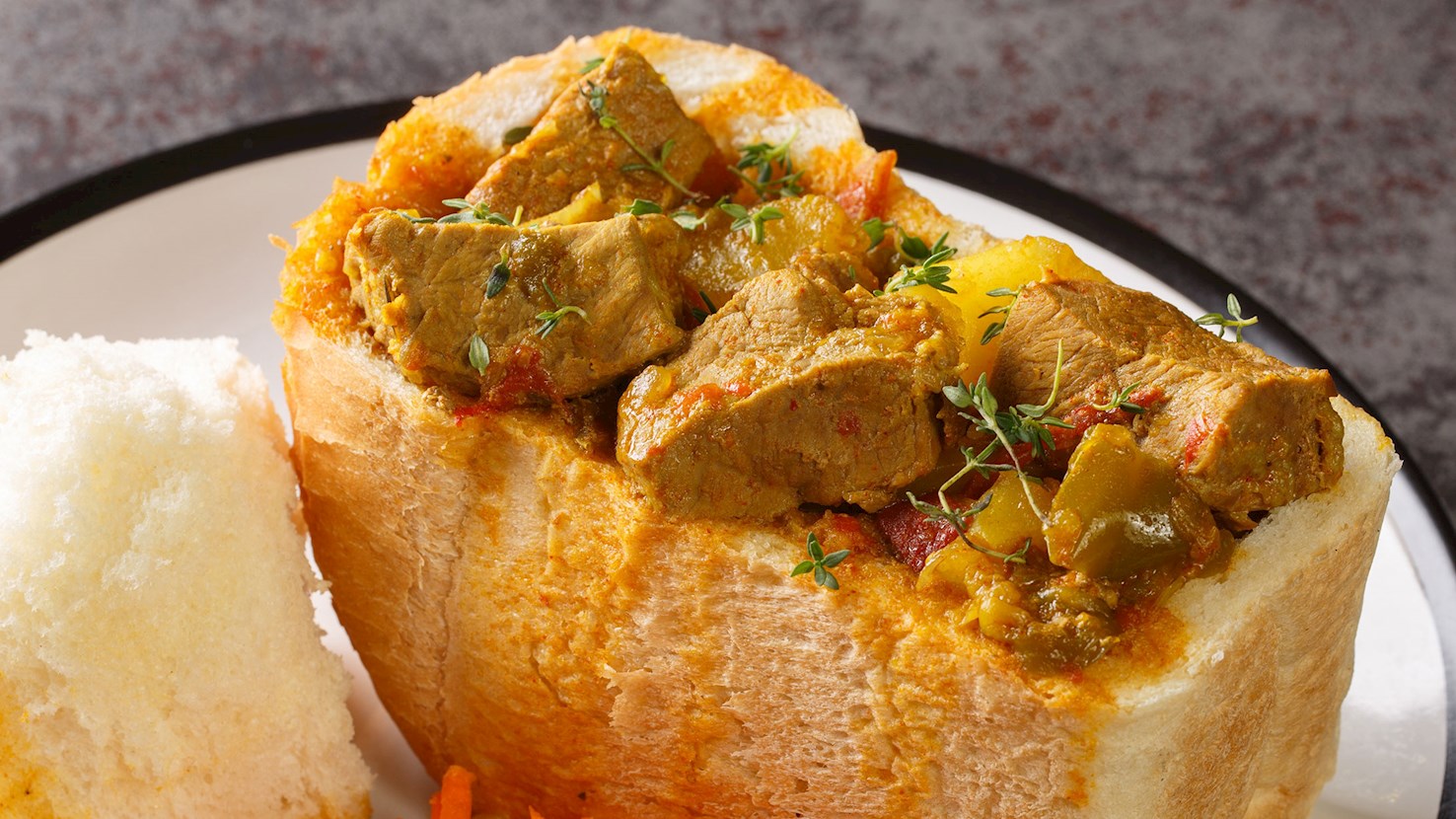
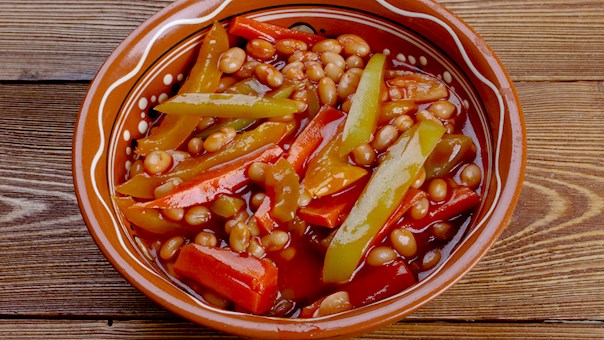
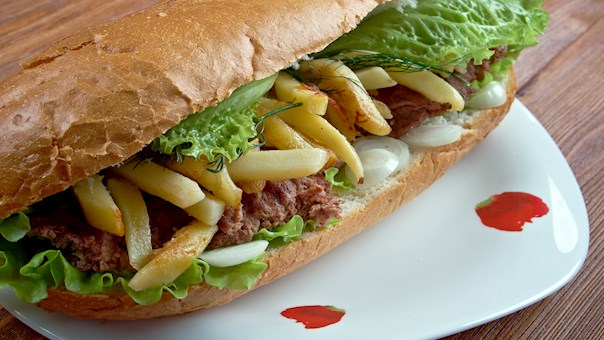
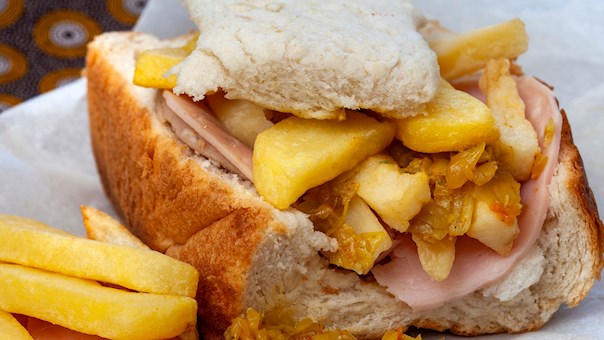
Bunny chow is a substantial fast-food meal made by hollowing out a section of an unsliced white loaf and filling the cavity to the top with hot curry. The bread serves as both container and accompaniment: its soft interior absorbs the gravy, while the surrounding crust holds the filling together long enough for it to be eaten by hand. Bunny chow originated within Durban’s Indian community, most likely during the first half of the twentieth century. The 1940s firmly established it, but no surviving document identifies a single inventor, restaurant, or exact date. Several connect its development with the Grey Street commercial district, plantation workers, golf caddies, factory laborers, and takeaway service during racial segregation. One influential explanation links the meal with Gujarati Bania merchants who operated cafés, grocery shops, and restaurants in Durban. Under this theory, bunny developed from the word Bania, while chow was already used in local English slang for food or eating. The etymology is plausible and widely repeated, but it has never been proved. Other explanations connect the name with buns, bread, or achar, although these are generally considered less convincing. The claim that bunny chow was invented specifically because black factory workers were legally barred from entering Bania restaurants is also difficult to confirm in full. Durban had discriminatory municipal and colonial restrictions long before apartheid became official national policy in 1948, and racial barriers affected where customers could enter, sit, and receive service. One account holds that curry was passed through side doors or back windows in hollowed bread because conventional plates and bowls were impractical for takeaway service. This may have contributed to the format, but it should not be treated as the single documented origin. Another account places the meal among workers who needed a portable lunch for sugar estates, factories, docks, shops, or construction sites. A hollowed loaf was cheap, filling, easy to carry, and required no plate. The bread absorbed curry more effectively than roti, which could soften, tear, and leak during transport. These stories all reflect the meal’s strong working-class roots, even though none can be verified as the sole explanation. Early bunny chows were probably filled mainly with bean curry rather than meat. Broad beans and sugar beans were inexpensive, nourishing, and well suited to long simmering. Meat fillings became increasingly prominent later, with mutton developing into the most celebrated and often most expensive option. The bread must be an unsliced, rectangular white loaf with a soft crumb and a crust strong enough to contain the curry. It is cut vertically into quarters, halves, or occasionally left as a full loaf. A quarter loaf is the standard individual portion, while a half loaf is considerably larger and may be shared. The soft central crumb is pulled out in one substantial piece rather than scraped away completely. Enough bread must remain along the sides and bottom to prevent the gravy from escaping. The removed section is often called the virgin. It is placed over the filled cavity like a lid or served beside the loaf for dipping. The curry must contain enough gravy to soak into the bread but should not be so thin that it immediately destroys the crust. Durban-style curries are usually richly spiced, hot, and cooked until the onions, tomatoes, and potatoes contribute natural thickness. The curry commonly begins with onions fried in oil until soft and browned. Fresh ginger and crushed garlic are added, followed by a spice mixture that may contain turmeric, coriander, cumin, fennel, chili powder, dried chilies, garam masala, or a locally blended curry masala. Whole spices such as cinnamon, cloves, cardamom, star anise, cumin seeds, or bay leaves may also be used. There is no single compulsory spice formula. The spices are briefly fried in hot oil to release their aroma before tomatoes are added. Bone-in mutton, lamb, chicken, beef, beans, lentils, or vegetables then simmer in the seasoned base. Potatoes are especially common because they absorb the curry and release starch as they soften, helping create the thick gravy needed for the bread container. The finished curry is ladled into the hollow loaf while extremely hot. Gravy is added first so that it reaches the bottom and begins soaking into the crumb. Meat, beans, and potatoes follow, with additional gravy poured over the top. The cavity is filled generously, often until the curry rises slightly above the cut edge. The virgin is then placed over or beside it. A beans bunny may contain broad beans, sugar beans, or another dried bean simmered with onions, tomatoes, potatoes, chilies, and spices. Broad beans produce a thick, earthy filling, while sugar beans develop a creamy interior and a reddish-brown gravy. Both remain among the least expensive and most established forms. Mutton bunny chow is widely regarded as the benchmark version. Bone-in mutton is simmered slowly until tender, giving the gravy fat, gelatin, and concentrated meat flavor. Bones can release some marrow when cut or cracked, but marrow is not the only source of the curry’s richness. Potatoes are usually added late enough to retain their shape while still thickening the sauce. A well-filled order should include a fair distribution of meat rather than mainly bones, potatoes, and gravy. Chicken provides a quicker and somewhat lighter filling. Bone-in chicken contributes more flavor, while boneless pieces are easier to eat inside the loaf. Beef, lamb, tripe, trotters with beans, dhal, mixed vegetables, chickpeas, and fish also appear, along with modern versions containing cheese, mince, or other additions. The bread container remains essentially unchanged regardless of the filling. Portion size and filling are often combined into a compact order. A quarter mutton means one-quarter of a loaf filled with mutton curry, while quarter beans indicates the same amount of bread with bean curry. A half mutton or half beans uses half a loaf. Full-loaf versions exist but are unusually large and often intended for sharing. Bunny chow is best eaten soon after filling. Resting for a few minutes allows the gravy to enter the crumb, but a long delay can make the walls excessively soft and cause the loaf to split. Earlier takeaway versions were often wrapped in newspaper, while modern shops usually use cardboard boxes or other containers that support the bread and retain heat. Eating it by hand is typical, although using a fork or spoon is not forbidden. The virgin is torn into pieces first and dipped into the curry. As the level of the filling drops, sections of the gravy-soaked inner walls are pulled away and used to scoop up meat, beans, potatoes, and sauce. The firmer outer crust is eaten last. The bread must be handled carefully as it softens. Metal utensils do not automatically cause the structure to collapse, but vigorous cutting can puncture the soaked base or split the side walls. Tearing the bread gradually from the top downward keeps the remaining section intact and allows the curry to stay contained. Bunny chow is frequently accompanied by sambal, a sharp raw salad that cuts through the fat and chili heat of the curry. One common version combines grated carrot, sliced onion, chopped green chilies, salt, and white vinegar. Tomato, cucumber, cabbage, coriander leaves, lemon juice, or sugar may also be added. The exact mixture varies from one shop to another. Mango pickle, lime pickle, mixed vegetable achar, or other sour condiments may be served alongside the sambal. These additions provide acidity, salt, and crunch against the soft bread and dense gravy, although a well-made bunny can also be served without any side.
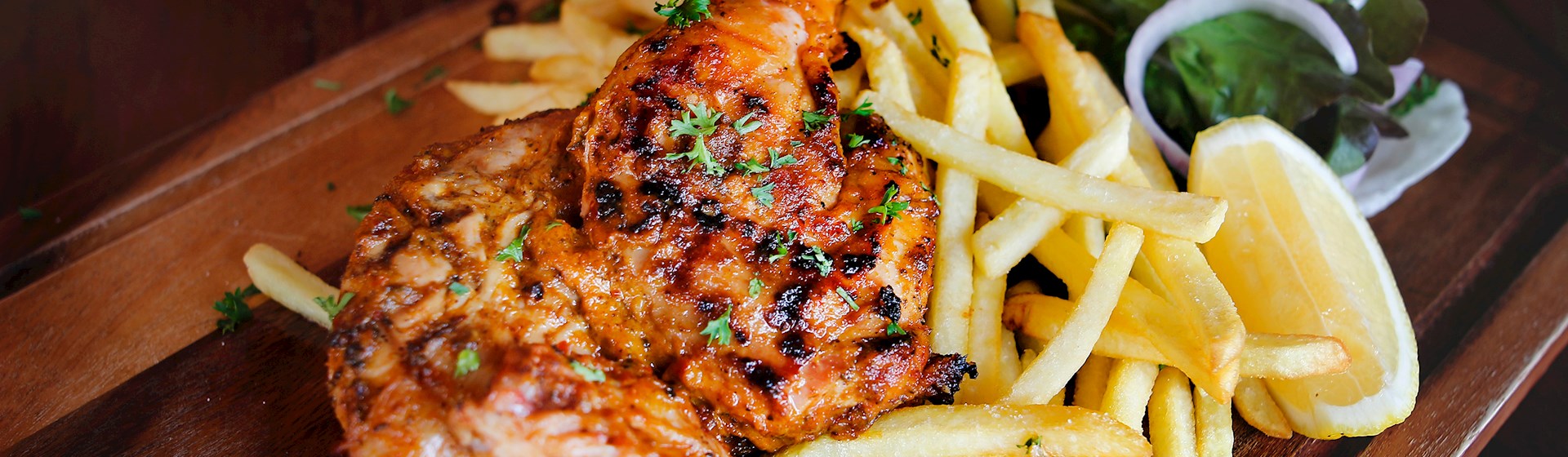
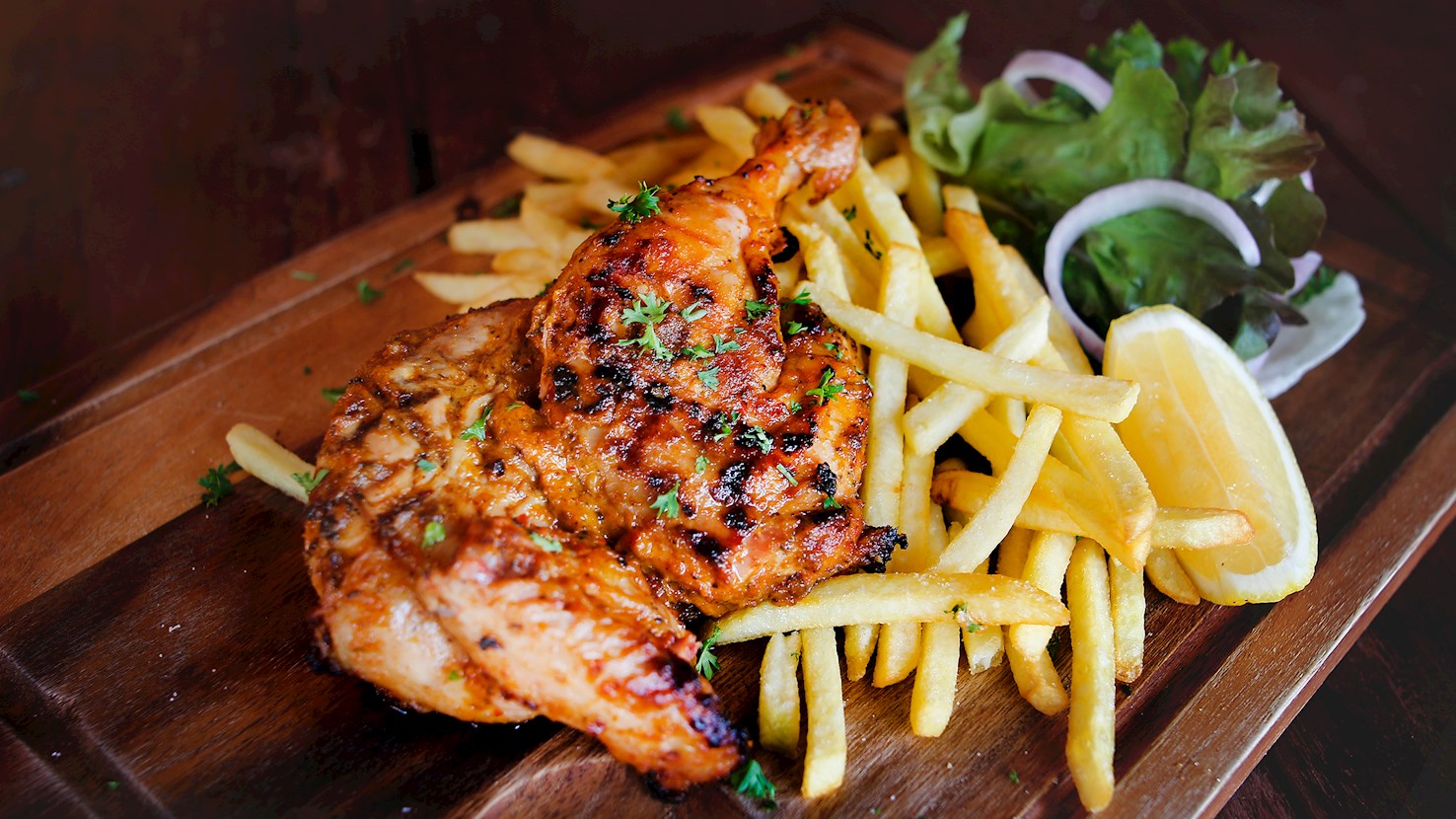
Peri peri chicken is a butterflied, charcoal-grilled poultry main course coated in a fierce, acidic marinade built around crushed African bird’s eye chilies. The history of peri peri chicken is best understood in several stages. The chili itself belongs to the Capsicum genus, which originated in the Americas and spread across the world through early modern trade. By the late 15th and early 16th centuries, Portuguese maritime explorers traveling to India were active along the southeastern coast of Africa, especially in the coastal territories of present-day Mozambique and Angola. In these regions, small, extremely hot bird’s eye chilies became established in local cultivation and cooking. The name piri-piri, peri-peri, or pili-pili comes from Bantu-language words for pepper. The sauce developed from this contact zone between local chilies and Portuguese pantry ingredients. Fiery bird’s-eye chilies were combined with garlic, olive oil, vinegar, salt, and citrus to create a sharp, hot, acidic sauce that could be used as both a marinade and a table condiment. Over time, this sauce became especially associated with grilled meats, including chicken cooked over open flames. The globally recognizable grilled chicken version became commercially prominent much later. In 1987, Robbie Brozin and Fernando Duarte bought a small takeout restaurant called Chickenland in Rosettenville, Johannesburg, after tasting its peri-peri-marinated chicken. They built that charcoal-grilled formula into Nando’s, turning the sauce-and-grilled-chicken combination into a major international restaurant format. Preparation begins by flattening a whole chicken through a technique called spatchcocking. The backbone is removed with heavy shears, and the breastbone is pressed flat. This allows the bird to cook evenly over direct heat. The defining wet paste is made by aggressively blending handfuls of small red chilies with fresh lemon juice, white or red wine vinegar, large amounts of raw garlic, smoked paprika, coarse salt, and olive oil. The flattened chicken is fully submerged in this acidic marinade for at least 24 hours, allowing the sharp liquids to penetrate the meat and break down the muscle fibers. The raw bird is then transferred directly from the marinade onto blistering hot charcoal grates. During grilling, the skin is brushed repeatedly with extra marinade, causing the sugars and acids to caramelize over the intense flames and form a dark, blistered crust. However, there are many different versions of peri peri chicken. A coastal version of peri peri chicken blends thick coconut milk directly into the crushed chilies, creating a rich, opaque sauce that softens the initial burn. Herb-heavy adaptations add fresh oregano, parsley, and dried bay leaves to the blender, giving the marinade a sharper, earthier background note. To control the heat more strictly, the chilies may be stripped of their seeds and inner membranes before blending. Another common adjustment is to add generous spoonfuls of dark brown sugar to the acidic liquid, creating a sticky, sweet glaze that strongly masks the underlying burn. Piri piri chicken is usually served split cleanly down the middle or chopped into bone-in quarters, arriving hot, smoky, and intensely spicy. A large pile of thick-cut, salt-dusted potato fries almost always accompanies the meat, acting as a starchy buffer against the sharp heat. A small glass cruet filled with extra chili-infused oil is typically placed nearby, allowing more drops of fiery sauce to be added directly onto the white meat. Because the chicken is sticky, smoky, and served on the bone, it is commonly eaten by hand, with the joints pulled apart and the meat torn straight from the bone.
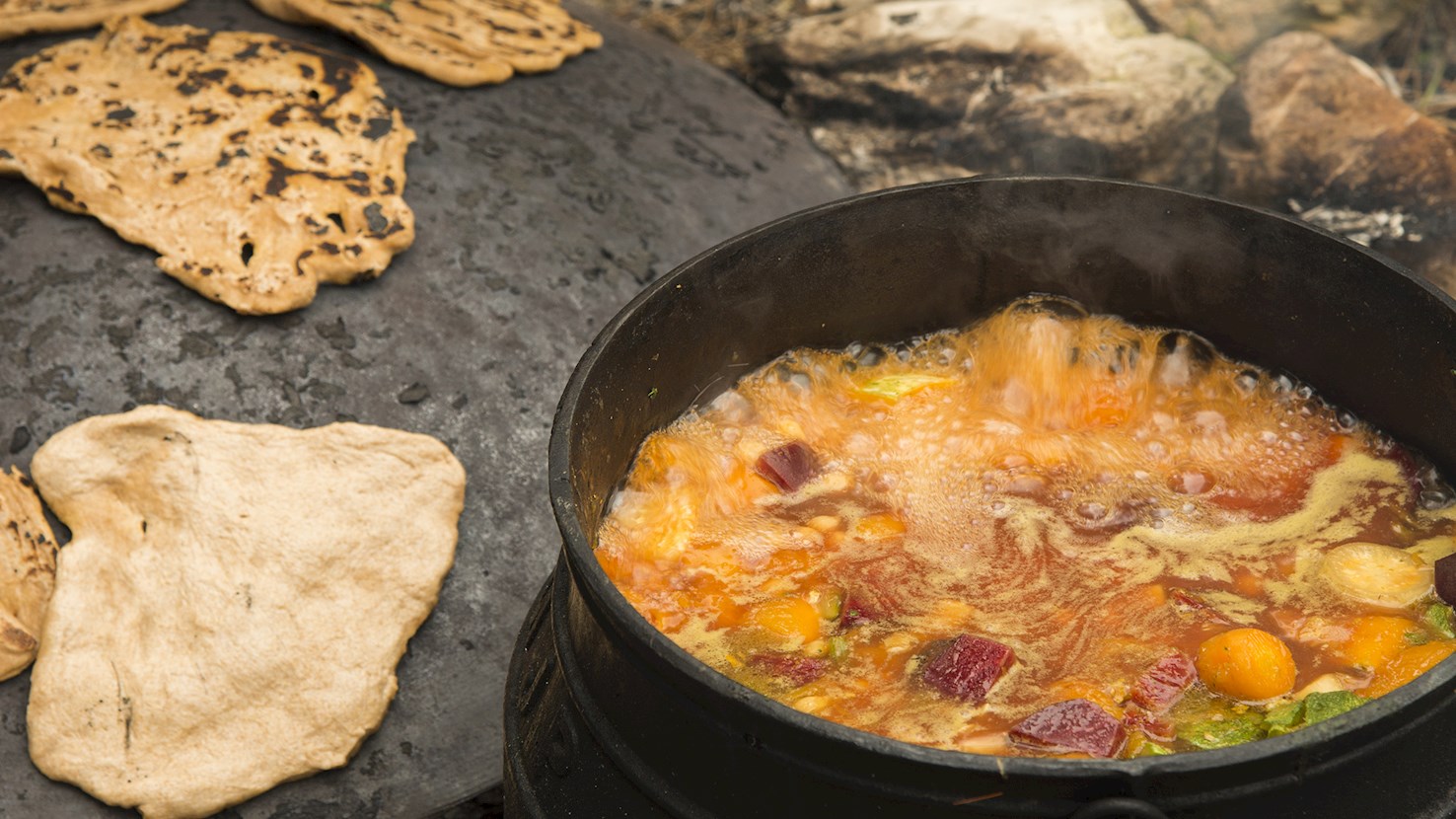
Potjiekos is a slowly simmered, layered stew made in a round, three-legged cast-iron pot called a potjie, usually over wood or charcoal. Meat forms the lower layer, firm vegetables sit above it, and softer ingredients are added near the top. The tightly covered pot remains over gentle heat until the meat becomes tender and the vegetables absorb the concentrated juices without losing their individual shapes. The Afrikaans name combines potjie, meaning “small pot,” with kos, meaning “food.” Despite the diminutive name, potjie pots range from compact vessels for a few servings to very large models used for gatherings. The rounded body, short legs, bail handle, and fitted lid distinguish the vessel from a flat-bottomed Dutch oven. Cast-iron pots reached the Cape through European settlement and maritime trade. Early households used heavy iron vessels over hearth fires. These portable three-legged pots later became closely associated with the Voortrekkers, who moved inland during the Great Trek of the 1830s and 1840s. The durable pot could stand directly over coals, tolerate repeated travel, and handle meat, grains, vegetables, bread, and other foods in a single vessel. However, Potjiekos cannot be attributed solely to the Voortrekkers or to one seventeenth-century recipe. The vessel was European in origin, but the food made in it developed through contact among Afrikaner, Cape Malay, indigenous African, and other southern African culinary cultures. Seasonings, available vegetables, livestock, wild game, and regional methods all helped shape the many forms now grouped under the same name. During inland travel, hunted game such as antelope, hare, guinea fowl, warthog, and wild pig could be simmered with whatever vegetables or roots were available. Bones were commonly left in the pot because they added flavor, gelatin, and body. The romantic account of one perpetual stew being renewed each day is repeated frequently. The pot retains heat effectively, creates a deep lower zone for meat and liquid, and leaves a narrower upper area where vegetables can soften in steam. Natural convection occurs in the hot liquid, but the shape does not continuously baste every ingredient without any other movement. Much of the upper layer is softened by trapped steam and moisture released from the vegetables themselves. A potjie is heated over a small wood or charcoal fire. Glowing coals provide the easiest control, but the vessel does not have to remain completely untouched by flame. The essential requirement is restrained, steady heat. A fierce fire can scorch the meat and sauce at the bottom long before the upper vegetables soften. The empty pot is warmed gradually before adding a small quantity of sunflower oil, rendered animal fat, butter, or another frying fat. Tough, bone-in meat is browned first. Lamb neck, mutton, oxtail, beef shin, short ribs, game, pork, and goat are particularly suitable because slow heating softens their connective tissue and enriches the liquid with gelatin. The meat does not need to be browned before it is fully cooked. Its surface is seared in batches so that it develops color without crowding the bottom of the pot. Chopped onions usually follow, along with garlic, ginger, leeks, or other aromatics. The onions soften in the fat and loosen the browned residue left by the meat. A modest amount of liquid is then added. Beef, lamb, chicken, or vegetable stock can be used alone, while dry red wine, beer, stout, sherry, cider, or dessert wine may provide further depth. The liquid loosens the browned material from the iron and begins forming the sauce. It should not fill the pot like a soup, since meat and vegetables release additional moisture during the long simmer. Beer and wine are common options rather than defining ingredients. Once the meat has begun simmering, the vegetables are added according to the time they need to soften. Potatoes, carrots, turnips, sweet potatoes, pumpkin, and other firm vegetables form the lower tiers. Green beans, corn, cabbage, cauliflower, and similar ingredients follow. Mushrooms, zucchini, peas, spinach, and other delicate vegetables belong near the top or are added later. Layering protects the softer ingredients from direct contact with the hottest liquid at the bottom. The meat braises in the sauce, firm roots simmer partly in the liquid, and the upper vegetables soften mainly in steam. This produces a different structure from a uniformly mixed stew. Once the layers are arranged and the lid is closed, stirring is usually avoided until serving. Moving a spoon repeatedly through the pot would break potatoes, squash, mushrooms, and other tender ingredients and combine the layers into a more uniform mixture. However, the rule is not absolute. The meat and onions are often moved during browning, and the finished contents may be folded together gently before serving. The lid should remain closed as much as possible because each opening releases heat and steam. A quiet, steady bubbling sound indicates suitable heat. Vigorous boiling can burn the bottom, toughen the meat, reduce the sauce too quickly, and damage the vegetables. A meat potjie may take between two and six hours, depending on the protein, the size of the pieces, and the strength of the fire. Oxtail and mature game require the longest time, while lamb neck, beef shin, and pork generally soften sooner. Chicken and seafood need considerably less time. Three to four hours is common for a substantial beef, lamb, or oxtail version, but no fixed duration applies to every pot. Seasonings vary widely. Salt, black pepper, coriander, bay leaves, garlic, and thyme are common. Curry powder, turmeric, cumin, cloves, allspice, cinnamon, chilies, chutney, Worcestershire sauce, tomato paste, and fruit may also appear. Cape Malay influence is especially visible in versions combining poultry or lamb with curry spices, dried fruit, and gentle sweetness. Potjiekos has no single compulsory spice mixture. A seafood potjie replaces long-cooked red meat with firm fish, mussels, prawns, crab, or calamari. The aromatic base and firm vegetables are usually softened first because the seafood needs only a short final simmer. Firm fish is added in large pieces so it does not disintegrate, mussels remain in their shells, and calamari is heated briefly or simmered long enough to become tender. Most seafood versions are completed in well under an hour once the sauce is ready. White wine, fish stock, tomato, garlic, cream, coconut milk, lemon, and herbs are common liquid and flavor components. Seafood should not be subjected to the three-to-six-hour timetable used for oxtail or game, since prawns, mussels, fish, and calamari can become dry or rubbery. A chicken potjie uses thighs, drumsticks, or jointed chicken, which remain moister than lean breast during simmering. Curried versions may include onions, garlic, ginger, turmeric, yellow curry powder, cinnamon, cardamom, apricots, peaches, raisins, or chutney. Sweet dried fruit against warm spices reflects the broader Cape Malay influence on Cape cooking, although apricots and curry powder are not required in every chicken version. Chicken needs less time than tough red meat. It may be browned first, simmered briefly with the sauce, and then covered with potatoes, carrots, and softer vegetables. Excessive heating causes the meat to leave the bones and lose its texture. A vegetarian potjie omits meat and animal stock but keeps the layered method. Large pieces of butternut squash, eggplant, potatoes, sweet potatoes, carrots, zucchini, corn, cabbage, beans, lentils, chickpeas, and whole button mushrooms can provide varied textures. Tomato paste and vegetable stock create a savory liquid base, while mushrooms, legumes, soy sauce, miso, nutritional yeast, or browned onions can deepen the flavor. The firmest vegetables still belong near the bottom, while eggplant, mushrooms, and zucchini are added above them or later in the simmer. Beans, chickpeas, or lentils make the meal more substantial, but they should be fully or partly softened beforehand unless enough liquid and time are available inside the pot. Rice, pasta, dumplings, or bread dough may sometimes be incorporated, although these require careful control because they absorb liquid rapidly. More commonly, the starch is served separately. Potjiekos should have a concentrated sauce or broth around the meat rather than an excessive volume of thin liquid. The finished pot is often brought from the fire to the center of an outdoor table, although the cast iron remains dangerously hot and must stand on a heat-resistant surface. Removing the lid releases accumulated steam and reveals the separate layers of meat and vegetables. A long metal spoon is guided down the inside wall to the bottom and lifted upward, collecting meat, root vegetables, softer upper ingredients, and sauce in one serving. This preserves a cross-section of the layers instead of taking all the vegetables from the top before reaching the meat underneath. Potjiekos is commonly served over plain white rice, pap or mieliepap (maize-meal porridge), or another form of crushed or ground maize. Crusty bread, potbrood, roosterkoek, mashed potatoes, samp, and polenta-like maize accompaniments can also absorb the concentrated broth. Rice, pap, and bread are especially useful when the pot contains little potato or another internal starch.
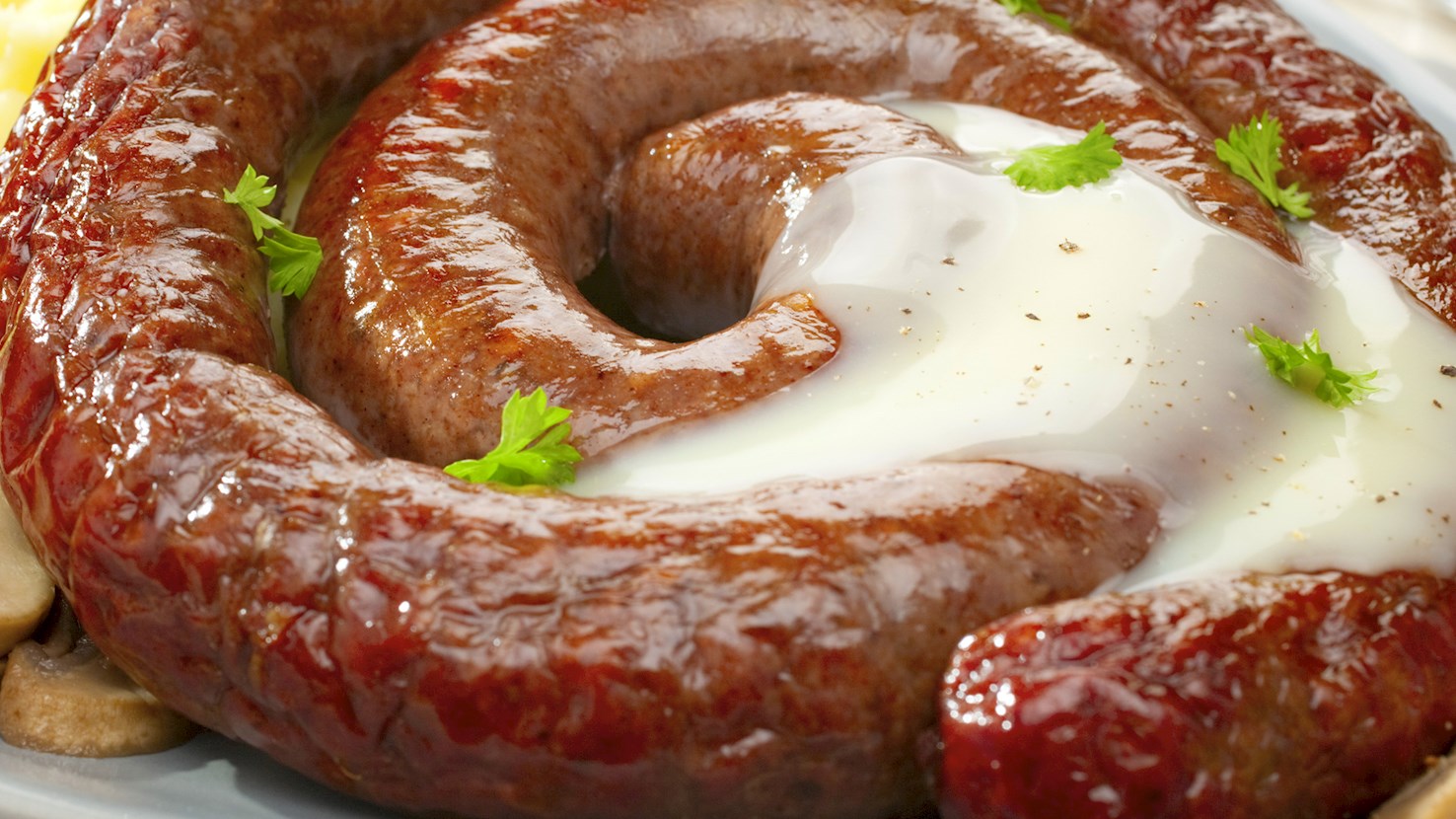
Boerewors is a South African sausage that's shaped into a coil and must contain at least 90% meat, while the other 10% consists of spices (nutmeg, allspice, cloves, black pepper...) and other ingredients. The fat in the meat must not exceed 30%. The sausage must contain beef, but it can also have lamb, pork, or a combination of both, while offal or mechanically processed meat is forbidden. The name boerewors is derived from two words – boer, which means farmer, and wors, which means sausage. Boerewors is traditionally grilled on the braai (South African barbecue), and it's usually served with pap and sous (sauce). Alternatively, the sausage can also be placed into a bun and eaten as a hot dog with a tomato and onion relish on top, when it's known as boerie.
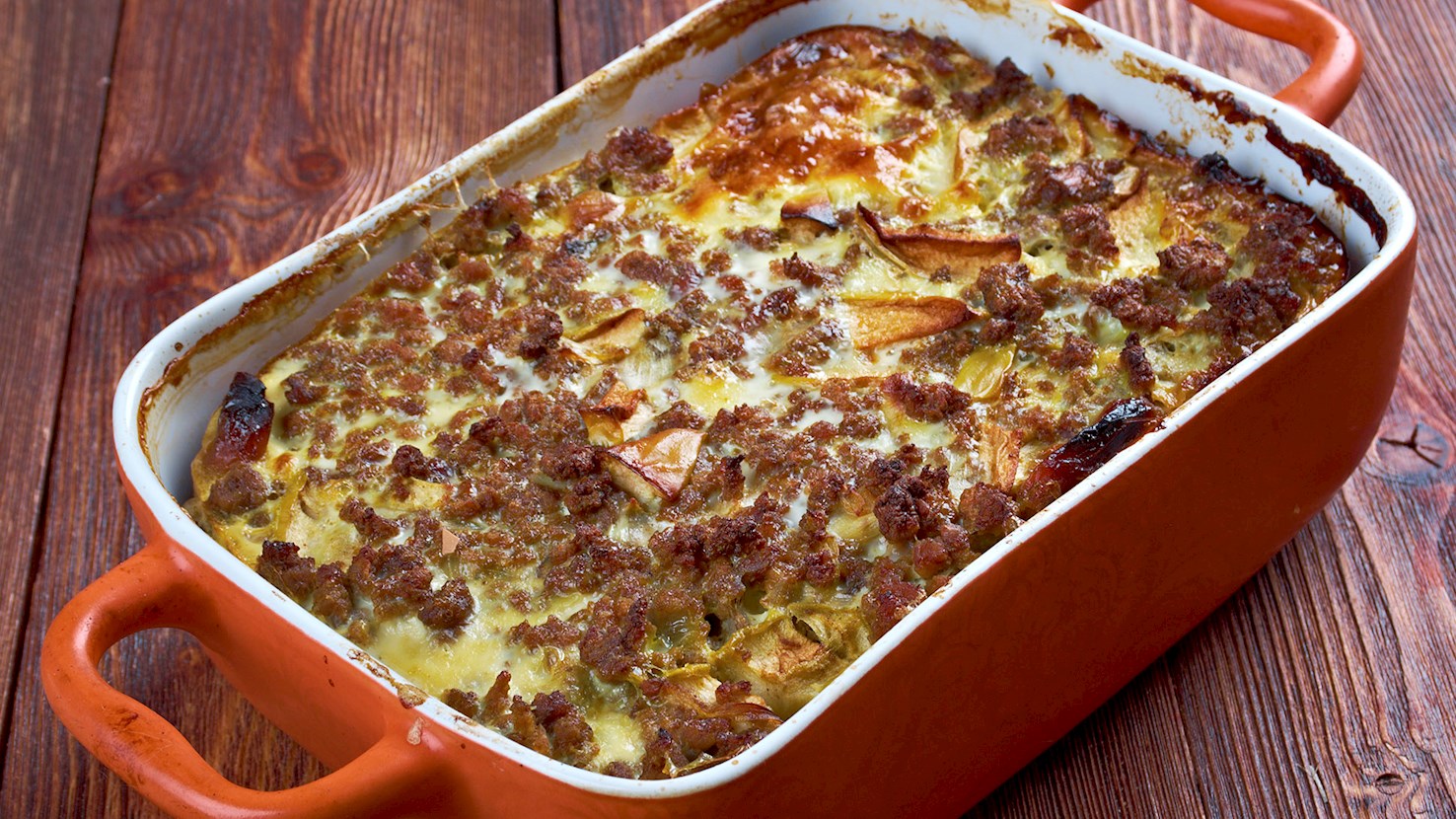
Bobotie or bobotjie is a South African deep-dish casserole made from ground beef or lamb, herbs, spices, curry powder, fruits, and a finish of golden-brown egg custard that is scented with cinnamon or nutmeg. The dish originated from an Indonesian dish called bobotok, which was taken to South Africa in the 16th century by the Indonesians that transported spices and slaves to the country. It is full of well-balanced flavors – sweet and fruity from the chutney, apricot jam, and sugar, spicy from curry and turmeric, sour from vinegar, and salty from the meat. Today, bobotie is so popular that it is a centerpiece of festive meals and can be found in most South African restaurants, where it is traditionally served with vegetables, yellow rice (white rice with turmeric), or steamed white rice that soaks up the rich juices oozing from the cut portions.
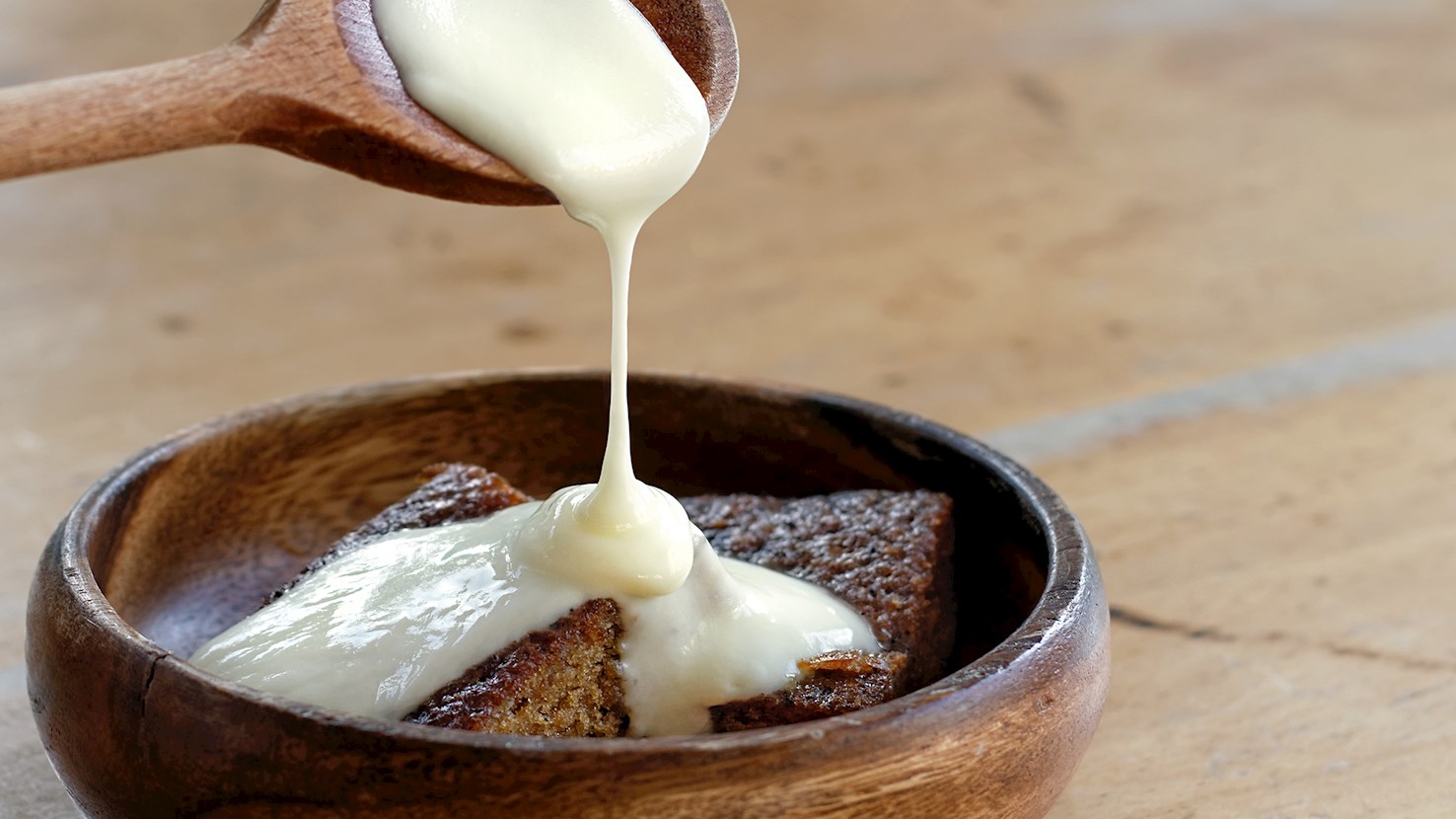
Malva pudding is a traditional dessert consisting of a pudding base covered in a creamy, sweet sauce made with water, cream, vanilla, butter, and sugar. The pudding is usually made from butter, sugar, eggs, apricot jam, milk, flour, and salt. The dessert is typically served warm, preferably with ice cream, whipped cream, or vanilla custard on the side. It is believed that the dish is named malva pudding after the Afrikaans word malva, meaning marshmallow, referring to the similarities between marshmallows and the pudding's texture, although some say that the name is derived after the fact that the pudding used to contain Malvasia wine.
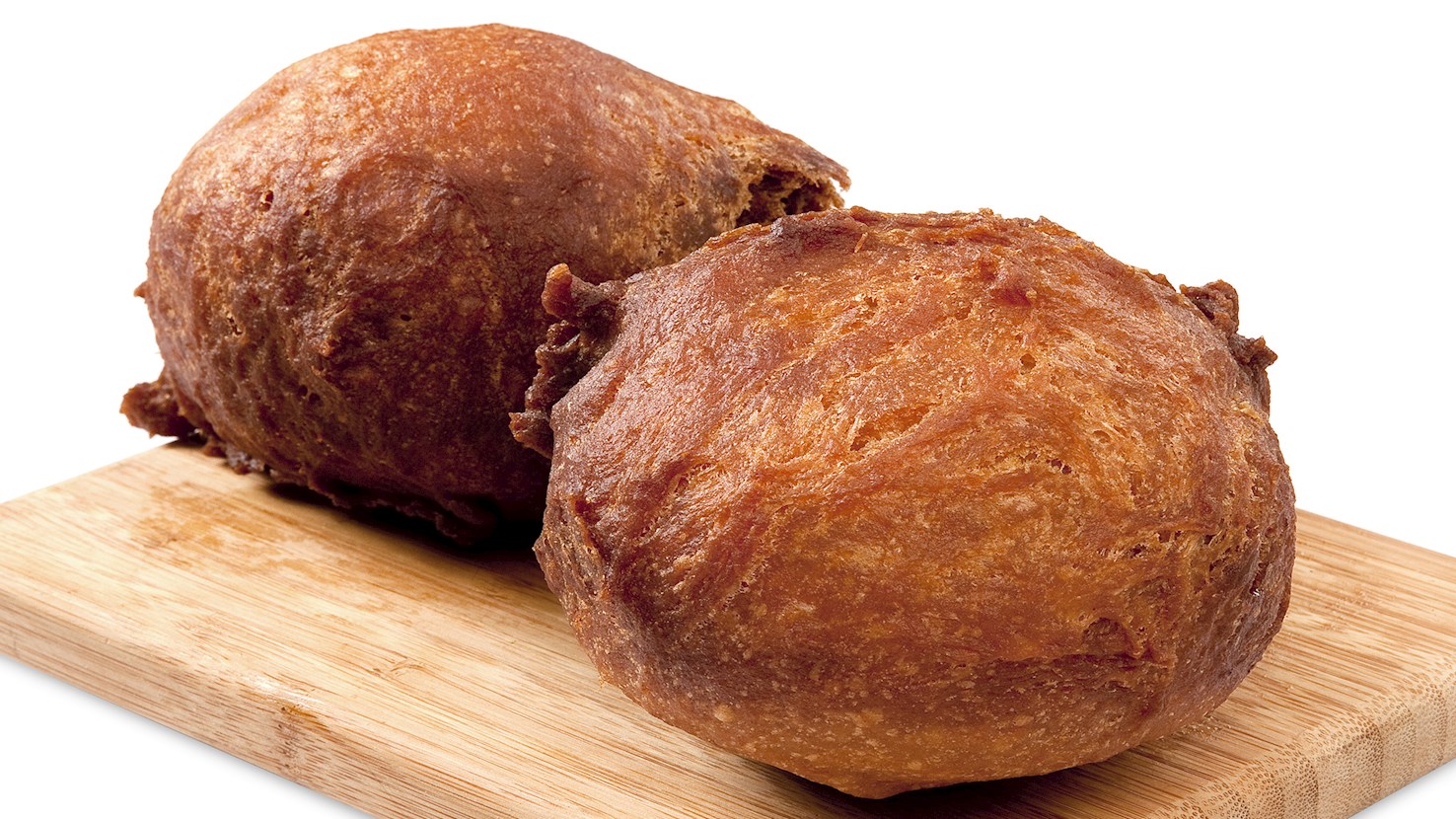
Vetkoek is an iconic South African street food item consisting of deep-fried yeast buns that are usually filled with cheese, curry, or fruit jams. It can be served as a small snack, for breakfast or lunch. The ball-shaped dough is made from salt, yeast, and flour. When served at a South African braai, vetkoek is often served with boerewors, a traditional sausage. You can also serve them as they are, or with a cup of tea on the side.
Droëwors is a dry sausage snack that originates from South Africa, where it holds a place as a popular and widely recognized food product. It is made by air-drying spiced meat sausages, usually beef-based, into a firm, shelf-stable form. The name derives from Afrikaans, with “droë” meaning dry and “wors” meaning sausage. It is closely related to boerewors, a fresh sausage, but differs in that droëwors is intended to be dried and consumed without cooking. The development of droëwors is tied to the preservation needs of early South African settlers, particularly the Dutch-speaking Boer communities. During long treks or in rural areas with limited access to refrigeration, preserving meat through drying was a practical necessity. Influenced by techniques from Europe and the indigenous food knowledge of southern Africa, droëwors evolved as a way to turn perishable fresh sausages into a portable, long-lasting food. Over time, it became not only a method of survival but a staple item in the diet and eventually, a sought-after snack with commercial significance. The preparation of droëwors starts with lean cuts of beef, often mixed with a small portion of lamb for flavor and texture. Pork is typically avoided because of its shorter shelf life. The meat is finely ground and blended with a spice mixture that usually includes salt, black pepper, toasted coriander seeds, vinegar, and sometimes clove or nutmeg. The seasoned meat is then stuffed into thin natural casings, usually sheep intestines, which help the sausages dry more quickly and evenly. The sausages are hung in a controlled environment with proper airflow and low humidity and are left to dry slowly over several days until they reach the desired firmness. The drying process both preserves the meat and intensifies the flavor, resulting in a chewy, richly spiced sausage that can be eaten as-is. Droëwors is typically served as a snack and requires no further preparation once dried. It is commonly sold in butcher shops, supermarkets, farm stalls, and at sporting events and markets throughout South Africa. Many producers make it in small batches, while larger commercial operations package it for both local and export markets. It is often enjoyed alongside biltong, another South African dried meat product, and sometimes forms part of snack platters or casual meals. Despite its simplicity, droëwors has become part of South Africa’s culinary identity and is frequently brought abroad by travelers or expatriates seeking a familiar taste of home. It is especially popular among hikers, road-trippers, and anyone needing a protein-rich food that doesn’t require refrigeration. Its long shelf life and ease of transport have made it a preferred choice for outdoor activities and long journeys.
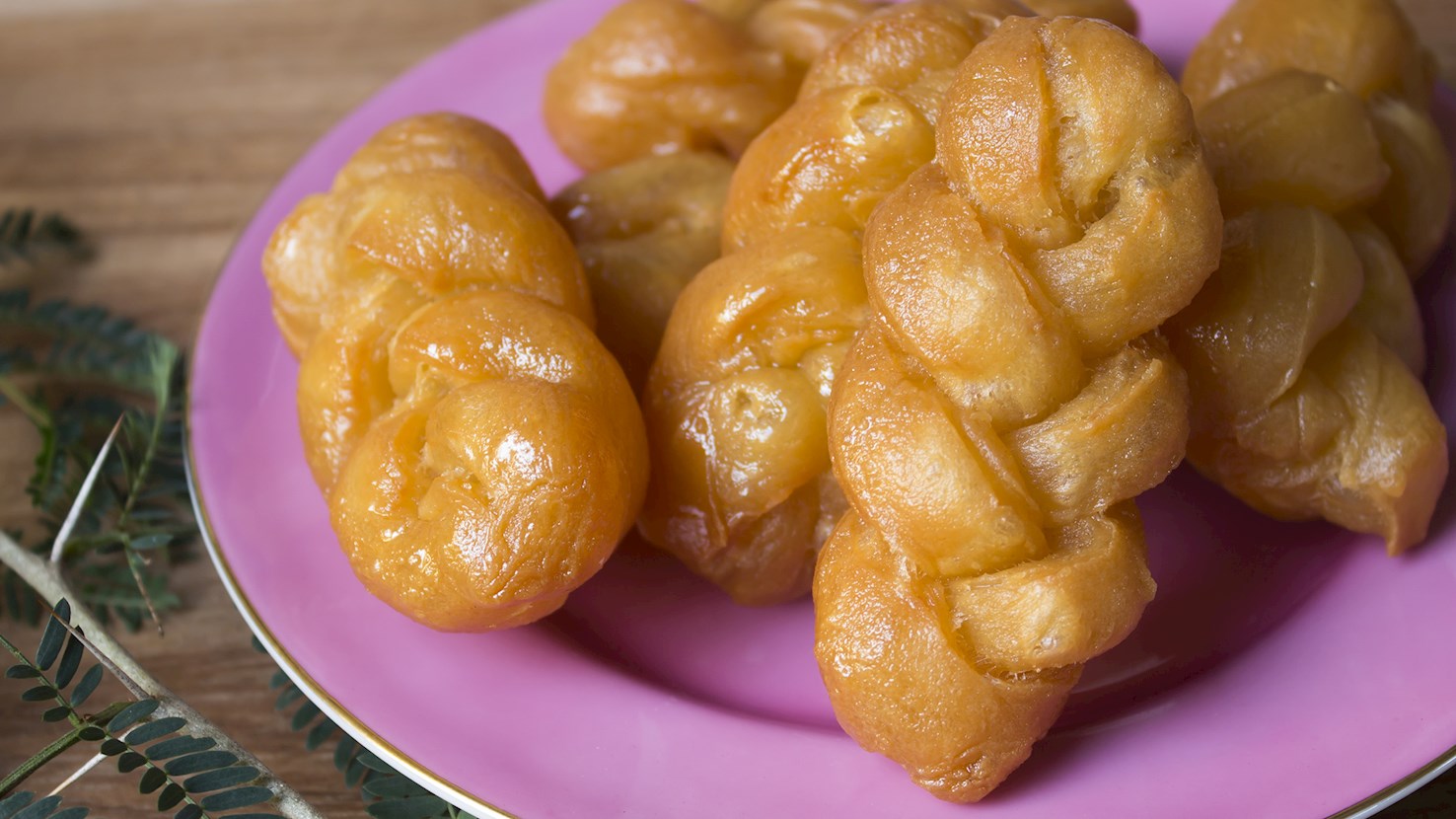
Koeksister is a sweet South African snack with a sticky appearance. It is prepared by frying braided dough strips in oil, then dunking them into a cold sugary syrup. These sticky treats are sold on every major street in South Africa, and today they can even be found in most supermarkets. It is recommended to top them with cinnamon or lemon juice before consumption.
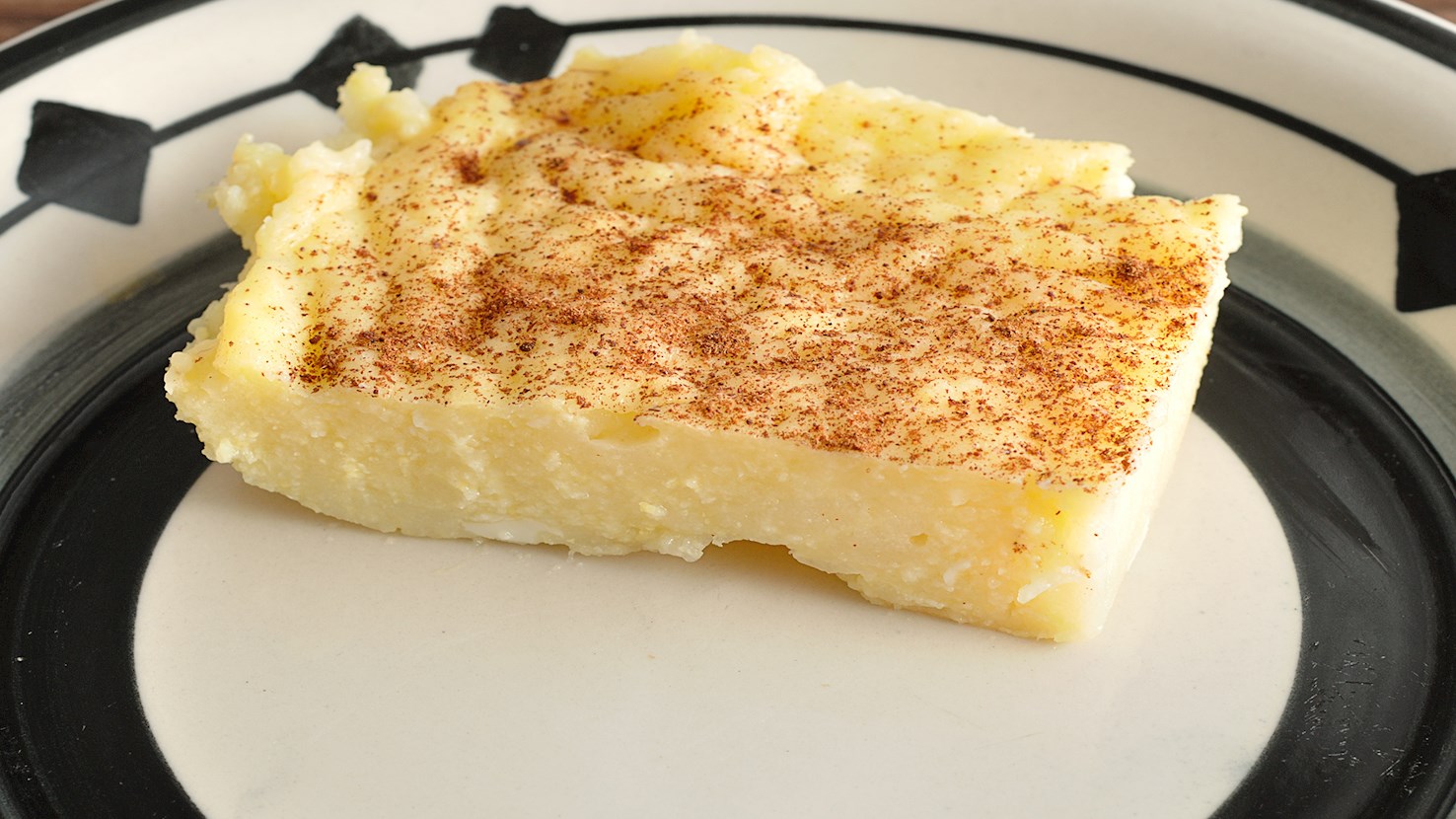
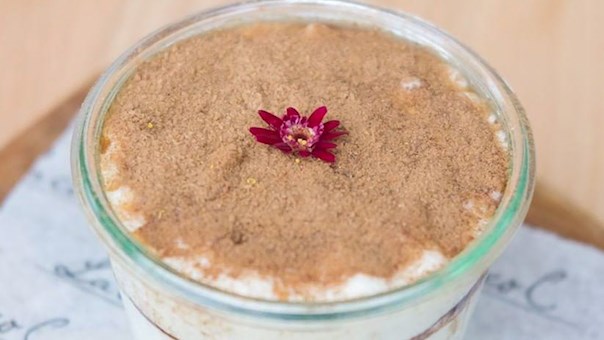
Melktert is a sweet milk tart with a pastry crust, a smooth custard filling made primarily from milk, sugar, eggs, and flour or cornstarch, and a generous dusting of ground cinnamon. Its Afrikaans name means “milk tart.” The filling contains a relatively high proportion of milk to egg, giving it a lighter texture and a more pronounced dairy flavor than many egg-rich custard tarts. Depending on the recipe, the center may be softly set and slightly wobbly or firm enough to hold a clean slice. Melktert is closely associated with the Cape and is generally traced to the culinary culture that developed after the Dutch East India Company established its refreshment station at the Cape of Good Hope in 1652. Dairy farming expanded as the settlement grew, making fresh milk, butter, and eggs increasingly accessible. Recipes brought from Europe were gradually adapted through local agriculture, colonial trade, migration, enslavement, and exchange between several communities. Historical research therefore treats melktert as a dessert with multiple roots rather than the product of one inventor or one isolated culinary lineage. The tart is often described as a descendant of mattentaart, a Flemish pastry filled with sweetened milk curds. Cinnamon became one of melktart’s defining flavors. The Cape occupied a central position in the Dutch East India Company’s maritime network, through which spices from Asia moved into local kitchens. Cape Muslim culinary influence also helped establish aromatic versions containing cinnamon, cardamom, naartjie peel, bitter almonds, peach or apricot kernels, and other gentle flavorings. These additions did not necessarily appear simultaneously, and the idea that Indonesian cinnamon alone transformed mattentaart into melktert is too simple. Melktert now comes in two broad forms. In one, the milk filling is poured into pastry and baked until set. In the other, the custard is thickened on the stovetop and transferred to a fully baked shell, then chilled. Both are well established. The baked form is often lighter and more delicate, while the stovetop-set form tends to be smoother, creamier, and easier to slice neatly. A sweet shortcrust shell begins with cold unsalted butter worked into wheat flour and sugar until the mixture resembles coarse crumbs. Egg binds it into a cohesive dough. A small amount of cold water may be added if needed, but excessive liquid or handling can make the crust tough. The dough is chilled, rolled or pressed into a shallow round tart tin, and trimmed along the rim. It is then lined with baking paper and filled with ceramic weights or dried beans. Blind baking sets the walls and base before the moist custard is added. The weights are removed near the end so the base can dry and develop a light golden color. A shell that remains pale and damp is likely to soften rapidly beneath the filling. The filling usually starts with whole milk heated gently with one or more cinnamon sticks. The milk may also be infused with vanilla, cardamom, naartjie peel, lemon rind, peach leaves, or a few apricot or peach kernels. The milk should become hot and fragrant, but a violent boil is unnecessary and increases the risk of scorching or overflowing. Egg yolks or whole eggs are whisked separately with white sugar and flour, cornstarch, or a mixture of both. Cornstarch gives a smooth, cleanly set filling, while flour can produce a softer, more pudding-like body. A portion of the hot milk is gradually whisked into the egg mixture to raise its temperature without curdling it. The tempered mixture is returned to the remaining milk and heated gently while being stirred continuously. It thickens as the starch absorbs liquid and the egg proteins set. The finished custard should be smooth enough to pour but thick enough to coat a spoon. It should not be boiled aggressively until severely dense, since excessive heat can produce lumps, an eggy flavor, or a rubbery final texture. Some recipes separate the eggs and fold stiffly beaten whites into the warm custard. The trapped air gives the filling a lighter, almost soufflé-like quality. Other versions use whole eggs or yolks without whipped whites, especially when the custard is thickened before being placed in the crust. For a stovetop-set melktert, the hot custard is poured into the fully baked pastry shell and smoothed across the surface. For a baked version, a more fluid filling is poured into a raw or partly baked shell before the tart returns to the oven. The heat must remain moderate so the center sets gradually without curdling, cracking, or becoming dry. The finished tart needs time to cool and stabilize. A stovetop-set version is left briefly at room temperature and then refrigerated for several hours, often overnight. A baked version can also benefit from chilling, although it may be served slightly warm or at room temperature. The filling should become sliceable but not form a rigid block. Its texture is usually soft, creamy, and tender. Ground cinnamon is scattered over the pale surface once the filling has set or shortly before serving. The coating may range from a light veil to a dense brown layer that almost completely covers the custard. Cinnamon can also be infused into the milk, giving the filling a warmer flavor beneath the powdered surface. A crustless melktert omits the pastry entirely. The milk mixture is thickened or baked directly in a buttered tart plate, where flour or cornstarch helps it hold its shape. Some versions form a faintly firmer layer around the edges while remaining soft in the center. It resembles a baked milk pudding more than a pastry tart and requires less work, but it retains the characteristic milk-and-cinnamon profile. Crustless versions have a long recorded history rather than being solely a recent shortcut. Puff pastry is another common base. It creates thin, crisp, buttery layers around the soft filling and produces a sharper textural contrast than shortcrust. The pastry may be blind baked first or filled and baked with the custard, depending on the formula. Careful baking is needed so the center of the base does not remain wet beneath the milk filling. Modern versions also use crushed Tennis biscuits, digestive biscuits, or similar sweet biscuits mixed with melted butter. This produces a crumb crust that requires little or no baking. It is especially common with chilled, stovetop-set fillings, although it creates a distinctly different texture from shortcrust or puff pastry. Citrus is one of the most established flavor variations. Long strips of naartjie peel can be infused in the hot milk and removed before the custard is thickened. Lemon or mandarin peel provides a similar effect, adding fragrance and mild bitterness without turning the tart sharply acidic. Fresh zest may also be used in small amounts. Almond extract gives the filling a more concentrated marzipan-like aroma. Older recipes sometimes achieved a related flavor by heating the milk with peach or apricot kernels, bitter almonds, or blanched almonds. Almond extract should be used sparingly, since an excessive quantity can overwhelm the milk and cinnamon. Vanilla is often added alongside it to soften the flavor. Other variations add cardamom, nutmeg, coconut milk, sweet wine, lemon rind, or fresh fruit. Contemporary forms also reinterpret the flavor in cakes, doughnuts, trifles, ice cream, liqueurs, and hybrid puddings. These adaptations extend the milk-cinnamon profile beyond the tart without changing the identity of the original pastry. Once thoroughly set, melktert is cut into wedges with a sharp knife. Cleaning the blade between cuts helps preserve the smooth custard surface and prevents cinnamon and pastry crumbs from marking each slice. The tart can be served cold, at room temperature, or slightly warm, though the chilled version gives the neatest wedges.
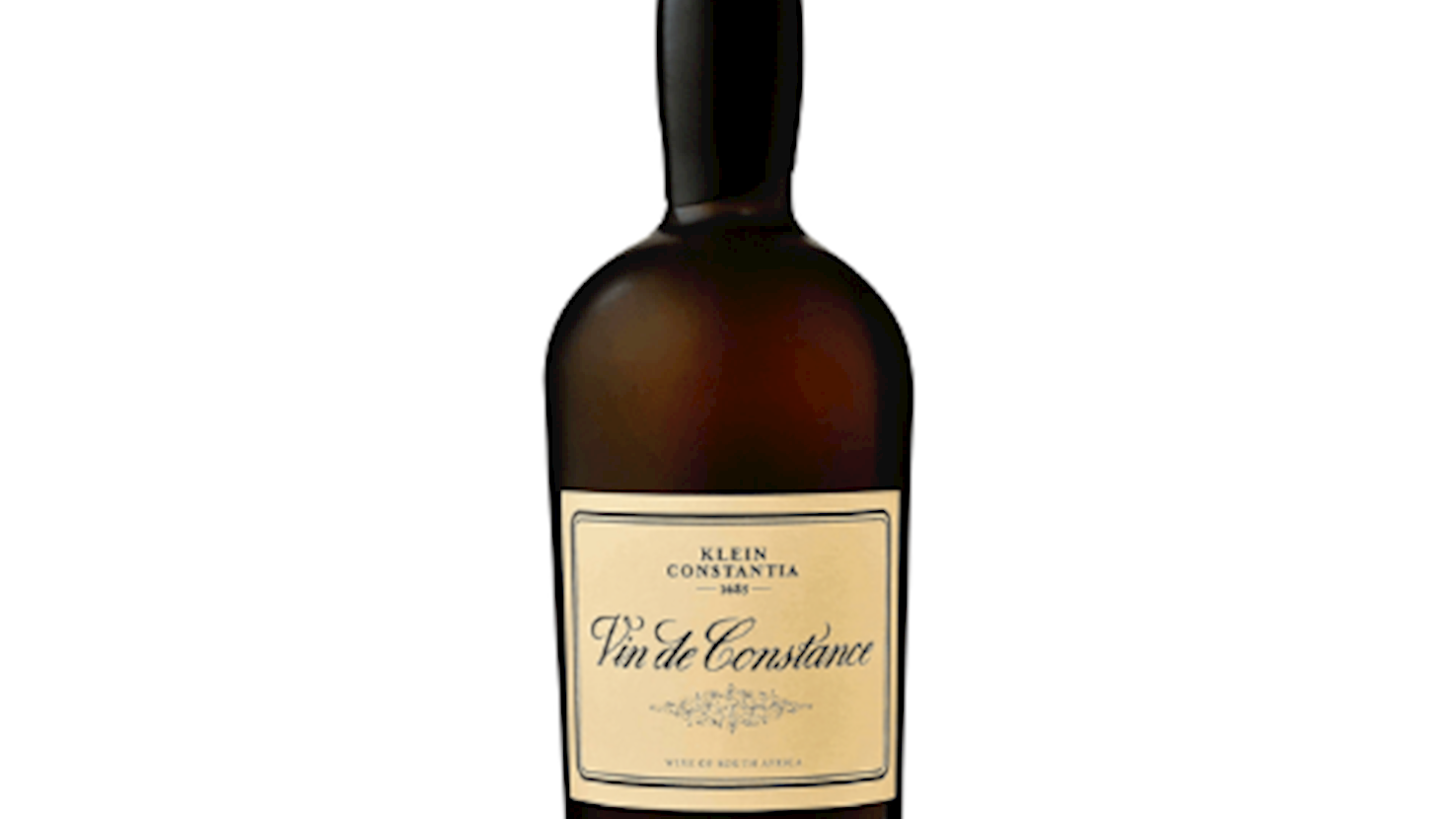
Klein Constantia Estate is one of South Africa’s most historic and influential wineries, with origins dating back to 1685 when it was established by Simon van der Stel in the Constantia Valley near Cape Town. Located on the slopes of the Constantiaberg mountain range, the estate benefits from decomposed granite soils and a cool maritime climate influenced by False Bay, conditions that contribute to wines of freshness, precision, and longevity.
During the 18th and 19th centuries, wines from Constantia - particularly the renowned sweet wine Vin de Constance - were among the most sought-after in the world, enjoyed by European royalty and referenced in classical literature. After a period of decline, Klein Constantia played a key role in reviving this historic wine in the late 20th century, restoring its global reputation.
Today, the estate combines heritage with a modern, sustainability-driven approach to viticulture and winemaking, focusing on expressing site-specific characteristics. In addition to Vin de Constance, the portfolio includes high-quality Sauvignon Blanc, Riesling, and single-vineyard wines that highlight the diversity of the terroir.
The wines are defined by aromatic clarity, vibrant acidity, and a refined mineral structure, positioning Klein Constantia as one of the leading producers in South Africa, where tradition and innovation are closely intertwined.
Awards
Decanter World Wine Awards - Platinum
(2020)
Decanter World Wine Awards - Best in Show
(2018, 2017)
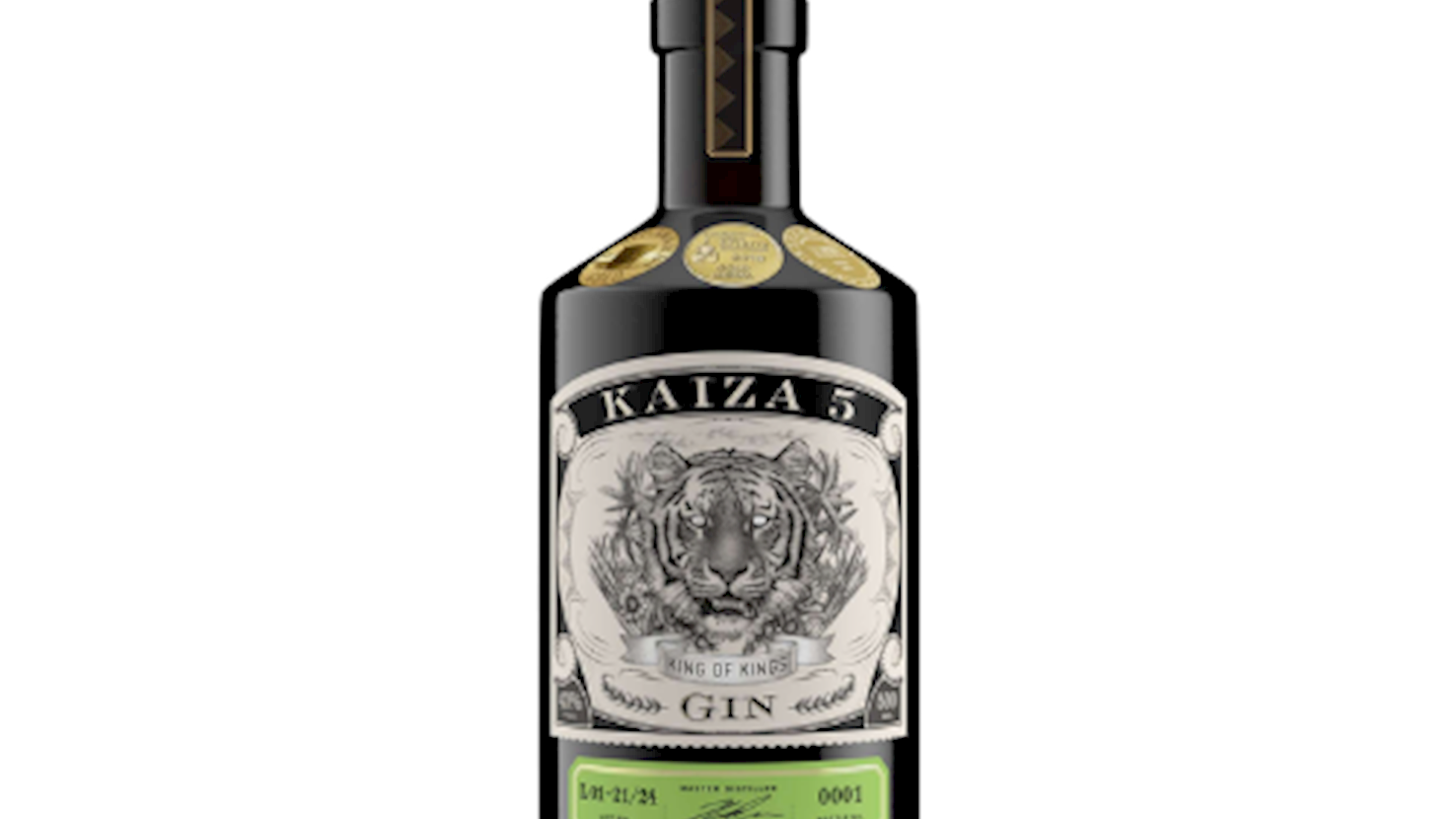
Kaiza 5 is a premium gin brand originating from South Africa, created with the intention of blending African identity with a contemporary, globally oriented craft spirits approach. Founded in Cape Town, the brand is positioned as a small-batch project with a strong emphasis on controlled distillation, carefully selected botanicals, and a clearly defined flavor profile.
The name Kaiza has roots in African cultural context and conveys ideas of strength, authority, and creative energy, which are reflected in both the brand’s visual identity and its storytelling. Rather than following classic London Dry conventions, Kaiza 5 develops its own character through a balance of traditional juniper structure and vibrant citrus and aromatic notes.
The brand targets consumers seeking authenticity and versatility, offering a gin that performs equally well in cocktails and simple serves with tonic. Through its origin, philosophy, and modern positioning, Kaiza 5 presents itself as a globally relevant gin brand with strong local roots.
Awards
World Gin Awards - Country Winner
(2024, 2022, 2021)
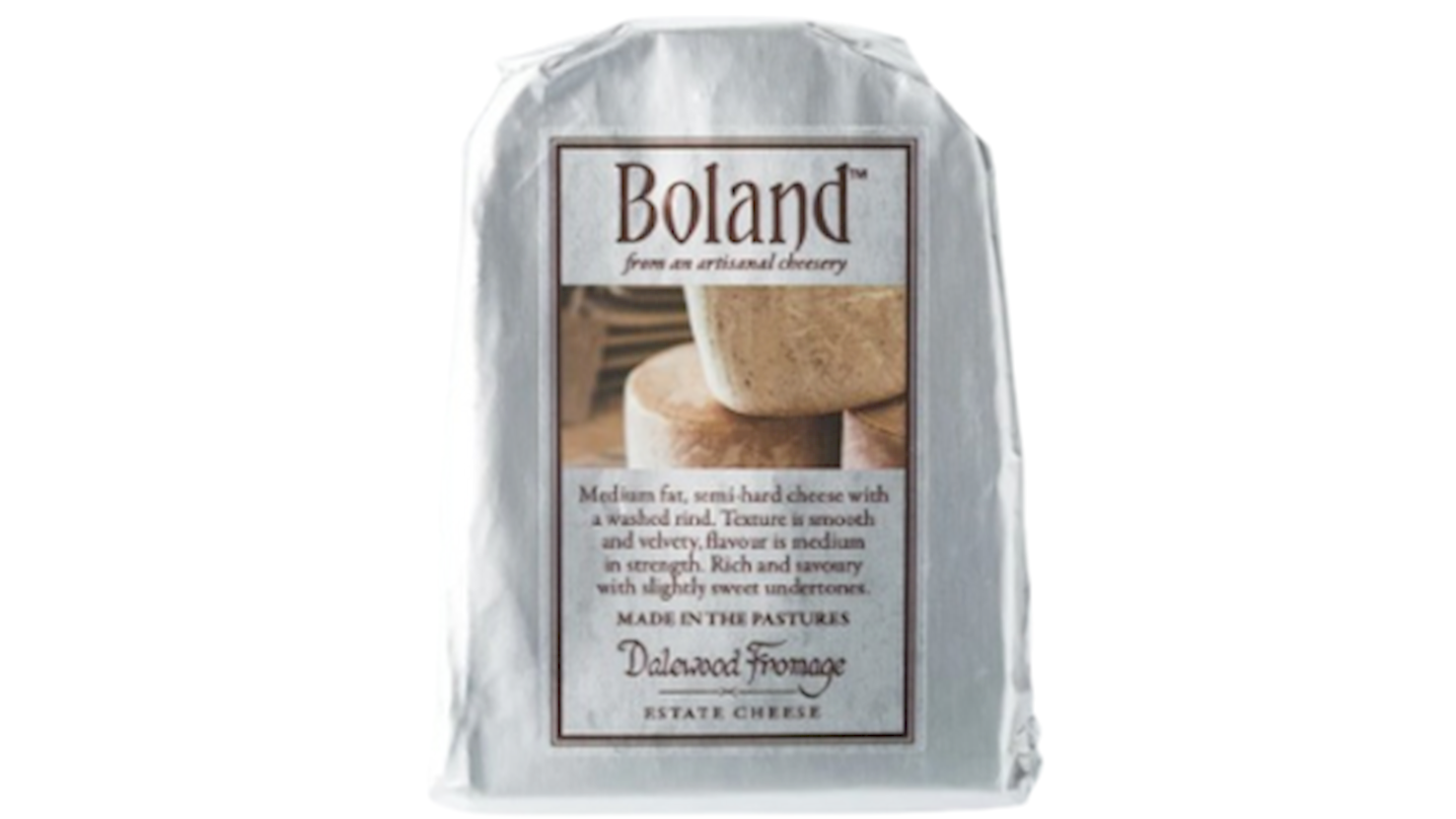
Dalewood Fromage is a family-owned artisanal cheese dairy located in the Paarl area, in the heart of South Africa’s Cape Winelands region, known for producing farmstead cheeses made exclusively from the milk of its own cows. Production is rooted in regenerative farming practices and biodiversity conservation, with a strong focus on sustainability and animal welfare.
Dalewood Fromage produces a wide range of cheeses inspired primarily by European, especially French, traditions, including soft cheeses with white and blue molds as well as more mature, character-driven styles. All cheeses are handmade in small batches and carefully aged to highlight the natural qualities of the milk and the local terroir.
The creamery is open to visitors and offers tastings, creating a direct connection between production, education, and the culinary experience. Today, Dalewood Fromage is regarded as one of the notable representatives of contemporary South African artisanal cheesemaking, defined by quality, sustainability, and authenticity.
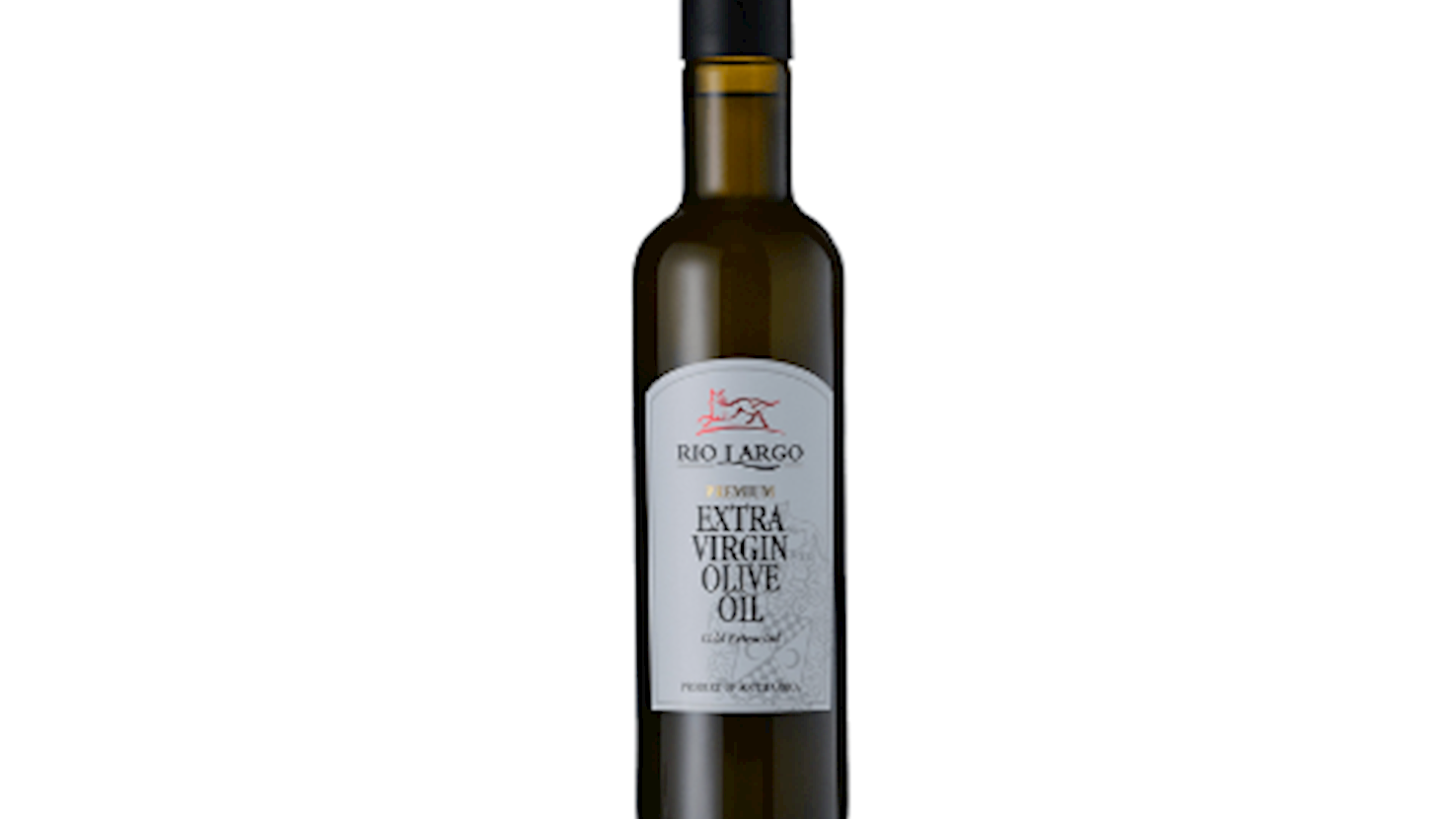
Rio Largo Olive Estate is a family-owned olive estate established in 2010, located in the Scherpenheuwel Valley along the Breede River in the Western Cape region of South Africa. Owners Nick and Brenda Wilkinson run the estate with a vision to combine expertise, innovation, and sustainability, with Nick holding a master’s qualification in olive growing and experience gained under Giorgio Mori and at UC Davis University.
The estate is home to around 18,000 olive trees planted on sandy-loam soils, where the Klein Karoo climate provides ideal conditions for producing fruity and complex oils. Cultivated varieties include Frantoio, Leccino, Coratina, and FS17, with olives harvested by hand and cold-pressed immediately to preserve freshness and nutritional value.
The resulting oils are characterized by aromas of green vegetables, peas, and fresh leafy greens, enriched with nutty tones and a pleasant peppery finish. Rio Largo has gained particular recognition through its innovative bag-in-decanter packaging, which ensures the oil stays fresh to the very last drop without exposure to oxygen.
Their production philosophy emphasizes sustainable practices and careful resource management, highlighting a deep connection to nature and the terroir. The Rio Largo brand is equally present in the domestic market and international culinary circles, where it is highly valued by top restaurants and professional chefs.
The estate also offers tours and tastings, making it a destination for gourmets and lovers of authentic experiences. By blending tradition, modern technology, and innovation, Rio Largo has become a synonym for quality, authenticity, and a modern interpretation of South African olive growing.
Awards
Flos Olei - The Best
(2023)
Olive Japan - Gold
(2023, 2022, 2018, 2017, 2016, 2014)
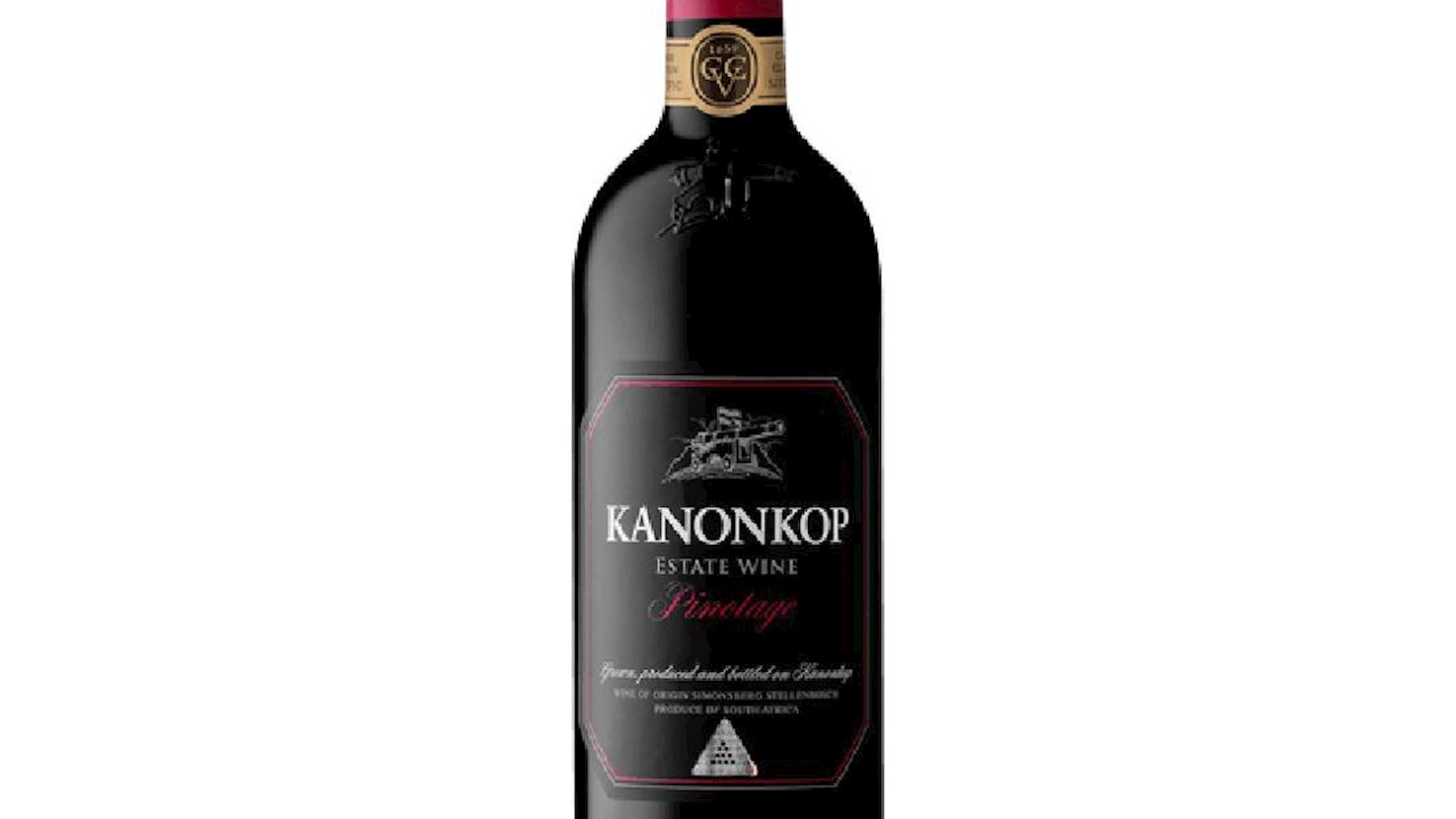
Kanonkop Wine Estate is one of South Africa’s most prestigious wineries, located on the southern slopes of the Simonsberg Mountain in the heart of Stellenbosch, a region renowned for exceptional red wines. Family-owned for four generations, Kanonkop blends a rich history with modern winemaking expertise, producing wines that are synonymous with quality and longevity.
The estate’s name comes from a nearby hill (“kop”) where a cannon was once fired to signal the arrival of ships in Cape Town, reflecting its deep connection to local tradition and heritage.
Kanonkop is a pioneer in cultivating and vinifying Pinotage—South Africa’s signature grape—as well as crafting outstanding red blends based on Cabernet Sauvignon and Merlot.
Their wines are distinguished by depth, complexity, and remarkable aging potential, while the careful tending of the vineyards and dedication to excellence place Kanonkop among the true icons of the wine world.
KWV is a major South African wine and spirits producer with a history dating back to 1918, when it was founded as a cooperative to support and structure the country’s wine industry. Over time, it evolved into an international brand while remaining closely connected to South Africa’s key wine-growing regions, including Paarl, Stellenbosch, Robertson, and Swartland.
KWV produces a wide portfolio of wines and spirits, with particular recognition for its brandies, which are distilled from wine and aged in French oak to emphasize balance, maturity, and depth. Its brandy range spans different age statements and styles, highlighting both fruit character and extended maturation.
In addition to brandy, KWV also produces wines and selected spirits such as gin, reflecting a broad but quality-focused approach. The brand is positioned at the intersection of heritage, technical expertise, and modern South African winemaking.
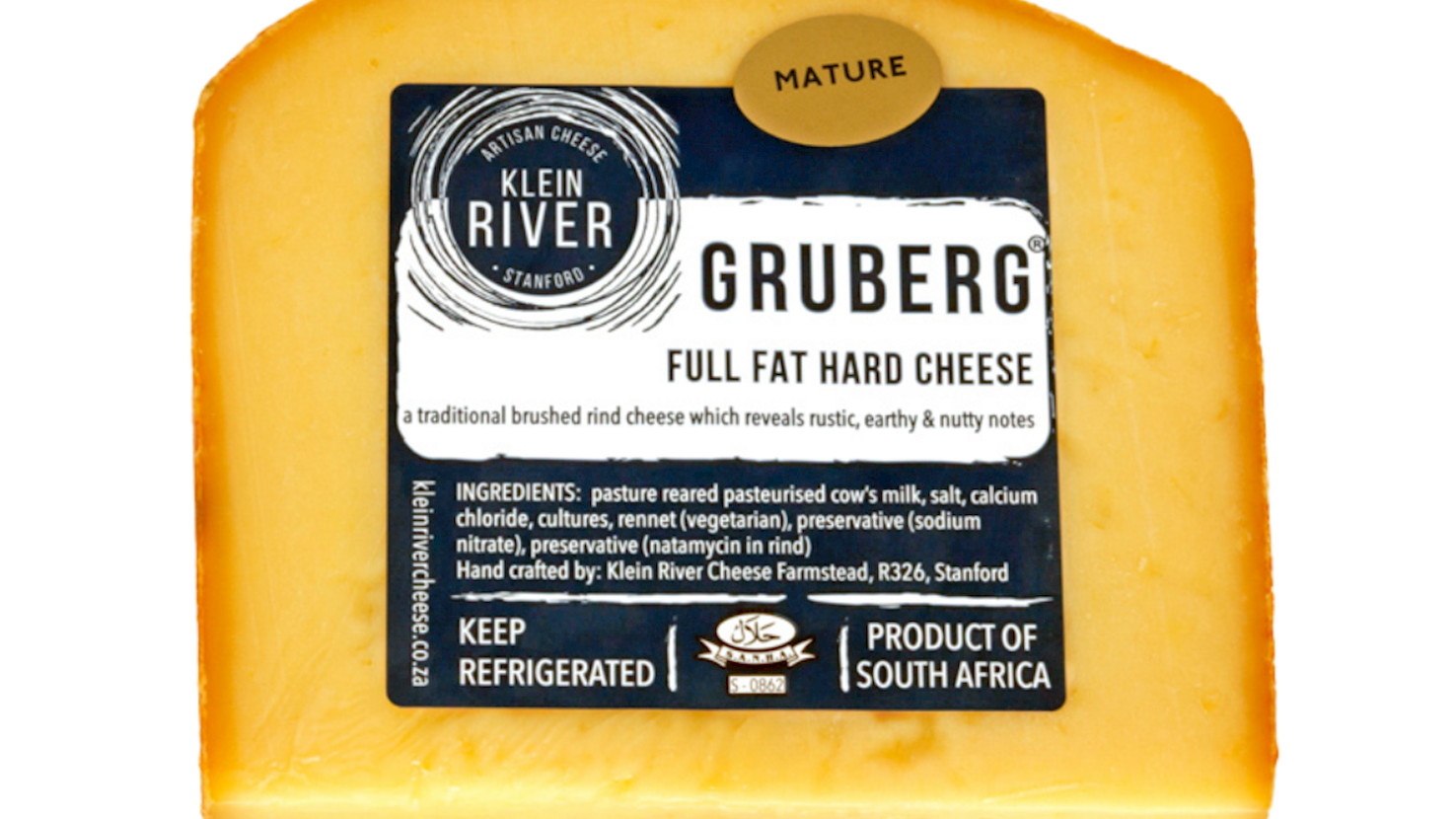
Klein River Cheese, based in Stanford, South Africa, specializes in producing a variety of high-quality cheeses which include Gruyere and Havarti among others. The company utilizes sustainable farming practices and is committed to eco-friendly operations.
Their cheeses have won multiple awards, reflecting their commitment to craftsmanship and quality.
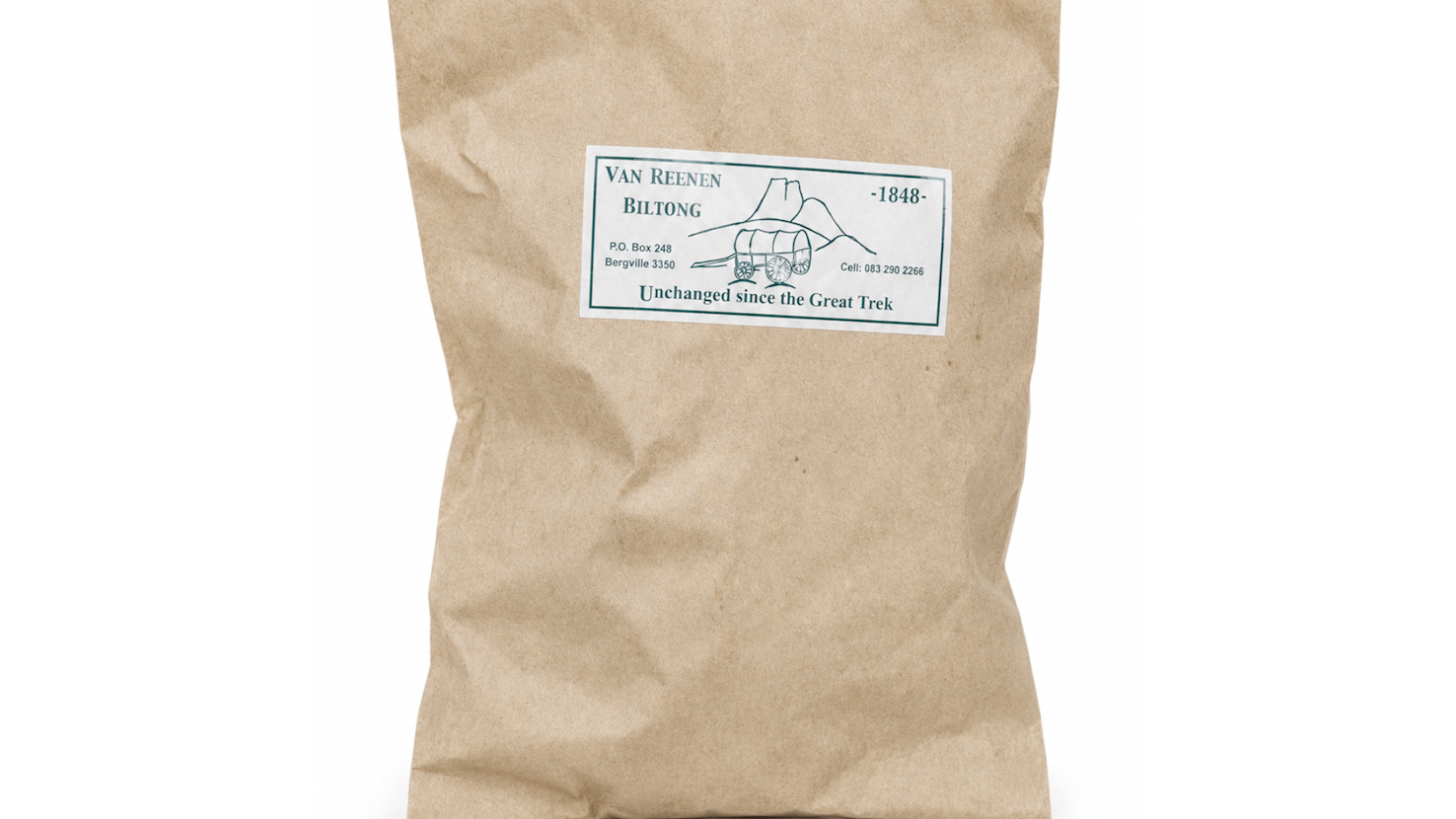
Van Reenen Biltong is a family-owned South African biltong producer based at Cameeldraai Farm, situated at the foothills of the Okhahlamba Drakensberg Mountains, approximately 20 kilometres from Bergville in KwaZulu-Natal. Although the brand’s founding year has not been publicly stated, the family uses a biltong recipe that, according to local sources, has been passed down for more than 150 years and dates back to the Great Trek.
The brand is associated with the family-owned agricultural enterprise Van Reenen Farming, which raises grass-fed cattle and cultivates maize, soybeans, wheat and dry peas. The farm follows regenerative practices, including minimum tillage, rotational grazing, cover cropping and on-farm compost production. Its biltong is made from quality cuts of beef, including A-grade silverside, which are seasoned and dried according to the family recipe.
The products are primarily sold at the Van Reenen Biltong & Gift Shop, located within The Outspan Farmstall on the R74 between Bergville and Harrismith. The brand is positioned as a locally produced, farm-based speciality aimed at residents and travellers passing through the Northern Drakensberg region.
TasteAtlas food rankings are based on the ratings of the TasteAtlas audience, with a series of mechanisms that recognize real users and that ignore bot,
nationalist or local patriotic ratings, and give additional value to the ratings of users that the system recognizes as knowledgeable.
For the “Top 100 South African Foods” list until September 23, 2026, 778 ratings were recorded, of which 607 were recognized by the system as legitimate.
TasteAtlas Rankings should not be seen as the final global conclusion about food. Their purpose is to promote excellent local foods,
instill pride in traditional dishes, and arouse curiosity about dishes you haven’t tried.
The initial list of top producers was compiled based on available reviews, awards, local recommendations, media and blog coverage, and consumer reviews.
The list will be updated with ratings from TasteAtlas local ambassadors and TasteAtlas users.










What People Say