Spanish gastronomy has secured a strong place in the UK’s dining scene, with its balance of bold flavours, comforting stews and lively tapas culture appealing to a wide range of diners. From chilled soups such as gazpacho to indulgent desserts like churros con chocolate, Spanish dishes have become staples not only in tapas bars but also in fine dining establishments. Each plate reflects the diversity of Spain’s regions, showcasing everything from the seafood-rich traditions of Galicia to the hearty bean stews of Asturias. Over time, these dishes have moved beyond their origins to become international favourites, celebrated in restaurants and homes across the UK.
This growth has been further reinforced by the network of certified Spanish restaurants in the UK that hold the “Restaurants from Spain” seal, working in close partnership with Food & Wine from Spain to guarantee authenticity. These establishments act as cultural ambassadors, presenting regional specialities to British tables with the same care and quality as in Spain itself.
By highlighting genuine ingredients, time-honoured techniques and Spain’s rich culinary heritage, they ensure that diners experience the country’s true flavours. Together, Food & Wine from Spain and these certified restaurants have created a space where Spanish gastronomy is not only represented but celebrated, offering UK diners access to some of the most authentic Spanish food outside Spain.
Complete list of the "Restaurants from Spain" in the United Kingdom.
And when it comes to their menus, we highlight 20 of the most popular Spanish dishes in the UK, showing how these certified restaurants bring them to life and how they are celebrated across the country.
Gazpacho
TasteAtlas Rating: 3.8
 Credits: shutterstock
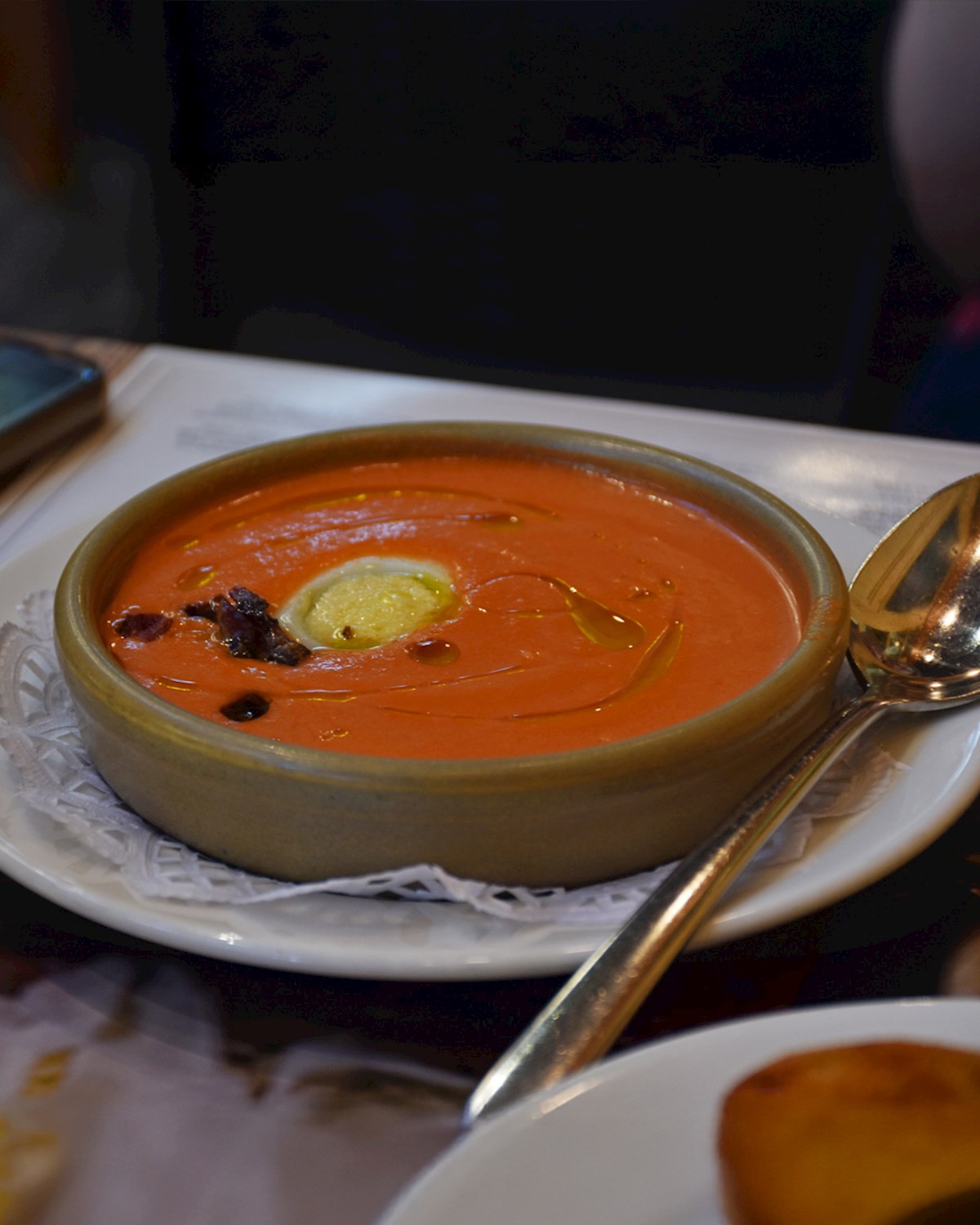
Gazpacho is a chilled soup from Andalusia, prepared by blending ripe tomatoes, cucumber, peppers, onion, garlic, olive oil, bread and vinegar into a smooth mixture that is served thoroughly cold. Lighter and fresher than salmorejo, it is often finished with crunchy toppings such as diced vegetables or croutons, which bring texture to its silky base. The dish has very old roots, originally made with bread, garlic and olive oil long before tomatoes arrived from the Americas, but it was the tomato-based version that gave gazpacho its international recognition.
In Spain, gazpacho is closely tied to the summer months, while in the UK it appears on the menus of Spanish restaurants throughout the year as a light, refreshing option, often even served in glasses to emphasise its drink-like qualities. The base can be slightly lightened with water to make it more of a drink than a soup, and some variations incorporate watermelon, strawberries or cherries, adding a fresh twist to the classic recipe. Its clean flavours and cooling character make it an approachable way for many diners to discover Spanish gastronomy.
A natural pairing for gazpacho is a chilled glass of Fino sherry or Manzanilla, whose crisp and saline notes highlight the freshness of the soup, while for a food accompaniment, it sits well alongside jamón ibérico, marinated olives or a simple plate of grilled prawns.
Where to try it:
Hispania
Brindisa
José Tapas Bar
Parrillan
Boquerones en vinagre
TasteAtlas Rating: 4.1
 Credits: Boqueria London
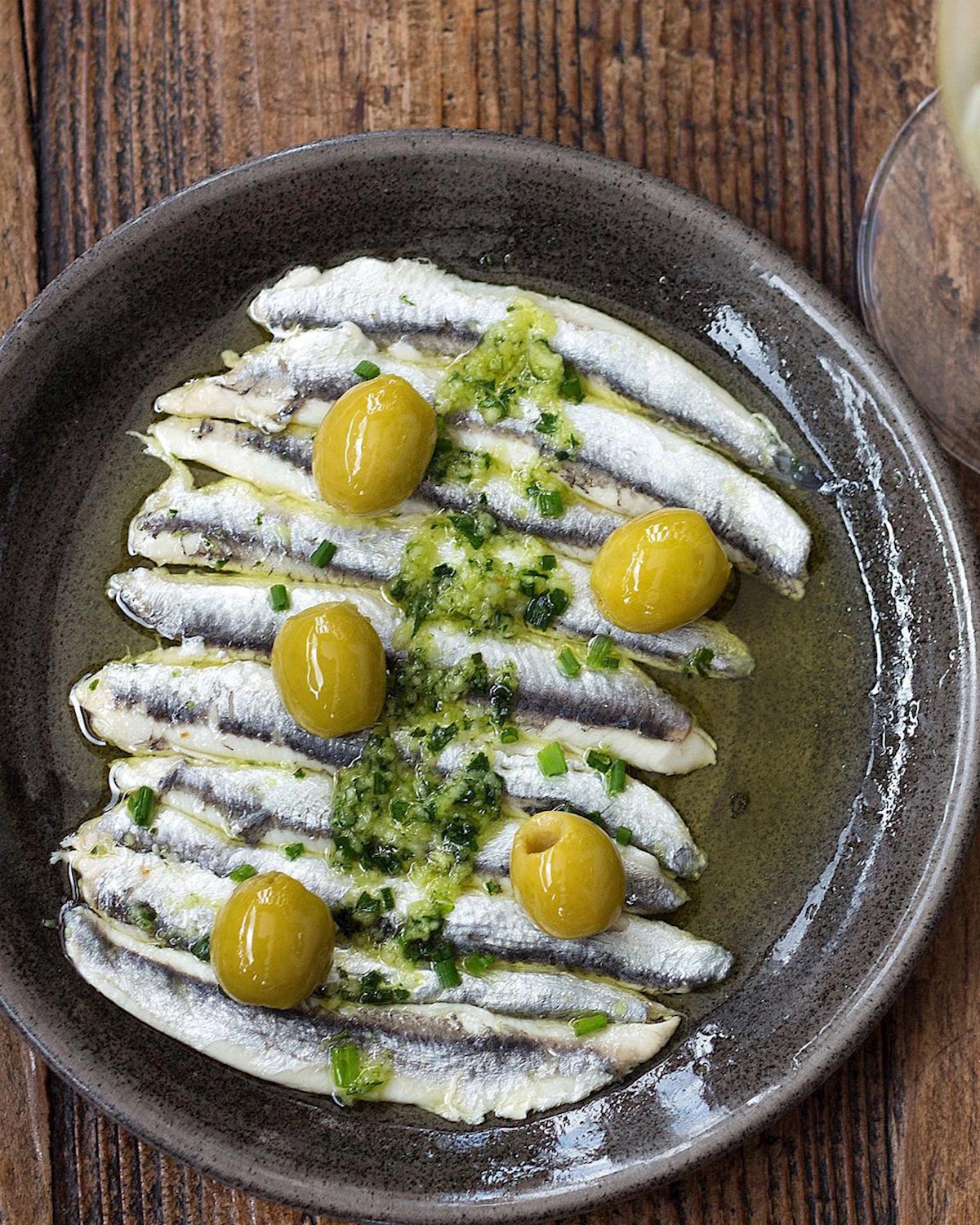
Boquerones en vinagre are fresh anchovies marinated in vinegar, a dish that showcases the simplicity and boldness of Spanish seafood preparations. The anchovies are cleaned and filleted before being submerged in vinegar, which lightly cures the flesh and turns it white, while also giving it a bright, tangy flavour. After marinating, they are dressed with extra virgin olive oil, garlic and parsley, creating a balance of acidity, richness and freshness that is instantly recognisable.
The origins of boquerones en vinagre lie in Spain’s long tradition of preserving fish, particularly in coastal regions where anchovies are abundant. They became a popular tapa in Andalusia and along the Mediterranean coast, often served in small portions as a refreshing counterpoint to fried or heavier dishes. In Spanish restaurants in the UK, boquerones en vinagre have become a favourite for diners seeking something light, clean and distinctly Mediterranean, often enjoyed as a starter or part of a wider tapas spread. Their distinctive flavour and texture make them stand out, offering a contrast to the more familiar salted or tinned anchovies.
Boquerones en vinagre are often paired with a chilled glass of Fino sherry or Manzanilla, whose dry, saline character echoes the maritime flavour of the fish while cleansing the palate. A crisp Albariño or Verdejo is another excellent match, enhancing the citrusy brightness of the vinegar. A basket of crusty bread on the side makes sure none of the garlicky oil goes to waste.
Where to try it:
Asador 44
Brindisa
Boqueria Nine Elms
Bar 44
Bar Esteban
Maresco
Hispania
José Tapas Bar
Escocesa
Curado Bar
Pluma
Learn more about Boquerones en vinagre
Pan con tomate
TasteAtlas Rating: 4.2
 Credits: Parrillán London
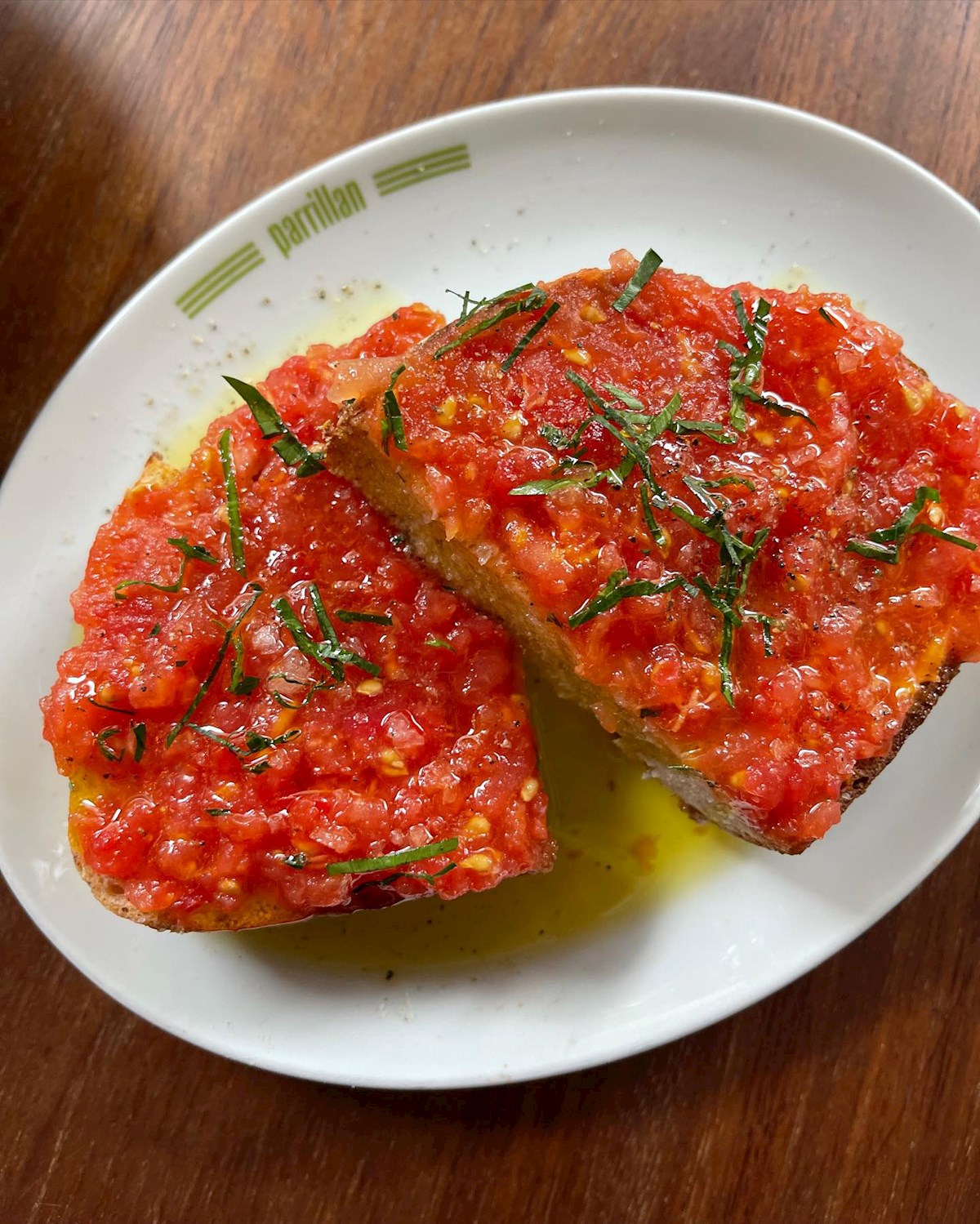
Pan con tomate is a Catalan speciality made by rubbing ripe tomatoes onto toasted bread, then drizzling it generously with olive oil and finishing with a pinch of salt. Sometimes garlic is rubbed on the bread first for extra flavour, and in some versions the tomatoes are grated rather than rubbed, giving a more even spread. The quality of the ingredients is essential: rustic bread with a good crust, ripe tomatoes at their peak, and fruity extra virgin olive oil. What looks like a simple preparation becomes something much more when these elements are combined.
The dish has deep roots in Catalonia, where it emerged as a clever way to use stale bread and extend its life. Over time it spread across Spain and became a staple in tapas bars, where it is served plain or as a base for toppings such as jamón ibérico, anchovies or manchego cheese. In Spanish restaurants in the UK, pan con tomate has become one of the most frequently ordered starters, appealing both for its simplicity and for the way it highlights the essence of Spanish produce. Its freshness and balance between juicy tomato and crunchy bread make it equally suitable as breakfast, snack or tapa.
A natural pairing for pan con tomate is a glass of Cava Brut, whose bubbles cut through the richness of the olive oil while complementing the freshness of the tomato. It also works beautifully with a light Albariño, while for food pairings, it sits perfectly alongside jamón ibérico, salted anchovies or a plate of cured manchego cheese.
Where to try it:
Brindisa
Camino
Barrafina
Bar 44
Bar Esteban
Maresco
Sabor
José Tapas Bar
Escocesa
Parrillan
Curado Bar
Pluma
Learn more about Pan con tomate
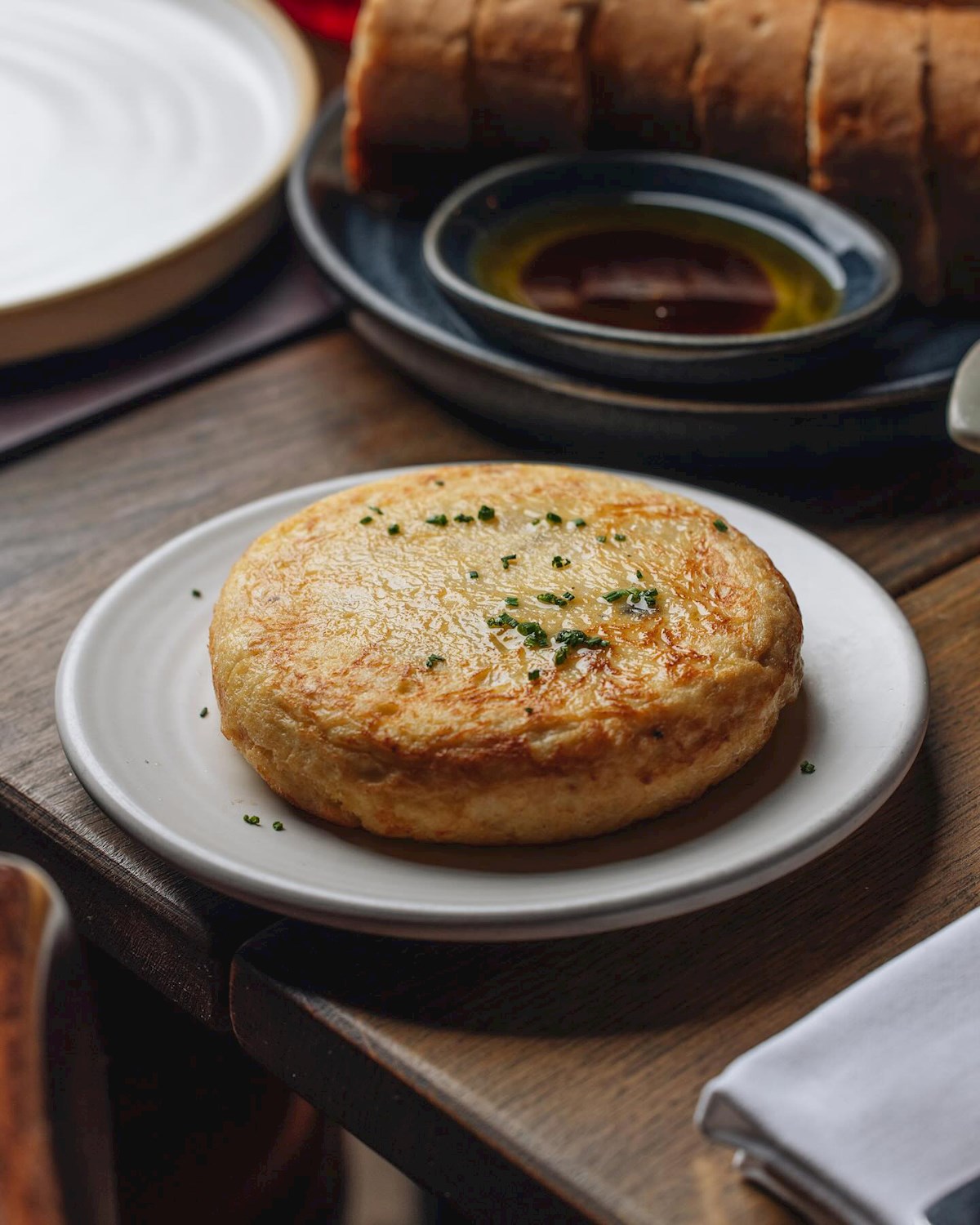
Tortilla de patatas
TasteAtlas Rating: 4.2
 Credits: Camino London
Tortilla de patatas, often referred to as Spanish omelette, is one of the most iconic dishes in Spanish gastronomy and a staple both in households and restaurants. It is prepared with eggs and potatoes, sometimes with onions, cooked gently in olive oil until the mixture sets into a thick, golden omelette. The debate over whether onions should be included has been part of its cultural identity for decades, with versions both with and without found on menus abroad.
In Spain it is eaten at any time of day, and in Spanish restaurants in the UK it frequently appears both as a tapas item and as a brunch dish, reflecting its remarkable versatility. It is equally good sliced into wedges, served hot or cold, and has become a consistent highlight of Spanish dining everywhere. Beyond the classic version, it can also incorporate other ingredients such as chorizo, green pepper or courgette, adding further depth and variety. Though usually seen later in the day, it also works wonderfully as a breakfast dish, paired with a simple coffee.
Pairings for tortilla de patatas are wide-ranging: a crisp Albariño or Verdejo complements its richness with freshness, while a young Rioja or Garnacha brings out its savoury depth. It also pairs comfortably with beer, especially a light Spanish lager, and as mentioned, with coffee it makes a perfect start to the morning. It works well alongside tomato-rubbed bread, a small salad or jamón ibérico.
Where to try it:
Camino
Brindisa
Boqueria
Barrafina
Bar Esteban
Maresco
José Tapas Bar
Escocesa
Curado Bar
Pluma
Learn more about Tortilla de patatas
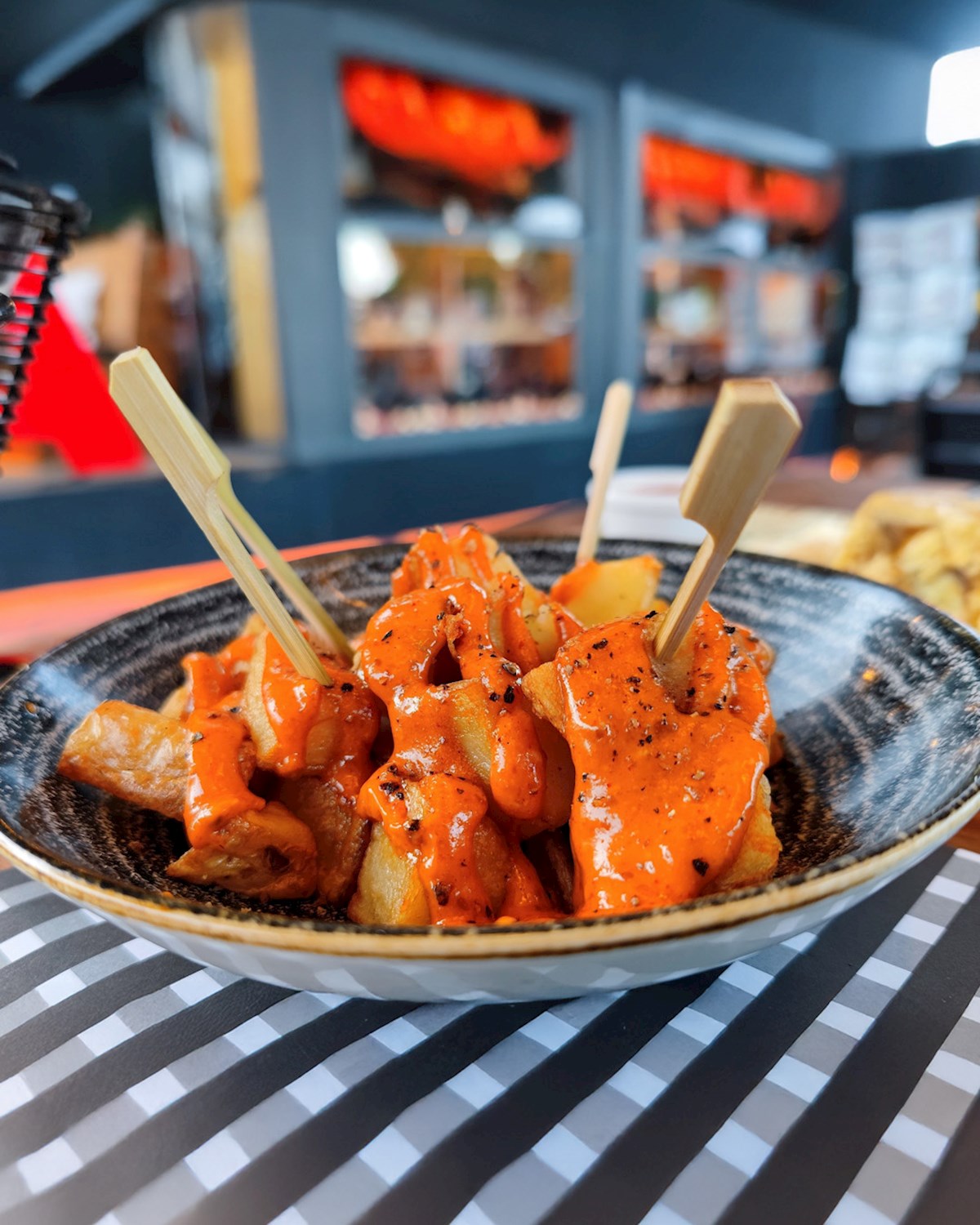
Patatas bravas
TasteAtlas Rating: 4.2
 Credits: shutterstock
Patatas bravas are one of Spain’s most popular tapas, made up of golden, crispy cubes of potato served with a sauce that strikes a balance between spice, tang and richness. Originating in Madrid, the dish was once characterised by its fiery, pimentón-rich sauce, although across Spain and abroad the toppings now vary widely: some are tomato-based, others are finished with aioli, and many combine both.
In Spanish restaurants in the UK, patatas bravas are almost always found on menus and have become one of the essential dishes people order when they think of tapas, often accompanied by a glass of wine or beer. Their name, meaning “fierce potatoes,” refers to the kick of heat in the sauce, which gives them their distinctive character. The common double-frying technique produces potatoes that are crunchy on the outside yet tender within.
Patatas bravas pair naturally with a chilled Albariño or a young Garnacha, both of which balance the spice with freshness and fruit. They also go particularly well with a crisp Spanish lager or a dry cider, making them as suitable for a casual bar setting as for a more structured tapas spread. For food pairings, the best options are croquetas, grilled chorizo or gambas al ajillo, enhancing the variety and conviviality of a tapas table.
Where to try it:
Camino
Brindisa
Boqueria
Barrafina
Bar Esteban
Maresco
José Tapas Bar
Escocesa
Parrillan
Curado Bar
Pluma
Learn more about Patatas bravas
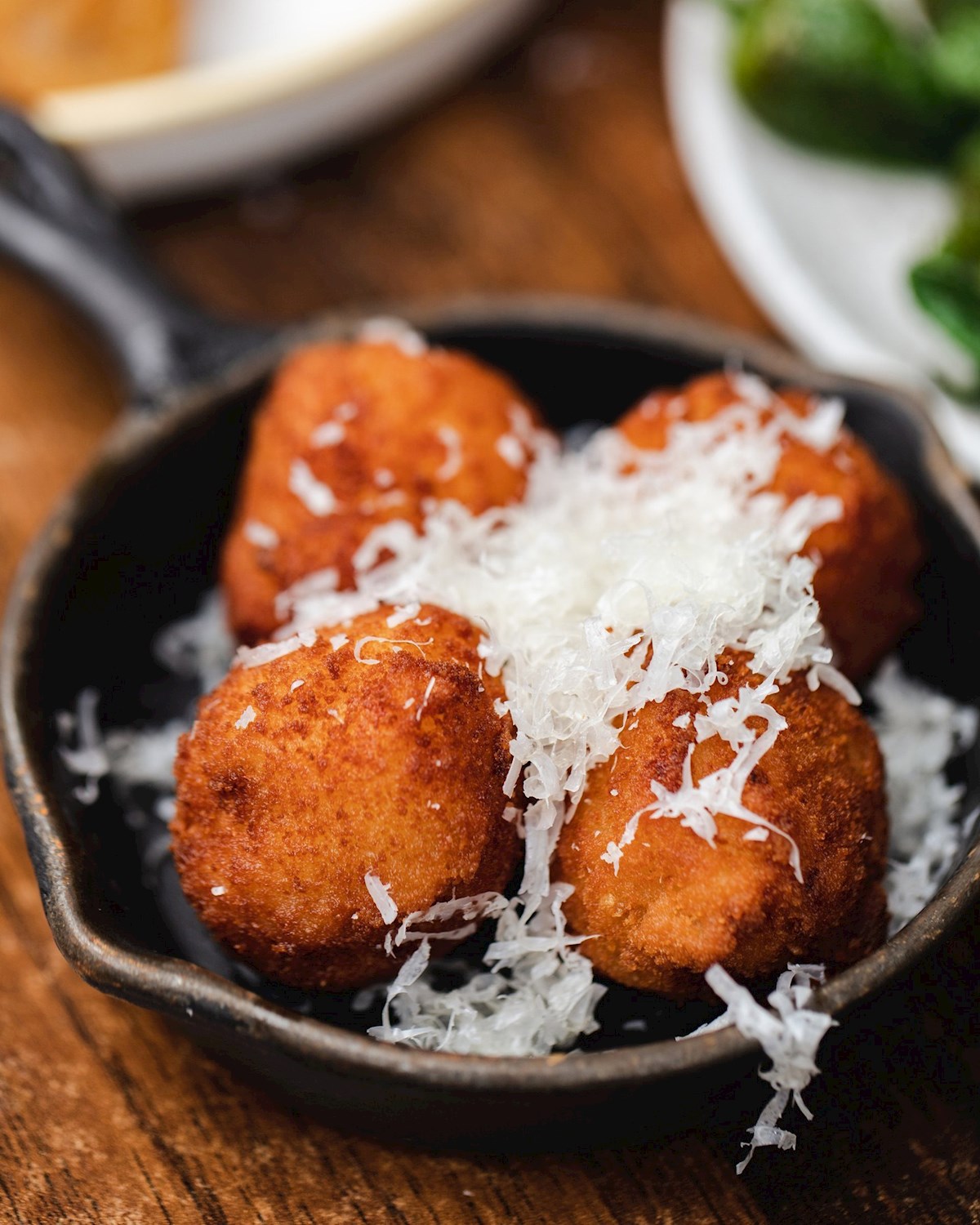
Croquetas
TasteAtlas Rating: 4.3
 Credits: Camino London
Croquetas are small fried fritters with a crisp breadcrumb coating and a creamy béchamel-based filling, making them one of the most irresistible dishes on any Spanish menu. Fillings vary widely, with jamón being the most classic, but chicken, cod, mushrooms and spinach are also common. Variations such as ham croquettes and truffle croquettes are particularly popular, offering either a savoury depth or an indulgent twist on the classic recipe. Their origins lie in frugality, as croquetas were once prepared to make good use of leftovers, but over time they have developed into a delicacy in their own right.
In Spain, croquetas are a staple of home cooking and festive gatherings, while in Spanish restaurants in the UK they remain among the most popular tapas because they bridge the gap between familiar comfort food and something distinctly Spanish. The contrast between their crunchy exterior and soft, melting interior is what makes them so moreish, and it is almost impossible to stop at just one. Today they are enjoyed everywhere, from casual tapas bars to Michelin-starred restaurants.
Croquetas pair beautifully with a chilled glass of Fino sherry or a dry Manzanilla, whose lightness cuts through the richness of the béchamel. They also work well with a young Rioja Crianza or a Garnacha, which bring fruit and spice to balance the creamy filling. For those preferring beer, a crisp Spanish lager or a slightly malty amber ale complements both classic ham versions and the richer truffle variations.
Where to try it:
Camino
Brindisa
Boqueria
Barrafina
Bar 44
Bar Esteban
Maresco
Sabor
Hispania
José Tapas Bar
Escocesa
Curado Bar
Pluma
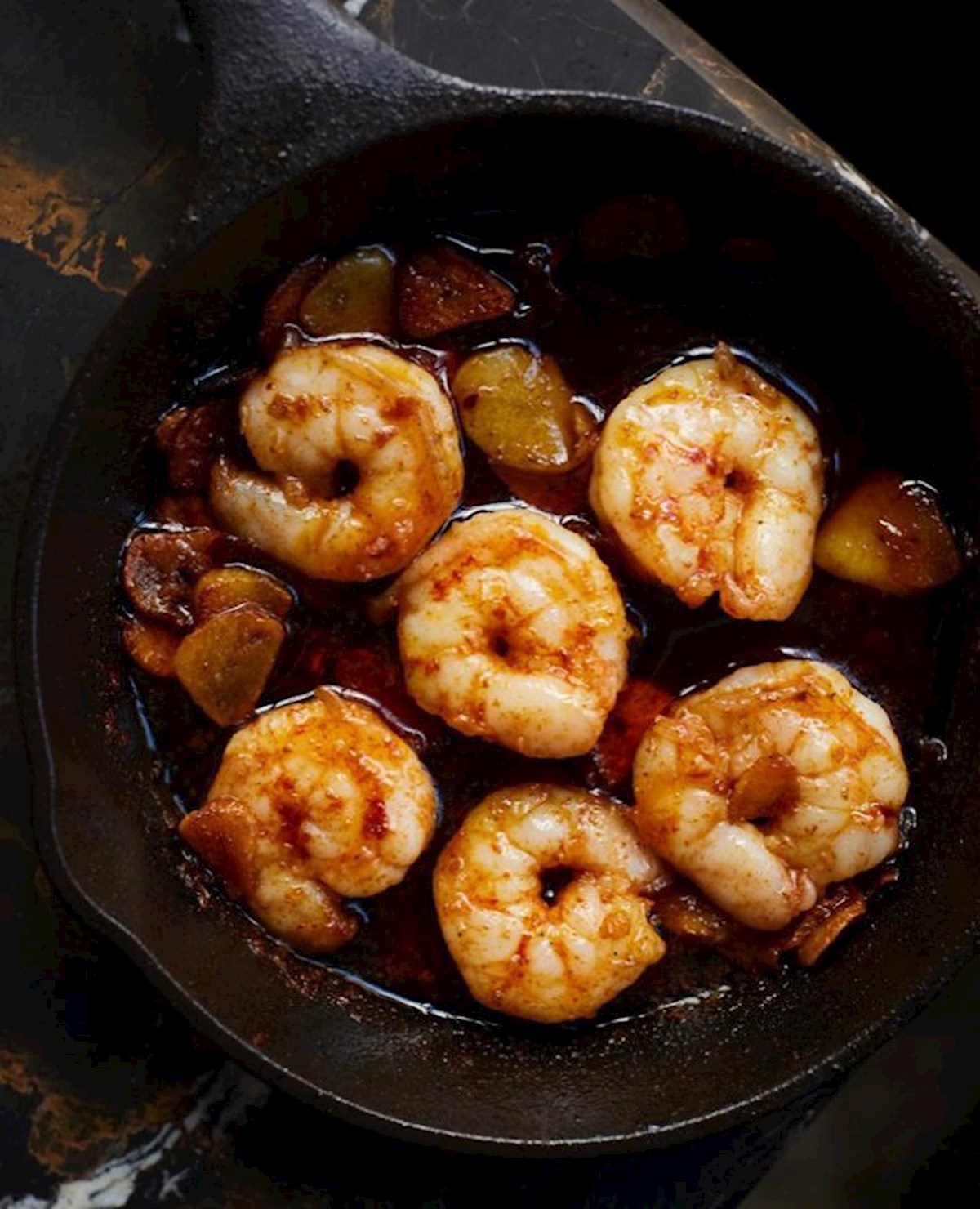
Gambas al ajillo
TasteAtlas Rating: 4.4
 Credits: Pluma
Gambas al ajillo is a simple yet intensely flavourful dish made by quickly sautéing prawns in olive oil with sliced garlic and a touch of chilli. It is typically served in small earthenware cazuelas, arriving at the table still sizzling and aromatic, with the garlicky oil practically demanding that pieces of crusty bread be dipped into it. A sprinkle of fresh parsley or a squeeze of lemon adds brightness, balancing the richness of the oil.
In Spain it is a classic coastal tapa, while in Spanish restaurants in the UK it has become a centrepiece of seafood menus, admired for both its simplicity and its striking presentation. Its appeal lies in the way just a handful of ingredients come together to create a dish that feels complete and memorable. Gambas al ajillo embodies the Mediterranean principle of allowing quality seafood and olive oil to shine without unnecessary additions.
This dish pairs especially well with a crisp, mineral Albariño from Galicia or a zesty Verdejo from Rueda, both of which cut through the richness of the oil while enhancing the freshness of the prawns. A chilled Fino sherry is another classic option, offering a dry, saline edge that mirrors the coastal character of the dish. For beer lovers, a light Spanish lager works beautifully, while on the table it finds natural companions in patatas bravas, croquetas or a simple ensalada mixta.
Where to try it:
Camino
Brindisa
Boqueria
Bar Esteban
Hispania
Escocesa
Pluma
Learn more about Gambas al ajillo
Gilda
TasteAtlas Rating: 3.8
 Credits: shutterstock
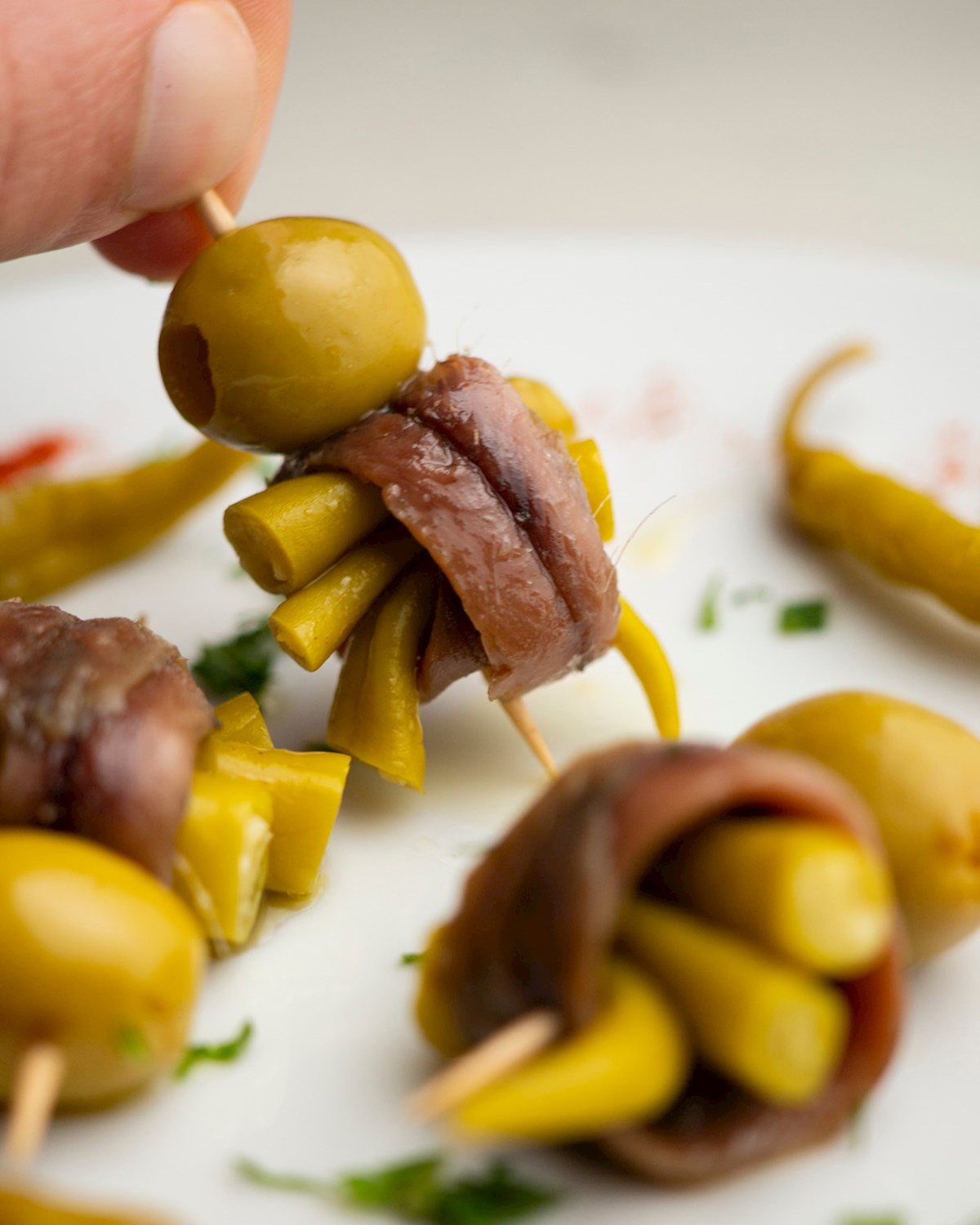
Gilda is one of the most iconic pintxos of the Basque Country, consisting of a skewer threaded with a green chilli pepper, an anchovy and an olive. The combination is simple but intense, balancing saltiness, tang and heat in a single bite. Named after Rita Hayworth’s character in the 1946 film Gilda, it is said to reflect her bold and slightly spicy personality.
The Gilda was born in San Sebastián in the mid-20th century, when pintxos culture was flourishing and bars began offering small, flavourful bites to accompany drinks. Since then it has become a staple of Basque bars and has spread across Spain, where it remains a favourite in both casual taverns and more refined settings. In Spanish restaurants in the UK, the Gilda often appears as an appetiser or part of a tapas selection, admired for how it captures the essence of pintxos culture in such a small format. Its brilliance lies in its simplicity, showing how a few carefully chosen ingredients can deliver bold flavour.
The natural pairing for a Gilda is a crisp glass of Txakoli, the slightly spritzy Basque white wine whose acidity refreshes the palate after the salty, tangy bite. Alternatively, it works well with a chilled Manzanilla sherry, whose saline character mirrors the anchovy and olive. For those preferring beer, a light lager or pale ale is an excellent companion.
Where to try it:
Camino
Curado Bar
Pluma
Escalivada
TasteAtlas Rating: 4.1
 Credits: shutterstock
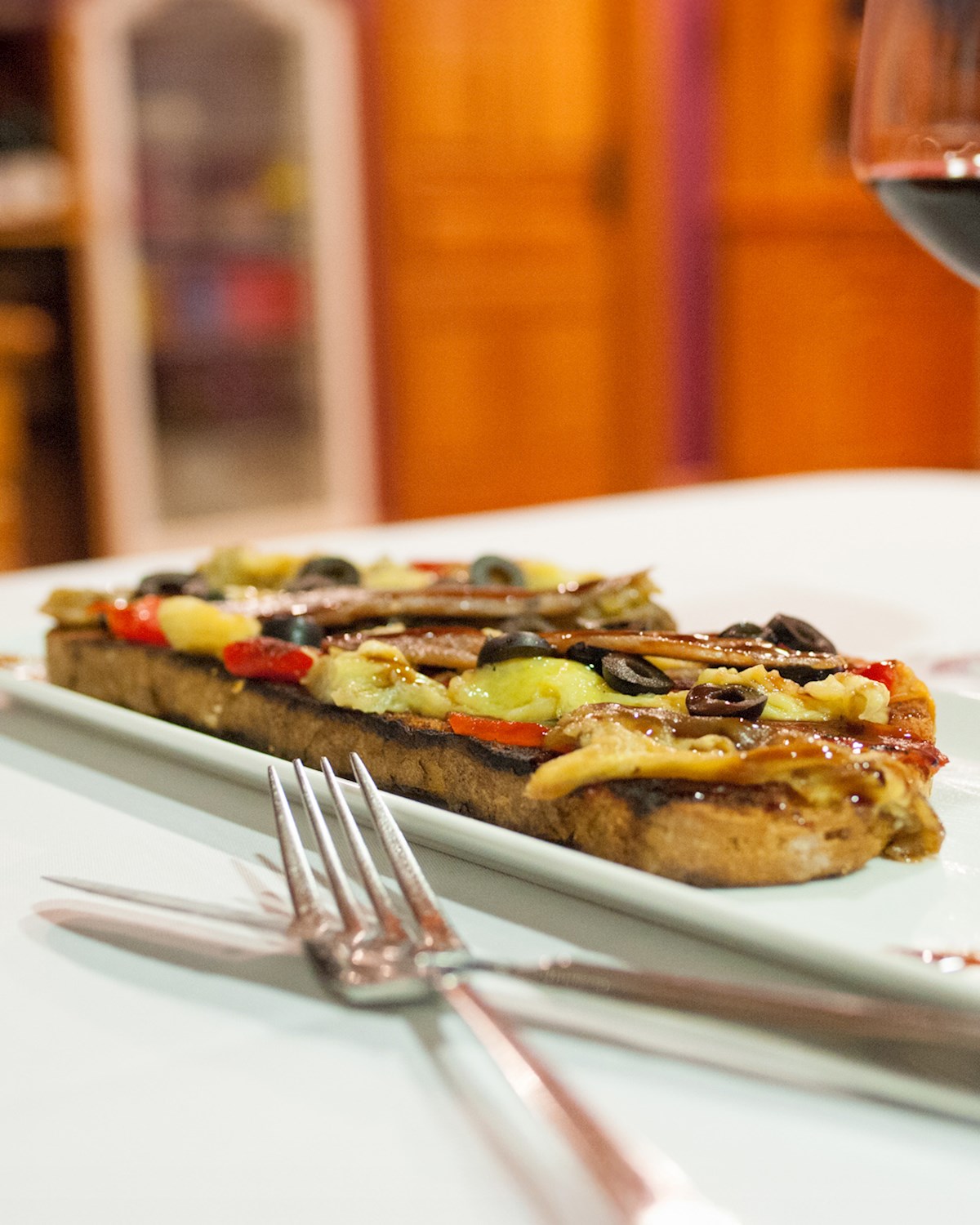
Escalivada is a Catalan dish that highlights the natural sweetness of roasted vegetables, usually aubergine, peppers, onions and sometimes tomatoes. The vegetables are cooked until their skins blister and char, then peeled and cut into strips before being drizzled with olive oil, occasionally accompanied by garlic or anchovies for extra depth of flavour. Its name comes from the Catalan word escalivar, meaning “to cook in ashes,” which reflects its rustic origins. More broadly, it belongs to a family of roasted vegetable salads common along the Mediterranean arc, prepared under different names and with local variations. Examples include esgarrat in Valencia, where salted cod and peppers are added, and aspencat in Alicante, which often incorporates tomatoes alongside peppers and aubergines.
In Catalonia it is commonly eaten with crusty bread or served as an accompaniment to grilled meat and fish, but in Spanish restaurants in the UK it frequently appears as a vegetarian option within tapas menus, offering a smoky and lighter counterpoint to fried dishes such as croquetas or patatas bravas. Escalivada reflects the Mediterranean approach to vegetables, treating them with minimal interference to showcase their natural character.
Escalivada pairs beautifully with a chilled Verdejo or Albariño, both of which enhance the freshness and balance the smoky notes of the roasted vegetables. A light rosado from Navarra also complements its brightness. For non-alcoholic pairings, sparkling water with a slice of lemon provides a refreshing contrast. Escalivada works well alongside empanadas gallegas, jamón ibérico, or grilled sardines, adding colour and lightness to a tapas spread.
Where to try it:
Camino
Escocesa
Parrillan
Pulpo a la gallega
TasteAtlas Rating: 4.3
 Credits: Boqueria London
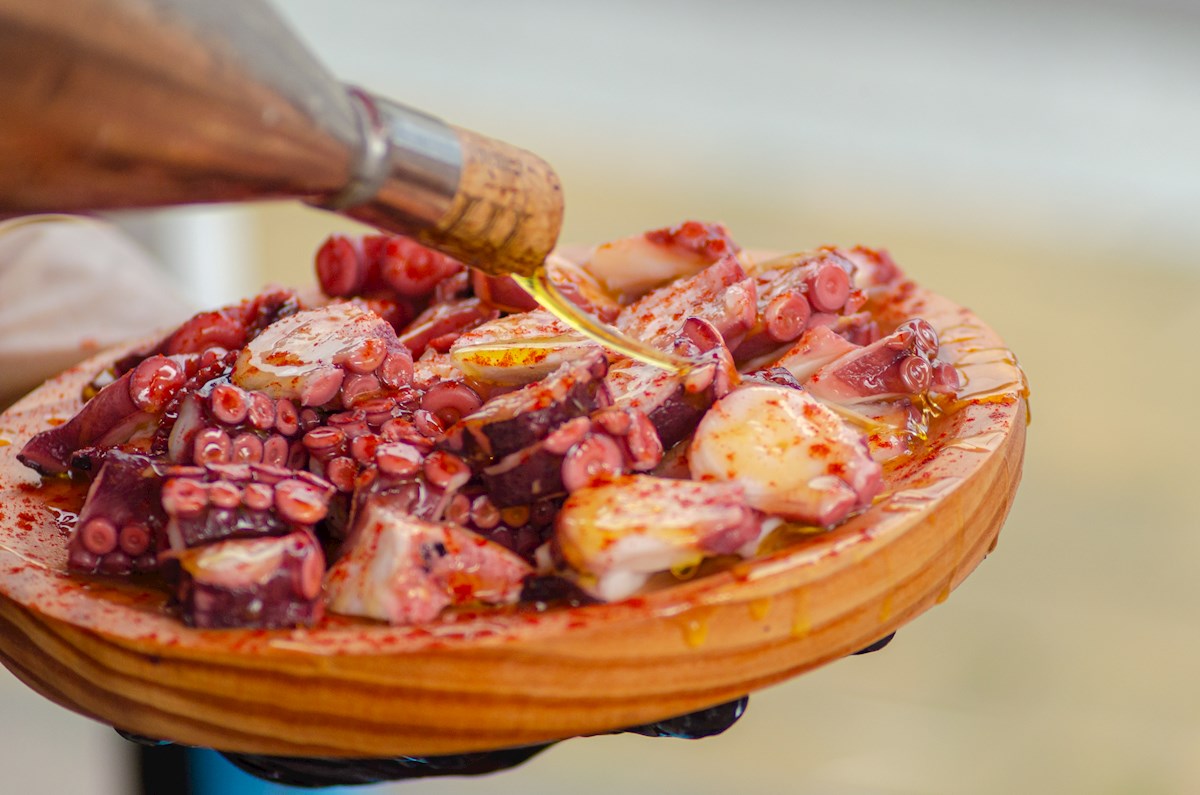
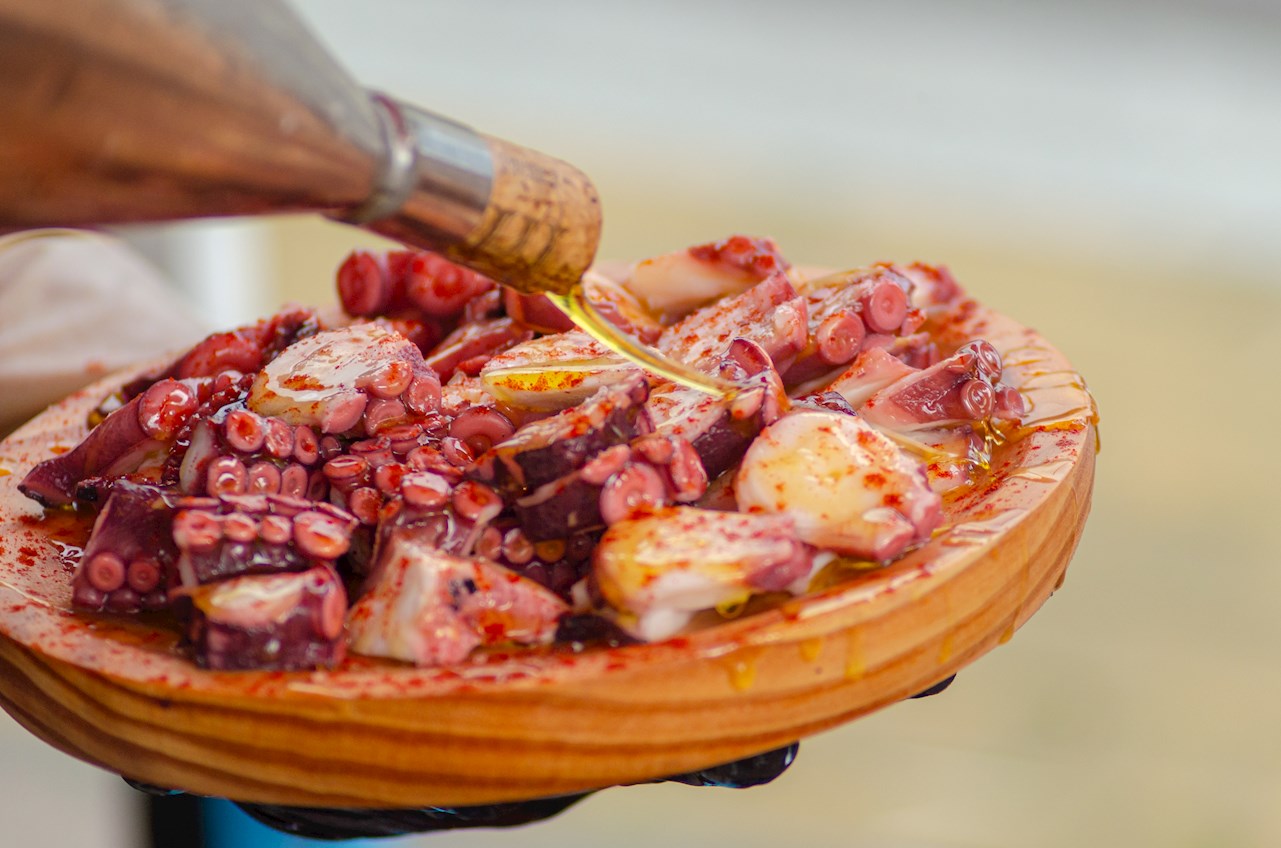
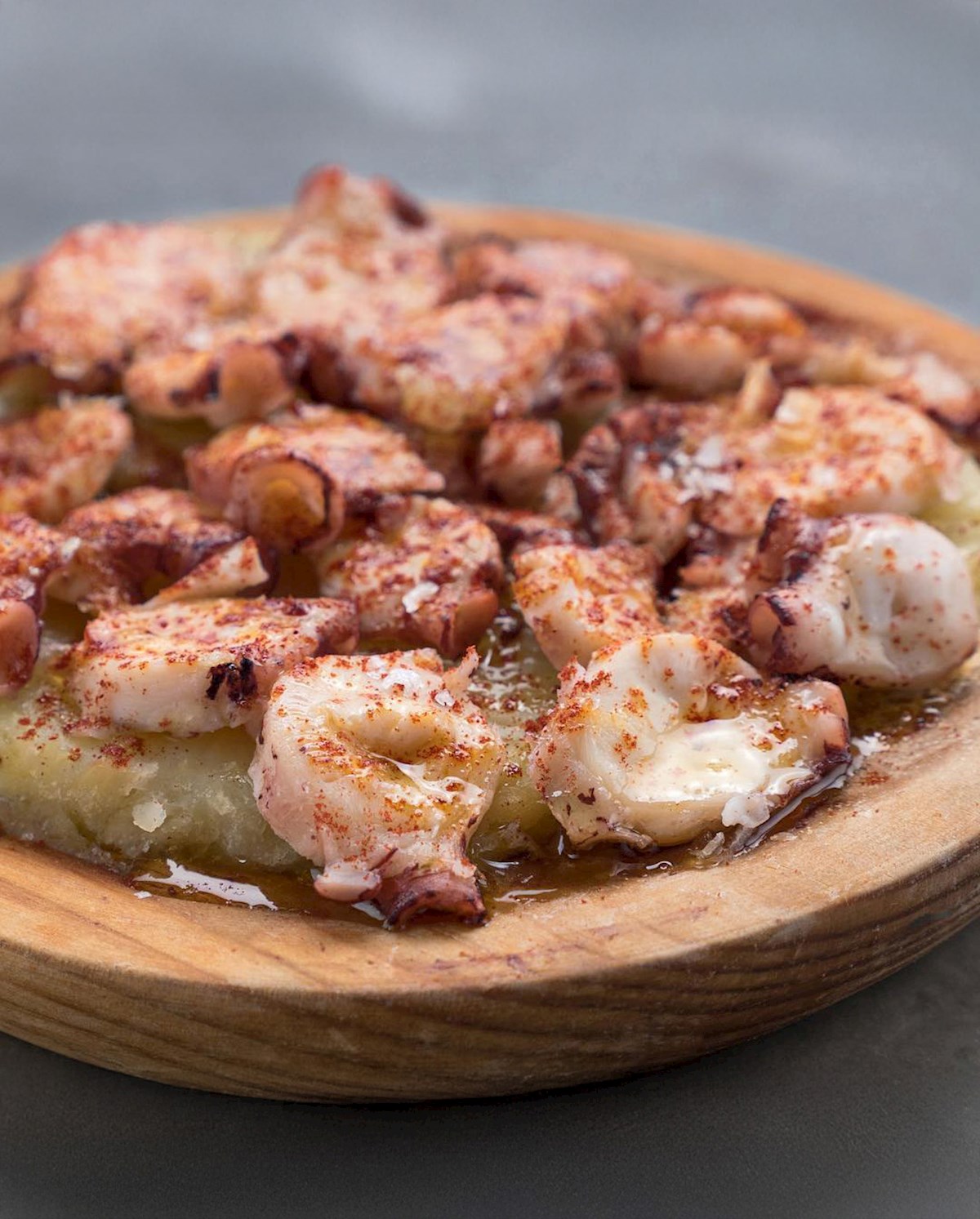
Pulpo a la gallega, also known as pulpo a feira, is Galicia’s most renowned octopus dish and one of Spain’s best-known seafood specialities. The octopus is first boiled until tender, then sliced into medallions and served on wooden plates with boiled potatoes, coarse salt, smoked pimentón and olive oil. Its origins lie in Galician fairs and festivals, where large copper pots of octopus were prepared to feed crowds, but over time it has become a symbol of the region’s culinary identity.
In Spanish restaurants in the UK, pulpo a la gallega is often presented as a centrepiece seafood dish, admired both for its straightforwardness and for the skill required to cook octopus to the right texture. The balance of tender octopus, earthy potatoes and smoky pimentón creates a harmony that feels at once rustic and refined. It captures Galicia’s deep connection to the sea while also demonstrating how minimal seasoning can elevate high-quality ingredients.
Pulpo a la gallega pairs exceptionally well with a chilled glass of Albariño from Rías Baixas, whose bright acidity and minerality echo the coastal origins of the dish. A Godello from Valdeorras also works beautifully, with enough body to complement the richness of the olive oil. Beer lovers might prefer a crisp Spanish lager or a Galician cider, both of which cut through the smokiness of the pimentón. On the table, it sits naturally alongside empanadas gallegas, escalivada or simply grilled vegetables.
Where to try it:
Asador 44
Camino
Brindisa
Boqueria
Sabor
Learn more about Pulpo a la gallega
Bacalao al pil-pil
TasteAtlas Rating: 4.0
 Credits: shutterstock
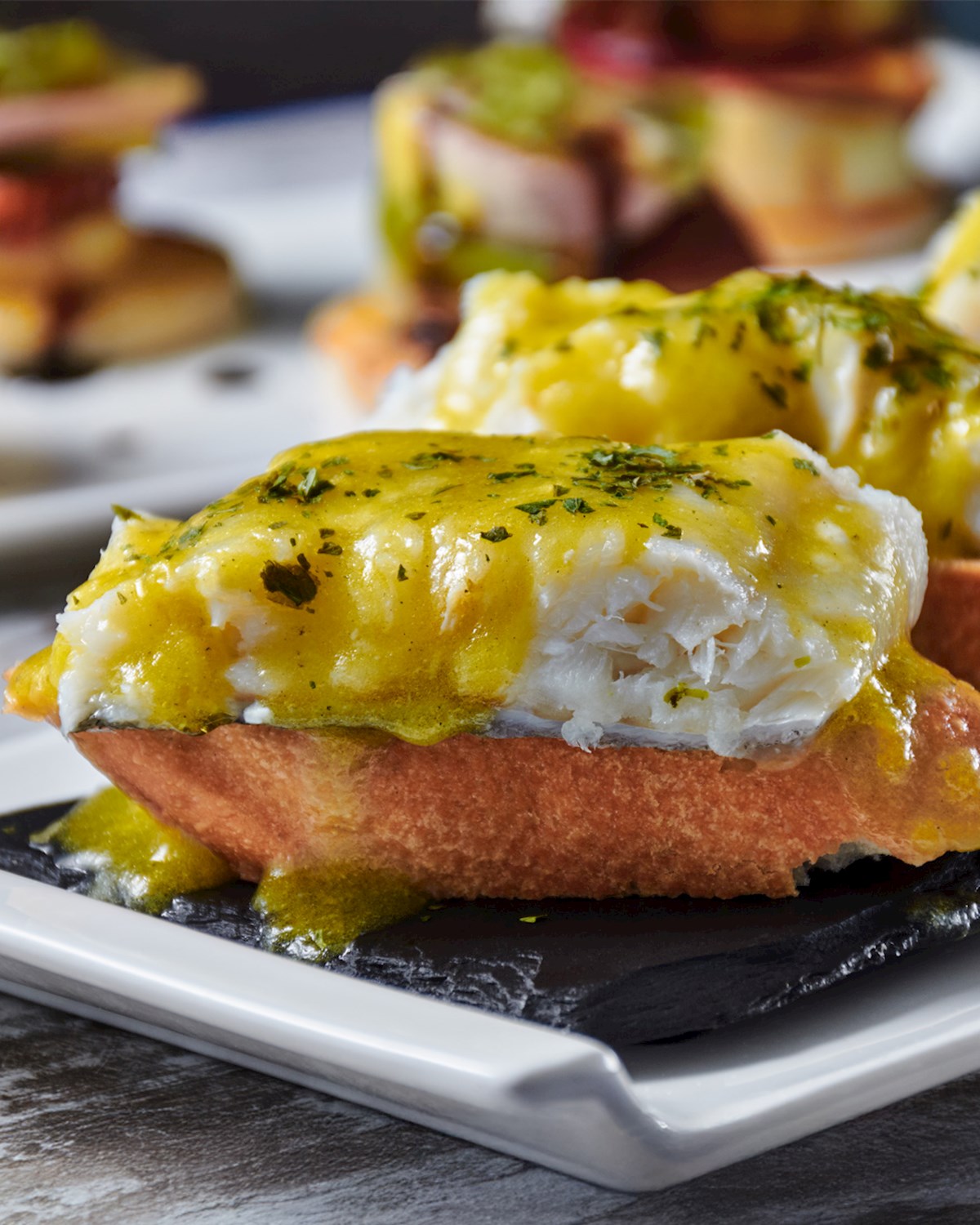
Bacalao al pil-pil is a Basque speciality that showcases the region’s refined approach to fish cookery. Made with only four ingredients – salted cod, olive oil, garlic and chilli – it relies entirely on precise technique. As the cod cooks, it releases natural gelatin which emulsifies with the oil to form a silky, golden sauce. The cook gently moves or tilts the pan to encourage this transformation, producing the distinctive pil-pil texture that defines the dish.
In the Basque Country it is traditionally served in clay dishes to help retain heat, while in Spanish restaurants in the UK it often features as a speciality item for diners seeking something more distinctive than the usual tapas favourites. The dish’s name derives from the sound of the sauce bubbling as it thickens, a detail that has become part of its culinary lore.
Bacalao al pil-pil pairs particularly well with a crisp Txakoli, the Basque white wine whose bright acidity and slight spritz cut through the richness of the sauce while enhancing the cod’s delicate flavour. An Albariño is another excellent choice, offering freshness and minerality. For red wine drinkers, a light Mencía works surprisingly well, adding fruit without overwhelming the dish. On the table, it complements other Basque favourites such as pimientos de Padrón or grilled vegetables, creating a well-rounded dining experience.
Where to try it:
Barrafina
Hispania
Learn more about Bacalao al pil-pil
Paella
TasteAtlas Rating: 4.3
 Credits: ArrosQD
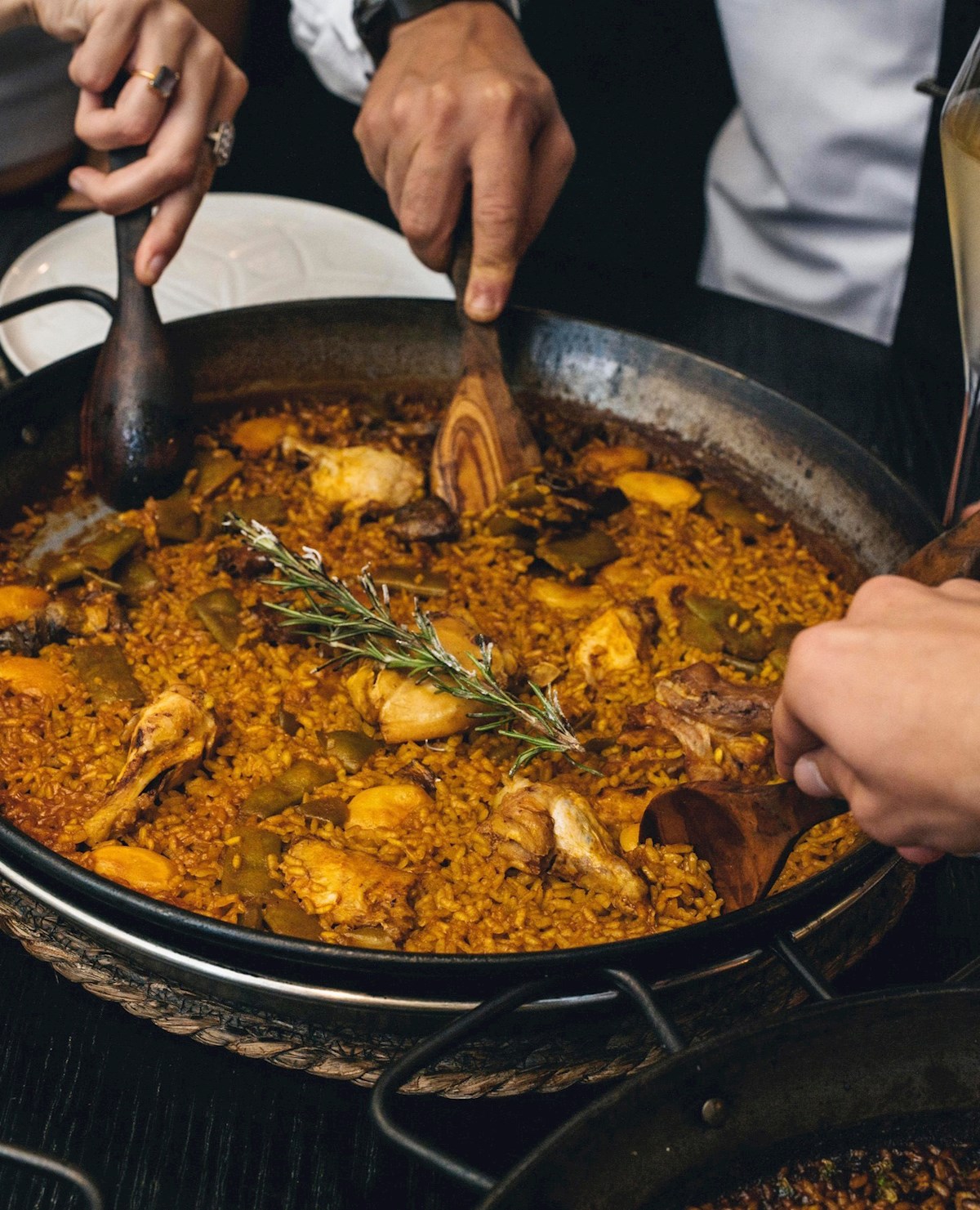
Paella is Spain’s most internationally recognised dish, originating in Valencia and traditionally cooked in a wide, shallow pan over an open fire. It is made with rice, saffron, beans and proteins such as rabbit, chicken or seafood, with countless variations reflecting different regions and contexts. A defining hallmark of authentic paella is the socarrat, the caramelised layer of rice at the bottom of the pan that provides both flavour and texture.
In Spain, paella is often prepared for gatherings and celebrations, eaten straight from the pan, while in Spanish restaurants in the UK it has become one of the most requested dishes, frequently offered in seafood versions that appeal to local tastes. Its vivid colours, aromatic saffron and communal style of eating make it both visually and culturally distinctive.
Beyond paella itself, Spain has a wealth of other rice dishes that demonstrate its regional variety, such as arròs a banda from Alicante, arroz negro with squid ink, and arroz al horno baked with meats and vegetables, each showing different expressions of the same culinary tradition.
Paella pairs beautifully with a crisp Albariño or a dry Verdejo, both of which refresh the palate while enhancing the saffron and seafood notes. For meat-based versions, a young Rioja Crianza or Garnacha provides balance with soft fruit and spice. A well-chilled rosado is another versatile option, especially for mixed paellas. Beer drinkers often find a Spanish lager a refreshing match.
Where to try it:
Arros QD
Boqueria
Barrafina
Maresco
Hispania
Pluma
Cochinillo asado
TasteAtlas Rating: 3.9
 Credits: Camino London
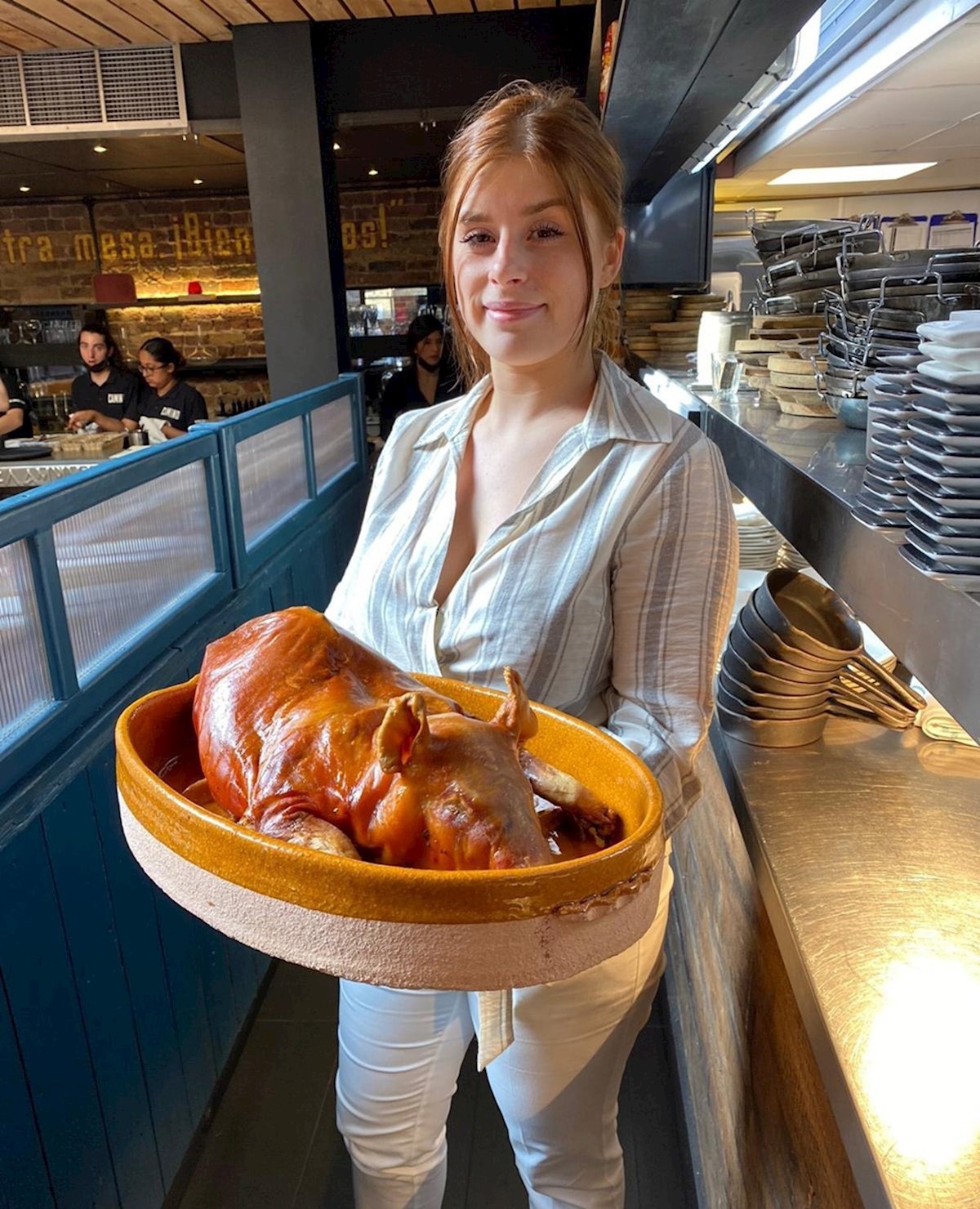
Cochinillo asado, or roast suckling pig, is one of the most iconic dishes of Castile, particularly Segovia. The piglet is roasted whole until the skin turns golden and crisp while the meat inside remains incredibly tender, so tender, in fact, that in Segovia chefs famously cut it with a plate to demonstrate its softness. The dish dates back centuries, associated with festive banquets and celebrations, and continues to symbolise communal feasting in Spain today.
In Spanish restaurants in the UK it is often offered as a speciality for sharing, ordered by groups seeking a centrepiece dish that captures the essence of Spanish gastronomical heritage. The flavour of cochinillo asado is both delicate and rich, with the crisp crackling providing contrast to the tender meat beneath. Its preparation requires considerable skill, but the result is one of Spain’s most celebrated roasts. Cochinillo is not an everyday dish but one reserved for special occasions, which makes it all the more memorable.
Cochinillo asado pairs beautifully with a structured Ribera del Duero or Reserva Rioja, both of which have the depth and tannins to match the richness of the meat while highlighting its delicacy. A Mencía from Bierzo offers a fresher, lighter take, balancing fruit with gentle acidity. White wine lovers might prefer a barrel-aged Godello or Verdejo, which provide body and subtle oak to complement the crackling. Cochinillo is often accompanied by simple sides such as roast potatoes or a crisp green salad, allowing the meat to remain the star.
Where to try it:
Camino
Boqueria
Sabor
Hispania
Learn more about Cochinillo asado
Fabada asturiana
TasteAtlas Rating: 4.1
 Credits: shutterstock
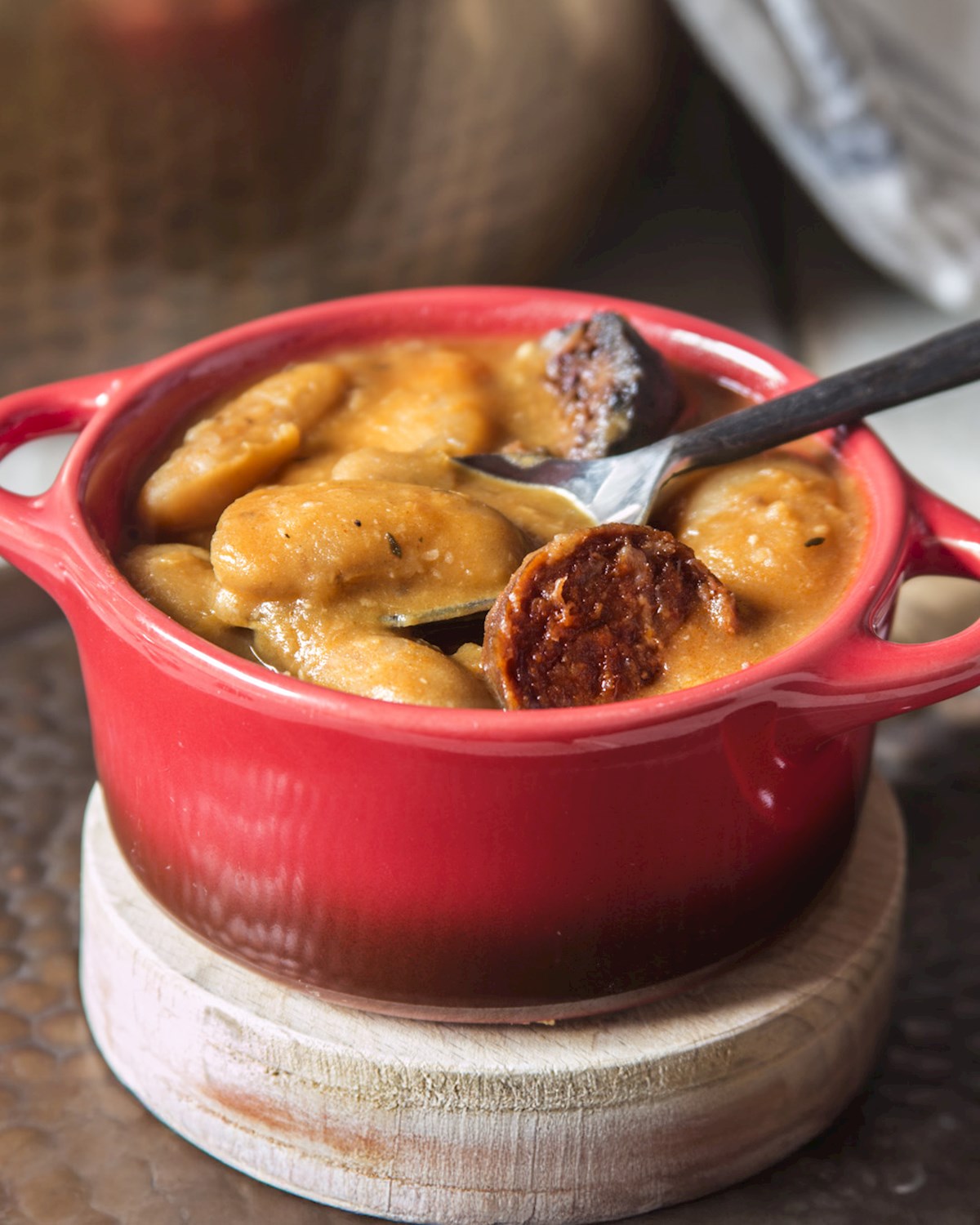
Fabada asturiana is a bean stew from Asturias in northern Spain, celebrated for its deep, smoky and hearty flavours. The dish is prepared with large white beans known as fabes, which are slow-cooked with chorizo, morcilla (blood sausage) and pork belly until the beans absorb the essence of the meats. The result is a thick, filling stew that is perfectly suited to cold weather, often regarded as the ultimate expression of Spanish comfort food.
In Asturias it is a cornerstone of regional identity, while in Spanish restaurants in the UK it has found popularity in the winter months, when diners appreciate its warmth and sustaining richness. The stew is often said to taste even better the following day, once the flavours have had more time to meld and intensify. Fabada embodies the rustic generosity of northern Spain, where hearty stews have long been central to everyday cooking. It remains one of the most respected regional dishes in the country and a point of pride for Asturias.
Fabada asturiana pairs wonderfully with a robust Asturian cider, whose crisp acidity cuts through the richness of the meats. A Rioja Reserva or a Ribera del Duero Crianza also makes an excellent companion, offering depth and tannins to match the smoky sausages and creamy beans. For a lighter alternative, a Mencía from Bierzo provides freshness while still complementing the stew’s earthy qualities. On the table, fabada is best accompanied by simple crusty bread, which soaks up the sauce and rounds out the experience.
Where to try it:
Hispania
Learn more about Fabada asturiana
Rabo de toro
TasteAtlas Rating: 4.4
 Credits: shutterstock
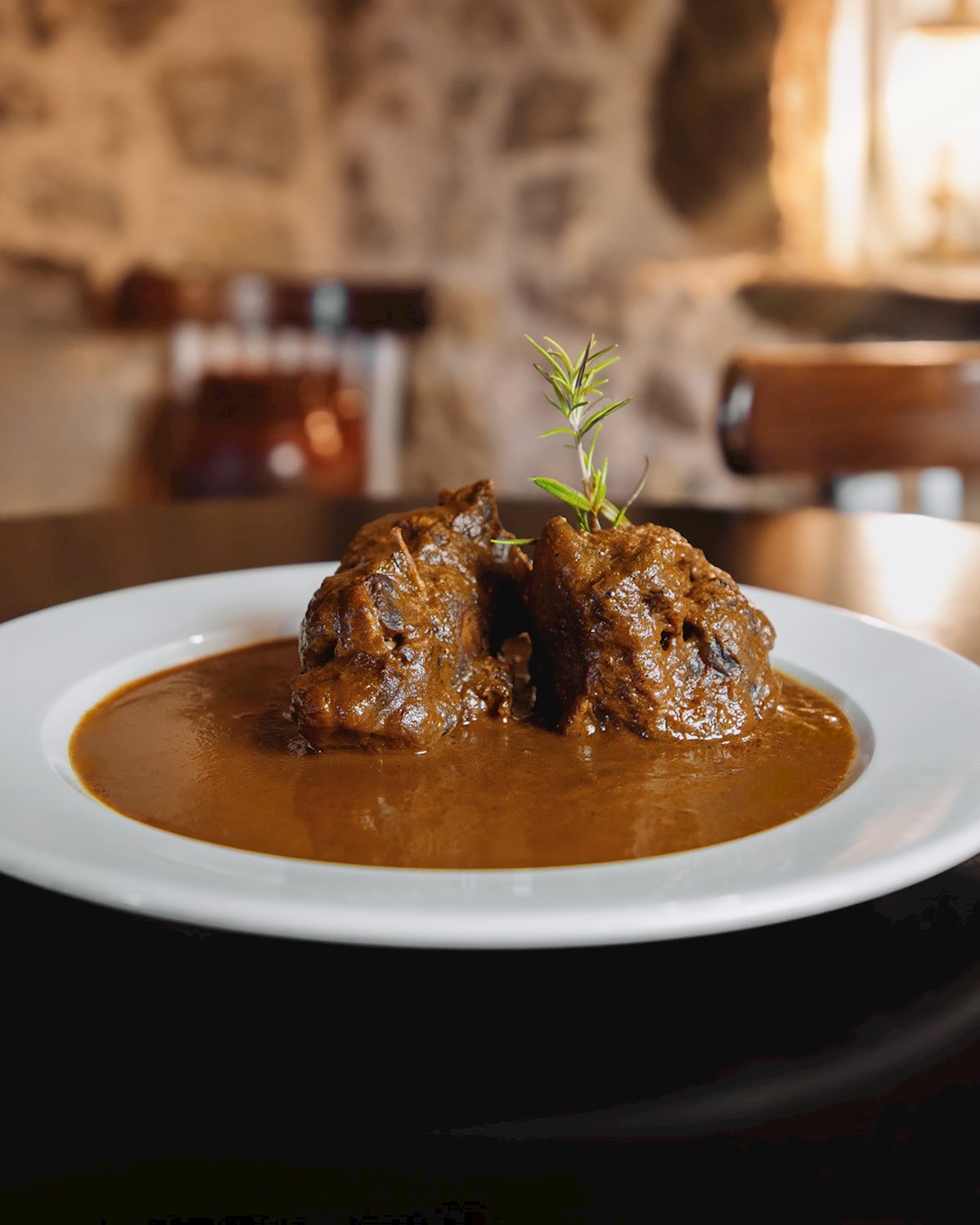
Rabo de toro, or oxtail stew, is one of the most iconic slow-cooked dishes from Andalusia, though today it is enjoyed across Spain. The dish has its origins in Córdoba, where it was historically prepared after bullfights using the tails of fighting bulls, simmered slowly with wine, onions, carrots, garlic and spices until the meat became tender enough to fall from the bone. Over time it evolved into a restaurant speciality, prized for its depth of flavour and luxurious texture. The cooking process is long, often taking several hours, allowing the gelatin from the bones to enrich the sauce and give it its characteristic richness.
In Spanish restaurants in the UK, rabo de toro is often served as a main course that appeals to diners seeking something more substantial and less commonly found than tapas. Its bold, earthy flavour has made it a favourite among those who appreciate robust, slow-cooked stews. Today, rabo de toro stands as a benchmark of Spanish slow cookery, combining patience, heritage and extraordinary flavour.
Rabo de toro pairs exceptionally well with a structured Ribera del Duero or a mature Rioja Reserva, both offering the depth, tannins and oak character needed to match the richness of the stew. A Toro red, with its intensity, is another classic match. For something lighter yet still expressive, a Mencía from Bierzo provides freshness and balance. Crusty bread or roasted potatoes make ideal accompaniments at the table.
Where to try it:
Barrafina
Bar Esteban
Albóndigas en salsa
TasteAtlas Rating: 4.3
 Credits: shutterstock
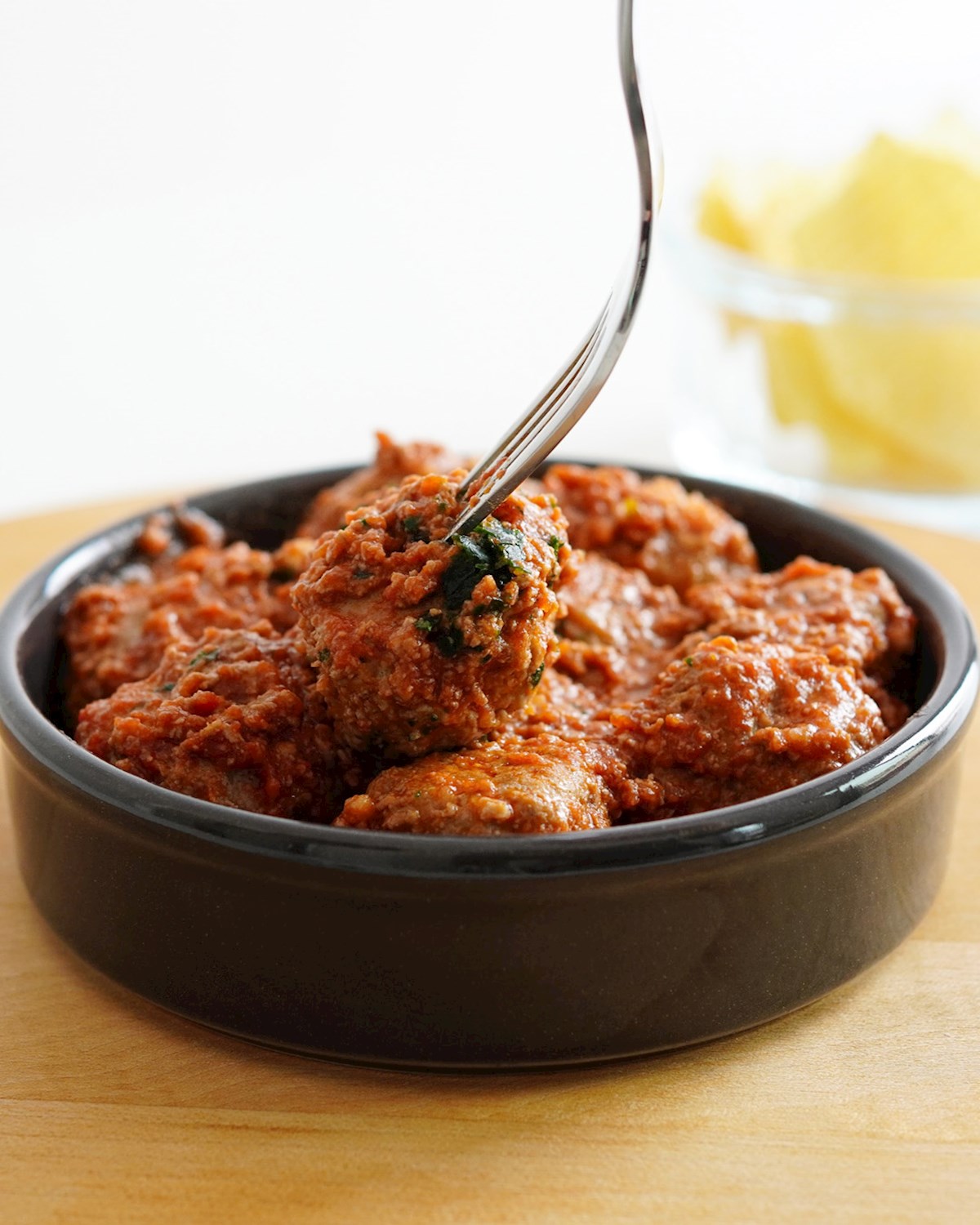
Albóndigas en salsa are Spanish-style meatballs, usually prepared from a mixture of beef and pork seasoned with garlic and parsley, then simmered gently in sauce. The sauce itself varies depending on the region: in many places it is tomato-based, while in others it may be enriched with almonds, saffron or wine, each variation lending its own character to the dish.
In Spain, albóndigas are a fixture of both family tables and tapas bars, while in Spanish restaurants in the UK they have become one of the most approachable tapas, appealing to diners who enjoy the familiarity of meatballs yet appreciate the distinctly Spanish flavours. Typically served in small clay dishes, they are best enjoyed with bread, which is used to soak up the richly flavoured sauce.
Albóndigas en salsa pair beautifully with a young Rioja Crianza or a Garnacha, both of which highlight the tomato and garlic notes while balancing the richness of the meat. A fuller-bodied Tempranillo is an excellent choice if the sauce is wine-based, while a dry sherry such as Amontillado offers an intriguing alternative. For beer drinkers, a smooth amber lager works particularly well.
Where to try it:
Boqueria
Learn more about Albóndigas en salsa
Churros con chocolate
TasteAtlas Rating: 4.1
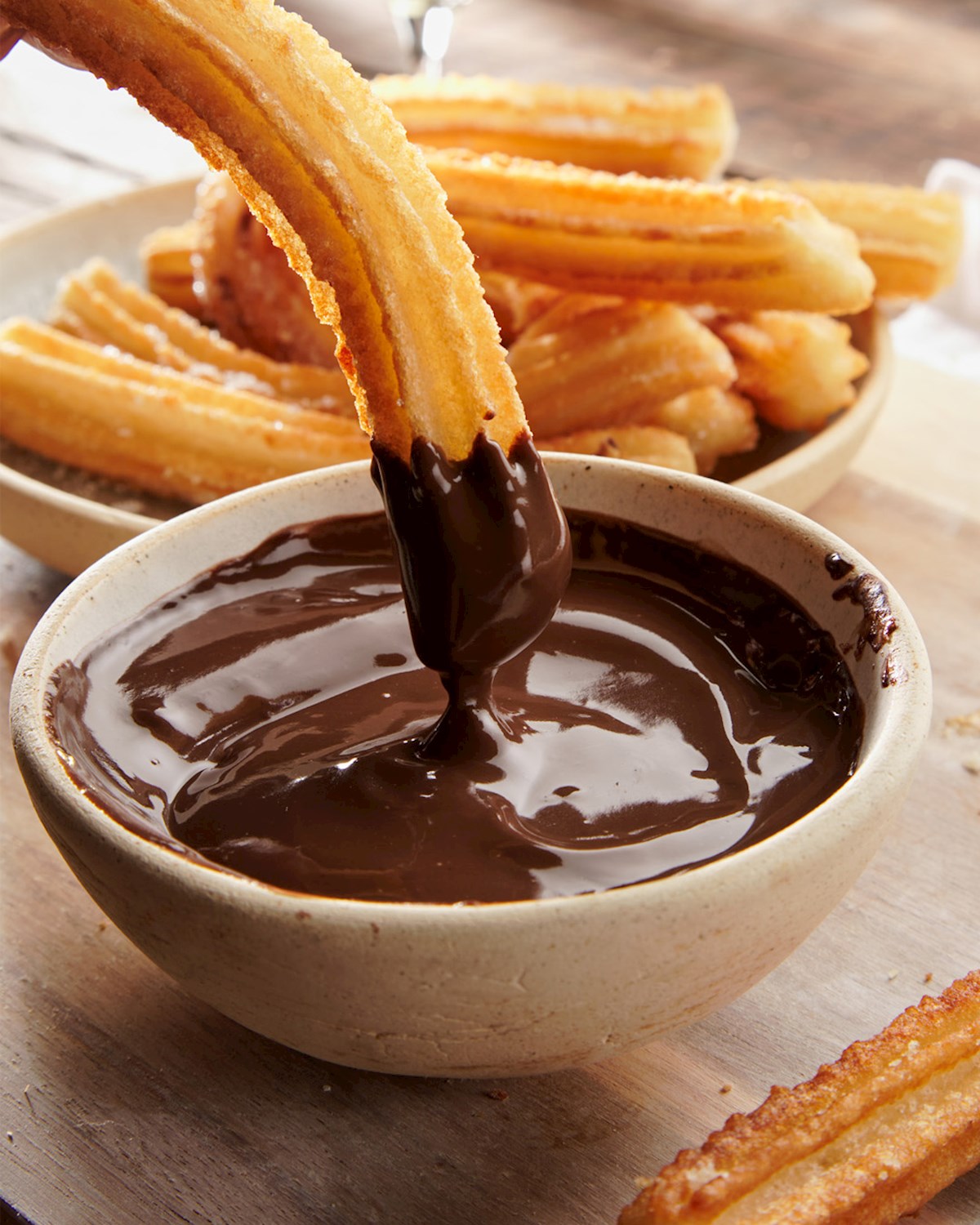
Churros con chocolate are among Spain’s most celebrated sweet dishes, enjoyed both as a breakfast treat and as a late-night indulgence. Churros are lengths of fried dough, piped through a star-shaped nozzle to create ridges, which gives them a crisp exterior while remaining soft and airy within. They are traditionally served with a cup of thick, almost pudding-like hot chocolate made for dipping rather than drinking, creating the distinctive pairing that defines the dish.
In Spain, churros are eaten at fairs, in churrerías or after a night out, while in Spanish restaurants in the UK they have become one of the most popular desserts, frequently shared at the table as a fun and interactive way to end a meal. The combination of golden fried dough and rich chocolate is both indulgent and comforting, appealing to diners of all ages and across contexts.
Churros con chocolate pair naturally with a strong Spanish coffee, such as café solo or cortado, balancing the sweetness with bitterness. For wine lovers, a sweet Pedro Ximénez sherry or a Moscatel makes an excellent match, elevating the richness of the chocolate while adding aromatic complexity, while a glass of cava brut offers a lighter, sparkling contrast.
Where to try it:
Boqueria
Barrafina
Pluma
Learn more about Churros con chocolate
Basque cheesecake
TasteAtlas Rating: 4.4
 Credits: Curado Bar
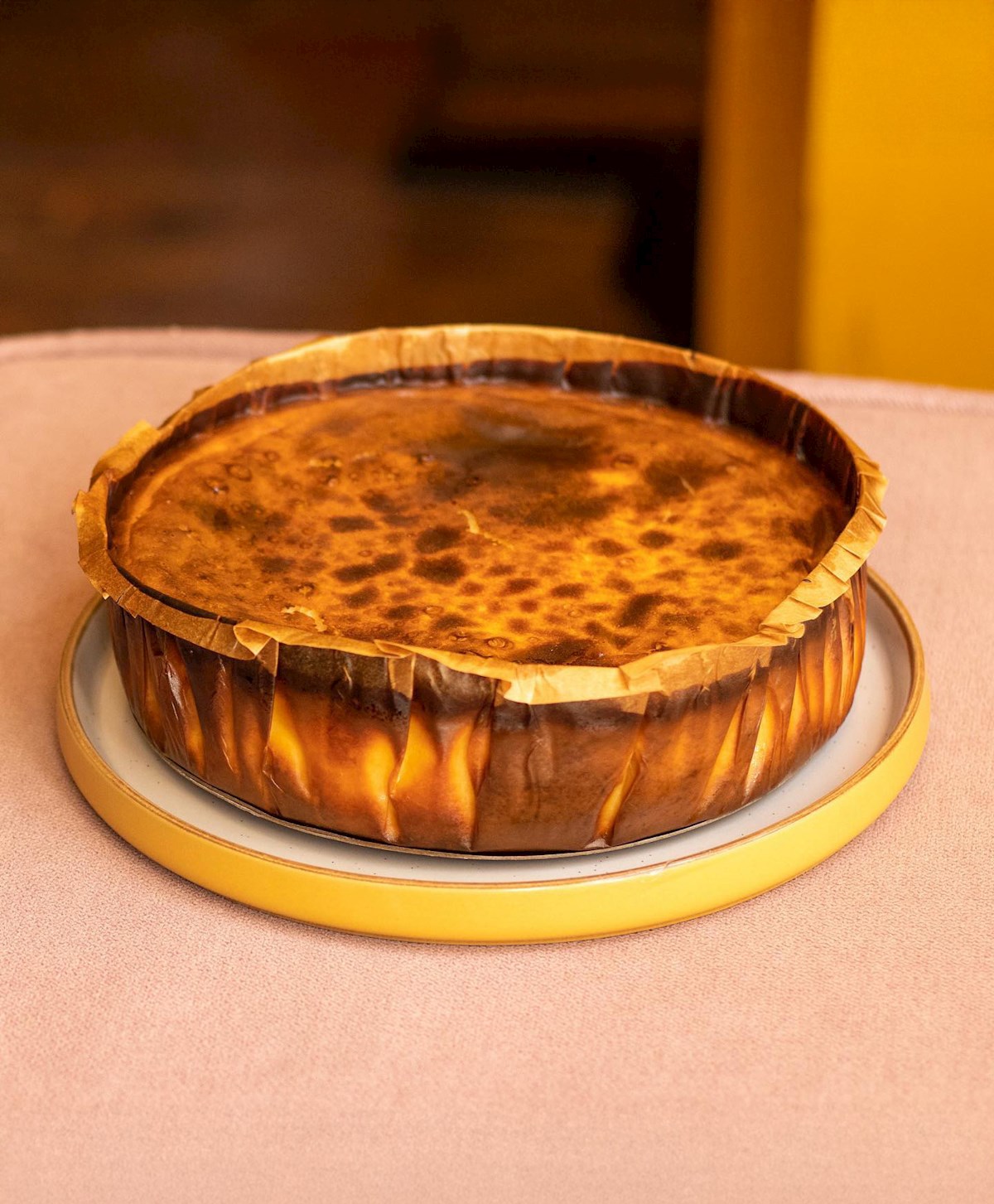
Basque cheesecake, also known as tarta de queso vasca or “burnt” Basque cheesecake, is a baked dessert from San Sebastián in the Basque Country. It is characterised by its dark, caramelised top, created by baking at a high temperature, and its soft, almost custard-like centre that sets without becoming dense. Unlike many other cheesecakes, it has no crust; the focus is entirely on the filling, made from cream cheese, eggs, sugar and cream, which achieves a delicate balance between richness and lightness.
The dessert was first created in the 1988 at La Viña, a small bar in San Sebastián, and quickly gained attention for its distinctive appearance and texture. From there, it spread throughout Spain and eventually abroad, becoming one of the country’s most recognised modern desserts. In Spanish restaurants in the UK, Basque cheesecake has become a popular finale to a meal, often ordered by diners who want something indulgent yet not overly sweet. Its slightly bitter top and creamy interior give it a complexity that sets it apart from more conventional cheesecakes.
A natural pairing for Basque cheesecake is a glass of Pedro Ximénez sherry, whose deep sweetness complements the caramelised notes of the cake. A lighter option is Moscatel, adding floral and citrus hints that lift the richness of the filling. Sparkling wine such as Cava Brut Nature works well too, its freshness cutting through the creaminess, while a strong espresso or cortado offers a simple but equally satisfying companion.
Where to try it:
Arros QD
Camino
Brindisa
Boqueria
Barrafina
Bar Esteban
Maresco
Escocesa
Learn more about Basque cheesecake
Crema catalana
TasteAtlas Rating: 4.2
 Credits: shutterstock
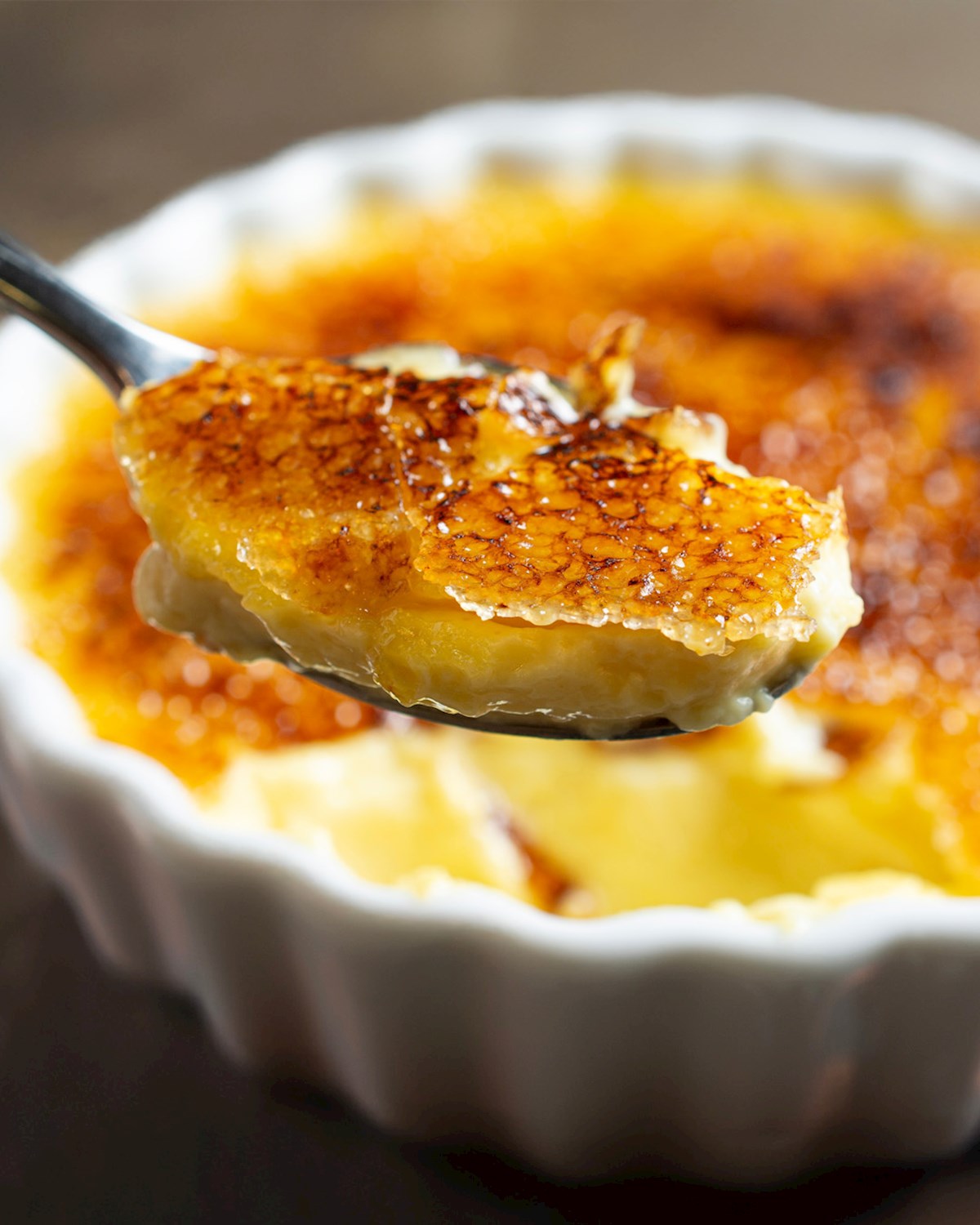
Crema catalana is a custard dessert from Catalonia, prepared with milk flavoured with lemon zest and cinnamon, then topped with a thin crust of caramelised sugar. Its smooth, delicate texture is reminiscent of France’s crème brûlée, though it is lighter as it is made with milk rather than cream. Once associated primarily with Saint Joseph’s Day in March, it is now enjoyed throughout the year in restaurants across Spain and beyond.
In Spanish restaurants in the UK, crema catalana is often presented as a lighter, more refined dessert option, contrasting with the richer indulgence of churros con chocolate. The caramelised sugar is cracked just before serving, offering a satisfying crunch that gives way to the silky custard beneath. Its balance of sweetness and citrus-spice creates a dessert with both freshness and depth, appealing to those who prefer a less heavy finish to their meal.
Crema catalana pairs beautifully with a glass of Cava Brut Nature, whose crisp bubbles cleanse the palate while complementing the custard’s citrus notes. A sweet Moscatel or a late-harvest Garnacha Blanca also makes a lovely companion, enhancing the dessert’s aromatic character. For something more indulgent, a sip of Pedro Ximénez sherry adds richness and contrast, while coffee drinkers will find it especially enjoyable alongside a strong espresso.
Where to try it:
Barrafina
Maresco
Learn more about Crema catalana
Arroz con leche
TasteAtlas Rating: 3.9
 Credits: Shutterstock
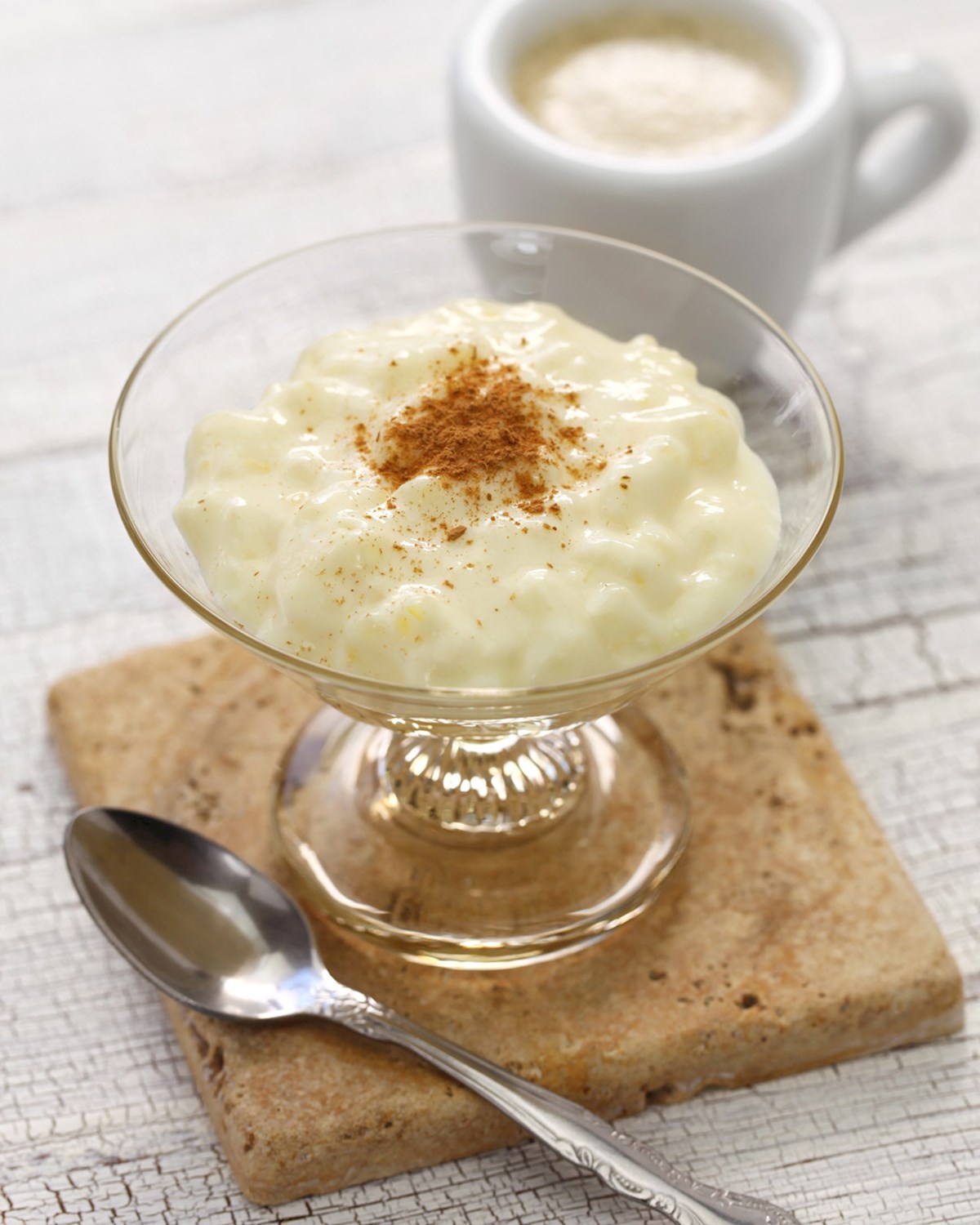
Arroz con leche is Spain’s take on rice pudding, most strongly associated to Asturias and cherished for its creamy and comforting character. It is prepared by gently simmering rice in milk with sugar until the grains are tender and the mixture thickens, before being flavoured with cinnamon sticks and lemon peel. Served with a dusting of ground cinnamon on top, it can be enjoyed either warm or chilled, depending on preference. While variations exist across many Spanish-speaking countries, the Spanish version retains its own unmistakable identity.
In Spain it is among the most common home-style desserts, while in Spanish restaurants in the UK it offers diners something familiar yet distinct, thanks to the aromatic use of citrus zest and whole spices. Its gentle sweetness and simple preparation give it a timeless appeal.
Arroz con leche pairs beautifully with a sweet Moscatel or a Pedro Ximénez sherry, whose richness and raisin-like depth complement the creaminess of the pudding. A lighter pairing such as a semi-sweet cava works well too, offering freshness and bubbles to balance the richness. For a non-alcoholic option, it sits perfectly alongside strong Spanish coffee.
Where to try it:
Brindisa
Learn more about Arroz con leche
Learn more about Food & Wine from Spain