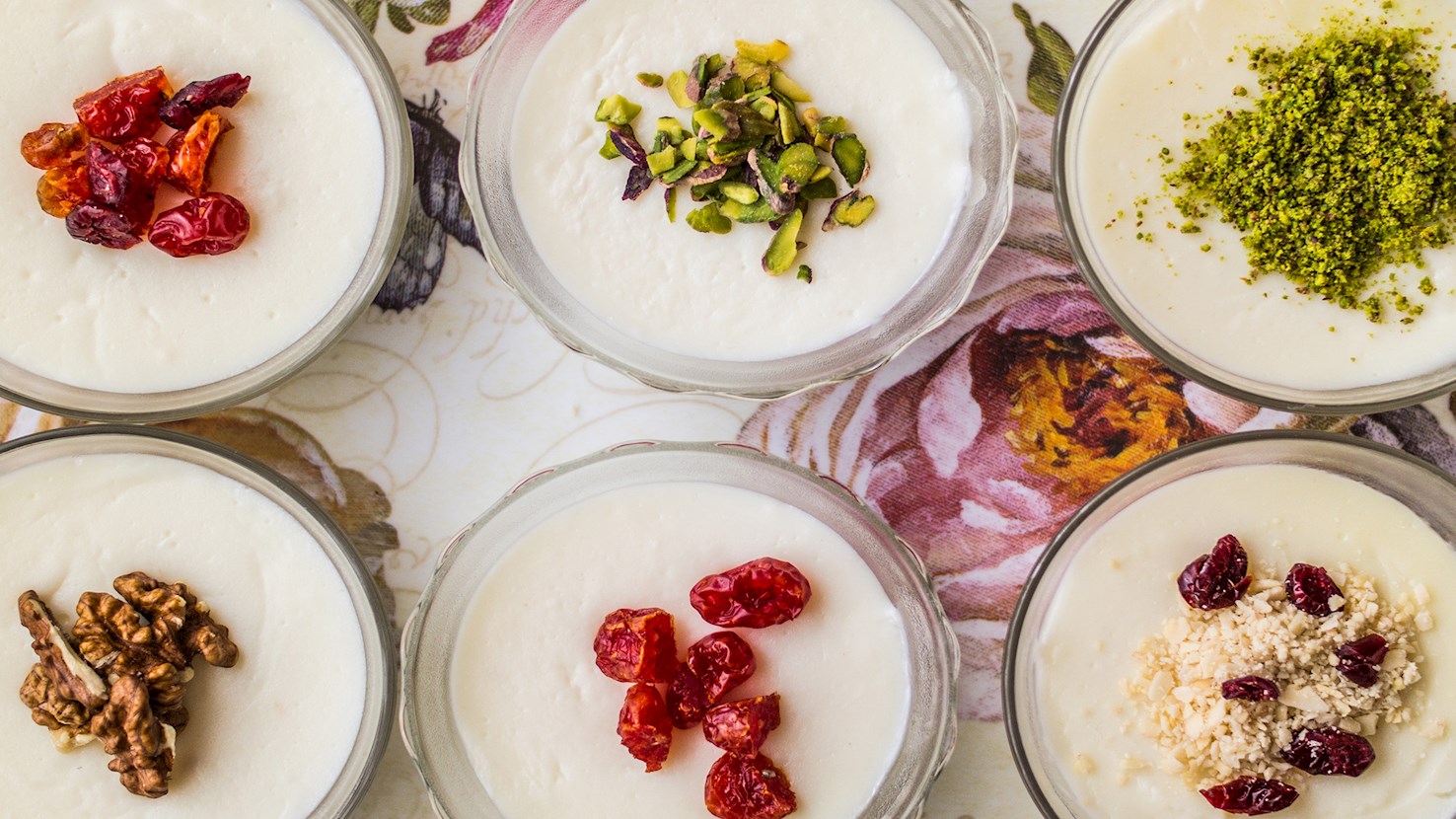
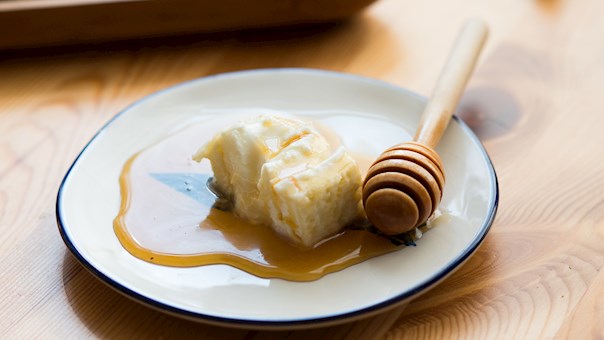
Muhallebi is a milk-based dessert widely known across the Middle East, Eastern Mediterranean, and North Africa. It is a smooth, lightly sweetened pudding made from milk thickened with rice flour, cornstarch, or semolina, and flavored with ingredients such as rosewater, orange blossom water, or mastic. The dessert has deep roots in Ottoman and Arab cuisines, where it became a staple of both palace and household cooking. Variations exist throughout the region under different names, including malabi in Israel, mahalabia in Egypt, and mahalabiyeh in Lebanon and Syia, all sharing a similar base of milk and starch with slight differences in flavoring and garnish. Muhallebi developed within the culinary traditions of the eastern Mediterranean, influenced by Persian and Arab sweet-making practices that emphasized dairy-based desserts flavored with floral essences. It became especially prominent in the Ottoman Empire, where palace chefs refined the recipe into a smooth, delicate pudding served chilled. Over time, it spread throughout the empire’s territories, blending with local ingredients and preferences. In Turkey, muhallebi remains part of daily dessert culture, sold in dessert shops and restaurants specializing in milk-based sweets, known as “sütlü tatlılar.” Preparation begins by mixing starch or rice flour with a portion of cold milk until smooth. The remaining milk is heated with sugar over medium heat, and the starch mixture is slowly whisked in to avoid lumps. The pudding is cooked until it thickens to a creamy consistency and begins to coat the spoon. At this point, flavorings such as rosewater, orange blossom water, or mastic are added, and the mixture is poured into bowls or molds to cool and set. Once firm, it is typically chilled before serving. The texture should be silky and light, with a mild sweetness balanced by the fragrance of the added flavoring. Muhallebi is often garnished with ground nuts such as pistachios or almonds, shredded coconut, or a thin layer of syrup. In some versions, a fruit compote or rose-flavored syrup is spooned on top to add color and acidity. Turkish-style muhallebi is commonly unflavored and served plain or dusted with cinnamon, while Levantine and Egyptian versions lean toward floral and aromatic notes. A baked variation, known as “fırın muhallebi,” develops a golden crust on top while maintaining a soft center. It is eaten year-round, often as a light dessert after meals or as a refreshing treat during warm weather. It is served in cafés, sweet shops, and homes, especially during religious festivals and gatherings. Muhallebi pairs well with Turkish tea, mint tea, or lightly roasted coffee, which balance its sweetness. Its simplicity, gentle flavor, and adaptability have made it one of the most enduring dairy desserts of the Eastern Mediterranean, linking diverse regional cuisines through a shared culinary foundation.
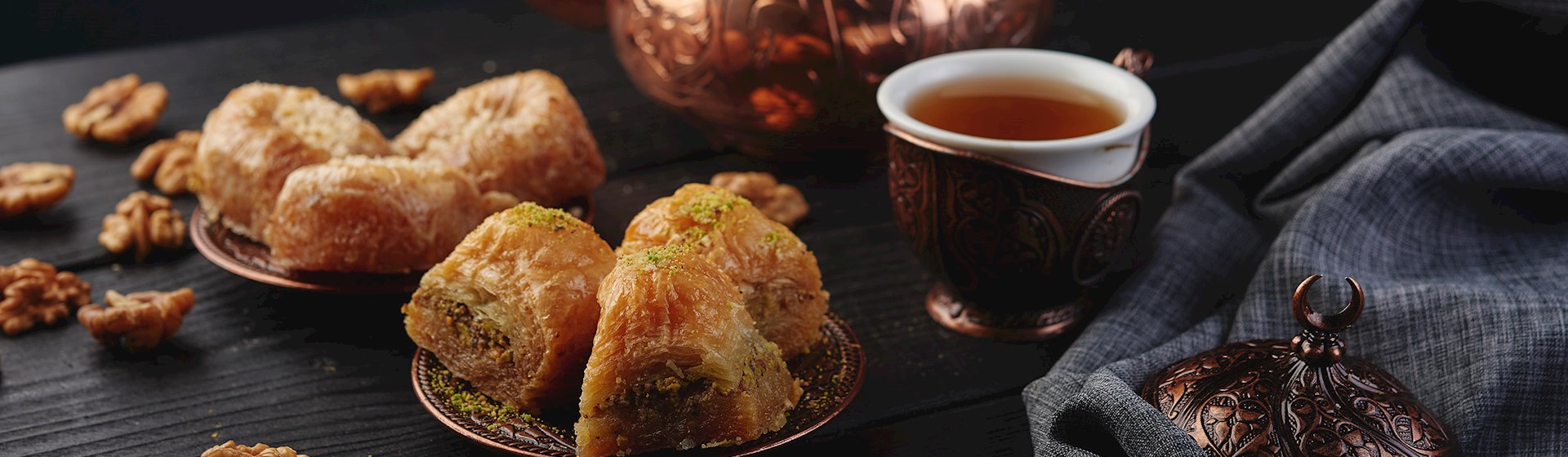
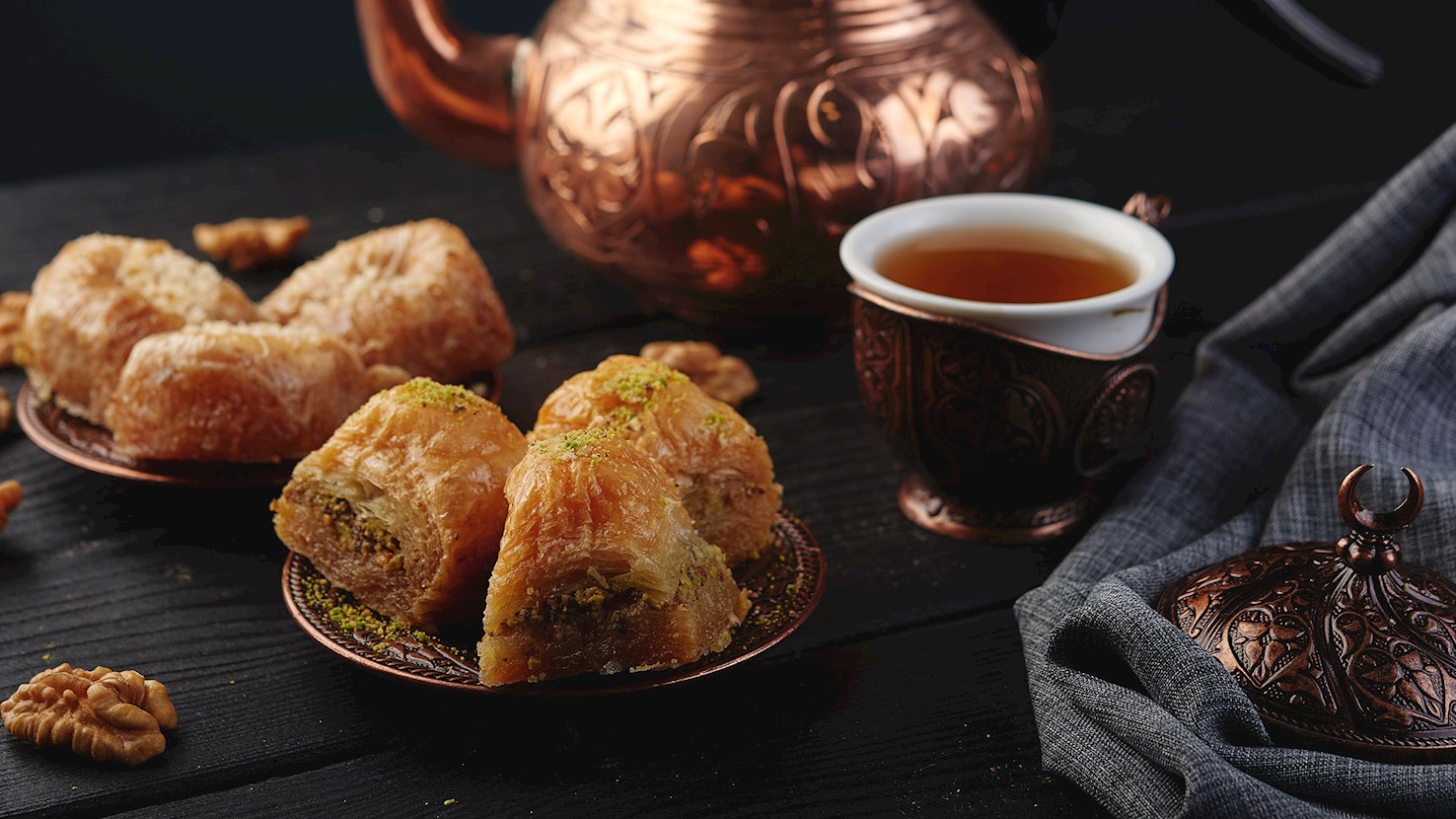
The remarkable baklava is a luscious dessert created with layers of thin phyllo dough intertwined with chopped nuts, all doused in a sweet, viscous syrup. The popularity of baklava has long surpassed borders, regions, and ethnic groups to become a dessert whose origin and invention is claimed by numerous countries. It is probable that it has an Assyrian origin, dating back to the 8th century, from where it spread out throughout the region all the way to Greece. The Greeks altered the recipe and created the thin sheets, known today as phyllo dough, but modern-day baklava is believed to be an original Turkish creation. However, it is almost impossible to pinpoint baklava's exact place of origin, and the debate about its authenticity is still going on between Türkiye and Greece. Traditionally, baklava is made with sheets of paper-thin pastry at the bottom, followed by chopped nuts which are then topped with additional pastry layers. The other traditional way suggests alternating layers of phyllo dough with layers of chopped nuts. The original and authentic baklava should always have a nut-based filling, most commonly walnuts, hazelnuts, or pistachios, but modern versions have introduced unusual fillings such as apricots, chocolate, and even ground cookies. The dessert is typically prepared in large trays, and it is then sliced into squares, triangles, or diamond shapes before being doused in a luscious syrup made with water and sugar or honey. Very often, the syrup is flavored with sliced lemon, rose water, cinnamon, or cardamom. It is supposed to cover the entire tray and keep the delicate pastry succulent, creating a sweet and juicy cover around it. Iranian or Persian baklava differentiates itself because it is drier and lighter than other regional varieties, and it is often flavored with rose water. Even though it was once regarded as a decadent treat that was mostly enjoyed by the aristocracy, the famous baklava is now a traditional pastry and a dessert offered in numerous Oriental, Turkish, or Greek restaurants. It is also often found in pastry shops across the Balkan region all the way to the Middle East.
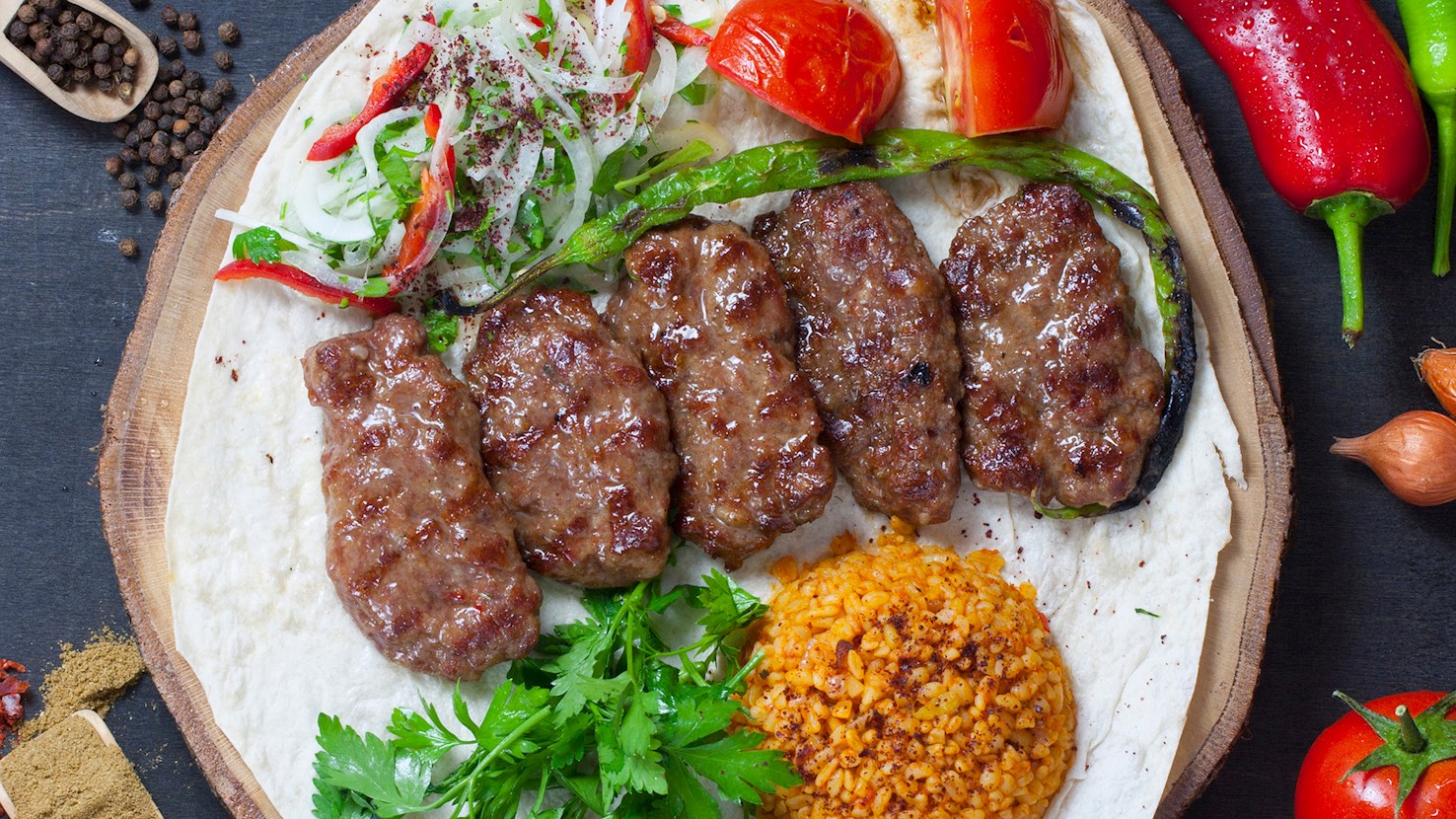
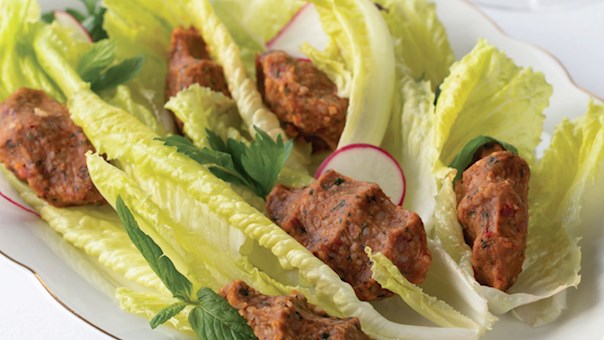
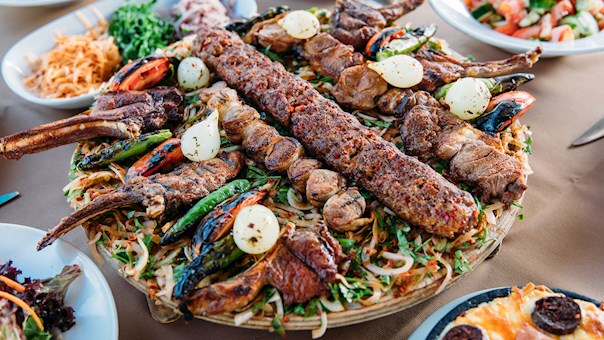
Kofta or köfte are walnut-sized fried meatballs, usually made from ground beef or lamb. It is a popular Turkish meze dish that is often prepared for special occasions and cocktail parties, since the meatballs are quite easy to prepare and can be easily consumed with a toothpick. Köfte come in various degrees of spiciness and in numerous forms - from egg-coated and fried kadin budu to Adana kofte from the south-east of Turkey. In eastern Turkey, the most popular variety is called içli köfte, full of flavor due to large amounts of butter in the filling. Another interesting variety is called cizbiz kofta, one of the most popular street food items in the country, its name coming from the sound which the thin meat patties make when placed on the grill. Whether fried, stewed, drenched in sauce, or grilled, the variations are virtually infinite and every kofta dish pairs well with a glass of turnip juice and fried potatoes on the side.
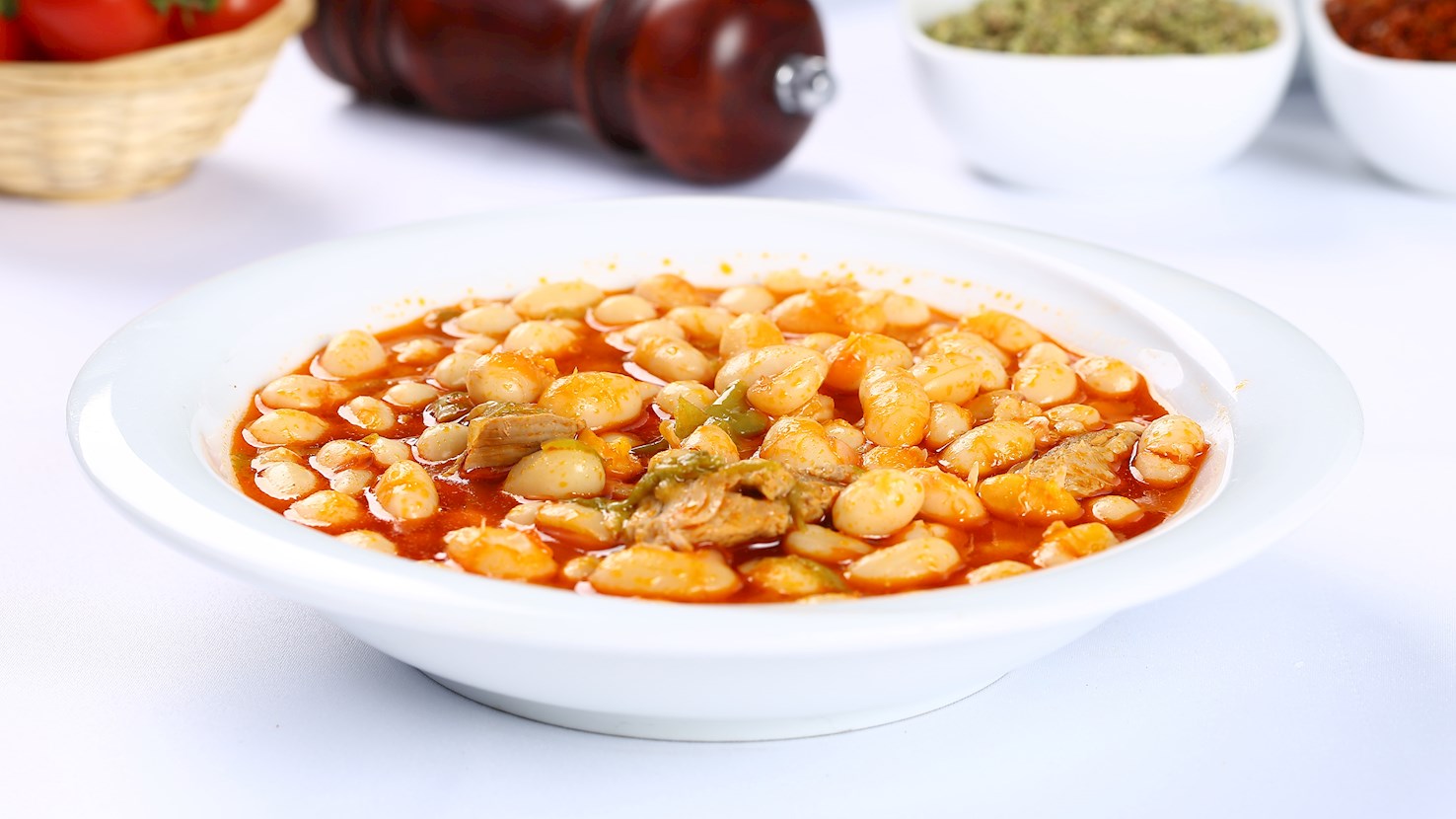
This traditional Turkish white bean stew is a staple in virtually every household and lokanta—an establishment serving simple but hearty meals to people on the go. Kuru fasulye translates to dried beans which are first soaked and then cooked together with sautéed chopped onions, green peppers, tomatoes, and salça (tomato paste). The dish can also be enriched with meat - typically lamb - in a variation known as etli kuru fasulye.
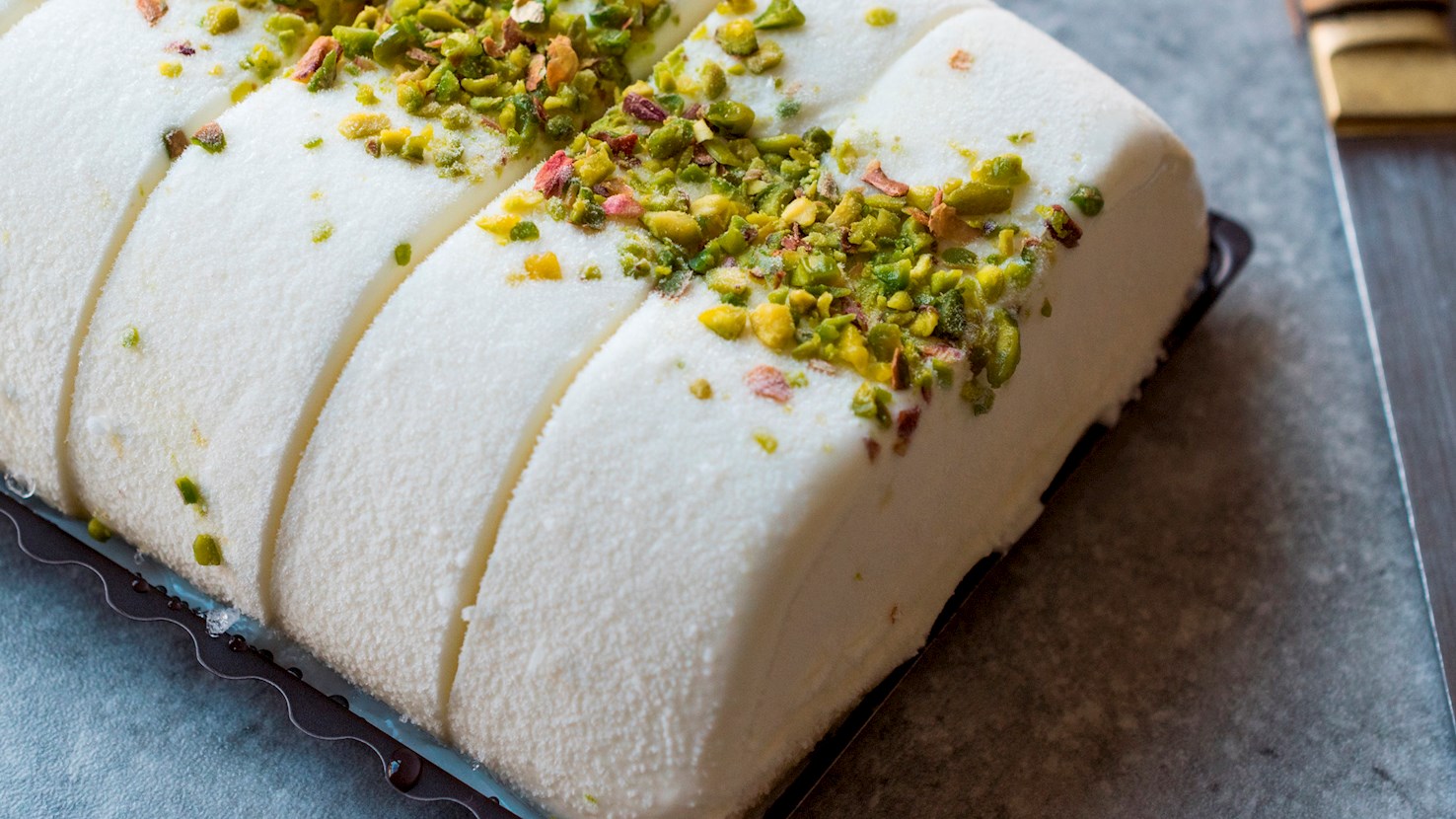
Turkish ice cream is believed to originate from the city of Maraş—hence the name—and what really sets it apart from other varieties is its resistance to melting and a particularly dense, chewy texture. These qualities are brought by adding two thickening agents to the basic milk and sugar mixture: Arab gum, also known as mastic resin, and salep—a type of flour made from the root of the early purple orchid. In fact, in the Kahramanmaraş region, ice cream typically contains distinctly more salep than usual, which is why it is sometimes called kesme dondurma—from the Turkish kesmek, meaning to cut—which is the reason why this ice cream variety is usually eaten with a knife and fork. In Türkiye, ice cream is commonly sold in the streets but also in specialized dondurması shops, whose owners will often go out of their way by producing their own salep, apart from using exclusively natural flavorings and milk from goats fed only with thyme, orchid flowers, and milkvetch.
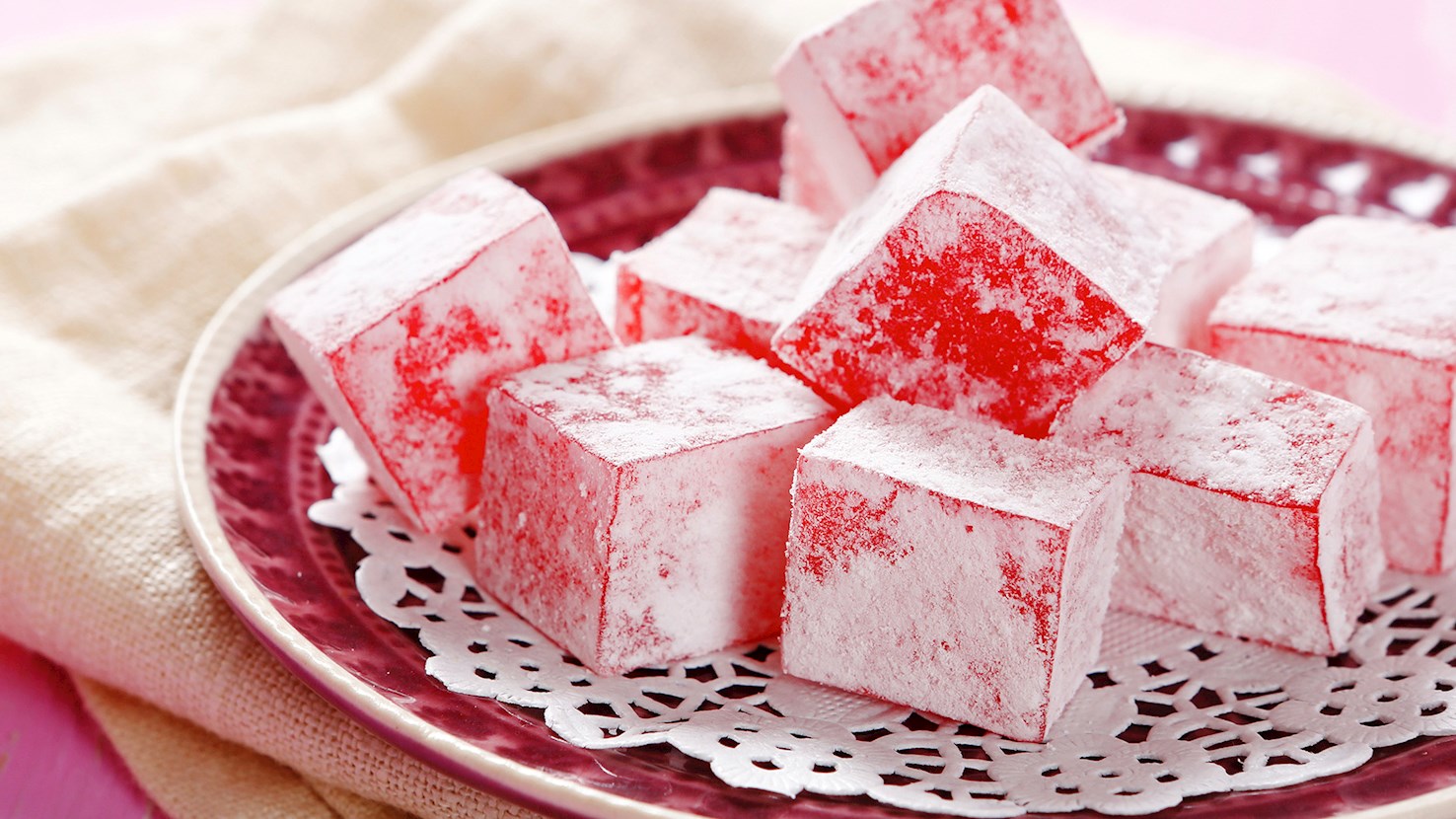
Lokum are succulent, sugary cubes from Türkiye based on a gel of starch and sugar. Traditionally, lokum is flavored with rose water, lemon, bergamot orange, mastic, or mint, but the Turkish favorite remains a lokum of plain jelly combined with pistachios. There are also other varieties, using ingredients such as cinnamon, dates, hazelnuts, or walnuts. These cubes are typically offered with tea and coffee after breakfast, lunch, and dinner in most Turkish homes. The sweet treats were invented by Bekir Affendi, who came to Istanbul in 1777 from Anatolia. His first shop, Haci Bekir, is still in business, run by his descendants. The name of these sweets comes from the Arabic term rahat-ul hulkum, meaning heal or soothe the throat. Its other popular name, Turkish delight, was coined in the 18th century when an English traveler took some of the sweets back home, and since he couldn't pronounce the Arabic name, he coined his own term. The original recipe called for corn flour, refined beet sugar, honey, and water. The treat soon gained popularity, and today it is one of the most famous symbols of Türkiye.
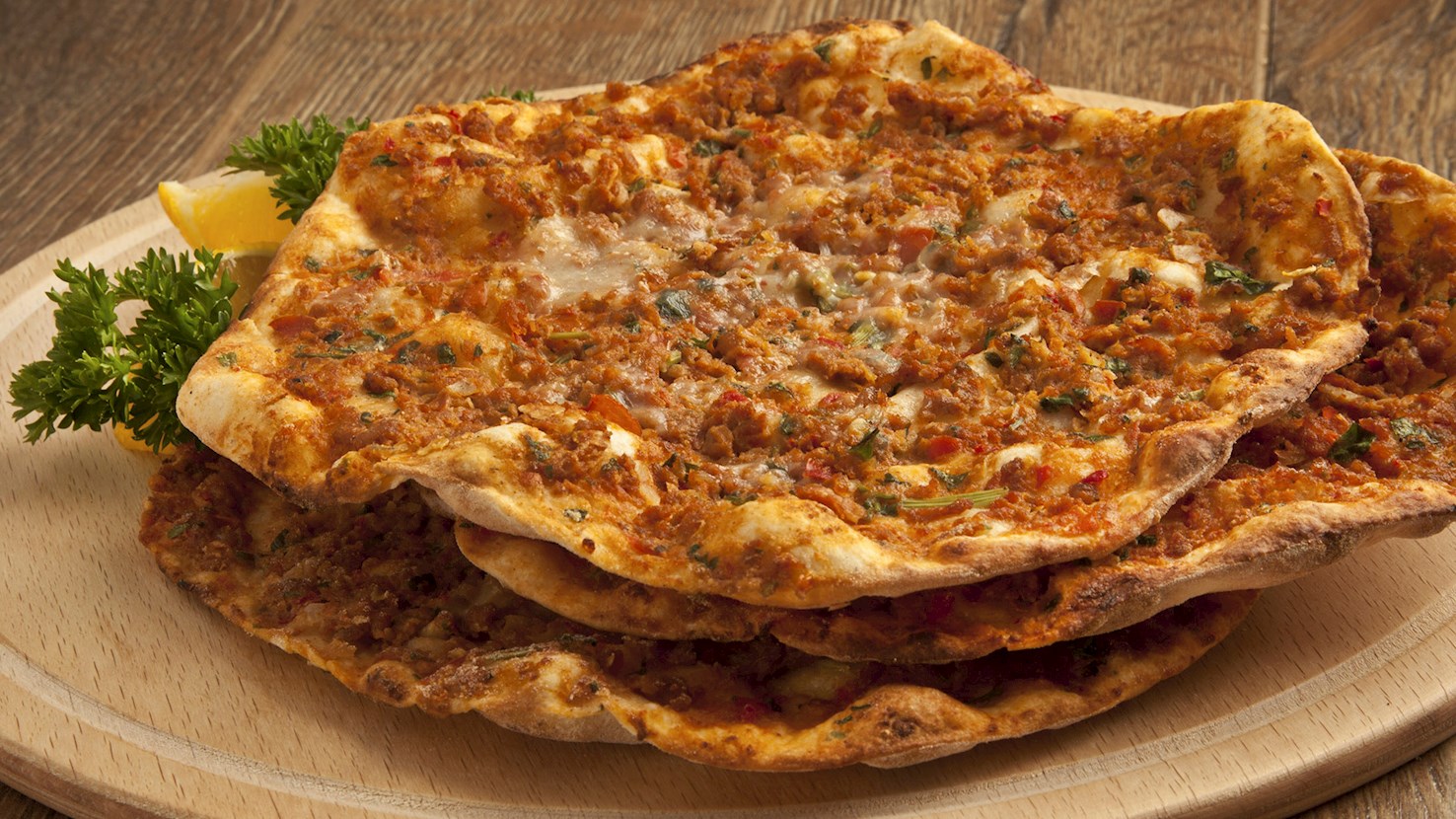
Even though lahmacun is popularly nicknamed Turkish pizza, it's origin is disputed and can be traced to Armenia, Syria, Lebanon, and Turkiye. It can be found at numerous street stalls as well as in virtually any traditional restaurant, but also in kebab eateries where they typically serve mini lahmacuns as appetizers. The perfect lahmacun is made by rolling a ball of sturdy semolina dough into a thin disc which is only lightly spread with meat - either lamb or beef, minced to a paste together with chili, onions, and other seasonings. The dish is then shortly baked in a super-hot (and preferably wood-fired) oven. Lahmacun is best served hot with a drizzle of lemon juice. It is traditionally enjoyed folded around the crispy onions and a parsley salad known as piyaz. It is recommended to pair lahmacun either with the salty, cold yogurt beverage called ayran, or şalgam suyu, the barrel-fermented juice of red carrot pickles, which is salted, spiced, and flavored with the aromatic turnip called çelem.
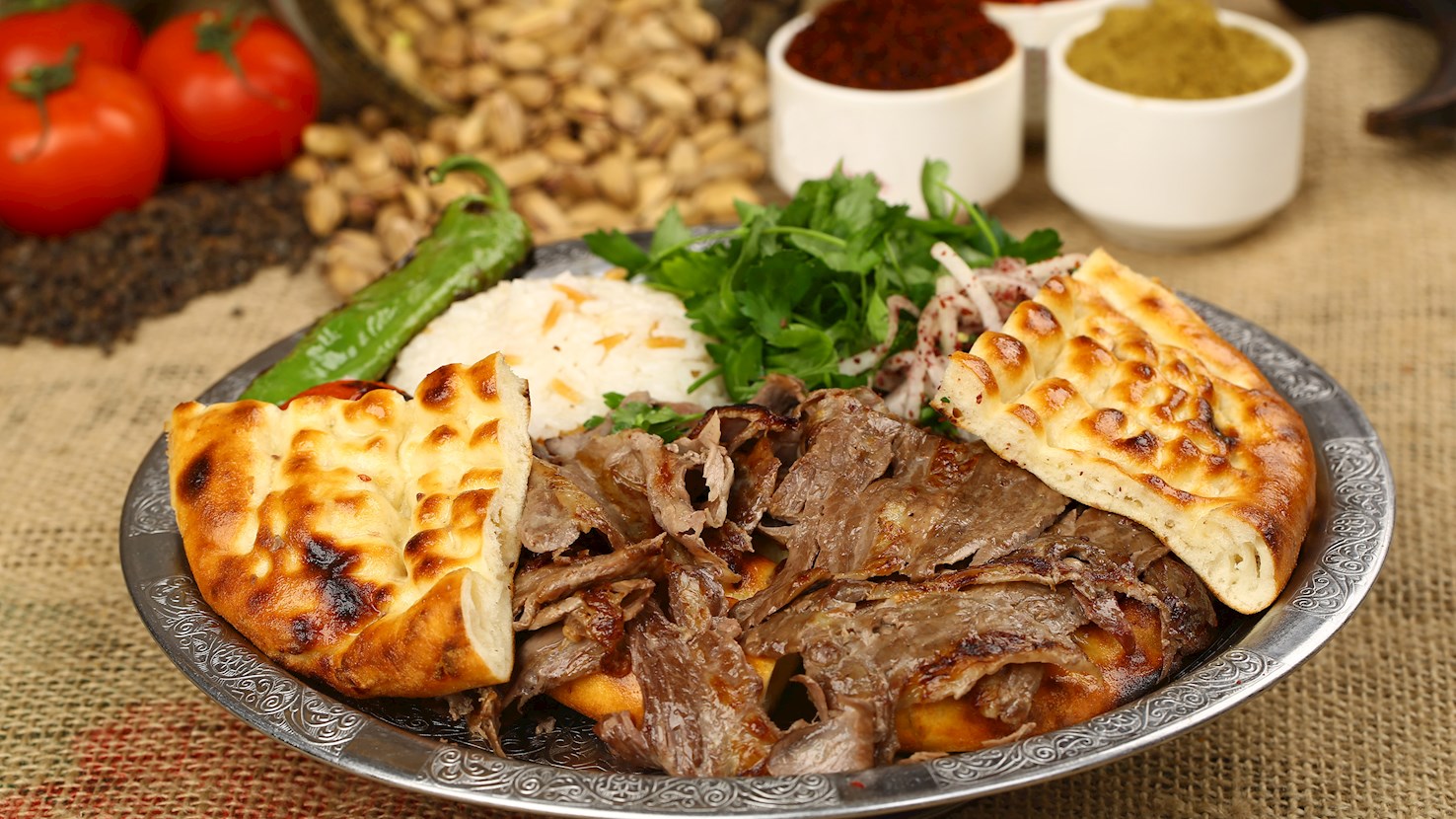
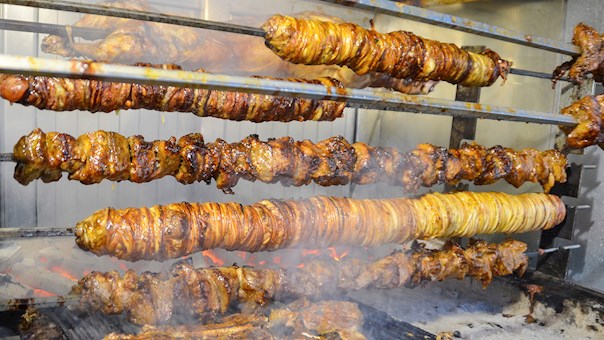
Döner kebab is a delicacy that is known throughout the world, consisting of grilled pieces of meat that are shredded from a vertical skewer. The meat is typically seasoned with fresh herbs and spices. Originally, the meat used in döner was exclusively lamb, but today in Istanbul, there are kebabs prepared with a combination of lamb and beef, or sometimes only with beef. Meat that is grilled vertically on a skewer isn't a new thing, as it has been mentioned in the 18th-century Ottoman travel books. The sandwich form döner kebab, which means rotating kebab, appeared in the early 1970s in Berlin. It is believed that Kadir Nurman was the first to place the shaved pieces of meat into a flatbread and serve it with vegetables such as tomatoes, lettuce, onions, cucumbers, and a squirt or two of sauce, unlike before, when the ingredients were served on a plate. Along with many of the Turkish variations on döner kebab, there are also numerous other regional variations in countries such as Armenia, Vietnam, Austria, Germany, France, and the United Kingdom.
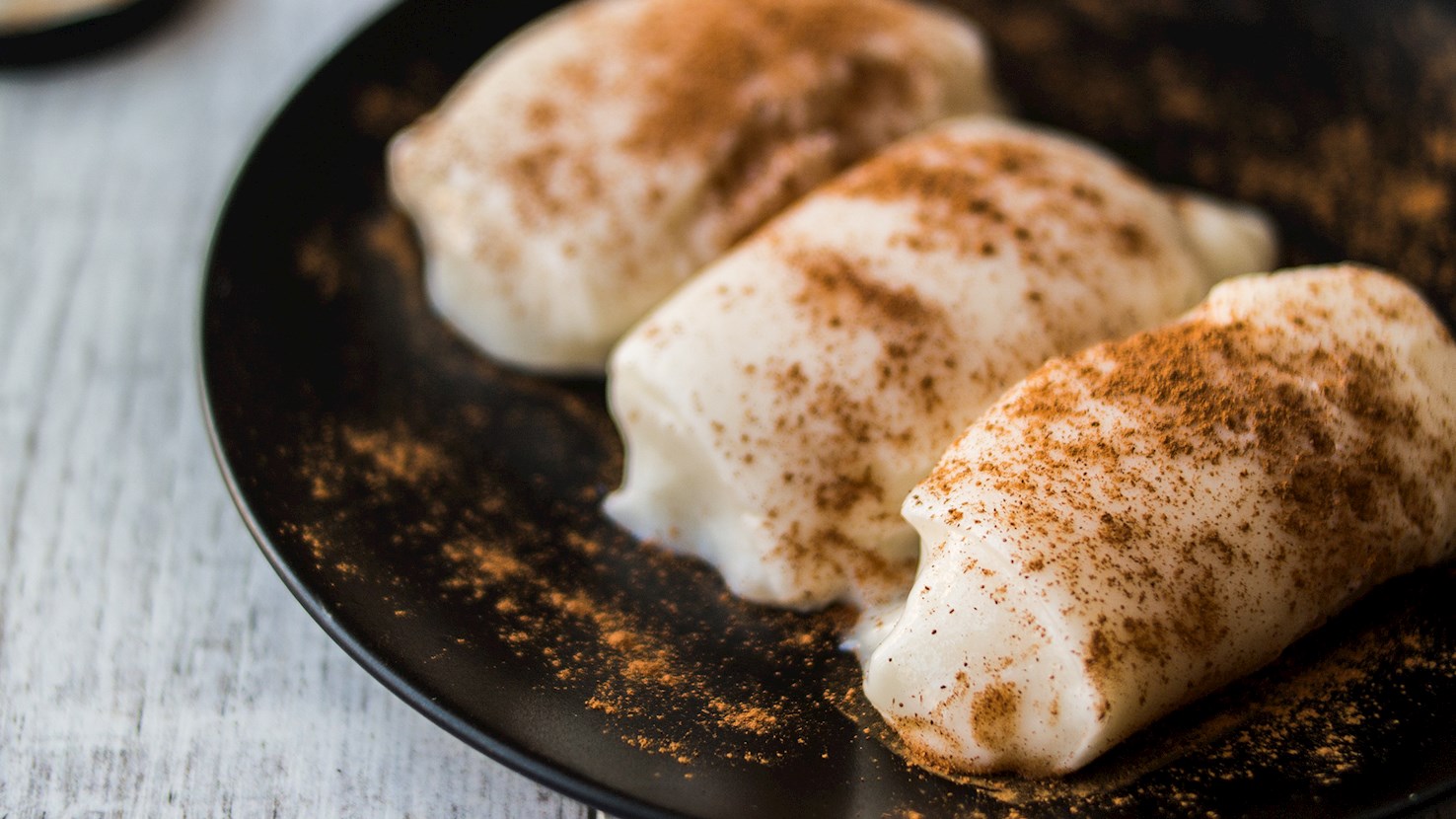
Interestingly, this classic Turkish chicken breast pudding doesn't taste like chicken at all—instead, it is often flavored with cinnamon and vanilla, and is more reminiscent of a thick, creamy, and smooth milk or rice pudding, both in flavor and appearance. Tavuk göğsü has its roots in a medieval French dessert called blancmange, and it was once prepared for the Ottoman sultans living at the Topkapı palace. Today it is considered one of Türkiye's signature delicacies that is found in coffeehouses across the country.
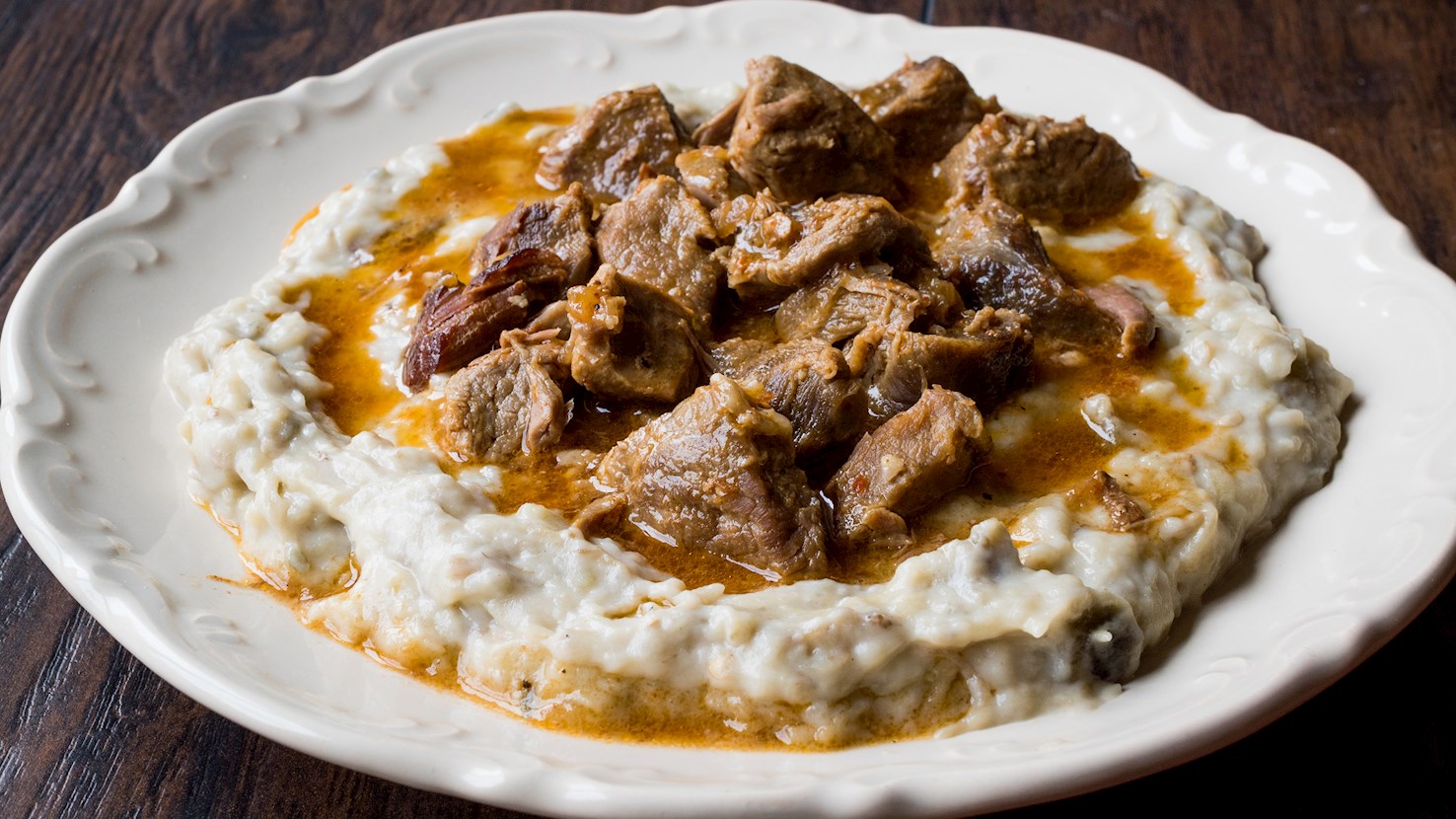
Hünkar beğendi is a traditional dish consisting of a flavorful lamb stew that is served on top of a creamy roasted eggplant purée. The purée is often thickened with milk and cheese, while the whole dish is sometimes topped with a tomato-based sauce or garnished with freshly chopped parsley. It is believed that the dish is native to Istanbul and was first prepared for the wife of Napoleon III in the late 19th century.
TasteAtlas food rankings are based on the ratings of the TasteAtlas audience, with a series of mechanisms that recognize real users and that ignore bot,
nationalist or local patriotic ratings, and give additional value to the ratings of users that the system recognizes as knowledgeable.
For the “100 Traditional Foods You Have To Try in Istanbul” list until May 22, 2026, 1,474 ratings were recorded, of which 854 were recognized by the system as legitimate.
TasteAtlas Rankings should not be seen as the final global conclusion about food. Their purpose is to promote excellent local foods,
instill pride in traditional dishes, and arouse curiosity about dishes you haven’t tried.