


shutterstock

Top 12
Bean Dish Recipes

Last updated on May 22, 2026
01

Feijão tropeiro

4.3 ·

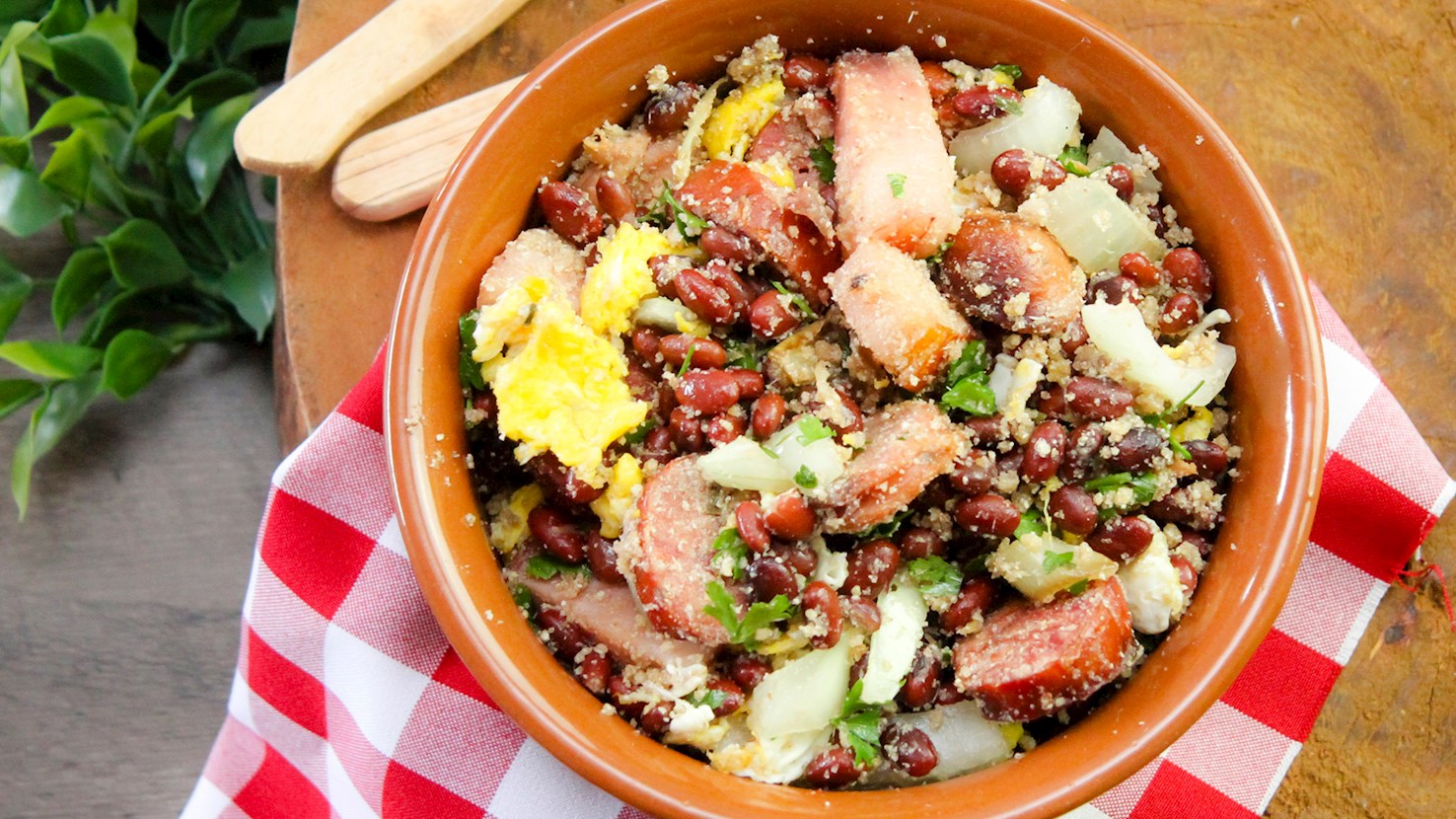
Traditionally, feijão tropeiro was made with salt beef, beans, bacon, manioc flour, and salt. However, today feijão tropeiro is most often made with beans, bacon, sausage (typically linguiça calabresa), onion, garlic, collard greens, and manioc flour. The preparation starts with cooking the beans, which usually means they need to soak overnight and are then cooked the following day. Once the beans are cooked, the remaining ingredients are cooked in a pot on the stove, one by one separately, and then mixed, or by adding to the pot one after the other, starting with the one that needs to cook the longest and finishing with the one that requires the least cooking time. It’s a hearty, homey dish, extremely filling, yet simple to prepare and can be made quickly and feed a crowd of people. It can be served as a main dish paired with a side of rice and various salads or can be a side dish to barbecued meats.

02

Tutu de feijão

4.2 ·

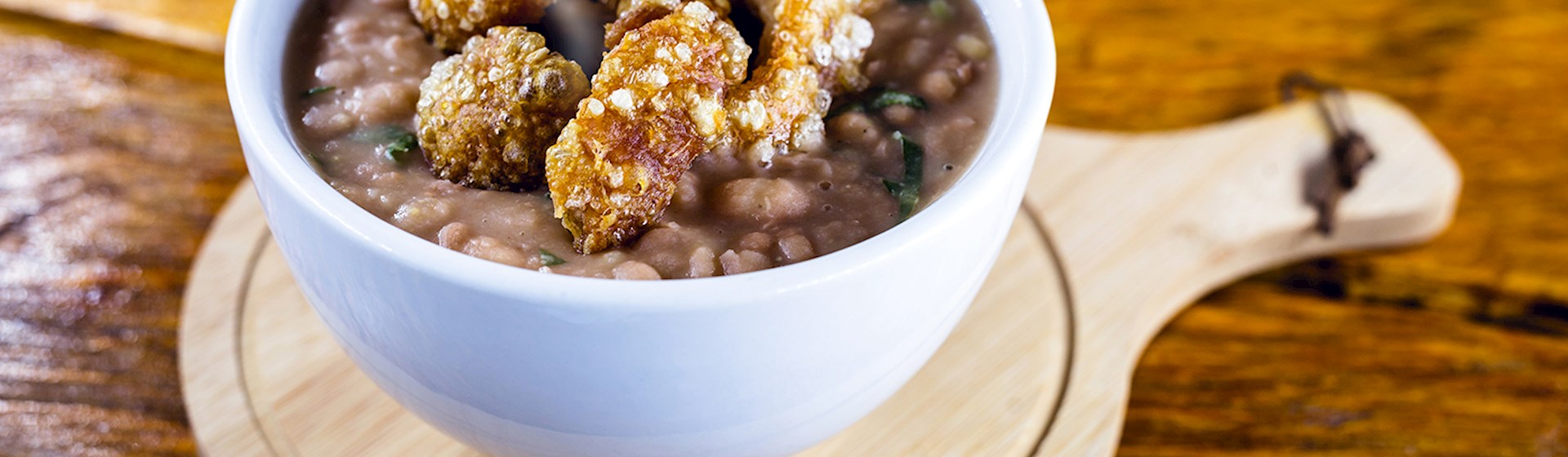
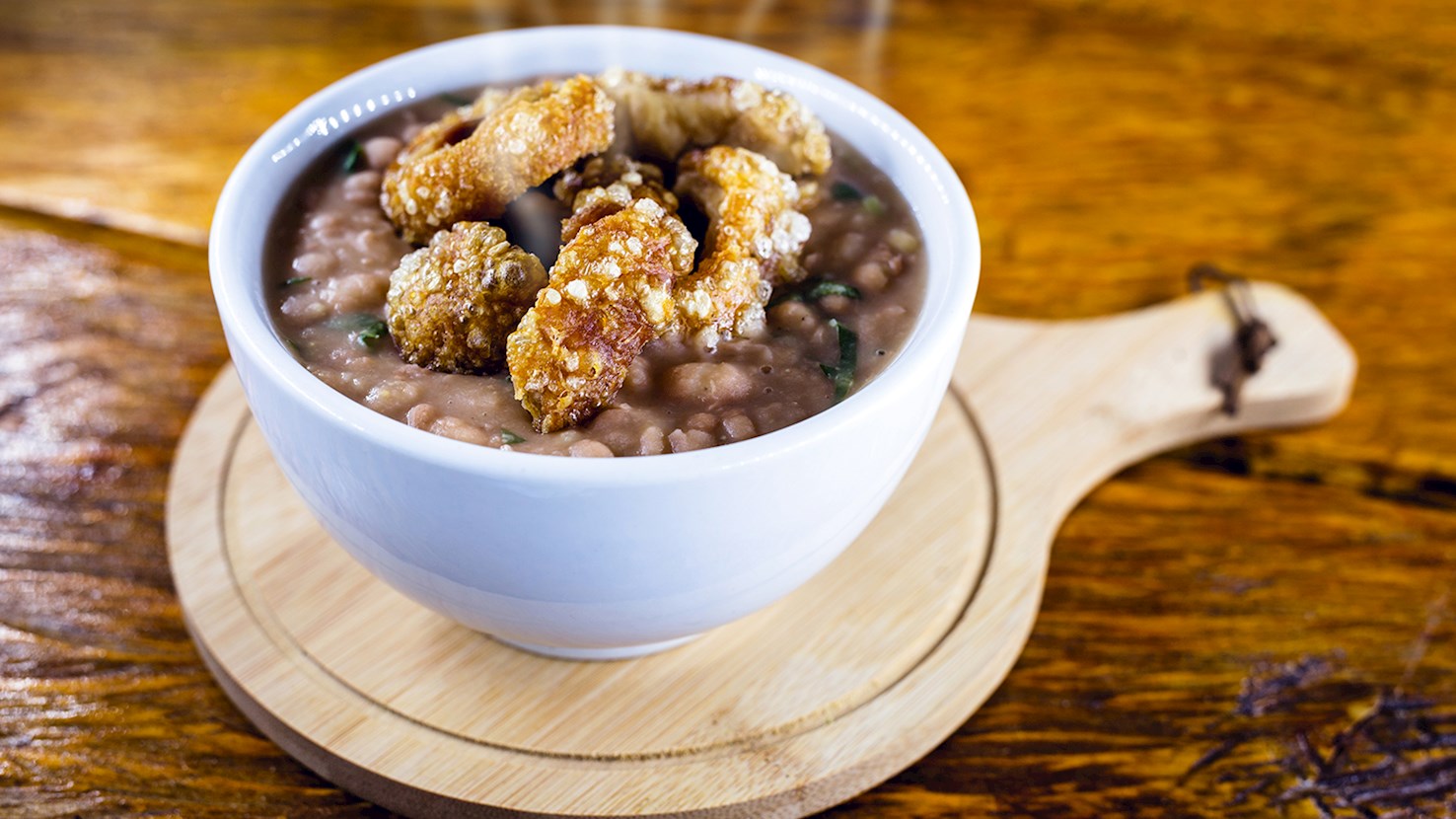
Tutu de feijão is a traditional Brazilian bean purée from Minas Gerais and São Paulo, rooted in Afro-Brazilian culinary traditions. It features black or brown beans blended with their cooking liquid and thickened with manioc (cassava) or corn flour to achieve a polenta-like consistency. The dish can be enriched with crispy bacon, sausage, and aromatics like onion and garlic sautéed in the rendered fat. Water is added to adjust the consistency, and the mixture is cooked until well combined. Often garnished with chopped parsley, green onions, and pork cracklings, tutu de feijão is served hot as a side dish alongside meats such as pork or chicken and is commonly paired with rice, collard greens, and fried eggs. This hearty dish exemplifies Brazilian cuisine's blend of indigenous, African, and Portuguese influences.

03

Feijoada

4.1 ·

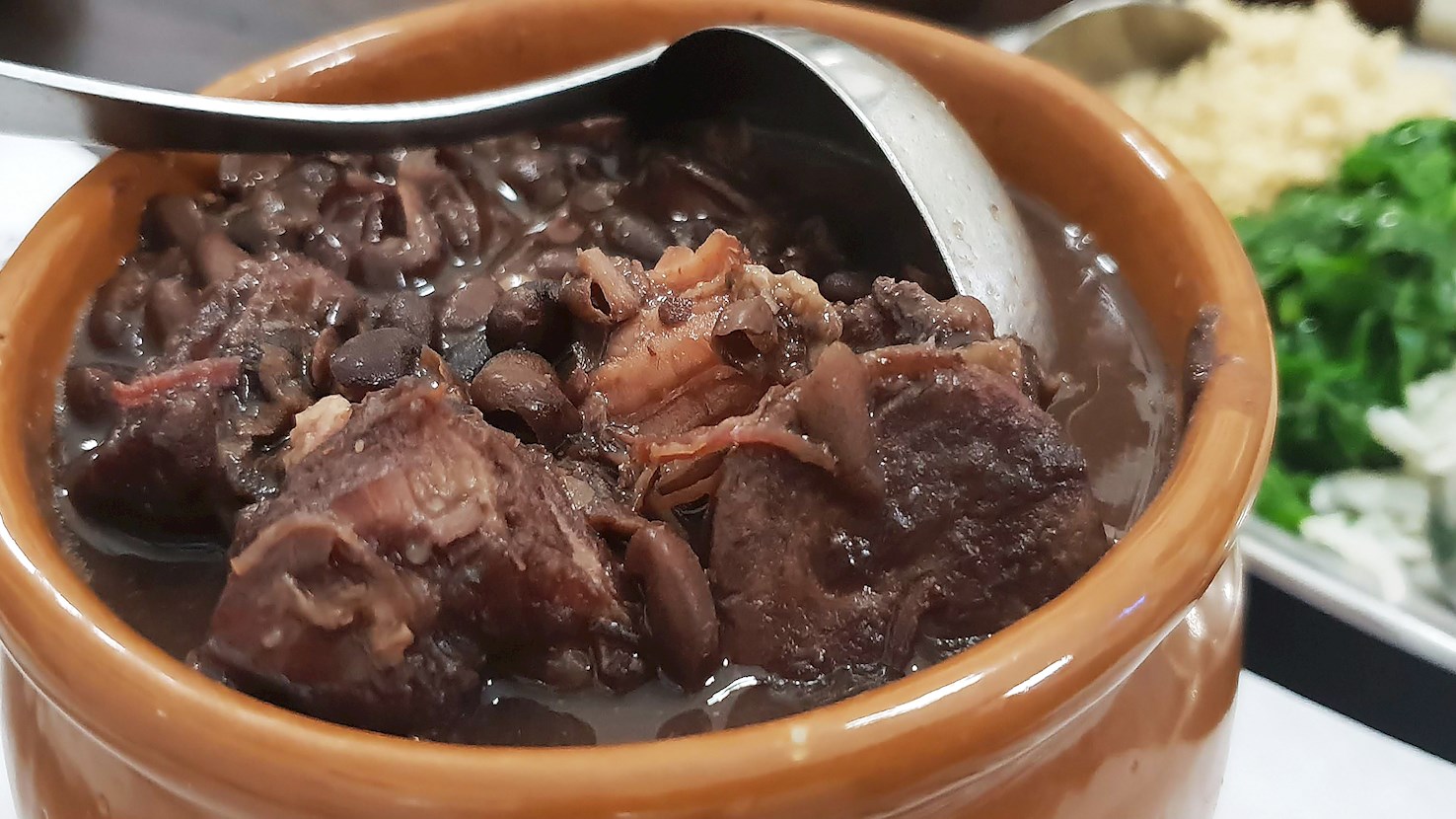
Just like the Sunday roast in the Western world, feijoada is a staple weekend dish in Brazil prepared to feed large families and groups of friends in an economical, yet delicious manner. This black bean stew is brewed slowly with a mélange of salted and smoked beef and pork products, and it is seasoned with sautéed onions, garlic, and bay leaf. Traditionally, feijoada was made with the cheapest cuts of meat such as pork feet, tails, snouts, ears and beef tongue, while smoked beef, bacon, pork ribs, and sausages were introduced later, as the dish developed. As for the preparation, it is a lengthy process which starts a day ahead — the first step is to desalt the salted meat products by soaking them in water, changing it every few hours. If dried black beans are used, they need to be soaked overnight as well. The meat and beans are then cooked together slowly until they become tender, and the surrounding liquid becomes gelatinous and black. Sautéed onions and garlic are stirred in at the very end, and after 10 to 15 minutes of simmering the feijoada is ready to be served. Quite often, an aperitif called caldinho de feijão is offered before the feijoada itself, and it is basically a bean broth served in shot glasses. The feijoada comes to the table accompanied by cooked rice, sautéed cabbage or kale, fresh orange wedges and farofa, toasted manioc flour enhanced with butter and onions. Finally, the feijoada is washed down with a can of ice cold Brazilian beer, a glass of sugarcane brandy cachaca, or a caipirinha cocktail.

04

Fabada Asturiana

4 ·

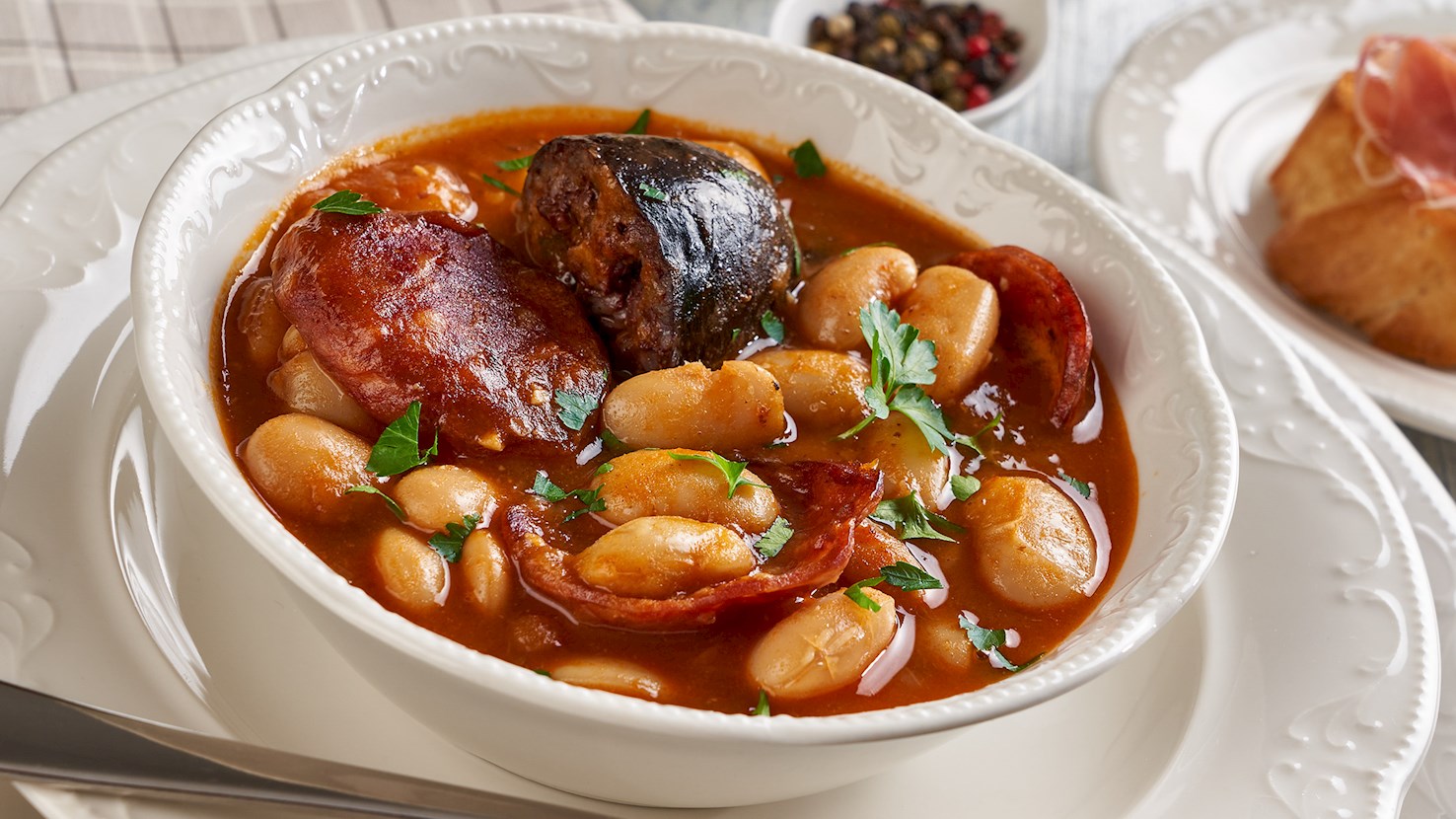
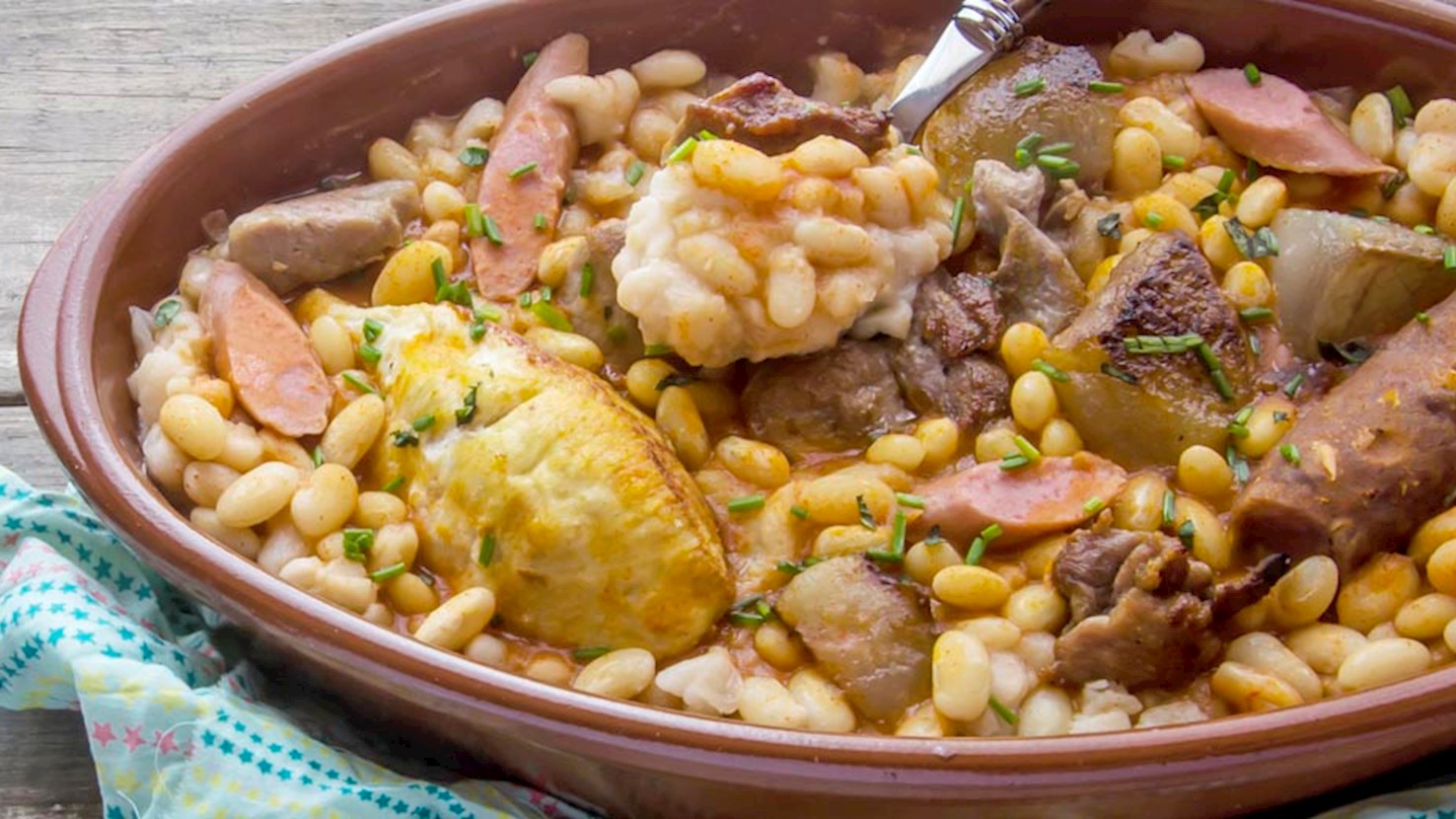
Fabada asturiana is regarded as one of the region's emblematic dishes. It is made with large white beans known as fabes de la Granja, which are slowly simmered until creamy and tender, together with a selection of cured pork products called compango. The compango includes chorizo asturiano, morcilla de Asturias (a smoked blood sausage), tocino (bacon) or pancetta, and lacón (cured pork shoulder or leg). Often, offal like pig's trotter, ear or tail, even ribs, are included as well. Saffron is almost always added for depth and color, as well as pimentón (paprika). Other common ingredients include an onion, which can be whole or chopped, garlic, and olive oil. Preparation is relatively simple but requires patience, and is different from recipe to recipe. Usually, the beans are soaked overnight, then cooked gently first alone, then with the compango so they absorb the smoky, meaty flavors. Still, some recipes add everything to cook at once. The key is to maintain a low simmer, skim off any fat that comes to the surface, and not to stir the stew to keep the beans intact and creamy. Fabada is typically served as a main course, often in clay pots or wide bowls, with the meats presented alongside or on top of the beans. It is eaten most often in winter, paired with crusty bread and Asturian cider or robust red wine.

05

Kuru fasulye

4 ·

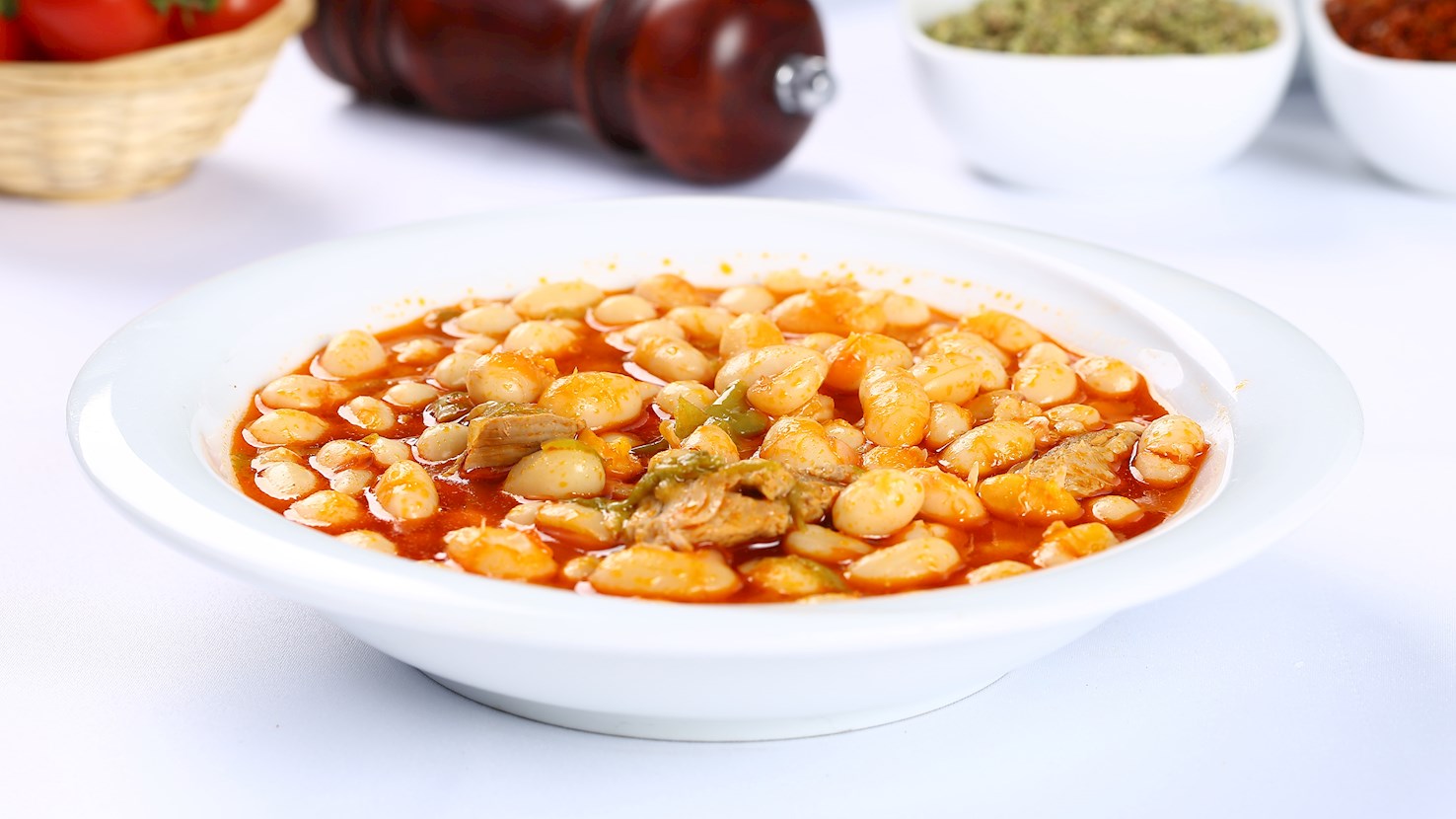
Adapted from the gastronomy book Turkish Cuisine With Timeless Recipes, this recipe gives instructions on how to prepare a variant of kuru fasulye with pastirma, a type of cured beef.

06

Gallo pinto

4 ·

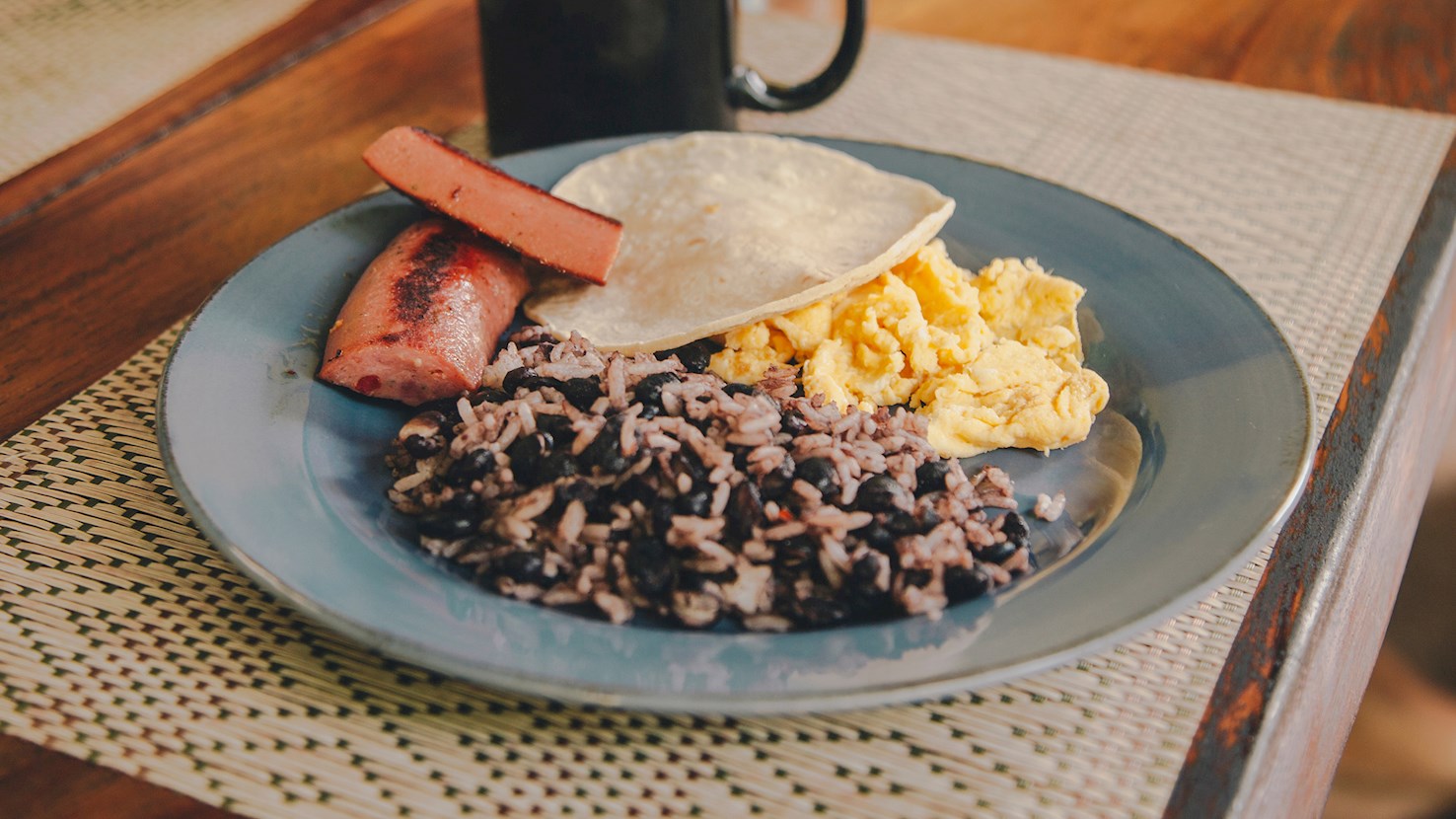
As a dish invented to salvage the leftovers from the day before — namely, black beans and rice — gallo pinto barely needs a recipe, if you ask the Costa Ricans. If you decide to make it from scratch, note that the first step is soaking the dried beans overnight: this will soften their skin and shorten the cooking time. The beans are then cooked on medium heat for about three hours or until tender, and a small amount of water they were cooked in needs to be set aside. Next step is to fry the rice in some vegetable oil, and sauté it with some finely chopped onions and bell peppers: some recipes even suggest adding minced ham or sausage to this mixture. The rice and vegetables are then cooked in chicken broth or water until they become tender. Finally, some of the water the beans were cooked in is added to give the dish its specific color, and all the ingredients are sautéed once again. If pre-cooked beans and rice are used, it is enough to sauté them with vegetables in some vegetable oil. Gallo pinto is most commonly served for breakfast — the Costa Ricans pair it with coffee — but is also a common sight during lunch or dinner. The dish is so popular that it can be found virtually everywhere — from upscale hotels to fast-food chains such as Burger King. Local variants either omit the peppers (in Guanacaste province) or add some shredded coconut (on the Caribbean side of Costa Rica). One last thing that should be mentioned is Salsa Lizano, a store-bought sour-sweet condiment, which is served with almost every meal in Costa Rica, and gallo pinto is no exception.

07

Shambar

3.8 ·

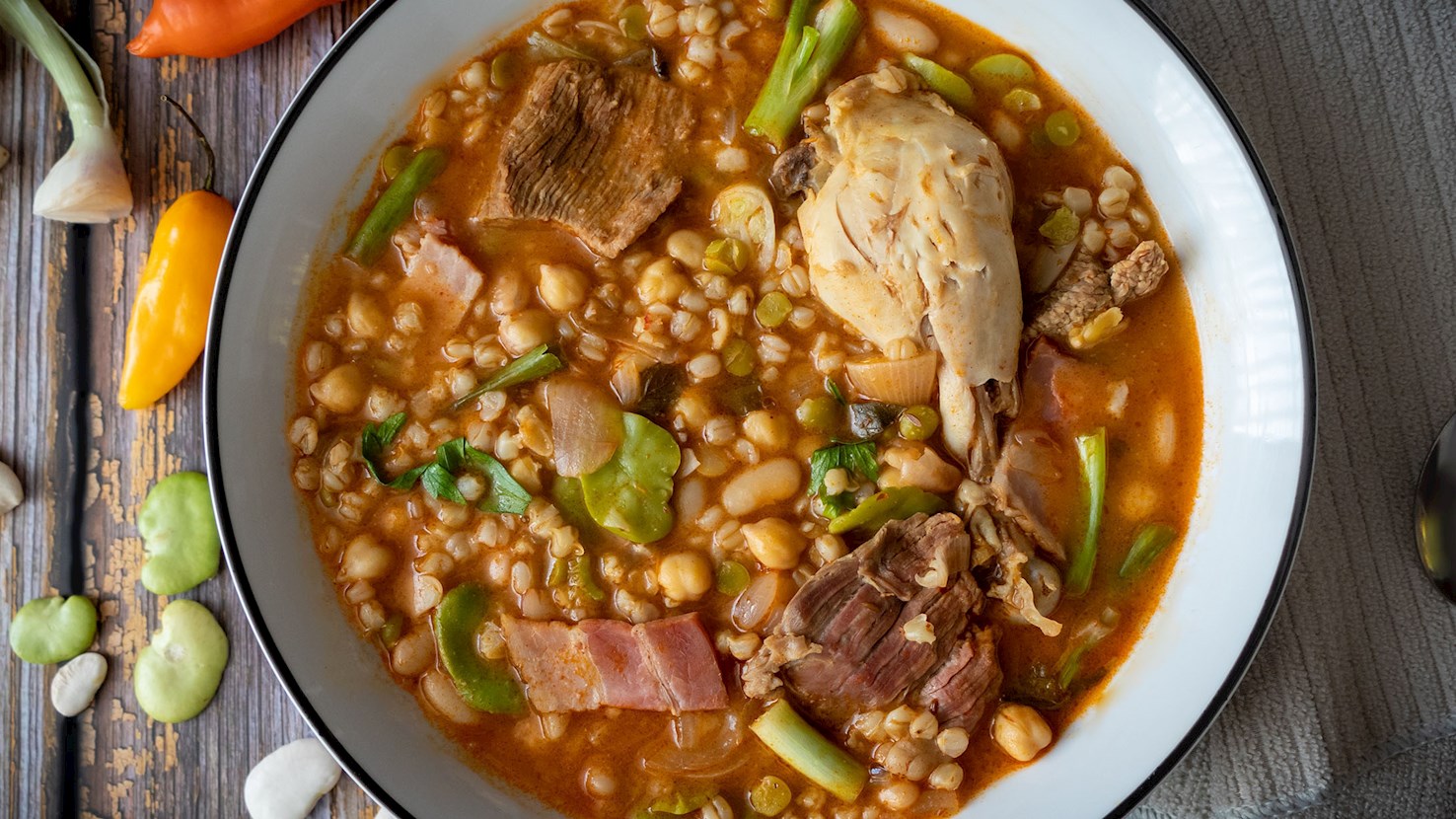
Shambar is a bean and meat stew typical of the Trujillo region and is traditionally consumed on Mondays. It is traditionally prepared with at least three types of meat (pork, chicken, smoked pork, and/or ham), pork skin and tail, shambar wheat (trigo resbalado), beans, habas beans (a type of broad bean), chickpeas, green peas, and seasonings, usually onion, garlic, ají peppers, pepper, cumin, and salt. Often, yerba buena and oregano are added as well. The soup is hearty and reasonably thick, typically served with lime wedges, ají pepper sauce, and toasted or fried cancha serrana (Peruvian corn nut).

08

Cassoulet

3.8 ·

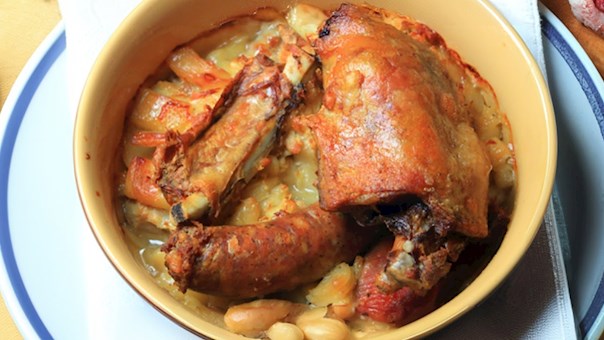
A simple peasant fare, cassoulet, is a dish that requires very little technique and skill to prepare but does require time and patience. First, the beans which have been soaking overnight are shortly boiled the following day, then drained and set aside for later. Pork bones, chicken, pork rinds, onions, and carrots are cooked in water and then filtered to get a clear broth, while pork rinds are kept for later use. Next, the beans are added to the broth and cooked for an hour until they are soft, but not falling apart. Meanwhile, the duck confit is seared in a pan, and the Toulouse sausage and pieces of pork meat are then fried in the leftover fat. Once the beans have been cooked, they are drained and combined with garlic and lard. The prepared ingredients are then arranged in an earthenware dish and poured over with the broth. The casserole is cooked for two to three hours and is occasionally drizzled with the leftover broth to prevent it from drying out. As it bakes, the cassoulet will develop a crust which according to culinary lore, must be broken precisely seven times.

09

Chakalaka

3.5 ·

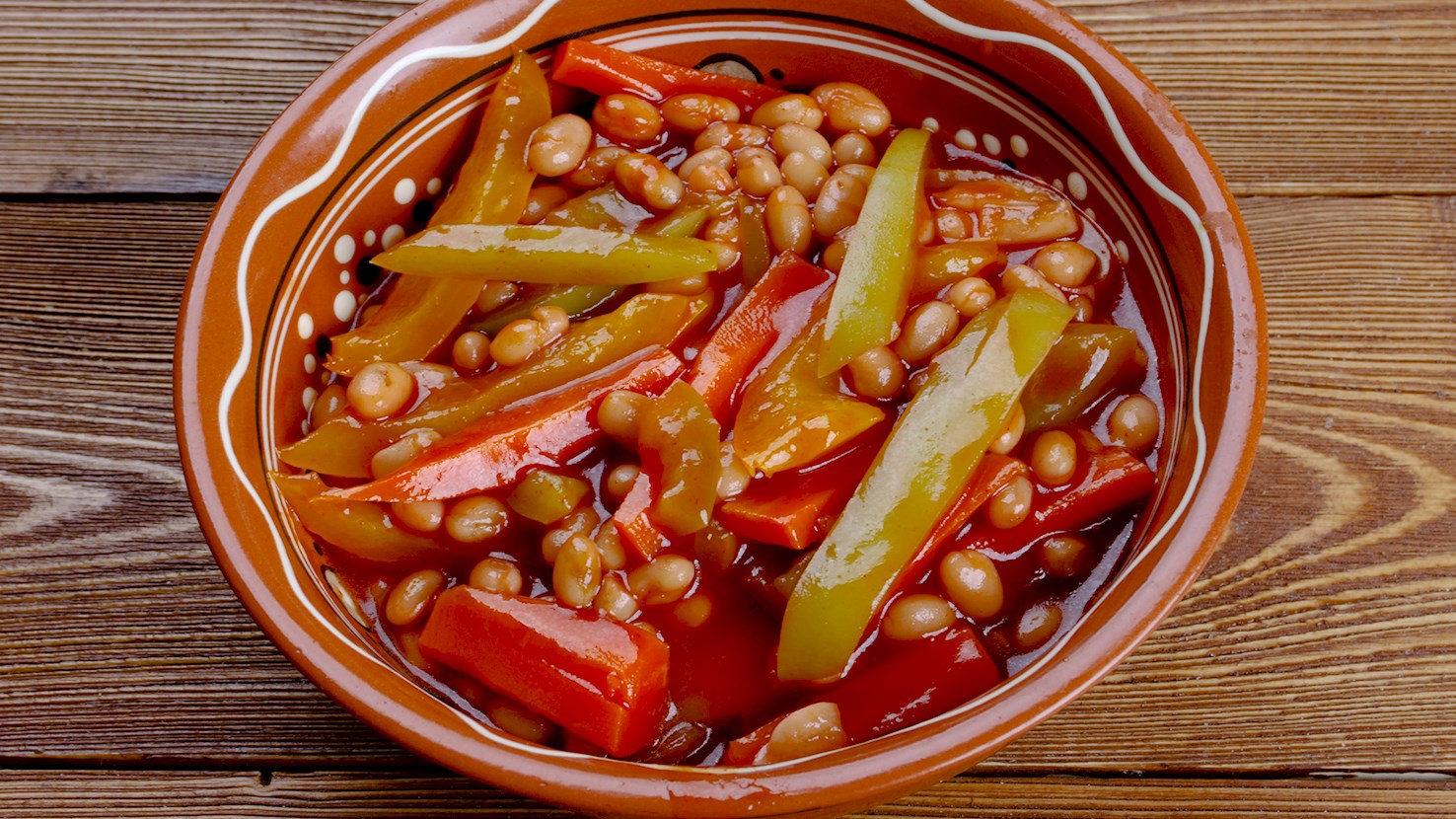
Spicy, colorful, versatile and easy to prepare, chakalaka is a vegetarian South African dish which can fit into many categories — it can be a salsa, a relish, a condiment, or a main dish, depending on what it is paired with. Most commonly, chakalaka is prepared by sautéing finely chopped root vegetables such as onions, garlic, and carrots with spices like curry powder or leaf masala, after which the bell peppers, fresh tomatoes or tomato sauce, baked beans and seasonings are added. Other additions may include ginger, chilis, cauliflowers, shredded cabbage or anything else you may have at hand. This dish is as tasty hot as it is cold, because, like many other relishes, it develops its full flavor through time. Very often, chakalaka is garnished with some chopped fresh coriander, which gives a note of freshness to the dish. Chakalaka is most commonly served at South African barbecues called braais paired with grilled meat and sausages. Otherwise, it can be paired with bread, maize porridge mieliepap, roughly chopped corn kernel porridge pap, curries and various stews. As for its texture, it can vary from salad-like to soup-like, depending on the amount of tomato sauce used. Ready in under half an hour and tasty for days if refrigerated and jarred, chakalaka is a perfect choice for long, hot summer days.

10

Boston Baked Beans

3.3 ·

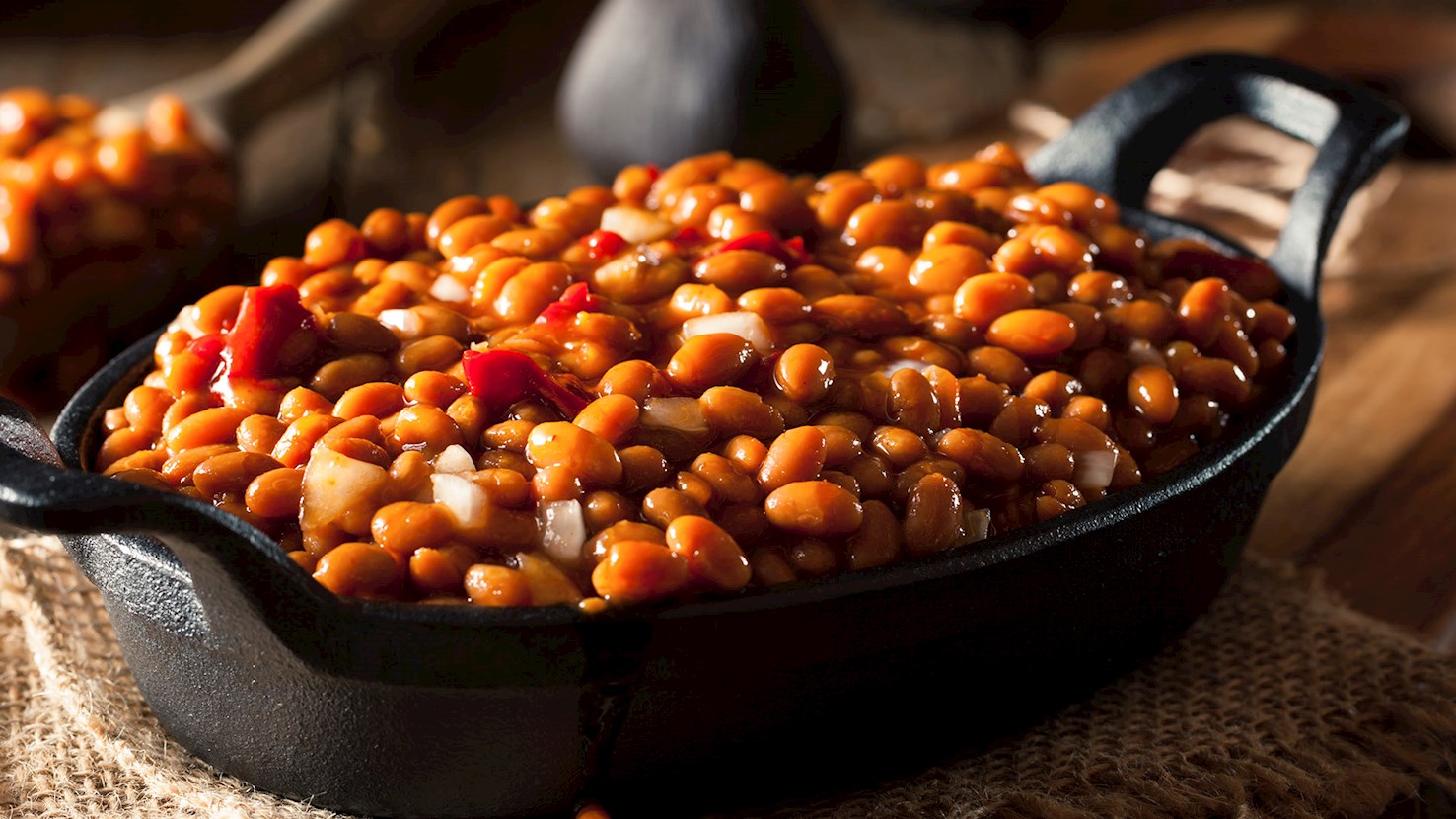
This New England staple is made with white beans, such as Navy beans or yellow eye beans, molasses, salt pork, and mustard. To prepare, the presoaked beans are mixed with the remaining ingredients and then slow-cooked overnight. Traditionally, the beans would have been cooked in a clay pot in an ember-filled hole in the ground. However, in today's recipes, to cut on time, beans are typically either boiled or simmered until softened or cooked, then mixed with the remaining ingredients in either a casserole or a Dutch oven and slow-cooked in the oven anywhere from four to eight hours, depending on the recipe. Although not traditional, sugar is also often included in the ingredients, as well as onion, pepper and other aromatics which add deep, complex flavor to the dish. If cooked to perfection, Boston baked beans will have a caramelized crust on top and underneath a thick stew of beans coated in a glaze-like sauce. Serve the beans with Boston brown bread, relish, pickles, or coleslaw, and use any leftovers to make sandwiches the following day.

About this ranking

TasteAtlas food rankings are based on the ratings of the TasteAtlas audience, with a series of mechanisms that recognize real users and that ignore bot, nationalist or local patriotic ratings, and give additional value to the ratings of users that the system recognizes as knowledgeable. For the “Top 12 Bean Dish Recipes” list until May 22, 2026, 7,055 ratings were recorded, of which 3,950 were recognized by the system as legitimate. TasteAtlas Rankings should not be seen as the final global conclusion about food. Their purpose is to promote excellent local foods, instill pride in traditional dishes, and arouse curiosity about dishes you haven’t tried.

Similar lists