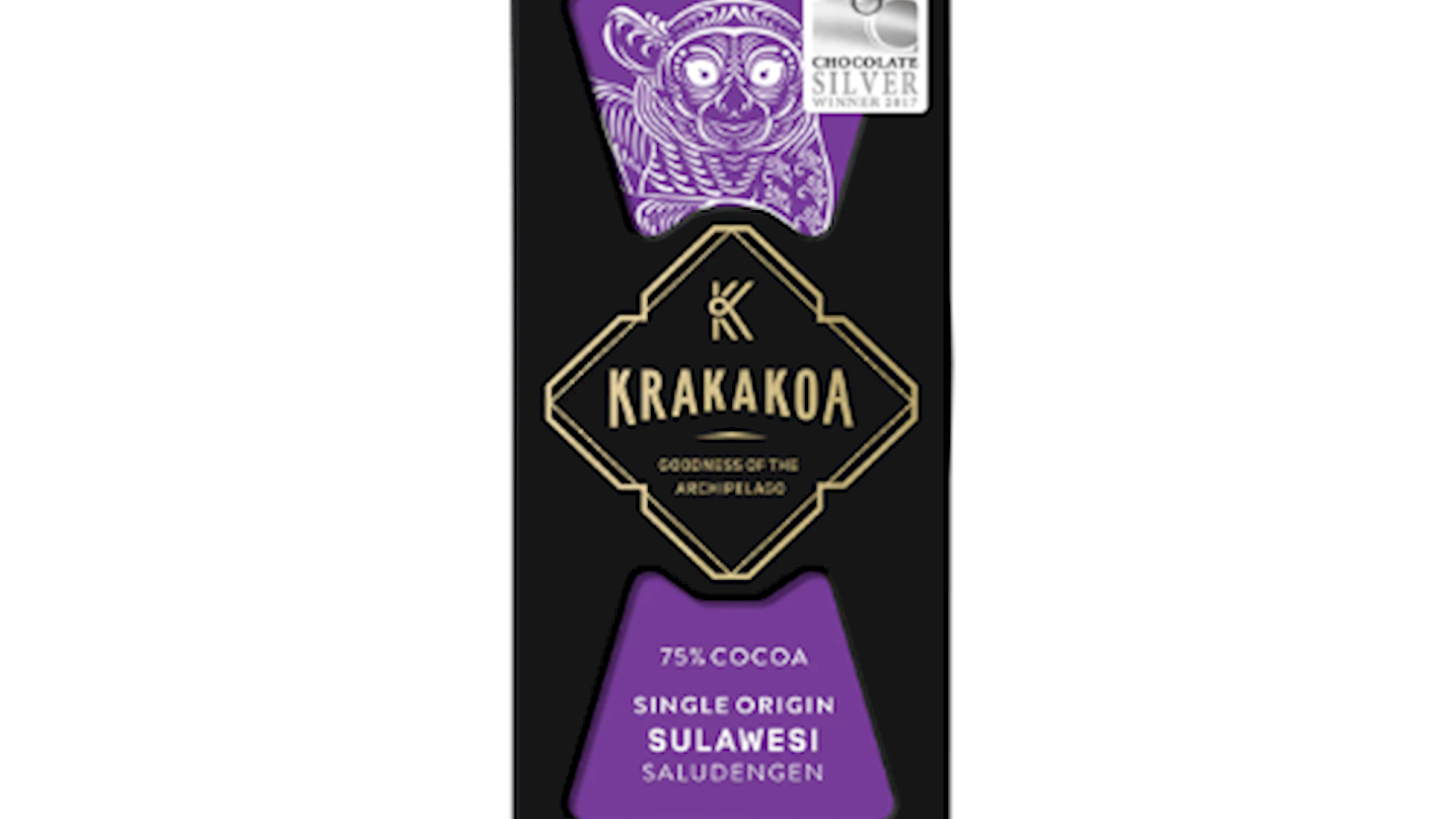
Krakakoa is an Indonesian bean-to-bar brand that combines premium chocolate craftsmanship with social responsibility through its “from farmer to bar” model. Founded by Sabrina Mustopo, the brand’s mission is to keep the value of cocoa processing within the country of origin, providing small farmers with fair income and education.
Krakakoa collaborates with over a thousand farmers across the Lampung, Sumatra, and Sulawesi regions, offering training in sustainable farming, fermentation, and organic cultivation. The raw cocoa is processed locally - from fermentation and drying to grinding, refining, and tempering - ensuring complete control over quality.
The brand emphasizes transparency in its production chain and uses only natural ingredients without additives. Krakakoa chocolates are distinguished by their pronounced terroir character, with flavor profiles ranging from citrusy and floral to earthy and spicy, depending on the origin of the beans.
The products are distributed across several countries in Europe and Asia, reflecting growing global interest in authentic origin chocolates. By combining quality, responsibility, and authenticity, Krakakoa has become a model of how fine chocolate can be crafted with meaningful social impact.
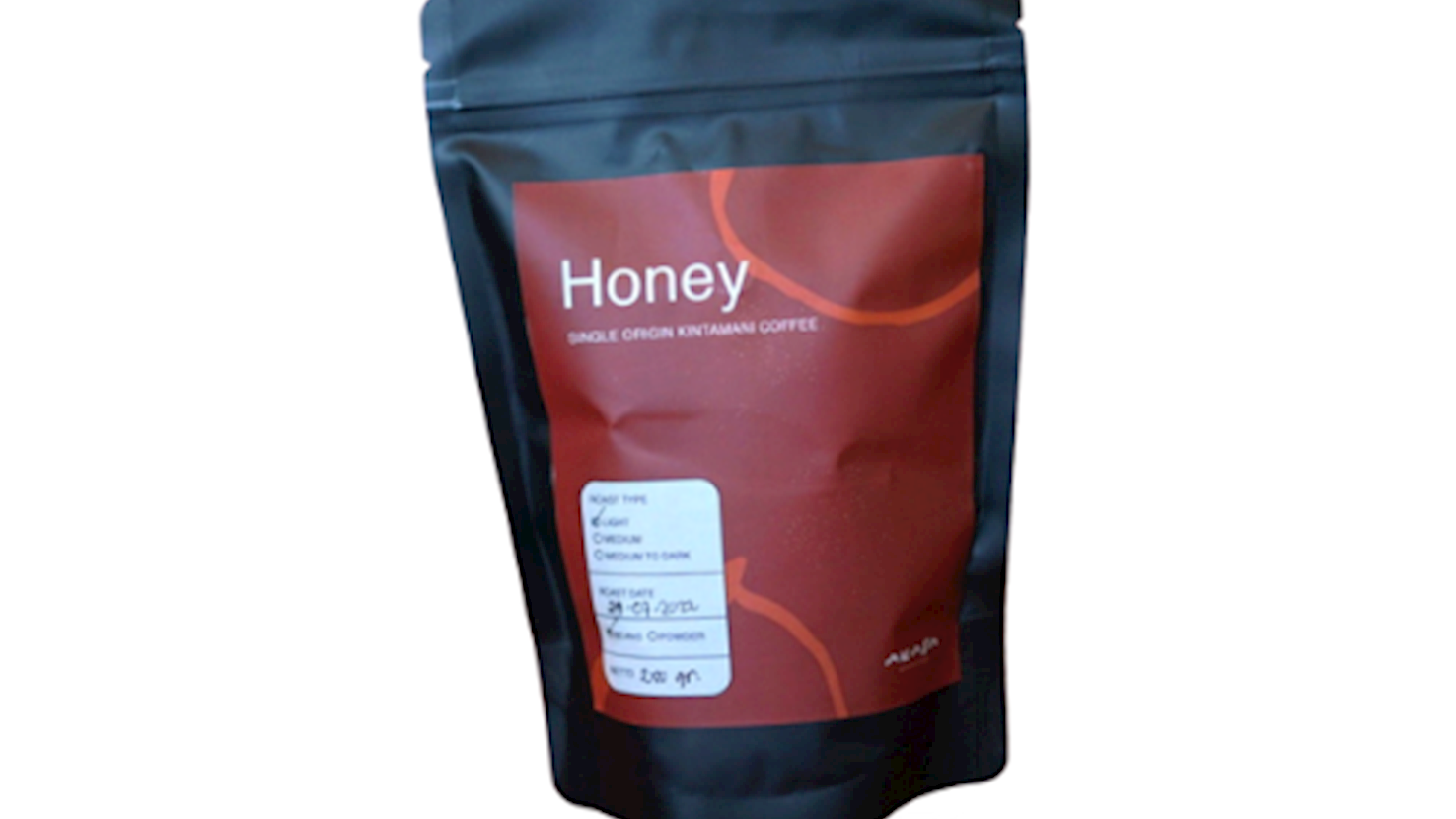
Akasa Coffee is a specialty coffee roastery and brand from Kintamani, a mountainous region in Bali, Indonesia, renowned for its high-quality Arabica beans. Their philosophy, “From Farm to Cup” reflects a deep commitment to every step of the coffee production process – from seed selection, planting, fermentation, drying, roasting, to serving.
The goal is to deliver the authentic taste of Kintamani coffee in every cup. Akasa Coffee focuses on preserving quality and flavor consistency by paying close attention to every detail of production.
Their coffee is processed according to international standards, making them a recognized brand both locally and internationally.
Big Tree Farms is an Indonesian brand built on principles of sustainability, ethical trade, and organic cultivation, best known for its coconut nectar–based products such as coconut sugar, syrup, and natural sweeteners. The company works with tens of thousands of small farmers across the archipelago, ensuring a transparent supply chain and fair purchasing practices that directly support local communities.
Its assortment includes organic sweeteners, coco aminos, marinades, and other products inspired by traditional Indonesian cuisine. Big Tree Farms is recognized as one of the leading producers of coconut-based ingredients globally, with a mission to blend authentic local techniques with modern market demands while promoting regenerative agriculture and a responsible approach toward nature and community.
Expat. Roasters is a Bali-based specialty coffee roastery that works exclusively with high-quality Arabica varieties, placing strong emphasis on the richness and diversity of Indonesia’s coffee-growing regions.
The brand collaborates directly with more than fifty smallholder farmers, maintaining short supply chains within roughly a 40-kilometer radius of its roastery and ensuring full traceability from farm to cup. Their portfolio includes single-origin coffees and carefully crafted blends dominated by beans from Bali, Java, Aceh, and other Indonesian terroirs, each roasted with precision to preserve its natural aromatic profile.
Alongside whole-bean offerings, Expat. Roasters produces drip bags, Nespresso-compatible capsules, and basic barista tools, complemented by a training program that covers extraction techniques, latte art, and sensory evaluation.
Sustainability plays a central role in their identity - they promote recycling of coffee by-products, minimize plastic use, and encourage reusable packaging. Expat.
Roasters positions itself as a meeting point between local craftsmanship and global specialty standards, contributing significantly to the development of Indonesia’s contemporary coffee culture.
Bali Nutra is an Indonesian brand based in Bali, founded in 2013 and specializing in organic coconut products. Its development is rooted in combining locally sourced ingredients and traditional coconut-processing knowledge with contemporary food products.
The company works directly with organic farmers in Bali and is involved in sourcing and processing coconuts. Its range includes coconut syrup and sugar, virgin coconut oil, coconut milk powder, and roasted coconut spreads, including combinations with almonds, peanuts, and cashews. Particular highlights are sweeteners made from coconut palm sap and spreads that pair roasted coconut aromas with nutty flavors. Through its Buy Give Build program, the brand states that it supports the development of the local community in Klungkung, East Bali.
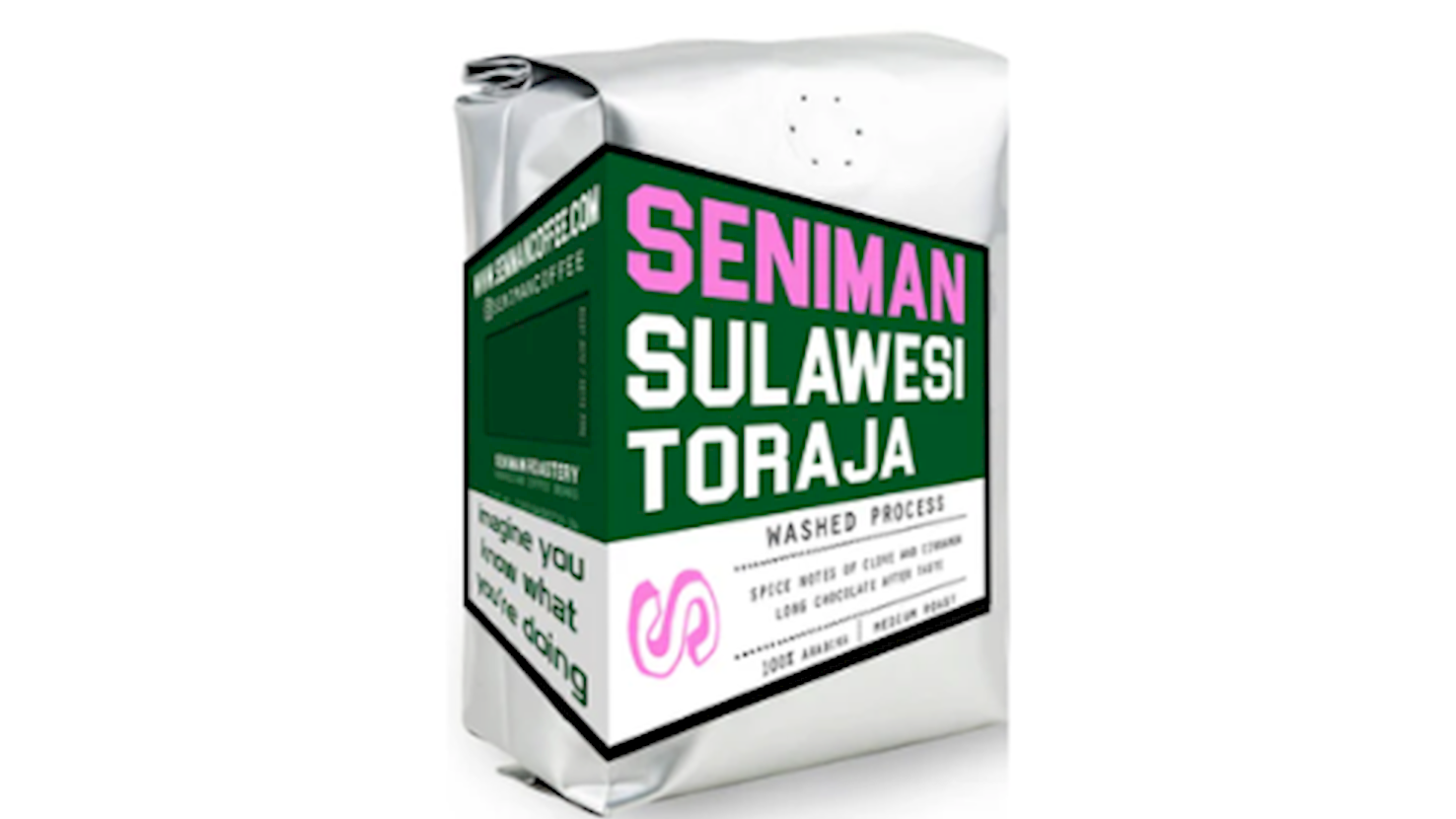
Seniman Coffee is a contemporary Indonesian specialty brand that integrates sourcing, processing, and roasting through close collaboration with small family farms across the country, with a strong emphasis on Bali. Their approach centers on clearly defined terroir expression, using natural, honey, and washed processing methods to highlight the distinct aromatic characteristics of each micro-region.
The lineup includes single-origin coffees from Bali, Java, Sulawesi, and Sumatra, available as whole-bean offerings and tailored for various brewing methods such as espresso, filter, moka pot, and cold brew. In addition to roasted coffee, they offer Nespresso-compatible capsules and convenient drip bags designed for modern consumers and travelers.
The heart of the brand is the Seniman Coffee Studio in Ubud, which operates as a micro-roastery and educational space showcasing the full seed-to-cup process. Through transparent work with farmers and a modern interpretation of Indonesian terroir, Seniman Coffee positions itself as one of the key contributors to the new wave of specialty coffee in Indonesia.
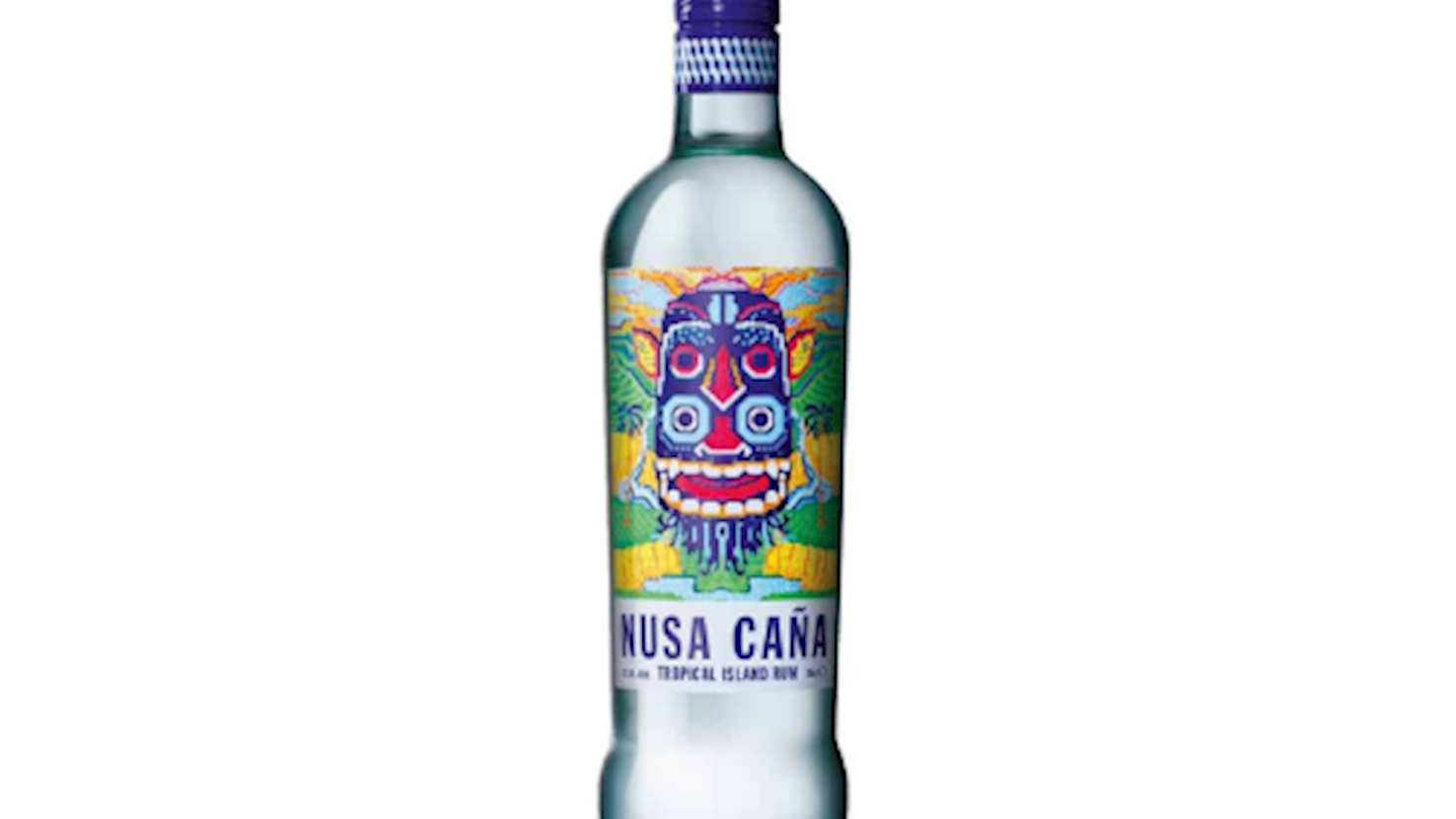
Nusa Caña is an Indonesian rum brand that draws on the country’s long, largely forgotten rum-making heritage, using locally grown sugarcane and traditional fermentation and distillation techniques to craft an authentic island-style spirit. Aged in oak and shaped by Indonesia’s tropical climate, the rum shows clear notes of sugarcane, warm spice, herbs, and subtle fruitiness, reflecting the character of the archipelago.
The brand blends this historical identity with a modern, cocktail-oriented approach, offering expressions that range from light and mixable to richer, more aromatic styles suitable for sipping. Positioned internationally, Nusa Caña brings Indonesian terroir back into the global rum scene, presenting a distinctive alternative to Caribbean profiles while celebrating the spirit-making roots of Southeast Asia.
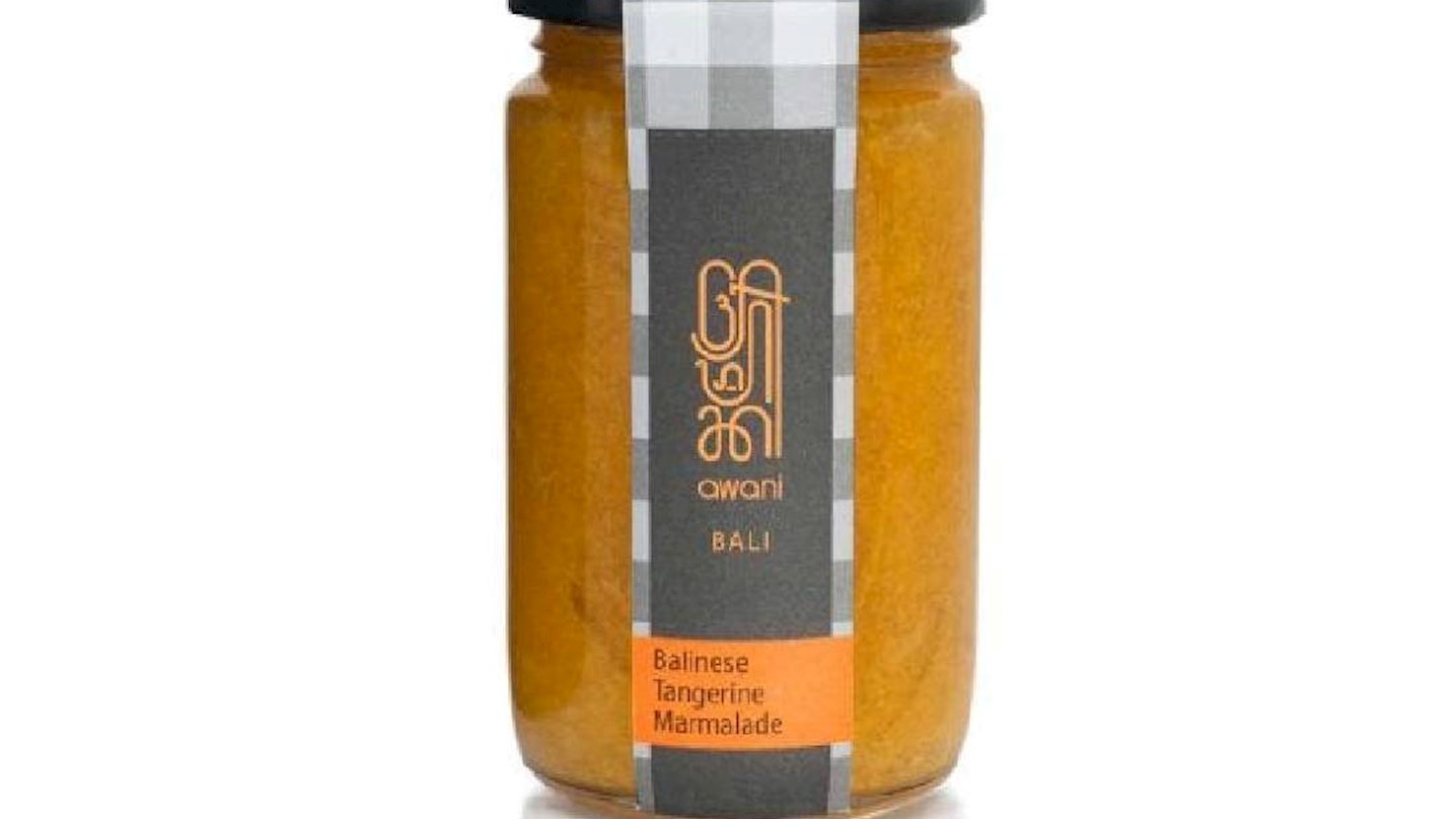
Awani Bali is a producer of premium tropical marmalades, fruit preserves, and honey, nestled in the heart of Bali’s highlands in the village of Luwus. Their philosophy is rooted in a simple yet powerful idea – to bring together the very best of nature, tradition, and community in products that captivate both in appearance and in taste.
They use only fresh, carefully selected fruit grown in the fertile volcanic soil and under the tropical sun of the Indonesian archipelago, working directly with local farmers. Every jar is handcrafted in small batches, preserving the fruit’s natural aroma, texture, and vibrant color.
Beyond their uncompromising quality, Awani is dedicated to preserving tradition and promoting sustainability – from packaging inspired by Balinese artistry to reusing jars and composting fruit scraps.
Their creations are more than just a culinary delight; they are a story of the land, the people, and the time devoted to every detail.
Awards
Dalemain World Marmalade Awards - Silver
(2019, 2018)
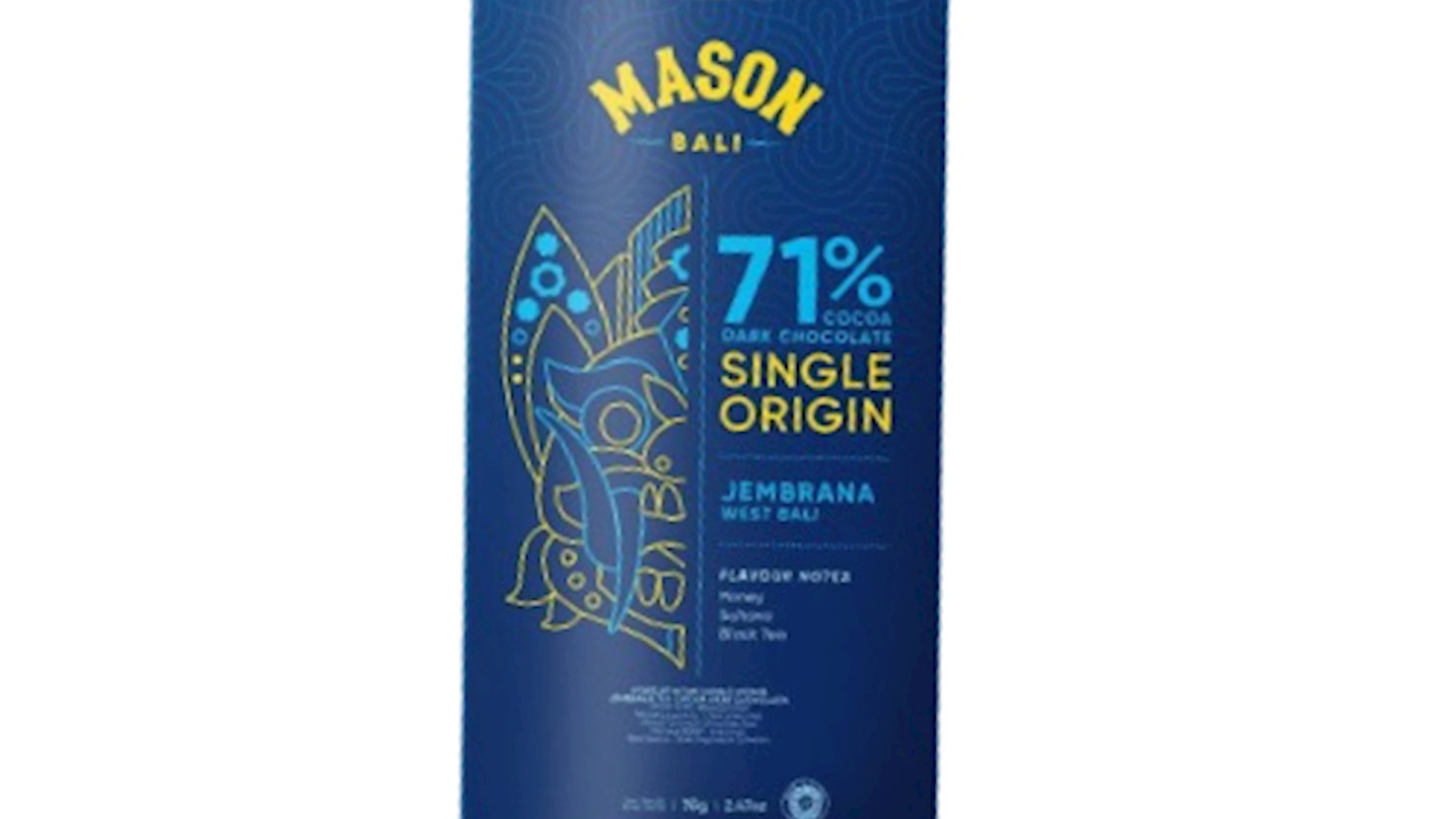
Mason Chocolates is a Bali-based bean-to-bar producer that oversees every stage of the process - from sourcing cocoa beans to crafting the final bar - using organically grown cocoa from across the Indonesian archipelago. The brand works directly with smallholder farmers, ensuring a transparent supply chain and fair purchasing practices, while production relies on handcrafting and minimal processing to preserve the natural aromatic profile of the cocoa.
Their range includes dark, milk, and white chocolate bars, single-origin editions, pralines, truffles, and chocolate-coated nuts, all made without artificial additives or flavorings. Mason places strong emphasis on sustainability, ethical sourcing, and high-quality ingredients, resulting in chocolate with a clean, expressive flavor that reflects the origin of the cocoa.
This approach positions Mason Chocolates as one of Bali’s most notable craft chocolate makers.
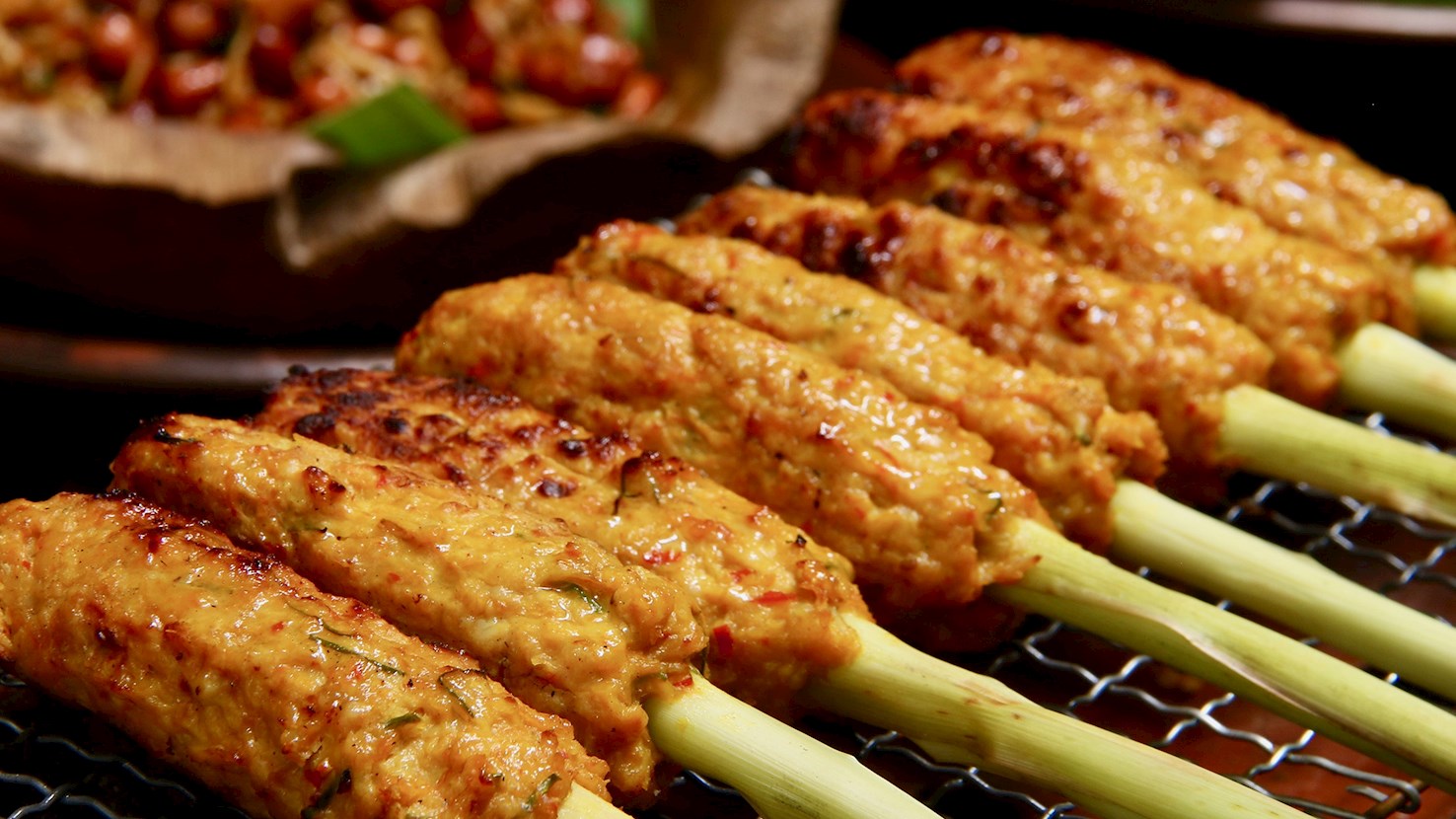
Sate lilit is the favorite street food on Bali. This traditional delicacy is usually made with minced meat which is wrapped around a flat skewer. All meat varieties (including fish and other seafood) are used to prepare sate lilit. However, the most common variety is prepared with pork. The skewers are usually spiced with traditional Indonesian spices such as lemongrass, galangal, chili, and lime leaves. It is believed that Indonesia is the birthplace of sate, and its numerous varieties can be found everywhere in Indonesia. Since sate lilit originated on Bali, it is often referred to as sate lilit Bali, and next to babi guling, it is one of the most popular dishes on the island. This traditional Balinese delicacy can be eaten for breakfast, lunch, or dinner, and it can be served as a light main course or a nutritious snack. The skewers are usually served with rice or rice cakes, and occasionally with spicy sauces on the side.
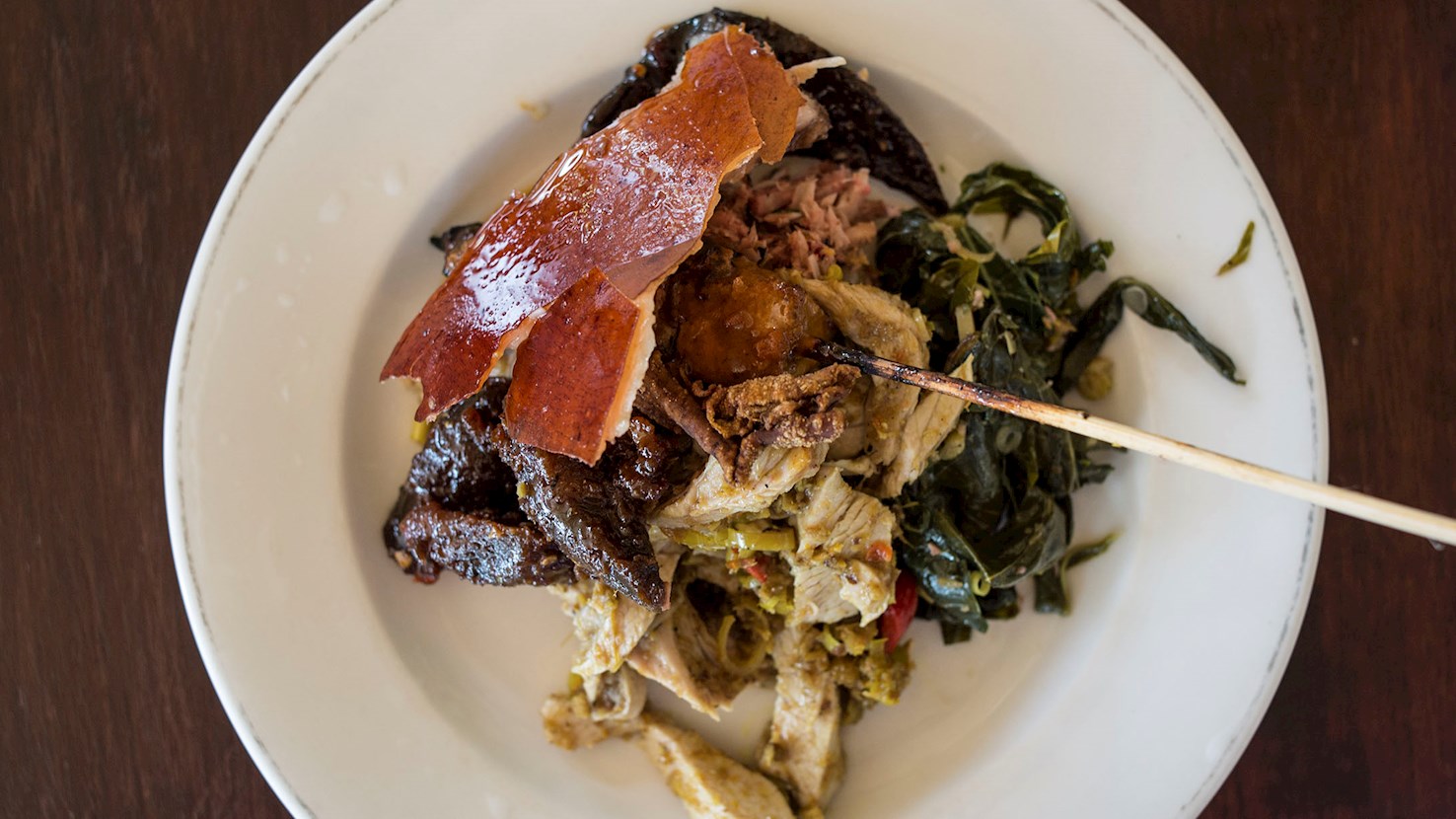
Babi guling is the Indonesian version of a roast suckling pig. Although not common to other Indonesian regions, on Bali, where the predominant religion is Hinduism, it is one of the most popular dishes. Before roasting, pig's skin is usually rubbed with turmeric, and the animal is stuffed with a bumbu Bali spice mixture, which usually includes turmeric, coriander, lemongrass, shallots, galangal, chili, shrimp paste, and garlic. Pork is then placed on a spit and roasted over an open fire. This Balinese delicacy is usually served during special occasions and formal gatherings, but can often be found in warungs, traditional Indonesian casual eateries. The dish is so popular in Bali that most warungs specialize and serve only babi guling as their signature dish. When the pig is roasted, the crisp amber-colored skin is carefully removed, and the meat is cut into chunks. Each serving of babi guling is supposed to have a chunk of juicy meat, a piece of crispy skin, and a tablespoon of the flavorful stuffing. Babi guling is often served with steamed rice, fresh vegetables, and a dollop of spicy Indonesian condiment known as sambal.
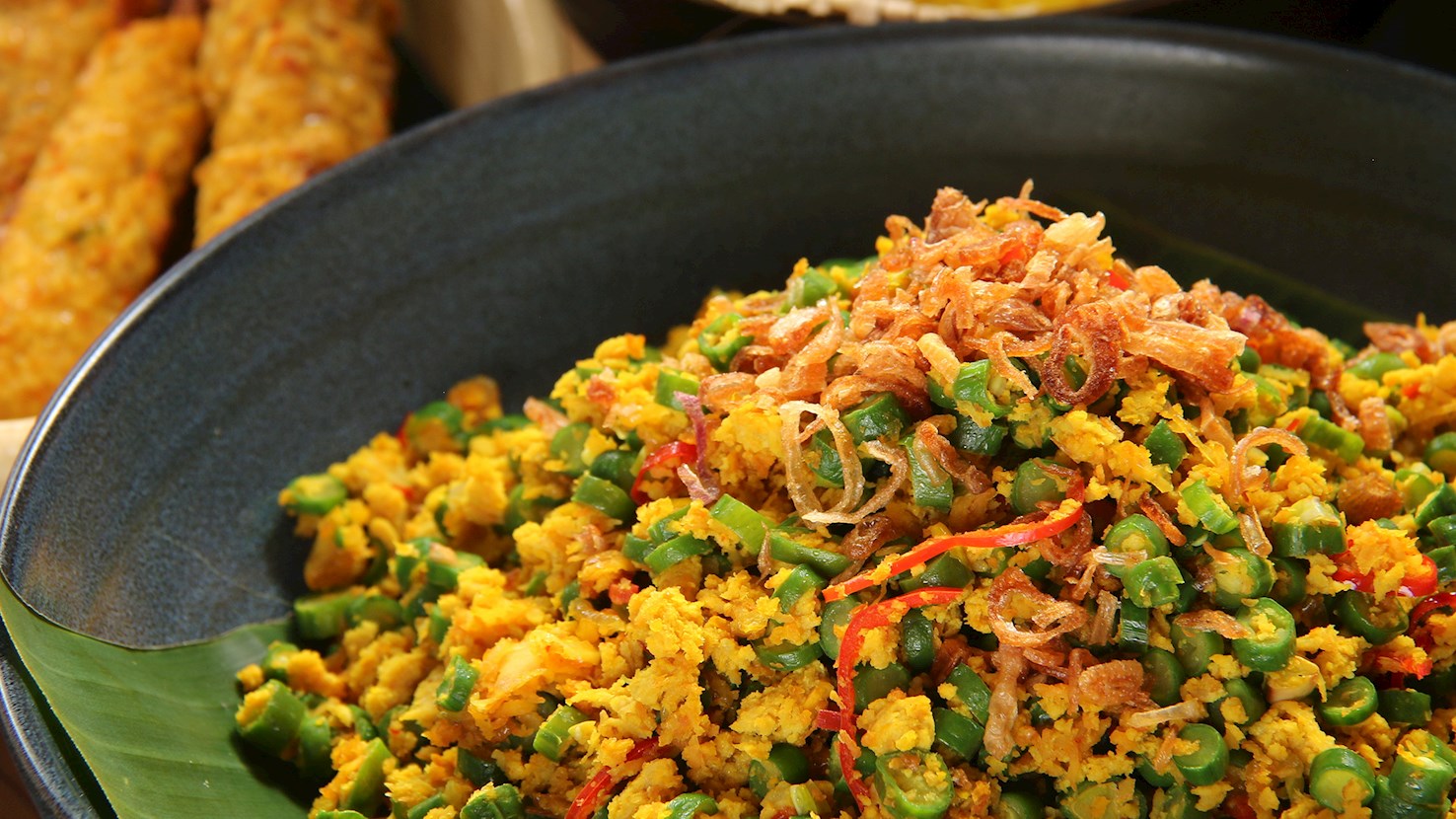
Lawar is a complex, richly textured dish from the island of Bali, emblematic of the island’s intricate balance between ritual, community, and flavor. At its core, it is a warm salad composed of finely chopped vegetables, grated coconut, aromatic spices, and minced meat, often pork or chicken, bound together with fresh herbs and sometimes the animal’s blood, which lends both depth and authenticity to the preparation. Lawar is not a single, fixed recipe but rather a concept that reflects regional variations, family traditions, and ceremonial significance. Its name is thought to derive from the Balinese word lawar, meaning “finely chopped,” which speaks to the foundational preparation technique where every component is carefully sliced or shredded to ensure even texture and full absorption of flavor. What distinguishes lawar from other Indonesian salads is its deeply ceremonial nature. It is most often prepared during temple festivals, religious offerings, and family celebrations, where large quantities are made by a group of men working communally. The act of cooking itself is part of the ritual, a collective endeavor where elders impart both culinary skills and spiritual teachings. Ingredients are chosen not only for flavor but for their symbolic resonance: coconut represents purity, meat for sustenance, and blood as a conduit of life and energy. The seasoning is a masterful blend of bumbu Bali, a paste made from garlic, shallots, turmeric, galangal, ginger, and shrimp paste, which is fried until fragrant and then folded into the mix to create layers of spice and umami. There are many types of Lawar, each named after its key ingredient or color. Lawar putih, or white lawar, omits blood and is seen as a purer, more symbolic offering, while lawar merah or lawar barak includes blood, giving the dish a reddish hue and a more intense flavor. Lawar nangka uses young jackfruit for a meatless alternative, while lawar kacang long beans add crunch and freshness. Despite its ceremonial roots, lawar is also found at roadside warungs and in home kitchens, eaten alongside steamed rice and other traditional Balinese dishes like babi guling or satay lilit.
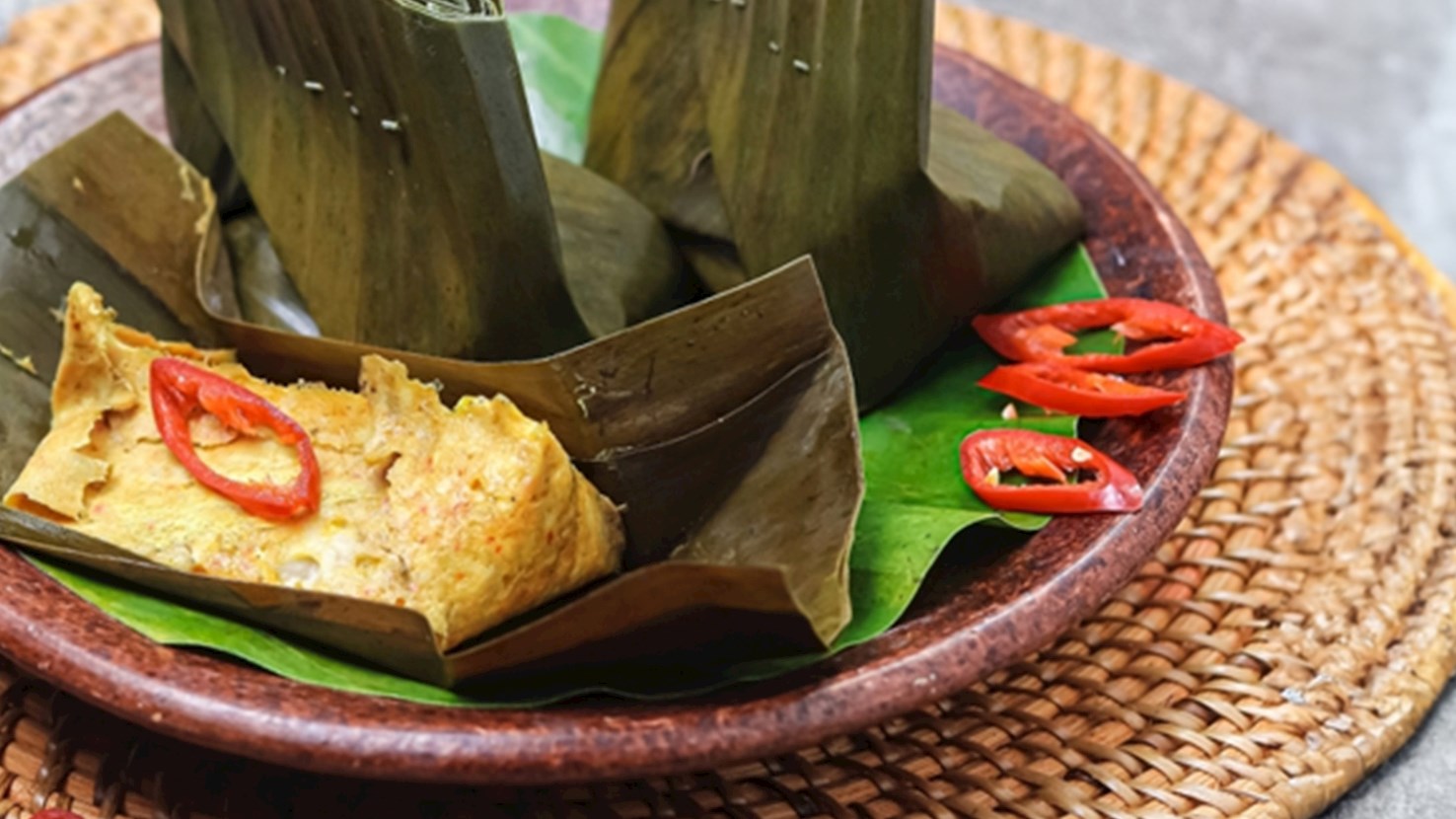
Tum ayam is a Balinese steamed chicken dish originating from Indonesia, known for its finely minced meat mixed with a rich blend of spices and wrapped in banana leaves before being cooked. The name “tum” refers to the method of wrapping and steaming food in banana leaves, while “ayam” simply means chicken. It is a staple in Balinese home cooking and ceremonial offerings, appreciated for its compact form, strong aromatic profile, and careful balance of seasoning. The preparation begins with boneless chicken, which is minced and mixed with a ground spice paste called bumbu bali. This paste typically includes shallots, garlic, ginger, turmeric, galangal, candlenuts, lemongrass, chili, and sometimes shrimp paste. The mixture is then combined with grated coconut or coconut milk to add depth and moisture. Once the ingredients are thoroughly mixed, small portions are spooned onto banana leaves, wrapped securely, and then steamed until fully cooked and aromatic. The banana leaf wrapping plays a functional and culinary role, as it helps retain moisture during cooking while also imparting a subtle earthy fragrance to the contents. The texture of the final dish is soft, and the flavors are concentrated, as steaming allows the spices to penetrate the meat evenly without the interference of browning or caramelization. Tum ayam is often served with steamed rice and vegetable side dishes, forming part of a larger meal rather than a standalone entrée.
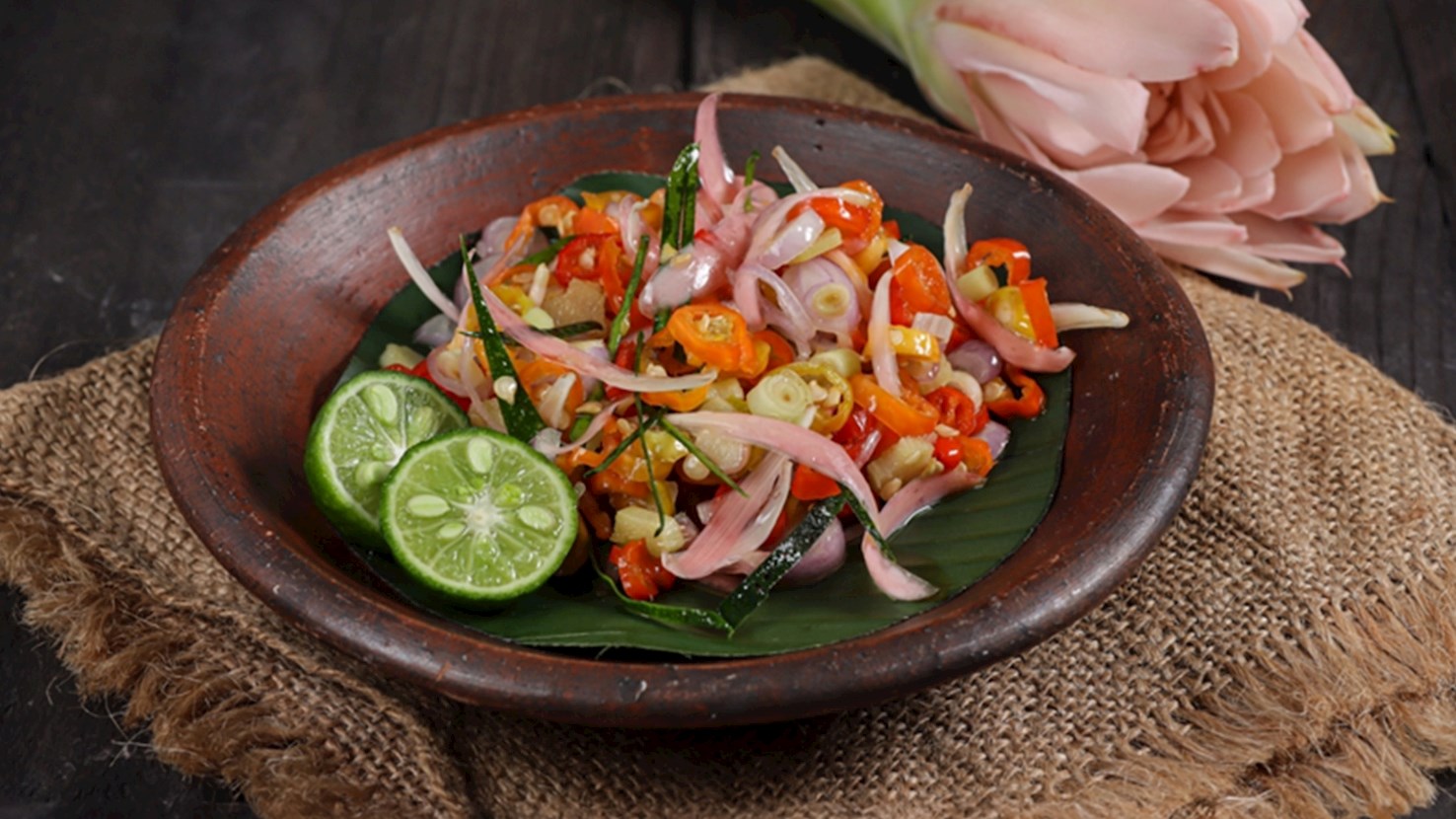
Sambal bongkot is a distinctive side dish from Bali, where it is prepared using bongkot, the local name for torch ginger flower buds. The dish combines the aromatic qualities of this unique ingredient with chilies, shallots, and fresh coconut, creating a sambal that is both spicy and deeply fragrant. The torch ginger lends a subtle citrusy flavor that sets sambal bongkot apart from other Balinese sambals that rely primarily on red chilies and shrimp paste. Preparation begins by slicing the unopened torch ginger buds very finely so their fragrance can blend evenly into the mixture. The sliced bongkot is mixed with chopped shallots, bird’s eye chilies, grated young coconut, salt, and a squeeze of lime juice. Some recipes also incorporate a small amount of palm sugar to balance the heat. Unlike cooked sambal, sambal bongkot is usually served raw, highlighting the freshness of its ingredients. It is most often eaten as an accompaniment to steamed rice, grilled fish, or roast pork. In Balinese households, the sambal is prepared just before serving to keep its bright aroma intact, and it is sometimes presented alongside other sambals such as sambal matah. Sambal bongkot is closely associated with home cooking and village-style meals rather than commercial restaurants. Because torch ginger buds are seasonal and not always available in markets, the sambal is often reserved for times when the plants are flowering. For this reason, some cooks consider it a specialty that reflects both the agricultural cycle and the importance of fresh herbs in Balinese cuisine. The sambal can be adjusted to suit individual tastes, with more or fewer chilies depending on how spicy the diners prefer.
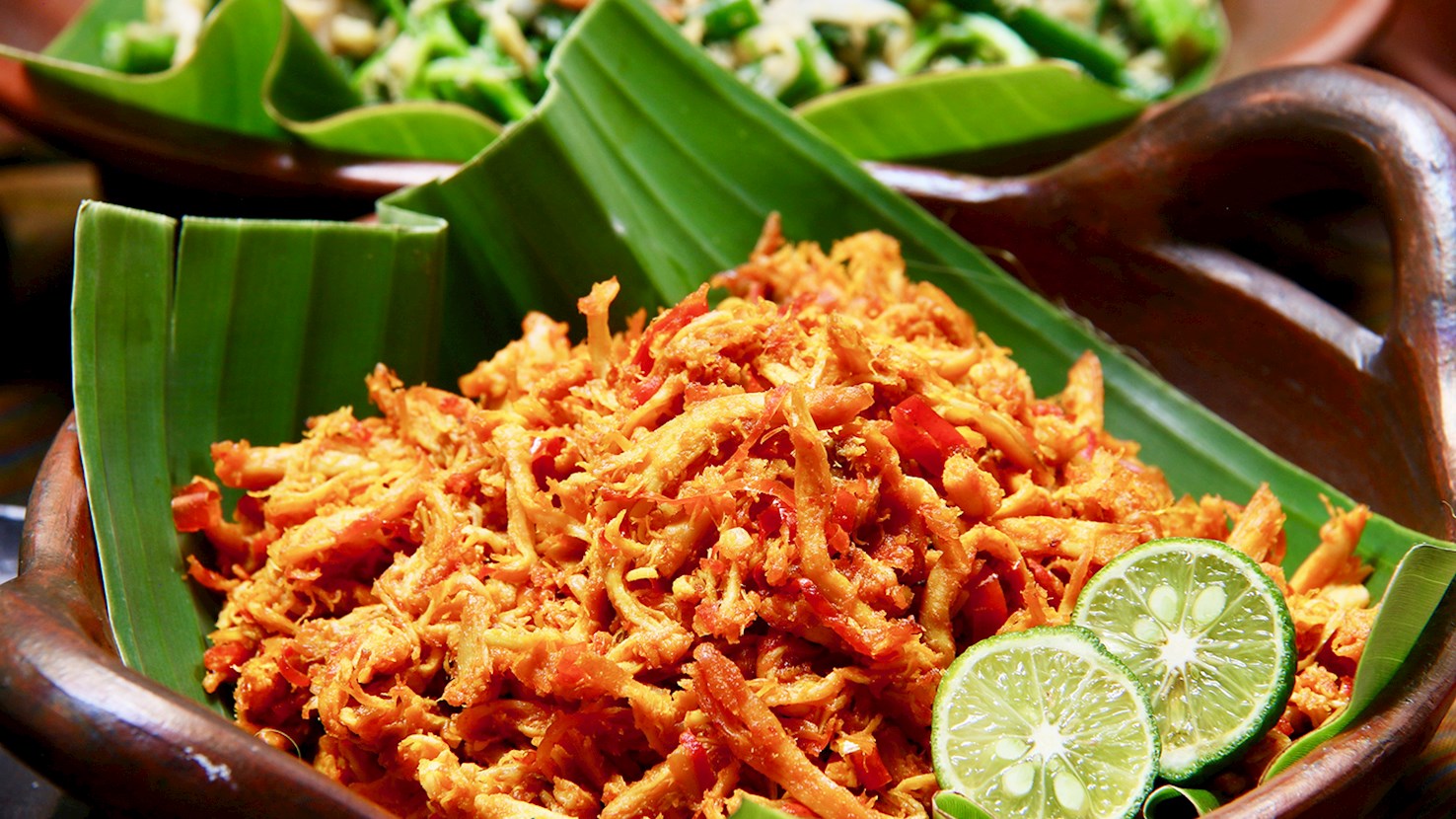
Ayam pelalah is a Balinese shredded chicken dish known for its vibrant seasoning and aromatic character. It is typically made by poaching or grilling chicken until cooked through, then finely shredding the meat and combining it with a rich mixture of spices, herbs, and chili paste. The defining feature of ayam pelalah is its seasoning base, which usually includes shallots, garlic, lemongrass, turmeric, ginger, galangal, kaffir lime leaves, and a generous amount of red chili peppers that give the dish both color and heat. After the spice paste is sautéed until fragrant, it is mixed thoroughly with the shredded chicken, which absorbs the flavors and takes on a bright, slightly oily coating. Ayam pelalah is often served at Balinese ceremonies and communal gatherings but is also enjoyed as an everyday meal. It is commonly paired with steamed rice or nasi campur, where it appears alongside vegetables, sambal, and other small dishes. Some versions incorporate lime juice or coconut oil for added freshness and richness, while others add a touch of palm sugar to balance the heat with a subtle sweetness. In many homes and small warungs, the chicken is first grilled over coconut husk coals to add a smoky element before it is shredded and mixed with the spices.
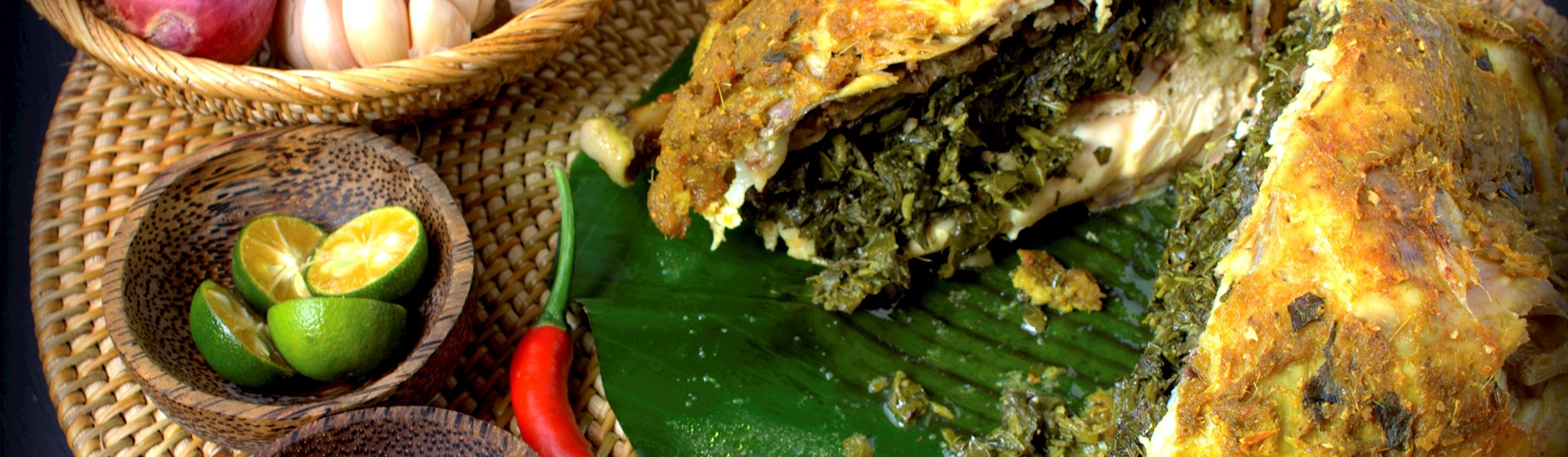
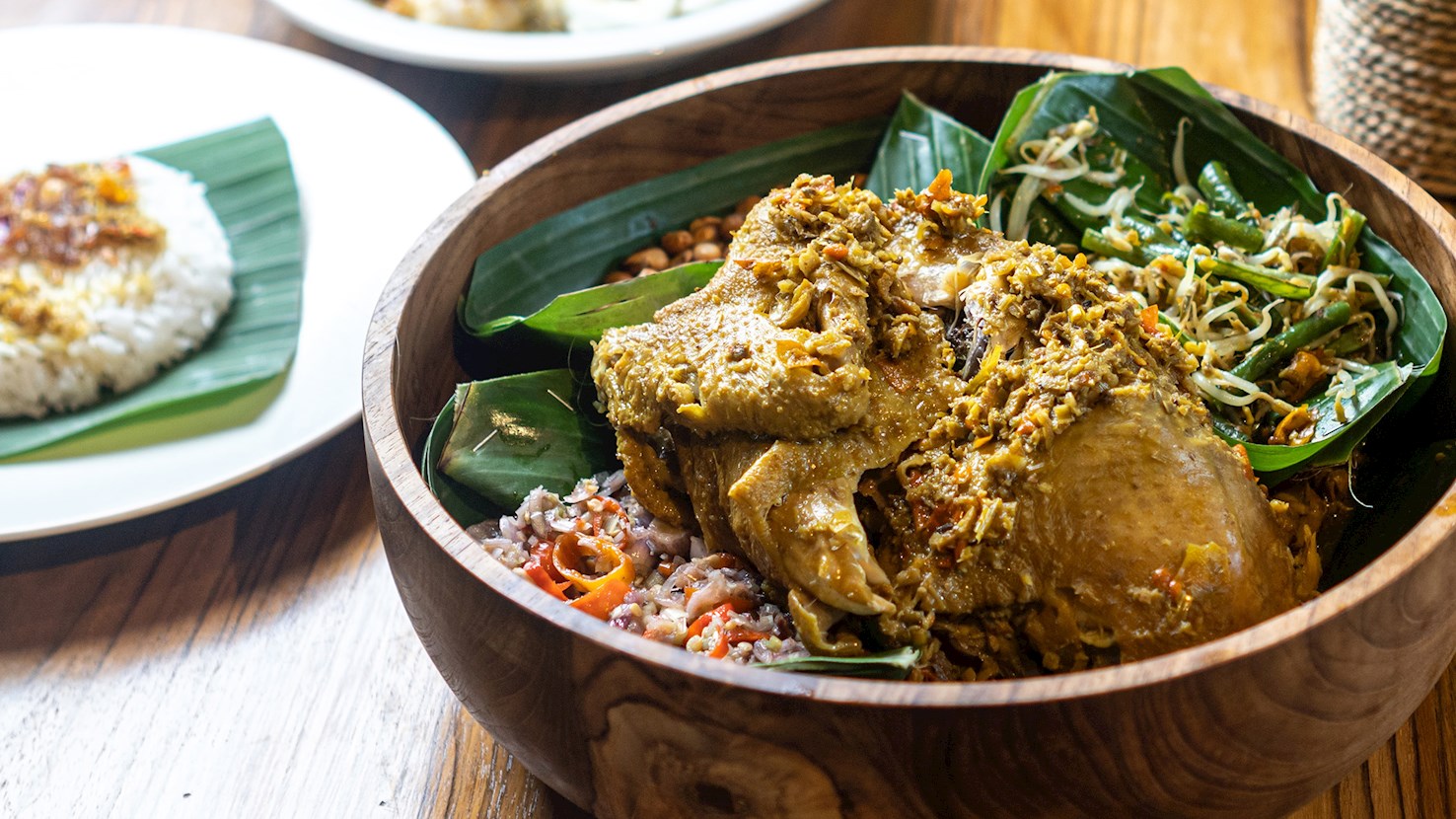
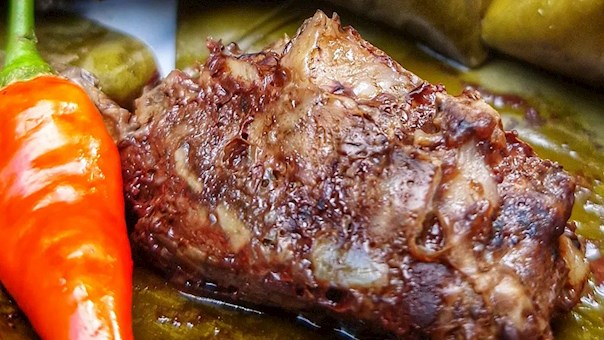
Ayam betutu is a traditional Balinese dish made from whole chicken marinated with a rich blend of spices and slow-cooked or steamed in banana leaves until tender. The defining feature of ayam betutu is its use of base genep (also known as bumbu Bali), a traditional Balinese spice mix made with ingredients like shallots, garlic, turmeric, ginger, galangal, candlenuts, coriander, lemongrass, chili, and shrimp paste. The chicken is generously coated and often stuffed, with this paste, then wrapped in banana leaves, and either steamed, roasted, or even buried in hot embers to cook slowly over several hours. The result is meat that’s incredibly tender and infused with deeply layered flavors: spicy, earthy, aromatic, and slightly smoky depending on the method. Ayam betutu is often served during religious ceremonies, temple festivals, and family celebrations, symbolizing respect, abundance, and hospitality. It's traditionally enjoyed with steamed rice, lawar (a seasoned vegetable dish), sambal matah (raw Balinese chili relish), and sometimes fried peanuts or eggs on the side. There is also a duck version called bebek betutu, which is equally popular and uses the same base but has a gamier flavor and longer cooking time.
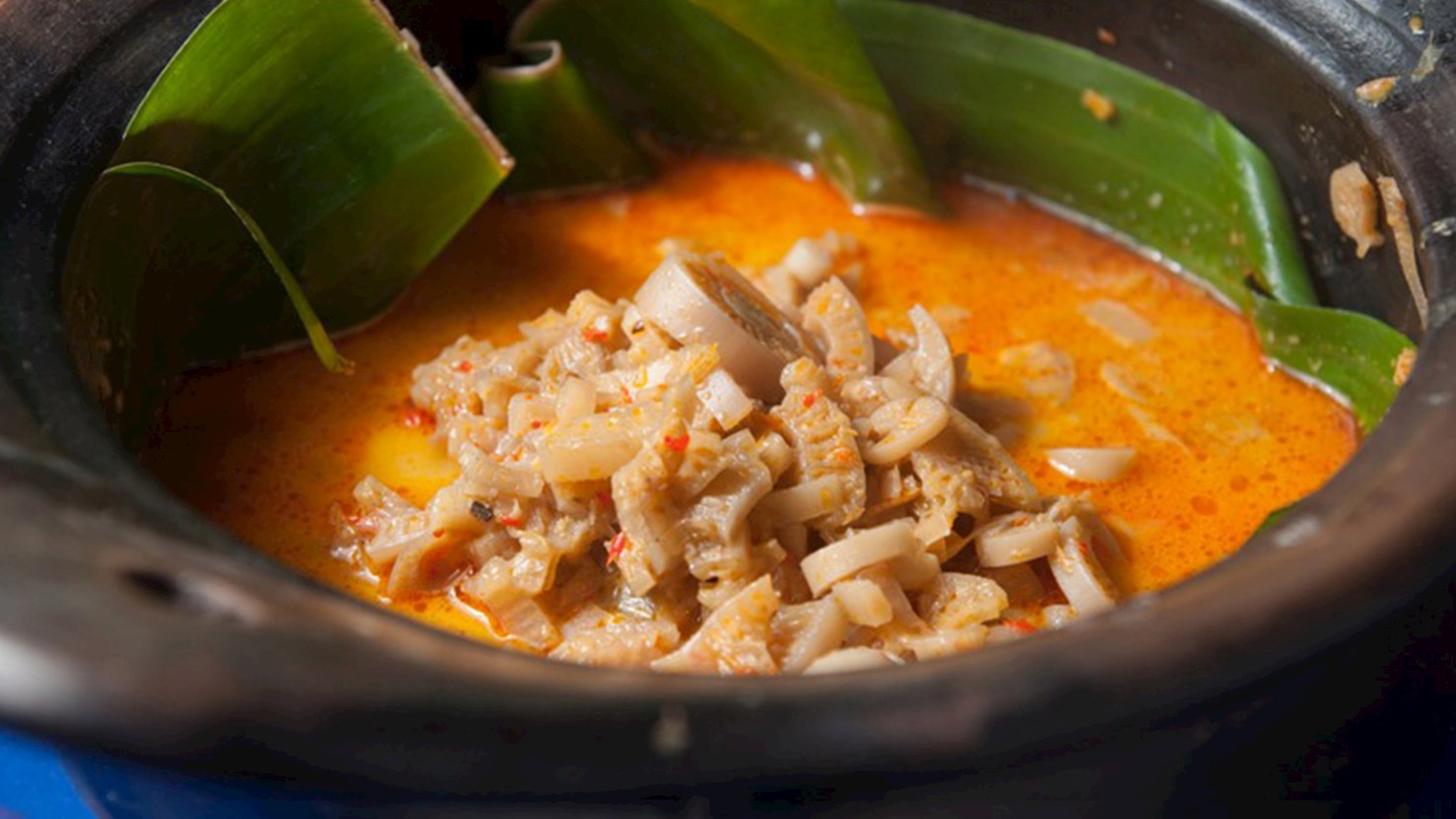
Jukut ares is a traditional Balinese soup made with "ares", the tender core of the banana stem. It is a part of the banana plant that is often discarded in many cuisines but is highly valued in Balinese and other Southeast Asian cooking for its texture and ability to absorb flavors. The banana stem core is thinly sliced and cooked in a rich and aromatic broth made from various spices and herbs common in Indonesian cuisine, such as garlic, shallots, galangal, turmeric, lemongrass, and bay leaves. These ingredients are ground into a paste and sautéed to release their flavors before being combined with water or coconut milk to create the soup base. Meat, typically chicken or duck, is also added to the soup, making it a hearty and filling dish. However, there are variations of the soup that may use other proteins or even a vegetarian version. This dish is enjoyed as part of everyday meals as well as during ceremonial occasions.
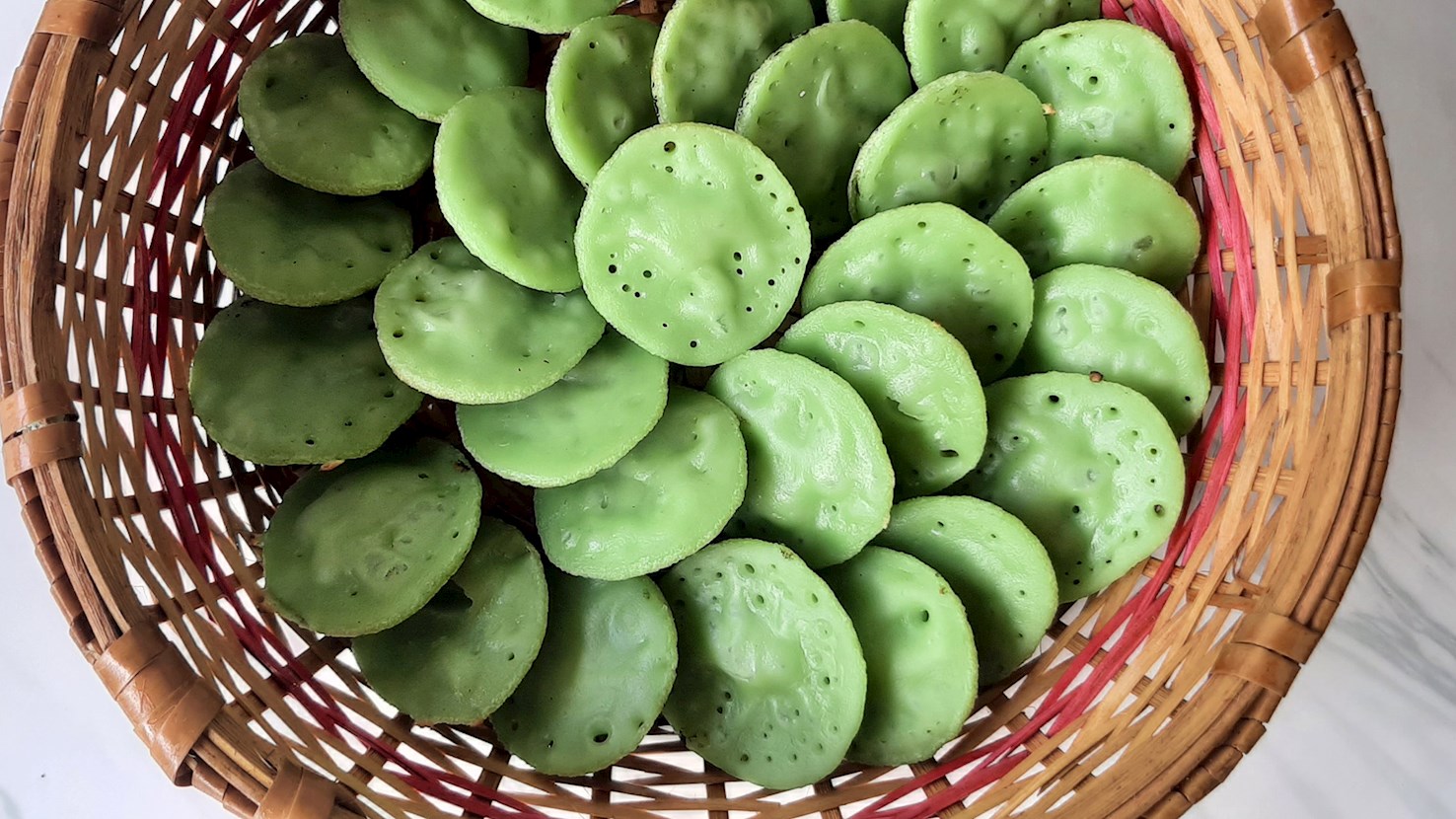
Laklak is a small, round rice cake from Bali, Indonesia, made from a simple batter of rice flour and coconut milk and typically served with grated coconut and a drizzle of melted palm sugar syrup. It is usually green in color due to the addition of pandan leaf extract, which gives it a fragrant aroma and vibrant hue. Its preparation is simple yet precise, with the rice flour batter mixed to the right consistency and poured into small, round molds. The cakes are steamed or lightly covered during cooking, resulting in a tender base with a subtle crisp edge. Cooked on a clay or iron griddle similar to an appam or serabi pan, laklak develops a soft, slightly chewy texture with a porous surface that absorbs the sweet syrup. This snack is commonly found in Balinese markets, family gatherings, and temple offerings, where it is prepared fresh and enjoyed warm, usually eaten in the morning or late afternoon.
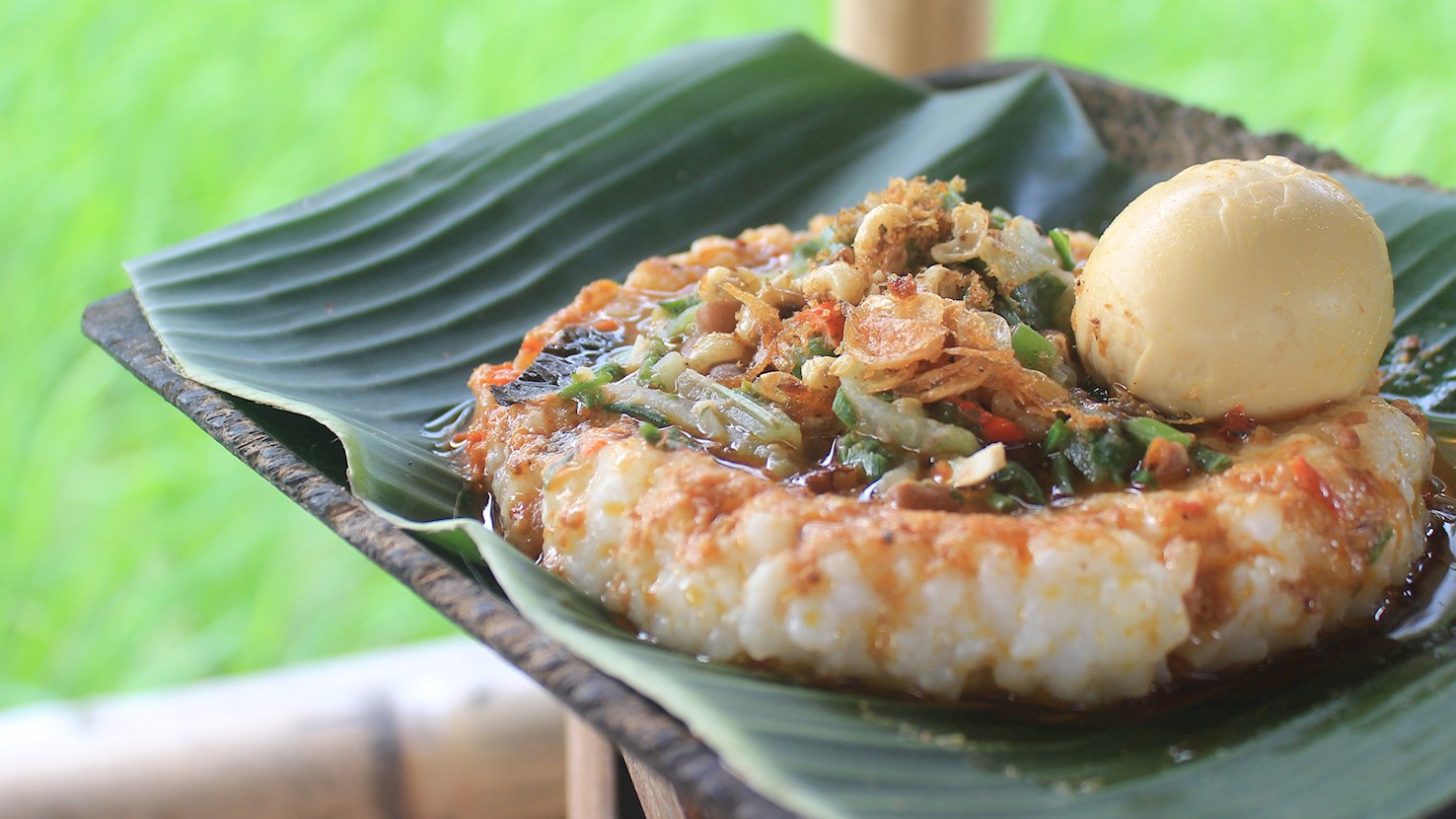
Nasi tepeng is a traditional Balinese dish that is particularly popular in the Gianyar region of Bali, a type of porridge made from rice that is cooked with a variety of vegetables and a rich blend of Balinese spices and herbs. The result is a comforting and flavorful dish that is enjoyed for breakfast or as a warm, nourishing meal at any time of the day, often served with a side of sambal (a spicy chili paste) for those who prefer an extra kick. The base of nasi tepeng is made from white rice that is cooked until it reaches a soft, porridge-like consistency. To this, a mixture of local vegetables such as eggplant, spinach, jackfruit, and sometimes cassava leaves are added. What truly sets nasi tepeng apart, however, is the use of a specific Balinese spice paste known as base gede or bumbu Bali. This paste is a complex blend of ingredients including garlic, shallots, ginger, turmeric, galangal, chili peppers, lemongrass, and more, giving the dish its distinctive flavor profile.
TasteAtlas food rankings are based on the ratings of the TasteAtlas audience, with a series of mechanisms that recognize real users and that ignore bot,
nationalist or local patriotic ratings, and give additional value to the ratings of users that the system recognizes as knowledgeable.
TasteAtlas Rankings should not be seen as the final global conclusion about food. Their purpose is to promote excellent local foods,
instill pride in traditional dishes, and arouse curiosity about dishes you haven’t tried.
The initial list of top producers was compiled based on available reviews, awards, local recommendations, media and blog coverage, and consumer reviews.
The list will be updated with ratings from TasteAtlas local ambassadors and TasteAtlas users.










What People Say