This festive Croatian dish consists of a whole roasted turkey, paired with an authentic Croatian side dish known as mlinci. The dish has its origins in the Zagorje region, where turkey has been brought over from Italy by the Pauline Fathers in the 15th century. Specific breeding and growing conditions have led to the creation of an autochthonous Zagorje Turkey breed that is praised for its exceptional quality of meat. Mlinci, on the other hand, are best described as a cross between pasta and crispy, unleavened flatbread. The dough, made with flour, water, and eggs, is rolled into thin, wide sheets. Due to their dry texture and neutral taste, they are usually torn into smaller pieces and submerged in hot water to soften. Later on, they are mixed with meat drippings, which transforms this simple meal into a luscious side dish. Turkey with mlinci is a communal family meal, typically shared among a larger number of people. Traditionally, it is served as the main course during Christmas dinner.
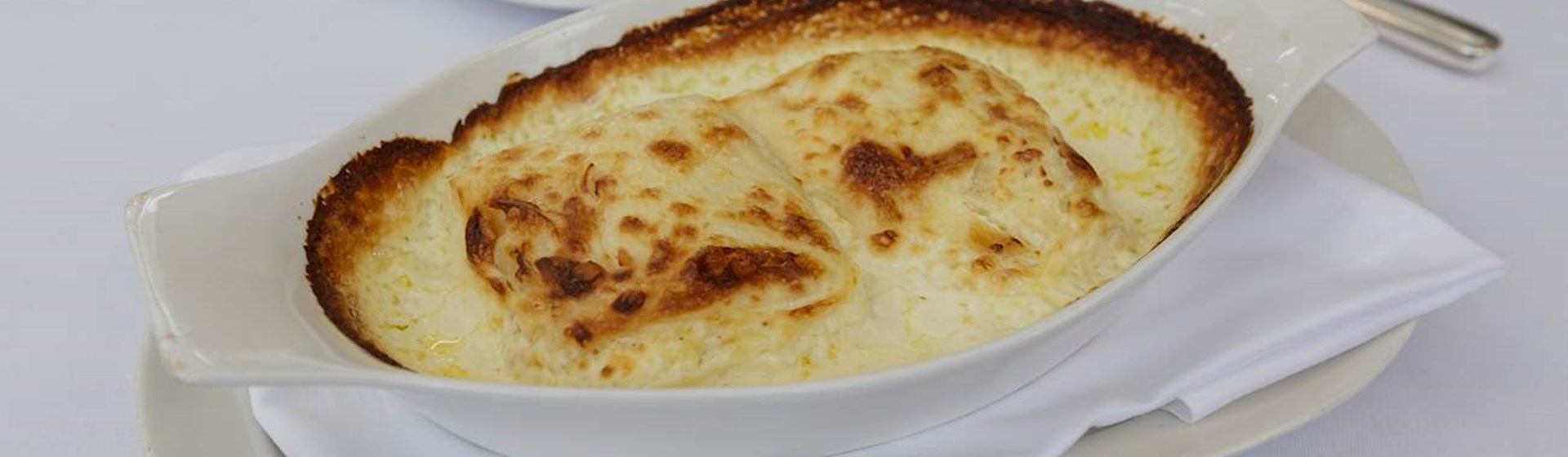
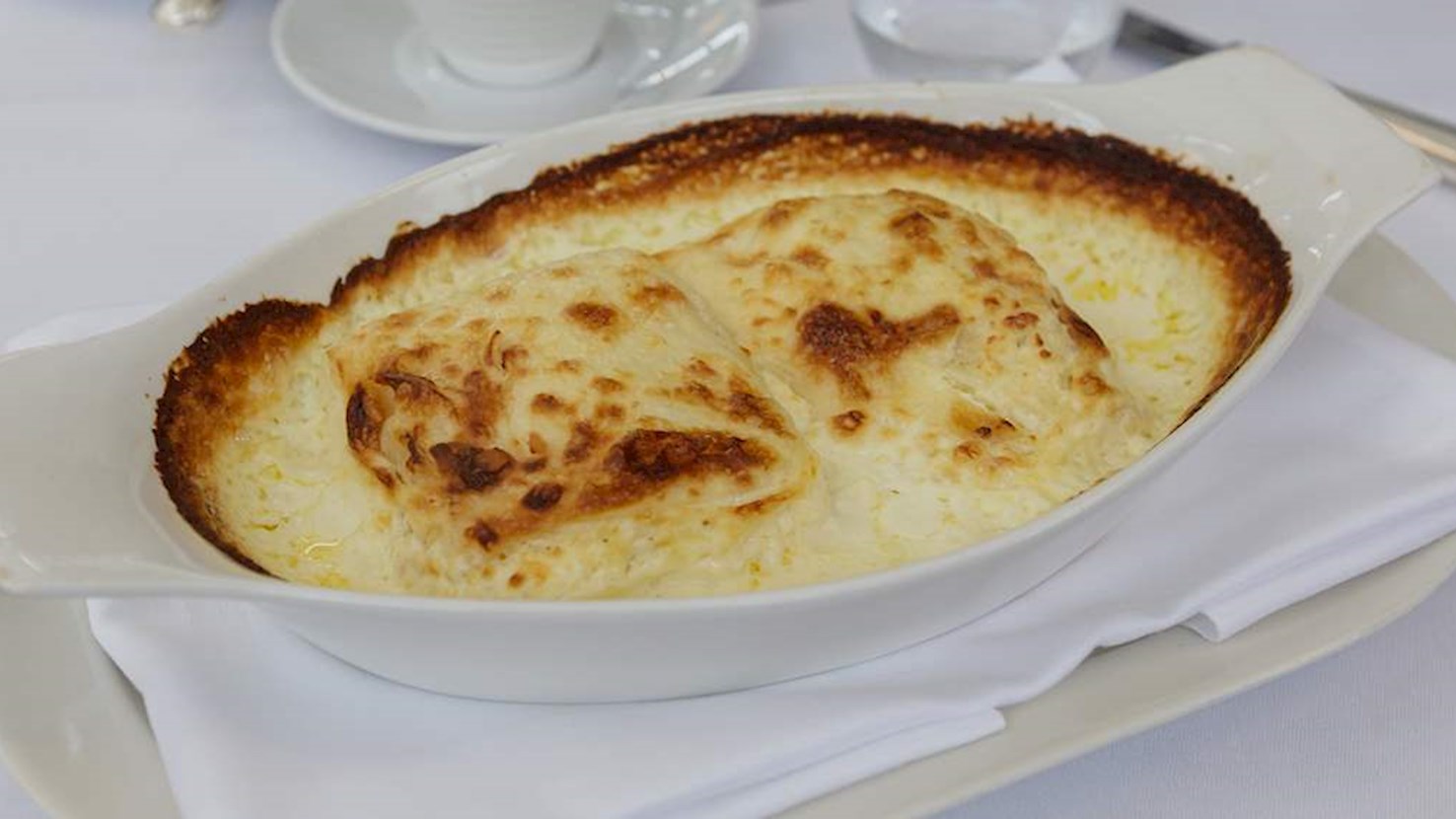
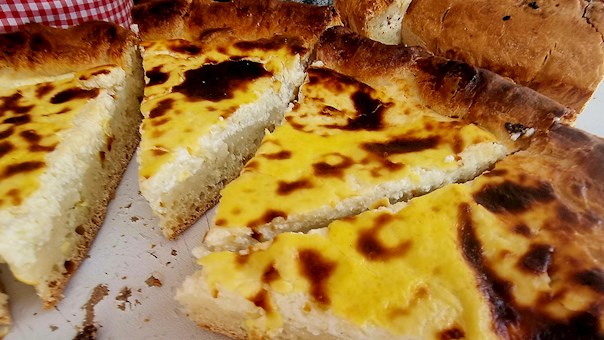
Zapečeni štrukli are small rolls of thin, stretched dough filled with fresh cow’s-milk cheese, eggs, and sour cream, arranged in a baking dish and baked beneath a layer of cream until golden brown. The finished pieces have soft dough around a moist cheese filling, with browned patches on top and thickened cream between them. They taste mildly tangy and usually savory, though sweet versions also exist. The word zapečeni identifies the oven-browned preparation, distinguishing it from štrukli served boiled or in soup. The filling centers on svježi kravlji sir, a soft, fresh cow’s-milk cheese, mixed with eggs, salt, and kiselo vrhnje, or sour cream. Some recipes also add butter. This mixture is enclosed in vučeno tijesto, meaning stretched dough, made from wheat flour, water, salt, and a little oil or another fat. An egg and a small amount of vinegar may be included, but neither appears in every recipe. The dough is kneaded, rested, and then stretched by hand over a floured cloth into a broad, thin sheet. The cook spreads the filling over part of the sheet or arranges it along an edge, then lifts the cloth to roll the dough around it. A distinctive part of shaping štrukli is cutting this long roll with the rim of a small porcelain plate. The pressure divides the roll into short, roughly rectangular pieces while pressing their edges together. Each piece contains folded layers of dough and cheese filling, not a single sheet wrapped around a separate spoonful of cheese. Two established methods prepare the pieces for baking. They can be briefly cooked in salted water before transferring them to a buttered baking dish, or placed uncooked in the dish and baked directly in cream. Precooking is common in restaurant preparations, including the version served at Zagreb’s Esplanade Hotel, while direct baking is also well established in home recipes. The pieces are arranged close together and covered with cream, sometimes mixed with eggs or egg yolks. Recipes may specify slatko vrhnje, meaning fresh, uncultured cream, or kiselo vrhnje, sour cream; the word slatko here does not mean that sugar has been added. Fresh cream gives a milder topping, while sour cream adds more acidity. During baking, the cream thickens around the rolls and browns across their exposed surfaces. The result stays soft enough to cut with a fork, while the browned top provides a firmer surface. The distinction from kuhani štrukli, the boiled preparation, lies chiefly in this cream-covered oven finish. Boiled štrukli can instead be served with breadcrumbs fried in butter, without undergoing the final baking stage. Sweet baked versions retain the cheese filling but add sugar to it or serve it with sugar; sweetness is an adjustment to the preparation, not an essential feature of štrukli.
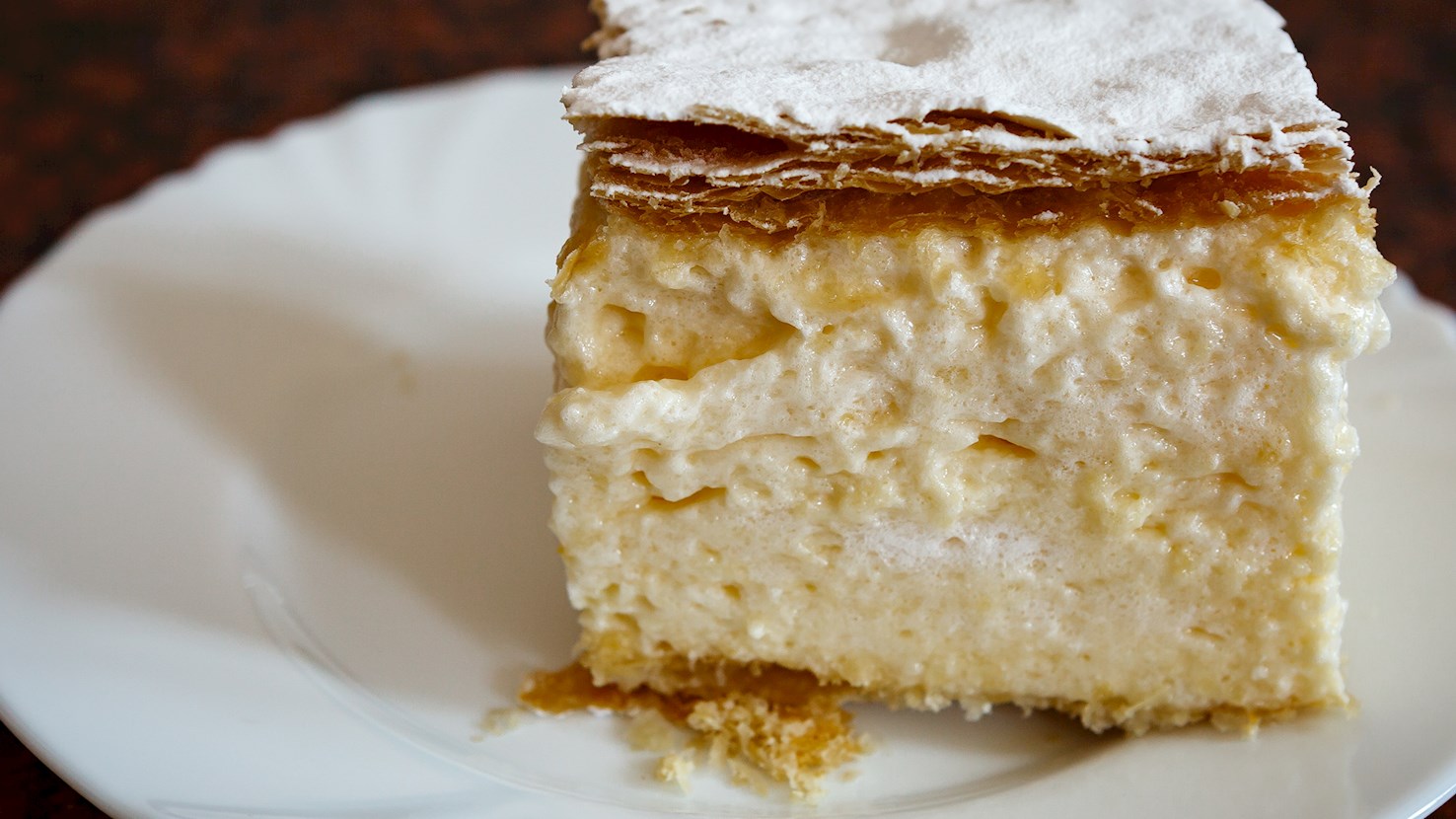
Samoborska kremšnita is a popular dessert originating from the Croatian town of Samobor. It consists of two layers of puff pastry that are filled with custard cream. A thin layer of whipped cream is sometimes placed on top of the custard. The whole cake is typically dusted with powdered sugar, and before serving, the cake is sliced into cubes. Kremšnita can be consumed warm or chilled. It is believed that this tasty dessert was invented by pastry chef Đuro Lukačić who had worked in Vienna and Budapest, and upon arriving in Samobor, he modified some of their recipes to create Samoborska kremšnita, which proved to be a huge hit up to this day.
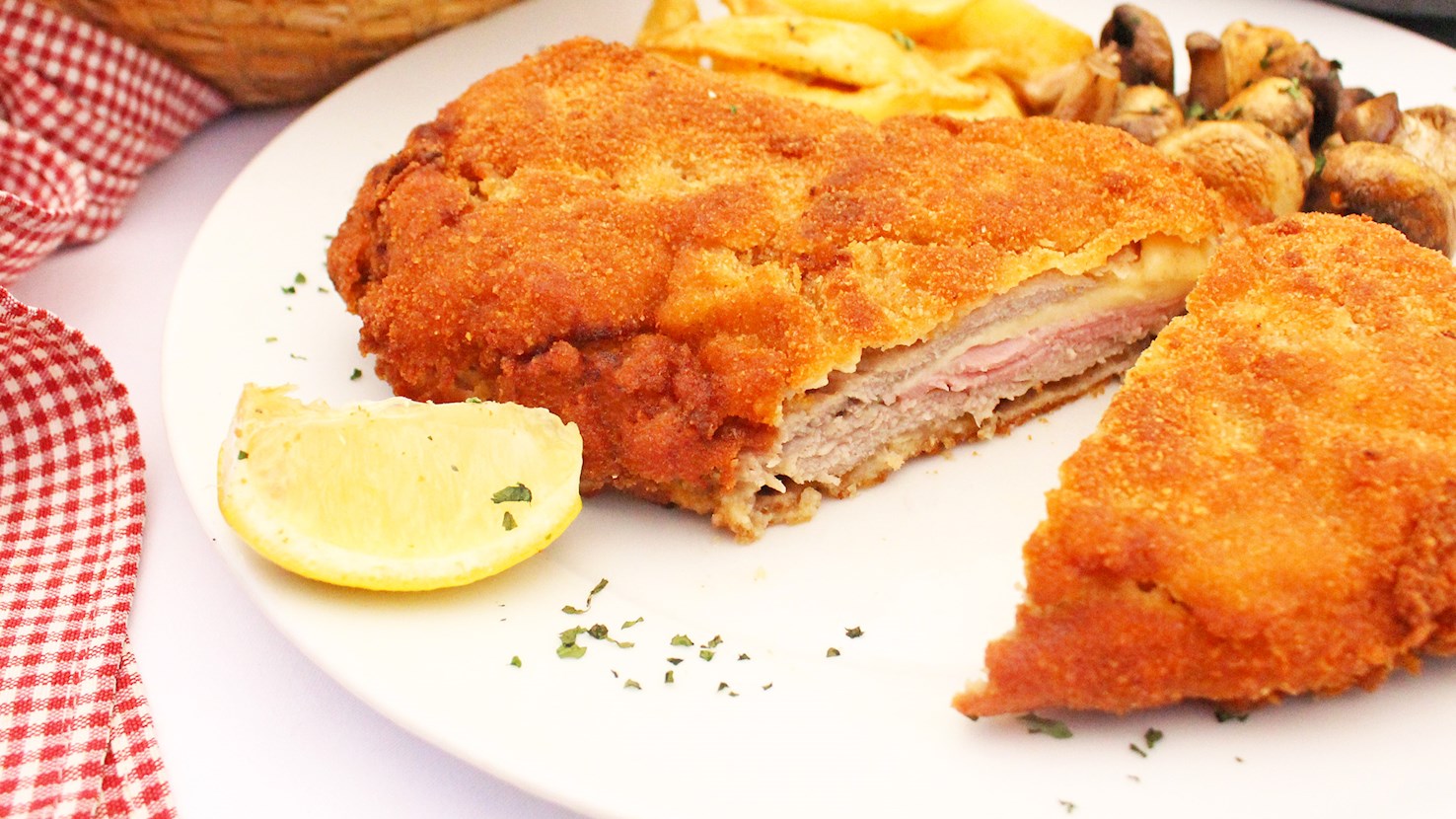
Zagrebački odrezak is a Croatian meat dish consisting of veal cutlets that are pounded, filled with cheese and ham, rolled, breaded, then fried until golden and crispy. Nowadays, the dish has many variations and some cooks prepare it with pork, chicken, or turkey. It is important that the cheese melts well, and the ham should have minimal fat. Once prepared, this succulent meat dish is typically accompanied by lemon wedges, rice and peas, potatoes, and green salads.
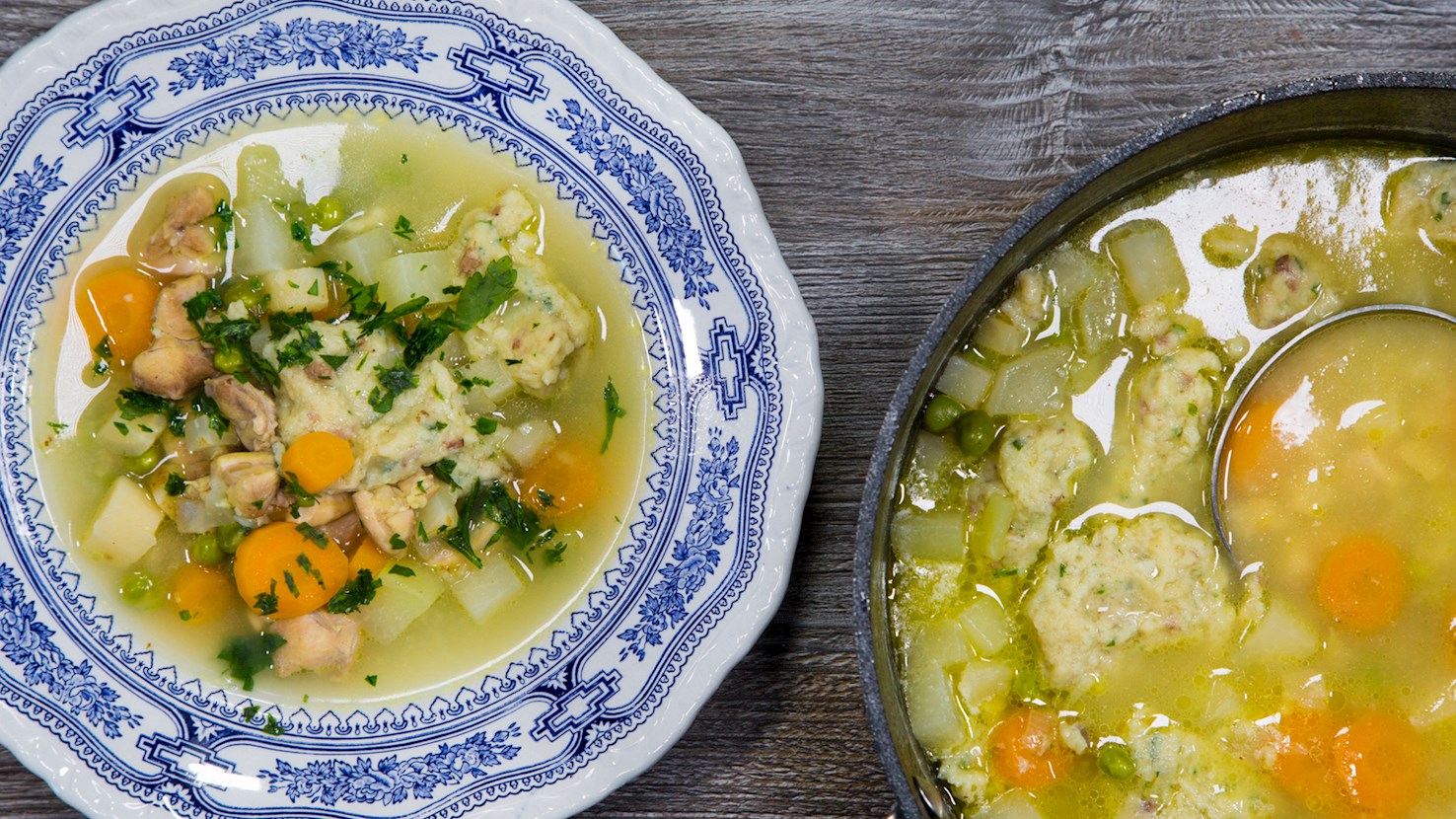
Ajngemahtec is a nourishing chicken soup traditionally prepared in northern Croatia, especially in the area around its capital, Zagreb, whose cuisine was strongly influenced by its Austrian neighbors. The name comes from the German word eingemacht, which could be roughly translated as all in one, due to the fact this simple one-pot dish indeed has a little bit of everything: various vegetables, chicken, a delicious broth and hearty dumplings. Ajngemachtec is often served at the beginning of the Sunday family lunch, but it also has a status of an ultimate home-remedy - whether it is a cold, flu, or a hangover, a plate of hot ajngemahtec always seems to make things better.
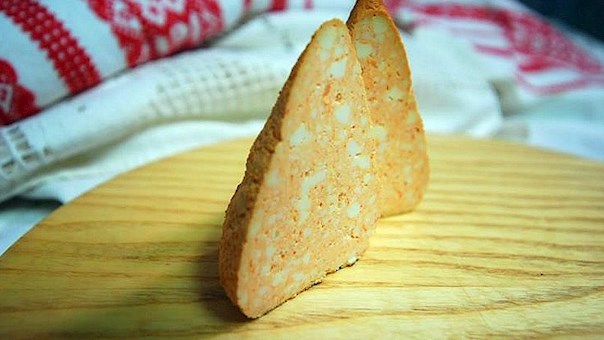
Zimska salama (or as it is originally called, Salama Gavrilovićka) is a type of winter salami produced by Gavrilović, a well-known and long-established meat industry brand in Croatia. It was created by accident in 1883 when, during a curing process, a batch of regularly prepared pork salamis got a moldy cover. This moldy cover gave the salami a specific taste profile, which was immediately recognized as something unique and worth becoming a separate product. Today, Zimska salama is made using the original recipe, with high-quality pork and spices. It is smoked over beech and left to mature for three months, letting the natural mold develop on the casing. It's taste combines the flavors of pork, spices, smoke, and hints of mold, while the aroma has beech, smoke and spice profiles. It is usually served cut into thin slices, and goes well with fresh white bread and hard or semi-hard cheese.
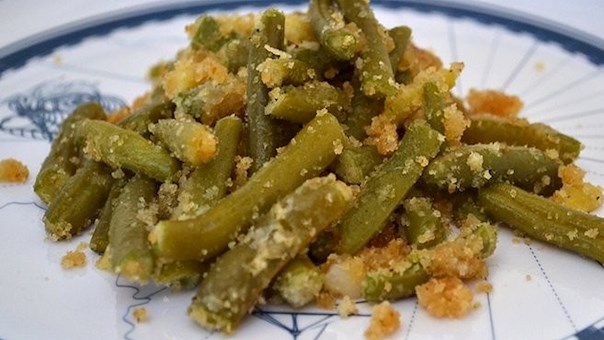
Cvjetača sa sirom i šunkom is a Croatian side dish that is especially popular in the area of Sisak-Moslavina county. The dish is prepared with cauliflower, ham, butter, breadcrumbs, eggs, and grated cheese. In order to prepare it, the cauliflower should first be boiled, drained, then covered with a combination of fried breadcrumbs, chopped hard-boiled eggs, grated cheese, chopped ham, and butter. The whole concoction is baked in an oven until the top is slightly crispy. The dish can be served as an accompaniment to various meat dishes.
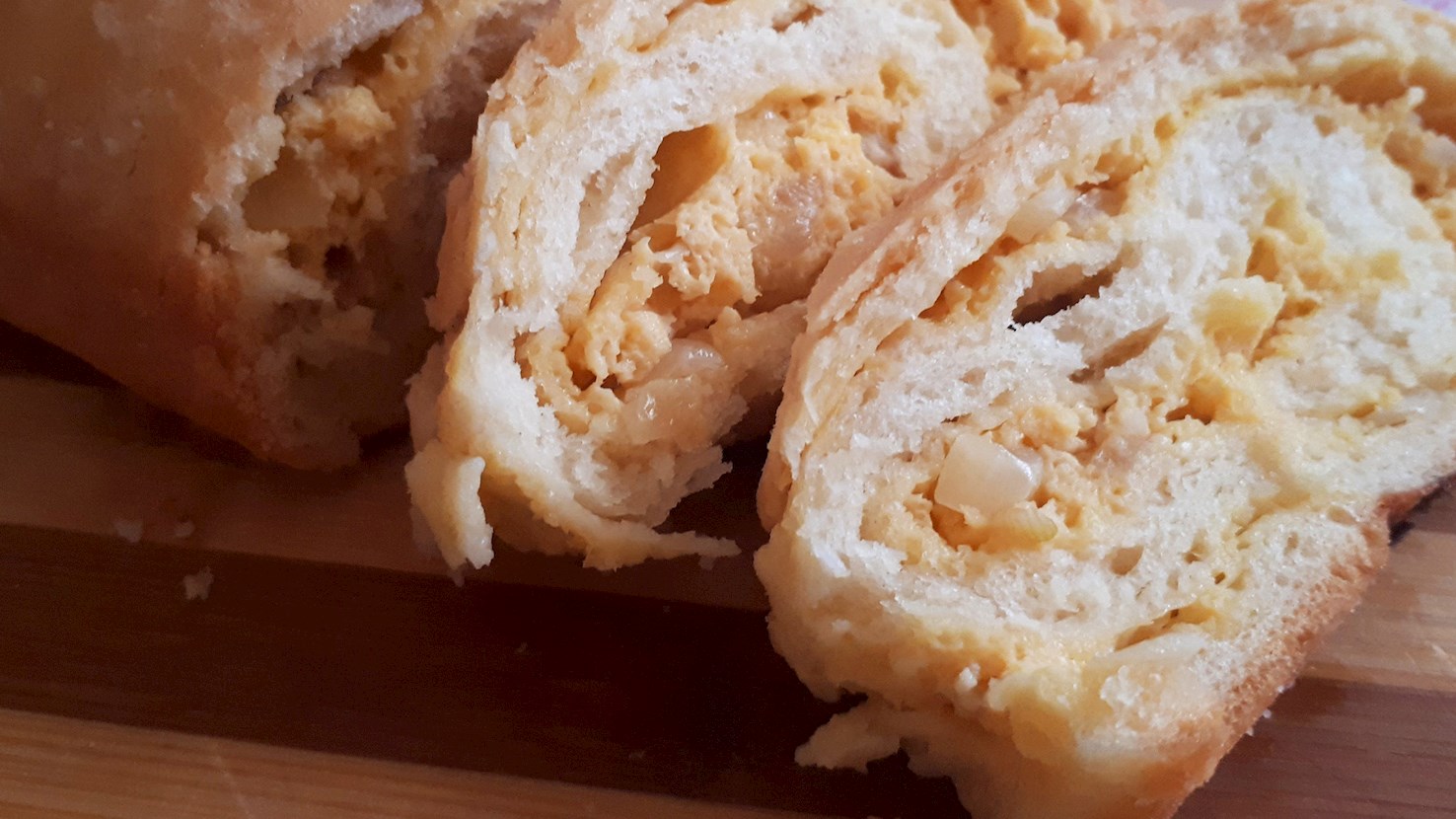
Ogulinska masnica is a traditional dish hailing from Ogulin. In order to prepare it, yeasted dough is filled with a combination of sautéed onions, eggs, and lard. Once filled, the dough is traditionally shaped into a horseshoe, brushed with egg wash, then baked until golden on the exterior. Ogulinska masnica should always be served piping hot. Nowadays, there are also a few variations, so some cooks omit the onions or add cream to the filling.
Samoborski kotlet is a traditional meat dish originating from the city of Samobor. The dish is made with pork loin, oil, potatoes, garlic, parsley, salt, and pepper. The meat is cut into slices that are tenderized with a mallet, seasoned with salt, and fried in oil until golden brown. The potatoes are cut into slices and fried in the same oil. The garlic and parsley are sautéed in oil, covered with a bit of water, left to bubble, and the mixture is then poured over the meat, while fried potatoes are arranged around the meat. The dish is simmered over low heat for a few minutes before it's served warm. It's recommended to serve the dish with a green salad on the side.
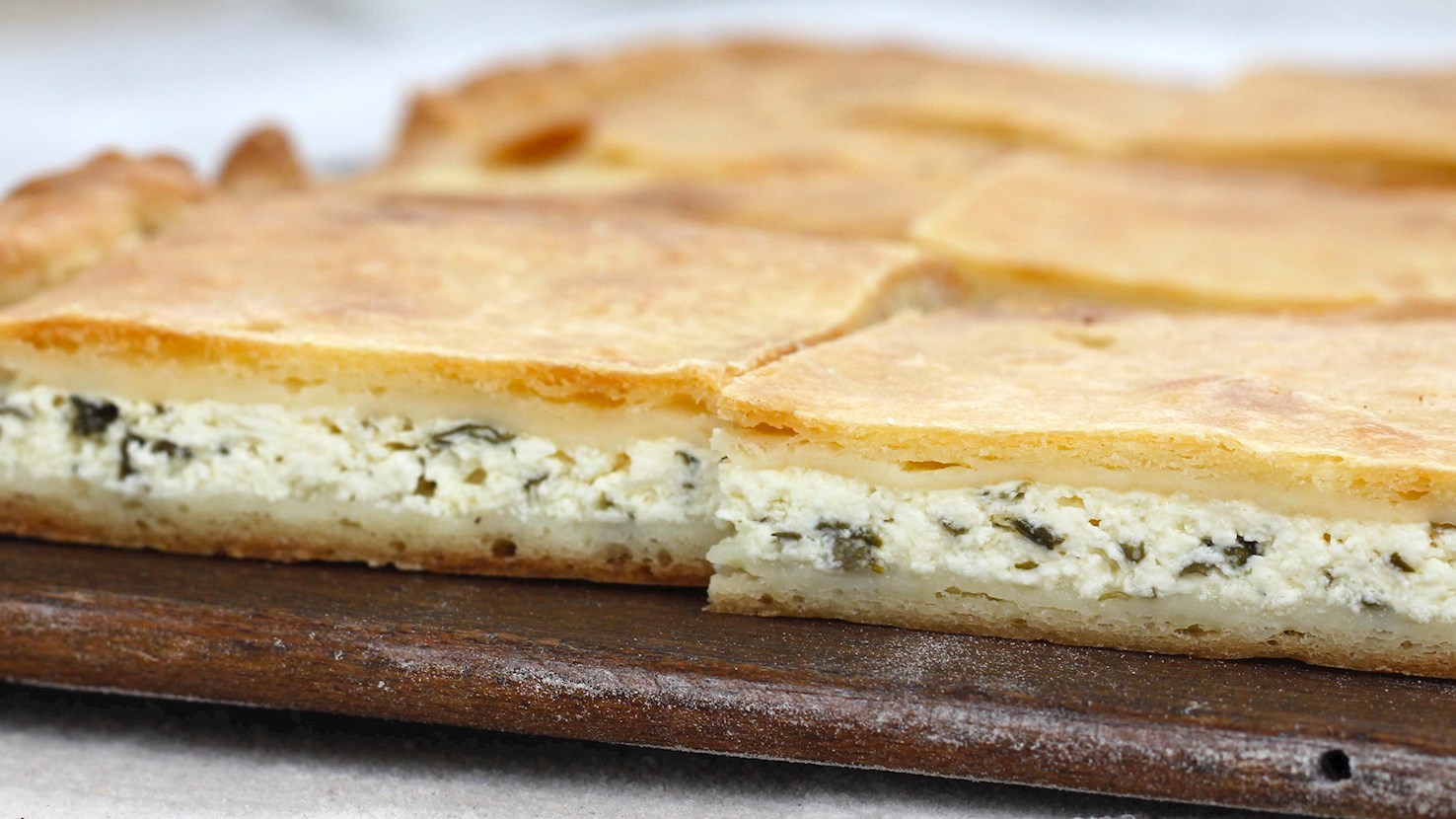
Once a staple among the miners who would enjoy it during the long working hours, this savory pie consists of a cheese filling that is neatly wrapped between two thin layers of dough. The filling is occasionally enriched with other ingredients such as walnuts, green onions, or leeks, and before baking, the whole pie is smeared with sour cream. Greblica first appeared in the 16th century, following the development of the mining industry in Rude, a settlement adjacent to the city of Samobor. The dish got its name from the location where it originated and the traditional ash rake tool called greblica. Though mining is not practiced in the area anymore, this dish was transformed into a local delicacy that is nowadays enjoyed as an authentic specialty, usually prepared for various special occasions.
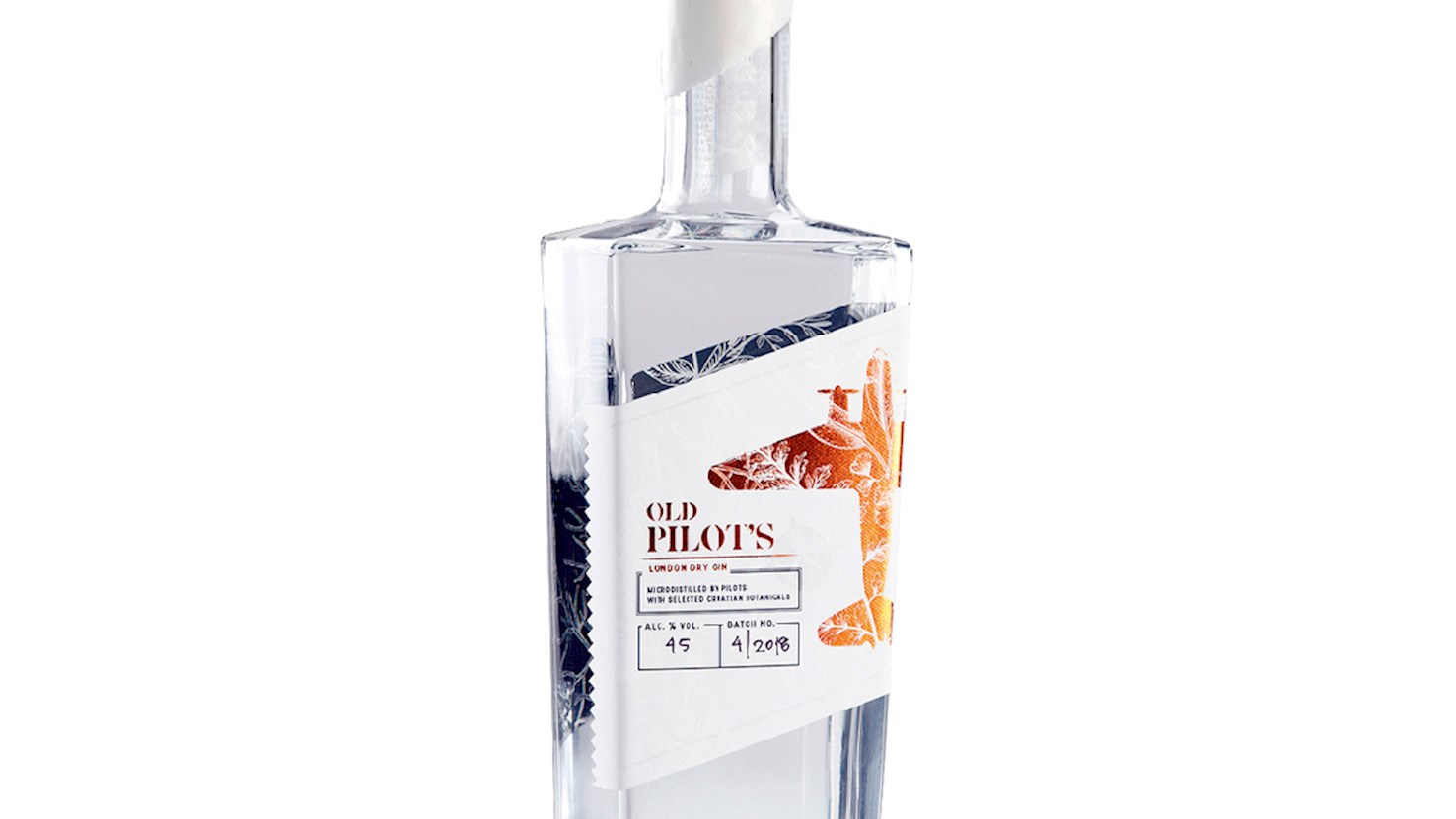
The Spirit in the Bottle is a Croatian distillery dedicated to producing premium quality spirits. Their flagship product, Old Pilot's Gin, is crafted using handpicked, homegrown strawberries at peak ripeness, free from artificial flavors or coloring, and aged in Croatian and American oak barrels.
The distillery emphasizes a blend of heritage and innovation, aiming to capture the essence of tradition in each bottle. Additionally, they support noble causes by donating €5 from every bottle sold to the Indigo Animal Protection Association.
Awards
World Gin Awards - Country Winner
(2022)
IWSC- International wine & spirit competition - Spirit Gold
(2019)
Wise Grus is a distinguished distillery located in Daruvar, Croatia, a town historically associated with cranes, symbolizing magic, longevity, and mystery. The name "Wise Grus" reflects this heritage, with "Grus" being the Latin term for crane.
The distillery is committed to producing high-quality fruit brandies, emphasizing traditional methods and local ingredients. The production process begins with the careful selection and preparation of fruits, ensuring optimal quality and ripeness.
This is followed by controlled fermentation at lower temperatures to enhance fruit aromas, and a sophisticated distillation process utilizing advanced equipment like deflegmators and reinforcing columns. The brandies are then aged to allow essential chemical processes such as oxidation and esterification, resulting in a smoother and more harmonious spirit.
Awards
SFWSC - San Francisco World Spirits Competition - Double Gold
(2023)
ZGrappa festival - The World’s 15 Best Rakijas - Marin Levaj
(2025)
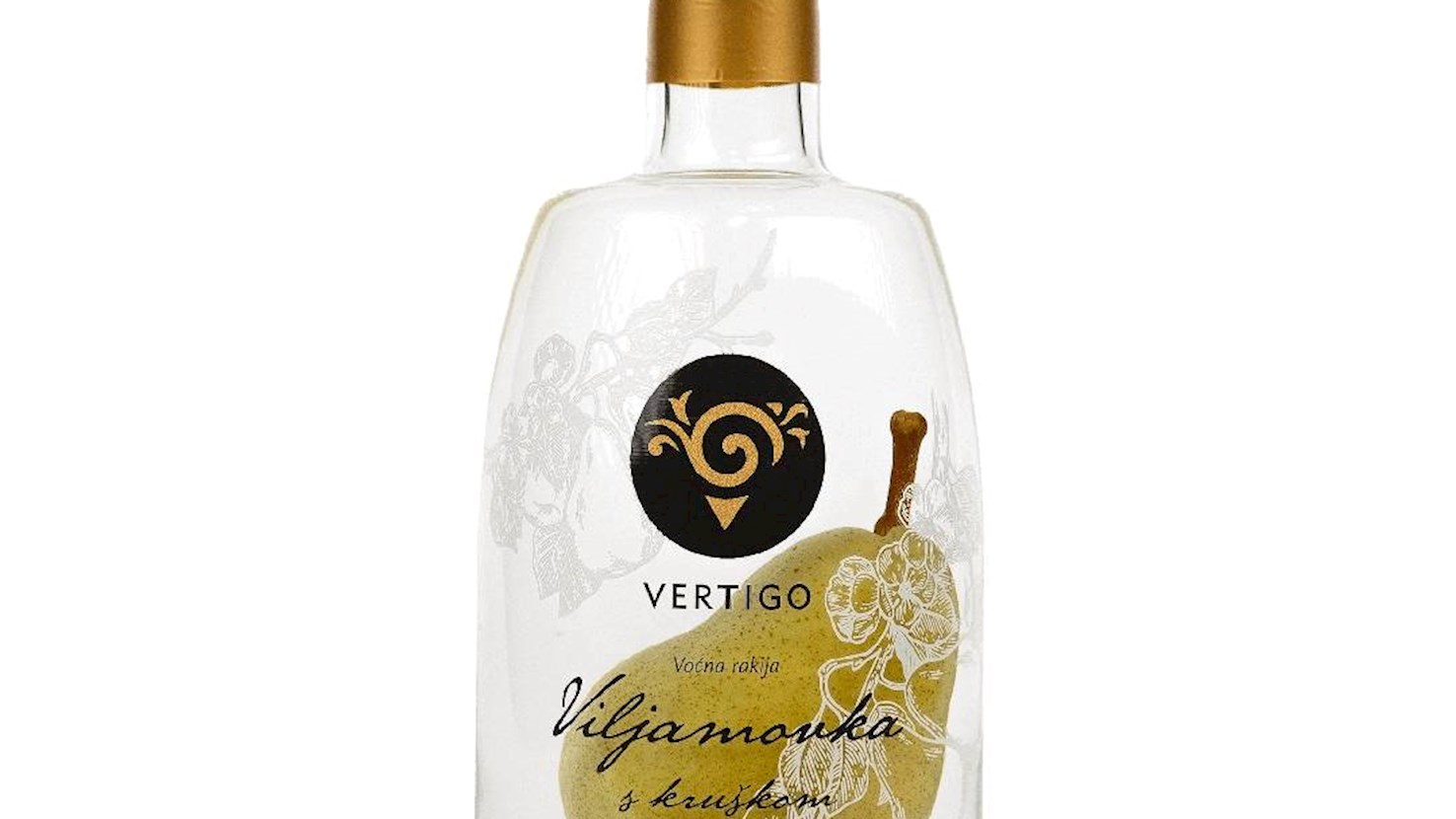
Vertigo is a family-owned distillery dedicated to crafting premium fruit brandies with character, purity, and authenticity. At the heart of their philosophy is a simple principle: no additives, no shortcuts—just fully ripe, hand-selected fruit and traditional craftsmanship.
Each brandy is produced in small batches, double-distilled in copper stills, and nurtured with care until it reaches perfection.
Every bottle reflects a blend of expertise, precision, and deep passion for the craft. Vertigo brandies are known for their vibrant fruit aromas, crystal clarity, and smooth, elegant finish.
Each bottle contains the essence of up to ten kilograms of fruit—pure concentration of nature and skill.
Production is entirely manual, with attention paid to every detail, ensuring consistency and authenticity. Vertigo doesn’t just make brandy—they create a sensory experience.
Their dedication to excellence has been recognized at international competitions, but their greatest reward remains the satisfaction of those who truly appreciate a refined spirit.
Awards
IWSC- International wine & spirit competition - Spirit Gold
(2023)
ZGrappa festival - The World’s 15 Best Rakijas - Marin Levaj
(2025)
Jagunić is a family-owned Croatian winery located in the Plešivica wine region near Jastrebarsko, an area known for its rolling vineyards and favorable conditions for quality wine production. The Jagunić family has been involved in viticulture since the 1920s, and today the winery is managed by the fourth generation of the family.
Their vineyards are situated on sun-exposed slopes such as Veliki Dol and Pečnjak, where the combination of continental climate, elevation and soil composition supports the development of balanced and aromatic grapes. The winery cultivates varieties including Chardonnay, Pinot Gris, Riesling, Traminer and Portugizac, reflecting both international and regional grape traditions.
Jagunić is also recognized for producing sparkling wines using the traditional method of secondary fermentation in the bottle, a style increasingly associated with the Plešivica region. Grapes are harvested from vineyard plots located close to the winery to ensure quick processing and preservation of freshness and quality.
In the cellar, winemaking combines modern techniques with the use of older wooden barrels that contribute subtle complexity while maintaining the character of the fruit. Today Jagunić is part of a group of small family wineries that have helped establish Plešivica as one of Croatia’s notable cool-climate wine regions.
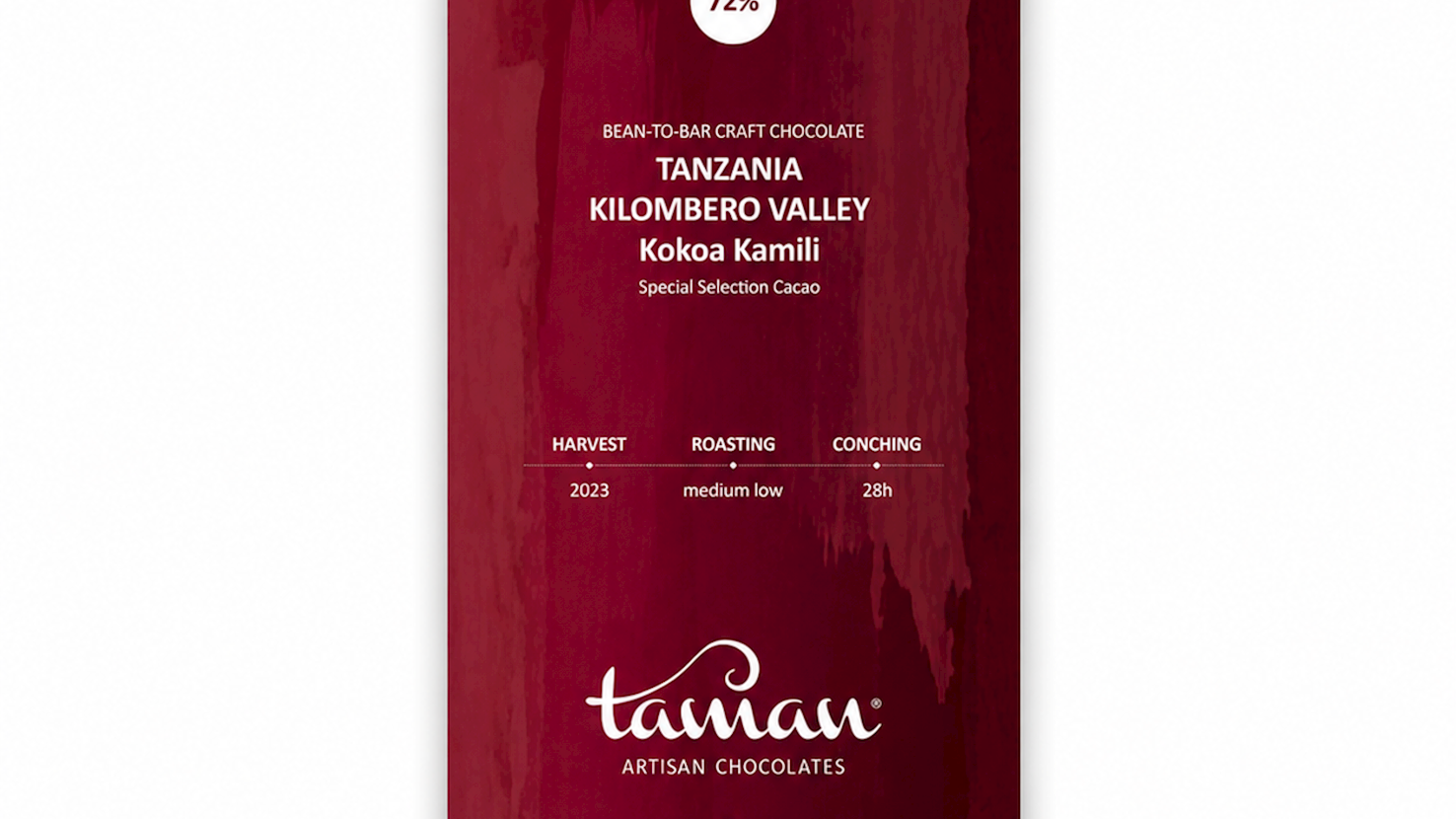
Taman Artisan Chocolates is a Croatian artisan chocolate maker based in Zagreb, specializing in bean-to-bar and gourmet chocolates crafted in small batches. The company was founded by Stiv Kahlina with the goal of creating authentic, high-quality chocolates using carefully selected cacao beans of known origin and natural ingredients.
Taman oversees the entire production process, from sourcing and roasting cacao beans to crafting the finished chocolate bars, ensuring complete control over quality and flavor development. Alongside its single-origin bean-to-bar range, the company produces pralines, truffles, gianduja creations, and limited-edition gourmet collections featuring innovative flavor combinations.
Taman is particularly known for highlighting the unique characteristics of cacao from different growing regions and for its dedication to showcasing terroir through chocolate. Each product is handcrafted in small batches to preserve freshness and authenticity.
Over the years, the brand has received numerous international awards, including recognition from the Academy of Chocolate, establishing its reputation as one of the leading craft chocolate producers in the region. Through its commitment to quality, transparency, and artisanal production methods, Taman has become a respected name among chocolate enthusiasts and specialty food consumers.
Awards
Academy of Chocolate - Silver
(2024, 2021, 2020, 2019)
Academy of Chocolate - Bronze
(2025, 2023, 2022, 2021, 2020, 2018, 2017)
Tomac Winery is a family-owned Croatian winery located in the Plešivica wine region near Jastrebarsko, about 30 kilometers southwest of Zagreb. The Tomac family has been involved in viticulture for more than a century, while bottling wines under their own label began in the late 1980s.
The estate cultivates vineyards on the slopes of Plešivica, an area known for its mineral-rich soils and cool continental climate that favors the production of fresh and elegant wines. The winery works with varieties such as Riesling, Chardonnay, Sauvignon Blanc, Pinot Noir and Pinot Gris, alongside local grapes typical for the region.
Tomac is particularly recognized for its sparkling wines produced using the traditional method, which have contributed to the reputation of Plešivica as one of Croatia’s leading sparkling wine regions. The winery has also gained attention for fermenting and aging certain wines in traditional clay amphorae (qvevri), inspired by ancient Georgian winemaking techniques.
This approach reflects a philosophy of minimal intervention and an emphasis on expressing the natural character of the grapes and the local terroir. Today the winery is run by a new generation of the Tomac family, who continue to combine long-standing family tradition with modern, sustainable vineyard practices.
Šember is a family-owned Croatian winery located in the Plešivica wine region near Jastrebarsko, an area known for its cool continental climate and mineral-rich soils. The Šember family has been involved in viticulture for several generations, while the modern winery and bottled production began in 1991.
The estate cultivates vineyards on several sites around Plešivica, including positions with southern and southwestern exposure that provide favorable conditions for grape ripening. The winery works with varieties such as Riesling, Chardonnay and Pinot Noir, focusing on wines that reflect the freshness and structure typical of the region. Šember is particularly recognized for its sparkling wines produced using the traditional method of secondary fermentation in the bottle, a style that has helped establish Plešivica as an important sparkling wine region in Croatia.
In addition to classic vinification, the winery also experiments with fermentation and aging in clay amphorae, emphasizing a low-intervention approach that highlights the natural expression of the grapes and terroir. Today the winery is led by Zdenko Šember together with members of the family, combining long-standing tradition with modern and sustainable winemaking practices.
Korak Winery, located in Jastrebarsko within Croatia's Plešivica wine region, is a family-owned estate renowned for its premium wines and exceptional dining experience. The winery cultivates approximately five hectares of vineyards on the southern, southeastern, and southwestern slopes of Plešivica's winegrowing hills, focusing on high-quality, limited-production wines.
Korak Winery produces a variety of wines, including Rhine Riesling, Sauvignon, Chardonnay Sur Lie, Pinot Noir, and Syrah. Their vineyards are situated at elevations between 350 and 400 meters above sea level, benefiting from favorable conditions that contribute to the unique character of their wines.
In addition to winemaking, the Korak family operates a fine-dining restaurant on the estate, led by chef Bernard Korak. The restaurant has earned significant recognition, including a Michelin Star and a Michelin Green Star for its sustainable approach.
These accolades highlight the Korak family's commitment to quality and sustainability in both their winemaking and culinary endeavors.
Podrum Franjo is a small family winery located in the Plešivica wine region near Jastrebarsko in Croatia, an area known for its rolling vineyards and favorable conditions for producing elegant, cool-climate wines. The winery grew out of a long family tradition of viticulture, where vineyard work and winemaking knowledge have been passed down through generations.
The vineyards are planted on sun-exposed slopes of Plešivica, where elevation, mineral soils and a continental climate allow grapes to ripen slowly while developing fresh acidity and aromatic complexity. The winery works with varieties typical for the region, including Chardonnay, Riesling and Pinot Noir, which are well suited to the cooler growing conditions.
Particular attention is given to the production of sparkling wines made using the traditional method of secondary fermentation in the bottle, a style for which Plešivica has become increasingly recognized. In the cellar, modern winemaking techniques are combined with a careful and restrained approach aimed at preserving the natural character of the grapes.
The wines often show freshness, vibrant acidity and subtle mineral notes that reflect the local terroir. Production remains relatively small and focused on quality rather than volume.
Through this approach, Podrum Franjo represents part of a new generation of smaller producers contributing to the growing reputation of the Plešivica wine region.
TasteAtlas food rankings are based on the ratings of the TasteAtlas audience, with a series of mechanisms that recognize real users and that ignore bot,
nationalist or local patriotic ratings, and give additional value to the ratings of users that the system recognizes as knowledgeable.
For the “Top 28 Central Croatian Foods” list until November 18, 2026, 773 ratings were recorded, of which 512 were recognized by the system as legitimate.
TasteAtlas Rankings should not be seen as the final global conclusion about food. Their purpose is to promote excellent local foods,
instill pride in traditional dishes, and arouse curiosity about dishes you haven’t tried.
The initial list of top producers was compiled based on available reviews, awards, local recommendations, media and blog coverage, and consumer reviews.
The list will be updated with ratings from TasteAtlas local ambassadors and TasteAtlas users.
















What People Say